James E. Lewis, a seasoned transportation safety expert, faced an unfortunate twist in his professional journey. Despite his extensive experience and deep insight into the trucking industry, he found himself disqualified from providing testimony in a significant personal injury case—not due to his lack of expertise, but because of an unnoticed procedural misstep. In the case of Rodney Bibbs v. Molson Coors, Lewis had been retained to testify on the safety of load securement, a critical factor in the accident. However, after the Plaintiff’s attorney withdrew, a motion was filed to strike Lewis’ testimony, a motion he was unaware of.
This article explores the misfortune that led to his disqualification and the steps Lewis took to clear his name. More importantly, it serves as a cautionary tale for expert witnesses on the importance of tracking their cases. Had it not been for a blog post on this very website, Lewis might never have known about the exclusion.

Background of the Case
The case that led to James E. Lewis’ disqualification stemmed from a tragic tractor-trailer accident involving Rodney Bibbs, an independent contractor truck driver. Bibbs had been hired to transport a pre-loaded trailer of beer from Molson Coors’ Shenandoah Brewery in Virginia to a distributor in Ohio. During his journey, while driving through West Virginia, the load allegedly shifted, causing Bibbs to lose control of the truck, leading to a serious accident. Bibbs claimed that the load had been improperly packed and secured by Molson Coors, resulting in his injuries and significant damage to the truck.
In the aftermath, Bibbs filed a lawsuit against Molson Coors, alleging negligence in the packing and loading of the beer pallets. Central to his case was the assertion that the company had failed to properly secure the load, which led to the accident. With load securement being a key factor, the Plaintiff needed expert testimony to substantiate these claims. That’s where James E. Lewis, a transportation safety expert with experience in Department of Transportation (DOT) compliance, was brought in to serve as the Plaintiff’s sole liability expert.
Initially, Lewis was disclosed as an expert under Federal Rules of Civil Procedure 26(a)(2), allowing Bibbs to put forth expert testimony about the alleged improper load securement. However, procedural delays in the case, coupled with the withdrawal of Bibbs’ legal counsel, resulted in Lewis being unaware of Molson Coors’ motion to exclude his testimony. Despite his extensive experience and background in transportation safety, Lewis’ testimony was challenged on the grounds that his qualifications and methodology did not align with the specific issue of load packing at a brewery. Unopposed due to the procedural lapse, Molson Coors successfully argued for the exclusion of Lewis’ testimony.
The Disqualification: A Procedural Setback
James E. Lewis’ disqualification from the Bibbs v. Molson Coors case was not due to a lack of expertise, but rather the result of unfortunate procedural circumstances. After the Plaintiff’s attorney withdrew from the case, a motion was filed by Molson Coors to exclude Lewis’ testimony. Due to the absence of opposition—because the attorney had left the case and the pro se Plaintiff did not respond to the motion, the Court had little choice but to strike his testimony.
Lewis concluded that—based on his industry experience—Defendant’s workers poorly wrapped the pallets of beer at issue, negligently loaded Plaintiff’s trailer, and therefore “increaseed the probability and magnitude of the potential harm to the victim of the crash.”
Although Lewis had significant experience in transportation safety and held a master’s degree in education, Molson Coors argued that his subjective industry experience could not be the sole basis for his conclusion.
The Court subsequently granted summary judgment in favor of Molson Coors, dismissing the case with prejudice.
Lewis discovered his exclusion not through the Court or the attorney directly, but from another opposing counsel who asked him about it after reading our blog. Our blog post detailed the Court’s decision to strike his testimony and highlighted the reasons behind it. Realizing what had happened, Lewis was able to spring into action.
The Motion for Reconsideration: A Step Toward Vindication
James E. Lewis filed a motion for reconsideration, seeking to correct the Court’s prior ruling. This was his chance to clarify the situation and ensure that the Court recognized his expertise, despite the unfortunate circumstances surrounding the motion to strike.
In his motion, Lewis argued that his testimony should not have been excluded, particularly because the disqualification had nothing to do with the merits of his qualifications. Instead, it was the result of a procedural misstep.
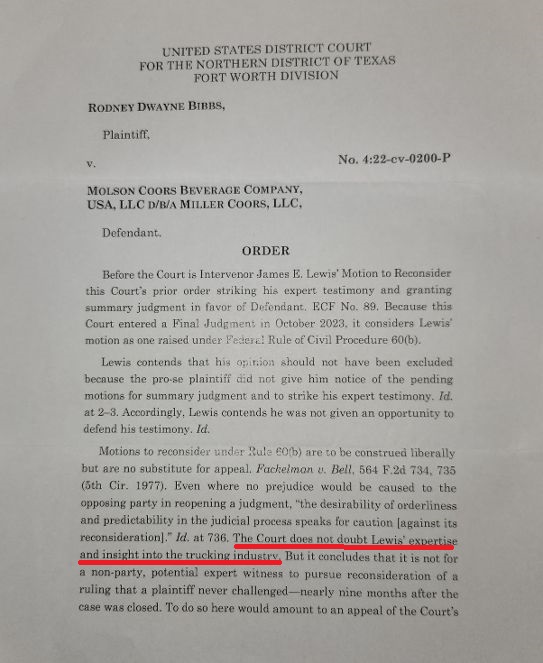
The Court, in its response, acknowledged Lewis’ expertise and insight into the trucking industry. Judge Pittman specifically stated that the Court did not doubt Lewis’ qualifications. This was an important moment of vindication for Lewis, as it confirmed that his exclusion was not due to any shortcomings in his professional abilities.
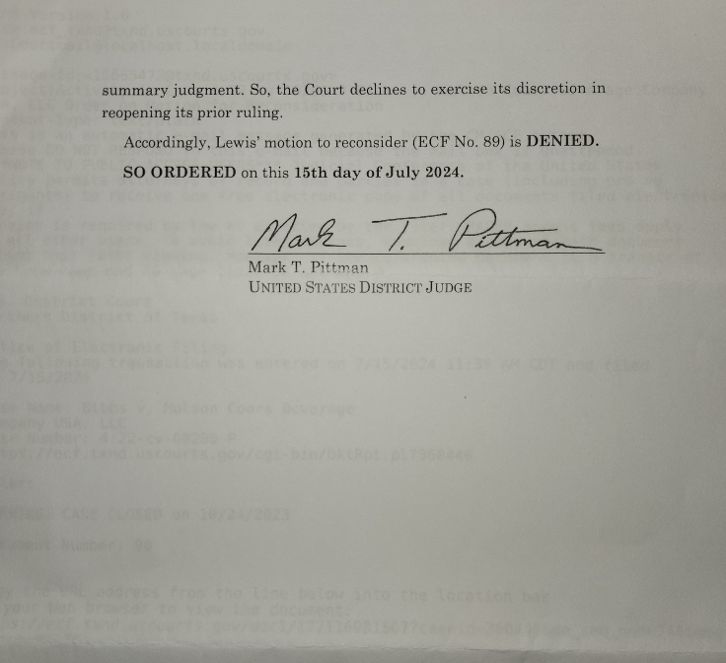
However, the judge ultimately denied the motion to reconsider, noting that nearly nine months had passed since the case was closed. Despite the Court’s recognition of Lewis’ expertise, the procedural rules did not allow for the case to be reopened. Nevertheless, the written acknowledgment from the Court provided a crucial document that cleared Lewis’ name, proving that the exclusion was not a reflection of his professional capabilities.
While Lewis was unable to reverse the ruling, his effort ensured that his reputation remained intact, and the Court’s clarification helped to restore his professional standing.
Lessons for Expert Witnesses: Why Tracking Your Cases Matters
James E. Lewis’ experience serves as a cautionary tale for expert witnesses everywhere. His disqualification didn’t come from a lack of knowledge or expertise, but from a procedural error that could have been avoided if he had been aware of the motion in time. This incident highlights the critical importance of tracking the cases you’re involved in, even after you’ve submitted your expert report or given your testimony.
Many experts think their role ends after they provide testimony or submit their report, but cases are living processes. Motions are filed, decisions are made, and developments happen, sometimes months after the expert has been retained. Keeping a close eye on these developments is vital to protecting your reputation and ensuring your involvement doesn’t get lost in the shuffle.
So, what can experts do to stay on top of their cases? Regular communication with the legal team is a start, but it’s also important to set up alerts or follow case-monitoring tools. And of course, keeping an eye on industry blogs like ours can provide key updates that you might not get elsewhere. Staying informed ensures that you remain an active participant in your cases, even when things seem quiet.