Category: Appraisal and Valuation Expert Witness 

  • Appraisal Expert Allowed to Opine on Just Compensation

    Appraisal Expert Allowed to Opine on Just Compensation

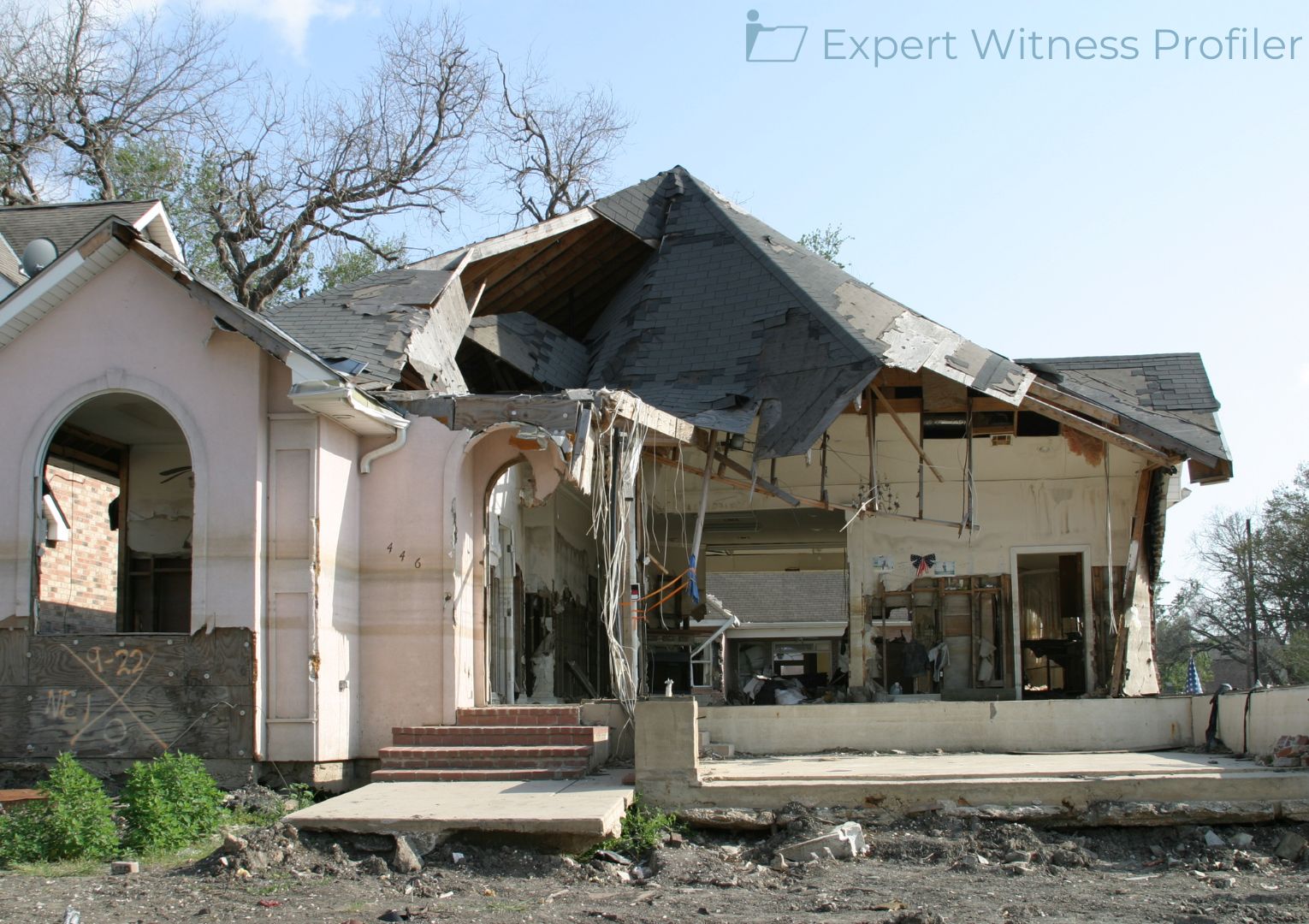
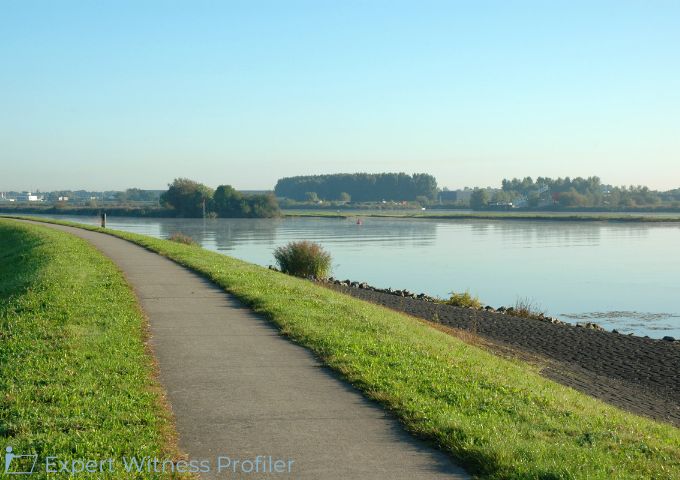
    This case concerns an alleged taking of nearly eighteen acres of real property within the bounds of the Lafitte Area Independent Levee District  (“LAILD”) in Jefferson Parish, Louisiana.

    CMP owns property within the boundaries of the LAILD in Jefferson Parish. As part of the Rosethorne Basin Lafitte Tidal Protection Levee Project, LAILD entered CMP’s property on or about May 27, 2024, to raise the height of an existing levee. Nearly three months later, on August 22, 2024, LAILD passed Resolution 495, which provided for the appropriation of the portion of CMP’s land containing the levee. CMP filed the suit against LAILD for failure to pay just compensation for a taking under the Louisiana Constitution.

    Throughout the course of the underlying suit, CMP hired three experts, Baldwin R. Justice, Dr. Fred Fellner, and Dr. Malcolm Guidry to assist in calculating the value of its land occupied by LAILD. LAILD sought to exclude, or alternatively limit, the testimony of CMP’s expert witnesses.
    Arborist Expert Witnesses 

    Frederick Joseph Fellner, Ph.D.  worked for Louisiana State University for 25 years as an Arboricultural and Green Infrastructure Manager.  In this role, he was responsible for “all landscape construction” including “protection . . . pre, during and post construction” and oversaw “risk reduction for the protection of people and property from failure of trees.” 

    Get the full story on challenges to Frederick Fellner’s expert opinions and testimony with an in-depth Challenge Study

    Dr. Malcolm M. Guidry is a consulting arborist with more than 30 years of experience in arboriculture, urban forestry, tree risk assessment, and forensic tree investigations. He has provided expert consulting services since 1991 in matters involving tree appraisal, tree health diagnosis, construction-related tree impacts, and urban forest management.

    He is licensed as a consulting arborist in both Louisiana and Mississippi and is affiliated with professional organizations including the American Society of Consulting Arborists and the International Society of Arboriculture.

    Want to know more about the challenges Malcolm Guidry has faced? Get the full details with our Challenge Study report.

    Appraisal And Valuation Expert Witness

    Baldwin R. Justice is a general certified real estate appraiser in Louisiana, Mississippi, Texas, Florida and Alabama, and he has extensive experience in the appraisal of nearly all property types in markets across our entire geographic coverage area. He has also been awarded the prestigious the MAI designation by the Appraisal Institute®. Finally, Justice has been qualified as an expert witness in the field of real estate appraisal and provided testimony in numerous local, state, federal, and Unites States Tax courts throughout the region.

    Discover more cases with Baldwin Justice as an expert witness by ordering his comprehensive Expert Witness Profile report.

    Discussion by the Court

    LAILD did not challenge the qualifications of Justice, Fellner, or Guidry, nor did it argue that their expert reports are the products of unreliable methodology or principles. Instead, LAILD contended that the expert reports of Justice, Fellner, and Guidry are irrelevant because they applied an improper method of valuation and/or compensation.

    Here, the Court found that the expert report of Justice, along with Fellner and Guidry’s joint report, are relevant to the issue of damages. All three experts opine on the valuation of the land taken by LAILD, and their reports will assist the jury in understanding the appropriate amount of compensation, if any, owed to CMP. Moreover, the Court found that the testimony based on the expert reports did not present a danger of unfair prejudice, will not confuse the issues, or mislead the jury.

    The Court has found that LAILD engaged in an unconstitutional partial taking of CMP’s property and determined that CMP is entitled to recover damages pursuant to the theory of inverse condemnation under Louisiana law. Specifically, the Court reasoned that CMP would be entitled to present evidence relating to the “highest and best use” of the taken property, severance damages, and fair market value of the property.

    In sum, the Court’s determination as to the legal standard for any damages undercuts LAILD’s argument, as such evidence is relevant for the jury in deciding the factual determination of damages. Because CMP’s expert reports enumerate damages consistent with those categories, the Court declined to exclude the testimony of the experts as to their expert reports under Rule 403. Importantly, to the extent that any portion of the reports are inconsistent with the Court’s legal determination of appropriate damages for a partial taking, the experts will be precluded from testifying as to those inconsistent parts of the reports.

    Held

    The Court denied LAILD’s motion to exclude, or alternatively limit, the testimony of CMP’s expert witnesses, Baldwin Justice, Dr. Fred Fellner, and Dr. Malcolm Guidry.

    Key Takeaway

    Even if evidence satisfies the requirements of Rule 702, other evidentiary rules, such as Rule 403, may still operate to exclude the evidence.

    Case Details:

    Case Caption: CMP, L.L.C. V Board Of Commissioners For The Lafitte Area Independent Levee District
    Docket Number: 2:24cv2298
    Court Name: United States District Court for the Eastern District of Louisiana
    Order Date: January 22, 2026
  • Environmental Engineering Expert’s Failure to Consider Mitigation Efforts Renders His Opinions Unreliable

    Environmental Engineering Expert’s Failure to Consider Mitigation Efforts Renders His Opinions Unreliable

    Plaintiffs Tonya Clayton and Hazel Stroble allege that an automobile assembly plant operated by Defendant FCA US LLC (“FCA”) near their homes in Detroit, Michigan (the “Detroit Plant”) emitted noxious odors into their neighborhood. They said that these odors unreasonably interfere with their ability to use and enjoy the residences that they own and depreciate the values of those residences. 

    In this putative class action, Clayton and Stroble asserted claims of nuisance and negligence against FCA based on FCA’s operation of the Detroit Plant.

    Plaintiffs asked the Court to certify the following class: “All owner-occupants and renters of residential property located, in whole or in part, within one mile (1.0) of [the Detroit Plant], located at 2101 Connor Street/4000 St. Jean Street, Detroit, Michigan from March 1, 2021 to the present.”

    FCA filed two motions to exclude the opinions of Plaintiffs’ expert witnesses, Dr. Mark P. Cal and Orell C. Anderson. Plaintiffs relied upon Cal and Anderson
    in support of their class certification motion.

    Environmental Engineering Expert Witness

    Dr. Mark P. Cal obtained a B.S. in Chemical Engineering and a M.S. and Ph.D. in Civil & Environmental Engineering from the University of Illinois at Urbana-Champaign (UIUC). He is currently the Campus Director and Vice President for Academic Affairs and a Professor of Civil and Environmental Engineering at New Mexico State University (NMSU) Alamogordo. For nearly 12 years, he was Chair and Professor in the Department of Civil and Environmental Engineering at New Mexico Tech (NMT).
    Cal’s research and consulting experience spans 36-years, and he has worked on projects in the areas of air pollution control, air quality science, atmospheric dispersion modeling (odors, gases and particles), chemical fate and transport, water resources engineering, and heat and mass transfer.

    Want to know more about the challenges Mark Cal has faced? Get the full details with our Challenge Study report

    Appraisal and Valuation Expert Witness

    Orell C. Anderson is a valuer and expert forensic consultant with extensive experience in appraisal, diminution-in-value and litigation support matters involving commercial, industrial, subdivisions, and vacant land properties, as well as single- and multi-family residences. 

    He specializes in real property damage economics and property value diminution on a local to global basis and has worked on some of the most notable environmental, social justice, and terrorist cases in recent times.

    Get the full story on challenges to Orell Anderson’s expert opinions and testimony with an in-depth Challenge Study

    Discussion by the Court

    Mark Cal

    Cal did not acknowledge or account for the mitigation efforts that FCA undertook beginning in the fall of 2021

    Cal opined that (1) “the entire 1.0-mile proposed class area displayed some level of elevated odor concentrations above [one odor unit per cubic meter]” and (2) “there is clear and convincing evidence that odors were dispersed throughout [the] proposed class area at an odor threshold level that residents would find offensive.”

    It is not clear from Cal’s report whether he is offering these opinions with respect to the limited time period for which he had actual sampling data (October and November of 2021) or, alternatively, with respect to the entire time frame covered by Plaintiffs’ proposed class definition (March of 2021 to the present).

    To begin with, Cal did not acknowledge or account for certain mitigation efforts that FCA undertook beginning in the fall of 2021. According to the Court, his failure to consider those mitigation efforts, and to explain what effect, if any, those efforts had on the odor unit level in the proposed class area during the class period (March 1, 2021, through the present), rendered his opinions unreliable.

    Next, if Cal’s opinion is limited to the time period for which he had sampling data, then it must be excluded because it is not an appropriate fit for the proposed class. As noted above, Plaintiffs are seeking to certify a class that spans from March 1, 2021, to the present. But an opinion covering only a small fraction of that period – i.e., the two-month period in the fall of 2021 for which Cal had sampling data – says little, if anything, about whether the criteria for class certification are satisfied for the entire proposed class period.

    There is no reliable basis for Cal’s opinion that all of the members of the proposed class would find the odor level emitted from the Detroit Plant to be offensive

    Cal bases that opinion solely on the fact that the odor emanating from the Detroit Plant was measured at one odor unit per cubic meter. But as Cal acknowledged, at that level, only “50 percent of the people” would even be able to “smell” the odor.

    The Court ruled that Cal has not sufficiently explained how an odor that only 50 percent of people can even detect could reasonably be considered offensive to the entire proposed class. Moreover, his opinion that the class members would find the odor offensive because it measured one odor unit per cubic meter is at odds with his acknowledgment that five odor units per cubic meter, not one, is “generally” the “threshold level that residents would find offensive.”

    Orell Anderson

    The Court next turns to Anderson’s opinion that he could develop a reliable model to determine the economic damages suffered by the proposed class members.

    Plaintiffs sought to certify a class that includes both “owner-occupants and renters” in the class area. But Anderson’s proposed model does not apply to renters. Instead, he intended to measure only the diminution in property values caused by the odors emanating from the Detroit Plant, and it is only property owners that could have suffered such a potential diminution.

    That Anderson’s proposed model does not apply to renters is a significant problem because FCA has presented evidence that approximately 45% of the proposed class members are renters, not owners. Because Anderson’s proposed model did not apply to the many renters in the proposed class, the Court held that it is not a proper fit for that class.

    Held

    The Court granted  FCA’s motions to exclude Plaintiffs’ expert witnesses, Dr. Mark Cal and Orell C. Anderson.

    Key Takeaways:

    • To be clear, Cal certainly was not required to agree with FCA that its mitigation efforts meaningfully decreased the odors emitted from the Detroit Plant. But to be reliable, his analysis had to at least acknowledge those efforts and explain how, if at all, those efforts impacted the odor levels and his analysis.
    • Anderson’s proposed model has a major flaw—it doesn’t apply to renters. This is a serious issue because FCA has shown that about 45% of the proposed class members are renters, not owners.

    Case Details:

    Case Caption: Clayton V. FCA US LLC
    Docket Number: 4:21cv12995
    Court Name: United States District Court, Michigan Eastern
    Order Date: August 07, 2025


  • Appraisal and Valuation Expert is Qualified to Testify about the Value of the Porsche

    Appraisal and Valuation Expert is Qualified to Testify about the Value of the Porsche

    Joseph Falasco bought a non-functioning 1974 Porsche 911S for $10,000 and put a significant amount of time and money into restoring it, including the installation of a new engine and transmission.

    Falasco later filed a claim regarding the non-collision fire that destroyed Plaintiff’s 1974 Porsche 911S (the “1974 Porsche”) and ended up suing USAA for breach of insurance contract, bad faith, and unfair claims
    settlement practices.

    Falasco filed a motion to exclude the testimony of two of USAA’s experts— Roy Da Silva and Mark McGillivray.

    Insurance Expert Witness

    Mark A McGillivray holds a bachelor’s degree in business administration with a concentration in Finance from the University of Puget Sound and a master’s degree in Business Administration with a concentration in Marketing from the University of Illinois at Chicago.

    He also holds the Chartered Property Casualty Underwriter (CPCU) designation from the American Institute for CPCU and the Insurance Institute of America (The Institutes).

    McGillivray has over 41 years of experience in the Insurance Industry, primarily in claims roles. He held various roles at Allstate Insurance Company for over 35 years, including Senior Vice President in claims.

    Since 2019, he has worked as a consultant in the industry, participated in expert networks, and been retained as an insurance expert. He is also on the Board of Directors of Hancock Claim Consultants.

    Get the full story on challenges to Mark A McGillivray’s expert opinions and testimony with an in-depth Challenge Study.  

    Appraisal and Valuation Expert Witness

    Roy Da Silva is an experienced appraiser who specializes in classic cars. He founded and developed Source One Services to provide specialized services
    to the collector car markets.

    Want to know more about the challenges Roy Da Silva has faced? Get the full details with our Challenge Study report.  

    Discussion by the Court

    Motion to exclude the Expert Testimony of Mark McGillivray

    Falasco filed a motion to exclude the expert testimony of Mark McGillivray. The Court ruled that this motion is denied without prejudice as moot.

    It appeared that USAA intended to offer McGillivray’s testimony solely in support of its defense on Falasco’s bad faith and unfair claims settlement practices claims.

    Since the Court had already granted summary judgment on those claims, McGillivray’s testimony was no longer relevant to the remaining issues in the case.

    Motion to exclude the Expert Testimony of Roy Da Silva

    Falasco argued for the exclusion of Roy Da Silva’s testimony, implying it would not offer adequate assistance to the trier of fact.

    The Court held that Da Silva is qualified to testify about the value of Falasco’s Porsche. In other words, Da Silva’s expertise will aid the jury due to the complexity of the classic car market. 

    While Falasco may dispute Da Silva’s valuation or methodology, the Court held that such challenges concerned the weight and credibility of his testimony. These concerns could be addressed through “vigorous cross-examination and presentation of contrary evidence” at trial, allowing the jury to evaluate its significance.

    Held

    • The Court denied without prejudice as moot the motion to exclude the testimony of Mark McGillivray.
    • The Court denied Falasco’s motion to exclude the testimony of Roy Da Silva.

    Key Takwaway:

    Classic car appraiser Roy Da Silva’s testimony was admitted because his expertise was essential for assisting the jury in understanding the complex classic car market.

    Case Details:

    Case Caption: Falasco v. USAA Cas. Ins. Co
    Docket Number: 4:23cv01054
    Court Name: United States District Court for the Eastern District of Arkansas, Central Division
    Order Date: May 2, 2025
  • Industrial Hygiene Expert Witness’ Testimony Regarding the Mitigation Performed Admitted

    Industrial Hygiene Expert Witness’ Testimony Regarding the Mitigation Performed Admitted

    Plaintiff, MacNair, owned the immovable property located at 526-528 Belleville Street, New Orleans, Louisiana 70114 which she insured through Chubb. MacNair lived on one side of her home and rented out the other side. On August 29, 2021, Hurricane Ida caused severe damage to MacNair’s property including the roof, all elevations and all rooms in the interior. MacNair immediately reported the claim to Chubb.

    Chubb, through its agents, sent adjuster, Mike Weaver (hereinafter referred to as “Weaver”), to the property to inspect the home for damages. Weaver took photos of MacNair’s property during his inspection. Despite the open and obvious damages, Weaver’s estimate totaled $13,988.97 (RCV) and $13,048.27 (ACV). After the $5,820.00 deductible, the amount for repairs totaled $7,228.27. As part of his adjustment of MacNair’s claim, Weaver eventually issued a report and estimate. Nonetheless, Chubb refused to reinspect the property, despite MacNair’s numerous requests.

    Plaintiff alleged she continued to contact Chubb and Minuteman; eventually, she and the tenant moved out. She retained an attorney in November 2021 and sought a reinspection, among other things. Believing her home to be quickly deteriorating, despite a tarp on the roof, Plaintiff hired 911 Restoration to perform gutting and water mitigation services at the home. 911 Restoration took some 116 photographs of the damages before commencing work. Between December 22, 2021, and March 9, 2022, 911 Restoration performed mitigation and gutting services.

    MacNair invoked appraisal. Chubb responded through its attorney that it would participate in appraisal, but after the appraisers conducted a joint inspection in May 2022, Chubb withdrew from the appraisal process and requested MacNair’s examination under oath. MacNair filed her petition for damages against Chubb on January 9, 2023.

    Both parties later filed motions to exclude each other’s expert testimony.

    Industrial Hygiene Expert Witness 

    George F. Coto is a Senior Industrial Hygienist at EFI Global, Inc. Coto’s expertise is water and mold damage assessment, asbestos investigation and management, environmental site assessments, and industrial hygiene assessments.

    He holds a Bachelor of Science in Environmental Science with a Minor in Chemistry from McNeese State University. Coto has worked as an environmental consultant for the past twenty-two (22) years, conducting environmental and personnel exposure assessments for state governments, insurance carriers, and private industry.

    Get the full story on challenges to George Coto’s expert opinions and testimony with an in-depth Challenge Study.   

    Appraisal and Valuation Expert Witness 

    Jeremy Belk has been a Louisiana-licensed adjuster since 2005. He has completed adjustments and appraisals for carriers, clients, and attorneys since 2005 in the state of Louisiana as well as other states. Since 2017 Belk has worked daily claims for various carriers, both residential and commercial. He is I.I.C.R.C. WTR certified (#70143683). He has also completed adjustments for various third-party administrators and carriers during this period in the states of Arkansas, Colorado, Georgia, Florida, Illinois, Indiana, Minnesota, Mississippi, Nebraska, North Carolina, South Carolina, Tennessee, Texas, and Utah. These included fires, floods, hail, tornadoes, and hurricanes claims.

    Want to know more about the challenges Jeremy Belk has faced? Get the full details with our Challenge Study report.   

    Discussion by the Court

    Plaintiff filed a motion to exclude the testimony of George Coto, an expert witness to be called by Defendant Chubb European Group, SE. In response, Defendant submitted a motion to exclude the testimony of Jeremy Belk, an expert witness to be called by Plaintiff. Both parties subsequently filed responses opposing each other’s motions.  

    A. Plaintiff’s Motion to Exclude George Coto 

    The purpose of Coto’s Report, produced in January 2024, is “to determine if the assessment and remediation conducted [by 911 Restoration] was reasonable and appropriate according to industry guidelines and standards and would support the work performed by 911 Restoration at the residence.”

    Plaintiff contended Coto’s testimony should be excluded as unreliable. She asserted Chubb limited Coto’s access to relevant information to obtain a skewed report by not providing him with their own independent adjuster’s report and the 132 photographs he had produced, as well as other information Coto admitted would have been relevant, such as interviews with witnesses who had first-hand knowledge of the damages.

    Plaintiff also asserted Chubb was given information that 911 Restoration had performed its mitigation work based solely on the inspection and the photographs of Glenn Willis, which she asserted was not true. Plaintiff next asserted that Coto had omitted a reference to wind-driven rain resulting from hurricane and tropical storms in his definition of Category 3 water infiltration. Thus, she contended that Coto’s report makes it appear that such infiltration can occur only from flooding due to rising water from rivers and streams and seawater or groundwater, when it can also arise from wind-driven rain.

    The Court held that Plaintiff’s challenge to the admissibility of Coto’s report and testimony is based on her belief that Coto should have considered other evidence and failed to do so, suggesting he may have been restricted intentionally by Chubb. The Court believed that her concerns regarding the evidence upon which Coto’s opinions are based can be addressed through cross-examination and the presentation of countervailing expert testimony.

    B. Defendant’s Motion to Exclude Jeremy Belk 

    According to Defendant, one year after Hurricane Ida had struck New Orleans, after Plaintiff had devised architectural plans to convert her double to a single, and after she had gutted the property, Plaintiff’s attorney contacted Jeremy Belk, a claims adjuster, to inspect the property and “to review the documents they sent [him] and give an assessment on the damages and write an estimate to go back as a single and a double.”

    Belk’s inspection occurred in November of 2022, according to Defendant, and his report, dated December 18, 2023, provides an estimate to convert the property to a single, which had already commenced, and an estimate to return it to a double. Belk’s report necessarily included total interior renovations of the property because it had already been gutted to the studs. Both estimates were of replacement costs rather than actual cash value, as required under the policy. Nothing in Belk’s report, Chubb asserted, attempted to connect the rebuild to damage from the hurricane.

    Defendant asserted that Belk’s opinions are unreliable, not based on a reliable methodology, and will not assist the jury. Defendant argued that the estimates are only of replacement value and do not account for depreciation and that Belk’s opinions as to converting the property to a single are based on what others told him, mainly Plaintiff. 

    The Court held that Defendant’s assertions of unreliability in Belk’s methodology are more properly attacks on the weight to give his opinions, based as they are on evidence and materials provided by others. The Court also held that Belk’s testimony as an adjuster is not scientific in nature. In other words, Belk’s testimony is related to his area of expertise.

    Held 

    • The Court denied Plaintiff’s motion to exclude Defendant’s industrial hygiene expert witness George Coto.
    • The Court also denied Defendant’s motion to exclude Plaintiff’s appraisal and valuation expert witness, Jeremy Belk. 

    Key Takeaway: 

    •  So long as the expert’s testimony is restricted to his area of expertise, “questions relating to the bases and sources of an expert’s opinion affect the weight to be assigned to that opinion rather than its admissibility and should be left for the jury’s consideration.” 
    • Plaintiff’s concerns regarding the evidence upon which Coto’s opinions are based can be addressed through cross-examination and the presentation of countervailing expert testimony.

    Case Details:

    Case Caption: Macnair V. Chubb European Group Se
    Docket Number: 2:23cv761 
    Court: United States District Court for the Eastern District of Louisiana 
    Order Date: September 27, 2024