Category: Civil Engineering Expert Witness

  • Geology Expert Was Allowed to Opine on Subsurface Conditions 

    Geology Expert Was Allowed to Opine on Subsurface Conditions 

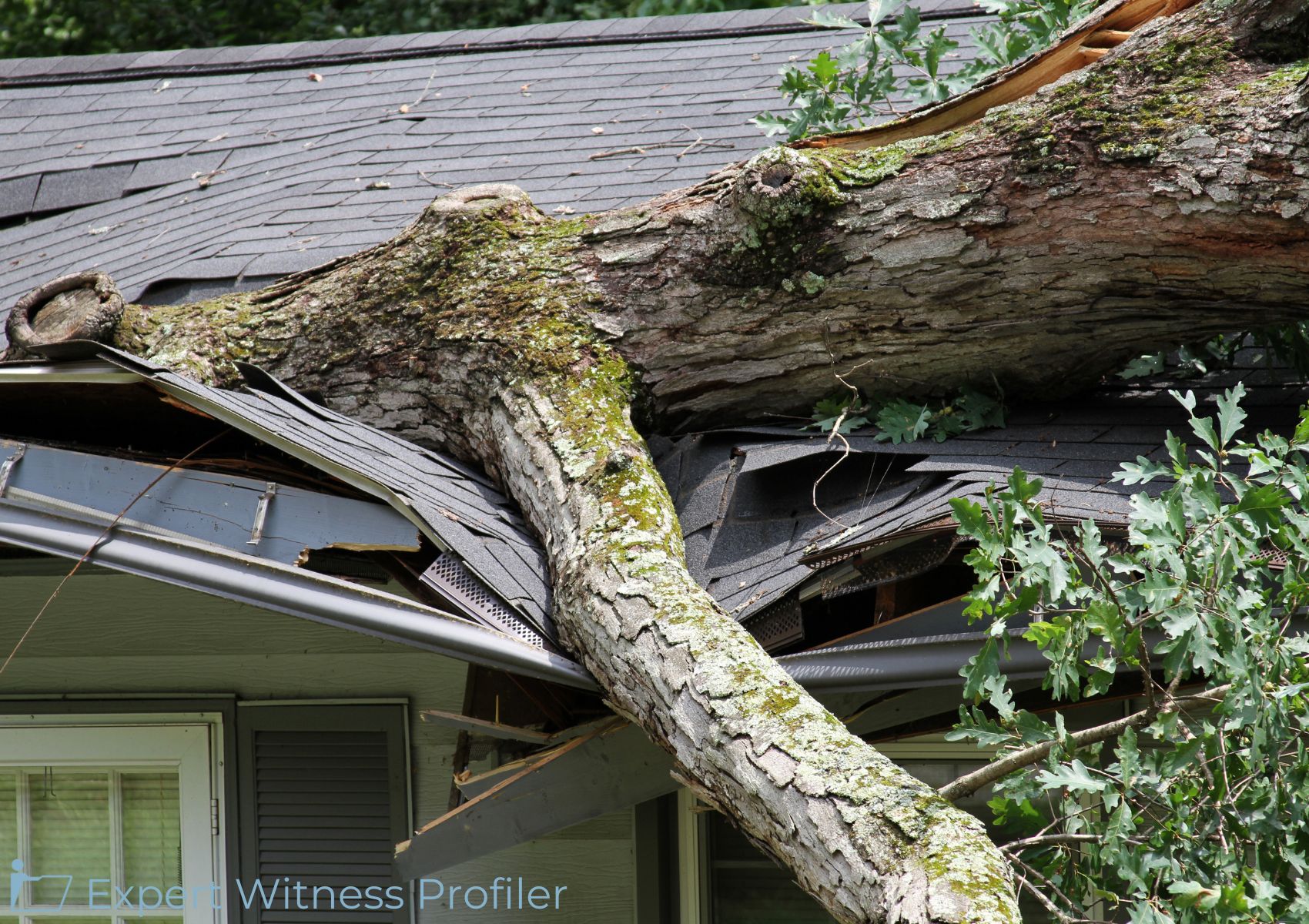
    This case arises out of Plaintiffs’ claim that structural damage to their home at 496 Southwood Drive in Madisonville, Kentucky, was caused by coal mine subsidence.

    Val Smith and Gwen Smith obtained a homeowners’ policy from American Strategic Insurance Corp. (“ASIC”) and claimed that mine subsidence caused structural movement and cracking.

    ASIC denied the claim based on the findings of NV5, a technical engineering consulting firm. In early 2024, the Smiths requested that ASIC reconsider its 2021 denial of their mine-subsidence claim.

    ASIC reopened the claim and requested that NV5 perform a supplemental evaluation of the AML documentation. NV5 issued a 20-page supplemental report, again concluding that the Smith residence had not experienced mine subsidence. ASIC reaffirmed its denial on February 16, 2024.

    The Smiths brought claims for breach of contract and bad faith under the common law the Kentucky Unfair Claims Settlement Practices Act (“UCSPA”).

    Plaintiffs disclosed the expert reports of their causation witness, Harold R. Gaston, as well as the damages opinion testimony of David Garrigan. ASIC disclosed the causation opinion testimony of Norman R. Meeks and Thomas Smith to Plaintiffs.

    Both parties sought to exclude the testimony of the opposing party’s experts.
    Civil Engineering Expert Witnesses

    Harold Ray Gaston received a B.S. in Civil Engineering from the University
    of Kentucky in 1982.

    He has more than 32 years of experience completing civil and structural design and years of experience investigating structural issues with residential and commercial buildings.

    He also has provided engineering reports/ testimony in multiple legal cases.

    Want to know more about the challenges Harold Gaston has faced? Get the full details with our Challenge Study report.

    Thomas Walker Smith has 16 years of civil/structural engineering design,
    project management, and construction management experience with
    commercial public building projects, pipeline projects, building mechanical
    system projects and pump station projects.

    Get the full story on challenges to Thomas Smith’s expert opinions and testimony with an in-depth Challenge Study.

    Construction Expert Witness

    David Garrigan is an expert in the field of delivering commercial, institutional, historic renovation, and specialty construction on projects as he works as a commercial builder and contractor with over 30 years of experience. He has been the Founder and Owner of Garrigan Building and Construction since 2013.

    Discover more cases with David Garrigan as an expert witness by ordering his comprehensive Expert Witness Profile report.

    Geology Expert Witness

    Norman Randal Meeks is a professional geologist with 26 years of consulting experience in environmental and geotechnical applications.

    Get the full story on challenges to Norman Meeks’ expert opinions and testimony with an in-depth Challenge Study.

    Discussion by the Court

    1. ASIC’s Motion to Exclude Gaston and Garrigan

    i. Whether Gaston’s Disclosures Satisfy Rule 26

    ASIC did not dispute that Gaston’s opinions and the bases for them were ultimately disclosed through his letters, the reliance materials, and his deposition testimony. Rather, ASIC argued that Gaston’s expert disclosures were not themselves enough to satisfy the disclosure requirements of Rule 26(a)(2)(B). Plaintiffs argued that Gaston’s letters satisfied the disclosure requirements of Rule 26(a)(2)(B), but that even if they did not, the late disclosure of the reliance materials did not warrant exclusion under Rule 37.

    After review of the record, the Cout found that Gaston’s deposition testimony was within the scope of opinions expressed in his expert reports.

    On the other hand, ASIC’s complaint that the Plaintiffs did not actually disclose the materials Gaston relied on to form his opinions until the day before his deposition is well taken. The Court therefore must consider whether this violation was “harmless or is substantially justified.”

    The testimony that Gaston intended to give at trial appears to be within the scope of the opinions disclosed in his report. There is no apparent risk that if Gaston testifies at trial, ASIC will be surprised by his testimony. Nor, as a result, is there a substantial likelihood that allowing Gaston’s testimony would disrupt trial. As for the ability to cure the violation, to the extent ASIC believes that it was prejudiced by Plaintiffs’ late disclosure, ASIC may move to compel additional discovery—but ASIC has not done so here or explained what additional information it might seek and so the Court will not order further discovery at this time.

    ii. Whether Gaston’s Opinions Satisfy Rule 702

    Next, ASIC contended that Gaston’s opinions, and by extension, Garrigan’s, did not “meet Rule 702‘s requirements of reliability and relevance.”

    Here, Gaston testified that he based his opinions on, among other things, the “presence of a large mine void” beneath the Property in relation to its location, and the “pattern and extent of structural damage.”

    Based on this data and his experience in similar cases, Gaston concluded that the damages to the Property were the result of mine subsidence and not soil or water issues alone.

    ASIC has not explained how Gaston’s reliance on core samples, for example, is unreliable, given that the record shows it is also the methodology employed by Kentucky Environmental and Energy Cabinet’s Division of Abandoned Mine Lands Reclamation (“AML”) to determine the presence of a mine subsidence issue.

    ASIC’s final contention that “Gaston’s opinions . . . would not assist the trier of fact” also fails. Essentially, ASIC argued that because Gaston cannot distinguish between damage documented at the Property before Plaintiffs purchased the Property or prior to the Policy period, his opinion would be unhelpful to the jury in determining causation. ASIC is correct that Gaston’s testimony is limited to “whether or not mine subsidence had” occurred and whether it had “affected the [Property].”

    And because nothing in the record shows that Gaston determined when the alleged damage to the Property occurred, it is true that Gaston’s testimony does not resolve the ultimate coverage issue. However, Gaston’s testimony does address the threshold issue of whether the damage to the Property is of the type that the Policy covers—i.e., whether it was caused by mine subsidence or other excluded causes, such as earth movement. As a result, the relevancy requirement of Rule 702 is satisfied.

    iii. ASIC’s Objections to Garrigan’s Opinions

    With respect to ASIC’s request to exclude Garrigan’s opinions under Rule 37, although Garrigan’s “Scope of Work” letter was deficient under Rule 26, the Court found that ASIC learned that Garrigan visited the Property with Gaston and based his report on that visual inspection, his experience as a professional, his knowledge of the Kentucky Building Code, and Gaston’s specific recommendations regarding the foundation. Indeed, ASIC failed to identify any information that it was unable to discover through Garrigan’s deposition.

    ASIC overstated the required qualifications and methodology for Garrigan’s opinions in case. Garrigan’s testimony in this case is limited to providing an estimate of repair costs for the damages Gaston attributes to mine subsidence. Garrigan need not be qualified as “an engineer, geologist, or subsidence specialist” to do so.

    Rather, Garrigan is entitled to rely on Gaston’s opinions as to the cause of the observed damages, as well as the necessity of certain foundational repairs.

    Likewise, while ASIC alleged that Garrigan’s “methodology amounted to walking around, making assumptions, and writing an estimate,” ASIC has not explained how this methodology necessarily renders Garrigan’s estimate unreliable. Garrigan’s methodology is based on his “personal knowledge and experience” estimating the cost of residential repair projects, as well as the engineering opinions of Gaston and other reliance materials discussed at his deposition on which Garrigan’s background knowledge of residential repair is based. Courts regularly admit damages testimony based on similar methodologies.

    2. Plaintiffs’ Motions to Exclude Meeks and Smith

    i. Plaintiffs’ Objections to Meeks’ Opinions

    Plaintiffs sought to exclude the testimony of Meeks pursuant to Rule 702. First, they argued that “Meeks is unqualified to offer his opinions in this case.” Plaintiffs asserted that Meeks’ experience as a “career geologist that works only for insurance companies, state and federal agencies, and hospitals” is insufficient because he lacked certain specialized experience with coal mine subsidence.

    Contrary to Plaintiffs’ assertion, Meeks is not required to have previously “worked for individuals like the Smiths. . . . given a deposition . . . . [or] written or published anything on coal mine subsidence” for him to be qualified to opine in this matter. Nor was Meeks required to have background knowledge of the coal industry. The Court held that Meeks’ opinions are based on his experience as a geologist—not a coal industry professional.

    Second, Plaintiffs contended that Meeks’ opinions are unreliable because he relied on “upon the results he obtained in his [Standard Penetration Testing (‘SPT’)] methodology” to the exclusion of contrary evidence.

    Contrary to Plaintiffs’ assertions, the record shows that Meeks had a sufficient factual basis for his opinions. In addition to the results of the SPT analysis, Meeks conducted a “visual inspection” and put in an “open records request . . . for records pertaining to historical mining activities that potentially occurred beneath the property.”

    Further, Meeks did consider whether there was a void beneath the Property. Meeks found that the AML maps indicated rooms and pillars but disputed “that that room had collapsed” based on the results of his SPT analysis.

    ii. Plaintiffs’ Objections to Smith’s Opinions

    According to Plaintiffs, “Smith’s reports are inadmissible for three independent reasons”:

    First, Smith is unqualified to offer his opinions in this case. Second, Smith’s opinions necessarily require full and complete determination of the existence of coal mine subsidence based solely on SPT soil analysis, without regard to other accepted testing techniques and/or methods to make that determination. This extraordinary analytical gap in his methodology invalidates each of his opinions. Third, Smith’s primary opinion- that the Smith home is not damaged by coal mine subsidence, is unreliable and fails to address the ‘specific practices’ of this case.

    Based on his education and experience as a structural engineer, the Court found that Smith is qualified to offer his opinions that the alleged damage was consistent with structural movement attributable to soil behavior identified by Meeks and other construction-related issues.

    Moreover, the fact that Smith relied on Meeks’ conclusions regarding subsurface conditions does not make Smith’s methodology unreliable under Rule 702. Smith testified that it is standard practice in subsidence investigation to rely on geologists’ findings in conjunction with visual inspections and analysis of other data, such as relative floor elevations, crack patterns, floor deflection, foundation behavior, and construction issues.

    Nor have Plaintiffs shown that Smith’s conclusions were the result of an unreliable application of his methodology to the facts of the case. For instance, the fact that Smith did not return for a site visit after the damage to the Property worsened goes to the weight of his conclusions but does not make his opinion unreliable.

    Held

    • The Court denied ASIC’s motion to exclude the proposed opinion testimony of Harold Gaston and David Garrigan.
    • The Court denied Plaintiffs’ motions to exclude the testimony of Norman Meeks.
    • The Court denied Plaintiffs’ motions to exclude the testimony of Thomas Smith.

    Key Takeaway

    While Rule 26(a)(2)(B) requires a complete statement of all opinions to be expressed and the basis and reasons therefore, it does not require that a report disclose all information that might be elicited on direct examination to establish the admissibility of the expert opinion under Daubert.

    Case Details:

    Case Caption: Smith V. American Strategic Insurance Corp.
    Docket Number: 4:24cv79
    Court Name: United States District Court, Kentucky Western
    Order Date: June 18, 2026
  • Roofing Expert Witness Allowed to Opine on the Specialty Tile

    Roofing Expert Witness Allowed to Opine on the Specialty Tile

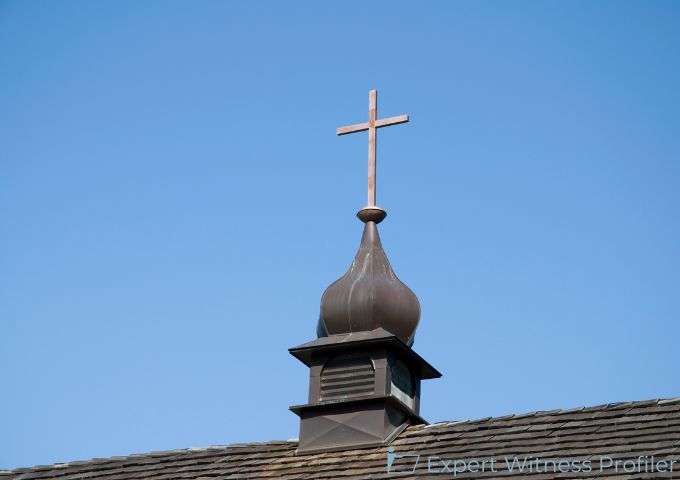
    This is a hail damage case. The Plaintiff, First Evangelical Lutheran Church of Lincoln, Nebraska, alleged that its roof was damaged in a hailstorm. Allegedly, the Defendant, Brotherhood Mutual Insurance Company, wrongfully delayed or denied certain benefits under its insurance policy.

    Basically, the Plaintiff alleged that its clay tiles, aluminum gutters, copper flashing, and other metal components suffered extensive damage, some of which allegedly caused interior leaks.

    The Plaintiff has designated two experts: Toby Duncan, a roofing consultant, and Matthew Y. Merrell, a licensed professional civil engineer. Specifically, the Defendant sought to exclude any opinions from these experts that a hailstorm occurred on the property, that a storm caused the damage, any “site-specific” storm conditions, such as wind speed or hail size, or that the damage is attributable to a specific weather event.

    The Plaintiff, on the other hand, sought to exclude the opinions of Vincent Hobson, the Defendant’s expert witness.

    Roofing Expert Witnesses

    Toby Duncan is a commercial and residential roofing consultant and project manager specializing in clay tile, slate, and copper roofs.

    Discover more cases with Toby Duncan as an expert witness by ordering his comprehensive Expert Witness Profile report.

    Vincent H. Hobson has over fifty years of experience in roofing and tiles. He also provides extensive consulting services to homeowners, architects, roofing contractors, historians and even other consultants in the tile roofing arena. 

    Get the full story on challenges to Vincent Hobson’s expert opinions and testimony with an in-depth Challenge Study.

    Civil Engineering Expert Witness

    Matthew Yates Merrell has developed a diverse engineering background focused on new construction and resolving difficult construction issues.

    Want to know more about the challenges Matthew Merrell has faced? Get the full details with our Challenge Study report.

    Discussion by the Court

    Merrell

    To begin with, Merrell relied on industry-standard impact tests to determine that the damage he observed on the church’s roof was consistent with damage caused by hail measuring 1.5 inches in diameter. He considered a consulting meteorologist’s report that a hailstorm on April 12 passed over the subject property, and that storm produced hail measuring a maximum of 1.5 inches in diameter. He relied on an interview with the church property committee indicating that the church’s roof had been repaired in 2018, and there were no “cracked, chipped, or fractured tiles” following those repairs.

    His expert report concluded that “impact damage consistent with hail strikes was widespread at the church.” It also concluded, “within a reasonable degree of engineering certainty, that the storm on April 12, 2020 damaged the subject property.”

    The Defendant argued that Merrell had no basis to opine about storm conditions on April 12, including whether a hailstorm occurred or the size of the hail. According to the Defendant, engineers may not give opinions about these kinds of “site-specific storm conditions.”

    However, Merrell attested that he regularly relied on data from meteorologists to form opinions about the cause of damage, and such reliance is an industry standard. Merrell’s report considered other causes of damages, and specifically excluded “damage that appeared unrelated to high winds and hail.” Merrell used the data from the meteorologist to support his findings about the damage to the roof, and that such damage is consistent with 1.5-inch hail; based on the record before the Court, that meteorological data is being used to support his conclusions based on his expertise, not supplant them. The Defendant challenged the factual basis and foundation of Merrell’s conclusions, but in this Court’s view, those arguments go to weight and not admissibility.

    Duncan

    The Defendant also sought to exclude Duncan’s opinions involving assumptions that hail of a particular size struck the property. While Duncan cannot give expert testimony that a hailstorm on April 12 caused the damage, he is not precluded from giving lay testimony regarding the same. Duncan was in Lincoln the day of the alleged hailstorm, and he visited the Plaintiff’s church property.

    He may give expert testimony that, through his professional experience, what he saw appeared to be consistent with hail damage. And, based on his personal knowledge of the weather conditions on April 12, he may testify as to his observations of the size or other characteristics of the hail.

    The Court made it clear that neither Merrell nor Duncan may provide expert opinions that hail of a particular size struck the church on April 12, 2020. However, both may provide the reason they believe hail of a certain size struck the building. Merrell relied on a meteorological consultant to confirm his measurements and the physical indication of certain-sized hail. Duncan relied on his measurements and personal experience with the hail to draw similar conclusions.

    Hobson

    Hobson inspected the church roof at the Defendant’s request, and issued a report in August 2022. The Plaintiff argued that Hobson’s opinions are “unsupported conjecture” and should be excluded.

    It’s clear from Hobson’s deposition testimony that he based his opinions on his fifty years of experience in roofing and tiles. That experience is an appropriate foundation upon which to base expert testimony, including the testimony that an HVAC installation process damaged the tile, that the specialty tile may have manufacturing defects, or that the damage was not widespread enough to have been caused by hail. As a result, the Plaintiff’s arguments all go to weight, not admissibility, and the motion to exclude will be denied by the Court.

    Held

    • The Court granted in part the Defendant’s motion to exclude or limit the testimony of Plaintiff’s experts, Toby Duncan and Matthew Merrell.
    • The Court denied the Plaintiff’s motion to exclude the testimony of the Defendant’s expert, Vincent Hobson.

    Key Takeaway

    In exercising its gatekeeping function, the Court must make a preliminary assessment of whether the reasoning or methodology underlying the proposed expert testimony is valid and of whether that reasoning or methodology properly can be applied to the facts in issue, focusing specifically on the methodology and not the conclusions. To that end, expert testimony that is speculative, unsupported by sufficient facts, or contrary to the facts of the case, is inadmissible.

    Case Details:

    Case Caption: First Evangelical Lutheran Church Of Lincoln, Nebraska V. Brotherhood Mutual Insurance Company
    Docket Number: 4:23cv3180
    Court Name: United States District Court, Nebraska
    Order Date: May 15, 2026
  • Civil Engineering Expert Was Not Allowed to Opine on Housekeeping Standards

    Civil Engineering Expert Was Not Allowed to Opine on Housekeeping Standards

    On April 29, 2024, Helen Olenik and John Olenik were passengers aboard Carnival Corporation’s ship, M/V Carnival Pride. Helen Olenik fell on an exterior tile floor after walking through sliding glass doors leading from the interior of the ship to the Serenity pool deck.

    Defendants filed a motion to strike and exclude the opinions of Plaintiff’s experts, Francisco De Caso Basalo and Nicholas D. A. Suite, and a separate motion to strike Plaintiff’s supplemental Rule 26 expert disclosure for Nicholas Suite, as well as the untimely supplemental disclosure concerning Victoria Maria-Sekunda.

    Civil Engineering Expert Witness

    Francisco Jose De Caso Y Basalo has over fifteen years of experience conducting slip resistance evaluations in maritime and other environments, has testified as an expert in numerous slip-and-fall cases, and participates in the Advancing Standards Transforming Markets (“ASTM”) F13 Committee on Pedestrian/Walkway Safety and Footwear Standards Development.

    De Caso is also the founder of The Integrated Built Infrastructure Group LLC, which specializes in pedestrian walkway safety and slip resistance evaluation. He is a Certified XL Tribometrist, has completed the Walkway Safety Certification program at the University of North Texas College of Engineering, and has earned the Walkway Auditor Certificate from the National Floor Safety Institute.

    Discover more cases with Francisco De Caso as an expert witness by ordering his comprehensive Expert Witness Profile report

    Neurology Expert Witness

    Nicholas David Alexander Suite received his M.D. from The Johns Hopkins University School of Medicine and completed postgraduate training in neurology (including chief residency) at The New York Hospital–Cornell University Medical Center, with an additional year of neurology residency at the University of Miami School of Medicine. He is the Owner and Director of Neurology Diagnosis & Applied Solutions (NDAS) and has served in academic teaching roles including Clinical Assistant Professor of Neurology at Nova Southeastern University’s Dr. Kiran C. Patel College of Allopathic Medicine.

    Get the full story on challenges to Nicholas D.A. Suite’s expert opinions and testimony with an in-depth Challenge Study.

    Neuropsychology Expert Witness

    Victoria-Maria S. Sekunda, PsyD is a board certified clinical neuropsychologist who conducts neuropsychological evaluations and diagnostic assessments, primarily with older adults on an outpatient basis. 

    Want to know more about the challenges Victoria-Maria Sekunda has faced? Get the full details with our Challenge Study report.

    Discussion by the Court

    i. Dr. Francisco De Caso

    Carnival contended that De Caso is not qualified to opine on human factors or housekeeping standards. Also, Carnival avers that the majority of De Caso’s opinions are speculative and unsupported by a reliable methodology.

    The Court noted that Carnival did not contest De Caso’s qualifications as a slip resistance expert but challenged his qualifications to opine about human factors and housekeeping standards.

    Carnival did not contest the reliability of De Caso’s slip index measurements of the subject floor but challenged his opinions as lacking any identifiable methodology. These included his opinions that the floor was more likely than not to become wet at the time of the incident, as well as his later observations—made approximately one and a half years afterward—of a grease film, which he inferred was present on the day in question. With respect to De Caso’s opinions beyond his slip index testing, Plaintiff failed to establish any reliable methodology.

    It should be noted that Plaintiff has agreed to redact all legal conclusions from the expert report and limit the testimony of De Caso to opinions related to his slip index testing. 

    ii. Dr. Nicholas Suite and Dr. Victoria-Maria Sekunda

    After the filing of the motion, on February 4, 2026, Plaintiff served Carnival a supplemental Rule 26 expert witness disclosure which included a report from Suite. Thereafter, on February 6, 2026, Plaintiff served Carnival a second supplemental disclosure which disclosed a new witness, Dr. Victoria-Maria Sekunda, and a copy of her report concerning neuropsychological evaluations conducted of Helen Olenik.

    Carnival argued that discovery closed on January 6, 2026, and the deadline for the Parties to file dispositive pre-trial motions was January 28, 2026. As such, Carnival contended that the late disclosure of those reports is neither substantially justified nor harmless, and the reports should be excluded. Carnival also sought to exclude the testimony of Suite and Sekunda.

    Carnival pointed out that even though Suite evaluated Helen Olenik and prepared a report dated September 22, 2025, the report was not served until four months later, after discovery closed and the deadline for filing dispositive motions passed. Basically, Carnival contended that this report is the first time it has been asserted that Helen Olenik’s post-incident mental decline was caused by a head injury. Likewise, Carnival pointed out that Sekunda first evaluated Helen Olenik on November 25, 2025, yet the February 6, 2026, supplemental notice was the first time Sekunda’s role as a treating doctor was disclosed.

    The Court found that Plaintiff has not satisfied his burden of showing that the failure to comply with Rule 26 was substantially justified or harmless.

    As Plaintiff acknowledged, Suite’s report was not provided until February 4, 2026, well after the close of discovery and after the deadline to exchange expert witness reports. Similarly, Sekunda was not disclosed as an expert until February 6, 2026.

    As for Suite, Plaintiff has offered no explanation for why he did not seek an extension of the Court’s deadlines.

    Held

    • The Court granted the Defendant’s motion to strike and exclude the opinions from the Plaintiff’s experts, Francisco De Caso Basalo.
    • The Court also granted the Defendant’s motion to strike the Plaintiff’s supplemental Rule 26 expert witness disclosure for Nicholas Suite and untimely supplemental disclosure of Victoria Maria-Sekunda.

    Key Takeaway

    In determining whether a failure to disclose was substantially justified or harmless, the Court considers the non-disclosing party’s explanation for the failure, the importance of the information, and any prejudice to the opposing party if the information were admitted.

    Case Details:

    Case Caption: Olenik V. Carnival Corporation
    Docket Number: 1:25cv20901
    Court Name: United States District Court, Florida Southern
    Order Date: April 03, 2026
  • Civil Engineering Expert Was Not Allowed to Opine on the Collapse of the Retaining Wall 

    Civil Engineering Expert Was Not Allowed to Opine on the Collapse of the Retaining Wall 

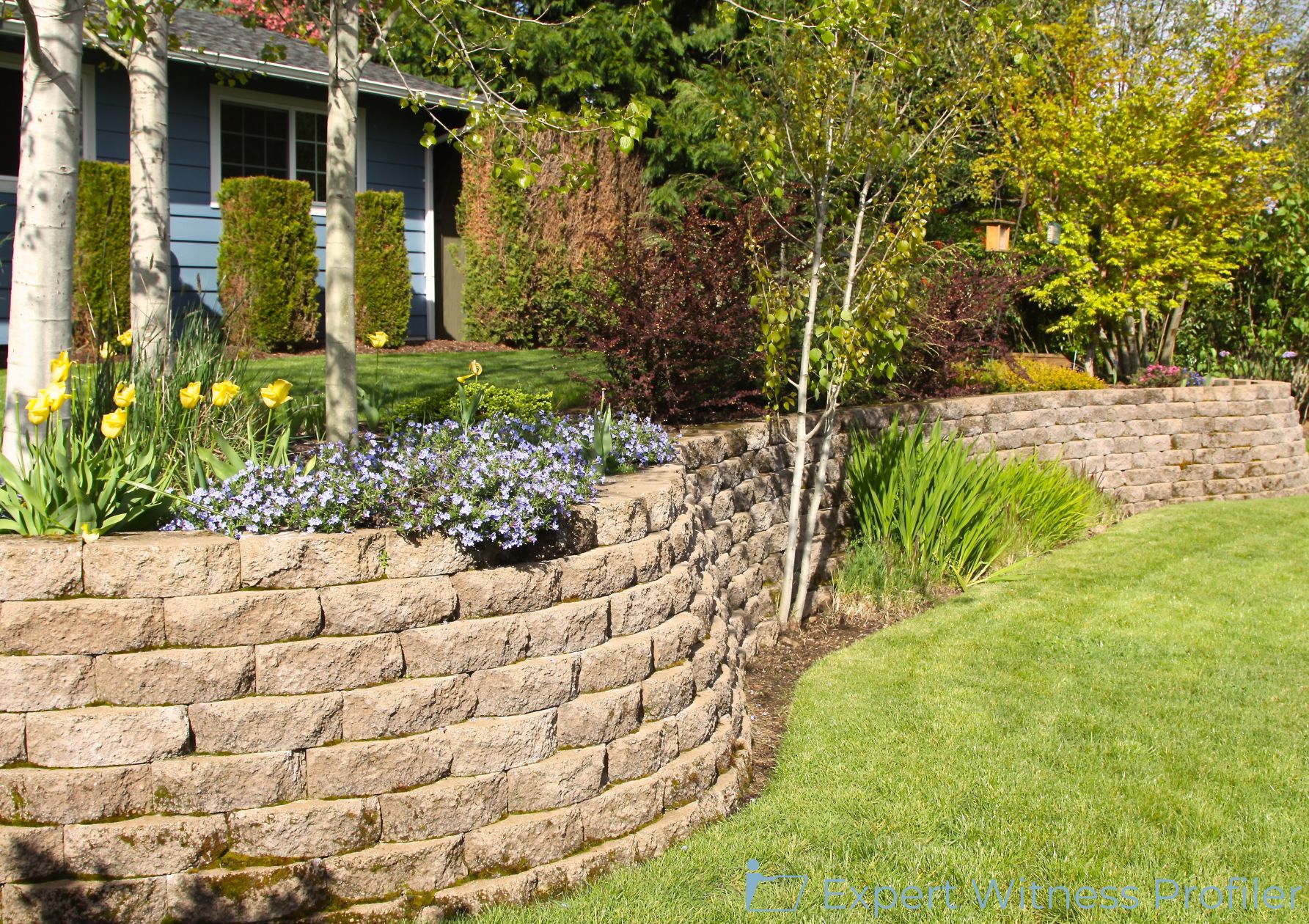
    This matter arises out of the collapse of a retaining wall at the home of Plaintiffs Pranav Mishra and Mamta Mishra. The Mishras sued Defendant State Farm Fire and Casualty Company for breach of contract and bad faith failure to pay their resulting insurance claim. State Farm filed a motion to exclude the testimony of Scott Skipper because (1) it is not based on reliable methodology, (2) it does not assist the trier of fact, and (2) the Mishras did not comply with the obligations of the Scheduling Order or Federal Rule of Civil Procedure 26(a)(2)(B).

    On February 3, 2023, Skipper wrote a letter to Pranav offering several theories as to the retaining wall’s collapse. Skipper agreed there was inadequate drainage behind the retaining wall and the wall was structurally unsound. 

    Skipper issued a report on June 21, 2024, which State Farm received just one day before Skipper’s deposition. His report noted that the February 2023 letter “was not intended to be a technical analysis. It was intended to convey an alternative theory only.” Skipper’s June 2024 report stated that on the night the wall collapsed, 1.55 inches of rain fell and he was “of the opinion that with the shallow footing of the failed wall and its position on the side of the sloping terrain, groundwater would likely migrate beneath the wall, and we would be doubtful impoundment of water behind the wall would be a major issue.”

    Skipper concluded that the retaining wall, even with the deficiencies noted, has held fast for more than 17 years.

    Civil Engineering Expert Witness

    Scott Skipper is a registered engineer and land surveyor. He obtained his Bachelor of Science in civil engineering in 1986 from the University of Alabama.

    Fortify your strategy by reviewing a Challenge Study detailing grounds for excluding Scott Skipper’s expert testimony.

    Discussion by the Court

    State Farm challenged the reliability of the methodology underlying Skipper’s expert report. It argued (1) Skipper initially visited the Property to determine how to repair it, not to determine the cause of the collapse, and (2) Skipper did not investigate the cause of the failure but instead relied on his familiarity with the Property based on his visits in early 2023 to determine how to repair the retaining wall. 

    The record before the Court did not reflect that Skipper’s opinion was reached through a methodology that satisfied the Daubert factors. Instead, it appeared that Skipper’s testimony was based primarily on his general experience with the geography surrounding the Mishras’ residence. The Court cannot discern what, if any, scientific methodology Skipper applied to either his initial letter or June 2024 report. Notably, Skipper testified that his February 3, 2023 letter was not intended to be a technical analysis but instead was meant to convey a “possibly plausible theory.” This is the type of “subjective belief [and] unsupported speculation” prohibited by Daubert.

    The June 21, 2024 report is similarly deficient because he apparently arrived at his conclusions based on “just living on the river my whole life.” 

    Because Skipper’s testimony is due to be excluded on reliability grounds, the Court did not reach State Farm’s arguments regarding Skipper’s alleged lack of opinions or the Mishras’ alleged failure to comply with the Scheduling Order and Rule 26(a)(2)(B).

    Held

    The Court granted State Farm’s motion to exclude the expert testimony of Scott Skipper.

    Key Takeaway:

    Unlike a lay witness, an expert may offer an opinion, including one that is not based on firsthand knowledge or observation. This relaxation of the usual requirement of firsthand knowledge “is premised on an assumption that the expert’s opinion will have a reliable basis in the knowledge and experience of his discipline.”

    The Mishras have not shown by a preponderance of the evidence that Skipper’s causation opinion is reliable because it is testable, peer reviewed, or generally accepted. Nor does the record reflect the known error rate for Skipper’s opinion. 

    Case Details:

    Case Caption: Mishra Et Al V. State Farm Fire And Casualty Company
    Docket Number: 4:23cv1537
    Court Name: United States District Court for the Northern District of Alabama, Middle Division
    Order Date: September 25, 2025
  • Civil Engineering Expert’s Testimony on Glulam Beams’ Failure Admitted

    Civil Engineering Expert’s Testimony on Glulam Beams’ Failure Admitted

    Defendant D.R. Johnson Lumber Co. is an engineered wood products
    manufacturer located in Riddle, OR. Plaintiff Jasmine Vineyards, Inc. is a grower of table grapes located in Delano, CA.

    Plaintiff asserted a negligence claim against Defendant based on allegations that Defendant “fabricated and/or supplied glulam wood beams in connection with a commercial construction project for Plaintiff” in Kern County, California, to contractors hired by Plaintiff to perform the construction services.

    On May 9, 2025, Plaintiff disclosed to Defendant pursuant to Rule 26(a)(2) its notice of non-retained expert witness and the report of Joseph Engel. Defendant filed a motion to exclude evidence and testimony anticipated to be offered by expert witness Engel.

    Civil Engineering Expert Witness

    Joseph C. Engel has a bachelor’s degrees in civil and mechanical engineering from the University of California at Davis. He has been practicing as a licensed civil and structural engineer for over 40 years.

    As a part of his practice, Engel has designed at least 75 cold storage rooms.

    Want to know more about the challenges Joseph Engel has faced? Get the full details with our Challenge Study report.  

    Discussion by the Court

    Engel is Qualified to Render the Challenged Opinions

    To begin with, Defendant advanced various complaints about Engel’s lack of qualifications, including his lack of employment history in a glulam beam manufacturing plant and his failure to review discovery documents to inform his opinions and conclusions. 

    Engel sought to opine that he observed gaps in the glue between the glulam beams’ lamina and that such gaps resulted in shear stresses that compromised the integrity of the beams. He specifically noted that, “regardless of the reason of the glued joint failure, the evidence of the failure can be clearly seen when the failed beam is carefully examined.” 

    Engel’s degrees in civil and mechanical engineering, his state licensures in civil and structural engineering, his long experience in the field, his experience designing cold storage facilities specifically for table grape storage, including the facility at issue here, and the fact that he has testified at deposition numerous times and recently was qualified in a state court civil case as an expert witness in structural engineering demonstrates sufficient “knowledge, skill, experience, training, or education.”

    Moreover, Engel is not being proffered to render opinions concerning the nature and composition of the glue used in the glulam beams, or to offer opinions about why or how any glue deficiencies occurred. Thus, the Court disagreed with Defendant’s proposition that only a “glue or glue performance” expert could opine about the import of gaps observed in a beam and whether such gaps could compromise a beam. 

    Engel’s Opinions are Relevant and Would Assist the Jury

    In arguing that Engel should be precluded from testifying because his testimony would not assist the jury, Defendant relies on the same argument advanced regarding Engel’s lack of qualifications as a “glue expert” and points out that Engel based his opinions only on his physical observations and moisture testing of the beams, but did not take samples from the beams.

    Otherwise, Defendant did not directly challenge that Engel relied on improper data or applied unreliable principles and methods in rendering his opinions. This is not surprising given that Defendant’s expert witness, Ali Moradi, similarly relied on his physical observations and moisture measurements of the glulam beams to arrive at competing conclusions regarding the cause of the beams’ alleged failure. 

    Given that the parties’ two relevant expert witnesses in this case relied on similar types of data and moisture measurements in forming their opinions and conclusions, the Court found that for purposes of Defendant’s pretrial motion to exclude that Plaintiff has shown it is more likely than not that Engel relied on sufficient facts and data and applied reliable principles and methods in rendering his opinions.

    Defendant’s argument that Engel’s opinions are irrelevant because they do not squarely address whether Defendant breached the applicable standard of care is unpersuasive. Whether or not expert testimony is necessary in this case on the applicable duty of care and breach thereof, Plaintiff must also prove causation to prevail on its negligence cause of action. 

    Held

    The Court denied Defendant D.R. Johnson Lumber Co.’s motion to exclude the evidence and testimony of Joseph Engel.

    Key Takeaway:

    The extent of Engel’s specialized knowledge in the specific field of glulam beam failure goes to the weight afforded to his opinion by the trier of fact, not to its admissibility.

    Case Details:

    Case Caption: Jasmine Vineyards, Inc. V. D.R. Johnson Lumber Co., Et Al.
    Docket Number: 1:24cv882
    Court Name: United States District Court, California Eastern
    Order Date: September 15, 2025
  • Civil Engineering Expert Employed a Reliable Methodology for Segregating Damages

    Civil Engineering Expert Employed a Reliable Methodology for Segregating Damages

    In this insurance coverage dispute, Plaintiff Will Properties Inc. brought claims against Defendant Century Surety Company for breach of contract, common law bad faith, and violations of the Texas Insurance Code.

    Plaintiff alleged that its exhibition center in Harker Heights, Texas was covered by Defendant’s policy, which included hail and windstorm coverage, from November 1, 2020 to November 1, 2021, and that the property “sustained extensive damage resulting from a severe storm that passed through the Bell County, Texas area” during the policy period.

    Defendant contended that Plaintiff cannot show that its claimed damages resulted from a covered cause of loss because it cannot segregate between damages that occurred during and before the policy period, including in a 2013 storm.

    Moreover, Defendant asked the Court to exclude the opinions of Plaintiff’s expert, Neil B. Hall.

    Civil Engineering Expert Witness

    Neil Bradley Hall is a graduate of City College of New York and a licensed Professional Engineer in Texas, Minnesota, New York, New Jersey, USVI and Mississippi, with over 25 years of professional experience in the practice of engineering. 

    Hall is the owner and principal of Groundtruth Forensics, a consulting firm specializing in building performance, failure analysis and damage assessment.

    Want to know more about the challenges Neil B. Hall has faced? Get the full details with our Challenge Study report

    Discussion by the Court

    Defendant contended: “According to the facts that Hall acknowledges, the Property suffered damage from a combination of covered and non-covered causes of loss. Yet nowhere in his written reports or deposition testimony does Hall even attempt to segregate the damage between those two.”

    Therefore, Defendant asserted, “Hall’s opinions do nothing to aid the fact finder and offer no information relevant to a determination of whether or to what extent Will Properties’ roof might have been damaged by a covered cause of loss.”

    In response, Plaintiff emphasized that Defendant did not challenge Hall’s education, qualifications, or methodology. Instead, Plaintiff contended, Defendant misstated the testimony of Hall, who “explained how he segregated damages between the Policy period and those pre-existing the Policy period.” Plaintiff submitted the transcript of Hall’s deposition and his declaration responding to the motion to exclude. In both, Hall explained his efforts to segregate hail damage to Plaintiff’s property by age, including by reviewing storms five years before the reported date of loss and focusing on two hail storms in 2019 and 2020; he also testified that he reviewed information from the 2013 storm.

    The Court, therefore, found that Hall’s opinions are relevant and sufficiently reliable to be considered by the finder of fact, who will be free to consider Hall’s methodology for segregating damages when determining the proper weight to accord his opinions.

    Held

    The Court denied the Defendant Century Surety Company’s motion to strike and exclude the opinions of Neil B. Hall.

    Key Takeaway:

    As a general rule, questions relating to the bases and sources of an expert’s opinion affect the weight to be assigned that opinion rather than its admissibility. Therefore, Defendants’ arguments about the reliability of Hall’s opinions go to the weight properly afforded his testimony, not its admissibility. 

    Case Details:

    Case Caption: Will Properties Inc. V. Century Surety Company
    Docket Number: 1:22cv1072
    Court Name: United States District Court, Texas Western
    Order Date: July 16, 2025

  • Civil Engineering Expert Did Not Rely on “Homemade Theories”

    Civil Engineering Expert Did Not Rely on “Homemade Theories”

    Carleton Shockman’s property was allegedly damage by an April 2021 hailstorm. After inspecting the property, State Farm found no storm-related damage and denied coverage. Shockman invoked the policy’s appraisal process, which resulted in an award of $61,778.97, but State Farm still denied coverage.

    Finally, Shockman sued State Farm, asserting claims for breach of contract, violations of the Texas Insurance Code, breach of the duty of good faith and fair dealing, and violations of the Texas Deceptive Trade Practices Act. Shockman designated Neil Hall as an expert witness on (1) the condition of Shockman’s property “following the hail and windstorm event” and (2) “the amount of funds necessary to repair the property to its original condition.”

    Hall, a licensed engineer and architect with over five decades of professional experience, concluded that hail caused the property damage on April 15, 2021.

    State Farm filed a motion to exclude Hall’s testimony on three grounds: (1) Hall failed to conduct a credible investigation based on accepted standards; (2) his causation opinions are conclusory and unreliable; and (3) he began with a firm conclusion and sought only confirming evidence. 

    Civil Engineering Expert Witness

    Neil Hall served as a commissioned officer in both the Army Corps of Engineers and the Navy Civil Engineer Corps. He holds two degrees in Architecture, graduate degrees in Systems Management and Landscape Architecture and a Ph.D. in Urban Studies.

    He is a licensed Architect, Interior Designer, Civil Engineer and Landscape Architect; a Certified Floodplain Manager; and a NFPA 1033 Certified Fire Investigator.

    Discover more cases with Neil Hall as an expert witness by ordering his comprehensive Expert Witness Profile report. 

    Discussion by the Court

    1. Hall’s Methodology

    First, Hall conducted an in-person inspection of the property on June 6, 2023. During this inspection, he documented the condition of the roof and other property components through photographs and direct observation. Hall then analyzed these observations in the context of potential causes.

    Second, Hall consulted multiple weather-data sources to determine if weather events capable of causing the observed damage had occurred at the property. These sources included weather data from the National Oceanic and Atmospheric Administration and storm-event data from the National Centers for Environmental Information. Hall used this data to identify an April 15, 2021, hailstorm that he concludes had wind strong enough and hail large enough to cause the observed damage. 

    Third, Hall reviewed claim documents and other materials related to the property and the insurance dispute. This included examining previous inspections and findings.

    Finally, Hall applied his professional experience to correlate the observed damage patterns with the meteorological data, ultimately concluding that an April 15, 2021, hailstorm caused the damage to Shockman’s property. 

    While Hall’s execution of this methodology may be properly subject to criticism on cross-examination, the Court held that the methodology itself satisfies Daubert‘s reliability threshold because the “method is generally accepted in the relevant engineering community”—specifically, forensic engineering.

    2. State Farm’s Objections

    Three main contentions were raised against Hall’s methodology: (1) Hall did not conduct a credible investigation and relied on “homemade theories”; (2) his causation opinions are conclusory and unreliable; and (3) he started with a conclusion and sought only confirming evidence.

    State Farm challenged Hall’s conclusion that hail can cause shingle damage at 0.75 inches, arguing that the hail must be at least 1.5 inches to do so. It criticized his choice not to measure individual hail impacts. State Farm questioned his decision not to inspect every portion of the roof. It disputed his assessment of a single window-screen tear. And it digressed considerably about “redacted” weather data without establishing the data’s significance or countering Hall’s testimony that he accounted for the data elsewhere in his report. 

    As for the first argument—that Hall conducted an insufficient investigation and used “homemade” methods—the Court held that State Farm never shows how Hall’s investigation meaningfully deviates from accepted practices used by similar experts in this field.

    Next, the Court held that it is not clear whether State Farm’s second and third contentions—that Hall’s opinions are conclusory and that he started with a predetermined conclusion—even challenged Hall’s methodology. Forming an initial hypothesis—which Hall acknowledged doing—does not render an expert’s methodology unreliable if he then gathers and analyzes data to test that hypothesis, which Hall did. Similarly, State Farm’s characterization of Hall’s opinions as “conclusory,” is more of an assertion that Hall didn’t use a methodology, not that the methodology he used is unreliable.

    Finally, the State Farm’s claim that Hall “disregarded any unfavorable data that did not support his assumption that hail was the cause of loss” was unsupported by the record. 

    Held

    The Court denied the State Farm’s motion to exclude the testimony of Plaintiff’s expert witness, Neil Hall. 

    Key Takeaway:

    The Court’s task in evaluating expert testimony is not to determine whether the expert’s conclusions are correct or to nitpick every data point or input used. Rather, the Court must ensure that the methodology used to reach those conclusions is reliable. 

    Basically, the Court found that Hall employed a reliable approach consistent with practices in the field of forensic engineering by inspecting the property, analyzing weather data from multiple sources, documenting damage, and applying his professional experience to reach his conclusions.

    Moreover, the Court added that State Farm’s criticisms of Hall’s specific factual inputs and conclusions did not show any fundamental flaws in his methodology. 

    Case Details:

    Case Caption: Shockman v. State Farm Lloyds
    Docket Number: 4:22 cv 02030
    Court Name: United States District Court for the Southern District of Texas, Houston Division
    Order Date: March 31, 2025
  • Materials Science Expert’s Supplemental Report Excluded Despite a Compelling Explanation for the Tardiness

    Materials Science Expert’s Supplemental Report Excluded Despite a Compelling Explanation for the Tardiness

    This is an insurance coverage dispute. Defendant Church Mutual Insurance Company (“Church Mutual”) insured Plaintiffs’ property. Hail damaged the property’s roof. The parties dispute whether the damage falls within Plaintiffs’ insurance policy, which precludes coverage for cosmetic damage.

    Plaintiffs sought to exclude the expert testimony of Christine Conner, Mark Kubena, and Ronald Dutton on the grounds that they applied an extracontractual definition of “functional damage,” which, according to Plaintiffs, made their opinions unreliable and irrelevant. Plaintiffs also filed a motion to exclude Dutton’s supplemental expert report.

    Forensic Engineering Expert Witness

    Christine E. Conner has 10 years of engineering experience, including design, evaluation, inspection, and repair of residential and commercial buildings and other structures, with over 5 years of engineering training and forensic engineering experience in cause and origin failure analysis for structural damage; structural failures, construction deficiencies, roof damage, wind/hail damage, water intrusion, settlement, flooring failures, construction deficiencies, cladding and window failures, foundation damage, flood, surge and wind damage analysis, and preparation of technical reports with findings.

    Get the full story on challenges to Christine Conner’s expert opinions and testimony with an in-depth Challenge Study. 

    Civil Engineering Expert Witness

    Mark Kubena is an engineer with expertise in the area of property damage causation and the determination of the appropriate scope of repairs for property damage.

    Want to know more about the challenges Mark Kubena has faced? Get the full details with our Challenge Study report. 

    Materials Science Expert Witness

    Ronald J. Dutton has over 40 years of metallic-coated steel experience with which he provides technical services for product development, failure analysis, and product training for the metal construction industry. He has served in various trade organizations, including the National Coil Coating Association (NCCA) and the Zinc Aluminum Coaters Association (ZAC), and holds BS and MS degrees from Drexel University and Lehigh University.

    Discover more cases with Ronald Dutton as an expert witness by ordering his comprehensive Expert Witness Profile report.

    Discussion by the Court

    A. The Expert Reports Are Relevant and Reliable

    The Court found that Conner, Dutton, and Kubena’s expert reports do not rely on extracontractual definitions of functional and cosmetic damage. They instead explained how the roof lacked certain types of functional damage. Thus, the expert reports opined that the roof had not been functionally damaged because its service life had not been reduced.

    Basically, Church Mutual’s expert reports would help the jury determine whether the policy limitation applies. And they do not confuse the trier of fact by applying a different definition of functional/cosmetic damages. The Court declared these reports admissible.

    B. Dutton’s Supplemental Report Is Inadmissible

    Dutton’s supplemental disclosure is a three-page summary of a laboratory report that evaluated the hail damage to the Plaintiffs’ roof. Dutton stated that the lab report supports the conclusions from his original report and demonstrates that there is no evidence that the hail diminished the performance of the roof.

    The Court found that Dutton’s report is not supplemental because it goes beyond filling the “interstices of an incomplete report” and instead introduces new laboratory testing results and new opinions.

    Church Mutual offered a compelling explanation for the tardiness. Dutton did not receive the lab results until after submitting his initial expert report. Moreover, the testimony was important because it provided lab results that helped explain why the roof damage is cosmetic instead of functional.

    Even though there is a compelling reason for the delay and the testimony is important, the Court will not admit it because Plaintiffs did not have time to produce rebuttal reports after Dutton disclosed the samples used in his supplemental report one week before the discovery deadline.

    Held

    The Court granted in part and denied in part the Plaintiffs’ motion.

    Key Takeaways:

    • None of the experts relied on an extracontractual definition of cosmetic or functional damage to reach their conclusions.
    • Even though Dutton states that his supplemental findings support his original conclusions, they still offer new opinions, because they analyze new laboratory test results.

    Case Details:

    Case Caption: Cleburne Training & Fitness Inc Et Al V. Church Mutual Insurance Company
    Docket Number: 3:24cv410
    Court Name: United States District Court, Texas Northern
    Order Date: April 10, 2025
  • Civil Engineering Expert Witness’ Testimony Premised on a Coefficient of Friction Measurement Test Excluded

    Civil Engineering Expert Witness’ Testimony Premised on a Coefficient of Friction Measurement Test Excluded

    Plaintiff Migdalia Rodríguez filed suit against Defendants WV Vacation Business LLC d/b/a Hotel Vista Azul and Cooperativa de Seguros Múltiples under Puerto Rico’s general tort statute. 

    She claims that while at the WV she slipped and fell on artificial grass. The Plaintiff filed a motion to exclude Engineer Berlin Ng Cortiñas’ testimony because, she claims, it is unreliable, irrelevant and may mislead the trier of fact. 

    Civil Engineering Expert Witness

    Berlin Ng Cortiñas is a civil and structural engineer, with 40 years of experience. During this time, his professional practice has been developed in following field of the engineering: structural analysis and design, construction, inspection and expert witness.

    Get the full story on challenges to Berlin Ng Cortiñas’ expert opinions and testimony with an in-depth Challenge Study. 

    Discussion by the Court

    The Court finds that Eng. Ng Cortiñas’ educational background and work experience qualify him as an expert in the field of structural and civil engineering. So, the first factor is satisfied. The Court also understands that his testimony would be based upon sufficient facts, reliable principles, and methods. He therefore also satisfies the second factor.

    However, the Court does not find that Eng. Ng Cortiñas’ testimony will assist the trier of fact because his testimony is premised on a coefficient of friction measurement tests performed under conditions that do not represent the conditions at the time of the alleged incident.

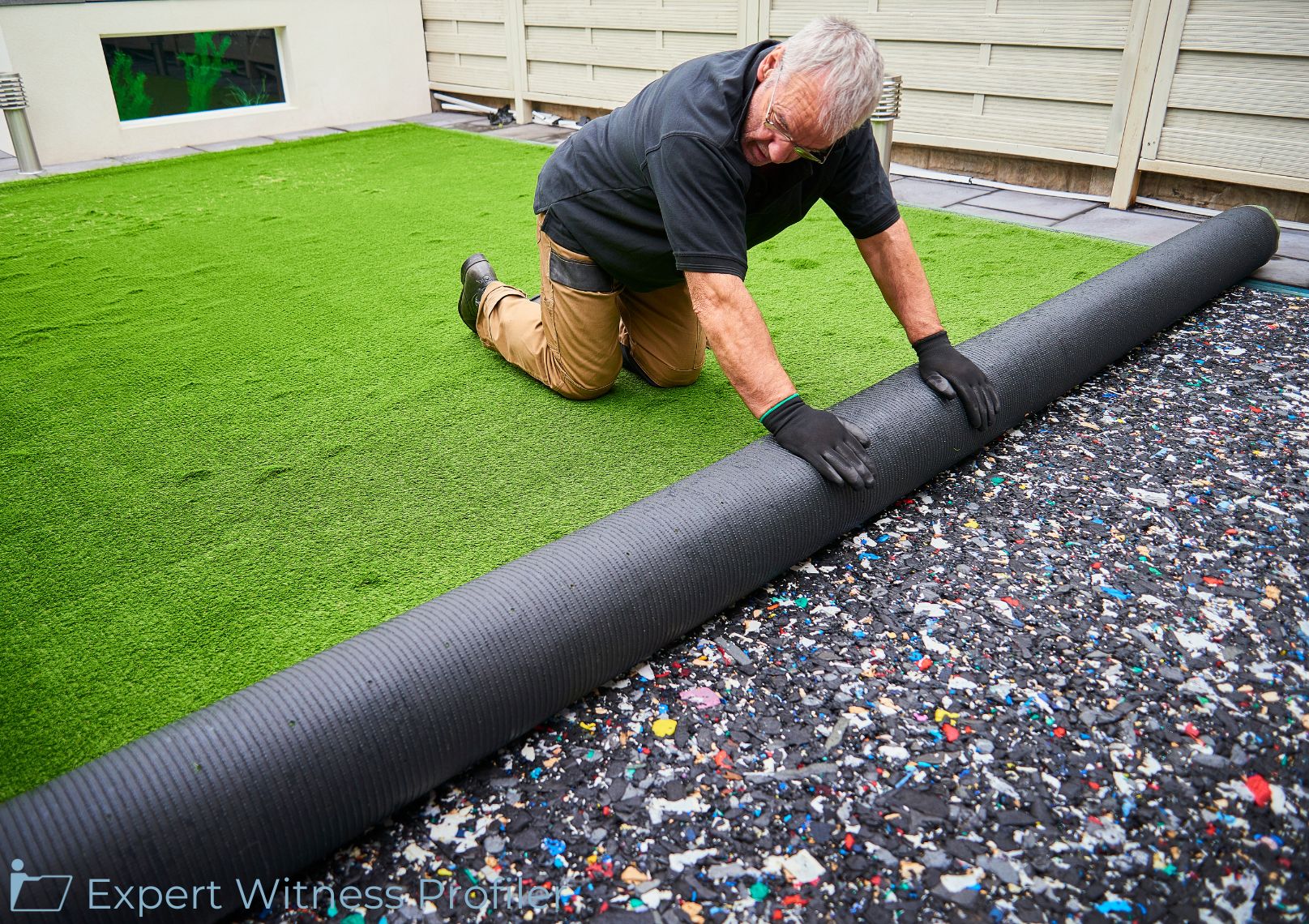
    Plaintiff challenged Eng. Ng Cortiñas’ expert testimony because the basis for his testimony would be his expert report, which relied on a coefficient of friction test performed on dry artificial grass which did not reflect the conditions of the artificial grass at the time of the alleged incident. After all, when Plaintiff fell, the artificial grass was wet, not dry.

    A test performed on dry artificial grass is not helpful to the trier of fact

    The parties do not contest that the artificial grass was wet at the time of the incident. Therefore, the Court does not see how a test performed on dry artificial grass will help the trier of fact since the test does not recreate the conditions at the time of the alleged incident. Saying that the coefficient of friction complied with the relevant standards (whichever those may be) when the artificial grass was dry is meaningless since the artificial grass was wet at the time of the incident at issue.

    Had Eng. Ng Cortiñas also performed a coefficient of friction test on wet artificial grass so that the jury could have had the opportunity to consider that test vis-à-vis the one performed on dry grass, his testimony could have been helpful to the jury. But alas, that was not done. Accordingly, the Court found that Eng. Ng Cortiñas’ testimony should be excluded under Rule 702 because it will not assist the jury and under Rule 403 because its probative value could be outweighed by a danger of misleading and confusing the jury with a test that does not replicate the conditions of the artificial grass at the time of the incident and therefore cannot show whether there was compliance with relevant standards.

    Held

    The Court granted Plaintiff’s motion to exclude Defendants’ expert witness, Eng. Berlin Ng Cortiñas.

    Key Takeaway:

    Plaintiff challenged Eng. Ng Cortiñas’ expert testimony because the basis for his testimony would be his expert report, which relies on a coefficient of friction test performed on dry artificial grass which did not reflect the conditions of the artificial grass at the time of the alleged incident. After all, when Plaintiff fell, the artificial grass was wet, not dry. Had Eng. Ng Cortiñas also performed a coefficient of friction test on wet artificial grass so that the jury could have had the opportunity to consider that test vis-à-vis the one performed on dry grass, his testimony could have been helpful to the jury. But alas, that was not done. 

    Case Details:

    Case Caption: Rodriguez V. Wv Vacation Business Llc D/B/A Hotel Vista Azul Et Al
    Docket Number: 3:22cv1430
    Court: United States District Court, Puerto Rico
    Order Date: September 30, 2024
  • Civil Engineering Expert Witness’ Opinion that the Roof Requires Full Replacement is Not Mere Speculation

    Civil Engineering Expert Witness’ Opinion that the Roof Requires Full Replacement is Not Mere Speculation

    Plaintiff Franklin Square Condominium Owner Association alleged that a hailstorm on April 28, 2021, damaged its property at 817-831 Old Ranch Road 12, San Marcos, Texas 78666.

    Franklin Square filed a claim with its insurance company, Defendant AmGuard Insurance Company. Plaintiff alleged that AmGuard breached the insurance contract by failing to pay the full amount of the claim.

    Franklin Square designated two expert witnesses: Marc Camacho, a structural and civil engineer who would testify that a severe hailstorm on April 28, 2021, caused functional damage to the roof of the Property that would require full replacement; and Jeremy Duke, a general contractor who would testify on the cost to repair the Property and replace the roof. 

    Civil Engineering Expert Witness

    Marc Camacho has over fifteen years of experience in engineering forensics investigations and/or design related to residential, commercial, and various other buildings and installations. His expertise includes forensic analysis, inspection, evaluation, engineering design, report/repair recommendations, and review/rebuttal of third-party reports. Camacho has extensive
    experience in various construction material types, installation and evaluation protocols, and component failure mechanisms, with understanding of construction plan implementation, building code interpretation, industry standards, and identification of storm-related damage.

    Get the full story on challenges to Marc Camacho’s expert opinions and testimony with an in-depth Challenge Study. 

    Construction Expert Witness

    Jeremy Duke holds a degree in Kinesiology and Business from the University of North Texas and an Associate Degree in Science from Navarro Junior College. Jeremy has obtained multiple certifications, including Xactimate 28 Level 1, and holds a Texas Real Estate License, enhancing his expertise in the roofing and general construction industry.

    Since November 2014, Duke has been the owner of J. W. Duke Roofing and General Construction, where he has successfully managed various projects.

    Want to know more about the challenges Jeremy Duke has faced? Get the full details with our Challenge Study report. 

    Discussion by the Court

    AmGuard asked the Court to exclude Camacho’s testimony as unreliable. AmGuard also contended that Duke’s testimony should be excluded because his report did not comply with Rule 26, he is not qualified to give expert testimony on the cost to replace a roof, and his estimate on interior repairs is unreliable.

    Camacho’s Opinion Is Reliable

    For expert testimony to be reliable, it must “be grounded in the methods and procedures of science and . . . be more than unsupported speculation or subjective belief.”

    AmGuard argued that Camacho’s testimony that the Property’s roof must be replaced is unreliable because it is not supported by sufficient data or reliable methodology. AmGuard challenged Camacho’s opinion that hail damage to the concrete roof tiles “cannot be feasibly or effectively repaired” and remediation “will require full removal and replacement of concrete tile roof coverings” at the Property. 

    Camacho visited the Property on March 19, 2024, and inspected the roof and took photographs of the damage. His expert report stated that damage “consistent with historical impacts from hail” was present on roof tiles and metal components on the roof. AmGuard argued that the report is unreliable because Camacho only closely inspected a small percentage of the roof tiles and did not estimate the percentage of damaged tiles. However, Camacho testified that he viewed “all of the roof in general,” but that when performing a hail inspection, he “quite frequently will get down on his hands and knees to like really get up close and attempt to evaluate” only a fraction of a roof’s tiles. 

    Camacho also stated in his report that he observed several different types of hail damage on the roof and that the damage could not be feasibly or effectively repaired. Moreover, he explained how roofs can be damaged by hail and how functional damage reduces a roof’s water-shedding capability or lifespan. The Court found that Camacho’s opinion that the roof requires full replacement is grounded in a proper methodology and is not mere speculation.

    Duke’s Report Does Not Comply with Rule 26

    AmGuard argued that Duke’s testimony should be excluded because his report does not comply with Rule 26(a)(2)(B), which requires an expert report to include “a complete statement of all opinions the witness will express and the basis and reasons for them” and “the facts or data considered by the witness,” among other things.

    Duke’s report consisted of his resume; photographs of the damage; and a damage estimate report created using “a computer software program known as ‘Xactimate’ which is commonly used by construction contractors and adjusters to create estimate reports.” Duke neither stated the basis and reasons for the damage nor explains how his experience is reliably applied to the facts of this case. Therefore, the Court found that his report does not comply with Rule 26(a)(2)(B). 

    Franklin Square has not shown that its failure to comply with Rule 26(a)(2)(B) was substantially justified or harmless

    Rule 37(c)(1) requires courts to exclude expert testimony for failure to comply with Rule 26(a) unless the failure was substantially justified or harmless. Franklin Square contended that Duke’s report does comply with the rule and does not argue that its failure was substantially justified. Courts weigh four factors to determine whether a party’s violation is harmless: “(1) the importance of the evidence; (2) the prejudice to the opposing party of including the evidence; (3) the possibility of curing such prejudice by granting a continuance; and (4) the explanation for the party’s failure to disclose.”

    The Court held that the first factor weighs in favor of Franklin Square because Duke’s testimony on damages would be important to a determination of the amount of Franklin Square’s claim. The second and third factors weigh in favor of AmGuard. Without an adequate statement of the basis for Duke’s opinion, AmGuard is prejudiced in its ability to prepare for his deposition and cross-examination at trial. Moreover, Discovery has closed, AmGuard has filed a motion for summary judgment, and “a continuance would result in additional delay and increase the expense of defending the lawsuit.”

    Considering the four factors, the Court found that Franklin Square has not shown that its failure to comply with Rule 26(a)(2)(B) was substantially justified or harmless.

    Held

    The Court held that Defendant AmGuard Insurance Company’s motion to exclude or limit the testimony of Plaintiff’s designated expert witnesses is denied as to Marc Camacho and granted as to Jeremy Duke.

    Key Takeaways:

    • Camacho’s opinion that the roof requires full replacement is grounded in a proper methodology because he observed several different types of hail damage on the roof to arrive at his conclusions. He explained how roofs can be damaged by hail and how functional damage reduces a roof’s water-shedding capability or lifespan.
    • If a witness is “relying solely or primarily on experience, then the witness must explain how that experience leads to the conclusion reached, why that experience is a sufficient basis for the opinion, and how that experience is reliably applied to the facts.” Duke neither states the basis and reasons for the damage nor explains how his experience is reliably applied to the facts of this case. Therefore, the Court finds that his report does not comply with Rule 26(a)(2)(B).

    Case Details:

    Case Caption: Franklin Square Condominium Owner Association V. Amguard Insurance Company
    Docket Number: 1:23cv1012
    Court: United States District Court, Texas Western
    Order Date: September 1, 2024