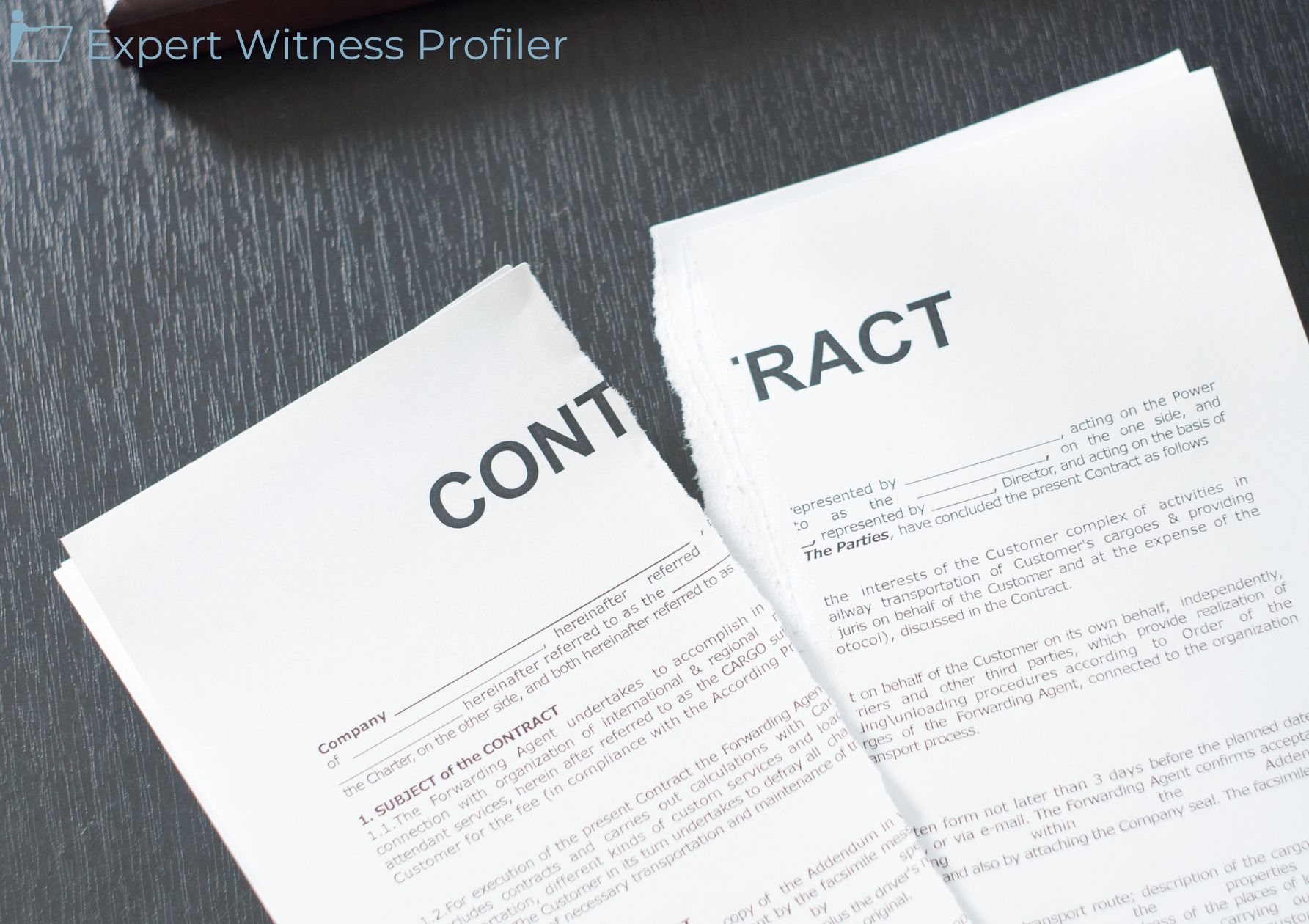
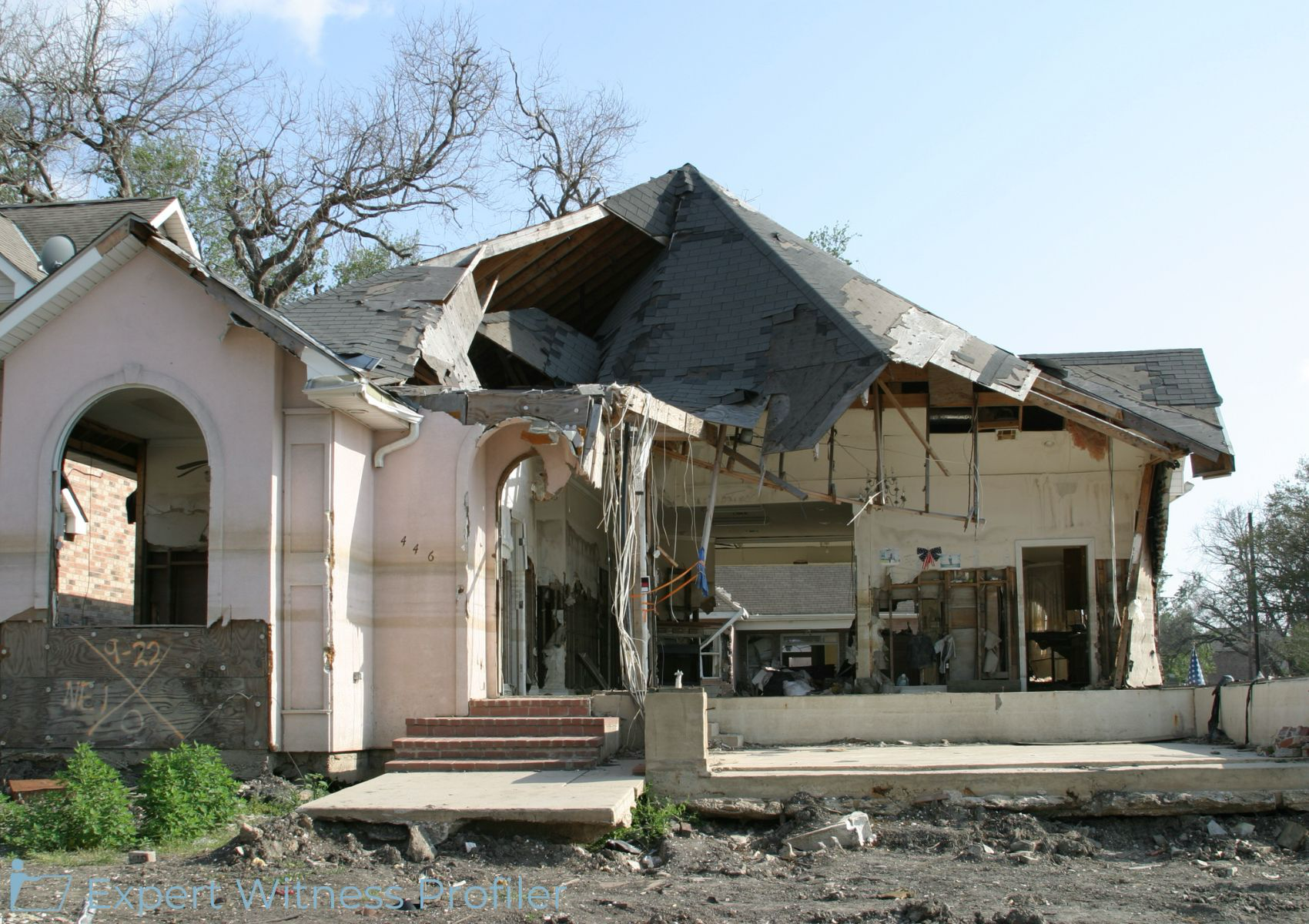
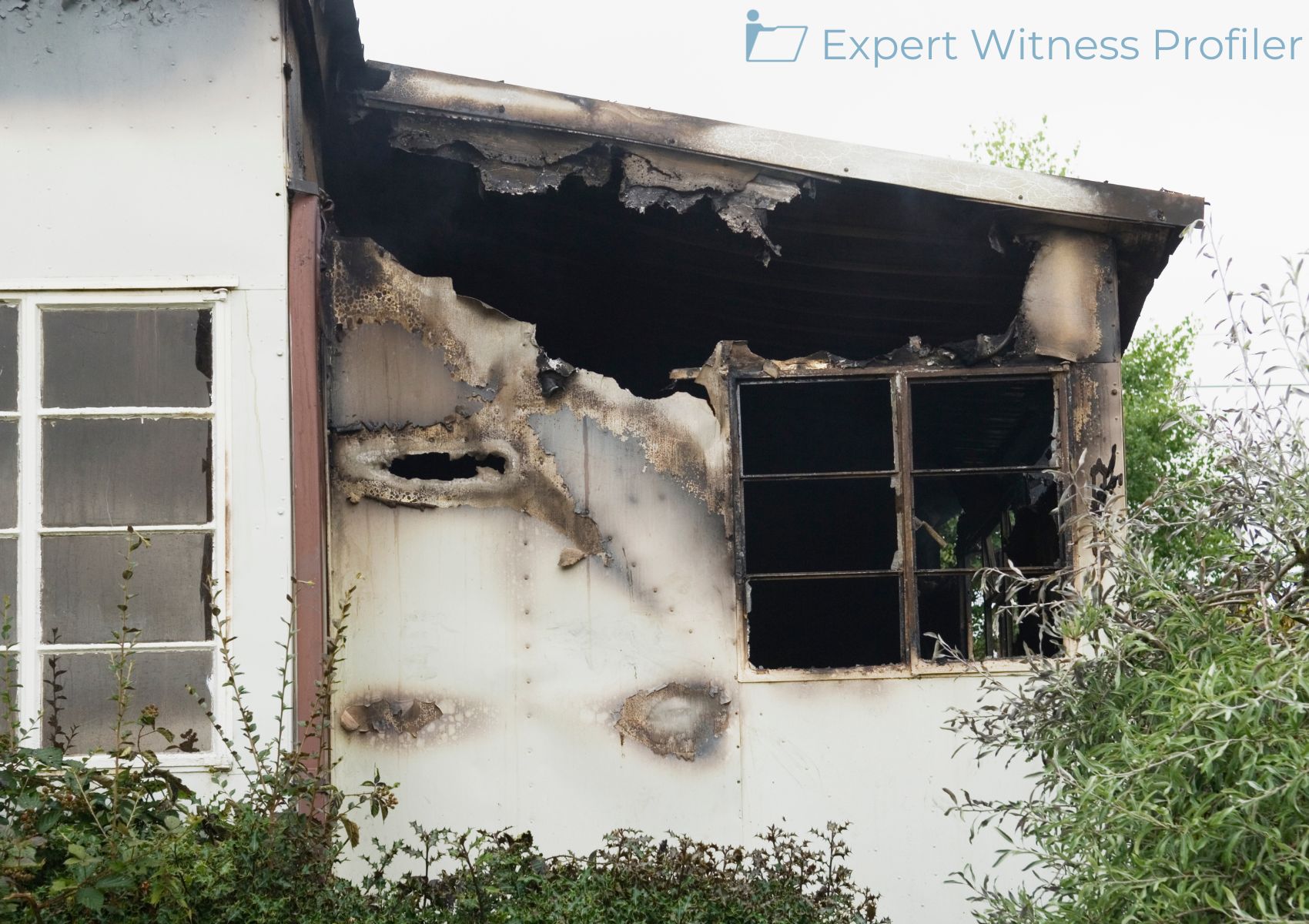
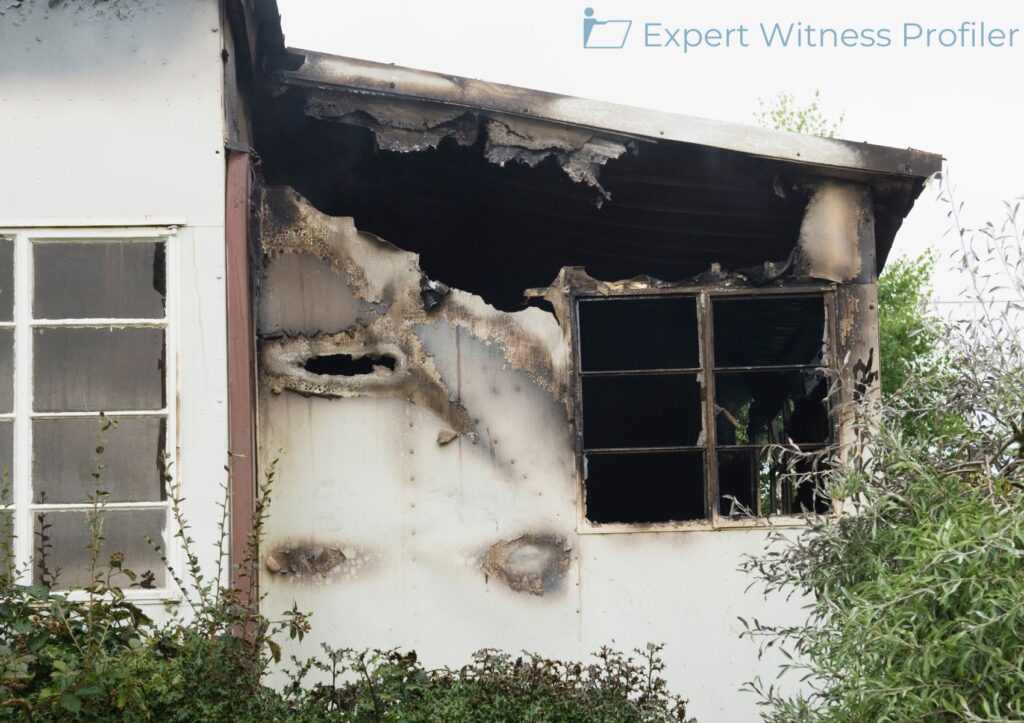
This action concerns whether the construction of a condominium building damaged the townhouses on an adjacent property owned by the Plaintiff, Charles Matiella.
Plaintiff alleged causes of action for negligence and trespass against the owner of the adjacent property, Murdock Street, LLC; the two companies who operated as the general contractor and developer for the construction of the condominium building, EWORA, LLC, and IFG Group, LLC; and two subcontractors, City Concrete Corporation and Luis Construction, Inc.
Defendants joined in a motion to exclude the testimony and opinions of Plaintiff’s single expert, Timothy G. Galarnyk.
Construction Expert Witness
Timothy Gerard Galarnyk is CEO of Construction Risk Management Inc. (CRM). Galarnyk has over 30 years of education, training, and field experience in construction and construction risk management. He has traveled the world promoting construction-risk initiatives, injury and fatality prevention, and investigation of these events for legal adjudication.
The Court found that, although Galarnyk was qualified to offer expert testimony, his testimony and opinions were nonetheless inadmissible, principally because he had not established that they were reliable under the standard of Daubert.
Additionally, some opinions were also inadmissible because they constituted legal conclusions or would be unhelpful to the triers of fact. In short, the Court excluded Galarnyk from providing opinions or testifying at trial.
Held
The Court granted Defendants’ motion to exclude Timothy Galarnyk from providing opinions or testifying at trial.
Key Takeaway
Galarnyk clearly relied on “his years of experience—or, perhaps, experience along with training and education—in construction and related fields” to form his opinion, but he “failed to explain how that experience, training, and education ‘lead to the conclusion reached, why they are a sufficient basis for the opinion, and how they are reliably applied to the facts.’”
Case Details:
Case Caption:
Matiella V. Murdock Street LLC
Docket Number:
1:21cv2112
Court Name:
United States District Court, District of Columbia
This dispute arises out of an interior design contract between Plaintiff Michael Lukacs and Purvi Padia Design LLC to provide interior design services for his 25,000 square foot home in New Jersey.
Lukacs alleged that PPD was contractually responsible to oversee his home renovation project. He further alleged that the installed work is subpar and he suffered damages as a result of inadequate oversight by PPD and poor installation by the subcontractors. According to Lukacs, the work is so flawed that everything must be torn out and replaced.
Plaintiff hired Paul Johnson (“Johnson”) as his proffered expert in construction and luxury home design.
On October 30, 2024, Johnson issued his written expert report, concluding, in part, that the flooring was defective due to poor installation. Additionally, during his deposition in this matter, on March 4, 2025, Johnson testified that hardwood damage was caused by installation failure.
Defendants filed a motion to preclude the testimony of Johnson. Specifically, Defendants asserted that Johnson’s conclusions are ipse dixit opinions, which conflict with previous opinions in separate cases regarding the same Property, and he failed to identify the basis for his conclusions.
Construction Expert Witness
Paul L. Johnson has decades of experience in the luxury home renovation industry. He is also the founder/operator of two successful construction firms.
Johnson provided construction services to the 5 General Services Administration of the Federal Government (GSA), maintained many 6 multi-million-dollar sales years, and served as the owner representative for a 13.2- 7 million-dollar construction/renovation project in Bethesda, MD.
The Court found that under Rule 702 and Daubert, the testimony of Johnson was inappropriate and inadmissible.
Johnson’s October 2024 report consisted of four opinions. To begin with, Opinion 1 stated that PPD’s contract with Plaintiff made PPD the “primary entity responsible for oversight of the entire project.” This opinion, however, offered an improper legal interpretation of the contract as it sought to define Defendants’ duties under the contract.
Opinion 2 stated that Defendant Purvi Padia was “negligent and was the proximate cause of the significant damage to the Plaintiff’s home.” Opinion 2 suffered from the same fatal defect as Opinion 1 as it is a glaring improper legal conclusion.
Moreover, Opinion 3 concluded that “Padia and PPD misrepresented her abilities to Plaintiff and hid cost overruns known to her.” Johnson provided no basis for this opinion and his report failed to mention any specific misrepresentation made by PPD or Padia to Plaintiff.
Lastly, Opinion 4 relates to damages and avers that Plaintiff’s damages include, but are not limited by, the costs to: retain new design professionals; remove and replace all of the hardwood flooring; replace all stonework; and repaint the entire interior of the home. Johnson’s opinion regarding damages is unreliable as it is conclusory and not sufficiently tied to the facts of the case.
Johnson did not outline any reliable methodology, nor did he point to any industry standard within his opinion. Additionally, the Court emphasized that Johnson’s conclusions regarding damages, specifically the need to replace all of the hardwood flooring, are directly contradicted by another report he issued based on the same site examination in a separate lawsuit. This inconsistency is beyond conducting cross-examination at trial as Johnson’s conclusions are patently unreliable.
Held
The Court granted the Defendants’ motion to preclude the testimony of Plaintiff’s expert Paul L. Johnson.
Key Takeaway:
As an expert witness, Johnson was prohibited from rendering a legal opinion and could not opine on whether Padia was negligent and that such negligence was the proximate cause of damage to Plaintiff’s home.
Moreover, a juror can determine whether Defendants made misrepresentations to Plaintiff without the need for the specialized knowledge, skill, or training of Johnson.
Plaintiff ZP No. 332, LLC hired Defendant Huffman Contractors, Inc. as the general contractor on a real estate development project. Huffman allegedly failed to complete the work adequately, and ZP eventually declared a default on the construction contract. That gave the parties’ surety, Travelers Casualty and Surety Company of America, several options under a performance bond. From those options, Travelers chose to take over Huffman’s contract, hire subcontractors, and finish the project. ZP claimed that Travelers did not fulfill the construction contract adequately after it took over and sued both Huffman and Travelers for breach of contract.
ZP promised to prove the cause of the property’s lost value (i.e., Huffman and Travelers’s alleged delays) through a forensic scheduling expert, Kevin Coyne. Huffman filed a Daubert motion to exclude Coyne’s testimony.
Construction Expert Witness
Kevin Coyne, P.E., PSP has more than 20 years of construction management, project controls and construction claims experience. He has been invited to speak throughout North America on a variety of engineering and construction topics and has served as a guest lecturer in the Department of Civil, Environmental, and Infrastructure Engineering at George Mason University.
Coyne is a ‘forensic scheduler’ who purports to have performed a “detailed causation analysis” regarding alleged construction delays. Huffman lodged three categories of complaints about Coyne’s expected testimony: (1) He does not use what Huffman claims is the best available method; (2) his analysis disregards facts in Huffman’s favor, such as evidence that ZP itself may have been responsible for some delays; and (3) his opinions are too favorable to ZP.
First, Huffman argued that Coyne “did not cite” “the most recognized industry standard” for the form of analysis he used. After reviewing his report and the opinions of Huffman’s rebuttal expert, the Court found that the principles and methods Coyne used are more likely than not reliable. Huffman is welcome to argue to the jury that Coyne should have taken a different approach.
Coyne discussed at length how he validated the data sources he relied on, and the Court finds that the facts that underlie his opinions are more likely than not sufficient. Therefore, cross-examination—not exclusion—is the solution to Huffman’s concerns about how Coyne handled facts allegedly unfavorable to ZP’s position.
Huffman also asserted that Coyne’s “one-sided opinions” made his testimony “inadmissible.” To the extent that argument is about Coyne allegedly ignoring evidence that ZP itself may have contributed to project delays, it is simply the same contention addressed above, wearing a different mask, and the Court has already concluded that Huffman’s concern goes to weight, not admissibility. Insofar as Huffman raises a new issue here, it fails because credibility is a question for the jury, not a matter for a Daubert motion or summary judgment.
Held
The Court denied Huffman’s motion to exclude the testimony of Kevin Coyne.
Key Takeaway:
While an expert’s testimony must be based on “good grounds” and constitute “more than subjective belief or unsupported speculation,” neither Fed. R. Evid. 702 nor Daubert requires an expert to use the method opposing counsel would select or even the best or most recommended method.
Tim Waldorf sued State Farm Fire and Casualty Company for breach of contract and bad faith stemming from State Farm’s denial of insurance coverage for damages allegedly caused to Waldorf’s residence following a hailstorm.
State Farm filed a motion to strike the testimony of Aaron Brookens, one of Waldorf’s expert witnesses.
Construction Expert Witness
Aaron Brookens is the CEO and founder of Brookens Construction, a premier residential and multi‑family roofing and gutter firm serving Dane County and the greater Madison, Milwaukee, and Fox Valley regions.
State Farm filed a motion to strike Brookens’ testimony because Waldorf failed to comply with the expert disclosure requirements of Fed. R. Civ. P. 26(a)(2)(B).
Waldorf responded that Brookens was not specially retained to provide expert testimony in this litigation and therefore was not required to comply with the disclosure requirements of Rule 26(a)(2)(B). Rather, Waldorf maintained that Brookens is a hybrid expert witness subject to the disclosure requirements of Rule 26(a)(2)(C).
Expert Disclosure Requirements
The question is whether Brookens is subject to Rule 26(a)(2)(B) or Rule 26(a)(2)(C).
State Farm contended Brookens is a retained expert because he was not involved in the underlying claim until the day before the suit was filed when Waldorf’s counsel requested an estimate from Chuck Weber, the original contractor on the claim.
The Court agreed. For starters, Brookens did not have firsthand knowledge of the underlying facts of the claim as Waldorf argues; Weber did. Brookens did not personally inspect the property and based his opinion on the report and photos provided by Weber. Brookens’ opinions, therefore, were not formed through his own observations but at the request of Waldorf’s counsel and in connection with litigation.
Further, Brookens stated that he understood the estimate was being requested because counsel was filing a lawsuit. Because hybrid expert witnesses may not “testify to any opinions reached for the first time at the prompting of Plaintiff’s counsel or in conjunction with the lawsuit,” Brookens was acting as a retained expert subject to the disclosure requirements of Rule 26(a)(2)(B).
The fact that Brookens is not being provided monetary compensation for his services was also not dispositive.
Rule 37 Sanctions
State Farm contended that the failure to comply with Rule 26(a)(2) should result in the exclusion of Brookens’ testimony and opinion that the siding of Waldorf’s residence needs complete replacement.
Waldorf did not argue that the failure to provide an expert report was harmless or justified. Instead, he maintained that because Brookens is a hybrid expert he was only required to disclose the subject matter of his testimony and a summary of his facts and opinions under Rule 26(a)(2)(C). However, given the Court’s determination that Brookens is a retained expert subject to the requirements of Rule 26(a)(2)(B), Waldorf’s argument that he need only comply with Rule 26(a)(2)(C) failed. Moreover, Waldorf provided no justification for his failure to comply with Rule 26(a)(2)(B) beyond his contention that Brookens did not fall under this standard.
While Waldorf’s expert disclosures included Brookens’ notes and annotations to Weber’s photographs, this provided little to no explanation as to why, in this particular case, Brookens believed the flashing could not be replaced without replacing the entirety of the siding. Such testimony as Brookens’ offers on causation and damages in this case is clearly the province of a retained expert witness.
Furthermore, the Court found that Waldorf’s failure was not harmless. State Farm did not learn the basis of Brookens’ opinions until his January 31, 2025 deposition. And even then, Brookens acknowledged that even though the step flashing “typically” needs to be replaced when replacing the shingles, there “is a chance that when those shingles come off, that step flashing is in great condition . . . and it doesn’t need to be replaced. That is a possibility.”
Held
The Court granted the Defendant’s motion to strike the testimony of Aaron Brookens.
Key Takeaway:
A “misunderstanding of the law does not equate to a substantial justification for failing to comply with the disclosure deadline.” And the nature of Brookens’ involvement in providing an estimate, as well as the nature of his opinions, belies the notion that Waldorf reasonably believed Brookens was not subject to Rule 26(a)(2)(B). It was Weber, not Brookens, who inspected the residence for damage and provided an estimate based on what he observed firsthand.
On March 4, 2023, Plaintiff Jane Randall’s son, Christian Randall, set fire to her home on Lady’s Island in Beaufort, South Carolina. On January 26, 2025, Plaintiff identified David Johnson as an expert general contractor to testify regarding the extent of damage to Plaintiff’s home and the need to demolish and rebuild the property at a cost of approximately $2.2 million.
Defendant Allstate Insurance Company argued that Johnson’s opinions regarding the cost of rebuilding Plaintiff’s home are “nothing but speculation, conjecture and a lack of formalized testing.”
Construction Expert Witness
David Johnson has over two decades of experience as a licensed general contractor in both North and South Carolina. He has been in the homebuilding construction business since 1971 and has served as a project manager for many residential properties in Beaufort County. As both a licensed realtor and a licensed general contractor, he has extensive experience in assessing property values and damage costs.
After a careful review of Johnson’s deposition, the arguments of the parties, and Rule 702 standards, the Court found that Johnson’s testimony is sufficiently reliable and would be helpful to the jury if called upon to determine damages in this case. Johnson has sixteen years of experience as a general contractor in the area and has firsthand knowledge of construction costs. He has consulted with an architect and structural engineer and provided an estimate that the rebuilding of the home would cost around $395 per square foot, which is at the low range of square foot costs in the area.
Johnson’s use of a per square foot metric to estimate rebuilding costs is a reasonable method utilized in his business.
Defendant accurately noted that the estimate provided by Johnson is not based on final architectural blueprints and that the square foot number he utilized was based on information provided by Plaintiff. These issues go to the weight and not the admissibility of the expert testimony. Defendant will have every opportunity to cross examine Johnson at trial and identify any weaknesses or questions about his opinions.
The Court found, however, at this point, Plaintiff has carried her burden of showing by a preponderance of the evidence that Johnson’s opinions are sufficiently reliable, based upon reasonable methods, and would be helpful to the jury should damages be an issue at trial.
Held
The Court denied the Defendant’s motion to exclude David Johnson as an expert witness under Rule 702.
Key Takeaway:
Johnson’s opinions are based on personal experience as a general contractor in the Beaufort County area, consultation with an architect and structural engineer, personal inspection of the fire damaged home, firsthand knowledge of actual costs for construction in the local area, and the use of a cost per square foot metric.
The case arises from Belmere, L.P.’s claim that Steadfast Insurance Company failed to timely and adequately pay it proceeds due under its commercial lines policy after Belmere invested $26 million of its own funds to repair a 249-unit apartment complex in Houma, Louisiana that it alleged suffered “catastrophic damage” during Hurricane Ida.
Through its lawsuit, Belmere sought (i) additional coverage under its policy with Steadfast, and (ii) penalties, attorneys’ fees, and interest for Steadfast’s alleged bad faith.
Steadfast filed a motion in limine to exclude the opinions of experts Mr. Byron Earls and Mr. Christopher Lipp.
Belmere retained Earls to (i) “investigate the scope of completed repairs based on information provided”; (ii) “generate comparative estimates for typical building types”; and (iii) “generate a report providing an opinion on the projected measurement of loss based on extenuating circumstance[s] after the event.”
Lipp, on the other hand, was retained to provide a “technical assessment of the exterior building envelope components inclusive of the roof, exterior walls and windows” with a focus “on the severity of the impacts of water intrusion sustained at Belmere, and its need to replace building materials that were ruined after becoming wet.”
Construction Expert Witness
Byron Earls has over 20 years of experience in building construction, both commercial and residential. He also has over 7 years of experience as a catastrophic adjuster handling catastrophic claims nationwide including large fire and water losses.
Christopher Lipp has performed numerous envelope assessments, and investigations and has prepared construction documents based on those investigations. Lipp is experienced in the evaluation of distressed facade elements, including windows, doors, curtain walls, storefront systems, stucco, brick and fiber cement panels on both historic and new construction.
Steadfast made the following contentions: (i) Earls’ methodology is insufficient to meet Daubert standards for reliability and will otherwise result in jury confusion; (ii) his expert report fails to address causation; and (iii) his testimony is irrelevant to determining the alleged cost of repairs, which will result in jury confusion.
Since Belmere conceded that Earls’ testimony will not be used to establish the measure of its damages—”which are established by its own out-of-pocket costs”; accordingly, the Court granted Steadfast’s motion to the extent that it sought to exclude testimony or any part of the Earls’ report that estimated damages that have already been established by Belmere’s “repair bill.”
While Earls’ testimony may be relevant for the purpose of rebutting an assertion by Steadfast that specific repair costs were excessive or that the property was not restored using like-kind and like-quality materials, but, the Court held that in its current form, the “proposed opinion [did not] assist the trier of fact to understand or determine a fact in issue.”
The Court declined to admit any testimony or portion of the Earls report that estimated damages that have already been established by actual costs. If Steadfast presented an argument that the costs incurred by Belmere are somehow excessive or relate to betterments, the Court will allow Earls to opine in general terms (i) as to the reasonable nature of the actual costs or (ii) for the purpose of rebutting the contention that the costs amounted to betterments. As to the reasonable nature of the amount paid by Plaintiff, in no event will the expert state the specific amount of his estimate; merely that he estimated the amount of damages to be greater than the amount paid by Plaintiff.
Christopher Lipp
Steadfast contended in brief fashion that Lipp’s testimony should be excluded for the following three reasons: (i) he did not inspect the property; (ii) he did not provide any opinion on the issue of causation of the alleged damages or the sufficiency of the repairs; and (iii) his “expert report and associated opinions rely heavily on the flawed, irrelevant, and unreliable opinions included in Earls’ report.”
As a threshold matter, the Court denied Steadfast’s motion to the extent it sought to exclude Lipp’s testimony because (i) Lipp was qualified to render an opinion on his respective subject matter, and (ii) Steadfast has otherwise failed to provide the Court with enough analysis on the issue to make a ruling.
However, the motion against Lipp’s report was granted to the extent that it relied on the Earls report.
Held
The Court granted in part and denied in part Steadfast’s motion in limine to exclude experts Byron Earls and Christopher Lipp.
Key Takeaway:
According to Rule 402, expert testimony must be relevant—not merely in the general sense that all testimony must be relevant, but specifically in the sense that the expert’s proposed opinion would assist the trier of fact in understanding or determining a fact in issue.
This is a consolidated case involving alleged improprieties in the payment and performance of certain equipment fabrication and associated work on two beef processing projects. Plaintiff asserted the following causes of action against its former employee, Michael Chapple, in relation to such work: (1) tortious interference with business expectancy; (2) tortious interference with contract; (3) civil conspiracy; (4) breach of contract with respect to Chapple’s employment agreement; (5) breach of the duty of loyalty; and (6) repayment of wages.
Defendant Tom’s Metal Enterprises, LLC d/b/a Industrial Metal Enterprises, LLC (“IME”) retained Lin Heath. Plaintiff sought an order excluding testimony of Heath, that (1) consists of legal conclusions and/or (2) lacks evidentiary support.
Construction Expert Witness
Lin Heath is a Professional Engineer, a Certified General Contractor in the State of Florida; Certified Cost Professional; Certified Construction Contract Administrator, a Certified Forensic Claim Consultant, and a PMI Scheduling Professional.
His 47 year career in Construction Management and Construction Engineering includes hands on administration with concentration in construction management information systems and project management.
An issue in this case is the terms of the contract by which IME fabricated parts for Plaintiff to use in the Demkota Project. Plaintiff maintained that the agreement was for a fixed price, which IME exceeded. IME’s position is that the agreement was on a time and materials basis with no monetary limit.
Legal Conclusion
Heath sought to testify that the contract between Plaintiff and IME was for work on a time and materials basis.
Whether the contract was issued on a time and materials basis is a legal question about a key term of the agreement. The Court held that Heath has no demonstrated legal expertise, let alone expertise in ascertaining what these parties intended. Moreover, the record is devoid of evidence that contracts in the meat rendering plant industry conform to particular practices or that the parties in this case were expected or intended to conform to such practices.
Absent some such fixed points of reference in the industry, Heath’s opinions about documents and information he would expect to find or other opinions about the agreement from “a contract administration perspective” are irrelevant.
In addition, to the extent it recites evidence about what Plaintiff did and did not do, and what IME and Plaintiff did and did not notice, what Plaintiff and Morris claim and do not claim and whether their claims are reasonable, Heath’s testimony is not necessary or helpful to the trier of fact.
Methodology
The Court held that Heath’s “Reasonable and Necessary Cost Study” identified no methodology or industry-wide standard from which to determine the necessity or reasonableness of the amounts which IME billed.
Absent an identified methodology, based in science or industry-wide norms and practices, Heath’s opinion represents nothing more than an ipse dixit. Presumably, IME project documents would not confess that work was unnecessary and charges were excessive, and Heath does not explain how summarizing the project documents shows that work actually was necessary and that charges actually were reasonable.
Held
The Court sustained the Plaintiff’s motion to exclude the testimony of Lin Heath.
Key Takeaway:
The Court can provide appropriate guidance on contract law without Heath’s assistance or testimony and the forgoing facts are well within the competence of a jury unassisted by Heath’s experience in other transactions.
Plaintiffs, Monterrey’s Grill Inc. filed suit against the Defendant, Axis Surplus Insurance Company, alleging that the Defendant breached its obligations under the insurance policy by not paying a claim for hurricane damage to Plaintiff’s commercial building. During discovery, Plaintiff disclosed Emory “Les” Covan as its damages expert and produced a 44-page replacement cost value estimate signed by Covan.
Axis Surplus Ins. Co. sought to exclude the testimony of Plaintiff’s retained damages expert witness, Covan.
Construction Expert Witness
Emory “Les” Covan is an estimator. He was retained to testify about the subject insurance claim, damages sustained as a result of the subject loss, costs of construction/necessary repairs and/or damages sustained by Plaintiff.
Defendant filed a motion to strike Plaintiff’s damages expert, Emory “Les” Covan, under Daubert, arguing his estimate merely “parroted” the opinions of the expert who prepared the initial draft of the estimate.
In this case, Covan conducted his own inspections and reviewed pertinent documents before signing the estimate. He explained that he reviewed photographs of the damage to the insured property; he conducted a virtual inspection of the property using a three-dimensional video of the property; he reviewed engineering reports detailing the damages, moisture levels, and the recommended repairs to the property; and he relied on the Xactimate program for the costs included in the estimate.
Moreover, for every line-item in the estimate that he was asked about during his deposition, Covan was able to explain the source of information (e.g., photograph, report, etc.) and reason for including that item in the estimate.
Even though Covan did not prepare the initial draft of the estimate, the record shows that he did not simply adopt the initial draft of the estimate as his own without doing any additional work.
As a result, the Court concluded that the fact Covan did not know how the initial estimate was prepared or how, if at all, it differed from his estimate goes to the weight of the estimate, not its admissibility. Likewise, the fact that there were only minor differences between Covan’s estimate and the initial draft concerned the weight of the estimate, not its admissibility.
Held
The Court denied Axis Surplus’ motion to excliude the testimony of Emory “Les” Covan.
Key Takeaway:
An expert cannot “simply repeat or adopt the findings of another expert opinion without attempting to assess the validity of the opinions relied upon.” Thus, one expert cannot simply adopt the opinion of another expert as his own without conducting his own analysis.
Case Details:
Case Caption:
Monterrey’s Grill Inc. v. Axis Surplus Ins. Co.
Docket Number:
3:23cv24580
Court Name:
United States District Court for the Northern District of Florida, Pensacola Division
In November 2021, a fire caused severe damage to the home of Michael and Alexis Wright, located in Goldendale, Washington, a rural area about 70 miles from Yakima, Washington. The Wrights filed a claim with their insurer, State Farm, which immediately confirmed coverage.
In January 2022, the adjuster assigned to the Wrights’ file, Timothy Treat, finalized his initial estimate for the structural repair of the Wrights’ home. He used a software called Xactimate, which used data on labor and material costs to estimate total repair costs. Xactimate yielded an estimate for the Wrights’ home repair in the amount of $181,277.82.
According to the Wrights, because they lived in Goldendale, a rural location, it took them several months to find a contractor willing to perform the repair. By June 2022, they found a company willing to do the work for an estimated total cost of $259,244.61—nearly $80,000 above State Farm’s Xactimate estimate.
In November 2022, after extensive back-and-forth, the Wrights brought contractual and extracontractual claims against State Farm, alleging that State Farm failed to properly investigate and cover their losses.
Among other arguments, the Wrights asserted that State Farm uses Xactimate, which “is designed with input and pricing data primarily sourced from the insurance industry,” to intentionally achieve “cost containment.”
State Farm intended to offer opinion testimony from construction and repair expert Eugene Peterson “regarding [among other topics] the reasonableness of State Farm’s use of Xactimate to create repair estimates in this matter.”
Wrights argued that Peterson’s opinion testimony was unsubstantiated, speculative, lacked foundation, amounted to legal opinions, and otherwise did not comport with Fed. R. Evid. 702 and 703.
Construction Expert Witness
Eugene Peterson is a Past President of both the Utah Home Builders Association and the Greater Salt Lake Home Builders Association. He is the CEO of Advise And Consult, Inc., expert witnesses & consultants for restoration, personal property & construction related matters in both the United States and Canada. He has facilitated peer group meetings for Business Networks, Inc., and for several years was an advisor, consultant & certified trainer for Xactware, Inc. (construction estimating software). Peterson has worked with the Xactimate since 1991, including beta testing new iterations of the program, training contractors on how to use the software, and creating the first online Xactimate training syllabus.
He also actively participates in the insurance appraisal process as either an umpire or appraiser.
While Peterson admitted that State Farm estimates are written using the price lists from Yakima, Washington, which is over 70 miles from the loss location in Goldendale, he stated that the adjuster chose and applied an option found in the Xactimate estimating software for rural settings to account for the rural location. He explained, “when this option is applied, the software automatically factors and applies additional dollars to each line item to account for the increased labor and materials costs and the difficulty of working in a rural setting.” Likewise, Peterson added that this “‘rural/remote’ setting factors in some of the difficulties of material accusation, by bumping pricing of materials so that purchase can be made locally.”
However, when Treat was asked during his deposition whether he was familiar with the “site access” drop-down feature, he testified, “I have not seen this.” Likewise, when Peterson was deposed in October 2024, he admitted that he “cannot say for certainty that Treat did use the “rural/remote” feature.”
State Farm has shown, by a preponderance of evidence, that Peterson’s opinions are relevant and reliable
The crux of the Wrights’ motion to exclude is that Peterson’s testimony was unreliable because he “based his opinion on a false premise, the premise that Treat knew of and used a critical feature of the software program which adjusts for remote sites such as the Wrights’ home.”
In their reply brief, the Wrights provided other, additional grounds on which to question the reliability and relevance of Peterson’s opinions. For example, they pointed to Peterson’s allegedly false assertion that “Plaintiff Michael Wright completed the painting of their home.” And they disputed the relevance and reliability of Peterson’s opinion “as to the value of Plaintiffs’ home.”
Because these later arguments were improperly raised in a reply brief, the Court declines to consider them.
The Court is not persuaded that his potential factual error about State Farm’s use of the “rural/remote” feature renders his entire opinion testimony unreliable
The core issue in this case is whether Peterson’s statements about State Farm’s use of the ‘rural/remote’ feature in the Xactimate software render his entire opinion testimony unreliable.
The Court held that Peterson easily clears the expertise threshold set by Daubert and Rule 702 because he has been working with Xactimate for over thirty years. Most of the opinions expressed in Peterson’s report are in fact unrelated to the “rural/remote” feature. To exclude such expert testimony would hinder objective factfinding and unduly prejudice State Farm.
The Court cannot conclude that Peterson’s assertion about Treat’s use of the “rural/remote” feature was indeed false. The Wrights cited Treat’s deposition, in which he allegedly stated that he had never seen the “rural/remote” feature. But the portion of the deposition transcript they cited was missing from their evidentiary filing.
Even assuming that Treat did express unfamiliarity with the “rural/remote” feature in his deposition—meaning Peterson was likely incorrect about its use here—the Court held that this error concerned the weight, not admissibility, of Peterson’s testimony.
In summation, the Wrights are free on cross-examination to ask Peterson, for example, whether he knows for certain that Treat used the “rural/remote” feature when estimating the Wrights’ home repair costs. And they are also free to ask him whether, hypothetically, failure to use this feature would lead to an underestimate of rural home repair costs. Such testimony might aid their case. But they have not presented grounds to exclude his testimony entirely.
Held
The Court found that State Farm has met its burden of proving by a preponderance of the evidence that the opinion testimony of its construction and repair expert, Eugene Peterson, is relevant and reliable. The Court denied the Wrights’ motion to exclude Peterson’s expert testimony.
Key Takeaway:
When the baseline requirement of reliability is met, the factual basis of an expert opinion goes to the credibility of the testimony, not the admissibility, and it is up to the opposing party to examine the factual basis for the opinion in cross-examination.
Peterson is well-versed with Xactimate and is clearly qualified to opine on State Farm’s use of the ‘rural/remote’ feature in the Xactimate software. Besides, most of the opinions expressed in Peterson’s report were in fact unrelated to the “rural/remote” feature. The Wrights are free to address their doubts during cross-examination.
Case Details:
Case Caption:
Wright Et Al V. State Farm Fire & Casualty Company
This case stems from a 2022 subcontract between HBonilla (Plaintiff) and Defendant Ragle, Inc. (“Ragle”) for HBonilla to perform work for the City of Dallas. In 2023, Ragle claims it discovered that HBonilla had been overbilling for its work. After a dispute, HBonilla stopped working on the project and filed a lawsuit against Ragle and its sureties, Colonial American Casualty and Surety Company (“Colonial”) and Fidelity and Deposit Company of Maryland (“Fidelity” and, collectively with Colonial, the “Sureties”). Ragle and the Sureties in turn brought counterclaims against HBonilla for the amount they alleged was overbilled.
Shortly after, the Court issued a Scheduling Order, setting January 29, 2024, as the deadline for parties to designate experts for affirmative claims and February 28, 2024, for rebuttal experts. Unfortunately, Ragle and the Sureties’ previous counsel experienced a medical emergency in early 2024, and their current counsel appeared in April. The parties agreed to extend the deadline for rebuttal expert designations to May 20, 2024.
By that date, Ragle and the Sureties designated three experts: William Tusa, Troy Ragle, and William Rather. Both Troy Ragle and William Rather were non-retained experts. Rather served as Controller at Ragle, Inc., while Troy Ragle was the Vice President. HBonilla argued that these experts addressed Ragle and the Sureties’ affirmative claims, not just rebuttal purposes, and claimed they were improperly designated after the affirmative expert deadline. Consequently, HBonilla filed a motion to exclude the Defendants’ expert testimony on the grounds that they designated the experts after the deadline had passed.
Construction Expert Witness
William Tusa is a Senior Managing Director at FTI Consulting. He is a member of the Construction, Projects & Assets practice and is based in Houston. Tusa has extensive experience providing a wide range of construction consulting and advisory services focused on analysis and resolution of construction contract disputes.
Over Tusa’s career, he has consulted with clients on the preparation, monitoring and analysis of schedules and programs for construction projects both nationally and internationally.
Tusa has provided program advisory services to executive level leadership and construction management personnel in the areas of process improvement, performance evaluation, CPM development, change order analysis, claim preservation and prevention, cost assessment, project control (cost and schedule) implementation, contract management, dispute resolution and project close out.
In deciding whether to admit testimony from experts designated after the deadline, the Court considered four factors: (1) the explanation for the failure to identify the witness; (2) the importance of the testimony; (3) the potential prejudice in allowing the testimony; and (4) the availability of a continuance to cure any prejudice.
Experts are not timely designated and disclosed
First, the Court read through the explanation the parties provided for designating their experts late. Ragle and the Sureties’ current counsel had not yet appeared when the deadline to designate affirmative experts passed. They did not anticipate needing experts to substantiate their counterclaim for damages. After the deadline for designating affirmative experts had passed, Ragle and the Sureties claimed that Tusa conducted an analysis that resulted in a different damages amount. Ragle and the Sureties planned to Tusa’s analysis for both their rebuttal to HBonilla’s damages and for their own affirmative counterclaim.
Ragle and the Sureties designated a rebuttal expert whose testimony supports their affirmative claim because of the intertwined nature of Ragle and the Sureties’ rebuttal to HBonilla’s damages claim and their own counterclaim.
Importance of the Testimony
Next, the Court considered the importance of the testimony. The case centered on calculations related to HBonilla’s work as a subcontractor for Ragle, including invoices and payments. The expert testimony directly addressed core issues of what the parties may owe each other, influencing the Court’s decision to allow it.
Potential Prejudice from Allowing the Testimony
The Court considered any potential prejudice permitting the testimony may cause. In this case, HBonilla has had ample time—four months—to consider the experts’ testimony before the close of discovery on September 16, 2024. HBonilla notes in its motion that it had no time to serve written discovery on Ragle regarding these experts, but that was before the Court granted an extension of the discovery period. On the other hand, it would be prejudicial to deprive Ragle and the Sureties of expert testimony regarding their counterclaim, and it would certainly be extremely prejudicial to deprive them of expert testimony to rebut HBonilla’s claims. Because their rebuttal and affirmative testimony is essentially the same, this factor cuts in favor of Ragle and the Sureties.
Availability of a Continuance to Mitigate Prejudice
Finally, the Court considered the availability of a continuance to alleviate any undue prejudice caused by allowing the expert testimony. Since HBonilla has already had time to conduct needed discovery, and even opposed a continuance in its motion, the Court found no need to grant one.
Held
The Court denied HBonilla’s motion to exclude Defendant’s expert witness William Tusa.
Key Takeaway:
The Court decided to admit the construction expert witness’ damages analysis despite the late disclosure. This case hinges on the parties’ calculations of HBonilla’s work as a subcontractor for Ragle and the invoices and payments related to that work. The central issue is the calculation of what the parties may owe each other, and this expert testimony speaks to those calculations. The Court noted that HBonilla had sufficient time to evaluate the expert testimony before the close of discovery and concluded that denying Ragle and the Sureties the opportunity to present this testimony would cause undue prejudice
Case Details:
Case Caption:
Hbonilla LLC v. Ragle, Inc., et al
Docket Number:
3:23cv1478
Court:
United States District Court for the Northern District of Texas, Dallas Division