Category: Damages expert witness

  • Court addresses Daubert challenges filed against both the Plaintiffs’ and Defendants’ expert witnesses amidst claims of premises liability and product liability

    Court addresses Daubert challenges filed against both the Plaintiffs’ and Defendants’ expert witnesses amidst claims of premises liability and product liability

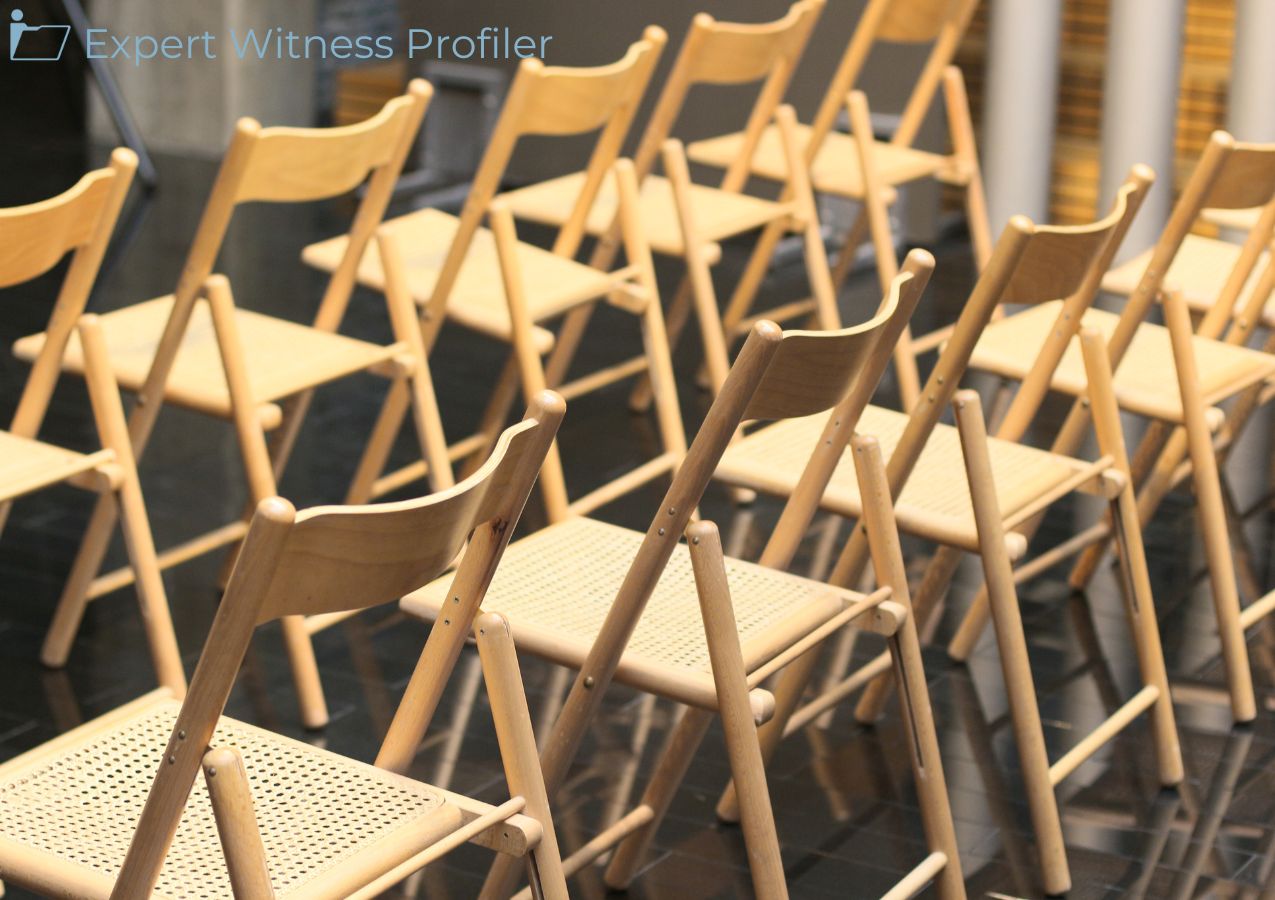
    Valerie Koger, a Costco member, visited the Costco store in Fremont, California, on November 1, 2018, seeking dining chairs. While browsing, she encountered a Stakmore wooden folding chair displayed on an aisle. Upon sitting on it, the chair immediately collapsed, causing her to fall to the ground. The impact from the chair’s failure resulted in a severe blow to her head, akin to being struck with a baseball bat, leading to a diagnosis of a mild head injury at Washington Hospital on the day of the incident. Her symptoms escalated, and within two days, she was diagnosed with dizziness, vertigo, and post-concussion vertigo.

    The Stakmore wooden folding chair in question was exclusively designed and provided by Meco for Costco in 2018. Costco had directly procured the chair from Meco, a supplier and vendor for the retail chain. Valerie Koger, alongside Jeffrey Koger, filed claims against Costco Wholesale Corporation and Costco Wholesale Membership, Inc., asserting premises liability due to the hazardous furniture display. Additionally, they pursued product liability claims against all involved parties, including Meco Corporation, citing the defective nature of the chair.

    The Plaintiff initiated Daubert motions against three experts enlisted by the Defendant: Jon B. Ver Halen, Eric J. Drabkin, and Stephen D. Forner. In response, the Defendant countered by filing Daubert motions against three of the Plaintiff’s experts: Zachary M. Moore, Leonard J. Backer, and Mark D’Esposito.
    Premises Liability Expert Witnesses

    Jon B. Ver Halen holds an Industrial Engineering degree from Purdue University. He has 32 years of experience as President of Ver Halen Engineering, a small consulting firm specializing in facilities design, manufacturing processes, product safety assessments, and expert witness testimony related to the aforementioned specialities. Jon Halen has been qualified as an expert engineer in over 30 states and provided expert testimony in hundreds of legal cases. 

    Zachary M. Moore holds a Bachelor of Science degree in Mechanical Engineering from Loyola Marymount University. He is a licensed Professional Mechanical Engineer in California. He is currently a Forensic Engineer with Aperture, LLC. Moore is also a Board-Certified Diplomate in Forensic Engineering and a Certified XL Tribometrist. He has over 18 years of experience investigating premises liability cases and testifying as a forensic engineering expert in numerous litigation cases. 

    Leonard J. Backer holds a B.A. degree from Rutgers University. He has over 30 years of relevant work experience, including officer-level roles at multiple furniture companies. Backer currently serves as President of Leonard J. Backer Associates LLC, where he works as a furniture expert witness and consultant since 2008. He is certified as an expert witness in many state and federal courts. 

    Causation Expert Witnesses

    Stephen D. Forner holds a B.A. in Chemistry and Physics from George Washington University and an M.D. from the University of Pennsylvania School of Medicine. He completed his neurology residency at Stanford University School of Medicine and his fellowship in clinical neurophysiology at the University of Texas Southwestern Medical School. Forner currently maintains his private practice at Kings Beach, California. He has previously worked at the Tahoe Forest Hospital Multispecialty Clinic and as a Clinical Professor of Neurology at the UC Davis School of Medicine.

    Mark D’Esposito holds a B.S. in Neuroscience and B.A. in Interdisciplinary Studies from the University of Rochester. He obtained his M.D. from SUNY Health Science Center, College of Medicine. D’Esposito completed his residency and his fellowships at Boston University Medical Center. He is certified by the American Board of Psychiatry and Neurology. He is currently a Distinguished Professor of Neuroscience and Psychology at the University of California, Berkeley. He also serves as a staff neurologist at Northern California VA Health Care System’s Cognitive Neurology and Stroke Clinic.  

    Damages Expert Witness

    Eric J. Drabkin holds a Ph.D. and an M.A. in Economics from the University of California, Los Angeles. He has a Diploma in Economics from the London School of Economics, and a B.A. in Economics from the University of California, Berkeley. Drabkin is currently a Senior Vice President of Forensic Accounting & Economics at J.S. Held. He has previously worked as a Senior Consulting Economist at Cohen Volk Economic Consulting Group and a Managing Director at Berkeley Research Group.   

    Discussion by the Court

    The Plaintiff contested three specific opinions presented by the Defendant’s expert, Jon B. Ver Halen under Rule 702 and Daubert :

    • Ver Halen asserted that the design of the subject chair was reasonably safe and met appropriate standards, asserting its capability to support over 300 pounds safely.
    • Ver Halen suggested that the wood screws attaching the folding brackets to the front spreader failed due to the application of excessive force. He also claimed that the splintering observed at the screw holes indicated the presence of sound wood.
    • Ver Halen posited that the wood screws securing the folding brackets to the front spreader couldn’t have failed under normal use of the chair.

    Plaintiff alleged that he did not consider all relevant evidence; his first opinion was based on inadmissible SGS testing; and his three opinions were based on independent testing employing unreliable methodology.

    The Court held that expert testimony relying on undisclosed or poorly described methodology must be excluded, because opinions based on “unsubstantiated and undocumented information is the antithesis of . . . scientifically reliable expert opinion”, citing Cabrera v. Cordis Corporation, 134 F.3d 1418 (9th Cir. 1998).

    Ver Halen, in his Expert Report’s third page, incorporated a section titled “Testing by SGS,” which indicated that an independent testing entity, SGS, conducted assessments on the chair design, affirming that the chair successfully passed all required tests. Ver Halen relied on these test “results” to form the foundation for his initial opinion that “the design of the subject chair is reasonably safe and meets the appropriate standards.”

    However, the Court determined that Ver Halen merely restated the conclusions derived from the SGS tests without delving into their underlying data or methodology. The Court highlighted that experts aren’t allowed to repackage inadmissible hearsay as expert testimony.

    To render opinions regarding why the chair failed in this case, Ver Halen performed “testing” on a Stakmore chair he found in his breakroom. Ver Halen’s report, spanning less than four pages, lacked the necessary details to reproduce his findings or to fairly assess his conclusions. His testing procedure involved three tests:

    • The first test focused on the coefficient of friction for the gliders beneath the chair legs, aiming to determine if the chair legs could shoot forward as experienced by Koger in the absence of screws. Ver Halen concluded that the results supported the possibility of the collapse occurring as described by Koger.
    • The second test involved opening and closing the chair a few times to verify if damage was likely to occur to the front bracket and screw assembly during normal usage.
    • The third test entailed placing the chair on its back, standing on the back legs, and using a pressure gauge to measure the force required to dislodge the front bracket and screw assembly when pulling up on the front legs individually.

    Ver Halen’s testing methods lacked comprehensive detail and relied on an exemplar chair of uncertain origin, undermining the credibility of the results. Defendants argued that Ver Halen’s testing adhered to scientific rigor, physics principles, Business and Institutional Furniture Manufacturers Association (BIFMA) standards, and “sound economic methodologies.” Yet, apart from the coefficient of friction tests, Court held that Ver Halen’s report lacked discussions on physics, BIFMA standards, or other concepts supporting his conclusions.

    Ultimately, the Court ruled that Ver Halen would not be permitted to offer opinions based on either the SGS testing or his independent testing due to the insufficiency and lack of thoroughness in his report.

    The Defendants jointly relied on the expert opinions of Eric J. Drabkin to assess the economic losses incurred by the Plaintiffs in the case. Drabkin’s assessment suggested that, had the injury not occurred, Koger would have only worked an additional 4.75 years. The Plaintiff contested Drabkin’s reliance on Craig A. Allen’s article, titled “Labor Force Transitions by Gender: Implications for Separate and Combined Worklife Expectancy,” published in the Journal of Forensic Economics. This challenge was based on California Civil Code section 3361, which prohibits experts from relying on studies and statistics considering race, ethnicity, or gender in wage and earnings predictions.

    Koger, employed as a school bus driver for the Fremont Unified School District, was driving special needs students to and from school at the time she was injured. Despite the article’s title, the Court found that the underlying data on which Drabkin relied did not make gender-based predictions but provided weighted averages based solely on age and educational attainment.

    The Plaintiffs argued that the article’s analysis of Table 1 demonstrated gender-based predictions, but the Court found this argument misleading. The article applied gender-agnostic estimates to both male and female populations, resulting in slightly lower worklife expectancies for women on average. However, these differences were attributed to variations in education levels and workforce participation between men and women. Importantly, the gender-agnostic estimates in Table 1 would not reduce damage estimates based solely on plaintiff Koger’s gender. Consequently, the Plaintiffs’ request to exclude Drabkin’s opinions was denied by the Court.

    The Plaintiffs sought to prevent Stephen D. Forner from proposing alternative explanations for Koger’s symptoms in the case. Forner’s expert report concluded that Koger likely didn’t suffer a traumatic brain injury due to the incident but instead suggested that her symptoms might be partially explained by functional neurologic disorder (FND) or benign paroxysmal positional vertigo (BPPV). Notably, Forner didn’t explicitly diagnose Koger with either FND or BPPV but indicated that these conditions should be considered as potential partial explanations, acknowledging that they might not account for all her reported symptoms.

    The Plaintiffs objected to Forner’s refusal to definitively diagnose Koger with FND or BPPV. However, the Plaintiffs failed to reference any binding or persuasive case mandating that when a clinician dismisses a diagnosis, they must propose an alternative diagnosis. The Court found Forner’s reluctance to diagnose as reasonable. Forner encountered instances where he lacked crucial medical records or further information from key neurological evaluations. Additionally, in some cases, tests were conducted, but the results were unavailable. Given the incomplete medical records, the Court deemed Forner’s cautious approach and the level of confidence in his assessment of Koger’s condition as appropriate.

    Now coming to the Daubert motions filed by the Defendants, Defendants first sought to exclude Zachary M. Moore from presenting legal conclusions as expert opinion.

    The Court addressed multiple opinions presented by Moore, an expert witness in the case:

    1. Moore’s first opinion, asserting that the chair was unsafe at the time of the incident, was deemed an unadorned legal conclusion. The Court ruled that Moore, lacking expertise in product design or consumer safety, couldn’t testify about the chair’s safety or Koger’s actions in a legal context.
    2. Moore’s second opinion, contending that the subject location violated codes and industry standards, was considered inappropriate due to insufficiently supported references to industry standards. Moore’s brief mention of industry standards lacked analysis and relied solely on language from an insurance company manual. Consequently, the Court disallowed this opinion from being presented at trial.
    3. Moore’s third opinion, suggesting that Costco knew or should have known about the unsafe condition, was grounded on a more robust factual and methodological basis. Moore’s analysis of employee testimony and Costco’s inspection policies led to the conclusion that employees failed to adhere to the company’s policies. The Court permitted Moore’s testimony within factual confines, as long as it refrained from purely legal conclusions.
    4. Moore’s fourth opinion, claiming that the cost to eliminate the unsafe condition would have been minimal, was excluded by the Court. His statement about Costco’s potential implementation of an adequate inspection policy lacked substantiation and analysis regarding the policy’s nature or the estimated costs involved. Therefore, the Court barred this opinion from being presented in the case.

    The Defendants next sought to exclude certain opinions presented by Leonard J. Backer, contending that he lacked qualifications to opine on Costco’s failure to inspect the store premises or that these opinions constituted impermissible legal conclusions.

    Backer, specializing in the design, manufacture, and sale of chairs, claimed expertise in “retail store planning markets,” encompassing “visual merchandising” related to chairs. However, there was no demonstrated experience in premises safety or the inspection and risk management standards applicable to retail stores within his record. Backer’s report contained opinions regarding Costco’s responsibility for maintaining premises safety and its inspection procedures, topics beyond his field of expertise and unrelated to chairs or his area of knowledge.

    The Court ruled that Backer would not be allowed to testify regarding Costco’s safety or inspection procedures due to his lack of expertise or relevance to the subject matter.

    Defendants sought to exclude Mark D’Esposito from testifying based on their assertion that he conducted a VOMS (Vestibular/Ocular Motor Screening) test on Koger. However, Plaintiffs objected, stating that D’Esposito didn’t perform a VOMS test. Nevertheless, even if a VOMS test had been conducted, plaintiffs argued it would have been appropriate.

    D’Esposito asserted that he conducted a thorough review of Koger’s medical records and administered a comprehensive neurological examination that involved at least seven neurological tests. While some of these tests overlap with those in a VOMS screening, they are also commonly associated with neurological assessments beyond the scope of athletic events. There’s no indication that tests used in a VOMS context are exclusively valid only within that context.

    The Court acknowledged that even if D’Esposito had performed a VOMS test on Koger, it wouldn’t warrant exclusion. Defendants conceded that the method itself is used to diagnose specific head injuries, which doesn’t fall under the “junk science” category prohibited by Rule 702. Whether these testing methods were suitable for Koger’s circumstances would be a matter for cross-examination rather than justification for exclusion.

    Held

    • The Court granted the Plaintiff’s motion to exclude, in part, the testimony of Defendant’s expert Jon B. Ver Halen.
    • The Court denied the Plaintiff’s motion to exclude, in part, the testimony of Defendant’s expert Eric J. Drabkin.
    • The Court denied the Plaintiff’s motion to exclude, in part, the testimony of Defendant’s expert Stephen D. Forner.
    • The Court granted in part and denied in part the Defendant’s motion to exclude the opinions of Plaintiff’s expert Zachary M. Moore.
    • The Court granted the Defendant’s motion to exclude some of the opinions of Plaintiff’s expert Leonard J. Backer.
    • The Court denied the Defendant’s motion to exclude the opinions of Plaintiff’s expert Mark D’Esposito related to VOMS test and results.

    Key Takeaways:

    1. An expert’s testing methods must be reliable and described in enough detail to allow independent validation. Vague descriptions or undisclosed methodologies will lead to exclusion.
    2. Experts cannot present legal conclusions or opine on the law, but may testify about industry standards if properly supported. Conclusions that invade the province of the fact finder will be excluded.
    3. Experts should not testify beyond their expertise. For example, with expertise in the design, manufacture, and sale of chairs, one cannot opine on store safety procedures and inspection policies.
    4. Alternative medical explanations suggested by an expert need not be definitive diagnoses. If records are incomplete, limited confidence in assessing conditions is reasonable.
    5. Use of testing methods outside their common context is not necessarily grounds for exclusion if the methods may help diagnose conditions. Attacks should target appropriateness of specific application.

  • Court partly admits the consumer survey research and damages findings  presented by the defense experts in  trademark infringement suit

    Court partly admits the consumer survey research and damages findings presented by the defense experts in trademark infringement suit

    This case involved a trademark infringement lawsuit filed by Solid 21, Inc. against Richemont North America, Inc., Richemont International S.A., and Montblanc-Simplo GmbH (collectively “Defendants”). Solid 21 alleged that Defendants infringed on their RED GOLD trademark through Defendants’ use of “red gold” in advertisements for luxury watches.

    The Court previously dismissed Solid 21’s Lanham Act claims regarding one specific advertisement (“Exhibit 17”) on fair use grounds, finding that the usage of the term “red gold” in the advertisement clearly constituted fair use as a matter of law. 

    In this order, the Court ruled on Solid 21’s motions to exclude expert testimony from two of Defendants’ experts, Mark T. Keegan and Patrick F. Kennedy.

    Consumer Research and Damages Expert Witness

    Mark Keegan, has extensive experience in consumer research and survey design. He is a partner at Keegan & Donato Consulting, LLC, where he works as a litigation consultant focusing on trademark and marketing research. Over his two-decade career, Keegan has designed and executed over 700 consumer research studies involving more than 250,000 respondents on behalf of corporate and litigation clients. His research focuses on areas including consumer confusion, secondary meaning, genericness, and other consumer perception issues central to trademark disputes. Keegan has served as a survey expert in federal court litigations, submitting expert reports and providing testimony on consumer behavior and survey methodology.

    Patrick Kennedy is a Managing Director at Torrey Partners with over 20 years of experience providing analysis, consultation, and expert testimony in business and legal disputes. He has testified extensively as an expert in various courts and arbitrations across the country. Kennedy has analyzed economic damages and valuation issues in cases involving intellectual property, breach of contract, antitrust, false advertising, product liability, professional malpractice, and other claims. His intellectual property case experience includes patents, trademarks, copyrights, and trade secrets in fields such as medical devices, software, consumer products, and more. Kennedy has an economics doctorate from Stanford University and previously worked as an economist at the Federal Reserve. He has experience spanning a diverse range of industries and technologies.

    Discussions by the Court

    The Court first discussed Solid 21’s motion to exclude the expert testimony of Mark Keegan. Solid 21 argued Keegan was unqualified, his survey was irrelevant, and his findings were unreliable. The Court denied the motion. On qualifications, while Keegan lacked a specific degree relating to consumer surveys, the Court found his decades of consumer survey experience satisfied Rule 702’s threshold, distinguishing cases excluding Keegan based on insufficient indications of qualifications. On relevance, the Court found Keegan’s survey assessing whether consumers recognized “red gold” as a brand could be relevant to the descriptive use and good faith elements of fair use. Solid 21 failed to explain why the survey was irrelevant to fair use. The Court stated it would not exclude evidence potentially relevant on any ground. On reliability, the Court found Solid 21’s criticisms about the income level for Keegan’s universe, cell phone administration, and failure to filter some results went to weight not admissibility. The Court stated only substantial flaws warrant exclusion, and Solid 21 failed to demonstrate Keegan’s flaws met that standard.

    The Court then discussed Solid 21’s motion to exclude portions of Patrick Kennedy’s testimony. Solid 21 argued Kennedy improperly relied on Keegan’s survey and improperly opined on fair use. The Court granted the motion in part. It found Kennedy could not rely on Keegan’s brand awareness survey to estimate consumer preferences driving purchases for Kennedy’s apportionment analysis. The Court explained there was a fundamental mismatch between what Keegan’s survey measured (brand awareness) and how Kennedy used it (as a proxy for consumer motivations). The Court rejected Defendants’ argument that Keegan’s brand awareness findings could serve as a conservative estimate of consumer motivations. It found Kennedy conflated liability and the apportionment of profits by using Keegan’s brand awareness survey to apportion profits.

    The Court also granted Solid 21’s motion to exclude Kennedy from summarizing the Court’s prior fair use rulings or opining on what constitutes fair use, finding this would be an inadmissible legal conclusion. However, the Court denied Solid 21’s motion to exclude Kennedy from categorizing advertisements based on “red gold” usage, finding this permissible to synthesize voluminous evidence for the jury. In sum, the Court prevented Kennedy from relying on Keegan’s survey for apportionment purposes due to a mismatch with what the survey actually measured. The Court also prevented Kennedy from offering legal opinions about the Court’s prior fair use rulings, while allowing him to categorize evidence for the jury.

    Held

    In summary, the Court denied Solid 21’s motion to exclude Keegan’s survey findings entirely, finding them potentially relevant to Defendants’ fair use defense. However, the Court granted in part Solid 21’s motion to exclude Kennedy’s testimony, preventing him from relying on Keegan’s survey to estimate purchasing motivations and from opining on the Court’s prior fair use rulings. The Court found Kennedy had fundamentally misused Keegan’s brand awareness survey as a basis for apportioning profits and could not offer legal conclusions about fair use.

    The Court has not arrived on an outcome for this case since the remaining issues involved in this case still await resolution.

    Key Takeaways

    This case demonstrates the importance of ensuring expert witness testimony is relevant and reliably applies the expert’s methodology. The Court excluded portions of Kennedy’s testimony because he fundamentally misused survey data provided by another expert, Keegan. Kennedy sought to rely on Keegan’s survey results measuring consumer brand awareness as a basis for estimating what drove consumer purchasing decisions and apportioning profits. However, the Court found brand awareness relates to liability, while apportionment assumes liability is established and looks at what factors motivated sales. Since Keegan’s survey did not measure purchasing motivations, Kennedy could not reliably use it for apportionment purposes. This case underscores that experts must apply methodologies in a way that reliably fits the purpose for which the expert evidence is proffered. Experts also cannot offer legal opinions or summarize court rulings, as the Court barred Kennedy from opining on the legal standards for fair use. However, experts may synthesize evidence to streamline complex information for the jury. Overall, this case illustrates the need for expert opinions to be relevant, reliably applied, and avoid legal conclusions. Careful scrutiny of expert methodology and purpose is crucial.

  • California Court admits the testimony of film and television industry experts in copyright infringement action 

    California Court admits the testimony of film and television industry experts in copyright infringement action 

    This case involved claims of copyright infringement brought by WMTI Productions, WMTI Productions North, and The Next Season Company (Plaintiffs) against Kevin Healey, Propagate Content, and unnamed Does (Defendants). Plaintiffs alleged that certain episodes of Defendant’s shows Prank Encounters and Double Cross infringed on certain episodes of Plaintiff’s show Scare Tactics.

    Specifically, Plaintiffs alleged the following episodes infringed:

    • Prank Encounters “Camp Scarecrow” infringed Scare Tactics “Camp Kill”
    • Prank Encounters “Face Fears” infringed Scare Tactics “My Heart Belongs to Misery”
    • Prank Encounters “End of the Road” infringed Scare Tactics “Road Kill”
    • Prank Encounters “Split Party” infringed Scare Tactics “Send in the Clowns”
    • Prank Encounters “Graveyard Shift” infringed Scare Tactics “Bicentennialien”
    • Double Cross “Open House” infringed Scare Tactics “Room with a View”

    Defendants filed a motion for summary judgment arguing there was no genuine dispute of material fact on liability or damages. They also filed motions to exclude the testimony of Plaintiff’s proposed expert witnesses on liability (Paul Jackson) and damages (Tyler Massey).

    Film and Television Industry Experts

    Paul Jackson is a highly experienced film and television writer-producer, having worked in the industry since 1988. He has been a member of the Writers Guild of America since 1988, writing and producing numerous television series over his 30+ year career. His credits include serving as Executive Producer, Co-Executive Producer, Supervising Producer, and Consulting Producer on shows like Lois and Clark, Sliders, Charmed, She Spies, and When Calls the Heart. Since 1992, Jackson has arbitrated writing credits for the Writers Guild, which involves closely analyzing scripts and stories to determine the creative contributions of different writers. Through this work and his extensive experience as a “Writer-Staff” Producer, Jackson has developed expertise in comparing scripts and assessing similarities between stories, characters, sequencing, settings, and other elements. In this case, he was retained to analyze the alleged substantial similarities between Plaintiff’s Scare Tactics episodes and Defendant’s Prank Encounters and Double Cross episodes. Jackson provided detailed plot, character, sequence, setting, and mood comparisons between these works in his expert report, given his qualifications to conduct such analysis based on his 30+ years as a professional television writer and producer.

    Tyler Massey has over 20 years of experience in the film and television industry, including roles in international content distribution, acquisitions, licensing, and financial analysis. He has negotiated hundreds of deals for formats, finished productions, and media rights across broadcast, cable, SVOD, and AVOD platforms. Massey has extensive expertise in market valuation, revenue forecasting, and cost apportionment for television programming. He has worked for production companies, studios, and distribution firms, evaluating content sales strategies and revenue projections. In this case, Massey provided a damages analysis regarding lost revenues and brand value for Scott Hallock/WMTI based on alleged infringement and substitution of Defendant’s shows for a reboot of Scare Tactics. His industry experience qualifies him to opine on these matters.

    Discussions by the Court

    The Court denied Defendant’s motion for summary judgment on liability. The Court found there was a genuine dispute of material fact regarding substantial similarity under the extrinsic test, which looked at objective criteria like plot, themes, characters, etc. Plaintiff presented evidence about the selection and arrangement of unprotectable elements that could constitute an original work. The Court rejected Defendant’s argument that Plaintiff failed to properly invoke a selection and arrangement theory and found the allegations in the complaint gave adequate notice.

    The Court also denied summary judgment on damages. It found that Plaintiff presented evidence which supported at least some of their claimed damages categories tied to lost opportunities to monetize Scare Tactics due to the existence of Prank Encounters. For example, evidence indicated Netflix declined to exercise an option to produce new Scare Tactics episodes because its needs were satisfied after having acquired Prank Encounters around the same time.

    Defendant sought to exclude the expert opinions and testimony of Tyler Massey, Plaintiff’s proffered damages expert, on several grounds. First, Defendant asserted that Massey’s damages calculations had no relation to Plaintiff’s infringement allegations because he analyzed harm to the overall Scare Tactics format rather than damages resulting specifically from infringement of the six copyrighted segments at issue. However, the Court found that damages to the value of the broader Scare Tactics series were recoverable under 17 U.S. Code § 504, which allowed recovery for any harm caused by the infringement, not just harm to the intrinsic value of the copyrighted work. Second, Defendant argued that Massey’s testimony was unreliable because it relied on layers of speculation, including assuming Scare Tactics would have been rebooted if not for the existence of the show Prank Encounters. But the Court noted that assumptions are a necessary part of any damages calculation given the counterfactual nature of a world without infringement. As long as the assumptions were reasonable and grounded in evidence, any flaws went to the weight of Massey’s testimony rather than its admissibility. Third, Defendant sought to preclude Massey from opining on substantial similarity between the works accused of infringement and the asserted copyrighted works, an issue on which he lacked expertise. The Court agreed Massey could not offer his own opinion on similarity, but he could calculate damages based on the assumption that the works were substantially similar. Fourth, Defendant moved to exclude one category of Massey’s damages related to infringement of a wholly unrelated work, Joke’s On You, which seemed to stem from a settlement agreement rather than any copyright violation alleged in the case. Since this category did not arise from the claimed infringement, the Court excluded it. Aside from this one category, the Court otherwise denied exclusion of Massey’s damages calculations and held his assumptions and speculation permissible bases for expert testimony.

    Defendant separately sought to exclude the expert testimony of Paul Jackson, Plaintiff’s proposed witness on the similarities between the copyrighted Scare Tactics episodes and those of Defendant’s shows. Defendant argued Jackson failed to apply the extrinsic similarity test because he did not filter out non-expressive, unprotected elements before analyzing the works’ similarities. According to Defendant, this rendered Jackson’s opinion unreliable and unhelpful. However, the Court noted that wholesale filtering was not required under the selection-and-arrangement theory pursued by the Plaintiff, and in any event, Jackson’s similarity analysis methodology was valid and helpful to the factfinder. Which elements were protectable and which were unprotected scenes-a-faire was a factual issue for the jury to decide; Jackson could present his overall analysis, while Defendant could provide their own contradicting evidence on unprotected elements. Thus, Jackson’s failure to filter did not warrant exclusion but simply went to the weight the jury should accord his opinion. Defendant remained free to cross-examine Jackson and argue his testimony should receive little weight. But the Court denied exclusion of Jackson’s similarity analysis wholesale, finding his methodology sufficiently reliable despite the lack of filtering.

    Held

    The Court largely denied Defendant’s motion to exclude Plaintiff’s damages expert Tyler Massey, finding his assumptions and speculative damages calculations were permissible bases for expert testimony. The only exclusion was one category of damages unrelated to the asserted copyrights. Regarding Plaintiff’s liability expert Paul Jackson, the Court wholly denied Defendant’s motion to exclude his substantial similarity analysis. Despite Jackson’s failure to filter out unprotected elements, the court found his similarity analysis methodology was reliable and helpful to the factfinder. Any flaws in his approach went to the weight of Jackson’s testimony rather than its admissibility. Thus, aside from one minor carveout, the Court denied exclusion of the expert analyses of both Massey and Jackson. The Court has not arrived on an outcome for this case since the remaining issues involved in this case still await resolution.

    Key Takeaways

    • The motion to exclude the expert testimony of Paul Jackson in regards to substantial similarity was denied by the court as his methodology was reliable despite failing to differentiate the unprotected elements. The flaws in the methodology of Jackson raised issues for cross-examination and not for exclusion. 
    • The motion to exclude the expert testimony of Tyler Massey was partially denied. Massey was permitted to make assumptions in relation to the calculation of hypothetical damages. Massey was prohibited from providing opinions in relation to substantial similarity, as he lacked expertise. The damages unrelated to the asserted copyrights were excluded from the testimony of Massey. 
    • Disagreements or flaws regarding the expert testimony are often ruled to go to the weight of the testimony rather than admissibility. 

    In summary, the key takeaways are that  disagreements and questionable methodology choices generally should not be the grounds for the wholesale exclusion of the expert. In such scenarios, the court favors cross-examination and contrary evidence to address the flaws in the testimony of the expert.

  • Court admits royalty analysis on a convoyed sales approach, denied motion to exclude in Patent Infringement case

    Court admits royalty analysis on a convoyed sales approach, denied motion to exclude in Patent Infringement case

    This case arose from a patent infringement lawsuit filed by the Plaintiff, Daedalus Blue, LLC against the Defendant, MicroStrategy Incorporated. Daedalus alleged that MicroStrategy’s analytics software products infringed on two patents originally developed by IBM – the ‘172 patent related to data storage and retrieval techniques, and the ‘076 patent related to restricting user access. As the case proceeded to the damages phase, MicroStrategy filed a motion to exclude certain opinions of Daedalus’ damages expert Jim W. Bergman under Daubert and Federal Rule of Evidence 702. The expert analysis of Bergman stood amidst claims of unreliability.

    Damages Expert Witness 

    Bergman specializes in intellectual property, commercial and bankruptcy litigation.  He has served as a testifying or consulting expert in complex business litigation, patent and technology, trade secrets, trademarks, securities litigation, business valuation, bankruptcy reorganization, solvency and general damages related matters.  

    Discussion by the Court 

    MicroStrategy argued that Bergman improperly included non-infringing products and features in his royalty calculations, inflating the value attributed to the patented inventions. The Court appointed a Special Master to evaluate the motion. The Special Master issued a Report and Recommendation (R&R) where it denied the motion to exclude and found that Bergman reliably calculated and apportioned a royalty base and profit split. MicroStrategy filed an objection to the R&R and disputed the findings on the royalty base, apportionment related to the ‘076 patent, and Bergman’s alleged failure to account for MicroStrategy’s preexisting 7i product. 

    Bergman’s theory emphasized on a functional relationship between the accused products and the support and maintenance packages to prove his point that damages can be found where unpatented components “function together with the patented component in some manner as to produce a desired end product or result.”The Court first addressed Bergman’s inclusion of non-accused support and maintenance revenue in the royalty base. MicroStrategy characterized this as an improper “entire market value” analysis, but the Court found Bergman appropriately applied a “convoyed sales” analysis based on the functional relationship between the software and support packages. The Court explained convoyed sales principles allow including non-patented items functionally linked to the patented items, without the same stringent requirements as the entire market value rule, citing Rite-Hite Corporation v. Kelley Company. The Court agreed with the Special Master that Bergman reliably demonstrated the necessary functional relationship between the software and support, as the support maintains and extends the software’s usability. The Court agreed with Bergman’s theory which stressed on the existence of a functional relationship between between the accused products and the support and maintenance packages.

    Next, the Court examined the objection to Bergman’s 20% apportionment figure for the value attributable to the ‘076 patent. MicroStrategy argued this was an arbitrary “black box” analysis without sufficient methodological support. However, the Court found Bergman articulated a reliable step-by-step methodology tracing the security capabilities covered by the ‘076 patent through MicroStrategy’s products. Despite lack of mathematical weights for each factor, Bergman sufficiently explained his basis using documents produced by MicroStrategy and the opinion of Daedalus’ technical expert. The Court ruled Bergman’s analysis satisfied Rule 702 and overruled the objection. 

    The Court also rejected MicroStrategy’s argument that Bergman failed to apportion out value from non-patented features of its 7i product released prior to the patents. The Court held damages experts may appropriately rely on technical experts regarding product functionality, and Bergman was entitled to credit the opinion of Daedalus’ technical expert that no valid non-infringing alternatives existed. The Court emphasized MicroStrategy did not independently challenge the technical expert’s opinions. Bergman also reserved the ability to respond to any alternative damages calculations proposed by MicroStrategy’s experts at trial. 

    After the objections were reviewed, the Court overruled each one in turn and adopted the Special Master’s R&R denying the motion to exclude. The Court found Bergman’s royalty base analysis, apportionment approach, and reliance on the technical expert opinions were sufficiently reliable to satisfy Rule 702 standards. MicroStrategy’s specific criticisms did not require exclusion and were more properly addressed through cross-examination and presentation of contrary evidence at trial. 

    Held 

    In conclusion, the Court’s order provided guidance on several key principles for expert damages testimony in patent cases: 1) Convoyed sales treatment based on functional linkage did not require meeting the same stringent entire market value test; 2) Specific mathematical weights were not absolutely required for each apportionment factor if the overall methodology was sound; 3) Damages experts could appropriately rely on opinions of technical experts; 4) Criticisms of an expert’s methodology were often better addressed by cross-examination and contrary testimony rather than outright exclusion. The Court admitted the testimony of expert Bergman amidst claims of unreliability. By denying the motion to exclude, the Court ruled that despite MicroStrategy’s disputes, Bergman could testify at trial subject to being challenged on cross-examination. The outcome of the case remains to be seen since the remaining issues involved in this case are yet to be fully resolved. 

    Key Takeaways: 

    1. The Court upheld the expert’s use of a convoyed sales analysis to include non-patented items linked to the patented products in the royalty base. This does not require satisfying the same stringent standards as the entire market value rule. 
    1. The expert’s apportionment approach was deemed sufficiently reliable even without specific mathematical weights assigned to each factor. The overall methodology and explanation were sound. 
    1. The Court ruled damages experts can appropriately rely on technical experts regarding product functionality and non-infringing alternatives. 
    1. Challenges to an expert’s methodology are often better handled through cross-examination and contrary testimony rather than outright exclusion. 
    1. The expert’s royalty analysis, apportionment approach, and reliance on a technical expert were deemed sufficiently reliable under Daubert standards. 
    1. Criticisms of an expert’s methodology do not necessarily require exclusion of the testimony under Daubert. The Court emphasized addressing disputes through cross-examination. 
    1. By denying the motion to exclude, the Court ruled the damages expert could testify at trial, despite alleged shortcomings in his methodology raised by the Defendant. 

    In summary, the key takeaways focus on the Court affirming this damages expert’s methodology as sufficiently reliable under Daubert, enabling the testimony despite Defendant’s criticisms better addressed through cross-examination. The decision provides guidance on application of Daubert standards to expert methodology in patent cases.