Category: Engineering Expert Witness

  • Engineering Expert’s Theory of Damages Excluded

    Engineering Expert’s Theory of Damages Excluded

    Plaintiff Leflore County Board of Supervisors filed suit against Meritor over a state-approved waste disposal that occurred almost two decades ago.

    In 2006, Meritor’s predecessor, ArvinMeritor, sent some waste to Plaintiff’s landfill (the “Landfill”) as part of a state-approved cleanup of the Moose Lodge Road Disposal Area (“MLRDA”). And now, almost two decades later,
    Plaintiff claimed that the MLDRA waste it received as part of that state-approved cleanup was wrongfully characterized as non-hazardous.

    Plaintiff held Meritor responsible for all costs necessitated by the waste disposal at the landfill.

    Defendant Meritor, Inc. filed a motion to strike the second supplemental report of Plaintiff’s expert D. Scott Simonton.

    Engineering Expert Witness

    David Scott Simonton is a Registered Professional Engineer with over thirty (30) years of professional experience in State environmental and public health protection regulatory agencies, private consulting and academia.

    Want to know more about the challenges David Scott Simonton has faced? Get the full details with our Challenge Study report

    Discussion by the Court

    The Plaintiff initially submitted Simonton’s expert report on November 25, 2024, which was the deadline for the Plaintiff’s expert designation imposed by the original Case Management Order. Notably, this initial report consisted of a cost estimate of $170,382.50 for “waste characterization,” based on the Plaintiff’s belief that Meritor had disposed of hazardous wastes in a certain limited area of the Leflore County municipal landfill.

    Subsequently, on January 29, 2025, after Simonton’s initial expert report was produced, the parties deposed Leflore County’s landfill operator, Waste Connections, whose representative testified that it had no way to determine where the allegedly hazardous waste had been disposed of within the landfill. This testimony, in turn, formed the alleged basis for the opinion offered in Simonton’s second supplemental report.

    Following the Waste Connections deposition, Simonton submitted his first supplemental report on April 15, 2025, and later, his rebuttal report on June 5, 2025. However, neither report included a new or revised cost estimate that accounted for Waste Connections’ position that the location of the contaminated soils could not be determined. Thereafter, Meritor deposed Simonton on June 30, 2025, and the discovery period closed on August 8, 2025.

    Finally, on August 29, 2025, the Plaintiff submitted Simonton’s second supplemental report—the subject of the present motion—which included a “Remedial Investigation cost estimate” totaling $3,163,902.50. This report sought to address the alleged uncertainty regarding the location of the contaminated soil within the Leflore County municipal landfill and justified the need for an expanded investigation involving increased sampling.

    Analysis

    The Plaintiff’s expert designation deadline was November 25, 2024, and any supplement to Simonton’s expert report was due no later than the discovery deadline of August 08, 2025.

    I. Whether the second supplemental report contains new opinions

    The Plaintiff argued that the estimate in the second supplemental report “was merely a recalculation of [Simonton’s] mathematical formulas based on new information, i.e., Meritor’s lack of knowledge of where it caused the hazardous wastes to be dumped.” However, Meritor contended that the supplemental report introduced “an entirely new theory of damages” that had not been previously disclosed and lacked good cause. The Court agreed.

    Simonton’s second supplemental report presented a Remedial Investigation (“RI”) cost estimate based on entirely new criteria and considerations—all known to the Plaintiff as early as January 2025 but not included in the initial or previously supplemented reports.

    Regardless of whether the earlier reports contained opinions about the need for an RI (a point the parties dispute), the second supplemental report offered an entirely new cost estimate based on Waste Connections’ opinion that the location of the contaminated soils at the municipal landfill could not be determined. This stood in contrast to the prior assumption that Meritor had disposed of hazardous wastes only in a certain limited area. As a result, the Plaintiff’s attempt to introduce new opinions through an untimely supplement was deemed improper.

    II. Whether the new opinions are substantially justified or harmless

    The Plaintiff offered no explanation for the failure to supplement Simonton’s opinion at any point during the seven-month period after Waste Connections’ deposition and before the expiration of the discovery deadline. This delay certainly mitigates against the alleged importance of the opinion. Despite the Plaintiff’s arguments to the contrary, the prejudice to Meritor is clear: the second supplemental opinion is neither a minor amendment nor a recalculation. The discovery period is closed, and the motions deadline has passed. Meritor has had no opportunity to seek discovery regarding this opinion or have its own expert review and respond in their report. Finally, to continue the trial setting and reopen discovery to mitigate the prejudice to Meritor would require the Court to ignore the Plaintiff’s failure to establish the first three factors.

    The Court concluded the untimely disclosure of Simonton’s second supplemental report was not substantially justified or harmless.

    Held

    The Court granted Meritor’s motion to strike the second supplemental report of Plaintiff’s expert D. Scott Simonton.

    Key Takeaway:

    The second supplemental report of Simonton contained opinions markedly different from those set forth in the original, first supplemental, and rebuttal reports and was made beyond the permissible deadline for supplementing expert disclosures under Rule 26.

    Case Details:

    Case Caption: Leflore County Board Of Supervisors V. Meritor, Inc. Et Al
    Docket Number: 4:24cv33
    Court Name: United States District Court, Mississippi Northern
    Order Date: October 29, 2025
  • Engineering Expert’s Testimony on an Unsafe Walking Surface Admitted

    Engineering Expert’s Testimony on an Unsafe Walking Surface Admitted

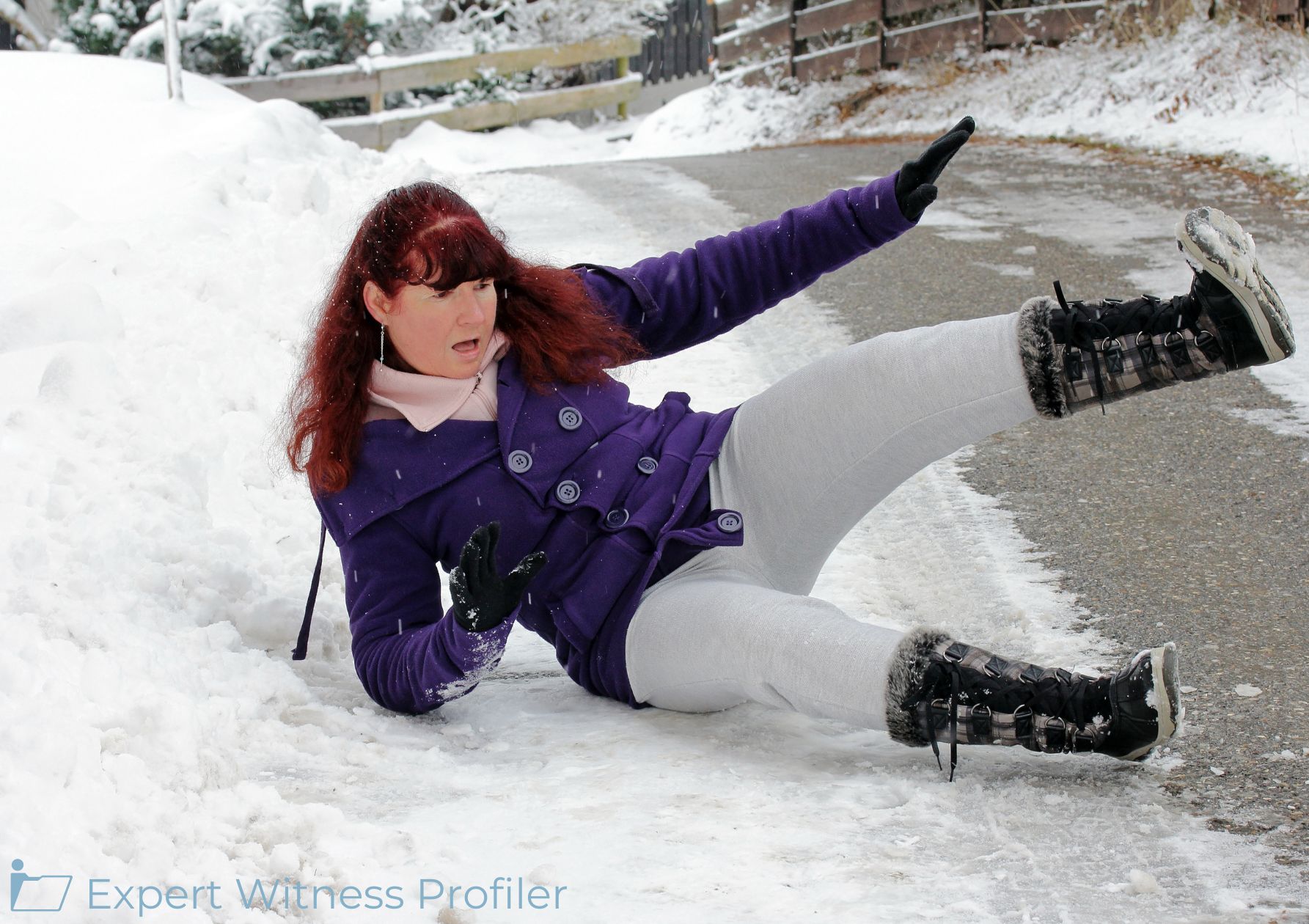
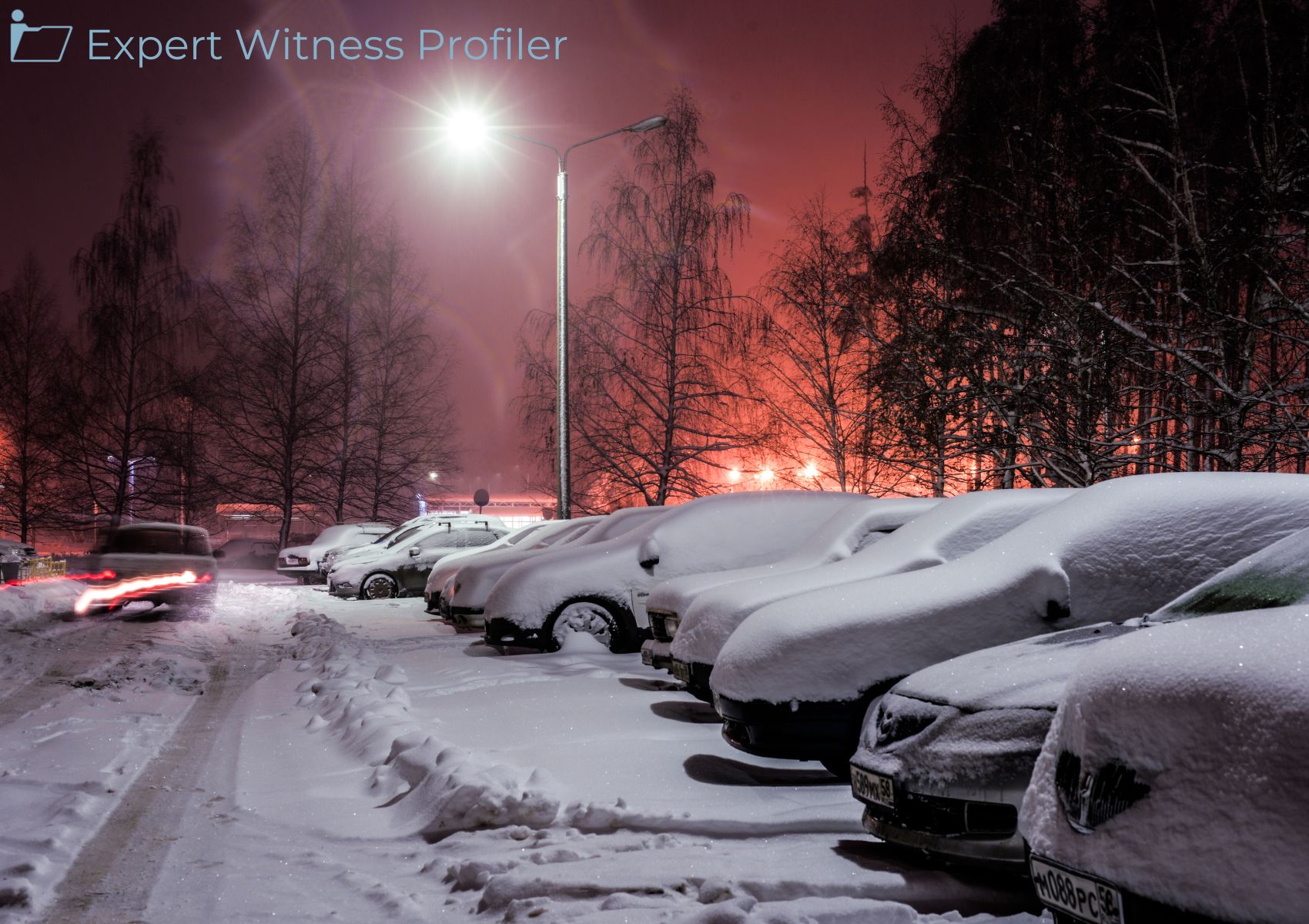
    This is a premises liability action in which the Plaintiff Natasha Walkowicz Shea (“Plaintiff’) sought to hold the Defendants, Kalahari Resorts & Conventions-Poconos; Kalahari Resorts, PA, LLC; and Kalahari Resorts, LLC (hereinafter, collectively, “Kalahari”) liable in negligence for her alleged injuries sustained as a result of slipping and falling on snow and/or ice in a parking lot owned by the Defendants.

    Kalahari filed a motion in limine to preclude the testimony of Plaintiff’s engineering expert Keith A. Bergman, P.E. 

    Engineering Expert Witness

    Keith Alan Bergman, P.E. is a Consulting Engineer in Civil Engineering and obtained a bachelor’s degree in civil engineering from San Diego State University in 1991. He is a licensed professional engineer in numerous states throughout the country and represents that his professional background experience includes “[e]valuations of ice, snow control, grading, storm water management, detention and retention basins, and soil and sedimentation control.”

    He purports to specialize in “Highway and Street Design, Traffic Engineering, Utilities Construction, Storm Drainage, Pedestrian Safety, Walkway Surface Evaluations, Concrete and Asphalt Pavement Evaluations” and represents that he has extensive experience “in Construction Management, Project Management, Project Related Claims, Job Site Safety, Codes and Standards, and ADA Compliance.” 

    Want to know more about the challenges Keith Bergman has faced? Get the full details with our Challenge Study report.

    Discussion by the Court

    Bergman report indicated that he examined the incident site and the incident circumstances in order to determine the nature and cause of the accident.

    In this matter, Defendants argued that Plaintiff’s engineering expert, lacked the qualification to offer many the opinions set forth in his expert report. In other words, Defendants claimed that the opinions offered by Bergman lacked scientific, technical, or other specialized knowledge that will help the trier of fact to understand the evidence or to determine a fact in issue and therefore he is not qualified and his report and testimony does not “fit.” 

    Although the Court agreed with Defendants that many of the opinions offered by Bergman may be improper and concern areas outside his engineering expertise, it will not wholly preclude Bergman from offering opinions as to either deviation from the standard of care or causation. While certain of Bergman’s opinions and conclusions related to snow/ice removal process and his legal conclusions concerning the Defendants’ negligence may be improper or inadmissible, Defendants may raise these issues again prior to trial.

    Similarly, many of the opinions offered by Bergman may not satisfy either the “reliability” or “fit” Daubert requirements, in that certain of his opinions may not assist the jury in determining a fact in dispute. Nevertheless, the Court is not inclined to wholly preclude each and every opinion offered by Bergman, who does in fact offer opinions within his area of engineering expertise.

    For example, Bergman opined that “Kalahari Resorts knew, or should have known, that the parking lot slopes towards the inlets from the building which would facilitate drainage flow and have the potential for water freeze/re-freeze conditions with changing temperature.” According to Bergman, the presence of snow/ice on the parking lot created an unsafe walking surface for pedestrians, like Shea.

    Defendants’ motion in limine to preclude the testimony of Bergman was denied without prejudice, subject to renewal prior to trial and a Daubert hearing should any party request one.

    Held

    The Court denied without prejudice the Defendants’ motion in limine to preclude the testimony of Plaintiffs expert Keith A. Bergman, P.E.

    Key Takeaway:

    The Daubert standard is not intended to be a high one, nor is it to be applied in a manner that requires the Plaintiffs to prove their case twice—they do not have to demonstrate to the judge by a preponderance of the evidence that the assessment of their experts are correct, they only have to demonstrate by a preponderance of evidence that their opinions are reliable.

    Case Details:

    Case Caption: Shea V. Kalahari Resorts & Conventions – Poconos
    Docket Number: 3:23cv814
    Court Name: United States District Court, Pennsylvania Middle
    Order Date: September 22, 2025
  • Engineering Expert’s Testimony on Metal Roofing Degradation Admitted

    Engineering Expert’s Testimony on Metal Roofing Degradation Admitted

    This case is a breach of good faith and fair dealing and breach of contract due to Defendant CSAA General Insurance Company denying Plaintiff George Richardson’s roof damage claim that occurred on September 23, 2023.

    Defendant filed a Daubert motion to exclude the testimony of Plaintiff’s expert witness, Michael Pruitt.

    Engineering Expert Witness

    Michael Pruitt, P.E. has over 30 years of experience in engineering, code compliance, and construction. He has conducted more than 1,500 forensic investigations. His expertise spans commercial and residential roof inspections, foundation investigations, building envelopes, and structural evaluations.

    Discover more cases with Michael Pruitt as an expert witness by ordering his comprehensive Expert Witness Profile report.

    Discussion by the Court

    Pruitt’s Qualifications

    Although Defendant did not generally challenge the qualifications of Pruitt to testify as an expert, it did argue that at least one of his opinions should be excluded because he does not have any metallurgy expertise. Plaintiff countered that Pruitt is an engineer who serves primarily as an insurance defense expert witness and, in fact, Pruitt has worked for Defendant in the past and is currently involved in one of Defendant’s cases.  Based on Pruitt’s more than 30 years of engineering and construction experience, as well as his extensive forensic investigation experience, the Court concluded that he possessed the necessary skill, experience or knowledge to be qualified to offer the opinions in his report.

    As it specifically relates to his opinion regarding degradation of the metal roofing based on loss of granules, Pruitt offered an explanation supporting his opinion based on the manufacturer’s sales materials.  Nothing about this opinion indicated that Pruitt needed to be a metallurgist to opine on the effects of loss of granules from the roof at hail impact sites, particularly considering the roof manufacturer’s own product material statements.

    Reliable Methodology of Pruitt’s Opinions

    Defendant argued that Pruitt’s opinions lacked a reliable methodology because his opinions were contradicted by the roofing manufacturer’s testing and product materials. Defendant further argued that Pruitt’s opinions were inadmissible because he had conducted no independent testing, and his opinions were not supported by peer-reviewed publications.

    Pruitt set forth his opinions and the basis upon which he arrived at those opinions in his report. In doing so, he documented the observable damage and explained what damage he believed to be hail damage and its severity.

    Much of Defendant’s Daubert Motion appeared to rely not on Pruitt’s report or his opinions expressed therein, but on his responses to deposition questions regarding the roofing materials manufacturer’s product information.

    The fact that Defendant disagreed with Pruitt’s conclusions or believed other evidence contradicted those conclusions was not a basis upon which to exclude Pruitt’s opinions. To the extent Defendant disagreed with Pruitt’s opinions and conclusions, “vigorous cross-examination, presentation of contrary evidence, and careful instruction on the burden of proof were the traditional and appropriate means of attacking shaky but admissible evidence.”

    Therefore, the Court concluded that Pruitt’s opinions relied on and were based on a sufficiently reliable methodology to be admissible.

    Held

    The Court denied Defendant’s Daubert motion to exclude the testimony of Plaintiff’s expert witness Michael Pruitt. 

    Key Takeaway:

    An expert’s personal experience, training, method of observation and deductive reasoning could be sufficiently reliable to constitute valid methodology. It should be noted that Pruitt’s method did not involve application of any controversial scientific process or theory.

    Case Details:

    Case Caption: Richardson V. CSAA General Insurance Company
    Docket Number: 6:24cv247
    Court Name: United States District Court for the Eastern District of Oklahoma
    Order Date: June 05, 2025
  • Engineering Expert’s Opinions on Seats and Restraints Excluded

    Engineering Expert’s Opinions on Seats and Restraints Excluded

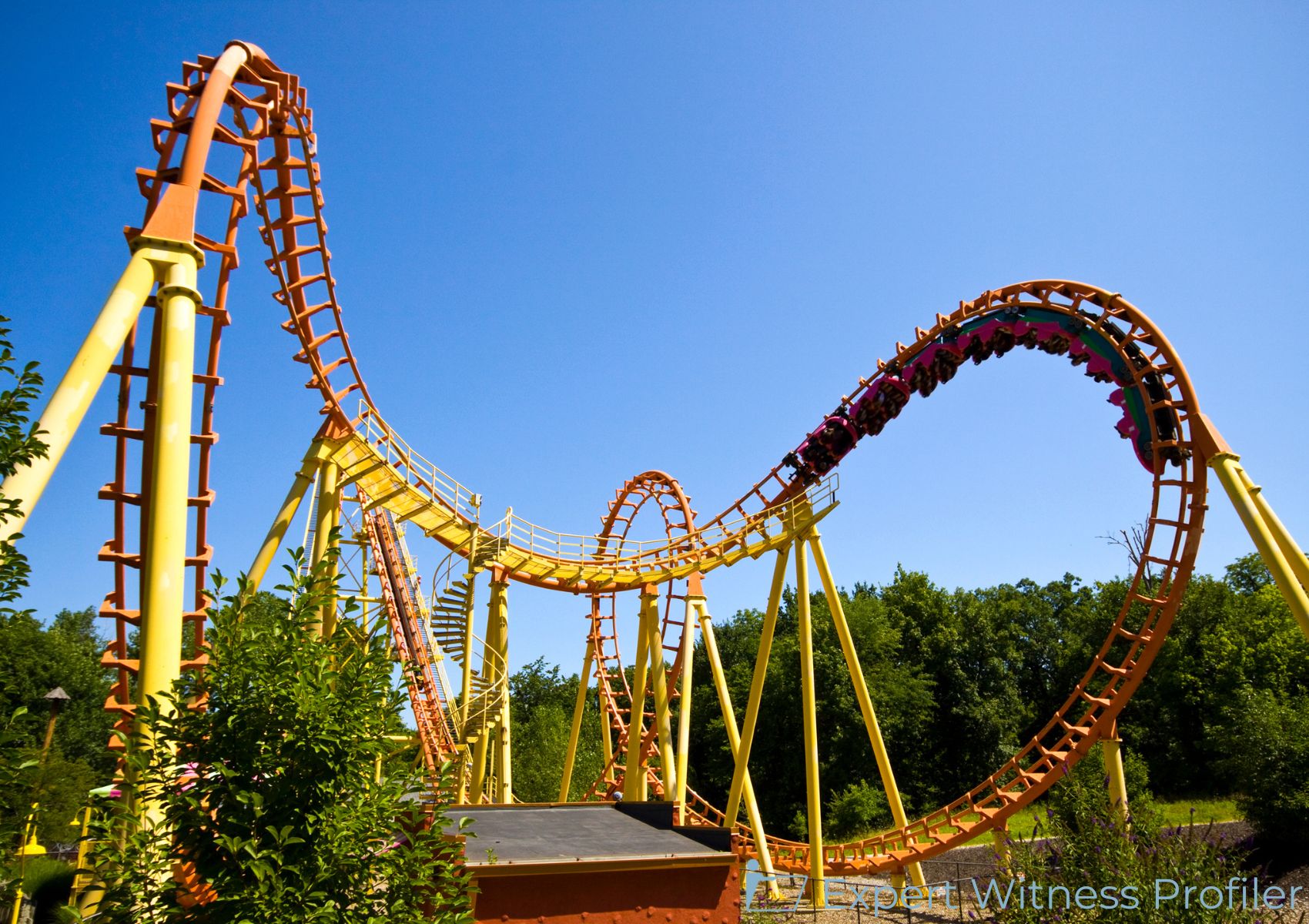
    This action arises from injuries sustained by Christopher Fabricant, a 52-year-old pelvic surgeon, while riding the Kingda Ka rollercoaster at the Six Flags amusement park located in Jackson, New Jersey.

    Defendants challenged the admissibility of Plaintiffs’ expert Edward M. Pribonic, who was retained to “conduct an engineering review and mechanical analysis to determine the mechanisms by which Fabricant received the injuries to his spine, as the result of riding on the Kingda Ka roller coaster,” and, if necessary, opine on “the kinematics or movements that created the injury mechanisms.” 

    Engineering Expert Witness

    Edward Mark Pribonic holds a Bachelor of Mechanical Engineering degree from the University of Pittsburgh; he is a registered professional engineer and is licensed in California. He specializes in “engineering design, rehabilitation, safety improvement, maintenance, ride safety inspections and accident investigation in the amusement ride industry.” Pribonic has held engineering related positions at Walt Disney Imagineering and Disneyland, has provided consultation to theme parks and ride manufacturers pertaining to ride equipment design, and has taught ride safety and inspection courses to California ride inspectors and to industry members. He has previously been qualified as an expert in the field of engineering in approximately twenty cases in both state and federal court in New Jersey.

    Want to know more about the challenges Edward M. Pribonic has faced? Get the full details with our Challenge Study report

    Discussion by the Court

    In his July 15, 2019 declaration, Pribonic opined that the seats and restraints on Kingda Ka were standardized and mass-produced.

    Pribonic’s opinions regarding functionality, design, and structure are based solely on a visual comparison of photographs pulled from the internet that purport to be other Intamin and Intaride rollercoasters. Pribonic did not identify the dimensions, designs, or the nature of the materials of the seats, restraints, and/or locking mechanisms in reaching his conclusions. Moreover, Pribonic did not identify any testable hypothesis, standard, or technique used to formulate his conclusions. 

    As a result, the Court found that the opinions set forth in Pribonic’s July 15, 2019 declaration were inadmissible as they were unreliable and constituted net opinions.

    Given the technical expertise being offered here, the Court found that Pribonic’s opinion is impermissibly speculative because it is grounded only in his superficial observations of seat exteriors through photographs. Moreover, Pribonic’s declaration is not based on any methodology, but rather his own intuition.

    Held

    The Court held that any testimony regarding the opinions set forth in Edward Pribonic’s July 15, 2019 declaration failed to meet the Daubert standard and was therefore inadmissible.

    Key Takeaway:

    The Court noted that an expert may focus upon personal knowledge or experience rather than scientific foundations. But even considering Pribonic’s experience in the amusement park industry and his time as an engineer, the Court found that his opinions in the July 15, 2019 declaration fell within the category of subjective belief and unsupported speculation.

    Case Details:

    Case Caption: Fabricant Et Al V. Intamin Amusement Rides Int. Corp. Est. Et Al
    Docket Number: 3:19cv12900
    Court Name: United States District Court, New Jersey
    Order Date: July 02, 2025
  • Construction Expert Barred from Testifying on Established Damages

    Construction Expert Barred from Testifying on Established Damages

    The case arises from Belmere, L.P.’s claim that Steadfast Insurance Company failed to timely and adequately pay it proceeds due under its commercial lines policy after Belmere invested $26 million of its own funds to repair a 249-unit apartment complex in Houma, Louisiana that it alleged suffered “catastrophic damage” during Hurricane Ida.

    Through its lawsuit, Belmere sought (i) additional coverage under its policy with Steadfast, and (ii) penalties, attorneys’ fees, and interest for Steadfast’s alleged bad faith. 

    Steadfast filed a motion in limine to exclude the opinions of experts Mr. Byron Earls and Mr. Christopher Lipp.

    Belmere retained Earls to (i) “investigate the scope of completed repairs based on information provided”; (ii) “generate comparative estimates for typical building types”; and (iii) “generate a report providing an opinion on the projected measurement of loss based on extenuating circumstance[s] after the event.”

    Lipp, on the other hand, was retained to provide a “technical assessment of the exterior building envelope components inclusive of the roof, exterior walls and windows” with a focus “on the severity of the impacts of water intrusion sustained at Belmere, and its need to replace building materials that were ruined after becoming wet.”

    Construction Expert Witness

    Byron Earls has over 20 years of experience in building construction, both commercial and residential. He also has over 7 years of experience as a catastrophic adjuster handling catastrophic claims nationwide including large fire and water losses.

    Get the full story on challenges to Byron Earls’ expert opinions and testimony with an in-depth Challenge Study

    Engineering Expert Witness

    Christopher Lipp has performed numerous envelope assessments, and investigations and has prepared construction documents based on those investigations. Lipp is experienced in the evaluation of distressed facade elements, including windows, doors, curtain walls, storefront systems, stucco, brick and fiber cement panels on both historic and new construction.

    Want to know more about the challenges Christopher Lipp has faced? Get the full details with our Challenge Study report

    Discussion by the Court

    Byron Earls

    Steadfast made the following contentions: (i) Earls’ methodology is insufficient to meet Daubert standards for reliability and will otherwise result in jury confusion; (ii) his expert report fails to address causation; and (iii) his testimony is irrelevant to determining the alleged cost of repairs, which will result in jury confusion.

    Since Belmere conceded that Earls’ testimony will not be used to establish the measure of its damages—”which are established by its own out-of-pocket costs”; accordingly, the Court granted Steadfast’s motion to the extent that it sought to exclude testimony or any part of the Earls’ report that estimated damages that have already been established by Belmere’s “repair bill.”

    While Earls’ testimony may be relevant for the purpose of rebutting an assertion by Steadfast that specific repair costs were excessive or that the property was not restored using like-kind and like-quality materials, but, the Court held that in its current form, the “proposed opinion [did not] assist the trier of fact to understand or determine a fact in issue.”

    The Court declined to admit any testimony or portion of the Earls report that estimated damages that have already been established by actual costs. If Steadfast presented an argument that the costs incurred by Belmere are somehow excessive or relate to betterments, the Court will allow Earls to opine in general terms (i) as to the reasonable nature of the actual costs or (ii) for the purpose of rebutting the contention that the costs amounted to betterments. As to the reasonable nature of the amount paid by Plaintiff, in no event will the expert state the specific amount of his estimate; merely that he estimated the amount of damages to be greater than the amount paid by Plaintiff. 

    Christopher Lipp

    Steadfast contended in brief fashion that Lipp’s testimony should be excluded for the following three reasons: (i) he did not inspect the property; (ii) he did not provide any opinion on the issue of causation of the alleged damages or the sufficiency of the repairs; and (iii) his “expert report and associated opinions rely heavily on the flawed, irrelevant, and unreliable opinions included in Earls’ report.”

    As a threshold matter, the Court denied Steadfast’s motion to the extent it sought to exclude Lipp’s testimony because (i) Lipp was qualified to render an opinion on his respective subject matter, and (ii) Steadfast has otherwise failed to provide the Court with enough analysis on the issue to make a ruling.

    However, the motion against Lipp’s report was granted to the extent that it relied on the Earls report.

    Held

    The Court granted in part and denied in part Steadfast’s motion in limine to exclude experts Byron Earls and Christopher Lipp.

    Key Takeaway:

    According to Rule 402, expert testimony must be relevant—not merely in the general sense that all testimony must be relevant, but specifically in the sense that the expert’s proposed opinion would assist the trier of fact in understanding or determining a fact in issue.

    Case Details:

    Case Caption: Belmere, L.P. V. Steadfast Insurance Company
    Docket Number: 2:22cv2689
    Court Name: United States District Court, Louisiana Eastern
    Order Date: June 30, 2025
  • Engineering Expert’s Use of Manual J Fails Daubert Reliability Test

    Engineering Expert’s Use of Manual J Fails Daubert Reliability Test

    Plaintiff Sheheryar Ahmad sued Defendant Spinnaker Insurance Co., his insurer, for breach of contract based on Defendant’s refusal to cover damages caused by frozen and burst pipes in Ahmad’s home.

    The Plaintiff argued that although the insurance policy excluded coverage for damage caused by frozen pipes, his claim qualified for an exception to that exclusion because he had taken “reasonable care to maintain heat” as required by the policy.

    Plaintiff’s home consumed seven thermal units of natural gas between December 14, 2022 and January 14, 2023, the period during which the pipes froze and burst.  To establish that seven therms sufficed to maintain reasonable heat, Plaintiff relied on the expert testimony of Dr. Brian K. Bramel.

    The Defendant, however, filed a request to exclude Bramel’s testimony regarding the home’s internal temperature at the time of the frozen pipes.

    Engineering Expert Witness

    Dr. Brian K. Bramel is a principal at his own engineering firm and holds undergraduate and graduate degrees in Mechanical and Civil Engineering.

    He also serves as an adjunct professor in the Department of Architecture at the University of the District of Columbia.

    Get the full story on challenges to Brian Bramel’s expert opinions and testimony with an in-depth Challenge Study.

    Discussion by the Court

    Bramel’s report applied the Manual J calculation, a standard thermodynamics methodology generally used to size heating equipment and developed by the Air Conditioning Contractors of America (ACCA) and the American Society of Heating, Refrigerating and Air-Conditioning Engineers (ASHRAE).

    In its ordinary function for equipment sizing, Manual J is used to “determine the therms necessary in order to reach a chosen temperature inside a structure.”

    However, per Bramel, the methodology can be used “in reverse,” using basic algebra, to determine the interior temperature based on measurements of the “features of the subject premises” and total energy used in this context. 

    Bramel’s Application of the Manual J Calculation

    The Manual J calculation determines “the energy required for a house based on the interior and exterior temperature differences.” A key element of the calculation is the “resistance factor” of the structural elements in Plaintiff’s home, which refers to the energy lost through the walls, floor, roof, and windows.

    Under the equation, the total “energy input to the building from the gas and electric” is equal to the “thermal resistance of the assembly” multiplied by the “area” of the resistance and the difference between the outdoor and indoor temperatures. 

    Bramel summarized the equation as follows: Qin = U A (tinside – toutside), where Qin refers to the “energy input to the building from the gas and electric,” U refers to “thermal resistance of the [structural] assembly,” A refers to “area” of the resistance, and (tinside – toutside) refers to the temperatures inside and outside, respectively.

    Reliability of Bramel’s Methodology

    The Defendant contended that Bramel’s testimony should be excluded because he had inappropriately repurposed a well-established methodology—typically used for sizing heating equipment—and applied it to a completely different context. While there was no dispute that Manual J is a reliable method for determining appropriate equipment size, the Court found that the Plaintiff failed to show it was suitable for use outside of that context, particularly for calculating internal temperatures in reverse.

    Bramel himself acknowledged during both his deposition and live testimony that he was unaware of any scientific or engineering publications endorsing this reverse application of the method. He claimed the approach remained reliable because it involved basic algebra applied to standard thermodynamic principles. However, the Court concluded that Bramel’s modification of the Manual J methodology significantly weakened his argument, as altering a known calculation for a novel use called into question its scientific reliability.

    Bramel’s hypothesis was not only untested but, by his own admission, untestable. The Plaintiff failed to present any evidence showing that Bramel’s method had ever undergone testing. During the evidentiary hearing, when questioned about whether his methodology had been tested, Bramel merely asserted that it was valid—offering no data or studies to support that claim. Furthermore, he acknowledged that a key component of his analysis—the calculation of total “internal gains”—could not be tested, as it was based on what he described as “a reasonable guess” grounded in an “engineering assumption.”

    Application of Methodology to the Facts

    The Court found that Bramel’s use of the Manual J methodology failed to meet the reliability standards required under Daubert and Rule 702. It pointed to multiple instances where Bramel relied on inconsistent and unsupported assumptions, all of which significantly weakened the credibility of his testimony.

    First, Bramel did not provide a clear or consistent justification for overriding Manual J’s default outdoor temperature value of 14 degrees Fahrenheit. From the beginning, he struggled to explain the meaning of the “outdoor 99% db” variable used in Manual J. During his deposition, he spent more than ten transcript pages attempting to respond to defense counsel’s questions on the topic but failed to articulate a coherent understanding. Despite this, Bramel replaced the preset value with his own figure of 33 degrees Fahrenheit, yet he was unable to offer a satisfactory explanation for making that manual override.

    Second, Bramel’s report offered neither a rationale for considering the additional variable of “internal gains” in his calculation nor an explanation of how he reached his ultimate assumed value.

    Third, Bramel’s assumptions about the structure of the Plaintiff’s home conflicted with the actual facts. He classified the home as “tight,” a designation in Manual J reserved for structures that are “sealed by meticulous workmanship” and exhibit the “lowest level of air leakage.” However, Bramel admitted during both his deposition and the hearing that industry standards require the use of “blower door tests” to assess a home’s tightness. He conducted no such test in this case, undermining the credibility of his classification.

    Furthermore, Bramel’s analysis assumes Plaintiffs home comprises one window, despite both photographs and inspections “revealing the house had 10 times that many windows.”

    Held

    The Court granted Defendant’s request to exclude the testimony of Dr. Brian K. Bramel.

    Key Takeaways:

    • If the Court, or any other experts, cannot test a critical assumption in Bramel’s methodology, then there is no “objective basis” to test the reliability of the methodology overall.
    • The cumulation of errors, inconsistencies, and absence of support render Bramel’s analysis entirely unreliable under Rule 702.

    Case Details:

    Case Caption: Sheheryar Ahmad V. Spinnaker Insurance Company
    Docket Number: 1:24cv176
    Court Name: United States District Court, Virginia Eastern
    Order Date: June 20, 2025
  • Engineering Expert Qualified to Opine on Crossbow Malfunction

    Engineering Expert Qualified to Opine on Crossbow Malfunction

    Scott and Melanie Campbell (“Plaintiffs”) brought this case against Ravin Crossbows, LLC and Velocity Outdoor Inc. (collectively, “Defendants”). This case arises from personal injuries sustained by Plaintiff Scott Campbell (“Scott”), an experienced hunter.

    On November 9, 2022, Scott was hunting from a ladder stand using a Ravin 10 Crossbow, manufactured by Ravin Crossbows. He attempted to shoot a deer, but the arrow fell a few feet away, and he fell from the stand, sustaining injuries. Scott had successfully used this crossbow multiple times before and understood its instructions and warnings.

    Scott’s injuries included a displaced intraarticular fracture of the distal radius with significant comminution of the dorsal and volar cortex. He also had signs of post-traumatic acute carpal tunnel syndrome.

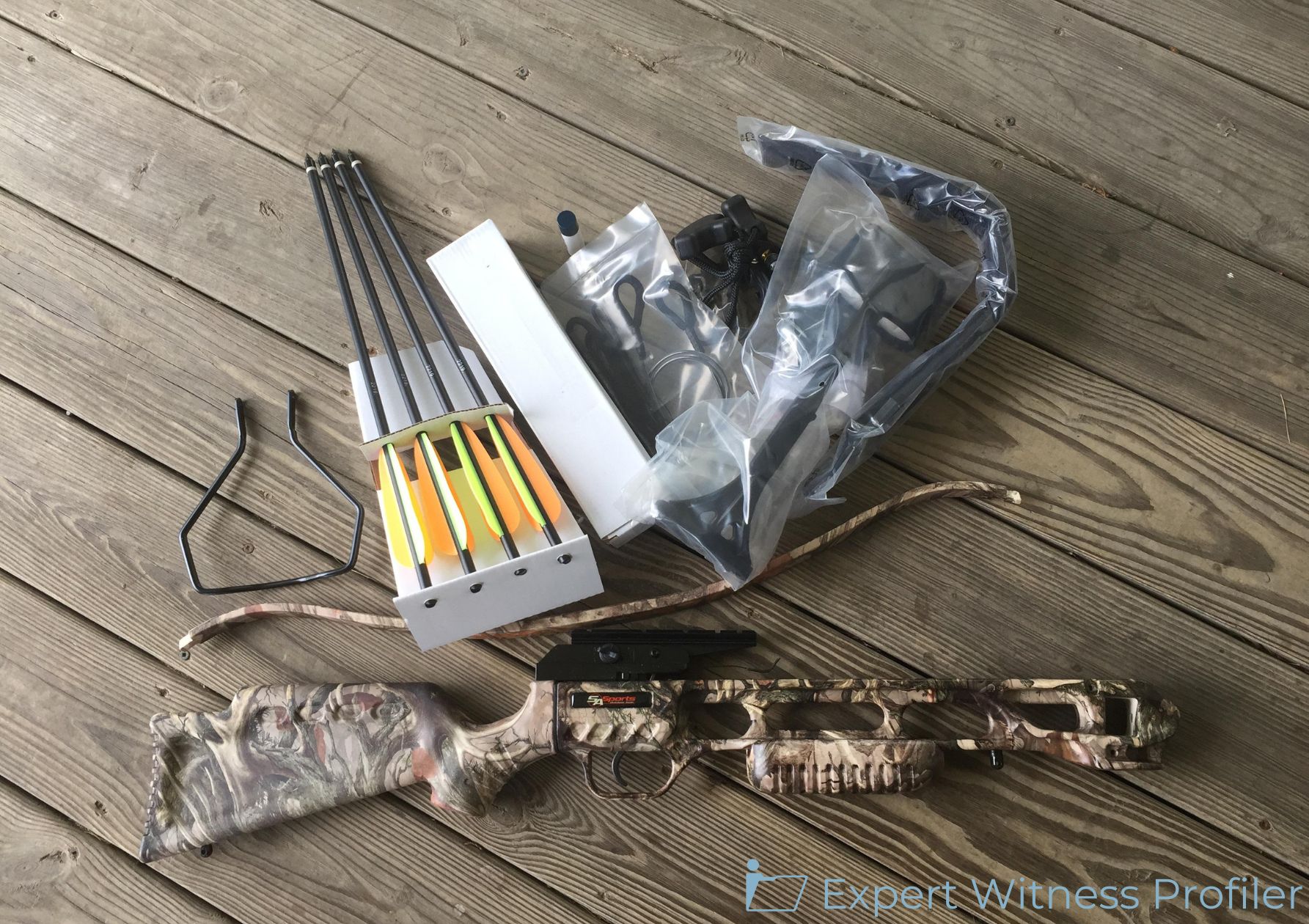
    Plaintiffs’ expert, Craig Clauser, an engineering expert, opined that the incident was a result of a derailment of a bowstring on the crossbow. In other words, Clauser believed that the accident happened because the bowstring came out of the groove at the end of the cam. Plaintiffs’ theory of liability hinges upon Clauser’s expert testimony.

    Defendants filed a motion to exclude the testimony of Craig Clauser under Daubert, challenging his qualifications and the reliability of his opinions.

    Engineering Expert Witness

    Craig David Clauser is a metallurgist and materials engineer by training. As part of his work experience, Clauser was responsible for employee safety and training and failure analysis investigation which is relevant to the instant matter. Clauser is also a member of various professional societies and has contributed to the ASM Handbook on Failure Analysis and Prevention.

    Want to know more about the challenges Craig Clauser has faced? Get the full details with our Challenge Study report.  

    Discussion by the Court

    A. Qualifications

    Defendants argued that Clauser should be excluded because he lacks the practical experience within the hunting industry necessary to make a reliable opinion about liability and causation. The Court disagreed.

    Clauser, after all, possesses skill or knowledge greater than the average layman in determining engineering issues. He need not have academic training in hunting to have an expert opinion on matters related to engineering.

    Defendants may prefer Clauser to be an expert in hunting and crossbows, but the law does not require that.

    B. Reasoning and Methodology

    1. Causation and Liability

    Defendants argued that Craig Clauser’s opinions lacked sound methodology, were speculative, and failed to meet reliability requirements, specifically pointing to his lack of mathematical calculations, drawings, or diagrams to test the reliability of his reasonable alternative designs.

    The Court found that Clauser’s opinions on causation and liability were reliable. His conclusions were based on a detailed, independent review of the physical crossbow and evidence like the broken arrow shaft as well as the “witness marks” left on the shaft of the crossbow as the arrow traveled up the crossbow, which the Court deemed a generally accepted and reliable method in engineering analysis, supported by “good grounds” and not mere speculation.

    2. Proposed Alternative Designs

    Defendants contended that Craig Clauser’s proposed alternative designs were speculative and unreliable because he did not conduct testing, calculations, or provide a concrete design for them, arguing this lack of rigorous methodology made his opinions inadmissible.

    The Court evaluated the reliability of each proposed design separately. Regarding the cam with increased groove depth, the Court held that this opinion was reliable. The Court determined it was based on Clauser’s engineering expertise and detailed analysis of the physical crossbow involved in the incident, including microscopic examination and analysis of witness marks, which provided “sound reasoning and good faith grounds” despite the absence of testing on a modified component.

    In contrast, the Court held that the opinion regarding cam shields or removable guards was unreliable. This proposal was deemed speculative by the Court, lacking any basis in testing, analysis of feasibility or potential dangers or evidence of existing designs on the market. A cam shield might have helped reduce the risk of injury but there is nothing to show that it would be a reasonable alternative design to the Ravin 10.

    C. Assistance to the Trier of Fact

    Defendants argued that Craig Clauser’s testimony should be excluded because he performed no testing or analysis to determine the root cause of the incident and failed to test his alternative designs, contending that this lack of empirical work meant his testimony would not provide relevant information to assist the jury.

    The Court found that Clauser’s opinions will assist the trier of fact.

    The Court’s reasoning was that Clauser’s testimony pertains directly to the alleged injuries Scott Campbell suffered, the potential causation, and the issue of liability. His specialized knowledge is relevant to determining the nature and extent of Scott’s alleged injuries in relation to the crossbow incident.

    Held

    The Court granted in part and denied in part Defendants’ motion to limit the testimony of expert Craig Clauser.

    Key Takeaway:

    A cam shield might have helped reduce the risk of injury but there is nothing to show that it would be a reasonable alternative design to the Ravin 10. Additionally, there is no evidence that a cam shield exists on any current or past crossbow on the market, and Clauser did not prepare or present an actual design with a cam shield.

    Thus, it is apparent to the Court that Clauser’s opinion that a cam shield or removable guard is a reasonable alternative design lacks the requisite reliability for it to be admissible under Daubert.

    Case Details

    Case Caption: Campbell v. Ravin Crossbows, LLC
    Docket Number: 3:23cv1862 
    Court Name: United States District Court for the District of New Jersey
    Order Date: April 29, 2025
  • Rule 26 Violation is Harmless with Regard to the Engineering Expert’s Repair Estimates

    Rule 26 Violation is Harmless with Regard to the Engineering Expert’s Repair Estimates

    In this insurance breach of contract case, Plaintiff  LJP Building, LLC designated Alfredo Brizuela as its damages expert in March 2024. That same month, Brizuela prepared an estimate to restore the property to its pre-loss condition. The estimate was based on replacement cost value (RCV) and totaled $655,054.64. Westchester deposed Brizuela in February 2025.

    Subsequent to Brizuela’s deposition, it was noted that Brizuela omitted applicable depreciation as to the $655,054.64 RCV of the estimate. As a result, on April 1, 2025, Brizuela supplemented his estimate solely to apply depreciation to the $655,054.64 RCV. There was no adjustment to any of the values, simply the application of depreciation to the previously estimated amount of $655,054.64 to derive an actual cash value (ACV) of $636,447.67.

    Defendant contended that Brizuela’s application of depreciation to his previously produced estimate is an “untimely disclosure” and “presents entirely new facts, evidence and substantially revised expert opinions that were never disclosed.”

    Engineering Expert Witness

    Al Brizuela is a Florida licensed professional engineer, general contractor and registered industrial hygienist. He graduated from the University of Miami in 1978 with a Bachelor of Science degree in architectural engineering. Shortly after graduation, he began working for Law Engineering Testing Company Inc., performing subsurface investigations for a multitude of government projects the most significant being the Metro Rail System.

    Want to know more about the challenges Al Brizuela has faced? Get the full details with our Challenge Study report.

    Discussion by the Court

    A. Brizuela’s April 2025 Report is a Supplement

    Westchester claimed that Brizuela’s “supplemental” affidavit is not a supplement at all. Rather, it presents entirely new facts, evidence, and substantially revised expert opinions that were not previously disclosed.

    The Court held that Brizuela’s updated report is properly characterized as a supplement, not a new disclosure. That is because the only change was to correct his prior estimate by applying depreciation. It includes no new model for calculating damages, new methodology, or new claim for damages to certain parts of the building that were not previously made.

    Even the portions of the initial and supplemental affidavits Westchester highlights shows that the only difference is Brizuela omitted applicable depreciation in his initial report. Since Brizuela’s supplemental report sought to correct a mistake (omitted depreciation), the Court held that it fell within the narrow purpose of Rule 26(e).

    B. Brizuela’s Supplement Was Timely

    According to Rule 26, Plaintiff had up to its pretrial disclosures, which are due July 11, 2025, to correct any inaccuracies. 

    Westchester offered no support for its conclusory argument that any supplement was due earlier. The Court held that Westchester does cite several cases that deal with prejudice caused to the party left without the chance to depose an expert after the discovery deadline. But prejudice (even if it exists) cannot override the deadlines in Rule 26. In any event, as discussed below, any prejudice can be remedied.

    C. Supplementation Was Harmless

    When a party fails to provide information required by Rule 26, as Westchester claims, they are “not allowed to use that information or witness to supply evidence on a motion, at a hearing, or at a trial, unless the failure was substantially justified or is harmless.”

    Weighing these factors, the Court found that any Rule 26 violation harmless. Brizuela’s testimony and repair estimates are seemingly critical. Without him, Plaintiff’s case may end. Though discovery has closed, Brizuela will make himself available for deposition. With this, Westchester can cure the deficiency. Westchester offers no argument that it would have to re-brief summary judgment if the supplement is allowed. The deposition is the better option considering the importance of the evidence.

    Westchester also sought to exclude the Brizuela’s supplement. The Court held that Plaintiff’s conduct, at least at this point, does not warrant excluding testimony that may prove essential to its case when any prejudice can still be cured.

    The Court, therefore, is convinced that Plaintiff should be allowed to supplement Brizuela’s expert disclosure.

    Held

    The Court denied Westchester’s motion to strike Plaintiff’s untimely supplemental expert witness affidavit and estimate of Alfredo Brizuela.

    Key Takeaway:

    Rule 26(e) permits supplemental reports only for the narrow purpose of correcting inaccuracies or adding information that was not available at the time of the initial report.

    Case Details:

    Case Caption: LJP Building LLC V. Westchester Surplus Lines Insurance Company
    Docket Number: 2:23cv792
    Court Name: United States District Court for the Middle District of Florida, Fort Myers Division
    Order Date: April 18, 2025
  • Engineering Expert’s Opinion on Cost Estimates Admitted

    Engineering Expert’s Opinion on Cost Estimates Admitted

    The Great Lakes Insurance Company issued a policy of insurance (the “Policy”) to Gulf Coast Bank and Trust (“Gulf Coast”) covering specific buildings owned by BRH Consultants, specifically, the Burbank Landing Apartments.

    Subsequently, BRH alleged that on August 29, 2021, Hurricane Ida caused damage to Buildings 1 and 2 of the property. Following this event, on September 9, 2021, a claim for damages resulting from the storm was submitted against the Policy.

    While Great Lakes paid certain sums under the Policy, the Plaintiff, BRH, claimed that these payments “were totally inadequate to pay the covered damage” to the property. Conversely, Great Lakes alleged that it had paid all sums due and contended that the claimed damages were not caused by Hurricane Ida and, therefore, fell outside the scope of coverage of the Policy.

    To substantiate its claim, BRH submitted the expert report of Dr. Jerry Householder, whom BRH described as “an accomplished engineer, construction professional, professor, author, and expert.” Nevertheless, Great Lakes filed a motion to exclude Householder as an expert in this case.

    Engineering Expert Witness

    Jerry Householder has a PhD in engineering and has been a licensed professional engineer since 1971. As an engineer, he has been the designer of record on over two billion dollars worth of constructed facilities, and as a contractor, he has constructed over one thousand projects.

    Householder was the Department Chairman of the Department of Construction Management at LSU, where he held a Distinguished Professorship in the College of Engineering. He has written eight books on construction that have been translated into several foreign languages.

    Want to know more about the challenges Jerry Householder has faced? Get the full details with our Challenge Study report.

    Discussion by the Court

    Rule 26(a)(B)(2) Deficiencies

    Great Lakes complained that Householder’s 2-page report is “wholly devoid of any analysis linking the facts of this case to his conclusory opinions.”

    While the report is short, the Court declared that it is clear from context that Householder used his extensive education and experience along with his review of the photographs and reports mentioned at pages 1 and 2 of his report to reach his conclusion that the cost estimates listed on page two of the report “are reasonable.”

    Furthermore, Householder expanded on his report in his extensive deposition and in a subsequent declaration.

    To the extent that Great Lakes feels it was surprised by any new information in Householder’s Declaration (which came after his deposition), the Court will allow for a follow up deposition of Householder limited to matters raised for the first time in his Declaration, if there are any.

    Methodology

    Great Lakes argued that Householder’s “report lacked crucial information concerning what methodology, if any, was used to produce those estimates” and “failed to explain how his expertise allowed him to arrive at his opinions.”

    Householder explained in his report that he “inspected the project on more than one occasion and reviewed numerous photographs” and reports which he itemized.

    Furthermore, Householder was questioned extensively at his deposition and, in addition, submitted a clarifying declaration. Therefore, the Court believed Householder’s methodology of applying his experience and professional training to the reasonableness of the costs items is a sufficient methodology.

    Great Lakes complained that Householder “did not inspect the [p]roperty, nor did he perform an independent analysis of the damage to the [p]roperty”. Instead, he relied on information provided by owner and others and did not “verify” the estimates. But this Court and others have held that physical inspection of the property by the testifying expert is not required in order for an expert to opine on the subject property as long as he was provided with underlying data sufficient to provide a basis for his opinions.

    Regarding Great Lakes’ argument that Householder was required to verify the data provided by his client and not rely on its accuracy for purposes of his expert testimony, this Court and others have rejected such an argument.

    Sufficiency of Foundation

    Great Lakes argued that Householder’s opinions lacked a sufficient foundation because he “relied on insufficient facts and data,” namely, the “limited, inaccurate, undocumented, and/or selfserving, representations of the [p]roperty’s owner . . . .”

    However, the Court carefully reviewed Householder’s report and found that there is a sufficient foundation for Householder’s opinions.

    But Great Lakes’ attack on sufficiency is really an attack on Householder’s reliance on what it alleges are the “limited, inaccurate, undocumented, and/or self-serving, representations of the [p]roperty’s owner . . . .”

    According to the Court, the alleged weaknesses, insufficiencies, inconsistencies, and inaccuracies of Householder’s opinions and the data upon which he relied may be tested by the Defendant on cross examination before the jury.

    Held

    The Court denied the Defendant Great Lakes Insurance SE’s Daubert motion to exclude the testimony of Dr. Jerry Householder.

    Key Takeaways:

    • In determining a party’s compliance with Rule 26, the Court may consider the information gathered in the deposition taken after the report which supplements or explains more fully the information conveyed in the report. The Court found that the original report, especially when supplemented and clarified by Householder’s extensive deposition and his declaration, met the criteria of Rule 26(a)(2)(B).
    • It is evident that Householder did not merely rely on assumptions but, viewing the photographs and reports of others and relying on his pre-Ida inspections of the property and his extensive experience in construction costs, concluded that the estimates provided were reasonable.

    Case Details:

    Case Caption: Gulf Coast Bank And Trust Company Et Al V. Great Lakes Insurance SE
    Docket Number: 3:23cv1444
    Court Name: United States District Court for the Middle District of Louisiana
    Order Date: April 16, 2025
  • Engineering Expert’s Testimony on the Formation of Black Ice Admitted

    Engineering Expert’s Testimony on the Formation of Black Ice Admitted

    In a premises liability lawsuit, Plaintiff Susana Aqueche claimed she was injured after slipping on ice in the parking lot of a Hobby Lobby and is suing SVAP II Pasadena Crossroads, LLC (SVAP), Sterling Retail, Sterling Mid-Atlantic, The Sterling Organization, Paramount Crossroads, Sterling Organizational Systems, and Hobby Lobby. In response, SVAP, Sterling Retail, Sterling Mid-Atlantic, and The Sterling Organization have requested summary judgment, arguing that Aqueche was negligent by failing to see and avoid an obvious icy condition. They further contend that the report from Aqueche’s expert, Richard Balgowan, should be excluded because his certification doesn’t meet Federal Rule 56(c) requirements and his opinions are speculative and not helpful to the Court.

    Engineering Expert Witness

    Richard Balgowan possesses a wide range of professional certifications and licenses, including being a licensed professional engineer in twelve states, a licensed professional planner, and holding certifications as a public manager, public works manager, snow and ice control manager, and asphalt pavement technician. He is also a public works leadership fellow.

    Get the full story on challenges to Richard Balgowan’s expert opinions and testimony with an in-depth Challenge Study. 

    Discussion by the Court

    Plaintiff points to Balgowan’s certification that the “report is an accurate statement of all his opinions, and the basis and reasons for them, to which he will testify under oath.” Furthermore, Plaintiff cites to Balgowan’s qualifications and further maintains that Balgowan’s report assists the trier of fact in “understanding how ‘black ice’ is formed, why it is likely that the hazard in this incident was ‘black ice,’ and is consistent with the testimony of Aqueche that it was ‘black ice’ which existed and caused her to fall.”

    Turning to the Defendants’ challenges to Balgowan’s report, the Court finds that the expert testimony outlined within it has a clear path to being admissible at trial. Specifically, Balgowan’s certification in the report and his affidavit confirm his intent to testify to its contents. Therefore, the Court can consider the report when evaluating the Defendants’ motion for summary judgment.

    With regard to the Defendants’ arguments about the report’s reliability and methodology, the Court concludes that Balgowan’s report is sufficiently reliable to be considered at this stage. This conclusion is based on the fact that Balgowan’s findings are rooted in over forty years of experience in snow and ice control, as well as a review of weather data for the relevant timeframe, and a site visit to the Hobby Lobby parking lot. Consequently, his opinions are helpful for understanding how black ice is formed, as well as the likelihood of black ice forming in the Hobby Lobby parking lot on December 26, 2020. As a result, the Court will consider Balgowan’s report in assessing the Defendants’ motion.

    Finally, viewing the evidence favorably to the Plaintiff, the Court determined that a genuine factual dispute exists regarding the visibility of the ice. Therefore, summary judgment was not appropriate and the Defendants’ motion was partially denied.

    Held

    The Court, therefore, found that Mr. Richard Balgowan’s report may be considered in evaluating Defendants’ motion for summary judgment.

    Key Takeaway:

    Despite the Defendants’ challenges, the Court found Balgowan’s report reliable enough for the summary judgment stage due to his extensive experience, review of relevant data, and site visit. The Court recognized that Balgowan’s opinions on how black ice is formed, as well as the likelihood of black ice forming in the Hobby Lobby parking lot on December 26, 2020 were helpful for understanding the case.

    Case Details:

    Case Caption: Aqueche V. Svap Pasadena Crossroads, LLC
    Docket Number: 1:24cv1395
    Court Name: United States District Court, Maryland
    Order Date: March 20, 2025