Category: Human Factors Expert Witness 

  • Human Factors Expert’s Opinion on Driver Inattentiveness Excluded

    Human Factors Expert’s Opinion on Driver Inattentiveness Excluded

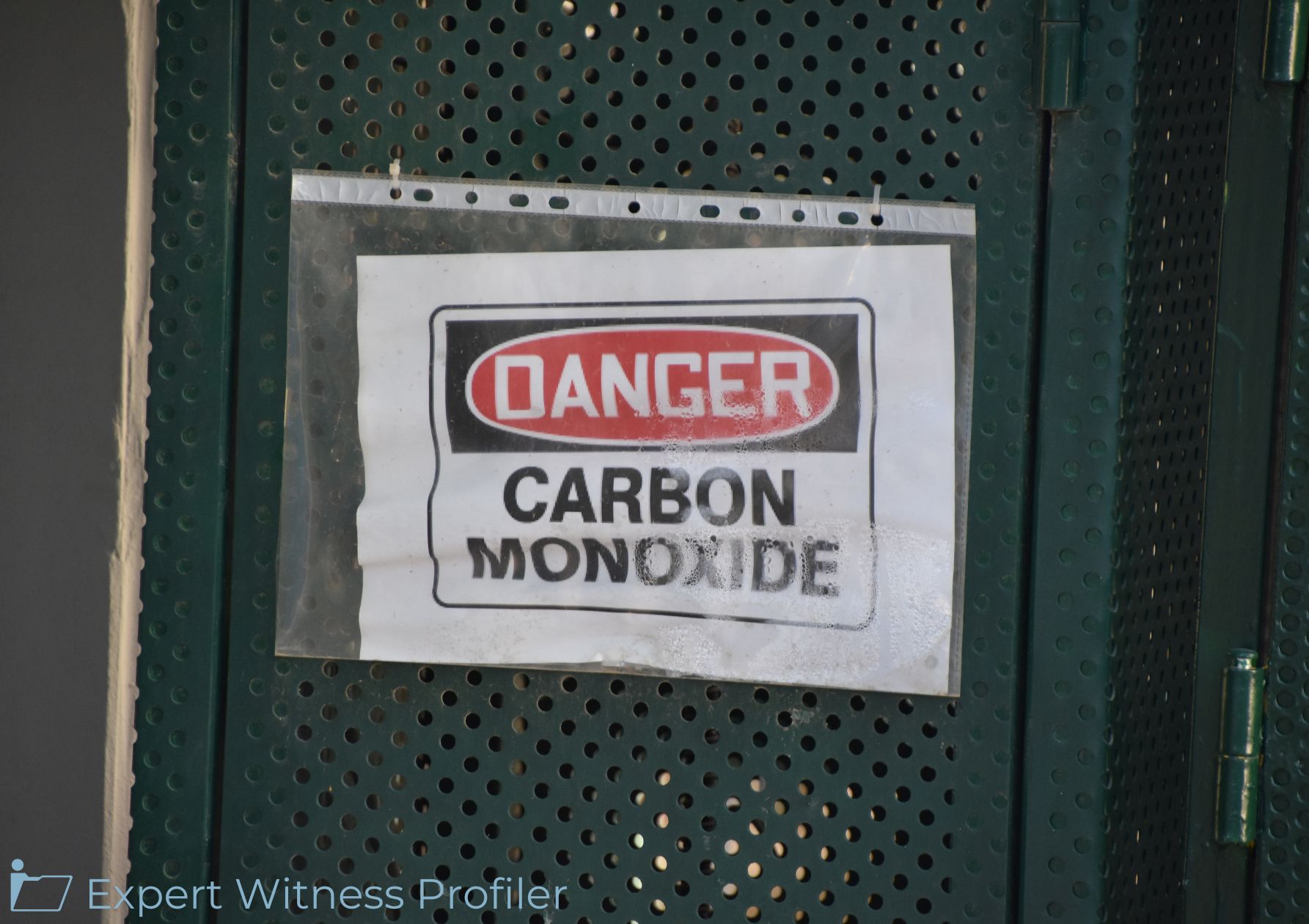
    This case arises out of an alleged design defect and failure to warn regarding a 2017 Toyota Tacoma. Lee Griffin was the primary driver of a 2017 Toyota Tacoma. After Griffin died due to accidental carbon monoxide poisoning from an automobile inadvertently continuing to run in the garage, Caroline Griffin filed suit individually and as executor of Lee Griffin’s estate.

    The Plaintiff filed a motion to exclude the entire testimony of Randall Tackett and Angela McGrath as well as part of the testimony of Nathan Dorris and Harry Pearce II.
    Toxicology Expert Witness

    Dr. Randall Tackett received his BS from Jacksonville University in 1975. He then received an MS degree in pharmacology and toxicology from Auburn University in 1977 and his Ph.D. in pharmacology and toxicology from the University of Georgia in 1979. Following a two-year postdoctoral fellowship at the Medical University of South Carolina, he returned to the University of Georgia as an assistant professor in the Department of Pharmacology and Toxicology.

    He later served as a Professor and Associate Department Head in the Department of Clinical and Administrative Pharmacy at the University of Georgia College of Pharmacy.

    Get the full story on challenges to Randall Tackett’s expert opinions and testimony with an in-depth Challenge Study. 

    Statistics Expert Witness

    Angela A. McGrath has a Bachelor of Science in Statistics, a Master of Arts in Applied Statistics, 27 years of experience in consulting, and experience teaching statistics.

    She is the Principal Consultant and Director of Automotive Research at Cirque Analytics, an economic, statistical, and financial consulting company headquartered in Jackson Hole, WY. She has developed extensive experience in formulating, conducting, and directing statistical and other quantitative analyses.

    Want to know more about the challenges Angela McGrath has faced? Get the full details with our Challenge Study report. 

    Automotive Engineering Expert Witness

    Harry Pearce has over 24 years of expertise in the field of structural crashworthiness. He gained industry experience with nine years at General Motors, serving as the Lead Structural Design Engineer for multiple vehicles. 

    With his knowledge and experience with vehicle sealing, Pearce has addressed claims of Carbon Monoxide (CO) intrusion. He has performed Electro Magnetic Interference (EMI) testing in anechoic chambers and Brake Override System (BOS) testing at Exponent’s Test and Engineering Center. 

    Discover more cases with Harry Pearce as an expert witness by ordering his comprehensive Expert Witness Profile report.

    Human Factors Expert Witness

    Nathan Todd Dorris is a human factors specialist with extensive experience in product safety and the evaluation of instructions, warnings and other safety communications for a broad range of products and industries.

    Gain a comprehensive understanding of Nathan Dorris’ qualifications and casework history with his Expert Witness Profile report.

    Discussion by the Court

    A. Randall Tackett

    Randall Tackett stated two opinions in his expert report:

    1. Griffin consuming 1.2 standard drinks within the hour before death is inconsistent with the evidence described above. Rather, the timeline of events is consistent with Lee Griffin ingesting higher amounts of alcohol earlier on July 4, 2022, which his body would have metabolized from the time he ingested the alcohol until his death.

    2. It is more likely than not that on the evening of July 4, 2022 Griffin’s blood alcohol concentration was at a level that could have affected his reaction time, hearing, judgment, memory, reasoning and ability to detect danger including his ability to turn off his Toyota Tacoma and/or recognize that it was still running in the garage.

    Motion to Exclude

    In this case, Tackett attempted to estimate the decedent’s blood alcohol content (BAC) at various times before death using a method known as retrograde extrapolation. The Plaintiff did not dispute the scientific validity of this technique in general. Instead, she argued that Tackett lacked the necessary factual basis to apply it reliably in this case.

    Specifically, the Plaintiff pointed out several critical unknowns: the exact time of death, the time the vehicle was parked, and any concrete details about when, what, or how much alcohol the decedent consumed. The Defendants contended that these gaps in information should affect how much weight the jury gives Tackett’s testimony, not whether it should be allowed at all. The Court disagreed.

    The main issue, according to the Court, was the absence of reliable timing data. Without knowing when key events occurred, it was unclear how far back Tackett should extrapolate. His estimates ranged from one to two hours before death to as far as 14–15 hours earlier. As a result, his BAC estimates varied widely—from 0.046 to 0.297—depending on assumptions about timing and the decedent’s metabolism rate. Notably, there was also no evidence that the decedent had consumed any alcohol before parking the car, further undermining the reliability of Tackett’s conclusions.

    Angela McGrath

    The Defendants have proffered Angela McGrath as an expert witness to testify about the following opinions:

    a. [The United States Consumer Product Safety Commission (“CPSC”)] death certificate data shows that vehicles with and without keyless ignition have inadvertently been left running in enclosed spaces.

    b. Available CPSC death certificate data does not show a consistently increasing trend of accidental carbon monoxide poisoning from passenger vehicle exhaust in enclosed spaces.

    c. The proportion of combustion engine vehicles on the road with keyless ignition is increasing over time, however, even by 2021, the majority of vehicles still have conventional keys.

    d. While number of registered vehicles with keyless ignition and without [automatic engine time-out (“ETO”)] has increased steeply since 2011, the rates of accidental carbon monoxide poisoning from passenger vehicle exhaust in enclosed spaces has exhibited no corresponding, consistently increasing trend.

    Motion to Exclude

    The Plaintiff argued that McGrath’s opinions were unreliable because the CPSC database she relied on did not distinguish between carbon monoxide poisoning deaths caused by vehicles with keyless ignition systems and those with traditional mechanical ignitions. As a result, the Plaintiff contended that no meaningful statistical analysis could be done to compare the risks associated with each type of ignition system.

    In response, the Defendants claimed the Plaintiff had misrepresented McGrath’s testimony. They asserted that McGrath was not attempting to directly compare the risks of carbon monoxide deaths between mechanical and keyless ignition systems. However, this argument fell short.

    The Court noted that McGrath’s analysis implicitly relied on such a comparison. Her underlying logic was that if keyless ignition systems were more dangerous, the overall number of accidental carbon monoxide deaths would have increased after their introduction. Because the death rate did not rise, she inferred there was no added risk. Therefore, despite the Defendants’ assertions, McGrath’s analysis did, in fact, depend on comparing the two types of ignition systems—making the Defendants’ denial unconvincing.

    Moreover, the Defendants’ argument rested on the assumption that, absent a defect, accidental carbon monoxide deaths would have remained constant from 2011-2021. The Court found this assumption questionable. Public awareness campaigns, increased usage of carbon monoxide detectors, or other safety measures could have contributed to a decline in deaths over time—independent of any defect. McGrath’s analysis failed to account for such alternative explanations.

    Ultimately, the Court held that McGrath’s testimony offered nothing more than a basic correlation and lacked consideration of other plausible factors. As such, her statistical analysis could not be reliably used to show the absence of a defect.

    Nathan Dorris

    The Plaintiff sought to exclude four categories of opinions that Dorris asserted: (1) that the Tacoma’s warnings were sufficient, (2) that drivers lose focus while using their vehicles, (3) that the Plaintiff and decedent should have had carbon monoxide detectors in their home, and (4) that the Tacoma was not defective because it complied with regulatory and voluntary standards.

    Inattentive Drivers

    The Plaintiff sought to exclude Dorris’ opinions regarding how driver inattentiveness could lead individuals to leave their engines running and fail to respond to alerts or other feedback.

    In response, the Defendants argued that Dorris’ discussion of driver distraction is just one component of the opinions he expresses in this case and is background to his primary opinions specific to the 2017 Toyota Tacoma’s Smart Key System and the subject incident.”

    The statements in question included: [d]rivers that are distracted or inattentive (for whatever reason) can inadvertently leave their vehicle’s engine running, regardless of the type of ignition system employed,” and “[n]ot only can inattention result in execution errors and omitted actions, but it may cause individuals not to respond to alerts or other feedback.”

    Dorris was not particularly clear about whether these statements—or others like them—were independent expert opinions or merely facts supporting other opinions. Even the Defendants appeared uncertain. On one hand, they described these statements as background to his primary opinions,” but on the other, they defended his ability to offer them as standalone opinions.

    While Dorris may not opine directly that a driver’s inattentiveness causes errors, the Court held that if that fact properly supported a valid expert opinion offered by Dorris, he was permitted to rely on it.

    Sufficiency of the Warning

    Dorris opined that the warning provided by Toyota are “reasonable and appropriate.” The Plaintiff asserted that that opinion is unhelpful because it does not offer any analysis outside of what the jury can do itself. 

    Whether a warning is legally sufficient depends upon the language used and the impression that such language is calculated to make upon the mind of the average user of the product. The Court held that the adequacy inquiry here takes the perspective of the user of the product. Therefore, the jury is fully capable of determining whether the adequacy of the warning(s) at issue here without the help of an expert.

    Carbon Monoxide Detectors

    The Plaintiff argued that Dorris attempted to opine that the Griffins should have equipped their home with carbon monoxide detectors.”

    However, the only relevant statement on the page of Dorris’s report cited by the Plaintiff read:

    In a publication dated 08/2020, the Georgia Department of Public Health explicitly discussed CO exposure can cause ‘sudden illness or death’; potential sources of CO exposure include automobile exhaust; to install CO detectors ‘in every room used for sleeping’; ‘DO NOT leave a motor vehicle running in an enclosed garage.

    This statement appeared under the section titled Exhaust Fumes and CO Are Well Known Hazards.” Aside from the quoted portion referencing carbon monoxide detectors, there was no other mention of detectors—either in that section or anywhere else in the report.

    The Court did not view this as Dorris offering an opinion that the Plaintiff or the decedent should have installed carbon monoxide detectors in their home. Instead, the Court found that he was merely citing a source he relied upon to support his broader conclusion that Exhaust Fumes and CO Are Well Known Hazards.”

    Importantly, the Plaintiff did not challenge Dorris’s qualifications to reach that conclusion, nor did they argue that the conclusion itself was unhelpful.

    Compliance with Relevant Standards

    The Plaintiff moved to bar Dorris from testifying that the Toyota Tacoma was not defective simply because it complied with minimum regulatory standards.

    In response, the Defendants argued that the jury had a right to consider federal compliance when evaluating whether the vehicle’s design was reasonable. They further claimed that Dorris relied on compliance as just one of several factors in concluding the Tacoma was not defective. However, the Court sided with the Plaintiff.

    Dorris had stated that the lack of an automatic engine shutoff did not make the Tacoma defective, in part because at the time the subject vehicle was manufactured and sold (and even today), such a feature is not required by any regulation or voluntary standard.” In other words, he based his opinion on the fact that the Tacoma complied with federal regulations.

    The Court found this reasoning insufficient and ruled that it warranted exclusion. Accordingly, the Court held that Dorris would be precluded from opining that the Tacoma was in compliance with federal regulation.

    Harry Pearce II

    The Plaintiff sought to exclude four of his opinions from testimony: (1) opinions going to intent, motive, or state of mind, (2) opinions about the source of the carbon monoxide, (3) opinions about the efficacy of carbon monoxide detectors would have had in this case, (4) opinions “parroting” Jeya Padmanaban.

    Intent, Motive, and State of Mind

    The Plaintiff argued that Pearce should not be allowed to testify about Toyota’s subjective state of mind.

    On that point, the Plaintiff was correct—Pearce could not offer opinions about what the Defendants were thinking, such as Toyota did not want to [install auto shutoff] because of the concern of introducing a new risk of hot car deaths.” Such statements improperly speculate on Toyota’s intent or motivations.

    However, the Defendants were also partially correct. Pearce was permitted to rely on Toyota’s internal documents and employee testimony to form his expert opinions. He may testify as to whether information contained in Defendants’ internal documents indicated certain risks.” The Court clarified that while Pearce could interpret the content of internal materials to identify risk indicators, he could not speculate on Toyota’s actual intent or decision-making process.

    Source of Carbon Monoxide

    The Plaintiff moved to exclude any opinion from Pearce regarding the source of the carbon monoxide that caused her and the decedent’s injuries.

    When asked directly whether he had an opinion on the source of the carbon monoxide in this case, Pearce responded, I was not asked to do that so I do not have an opinion on that.

    Despite this, the Defendants added a qualification. They stated that Pearce would not offer an opinion on the matter unless Plaintiff opens the door to this subject through her attorneys’ examination of Pearce or the testimony of other witnesses she presents at trial.

    But as the Defendants were well aware, the Plaintiff had already retained an expert specifically to testify about the source of the carbon monoxide. And since causation is a central element of the Plaintiff’s claims, it was almost certain the Plaintiff would open the door to this issue during trial.

    That, however, did not give the Defendants license to question Pearce on a subject about which he had explicitly disclaimed any opinion. If the Defendants wished to challenge the Plaintiff’s expert on the source of the carbon monoxide, they should have retained their own rebuttal expert.

    Carbon Monoxide Detectors

    Pearce intended to opine that, “[w]ith multiple sources of CO in a home, the best protection from CO exposure is the installation of CO detectors in the home. Auto engine shut-off only protects from the one vehicle on which it is installed.”

    The Plaintiff objected to this because it depended on two assumptions: (1) that any carbon monoxide detectors in the house would have worked and (2) that the Plaintiff and the decedent would have responded to the carbon monoxide detector if it did work. 

    However, the Court held that Pearce has extensive experience from which he could derive his opinion.

    Parroting

    The Plaintiff argued that any testimony by Pearce regarding a 2015 paper published by Jeya Padmanaban would be irrelevant and amount to inadmissible “parroting.”

    In response, the Defendants clarified that they did not intend to have Pearce testify about Padmanaban’s research. Instead, Pearce had included the study merely as general background material.

    The Defendants confirmed that they would not raise the Padmanaban study at trial unless the Plaintiff opened the door to that line of testimony. Based on this clarification, the Court denied this portion of the Plaintiff’s motion to exclude.

    Held

    • The Court granted the Plaintiff’s motion to exclude Randall Tackett’s testimony.
    • The Court granted the Plaintiff’s motion to exclude Angela McGrath’s testimony.
    • The Court granted in part and denied in part the Plaintiff’s motion to exclude Nathan Dorris’ testimony.
    • The Court granted in part and denied in part the Plaintiff’s motion to exclude Harry Pearce’s testimony.

    Key Takeaways:

    1. An expert’s testimony is not relevant and may be excluded if it is directed to an issue that is well within the common sense understanding of jurors and requires no expert testimony.
    1. Experts may not testify that a party was in compliance with a federal regulation. Whether someone has violated or is in compliance with the law is a legal conclusion.
    1. Expert testimony about a party’s intent, motive, or state of mind is inadmissible.

    Case Details:

    Case Caption: Griffin V. Toyota Motor Corporation Et Al
    Docket Number: 1:23cv3107
    Court Name: United States District Court, Georgia Northern
    Order Date: June 18, 2025
  • Human Factors Expert Barred from Testifying on Whether Injury Was Foreseeable

    Human Factors Expert Barred from Testifying on Whether Injury Was Foreseeable

    Monserrate Caraballo (“Caraballo” or “Plaintiff”) has sued Home Depot U.S.A., Inc. (“Home Depot” or “Defendant”) under state common law tort for negligence, alleging that Defendant’s negligent display of boxed tile resulted in injuries to Plaintiff’s left eye.

    Caraballo filed a motion to exclude certain testimony from Home Depot’s expert, Dr. Robert Rauschenberger.

    Human Factors Expert Witness

    Robert Rauschenberger is currently the Vice President, Director of Human Factors at J.S. Held. He has over 25 years of experience conducting research on topics of visual attention and distraction, the organization of perceptual information, product design, user experience, risk communication effectiveness, and consumer decision-making.

    Also, Rauschenberger obtained his Ph.D. in cognitive psychology from The Johns Hopkins University, and for over two decades has conducted research on how humans process information.

    Want to know more about the challenges Robert Rauschenberger has faced? Get the full details with our Challenge Study report. 

    Discussion by the Court

    Caraballo argued (1) that Rauschenberger is unqualified to testify as an expert in this case because he does not have any demonstrable experience in “accidental construction or the biomechanics of strapped boxed tiles display, construction or movements,” (2) that his opinions regarding the “foreseeability” of Caraballo’s injury should be barred as they bear on the “‘ultimate issues’” of the case  (3) that his opinion is irrelevant under Federal Rule of Evidence 701 because it is “not based in science or fact,” and (4) and that “[a]ny evidence and/or testimony relating to an assertion that Plaintiff could and should have chosen a different method of accessing the boxed tiles to avoid the alleged incident contains speculation, is highly prejudicial, is not predicated on any fact and would mislead and confuse the jury,” in violation of Federal Rule of Evidence 403.

    Robert Rauschenberger

    To begin with, Rauschenberger has been recognized as a “human factors expert” under Federal Rule of Evidence 702 in past federal trials. Based on that, the Court has allowed him to testify in this case and offer expert opinions on how consumers like Caraballo may behave with or without proper warnings and instructions.

    Rauschenberg, however, will not be permitted to offer testimony that provides legal conclusions. Whether Caraballo’s injury was “foreseeable” strays perilously close to one of the ultimate issues of this case: whether Caraballo’s injury was reasonably foreseeable by Home Depot.

    The Court ruled that Rauschenberg’s first opinion—that, “[b]ased upon a lack of known prior similar incidents, the absence of scientific literature discussing the underlying mode of injury, and a dearth of even remotely related events in publicly injury databases . . . it was therefore appropriate [for Home Depot] not to provide warning against the alleged hazard of unintentionally punching oneself in the eye while attempting to pull merchandise off the display shelf using a packaging strap”—is relevant and admissible.

    However, he will not be allowed to state that “the subject incident was not foreseeable by Home Depot.”

    In Rauschenberg’s second and third opinions, he opined on how Caraballo “would have” behaved in the presence of warnings and the other options available to Caraballo. But drawing conclusions about what Caraballo would have done is speculative. At best, the Court held that Rauschenberg can opine on how “consumers” or “consumers like Caraballo,” generally behave, rather than speculating as to how Caraballo himself would have behaved.

    Held

    The Court granted in part and denied in part Caraballo’s motion in limine to exclude certain testimony by Dr. Robert Rauschenberger.

    Key Takeaways:

    • The Court recognized Rauschenberger as a qualified “human factors expert” under Rule 702 based on his prior testimony in federal trials.
    • The Court allowed him to testify about how consumers like Caraballo may behave with or without warnings and instructions.
    • The Court, however, prohibited Rauschenberger from testifying that the incident was not foreseeable by Home Depot.
    • The Court rejected Rauschenberger’s attempt to speculate on how Caraballo specifically “would have” acted, limiting him to general opinions on how consumers in similar situations behave.

    Case Details:

    Case Caption: Caraballo V. Home Depot U.S.A Inc
    Docket Number: 3:21cv252
    Court Name: United States District Court, Connecticut
    Order Date: June 10, 2025
  • Police Practices Expert’s Use-of-Force Opinions Excluded

    Police Practices Expert’s Use-of-Force Opinions Excluded

    Plaintiff Deven Barrette (“Plaintiff) brings this action against Defendants the Village of Swanton; Kyle Gagne (“Defendant Gagne”); Jordan M. Mosher (“Defendant Mosher”); Robert Recore (“Defendant Recore”); and Leonard Stell (“Defendant Stell”); as well as John and Jane Does I-X (the “Doe Defendants”).

    Plaintiff’s claims arose from his detention by Swanton Village Police Department (“SVPD”) officers on the night of April 2, 2020, and subsequent treatment by those officers and Northwest State Correctional Facility (“NWSCF”) employees. Barrette argued that Mosher, a corrections officer, used excessive force and unlawfully seized him when Mosher removed Barrette from a police cruiser. He also asserted assault and battery and intentional infliction of emotional distress.

    Steve Ijames, Defendant Mosher’s use-of-force expert, opined that the injury suffered by Plaintiff “was not the result of force intentionally applied, but the accidental and unintended consequence of appropriate action taken while overcoming his resistance to control.”

    Moreover, Michael J. Kuzel, Defendant Mosher’s human factors expert, opined that the action used by Defendant Mosher to pull Plaintiff out of the vehicle “involved a ballistic muscle contraction.”

    Police Practices & Procedures Expert Witness

    Steve Ijames has forty-six years of experience in policing and has acted as an instructor, presenter, and consultant on the use of force. 

    Get the full story on challenges to Steve Ijames’ expert opinions and testimony with an in-depth Challenge Study. 

    Human Factors Expert Witness

    Michael Kuzel is a certified human factors professional with degrees in bioengineering, industrial engineering, and applied psychology.

    Want to know more about the challenges Michael Kuzel has faced? Get the full details with our Challenge Study report. 

    Discussion by the Court

    Use-of-Force Expert Opinions

    To begin with, Ijames bases this opinion, in part, upon his reconstruction of the incident in which he met with Defendant Mosher, drove a Vermont State Police vehicle to a similar location where the vehicle transporting Plaintiff was parked, and allowed Defendant Mosher to extract him from the vehicle approximately twenty times in varying ways, including one in which a second officer grabbed him as he was being pulled out of the vehicle. 

    The Court held that the opinions of Steve Ijames that Plaintiff’s injuries were “accidental” are inadmissible because they are opinions regarding Defendant Mosher’s intent.

    Correspondingly, expert opinions regarding whether Defendant Mosher acted “reasonably” under the circumstances are inadmissible because they not only usurp the role of the finder of fact, but also “express a legal conclusion or instruct the jury what conclusion to reach.”

    Basically, the Court held that the Plaintiff’s challenge to opinions based on the attempts by Ijames to re-create the event are grounded in the absence of a need for expert witness testimony on this point. 

    Human Factors Expert Opinion

    Based on his review of the video of Defendant Mosher’s use of force and Defendant Mosher’s testimony about the incident, Kuzel opined that the action used by Defendant Mosher to pull Plaintiff out of the vehicle “involved a ballistic muscle contraction.” According to Kuzel, “there is an accuracy tradeoff associated with ballistic contractions, leading to the actual force differing from the intended force.”

    However, Plaintiff argued that Kuzel’s engineering background did not qualify him to opine on Defendant Mosher’s use of force, and that his conclusions were “speculative and conclusory.”

    Because Kuzel provided no scientific basis for his conclusions that Defendant Mosher’s use of force on Plaintiff was a “ballistic muscle contraction” or that it is “unrealistic and near impossible” to predict Plaintiff’s resistance to such a movement or for his opinions regarding Defendant Mosher’s intent, and because his alleged scientific sources offer only broad generalizations about human behavior, such that “[t]hinking and decision-making are guided by two Systems[,]” one characterized by “instantaneous, automatic thinking” and another that “is analytical, deliberate, and rational,” the Court held that his opinions were inadmissible.

    Held

    The Court held that the opinions of both Steve Ijames and Michael J. Kuzel were unreasonable.

    Key Takeaway:

    To allow an expert to assume the role of an actor in his or her own incident reconstruction which involves no special expertise lies far afield of an opinion based upon specialized knowledge grounded in the expert’s education, experience, or training.

    Case Details:

    Case Caption: Barrette V. Swanton Village Trustees Et Al
    Docket Number: 2:22cv129
    Court Name: United States District Court, Vermont
    Order Date: May 22, 2025
  • Human Factors Expert  Lacks Expertise in the Context of Officer-Involved Shooting

    Human Factors Expert Lacks Expertise in the Context of Officer-Involved Shooting

    Essentially, this case involves a civil rights and state tort claim stemming from the fatal shooting of Mickel Lewis, Sr., by Kern County Sheriff Deputy Jason Ayala on October 2, 2020. Therefore, the central legal question is whether Deputy Ayala’s use of deadly force was justified.

    Consequently, the Plaintiffs have filed a motion to exclude the testimony of the defense’s human factors expert, Michael J. Kuzel, arguing he lacks the necessary expertise to analyze police shooting scenarios. Specifically, they contended that Kuzel’s qualifications regarding police practices and training are insufficient, citing his lack of relevant certifications, recent publications, and studies specific to law enforcement shootings.

    Human Factors Expert Witness

    Michael Kuzel has a bachelor’s degree in Bioengineering from Arizona State University, a master’s degree in Industrial Engineering (with an emphasis in Human Factors Industrial Engineering) from Arizona State University, and a second master’s degree in Applied Psychology (with an emphasis in Human Factors Sensation of Perception) from Arizona State University.

    Kuzel indicates that he has investigated and evaluated cases as a reconstruction, injury biomechanics, and human factors expert, and that he has completed a forty-hour Force Science Analyst course offered by Force Science.

    Get the full story on challenges to Michael Kuzel’s expert opinions and testimony with an in-depth Challenge Study. 

    Discussion by the Court

    Kuzel’s “Human Factors” Report

    Kuzel analyzed the shooting incident based on provided discovery materials, including witness depositions and the Plaintiffs’ complaint. He claims his conclusions are scientifically sound. Kuzel’s report details his observations, asserting that Mickel Lewis, Sr.’s actions led Deputy Ayala to believe he posed a threat, potentially armed. Kuzel also opines on the sequence of shots, suggesting the first two struck Lewis, Sr. in the chest. His final conclusions support the defense, stating that Ayala’s perception of danger was reasonable, that Lewis, Sr.’s movements indicated he was retrieving a weapon, that Ayala had less than a second to react, and that his use of force was justified.

    Plaintiff’s Objections

    The Plaintiffs in this civil rights and state tort action have lodged a strong challenge against the qualifications of Michael J. Kuzel, the defense’s proffered “human factors” expert. Their central argument rests on the assertion that Kuzel lacks the requisite expertise to provide credible testimony concerning perception/reaction time, risk analysis, and other human factors specifically within the context of a police shooting.

    They highlight the absence of licenses or certifications related to police practices or training, a crucial deficiency when evaluating the actions of law enforcement officers. Furthermore, they emphasize Kuzel’s lack of recent publications or studies directly addressing officer-involved shootings, questioning his practical understanding of the unique stressors and decision-making processes involved. The Plaintiffs contend that Kuzel’s qualifications regarding law enforcement responses are “exceedingly thin,” effectively disqualifying him from offering expert opinions on this specialized subject.

    The Plaintiffs challenge the scientific reliability of Kuzel’s opinions. His assertions regarding Deputy Ayala’s stress response, perception of threat, and decision-making process lack a clearly defined and supported methodology. While Kuzel provides a summary of relevant literature, he fails to adequately connect his opinions to specific methodologies or bridge the gap between the literature and his conclusions.

    Defendant’s Counterarguments

    The Defendants assert Kuzel’s expertise in “human factors,” defined as the study of human abilities, limitations, behaviors, and processes. However, a significant discrepancy arises between this general expertise and the specific opinions presented in Kuzel’s report. He ventures into areas well beyond the scope of general human factors, opining on the trajectory of bullets, the likely impact points on the deceased’s body, and the interpretation of body movements in relation to gunshot wounds. The Court ruled that the Defendants failed to provide any justification for Kuzel’s qualifications in these specialized areas, particularly in forensic analysis and wound ballistics. Opinions regarding the correlation between bullet wound locations and body movements, such as a counterclockwise turn, clearly require specialized expertise that Kuzel demonstrably lacks.

    The Defendants’ stance has shifted throughout the proceedings. Initially, Kuzel’s report presented a wide range of conclusions and opinions. However, in their opposition to the Plaintiffs’ motion and during the hearing, the Defendants conceded that Kuzel is not a police practices expert and that many of his conclusions fell outside his area of expertise. They now assert that his testimony will be limited to human perception and reaction time under stress. However, even within this narrowed scope, the Plaintiffs maintain that the Defendants have failed to establish Kuzel’s relevant qualifications and experience.

    The “Certifications and Trainings” section of Kuzel’s curriculum vitae reveals no training or certification related to the use of force, and his publications primarily focus on automobile, bicycle, and pedestrian collisions, or trip hazards, none of which involve officer-involved shootings. Furthermore, the Defendants have not demonstrated that Kuzel has previously testified as a human factors expert in police shooting cases.

    Analysis

    Without a transparent and scientifically sound methodology, the Court is unable to assess the reliability of Kuzel’s opinions regarding the “human factors” that may have influenced Deputy Ayala’s actions.

    Held

    The Court  granted the Plaintiffs’ motion in limine to exclude Defendants’ expert Michael J. Kuzel.

    Key Takeaways:

    • Expert Witness Qualifications are Critical: Specifically, this case underscores the importance of rigorously scrutinizing the qualifications of expert witnesses, particularly in cases involving complex issues like police use of force. However, general expertise in a field does not automatically qualify an expert to opine on highly specialized subtopics.
    • Methodology Must Be Transparent and Reliable: Ultimately, expert opinions must be grounded in sound and transparent methodologies. In contrast, a mere summary of literature without a clear connection to the expert’s conclusions is insufficient.

    Case Details:

    Case Caption: Mickel E. Lewis Jr. Et Al V. Kern County Et Al
    Docket Number: 1:21cv378
    Court: United States District Court, California Eastern
    Order Date: March 13, 2025
  • Human Factors Expert Witness Improperly Relied on Studies Regarding the Climbing Abilities of Children

    Human Factors Expert Witness Improperly Relied on Studies Regarding the Climbing Abilities of Children

    Plaintiffs Kyle and Annaleah Justice raised claims of negligence and strict liability against Defendants Bestway (USA), Inc. and Rural King under the Missouri Wrongful Death Statute. Plaintiffs’ claims arose from the drowning death of their minor daughter, E.M.J., in an above-ground pool on August 3, 2019.

    On March 10, 2022, Bestway USA filed a Third-party Complaint against Thirdparty Defendants, Mary and Patrick Flake, E.M.J.’s grandparents and the owners of the pool in which E.M.J. drowned. Bestway USA raises two claims against the Flakes: Count I for Premises Liability and Count II for Negligence.

    On August 25, 2023, Defendant Rural King filed a Third-party Complaint raising four total claims against the Bestway Entities: Count I – Negligence against Bestway Hong Kong; Count II – Negligence against Bestway Inflatable and Materials Corporation; Count III – Strict Liability against Bestway Hong Kong; and Count IV – Strict Liability against Bestway I&M.

    Kevin Rider, PhD, is a human factors and engineering expert retained by Third-party Plaintiffs Mary and Patrick Flake. He was retained “to determine if the subject pool was safe for its intended use, particularly as it relates to other expert opinions that have been provided regarding the same.”

    Rider explained that the Flakes and Justices had removed the ladder from the pool which should have provided an effective guard. He added that the effective height of the subject pool wall failed to provide the safety intended by relevant standards and created an unreasonable risk of harm to toddlers.

    The Bestway Entities argued that Rider’s opinions should be excluded because they are not based on sufficient facts and data, are not the result of a reliable application of a methodology to the facts, and are speculative and unhelpful to the jury.

    Human Factors Expert Witness

    Kevin Rider holds a PhD in industrial and operations engineering from the University of Michigan and master’s and bachelor’s degrees in industrial engineering from the University of Tennessee. He has nearly thirty (30) years of experience in the fields of engineering and human factors.

    Get the full story on challenges to Kevin Rider’s expert opinions and testimony with an in-depth Challenge Study. 

    Discussion by the Court

    The Bestway Entities contended that Rider did not perform any of his own data collection or analysis, but rather accepted information and data provided to him by other experts in the case and opined on whether these other experts’ conclusions fit that data.

    First, the Bestway Entities asserted that Rider failed to account for Mary Flake’s past experience babysitting and raising children in forming his conclusions about what dangers she was aware of regarding the pool. Second, the Bestway Entities also questioned the reliability of Rider’s opinion regarding what warnings the Flakes and the Justices were aware of given their testimony that they never read the pool’s warnings. Third, the Bestway Entities contended that Rider improperly relied on studies about the climbing abilities of three-year-old children rather than crediting results from those studies regarding two-year-old children. The Bestway Entities argued that because E.M.J. was two at the time of her death, Rider cannot reliably compare her alleged abilities to those of three-year-olds included on such studies.

    Rider’s Testimony

    Rider intended to offer the following opinions:

    1. The Flakes and Justices complied with the warning of which they
      were aware – the ladder had been removed from the pool.
    1. Based on [E.M.J.]’s demonstrated climbing abilities, the removal of
      the ladder should have provided an effective guard, which would have
      prevented this incident from occurring.

    3. The published literature is consistent with the conclusion of Detective
    Jeffrey Doerr and others regarding how this incident occurred.

    4. The nylon strap effectively created a wall that was approximately 37”
    high, 11 inches shorter than the 48” barrier requirement, defeating the
    performance criteria intended by standards.

    5. The effective height of the subject pool wall failed to provide the
    safety intended by relevant standards and created an unreasonable risk
    of harm to toddlers, such as [E.M.J.].

    Analysis

    Opinion 1

    While the Bestway Entities argued that Rider could not have reliably arrived at this opinion because the Flakes and the Justices testified that they did not read the pool’s included warnings, this opinion did not depend on whether the Flakes or the Justices read those warnings. The Flakes and the Justices testified that they knew leaving the ladder on the pool would create a danger to the children, and they ensured the pool ladder was removed when the pool was not in use.

    The Court held that the Bestway Entities misrepresented Rider’s testimony when they argued that he failed to consider Flake’s experience with babysitting because the fact remains that Rider based his opinion on sufficient facts and data, and the Bestway Entities are free to cross-examine Rider regarding testimony that they believe conflicts with his conclusions.

    Opinion 2

    Opinion 2 about removing the pool’s ladder should have rendered the pool safe given E.M.J.’s known climbing abilities, is within Rider’s area of expertise, and the Court held that he relied on sufficient facts and data when forming this opinion. The fact that Rider himself did not conduct any studies or his own observations does not render Opinion 2 unreliable or inadmissible.

    In fact, experts are not required to conduct independent testing nor are they required to conduct direct observations of the scene to offer opinions. Rider has been made aware of facts of this case through the testimony of witnesses and expert reports, which he personally reviewed. He then analyzed those facts and data to come to his conclusions.

    Opinion 4 and 5

    The Bestway Entities suggested that Rider cannot provide these opinions because he testified that he is not an expert in certain applicable standards for aboveground pools, but they again misrepresented Rider’s testimony. The Court held that Rider will be permitted to testify regarding his understanding of these industry standards as it relates to human factors and engineering in Opinions 4 and 5. These opinions will also be helpful to the jury as they are outside of the knowledge or experience of the average lay juror and will help the jury to determine the potential fault to attribute to the Flakes and/or the Bestway Entities.

    Opinion 3

    Rider relied on several studies regarding the climbing abilities of children. In one of these studies, 52% of three-year-old participants were able to climb a three-foot barrier while 22% of them were able to climb a four-foot barrier.

    Rider did not sufficiently explain why study data regarding three-year-old participants’ climbing abilities is relevant here when E.M.J. was just over two-and-a-half years old. He admitted that study participants that were around the same age as E.M.J. or even one month shy of three-years-old would have been counted in the two-year-old data set in the study. His only explanation for why he’s not considering the two-year-old’s data set is E.M.J.’s height, but he also admitted that E.M.J. was one inch (1”) shorter than an average three-year-old.

    The Court observed that while Rider factors in E.M.J.’s height, he failed to account for potential developmental and motor differences between two and three-year-olds.

    Neither Rider nor the Flakes presented any evidence that height was a measured variable in the study he relied on or that the study’s conclusions relied upon the participants’ heights rather than their age. Given these gaps between the data Rider relies upon and the facts in this case, the Court found that the analytical leap necessary for Rider to arrive at his Opinion 3 is too great and will be excluded.

    Held

    The Court granted in part and denied in part the Bestway Entities’ motion to exclude the opinions of Dr. Kevin A. Rider, PhD.

    Key Takeaway:

    Rider’s opinion 3 reflects an unreliable application of a human factors methodology to the facts of this case.

    To arrive at the conclusion that the published literature regarding children’s climbing abilities is consistent with Detective Doerr’s conclusions about how E.M.J. entered the pool, Rider made too great an analytical leap between the data he cites and the facts of this case.

    Please refer to the blogs previously published about this case:

    Case Details:

    Case Caption: Kyle Justice V. Bestway USA, Inc. Bestway USA, Inc.
    Docket Number: 4:22cv50
    Court: United States District Court, Missouri Eastern
    Order Date: December 30, 2024
  • Human Factors Expert Witness’ Opinion About the Alleged Design Deficiencies of the Boppy Newborn Lounger Admitted

    Human Factors Expert Witness’ Opinion About the Alleged Design Deficiencies of the Boppy Newborn Lounger Admitted

    The Boppy Newborn Lounger (“BNL”) was on the market for nearly sixteen years, and during that time, Boppy sold over 3.3 million BNLs. Boppy’s warnings and marketing made clear that the BNL was intended to give caregivers a place to lay infants down for supervised awake time only, but never for sleeping. As with any product, there were risks associated with improper use, against which Boppy warned and for which Boppy provided instructions concerning safe use.

    On October 2, 2020, Plaintiff Danielle Clark swaddled her infant daughter (“D.B.”) in a blanket that was loosely wrapped around D.B.’s head, but not covering her face. D.B. was then placed “mainly on her side” and in the center of the BNL, which was sitting on the couch. Around 10:30 or 11:00 p.m., Clark fell asleep with her head on the side of the Boppy pillow. When Clark awoke approximately three to four hours later, she found her daughter unresponsive. The decedent was proclaimed dead, and according to the coroner, the cause was “probable asphyxia in the setting of co-sleeping and soft bedding.”

    Plaintiffs alleged that the tragic death of their infant was caused by the BNL. Plaintiffs’ purported expert witness, Dr. Erin Mannen opined that “the design of the Boppy Newborn Lounger resulted in a dangerous biomechanical position that explains the death of [D.B.].” Dr. Ian Noy, also retained by the Plaintiffs, opined that the BNL’s warnings were inadequate.

    Boppy filed motions to exclude the opinions provided by Erin Mannen and Ian Noy.

    Human Factors Expert Witness

    Ian Noy has a Ph.D. and M.S. in industrial engineering from the University of Toronto. He is a distinguished human factors and ergonomics consultant and forensic expert with extensive background in innovative and
    applied safety research, industrial engineering, behavioral sciences, and science management.

    Get the full story on challenges to Ian Noy’s expert opinions and testimony with an in-depth Challenge Study. 

    Mechanical Engineering Expert Witness

    Erin M. Mannen earned a Ph.D. in Mechanical Engineering from the University of Kansas in 2014, completed a Postdoctoral Fellowship in the Center for Orthopaedic Biomechanics within the Department of Mechanical and Materials Engineering at the University of Denver in 2017, and has been researching biomechanics for over 14 years.

    She is currently employed full-time as an assistant professor in the Mechanical and Biomedical Engineering Department at Boise State University in Boise, Idaho.

    Want to know more about the challenges Erin Mannen has faced? Get the full details with our Challenge Study report. 

    Discussion by the Court

    Noy’s Report

    Boppy has moved to exclude the report of Plaintiffs’ expert witness, Ian Noy. Most of Boppy’s challenges do not relate to Noy’s qualifications or the relevance of his opinions, but rather, the reliability of his methodology. Specifically, Boppy takes issue with the following: (1) his failure to supply an alternative warning; (2) his reliance on the American National Standard Institute’s (“ANSI”) safety standards; (3) his failure to consider evidence regarding Clark’s refusal to follow the BNL’s warnings; and (4) his opinions about the design of the BNL.

    His failure to supply an alternative warning

    Boppy argued that an expert testifying on the inadequacy of a product’s warning is required to draft an adequate alternative warning. In the absence of a proposed alternative, Boppy argued, Noy’s opinions are unreliable. 

    Here, Noy was made personally aware of the label’s content through examining the BNL at issue. After examining the BNL and consulting a myriad of other materials, Noy highlighted alleged design deficiencies in the BNL’s safety alert signs on the product and its carrying case.

    Noy appeared to suggest that, for example, the alternative proposed warning would include a safety label with no busy background, the font would be larger, there would be a distinction made between suffocation hazard and positional asphyxia hazard, there would be a description provided as to the nature and severity of hazards, and there would be a more effective message prohibiting “chin-on-chest” and providing contrasting symbols for “chin-on-chest” and “chin-off-chest” positions. 

    The Court found that “it would be simplistic to view [Noy’s] failure to ‘draft’ an alternative warning as being fatal to his opinion,” in light of the reasoning gleaned from his report and his expertise in human factors engineering.

    His reliance on the American National Standard Institute’s (“ANSI”) safety standards

    Boppy also challenged Noy’s reliance on standards from the American National Standards Institute (“ANSI”). According to Boppy, there is no ANSI standard that applies to the BNL or any baby lounging products.

    It is noteworthy that Noy’s  report summarizes ANSI Z535’s key requirements, and uses those requirements to outline the deficiencies in BNL’s warning label. According to the Court, this is not a situation where an expert is attempting to substitute scientific methodology for their personal observations.

    Boppy also challenged Noy’s reliance on ANSI standards as a substitute for user testing. 

    The Court held that Noy’s opinions are not unreliable just because his report offered a comparative analysis based on ANSI standards, rather than results from user testing on the BNL’s warnings. While having expert testimony on this point would certainly aid Plaintiffs in proving causation, it is not essential for Daubert purposes.

    His failure to consider evidence regarding Clark’s refusal to follow the BNL’s warnings

    Boppy argued that Noy’s opinion is unreliable because he failed to consider evidence regarding Clark’s failure to follow the BNL’s warnings. The Court is unconvinced. In his deposition, Noy stated that Clark’s deposition was made available to him when he generated his expert report. Additionally, Noy confirmed that he knew Clark did not read the BNL’s labels. 

    His opinions about the design of the BNL

    Boppy contended that Noy’s “report is littered with statements” that offer opinions about the BNL’s design, a topic which Noy is not qualified to speak on.

    Boppy specifically takes issue with Noy’s statements about the hazard control hierarchy. According to Noy, the hazard control hierarchy is “a widely accepted process for eliminating or mitigating hazards through prioritized intervention strategies.” 

    As a human factors expert, the Court held that Noy can incorporate the hazard control hierarchy, a theory “[d]eveloped within the fields of safety and human factors,” into his expert report. Moreover, Noy can acknowledge that, for example, Boppy did not explore design alternatives and that Boppy did not conduct studies to inform safe product design, without opining on the biomechanical or related mechanism design defects in the BNL. 

    Mannen’s Report

    Boppy filed a motion to exclude Erin Mannen’s expert report, which relates to the alleged design defects of the BNL. Boppy argued that Mannen (1) failed to consider the material facts of this case, (2) her opinions violate Rule 26, (3) she is not qualified to opine on cause of death, and (4) her opinion fails to account for alternative causes.

    She failed to consider the material facts of this case

    According to Boppy, Mannen failed to consider the facts and circumstances surrounding D.B.’s death. It is true that Mannen did not review Clark’s deposition before writing her report. Mannen did, however, consider Plaintiff’s Complaint, the autopsy report, photos of the reenactment of the incident, and the coroners file which contained the Howard County Police report.

    Mannen explained that even taking into consideration the unsafe sleeping practices exercised by Clark, the BNL’s defective design was a substantial factor in D.B.’s death.

    Boppy also takes issue with Mannen’s report being premised on an infant’s “ideal body position” in the product, when here, D.B. was placed on her side. When confronted with this discrepancy, Mannen explained that she “understand[s] that there was a blanket, and . . . that the baby was partially on her side, but that [did not] change the fact that even in an ideal body position, [she had] identified all these hazards in the [BNL].”

    Mannen believes that there are inherent hazards in the BNL’s design, even if there is no misuse of the product or unsafe sleeping practices employed. The Court held that Mannen’s opinions are not deprived of a sound factual basis just because her opinion hones the BNL’s alleged inherent design flaws.

    Her Opinions Violate Rule 26

    According to Boppy, Mannen’s report should be excluded under Rule 26 because she has not shared information about the underlying incidents, products, and manufacturers included in the 2019 and 2022 U.S. Consumer Product Safety Commission (“CPSC”) studies her report relies on. In her report, Mannen concluded that, “[b]ecause of the similarities in the designs of inclined sleep products and the Boppy Newborn Lounger Pillow products . . . the concepts from our published in vivo biomechanics studies can be applied to the Boppy Newborn Lounger Pillow.” This is problematic, Boppy argued, because Mannen has refused to disclose the products involved in the studies. With the products left unidentified, Boppy states that it is “left to simply take her word for it,” that the unidentified products are similar to the BNL. 

    While Mannen cannot disclose the “incidents, products, and manufacturers” in her previous studies, the 2022 CPSC study provides photos of the sample pillows that were studied, and descriptions of the sample pillows, including their shape, mass, overall diameter or height and length, tube circumference or width, and thickness, as well as their cover and filler material. Albeit the 2019 CPSC study does not similarly provide photos of the fourteen inclined sleep products that were evaluated. However, Mannen’s report summarizes the sample measurements and characteristics of the products.

    Thus, Boppy is not simply left to take Mannen’s word for it—Boppy has within its possession sufficient information to challenge Mannen’s assertion that the sample products are functionally similar to the BNL. The Court held that Boppy can surely critique Mannen’s opinions and attempt to distinguish the sample products tested in the 2019 and 2022 studies from the BNL on cross-examination. But exclusion of her testimony under Rule 26(a) is not appropriate in this case.

    She is not qualified to opine on cause of death

    Boppy also contended that Mannen’s report offers an opinion on D.B.’s cause of death.

    Boppy asserts that by stating that “the design of the Newborn Lounger Pillow resulted in a dangerous biomechanical position that is capable of causing suffocation and/or positional asphyxia, like in the death of [D.B.],” Mannen impliedly offered a medical causation opinion.

    As a biomechanical expert, the Court held that Mannen can attest to the design deficiencies in the BNL she believes contributed to D.B. rolling and suffocating.

    Her opinion fails to account for alternative causes

    Boppy expressed its dissatisfaction with Mannen’s failure to consider alternative causes—namely, the blanket, the side-lying, co-sleeping, and misuse of the BNL on the couch. In her rebuttal report, Mannen addressed the foregoing biomechanical problems that Boppy’s expert states played a role in D.B.’s death and offers her dissent. 

    These alleged contributors to D.B.’s ultimate suffocation certainly may prove problematic for Plaintiffs. That said, the Court held that Boppy can press Mannen on the extent to which these alleged biomechanical problems contributed to D.B.’s movement and ultimate suffocation at trial.

    Held

    • The Court denied Plaintiffs’ motion to exclude the opinions provided by Dr. Ian Noy.
    • The Court denied Plaintiffs’ motion to exclude the opinions provided by Dr. Erin Mannen.

    Key Takeaway:

    The Daubert inquiry is a flexible one. Where, as here, an expert’s qualifications are clear and their methodology is sound, “helpful, legitimate expert testimony reaches the jury.”

    Boppy’s qualms with Noy and Mannen’s opinion will no doubt be addressed on cross-examination.

    Case Details:

    Case Caption: Clark Et Al V. The Boppy Company, Llc Et Al
    Docket Number: 1:22cv2120
    Court: United States District Court, Indiana Southern
    Order Date: November 06, 2024
  • Human Factors Expert Witness’ Opinions About Tripping on the Raised Fuel Pump Excluded

    Human Factors Expert Witness’ Opinions About Tripping on the Raised Fuel Pump Excluded

    On November 30, 2022, Plaintiff, Cynthia Burgett, was at the Hy-Vee Fast & Fresh convenience store in Prairie Village, Kansas, to purchase gas. The gas station’s fuel pump islands are shaped like an “H” and also referred to by the parties as a “dog bone” shape. The fuel pump islands are elevated above the parking lot pavement. While at Defendant’s gas station, Plaintiff tripped over a fuel pump island and suffered serious injuries. Plaintiff’s alleged injuries are extensive and she asserts that she will need lifetime medical care as a result.

    Plaintiff asserted a claim of negligence against Defendant. Plaintiff contended that the fuel pump island was an unreasonably dangerous tripping hazard, that Defendant had knowledge or should have known that it was dangerous, that the design was not in accordance with industry standards, and it lacked safety features of Defendant’s standard pump and the industry standards. Both parties will present expert testimony at trial. Plaintiff has identified two experts that will testify as to the dangerousness of the fuel pump island: Lila Laux, a human factors expert, and Albert Kerelis, a licensed architect. Defendant has identified Richard Serignese as a non-retained expert to testify about the design and maintenance of fuel pumps. The parties have filed motions to exclude the opinions of these experts.

    Human Factors Expert Witness 

    Lila Laux has a doctorate in Industrial/Organizational Psychology with a specialization in Human Factors Engineering from Rice University. She has worked as a human factors engineer for more than 30 years. She now works as a Principal Human Engineer for a firm that provides human factors research and consultative services to the military, NASA, the Nuclear Regulatory Commission, public service organizations, and private businesses.

    Get the full story on challenges to Lila Laux’s expert opinions and testimony with an in-depth Challenge Study. 

    Architecture Expert Witness

    Albert Kerelis has a master’s degree in architecture and is licensed in several jurisdictions, including Kansas. He has over 27 years’ experience in architecture. For the past five years, Kerelis has worked for Robson Forensic providing expert analysis. He also continues to work as an architect for Facilities Design Group and has done so for twenty years by providing architectural services for residential, commercial, and industrial projects. This includes site analysis, code review, code compliance, schematic design, structural design, mechanical, electrical and fire suppression design.

    Want to know more about the challenges Albert Kerelis has faced? Get the full details with our Challenge Study report. 

    Discussion by the Court

    Lila Laux

    Laux’s opinions include the following: Plaintiff behaved how most people would behave at a gas station; the fuel pump created a hazard because Plaintiff’s attention was not attracted to the “extended lobe in her path” and she was unlikely to see it; the extended lobe of the fuel pump created an unexpected trip hazard that caused Plaintiff to trip; it is unreasonable to expect that people walking between the store and the fuel pump would expect or detect the unmarked and undifferentiated pump pedestal protruding into their path; and it was foreseeable that customers could fail to detect the raised pedestal and trip as they walked to their vehicle.

    Qualifications

    Defendant made a cursory attempt to exclude Lila Laux’s testimony on the basis that she is not qualified.

     A review of Laux’s resume shows that she has decades of experience on human factors and her opinions largely relate to how individuals and Plaintiff would navigate the obstacle of the fuel pump and whether they would be aware of the elevated fuel pump in their path based on her experience. The Court finds that she is qualified to offer such opinions based on her education and experience.

    Helpfulness

    Defendant argued that Laux’s opinions would not assist the jury in understanding the evidence or facts in this case because what ordinary people see in situations and how they understand their surroundings are within the common understating of a juror. 

    Here, the Court found that Laux’s opinions and testimony would not be helpful to the jury. Laux offers opinions regarding the types of customers that would go to a gas station, how customers would walk from the fuel pump to the convenience store, whether customers would expect to see or detect the raised fuel pump, and whether it was foreseeable that someone would trip on the raised fuel pump. Such opinions are not helpful here because the average juror has experience getting gas at a gas station. An average juror also has experience walking from a fuel pump to the convenience store to either pay for the gas or to go inside and purchase additional items.

    Albert Kerelis

    Kerelis is a licensed architect and will provide the following opinions at trial: 1) the edge of the fuel pump island was dangerous and caused Plaintiff to fall; 2) the edge of the fuel pump island was a low obstruction in a foreseeable pedestrian path that violated the standard of care for safe walkways; 3) the property owners should have known it was dangerous and provided warnings to pedestrians; 4) the failure to eliminate the hazardous condition or provide warnings was a violation of the standard of care for safe walkways and created the hazardous condition that caused Plaintiff’s injury; and 5) the owner violated nationally recognized standards of care and the city’s codes and ordinances.

    Qualifications

    Defendant asserted that Kerelis is not qualified to provide expert testimony on the fuel pump island because he has not prepared design drawings in the past five years, has not designed any projects in Kansas, and has not prepared a design with a fuel pump island in at least 15 years. Kerelis is a licensed architect with decades of experience who has designed hundreds of sites. He testified extensively regarding his experiences in site design and the related considerations of safety for pedestrians and users of sites when designing sites. The Court held that Defendant’s arguments called into question the weight of his testimony rather than his qualifications.

    Reliability

    Essentially, Defendant argued that the expert’s opinions are not reliable because he fails to cite any publications regarding the design and maintenance of fuel pump islands. Defendant took issue with Kerelis’ reliance on several national publications which he has identified as standards of care in the industry because they are not publications regarding the design and maintenance of fuel pump islands. Kerelis’ opinions, however, clearly stated that Defendant violated the standards of care regarding safe walkways and warnings regarding obstructions. His expert report cites to various publications, including a publication by ASTM International, formerly the American Society for Testing and Materials (ASTM), which is a “globally recognized leader in the development and delivery of professional consensus standards.”

    In the report, Kerelis states that ASTM’s publication, “Standard Practice for Safe Walking Surfaces, is a nationally recognized standard of care for the safe construction and maintenance of walkways to prevent pedestrian falls.” That publication states that “in situations where a short flight stair or single step transition exists or cannot be avoided, obvious visual cues shall be provided to facilitate step identification.”

    The Court held that Defendant’s arguments claiming Kerelis failed to cite publications on fuel pump islands are unpersuasive. The standards cited by Kerelis relate to obstructions in a walkway and based on the facts in this case and the expert opinions, a jury could conclude that the fuel pump island extended into the walkway. 

    Richard Serignese

    Defendant identified Richard Serignese as a non-retained expert that will “testify that the shape, size, color, and condition of the fuel pump island is within industry standards and that Hy-Vee did not violate any standard of care in regard to the maintenance of the fuel pump islands.”

    Serignese is the Vice Presicent and General Manager of Simon Surfaces and will testify based on his “knowledge, education, training, and experience in the fuel island industry.” 

    With respect to his opinions, Serignese testified that he actually doesn’t “know the exact industry standard” for fuel pump island designs and that his “understanding has always been people pick what they want to pick. It’s a matter of preference. I don’t know that — I don’t know what the — anybody could tell you what the exact industry standard is.” He then reiterated that he did not know the industry standard for fuel islands and admitted that he could not say that this particular design is or is not industry standard.

    Defendant argued that Serignese’s inability to articulate an industry standard should not preclude him from testifying because his testimony is that he doesn’t think there is an industry standard. Defendant, however, offered Serignese as an expert who will testify as to the industry standard and that Defendant’s fuel pump island is within that standard. The Court held that Serignese is not qualified to opine as to these issues and his deposition makes clear that he has no opinion on these issues.

    Defendant designated Serignese as an expert who will testify that Defendant met the standard of care for maintaining the fuel pump island. The Court held that his deposition testimony, however, made it clear that he has no expertise in that area.

    Held

    1. The Court granted the Defendant’s motion to exclude the testimony of Lila Laux.

    2. The Court denied the Defendant’s motion to exclude the testimony of Albert Kerelis.

    3. The Court granted the Plaintiff’s motion to exclude the testimony of Richard Serignese.

    Key Takeaways:

    • Laux offers opinions regarding the types of customers that would go to a gas station, how customers would walk from the fuel pump to the convenience store, whether customers would expect to see or detect the raised fuel pump, and whether it was foreseeable that someone would trip on the raised fuel pump. Such opinions are not helpful here because the average juror has experience getting gas at a gas station.
    • Kerelis’ opinions, however, clearly stated that Defendant violated the standards of care regarding safe walkways and warnings regarding obstructions. His expert report cites to various publications, including a publication by ASTM International, formerly the American Society for Testing and Materials (ASTM), which is a “globally recognized leader in the development and delivery of professional consensus standards.” The Court held that Defendant’s arguments claiming Kerelis failed to cite publications on fuel pump islands are unpersuasive.

    Case Details:

    Case Caption: Burgett V. Hy-Vee, Inc. Et Al
    Docket Number: 2:23cv2173
    Court: United States District Court for the District of Kansas
    Order Date: November 1, 2024
  • Human Factors Expert Witness’ Ergonomics Analysis Not Fully Excluded Despite Alleged Lack of Testing

    Human Factors Expert Witness’ Ergonomics Analysis Not Fully Excluded Despite Alleged Lack of Testing

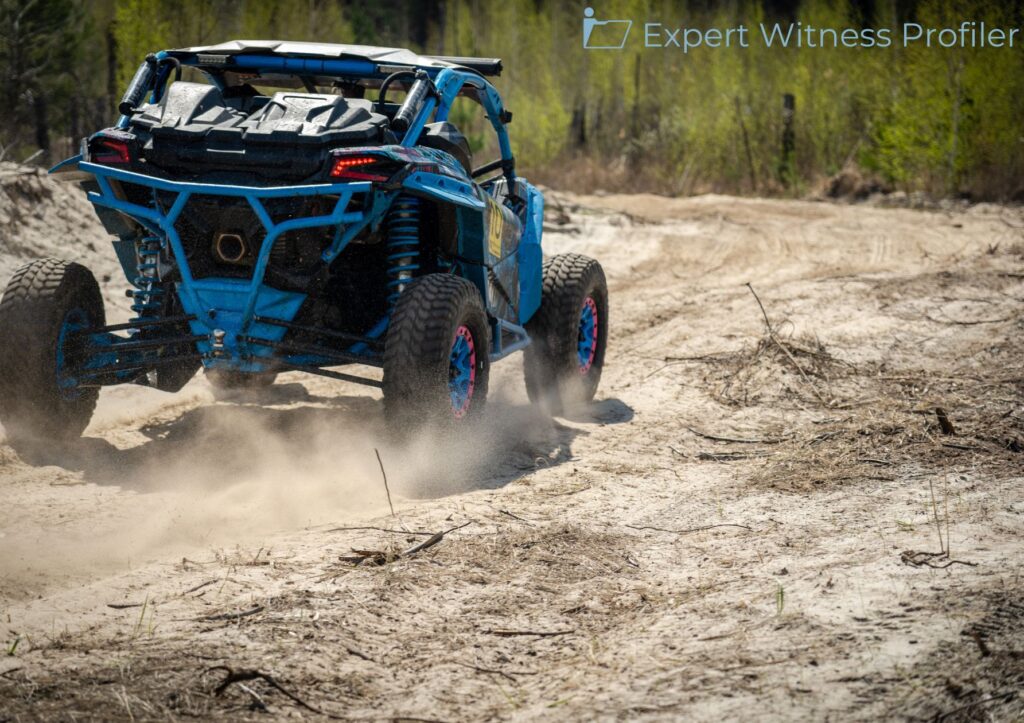
    Stephen Ratcliffe has brought a lawsuit against BRP, the manufacturer, and Tidd’s Sport Shop, Inc. (Tidd’s), the dealer, of a 2019 Can-Am Maverick X3, a utility terrain vehicle (UTV), asserting negligence and strict liability claims arising out of an incident in which Ratcliffe’s Maverick X3 rolled onto its side and crushed his arm. The Plaintiff is pursuing design defect and failure-to-warn theories of recovery.

    Ratcliffe designated Dr. David R. Lenorovitz, a human factors and warnings expert, as a Plaintiff expert.

    Lenorovitz opined that the subject vehicle was not only defectively designed but also that the BRP-provided warnings were inadequate, insufficient, or inconsistent.

    BRP objected to what it characterizes as Lenorovitz’s “ancillary opinions.” Specifically, BRP described these opinions as “(i) criticizing the lack of clarity on if and how the vehicle-handling could be affected by occupancy load placement; and (ii) claiming that the Subject Vehicle’s 3-point seat belts are insufficient.”

    BRP contrasts these with what it describes as Lenorovitz’s “core opinions,” which include:

    • the warning to keep your hands inside the vehicle was ineffective to prevent a supposed reactive arm movement to brace oneself during a rollover;
    • the instruction to firmly grip the steering wheel conflicts with the instruction to “brace for impact;” and
    • the warnings in the Operator’s Guide and on-product warnings to “never do jumps, slides/skids (drifts), or doughnut type ‘tricks’ or ‘maneuvers” conflicts with BRP’s action of “engag[ing] the services of professional drivers and celebrity brand ambassadors that graphically perform. . . such maneuvers in widely accessible on-line video clips and advertising promotions.”

    BRP argued that Lenorovitz “conducts no case-specific testing, has no meaningful experience with side-by-sides, and ignores any
    evidence that does not support his narrative.”

    Human Factors Expert Witness

    David R. Lenorovitz obtained both an M.S. and PhD in Human Factors Engineering within the Industrial Engineering Department of the State University of New York at Buffalo in 1972 and 1975, respectively. He is board certified in human factors / ergonomics by the Board of Certification in Professional Ergonomics (BCPE). Since January of 2005, he has engaged in providing professional ergonomic consulting and forensic human factors services through my own consulting company, LENPRO Services, Inc.

    Get the full story on challenges to David Lenorovitz’s expert opinions and testimony with an in-depth Challenge Study. 

    Discussion by the Court

    Ratcliffe assured BRP that he does not intend to introduce Lenorovitz’s ancillary opinions on the Maverick X3’s handling or seatbelts at trial.

    The Court noted that BRP has not questioned Lenorovitz’s qualifications as a human factors and warnings expert. Lenorovitz is well-qualified as a human factors and warnings expert.

    In his report, Lenorovitz details the data and information he reviewed, including the transcripts of multiple depositions, his inspection of the actual Can-Am Maverick X3 in this case, his reference to American National Standards Institute (ANSI) standards, thirteen published articles, the documents and materials about the Can-Am Maverick X3 that were supplied to Ratcliffe, including the 2019 Operator’s Guide, his analysis of the “hazard control hierarchy” in this case, the sufficiency of the warnings, and his conclusions about deficiencies. From the Court’s perspective, Lenorovitz has satisfied his obligation to demonstrate that his expert opinions rest “on a reliable foundation” and are “relevant to the task at hand.”

    In summary, the Court rejected BRP’s Daubert/Kumho challenge to the expert testimony of Lenorovitz as the Plaintiff’s ergonomics, human factors, and warnings expert. The Court concluded that Lenorovitz’s proposed testimony met the requisite “threshold of reliability,” and therefore it “should be presented to a jury and ‘tested by the adversary process—by competing expert testimony and active cross examination.”

    In doing so, the Court has considered the 2023 amendments to Rule of Evidence 702 and makes this determination in accordance with the requirements of Rule 104(a).

    Held

    The Court grants Defendant BRP’ motion to the extent that it seeks to exclude so much of David Lenorovitz’s opinion testimony that constitutes ancillary opinions. The Court otherwise dismisses BRP’s motion in limine without prejudice.

    Key Takeaway:

    BRP complained that Lenorovitz did no testing. However, as the Plaintiff’s expert in ergonomics, human factors, and warnings, the Court concluded that Lenorovitz’s proposed testimony met the requisite “threshold of reliability.” In his report, Lenorovitz details the data and information he reviewed.

    Case Details:

    Case Caption: Ratcliffe v. BRP United States, Inc.
    Docket Number: 1:20cv234
    Court: United States District Court, Maine
    Order Date: November 5, 2024
  • Evidentiary Standard of Reliability is lower than the merits standard of correctness;Court admits the testimony of Human Factors Expert Witness regarding the adequacy of the product’s warning labels in this failure-to-warn suit

    Evidentiary Standard of Reliability is lower than the merits standard of correctness;Court admits the testimony of Human Factors Expert Witness regarding the adequacy of the product’s warning labels in this failure-to-warn suit

    In a products liability action, Plaintiffs Timothy and Jean Moore filed a failure-to-warn lawsuit against Defendant Combe Inc., the manufacturer of the Just For Men brand of hair dye products. The Moores alleged that Combe knew or should have known that their products could cause vitiligo and/or skin depigmentation but failed to adequately warn users about this risk. They specifically pointed out that Just For Men Control GX Grey Reducing Shampoo (“Control GX”) contains a chemical known as p-Phenylenediamine (“PPD”), which can pose health risks when it comes into contact with the skin, one of these risks being vitiligo. 

    Timothy Moore had been using Control GX since 2017, and in the subsequent years, he developed vitiligo. He claimed that he only became aware of the connection between PPD and vitiligo in 2020 and argued that Combe’s product packaging, inserts, and marketing materials did not adequately convey the risk associated with their products. 

    During the discovery process, the Moores presented Lila Fitzgerald Laux, Ph.D., as an expert witness in the field of human factors engineering. In her report, Laux asserted that Just For Men products failed to provide sufficient warning about the risk of vitiligo. She explained that an effective safety warning should be explicit, legible, prominently located, and conspicuous enough to capture the potential user’s attention. Laux went on to state that the warning label on the Control GX product did not meet these criteria. She further opined that had Combe made a warning about the potential for vitiligo and other skin conditions more prominent and conspicuous on the packaging, Moore would not have purchased and, consequently, not used the product. 

    Combe challenged both the relevance and reliability of Laux’s testimony under Federal Rule of Evidence 702, Daubert v. Merrell Dow Pharmaceuticals, Inc., and its progeny. Combe argued that Laux’s opinions regarding the adequacy of the Control GX warning labels and their impact on Moore’s purchasing decision were not relevant to the facts of the case. They also questioned the reliability of her methods, contending that she had not provided a discernible methodology for reaching the conclusion that the Control GX warning labels were inadequate or that differently designed warnings would have influenced Moore’s decision to purchase the product. 

    Human Factors Expert Witness 

    Dr. Lila Fitzgerald Laux has extensive experience in the field of human factors engineering. She pursued her Bachelor of Arts degree from Rice University and a Master of Science degree in Applied Psychology from the University of Southwest Louisiana. Furthering her education, Laux went on to earn a Doctor of Philosophy degree in Industrial Psychology/ Human Factors Engineering from Rice University. She served as the Principal Human Engineer in the Alion Science & Technology, HSI & Decision Support Operation till 2020 and also as a Lead Human Factors Engineer in US West Technologies/Qwest Communications before that. In addition to her work experience, Laux has published research studies in her field of expertise and established herself as a knowledgeable authority in human factors engineering.  

    Discussions by the Court 

    Combe had argued that Timothy Moore’s acknowledgment during his deposition that he never read the existing warnings on Control GX’s packaging, label, or insert rendered Laux’s opinions on the adequacy of those warnings irrelevant and should be excluded. However, the Moores pointed out that Combe had previously made a similar argument in its motion for summary judgment, which was rejected. 

    The Court’s order on the summary judgment motion noted that Moore did not simply admit to failing to read the warning label but described it as nearly illegible. He explained that the text was so small that he couldn’t read it without two pairs of glasses, and it was only legible during the deposition when it was enlarged on a screen. This led to the identification of a genuine issue of material fact regarding the adequacy of the Control GX warning label. Laux’s expert testimony addressed this factual dispute, as she emphasized that effective warning labels should be explicit, legible, prominently located, and conspicuous, and she opined that Combe’s labels did not meet these criteria. 

    In response, Combe cited two non-precedential cases as precedent, which rejected expert testimony in failure-to-warn cases when the Plaintiff admitted to not reading the warning labels. However, these cases were deemed inapplicable. In the first case, Gebhardt v. Mentor Corp., the Plaintiff was a physician who did not read the warning label because he was knowledgeable about the device’s risks and benefits based on personal experience, medical literature, and interviews with the device’s inventor. In contrast, Timothy Moore was not a “learned intermediary” regarding the risks of the product and expressed surprise at the severity of the warnings on a shampoo product. 

    The second case, Atanassova v. Gen. Motors LLC, appeared more similar on the surface as it excluded the testimony of two expert witnesses, including Laux, on the adequacy of a warning in a car’s owner manual. However, the Court in that case had granted summary judgment on the failure-to-warn claim, reasoning that a different warning label would not have made a difference. In the current case, a genuine issue of material fact existed on this point, making Laux’s testimony highly relevant. 

    Combe had argued that Laux’s conclusions regarding the inadequacy of the Control GX warning labels and the potential impact of differently designed warnings on Moore’s purchase decisions lacked a factual basis and amounted to unsupported assertions (ipse dixit). However, contrary to Combe’s characterization of her testimony, Laux did provide a foundation for her expert opinions. 

    In her report and deposition, Laux outlined her extensive career in the field of human factors engineering, spanning more than 30 years. During this time, she had engaged in research, reviewed pertinent literature, consulted with corporate clients, and assessed the adequacy of various warning labels. Drawing on her specialized experience, she detailed a three-step process for “developing and evaluating optimal warnings and instructions,” which included: 

    1. Evaluating the user population and identifying potential difficulties or errors in consumer decision-making resulting from human limitations in assessing the risks and consequences associated with product use. 
    1. Assessing product-related factors that influence or shape a consumer’s ability to make informed decisions. 
    1. Evaluating the interaction between the consumer and the product interface, identifying where consumers must make decisions and how the interplay between consumer characteristics and the product interface affects consumer safety behavior. 

    After evaluating the Control GX warning label in accordance with the outlined process, Laux arrived at the conclusion that the label was “inadequate to provide the user population with the information they need.” It is important to note that the ultimate determination of the credibility of this testimony and the persuasiveness of her opinion falls to a jury. The Court recognized that the evidentiary standard of reliability is lower than the merits standard of correctness, citing In re Paoli R.R. Yard PCB Litigation

    Combe made several other arguments in an attempt to discredit Laux’s testimony. Firstly, they contended that Laux had not examined an actual Control GX box, tube, or insert, but had based her opinions on “blurred photographs” of the product’s warning labels. However, Combe did not claim that these photographs, which were included in the expert report, misrepresented the Control GX warning labels. The Court’s own examination confirmed that the photographs were legible. The issue of whether Laux’s examination of the actual product might have led to a more informed opinion concerned the credibility of her testimony rather than its reliability. 

    Secondly, Combe argued that Laux had not compared the Control GX warning labels to those used on other hair dye products, suggesting that this omission rendered her methodology inherently questionable and unreliable. The Court, however, held that such a comparison was inconsistent with the appropriate level of flexibility required by Rule 702. 

    Lastly, Combe objected to Laux’s repeated references to the American National Standards Institute (ANSI) standard Z535.4, a voluntary standard that provides guidance to manufacturers on the design of product safety labels. The Court noted that the question under Daubert was not whether an expert’s opinions were correct, but whether they were reliable. Combe did not offer any explanation for why the relevant ANSI standard, even if voluntary, should be considered an unreliable factor when evaluating the adequacy of warning labels. Laux’s testimony clarified that her opinion was not solely based on Control GX’s compliance with ANSI Z535.4 and that her analysis took various factors into account. The accuracy of her analysis was ultimately a matter for the jury to determine. The consideration of a relevant industry standard need not be binding to be reliable, and Combe provided no alternative explanation for why Laux’s reference to it was inappropriate. 

    Held

    The Court denied the Defendant’s motion to exclude the testimony of Lila Fitzgerald Laux. The Court has not arrived on an outcome for this case since the remaining issues involved in this case still await resolution. 

    Key Takeaways:

    This case demonstrates that expert witness testimony can be deemed sufficiently reliable under Daubert even if the expert appropriately relies on their experience rather than a rigid comparative methodology. The Court emphasized that the Daubert bar for reliability is flexible and lower than the ultimate correctness standard. Additionally, the case shows that expert testimony can be relevant and helpful to the jury even when factual disputes exist regarding the underlying basis for the opinions. Finally, the Court afforded deference to the jury’s role in determining the credibility and persuasiveness of expert opinions, rather than acting as a “replacement” for the fact finder. So long as reliability and relevance thresholds are met, Courts will likely allow experts to present opinions even if questions exist that go to the weight of the testimony.