Category: Food Science Expert Witness

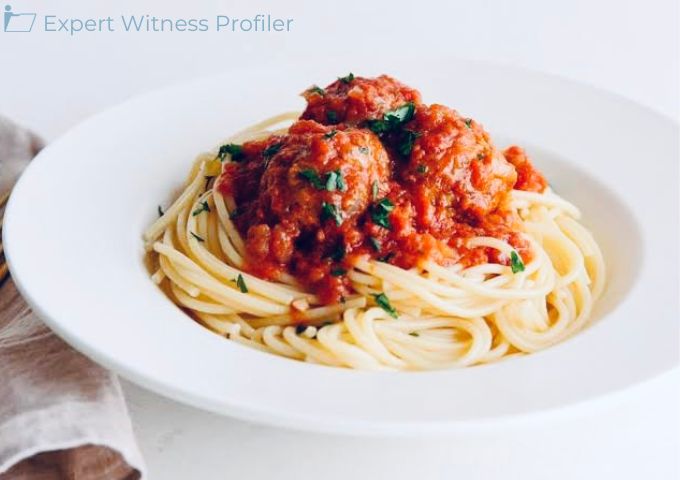
  • Food Science Expert Allowed to Opine on Meatless Meatballs

    Food Science Expert Allowed to Opine on Meatless Meatballs

    This case stems from a dispute over the production (or lack thereof) of meatless meatballs, which Plaintiff Ascot Valley Foods, Ltd. (“Plaintiff,” “Ascot,” or “Ascot Valley”) agreed to manufacture, package, and ship to Defendant ADF Foods (USA), Ltd. (“Defendant” or “ADF”). Ascot Valley brought claims under New York law for breach of contract, promissory estoppel, and account stated. ADF brought several counterclaims, alleging damages from unfulfilled purchase orders and misappropriation of trade secrets stemming from Ascot Valley’s production of similar meatless meatballs for other customers.

    ADF called Mahabir Singh to testify as an expert in food science and technology. Ascot asked the Court to bar the testimony of defense expert Singh.
    Food Science Expert Witness

    Mahabir Singh has a master’s degree in food technology and is pursuing a Ph.D. in food science and technology.

    He has more than two decades of directly relevant experience, having worked for over 25 years in the development and production of food products, while currently running a consultancy for new product development and plant design in India and abroad.

    Get the full story on challenges to Mahabir Singh’s expert opinions and testimony with an in-depth Challenge Study.

    Discussion by the Court

    Singh used his experience and training in product development to determine the procedures he used to evaluate and compare the meatless meatballs in this case. Those procedures are widely used by food scientists in the industry in developing new products.

    For each product, Singh compared the ingredients used in the recipe and the cooking means and methods employed in the manufacturing of the items.

    Based upon these repeated observations and using the same methodology across each of the seven products he analyzed, Singh concluded “that the original recipes were ADF’s recipes, Ascot Valley tweaked a little bit the seasoning part or some of the ingredients and they tried to name it as a new recipe” and that “[Ascot Valley] took the ADF recipes, tweaked them to some extent, and followed the same process, same time to process, and processing conditions to produce nearly identical or similar products.”

    The Court found that Singh was qualified to testify as an expert in food science and technology and concluded that his opinion testimony and report were admissible.

    The Court, however, declined to credit the testimony of Ascot’s expert, Marc A. Meyers. Meyers used the same methodology that Singh used to compare the recipes for ADF products against the recipes Ascot used to make meatless meatballs for Lidl, Creative Fine Foods and Topco.

    Meyers’s testimony made it clear that Ascot selectively provided him information to skew his opinions. Moreover, Meyers also acknowledged that Ascot made mistakes in calculating the percentage differences that it alleges show the products are different. 

    Held

    The Court denied Ascot’s motions to exclude the testimony of Mahabir Singh.

    Key Takeaway

    Even with respect to the most well-qualified of experts, a district court must also be satisfied that the expert employed a reliable methodology in reaching her conclusions. 

    Case Details:

    Case Caption: Ascot Valley Foods, Ltd. V. ADF Foods (USA), Ltd.
    Docket Number: 1:22cv2655
    Court Name: United States District Court, New York Southern
    Order Date: June 26, 2026
  • Food Science Expert’s Testimony on the Condition of Berries Excluded

    Food Science Expert’s Testimony on the Condition of Berries Excluded

    This case involves a breach of contract claim and a negligence claim regarding Stahlbush’s sale of black raspberries to Bama. Bama principally manufactures food products for the quick service restaurant industry. The dispute was over whether Stahlbush berries used by Bama in pies it produced were contaminated with stones. 

    Plaintiff filed a motion in limine to exclude certain opinions of Defendant’s experts, Dr. Siobhan Reilly and Mr. Gregory Gadawski

    Siobhan Reilly tested 10 boxes of berries and 61 boxes of fruit pies “to determine the presence of foreign materials in the product.” Defendant sought to introduce the results of Reilly’s testing. Plaintiff argued that Reilly’s opinions should be excluded because the product that she tested was not randomly sampled or a scientifically representative sample of the products at issue. Defendant argued, in rebuttal, that Reilly did not conclude that no rocks could have been present in Bama’s pies; instead, Reilly would testify that “some of the supposedly contaminated pies may have contained, not rocks, but organic matter common to blackberries.”

    Plaintiff also argued that there is “no credible evidence” that it should have ceased producing pies on March 6, 2017 and accordingly, any opinion of Gadawski calculating Plaintiff’s damages based upon the assumption that it should have ceased production on that date is purely speculative and not based in evidence. Defendant argued that Gadawski’s opinions, even if hypothetical, are grounded in the facts and issues in this case and entirely permissible. 

    Food Science Expert Witness

    Dr. Siobhan Reilly has over 25 years of experience in industrial food safety, food microbiology, and probiotic research. Reilly earned her Ph.D. in Food Science and Microbiology from Oklahoma State University. She is a member of the International Association of Food Protection, the Institute of Food Technologists, and the Pet Food Institute.

    Want to know more about the challenges Siobhan Reilly has faced? Get the full details with our Challenge Study report

    Accounting Expert Witness

    Gregory A. Gadawski, CPA/ABV, CVA, CFE, CIRA is a member of the Oregon Society of Certified Public Accountants (OSCPA), the American Institute of Certified Public Accountants (AICPA), the National Association of Certified Valuation Analysts (NACVA), the Association of Certified Fraud Examiners (ACFE), and the Association of Insolvency and Restructuring Advisors (AIRA). He has served as an expert witness/consultant in a variety of complex litigation matters including breach of contract, business valuation, fraud, alter ego, lost profits, marital dissolution, personal injury, wrongful death, intellectual property infringement, fraudulent conveyance, solvency, and others.

    Discover more cases with Gregory Gadawski as an expert witness by ordering his comprehensive Expert Witness Profile report.

    Discussion by the Court

    Reilly will not be permitted to testify regarding the condition of any berries or pies that she did not personally test

    The Court was not persuaded by Defendant’s arguments that Reilly’s testing need not be of a random, representative sample. In addition, it was unclear to the Court whether Defendant’s reference to “supposedly contaminated pies” referred to the pies that Reilly tested or to the pies that caused Bama to cease production and file suit. Consequently, if Reilly sought only to testify as to the condition of the berries and pies tested (and which are not the subject of the suit), then it would seem her testimony is of limited relevance.

    Furthermore, Defendant failed to demonstrate that Reilly tested a random, representative sample of product. From Reilly’s deposition testimony, it did not appear that any kind of methodology was employed to obtain a random, representative sample.

    Specifically, Reilly testified that there were “hundreds, for sure, maybe even thousands” of boxes of berries in cold storage. Yet, without any apparent selection criteria, she took only 10 boxes of berries for testing. It was further established that the 10 boxes of berries were all drawn from two of eight lots of berries, and there was confusion on Dr. Reilly’s part regarding the significance of the lot numbers. Although she testified that her selection was “random” in that there was “no design to how the population was presented,” she also admitted there was “no opportunity to position the population and randomize it so that I could strategically pull a random sample.”

    Ultimately, Reilly’s testimony and report, and the fact that only berries from two of eight lots were examined, led the Court to believe that no efforts at all were made to obtain a random, representative sample and that, instead, the product was taken in a haphazard manner.

    Gadawski’s proposed testimony is admissible

    Plaintiff argues that Gadawski’s testimony is hypothetical and not based in fact.

    Firstly, there is nothing improper about an expert presenting opinions or testimony based upon hypotheticals, and Plaintiff has cited no authority to the Court suggesting otherwise. Plaintiff’s objection that there is no factual basis for the challenged opinion is similarly unavailing — the factual basis appears to be that this is when Plaintiff first learned that there may have been an issue with the shipment of berries. Whether a jury will credit this testimony or draw the conclusions advocated by Defendant is up to the jury, not the Court.

    Held

    The Court partly granted and partly denied the Plaintiff’s motion in limine to exclude portions of the expert reports of Siobhan Reilly and Gregory A. Gadawski.

    Key Takeaway:

    Though Reilly stated that it was not possible to “position the population and randomize it” so that she could pull a random sample, neither she nor Defendant explains why this is so. Defendant failed to demonstrate that Reilly tested a sufficiently random, representative sample and, accordingly, she will be precluded from offering any opinion as to any product that she did not personally test.

    Case Details:

    Case Caption: Bama Companies, Inc., The V. Stahlbush Island Farms, Inc.
    Docket Number: 4:18cv45
    Court Name: United States District Court, Oklahoma Northern
    Order Date: September 29, 2025
  • Food Science Expert Witness Barred from Testifying Over Lack of Medical Credentials

    Food Science Expert Witness Barred from Testifying Over Lack of Medical Credentials

    This dispute arose from Plaintiff Denise Young’s claim that she suffered from Salmonella Gastroenteritis due to food poisoning after consuming a meal her son purchased for her on June 11, 2022, from a Chipotle restaurant in Newark, New Jersey.

    Young’s son purchased a Pollo Asado Bowl with Queso Blanco from Chipotle at 6:48 PM on June 11, 2022 and delivered it to her. This dish, Pollo Asado comprises chicken, black beans, tomato salsa, white rice, corn salsa,
    fajita veggies and queso blanco.

    Defendant Chipotle Mexican Grill of Colorado, LLC filed a motion to exclude the testimony of Plaintiff’s expert, Marvin E. Winston.

    Food Science Expert Witness

    Marvin E. Winston is an experienced food scientist. He has over thirty years of experience supporting attorneys and insurance companies by resolving a wide range of issues and offering reliable assistance in legal matters.

    Want to know more about the challenges Marvin E. Winston has faced? Get the full details with our Challenge Study report. 

    Discussion by the Court

    Defendant contended that Winston’s report was procedurally deficient and therefore inadmissible. Specifically, Plaintiff failed to (a) produce the report in a timely manner, (b) include the expert disclosures required under Rule 26(a)(2)(B), and (c) provide Winston’s CV. Defendant further argued that the report was substantively flawed, asserting that Winston’s conclusions were speculative, his methodology unreliable, and his testimony unlikely to assist the trier of fact in resolving the key factual disputes.

    Defendant emphasized that although Winston identified himself as a “Consulting Food Scientist,” he provided no explanation or supporting materials to clarify what that title meant in the context of Plaintiff’s allegations or how it qualified him to offer the opinions in the report. Additionally, Winston had not conducted any testing of the food in question. Defendant also maintained that Winston was unqualified to make a medical diagnosis or establish a causal link between Plaintiff’s meal and her alleged illness, and argued that the report lacked any meaningful probative value.

    Plaintiff argued that she disclosed Winston as an expert to the Defendant and the Court and that any failure to make disclosures is “harmless because the Defendant received and read the report and had an opportunity to formulate a reply to challenge the CV as well as the, qualifications data and other cases which during the last 4 years Winston has testified as a witness.” 

    Analysis

    Putting aside the procedural deficiencies and Plaintiff’s failure to comply with Rule 26(a)(2)(B), the substantive issues Defendant raised are significant and as such, the Court found that the proposed testimony of Winston did not satisfy the requirements of Rule 702.

    While the Court did not doubt Winston’s purported qualifications as a “Consulting Food Scientist” and that he testified as an expert in other proceedings related to that title, he is not qualified to opine on the medical causation for Plaintiff’s symptoms on June 12, 2022 here.

    Winston is not a medical doctor and, as Defendant stated in its moving brief, there is “no evidence or expert material presented to explain what” Winston’s purported food science expertise “means in the context of the Plaintiff’s allegations, or how if at all it qualifies him to offer the opinions contained therein.”

    Additionally, Winston identified no methodology to support his conclusion that Plaintiff “was served food at Chipotle Mexican Grill which resulted in her contracting food poisoning”—a medical diagnosis— and Winston himself admitted that he is uncertain as to what the “causative organism” of Plaintiff’s symptoms was because no tests were performed to make such a determination.

    The Court did not see anything in Winston’s report that led to the conclusion that Plaintiff suffered from salmonella poisoning as alleged, and more significantly, the Court did not see anything in the Winston Report that would help the trier of fact determine whether Plaintiff suffered salmonella poisoning from consuming Defendant’s food.

    Held

    The Court granted the Defendant’s motion to exclude the testimony of Marvin E. Winston.

    Key Takeaway:

    As the 2023 Amendments to Rule 702 make clear, “the rule has been amended to clarify and emphasize that expert testimony may not be admitted unless the proponent demonstrates to the court that it is more likely than not that the proffered testimony meets the admissibility requirements set forth in the rule.” Without proper medical qualifications and any identified
    methodology, Winston’s opinion simply will not help the trier of fact.

    Case Details:

    Case Caption: Young V. Chipotle Mexican Grill Of Colorado, LLC Et Al
    Docket Number: 2:22cv7452
    Court Name: United States District Court, New Jersey
    Order Date: June 26, 2025