Category: Hotel And Hospitality Expert Witness

  • Hospitality Expert’s Testimony on Lost Investments Excluded

    Hospitality Expert’s Testimony on Lost Investments Excluded

    In this landlord-tenant dispute, Defendant Gator Flower Mound, LLC (“Gator”) asked the Court to exclude the damages testimony of Alan Someck, the expert witness designated by Plaintiff Arch & Eng, LLC (“Z Grill” or “Plaintiff”), as irrelevant and unreliable.

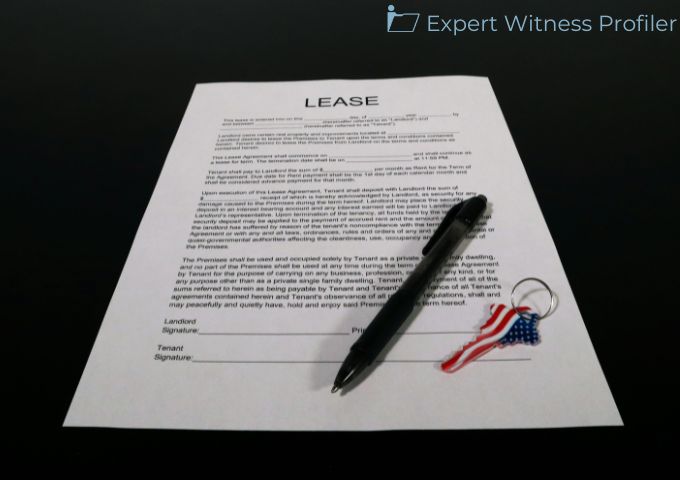
    Z Grill alleged economic injury due to problems with the premises it leased from Gator, the landlord. In December 2003, Plaintiff’s and Gator’s predecessors entered into a lease for a commercial premises located at the Marketplace at Flower Mound shopping center (the “2003 Lease” for the “Premises”). On March 02, 2016, Gator and Plaintiff executed an Assignment and Assumption of Lease, through which Plaintiff became the tenant at, and occupied, the Premises (the “2016 Assignment”).

    In 2019, despite Plaintiff having complained of problems with the Premises since 2016, Plaintiff elected to enter into a Third Amendment to Lease, extending the 2003 Lease through January 31, 2025. Plaintiff abandoned the Premises in or around January 2024, and brought suit that same month, alleging that roof leaks and an odor had persisted through the entirety of its tenancy, and had caused Plaintiff to suffer economic harm.
    Hospitality Expert Witness

    Alan Someck has decades of experience in the hospitality industry as an owner, operator, consultant, and teacher. He has also served as a full-time Management Instructor at the Institute of Culinary Education in New York City and previously served as an Adjunct Professor of Hospitality Management at the New York Institute of Technology.

    Want to know more about the challenges Alan Someck has faced? Get the full details with our Challenge Study report.

    Discussion by the Court

    In his expert report, Someck posits that the presence of bad odors in and around Defendant’s leased property contributed significantly to Plaintiff’s purported loss of profits and investment capital.

    I. Lost Profits

    Defendant raised two arguments against Someck’s interpretation of Plaintiff’s proposed lost profits damages. First, Defendant averred that the leasing agreement between the parties prohibited recovery of consequential lost profits, rendering Someck’s opinion on the subject irrelevant. Second, Defendant claimed that Someck failed to deduct actual profits from claimed lost profits, rendering his opinion unreliable.

    The Court previously held that Plaintiff may potentially recover its lost profits under the Contract if it proves those profits are a “direct,” as opposed to a “consequential,” result of Defendant’s wrongful acts. The Court also held that Plaintiff may potentially recover its lost profits under certain tort causes of action. Thus, Someck’s opinion is not irrelevant on these grounds. On the contrary, Someck’s opinion will likely be crucial in helping Plaintiff carry its burden at trial.

    Defendant’s second argument is unpersuasive, as its claim that “Someck fails to deduct actual profits from claimed lost profits” is directly countered by the fact that Someck has since revised and reduced the applicable projected profits by $150,730.00 “based on the correct assumption . . . that actual profits needed to be subtracted from projected profits to get the corrected lost profits.” Because Someck has fixed the alleged “foundational flaw” in his methodology, the Court found that Someck’s testimony on Plaintiff’s recovery for lost profits is not unreliable.

    II. Lost Investments

    Defendant argued that Someck’s proposed testimony on Plaintiff’s “lost investments” should be excluded because of its irrelevance and unreliability.

    Defendant argued that Someck has failed to connect any damage amount to any act or omission taken by Defendant and has instead merely combined all of Plaintiff’s business expenses over the years and offered it as proof of “lost investments.” The Court agreed, and found that Someck’s opinion on “lost investments” is impermissibly general under the facts of this case.

    Someck did not offer any reasoning or methodology to explain how his definition of lost investments constitutes a compensable injury as opposed to an unrelated expense. Nor did Someck offer insight as to the source of these expenses. For instance, he did not identify which portions of the “lost investments” arose as a pecuniary loss from Defendant’s alleged negligent misrepresentation as opposed to Defendant’s alleged fraudulent inducement.

    Second, Someck’s opinion is unreliable. Defendant has argued and provided sufficient evidence that Plaintiff’s “lost investment” damages constitute an impermissible attempt to recover for expenses borne by third parties. Someck’s testimony simply does not permit the Court to accurately distinguish between injuries incurred by Plaintiff and the injuries incurred by illusory “plaintiffs.” Neither Someck nor Plaintiff have clarified their interpretation of “lost investment” damages on this issue.

    The Court excluded Someck’s expert opinion testimony as to Plaintiff’s lost investments.

    Held

    The Court granted in part and denied in part Defendant Gator Flower Mound, LLC’s motion to exclude the testimony of Alan Someck.

    Key Takeaway

    Relevance depends upon whether the expert’s reasoning or methodology properly can be applied to the facts in issue. The Court does not need help to add up numbers on a page. As a result, Someck’s bare assumption, combined with a receipt of gross expenses, is not sufficiently relevant to render his opinion admissible at trial.

    Case Details:

    Case Caption: Arch & Eng, LLC V. Gator Flower Mound, LLC
    Docket Number: 4:24cv1068
    Court Name: United States District Court, Texas Eastern
    Order Date: February 05, 2026
  • Hospitality Expert’s Testimony on Corporate Structure Excluded

    Hospitality Expert’s Testimony on Corporate Structure Excluded

    The Plaintiffs had purchased timeshares at the Westgate Smoky Mountain Resort. They alleged that the Defendants, comprising various entities linked to the resort, operated a high-pressure sales scheme. According to the Plaintiffs, this scheme persuaded prospective buyers to invest in the vacation timeshare program without properly disclosing critical and legally mandated information.

    In June 2020, Defendants disclosed Howard Nusbaum as an expert. Nusbaum provided an overview of timeshare history and its industry. He then set forth his disagreements with Plaintiffs’ expert, Mr. Kenneth Christopher Free.

    Plaintiffs filed a motion to exclude certain opinions of Mr. Howard Nusbaum

    Hotel And Hospitality Expert Witness

     Howard C. Nusbaum was the president and chief executive officer (“CEO”) of American Resort Development Association (“ARDA”) from 2000 to 2019.

    For the past thirty-seven years, he has held leadership positions in hotels and resorts with the last twenty years focused solely on timeshare standards, education, and communications with the goal of sharing these best practices.

    Want to know more about the challenges Howard Nusbaum has faced? Get the full details with our Challenge Study report

    Discussion by the Court

    Nusbaum’s Opinions Regarding Defendants’ Sales Practices

    According to Plaintiffs, “Nusbaum opined that ‘Free’s assertions that somehow [Defendants] did not adequately or clearly disclose information about the use plan and booking availability is truly perplexing and is just plain wrong.’”

    Plaintiffs argued that Nusbaum’s opinion was not grounded in sufficient facts and relied on three unsupported bases. First, they claimed that Nusbaum relied on Defendants’ Public Offering Statement (“POS”) and made “a legal argument masquerading as an expert opinion.” Second, they argued that Nusbaum relied on Defendants’ experience, which they considered irrelevant. Finally, they asserted that Nusbaum based his opinion on his belief that Defendants had sufficient inventory.

    The Court had already excluded Free’s testimony regarding inadequate disclosures, finding it unhelpful to the jury. In light of that ruling, Plaintiffs’ challenge to Nusbaum’s critique of Free’s opinions appeared moot. To the extent Defendants sought to rely on Nusbaum’s opinions, the Court found them unhelpful for the same reasons it had excluded Free’s.

    Although Defendants argued that “Nusbaum opines that the disclosures in the POS ‘meet industry standards’,” Nusbaum, like Free, failed to explain the specific industry standards he referenced.

    Accordingly, to the extent Plaintiffs’ challenge was not moot, the Court concluded that Nusbaum’s opinions regarding Defendants’ sales practices were not helpful and should be excluded.

    Nusbaum’s Opinions about Corporate Structure

    Plaintiffs stated that, “Nusbaum’s opinion that Defendants’ use of multiple company entities is ‘legal’ is obviously, a legal conclusion, and thus, inadmissible.” In addition, Plaintiffs submitted that “Nusbaum’s opinion is not based on any information or data about the specific interrelationships between the various [Defendant] entities that are Defendants in this case.”

    The Court agreed that Nusbaum’s discussion of Defendants’ structure is not reliable.  Nusbaum stated that he did not “read any financial documents showing the interrelationship of the various Defendant entities in connection with the Resort.”  And his expert report reflected that he “did not review any documents regarding the relationships between the various Defendant entities.”

    Nusbaum’s Opinions about Free’s Experience

    According to Plaintiffs, “Nusbaum takes particular issue with the background and qualifications of Plaintiffs’ expert Kenneth Free.” But Plaintiffs stated that “Nusbaum . . . had no first-hand knowledge of Free’s role in the founding of Hilton Grand Vacations Company (HGV), which predated Nusbaum’s entry into the industry by nearly a decade.”

    Upon review, the Court held that Nusbaum’s statements appeared to be factual testimony as opposed to expert testimony. Even if Nusbaum’s statements could be considered expert testimony, Plaintiffs did not challenge any methods of collecting the information for his commemorative publications; instead, they challenged that Nusbaum did not review certain records or talk to certain individuals. These challenges go to the weight of Nusbaum’s statements.

    Plaintiffs also argued that “Nusbaum has no first-hand knowledge of Free’s role.”  But Nusbaum’s statement flows from his “two-decade experience” in the timeshare industry and his role in collecting information for the commemorative book.  If Plaintiffs believe that Nusbaum’s statements are speculative or constitute hearsay, they may object to them at a later date.

    Held

    The Court granted in part and denied in part the Plaintiffs’ motion to exclude certain opinions of Howard Nusbaum.

    Key Takeaways:

    • It is not proper for the Court to exclude expert testimony merely because the factual bases for an expert’s opinion are weak.
    • Claiming that an industry standard exists is not the same as discussing that standard.

    Case Details:

    Case Caption: Moore Et Al V. Westgate Resorts Ltd., L.P.
    Docket Number: 3:18cv410
    Court Name: United States District Court, Tennessee Eastern
    Order Date: June 27, 2025