This case arises out of an alleged design defect and failure to warn regarding a 2017 Toyota Tacoma. Lee Griffin was the primary driver of a 2017 Toyota Tacoma. After Griffin died due to accidental carbon monoxide poisoning from an automobile inadvertently continuing to run in the garage, Caroline Griffin filed suit individually and as executor of Lee Griffin’s estate.
The Defendants filed a motion to exclude certain opinions offered by the Plaintiff’s proffered human factors and warnings expert, Joellen Gill.
Human Factors Engineering Expert Witness
Joellen Gill, CHFP, CXLT, CSP attended Georgia Tech and Wright State Universities for her undergraduate work, earning a BS in human factors engineering in 1979. Her nearly four-decade career includes 15 years in aerospace and national defense industries as a human factors engineer specializing in safety and risk management.
Gill started part time at ACS in 1994 after completing a master’s degree in engineering, accepted a full-time position in 2005, then, after obtaining certification as a Human Factors Professional, was lead engineer on her first case just a year later. She is also a licensed tribometrist and a Certified Safety Professional.
Specifically, the Defendants sought to exclude “opinions regarding alternative warnings or that a different warning would have changed the decedent’s behavior at the time of the subject incident.”
During her deposition on August 8, 2024, Gill was asked, “In your opinion, what warnings should Toyota have provided for the 2017 Toyota Tacoma?” She responded, in part, “I am not a design engineer. I think it’s improper for me to offer opinions related to specific warnings that should have been provided in a vacuum.” She then explained that her “overarching opinion” was that Toyota adopted a safety strategy that relied on users taking action to protect themselves—something she believed was the least effective method of ensuring safety.
Later in the deposition, Gill was asked whether she had formed any opinions on whether a different set of warnings or alerts would have changed Lee Griffin’s behavior on the day of the incident. She answered, “I don’t have any specific opinions about other warnings that would have changed his behavior… with respect to leaving his vehicle running inadvertently.”
However, just twelve days after her deposition, Gill submitted a rebuttal report stating: “If Toyota had wished to give an effective external audible warning, Toyota could have designed the vehicle to blow its horn when left running without the key fob present in the vehicle.” She further asserted, “An effective audible alert would have resulted in Griffin recognizing he had not turned off his vehicle and therefore would have resulted in a change in his behavior.”
Plaintiff’s Arguments
The Plaintiff did not claim that these opinions had been disclosed in Gill’s initial report or deposition. Instead, she argued (1) that the statements were part of a timely rebuttal in response to the Defendants’ expert’s opinion regarding the vehicle’s “feedback,” and (2) that any resulting prejudice was due to Toyota scheduling Gill’s deposition before rebuttal reports were due.
Analysis
The Plaintiff offered no explanation for Gill’s failure to include these opinions in her initial expert report. Instead, she placed the blame on the Defendants for deposing Gill before the rebuttal reports were filed. However, this timing did not eliminate the prejudice caused by introducing new and improper opinions in a rebuttal report.
Even if the Defendants had received the rebuttal report beforehand and questioned Gill about its contents, the prejudice from her untimely opinions would have remained.
Moreover, even assuming for the sake of argument that the opinions were timely, Rule 26 required expert reports to explain not only what conclusions were reached, but also how and why the expert reached them. Gill failed to meet this standard. She offered no reasoning, analysis, or citation to support her claim that a vehicle horn alert would have been “effective” or that it “would have resulted in a change in [Lee Griffin’s] behavior.” As a result, the Court held that these opinions failed to comply with the disclosure requirements under Rule 26.
Held
The Court granted the Defendant’s motion to exclude certain opinions offered by the Plaintiff’s proffered human factors and warnings expert, Joellen Gill.
Key Takeaway:
Under Rule 26, a witness retained to provide expert testimony must prepare a written report that includes “a complete statement of all opinions the witness will express and the basis and reasons for them.”
If a party fails to provide information or identify a witness as required by Rule 26(a) or (e), the party is not allowed to use that information or witness to supply evidence on a motion, at a hearing, or at a trial, unless the failure was substantially justified or is harmless.
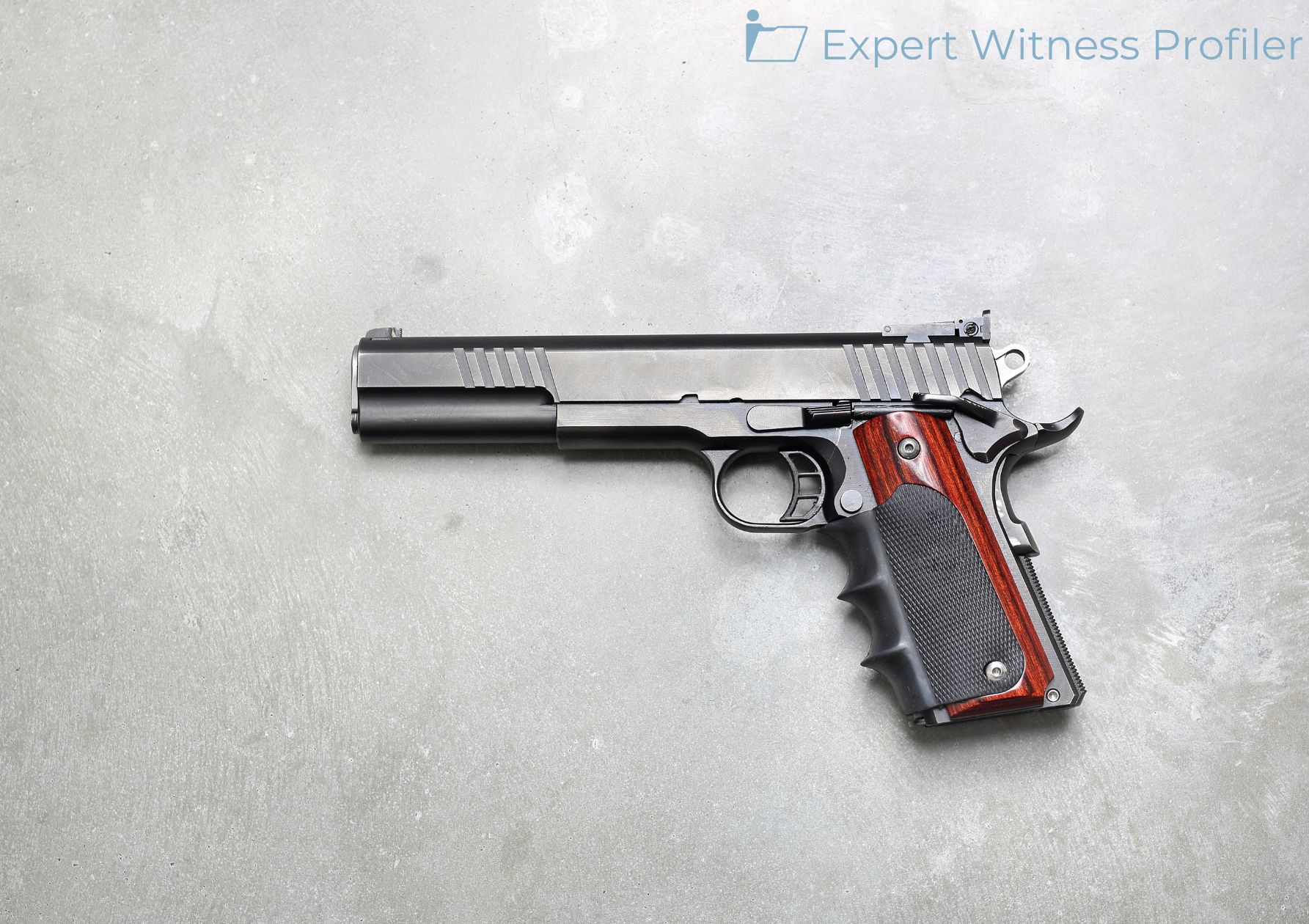
Plaintiff Michael Colwell alleged that a Sig Sauer P320, which he was issued in connection with his duties as a police officer in Troy, New York, discharged during a police training exercise even though Plaintiff never touched the trigger. Plaintiff testified that he put the gun in his holster during the exercise and was starting to move across his body to get his taser, or was “just about to get there,” when the gun discharged.
As a result, Colwell brought this diversity action against Defendant Sig Sauer, the manufacturer of a Sig Sauer P320 handgun which Plaintiff alleges discharged unintentionally, into Plaintiff’s thigh. Colwell asserted claims for strict products liability, negligence, breach of implied warranty of merchantability, breach of express warranty, and negligent and intentional infliction of emotional distress. His wife, Julia Colwell, asserted a claim for loss of consortium.
Defendants’ motions challenged the expert testimony of William Vigilante and James Tertin. The experts have opined that the lack of external safeties rendered the P320 defective because it is a single-action pistol with a short trigger pull, which makes it more likely to be actuated. Both experts have opined that the defective design was a cause of the unintentional discharge in this case.
General Background Regarding the P320
Tertin opined that the P320 had no external safeties. External safeties “help prevent unintended discharges by manually blocking the trigger from being pulled until the user decides they are ready to fire.” Competitors sell striker-fired handguns with external safeties, such as (1) thumb safeties and (2) tabbed trigger safeties.
Plaintiffs asserted that the failure to include a manual thumb safety and/or a tabbed trigger into the design of the P320 rendered the firearm defective and unreasonably dangerous.
Firearms & Ballistics Expert Witness
James Tertin is currently the director of research and development for Magnum Research, a firearms manufacturer based in Pillager, Minnesota. In that role, he is responsible for designing and developing new firearms for the company.
He has been a professional gunsmith since graduating in 1972 from the Gunsmithing School at Trinidad State College in Colorado; the oldest gunsmithing school in the United States. Over the past fifty years, he has been awarded seven firearm design patents.
William Vigilante graduated with a Doctoral of Philosophy and a Master’s of Science in Ergonomics (Human Factors) Psychology and a Bachelor of Science degree in Psychology (Cognitive track). He is also a Certified Professional Ergonomist by the Board of Certification in Professional Ergonomics. He has more than 25 years of experience in psychological and human factors research with a focus on human-machine interaction, control-display design, product design, hazard identification and mitigation, risk perception, situational awareness, perception-reaction time, and the design and testing of warning systems.
Plaintiffs sought to present Vigilante’s testimony “that the P320’s lack of safety features was a proximate cause of Plaintiff’s unintended discharge.” Vigilante testified that “had Sig Sauer integrated a tab trigger safety into the design of the Sig P320, the subject unintentional discharge would most likely not have occurred and Michael Colwell would not have been injured.”
The Court held that Vigilante’s knowledge of this particular incident is severely limited. He did not personally inspect the holster or the pistol. He read Plaintiff’s testimony but did not speak with Plaintiff or anyone with direct knowledge about the incident.
The Court found that Vigilante’s causation opinion did not pass muster under Rule 702 because it is not “based on sufficient facts or data”; it is not “the product of reliable principles and methods” and it does not “reflect a reliable application of the principles and methods to the facts of the case.”
Plaintiffs have cited cases in which Vigilante’s proffered testimony had established a connection between the alleged design defect and the facts of the particular case. In one case, there was video footage of the incident, leading to an undisputed theory of how the pistol discharged. Here, however, there was no video footage, no explanation as to why Colwell’s pistol discharged, and no experimentation.
James Tertin
In forming his opinions, Tertin relied upon his inspection of the P320 pistol used by Plaintiff, his inspection of an exemplar P320, his review of several competitor pistols, and videos of other similar incidents.
During his deposition Tertin testified that he did not review any file materials in this matter and understood the incident to have occurred as Plaintiff described it. Tertin did not inspect the Plaintiff’s holster and did not have an opinion as to whether Plaintiff’s hands were fully off the pistol at the time it discharged or what conclusions the police reached regarding the incident.
Tertin acknowledged that he had no information about whether Plaintiff would have engaged a manual thumb safety in this instance if one had been available. To that end, there is nothing in the record to demonstrate that a manual safety would have been engaged if the P320 had one. According to the Court, without any evidence permitting an inference that a thumb safety would have been used, a finding that the lack of a thumb safety caused the accident is pure speculation.
Tertin’s analysis hinges on “practical function” that because a pistol with a tabbed trigger has “one more step for safety,” Plaintiff’s pistol would have been less likely to fire if it had a tabbed trigger. Nevertheless, Tertin acknowledged that guns with tabbed triggers can discharge unintentionally too. It is worth noting that Tertin did not explain how a tabbed trigger would have prevented the accident if a foreign object, such as an article of clothing, had been caught in the trigger.
Held
The Court granted Defendant’s motions in limine challenging the opinions of William Vigilante and James Tertin.
Key Takeaways:
Vigilante’s causation opinion was excluded because of his severely limited knowledge of the incident.
Tertin’s conclusion that the lack of a thumb safety caused the accident is not supported by evidence permitting an inference that a thumb safety would have been used.
Plaintiff Ashley Catatao, an officer with the Somerville Police Department, was injured when her Sig Sauer P320 duty pistol fired in its holster without her pulling its trigger. She sued the gun’s manufacturer, Defendant Sig Sauer, Inc., alleging it designed the P320 defectively and the defect caused her injuries. Catatao submitted a report from William Vigilante, who is an expert on ergonomics and human factors. Sig Sauer filed a motion to exclude Vigilante’s testimony pursuant to Federal Rule of Evidence 702.
Some pistols come equipped with safety mechanisms that ensure they do not fire unintentionally. A thumb safety is a switch on the side of the pistol. Sig Sauer offered P320s with or without a thumb safety. The Somerville PD chose the P320 without a thumb safety as its duty pistol. Sig Sauer did not sell the P320 with a trigger safety.
Human Factors Engineering Expert Witness
William Vigilante has doctorate and master’s degrees in “Ergonomics (Human Factors) Psychology” as well as a bachelor’s degree in “Psychology (Cognitive track).” He has worked for over twenty-five years “on human-machine interaction, control-display design, product design, hazard identification and mitigation, risk perception, situational awareness, perception-reaction time, and the design and testing of warning systems.” He previously worked as a “Human Factors Engineer” at IBM Corporation, where he led teams in designing safe and user-friendly consumer and commercial products. Vigilante has authored scientific studies, presented work at “multiple professional conferences,” and conducted peer reviews in the field of human factors research.
Vigilante conducted tests on a model P320 and Glock 19. Vigilante placed each pistol into a Safariland Level III non-light-mounted holster, “inserted a probe in the gap” between the holster and the pistol, and attempted to actuate the pistol’s trigger.
He did not mention the tests in his expert report. However, Catatao disclosed Vigilante’s tests shortly prior to Vigilante’s deposition in December 2023, more than two months after the Court’s October 6, 2023, disclosure deadline. The Court did not preclude them because they caused no prejudice to Sig Sauer. At the deposition, Sig Sauer asked Vigilante questions about his tests’ methodology, results, and conclusions.
Rule 702
Sig Sauer questioned Vigilante’s qualifications to testify as an expert on the P320’s design and on causation. Sig Sauer argued that Vigilante did not have any expertise in gun design. Plaintiff did not provide information about his professional experiences applying human factors and ergonomics research to firearms. Vigilante has experience shooting for sport and teaching others to use guns safely. But at most, those experiences indicate expertise in safe gun use, not in safe gun design. The Court held that Vigilante is not qualified to testify that Sig Sauer designed the P320 defectively.
However, Vigilante conducted experiments to test whether a tabbed trigger could have prevented Catatao’s P320 from discharging. The Court held that his conclusion — that if a foreign object caused Catatao’s P320’s trigger to depress, “it is more likely than not that a tabbed trigger safety would have prevented this incident” — is reasonably related to his experiments, research, and expertise.
Sig Sauer raised a number of concerns regarding the methodology of Vigilante’s tests. For example, Sig Sauer claimed Vigilante did not use Catatao’s holster model during his tests. But these are matters “affecting the weight and credibility of the testimony,” not its admissibility.
Held
The Court granted in part and denied in part the motion to exclude the testimony of Plaintiff’s expert William Vigilante.
Key Takeaway:
Vigilante was not qualified to testify that Sig Sauer designed the P320 defectively becuase his experiences indicate expertise in safe gun use, not in safe gun design.
However, Vigilante conducted experiments to test whether a tabbed trigger could have prevented Catatao’s P320 from discharging and his conclusions were reasonably related to his experiments, research, and expertise.
Case Details:
Case Caption:
Catatao V. Sig Sauer Inc
Docket Number:
1:22cv10620
Court:
United States District Court for the District of Massachusetts
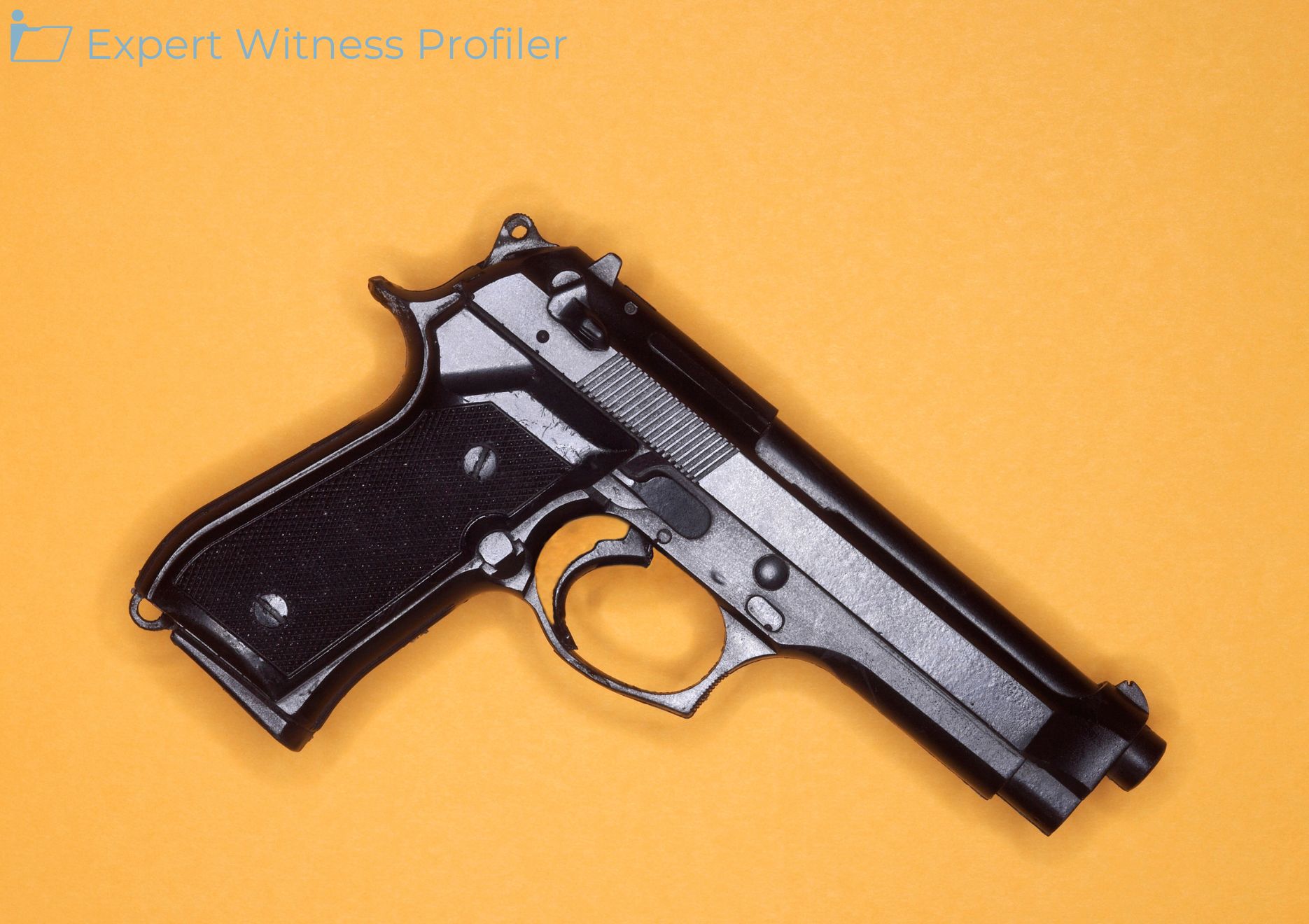
In January 2021, Timothy Davis experienced an unexpected discharge of his Sig Sauer P320 XCarry pistol while exiting his vehicle, resulting in a severe leg injury from a 9mm hollow-point bullet. The circumstances surrounding the incident were unclear, with conflicting accounts in Davis’ deposition. He stated that, while sitting in his vehicle, he holstered the P320, and as he extended his leg, the pistol discharged. Davis insisted that the P320 was fully holstered and secured on his left hip.
However, a police report and an EMT report provided a different version, indicating that Davis was attempting to holster the P320 when the discharge occurred. Regardless, Davis claimed the P320 discharged without a trigger pull, a contention disputed by Sig Sauer.
In January 2021, Plaintiff Timothy Davis claimed that his Sig Sauer P320 XCarry pistol discharged unexpectedly, injuring his leg with a 9mm hollow-point bullet. Davis provided conflicting accounts of the incident: one stating he holstered the gun before exiting the vehicle, and another suggesting he was attempting to holster it when the discharge occurred.
Davis filed a product liability and negligence lawsuit against Sig Sauer, alleging that the P320 lacked external safeties, making it unreasonably dangerous. Gunsmith James Tertin and human factors engineer William Vigilante, serving as expert witnesses, argued that the absence of a manual safety rendered the pistol defective, increasing the risk of accidental discharge. They contended that this defect was the proximate cause of Davis’ injury.
Sig Sauer moved to exclude Tertin and Vigilante’s opinions and sought summary judgment, claiming that without the expert testimony, there was no genuine dispute of material fact, and Davis failed to establish causation.
Firearms & Ballistics Expert Witness
James Tertin is currently the director of research and development for Magnum Research, a firearms manufacturer based in Pillager, Minnesota. In that role, he is responsible for designing and developing new firearms for the company.
He has been a professional gunsmith since graduating in 1972 from the Gunsmithing School at Trinidad State College in Colorado; the oldest gunsmithing school in the United States. Over the past fifty years, he has been awarded seven firearm design patents.
Human Factors Engineering Expert Witness
William Vigilante graduated with a Doctoral of Philosophy and a Master’s of Science in Ergonomics (Human Factors) Psychology and a Bachelor of Science degree in Psychology (Cognitive track). He is also a Certified Professional Ergonomist by the Board of Certification in Professional Ergonomics (#2019). He has more than 25 years of experience in psychological and human factors research with a focus on human-machine interaction, control-display design, product design, hazard identification and mitigation, risk perception, situational awareness, perception-reaction time, and the design and testing of warning systems.
Discussion by the Court
Federal Rule of Evidence 702 governs the admissibility of expert witness testimony. It permits an expert to testify about scientific knowledge if “(a) the expert’s scientific, technical, or other specialized knowledge will help the trier of fact to understand the evidence or determine a fact in issue; (b) the testimony is based on sufficient facts or data; (c) the testimony is the product of reliable principles and methods; and (d) the expert has reliably applied the principles and methods to the facts of the case.”
Sig Sauer had challenged the testimony of Tertin and Vigilante on various grounds, asserting that their causation opinions were speculative and lacked reliable foundations. Additionally, Sig Sauer questioned Vigilante’s qualifications to opine on firearm design. Sig Sauer’s primary objective was to exclude Tertin and Vigilante from expressing the view that Davis’ accident might have been prevented with a thumb safety or tabbed trigger safety on the P320.
The Court concurred with Sig Sauer’s argument, finding that neither Tertin nor Vigilante had a reliable factual basis for their causation opinions. Tertin’s opinion, which stated that any single-action firearm without a manual thumb safety is defective, lacked empirical evidence. Tertin suggested that a tabbed trigger “probably would have prevented the accident,” but he admitted to having no information about what caused Davis’ trigger to depress. Tertin performed no analysis on the circumstances of the accident, providing no basis for his conclusion on the lack of a manual safety being the proximate cause. The Court deemed Tertin’s opinion as pure speculation, lacking any factual foundation or empirical evidence, and therefore inadmissible for proving causation.
Vigilante’s opinion faced a similar challenge. He contended that the P320’s lack of an external manual safety made it defective and unreasonably dangerous, attributing it to the unintentional discharge in Davis’ case. According to Vigilante, triggers could move through inertia, foreign object contact, or contact with a body part, but he lacked an opinion on how Davis’ trigger became engaged.
Vigilante admitted to not inspecting Davis’ pistol or holster, relying solely on Davis’ deposition and a sheriff’s report for his understanding of the accident. He did not speak with Davis or review the first responders’ testimony, and no testing or analysis of physical evidence was conducted to validate Davis’ version of the accident. Vigilante’s causation opinion appeared detached from the specific circumstances of Davis’ case, relying on a general conclusion about the P320’s safety without factual support.
Even Vigilante’s generalized conclusions were based on shaky grounds, using anecdotal data from YouTube videos and a memorandum by the United States Immigration and Customs Enforcement Agency. This lack of empirical evidence failed to meet the standards set by Rule 702 for expert testimony. Even if one assumed the absence of a manual safety was a design defect, Vigilante provided no factual basis for concluding that a manual safety would have prevented Davis’ specific accident. Without a thorough investigation into the accident’s circumstances, Vigilante’s causation opinion was deemed too speculative and lacking reliability. Therefore, his expert testimony was precluded.
The Court briefly addressed another argument asserted by Davis in support of admitting the expert testimony of Tertin and Vigilante. Davis compared two recent Orders from other district courts that considered similar motions filed by Sig Sauer. In the Northern District of Georgia, Sig Sauer’s motions were partially denied, while in the Western District of Oklahoma, Sig Sauer’s motions were granted. Davis urged the Court to distinguish the Western District of Oklahoma case, Herman V. Sig Sauer, asserting that the facts in the present case were distinct.
After reviewing both Orders and their supporting records, the Court concluded that Herman was not distinguishable, particularly concerning the reasoning supporting the exclusion of expert testimony by Tertin and Vigilante. Despite the Northern District of Georgia recognizing that the opinions of Tertin and Vigilante were based on the specifics of the incident in that case, the Court found no similar evidence in the present case. Similar to the Herman Court, the Court noted broad conclusions about an alleged defect in Sig Sauer’s P320 applied generally to the case’s facts. Tertin and Vigilante both admitted that the specific circumstances of Davis’ incident weren’t crucial to their opinions. Therefore, as explained above, neither expert could be relied upon to provide an accurate and helpful opinion on what may have caused the injury in Davis’ particular case. Consequently, both experts were precluded from testifying.
With the exclusion of Tertin and Vigilante, Davis found himself without any expert witness to testify regarding the alleged defect and causation. This absence meant that Davis could not demonstrate the existence of a defect and its role in causing his injury. Consequently, his claims lacked an essential element and failed under Kentucky law. As a result, the Court granted Sig Sauer’s motion for summary judgment.
Held
The Case was decided in Defendant, Sig Sauer’s favor after the testimony of both experts, James Tertin and William Vigilante were excluded and Sig Sauer’s motion for summary judgment was granted.
Key Takeaways:
The admissibility of expert witness testimony is governed by Federal Rule of Evidence 702, which sets criteria requiring the expert’s knowledge to assist the trier of fact, be based on sufficient facts and data, use reliable principles and methods, and be reliably applied to the case’s facts. In the case against Sig Sauer, challenges were raised against the expert testimony of Tertin and Vigilante, asserting that their causation opinions were speculative and lacked reliable foundations. Additionally, Vigilante’s qualifications to opine on firearm design were questioned. The Court, agreeing with Sig Sauer’s arguments, found that neither expert had a reliable factual basis for their causation opinions, rendering them inadmissible under Rule 702 due to a lack of empirical evidence and factual support. Both experts were criticized for offering broad conclusions about an alleged defect in Sig Sauer’s P320, which were then applied generally to the case’s facts, leading the Court to deem their opinions speculative and lacking a specific connection to the incident in question. Vigilante’s reliance on anecdotal data and Tertin’s admission of no empirical evidence were cited as failures to meet the standards set by Rule 702, which requires a reliable basis for expert opinions. Attempts by the Plaintiff to distinguish the present case from others with varying outcomes were rejected by the Court, emphasizing the lack of similar evidence showing the experts’ opinions were based on the specific circumstances of the incident. With the exclusion of expert testimony, the Plaintiff was unable to demonstrate the existence of a defect and causation, resulting in the failure of claims under Kentucky law. As a consequence, the Court granted Sig Sauer’s motion for summary judgment, underscoring the critical role that expert testimony can play in product liability cases.
Case Details:
Case Caption
Davis v. Sig Sauer, Inc.
Docket Number
3:22cv10
Court
United States District Court for the Eastern District of Kentucky, Central Division
The case in question involves a lawsuit filed by the Plaintiff, Clyde Arterburn, against Home Depot U.S.A., Inc. (referred to as Home Depot) for injuries sustained when he tripped and fell in a Home Depot store on September 21, 2020. According to the documents, Arterburn claims that he tripped over a metal basket holder that had been placed over a slightly protruding pipe as he was exiting the store. Home Depot argues that the basket holder was intended to hold baskets, not to cover the pipe, although there were no baskets in the holder at the time of the incident. The area where Arterburn walked and tripped over the basket, between a yellow bollard and a wall, was wide enough that he was able to pass through without twisting or adjusting his body in any way, and there were no signs or warnings in the vicinity to alert customers.
Plaintiff’s expert witness, Joellen Gill, reviewed various materials, including photographs of the incident location, Home Depot’s supplemental discovery responses, and deposition transcripts of involved parties. In her report, Gill concluded that the incident area, between the yellow bollard and the wall, constituted a foreseeable pedestrian walkway around 40 inches wide. She noted that typical aisles and walkways usually had a minimum width of 36 inches. Gill estimated the wire basket’s height at 13.75 inches using the assumption that it was a quarter of the bollard’s height, which was 55 inches, without direct measurement. She reviewed and testified about Home Depot’s internal policies and procedures regarding keeping the aisles clear of tripping hazards and the use of merchandising displays. She observed that individuals tend to focus their visual gaze toward their intended destination rather than on the ground in their immediate vicinity. Gill discussed safety measures that Home Depot could have implemented to prevent similar incidents in the future.
Home Depot filed a Motion to Exclude the Testimony of Joellen Gill, while Clyde Arterburn opposed this motion.
Human Factors Engineering Expert Witness
Joellen Gill, CHFP, CXLT, CSP holds a BS in human factors engineering from Georgia Tech and Wright State Universities, earned in 1979. With nearly four decades of experience, she spent 15 years in aerospace and national defense as a human factors engineer focused on safety and risk management. In 1994, she began employment with Applied Cognitive Sciences, a consulting firm specializing in human factors engineering, particularly safety and risk management and went on to become the owner/president of Applied Cognitive Sciences in 2018.
Joellen Gill is a Certified Human Factors Professional and boasts additional credentials as a licensed tribometrist and a Certified Safety Professional, underscoring her expertise in the field.
Discussion by the Court
The Court engaged in a detailed discussion and analysis of various factors pertaining to the admissibility of expert testimony:
The Court initiated its discussion by addressing the qualifications of the expert, Joellen Gill. It noted that Federal Rule of Evidence 702 requires that a witness be qualified as an expert based on knowledge, skill, experience, training, or education. The Court emphasized that the Rule 702 allows for a broad conception of expert qualifications and that only a minimal foundation of knowledge, skill, and experience is required. It pointed out that a lack of particularized expertise goes to the weight of the testimony, not its admissibility. The Court assumed Ms. Gill was qualified as an expert, indicating that her qualifications were not a point of contention in the case.
The Court then shifted its focus to the reliability of the expert testimony. It detailed the factors outlined in Daubert v. Merrell Dow Pharms., Inc., a landmark case that established the standards for assessing the reliability of expert testimony. These factors included whether the expert’s method, theory, or technique is generally accepted within the relevant scientific community, whether the method has been tested, subjected to peer review and publication, and the known or potential rate of error of the method. The Court made it clear that the test for reliability was not about the correctness of the expert’s conclusions but the soundness of their methodology. It further explained that reliability required some objective, independent validation of the expert’s methodology.
The Court emphasized the necessity of a connection, or “fit,” between the expert testimony and the issue at hand in the case. It noted that an expert’s testimony should provide appreciable help to the trier of fact and that expert testimony is inadmissible if it concerns issues within the knowledge and experience of ordinary lay people.
The Court pointed out that, in this case, the central question was whether Joellen Gill’s expert testimony met the criteria for admissibility outlined in Rule 702, specifically focusing on relevance and reliability.
Moving on to the issue of relevance, the Court examined whether Joellen Gill’s testimony would assist the jury in understanding the evidence or determining a fact in issue, as required by Rule 702. Home Depot contended that her opinions were well within the knowledge and experience of ordinary laypeople and therefore were not necessary. The Court agreed with Home Depot, asserting that the vast majority of Gill’s opinions about foreseeable pedestrian walkways, Home Depot’s policies, and customer behavior were common knowledge and did not provide appreciable help to the jury.
The Court stressed that the jury should be able to draw its conclusions regarding the safety of the basket holder at Home Depot based on their own normal life experiences. It indicated that jurors would likely have visited similar stores, used similar shopping baskets, and generally had awareness of shopping basket holders’ locations, making Gill’s testimony redundant and irrelevant.
Home Depot contested the relevance and reliability of Gill’s testimony regarding whether the Plaintiff traversed a foreseeable walkway, highlighting her alleged error in identifying the width of the chosen walkway. They pointed out that the 40-inch measurement referred to the distance from the bollard to the wall, not the actual space between the bollard and the white cabinet, which was the pertinent area. Defendant argued that the area Gill claimed was a “pedestrian walkway” had a cabinet located against the wall providing a visual cue that people should not walk there. The Plaintiff’s response to this challenge was considered inadequate by the Court. The Plaintiff cited Gill’s reliance on measurements provided by her assistant and referenced the Plaintiff’s deposition testimony, indicating that the white cabinet was further back at the time of the incident. However, the Court found it hard to accept Gill’s acceptance of the 40-inch measurement for the walkway while also relying on the photo to determine facts about that specific area. The Court criticized Gill’s estimation of the basket’s height at 13.75 inches, seemingly based on visual approximation from the photo where the basket seemed to occupy a significant portion of the space between the bollard and the cabinet. The inconsistency in Gill’s testimony about the walkway rendered it irrelevant in the Court’s assessment. The Court concluded that Gill’s testimony appeared unreliable, leaning on subjective belief or unsupported speculation, without needing to rule on the specific width of the walkway.
Held
The Court granted Home Depot’s Motion to Exclude Testimony of Plaintiff’s expert Joellen Gill. The Court issued a final ruling on October 20, 2023 dismissing the action without prejudice.
Key Takeaways:
Reliability Standards: The Court applied the standards outlined in the Daubert case to assess the reliability of expert testimony. These standards emphasize the necessity for the expert’s methodology to be based on sound science, subject to testing, peer review, and known error rates. Expert opinions should rely on proper methods and procedures rather than subjective belief or unsupported speculation.
Relevance and “Fit”: Expert testimony must have a valid scientific connection or “fit” with the issues in the case. The Court highlighted that expert testimony should provide appreciable help to the trier of fact. In this case, it was observed that the jury should be able to draw its own conclusions on matters within their common knowledge and experiences, making Gill’s testimony redundant and irrelevant.
Inaccuracies and Inconsistencies: The Court also considered inaccuracies and inconsistencies in the expert’s analysis as factors that further undermined the reliability and relevance of her testimony.