Eight former Redmond firefighters sued the City of Redmond (“City”) after being terminated for refusing COVID-19 vaccinations on religious grounds. They argued the City should have let them continue working with masking and testing rather than requiring vaccination.
Plaintiffs filed a Daubert motion to exclude the testimony of the City’s expert, Dr. John Lynch.
Infectious Disease Expert Witness
Dr. John B. Lynch is a board-certified physician in infectious disease, Professor of Medicine at the University of Washington, and Associate Medical Director of Harborview Medical Center.
Moreover, he led UW Medicine’s COVID-19 Emergency Operations Center from February 2020 through December 2023, overseeing PPE and testing policies, and has authored 82 peer-reviewed publications, including 15 on COVID-19.
Plaintiffs challenged Lynch’s qualifications, arguing that he lacks expertise in masking and testing, that his opinions were irrelevant because Defendant allegedly lacked an undue hardship defense, and that his method is unreliable because he did not conduct original research. The Court disagreed.
Basically, medical experts commonly base their opinions on clinical experience, peer-reviewed literature, and public health guidance—precisely the materials Lynch relied on here.
Moreover, Lynch’s opinions are grounded in decades of clinical experience, extensive review of scientific literature, and his direct involvement in the public health response to COVID-19.
Held
The Court denied the Plaintiffs’ motion to exclude the testimony of Defendant’s expert Dr. John Lynch.
Key Takeaway
The Ninth Circuit has explained that expert testimony is reliable if the knowledge underlying it has a reliable basis in the knowledge and experience of the relevant discipline. If Plaintiffs wish to challenge what Lynch failed to consider or address, such critiques go to weight and credibility—subjects for cross-examination—not admissibility.
Roy Edward Ates, Jr., is a federal prisoner. He alleged that prison officials’ negligence caused him to become infected with COVID and that prison personnel were negligent in providing him medical treatment thereafter.
Defendant retained Dr. Alysse Wurcel as an expert witness. She has assisted Massachusetts sheriffs in their response to COVID beginning in March 2020.
Wurcel opined that the BOP’s medical treatment of Ates from December 2020 forward was “evidence-based, guideline-concordant medical care”.
In reaching this conclusion, she further opined that she “would not classify Ates as having ‘severe debilitating lung damage.’” Considering Wurcel’s opinions, no reasonable jury could find an “intentional failure to perform a duty in reckless disregard of the consequences” with respect to the BOP’s treatment of Ates’ medical conditions from December 2020 forward.
Ates argued that Wurcel’s expert opinion on whether Ates has lung dysfunction is not reliable and should not be considered because Wurcel is not qualified to offer such opinion.
Infectious Disease Expert Witness
Dr. Alysse Gail Wurcel is a physician licensed in Massachusetts to practice as an internal medicine and infectious disease specialist. She has worked in Massachusetts jails as an infectious disease specialist since 2013. She has published over 100 articles in peer-reviewed publications, including articles on COVID.
Through her training and experience, Wurcel is able to recognize symptoms of severe lung damage that would require a referral to a specialist, like a pulmonologist.
She testified, “I know when someone has severe lung damage. I mean, in terms of their oxygenation saturation, in terms of lots of other things, an internal medicine doctor can know when someone has severe lung damage.”
Explaining the basis for such knowledge, Wurcel testified:
I guess, like, this is the existential infectious diseases debate that you get into, in that we are doctors of everything. And if there’s an infection of the lungs, it’s called a pneumonia, and COVID causes, in some people, an infection of the lungs. And so, like, I’m not a lung doctor, but I am a lung doctor when an infection is in it. So any infection hits the lungs, then I’m a lung doctor.
She further explained that “you don’t send every person that believes they have something to a specialist. The internal medicine doctor has a certain level of understanding to triage.”
Wurcel observed multiple exams when Ates’ lungs were clear and his pulse oximetry readings were good. Wurcel further opined that from these and other objective symptoms documented in the medical records, “any internal medicine doctor would look at this case and say this man does not have severe lung damage.”
Analysis
While Wurcel is not a pulmonologist and did not hold herself out to be a specialist on lung dysfunction, her training and experience provided sufficient foundation for her to opine that, based on her review of Ates’ deposition transcript, discovery responses, and medical records, Ates did not have severe lung damage. This opinion supported her conclusion that the BOP provided Ates “evidence-based, guideline concordant medical care.”
Ates contended that Wurcel did not know about or did not take into consideration his claim that his medical records often failed to reflect his complaints of breathing problems. Even accepting Ates’ claim at face value, as the Court must on summary judgment, it did not warrant rejection of Wurcel’s opinions.
Held
The Court admitted the testimony of Defendant’s expert Dr. Alysse Wurcel because she is an experienced physician licensed to practice internal medicine and treat infectious diseases.
Key Takeaway
As Wurcel aptly explained, internal medicine doctors like her regularly make the initial assessment as to whether a patient has symptom that warrant referral to a specialist, such as a pulmonologist. Wurcel unequivocally opined both in her written report and during her deposition that, based on information in Ates’ medical records, she saw no indication that he did in fact have lung damage, or any basis for referring him to an outside specialist for further evaluation.
This case arises out of Plaintiff Cheyanne Dixson’s 2022 termination as a police officer with the Issaquah Police Department after Defendant, the City of Issaquah, determined it could not accommodate Plaintiff’s religious exemption to vaccination against SARS-CoV-2, an employment requirement implemented by Defendant during the COVID-19 pandemic. Dixon was a patrol officer in the City’s Police Department.
Defendant produced the expert report of John Lynch, M.D., a board-certified physician in infectious disease. Lynch’s proffered testimony includes background information on the COVID-19 pandemic and the development of the first COVID-19 vaccines. Plaintiff filed a motion to exclude all testimony by Lynch.
Infectious Disease Expert Witness
John B. Lynch is a board-certified physician in infectious disease. He currently works as an Associate Medical Director of Harborview Medical Center and a Professor of Medicine at the University of Washington (UW) and actively practices medicine as an infectious disease clinician.
His work at Harborview included serving as the medical director for the occupational health program, and he also served on the Board of Directors of the Infectious Diseases Society of America from 2019 to 2022.
Lynch earned his Doctor of Medicine (“MD”) from the UW School of Medicine in 2002 and his Master’s in Public Health (“MPH”) in epidemiology and global health from the UW School of Public Health in 2011.
Plaintiff asserted that Lynch is not qualified to opine as an expert except on the “efficacy of [CV-19] vaccines,” that his opinions are irrelevant and unreliable, and that his testimony and report will confuse the issues and should be excluded.
A. Rule 702 Challenge
1. Lynch’s Qualifications
The Court held that Lynch is abundantly qualified by both experience and training to render the opinions he offered. Plaintiff has not produced evidence to negate these qualifications.
2. Relevance of Opinions
Defendant offered Lynch’s testimony in support of its “undue hardship” defense to Plaintiff’s claim, under the Washington Law Against Discrimination, that Defendant discriminated against her by failing to accommodate her sincerely held religious belief.
To prevail on its undue hardship defense, Defendant will need to establish that the accommodation sought by Plaintiff—here, remaining unvaccinated and fulfilling her usual job duties but submitting to twice-weekly COVID-19 tests, masking during work hours while in the presence of others, and eating her meals in her car, outdoors, or off site—would result in “substantial increased costs in relation to the conduct of [Defendant’s] particular business.”
Plaintiff repeatedly asserted that information about vaccines and safety risks is irrelevant but does not explain how the health-and safety-related cost Plaintiff’s unvaccinated status imposed on Defendant can be evaluated without this information.
The one argument that Plaintiff presented as to why these topics are irrelevant—”because the Plaintiff was exempt from the vaccine requirement . . . .” —would appear to foreclose any consideration of health risks or other intrinsic “costs” of waiving an employment requirement for an objecting employee. But it is hard to see how an undue burden defense could ever be adjudicated without information about the purpose and value of the employment requirement from which a Plaintiff is exempt or seeking exemption.
3. Reliability of Opinions
Lynch explained in his declaration that his opinions were formed based on knowledge gained in “decades of working in clinical infectious diseases, infectious disease research, public health, and epidemiology,” the medical studies and public health data he cited in his declaration and report, his review of over a dozen documents from this case, and a visit to the Issaquah Police Department.
Though Defendant provided extensive case law on medical expert testimony in its response, Plaintiff offered no reply. Accordingly, the Court found that Lynch’s opinions have “a reliable basis in the knowledge and experience of the relevant discipline.”
Further, where the particular facts of the case are relevant to Lynch’s opinions, he considered them with specificity. For example, he considers Plaintiff’s work duties, the settings in which she worked, and the people with whom she interacted in her role as a police officer.
4. Plaintiff’s Other Arguments
Repeatedly, in support of her arguments on both relevance and reliability, Plaintiff argued for exclusion based not on opinions Lynch has offered but opinions he has not offered, mostly related to Plaintiff’s preferred framing of “the key issue” in this case: how could masking and testing be safe and effective from October to February and then unsafe or ineffective starting February 16, 2022.
Plaintiff also faults Lynch for not being able to precisely quantify “the residual risk of acquisition and transmission” by an unvaccinated person with Plaintiff’s accommodations and not opining on the actual incidence of breakthrough infections among Defendant’s employees or Defendant’s reliance on recommendations by the Centers for Disease Control and Prevention.
Assuming for the sake of argument that these “missing” opinions are relevant and otherwise admissible, the Court held that their absence is a subject for cross-examination, not a basis for exclusion of Lynch’s testimony under Rule 702.
B. Rule 403 Challenge
5. Testimony on Vaccine Development and Approval
Plaintiff objected to Lynch testifying about the development and Federal Drug Administration (“FDA”) approval of vaccines on the grounds that such testimony is both irrelevant and prejudicial, contending that “the introduction of these facts is more likely to prejudice the trier of fact by implying that [Plaintiff] contests vaccines and FDA approval and/or importance or efficacy. This is simply not true and the inclusion is prejudicial.”
As to the relevance of these issues, the Court agreed with Defendant that “[t]his data provides relevant background information about options available to the City and others to control the spread of COVID-19 in the workplace in late 2021 and early 2022.”
As to any potential undue prejudice, Plaintiff explained neither how facts about vaccine history and development imply anything at all about Plaintiff’s personal opinions, nor how such an implication could be prejudicial when the very basis of this case arises out of Plaintiff’s religious objection to a workplace vaccination requirement.
6. Opinions on Vaccine Hesitancy and Misinformation
Plaintiff also objected to a section of Lynch’s report entitled “Vaccine Hesitancy and Misinformation,” on the grounds that it “is likely to be more prejudicial than beneficial to the inquiry.” Besides this assertion, however, Plaintiff offered no argument on this topic.
According to the Court, this alone is a sufficient basis to reject Plaintiff’s unreasoned request for exclusion.
The Court noted, moreover, that most of the opinions Lynch offered in the challenged section are directly responsive either to specific statements in Plaintiff’s complaint or to arguments advanced by Plaintiff during this litigation.
Finally, Plaintiff argued that Lynch’s purported opinion that Defendant should not have accommodated Plaintiff even temporarily “will likely confuse the trier of fact, not assist them.” The Court need not consider the likelihood of confusion because Plaintiff presented no evidence that Lynch has ever expressed this opinion.
The other testimony cited by Plaintiff arose from a question about why Defendant would have accommodated her; Lynch responded that he was neither a human resources person nor involved in the conversations. Lynch tried to discern the rationale by reading the documents with which he was presented and responded that accommodating Plaintiff was a policy decision by human resources. Nowhere in the referenced material did he opine that Defendant should not have accommodated Plaintiff.
These exchanges, viewed along with their mischaracterization here by Plaintiff’s counsel (who also deposed Lynch), create the impression that counsel, not having solicited the deposition testimony she wanted from Lynch, decided to distort his testimony beyond recognition. The Court will give counsel the benefit of the doubt and assume that this was an honest mistake rather than a willful misrepresentation.
Held
The Court denied the Plaintiff’s motion to exclude the opinions of Defendant’s expert John Lynch.
Key Takeaway:
In ignoring the applicable standards, Plaintiff presented no clear argument that Lynch’s experience did not support his conclusions (and the Court finds that it does); that his reasoning is circular, speculative, or otherwise flawed (and the Court finds that it is not); or that his reasoning is not adequately explained (and the Court finds that is is).
Lynch explained in his declaration that his opinions were formed based on knowledge gained in “decades of working in clinical infectious diseases, infectious disease research, public health, and epidemiology,” the medical studies and public health data he cites in his declaration and report, his review of over a dozen documents from this case, and a visit to the Issaquah Police Department. This is clearly consistent with the types of sources typically relied on by medical professionals.
Case Details:
Case Caption:
Rosa V. City Of Issaquah Et Al
Docket Number:
2:24cv1673
Court Name:
United States District Court for the Western District of Washington
In July 2021, the Federal Reserve Bank of Minneapolis required its employees to be vaccinated against COVID-19. The policy allowed religious exemptions. Plaintiff Rodney Maki—one of the Bank’s law enforcement officers—requested one, citing his opposition to vaccines linked to fetal stem cells. The Bank granted Maki a temporary accommodation but revoked it a few months later. In January 2022, Maki remained unvaccinated, and the Bank terminated him. Maki sued under Title VII of the Civil Rights Act of 1964 and the Religious Freedom Restoration Act (or “RFRA”) for religious discrimination.
Maki filed a motion to exclude two of Bank’s experts, Dr. Frank Rhame and Jennifer Bey. The Bank, in response, filed a motion to exclude the testimony of Maki’s expert rebuttal witness Dr. Peter A. McCullough.
Infectious Diseases Expert Witness
Dr. Frank S. Rhame is a medical doctor with board certifications in internal medicine and infectious diseases. He studied at Stanford University and directed the Hospital Infection Control Program at the University of Minnesota. Rhame is an Adjunct Professor of Medicine at the University of Minnesota and is a fellow of the Infectious Diseases Society of America. He has presented over twenty lectures on COVID-19 and testified as an expert in two trials.
Jennifer Bey is a vocational expert and owner of Bey & Dyer. She has a B.S. in Psychology from the University of Wisconsin-River Falls and a Master’s in Rehabilitation Counseling from Illinois Institute of Technology.
Bey has over twenty years of experience in the field, and has testified or been deposed as an expert in thirty-four cases from 2017 to 2024, not counting this matter.
Dr. Peter Andrew McCullough has a medical degree from the University of Texas Southwestern Medical School in Dallas. He completed a master’s degree in public health in the field of epidemiology at the University of Michigan. McCullough has published frequently in medical journals and provided testimony on government panels on the response to the COVID-19 pandemic.
He is board certified in the United States in internal medicine and cardiovascular disease, and holds an additional certification in clinical lipidology, as well as a previous certification in echocardiography.
Maki argued that Rhame’s testimony regarding the effectiveness of vaccines on COVID-19 infection and transmission is irrelevant to the Bank’s undue hardship defense and described scientific opinions the Bank never consulted while it developed its vaccination policy.
There are two basic aspects to Maki’s argument that Rhame’s opinions should be excluded. The first is that Rhame addresses many scientific aspects of COVID-19, but “COVID-19 is not on trial in this case.” This argument is not persuasive. In developing its vaccination policy and in determining not to grant Maki’s requested accommodation, the Bank accounted for a variety of scientific information regarding COVID-19, the disease’s impact on its employees and operations, and the efficacy of vaccines or other measures in addressing these impacts. The Court held that Rhame’s proffered testimony will assist the jury in understanding this information.
The second aspect to Maki’s argument is that Rhame’s proffered testimony would concern information the Bank never considered in developing its policy or refusing the requested accommodation.
The Court explained that the issue with Maki’s motion is that he did not point out the specific parts of Rhame’s testimony that were based on information the Bank did not have in January 2022 or before.
Jennifer Bey
First, Maki argued that Bey is not offering specialized knowledge, but rather a cursory and superficial analysis within the jury’s capabilities. However, Bey did not merely repeat written job descriptions or compare them as a layperson might. She analyzed Maki’s deposition testimony in relation to his work for both employers.
As for Bey’s salary-comparison analysis, Maki contended that Bey “did not address Maki’s testimony, nor did she identify what most of the security jobs’ benefits packages might entail, and how they would compare with Maki’s benefits at the Bank.” The Court clarified that the problems Maki pointed out are matters that can be challenged during cross-examination, but they are not serious enough to justify excluding the testimony.
Maki contended that Bey’s methodology is inadequate to determine the reasonableness of a job search. However, the Court held that Bey’s proffered testimony drew on her vocational counseling experience, described tangible steps an applicant could take to pursue employment, and offered an expected timeframe to gain a licensed position.
Maki asserted that Bey would inappropriately opine on legal matters if she testified as proffered that Maki’s job search was not a reasonable and diligent effort. As Maki’s cited authorities confirm, the reasonableness of a job search for purposes of mitigating damages is a fact question for the jury. Bey’s opinion embraces an ultimate issue with respect to damages, but this is consistent with the rules.
Peter McCullough
The Bank sought to exclude only “the narrow portion of McCullough’s opinion related to vaccine requirements and exemptions or accommodations to such requirements.”
McCullough would testify, for example, that “a position supporting or mandating COVID-19 vaccination goes against good medical practice and cannot be backed by ethical and prudent physicians, public health agencies, schools, or employers.” And again, “the COVID-19 vaccines have never been sufficiently protective against contracting COVID-19 to support their use beyond voluntary participation.” The Bank argued that these statements exceeded the boundaries of acceptable expert testimony in three ways: they are outside McCullough’s expertise; they constitute legal opinions; and they are irrelevant.
The parties disagreed about whether McCullough is qualified to testify regarding the appropriateness of employer responses to the COVID-19 pandemic.
McCullough may testify on the medical value of vaccines, and although the Bank disputes this testimony, it does not seek to exclude it. The Court admitted this testimony. However, when McCullough opined on how “prudent” employers should have responded, the Court held that he spoke beyond his expertise. This included his references to “ethical and prudent employers” and his statements that “[e]xemptions from vaccination saved lives and should have been granted for all applications” and “[n]o one should have received any pressure, coercion, or reprisal for requesting exemption from or declining COVID-19 vaccination.”
Held
The Court granted in part and denied in part Rodney Maki’s motion to exclude the testimony of Frank Rhame and Jennifer Bey.
The Court granted Federal Reserve Bank of Minneapolis’s motion to exclude the testimony of Peter McCullough.
Key Takeaway:
An expert must stay within his area of expertise when testifying. If the witness’ competence does not match the subject matter of the testimony, the Court must exclude the opinion.
Plaintiffs, former employees of a local government public health agency, each filed suit against Rock Island County Health Department (“RICHD”) and Rock Island County, Illinois (“the County”) alleging that their previous employer, RICHD, violated Title VII of the Civil Rights Act of 1964.
The purported violations stem from their employer’s failure to accommodate their religious beliefs, first, when it denied their exemptions from a COVID-19 vaccination requirement, and later when Plaintiffs were terminated for failing to get vaccinated.
RICHD disclosed an expert witness, Dr. F. Ramzi Asfour. Asfour was asked to “provide his opinion concerning the proper approach of a public health entity to evaluating requests from employees to be exempted from” vaccination requirements and to provide epidemiological evidence related to vaccine efficacy compared to other mitigation methods.
Plaintiffs filed the instant motion to bar Asfour, arguing that his opinion violated the standards of Federal Rules of Evidence 702 and 704.
Infectious Disease Expert Witness
F. Ramzi Asfour, MD, is board certified in Infectious Diseases and Internal Medicine, having attended a fellowship specializing in infectious diseases and having worked for the World Health Organization.
His experience practicing medicine in the area of infectious diseases spans seventeen years, with over 72,000 patient encounters. Moreover, he has recent experience in consulting hospitals and other healthcare facilities on “policies, procedures and protocols relating to COVID-19.”
Whether the Statements Fall Outside of Asfour’s Expertise
Plaintiffs state that Asfour is a medical doctor with an expertise in public health who “is not qualified to render opinions regarding religion or religious exemptions.”
The Court held that Asfour did not purport to opine about the sincerity of anyone’s religious beliefs. Instead, he highlighted various reasons that it was important from a public health perspective that healthcare workers be vaccinated, and based on those factors, opined that healthcare entities should carefully scrutinize requests for religious exemptions from COVID-19 vaccination requirements. Further, he opined that the scrutiny should be accomplished by identifying whether there was a “clear and specific doctrinal basis for objecti[ng]” to getting the vaccine. This is not a religious opinion, so Plaintiffs’ argument that Asfour should be barred from testifying that “religious exemptions should generally be denied unless there is a clear and specific doctrinal basis for objection” on the basis that it is outside his expertise is denied.
Whether the Opinion Contains Legal Conclusions
Asfour opined on how “employer liability” is affected by a potential COVID-19- related illness or death. And, while Plaintiffs do not take issue with this part of the opinion, Asfour recounts, verbatim, the definition of religion under Title VII.
While allowing Asfour to opine as to the definition of religion under Title VII and interpret an employer’s liability related to COVID-19 illness or death would run the risk of confusing a jury with multiple presentations of the law, the Court held that Asfour’s statements also offer his perspective on public health matters and provide background for RICHD to make its arguments related to whether granting religious exemptions constituted an undue burden.
Therefore, the Court will limit Asfour’s opinion as to his statement on employer liability related to COVID-19 illness or death, and the definition of religion under Title VII. Those are matters designated for the Court to instruct on; all other statements do not constitute legal conclusions.
Whether the Opinion Meets the Standards of Reliability
From what the Court can decipher from Plaintiffs’ motion, they did not challenge that the underlying data or methodologies used to formulate Asfour’s opinion were unreliable; however, they seemingly did contend that his opinion cannot meet the requirements under Rule 702(d).
Asfour began his expert report by outlining “[a] meta-analysis with seven studies with 21,618,297 COVID-19 patients,” and explained how “unvaccinated patients were 2.46 times more likely to die from COVID-19.”
He analyzed the drop in the death rate after the introduction of the vaccine, specifying how the weekly deaths in Rock Island County decreased from five to one from late 2021 to early 2022.
Asfour then discussed how religious groups generally did not object to vaccinations from a public health standpoint.
The Court held that Asfour’s application of data to the facts at hand did not run afoul of what was required under Rule 702(d).
Whether the Opinion is Relevant
Plaintiffs argued that much of Asfour’s opinion consisted of mere “facts which appear solely intended to justify the vaccine mandate itself which is not the issue for this jury.”
However, the Court held that Asfour’s opinion will aid the factfinder by providing a better understanding of how the rates of infection during the COVID-19 pandemic changed based on the availability and use of the vaccine, which connects to the analysis of whether RICHD faced an undue burden in granting exemption requests.
Plaintiffs next argue that the opinion is too vague due to Asfour’s use of words like “most,” “many,” and “generally.”
Since RICHD has met its burden in establishing how the expert opinion will aid the finder of fact, the Court held that Asfour’s opinion is not too vague to provide this background.
Held
The Court granted in part and denied in part the Plaintiffs’ motion to bar or exclude Defendant Rock Island County Health Department’s expert F. Ramzi Asfour.
Key Takeaway:
Asfour has over seventeen years of experience in treating infectious diseases and has recently shifted his career to consulting healthcare entities specifically on COVID-19 responses—expertise that he pulls from to formulate his opinion. Moreover, his expert opinion meets the relevant standards; he is qualified to opine on matters of public health, his methodology was reliable, and the testimony is relevant.
However, Asfour cannot opine on the definition of religion under Title VII or employer liability related to COVID-19 illness or death.
Case Details:
Case Caption:
Sanchez V. Rock Island County Health Department
Docket Number:
4:23cv4007
Court Name:
United States District Court for the Central District of Illinois, Rock Island Division
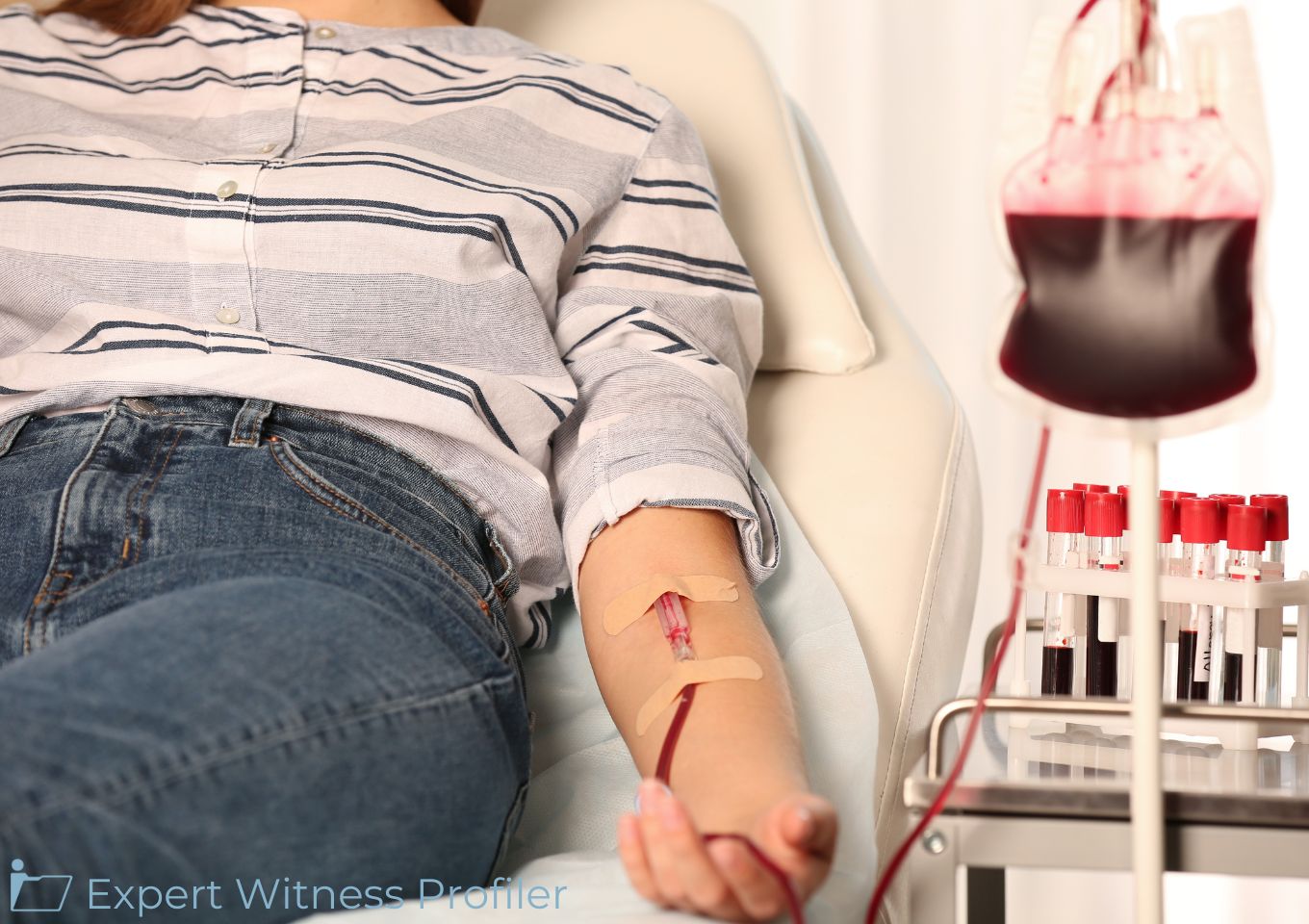
Mariette Waters was on a cruise ship when she had a medical emergency necessitating a blood transfusion. Since the cruise ship operator did not store blood on the vessel for transfusions, it began to solicit passengers to donate blood via the public announcement system. The cruise operator then screened the potential donors, their donated blood, and administered the transfusion. Waters later sued the cruise ship operator, alleging that during this process, it administered a transfusion with HIV infected blood.
Waters alleged three counts of negligence:
medical negligence (Count I);
vicarious liability for medical negligence based on actual agency (Count II); and
vicarious liability for medical negligence based upon apparent agency (Count III)
The Defendant retained Jeffrey Klausner, an infectious disease expert witness to testify in this case. One of the issues that Klausner sought to opine was the use of a particular testing kit by the Defendant — the MedMira Multiplo HBc/HIV/HCV test – and its approval status by regulatory authorities in different jurisdictions.
Note: MedMira is not a party to this litigation.
Waters moved to exclude testimony and opinions from Defendant’s HIV expert, Jeffrey Klausner, specifically, statements asserting approval of the MedMira Multiplo HBc/HIV/HCV test by any regulatory body in any country in the world. Additionally, Plaintiff sought to preclude Klausner from referring to a separate study he had conducted in Peru, involving a different HIV rapid test, in order to assess the sensitivity or reliability of the test used by the Defendant in this case.
Infectious Disease Expert Witness
Dr. Jeffrey D. Klausner, M.D., M.P.H., the subject matter expert in HIV at the U.S. Centers for Disease Control and World Health Organization, holds certification in Infectious Disease and Internal Medicine. He graduated with Honors from Cornell University Medical College and has a Master of Public Health in International Health and Infectious Disease Epidemiology from the Harvard School of Public Health. He has two professorships at the Keck School of Medicine, University of Southern California, and prior at the David Geffen School of Medicine and Public Health at the University of California Los Angeles. Klausner has authored over 650 peer-reviewed research papers on infectious diseases, with a particular focus on HIV/AIDS.
Discussion by the Court
Plaintiff claimed that during testimony, Klausner stated his belief that the specific model of HIV rapid test used by the Defendant, the MedMira Multiple HBc/HIV/HCV test (“Subject Test”), possessed regulatory approval in Canada and the European Union through the respective regulatory bodies. With regard to the European Union approval, Klausner initially thought he saw the relevant marking on the Subject Test box, but when presented with the box during deposition, the marking was absent. Klausner then conceded that he believed in European Union approval of the Subject Test, but had no knowledge or opinion on the matter. Regarding regulatory approval in Canada, Klausner testified that he thought he saw documents indicating approval by Health Canada, the regulatory body for Canada for the Subject Test. However, when questioned about providing any basis, data, document, or evidence for this approval, Klausner replied in the negative.
Plaintiff contended that, according to Daubert, an expert is obligated to have a “sufficient basis” for their testimonial evidence. Plaintiff argued that the expert had no basis, leading to the request for the preclusion of his testimony on this particular topic during the trial.
The Defendant countered by stating that Klausner had no intention of expressing an opinion about regulatory approval for the Subject Test. However, the Defendant requested the Court to allow Klausner to testify that the Subject Test shares a common underlying technology with another product from the same manufacturer, MedMira. Notably, the mentioned product does possess some degree of FDA approval.
The Court, after reviewing the record, including the deposition, concluded that there is sufficient support for precluding Klausner’s testimony regarding any regulatory approval that the Subject Test has or does not have from any country worldwide. Consequently, Plaintiff’s first motion was granted.
Plaintiff contended that Klausner’s opinions, derived from the Peru Study, lacked reliability and utility under Daubert, as there was no justification for imputing the study’s findings to the Subject Test. The Plaintiff argued that the tests were substantially different, with the Peru Study involving the MedMira Multiplo TP/HIV rapid test (“Multiplo”) that screens for HIV and syphilis. In contrast, the Subject Test, used aboard Defendant’s vessel and in its medical center, tests for HIV, Hepatitis B, and Hepatitis C. Despite Klausner acknowledging that Multiplo was not used by the Defendant, he expressed an expectation of similarity due to both tests being manufactured by the same company. Plaintiff asserted that such an insufficient basis for an expert opinion could mislead the jury, characterizing the testimony as lacking data, unreliable principles, and unreliable application of principles to the case’s facts.
To support the argument, the Plaintiff referenced the case Pessman v. Trek Bicycle Corp., 3:18-cv-50243 (N.D. Ill. Dec. 6, 2021). In Pessman, an expert’s testimony was excluded under Daubert for attempting to impute the defects of one bicycle model to a different model produced by the same manufacturer. The Court in Pessman emphasized that the expert had not sufficiently explained the scientific methodology behind his conclusion and stressed the necessity for expert opinions to be backed by “appropriate validation.”
In response, the Defendant with a review of Klausner’s qualifications, emphasizing that the Plaintiff had overlooked this aspect of the analysis. Klausner, a distinguished expert, graduated with Honors from Cornell Medical School and earned a Master of Public Health in International Health and Infectious Disease Epidemiology from the Harvard School of Public Health. Holding two professorships at the Keck School of Medicine, University of Southern California, Klausner served as the subject matter expert in HIV at both the U.S. Centers for Disease Control and the World Health Organization. His extensive expertise is further highlighted by his authorship of over 650 peer-reviewed research papers on infectious diseases, specifically focusing on HIV/AIDS. The Defendant contended that these qualifications affirm Klausner’s expertise and qualify him to opine on the subject matter.
In Klausner’s expert report, he expressed the opinion that the Multiplo test utilized in the Peru Study showcased “excellent performance in detecting HIV antibodies.” The Defendant argued that the Multiplo Test, manufactured by MedMira, a Canadian biotechnology company, is similar to the Subject Test as both are rapid tests designed to detect HIV antibodies. Emphasizing that MedMira holds the patent on Rapid Vertical Flow Technology (“RVF”), the Defendant highlighted that MedMira produces various healthcare products for the rapid testing of infectious diseases, such as HIV, hepatitis, and syphilis. RVF serves as the “core engine” for MedMira’s rapid testing solutions, encompassing the Subject Test, the Multiplo Test used in the Peru Study, and the MedMira Reveal G2 Rapid HIV-1 Antibody Test (“Reveal Test”). Notably, the Reveal Test obtained FDA approval on June 23, 2004. The Defendant contended that the shared RVF technology establishes a sufficient connection, indicating that regulatory approvals or field studies related to Multiplo or Reveal are pertinent and adequate to demonstrate the performance of other MedMira HIV rapid antibody tests, including the Subject Test.
The Defendant argued that Klausner’s various opinions supported the conclusion that different MedMira tests, including the Subject Test, share similarities. Klausner testified that MedMira products utilize the same HIV antibody detection technology, specifically the RVF technology, which had received FDA approval. Furthermore, Klausner stated that within the MedMira portfolio of tests, there would be an increased similarity between antigens used and the mechanisms of antibody detection. He also noted that there would be greater similarity between MedMira’s manufactured HIV antibody tests than there would be between different manufacturers’ products. These statements were presented by the Defendant as evidence supporting the contention that the various MedMira rapid tests, including the Subject Test, exhibit similarities.
The Defendant further argued that Plaintiff’s HIV expert lacked a basis to challenge the assertion that the RVF technology, approved by the FDA for testing HIV antibodies in the Reveal Test, is identical to the technology employed in the Subject Test. Consequently, the Defendant maintained that there was enough evidence of similarities among various MedMira HIV antibody rapid tests, justifying the utilization of Klausner’s Peru Study to demonstrate the performance of MedMira HIV rapid antibody testing technology.
The Defendant contended that Plaintiff’s reliance on the Pessman case was misplaced. In Pessman, the expert relied on information due to a product recall and speculation that issues spread to other models within that manufacturer’s portfolio of products. The Defendant argued that Plaintiff’s contentions pertained more to the weight the jury should assign to the expert opinion rather than its admissibility. Defendant also contended that the Supreme Court has acknowledged the district court’s “broad latitude” in permitting expert testimony grounded in “professional studies or personal experience.”
Furthermore, the Defendant argued that Klausner’s testimony should be deemed admissible because the opposing party has the opportunity to scrutinize the factual basis for the opinion during cross-examination. The Defendant cited the principle that expert opinions should only be excluded when they are so fundamentally unsupported that they provide no assistance to the jury. Consequently, the Defendant concluded that Klausner’s expert opinion was admissible, and any challenges to his opinions could be addressed during cross-examination by the Plaintiff.
In response, the Plaintiff contended that the Defendant’s attempt to establish a basis for admitting expert testimony, grounded in the shared use of RVF technology to assert a substantial similarity between the Multiplo Test used in the Peru Study and the Subject Test used by Defendant, was unfounded and flawed. Plaintiff argued that this claim lacked support from Klausner, as he neither mentioned RVF technology in his deposition nor opined that the tests’ similarity was based on its shared use. Plaintiff asserted that relying solely on this asserted commonality was irrelevant, incapable of establishing reliability, and deemed improper when imputing the results of one test to another.
The Court determined that Klausner’s testimony lacked both reliability and helpfulness to the trier of fact. Consequently, he was precluded from asserting that findings from the Peru Study, specifically related to the Multiplo test, had any relevance to the reliability of the Subject Test employed by the Defendant.
The Court clarified that the reliability of the Peru Study itself was not under scrutiny; instead, the issue revolved around the application of that study’s findings to the specific facts of this case.
The Court observed that the process of imputing findings from the Peru Study to the Subject Test necessitates an assessment of the RVF Technology. Although RVF technology may serve as a connecting feature among three MedMira tests, including the Subject Test, the Defendant did not argue that RVF is the actual technology responsible for detecting HIV antibodies. Rather, the Rapid Vertical Flow (RVF) technology facilitates the swift delivery of blood specimens to the elements within rapid HIV tests, enhancing the speed of antibody detection. Notably, the Court highlighted that Klausner did not testify that the shared RVF technology constituted a sufficient basis for imputing the safety or reliability of one test to another within the MedMira portfolio. In addition, Klausner did not discuss the RVF technology in his deposition or in his prepared expert statement, rendering the argument not properly categorized as an expert opinion under Federal Rule of Evidence 701, 702, or 703.
Furthermore, the Court deemed Klausner’s expert testimony, wherein he expressed an expectation that MedMira’s HIV antibody detection qualities would resemble each other more than tests from different manufacturers, as insufficient to meet the reliability prong. The Court held that it was not scientifically reliable to impute the findings from a well-funded study conducted by outstanding scientists in an excellent clinical research infrastructure, as mentioned by Klausner in his deposition, to a different HIV test merely based on an expectation of similarity.
In line with a district Court’s gatekeeping role under Daubert, it is essential to prevent speculative and unreliable expert testimony from reaching the jury. Klausner, in this case, has provided only speculative assertions regarding the similarities between the Subject Test and Multiplo test. Consequently, the expert testimony fails to meet the reliability and helpfulness prongs under Daubert.
As a result, Klausner was precluded from testifying that the study he conducted in Peru concerning a different type of HIV rapid test had any relevance to the reliability or sensitivity of the Subject Test.
Held
The Court granted the Plaintiff’s Daubert Motion to Exclude certain opinions of Defendant’s Expert, Jeffrey D. Klausner.
The Court has not arrived on an outcome for this case since the remaining issues involved in this case still await resolution.
Key Takeaways
In this medical negligence case, the Defendant Celebrity allegedly infected the Plaintiff Mariette Waters with HIV during a blood transfusion at the shipboard medical center. The Defendant’s medical staff administered blood from a donor with an “advanced, longstanding, chronic” HIV infection, leading to the Plaintiff’s HIV diagnosis three months later. The Defendant’s failure to detect HIV in the donor’s blood was attributed to the failure to adhere to mandatory protocols for donor screening and blood testing.
The Court addressed Plaintiff’s efforts to exclude specific testimony from the Defendant’s HIV expert, Jeffrey Klausner. Plaintiff succeeded in precluding Klausner from testifying about regulatory approval for the HIV rapid test used in the case. The Court found insufficient basis for Klausner’s belief in approval and granted Plaintiff’s motion.
Plaintiff also challenged Klausner’s opinions based on a study conducted in Peru, arguing that the tests in question were materially different. The Court agreed, precluding Klausner from testifying about the study’s relevance to the reliability of the HIV test used by the Defendant. The Court emphasized the lack of a scientific basis to impute findings from one test to another based solely on the expectation of similarity.
Defendant argued that Klausner’s testimony should be admissible, emphasizing Klausner’s qualifications and asserting the similarity of the MedMira tests. The Court disagreed, finding Klausner’s opinions lacked reliability and helpfulness to the trier of fact. The Court held that Klausner’s expectation of similarity between tests, without a scientific basis, was insufficient. Consequently, Klausner was precluded from asserting the Peru study’s findings as relevant to the reliability of the Defendant’s HIV test. The Court emphasized its gatekeeping role under Daubert to ensure the exclusion of speculative and unreliable expert testimony from reaching the jury.