Category: Insurance Accounting Expert Witness

  • Insurance Expert Allowed  to Testify Regarding Industry Customs and Practices based on Experience

    Insurance Expert Allowed to Testify Regarding Industry Customs and Practices based on Experience

    Plaintiff Jose Verdecia sustained injuries after falling through the ceiling of his home. He claims these injuries and other damages resulted from a misrepresentation by State Farm’s adjuster, Marvin Johnson, who allegedly instructed him to inspect the attic for damage, implying that his claim would be denied otherwise.

    To support his case, Plaintiff retained Earl Stigler as an expert. Stigler was prepared to testify about proper claims handling procedures and the standard of care expected from insurance adjusters.

    On November 7, 2024, Plaintiff served supplemental disclosures regarding Stigler’s testimony. One week later, State Farm filed a motion to strike Stigler, arguing the disclosures were late and the testimony failed to meet Daubert standards.

    State Farm later filed a supplement to its motion to strike, citing deposition testimony that it believes further supports the argument that Stigler’s opinions should be struck. State Farm argued that Stigler’s deposition revealed that Stigler’s report contained irrelevant information and opinions that were contradictory, rendering it unreliable.

    Insurance Expert Witness

    Earl Stigler became an adjuster in 1983. His experience includes serving as a field auto and property adjuster, an inside property damage adjuster, an inside casualty adjuster, and a senior casualty adjuster. Over the course of his career, he has adjusted more than 14,000 claims, demonstrating his expertise by successfully negotiating a $18.8 million property claim and a $3.25 million open head injury claim.

    Discover more cases with Earl Stigler as an expert witness by ordering his comprehensive Expert Witness Profile report. 

    Discussion By the Court

    Initial Arguments

    State Farm contended that Stigler’s report and testimony lacked a reliable methodology, could not be adequately peer-reviewed for his field, and constituted “ipse dixit” (unsupported assertions). They also argued that the report contained erroneous, conflicting, and irrelevant information, making it unreliable under Rule 702 and Daubert.

    Analysis

    Methodology

    The Court found Stigler’s methodology entirely reliable, deeply “grounded in his professional experience and training”, a career spanning back to 1983. His process involved a practical approach: reviewing the relevant records in this case and rigorously comparing them to “recognized practices in the industry that are generally accepted.” The Court recognized that Stigler’s decades in the insurance industry, coupled with his review of relevant materials, equipped him with intimate familiarity with these very standards. When State Farm declared that peer review of Stigler’s report is impossible, the Court reiterated that the rigid checklist of traditional Daubert factors doesn’t always apply. Not all Daubert factors need be met for expert testimony to be admissible. Stigler’s testimony does not involve scientific evidence and therefore any peer review need not be the rigorous scientific or technical review as might be necessary for purely scientific or technical testimony.

    The Court also disagreed that Stigler’s report constitutes mere ipse dixit. Again, Stigler need not cite to “recognized scientific or technical standards.”

    The Court found State Farm’s arguments concerning erroneous, irrelevant, and conflicting information similarly unavailing. All of the issues, including Stigler’s citation of the incorrect handling guidelines, can be discussed on cross examination.

    Held

    The Court held that Plaintiff’s expert, Earl Stigler’s testimony is reliable. Any issues concerning Stigler’s report or testimony may be discussed on cross-examination and are not grounds for exclusion.

    Key Takeaways:

    Courts across the country allow experts to testify regarding industry customs and practices based on experience. Stigler’s testimony does not involve scientific evidence and therefore any peer review need not be the rigorous scientific or technical review as might be necessary for purely scientific or technical testimony. State Farm was free to find its own expert in industry custom to review Stigler’s report and come to its own conclusions. Again, it is also free to question Stigler’s testimony or report on cross-examination.

    Case Details:

    Case Caption: Verdecia v. State Farm Lloyds
    Doket Number: 7:23cv67
    Court: United States District Court, Texas Western
    Order Date: April 1, 2025
  • Alaska District Court Limits Insurance Expert’s Testimony  

    Alaska District Court Limits Insurance Expert’s Testimony  

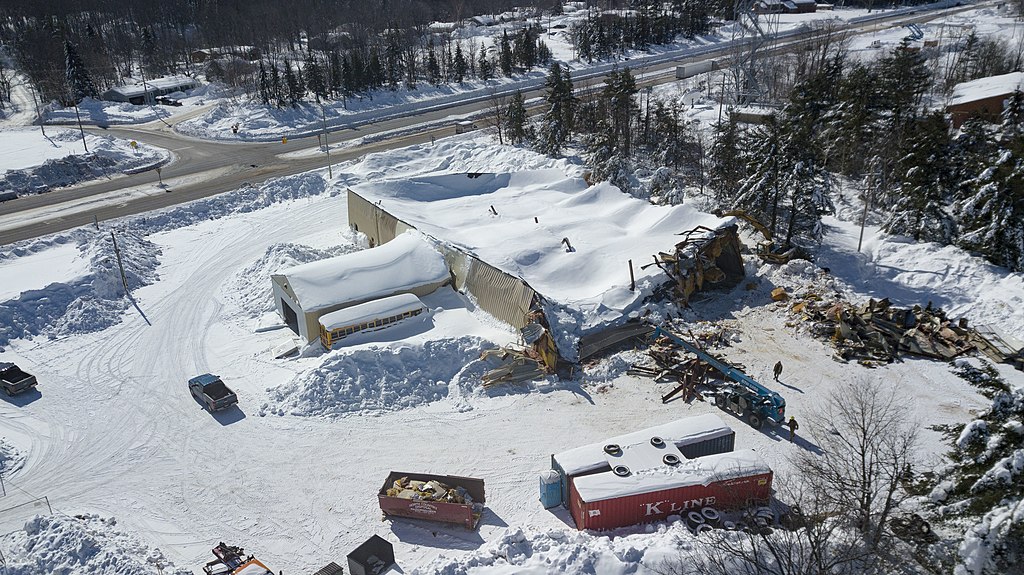
    In the spring of 2018, a building that Plaintiff, Tundra Mountain Holdings, LLC owned allegedly “suffered damages consisting of building roof failure due to snow load.” Plaintiff subsequently submitted a insurance claim to the Defendant, Markel Insurance Company. As per the report of Planning, Design & Compliance Engineers, it was recommended that snow guards be installed as a “life-safety concern” and that all 28 rafters be replaced with new beams but the recommendation of Planning, Design & Compliance Engineers did not state that replacing all 28 rafters was required by any law or ordinance nor was there any mention of replacing the metal roof on the building or anything about the water system or sprinkler system. 

    Rklawton, CC BY-SA 4.0 https://creativecommons.org/licenses/by-sa/4.0, via Wikimedia Commons

    Seim Construction’s proposal for estimate of repair based on the report submitted by Planning, Design & Compliance Engineers was for $687,500. Defendant only paid “$117,406.78” on Plaintiff’s claim because Defendant contended that the $687,500 repair estimate included upgrades that were not required by “ordinance or law.” Defendant subsequently sent Plaintiff a Reservation of Rights Letter stating that Plaintiff’s insurance policy excluded coverage for defective designs which in this case was the roof, the loss or failure of which was due to poor construction and not due to the alleged weight of ice and snow. 

    Plaintiff subsequently commenced this action on April 02, 2020 asserting a breach of contract claim, a tortious bad faith claims handling claim, and a breach of the covenant of good faith and fair dealing claim.  

    Insurance Claims and Accounting Expert Witness

    Plaintiff offered the testimony of Elliott S. Flood J.D., M.P.A to opine on insurance industry customs, practices, and standards. Elliott S. Flood  has over 30 years of experience in the insurance industry and has “worked as an investigator and defense attorney for major insurers, as well as insureds” and “as an executive for an insurance company” serving as “vice president of special investigations” and then as “senior vice president of internal audit.” 

    Defendant filed a motion to exclude some of his opinions. 

    Discussion by the Court 

    Flood opined that the amount of the bid from Seim Construction to repair to minimum code requirements was $687,500 and that Defendant’s payment of $117,406.78 did not meet the minimum code requirements to repair the losses. Flood also opined that Defendant lacked reasonable basis to exclude paying for the cost of repairs necessary to rebuild as per the minimum current building codes requirements as reflected in the Seim proposal.

    The Defendant called into question Flood’s expertise to render opinions related to Seim Construction’s bid, repair costs, building codes, and insurance contract interpretation because he is not a certified engineer or architect and he has no expertise in construction, renovation, or restoration of a commercial building. Flood also had no expertise in the application of the building codes or ordinances that applied at the relevant time. By Flood’s own admission, he lacked expertise in building codes and specifically only dealt with the general concepts of insurance and what they meant. 

    At his deposition, Flood testified that this case was a straightforward adjuster issue of building back to the code standards which involved meeting minimum requirements for repairing the loss that might imposed by the code. Defendant argued Flood’s lack of expertise in building codes made him unqualified to opine on whether Seim’s proposal adhered to legal requirements. His opinions on such issues therefore lacked a reliable basis. 

    Flood opined on the defective design exclusion. He contended that even if there was a flawed design, coverage wouldn’t be negated if a covered peril caused the loss, like collapse due to snow weight. Flood argued that Potter’s theories of the defective design exclusion were unsupported and criticized the Defendant’s decision to send a Reservation of Rights stating the loss or partial failure to the roof was due to poor construction and was not due to the weight of ice and snow letter based on it. Defendant asserted that Flood’s opinions amounted to legal conclusions and thus should be excluded. 

    Flood’s evaluation of the Defendant’s net worth was challenged by the Defendant on grounds of relevance but the Court held that the law found it relevant to a jury’s consideration of the amount of punitive damages citing Flood’s background as the former head auditor and Certified Public Accountant with special expertise in insurance accounting. 

    The Court granted the motion to exclude regarding the rest of Flood’s opinion, admitting Flood’s testimony only in part. 

    The Court also held that Flood opining on:

    • the amount of the bid from Seim Construction to repair to minimum code requirements or
    • the Defendant’s payment being short of the Seim Construction price, the lowest bid, to re-build back up to code or
    • the Defendant lacking reasonable basis to exclude paying for the cost of repairs necessary or
    • the defective design not defeating coverage or Potter’s theories being baseless or the Defendant’s lacking reasonable basis to send the Reservation of Rights letter

    encroached upon the province of the Court and the jury.  

    Held 

    The Court admitted Flood’s testimony in part.

    Key Takeaways: 

    1. Legal Conclusions: An expert witness is expected to examine and analyse the facts of the issues involved based on their training and expertise and opine on matters beyond the understanding of the lay person. Courts always reserve the authority to draw conclusions on matters involving questions of law and the expert is not permitted to breach the province of the Court or the jury. 
    2. Qualifications: The expert is not permitted to opine beyond the scope of their qualifications. Due to Flood’s lack of expertise in construction, renovation, or restoration of a commercial building or in the application of the building codes or ordinances applicable at the relevant time, the Court rejected Flood’s testimony regarding the Defendant’s payment being inadequate to cover the cost of repairs as per the minimum code requirements.