Plaintiffs Markus Heitkoetter and Rockwell Trading Services, LLC sued Karl Domm for defamation by implication, defamation (libel), deceptive trade practice, intentional interference with prospective business relations, and abuse of process. Both Defendant and Plaintiffs operate channels on www.youtube.com (“Youtube”) where they publish videos about online trading.
Plaintiffs filed a motion to strike the testimony and report of Defendant’s consumer survey expert, Travis Tae Oh, Ph.D.
Marketing Expert Witness
Travis Tae Oh holds a Ph.D. and M.Phil in marketing from Columbia University. He is currently a tenure-track faculty in marketing at Yeshiva University.
His work has been featured in multiple media outlets, such as Vox, The Washington Post, Next Avenue, Stylus. He also regularly writes for Psychology Today. Travis is also a certified wine expert, holding a WSET Diploma. His research primarily examines the underlying psychological processes and meanings of consumer experiences, with a focus on conceptualizing and investigating fun in people’s lives.
Plaintiffs filed a motion to exclude the testimony and consumer survey of Oh, pursuant to Federal Rules of Evidence 702 and 403 on the basis that the consumer survey was “so methodologically flawed” as to render the report and Oh’s testimony unreliable and irrelevant in answering the question of how consumers understood the two allegedly misleading statements made by Plaintiffs.
Though the Plaintiffs complained that Oh wrote the survey without viewing the Youtube video or the web page in which the two allegedly misleading statements appear, they provided no evidence to support a finding that this would automatically render the survey invalid “according to accepted principles.”
As for the Plaintiffs’ claim that the universe of participants was overbroad, the Court has held that arguments that the universe of survey participants is over-or under-inclusive is a challenge to a survey’s “methodology and design” and “is precisely the kind of claimed deficiency that goes to the weight of the evidence, not its admissibility.”
Held
The Court denied the Plaintiffs’ motion to strike the testimony of Defendant’s expert, Travis Tae Oh, Ph.D.
Key Takeaway:
Survey evidence should be admitted as long as it is conducted according to accepted principles and is relevant. Technical inadequacies in a survey, including the format of the questions or the manner in which it was taken, bear on the weight of the evidence, not its admissibility. Follow-on issues of methodology, survey design, reliability, the experience and reputation of the expert, critique of conclusions, and the like go to the weight of the survey rather than its admissibility.
Case Details:
Case Caption:
Heitkoetter Et Al V. Domm
Docket Number:
1:22cv368
Court Name:
United States District Court for the Eastern District of California
The Federal Trade Commission contended that Amazon tricked, coerced, and manipulated consumers into subscribing to Amazon Prime. According to the FTC, this was accomplished by failing to disclose the material terms of the subscription clearly and conspicuously and by failing to obtain the consumers’ informed consent before enrolling them. The FTC also alleged that Amazon did not provide simple mechanisms for subscribers to cancel their Prime memberships. The FTC sued Amazon.com, Inc. and three of the company’s executives, Neil Lindsay, Russell Grandinetti, and Jamil Ghani.
Defendants’ expert Donna L. Hoffman, Ph.D. offered five opinions. First, she said that analysis of online consumer experience must account for consumers’ goals, past experiences, and expectations. Second, she said that the definition of “dark patterns” is vague and lacks scholarly consensus. She also said that the subjective interpretation of this term may misidentify common legitimate marketing practices as “dark patterns.” Third, she said that the FTC’s claims regarding the user interface (“UI”) design elements in Amazon Prime Enrollment and Cancellation Flows are “unfounded.” Fourth, she said that the UI design elements at issue are common online and likely familiar to consumers. Fifth, she said that Amazon’s clarity improvement initiatives had methodological limitations that limited Amazon’s ability to interpret the results.
The FTC made two primary arguments to exclude Hoffman’s testimony. First, it said that her analysis of the Prime Enrollment and Cancellation Flows is irrelevant and unreliable. Second, it said that her comparative analyses of UI elements is similarly irrelevant and unreliable.
Marketing Expert Witness
Donna L. Hoffman, Ph.D., is a marketing professor at The George Washington University School of Business. She has a Ph.D. from the University of North Carolina at Chapel Hill and her training is in psychometrics, a field of behavior science that focuses on experimental design and human cognition and behavior.
Her work has been published in all of the field’s top journals and enjoys wide impact with nearly 30,000 Google scholar citations.
Hoffman has been awarded many of the field’s most prestigious awards, including being named a Fellow of the Society for Consumer Psychology, the Robert B. Clarke Educator of the Year Award from the DMEF, the Sheth Foundation/Journal of Marketing Award for long-term contributions to the discipline of marketing, the Stellner Distinguished Scholar Award from the University of Illinois, the William O’Dell/Journal of Marketing Research Award for long-term research impact, and others.
1.Analysis of Prime Enrollment and Cancellation Flows
The FTC argued that Hoffman’s analysis of the Prime Enrollment and Cancellation Flows is irrelevant. It said that this analysis is irrelevant because it will not help the factfinder determine whether Amazon disclosed Prime’s terms clearly and conspicuously, obtained informed consent from Prime subscribers, or provided simple mechanisms to cancel Prime.
Defendants have shown by a preponderance of the evidence that the analysis is relevant. The FTC contended that Prime’s enrollment and cancellation flows include manipulative designs. And Hoffman’s analysis directly responded to this allegation by saying, among other things, “the FTC’s failure to consider consumers’ familiarity with design elements or standard marketing practices severely undermines their conclusions about whether the alleged UI design elements at issue in Amazon Prime’s enrollment and cancellation flows would ‘trick,’ ‘manipulate,’ or ‘mislead’ consumers and influence their behaviors or ‘complicate’ these processes.”
2.Comparative Analyses of UI Elements
The FTC also said that Hoffman’s comparative analyses are irrelevant because they are not focused on Prime. According to the FTC, regardless of the practices employed by other subscription services, the factfinder must evaluate Amazon’s conduct independently. But Defendants said that this testimony is relevant to the “reasonable consumer” standard.
Defendants also satisfied their burden of showing that this testimony is relevant. At a minimum, much like her analysis of the Prime enrollment and cancellation flows, Hoffman’s comparative analyses responded to the FTC’s allegation that Amazon employs manipulative designs. She presented two comparative analyses that suggest “these UI design elements at-issue (or those similar to them) are commonly used online, and many consumers are likely to be familiar with them independent of their interactions with Amazon website.”
B. Reliability of Hoffman’s Testimony
1. Analysis of Prime Enrollment and Cancellation Flows
The FTC argued that Hoffman’s analysis of the Prime enrollment and cancellations flows is unreliable. It said that she does not refer to any methodology in her report and that she suggested nine methodologies during her deposition. The FTC added that even if the Court accepted that Hoffman used a methodology, the methodology is insufficiently reliable because she never defines “legitimate marketing practice.”
Although the FTC argued that she described nine methodologies, that does not appear to be the case. Instead, she applied the “concepts and constructs from [her] discipline to evaluate the flows.” As one example of this, she evaluated allegations the FTC made about the complexity of Amazon Prime’s cancellation process.
She explained how, in her opinion, the FTC overlooked “legitimate and standard marketing practice” when making these allegations. Her report also applied pertinent academic marketing and consumer behavior literature. She used a marketing management textbook to explain the complexity of a consumer’s decision-making process.
The Court found that Hoffman relied on her education and experience to reach these conclusions. The FTC also challenged Hoffman’s failure to define “legitimate marketing practices,” but her report does provide examples that she believes fall within the ambit of this term.
2.Comparative Analyses of UI Elements
First, the FTC said it was concerned that Hoffman had developed her comparative analysis specifically for purposes of this litigation. Hoffman’s report indicated that she offered conclusions “growing naturally and directly” from her education and experience in marketing research techniques. So, on balance, the Court decided that Hoffman’s comparative analysis need not be excluded simply because she developed it for the purposes of this litigation.
Second, the FTC said that Hoffman’s methodology lacked acceptable standards. For instance, the FTC complained that Hoffman did not explain how she chose to “map” each of the UI design elements that she supplied to the independent coders. But she identified the specific paragraph of the complaint that she used to generate her description of the at-issue UI element. Hoffman adequately articulates her methodological choices and provided a foundation for the data she incorporated into her report.
Third, the FTC said that there is an analytical gap between Hoffman’s data and her conclusions. On this point, the FTC appeared to misapprehend Hoffman’s report because it does not attempt to define a specific threshold at which the prevalence of a UI design element makes it “familiar” to consumers or how familiarity with one website gives consumers familiarity with an Amazon website. To the contrary, as Hoffman explained in her deposition, her goal was to establish that certain UI elements are common across commercial and government websites, and a consumer’s familiarity with these features “could likely implicate — likely impact their, you know, understanding and their interaction behavior, and things like that.”
Finally, the FTC said that Hoffman’s methodology rests on a “shaky foundation.” Yet “shaky but admissible evidence is to be attacked by cross examination, contrary evidence, and attention to the burden of proof, not exclusion.”
Held
The Court denied the Plaintiff FTC’s motion to exclude the testimony of Defendants’ expert Donna L. Hoffman.
Key Takeaway:
When an expert in an uncertain field is extrapolating from existing data and generating novel hypotheses about complex issues, she is permitted wide latitude to offer opinions.
The Court did not deem her methods unreliable because she did not explain precisely how she got from the allegations in the complaint to the analyzed UI design element. Hoffman adequately articulates her methodological choices and provided a foundation for the data she incorporated into her report. The FTC’s other arguments criticizing Hoffman’s methodology similarly failed to persuade the Court that her report is the product of unreliable methods.
Please refer to the blogs previously published about this case:
The Federal Trade Commission contended that Amazon tricked, coerced, and manipulated consumers into subscribing to Amazon Prime. According to the FTC, this was accomplished by failing to disclose the material terms of the subscription clearly and conspicuously and by failing to obtain the consumers’ informed consent before enrolling them. The FTC also alleged that Amazon did not provide simple mechanisms for subscribers to cancel their Prime memberships. The FTC sued Amazon.com, Inc. and three of the company’s executives, Neil Lindsay, Russell Grandinetti, and Jamil Ghani.
Amazon requested that their marketing expert, Ronald T. Wilcox, conduct two surveys: (1) “A survey to assess the extent to which Prime members can locate and complete the desktop version of the Cancellation Flow on Amazon.com as described in the Amended Complaint” (Cancellation Survey); and (2) “A survey to assess the experiences of US consumers with free trials of memberships or subscriptions that automatically turn into paid memberships or subscriptions unless cancelled” (Free Trial Survey).
Wilcox reported that the Cancellation Survey, designed to assess which Prime members can locate and complete the desktop version of the Cancellation Flow on Amazon.com, shows 99.8% of respondents (529 of 530) located the Cancellation Flow and 96.4% of respondents (511 of 530) paused or ended their Prime membership.
The Free Trial Survey, designed to assess the extent of U.S. consumers’ experience with free trial memberships or subscriptions, particularly those that automatically turn into paid memberships or subscriptions, found 92.5% of respondents currently pay for at least one of the memberships or subscriptions on the list provided to respondents.
The FTC, however, filed a motion to exclude these survey results.
Marketing Expert Witness
Ronald T. Wilcox, Ph.D., is a Professor of Business Administration at the University of Virginia’s Darden Graduate School of Business Administration. He conducts research and teaches classes on marketing. His areas of expertise within marketing are branding, consumer behavior, surveys, statistical modeling of consumer choice, and the public policy implications of marketing.
FTC asserted that the results of the first survey should be excluded for two reasons: (1) Wilcox recruited and sampled only the most technology-savvy, attentive survey takers; and (2) he failed to ensure the respondents were representative of U.S. Amazon Prime members seeking to cancel their memberships. The FTC likewise filed a motion to exclude the results of the second survey because it said nothing about respondents’ understanding of Prime memberships.
Wilcox’s Surveys
Cancellation Survey
The FTC said that testimony about the Cancellation Survey must be excluded because nothing indicated the respondents were representative of U.S. Prime members. In particular, it argued that Wilcox selected only the most tech-savvy, attentive respondents to take this survey, and that he ignored this bias. And the survey must also be excluded, according to the FTC, because Wilcox did not verify that the respondents appropriately represented key demographics.
The Court agreed that testimony about the Cancellation Survey is admissible because Wilcox used techniques with general acceptance in the market research community.
The Cancellation Survey was also intended to test whether respondents were able locate the Cancellation Flow and pause or end a Prime membership. This was pertinent to the allegation that Amazon did not provide simple mechanisms for subscribers to cancel their Prime memberships.
The FTC’s contrary arguments do not dictate a different conclusion. First, it said that the sample group was skewed towards tech-savvy participants. But this is a critique of the survey’s design and methodology, which goes to weight—not admissibility. Similarly, the FTC’ second argument against Wilcox’s use of attention checks goes to weight because technical unreliability—for example, issues with the format of the questions or how the survey was conducted—goes to the weight afforded a survey, not admissibility.
The FTC’s third point, that it is problematic to have a greater percentage of people who have used the Cancellation Flow among the survey respondents than exists in the general population of Prime members, also goes to weight. As does its fourth argument, that Wilcox did not consider relevant socio-demographic information. These third and fourth arguments both go to weight because “[t]he selection of an inappropriate universe generally affects the weight of the resulting survey data, not its admissibility.”
Free Trial Survey
The FTC next claimed the Free Trial survey had to be excluded because it was irrelevant. It objected to this survey on the grounds that it said nothing about Prime membership, and whatever respondents thought about a free trial of a gym membership, streaming service subscription, or other subscription service other than Prime had no bearing on this litigation. In addition, the FTC argued that the survey had to be excluded because Wilcox did not provide any evidence to connect the results of the Free Trial Survey to consumers’ understanding of Prime’s enrollment process.
Defendants responded that Wilcox’s testimony about this survey is relevant for three reasons. First, the survey concerned the FTC’s allegation that consumers are unaware of Prime’s auto-renewal features. Second, the FTC has repeatedly argued that the context of disclosures matters, and this survey provides context about consumers’ understanding of subscriptions, free trials, and auto-renew features. Third, Defendants’ online consumer behavior expert connected the Free Trials survey to her opinions that many consumers are familiar with free trials and that consumers’ familiarity with free trials suggests they are familiar with free trial enrollment and cancellation.
The Free Trial Survey is related to the FTC’s argument that Amazon’s strategies “made it unlikely many ordinary consumers would even look for Prime’s material terms, much less notice that Amazon was enrolling them in a Prime free trial or that the Prime free trial automatically renewed as a paying subscription.” This is because Wilcox’s survey purports to show that consumers are generally aware of paid subscriptions’ auto-renewal features.
The Court decided that the Free Trial Survey was relevant and admissible because it may aid the trier of fact in determining a fact in issue.
Held
The Court denied the Plaintiff FTC’s Rule 702 motion to exclude the testimony of Amazon’s expert, Ronald Wilcox.
Key Takeaway:
While the FTC identified a number of purported defects with the Cancellation Survey, precluding Wilcox from testifying about this survey is unwarranted. This evidence “is to be attacked by cross examination, contrary evidence, and attention to the burden of proof, not exclusion.”
Case Details:
Case Caption:
Federal Trade Commission V. Amazon.Com, Inc., Et Al.
Plaintiff FireBlok IP Holdings LLC (“FireBlok”) sued Defendants Hilti, Inc. (“Hilti”) and RectorSeal LLC (“RectorSeal”) (together, “Defendants”) and asserted two separate causes of action under the Lanham Act, False Advertising and False Association, based upon Defendants’ use of the UL Certification mark and FM Approval mark on Hilti’s Firestop Box Insert.
The Firestop Insert is a fire suppression product that is an intumescent box insert designed to help protect electrical outlet boxes in case of a fire. FireBlok’s alleged competing produce is the FireBlok fire suppression gasket.
FireBlok retained Dr. Alexander V. Krasnikov to testify to damages allegedly sustained by the Defendants’ false advertising and false association.
Hilti, Inc. and RectorSeal, LLC filed a motion to exclude the testimony of Krasnikov.
Marketing Expert Witness
Dr. Alexander V. Krasnikov is a professor at the Quinlan School of Business at Loyola University Chicago, specializing in marketing strategy, analytics, and intellectual property. Since receiving his Ph.D. in marketing in 2007, Krasnikov has continuously researched, published articles, and given lectures on consumer goods marketing and IP strategy. Krasnikov has nearly twenty years of experience as a business school professor, teaching undergraduate, graduate, and Ph.D. students about “data analytics, marketing metrics, customer analytics, marketing research, and strategy.”
Based on his education, experience, and review of the documents produced in litigation, Krasnikov reached three opinions:
(1) Hilti and RectorSeal’s Profits: From 2008 to 2019, the Defendants’ sales for Firestop Box Inserts reached over $316 million. According to industry- standard profit margins, the Defendants likely net about 31% of this figure ($98 million dollars).
(2) FireBlok’s Market Share: Without the Defendants’ presence in the market, FireBlok would’ve held 3.82% of the market share for intumescent inserts for electrical outlets and switchboxes. Alternatively, those sales may have evenly split between three major competitors, making FireBlok’s relative market share about 33.3%.
(3) FireBlok’s Lost Profits: From 2012 to 2019, but now adjusted for inflation, FireBlok lost between $4.2 million and $37 million in profits to the Defendants.
Qualification
While it is true that Krasnikov isn’t specifically versed in the fire suppression industry and that he’s never personally prepared a profit/loss statement, the Defendants, however, never explain why those facts matter. Krasnikov commonly analyzes profit/loss statements prepared by third parties and, to the extent necessary, filled gaps in his industry-specific knowledge by relying on FireBlok’s fire suppression expert. If anything, estimating lost profits for fire suppression products is easier than most other industries. An average consumer upset by the (now shocking) price of eggs may choose a cheaper grocery store, use an alternative product, or go without; whereas, professionals in the fire suppression industry must purchase a switchbox and insert to comply with building codes. Therefore, the Court found Krasnikov generally qualified to opine on damages.
Reliability
First, in estimating the Defendants’ profits, Krasnikov multiplied their self-reported unit sales by the price per unit (calculating total revenue), then subtracted industry-standard costs as reported in financial and economic databases.
Second, Krasnikov compared FireBlok’s self-reported 2017–2019 sales to its competitors’ publicly reported annual revenue data for the same timeframe. Finding that two competitors make about thirty-five times FireBlok’s annual revenue for one product category, Krasnikov estimated that FireBlok’s relative market share for intumescent inserts for electrical outlet and switch boxes is roughly 4%.
Finally, Krasnikov calculated FireBlok’s lost profits by multiplying the Defendants’ unit sales of uncertified products by FireBlok’s market share. So, the Defendants wrongly asserted that Krasnikov relied on insufficient data, “blindly relied” on client information, and failed to support his methodology.
For one, the Defendants challenged the relevance of their own profitability before FireBlok entered the market in 2016. But without some reason to believe this calculation makes Krasnikov’s conclusions unreliable, the argument does not concern Krasnikov’s methodology. Likewise, to group the remaining arguments by their primary themes, the Defendants maintained that Krasnikov made implausible assumptions and failed to consider key variables.
It’s true that Krasnikov didn’t consider every variable conceivably affecting market share—such as FireBlok’s manufacturing capacity, profit-sharing agreements, and any promotional discounts in the relevant timeframe. But every analysis makes some assumptions. In this case, the assumptions are supported by reason.
Krasnikov’s lost profit analysis turns on FireBlok’s past performance in the market. After analyzing manufacturer market power, product offerings and prices over time—and further discussing the market with FireBlok—Krasnikov applied that data to a series of calculations plausibly based on market realities.
Held
The Court denied the Defendants’ Daubert motion to exclude the testimony of Plaintiff’s expert Dr. Alexander V. Krasnikov
Key Takeaway:
The Defendants objected to Krasnikov’s use of the market approach methodology. The Defendants contended that Krasnikov was required to use either the yardstick or the before-and-after methodology. But the yardstick and the before-and-after methodologies are not the exclusive ways that experts can determine damages. And courts have found the market approach an acceptable methodology.
Think Green Limited (“Think Green”) has taken Medela AG and Medela LLC (“Medela”) to Court, accusing them of infringing on the trade dress rights it holds in its breast pump and misleading consumers through false advertising.
Rhonda J. Harper, a Think Green expert witness in areas involving marketing, branding, and consumer research, used various analytical methods to conclude that (1) among the relevant universe of consumers, there is a likelihood of confusion that Medela’s pump is sponsored or approved by Think Green due to the allegedly infringing trade dress; and (2) the relevant universe of consumers would likely ascribe secondary meaning to Think Green’s trade dress. Medela filed a motion to exclude Harper’s expert opinions and underlying survey results pursuant to Rule 702 and the Daubert Standard. Medela also sought to strike Harper’s rebuttal declaration.
Cynthia Cohen, who Medela proffered as an expert in areas related to psychology and consumer research, reached the following conclusion based on her analytical work: “offering the Medela breast milk collector on the Amazon platform does NOT cause consumer confusion.” Think Green filed a motion to strike this conclusion and the entirety of Cohen’s expert report.
Think Green also filed a motion to strike portions of the expert report prepared by Medela expert Carsten Faltum.
MarketingExpert Witness
Rhonda Jane Harper has over 30 years of experience at the highest levels of marketing, research, and branding. She has been the top marketing executive for several Fortune 100 corporations, served as an adjunct marketing professor at two universities, held national and international board positions in leading brand and marketing associations, led a leading global agency division, and founded an organic growth strategic consultancy. Harper has also provided and rebutted hundreds of trademark and trade dress infringement surveys for litigation purposes.
Cynthia R. Cohen, Ph.D. is an expert in survey methods. She designed consumer studies for Lanham Act cases and change of venue surveys for trials. Cohen’s education includes psychology degrees at UCLA and USC. Her firm, Verdict Success LLC, specializes in in jury research, trial strategies, and settlement decision-making.
Carsten Faltum has extensive experience in the life sciences industry, particularly in R&D coupled with several years as an investment manager in venture capital and corporate venture.
With regard to Harper’s surveys, Medela argued that the data was not analyzed in accordance with accepted statistical principles, nor was the objectivity of the entire process assured.
Courts generally find consumer survey evidence admissible if a qualified expert testifies that the survey was conducted according to generally accepted principles of survey research. Moreover, survey evidence need not be perfect to be admissible.
The Court held that Harper’s surveys did not constitute one of those “rare” situations where fundamental flaws rendered them “completely unhelpful to the trier of fact and therefore inadmissible.”
Admissibility of Harper’s Survey Evidence
Control Stimuli in Secondary Meaning and Point-of-Sale Confusion Surveys
Medela took issue with the control stimuli Harper used in her secondary meaning and point-of-sale confusion surveys. Medela also objected to the pump images that members of both control groups were shown—in other words, the control stimuli.
The survey ultimately asked respondents whether or not “the manufacturer or brand of the breast milk pump/collector [they] just reviewed … is sponsored or approved by another manufacturer or brand.” If a respondent answered yes to the “sponsored or approved” inquiry, the respondent was then asked what other manufacturer or brand had sponsored or approved the pump or collector the respondent had just viewed and why the respondent thought so.
Medela argued that the control stimuli are “so wildly different” than the test stimuli that Harper’s surveys are unreliable.
But as Think Green pointed out, it is not imperative that secondary meaning surveys include a control group at all to be considered reliable. As at least one district court has observed, secondary meaning surveys measure the extent to which consumers associate a particular trade dress with a particular source, and a control group would not necessarily aid in that analysis. Nor is it clear that including a weak control stimulus (even assuming that is a fair characterization of the control stimuli used here) renders a survey “so flawed as to be completely unhelpful to the trier of fact” and therefore inadmissible.
According to the Court, Medela’s bones of contention provides no basis to strike Harper’s testimony altogether.
Point-of-Sale Confusion Survey and Marketplace Reflection
Medela separately complained that Harper’s point-of-sale confusion survey did not reflect how consumers encountered the depicted pumps in the real-world marketplace.
It argued that the pictures Harper used did not “present[] the full scope of information available to a prospective online purchaser” and were “devoid of a host of further identifying information that consumers would typically encounter by viewing the actual product listing page for these products.”
A survey need “not replicate the exact purchasing experience of every consumer confronting the pertinent product in the marketplace”; it requires only “reasonable choices based on the expert’s experience and training and on accepted survey techniques.”
In this Court’s estimation, Medela’s criticisms did not bear on the survey’s admissibility, but on the “evidentiary weight of the survey results”—a question for the jury.
Control Stimulus in Post-Sale Confusion Survey
Through a different survey, Harper sought to “determine whether Medela’s breast milk pump/collector is likely to cause post-sale confusion.” Post-sale confusion occurs when a potential customer sees a product bearing the Plaintiff’s trade dress and mistakenly attributes the product to the Plaintiff, thereby influencing his or her buying decision, either positively or negatively.
To assess the likelihood of post-sale confusion, Harper’s online survey first screened for respondents who purchased a pump in the last year or who would consider purchasing one in the next year. The test group was presented with four images of Medela’s pump, collected from Medela’s online retail product pages, less Medela’s name, design elements, and measurements.
Medela objected to the images Harper presented to the test group of its pump as well as the control stimuli images.
The Court held that a survey need not be excluded simply because it failed to use the best available control stimuli.
Test Stimuli in Post-Sale Confusion Survey
Medela next criticized the post-sale confusion survey’s test stimuli as failing to “reflect real-world conditions in which consumers are likely to encounter the products.”
What images Harper should have presented to better depict the “obvious intimate and exposed” nature of using a breast pump, Medela did not say. In any event, whatever Medela’s argument, the Court held that it affected the weight of the evidence—not its admissibility.
Test Stimulus in Secondary Meaning Survey
Medela argued that the test stimulus Harper used in her secondary meaning survey was “fundamentally flawed” because it failed to isolate the trade dress.
To support its assertion that “a secondary meaning test stimulus must isolate the trade dress at issue,” Medela cited Handelman’s Guide to TTAB Practice, Second Edition, § 18.15. However, the quoted portion of Handelman’s Guide specifically directs that “[i]f the image used in the stimulus differs from the mark shown in the application or registration drawing”—as Medela alleges here—”the difference will weigh against the probative value, if any, to be accorded to the survey.” In other words, the Court held that Medela’s own source instructed that the weight to be assigned to the secondary meaning survey is a question for the jury—not one of admissibility.
Use of Functional Stimuli To Assess Non-Functional Trade Dress
Medela next argued that Harper’s surveys did not test the asserted trade dress, because the “shield-bulb-base” arrangement featured in the stimuli is functional.
Because this argument mirrors a central theory of Medela’s summary judgment motion: that Think Green’s asserted trade dress is functional and therefore cannot be protected, the Court will address this argument when it resolves Medela’s motion for summary judgment.
Net Secondary Meaning Calculation
Medela argued that Harper’s secondary meaning calculation is “fundamentally flawed” because, in calculating net secondary meaning, she failed to subtract a particular number from the results.
Harper, however, has laid out her reasons for employing the methodology that she did and, in so doing, amply conveyed that her calculations were a considered choice, not the result of a fatal error or oversight.
At the end of the day, the two experts analyzed the same data, but came to different conclusions about its meaning. That leaves the Court with a “battle of the experts” situation that is inappropriate for dispensation in a Daubert motion and must be left for the factfinder to resolve.
Data Supporting Secondary Meaning Opinion
Medela argued that Harper’s report “fails to substantiate the connection between these data points with its conclusions that these were purportedly successful in connecting Think Green as the source of the trade dress in the minds of relevant consumers.” By “these data points,” Medela appeared to be referencing the entire universe of “sales data, advertising expenditures, awards, social media followers etc. ” in Harper’s report. But Medela did not actually cite to “these data points” or describe them with any degree of specificity. The Court will not guess at them, nor will it develop Medela’s argument for it.
Admissibility of Harper’s Rebuttal Declaration
Think Green attached a rebuttal declaration from Harper to its response to Medela’s motion for summary judgment in which Harper responded to Medela’s criticism of her net secondary meaning calculation. Medela filed a motion under Rule 37 to strike this declaration.
In her short rebuttal declaration, Harper responded to what she described as “mischaracterization” and criticism Medela offered in its summary judgment briefing. More specifically: Harper explained that there are multiple ways of calculating net secondary meaning and why she chose her particular method of calculation. At the conclusion of her rebuttal, Harper performed an alternate method of calculation that “[s]ome sources indicate [is] also appropriate,” which she claims—consistent with her previously expressed opinion—”shows that the trade dress is strong.”
The Court denied Medela’s motion to strike Harper’s rebuttal declaration because it remained “firmly grounded” in the opinions she expressed in her original expert report. Basically, Harper’s rebuttal declaration is the type of responsive report that is permitted under Rules 26 and 37.
Cynthia Cohen
Qualifications
Medela contended that Cohen’s experience conducting consumer surveys related to trademark disputes is relevant to trade dress disputes, as the methodology between the two topics is largely interchangeable. Medela also cited her publications, speeches, and court appearances as an expert witness concerning consumer surveys.
According to Think Green, Cohen’s limited prior experience as an expert or witness rendered her unqualified.
Despite criticizing Cohen for not having “essential” experience, education, or training in marketing, Think Green did not draw any link between “a professional marketing background” and trade dress likelihood of confusion surveys. The Court is not persuaded that an expert who lacks a marketing degree or marketing experience should be automatically precluded from opining on matters of trade dress.
Methodology
Think Green argued that Cohen’s likelihood of confusion survey relied on improper methodology. In Cohen’s survey, respondents were shown the stimulus image of Medela’s pump “as it had been displayed on the Amazon platform.”
With the stimulus picture still available on the screen, respondents were asked open-ended questions meant to assess whether confusion was likely. For example, respondents were asked “if you have an opinion, what company or organization makes or puts out this breast milk collector” and if the respondent had an opinion, whether the respondent “believed that this breast milk collector is affiliated with or sponsored by any other company.”
Think Green objected to Cohen’s methodology of showing respondents the stimulus picture while the respondents answered the survey questions. According to Think Green, this is “a major flaw” that “departs from typical marketplace conditions.”
As the Court already explained when denying Medela’s motion to exclude Harper’s expert report, no survey is “foolproof,” and perfection is not required to clear the Daubert bar. Think Green has presented no argument that any flaws in Cohen’s survey create one of the “rare” situations where a survey is so fundamentally flawed “as to be completely unhelpful to the trier of fact and therefor inadmissible.”
Relevance
Like Harper’s testimony, the Court held that Cohen’s survey evidence concerning likelihood of confusion will assist the jury in evaluating Think Green’s claim of trade dress infringement.
Carsten Faltum
As for Think Green’s motion to strike portions of the expert report prepared by expert Faltum, the Court denied Think Green’s motion to partially strike without prejudice to renewal after Think Green hinted that it may file a more robust motion to strike Faltum’s report before trial.
Held
The Court denied Medela’s motion to exclude Rhonda Harper’s expert opinions and underlying survey results as well as Harper’s rebuttal declaration. Think Green’s motion to strike Cynthia Cohen’s report was also denied by the Court.
Additionally, the Court denied Think Green’s motion to partially strike portions of Carsten Faltum’s report without prejudice to renewal.
Key Takeaways:
A survey need “not replicate the exact purchasing experience of every consumer confronting the pertinent product in the marketplace”; it requires only “reasonable choices based on the expert’s experience and training and on accepted survey techniques.”
Courts generally find consumer survey evidence admissible if a qualified expert testifies that the survey was conducted according to generally accepted principles of survey research. Moreover, survey evidence need not be perfect to be admissible.
The notion that Daubert requires particular credentials for an expert witness is radically unsound. Anyone with relevant expertise enabling them to offer responsible opinion testimony helpful to judge or jury may qualify as an expert witness.
In a case of dueling experts, it is left to the trier of fact—not the reviewing Court—to decide how to weigh the competing expert testimony.
This case centered on a trademark dispute involving the mark IDHAYAM, which means “heart” in Indian languages and was used in connection with sesame oil sales. Defendant Meenakshi Overseas LLC sold sesame oil under the IDHAYAM name and held a federal trademark registration for it. Plaintiff V.V.V. & Sons Edible Oils Limited, who also marketed sesame oil under the IDHAYAM mark, asserted that it had used the mark first and sought to cancel the Defendant’s registration along with related relief.
Plaintiff retained Thomas J. Maronick to perform a survey purporting to measure the likelihood of confusion between the Parties’ respective IDHAYAM sesame oil products.
Maronick issued an expert report describing and interpreting the results of this survey on October 30, 2024. He opined that the “level of likelihood of confusion found here, i.e., 46.7%, supports a conclusion that there is a likelihood of confusion between the two brands of sesame oil among consumers who buy Indian and Asian food.”
Plaintiff has also identified Janarthanan Rajaratnam, a director of Pankaj Exports Private Limited (“Pankaj”), as a non-retained expert who Plaintiff intends to use as a witness at trial. Pankaj is an export company located in India that has been involved in shipping IDHAYAM branded goods manufactured by Plaintiff to various parts of the world, including the United States. Plaintiff has indicated Rajaratnam will testify about various customs and practices of importers in meeting the requirements of U.S. Customs and the U.S. Food and Drug Administration (“FDA”), as well as about the importation practices of the Parties to this action.
The Defendant filed motions to exclude the testimony of Plaintiff’s expert witness, Maronick, as well as that of non-retained expert Rajaratnam.
Marketing Expert Witness
Thomas Joseph Maronick is an Emeritus Professor of Marketing in the School of Business and Economics at Towson University in Towson, Maryland. His educational background includes a BA in Philosophy from St. Thomas Seminary, an MSBA from the University of Denver with a major in Marketing, a Doctorate in Business Administration (“DBA”) from the University of Kentucky with a major in Marketing, and a JD from the University of Baltimore, School of Law. He is an inactive member of the Maryland Bar.
At Towson University, he taught undergraduate and graduate courses in strategic marketing, consumer behavior, and marketing research. He has also taught graduate and executive development courses in strategic marketing and marketing research at several universities in the Baltimore and Washington, D.C., areas.
His professional background includes serving as the Director of Impact Evaluation in the Bureau of Consumer Protection at the Federal Trade Commission (“FTC”) from 1980 to 1997. In that capacity, he was the in-house marketing expert for all divisions of the Bureau, advising attorneys and senior management on marketing aspects of cases being considered or undertaken by Commission attorneys.
Motion to Preclude Expert Testimony of Thomas J. Maronick
The Defendant contended that: (1) Maronick surveyed an overly broad audience, failing to limit participants to Indian consumers or to those who regularly purchased Indian food; (2) he omitted a control group; and (3) he failed to replicate real-world market conditions. According to the Defendant, the survey used low-quality photos that obscured distinguishing language on the packaging and excluded images of third-party products—factors that may have led respondents to perceive the parties’ products as more similar than they were. Due to these alleged flaws, the Defendant asserted that Maronick’s report was “completely useless” and likely to mislead the jury, and therefore should be excluded from trial.
The Court agreed with the Plaintiff’s position, as stated in their Opposition, that all survey respondents had indicated that they purchased Indian food, even if only occasionally. Therefore, the Defendant failed to demonstrate that the survey sample was clearly inappropriate. If the Defendant wished to argue that the survey group should have been more narrowly defined, the Court noted they remained free to do so at trial.
Regarding Maronick’s omission of a control group, the Parties disagreed on whether a control was necessary or useful for this type of survey. The Court concluded that this dispute pertained to the weight of Maronick’s testimony, not its admissibility.
Lastly, the Court found that the photos used in the actual survey (as opposed to the lower-quality copies submitted to the Court) were much clearer. It also held that including third-party product images could have overcomplicated the survey and reduced its effectiveness. As with the other objections, the Court ruled that these concerns affected the weight of the evidence, not its admissibility, and could be addressed during trial.
Motion to Preclude Expert Testimony of Janarthan Rajaratnam
The Defendant argued that Rajaratnam’s testimony should be excluded for three reasons: (1) he did not qualify as a proper non-retained expert, but instead acted as a retained expert because he intended to base his testimony on documents and information produced during the litigation and provided to him for review; (2) the Plaintiff had failed to fully comply with the disclosure requirements of Federal Rule of Civil Procedure 26 for either non-retained or retained experts; and (3) Rajaratnam lacked adequate qualifications to testify regarding U.S. Customs and FDA importation requirements and practices.
In their Opposition, the Plaintiff largely conceded that their expert disclosures were inadequate and that Rajaratnam was not a proper expert witness. Instead, the Plaintiff contended that Rajaratnam should be allowed to testify as a fact witness under Federal Rule of Evidence 701, citing his personal knowledge of U.S. Customs and FDA requirements gained through years of experience importing food products into the United States, as well as his familiarity with the importation of IDHAYAM products by both parties over several years.
The Court agreed that Rajaratnam could not testify as an expert witness due to the Plaintiff’s failure to comply with the Federal Rules’ disclosure requirements. However, the Court declined to bar him from testifying as a lay witness.
The Defendant objected, arguing that Rajaratnam had not been properly disclosed as a fact witness and should therefore be precluded from testifying in that capacity. Nonetheless, the Court noted that while Rajaratnam was originally identified as a non-retained expert, he had been timely disclosed as a witness nearly eight months earlier. Moreover, the Defendant had the opportunity to depose him on January 22 and 24, 2025. Given this, the Court found that any potential prejudice to the Defendant was not significant enough to justify excluding Rajaratnam’s testimony entirely.
Held
The Court denied the Defendant’s motion to preclude the testimony of expert witness Thomas J. Maronick.
The Court denied the Defendant’s motion to preclude the testimony of non-retained expert witness Janarathanan Rajaratnam.
Key Takeaway:
Technical flaws in a survey—such as the format of the questions or how the survey is conducted—affect the weight of the evidence, not its admissibility. In essence, concerns about methodology, survey design, reliability, the expert’s experience and reputation, or critiques of the conclusions go to the weight of the survey, not whether it can be admitted.
Case Details:
Case Caption:
V.V.V. & Sons Edible Oils Limited V. Meenakshi Overseas LLC
Plaintiff Alfwear, Inc. (“Alfwear”) is an outdoor clothing company that sells products under the KÜHL mark. Ibkul is a clothing company specializing in athleisure wear.
In November 2021, Alfwear initiated this lawsuit against Ibkul, alleging trademark infringement, unfair competition, and dilution. Alfwear, Inc. has alleged that the sales of apparel using the IBKÜL trademark infringed Plaintiff’s rights in its KÜHL trademark.
Alfwear disclosed that it intended for Rhonda Harper to serve as an expert “regarding research surveys, consumer confusion, and likelihood of confusion. Such evidence may also be offered in support of damages issues in the case.”
Ibkul disclosed that Krista Holt would “serve as an expert in response to Plaintiff’s Expert Disclosures, including the general subject matter of ‘research surveys, consumer confusion, and likelihood of confusion’ and ‘damages issues,’ including any deductions and apportionment.”
The parties moved to exclude each other’s expert under Rule 702.
MarketingExpert Witness
Rhonda J. Harper has over 30 years of experience at the highest levels of marketing, research, and branding. She has been the top marketing executive for several Fortune 100 corporations, served as an adjunct marketing professor at two universities, held national and international board positions in leading brand and marketing associations, led a leading global agency division, and founded an organic growth strategic consultancy. Harper has also provided and rebutted hundreds of trademark and trade dress infringement surveys for litigation purposes.
Krista Holt is a Managing Director at Econ One Research, Inc. (“Econ One”). Holt is an active member of the American Bar Association, Intellectual Property Owners Association, International Trademark Association, National Association of Certified Valuators and Analysts and Licensing Executives Society. She was the Chair of the LES Valuation and Taxation Committee. Holt is also a Certified Licensing Professional and an Accredited Valuation Analyst, and is an instructor for the Certified Licensing Professional program.
She has lectured on a variety of intellectual property topics for the American Bar Association, Licensing Executives Society, IPI, DRI, Harvard Law, George Washington Law and various other organizations and universities.
Holt was asked by IBKUL to serve as an expert in response to Alfwear’s expert, including the general subject matter of research surveys, consumer confusion, and the likelihood of confusion. Holt was also asked to serve as an expert on damages issues “including any deductions and apportionment.”
Alfwear contended that portions of Holt’s expert report should be excluded on three bases. First, it argued that Ibkul failed to disclose Holt at the deadline for affirmative experts, so the portions of her report that go beyond the scope of the Harper Report should be excluded. Next, it argued that Holt was not qualified to offer opinions on marketing. Finally, Alfwear argued that Holt used the wrong standard to critique Harper’s methodology. The Court considers each argument in turn.
Rule 26
Holt was previously retained by another defendant in a different case to assess the fame of the KÜHL mark (the “Fame Survey”). Holt conducted an online survey of 394 respondents from the general public in 2020, which indicated that consumers do not consider KÜHL to be famous.
Alfwear argued that two portions of the Holt Report should be excluded for failure to comply with the Rules of Civil Procedure. First, it argued that the Fame Study in the Holt Report should be excluded because Holt was designated as a rebuttal expert on topics that did not include the fame of any of Alfwear’s marks.
Second, it argued that Holt’s opinions about damages should be excluded because Holt was not timely disclosed as a damages expert and because the Harper Report does not address damages.
The Court held that the Fame Study is not responsive to the Harper Report and Alfwear does not have the ability to find another expert to conduct a responsive study at this stage in the litigation. Morover, Ibkul’s failure to disclose Holt was prejudicial to Alfwear. The deadline for expert discovery had passed and Alfwear did not have the opportunity to retain a responsive damages expert. In conclusion, the Court held that it would be highly prejudicial to allow this damages testimony into trial without giving Alfwear an opportunity to respond with its own expert.
Qualifications
Alfwear next argued that Holt is not qualified to offer an opinion on whether the parties sell in different product categories.
However, Alfwear did not challenge Holt’s qualifications to offer the other rebuttal opinions presented in her report. Holt’s experience and education qualify her to offer a rebuttal opinion on Harper’s Confusion Survey. Holt has a master’s in business administration and has over ten years of experience in accounting and marketing. Holt has provided survey services in trademark disputes for over fifteen years, including designing and rebutting trademark surveys. She also has also presented on survey design and brand valuation. Accordingly, the Court evaluated Holt’s rebuttal testimony to determine whether it is reliable.
Critique of Confusion Survey
Alfwear argued that Holt’s critique of the Confusion Survey should be excluded because Holt used an incorrect standard to evaluate the data.
Ibkul relied on a supplemental declaration by Holt. The Holt Declaration stated that it sought to “clarify and supplement” the report “in light of Plaintiff’s challenges.”
Because the Rules prohibit preparing a declaration solely to strengthen and deepen Holt’s existing opinions, the Court has not considered the Holt Declaration or Ibkul’s arguments relying on it.
As for Holt’s critique of the standard used to evaluate the survey in the Harper Report, the experts’ competing opinions about which standard should be used present the classic battle of the experts and it is up to a jury to evaluate what weight and credibility each expert opinion deserves.
If Holt’s rebuttal opinion uses an outdated standard, Alfwear may seek to present that information to the jury at trial. However, the Court held that it is not a sufficient basis to exclude Holt’s opinions at this stage.
Rhonda Harper
As part of its litigation strategy, Alfwear hired Rhonda Harper to determine whether consumers would confuse the IBKÜL mark with the KÜHL mark. Harper was asked “to conduct a forward likelihood of confusion survey among the relevant population and provide [her] opinions.” Harper utilized a Squirt-style sequential line-up study to evaluate whether consumers would confuse the KÜHL and IBKÜL marks (the “Confusion Survey”).
The Court first addresses whether the Confusion Survey uses reliable methodology. Then, it turns to whether Harper reliably applied this methodology and addresses Ibkul’s arguments against the Report’s admission.
Methodology
The Court held that Harper used an accepted method for measuring consumer confusion in trademark disputes and applied recognized standards as per the Daubert factors.
Application
Confusion Survey Universe
The Court first considered the Confusion Survey’s universe and whether the sample it considered was representative.
Ibkul first argued that the Harper Report should be excluded because the relevant universe it surveyed is not accurate.
The Harper Report states that “the relevant universe was defined as past and potential purchasers of Defendants’ products.”
Ibkul argued that there should be a far more limited universe, arguing that the survey should be excluded because its respondents are outside Ibkul’s typical shopper, a woman in Florida with an income around $150,000 who is willing to pay around $100 for apparel and shops at golf, tennis, and country clubs.
The Court held that the consumers represented in the Confusion Survey reasonably approximate Ibkul’s potential customers; therefore, the survey universe is not so broad that the Survey should be excluded.
Ibkul contended that the survey universe is too broad because it contains individuals interested in athleisure wear, which it argues is a “very general class of products.” However, Ibkul sells athleisure wear. It does not explain why the survey universe should not consider individuals interested in athleisure wear, which includes its product line. Therefore, the Court held that Ibkul has not shown that the survey is so broad that it does not represent potential Ibkul customers, and the Confusion Survey should not be excluded on this basis.
Confusion Survey Conditions
Ibkul challenged the Survey’s use of hang tags without showing the parties’ clothing, arguing that showing only the hang tags fails to recreate marketplace conditions. Ibkul also argued that survey conditions do not match real world condition because IBKÜL is in a different product category than KÜHL. Moreover, Ibkul contended that the Confusion Survey does not accurately reflect market conditions.
However, the Court held that although Ibkul has pointed out issues with the survey that may diminish its evidentiary value, none of these flaws are so serious and pervasive that the entirety of the Confusion Survey should be excluded.
Confusion Survey Methodological Errors
Finally, Ibkul argued that the Confusion Survey’s methodology was unreliable. It argued that the questions included were leading and suggestive, that different control hang tags should have been used, and that there were errors in the report’s calculations.
However, the Court held that Ibkul has not shown that any survey questions were so leading that the Confusion Survey should be excluded. It did not explain why any questions used in the survey were so leading that they cause serious and pervasive flaws in the Harper Report. Moreover, the survey’s use of a control group provides assurances of its reliability.
Held
The Court granted in part and denied in part Alfwear’s motion to exclude Krista F. Holt’s expert report.
The Court denied Ibkul’s motion to exclude testimony and opinions of Plaintiff’s survey expert Rhonda Harper.
Key Takeaways:
Ibkul has introduced criticisms of the Confusion Survey that may ultimately show that the Survey, and Harper’s opinions based on it, have little evidentiary value. But that is a decision for the jury. Ibkul has not established that the Survey has such serious and pervasive flaws that the Court should exclude it altogether.
Alfwear has demonstrated that the Fame Survey and damages calculations should be excluded. It has also established that Holt cannot offer testimony about whether the parties sell in different product categories.
Case Details:
Case Caption:
Alfwear V. Ibkul Ubhot
Docket Number:
2:21cv698
Court Name:
United States District Court for the District of Utah
Plaintiff Multiple Energy Technologies, LLC (“MET”) accused Under Armour of false advertising in relation to certain products that contain bioceramic powder. MET contended that Under Armour inaccurately claimed that the Federal Food and Drug Administration had determined that those products enhanced recovery.
Under Armour sells activewear and sleepwear products directly to consumers. This includes the sale of products containing a competing bioceramic product known as Celliant, which is manufactured by Hologenix, LLC (“Hologenix”). Under Armour advertises these products separately from their other product offers and as helping to promote recovery, especially for athletes.
Plaintiff MET brought four claims against Defendant Under Armour, Inc.: violation of the Lanham Act, violation of the Sherman Act, misappropriation of trade secrets; breach of non-disclosure agreement; tortious interference with contract; tortious interference with prospective business expectancies; unjust enrichment; unfair competition; conversion; a claim for an accounting; and a claim for injunctive relief.
MET retained Dr. Thomas J. Maronick, a survey expert who designed “a two-part online consumer study to determine consumers’ perceptions of claims Under Armour [made] about Celliant on the landing pages of its website.” Maronick stated that, under well-established survey principles, “each of the two parts of the survey had a Test Group and a Control Group[.]”
Under Armour filed a motion to exclude the expert report of Thomas J. Maronick.
Marketing Expert Witness
Thomas J. Maronick is an Emeritus Professor of Marketing in the School of Business and Economics at Towson University in Towson, Maryland. His educational background includes a BA in Philosophy from St. Thomas Seminary, an MSBA from the University of Denver with a major in Marketing, a Doctorate in Business Administration (“DBA”) from the University of Kentucky with a major in Marketing, and a JD from the University of Baltimore, School of Law. He is an inactive member of the Maryland Bar.
At Towson University, he taught undergraduate and graduate courses in strategic marketing, consumer behavior, and marketing research. He has also taught graduate and executive development courses in strategic marketing and marketing research at several universities in the Baltimore and Washington, D.C., areas.
His professional background includes serving as the Director of Impact Evaluation in the Bureau of Consumer Protection at the Federal Trade Commission (“FTC”) from 1980 to 1997. In that capacity, he was the in-house marketing expert for all divisions of the Bureau, advising attorneys and senior management on marketing aspects of cases being considered or undertaken by Commission attorneys.
In Survey 1, the test group was shown actual Under Armour landing pages, one of which contained the statement, “Products powered by Celliant have been determined by the FDA to increase localized circulation, leading to faster recovery[.]” The control group was presented with landing pages that contained the statement, “The FDA has not made a determination about whether products powered by Celliant increase localized circulation leading to faster recovery.” The images accompanying these pages were different—the test group saw an image of a woman wearing a jacket, and the control group saw an image of two men wearing jackets.
In Survey 2, the test group was shown an image of a woman wearing shorts with the statement, “Products powered by Celliant have been determined by the FDA to increase localized circulation leading to faster recovery.” Id. at 15. The control group was shown an image of a man wearing a short-sleeved shirt with the language “POWERED BY REDWAVE. Not intended for use as a medical device.” At Maronick’s deposition, he recharacterized his opinion related to Survey 2 by stating that it was not a test/control survey.
Maronick’s Testimony
Maronick concluded based on his two surveys that “Under Armour’s claims about increased circulation and faster recovery are Important or Very Important in consumers’ decision to buy Under Armour products with either Celliant or Redwave fabric.”
Maronick identified three important findings from his surveys:
(1) “a statistically higher percentage of respondents seeing the Under Armour webpage claiming that products ‘Powered by Celliant have been determined by the FDA to increase localized circulation, leading to faster recovery’ believe the Under Armour products will provide the increased circulation and faster recovery benefits claimed than do respondents who saw language that ‘the FDA had not made a determination whether products made with Celliant increase circulation and lead to faster recovery’”
(2) “a statistically higher percentage of respondents seeing Under Armour’s claims made in its webpages for its sleep ware products that the products ‘Powered by Celliant have been determined to increase localized circulation, leading to faster recovery’ believe they will achieve those benefits than do respondents for Under Armour products seeing claims that the Under Armour products that are ‘Powered by Redwave’ and ‘are not intended for use as a medical device’”
(3) “in both Study 1 and Study 2, Under Armour’s claims about increased circulation and faster recovery are Important or Very Important in consumers’ decision to buy Under Armour products with either Celliant or Redwave fabric.”
1.Survey 1
Parties’ Position
As to Survey 1, first, Under Armour argued that Maronick’s survey is flawed because there are material differences in the control image and the test image.
In Maronick’s survey, the images he used for the control and test groups were very different, with one image showing a woman, and the other image showing two men wearing the product. The two images also included different language that had no bearing on the “FDA determined” language and placed the FDA language in different places on the images.
Second, Under Armour argued that the language Maronick used for the control group was a negative statement of the product rather than testing for the absence of the FDA language, which is the proper procedure for test/control surveys.
Third, Under Armour argued Maronick misled survey respondents by using different control language in two different questions that were supposed to use the same control language.
Fourth, Under Armour argued Maronick failed to follow basic rules of survey bias by: (1) failing to rotate multiple choice answers for the survey respondents to guard against order bias; (2) failing to take non-response factors into account; (3) using leading questions and thus failing to guard against demand effects; and (4) failing to describe the target population.
In response, MET argued that the flaws in Maronick’s study go to the weight, and not the admissibility of his opinions.
Analysis
A proper control should be as similar to the experimental stimulus as possible, because if there are multiple differences between them, it may be impossible to determine which of those differences caused any disparity between the respondents’ reactions to them. An improper control undermines the reliability of a survey because the lack of a proper control makes it difficult to assess responses.
The Court held that the control was improper because the test group saw an image of a woman wearing a jacket, and the control group saw an image of two men wearing jackets. In addition to the different images, Maronick also improperly showed the test group language that was not shown to the control group. The test group image included the phrase “ALL DAY ALL NIGHT – ” and ” – RECOVERY[,]” but the control group image did not. The Court held this to be a material difference, as the test group was shown additional recovery-promoting language that could have reinforced or emphasized the FDA’s determination.
The Court added that Maronick’s approach to the language used in the control and test groups was also flawed because rather than excluding the “FDA determined” language, he improperly made it a negative claim—”the FDA has not made a determination . . . .”
Beyond the control issues, at least three of the other flaws Under Armour identified supported exclusion. The Court found that Manorick failed to rotate answers, did not take into account non-response and did not identify the target population.
While these issues with the control and test groups may not warrant exclusion on their own, they weigh in favor of exclusion when viewed in combination with the other flaws in the survey.
2. Survey 2
As to Survey 2, first, Under Armour stated that Maronick admitted that this survey is not a “test/control” survey as he states in his expert report, but was instead two separate consumer perception surveys. Under Armour argued that because of this, any of Maronick’s report and testimony that relate to Survey 2 should be excluded because experts cannot recharacterize or alter their opinions in a deposition. Second, Under Armour argued that even if Survey 2 were two separate consumer perception surveys, Maronick’s opinions on Survey 2 are still inadmissible because: (1) it was not a test/control survey, so Survey 2 “is not a survey capable of measuring any causal impact of any particular language[;]” and (2) the two purported surveys do not “fit” the case.
In response, MET argued that Survey 2 was a consumer perception survey, not a test/control survey, so it should not be excluded because a control group is not necessary when the survey is not seeking to show causality.
It is noteworthy that Maronick claimed in his expert report that Survey 2 was a test/control survey. But at his deposition, he abandoned this opinion. Additionally, even if Survey 2 were still valid without a control, Maronick improperly drew the respondents’ attention to the language in question by drawing a box around the language and asking the respondents “What does the highlighted statement say or suggest about this product?”
Even if the Court were to accept Manorick’s purported explanation that Survey 2 was really two separate surveys, then each of those surveys also lack a control, which is a “fatal flaw[.]”
Held
The Court granted Under Armour’s motion to exclude Dr. Thomas J. Maronick’s expert report.
Key Takeaways:
Survey 1 contained certain flaws that, standing alone, may have been technical and pertained more to the weight of the evidence. However, the distinction between weight and admissibility is sometimes a matter of degree. The Court concludes that the flaws in Survey 1 are of such a degree that they cumulatively render Maronick’s opinion unreliable under Rule 702.
Maronick’s testimony and report on consumer perceptions of Under Armour’s claims do not pass muster under Rule 702.
Case Details:
Case Caption:
Multiple Energy Technologies, Llc V. Under Armour, Inc
Docket Number:
2:20cv664
Court:
United States District Court, Pennsylvania Western
Plaintiff IEP Technologies, LLC brought this action against Defendants KPM Analytics, Incorporated f/k/a Statera Analytics, Incorporated and KPM Analytics North America Corporation f/k/a Process Sensors Corporation (collectively “KPM”) for allegedly violating IEP’s trademark. The complaint asserts violations of the Lanham Act, besides a claim for common law trademark infringement and unfair competition.
Genuine disputes of material fact exist regarding the likelihood of confusion between the parties’ hexagonal marks. Given the noticeable similarity of the marks, and the fact that both IEP and KPM sell and advertise similar products to the same customer base, there is a potential for actual consumer confusion or bad faith by KPM in selecting its mark.
Following discovery, the parties filed competing motions for summary judgment on all of IEP’s claims. KPM filed a motion exclude the report and testimony of IEP’s proffered industry expert, Steve Egenolf.
Marketing Expert Witness
Steven Egenolf joined CSC Publishing as a marketing and advertising manager in 1998. He was the eastern sales manager for CSC Publishing from May of 1998 through August of 2021. Egenolf has two decades of experience working with hundreds of companies in the powder and bulk processing industry and reviewing their marketing activities. He has regularly attended industry trade shows, including the Bulk and Powder Solids trade show attended by KPM and IEP in 2018.
KPM argued that IEP’s proposed marketing expert witness, Steve Egenolf, should be barred from testifying because:
He failed to use reliable principles and methods.
He is not qualified to opine on whether customers are likely to be confused by KPM’s mark.
His report and testimony would not assist the jury.
Reliability of Methods
KPM claimed Egenolf’s methods were unreliable because he did not conduct a consumer survey. Although consumer surveys are a common tool for evaluating the likelihood of confusion, the Court noted they are not mandatory.
The Court noted that Egenolf did not intend to testify about the ultimate factual issue of whether confusion was likely. Instead, his testimony focused on the eight Pignons factors, which guide courts in assessing the likelihood of confusion. These factors include considerations such as the similarity of the marks, products, and classes of prospective purchasers. Courts generally regard expert testimony on these factors as valuable.
The Court further observed that expertise in the relevant industry can compensate for the absence of a consumer survey. Egenolf’s testimony, grounded in his extensive industry experience, sought to address these factors rather than proving actual confusion.
The Court held that while Egenolf did not rely on a survey, his analysis of the Pignons factors, based on his industry expertise, was consistent with legal precedents and provided relevant insights for evaluating the likelihood of confusion.
Qualifications of the Expert
KPM argued that Egenolf lacked qualifications to address the Pignons factors, claiming he was neither a trademark expert nor experienced in the relevant industry.
His report draws on his extensive experiences to analyze the likelihood of confusion factors by opining, for example, that he has never seen another hexagon logo besides IEP’s and KPM’s trademarks. Given the depth of his experience in the powder and bulk processing industry, he need not, as KPM contends, have prior experience in other trademark cases.
Egenolf’s experience qualifies him to opine on several of the Pignons factors—namely, the similarity between the two marks, the similarity of the goods, the relationship between the parties’ channels of trade and advertising, the classes of prospective purchasers, and the strength of IEP’s mark.
But the Court agrees with KPM that Egenolf lacks the personal knowledge or experience to testify as to the sixth and seventh factors—namely, evidence of actual consumer confusion and KPM’s intent in adopting its mark. His report discloses no basis for his opinions on those factors, and the paragraphs in his report that touch on those factors are entirely speculative.
Improper Conjecture
The Court found that Egenolf’s report included speculative claims about how others in the industry might view the likelihood of confusion factors he analyzed. The report repeatedly asserted that “people in the industry would reach the same conclusion” as he did regarding these factors. However, these statements were deemed speculative without a consumer survey or other direct evidence.
The Court concluded that Egenolf’s statements about what other people in the industry might conclude lacked evidentiary support.
Jury Assistance
KPM argued that Egenolf’s testimony would not assist the jury because laypeople could independently evaluate the similarity of the trademarks. The Court clarified that Egenolf could not testify about ultimate issues, such as evidence of actual consumer confusion, KPM’s intent in adopting its mark, or determine whether confusion is likely, which falls upon the jury to decide. His testimony about the remaining likelihood of confusion factors, however, could help the jury given his experience in the relevant powder and bulk processing industry.
Held
The Court granted in part and denied in part KPM’s motion to exclude the expert testimony and report of Plaintiff’s marketing expert witness, Steve Egenolf. The Court held that certain portions of the report are stricken and Egenolf may not testify about:
1)”people in the industry would come to the same conclusion” as him regarding the Pignons factors,
(2) regarding evidence of actual confusion, and
(3) concerning KPM’s intent in adopting its mark.
Key Takeaway:
While Egenolf’s industry experience in the relevant powder and bulk processing industry was deemed valuable for analyzing several Pignons factors, the Court decided that Egenolf will not be permitted to testify about evidence of actual consumer confusion, KPM’s intent in adopting its mark, or the ultimate issue of whether confusion is likely, which falls upon the jury to decide.
Case Details:
Case caption:
Iep Techs., LLC v. KPM analytics, Inc.
Docket Number:
1:21cv10417
Court:
United States District Court, Massachusetts (Boston)
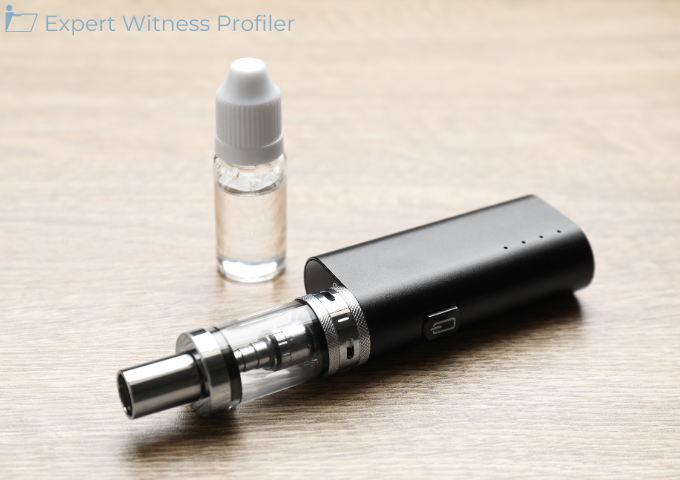
This case concerns use of the term “XHALE” in connection with identical retail smoke shop services, marketing through the same channels, to the same customer base, and in Hattiesburg, on the same street, resulting in rampant actual confusion. Plaintiff Green Rush, LLC, d/b/a Xhale City claims that its federal trademark registration for “XHALE CITY” not only grants it nationwide priority, but presumptively valid trademark rights.
Defendants hope that third-party use of the term “xhale” will be sufficient to cancel Plaintiff’s registration and negate likelihood of confusion.
Green Rush opened its Hattiesburg, Mississippi, location on March 18, 2022, at 6062 Highway 98 (a/k/a Hardy Street), Hattiesburg, Mississippi. Prior to that, in the fall of 2020, Xhale Smoke Shop Defendants opened their first location at 4400 Hardy Street, Suite B8, in Hattiesburg, Mississippi. Since that time, Xhale Smoke Shop Defendants have opened five other Xhale Smoke Shop stores in the towns of Columbia, Seminary, Ellisville, Sumrall, and Prentiss, Mississippi, all within a forty-mile radius of Hattiesburg. Both Plaintiff and Defendants sell smoking and vaping related products.
Defendants designated Dr. Katharine Howie, Ph.D., Assistant Professor of Marketing at the University of Southern Mississippi, as an expert in the field of branding and marketing. Green Rush argued that Howie is unqualified to offer testimony on the subject of trademarks, that she offers legal conclusions, and that her report is otherwise flawed in that her facts and methodology are unreliable.
Marketing Expert Witness
Katharine Howie, Ph.D., is an Assistant Professor of Marketing at the University of Southern Mississippi. Howie has worked in the field of business marketing, received her master’s and doctoral degrees in the field, taught a broad array of undergraduate and graduate courses on the subject, has prolifically published and presented in the field, and has conducted extensive research on brand activism, digital and social media marketing, as well as other related topics.
Katharine Howie explored the potential legal protection for the term “xhale” in the smoking and vaping industry. After conducting a review of trademark records, business listings, and Google and social media search data, Howie concluded that “xhale” is not a “source signifier” and that a “plethora of other companies within the vaping industry use this exact word and spelling in their operating name.”
Howie also examined search traffic on Google and determined that a large volume of consumers search specifically for “xhale,” but the majority do not navigate to “Xhale City,” whereas a “preponderance of Xhale City’s web traffic is derived from searchers explicitly searching for ‘xhale city’ either in isolation or with additional words.”
A. Dr. Howie’s Qualifications
Plaintiff argues that Howie’s CV does not indicate any expertise, training, or experience in determining consumer awareness of trademarks and, therefore, she is not qualified to make expert conclusions on such matters.
The Court finds that Howie’s relative inexperience in the field of trademark law does not preclude her from testifying in this case as an expert on marketing and branding. The Court held that Plaintiff’s concerns about Howie’s opinion testimony are best tested by vigorous cross-examination and presentation of contrary evidence.
Plaintiff also argued that Howie’s report presents improper legal opinion. The Court holds that an opinion is not objectionable just because it embraces an ultimate issue; however, an expert may never render conclusions of law. It is the Court’s job, not an expert witness’s, to instruct the jury as to the applicable law. To the extent that Howie’s report and proposed testimony may render conclusions of law, the Court held that it is inadmissible. However, she is free to testify about her experience in branding and marketing, the research supporting her report, any quantifiable conclusions she has reached, and the facts supporting her report and opinion, even if her opinion embraces an ultimate issue.
B. Data and Methodology
Plaintiff argued that Howie’s report is inadmissible because it is not based on sufficiently reliable facts or data that have evidentiary support, and fails to provide any methodology whatsoever.
The Court held that its gate-keeping obligation applies to all types of expert testimony, not just scientific testimony. Whether Daubert’s suggested indicia of reliability apply to any given testimony depends on the nature of the issue at hand, the witness’ particular expertise, and the subject of the testimony. It is a fact-specific inquiry. The Court’s responsibility is to ensure that an expert in the courtroom employs the same level of intellectual rigor that characterizes the practice of an expert in the relevant field.
The Court concluded that Howie is qualified in the field of marketing and branding and that her testimony and report are reliable based on her experience and specialized knowledge in her field. In other words, her report is not so fundamentally unsupported that it cannot possibly help the jury. While Howie’s report is not extensive, it is straight-forward and to the point.
Held
The Plaintiff’s motion to exclude the testimony of marketing expert witness, Katharine Howie is granted in part and denied in part.
Key Takeaways:
Howie’s relative inexperience in the field of trademark law did not preclude her from testifying in this case as an expert on marketing and branding. While Howie’s report is not extensive, it is straight-forward and to the point. Howie’s approach, method, rationale, and the data gathered by her internet and other searches are plain and within the grasp of the Court, as they will be for a jury.
Case Details:
Case Caption:
Green Rush, Llc V. Xhale Tobacco & Hookah, Inc. Et Al
Docket Number:
2:23cv71
Court:
United States District Court for the Southern District of Mississippi, Eastern Division