Category: Neurology Expert Witness

  • Forensic Engineering Expert Witness’ Evaluation of the Safety Procedures Partly Excluded

    Forensic Engineering Expert Witness’ Evaluation of the Safety Procedures Partly Excluded

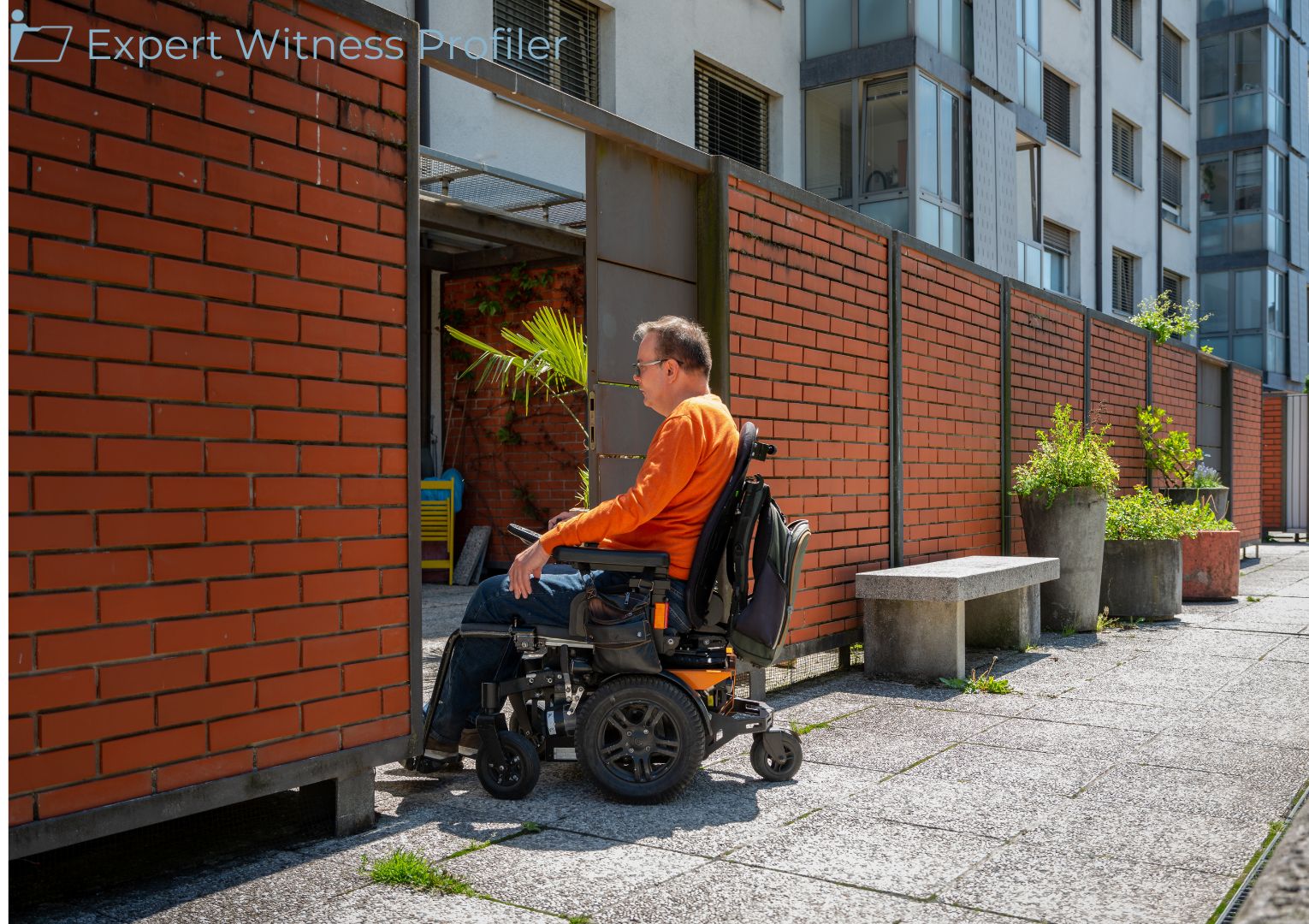
    It all started when Lewis Youngman fell from his motorized wheelchair while driving on the entry gangway of the Defendant’s cruise ship, Mariner of the Seas. Youngman alleged that, as a result of Defendant’s negligence, a certain portion of the gangway was impermissibly steep, uneven, and mis-leveled. Consequently, Youngman argues, the uneven flooring caused his wheelchair to tip over. This alleged negligence then resulted in severe injuries.

    Defendant sought to strike some of this expert testimony from Plaintiff’s expert witness, Frank Fore, and Plaintiff’s hybrid witnesses, Timothy Carter, M.D., and Mark Fulton, M.D. As to Fore (an engineer), Defendant sought to strike his opinion that Plaintiff would not have been ejected from his motorized wheelchair were it not for the impermissibly steep incline of the gangway. Additionally, Defendant sought to strike Fore’s testimony that, had one of Defendant’s crewmembers more appropriately assisted Plaintiff, in accordance with Defendant’s own internal policies, Plaintiff’s incident would not have occurred.

    Further, Defendant sought to strike Plaintiff’s treating physicians, Carter and Fulton, for Plaintiff’s allegedly insufficient pretrial disclosure. Alternatively, if the Court deems Plaintiff’s disclosures to be sufficient, Defendant moved to strike certain testimony from Carter on reliability grounds.
    Forensic Engineering Expert Witness

    Frank A. Fore is a forensic engineer, his specialties include vessel dynamics, kinematics, and accident reconstruction; occupant and pedestrian biomechanical dynamics, kinematics and injury analysis, tribology and the engineering of interacting moving surfaces, including the study of the co-efficient of friction, lubrication, and wear.

    Get the full story on challenges to Frank Fore’s expert opinions and testimony with an in-depth Challenge Study.

    Neurosurgery Expert Witness

    Mark Fulton is a Board-Certified Diplomat by the American Board of Neurological Surgery and is a fellow American Association of Neurological Surgeons, who specializes in both complex spinal and intracranial surgery. He received his medical degree from University of Utah School of Medicine and served both a Residency program and a Surgical Critical Care Fellowship at the Ohio State University Hospitals.

    Want to know more about the challenges Mark Fulton has faced? Get the full details with our Challenge Study report. 

    Neurology Expert Witness

    Timothy D. Carter is a Board-Certified Diplomat by the American Board of Neurology, who specializes in neurology, internal medicine, and clinical neurophysiology. He received his medical degree from University of Florida School of Medicine and completed a year of internal medicine residency at the University of Virginia affiliated programs. His neurology residency and clinical neurophysiology fellowship were completed at the Medical University of South Carolina where he was also Chief Resident.

    Discover more cases with Timothy D. Carter as an expert witness by ordering his comprehensive Expert Witness Profile report.

    Discussion by the Court

    Frank Fore

    Fore opined in his report that:

    “Plaintiff would not have been ejected and injured had his mobility scooter not abruptly tipped over on the gangway’s steep slope … or if the Gangway and Transition Plate had not exceed[ed] the mandatory maximum slope requirements as set forth in the Americans with Disabilities Act and the Florida Building Code, inter alia.”

    Defendant argued that this conclusion is inadmissible because Fore did not engage in sufficient—or indeed any—testing before reaching this conclusion. Specifically, Defendant avers that Fore had no information regarding the make or model of Plaintiff’s motorized wheelchair (which Fore mistakenly referred to as a mobility scooter throughout his report); did not know how much the wheelchair weighed; did not know how much Plaintiff weighed; did not know how many wheels the wheelchair had; did not consider, or even know, the speed at which the wheelchair was traveling; and lacked understanding of other important details before drawing his conclusion. Defendant also pointed out that Fore did no experiments or other tests before arriving at his conclusion.

    Fore made no effort to gather pertinent facts before concluding that the slope of the gangway was the cause of Plaintiff’s injury

    The Court held that Fore’s conclusion is borne almost entirely of “anecdotal experience or speculation.” Fore offered no awareness of any facts specific to Plaintiff’s situation, let alone that he considered those facts in his opinion. Specifically, Fore’s opinion is untethered to critical facts such as the speed at which Plaintiff was traveling, the assistive device in which Plaintiff was traveling, the weight at which Plaintiff was traveling, or other details which would be necessary to render a reliable, non-speculative methodology. To the contrary, Fore’s opinion is based entirely on the theory that the gangway appeared to him to be improperly sloped, juxtaposed against videos of other people ostensibly falling on the gangway. The Court “concluded that there is simply too great an analytical gap between the data and the opinion proffered.”

    However, Plaintiff missed the operative purpose for which this testimony was offered: “Defendant’s conformity to industry safety standards.” Here, Defendant has wisely opted not to challenge the portion of Fore’s testimony that opines on whether the gangway conforms with industry standards. Given Fore’s stated experience and training, plus his review of the basics of the record in the case, the Court held that this conclusion does fall within the Daubert reliability standard.

    The Court held that Fore’s opinion rests too strongly upon speculation, such that it is unreliable under Daubert and its progeny. And because Fore’s speculation-laden testimony that the allegedly improperly-sloped gangway was the but-for cause of Plaintiff’s injuries lacked legal reliability, the Court granted Defendant’s motion to strike that portion of Fore’s testimony.

    However, the Court refused to strike Fore’s testimony that “certain building codes and guidelines or regulations were arguably applicable to the subject gangway and that any alleged deficiencies with the subject gangway may have contributed to Plaintiff’s incident.” 

    Fore may not, however, testify that Plaintiff’s “mobility scooter would not have tipped over” had Defendant complied with its policy 

    Defendant sought to strike the portion of Fore’s report that Plaintiff’s “mobility scooter would not have tipped over had an RCCL crewmember assisted [Plaintiff] as required by RCCL internal policies ….”

    The Court decided that Fore may testify as to whether, in his opinion, Defendant complied with its own internal policies. Indeed, courts have held that it is not a legal conclusion to analyze a party’s actions against its internal policies, and to determine whether the party complied with those policies. 

    The Court held that Fore may not, however, testify that Plaintiff’s “mobility scooter would not have tipped over” had Defendant complied with its policy. This testimony certainly rings again of an ultimate legal conclusion; i.e., that Defendant’s alleged failure to comply with its policy was the but-for cause of Plaintiff’s injuries. Thus, this portion of Fore’s anticipated testimony is inadmissible as it is purely a legal conclusion.

    Challenges as to the Disclosure of Mark Fulton and Timothy D. Carter

    Mark Fulton and Timothy D. Carter are hybrid witnesses pursuant to Federal Rule of Civil Procedure 26(a)(2)(C). Both are treating physicians of the Plaintiff, who will offer opinions within their areas of expertise, as disclosed below, but who need not provide a written report.

    In addition to no reports being disclosed, Defendant argued that Plaintiff’s description of the testimony was also vague. That description is as follows:

    “The Plaintiff’s medical condition related to the injuries that the Plaintiff sustained as alleged in the Complaint, including Plaintiff’s current medical symptoms, past and future medical and surgical condition and treatment, injury causation, aggravation of injuries and preexisting conditions due to the subject incident, diagnosis, prognosis, permanency, disability, and impairment, … the reasonableness of the costs and necessity of the medical care and treatment that was performed on the Plaintiff and the nature and estimated cost of future necessary medical and treatment for the Plaintiff.”

    While the Court doubted whether the disclosure’s description is sufficient, the Court readily found that the ample time to depose the expert witnesses cured any ostensible prejudice.

    Challenges as to Carter’s Anticipated Testimony

    Defendant lodged substantive challenges to Carter’s proffered testimony.

    Carter is a neurologist who has been treating Plaintiff since 2017. In 2019, Carter seemed to indicate that Plaintiff was experiencing neurological issues, and in 2021 essentially reaffirmed Plaintiff’s 2019 condition. On August 21, 2022, Plaintiff experienced his fall, and on September 7, 2022, underwent neck surgery. Eight months after Plaintiff’s fall, in May 2023 (and again in June 2023), Plaintiff had a visit with Carter. At that point, Carter seemed to notice marked differences in Plaintiff, including significant declines in his “mental and cognitive status,” his “speech and language,” his “attention and concentration,” and other mental faculties. Now, Carter seeks to testify that “more likely than not … the confluence of events together [i.e., Plaintiff’s fall and subsequent surgery] certainly contributed to some degree of deterioration.”

    Defendant argued that Carter’s causation opinions should be excluded because Carter relied too heavily on temporal proximity and failed to rule out other factors causing Plaintiff’s neurological demise. Specifically, Defendant argued that Plaintiff, per Carter, was beginning to experience decline before Plaintiff’s fall; that imaging showed Plaintiff’s brain was already losing size and blood flow; that Carter failed to rule out that Plaintiff’s recurring urinary tract infections, as well as opioid and cannabis use, contributed to Plaintiff’s cognitive decline; that Carter could not determine that Plaintiff’s cerebral fluid issues were caused by the fall; and that Carter could not connect Plaintiff’s bowel and bladder incontinence to the fall.

    Defendant’s Unpersuasive Challenges to Carter’s Opinions are Meritless 

    Carter bases his findings on a years-long relationship with Plaintiff, myriad neurological testing over those years, unchallenged qualifications in neurology, Plaintiff’s accident and surgery, and observations based on those years of visiting with Plaintiff to conclude that “the confluence of events together certainly contributed to some degree of deterioration.”

    The Court held that it suffices to pass muster under Daubert, regardless of whether Carter directly ruled out every other cause of Plaintiff’s sudden neurological decline, or in part considered temporal proximity. 

    And to the extent that Defendant challenged the certainty of Carter’s findings (i.e., that “the confluence of events” contributed to “some degree of deterioration”), the Court decided that the Defendant is entitled to draw out Carter’s certainty before the jury via cross-examination. But such an argument goes to the weight, not the admissibility, of Carter’s testimony. 

    Held

    • The Court granted Defendant’s motion to strike Frank Fore’s testimony that the allegedly improper gangway slope was the primary or but-for cause of Plaintiff’s injury (or in other words the accident would not have happened but for the slope).
    • The Court denied Defendant’s motion to strike Fore’s testimony that Defendant failed to comply with its internal policies.
    • The Court granted Defendant’s motion to strike Fore’s testimony that Defendant’s failure to comply with its internal policies is the primary or but-for cause of Plaintiff’s injuries (or in other words the accident would not have happened had Defendant followed its internal policies).
    • The Court held that any deficiency in Plaintiff’s disclosures of Mark Fulton and Timothy Carter will be cured so long as Plaintiff makes Fulton and Carter available for deposition within twenty days of this Order. 
    • The Court denied Defendant’s substantive motion to strike the testimony of Carter.

    Key Takeaways:

    • Defendant persuasively challenged the reliability of the methodology Fore employed to go a step further to conclude that the ostensibly-improper gangway was the but-for cause of Plaintiff’s injurious ejection. An ultimate causation opinion goes a great deal further than simply an opinion that industry standards were not followed. A causation opinion must be supported by greater analysis and investigation.
    • Fore’s testimony that “certain building codes and guidelines or regulations were arguably applicable to the subject gangway and that any alleged deficiencies with the subject gangway may have contributed to Plaintiff’s incident” certainly falls within his expertise and experience. And the work he undertook to reach that more limited opinion is sufficient for Daubert purposes.

    Case Details:

    Case Caption: Youngman V. Royal Caribbean Cruises Ltd.
    Docket Number: 1:23cv21796
    Court: United States District Court, Florida Southern
    Order Date: September 2, 2024
  • Neurology Expert Witness’ Opinions About the Potential Presence of a Mild Traumatic Brain Injury Admitted

    Neurology Expert Witness’ Opinions About the Potential Presence of a Mild Traumatic Brain Injury Admitted

    Plaintiff Rickie Russell, Jr. (“Russell) alleged that, on August 13, 2021, Terry Delmer Prater (“Prater”) crashed an 18-wheeler truck into Russell’s roadside work crew Russell claimed he was pinned between two vehicles and suffered serious injuries as a result of that motor vehicle collision. Russell brought suit against Defendants Prater and Big V Feeds, Inc. for the injuries he sustained.

    As part of their defense, Defendants retained Randolph Evans, M.D. (“Dr. Evans”) to offer expert testimony. On July 15, 2024, Russell filed his motion to exclude Randolph Evans.

    Neurology Expert Witness

    Randolph W. Evans, MD received his B.A. from Rice University in 1974 and M.D. from Baylor College of Medicine in 1978. Evans completed his internship and residency in Neurology at Baylor College of Medicine in 1982. He is board certified in Neurology and subspecialty certified in Headache Medicine and a fellow of the American Academy of Neurology, the American Headache Society, and the Texas Neurological Society.

    Get the full story on challenges to Randolph Evans’ expert opinions and testimony with an in-depth Challenge Study. 

    Discussion by the Court

    Evans has sufficient qualifications to serve as an expert

    First, Russell argued that Evans lacked the requisite qualifications to serve as an expert in the present case because he “has never physically examined Russell, listened to his complaints, and would not even recognize Russell if he was standing across the hall from him.” Further, Russell argued that the medical records Russell produced are “the best evidence of [his] condition after the crash.”

    After reviewing Evans’ curriculum vitae, the Court was satisfied with Evans’s education, training and experience to qualify him to offer his opinion on Russell’s alleged traumatic brain injury and the reasonableness and necessity of Russell’s medical treatment.

    Evans’ methodology is reliable

    Russell next argued that Evans “has provided zero methodology to support how he came to his conclusion” and that there is a “significant analytical gap in Evans’ approach.”

    Evans identified the medical records for Russell that he reviewed and then summarized those records in detail in his report. Thereafter, he applied his education, training, experience, and knowledge of the medical facts within the medical records to reach his opinions regarding the potential presence of a mild traumatic brain injury in reasonable medical probability. He cited the Glasgow Coma Scale and various other medical publications in support of his opinions. 

    Held

    The Court denied Plaintiff’s motion to exclude the testimony of Randolph Evans.

    Key Takeaway:

    The role of district courts at this juncture is to ensure relevance and reliability, not accuracy. Evans applied his education, training, experience, and knowledge of the medical facts within the medical records to reach his opinions regarding the potential presence of a mild traumatic brain injury in reasonable medical probability.

    Case Details:

    Case Caption: Russell, Jr. V. Big V Feeds, Inc. Et Al
    Docket Number: 4:23cv622
    Court: United States District Court, Texas Eastern
    Order Date: August 16, 2024
  • Neurology Expert Witness’ Testimony Excluded Because He Does Not Offer a Proper Medical Conclusion

    Neurology Expert Witness’ Testimony Excluded Because He Does Not Offer a Proper Medical Conclusion

    This is a personal injury action stemming from an accident between two tractor trailers. On November 10, 2020, while operating a truck on behalf of his employer, Robert Hibbert was rear-ended by another tractor trailer. 

    Witnesses noted that he “did not stop and was slumped over the wheel”; the EMS report indicated that Plaintiff, Hibbert did not remember what happened.

    Hibbert suffered a stroke on or about May 22, 2013 and alleged that the symptoms he exhibited after the accident are similar to those he exhibited around the time of his 2013 stroke. Plaintiff sought to have his treating physician, Dr. John E. Robinton, to testify that Plaintiff “hit his head and lost consciousness” as a result of the accident, that this impact caused a concussion, and that the concussion triggered a stroke. 

    In the “Impression” section of his report, Robinton made the following comment, which formed the basis for this motion: “Given the fact that the recent MRI revealed no evidence of an acute injury, I am hopeful that the present complaints and findings are related to a concussion.” Robinton also noted in a letter dated March 30, 2021 that, after reviewing Plaintiff’s neuropsychological assessment, “it did not appear that the report is absolute in [its] conclusion regarding etiology.” From this, Plaintiff argued, Dr. Robinton can testify regarding a possible concussion because “the issue of the concussion has not been ruled out.” 

    Defendant sought to preclude Robinton’s testimony that the November 10, 2020 accident caused any injury to Plaintiff.

    Neurology Expert Witness

    John E. Robinton is a neurologist in Montclair, New Jersey and is affiliated with multiple hospitals in the area, including Mountainside Medical Center at Hackensack Meridian Health and Saint Michael’s Medical Center. Firstly, he received his medical degree from Weill Cornell Medicine and has been in practice for more than 20 years. Moreover, Dr. John E. Robinton has expertise in treating Parkinson’s disease, neck pain and spine problems, non-Alzheimer’s dementia, among other conditions.

    Want to know more about the challenges John Robinton has faced? Get the full details with our Challenge Study report. 

    Discussion by the Court

    The Court found that there is no evidence in the record indicating that Plaintiff sustained head trauma or any other kind of injury in the accident, and Robinton’s remark only expresses “hope[] that the present complaints and findings are related to a concussion.”

    Plaintiffs sought to have Robinton testify that another injury, e.g., a concussion caused by the accident, triggered Plaintiff’s condition merely because “[t]here is no etiology showing the cause of the Plaintiff’s stroke from this accident.” The Court held that the mere absence of evidence concerning etiology does not open the door to rank speculation as to what else may or may not have been the cause of the post-accident symptoms—and certainly this rank speculation does not clear the Daubert bar when it is expressed in the form of “hope.” 

    Plaintiff pointed to Stigliano v. Connaught Labs., Inc., which held that “treating doctors may testify about their diagnosis and treatment of [a patient’s] disorder, including their determination of that disorder’s cause.” 

    All Robinton offered was “hope that the present complaints and findings are related to a concussion”—far from a medical conclusion or diagnosis. The Court held that Stigliano, its progeny, and any cases interpreting New Jersey’s rules of evidence are entirely inapplicable to the question of whether Robinton’s testimony can be admitted. Moreover, even under Stigliano, Robinton’s testimony could not be admitted. His remarks regarding a possible concussion are not a “diagnosis,” but merely conjecture.

    Held

    The Court granted Defendants Flavors C. and Ricardo Ralat’s motion to preclude John Robinton’s testimony.

    Key Takeaway:

    To be admissible, an expert must base the conclusions of her testimony on “‘methods and procedures of science’ rather than on ‘subjective belief or unsupported speculation.’” Any testimony by Robinton that the accident caused an injury which triggered Plaintiff’s symptoms would constitute precisely the kind of “subjective belief or unsupported speculation” contemplated by Daubert to be in violation of Rule 702

    Case Details:

    Case Caption: Hibbert V. Flavors C. Inc. Et Al
    Docket Number: 2:21cv13119
    Court: United States District Court for the District of New Jersey
    Order Date: July 18, 2024
  • Court admits the opinions presented by the Defense Medical Expert Witnesses after analyzing the Plaintiff’s Medical Records

    Court admits the opinions presented by the Defense Medical Expert Witnesses after analyzing the Plaintiff’s Medical Records

    This case involved a personal injury lawsuit filed by Plaintiff, Morgan Fitch against her employer, Defendant, BNSF Railway Company (BNSF), under the Federal Employers’ Liability Act (FELA). On February 28, 2020, the Plaintiff was fulfilling her duties as a conductor for the Defendant, engaged in the transportation of a train from Minot, North Dakota to Rugby, North Dakota. While in the locomotive cab with a three-person train crew, the train suddenly initiated an emergency stop without any prior warning. The abrupt force of the stop resulted in the Plaintiff being thrown forward into the locomotive’s nose, leading to injuries in her right arm and shoulder. Additionally, throughout the litigation process, the Plaintiff asserted that she had sustained neurological and cognitive injuries, including a traumatic brain injury.

    Fitch filed motions to exclude the expert testimony of three defense witnesses that BNSF disclosed: Melissa Castro, a neuropsychologist; Frederick Strobl, a neurologist; and Steven Moen, an orthopedic surgeon. Fitch argued in her motions and cited the supplemental report of her own expert, Dr. Steven David Lockman, that the methodology and reasoning underlying the defense experts’ testimony was not scientifically valid.

    Neuropsychology Expert Witness

    Dr. Melissa Castro is a clinical neuropsychologist with expertise in areas such as concussion, traumatic brain injury, post-traumatic stress disorder, mild cognitive impairment, dementia, and cross-cultural assessments. She is board certified by the American Board of Clinical Neuropsychology and licensed to practice in Minnesota and Wisconsin. Her educational background includes a doctorate in psychology from the Ponce School of Medicine and Health Sciences and a bachelor’s degree in psychology from Concordia University. Castro currently serves as a clinical neuropsychologist at the Minneapolis Clinic of Neurology. 

    Neurology Expert Witness

    Dr. Frederick Thomas Strobl is a medical doctor with specialized expertise in the field of neurology. His educational background includes a bachelor’s degree in electronics engineering from the University of Minnesota as well as a medical degree from the University of Minnesota Medical School. Strobl completed his residency training in neurology at the University of Minnesota Hospitals, followed by a fellowship at Mayo Clinic. He is licensed to practice medicine in Minnesota and is board certified in neurology by the American Academy of Neurology as well as in electromyography by the American Board of Electrodiagnostic Medicine. Strobl is the co-founder and former Chairman and CEO of CNS, Inc., known for creating Breathe Right Nasal Strips. He currently serves as a mentor, presenter and keynote speaker for the Med Tech Accelerator program, an alliance between Mayo Clinic and Arizona State University. Additionally, Strobl hosts the podcast Brain Health Minute, covering various neurology topics.

    Orthopedic Surgery Expert Witness

    Dr. Steven A. Moen earned his Bachelor of Arts in Chemistry from Saint Olaf College. He went on to earn his Doctor of Medicine from the University of Minnesota School of Medicine, followed by a General Surgery internship at the University of Minnesota. Moen completed his Orthopaedic Residency Program at the University of Minnesota and is licensed to practice in Minnesota. He is also a Board Certified Orthopedic Surgeon. He has been practicing as an Orthopedic Surgeon at Twin Cities Orthopedics in Edina, Minnesota since 1998. 

    Discussions by the Court

    Rule 702 of the Federal Rules of Evidence outlines criteria for expert testimony admissibility. The rule requires the trial judge to serve as a “gatekeeper,” admitting expert testimony if it is both relevant and reliable. The judge has broad discretion in assessing reliability. Credibility and weight of expert testimony are left to the trier of fact. Only fundamentally unsupported expert opinions may be excluded. Parties may present scientifically valid expert opinions that assist the jury, with Daubert emphasizing a preliminary assessment of scientific validity. Courts encourage liberal admission of expert testimony, and the traditional means of challenging evidence include cross-examination and presenting contrary evidence. District Courts are cautioned against weighing competing expert opinions, leaving such decisions to the jury when opinions are within a reasonable range of expert disagreement.

    BNSF engaged Castro, a clinical neuropsychologist, to conduct a Rule 35 medical examination of Fitch. Castro’s conclusions consistently expressed skepticism regarding the severity of Fitch’s brain injury, contending that its impact on her life would be minimal. These conclusions were founded on three scientifically unsound premises: (1) an assertion that Fitch was deliberately exaggerating her injuries for personal gain, based on specific test results (namely symptom validity tests (SVTs) and performance function tests (PFTs)); (2) a claim that Fitch did not meet the Diagnostic and Statistical Manual of Mental Disorders, Fifth Edition (DSM-5) diagnostic criteria for  post-traumatic stress disorder (PTSD); and (3) an argument that Fitch should have already recovered from her brain injury. The Plaintiff argues that Castro’s expert opinions were derived from information that was incorrect, inaccurate, incomplete, and incompetent. As a result, the Plaintiff asserted that Castro’s trial testimony would be unreliable and invalid under Rule 702 and should be excluded.

    The Court, having thoroughly examined the parties’ submissions, determined that Castro is an experienced, qualified, and competent board-certified neuropsychologist. The record showed that Castro conducted a comprehensive examination and interview of the Plaintiff, administered relevant tests, and thoroughly reviewed the Plaintiff’s medical records before formulating her conclusions. The Court found that Castro’s methodology and reasoning were scientifically valid and applicable to the facts of the case. Consequently, the Court concluded that Castro’s expert testimony was both relevant and reliable, aligning with Rule 702 of the Federal Rules of Evidence.

    BNSF enlisted Strobl, a board-certified neurologist, to conduct a Rule 35 medical examination of Fitch. Strobl’s conclusions consistently downplayed the severity of Fitch’s alleged brain injury, asserting that she suffered no injury and that the effects would have no lasting impact. The Plaintiff argued that Strobl’s conclusions were rooted in two scientifically unsound premises: (1) minimizing Fitch’s injury based on information from the Cleveland Clinic website, the injury not being recognized in the emergency department, and the absence of physical evidence of trauma at the time of the incident; and (2) interpreting specific test results ( namely Electromyography(EMG)) to ostensibly rule out a brachial plexus injury. The Plaintiff contended that Strobl’s conclusions were not merely a difference of opinion but rather stemmed from unreliable and invalid information, and therefore, advocated for the exclusion of Strobl’s testimony in the case.

    The Court, having reviewed the matter, determined that Strobl was an experienced, qualified, and competent board-certified neurologist. Strobl’s opinions were based on a thorough examination of the Plaintiff and an assessment of her medical history from records. The Court concluded that the methodology and reasoning behind Strobl’s testimony were scientifically valid and applicable to the case’s facts. Consequently, the Court found Strobl’s expert testimony to be relevant, reliable, and in accordance with Rule 702 of the Federal Rules of Evidence.

    BNSF engaged Moen, a board-certified orthopedic surgeon, to conduct a Rule 35 medical examination of Fitch. Moen concluded that Fitch had a soft-tissue injury to her right shoulder and did not suffer a specific brachial plexus injury. He based this conclusion on an April 2020 Electromyography (EMG) that he characterized as “essentially normal.” Moen asserted that brachial plexus injuries typically result from birth trauma or major trauma, such scenarios were inconsistent with Fitch’s emergency room examination where no swelling, bruising, or bony abnormalities were noted. The Plaintiff argued that Moen’s reasoning was logically flawed as it incorrectly assumed that the April 2020 EMG ruled out the possibility of a brachial plexus injury. Consequently, the Plaintiff asserted that Moen’s conclusions were fundamentally flawed, unreliable, and invalid, advocating for his exclusion from testifying regarding Fitch’s brachial plexus injury.

    Upon examination, the Court determined that Moen was an experienced, qualified, and competent board-certified orthopedic surgeon. Moen conducted an examination of the Plaintiff and assessed her medical history from records. The Court concluded that the methodology and reasoning behind Moen’s testimony were scientifically valid and applicable to the case’s facts. As a result, the Court found Moen’s expert testimony to be relevant, reliable, and in accordance with Rule 702 of the Federal Rules of Evidence.

    Therefore, the Plaintiff’s motions sought the Court’s evaluation of competing expert opinions, a matter pertaining to the weight assigned by the factfinder rather than the admissibility of such testimony. The Court emphasized the appropriate approach to challenge expert opinions through robust cross-examination and the presentation of conflicting evidence, rather than wholesale exclusion at trial, citing precedent Olson v. Ford Motor Co., 411 F. Supp. 2d 1137, 1145 (D.N.D. 2006). The Court refused to overstep the jury’s role in determining credibility and the weight to be given to the evidence.

    Held 

    The Court denied the Plaintiff’s motions to exclude the testimony of defense medical experts, Melissa Castro, Frederick Strobl, and Steven Moen. The Court found they were qualified experts whose methodology and reasoning was scientifically valid. It would be up to the jury to determine how much weight to give their testimony. The Court has not arrived on an outcome for this case since the remaining issues involved in this case still await resolution.

    Key Takeaways

    The expert witness testimony in this case relates to the standards for admissibility under Rule 702. The Court serves as a “gatekeeper” in assessing whether expert opinions are relevant and reliable. However, Courts give broad discretion to trial judges on determinations of reliability. Once expert testimony passes the reliability threshold, issues of credibility and weighing competing testimony fall to the trier of fact, usually the jury. Wholesale exclusion of expert opinions is meant to be the exception rather than the norm. Courts should not examine whether the expert’s conclusions are necessarily correct or which theory among competing ones has superior merit. Rather, as long as qualified experts have utilized scientifically valid reasoning that assists the trier of fact, exclusion is unwarranted even if some disagreement exists. Here, despite variances in conclusions reached, the Court found that all three defense experts proffered relevant and sufficiently reliable testimony based on examination of the Plaintiff and her records along with application of sound methodology. With liberal admission standards favoring allowing expert testimony, the Court denied motions to exclude these witnesses. The jury will now decide what weight to afford each expert opinion at trial during its deliberations. Vigorous cross-examination provides the appropriate tool for addressing shaky expert testimony rather than exclusion.

  • Court excludes unreliable pharmacology and neurology expert opinions in product liability case; grants summary judgment

    Court excludes unreliable pharmacology and neurology expert opinions in product liability case; grants summary judgment

    This case involved a product liability lawsuit filed by Harvey Mahler against The Vitamin Shoppe Industries, Inc. in the United States District Court for the Northern District of Illinois. Mahler alleged that he developed peripheral neuropathy after taking a multivitamin manufactured by The Vitamin Shoppe that contained arsenic and lead.  

    Mahler purchased two bottles of The Vitamin Shoppe’s One Daily Men’s 50+ vitamin supplement on June 25, 2017. He took one tablet per day from June 25 to August 16, 2017, for a total of 51 days. In mid-August 2017, Mahler began experiencing symptoms including peripheral and ulnar neuropathy, bilateral foot numbness, hypertension and renal artery thrombosis. He saw several physicians, including his primary care doctor, a nephrologist and a hematologist. None of them diagnosed Mahler with heavy metal poisoning or ordered tests to screen for heavy metals. 

    Nonetheless, Mahler sent the vitamin supplement to an independent laboratory, Eurofins, which detected arsenic and lead in the product. Eurofins sent back a report that showed the Vitamin Supplement contained a detectable amount of arsenic and lead—two types of heavy metals. Although his physicians did not link his symptoms to the vitamins, Mahler believed based on his own research that the arsenic and lead caused his health issues.  

    On June 5, 2018, Mahler visited Octavia Kincaid, a neurologist. He reported neuropathy in his feet and left hand fingers. Kincaid reviewed prior electromyography (EMG) tests and examined Mahler. She diagnosed him with peripheral neuropathy. Mahler told Kincaid about the vitamins containing heavy metals and gave her the Eurofins report. Kincaid said arsenic and lead could cause his symptoms. Her blood tests for other potential causes came back normal. She clinically diagnosed Mahler with peripheral neuropathy likely from heavy metal toxicity. 

    In his lawsuit, Mahler alleged that the arsenic and lead in the vitamin supplement caused his peripheral neuropathy. He asserted claims for strict liability, negligence, breach of warranty, negligent misrepresentation, and violation of the Illinois Consumer Fraud and Deceptive Business Practices Act (“ICFA”)

    The Vitamin Shoppe moved for summary judgment, arguing that Mahler lacked evidence that the small amounts of arsenic and lead in its product could have caused his alleged injury. Mahler relied on neurologist Octavia Kincaid and pharmacist James O’Donnell to provide pharmacology and neurology expert opinions on causation. The Vitamin Shoppe moved to exclude them under Daubert, asserting their opinions were unreliable. Defendant also filed a Daubert motion to exclude the testimony of Plaintiff’s other two experts- Jon Edward Clark and Stanley Vladimir “Stan” Smith.

    Causation and Damages Expert Witnesses 

    James Thomas O’Donnell, PharmD, M.S., F.C.P., is highly qualified as an expert in pharmacology, toxicology, and pharmacy. He has over 30 years of experience in teaching, research, and consulting in these fields. O’Donnell holds a Doctor of Pharmacy degree from the University of Michigan and a Master of Science in Clinical Nutrition from Rush University. He is an Associate Professor of Pharmacology at Rush University Medical Center.

    O’Donnell has authored numerous books related to pharmacology, toxicology, and pharmacy law. He has also published articles in peer-reviewed journals and consulted with pharmaceutical companies. 

    His qualifications include being board certified as a Diplomate in the American Board of Clinical Pharmacology. He is a Fellow of the American College of Clinical Pharmacology and the American College of Nutrition.

    In summary, O’Donnell’s extensive education, teaching and research experience, publications, and board certifications in pharmacology, toxicology, and pharmacy make him highly qualified to provide expert testimony on the topics relevant to this case. 

    Octavia B. Kincaid, M.D. is a Neurologist who provided medical care to Harvey Mahler from June 5, 2018 to the present. She  is an adult neurologist who specializes in neuromuscular neurology. She holds board certification in adult neurology, clinical neurophysiology, and neuromuscular medicine through the American Board of Psychiatry and Neurology. She received her medical degree from The University of Texas Health Science Center at San Antonio and has been in practice for more than 20 years. 

    Octavia Kincaid is currently working as a Neurologist at NorthShore University HealthSystem. Before her current position, she served as the Assistant Dean for Curriculum in the College of Medicine at the University of Illinois, Chicago. Additionally, she held a previous role as a Neurologist at the University of Illinois Hospital & Health Sciences System.System.  

    Jon Edward Clark, M.S., has over 35 years of experience in the pharmaceutical industry, including extensive expertise with FDA regulations and practices. He holds Bachelor’s and Master’s degrees in Chemistry. He worked for 21 years at the FDA, serving in leadership roles developing and implementing policy. After the FDA, he served as an executive in the U.S. Pharmacopeia, involved with setting standards for medicines and dietary supplements. He now runs an independent consulting firm focused on FDA regulatory requirements and compliance.  

    Stanley Vladimir Smith, Ph.D. is a nationally renowned economist who received his Ph.D. from the University of Chicago. 

    Discussions by the Court  

    The Vitamin Shoppe moved to exclude the causation opinions of Kincaid and O’Donnell under Daubert and Rule 702. The Court granted both motions, finding their methodologies unreliable. 

    Plaintiff relied upon Octavia Kincaid to establish both general and specific causation—that is, that the lead and arsenic contained in the Vitamin Supplement Plaintiff took could and did cause his peripheral neuropathy. 

    However, the Court first found Mahler failed to properly disclose Kincaid as a non-retained expert under Rule 26(a)(2)(C). He did not provide a summary of the facts and opinions to which she would testify on causation. However, the Court excluded Kincaid based on unreliability even if she had been properly disclosed.  

    Kincaid testified there were likely thousands of potential causes of peripheral neuropathy, with heavy metal exposure being rare. She said Mahler told her he took vitamins containing heavy metals and provided the Eurofins report. Although Kincaid ordered blood tests for more common neuropathies, they came back normal. With no other apparent cause, she clinically diagnosed Mahler with heavy metal induced peripheral neuropathy.  

    The Court found this process unreliable under Daubert. Kincaid agreed dose and duration of exposure were relevant to causation. But she could not recall investigating the levels of arsenic/lead in the vitamins or how long Mahler took them. She speculated she probably looked up reference levels but had no notes documenting so. The Court also did not express an opinion on Kincaid’s clinical or treatment methods. Kincaid herself clarified that her conclusion was a “clinical diagnosis” made based on the available information at the time. It’s important to note that her intent was not to establish “proof” of causation in a legal sense.

    The Court cited cases requiring experts to consider dose-response in toxic tort cases. As Kincaid failed to evaluate dosage, the Court deemed her opinions inadmissible. 

    The Defendant made three main arguments for excluding O’Donnell’s expert testimony. First, it contended he lacked qualifications for some opinions. Second, it argued his opinions about raw ingredients were irrelevant. Third, it asserted O’Donnell did not use a reliable methodology for his general causation conclusions, as he failed to analyze the dose-response relationship between the levels of arsenic and lead in the Vitamin Supplement and the onset of peripheral neuropathy. Defendant argued that the factual assumptions made by O’Donnell did not support the record.

    The Court found multiple reliability issues rendering O’Donnell’s opinions inadmissible. First, O’Donnell incorrectly assumed Mahler took the vitamins for four years rather than the 51 days supported by the record. He speculated all of Mahler’s vitamins contained arsenic/lead based merely on other products from China having contamination, not evidence specific to The Vitamin Shoppe’s products. The Court held this undue speculation did not satisfy Daubert

    Additionally, like Kincaid, O’Donnell failed to reliably consider dosage. He agreed dose response was relevant to toxicity. He knew there were acceptable daily intake levels of arsenic/lead under which toxicity would not be expected. Yet he conducted no analysis of the dose levels in the vitamins Mahler took or whether they exceeded acceptable thresholds. Instead, he reasoned that because Mahler developed neuropathy and his vitamins contained some level of arsenic/lead, they must have contained enough toxins to cause the neuropathy. The Court found this circular reasoning evidenced no reliable methodology under Daubert which rendered his opinions both unreliable and irrelevant.

    Held 

    In sum, the Court held that neither Kincaid nor O’Donnell employed reliable methods in reaching their causation opinions. Their failures to account for dosage of toxins in the vitamins rendered their testimony inadmissible under Rule 702. With no other evidence of causation, Mahler could not withstand summary judgment. Thus, the Court granted The Vitamin Shoppe’s motions to exclude Octavia Kincaid and James T. O’Donnell, and its motion for summary judgment. The Court denied as moot the motions to exclude Mahler’s other experts, Jon Clark and Stan Smith and subsequently terminated the case.

    Key Takeaways

    This product liability case illustrates the importance of ensuring expert witnesses employ reliable principles and methods under Daubert and Rule 702. The Court excluded both of Plaintiff Mahler’s causation experts because their opinions lacked sound methodology.

    • In toxic tort cases, experts must carefully consider dose and duration of exposure when rendering an opinion on causation. Both Kincaid and O’Donnell acknowledged this principle, yet failed to analyze or account for the levels of toxins in the vitamins Mahler consumed, it rendered their testimony unreliable.
    • Experts should not rely on unfounded assumptions or speculation. For example, O’Donnell unreasonably assumed that because Plaintiff was diagnosed with heavy metal-induced neuropathy and because the Vitamin Supplement that Plaintiff took contained lead and arsenic, it meant the Vitamin Supplement must have contained enough lead and/or arsenic to cause neuropathy. Expert opinions must be grounded in the facts of the specific case.
    • Additionally, Experts should avoid circular reasoning that uses the injury itself as proof of causation. The Court found O’Donnell employed this flawed logic.

    In excluding the experts, the Court demonstrated its critical gatekeeping role in vetting unreliable expert opinions before admission. Attorneys offering expert testimony must ensure their experts adhere to sound scientific principles and methods that can withstand Daubert scrutiny.