Plaintiff April McElroy (“McElroy” or “Plaintiff”) was injured while attempting to open a bottle Mumm Napa Valley Brut Rose, a sparkling wine. The bottle broke causing lacerations to her left hand. McElroy has filed claims for her injuries against Defendants Pernod Ricard USA, Inc. (“Pernod”), Southern Glazer’s Wine and Spirits LLC, (“Glazer”) and Garfield Beach CVS LLC (“CVS”).
McElroy’s negligence claim alleged that the Defendants failed to adhere to industry standards and best practices for storage and retention of the product to ensure the safety and integrity of the product. Consequently, she asserted that the Defendants violated their duty of care to consumers by improperly storing and distributing a product in a manner that proximately caused Plaintiff’s injury.
Plaintiff offered the opinion of her expert Jim Goldman regarding how non-vintage sparkling wines should properly be stored and distributed at the wholesale and retail levels. Both Pernod and CVS moved to exclude the testimony of Goldman.
Packaging Expert Witness
Jim Goldman is a certified packaging expert with a consistent history of achievement developing packaging, supply chain, and production equipment for the Food and Beverage industry.
To begin with, Goldman cited no authority, regulation, actual industry guidelines or any evidence of any manufacturers, wholesalers or retailers adopting or adhering to his proposed “industry standards.”
He asserted for safety reasons the following steps are required in the distribution of non-vintage sparkling wines: 1) at all times the bottles are to be stored horizontally, 2) the bottles are to be stored in environments of controlled temperature and humidity, 3) the age of such products requires monitoring, and 4) that any non-vintage sparkling wine product has a maximum shelf life of 6 months after which it should be destroyed. Failure to adhere to this “standard” he opined is negligence and a cause of Plaintiff’s injury.
However, there is no evidence whatsoever that his proposed guidelines are a standard by which the industry operates. A jury could not reasonably conclude that failure to meet one or more of Goldman’s self-created storage steps violated a duty of care.
Also, Goldman did opine that his proffered “industry standard” for wholesale and retail storage of non-vintage wines is supported by a website directed to “storing champagne at home” for best quality.
However, the Court held that this reference did not support his opinion that there is an industry wide standard for the shipment, storage and distribution of non-vintage sparkling wines that Defendants violated.
Held
The Court granted the the motions to exclude the testimony of Jim Goldman.
Key Takeaway
Goldman has not demonstrated a duty of care that any Defendant violated in the storage or retention of the wine at issue, and his testimony is wholly insufficient to create a material factual dispute.
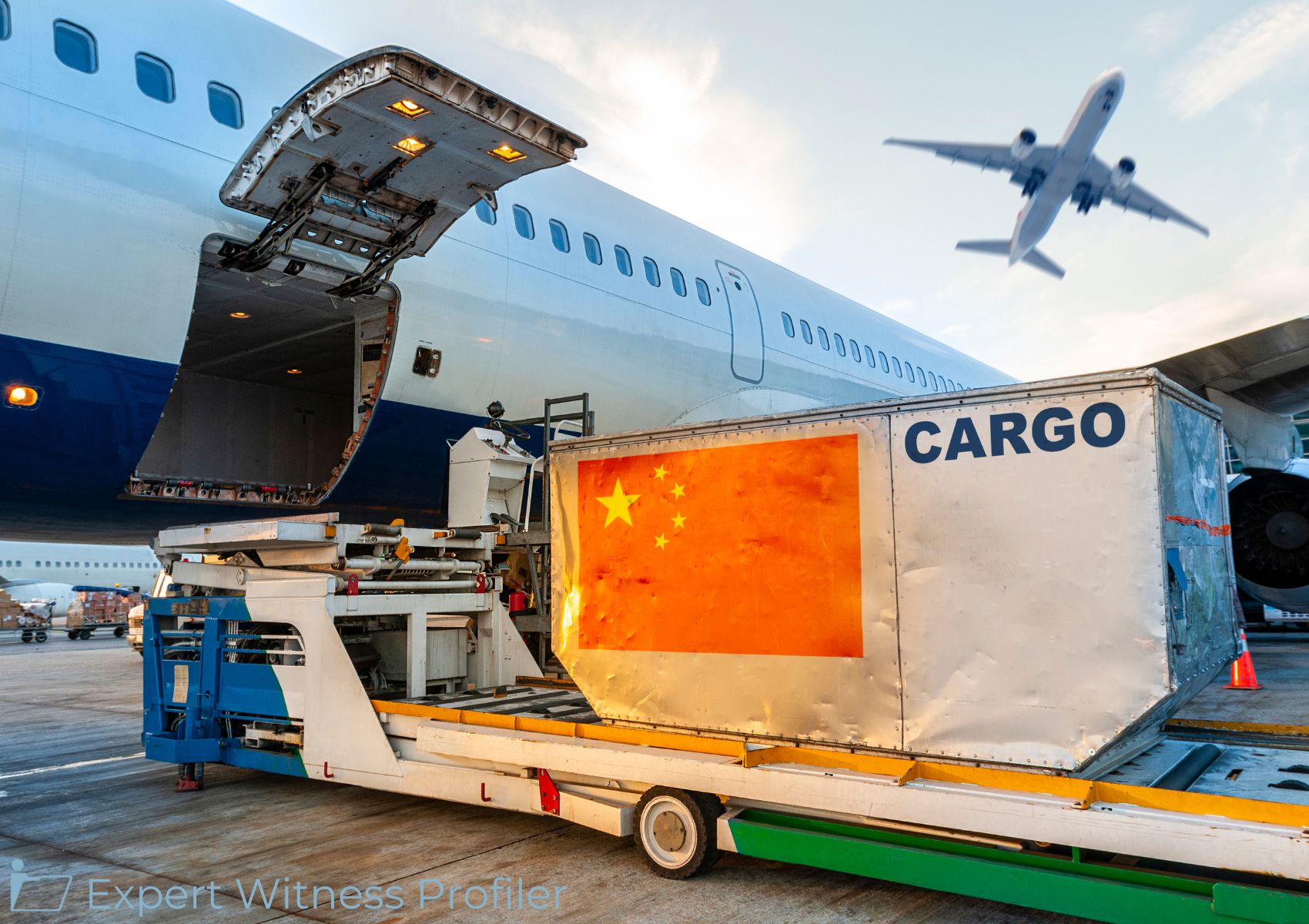
This consolidated action concerns damage to two separate cargos of medical imaging devices shipped by air from the United States to China. The cargo at issue in the first-filed action was an MRI machine, while the cargo at issue in the later-filed action consisted of two CT scanners.
Plaintiffs Indemnity Insurance Company of North America and Huatai Property and Casualty Insurance Company, Ltd. filed a motion to exclude the opinion testimony of Defendant Expeditors International of Washington, Inc.’s expert David Stopak.
Stopak opined that the cargo was inadequately packaged before it was tendered to Expeditors.
Packaging Expert Witness
David Stopak is a seasoned specialist in the packaging for international transport of sensitive medical devices, and has actually performed such packaging work for Plaintiffs’ subrogor, GE Medical.
He is a Graduate of DeVry Institute of Technology, graduating in 1985 with a degree in Electronic Engineer Technology (EET). Stopak is the President of A. Imaging Solutions, Inc., a privately-owned corporation that markets and supplies new and pre-owned radiology equipment to the medical community and provides regional service coverage. He has been in the business since 1992 and has a profound understanding of pre-owned and new medical equipment of all modalities.
Federal Rule of Evidence 702 obligates a district court to “ensure that an expert’s testimony both rests on a reliable foundation and is relevant to the task at hand.”
The Court found that the motion to exclude presented arguments going to the weight that Stopak’s testimony should be given, rather than its admissibility, and the Court will have an opportunity to consider those arguments at the bench trial.
Accordingly, the Court denied the Plaintiffs’ motion to exclude, without prejudice to their ability to challenge Stopak’s testimony at trial.
Held
The Court denied the Plaintiffs’ motion to exclude the testimony of David Stopak.
Key Takeaway
Where, as here, the case will proceed to a bench trial rather than a jury trial, the Court’s “gatekeeping function” is less critical, because the Court “can make its own credibility determinations about expert testimony in the full context of trial and accord the testimony the weight it warrants.”
Case Details:
Case Caption:
Indemnity Insurance Company Of North America V. Expeditors International Of Washington Inc.
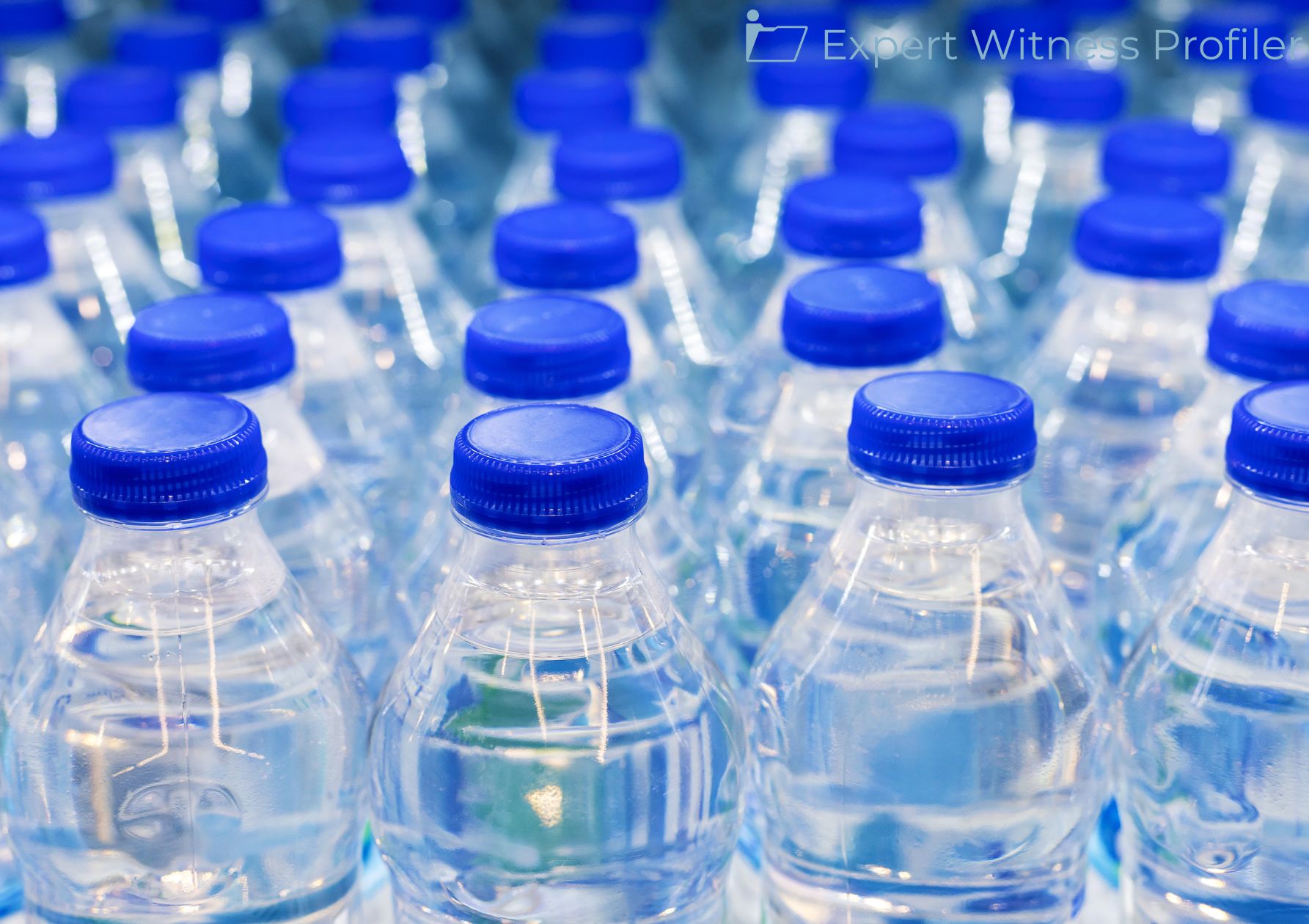
Plaintiff Tricia McFee asserted a negligence claim against Defendant BJ’s Wholesale Club, Inc. (“BJ’s”) under New York law, arising from a slip-and-fall accident in the bottled water display area on August 20, 2020, while she was at a BJ’s club in Brooklyn, New York.
Defendant filed a motion to exclude the testimony of Sterling Anthony, Plaintiff’s liability expert.
Packaging Expert Witness
Sterling Anthony is a certified packaging professional with over fifty years of experience. Anthony has a bachelor’s degree in packaging engineering from Michigan State University, a master’s degree in marketing and finance from Roosevelt University and has taken doctrinal courses in international marketing and logistics from Michigan State University.
He has published over two hundred articles in various trade journals related to marketing, packaging, and logistics, and has presented in “dozens” of seminars and conferences in the United States and abroad. Anthony has testified as a marketing, packaging, and logistics expert in depositions or at trials at least nineteen times since 2012.
Anthony opined that BJ’s knew or should have known that (1) “a slip-and-fall hazard was inherent to its bottled-water section”; (2) “compression is a force that’s inherent to palletized bottled water”; (3) “leakage from just one bottle will spread across a wide area of [the] floor”; (4) “it owes a duty to its invitees to maintain its premises in a safe condition, including against the hazard of slip-and-fall[s]”; (5) “scheduled walkthroughs were necessary, but not sufficient, as a safeguard against slip-and-fall[s] in the bottled-water section”; (6) “there are measures that can be taken to reduce the risk of slip-and-fall in the bottled-water section”; and (7) “it owed its invitees a duty to warn concerning the hazard of slip-and-fall in its bottle-water section.”
Qualifications
Defendant argued that Anthony is unqualified because he “lacked the scientific, technical or other specialized knowledge to opine on the liability issues relevant” to Plaintiff’s slip-and-fall.
Based on Anthony’s significant experience in packaging engineering, the Court found that Anthony has the “knowledge, skill, experience, training, [and] education” required by Rule 702 to offer opinions in this case relating to the packaging of palletized water bottles and the compression caused by their manner of packaging.
However, Anthony did not appear to have experience or training in shoe design and products. Because he lacked the qualifications or experience necessary to offer opinions regarding Plaintiff’s shoes, the Court excluded Anthony’s report and proposed testimony regarding whether Plaintiff’s shoes contributed to her fall.
Reliability and Relevance
First, Defendant argued that “Anthony failed to perform any testing or analysis of any kind” and that “his rudimentary ‘measurements’ of the unrelated Wellsley Farms water bottles were simply incorrect.”
Second, Defendant argued that Anthony’s report and findings are unreliable because he “has made no showing whatsoever how his experience led to his conclusions, why that experience is a sufficient basis for his opinions, how that experience has been reliably applied to the facts or whether he performed any measurements or compression testing of any kind.”
The Court excluded the portions of Anthony’s report and proposed testimony addressing whether Plaintiff’s injuries were caused by the compression failure of water bottles at BJ’s because they are not “based on sufficient facts or data” and did not “reflect a reliable application of the principles and methods to the facts of the case.” As Defendant argued, Anthony’s primary basis for concluding that compression failure led to a leak from the palletized water bottles was his analysis of a package of Wellsley Farms water from a different BJ’s club. It is undisputed that Plaintiff fell in front of the Poland Springs water display, and that the Wellsley Farms and Poland Spring waters were displayed separately.
Probative Value and Prejudice
Defendant argued that the Court should preclude Anthony’s testimony under Rule 403 because Anthony’s opinions have no probative value and would be prejudicial.
Anthony’s report and proposed testimony — specifically, the discussions of the general risks of compression failure in bottled water packaging — is not unduly prejudicial or confusing because knowledge of bottled-water packaging may be probative of the source of the water on which Plaintiff slipped.
Accordingly, the Court admitted only the portions of Anthony’s report and proposed testimony discussing the general risks of compression failure in bottled water packaging and excluded the portions regarding the causal relationship between the water condition at BJ’s and Plaintiff’s slip-and-fall.
Held
The Court granted in part and denied in part the Defendant’s motion to exclude the testimony of Sterling Anthony.
Key Takeaway:
Expert testimony is inadmissible under Rule 702 if it is not accompanied by a sufficient factual foundation. Anthony’s opinion regarding whether the water in which Plaintiff slipped resulted from compression failure is not reliable or relevant since it is based on his analysis of Wellsley Farms water and his own assertions that the Wellsley Farms water is representative of other water brands.
On November 4, 2019, the Plaintiff, Cook Logistics, LLC filed a complaint alleging breach of contract for damage its cargo allegedly suffered while the Defendant, Equipment Express, Inc. transported it from Canada to Washington.
The Defendant’s expert witness, Lawrence Dull, concluded that the “damaged equipment in this case was caused by the failure of the shrink wrap used to encapsulate the equipment” and that “the failure of the shrink wrap was predictable.”
On July 15, 2022, the Defendant moved for summary judgment on all claims. The Defendant attached a one-page document it identified as a supplement to the opinion of its previously disclosed expert witness, Lawrence Dull. The Plaintiff subsequently filed a motion to strike the supplement to Dull’s report.
Packaging Expert Witness
Lawrence Dull is an IoPP Certified Packaging Professional with a B.S. and an M.S. in Packaging Technology from Michigan State University. With over twenty-five years of experience in managing technical packaging development groups, he has held positions with Eastman Kodak Company, Calgon Corporation and Syngenta Crop Protection Inc. He holds nine U.S. patents in the field of packaging and has won several awards in national packaging design competitions.
The Court set a deadline of June 1, 2022 for the Defendant to disclose its expert witnesses. The Defendant did not disclose the addendum to Dull’s report until September 30, 2022.
While Dull’s original report repeatedly noted that low temperatures affect the strength of shrink wrap, it said nothing about whether the duration of time the shrink wrap spends at low temperatures exacerbates that effect. But the addendum stated that the time that the shrink wrap spends at lower temperatures is “not important.” Since the addendum introduced a new opinion, the Court rejected the Defendant’s argument that the addendum only elaborates on Dull’s existing opinion.
The Defendant argued that it obtained the addendum to respond to a new argument the Plaintiff raised in its opposition to the summary judgment motion, but that position is belied by the fact that the addendum is dated July 14, 2022—almost two months before the Plaintiff filed its opposition brief.
Withholding the addendum until reply smells of bad faith or (at minimum) willfulness on the Defendant’s part. The Court found that this prejudiced the Plaintiff, who had no opportunity to address the addendum, effectively giving the Defendant the final say on the matter. The Defendant has not demonstrated that its failure to disclose the addendum was either justified or harmless.
Held
The Court granted the Plaintiff’s motion to strike the supplement to Lawrence Dull’s report.
Key Takeaway:
The Defendant’s argument that the addendum only elaborates on Dull’s existing opinion is not persuasive. Dull’s original report stated throughout that low temperatures affect the strength of shrink wrap. It said nothing about whether the duration of time the shrink wrap spends at low temperatures exacerbates that effect. But the addendum stated that the time that the shrink wrap spends at lower temperatures is “not important.” That is a new opinion, not an elaboration.
This case arises out of Delta’s delayed donut wrapping system. In late 2021, Bon Appetit Danish, Inc. and Bon Appetit Specialty Snacks, LLC (collectively, “Bon Appetit”) and Delta Systems and Automation, LLC’s (“Delta”) entered into a set of three contracts for Delta to manufacture packaging systems for Bon Appetit’s baked goods.
But the donut packaging system failed to launch. After further testing failed to resolve the performance issue, Bon Appetit terminated all three contacts on April 14, 2023.
Bon Appetit sued Delta over a contract dispute involving Overwrapping Systems, claiming $6,214,505 in labor costs as direct damages resulting from Delta’s alleged breach. Bon Appetit’s expert, Joseph Wheat, testified that these labor costs were directly caused by Delta’s failure to deliver properly functioning systems.
Delta countered, arguing that the labor costs were consequential damages, barred by the Limitation of Liability provision, because they stemmed from Bon Appetit’s internal plan to use the Overwrapping Systems.
Delta moved to exclude Wheat’s testimony, asserting that the labor costs were derivative losses arising from circumstances that are particular to the contract or to the parties.
Additionally, Bon Appetit sought to introduce Lyle Rogalla as an expert to testify about the norms, customs, and practices, of the baked goods overwrapping industry.
Delta opposed, arguing that Rogalla was unqualified to testify specifically about donut overwrapping systems and that his opinions were unreliable under Rule 702.
Accounting Expert Witness
Joseph Wheat, CPA/ABV, CFF, is a Senior Vice President at J.S. Held, a global consulting firm specializing in a wide variety of forensic analysis.
A Certified Public Accountant licensed to practice in California since 1993, Wheat has over 20 years of experience testifying as an expert witness on economic damages issues in both federal and state court matters.
Wheat has performed numerous business valuation related to marital dissolutions, tax and estate matters and partnership disputes.
Lyle Rogalla has led the development of advanced packaging and food processing equipment, delivering innovative, high-value solutions that optimize production processes and reduce costs for clients ranging from small businesses to Fortune 100 companies.
His portfolio is enriched by 29 patents, encompassing both utility and design, for industrial and commercial applications. He has collaborated with over 100 machine manufacturers to deliver extensive automation and equipment solutions tailored to the clients’ specific needs.
A. Motion to Exclude Damages Opinions of Joseph Wheat
The Court considered Delta’s motion to exclude the opinion of Bon Appetit’s expert, Wheat, who attributed $6,214,505 in labor costs to Delta’s alleged breach of contract.
The core issue was whether these costs were direct damages, which may be recoverable, or consequential damages, barred by the the Limitation of Liability provision. Direct damages (also called general damages) flow “directly and necessarily from a breach of contract, or that are a natural result of a breach.”
Consequential damages (also called special damages) are “secondary or derivative losses arising from circumstances that are particular to the contract or to the parties.”
In this case, Bon Appetit’s labor costs are considered consequential damages since they stem from Bon Appetit’s unique plan to use the Overwrapping Systems to streamline production and eliminate certain employee positions, a point Bon Appetit will argue through Wheat’s evidence of the system’s added efficiency.
The Court excluded Wheat’s opinion concerning Bon Appetit’s labor costs pertaining to consequential damages.
B. Motion to Exclude Expert Opinions of Lyle Rogalla
Delta moved to exclude the opinion of Bon Appetit’s expert, Rogalla, arguing that he lacked the necessary qualifications to opine on donut overwrapping systems and that his methodology was unreliable under Daubert and Rule 702 due to an alleged lack of supporting facts or data.
The Court disagreed. It found that Rogalla was qualified to testify based on his decades of experience with “solutions for complex automation and packaging needs . . . with emphasis in the food industry,” including “packaging and process automation, the preparation of specifications for the machines and the goods handled by the machines, testing, and modifying the machines and specifications to address both process quality and efficiency.”
Insofar as the Donut System diverged from Rogalla’s experience with other food packaging systems, the Court held that it concerned the weight of his testimony, not its admissibility.
The Court also found that Rogalla had relied on a sufficient factual basis, including the Complaint, contract documents, Delta’s website, and federal regulations. Challenges to the depth or nature of that evidence, the Court concluded, were issues of credibility and weight, appropriate for cross-examination, not grounds for exclusion.
Held
The Court granted Delta’s Daubert motion to exclude Joseph Wheat’s opinions.
The Court denied Delta’s Daubert motion to exclude the testimony of Lyle Rogalla.
Key Takeaways:
Not all foreseeable damages are direct damages, as consequential damages may be “foreseeable and proximately caused by the breach of a contract.”
An expert might draw a conclusion from a set of observations based on extensive and specialized experience.
Case Details:
Case Caption:
Bon Appetit Danish, Inc. v. Delta Sys. & Automation LLC
Docket Number:
2:23cv04305
Court Name:
United States District Court for the Central District of California
This case involved a putative class action lawsuit filed by four Plaintiffs – Nicole Krause-Pettai, Christy Stevens, Kevin Bolden, and Errol Carreon – against Defendant Unilever United States, Inc. The Plaintiffs claimed that they were deceived into buying Unilever’s deodorant and antiperspirant products because the oversized packaging created the illusion that the products contained more than competitors’ same-weight items.
The Plaintiffs brought claims under California’s consumer protection laws – the Consumers Legal Remedies Act (CLRA), False Advertising Law (FAL), and Unfair Competition Law (UCL). They alleged that much of the volume in Unilever’s products was nonfunctional slack fill. The Plaintiffs sought class certification on the basis that Unilever engaged in unfair and deceptive trade practices.
Unilever moved for summary judgment and also filed motions to exclude the testimony of the Plaintiffs’ two expert witnesses, Dr. Sher Paul Singh and Dr. Forrest Morgeson III. Unilever argued that federal law preempted the Plaintiffs’ state law claims regarding slack fill in drugs and cosmetics. This was an issue of first impression in the Ninth Circuit.
Packaging Expert Witness
Sher Paul Singh, Ph.D. is a highly qualified packaging expert with over 26 years of faculty service at the School of Packaging, Michigan State University. He has been widely published on packaging topics, has testified on these subjects, and provided consulting services to companies on a wide range of packaging issues, including those related to slack-fill.
Marketing Expert Witness
Forrest V. Morgeson, III, PhD. is Associate Professor in the Department of Marketing, Eli Broad College of Business, Michigan State University. He also serves as the Co-Director of the Doctoral Program in Marketing. Morgeson teaches marketing management, marketing strategy, and marketing research courses to graduate students. Morgeson’s research focuses on customer satisfaction and customer experience measurement and management. He completed his Ph.D. in 2005 from the University of Pittsburgh.
Discussions by the Court
The Court first addressed the issue of federal preemption. It held that while California’s specific slack fill regulations were preempted by the federal Food, Drug, and Cosmetic Act (FDCA), the Plaintiffs could still bring state claims alleging that the degree of slack fill rendered Unilever’s products misleading under the general federal prohibitions against misleading containers.
The Court then turned to Unilever’s motions to exclude the opinions of both of the Plaintiffs’ expert witnesses – Sher Paul Singh and Forrest Morgeson III.
Singh, serving as an expert witness, asserted that the accused products contained roughly 20% to 25% less product compared to their available capacity, and he categorized this reduction as entirely nonfunctional in nature.
For Singh, the Court found several problems with the facts and data underlying his opinions. First, Singh’s opinions about the “accused products” only seemed to be based on testing two of the three product designs at issue. The data for the third design was omitted due to an alleged “minor copying error.” Second, among the designs Singh did examine, he only looked at two samples of each kind of deodorant or antiperspirant stick. The Court stated that a sample size of two was a statistically weak basis to support such broad conclusions.
Defendant also questioned the the lack of clarity regarding the precise number and types of products that Singh had tested and examined. His testimony on this matter was inconsistent, as he alternately mentioned having sampled “ten sticks total” or conducting tests at two different times with “ten sticks” once and “eight sticks” another time. Additionally, he mentioned having analyzed around “20, 25” sticks, but this data was not documented in his report. The tables he used to summarize his “weight” and “volume” calculations did not provide much insight into the underlying data, and it remained unclear whether his findings were based solely on the five sticks identified in the first table or if there was overlapping data between the two tables. Furthermore, the mention of five brand names suggested the potential inclusion of various products with differing formulations, sizes, and scents. Singh’s testimony regarding the number of product containers he “examined” was similarly inconsistent, with estimates ranging from 30 to 60. He meant for his product photographs next to tape measures to constitute “visible data,” but could not recreate the complete dataset during his deposition.
The Court also found problems with Singh’s testing methodology and application. His report detailed how he determined the “percentage of slack fill” by measuring the relative heights of product containers and their enclosed products. He also mentioned using an “electronic balance” to weigh the deodorant after extracting it from the container. However, it was only during his deposition that he shed light on the process he followed to extract the product from the casings, which yielded unpredictable results. Before extraction, he mentioned placing the deodorant in the freezer for about ten minutes, followed by a refrigerator set to approximately 35 to 45 degrees for an unspecified duration. Some samples did not come out as expected, and some even broke. Additionally, there were instances where the product was left in the bottom of the container, making it impossible to extract. The number of deodorant sticks affected by these procedures remained unknown, and Singh did not clarify how he overcame these practical challenges or ensured a complete specimen for measurement.
Unilever raised concerns, particularly regarding the volume test. They argued that Singh inexplicably removed the twist-bottom dispensing “platform and internal components” before calculating a deodorant container’s space, thereby inflating his “maximum capacity measurements” and failing to account for the volume or space occupied by the removed components. The Plaintiffs did not provide a direct response to this accusation. Instead, they pointed out that both sides’ experts found roughly the same amount of total empty space in their analyses. However, the crucial distinction in the case was nonfunctional empty space, and here, the calculations sharply diverged: Unilever’s expert contended it was 0%, while Singh asserted it was 100%.
In any event, it is unclear which brands and stick designs Singh subjected to this debatable measurement program.
Overall, the Court held that Singh’s opinions failed to meet the reliability requirements of Federal Rule of Evidence 702. His opinions were not based on sufficient facts or data. Nor were his principles and methods reliable or reliably applied. Thus, the Court excluded Singh’s testimony.
Morgeson provided expert opinions regarding consumer behavior, including the following assertions: Firstly, consumers were inclined to spend limited time scrutinizing package labeling information and typically assumed that larger packages contained more product; Secondly, consumers seldom examined or comprehended net weight labeling on product packages; Thirdly, owing to these consumer tendencies and their limited familiarity with slack fill, Morgeson suggested that the features of Unilever product packaging implied that Unilever customers received less product than they had expected.
For Morgeson, the Court questioned whether his general expertise in consumer behavior could be reliably applied to opinions about Unilever’s specific consumers. Morgeson did not gather any facts or data related to the products at issue . He referenced no studies concerning the deodorant and antiperspirant market. The Court held that without a foundation explaining why research on food consumers could be extrapolated to this market, there was too great an analytical gap between Morgeson’s data and opinions.
The Court found that Morgeson applied no discernible scientific methodology. He merely reviewed general materials and prior research. But he did not analyze any specific data related to Unilever’s products or consumers. As such, the Court held that Morgeson’s testimony was not based on sufficient facts or reliable methods, and excluded his opinions.
The Court also granted summary judgment to Unilever on the Plaintiffs’ negligent misrepresentation and fraudulent and unfair prongs claims, because the Plaintiff not only failed to show that general consuming public and targeted consumers would be misled but the Court also could not find any predicate violation of law despite the Plaintiffs’ allegations and the Plaintiffs were also unable to prove the labeling or packaging was false.
Held
In conclusion, the Court granted Unilever’s motions for summary judgment and to exclude expert testimony. It denied the Plaintiffs’ motion for class certification as moot in light of the summary judgment ruling. The Court entered judgment in favor of Unilever on all claims and closed the case on September 30, 2023.
Key Takeaways
– The Court applied the Federal Rules of Evidence 702 analysis to assess whether the expert opinions were admissible. It looked at whether the testimony would help the fact-finder, was based on sufficient data, and applied reliable principles and methods.
– The Court found major deficiencies with the facts, data, methodology, and application used by both of the Plaintiffs’ proposed experts, Singh and Morgeson.
– For Singh, the Court found his testing sample size was too small, his dataset was ambiguous and not properly documented, and his testing methodology yielded unpredictable results.
– For Morgeson, the Court found his general consumer research couldn’t be reliably applied to this specific product market. He had no data points related to deodorant and antiperspirant consumers.
– The Court held that neither expert satisfied the reliability and relevance requirements for expert testimony under Rule 702.
The key takeaway is that Courts will rigorously examine the basis, methods, and fit of proposed expert opinions. Deficiencies in facts, unreliable methodologies, or lack of applicability to the specific issues can warrant exclusion.