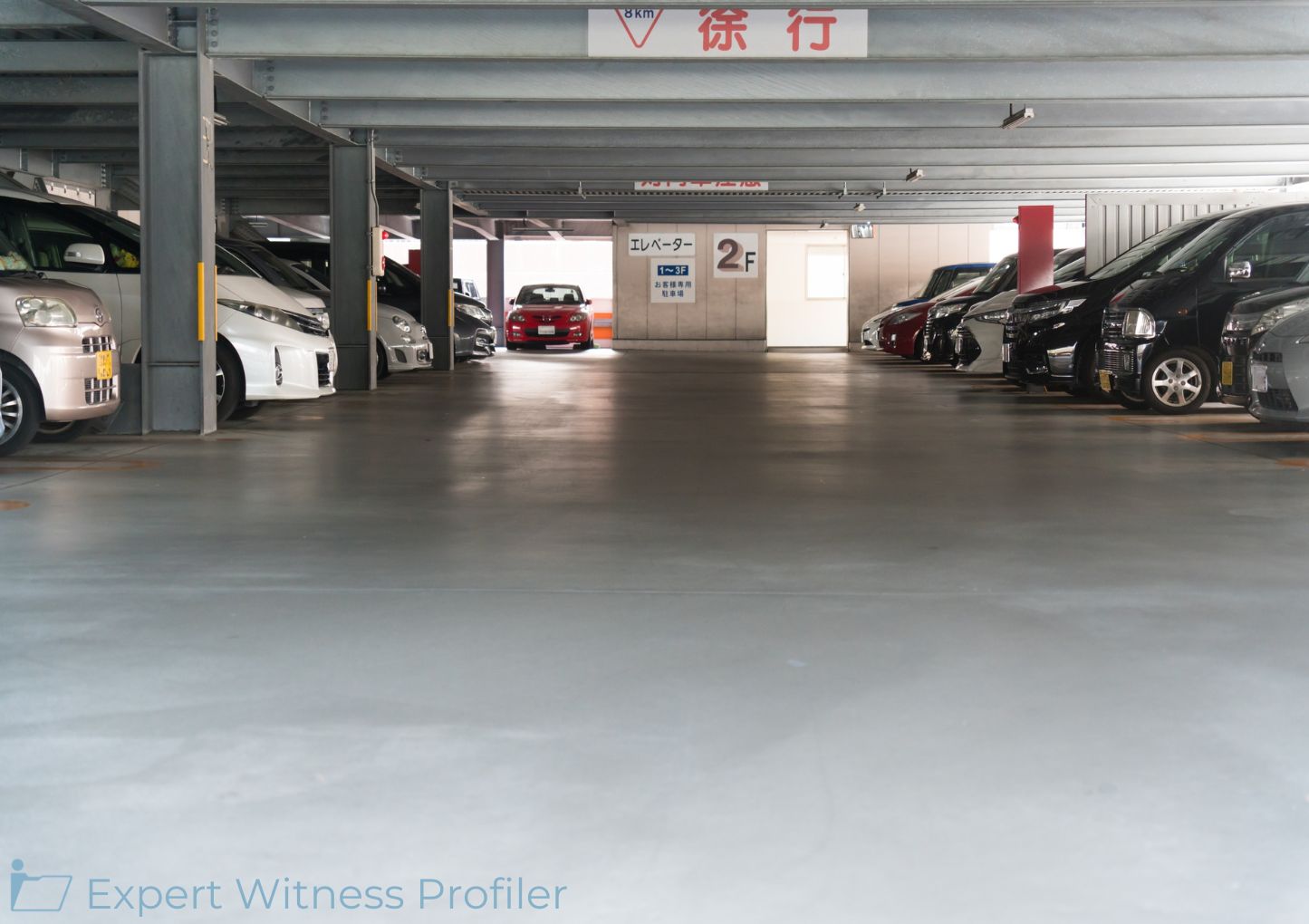
Plaintiffs Lisa Brun and Daniel Brun ( collectively, “Plaintiffs”) brought this action against Defendants PeakCM Lake Street Hotel, LLP, d/b/a/ Hampton Inn (“Hampton Inn”), the City of St. Albans (“St. Albans”), Integrated Technical Systems, Inc. (“ITS”), Cross Consulting Engineers, P.C. (“Cross”), and Conner Communications, Inc. (“Conner”) ( collectively, “Defendants”) arising out of the injuries Ms. Brun sustained after an access gate at a parking garage owned and operated by St. Albans unexpectedly closed on Ms. Brun. As a result, Plaintiffs asserted a claim of negligence against Defendants.
Hampton Inn filed a motion in limine to exclude the testimony of Plaintiffs’ expert, George W. Melchior, R.A., P.E., with respect to any duty Hampton Inn had to warn Plaintiffs not to park in the garage.
Parking Expert Witness
George William Melchior, R.A., P.E. is a licensed architect and professional engineer with over twenty years of experience.
Through his experience as a Facilities Management Director for the Department of the Navy and as a parking consultant, Melchior has extensive experience operating and maintaining millions of square feet of parking facilities throughout the northeastern United States.
Hampton Inn argued that Melchior’s opinions must be excluded because they: (1) are “not made within his expertise as a Registered Architect and Professional Engineer”; (2) are irrelevant; (3) are not the product of reliable principles and methods reliably applied to the facts; and (4) improperly usurp the jury’s role in applying the law to the facts.
Analysis
Melchior’s opinion regarding Hampton Inn’s duty to Plaintiffs is grounded in his education and experience in operational risk management rather than his expertise in architecture and engineering.
Because the jury can determine for itself whether it was reasonable for Hampton Inn to direct Plaintiffs to the garage if it knew the garage prohibited or posed a danger to motorcyclists, Melchior’s opinion regarding Hampton Inn’s duty is not helpful to the jury, usurps the role of the Court, and is therefore inadmissible.
It is, after all, the Court’s responsibility to decide whether a duty exists.
Held
The Court granted Hampton Inn’s motion in limine to exclude the opinion of George W. Melchior.
Key Takeaway
It is the Court, not an expert witness, who instructs the jury on whether a duty exists and, if so, the law governing that duty.
Plaintiff, Mary Lynn Feakes, brought this premises liability action, alleging negligence related to a slip and fall accident that occurred on Washington Metropolitan Area Transit Authority’s property on June 5, 2021.
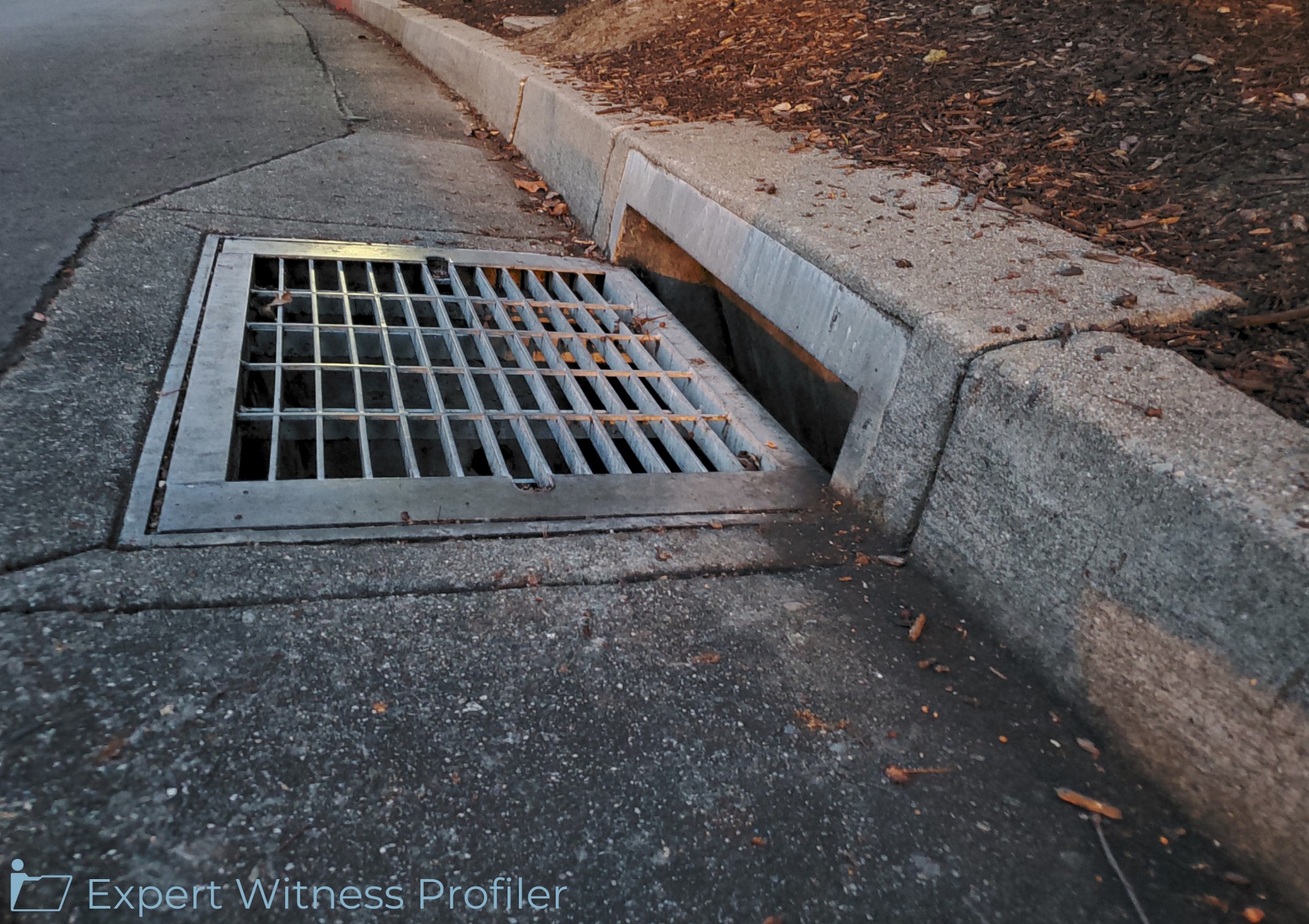
Feakes alleged that she slipped and fell on an unidentified mud-like substance in a parking space while walking from her parked car to the Shady Grove Metro Station.
Plaintiff has designated Mr. Raymond P. Stoner to testify that a hazardous condition existed in the parking garage where she fell. Defendant filed a motion to exclude the testimony of Stoner.
Parking Expert Witness
Raymond Paul Stoner has worked in the parking industry for forty years. His experience includes management and administration of large complex parking operations. This experience has included structured parking facilities in commercial, municipal, hotel, hospital, and transit operations.
During his tenure, he has also held the position of Parking Manager at the Washington Metropolitan Area Transit Authority. He held the position of Director of Parking for the City of Norfolk, Parking Division. An organization that has 20,000 garage and surface lot spaces.
A. Stoner May Testify In Support of Plaintiff’s Surviving Negligence Theory
There are three relevant issues in Stoner’s report: first, as to whether the exception to sovereign immunity applies, if the evidence suggested Defendant abided by its internal cleaning schedules; second, as to whether the failure to do so constituted a breach of duty, if industry standards require compliance with Defendant’s cleaning schedules; and third, as to causation, whether the condition of the clogged drain could have caused Plaintiff’s fall.
As to both the first and third issues, Stoner offered opinions as to what the drain’s condition evidences regarding how often Defendant cleaned it and the danger that arose when it was not cleaned.
Stoner expanded on such analysis in his deposition as well, noting that “the amount of silt . . . next to the drain where [Plaintiff] fell is . . . pretty excessive and is evidence of the drain and the silt and the mud around it not being cleaned up for quite some time.”
Such testimony is permissible, as it relates directly to Plaintiff’s claim that WMATA was negligent in failing to abide by its own cleaning policies.
As to the second issue, Stoner may opine on whether Defendant’s practices align with broader industry standards, as Plaintiff must establish that Defendant’s failure to comply with its policy constituted a breach of the duty of the care.
However, he may not, for example, testify as to whether Defendant should have abided by “[i]ndustry standards outlined by National Associations” or treatises such as the National Parking Association’s Parking Facility Maintenance Manual, as WMATA is immune to a challenge attacking the sufficiency of its policies.
The Court will permit Stoner to testify, but within the confines detailed above.
B. Stoner’s Opinions are Based on Sufficient Facts or Data and His Methodology is Reliable
Defendant attacked Stoner’s methodology as well as the factual basis for his conclusions. However, Stoner explained how he arrived at his conclusion.
Defendant also objected to Stoner’s decision to not conduct a site visit. The Court was not persuaded. After all, Stoner relied on photographs, the body-worn camera footage, and the depositions of relevant witnesses.
While a site visit may have been beneficial, Stoner’s failure to conduct a site visit does not automatically require exclusion. As Stoner explained, a site visit “was not necessary” in this case because the photographs and video depicted the conditions in the parking garage on the day of the incident, whereas a later site visit would reflect changed conditions—which are less relevant to this case. The same is true of Defendant’s attacks premised on Stoner’s completion of his report in less than six hours, and his failure to test the grate at issue.
Finally, Defendant argued that the photos Stoner reviewed “do not reliably depict the conditions at the time of the incident” because “Stoner admitted that he did not know when the photos he reviewed were taken,” and that in Plaintiff’s deposition, she stated “all the grate photos were taken at least a month after the incident.”
The Court disagreed. There are two relevant sets of photographs: one set taken by the Officer on the scene on the day of the incident, and a second taken approximately one month later. During his deposition, Stoner had stated that he reviewed the photos from the day of the incident, as well as the body-worn camera footage.
C. Stoner’s Testimony May Be Useful to the Jury
The Court held that Stoner’s opinions may be useful to the jury because lay persons are generally unfamiliar with the manner and speed at which sediment builds up surrounding a grate in a parking garage; accordingly, his testimony may better allow the jury to assess whether Defendant adhered to its cleaning schedule.
Held
The Court granted in part and denied in part the Defendant’s motion to exclude the testimony of Raymond Stoner.
Key Takeaway:
Federal Rule of Evidence 702 requires that the opinions of expert witnesses be “based on sufficient facts or data” and be “the product of reliable principles and methods” which have been reliably applied “to the facts of the case.” Stoner’s opinions are not pure speculation, but are grounded in a review of the facts at hand based on his experience in parking operations.
Case Details:
Case Caption:
Feakes V. Washington Metropolitan Area Transit Authority