Plaintiff Manuel G. Milan commenced this action against New Jersey Transit Rail Operations, Inc. seeking damages for injuries sustained to his ankle and low back under the Federal Employers’ Liability Act.
Defendant challenged the expert medical opinions of Dr. Aaron Bellew, DPM and Dr. Jason Smith, M.D. Bellew and Smith offered testimony as to the Plaintiff’s disability, permanency of injuries and limitations.
Podiatry Expert Witness
Aaron Bellew holds a Bachelor’s degree from St. Francis College and a medical degree from the New York College of Podiatric Medicine. He completed a four-year residency in Foot & Ankle Trauma/Reconstructive Surgery at New York Hospital, Queens, and has advanced training in various surgical techniques from New York-Presbyterian/Columbia University Medical Center. He is a member of the American College of Foot & Ankle Surgeons and the American Podiatric Medical Association.
Dr. Jason Smith is board-certified in physical medicine and rehabilitation. He earned his medical degree from UMDNJ-New Jersey Medical School, completed a physiatry residency at JFK-Johnson Rehabilitation Institute (serving as chief resident), and a fellowship in interventional spine and sports medicine at Coordinated Health in Bethlehem, PA. He practices at Atlantic Medical Group, emphasizing patient-centered care.
The Defendant moved to dismiss the Plaintiff’s case, arguing their experts’ opinions were inadmissible. The Plaintiff countered that expert testimony wasn’t even needed, but if it was, one expert (Bellew) was qualified. The Court, noting the Plaintiff’s burden to prove admissibility, found the parties’ arguments regarding Bellew insufficient for a ruling. Therefore, the Defendant’s motion was denied without prejudice on that point, allowing them to re-argue Bellew’s admissibility and address the qualification, reliability and fit prongs later. However, the Plaintiff conceded the inadmissibility of the other expert’s (Smith) causation opinion, so the Court granted the Defendant’s motion regarding Smith.
Because the Defendant failed to adequately brief the Daubert issues, the Court is not in a position to evaluate the Plaintiff’s ability to prove medical causation.
Held
The Court granted in part Defendant’s motion with respect to excluding Dr. Jason Smith’s opinion.
Key Takeaway:
While the Court excluded one expert’s opinion (Smith) due to the Plaintiff’s concession, it deferred ruling on the admissibility of another expert’s opinion (Bellew) due to the Defendant’s inadequate legal arguments, specifically regarding the Daubert standards. Furthermore, the Court was unable to rule on medical causation due to the Defendant’s improper briefing of the Daubert issues. This emphasizes the importance of proper legal briefing, especially regarding expert testimony, and the Court’s adherence to Daubert standards for admissibility.
Case Details:
Case Caption:
Milan V. New Jersey Transit Rail Operations, Inc.
Docket Number:
2:18cv13735
Court:
United States District Court for the District of New Jersey
Florida Southern District Court decided that a podiatry expert witness’ causation theory with regard to severe burns was admissible after she compared and contrasted the Plaintiff’s health before and after the incident.
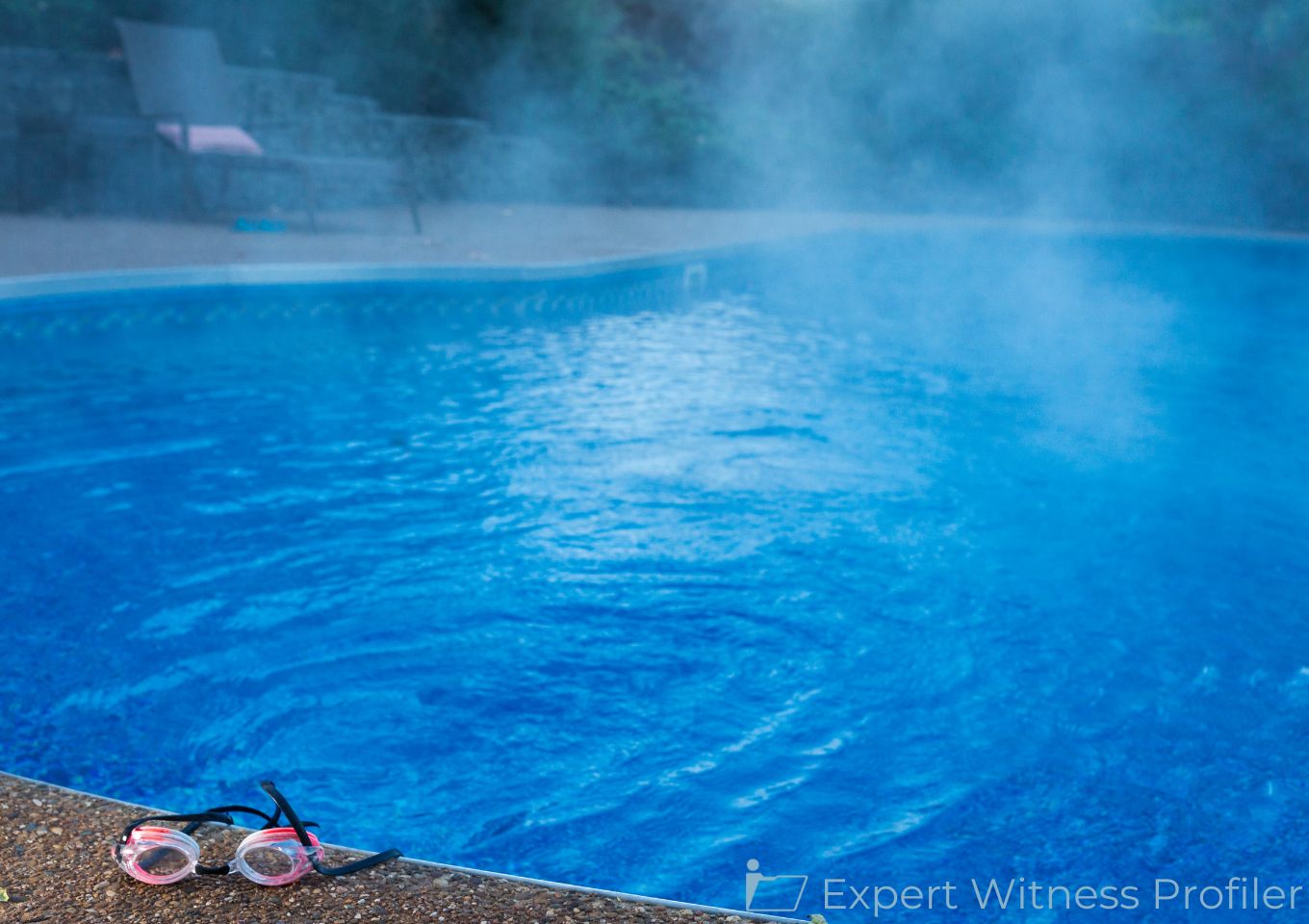
This is a negligence action in admiralty for damages the Plaintiff suffered while vacationing aboard the Explorer of The Seas on May 14, 2022. The Plaintiff alleged that on May 14, 2022, he sustained severe burns on the soles of his feet while standing on the ship’s heated pool deck. The Plaintiff sought treatment on board, and medical staff diagnosed him with second-degree burns. The Plaintiff’s expert witness and treating podiatrist, Dr. Julia Shauger, evaluated the Plaintiff on May 25, 2022, upon his return home and diagnosed the Plaintiff with third-degree burns to the “entire surface plantar feet.” Shauger also stated that the Plaintiff’s diabetes and neuropathy were complicating factors.
Defendant sought to exclude Shauger’s opinion on three grounds: (1) she provided speculative opinions and testimony about the costs of future care; (2) her opinions on causation were unreliable; and (3) Shauger’s expert disclosure was deficient under Federal Rule of Civil Procedure 26(a)(2).
Podiatry Expert Witness
Julia Shauger, DPM is a board-certified podiatric physician and surgeon with nearly 30 years of experience and specialties in cryoskin, laser fungal toenails, and minimally invasive surgery. Shauger earned her Bachelor of Science in Biology from St. Xavier University before attending the prestigious William M. Scholl College of Podiatric Medicine in Chicago, IL., where she graduated with a Doctorate of Podiatric Medicine in 1993, followed by postgraduate training in podiatric primary care, orthopedics, and surgical medicine. Shauger maintains membership with several leading organizations in her field, including the American Podiatric Medical Association, the American Podiatric Women’s Association, and the American Academy of Podiatric Sports Medicine. She is licensed to practice in both Illinois and Indiana, and speaks three languages: English, French and Spanish.
Discussion by the Court
Shauger could only speculate as to the costs of a future procedure of which the Plaintiff is not currently a candidate
Defendant challenged the reliability and helpfulness of Shauger’s testimony. First, Defendant contended Shauger “could only speculate . . . as to the costs of a future procedure of which the Plaintiff is not currently a candidate.” Shauger referred to her medical procedure codes that estimated the cost of laser oblation, if necessary to treat the Plaintiff’s burned feet, somewhere between $138 to $142 per foot with another roughly $5,000 to $20,000 in hospital costs. Defendant believed this was too speculative to satisfy Daubert.
The Plaintiff has been a patient of Shauger since October 2022 for fungal infections, ingrown toenails, and diabetes affecting his feet. Shauger stated that before the alleged incident, the Plaintiff did not have burns, blisters, lesions, or injuries to either foot.
Moreover, based on the Plaintiff’s injury and her records, she was sure that the Plaintiff’s description of the injury was consistent with the burn injuries she observed on May 25, 2022. Lastly, any nerve damage the Plaintiff sustained was caused by the alleged incident.
Shauger added, “The codes I would bill are really negligible.” In reaching her medical conclusion, she looked at her medical notes only. Moreover, she stated that ensuring the Plaintiff always stays protected would rule out the need for procedure.
The Court held that even though Shauger could not state “how long or how much future treatment is going to cost,” but she did provide an estimate that built a meaningful connection between her experience and the cause of injury.
Shauger’s medical opinions were unreliable because she did not consult any other of the Plaintiff’s medical records or any of the depositions in this case
Second, the Plaintiff contended that Shauger’s medical opinions were unreliable because she did not consult “any other of the Plaintiff’s medical records or any of the depositions in this case.” Shauger ultimately opined that ship’s heated pool deck caused the Plaintiff’s burns by comparing the Plaintiff’s visits before the alleged incident and afterward.
Defendant contended that since Shauger did not consult shipboard medical records, the Plaintiff’s medical records, or any of the other depositions taken to form a proper causation theory, Rule 702(b) of the Federal Rules of Evidence disqualified her testimony. They challenged her opinion for failure to consult medical documents other than her own notes.
The Plaintiff, however, distinguished Morrow from the facts here because the treating physician in Morrow had not reviewed the Plaintiff’s pre-incident medical records. The Court found weight in this distinction. Shauger had evaluated the Plaintiff less than a month before the incident for an ingrown toenail and had seen him within days after the incident.
She testified at her deposition that the Plaintiff had feeling on his soles before the incident and had no lesions, burns, injuries, or blisters on either foot. Moreover, this Court has stated that future determinations do not need to be airtight.
Defendant contends Shauger did not comply with Rule 26(a)(2) by providing details regarding her “qualifications, education/training, and professional experience“
If the Court were to find that Shauger’s disclosure was pursuant to Rule 26(a)(2)(B), Shauger should be excluded because there was no written report, proper CV, fee schedule, or testimonial history provided with the disclosure as listed. If the Court were to give the Plaintiff the benefit of the doubt, Shauger could be considered to have been disclosed by the Plaintiff as a non-retained expert, treating physician, which would make Shauger’s disclosure subject to Rule 26(a)(2)(C) disclosure requirements.
Defendant’s argument appeared to boil down to the Plaintiff not meeting the requirements of a Rule 26(a)(2)(C) non-retained expert. Defendant added that the Plaintiff provided no summary of facts and instead included “an ineffective list of broad, proposed opinions.”
A treating physician/non-retained expert complies with Rule 26(a)(2)(C) when she provides “the subject matter and a summary of facts and opinion as to which [she] [is] expected to testify.” Disclosure under Rule 26(a)(2)(c) follows a much more flexible standard than the required reporting in Rule 26(a)(2)(B) required for retained expert witnesses.
Shauger provided thirty-eight pages of medical reports concerning the Plaintiff before and after the alleged incident as Plaintiff’s treating physician. Additionally, the Plaintiff satisfied the “subject matter” prong of Rule 26(a)(2)(C) by describing Shauger’s background and explaining that she will provide testimony concerning “Plaintiff’s shipboard injury, the unreasonably hot ship’s deck as the case of his injury.”
Shauger based her theory of causation on her own examinations of the Plaintiff as his treating physician. Her medical reports would have ostensibly been made to evaluate and treat the Plaintiff—and not for pursuing litigation. As the Plaintiff’s podiatrist, Shuager concluded that the Plaintiff had third-degree burns and loss of mobility were likely caused from an extremely hot heating deck.
The Court found that the Plaintiff complied with the disclosure requirements of Rule 26(a)(2)(C).
Held
The Court denied the Defendant’s Daubert Motion to Strike the Testimony of Julia Shauger, M.D.
Key Takeaways:
Logical Conclusion: Shauger testified at her deposition that the Plaintiff had feeling on his soles before the incident and had no lesions, burns, injuries, or blisters on either foot. An expert comparing and contrasting a the Plaintiff’s health before and after the incident is fine, so long as the expert reaches a logical conclusion. These facts and the before-and-after reports would be reliable information helpful to a jury.
Absolute Certainty: Shauger could not state “how long or how much future treatment is going to cost,” but she did provide an estimate that built a meaningful connection between her experience and the cause of injury. “Absolute certainty” is not the aim of reliable expert testimony.
Disclosure Requirements: Disclosure under Rule 26(a)(2)(c) follows a much more flexible standard than the required reporting in Rule 26(a)(2)(B) required for retained expert witnesses.
Plaintiff Eric L. Hamilton, an inmate in the custody of the Illinois Department of Corrections (“IDOC”), filed this lawsuit pursuant to 42 U.S.C. §1983 against Defendants Dr. Mohammed Siddiqui, Dr. Stephen Ritz, Mary Jo Zimmer, and Wexford Health Sources, Inc. (“Wexford Defendants”), claiming his constitutional rights were violated while he was incarcerated at Menard Correctional Center. Specifically, Hamilton alleged that the Defendants were deliberately indifferent to his medical needs and retaliated against him.
The Wexford Defendants retained Robert M. Joseph as an expert witness. Joseph presented two opinions in his expert report: (1) there was no delay in the diagnosis of a bone infection in Mr. Hamilton’s second right toe by Dr. Siddiqui, and (2) there was no significant deviation in the standard of care delivered by Dr. Siddiqui in the treatment of Mr. Hamilton’s second toe bone infection that harmed Mr. Hamilton. Plaintiff did not challenge Joseph’s qualifications to serve as an expert. Rather, he sought to limit his opinions as to Dr. Siddiqui because they were irrelevant as to any other Defendant, exclude his second opinion as irrelevant to Plaintiff’s deliberate indifference claim, and exclude his first opinion as irrelevant, unreliable and more prejudicial than probative.
Podiatry Expert Witness
Robert M. Joseph is a double board certified in Foot as well as Reconstructive Rearfoot /Ankle Surgery by the American Board of Foot and Ankle Surgeons since 2012 and has been in clinical practice since 2006. He is an Associate Professor and former Department Chairman of the Department of Podiatric Medicine and Radiology at the Scholl College of Podiatric Medicine at the Rosalind Franklin University of Medicine and Health Sciences in North Chicago, Illinois.
He has contributed toward establishing the standards of podiatric medical education and certification for the profession through his activity with the Council of Podiatric Medical Education, the American Board of Foot and Ankle Surgeons, and the Council of Journal Management for the Journal of Foot and Ankle Surgery.
Discussion by the Court
First, Hamilton sought to limit Joseph’s opinions as to the conduct of Dr. Siddiqui because Joseph admitted that he had not addressed the conduct of any other Defendant. It appeared, however, that the Plaintiff was actually requesting the Court to limit testimony by Joseph that merely provided context for his opinions regarding Dr. Siddiqui’s conduct. Joseph did not opine on the conduct of any other Defendants in his report or deposition testimony. The Court found no basis to preemptively limit or narrow Joseph’s testimony in this regard.
The Court should exclude Joseph’s second opinion regarding post-operative care
Hamilton contended that Joseph’s second opinion related solely to post-operative care and should be excluded as to Plaintiff’s claims against Dr. Siddiqui. Plaintiff asserted a deliberate indifference claim for alleged inadequate treatment of his right foot from April 2018 until June 15, 2018. Joseph’s second opinion was that Dr. Siddiqui did not deviate from the standard of care in treating Hamilton’s right second toe bone infection. Specifically, Joseph opined that “Dr. Siddiqui promptly identified the possibility of gangrene and infection of Mr. Hamilton’s second toe.” While it appeared that Joseph’s second opinion, as articulated in his report, may have addressed post-operative care, which was irrelevant to Plaintiff’s claim, it was unclear. Thus, the Court refused to exclude the opinion at this juncture but stated that it would require an offer of proof at trial prior to Joseph’s testimony.
The Court should exclude Joseph’s first opinion regarding Dr. Siddiqui’s treatment for bone infection
Hamilton also argued that Joseph’s first opinion was irrelevant, unreliable, and should be excluded as being more prejudicial than probative. The Court disagreed since Joseph’s first opinion about Dr. Siddiqui’s diagnosis and referral out to a hospital for a bone infection laid out historical and factual rationale as to Dr. Siddiqui’s evaluation and treatment of Hamilton. It concluded that “Dr. Siddiqui’s off-site transfer of Mr. Hamilton to SIH Memorial Hospital of Carbondale on 6/15/18 was appropriate and expeditious hence there was no delay in the diagnosis or treatment of Mr. Hamilton’s second toe infection on 6/15/18.” It also found that Joseph’s opinion was relevant to Hamilton’s claims, and his opinion and testimony would assist the jury with its analysis of those claims.
Hamilton was free to address the weight and credibility the Court should afford to Dr. Joseph’s opinions via cross-examination, contrary evidence and experts, limiting instructions, and argument to the jury. There was no basis for this Court to specifically exclude Dr. Joseph’s opinions as to the other Defendants.
The Court rejected Hamilton’s conclusory statement that the Court should exclude Dr. Joseph’s testimony under Rule 403 based on its ability to confuse and mislead the jury concerning an issue immaterial to the actual claims in this case. The Court held that the statement lacked the support of any specific reference.
Held
The Court denied Plaintiff’s Motion to Exclude the Expert Testimony of Robert M. Joseph under Rules 403 and 702.
Key Takeaways:
Scope of Expert Testimony: The Court addressed the scope of expert testimony, noting that the expert’s opinions should be relevant to assess the claims made against the Defendant in question.
Exclusion of Opinions: The Court may exclude certain expert opinions if they are irrelevant, unreliable, or more prejudicial than probative. However, such exclusion is not automatic and depends on the specific circumstances of the case.