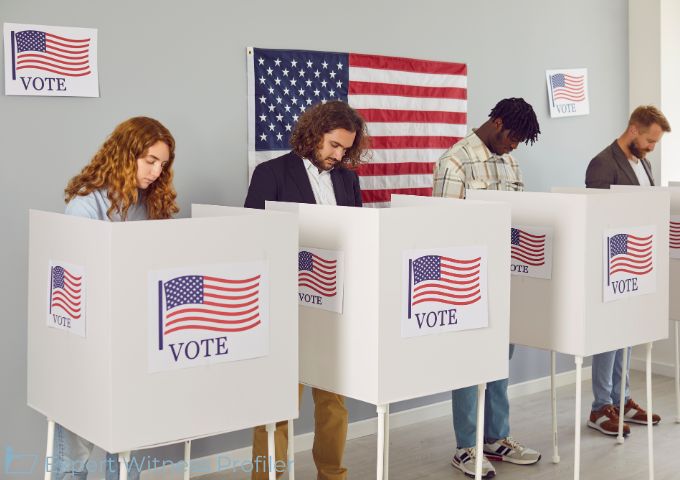
This case concerns Plaintiff Alison Kareem’s facial and/or as applied constitutional challenge to “ballot selfie” laws, a categorization of long-standing prohibitions on displaying election ballots. With fingertip access to smartphone cameras, voters can take pictures of their completed ballots and immediately post them on social media sites. This action and the statutes come under review.
Kareem asserted that the laws did not satisfy the requisite level of scrutiny and are overbroad.
Plaintiff contested the Court’s ability to consider the report of Dr. E. Scott Adler, the State’s expert, arguing that it is not admissible and did not satisfy the Daubert factors.
Political Science Expert Witness
Prof. E. Scott Adler received his Ph.D. in Political Science from Columbia University in 1996, and has been teaching in the Department of Political Science at the University of Colorado Boulder since 1996. Adler’s specialty is American politics, with a focus on the U.S. Congress, congressional organization and reform, elections, and constituencies. Since 1992, he has taught general courses in American politics, including the history, administration, and implications of elections and voting.
According to Adler, protecting the secrecy of the individual vote has been a central tenet of electoral law in nearly every state in the U.S. for well over a century. The long-held importance placed on election ballot secrecy in democracies has been motivated by three primary aims: protecting the right to privacy of personal political beliefs; discouraging the use of coercion against voters; and preventing vote buying.
Adler also clarified that employer-induced political activity is relatively common in contemporary America.
Plaintiff contended that the report reflected Adler’s personal opinions; relied on anecdotal evidence; is not supported by “legitimate methodology;” has not been peer reviewed; and failed to consider other potential causes or remedies.
Adler draws from a range of historical sources and contemporary research related to election privacy and integrity, which is sufficiently more than anecdotal evidence.
The Court found that his methodology is an accepted approach in the field of political science, which reliably supports his opinions.
Held
The Court did not discount or exclude Dr. E. Scott Adler’s expert report.
Key Takeaway
In making such determinations, courts consider a non-exhaustive list, known as the Daubert factors, which include testing, peer review, publication, known or potential error rates, and “general acceptance within a relevant scientific community.”
But the Daubert factors are not a checklist, and the reliability inquiry can depend on “the nature of the issue, the expert’s particular expertise, and the subject of his testimony.”
On September 12, 2025, Maik Evert Ens Loblein (“Petitioner”) filed the Petition for the Return of Children to Paraguay pursuant to the Hague Convention. The Petition asserted that Roxana Andrea Alcaraz de Ens (“Respondent”) unlawfully retained in the United States two children who habitually reside in Paraguay. On September 15, 2025, Petitioner filed an Amended Verified Petition for the Return of Children to Paraguay.
On September 18, 2025, pursuant to the Court’s order, a temporary restraining order was entered preventing the removal of the two minor children, S.I.E.A. and M.A.E.A., from their location within the jurisdiction of the Court. By stipulation of the parties in this matter, the Temporary Restraining Order was extended until further order of the Court after the Amended Verified Petition for the Return of Children to Paraguay is resolved on its merits.
Respondent designated Dr. Aníbal Pérez-Liñánto offer expert testimony regarding Paraguay’s legal system, including its institutional capacity to protect victims of domestic violence, enforce protective orders, and maintain an effective system of criminal accountability.
Petitioner filed a motion to exclude the testimony of Respondent’s expert Aníbal Pérez-Liñán.
Political Science Expert Witness
Aníbal Pérez-Liñán is a Professor of Political Science and Global Affairs at the University of Notre Dame as well as Director of the Kellog Institute for International Studies.
He holds a doctoral degree in political science, with a specialization in Latin American Political and legal institutions.
He has authored two books related to Latin American political systems peer-reviewed publications in the American, Journal of Political Science, Comparative Politics, and others, and served in editorial leadership on major academic journals. Additionally, his research includes Paraguay’s compliance with the Inter-American Commission on Human Rights, and he has served as a consultant for the Paraguayan Supreme Court to prepare a report on Paraguay’s compliance with human rights laws, which includes domestic violence.
Whether the Specialized Knowledge of Aníbal Pérez-LiñánWill Assist the Trier of Fact
Petitioner argued that Aníbal Pérez-Liñán’s experience is insufficient to support his opinions regarding the ability of Paraguay’s legal system to address cases of domestic violence. The Court disagreed.
In other words, Aníbal Pérez-Liñán’s experience and knowledge are sufficient to qualify him as an expert on Paraguay’s legal system, including its institutional capacity to protect victims of domestic violence, enforce protective orders, and maintain an effective system of criminal accountability.
While Aníbal Pérez-Liñán has conceded he would not consider himself an “expert on domestic violence in the Paraguay legal system” he would consider himself “an expert of the Paraguayan legal system more broadly.”
The lack of specialized knowledge of domestic violence in the Paraguay legal system would go to the weight of the testimony, to be judged by the trier of fact, and not serve to disqualify Aníbal Pérez-Liñán as an expert. Therefore, Aníbal Pérez-Liñán possesses sufficient knowledge and experience such that his opinion would help the trier of fact evaluate the extent to which the minor children would be sufficiently protected by the Paraguayan legal system, which clearly informs the “grave risk” analysis under the Hague Convention.
Whether Aníbal Pérez-Liñán’s Testimony is the Product of Reliable Principles and Methods
Petitioner argued that Aníbal Pérez-Liñán’s opinion is not the product of reliable principles or methods.
In support of this assertion, Petitioner claimed that Dr. Aníbal Pérez-Liñán “relies on a single, moldy study that analyzed a small handful of cases, along with two newspaper articles.”
However, Aníbal Pérez-Liñán testified that he reviewed Paraguayan statutes and regulations governing domestic violence, analyzed institutional reforms dating back over two decades, examined NGO, government, and international data repositories, and consulted institutional actors to confirm real-world practices.
As an experiential expert witness, Aníbal Pérez-Liñán’s methodology need not necessarily be supported with peer-reviewed journals and testable methodologies. These are all standard methodological tools of a type that would be reasonably relied upon by experts in Aníbal Pérez-Liñán’s field.
Thus, on the record here, the Court is satisfied that methodologies employed by Dr. Aníbal Pérez-Liñán are the product of reliable principles and methods under the requirements of Daubert.
Whether Aníbal Pérez-Liñán Has Reliably Applied the Principles and Methods to the Facts of this Case
Petitioner raised no objection to whether Aníbal Pérez-Liñán has reliably applied the principles and methods to the facts of this case. However, this Court is satisfied that such generally accepted methodologies have been soundly applied to the facts here. In any event, the proper way to test the correctness and thoroughness of an expert’s opinions is through cross-examination and rebuttal evidence. If Aníbal Pérez-Liñán’s views are shown to be arbitrary or groundless, then the Court can give the testimony no weight.
Held
The Court denied the Petitioner’s motion to exclude the testimony of Respondent’s expert Aníbal Pérez-Liñán.
Key Takeaway
For testimony that is primarily experiential in nature as opposed to scientific, there are meaningful differences in how reliability must be examined. Inquiries into testability, peer review, and error rates may not necessarily apply. Instead, a Court may focus on whether the experiential expert “employs in the courtroom the same level of intellectual rigor that characterizes the practice of an expert in the relevant field” and whether the expert’s reasoning or methodology has general acceptance in the relevant professional community.
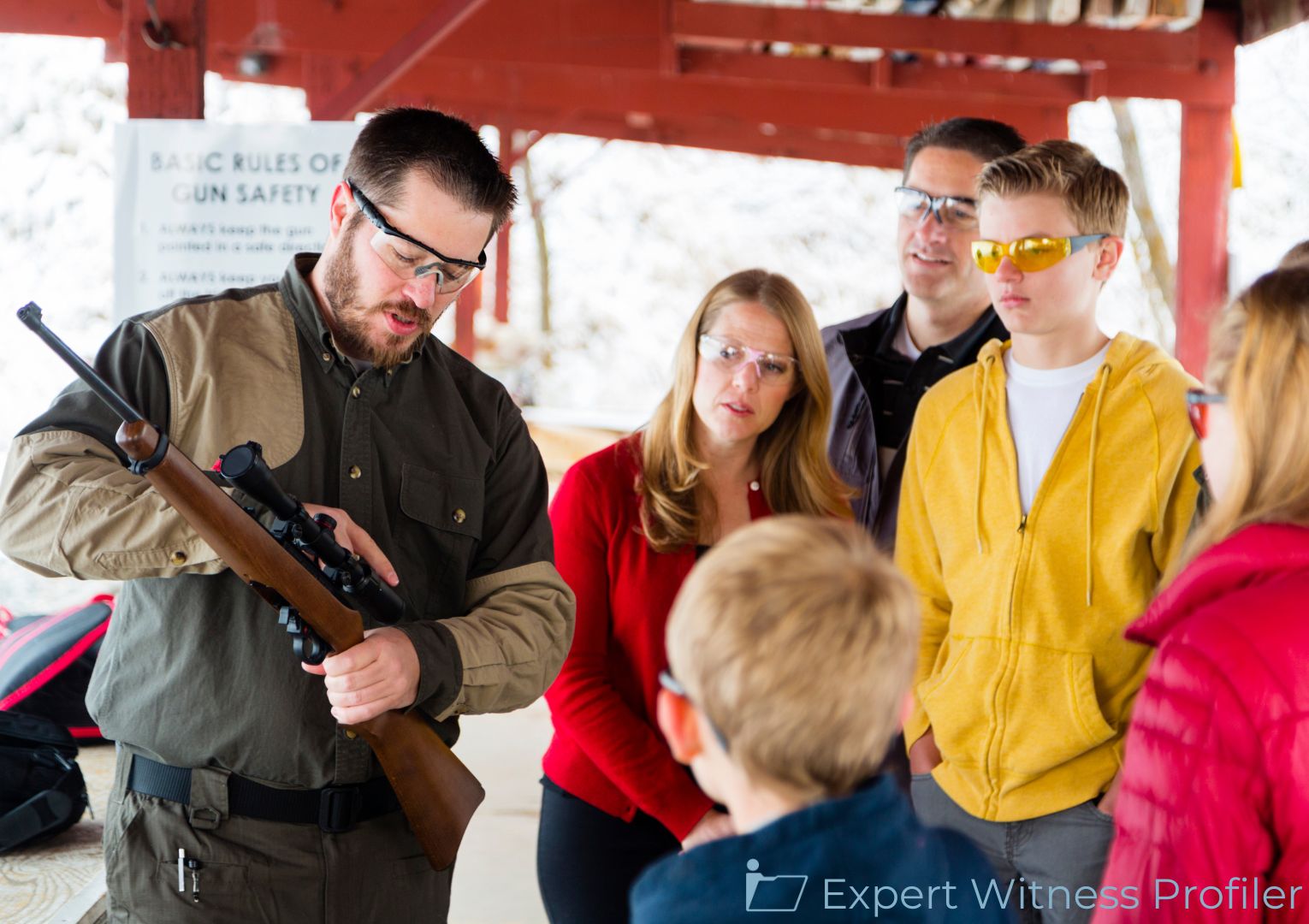
A district judge in Vermont refused to exclude the testimony assessing the impact of gun laws presented by the State’s expert witnesses.
Plaintiffs, corporate entities affiliated with gun ownership and several Vermont residents, filed this action against Defendants, high-level Vermont state officials. Plaintiffs allege that 13 V.S.A. § 4021, which prohibits possession and sale of “large capacity ammunition feeding device[s],” and 13 V.S.A. § 4019a, which prohibits transfer of a firearm without a background check or expiration of a waiting period, are unconstitutional under the Second Amendment. On December 20, 2023, the Plaintiffs filed a motion for a preliminary injunction against the enforcement of the Vermont laws. A hearing on that motion is set for May 23, 2024. In anticipation of that hearing, Plaintiffs filed a motion to bar the State’s expert witnesses from testifying.
Economics Expert Witness
Lucy Allen is a Senior Managing Director of NERA Economic Consulting (“NERA”), a member of NERA’s Securities and Finance Practice and Chair of NERA’s Product Liability and Mass Torts Practice. She has analyzed issues related to mergers, ERISA claims, market microstructure, and alleged market manipulation and insider trading, including on complex financial instruments such as credit derivatives, futures, and swaps. She holds a bachelor’s degree from Stanford and three graduate degrees from Yale (M.B.A., M.A., and M.Phil.)
Dennis Baron is a Professor Emeritus and Research Professor at the University of Illinois, serving in both the English and Linguistics Departments. He holds a Ph.D. from the University of Michigan and did his dissertation on “historical aspects of the English language.” In addition to his scholarly publications, he writes frequently on language and technology issues in the news, and his essays have appeared in the New York Times, the Washington Post, the Chicago Tribune, and many other papers.
John Donohue is a law professor at Stanford Law School. He holds a law degree from Harvard and a Ph.D. in economics from Yale. He teaches a course on empirical law and economics issues involving crime and criminal justice and has “published extensively” on the impact of gun regulation (or the lack thereof) on crime.
Randolph Roth is a professor of history and sociology at The Ohio State University. He has a B.A. in history from Stanford and Ph.D. in history from Yale. He teaches and researches with a primary focus on “criminology and the history of crime.”
Robert Spitzer is a professor of political science at the State University of New York at Cortland. He is currently teaching at William and Mary Law School. He has a Ph.D. in government from Cornell and has written extensively on American politics and gun policy. Professor Spitzer’s “expertise includes the history of gun laws, gun policy in American politics, and related historical, legal, political, and criminological issues.”
The State sought to introduce Allen’s testimony on “the number of rounds of ammunition fired by individuals using a gun in real-life self-defense” and “the outcomes when large-capacity magazines are used in public mass shootings, including the associated number of casualties.”
Allen analyzed more than 736 incidents in the NRA Armed Citizen database and 200 news stories from a random sample of 4,800 detailing incidents of self-defense and found that “it is extremely rare for a person . . . to fire more than 10 rounds [when using a firearm in self-defense].” Her research revealed only two incidents “where more than 10 rounds were used.”
Allen also analyzed roughly 200 mass shootings from four different sources between 1982 and 2022 and found that “(1) large-capacity magazines are often used in mass shootings; (2) both injuries and fatalities were higher in mass shootings that involved large-capacity magazines than in other mass shootings; (3) it is common for offenders to fire more than 10 rounds when using a large-capacity magazine in mass shootings; and (4) the majority of guns used in mass shootings were obtained legally.”
The Court held that her expert testimony made a “fact that is of consequence to the determination of the action” – namely, how LCMs are used – “more or less probable than it would be without” her testimony. Moreover, the underlying sources of Allen’s analysis – NRA data and news reports – are the kind that an expert would “reasonably rely” upon in forming an opinion on the subject.
Dennis Baron
Baron would testify that “during the Founding Era and the Reconstruction Era, ‘arms’ was used as a general term for weapons . . . but did not include ammunition [or] ammunition containers.” This is based on analysis of broader phrases such as “arms and accoutrements” which, in Baron’s opinion, were used to specify items (accoutrements) other than firearms themselves. Baron would also testify that he has found “no lexical evidence that either repeater firearms or repeater air guns were used as military weapons in England or America in the Founding Era, or that they were used as weapons of personal self-defense at that time.”
Baron’s analysis of the historical understanding of the term “arms” is relevant to determining whether the government’s regulation covers conduct protected by the Second Amendment. Resolution of that issue requires evaluating whether the restricted items – LCMs, in this case – qualify as “arms” under the Second Amendment. The Court held that Baron’s research is relevant to determining whether the regulation covers protected conduct requires textual analysis.
Plaintiffs stated that there is no way to use a firearm without ammunition, rendering magazines integral to “arms” within the meaning of the Second Amendment, but the fact that having some magazine may be crucial to keeping and using a firearm says nothing about whether governments may impose outer limits on those magazines, which is the question before the Court. Baron’s understanding of the historical context of these terms is relevant to this determination.
John Donohue
Donohue would testify that “restrictions on the size of large-capacity magazines . . . can be expected to reduce deaths and injury from gun violence.” He would also testify that “substantial empirical evidence illustrates that waiting periods prior to the purchase of weapons . . . will reduce suicides – particularly among young adults – and would be expected to reduce the risk of . . . enraged individuals buying firearms on the way to commit mass violence.” Finally, Donohue reported that restrictions on LCMs generally have “little or no effect on the ability of individuals to possess weapons for self-defense,” but “should have” a mitigating effect upon mass violence.
Donohue stated that “the problem of public mass shootings in the United States is a serious and worsening national problem.” He added that governments “began responding to this growing menace with . . . restrictions on the type of weaponry that facilitated mass shootings.”
Donohue’s declaration goes directly to the question of whether mass shootings are a social problem addressed by previous generations, or whether they are a novel challenge requiring legislative innovation.
This is a substantial consideration undergirding the historical analysis pursuant to Bruen and is therefore relevant to the case. The Court held that Donohue’s causal claims are not solely applicable to interest balancing frameworks. Empirical research on gun regulation and violence rates is relevant to the question of whether societal problems are new, and whether they correspondingly mandate new solutions.
Plaintiffs correctly asserted that “reasoning by analogy” from a contemporary firearm regulation to historical regulation is a “commonplace task” for a lawyer or judge. But reasoning by analogy requires an analog. That is what Donohue’s testimony purports to provide.
Randolph Roth
Randolph Roth would testify that increased American homicide rates correlate with “political instability, a loss of trust in government and political leaders, a loss of fellow feeling among citizens, and a lack of faith in the justice of the social hierarchy.” He would also testify that “the availability of guns,” especially “rapid-fire semiautomatic weapons and extended magazines in the late twentieth century, have pushed the homicide rate in the United States well beyond what it would otherwise have been.” Roth also wished to address colonial firearm restrictions and the gradual development of firearm regulations.
The Court held that Roth’s declaration demonstrated expertise in the history of violent crime and the relationship between “extended magazines” and the American homicide rate.
Plaintiffs asserted that Roth’s testimony focused primarily on the rise in violence stemming from “breechloading” guns, and that his declaration failed to evince a “dramatic technological change” or “unprecedented societal concern.” The Court disagreed because Roth’s declaration traced homicide and mass killing rates as compared to advancing gun technology, and concluded that the advent of submachine guns led to increased threats to “public safety” and governmental regulation.
Robert Spitzer
Spitzer’s declaration stated that “[t]he current controversy surrounding legislative efforts to restrict large capacity magazines (LCMs) would seem to be a purely contemporary matter, responding to the modern phenomenon of mass shootings.” He would testify to the prevalence of assault weapon and LCM restrictions around the country. He would also state that “restrictions on LCMs are historically grounded.”
With regard to waiting periods, Spitzer would testify that three features of the contemporary gun purchasing landscape explain the rise of gun purchase waiting periods. First, the rise of “mass production techniques” and “[r]paid, convenient, gun sales processes” are relatively new. Second, “no organized system of gun background checking could feasibly exist until the modern era.” And finally, “homicide rates in the colonies and early Federal era were generally low, and when homicides occurred, guns were seldom used because of the time involved in loading them, their unreliability, and (especially for pistols) their inaccuracy.” Additionally, Spitzer would testify that there are “similar, analogous historical gun laws” notwithstanding the lack of statutory waiting periods, such as “laws regulating weapons and intoxication, and weapons licensing laws.”
The Court held that Spitzer’s proposed testimony was relevant considering analysis of the history of political response to gun-related problems is central to the Court’s mandate in this case.
Rule 403 Objection
Plaintiffs stated that the Court should exclude the State’s expert testimony as “more prejudicial than probative” under Federal Rule of Evidence 403. Plaintiffs have not supported this contention with any detail, so that request is denied. Additionally, because the Court concludes that the State’s experts are admissible, it need not hold aDaubert hearing.
Held
The Court denied the Plaintiffs’ motion to exclude the State’s expert witnesses Lucy Allen, Dennis Baron, John Donohue, Randolph Roth, Robert Spitzer.
Key Takeaways:
The Court refrained from excluding Allen’s testimony on hearsay grounds because if expert testimony drawing statistical conclusions based upon database records were to be excluded as hearsay, nearly all expert testimony would be excluded.
Baron’s analysis of the historical understanding of the term “arms” is relevant considering the fact that having some magazine may be crucial to keeping and using a firearm says nothing about whether governments may impose outer limits on those magazines, which is the question before the Court.
Analysis of the history of political response to gun-related problems is central to the Court’s mandate in this case. Spitzer’s testimony deals with the history of American gun regulation, which is a verifiable issue of fact material to this litigation.
The risk of prejudice from overly broad testimony is substantially reduced because the Court is the finder of fact at this stage of litigation.
Case Details:
Case Caption:
Vermont Federation Of Sportsmen’s Clubs Et Al V. Birmingham Et Al
Tom’s a wholly-owned subsidiary of Tom’s of Maine Holdings, Inc., which, in turn, was a wholly-owned subsidiary of Colgate. Tom’s specialized in manufacturing personal care products, such as toothpaste and deodorant. The company marketed numerous toothpaste flavors and deodorant varieties as “natural”, which included 34 toothpaste flavors and 17 deodorant varieties, all of which were promoted as “natural” on their respective packaging. The packaging of each toothpaste and deodorant product featured a representation claiming the product’s “natural” nature.
Anne De Lacour, Andrea Wright, and Loree Moran, individually and on behalf of all others similarly situated (collectively, Plaintiffs), argued that the use of the word “natural” by the Colgate-Palmolive Co., and Tom’s of Maine Inc. (collectively, Defendants) on these products was false and misleading. They contended that the products in question contained ingredients, such as aluminum chloralhydrate, glycerin, propylene glycol, sodium lauryl sulphate, sorbitol, and xylitol, which were deemed “synthetic and/or highly chemically processed.” The Plaintiffs asserted that they suffered harm as a result of relying on Tom’s “natural” representations, as they were led to purchase the products at a premium price.
The Plaintiffs sought damages on behalf of themselves and three distinct classes – the “California Class,” the “Florida Class,” and the “New York Class.” Their claims were based on various legal provisions, including California’s Consumer Legal Remedies Act (“CLRA”), False Advertising Law (“FAL”), and Unfair Competition Law (“UCL”). In addition, the lawsuit invoked Florida’s Deceptive and Unfair Trade Practices Act (“FDUTPA”), New York’s General Business Law (“NYGBL”), and a claim for breach of express warranty.
After the discovery phase concluded, the Defendants filed motions for summary judgment, motions to exclude the Plaintiffs’ experts, Dr. Zhaohui Zhou, Brian M. Sowers, J. Michael Dennis and Colin B. Weir, and a motion for class decertification.
Market Research Expert Witness
Brian M. Sowers is a Principal at Applied Marketing Science, Inc. (AMS), a distinguished market research and consulting firm. With a career spanning since 1996, he has amassed extensive expertise in market research. Prior to AMS, Sowers held research positions at the Forbes Consulting Group. Throughout his career, he personally designed and executed numerous market research surveys across diverse modalities and populations. Sowers holds a Bachelor of Arts in History from Roanoke College and earned a Master of Business Administration from the University of Colorado.
Chemistry Expert Witness
Zhaohui Sunny Zhou holds a Bachelor of Science degree in Organic Chemistry from Peking University, Beijing, China, and a Ph.D. in Bioorganic Chemistry from The Scripps Research Institute, California. Zhou is currently serving as a Professor in the Department of Chemistry and Chemical Biology at Northeastern University, and also holds positions as Faculty Fellow of the Barnett Institute of Chemical and Biological Analysis and Affiliated Faculty of Bioengineering and Biology. With expertise in chemistry, biochemistry, and chemical biology, Zhou conducts research and teaches various aspects of chemistry related to natural products and derivatives.
Political Science Expert Witness
J. Michael Dennis holds a B.A. and an M.A. in Government from the University of Texas. He then earned his Ph.D. in Political Science from the University of Chicago. Dennis is currently the Senior Vice President at NORC and is also the President and Owner of JMDSTAT Consulting Inc. Prior to this, Dennis held the position of a Managing Director at GfK Custom Research LLC. With over 25 years of experience, Dennis specializes in designing and conducting surveys focused on the opinions, perceptions, attitudes, preferences, and values of consumers, voters, members of association, and citizens.
Economics Expert Witness
Colin B. Weir holds an MBA with honors from Northeastern University and a Bachelor of Arts degree in Business Economics from the College of Wooster. Weir has provided consulting expertise on diverse consumer and wholesale products cases, specializing in calculating damages for various product categories such as food, household appliances, herbal remedies, health/beauty care products, electronics, furniture, and computers. Weir is currently serving as the President at Economics and Technology, Inc., his work involves a range of economic analyses, including econometric and statistical analysis, multiple regression, surveys, statistical sampling, micro- and macroeconomic modeling, and accounting.
Discussion by the Court
Plaintiffs asserted that Tom’s labeling of its toothpaste and deodorant products as “natural” was deceptive, alleging the inclusion of synthetic or highly chemically processed ingredients. They sought damages under various legal provisions. To succeed, Plaintiffs had to prove that a “reasonable consumer” would likely be misled by Tom’s use of “natural.” The reasonable consumer standard required a probability that a significant portion of the public could be misled. In their evidence, Plaintiffs relied on an expert report, governmental guidance, definitions by Named Plaintiffs, internal documents, and Tom’s employees’ testimony. The admissibility and sufficiency of this evidence were challenged in the context of Tom’s Motion for Summary Judgment.
Expert Sowers, responsible for designing surveys on toothpaste and deodorant, aimed to assess consumer perceptions of Tom’s “natural” claims. Respondents viewed products with the contested labeling and answered a series of questions, focusing on whether the term “natural” conveyed the presence of “only natural ingredients,” “some natural and some artificial ingredients,” or “no natural ingredients” (only artificial). However, criticisms arose concerning the flaw in Sowers’s approach. He defined “natural” and “artificial” solely in relation to each other and failed to provide clear definitions, rendering the terms ambiguous. This lack of clarity undermined the meaningful interpretation of respondents’ answers, leading to the exclusion of Sowers’s report and testimony in the litigation.
Plaintiffs engaged Expert Zhou to opine on the “scientific merit” of Tom’s use of the word “natural” in describing its toothpastes and deodorants. Defendants contended he lacked the expertise to assess whether toothpaste and deodorant ingredients were “natural.”
Experts Dennis and Weir were engaged by the Plaintiff to provide evidence of classwide injury. Dennis conducted two surveys, one for Tom’s toothpastes and another for Tom’s deodorants. Based on those surveys, Dennis contended he could isolate a “price premium,” or portion of the market price consumers paid, that was attributable to the “natural” claim at issue. Weir, in turn, endorsed Dennis’s analysis and then used simple multiplication to calculate Plaintiffs’ claimed “price premium damages” (price premium x units sold) and “statutory damages” ($550 x units sold). Defendant argued that Dennis’ conjoint analysis suffered from numerous fatal defects and alleged that Dennis doctored the respondents’ answers. Defendant also added that Weir’s opinions were inadmissible on account of the lack of a specialized degree in the field of retail pricing.
Firstly, in their attempt to illustrate a reasonable consumer’s perception of “natural,” Plaintiffs cited governmental guidance, Named Plaintiffs’ definitions, Tom’s internal documents, and the testimony of Tom’s employees. However, this evidence fell short of establishing that a reasonable consumer interpreted Tom’s use of “natural” as an assurance that its products lacked synthetic or highly chemically processed ingredients. Instead, the evidence indicated diverse interpretations of the term “natural.”
There was no governmental guidance specifically addressing the use of “natural” labeling on personal care products, as acknowledged by Plaintiffs. The most relevant guidance pertained to food products, with differing interpretations from various agencies. In 1982, the United States Department of Agriculture defined “natural” for meat and poultry products as free of artificial flavors, colorings, chemical preservatives, and not more than minimally processed. The United States Food and Drug Administration (FDA) around 1988 stated that “natural” meant nothing artificial or synthetic had been included or added to the product beyond normal expectations. In 2015, the FDA sought public comments on the use of “natural” on food product labeling, receiving over 7,000 comments reflecting diverse interpretations, including “organic,” “minimally processed,” “chemical-free,” “hormone-free,” “non-GMO,” and “not ‘artificial’/’synthetic.’” Despite the comments, the FDA did not establish a formal definition for the term.
Given the absence of governmental guidance specifically addressing the use of “natural” labeling on personal care products and the lack of a consistent definition for “natural” in food products, Plaintiffs were unable to rely on governmental guidance to establish a reasonable consumer’s understanding of the term. This limitation was noted in a similar case, In re Kind, 627 F. Supp. 3d at 284, where it was emphasized that Plaintiffs could not depend on an objective, regulatory definition of “All Natural” to demonstrate a reasonable consumer’s understanding due to the nonexistence of such a definition.
Secondly, Plaintiffs’ reliance on Named Plaintiffs’ testimony to establish a reasonable consumer’s understanding of “natural” was deemed inadequate. The Named Plaintiffs failed to provide evidence indicating that their perspectives on the term aligned with those of a reasonable consumer, as opposed to reflecting their individual subjective beliefs. CitingHughes v. Ester C Co., 330 F. Supp. 3d 862, 872 (E.D.N.Y. 2018), the Court concluded that the Plaintiffs’ “conclusory allegations and ‘anecdotal’ testimony” were insufficient to create a genuine issue of material fact regarding deception.
Thirdly, Plaintiffs’ reliance on Tom’s internal documents and the testimony of Defendants’ employees to substantiate their theory of deception was rejected. Tom’s internal documents did not offer a foundation for determining a reasonable consumer’s understanding of “natural.” The statements made by Defendants’ employees were deemed reflective of individual views rather than representing the collective understanding of a reasonable consumer regarding the term “natural.”
Plaintiffs’ failure to present evidence supporting the claim that a reasonable consumer interprets “natural” as alleged resulted in the absence of a triable issue of fact regarding deception. Consequently, Defendants were deemed entitled to summary judgment concerning Plaintiffs’ claims under CLRA, FAL, UCL, FDUTPA, NYGBL, and breach of express warranty.
The remaining motions to exclude the reports and testimony of the experts Zhaohui Sunny Zhou, Colin B. Weir and J. Michael Dennis were denied as moot.
Defendants sought to decertify the classes, emphasizing the district Court’s obligation to monitor class decisions as the evidentiary record evolves. The Court may decertify a class if Rule 23 requirements are not met. A crucial Rule 23(b)(3) requirement is that common questions of law or fact must predominate over individual ones. Through the course of discovery, it became evident that Plaintiffs lacked support for their claim that reasonable consumers understood Tom’s use of “natural” to imply the absence of synthetic or highly chemically processed ingredients. The absence of generalized proof of deception led to a lack of common issues of fact, prompting the Court to decertify the classes.
Held
The Court issued a final ruling on January 04, 2024 granting Tom’s motion for summary judgment. Defendants’ motion to exclude the opinions of Sowers was also granted. Furthermore, Defendants’ motion to decertify the classes was granted. Lastly, any remaining motions by Defendants, including the motions to exclude Zhaohui Zhou, J. Michael Dennis and Colin B. Weir were denied as moot, implying that these motions were no longer relevant or necessary for consideration.
Key Takeaway
In the legal proceedings against Tom’s and Colgate, the expert testimony of Brian M. Sowers played a pivotal role in assessing consumer perceptions of the “natural” labeling on toothpaste and deodorant products. Sowers designed surveys to gauge how consumers understood the term “natural,” and his conclusions were challenged during the litigation. The Court ultimately excluded Sowers’s report and testimony, highlighting flaws in his approach. The Court found that Sowers defined “natural” and “artificial” solely in relation to each other, leading to ambiguity in respondents’ answers. This lack of clarity undermined the reliability of Sowers’s findings, contributing to the Court’s decision to grant summary judgment in favor of the Defendants. The exclusion of Sowers’s expert testimony reinforced the importance of clear definitions and methodologies in expert reports to establish a meaningful understanding of consumer perceptions in deceptive labeling cases.
This case concerned claims brought by Plaintiffs Miguel Coca and Alejandro Rangel-Lopez under Section 2 of the Voting Rights Act (“VRA”) and the Fourteenth Amendment’s Equal Protection Clause. Plaintiffs alleged that Defendants, the City of Dodge City and members of the Dodge City Commission, violated Section 2 by holding at-large elections for Commission seats. To support their claims at both summary judgment and trial, Plaintiffs submitted expert reports from Matthew Barreto and Rubén Martinez.
Barreto’s qualifications as an expert in voting rights cases were undisputed, and the Court found no need to enumerate them. It was established that Barreto possessed commendable credentials, significant acclaim, and a deep immersion in the academic discourse on voting rights in the United States, particularly concerning Latino voters. He was also a coauthor of eiCompare, a software designed for analyzing election results to evaluate racially polarized voting. At the time, Barreto held a teaching position at the University of California, Los Angeles (“UCLA”). The current case originated from a class project supervised by Barreto at UCLA, where he, along with attorney Chad Dunn, co-founded the UCLA Voting Rights Project. Notably, attorneys from the UCLA Voting Rights Group, including Chad Dunn, represented Plaintiffs in the case.
In the context of the present case, Plaintiffs relied on Barreto’s expert opinion to demonstrate that racially polarized voting existed in Dodge City, meeting the criteria outlined in the second and third Gingles factors. This reliance on Barreto’s testimony aimed to support the Plaintiffs’ claim under Section 2 of the Voting Rights Act, specifically regarding vote dilution, as established in Thornburg v. Gingles, 478 U.S. 30, 50 (1986).
In formulating his opinion, Barreto employed homogenous precinct analysis and ecological inference analysis, considering both endogenous and exogenous elections. His ultimate conclusion was that both Hispanics and whites in Dodge City consistently voted en bloc, and the cohesive white bloc votes hindered the election of preferred Hispanic candidates.
Barreto’s examination encompassed four Commission elections spanning from 2014 to 2021, along with an additional 20 general elections between 2014 and 2022. During the November 2022 general election, he asserted there were 11,743 registered voters across nine precincts in Dodge City, with 4,037 voters within the “three majority-Latino precincts.” However, Barreto did not specify which precincts were considered Latino-majority, nor did he provide supporting numbers or other population data for this claim. Nevertheless, data from the 2021 Commission election did indicate the three precincts with the highest Latino voter population: Precinct 3 with 59.9% Latino voters, Precinct 2 with 54.5% Latino voters, and Precinct 1 with 39.1% Latino voters.
Plaintiff also introduced the expert opinions of Ruben Martinez, who served as the Director of the Julian Samora Research Institute at Michigan State University, focusing on supporting Latino communities in the Midwest. His scholarly work concentrated on social inequality, intergroup relations, social movements, and political power.
Before this case, Martinez had not engaged in any research or analysis related to Kansas history, Dodge City history, the Voting Rights Act, or election systems. Additionally, he had no prior studies on the impact of at-large voting systems versus multi-district voting systems on any specific population.
In preparation for his testimony in this case, Martinez conducted a review of various sources related to historical segregation in Dodge City. He also spent two days physically present in Dodge City, during which he informally interviewed an individual who expressed concerns about the City’s delayed efforts to pave brick streets in his neighborhood. Notably, Martinez did not take substantial notes during the meeting, could not recall the interview’s location, and did not request the individual’s name. Additionally, he spent some time driving around Dodge City, claiming the ability to distinguish between Hispanic and white neighborhoods from his car.
The Defendants’ motion for summary judgment, integral to the case, was awaiting the Court’s decision. The focal point of the summary judgment motion was the present Motions to Exclude, wherein Defendants aimed to prevent the inclusion of Plaintiffs’ expert testimony on racially polarized voting in Dodge City and historical discrimination in the same area. Therefore, the Defendants sought to bar these reports, putting forth various grounds for exclusion.
Political Science Expert Witness
Dr. Matthew A. Barreto holds a Ph.D. in Political Science from the University of California, Irvine. His doctoral studies focused on American politics, race and ethnicity in politics, and political methodology. He also holds a Master’s degree in Social Science from UC Irvine and a Bachelor’s degree in Political Science from Eastern New Mexico University. Barreto currently serves as a Professor of both Political Science and Chicana/o Studies at the University of California, Los Angeles. Additionally, he holds positions as Co-Founder and Faculty Director of the Latino Policy & Politics Initiative and the UCLA Voting Rights Project.
Sociology Expert Witness
Dr. Rubén O. Martinez holds a Ph.D. in Sociology from the University of California, Riverside. He also obtained his Master’s in Sociology from Arizona State University and a Bachelor’s degree With Distinction in Behavioral Science from the University of Southern Colorado. His areas of specialization include sociological theory, social stratification, and race and ethnic relations. Ruben Martinez is a professor emeritus of sociology at Michigan State University and is also the editor of the Latinos in the United States Book series published through Michigan State University Press.
Discussions by the Court
Rule 702 of the Federal Rules of Evidence governs the admissibility of expert testimony. The Court’s responsibility is to assess the expert’s qualifications, reliability of methods, and relevance to the case. The burden lies with the party presenting the expert testimony to demonstrate admissibility. The Court has the discretion to perform its gatekeeping function under Daubert, especially in bench trials, where it has greater leeway in admitting evidence. In this case, the Court determined that a Daubert hearing was unnecessary, and it could decide the motions based on the parties’ briefs. The Court emphasized that the focus is on preventing unreliable scientific evidence from reaching the jury.
The Defendants argued for the exclusion of Matthew Barreto’s report, contending that it was scientifically unreliable. Their objections centered on Barreto’s use of homogeneous precinct analysis and ecological inference analysis. Additionally, the Defendants asserted that Barreto exhibited bias to such an extent that his entire testimony should be excluded. The Court proceeded to address each of these arguments individually.
First, the Defendants contended that Barreto’s homogeneous precinct analysis, or extreme case analysis, lacked sufficient data and should be excluded under Daubert. Homogeneous precinct analysis (HPA), widely referred to as “extreme case analysis”, a recognized method used by Courts in determining racial polarization, involves examining voting percentages in racially homogeneous precincts. For example: In a precinct where the voter population is predominantly Hispanic, it was suggested that the preferred candidate of Hispanic voters could be inferred if any candidate received a substantial majority of votes. This analysis is pertinent to the second and third Gingles preconditions, providing insights into whether minority and white voters cast vote in blocs.
Barreto’s report claims there are three majority-Latino precincts as of the November 2022 election. However, he fails to identify those precincts, share the percentage of the Latino population within, or even provide a citation for this statement. The only concrete data presented to the Court indicated that in 2021, only two precincts had a majority Latino population: Precinct 2 with 54.5% Latino voters and Precinct 3 with 59.9% Latino voters. The third-highest Latino percentage was in Precinct 1, where Latinos comprised 39.1% of the eligible voting population.
The present motion originated from the Defendants’ argument that the small majorities in certain precincts provided insufficient data for a reliable homogeneous precinct analysis (HPA). Citing recent cases from the Eastern District of Michigan and the Eastern District of California, Defendants asserted that HPA is only reliable when the ethnic minority comprises 90% or more of the precinct’s population. In contrast, Plaintiffs, without citing any supporting cases, referred to scholarly articles, including two written by Barreto, stating that HPA applies even when a minority population is 50% or greater in a given precinct.
The Court, upon review, found that Barreto’s HPA, based on precincts with a Latino Citizen Voting Age Population (CVAP) of less than 60% and one with a 39.1% Latino CVAP, would not be helpful to the trier of fact. The Court noted that existing case law, like,Large v. Fremont Cnty., 709 F. Supp. 2d 1176, 1197 (D. Wyo. 2010), tends to agree that HPA is unhelpful when the ethnic minority population is less than 90% in each precinct. The Court expressed uncertainty about Barreto’s reliable application of HPA principles and methods to the dataset, especially considering the absence of statistical data to assess potential demographic changes between 2021 and 2022.
The Court observed that no precinct had a minority CVAP of 90% or greater, which aligns with the concept of HPA where the precinct’s homogeneity allows for the inference of racially polarized voting. Since there were no homogeneous precincts, the Court determined that HPA would not be helpful to the trier of fact. The Court found it implausible to consider a 60% ratio, as urged by the Plaintiff, as sufficient, stating that such a ratio would be speculative and inconsistent with HPA’s nature as an “extreme case analysis.” Consequently, the Court deemed Barreto’s HPA unreliable, asserting that it would not assist the trier of fact due to being based on insufficient facts and data. As a result, the Court granted Defendants’ Motion to exclude Barreto’s HPA analysis in this case.
The second analysis Barreto relied on ecological inference (EI), an inferential analysis promoted by Barreto himself through the development of his eiCompare software. EI had gained broad acceptance in Courts handling vote dilution cases. However, Defendants contested Barreto’s use of this technique on three grounds: (1) the failure to include confidence intervals (margin of error); (2) inadequate data concerning endogenous elections; and (3) improper reliance on exogenous elections.
Defendants stressed the importance of considering the known or potential rate of error in a particular scientific technique, quoting Daubert. They highlighted that, the Reference Manual on Scientific Evidence encourages the use of “confidence intervals” and other margins of error, defining the former as, “An estimate, expressed as a range, for a parameter. For estimates such as averages or rates computed from large samples, a 95% confidence interval is the range from about two standard errors below to two standard errors above the estimate. Intervals obtained this way cover the true value about 95% of the time.”
Defendants, while not disputing the ecological inference (EI) technique or Barreto’s qualifications, contended that his EI analysis was unreliable due to the absence of confidence intervals or other margin of error analysis in his report. Although acknowledged as relevant to a Daubert analysis, Defendants couldn’t cite any voting dilution case where an expert was excluded solely for this reason. Voting rights cases generally appeared to accept that confidence intervals might be unnecessary in this context. The Court noted that discussions about experts’ use of confidence intervals typically occurred after bench trials, suggesting that the absence of confidence intervals could be addressed post-trial without implicating the Court’s gatekeeping function under Daubert. The Court concluded that Barreto’s report wasn’t inherently unreliable for lacking confidence intervals, and thus, the Court did not exclude it on this basis.
Endogenous elections are those which involve the elected office at issue in the case at bar. In this case, Barreto referred to endogenous elections as those where citizens elected Commission members through the at-large voting system. Defendants argued that Barreto’s analysis, based on only four elections in a city with nine precincts, had an insufficient sample size to form a reliable opinion. They referenced Cisneros v. Pasadena Indep. Sch. Dist., CIVIL ACTION NO. 4:12-CV-2579 (S.D. Tex. Apr. 25, 2014), where Barreto himself testified about the challenges of limited data in endogenous elections, citing the small number of precincts as a complicating factor in analyzing voting patterns. The Court considered this argument in evaluating the reliability of Barreto’s analysis.
The Court acknowledged the irony in Defendants’ argument about limited data in endogenous elections, given that Barreto’s most recent methodology, Bayesian Improved Surname Geocoding (“BISG”), was developed to address such situations after the Cisneros case. Plaintiffs countered by asserting that BISG was specifically designed for limited data pools, and Defendants did not respond to this claim.
Despite the sparse data from endogenous elections, the Court was not inclined to deem four elections, nine precincts, and one polling location as legally insufficient for Barreto to draw conclusions. The Court noted that the sparsity of the data could be considered during the trial to assess the weight and credibility of Barreto’s testimony. However, at that moment, the Court declined to grant Defendants’ Motion on this ground.
Defendants objected to Barreto’s report, particularly concerning its reliance on partisan exogenous elections, referring to elections other than the type at issue in the pending case. Barreto relied on general partisan elections in Dodge City for state and federal offices. While Courts recognize the limited probative value of analyzing exogenous elections, they also acknowledge their relevance in voting dilution cases, particularly when data on endogenous elections is limited. Defendants failed to identify a Section 2 case where a Court excluded an expert’s opinion solely due to reliance on exogenous elections.
Barreto’s opinion did not rely solely on exogenous elections, but they served as additional support for his conclusion about racially polarized voting in Dodge City. The Court determined that any dispute between experts should be addressed at trial, where the Court could weigh the significance of this additional analysis. Consequently, the Court denied Defendants’ Motion on this ground.
Finally, Defendants sought to exclude Barreto based on bias, contending that his involvement in the case from its origin as a class project at UCLA and the association with the UCLA Voting Rights Project raised questions about his impartiality. The Court acknowledged that expert bias goes to the weight, not the admissibility, of testimony and should be addressed through cross-examination. While recognizing the suspicious circumstances regarding Barreto’s involvement, the Court declined to bar him from testifying solely based on bias, emphasizing the lack of concrete evidence indicating that he sought employment or had preconceived notions. Therefore, the Court decided not to exclude Barreto on the grounds of bias.
Next, the Defendants contested Rubén Martinez’s qualifications as an expert in the case, noting his lack of prior experience with Dodge City history, Kansas history, or the Voting Rights Act. Moreover, Martinez, being a sociologist and not a historian, was a matter of concern for the Defendants, given his opinions on the history of official discrimination in Dodge City and Kansas, as well as the historical background of the at-large election method in Dodge City and Kansas.
For an expert to qualify in a particular field, they must possess skill, experience, or knowledge in that specific area, or the subject must fall within the reasonable confines of their expertise. In this case, both parties acknowledged that Martinez lacked skill, experience, or knowledge in the specific field of voting rights and Kansas history. The dispute centered on whether these issues fell within the reasonable confines of Martinez’s expertise as a political sociologist.
The case primarily revolves around racial discrimination, particularly in a historical and sociopolitical context, which aligns with Martinez’s expertise. While Martinez lacked prior experience with Dodge City or voting rights cases, the Court noted that Defendants did not provide any analogous cases demonstrating that this specific expertise disables him to offer helpful testimony after studying Dodge City’s history for this case. Consequently, the Court denied Defendants’ Motion on these grounds.
The majority of Defendants’ Motion highlights Martinez’s reliance on secondary sources instead of conducting his own research or possessing prior knowledge. However, Defendants did not cite any case where a Court deemed an expert opinion based solely on secondary sources inadequate as a matter of law. Federal caselaw, instead, recognizes that an expert witness can express an opinion based on hearsay sources, including secondary sources. Martinez’s heavy reliance on secondary sources was considered by the Court as affecting the persuasive value of his testimony rather than rendering it inadmissible. The Court determined that the impact of this reliance could be best assessed during the trial, and consequently, it decided not to exclude Martinez’s testimony on this basis.
Defendants contested portions of Martinez’s report, asserting that they lacked sufficient data to support his opinion. Specifically, concerns were raised about Martinez’s personal observations made during his two-day trip to Dodge City, where he informally interviewed one person and drove around the city. For example:- Martinez opined in paragraph 3.22 that housing in Dodge City was highly segregated, based solely on his observations. During his deposition, he admitted not reviewing census data or demographic information and couldn’t explain how he visually identified racially compact housing. The Court deemed such unsupported conclusions about racially segregated housing to fall short of Daubert’s reliability standards, leading to the exclusion of the last sentence of paragraph 3.22.
Likewise, paragraph 3.19 in Martinez’s report detailed an informal interview with a Dodge City resident from Zacatecas, Mexico, who complained about the City not paving the brick streets in his neighborhood. However, Martinez included this information without clarity on its relevance or the resident’s identity. During his deposition, Martinez acknowledged that the individual’s complaint was not evidence of official discrimination. The Court found this information irrelevant to the history of race relations in Dodge City and, as it fell outside the scope of Martinez’s testimony. Perhaps realizing this, Plaintiffs chose not to respond to Defendants’ argument on this point. Thus, the Court excluded paragraph 3.19 in its entirety.
Held
The Court issued its rulings on the motions, granting in part and denying in part both Defendants’ Motion to Exclude Matthew Barreto and Defendants’ Motion to Exclude Ruben Martinez. The Court has not arrived on an outcome for this case since the remaining issues involved in this case still await resolution.
Key Takeaways
This case demonstrates important considerations regarding the admissibility of expert witness testimony. First, the qualifications of the expert must match the subject matter in the case. General expertise may be sufficient if it reasonably aligns with the issues presented. Second, the principles and methodology used by the expert must be reliable as assessed under Daubert.
Additionally, sample size matters when applying techniques like homogeneous precinct analysis. If the data is too limited, the results might not assist the trier of fact. However, ecological inference may produce helpful opinions even from small data sets. Experts may also rely exclusively on secondary sources, but this affects credibility. Finally, personal observations by the expert must contain adequate factual detail connecting them to an issue in the case. Conclusory or vague observations lackevidenceof reliability.
Overall, this case shows that expert testimony requires both methodological rigor regarding the subject matter as well as factual support for any case-specific opinions. Assumptions and inferences should be clearly explained in the expert’s report. Gaps in these areas impact admissibility in Court.