Category: Public Health Expert Witness

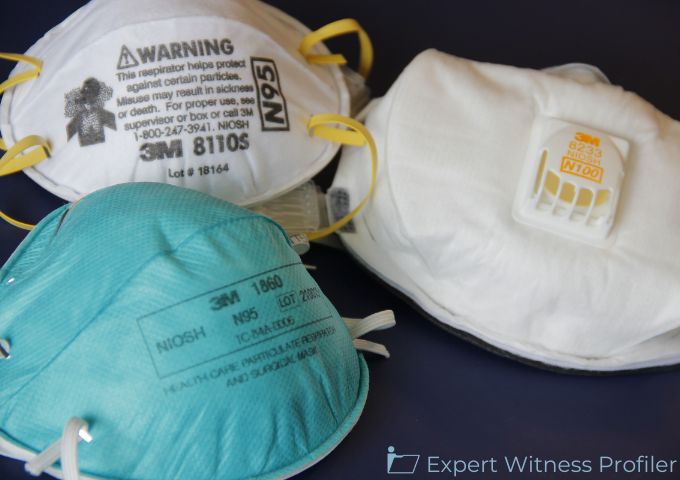
  • Public Health Expert Not Allowed to Opine on N95 Respirators

    Public Health Expert Not Allowed to Opine on N95 Respirators

    Plaintiff Shonna Hunter brought a religious discrimination claim against her former employer Defendant PeaceHealth.

    Plaintiff offered the expert testimony of Dr. Michael J. Mina, MD, Ph.D., who opined that PeaceHealth could have accommodated Plaintiff with N95 respirator and “regular testing” in lieu of vaccination.

    PeaceHealth filed a motion to strike Mina’s testimony as irrelevant and unreliable under Daubert and Federal Rule of Evidence 702.
    Public Health Expert Witness

    Dr. Michael J. Mina, MD, Ph.D. is a physician-scientist and public health expert with extensive expertise in vaccine and infectious disease immunology, vaccinology, epidemiology, infectious disease dynamics, and diagnostics.

    Get the full story on challenges to Michael Mina’s expert opinions and testimony with an in-depth Challenge Study.

    Discussion by the Court

    1. Mina’s testimony is not relevant

    Mina opined that PeaceHealth could have accommodated Plaintiff with an N95 respirator and “regular testing” because she would have posed a “markedly lower risk of infecting others” than a vaccinated individual.

    On reviewing Mina’s documents, the Court found that Mina made scant cross-reference to scientific or medical sources.

    Moreover, with few exceptions, Mina’s sources were not available in August 2021. The undue hardship analysis is confined to the information available to the employer when it made its undue hardship decision. 

    To the extent that Mina’s opinion is based on scientific or medical sources that were unavailable to PeaceHealth when it made its undue hardship decision in August 2021, the Court held that any part of Mina’s opinion that is not based on scientific or medical data that was available in August 2021 is irrelevant and inadmissible under Daubert and Rule 702.

    2Mina’s testimony is not reliable

    a. Mina’s opinion is not supported by the relevant sources

    Mina contended that, in August 2021, PeaceHealth knew or should have known that N95 respirators and “regular testing”—not vaccination—”were the best tools available” to stop viral spread.

    Mina’s first source, “The Barnstable County Outbreak Report” (“Outbreak Report”), is a CDC report that describes a “significant COVID transmission that occurred during the summer of 2021 in one Massachusetts town related to large public gatherings.” Mina ignored the authors’ warning that “data from this report are insufficient to draw conclusions about the effectiveness of COVID-19 vaccines against SARS-CoV-2, including the Delta variant, during this outbreak.” And the Report nowhere discusses masking and testing or any other mitigation method as an alternative to vaccination. For these reasons, the Court and others have determined that testimony as to vaccine efficacy based on this report is unreliable and have excluded such testimony in prior similar cases.

    Mina’s second and third sources are CDC COVID-19 guidance documents from late July 2021: a slide deck (July 29, 2021) and a CDC article (July 30, 2021).

    Though the July 29 CDC report (slide deck) included emerging data about breakthrough infections, it also contained data that showed that breakthrough cases were less contagious.

    And the July 30 CDC report concluded that Delta “increased the urgency to expand vaccination coverage.” Not one of Mina’s sources recommended N95 respirators and “regular testing” in lieu of vaccination to control COVID-19, even after the appearance of Delta and the increase in breakthrough infections. Instead, masking was recommended only as an adjunct to vaccination. The Court concluded that the three timeframe-relevant CDC sources on which Mina relied did not support his opinion.

    b. Mina’s opinion is not supported by the August 2021 scientific consensus

    Mina agreed that the August 2021 data showed that vaccines, unlike other mitigation methods, were effective in preventing severe illness and death from SARS-CoV-2. Mina disputed vaccine efficacy only as to transmission. He opined that the “scientific data available to PeaceHealth . . . clearly indicated that N95 masking and regular testing,” not vaccination, “were the best tools available to protect the unvaccinated from becoming infected with and transmitting COVID Delta and later Omicron.”

    In August 2021, professional medical and public health organizations and government agencies also recommended vaccine mandates for healthcare workers. Finally, in 2021, when Mina was still a professor at the Harvard School of Public Health, he also appeared to have supported vaccine mandates.

    In sum, the August 2021 scientific consensus provided no support for Mina’s opinion that PeaceHealth could have accommodated Plaintiff and hundreds of other employees with N95 respirators and “regular testing” in lieu of vaccination without increasing the health and safety risks to its employees and to its patient population.

    Further, Mina failed to address the practical shortcomings of using N95 respirators and “regular testing.” He did not meaningfully address the common-sense observation that respirators do not work if they are not worn properly and continuously and that employees need to remove them to eat or drink and would likely even remove them to ease discomfort—events that could happen repeatedly during a single eight-hour shift.

    Held

     The Court granted PeaceHealth’s motion to strike Dr. Michael Mina’s testimony.

    Key Takeaway

    Mina’s opinion is not the product of reliable scientific methodology. An expert must show the court that they have used reliable methodology based on facts and data to reach their conclusions.

    “Cherry-picking” facts and data, as Mina has done, undermines principles of the scientific method and is a quintessential example of applying methodologies (valid or otherwise) in an unreliable fashion.

    Case Details:

    Case Caption: Hunter V. Peacehealth
    Docket Number: 6:22cv187
    Court Name: United States District Court for the District of Oregon
    Order Date: May 31, 2026
  • Public Health Expert Was Allowed to Opine on the Quality of Care

    Public Health Expert Was Allowed to Opine on the Quality of Care

    This is a securities class action, led by Chicago Laborers’ Pension Fund and New York Hotel Trades Council & Hotel Association of New York City, Inc. Pension Fund (collectively, “Plaintiffs”).

    Plaintiffs alleged that Acadia Healthcare Company, Inc. (“Acadia”) and several of its current and former executives, including David M. Duckworth, Brent Turner, and Joey A. Jacobs (collectively, “Defendants”) made false and misleading statements to investors regarding Acadia’s business.

    Defendants filed a motion to exclude the testimony and opinions of Plaintiff’s expert witness Dr. Ashish K. Jha.

    Public Health Expert Witness

    Ashish Kumar Jha is an American general internist physician and academic who served as the White House COVID-19 response coordinator from 2022–2023. He has been Dean of the Brown University School of Public Health since 2020.

    Prior to Brown, he was the K.T. Li Professor of Global Health at Harvard T.H. Chan School of Public Health, faculty director of the Harvard Global Health Institute, and a Senior Advisor at Albright Stonebridge Group.

    Get the full story on challenges to Ashish Jha’s expert opinions and testimony with an in-depth Challenge Study.

    Discussion by the Court

    Defendants did not dispute that Jha is qualified as an expert to opine on the quality of care offered at Acadia’s mental healthcare facilities during the Class Period. Instead, they contended that his opinions on that issue should be excluded as irrelevant because he did not opine about the quality of care offered at Acadia’s facilities “on the whole,” and that his opinions about assessing the quality of care offered at Acadia’s mental health facilities should be excluded as unreliable for failing to provide factual context that Defendants think is important.

    Plaintiffs responded by first noting that Jha’s overarching opinions concerned the quality of care offered in all of Acadia’s facilities and that such evidence is highly probative of falsity as to the challenged quality care misstatements. Next, Plaintiffs argued that Jha’s opinions are reliable. Plaintiffs submitted that Defendants’ motion ignored Jha’s detailed explanation, supported by considerable scholarship, of why it was appropriate to compare Acadia’s standalone, for-profit inpatient facilities to other standalone, for-profit inpatient facilities to prevent confounding variables from prejudicing the analysis.

    The Court found that Plaintiffs have shown by a preponderance of the evidence that Jha is qualified, his opinions have a reliable basis in the knowledge and experience of his discipline, and that he will testify to knowledge that will assist the trier of fact in understanding the evidence about the quality of care offered at Acadia’s mental healthcare facilities during the Class Period and deciding whether Defendants’ challenged statements regarding the same were knowingly false when made.

    Held

    The Court denied the Defendants’ motion to exclude the testimony and opinions of Plaintiff’s expert witness Dr. Ashish K. Jha.

    Key Takeaway:

    Although the Defendants also attacked Jha’s methodology, those arguments did not show that Jha’s opinions are “so fundamentally unsupported that it can offer no assistance to the [trier of fact]” under the facts of this case.

    Please refer to the blog previously published about this case:

    Economics Expert Allowed to Opine on Stock Inflation

    Case Details:

    Case Caption: St. Clair County Employees’ Retirement System V. Acadia Healthcare Company, Inc. Et Al
    Docket Number: 3:18cv988
    Court Name: United States District Court for the Middle District of Tennessee, Nashville Division
    Order Date: November 07, 2025
  • Expert testimony regarding marketing practices of electronic cigarette and vape products passes the Daubert test

    Expert testimony regarding marketing practices of electronic cigarette and vape products passes the Daubert test

    This case involved the City of Chicago bringing an enforcement action against two Minnesota corporations, Equte LLC and Juishy LLC, as well as Jeffrey Evenmo. The City alleged that the Defendants violated several sections of the Municipal Code of Chicago related to the sale of tobacco and electronic cigarette products.  

    The City conducted an investigation which revealed that the corporate Defendants made 600 sales of electronic cigarette products and 100 sales of flavored liquid nicotine products to minors under the age of 21 in Chicago, in violation of city ordinances. The City then referred the case to the Corporation Counsel, which filed the enforcement action.  This enforcement action consisted of motions for partial summary judgment filed by both the City and the Defendant as well as the Defendants’ motion to exclude the testimony of City’s expert Sherry Emery about unfair marketing practices the Defendants engaged in by marketing tobacco products and accessories to minors in Chicago.

    Equte and Juishy were both Minnesota corporations with their principal places of business in Minnesota. Equte, which Evenmo created between 2013 and 2014, sold e-cigarettes, vaping products, and other nicotine products on a website with the domain name vapes.com. Equte had its own bank accounts, filed corporate tax returns between 2016 and 2018, and issued profit and loss statements between 2017 and 2019. Evenmo could not recall when he founded Juishy, which marketed and sold flavored liquid nicotine products on vapes.com and Juishy.com. Although Juishy also operated social media pages, it did not generate as many sales as Equte. Juishy never had its own bank account, owned any domain names, or employed anyone. Although Evenmo was the final decisionmaker for the Corporate Defendants, he did not oversee day-to-day operations at their warehouse. On February 17, 2021, before the City served Defendants with process, Evenmo, the Corporate Defendants’ sole owner and CEO, administratively terminated Juishy. Then on May 11, 2021, also before the City served Defendants, Equte sold its domain page vapes.com to an unrelated party.

    Public Health Expert Witness 

    Sherry L. Emery serves as a Senior Fellow in the Public Health Group and Director of the Health Media Collaboratory at NORC at the University of Chicago. She obtained her undergraduate degree in Political Economy from John Hopkins University. Dr. Emery went on to earn an MBA with a concentration in Business Economics from Columbia University. She later completed her PhD in City and Regional Planning at the University of North Carolina at Chapel Hill. With well over 100 articles published in peer-reviewed journals, Dr. Emery has established herself as a nationally recognized expert in tobacco control, media, and public health policy research.

    Discussions by the Court 

    The Defendants moved to dismiss the case, arguing the Court lacked jurisdiction and that the claims were barred by the statute of limitations. The Court denied the motion, finding jurisdiction was proper based on diversity of citizenship and the amount in controversy, and that the statute of limitations did not apply due to the City’s immunity when asserting public rights. 

    After the parties completed fact discovery, both sides moved for partial summary judgment. The Defendants argued the Court should reconsider its rulings on jurisdiction with the benefit of a full factual record. The Court declined to reexamine its initial decisions. Defendants also raised a challenge related to the statute of limitations, claiming that the City’s allegations were time-barred. The Court determined that though the Municipal Code of Chicago allowed for the imposition of a fine, the City’s claims were not time barred. The Court also agreed that though Evenmo was properly subject to its jurisdiction, he could not be held personally liable for any fines assessed against the Corporate Defendants under the theory that he was their alter ego or the Corporate Defendant’s violations of the Municipal Code of Chicago. 

    The City conceded, and the Court agreed, that the undisputed facts showed the Corporate Defendants violated the ordinances prohibiting sales of tobacco and flavored nicotine products to minors. Thus, the Court entered judgment for the City on those claims. The City also moved for summary judgment on its unfair business practices claim, arguing the corporate Defendants’ use of automatic age verification systems allowing sales to under 21 year olds violated the ordinance. The Court, however, found that the Corporate Defendants’ use of automatic age-verification systems cannot constitute an unfair business practice under the Illinois Consumer Fraud and Deceptive Business Practices Act and denied the City’s motion on that theory. 

    The Defendants filed a motion to exclude the testimony of Sherry Emery, an expert retained by the City to opine on the Corporate Defendants’ marketing of electronic cigarettes and vaping products to youth online and on social media. The Defendants argued that Emery’s report and testimony were irrelevant to any material issue in the case.  

    The Court explained that under the Federal Rules of Evidence and Daubert, an expert’s testimony is admissible if the expert is qualified, the methodology is reliable, and the testimony is relevant in that it will help the trier of fact understand the evidence or determine a fact at issue. The party seeking to admit the testimony must show it meets these requirements by a preponderance of the evidence. The Court noted that Daubert‘s specific factors for assessing reliability do not necessarily apply in every case, and that courts have wide latitude in performing the gatekeeping function for expert testimony. 

    The Defendants claimed Emery’s opinions were irrelevant because the City’s unfair business practices claim under the ordinance was limited to the code violations and failure to implement adequate age verification. The Court found this “misread” the City’s claims, as the City never acknowledged such a limitation and explicitly reserved the issue of whether the marketing violated the Municipal Code of Chicago for trial. 

    The Court explained that Emery’s report and opinions would help the jury determine whether the Corporate Defendants improperly marketed their products to minors under 21. The report extensively discussed the history of e-cigarette use, how companies leveraged social media to promote their products to youth, the use of flavors and themes that appeal to adolescents, and provided opinions that the Defendants’ social media marketing was potent with a youth audience. This would assist the jury in determining if the marketing efforts constituted an unfair business practice.  

    The Defendants pointed to Emery’s admission that she did not review sales or age data. The Court found she did not need such data to opine on the nature of the advertisements and social media marketing. The Defendants could challenge the conclusions on cross-examination, which is the appropriate means to attack admissible but shaky evidence. 

    Held 

    In conclusion, because Emery’s report and testimony were relevant assess whether or not Defendants engaged in unfair marketing practices by marketing tobacco products and accessories to minors in Chicago, the Court denied the motion to exclude her as an expert witness under Daubert and the Federal Rules of Evidence 702. The Court declined to reexamine its initial decisions but held that that Evenmo cannot be held personally liable for any fines assessed against the Corporate Defendants. The Court granted in part and denied in part the City’s motion for summary judgment stating that Corporate Defendants’ use of automatic age-verification systems did not violate the City’s ordinances.

    The Court has not arrived on an outcome for this case since the remaining issues involved in this case still await resolution.

    Key Takeaways:

    The Court applied the Federal Rules of Evidence 702 and Daubert standard to determine the admissibility of Emery’s expert testimony. Under this standard, the proponent of the expert evidence must show the expert is qualified, the methodology is reliable, and the testimony is relevant to issues in the case. 

    • Emery’s testimony was deemed relevant because her opinions on the Defendants’ social media marketing efforts which targeted the youth would help the jury evaluate whether the marketing practices in question constituted an unfair business practice that violated the city ordinance. 
    • The Defendants argued Emery’s opinions were irrelevant because of perceived limitations on the claim for violations of Municipal Code of Chicago. But the Court found the City did not actually place such limitations on the claim. 
    • The fact that Emery did not review sales or age data did not render her opinions irrelevant, as she opined on different issues regarding the nature of the marketing. Any limitations could be addressed on cross-examination. 

    Because relevance was established, the Court denied the motion to exclude Emery as an expert witness. Her opinions were found admissible under the Rules of Evidence and Daubert standards.