Category: Radiation Oncology Expert Witness

  • Radiation Oncology Expert’s “State of the Art” Opinions Admitted

    Radiation Oncology Expert’s “State of the Art” Opinions Admitted

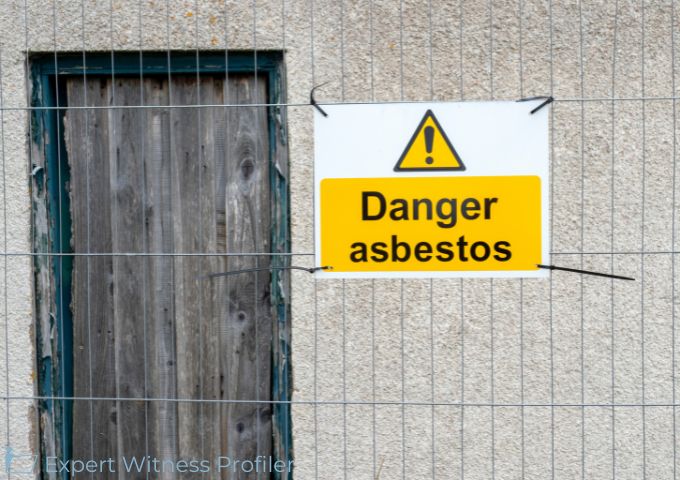
    In this litigation, Plaintiffs Erica Dandry Constanza and Monica Dandry Hallner (collectively, “Plaintiffs”) alleged that Decedent Michael P. Dandry, Jr. (“Decedent”), while an employee for Defendant Huntington Ingalls Incorporated (“Avondale”), was exposed to asbestos and asbestos-containing products manufactured, distributed, sold, and/or handled by Avondale and other parties.

    Avondale filed a Daubert motion to exclude certain testimony of Dr. Stephen Terry Kraus.
    Radiation Oncology Expert Witness

    Dr. Stephen Terry Kraus is a medical doctor who received his medical degree from the University of Cincinnati College of Medicine in 1970. He is board certified in radiation oncology, and he has treated patients with mesothelioma and other forms of cancer in Louisiana since 1982.

    Want to know more about the challenges Stephen Terry Kraus has faced? Get the full details with our Challenge Study report.

    Discussion by the Court

    Avondale contended that Kraus is not qualified to testify regarding industrial hygiene topics, including: (1) sources of Decedent’s asbestos exposure; (2) the standard of care for shipyard worker protection; (3) government standards applicable to the Avondale shipyard; (4) industry standards applicable to the Avondale shipyard; (5) permissible exposure limits for asbestos; and (6) state of the art knowledge of Avondale regarding the health hazards of asbestos.

    Avondale argued that this testimony should be excluded because Kraus is a medical doctor, rather than an industrial hygiene expert.

    Kraus reviewed deposition testimony regarding Decedent’s exposures, Decedent’s medical records, and the report of industrial hygienist Gerard Baril.

    Based on Baril’s report and Kraus’ review of the scientific and medical literature, Kraus opined that Decedent would have sustained exposures to asbestos during his work at Avondale Shipyards that exceeded the current and historical permissible exposure limits. Kraus also opined that Decedent’s mesothelioma and death were caused by this occupational exposure to asbestos at Avondale. To the extent Avondale argued that Kraus is not qualified to offer this opinion, the Court found this argument unpersuasive. Kraus’ proposed testimony is based on scientific knowledge of the harmful level of exposure to asbestos and Baril’s opinion that Decedent was exposed to such harmful levels.

    Avondale also took issue with references to the 1942 Walsh Healey Public Contracts Act, the 1943 Sanitary Code, and the 1951 Walsh Healey Public Contracts Act contained in Kraus’ report.

    Avondale argued that Kraus should not be allowed to give “state of the art” opinions because he is a medical doctor. However, the Court noted that Avondale did not cite any authority for the proposition that only an industrial hygiene expert can give “state of the art” opinions.

    Held

    The Court denied Avondale’s Daubert motion to exclude certain testimony of Dr. Stephen Terry Kraus.

    Key Takeaway

    An expert witness is not strictly confined to his area of practice, but may testify concerning related applications; a lack of specialization does not affect the admissibility of the opinion, but only its weight.

    Case Details:

    Case Caption: Constanza V. Sparta Insurance Company
    Docket Number: 2:24cv871
    Court Name: United States District Court, Louisiana Eastern
    Order Date: February 19, 2026
  • Expert Witness Disclosure: When Technicalities Don’t Trump Substance

    Expert Witness Disclosure: When Technicalities Don’t Trump Substance

    Three former medical residents sued Southwestern Vermont Medical Center (SVMC) and William Sarchino, alleging negligence regarding the operation of x-ray machines. Subsequently, Plaintiff Shazad Buksh disclosed Dr. Phillip Beron, M.D., as an expert to support claims of inadequate training and lack of protective procedures during x-rays.

    Defendants sought to exclude Beron’s report and opinions, citing two main objections:

    • Incomplete Disclosure: The initial expert report failed to include a list of Beron’s previous expert opinions and cases from the preceding four years, as required by Federal Rule of Civil Procedure 26(a)(2).
    • Limiting Language: Beron’s report included the statement, “This report is not intended to be an exhaustive summary of all my conclusions or reference materials,” which Defendants argued made the report incomplete.

    Radiation Oncology Expert Witness

    Phillip Beron is a practicing physician licensed by the state of California and the state of Arizona. He is board-certified in therapeutic radiology/radiation oncology, which includes being tested and passing the sections on genitourinary malignancies, which includes bladder cancer.

    Discover more cases with Phillip Beron as an expert witness by ordering his comprehensive Expert Witness Profile report.

    Discussion by the Court

    Plaintiff’s Opposition

    In response, Plaintiff acknowledged the initial oversight regarding the list of prior expert opinions, but emphasized that the violation had been remedied. Additionally, Plaintiff argued that the limiting language in Dr. Beron’s report was a standard reservation, allowing for flexibility in explaining reasoning and opinions without introducing new opinions.

    Analysis

    Procedural Non-Compliance

    Initially, the Court noted that Defendants’ counsel did not comply with Federal Rule of Civil Procedure 37 and Local Rule 26(c), which require good-faith efforts to resolve disputes before filing motions.

    Remediation of Disclosure Issue

    However, the Court acknowledged that the initial failure to list prior opinions had been corrected, negating any prejudicial impact. Furthermore, the Court offered to extend the discovery schedule for Beron’s deposition if the defense requested it.

    Interpretation of Limiting Language

    Moreover, the Court accepted Plaintiff’s argument that the limiting language was a typical reservation, allowing for flexibility without implying new opinions. The Court stated that any attempt to introduce new opinions at trial could be prevented by court order.

    Denial of Motion to Exclude

    The Court denied Defendants’ motion to exclude Beron’s expert report and opinions, finding that the technical deficiencies did not warrant exclusion.

    Held

    The Court denied the Defendants’ motion to exclude the opinions of Phillip Beron, M.D. 

    Key Takeaway:

    Indeed, this case highlights the importance of adhering to procedural rules regarding expert witness disclosures. However, it also demonstrates the Court’s discretion in addressing technical deficiencies. Specifically, the Court prioritized substance over minor procedural errors, while simultaneously emphasizing the need for good-faith efforts to resolve disputes. Consequently, this decision underscores the Court’s role in ensuring fair and efficient litigation.

    Case Details:

    Case Caption: Buksh Et Al V. Dr. William Sarchino Dpm Foot And Ankle Surgeon Et Al
    Docket Number: 2:21cv190
    Court: United States District Court for the District of Vermont
    Order Date: February 27, 2025