Category: Roofing Expert Witness

  • Roofing Expert Was Allowed to Opine on the Repairs

    Roofing Expert Was Allowed to Opine on the Repairs

    Plaintiffs 4612 S. 88th Street, LLC (“4612”), and OO7, LLC (“OO7”) filed their claims alleged in this matter against Tri-State to obtain the replacement cost insurance benefits provided under Tri-State Policy No. ADV 3188538-21 for direct physical damage sustained to the insured premises at 4612 South 88th Street, Omaha, Nebraska (the “4612 Building”) and 8811 J Street, Omaha, Nebraska (the “8811 Building”) as a result of a hail and wind storm that occurred on or about May 28, 2019 (the “2019 Storm”).

    Defendants Tri-State Insurance Company of Minnesota and Auto-Owners
    Insurance Company filed motions to exclude the testimony of Paul
    Douglas
    and Ryan Scribner.
    Engineering Expert Witness

    Paul M. Douglas, P.E received a Bachelor of Science degree in civil engineering from the University of Nebraska in 1993. He is also registered or licensed as a Professional Engineer in 28 states, including Nebraska.

    Douglas is a Structural Engineer and Forensic Consultant with Engineering Specialists, Inc. Douglas has spent 15 years with ESI dedicating a majority of his work to forensic engineering projects which he describes as “investigations to determine why building structures or machines fail to function in the way they were intended to.”

    Get the full story on challenges to Paul Douglas’ expert opinions and testimony with an in-depth Challenge Study.

    Roofing Expert Witness

    Ryan Scribner is a general contractor and owner of Scribner Enterprises, Inc., which specializes in roofing installation and replacement.

    Get the full story on challenges to Ryan Scribner’s expert opinions and testimony with an in-depth Challenge Study.

    Discussion by the Court

    Paul Douglas

    Douglas personally inspected the buildings that are the subject of this lawsuit, as well as others, on April 26, 2023, with two other engineers from ESI.

    To begin with, Auto-Owners focused on the age and deteriorated condition of the properties. Undoubtedly, Defendants will submit evidence regarding the age of the roofs. On the other hand, Plaintiffs, through Douglas’ opinion and possibly other evidence, will submit contrary views indicating that the damage resulted from wind and hail. Again, these types of factual disputes are for the jury to determine and are not a basis for excluding a witness.

    Moreover, Defendants will be able to impeach Douglas’ testimony if they believe the age of the roofs and/or some other weather event contributed to the damage. The fact that the experts disagreed on the cause of the roof damage did not render Douglas’ opinion inadmissible.

    In this case, the Court found that Douglas was qualified to offer his opinions and that, based on his knowledge, skill, and experience, he had sufficiently explained the bases for his opinions, including his reasons for concluding that the roof damage was consistent with hail damage and required replacement.

    Ryan Scribner

    Scribner was retained to testify about the necessary and reasonable costs for labor and material costs relating to the repair and replacement of the roofs. The only issue Auto-Owners had with Scribner’s testimony is that he utilized Douglas’ engineering report when he prepared his estimate for repair.

    However, it is clear from Scribner’s disclosure and deposition that he is not going to provide expert testimony as to the condition of the roof himself. He is basically going rely on Douglas’ engineering report to opine on the types of repairs that would need to be done and estimate the material and labor costs associate therewith.

    Because the Court has found that Douglas’ expert opinions are admissible, Scribner’s reliance on them for purposes of estimating the repair costs is appropriate.

    Held

    The Court denied the motions to exclude the testimony of Paul Douglas and Ryan Scribner.

    Key Takeaway

    The Court found that Paul Douglas and Ryan Scribner are qualified to offer their opinions in their respected fields; that based on their knowledge, skill, and experience, they have sufficiently explained the bases of their opinions; and that these opinions are sufficiently reliable to aid the jury.

    Case Details:

    Case Caption: 4612 S. 88th LLC V. Tri-State Insurance Company Of Minnesota
    Docket Number: 8:24cv245
    Court Name: United States District Court for the District of Nebraska
    Order Date: May 26, 2026
  • Roofing Expert’s Causation Opinion Excluded

    Roofing Expert’s Causation Opinion Excluded

    This case arises out of an insurance claim (the “Claim”) Plaintiff Mike Nguyen submitted to Allstate seeking coverage under his homeowners insurance policy (the “Policy”) for damages to the roof and certain exterior components of his dwelling (the “Property”) that he said were caused by a hail storm that occurred on May 1, 2022 (the “Storm”). However, Allstate inspected the Property and alleged that the damages to the steel roof were not covered pursuant to the Metal Roof Surfaces Cosmetic Damage Exclusion Endorsement to the Policy (the “Cosmetic Damage Endorsement”).

    Allstate sought to exclude the testimony of the Plaintiff’s retained experts, Chris Rhynehart and Brandon Allen.

    Roofing Expert Witness

    Chris Rhynehart has served as the owner and operator of Rhynehart Roofing and Construction for over thirty-five years.

    Get the full story on challenges to Chris Rhynehart’s expert opinions and testimony with an in-depth Challenge Study.

    Insurance Expert Witness

    Brandon Benjamin Allen, AIC is a licensed adjuster in Texas and Louisiana with almost twenty years of experience adjusting claims. He also holds credentials
    including an Associate in Claims, and he is a HAAG Certified Roof Inspector, which means he received specialized training to assess roof damage.

    Want to know more about the challenges Brandon Allen has faced? Get the full details with our Challenge Study report.

    Discussion by the Court

    A. Chris Rhynehart

    Allstate argued that Rhynehart’s opinions are irrelevant because he made no attempt to connect the damage to the May 1 storm or any storm that occurred during the Policy period of February 1, 2022 to February 1, 2023.

    Rhynehart’s report said only that the Plaintiff’s property “shows clear signs of a previous severe hail storm,” with multiple areas “indicating significant impact damage.” He made no attempt to connect that damage to the May 1 storm, or to date the damage at all. His report included a weather report showing that a hail storm occurred near the Plaintiff’s property on May 1, 2022, but the same report lists eleven other hail storms that impacted the Plaintiff’s property in the years before the May 1 storm. Rhynehart also failed to consider any possible alternative causes of the damage. Nor did he present any information about the condition of the Plaintiff’s roof before the storm.

    The Plaintiff conceded that Rhynehart’s opinions failed to connect the roof damage to the May 1 storm.

    The Court found that Rhynehart’s expert opinions as to causation are not relevant because they failed to speak to whether the May 1 storm caused the damage that resulted in a leak in the Plaintiff’s roof. It is the Plaintiff’s burden to establish this.

    However, Allstate did not contest Rhynehart’s competence to testify about the overall “condition of the property, the presence of wind and hail damage, the extent of the damage, and to provide an unbiased estimate” as to the cost of repair.

    B. Brandon Allen

    Plaintiff designated Allen as a “testifying expert to contradict or rebut the evidence, opinions, analysis, and expert designations” of Allstate’s retained expert witnesses.

    Allen’s expert report—much like Rhynehart’s report—simply offered a view of the evidence that favored the Plaintiff. The Court found that Allen’s report did not even mention Allstate’s experts, much less attempt to contradict specific findings they made in their reports.

    Allen’s report did not attempt to specifically rebut the findings of Allstate’s experts. But even if it had, his report went far beyond that and offered its own “separate and distinct analysis.”

    Held

    The Court granted in part and denied in part Allstate’s motion to exclude the testimony of Plaintiff’s retained expert witnesses Chris Rhynehart and Brandon Allen.

    Key Takeaway

    A rebuttal expert’s report must relate to the specific findings advanced by the opposing expert, not simply offer a different view of the case.

    Case Details:

    Case Caption: Nguyen V. Allstate Vehicle And Property Insurance Company
    Docket Number: 2:24cv186
    Court Name: United States District Court, Texas Northern
    Order Date: February 23, 2026
  • Roofing Expert Witness Allowed to Opine on the Specialty Tile

    Roofing Expert Witness Allowed to Opine on the Specialty Tile

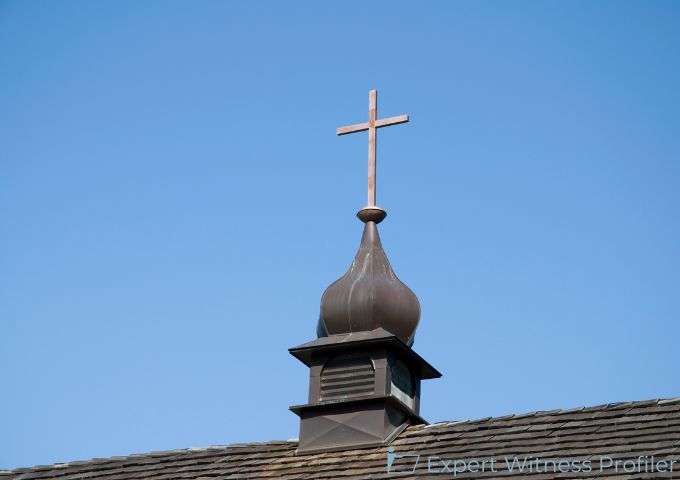
    This is a hail damage case. The Plaintiff, First Evangelical Lutheran Church of Lincoln, Nebraska, alleged that its roof was damaged in a hailstorm. Allegedly, the Defendant, Brotherhood Mutual Insurance Company, wrongfully delayed or denied certain benefits under its insurance policy.

    Basically, the Plaintiff alleged that its clay tiles, aluminum gutters, copper flashing, and other metal components suffered extensive damage, some of which allegedly caused interior leaks.

    The Plaintiff has designated two experts: Toby Duncan, a roofing consultant, and Matthew Y. Merrell, a licensed professional civil engineer. Specifically, the Defendant sought to exclude any opinions from these experts that a hailstorm occurred on the property, that a storm caused the damage, any “site-specific” storm conditions, such as wind speed or hail size, or that the damage is attributable to a specific weather event.

    The Plaintiff, on the other hand, sought to exclude the opinions of Vincent Hobson, the Defendant’s expert witness.

    Roofing Expert Witnesses

    Toby Duncan is a commercial and residential roofing consultant and project manager specializing in clay tile, slate, and copper roofs.

    Discover more cases with Toby Duncan as an expert witness by ordering his comprehensive Expert Witness Profile report.

    Vincent H. Hobson has over fifty years of experience in roofing and tiles. He also provides extensive consulting services to homeowners, architects, roofing contractors, historians and even other consultants in the tile roofing arena. 

    Get the full story on challenges to Vincent Hobson’s expert opinions and testimony with an in-depth Challenge Study.

    Civil Engineering Expert Witness

    Matthew Yates Merrell has developed a diverse engineering background focused on new construction and resolving difficult construction issues.

    Want to know more about the challenges Matthew Merrell has faced? Get the full details with our Challenge Study report.

    Discussion by the Court

    Merrell

    To begin with, Merrell relied on industry-standard impact tests to determine that the damage he observed on the church’s roof was consistent with damage caused by hail measuring 1.5 inches in diameter. He considered a consulting meteorologist’s report that a hailstorm on April 12 passed over the subject property, and that storm produced hail measuring a maximum of 1.5 inches in diameter. He relied on an interview with the church property committee indicating that the church’s roof had been repaired in 2018, and there were no “cracked, chipped, or fractured tiles” following those repairs.

    His expert report concluded that “impact damage consistent with hail strikes was widespread at the church.” It also concluded, “within a reasonable degree of engineering certainty, that the storm on April 12, 2020 damaged the subject property.”

    The Defendant argued that Merrell had no basis to opine about storm conditions on April 12, including whether a hailstorm occurred or the size of the hail. According to the Defendant, engineers may not give opinions about these kinds of “site-specific storm conditions.”

    However, Merrell attested that he regularly relied on data from meteorologists to form opinions about the cause of damage, and such reliance is an industry standard. Merrell’s report considered other causes of damages, and specifically excluded “damage that appeared unrelated to high winds and hail.” Merrell used the data from the meteorologist to support his findings about the damage to the roof, and that such damage is consistent with 1.5-inch hail; based on the record before the Court, that meteorological data is being used to support his conclusions based on his expertise, not supplant them. The Defendant challenged the factual basis and foundation of Merrell’s conclusions, but in this Court’s view, those arguments go to weight and not admissibility.

    Duncan

    The Defendant also sought to exclude Duncan’s opinions involving assumptions that hail of a particular size struck the property. While Duncan cannot give expert testimony that a hailstorm on April 12 caused the damage, he is not precluded from giving lay testimony regarding the same. Duncan was in Lincoln the day of the alleged hailstorm, and he visited the Plaintiff’s church property.

    He may give expert testimony that, through his professional experience, what he saw appeared to be consistent with hail damage. And, based on his personal knowledge of the weather conditions on April 12, he may testify as to his observations of the size or other characteristics of the hail.

    The Court made it clear that neither Merrell nor Duncan may provide expert opinions that hail of a particular size struck the church on April 12, 2020. However, both may provide the reason they believe hail of a certain size struck the building. Merrell relied on a meteorological consultant to confirm his measurements and the physical indication of certain-sized hail. Duncan relied on his measurements and personal experience with the hail to draw similar conclusions.

    Hobson

    Hobson inspected the church roof at the Defendant’s request, and issued a report in August 2022. The Plaintiff argued that Hobson’s opinions are “unsupported conjecture” and should be excluded.

    It’s clear from Hobson’s deposition testimony that he based his opinions on his fifty years of experience in roofing and tiles. That experience is an appropriate foundation upon which to base expert testimony, including the testimony that an HVAC installation process damaged the tile, that the specialty tile may have manufacturing defects, or that the damage was not widespread enough to have been caused by hail. As a result, the Plaintiff’s arguments all go to weight, not admissibility, and the motion to exclude will be denied by the Court.

    Held

    • The Court granted in part the Defendant’s motion to exclude or limit the testimony of Plaintiff’s experts, Toby Duncan and Matthew Merrell.
    • The Court denied the Plaintiff’s motion to exclude the testimony of the Defendant’s expert, Vincent Hobson.

    Key Takeaway

    In exercising its gatekeeping function, the Court must make a preliminary assessment of whether the reasoning or methodology underlying the proposed expert testimony is valid and of whether that reasoning or methodology properly can be applied to the facts in issue, focusing specifically on the methodology and not the conclusions. To that end, expert testimony that is speculative, unsupported by sufficient facts, or contrary to the facts of the case, is inadmissible.

    Case Details:

    Case Caption: First Evangelical Lutheran Church Of Lincoln, Nebraska V. Brotherhood Mutual Insurance Company
    Docket Number: 4:23cv3180
    Court Name: United States District Court, Nebraska
    Order Date: May 15, 2026
  • Roofing Expert Witness Allowed to Testify Despite Not Complying with Expert Disclosure Requirements

    Roofing Expert Witness Allowed to Testify Despite Not Complying with Expert Disclosure Requirements

    Eric Krajewski alleged that he submitted a claim for hurricane damage that Scottsdale Insurance Company will not pay despite coverage under the parties’ insurance policy. To recover the funds reportedly owed, Krajewski sued for breach of contract.

    Krajewski timely disclosed an expert—Phaion Hicks. But according to the record before the Court, Krajewski never provided a corresponding report.

    According to Scottsdale, Krajewski has not properly disclosed Hicks as an expert under Federal Rule of Civil Procedure 26(a)(2). Specifically, Krajewski failed “to provide the required expert report.” Scottsdale now moves to “strike Hicks as an expert in this matter and preclude the use of his testimony and opinions at trial.”

    Scottsdale labeled Hicks as a retained expert. The Court reasoned that if Hicks was hired to assess and repair Krajewski’s house rather than offer expert testimony in a lawsuit, then this would put him in the non-retained category.

    Even treating Hicks as a non-retained expert, the Court found that Krajewski’s disclosure fell short.

    Roofing Expert Witness

    Phaion Hicks is a professional engineer, certified general contractor and certified roofing contractor. He has years of experience in the field of engineering and regularly performs evaluations to determine the cause, origin, and duration of water damage and roof damage in Florida. Hicks is expected to offer expert opinion based on inspection of the property at issue.

    Want to know more about the challenges Phaion Hicks has faced? Get the full details with our Challenge Study report. 

    Discussion by the Court

    While a non-retained expert need not provide a full report, a party must do more than “identify generic subject areas of anticipated testimony, without identifying the actual substance or content of the opinions.”

    While Krajewski’s expert disclosure outlines some of the subjects Hicks will discuss, the Court held that there is no legitimate summary of the facts and opinions. For example, the disclosure states Hicks will “offer expert opinion based on inspection of the property at issue.” Nowhere, however, does Krajewski provide the opinions formed from Hicks’ inspection.

    Krajewski did not provide a conforming report by the expert disclosure deadline. And his decision not to respond to Scottsdale’s motion leaves the record silent about whether his conduct was substantially justified or harmless.

    The Court held that exclusion was not required because Hicks’ testimony is seemingly critical. Without him, Krajewski’s case may end. Since the discovery is still ongoing, Krajewski’s conduct, at least at this point, does not warrant excluding testimony that may prove essential to his case when any prejudice can still be cured.

    Held

    1. The Court granted in part and denied in part Scottsdale’s motion to strike Phaion Hicks as an expert in this matter and preclude the use of his testimony and opinions at trial;
    2. Krajewski must update his disclosure for Hicks by January 31, 2025. It is Krajewski’s burden to assess whether Hicks is retained or non-retained and modify the disclosure accordingly.
    3. If Scottsdale needs additional time beyond the current discovery deadline to depose Hicks or amend its own expert disclosures, the Court will entertain such an extension.

    Key Takeaway:

    Rule 37(c)(1) continues to give the Court discretion to award alternative sanctions. Exclusion is considered a drastic remedy since it can dictate the outcome and preclude a decision on the merits.

    Case Details:

    Case Caption: Krajewski V. Scottsdale Insurance Company
    Docket Number: 2:24cv189
    Court: United States District Court, Florida Middle
    Order Date: January 22, 2025