Category: Sales Expert Witness

  • Sales Expert Was Allowed to Opine on the Failure of the Swing Scaffolding System

    Sales Expert Was Allowed to Opine on the Failure of the Swing Scaffolding System

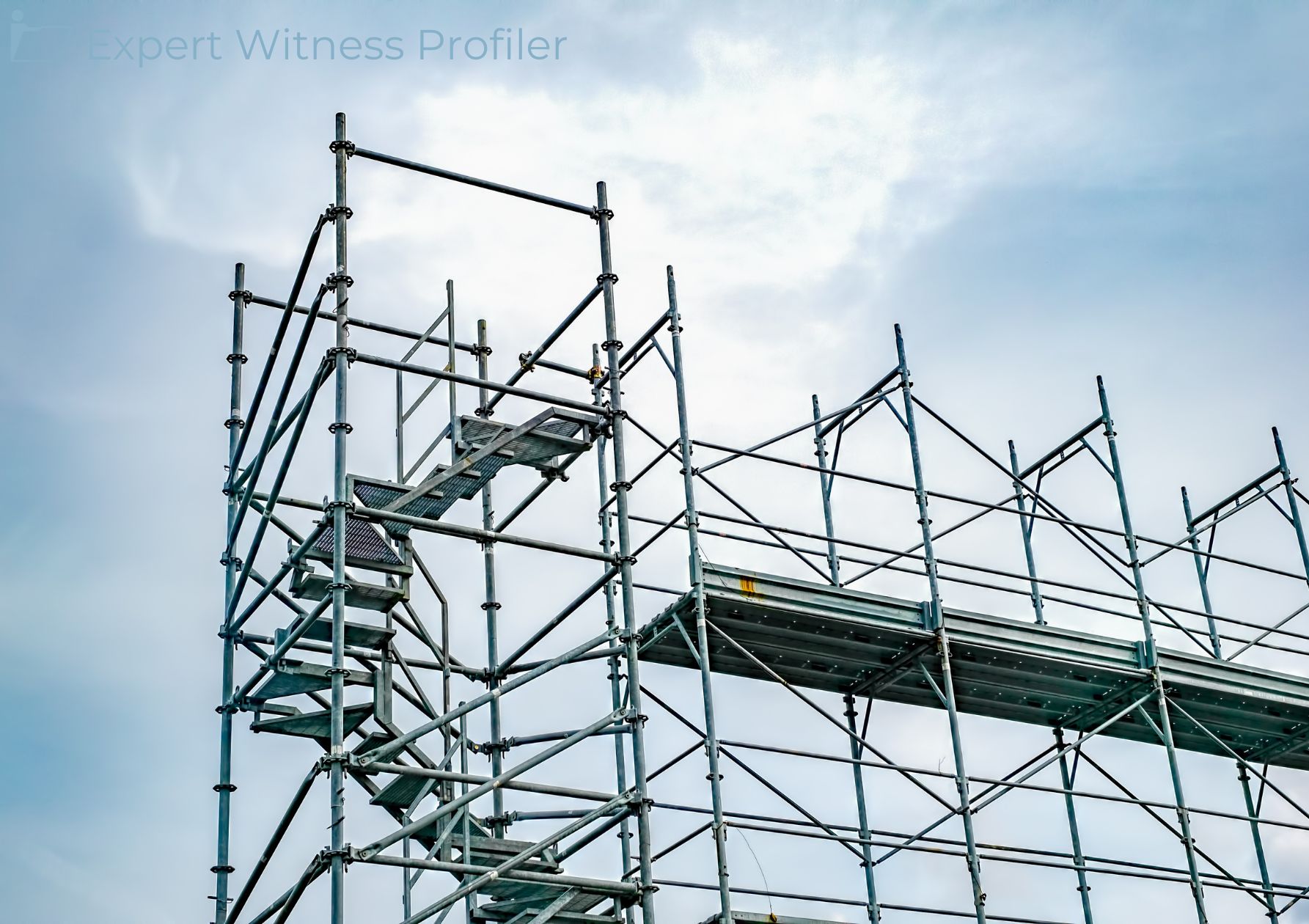
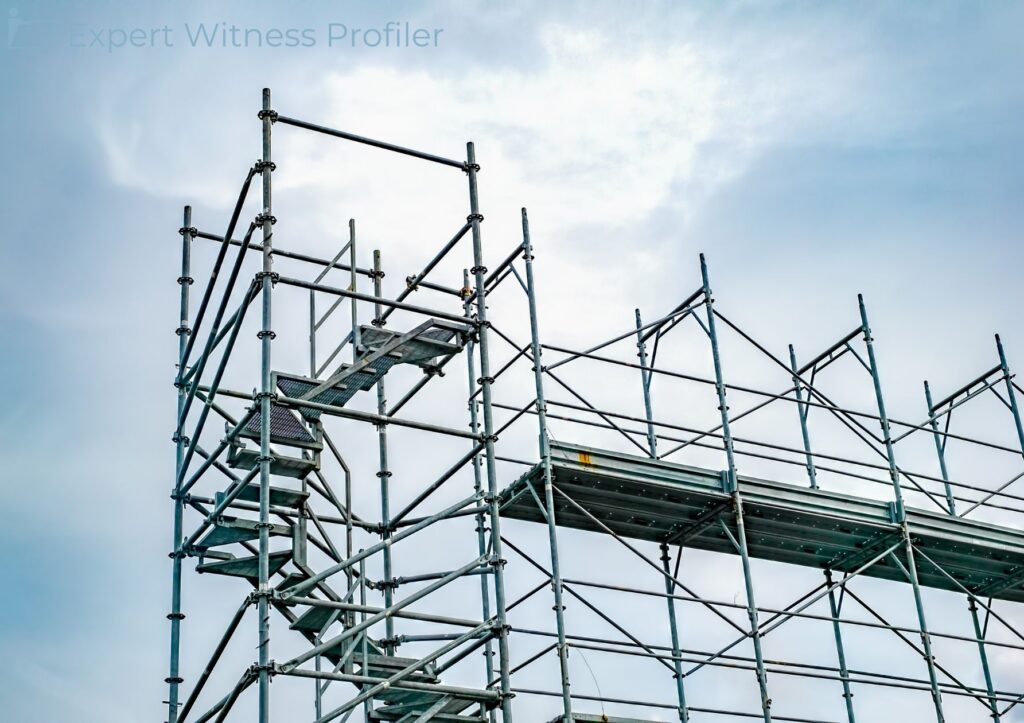
    This personal injury suit began at a construction site at Ochsner’s Lafayette General Medical Center. Charles’ employer, FL Crane & Sons, Inc. (“FL Crane”), was hired to install “z-girts, insulation, and stucco” on the Project building. To work on the building’s side, FL Crane procured swing scaffolding from Max Access. The scaffolding system they used was called the “Rolling Roof Rig.”

    On May 16, 2022, while Charles was working atop the Rolling Roof Rig at the Project, other workers lifted three porta potties for cleaning. Inadvertently, the porta potties, while being hoisted up, caught the tieback line that secured the scaffolding system. This entanglement caused the scaffolding system to collapse, severing Charles’ right arm in the process.

    Max Access argued that (1) Plaintiffs’ proffered witness, Brant Lacombe is not a qualified witness and (2) even if he is, his opinions did not satisfy Rule 702.
    Sales Expert Witness

    Brant Lacombe has fifteen years of experience as a swing scaffolding salesperson in addition to his designation as an OSHA-competent trainer who teaches employees how to use swing scaffoldings.

    Want to know more about the challenges Brant Lacombe has faced? Get the full details with our Challenge Study report

    Discussion by the Court

    1. Expert’s Qualification

    Here, it is undisputed that Lacombe is not an expert by way of education—his college degree is in criminal justice, not engineering.

    Ordinarily, Lacombe’s experience as a salesperson would be deemed too far removed from the scope of his testimony—why a scaffolding system, like the one he sold, failed. 

    Lacombe’s duties as a salesperson included not only sales, but also assisting crews with rigging to ensure the “job get[s] done.” Lacombe first said that he performed such tasks “plenty of times in [his] career,” but later states, “it wasn’t [his] primary function” and only did so “a handful of times over [his] career.”

    Max Access also asserted that Lacombe’s OSHA-related training was inadequate. Specifically, they argued that his initial OSHA 10 training was from “years ago” and he only had one other employer-administered two-to-three-day class.

    Given his experience with assisting crews in rigging swing scaffolds and his OSHA competency, the Court is unconvinced by Max Access’ arguments that Lacombe is not qualified as an expert.

    2. Expert’s Opinions

    a. Lacombe’s First Opinion

    Lacombe’s first opinion is that:

    Max Access, LLC had an obligation to properly assemble the swing stage scaffolding and rigging. Proper assembly requires insertion of the codder pins through the beam splice as well as the hole in the beam tube. The purpose of inserting the codder pins through the beam and the beam tube is to prevent the connection from being separated.

    As Max Access pointed out, however, this statement is not an opinion. Max Access agreed it had the above-stated obligation. Nevertheless, Plaintiffs argued that this testimony is necessary to show “why Max Access was obligated to set up the swing stages.” But Plaintiffs made no showing, let alone a showing by a preponderance of the evidence, on how this will assist the factfinder in “understand[ing] the evidence or determin[ing] a fact in issue.” 

    Thus, the Court concluded Lacombe cannot proffer his first opinion as it failed to meet Rule 702(a)’s requirement that the opinion “help the trier of fact to understand the evidence or determine a fact in issue.” 

    b. Lacombe’s Second Opinion

    Lacombe’s second opinion is that:

    The swing scaffolding failed because the roof rigging separated at the beam and the beam tube. Photos taken of the beam splice on the 5th floor show that the pin was inserted through the beam splice. Photos of the back beam on the 11th floor show that the holes in the beam had not been torn or damaged. This shows that the back beam was not secured with the pins. The pins went through the beam but not the beam tube.

    Again, the parties did not dispute the facts stated in Lacombe’s opinion. And Plaintiffs conceded that “the jury is capable of understanding the concept.” Nevertheless, they argued that the opinion will “aid the jury’s understanding of important parts” of the case. The Court agreed. Lacombe relied on his experience in the swing scaffolding industry to determine and the photographs taken post-accident—showing the beam holes were not “torn or damaged”—to suggest the pins did not penetrate the beam, only the splice tube.

    As such, the Court found Lacombe’s second opinion complied with Rule 702‘s strict requirements.

    c. Lacombe’s Third Opinion

    Lacombe’s third opinion is that:

    OSHA certified training for swing scaffolding does not address specific types of swing scaffolding. There are differences in design in the type of scaffolding that require different assembly. For instance, Spider does not use the exact same design as Sky Climber. One can thus be certified as a competent person but still have to follow manufacturing guidelines and may be unfamiliar with the scaffolding design. Due to differences in design, competent persons assembling and inspecting scaffolding must follow the manufacturer’s warning to ensure proper assembly and safety of the swing stage.

    The crux of why Plaintiffs proffered this testimony is to show that Charles’ employer, FL Crane, had a competent person on site per OSHA regulations and that inadequate warnings led to the accident. This Court’s ruling on Defendant Sky Climber, LLC’s motion for summary judgment, however, found, as a matter of law, that FL Crane did not have a competent person on site. Accordingly, the Court found this argument is moot.

    Held

    The Court granted in part and denied in part Max Access’ Rule 702 motion concerning Brant Lacombe.

    Key Takeaway:

    Lacombe relied on his experience in the swing scaffolding industry to determine and the photographs taken post-accident—showing the beam holes were not “torn or damaged”—to suggest the pins did not penetrate the beam, only the splice tube. 

    This represented “a reliable application” of a “reliable principle” to “sufficient facts” of the case and will “help the trier of fact to understand the evidence or determine a fact in issue”—namely, why the swing scaffolding system failed the way it did. 

    Case Details:

    Case Caption: Craft Et Al V. Max Access LLC Et Al
    Docket Number: 6:22cv5899
    Court Name: United States District Court, Louisiana Western
    Order Date: September 30, 2025
  • Sales Expert Witness’ Opinions Regarding Termination of a Distributorship Agreement Rejected

    Sales Expert Witness’ Opinions Regarding Termination of a Distributorship Agreement Rejected

    A district judge in Nevada held that a Sales Expert Witness’ opinions about the termination of a distributorship agreement were nothing more than common sense.

    Facts:

    Temsa primarily sought redress for Defendant TC Nevada, LLC’s (“TC Nevada’s”) unlawful use and possession of certain motorcoaches manufactured by Temsa.

    Temsa is a leading commercial vehicle manufacturer of motorcoaches, buses, and light trucks, which are manufactured in the Republic of Turkey and sold worldwide. Prior to being terminated by Temsa, non-party CH Bus Sales, LLC (“CH Bus Sales”) was the exclusive distributor of Temsa’s motor coaches. In distributing the motorcoaches, CH would owe Temsa, as the manufacturer, approximately $209,000 to $382,000 per motorcoach. TC Nevada is currently in possession of at least seven (7) and as many as thirty (30) motorcoaches that were manufactured by Temsa, but were never paid for by CH Bus Sales. While seeking to collect the unpaid balance from CH Bus Sales, Temsa alleged that the individual defendants, Michael Haggerty, Olga F. Haggerty, and John P. Haggerty all conspired with each other and with Defendant TC Nevada to gain possession of the motorcoaches despite knowing of Temsa’s continued ownership interest in the property.

    According to Temsa, neither TC Nevada nor the individual defendants have paid Temsa for the motorcoaches which TC Nevada currently uses in the operation of its shuttle service business in Las Vegas.

    Temsa sought to strike the reports and testimony of Defendants’ experts, John Beck and Karl Schulze, whom Temsa contended offered opinions regarding irrelevant subject matters. Temsa further contended Defendants’ experts opined on ultimate issues of law, telling the jury what results to reach. With respect to defense expert John Beck, Temsa contended termination of agreements between Temsa and CH Bus Sales, LLC (“CH”) had no relevance to issues before the Court. Temsa further contended defense expert Karl Schulze’s opinions regarding the exercise of sound business judgment and fraudulent transfer were inadmissible because these opinions pertained to “irrelevant legal doctrines.”

    Business Litigation Expert Witness

    Karl J. Schulze is a Certified Public Accountant (CPA), a Certified Valuation Analyst (CVA), a Certified Fraud Examiner (CFE), and is Certified in Financial Forensics (CFF) by the AICPA. He has worked with middle-market and Fortune 500 companies on issues relating to corporate governance (he is ISS Certified in Corporate Governance and Directorship), crisis management, strategic planning, insolvency management, acquisition and feasibility analysis, debt restructuring and general management consulting, in addition to conducting fraud investigations and consulting and testifying on litigated matters. Schulze has testified in a broad variety of business-related matters, shareholder disputes, alter ego and corporate governance matters, intellectual property, real estate and employment-related litigation, and has served as consultant and expert in arbitrated and mediated matters. He has testified as expert in deposition and trial, and has qualified in numerous courts and jurisdictions.

    Gain a comprehensive understanding of Karl Schulze’s qualifications and casework history with his Expert Witness Profile report.

    Sales Expert Witness

    John D. Beck has been involved in sales and manufacturing for his entire 40 year career. He has worked for 3 privately owned companies and enjoyed success at each of them.

    Get in-depth insights into John Beck’s expert witness experience by requesting his Expert Witness Profile today.

    Discussion by the Court

    On January 10, 2024, Defendants designated Karl J. Schulze, CPA as an expert witness and John D. Beck as a lay expert witness. Temsa argued that both of them opined on ultimate issues of law.

    Beck Does Not Offer Expert Testimony

    Beck’s purported expert report is a total of two pages long. The report identifies the two questions Beck was asked to answer, includes a page summarizing the documents Beck reviewed and his experience in the manufacturing and distribution of buses, and ends with two short paragraphs (each two sentences) stating Beck’s opinions.

    The Court held that Beck’s conclusions failed to offer any basis, reasons, data or analysis that underlie the opinions reached, in violation of Federal Rule of Civil Procedure 26(2)(B)(i) and (ii).

    Beck opines termination of a distributorship agreement would negatively impact (1) the distributor, especially if the manufacturer sells its product directly at discounted prices, and (2) the distributor’s ability to honor any maintenance program in place. That termination of contracts to distribute and maintain a product would negatively impact the party who, before termination, distributed and maintained the product is obvious—again, simple common sense. These opinions are not beyond the knowledge of an average juror.

    The Court held that Beck’s opinions will not help the jury understand facts at issue. For this reason, Beck’s opinions did not satisfy the requirements of Rule 702.

    Finally, to place the “expert” moniker on Beck’s conclusions risked giving special weight to evidence that is, at best, not clearly tied to the claims raised by Temsa. That is, a review of the Complaint shows there is no dispute that Temsa terminated contracts establishing CH as the exclusive distributor for Temsa’s products. There is also no dispute that CH is not a Defendant in this action, nor is it a third party Plaintiff suing Temsa.

    The Complaint does not mention either the existence of a maintenance contract between Temsa and CH or the breach of such agreement. Beck’s testimony does not demonstrably advance a material aspect of the case.

    Will Beck’s Testimony be Admissible in his Capacity as a Lay Witness?

    Nonetheless, the District Judge will decide at a later date whether Beck’s testimony may ultimately be admissible in his capacity as a lay witness. Although the Court notes above that CH is not a party to this action, Defendant Michael Haggerty is the alleged Chairman of the Board of CH Bus Sales, LLC, and Temsa referenced CH in its complaint. These references do not appear to relate to whether CH could continue to sell Temsa buses or whether CH could “maintain or honor any maintenance programs.”

    Instead, Temsa’s allegations relate to who owned the motorcoaches, whether CH paid Temsa for the motorcoaches, whether CH had the authority to sell Temsa motorcoaches, Defendants’ alleged disruption of Temsa’s contractual relations, and Defendants’ retention of the benefit from the motorcoach sales.

    Initially, Beck’s testimony seemed to have limited relevance. However, the Court cannot definitively rule out its relevance entirely and thus cannot justify its exclusion. Such a finding is premature and must await a more thorough presentation of evidence during the trial.

    Court Limits Expert Opinions Offered by Karl Schulze

    Schulze’s expert report offered two opinions each challenged by Temsa. The Court found Schulze’s opinion that Haggerty “exercised sound business judgment” when he paid a debt owed to U.S. Bank rather than a debt owed to Temsa, and did so in compliance with Minnesota law, was an opinion telling the jury what the outcome of this defense should be. The opinion crosses the line from reaching an ultimate issue of fact to stating a conclusion of law.

    Schulze’s second opinion listed the elements of a voidable transaction (a fraudulent transfer) under Minnesota statutory law. Schulze then did an “evaluation” of facts applied to each element of the law he quotes. In doing so, Schulze stated that some elements identified for purposes of “determining actual intent” were inapplicable to the instant dispute. Schulze also offered short statements of fact supposedly applicable to the remaining “intent” factors. The Court held that Schulze did no expert analysis of these facts. He merely stated conclusions.

    Even assuming Schulze is qualified to offer the opinions he does (as Temsa does not challenge Schulze’s qualifications), there is no discussion demonstrating what specialized knowledge underpins the basis for the conclusions Schulze reached.

    Further, case law strongly suggests concluding a party misled another or made misrepresentations on which an opposing party relied is impermissible opinion testimony as it invades the province of the jury by drawing the ultimate inference or conclusion. Importantly, Schulze never offered an opinion regarding fraudulent intent and instead provided a set of shaky opinions regarding factual elements considered when determining whether a fraudulent transfer occurred.

    Temsa does not challenge Schulze’s qualifications

    Since Temsa did not challenge Schulze’s qualifications to offer these opinions, the Court found opinions applicable to fraudulent intent, attacked by Temsa, was best left to legal argument on the applicability of Minnesota law and attack through cross examination, contrary evidence, and attention to the burden of proof.

    Held

    The Court struck the expert report submitted by John Beck and decided that whether and to what extent Beck may offer lay opinions required a more complete presentation of evidence that will occur at trial.

    The Court struck Karl Schulze’s expert report and testimony, to the extent it addressed the business judgment rule under Minnesota law but denied the request to strike Schulze’s expert report and testimony regarding whether Defendants’ conduct was consistent with a fraudulent transfer under Minnesota law.

    Key Takeaways:

    • Expert opinion must have substance such that it would be helpful to the jury. In other words, it should address an issue beyond the common knowledge of the average layman. Beck’s opinions regarding the termination of contracts to distribute and maintain a product did not satisfy the requirements of Rule 702.
    • Lay opinion testimony must be helpful to the jury in acquiring a clear understanding of the witness’s testimony or the determination of a fact in issue. The Court cannot conclude Beck’s lay opinions have no relevance whatsoever.
    • Schulze’s opinion that Haggerty, in fact, exercised sound business judgment meeting the obligations established by law was telling the jury what the outcome of this defense should be. Schulze cannot offer a legal conclusion that would, in sum, take from the jury the job of applying facts to law even if application of the business judgment rule is a proper defense in this case.

    Case Details:

    Case Caption: Temsa Ulasim Araclari Sanayi Ve Ticaret, A.S. V. Tc Nevada, Llc Et Al
    Docket Number: 2:18cv1738
    Court Name: United States District Court, Nevada
    Order Date: April 30, 2024