Category: Ski Safety Expert Witness

  • Ski Safety Expert was Allowed to Opine on the Use of Blue Fencing

    Ski Safety Expert was Allowed to Opine on the Use of Blue Fencing

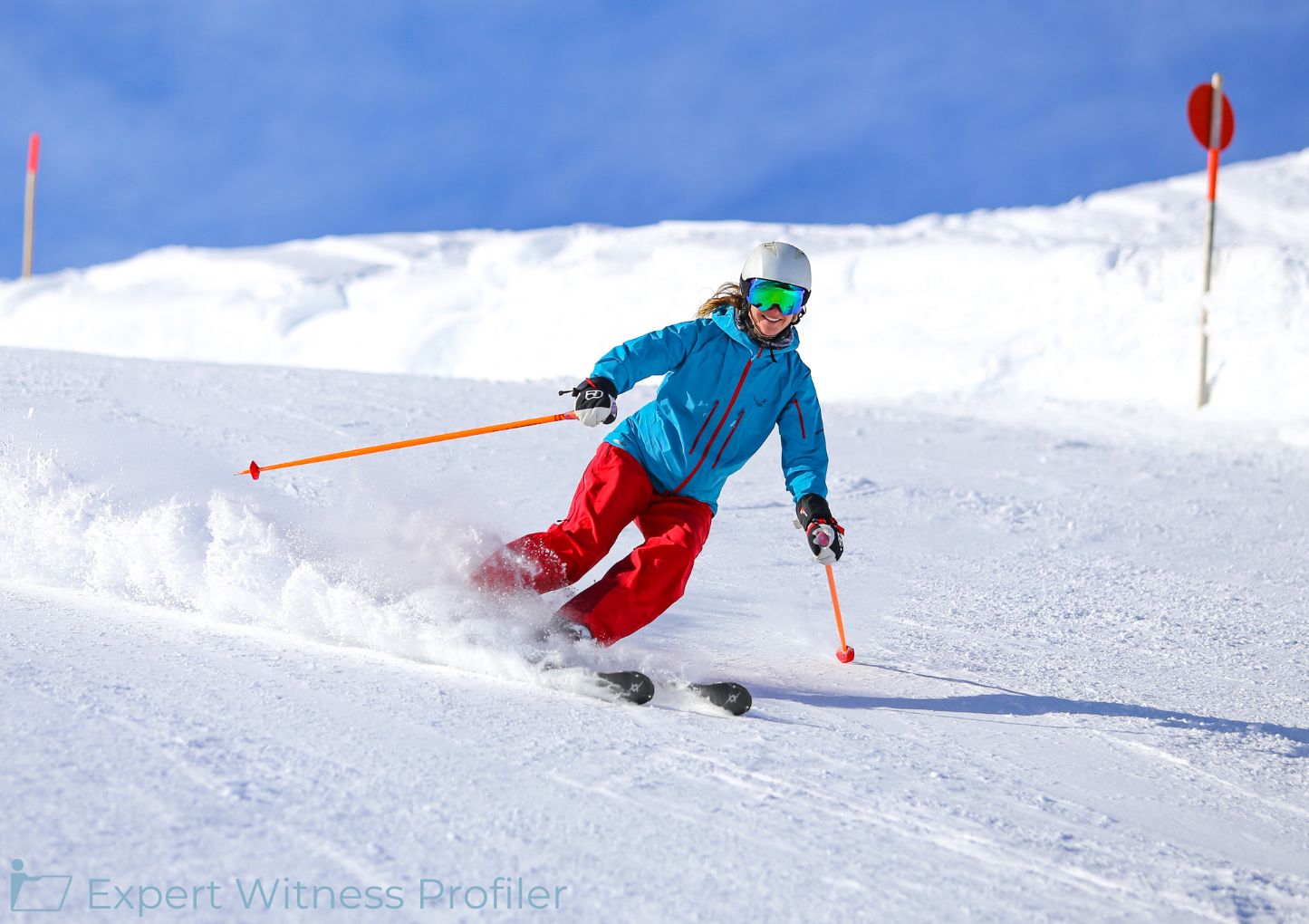
    This case arises from a skiing accident that occurred at Mountain Creek’s ski resort (“the Resort”). On February 21, 2021, Pierino Perciballi and his sixteen-year-old son Matteo Perciballi chose to ski down the Matchmaker trail, an intermediate difficulty terrain park course contained within the Resort. The Matchmaker trail is adjacent to the Resort’s “learning area.”

    Mountain Creek uses blue, mesh fencing to separate Matchmaker trail from the learning area. In his descent down Matchmaker trail, Perciballi collided with this blue fencing, tangling his legs and violently falling to the ground. This collision caused him to sustain significant injuries, requiring four days of hospitalization and leaving him with an ongoing disability. 

    Plaintiffs filed this case on February 17, 2023, alleging two causes of action: (1) negligent management and design of the Resort resulting in Mr. Perciballi’s injuries, and (2) loss of consortium on behalf of his wife Brigida R. Perciballi.

    Defendants filed a motion to preclude Plaintiffs’ expert witness, Richard Penniman.
    Ski Safety Expert Witness

    Richard C. Penniman has been a consultant to the ski industry since 1983, and has been qualified as an expert on, inter alia, slope design, snowmaking and impact mitigation in numerous state and federal courts across the United States. He is a member of numerous ski organizations and has lectured extensively on the topic of ski safety. Penniman has served as an Adjunct Instructor at Sierra Nevada College where he taught Ski Area Mountain Operations and Safety for nine (9) years. Penniman has also published numerous peer-reviewed articles on ski safety

    Want to know more about the challenges Richard Penniman has faced? Get the full details with our Challenge Study report.

    Discussion by the Court

    A. Penniman’s unannounced inspection of the Mountain Creek Resort does not justify barring his testimony

    Mountain Creek’s first argument against the admissibility of Penniman’s decision does not challenge the sufficiency or applicability of his expertise; rather, it asked the Court to exclude Penniman’s opinion as a sanction for failing to follow Fed. R. Civ. P. 34(a)(2).

    In his deposition, Penniman admitted to taking an unannounced trip to the Resort in March 2023, where he conducted an examination of the Resort’s grounds to assess the site of the accident and the Resort’s safety procedures in general.

    When determining whether to impose a discovery sanction, the movant must first show that there has been a violation of the rules of discovery or the orders of the Court. Plaintiffs argued that there was no need for Penniman to get special permission from Mountain Creek to investigate a publicly accessible location, even if that location was owned by Mountain Creek.

    The Court held that where the premises are open to the public and the inspecting party has permission to enter (and does not deviate from the parameters of the permission), parties are not required to seek approval prior to inspection under Rule 34, unless the inspection poses a greater, articulable danger or burden to the business, employees, or other visitors than is expected of a typical visitor.

    Applying this rule, Penniman acted in almost every way as an ordinary skier. Even if Penniman’s inspection was a discovery violation, Mountain Creek did not sufficiently argue that exclusion was warranted. Though Mountain Creek claims it is “severely prejudiced” by the unannounced inspection, the only prejudice it cited is that it was “not present to observe the inspection,” or able “to document the conditions observed or observable on that date.”

    B. The Penniman Report is sufficiently reliable to assist the jury and will not be excluded

    Mountain Creek’s second argument for precluding Penniman’s testimony and report from the jury is that he lacks a reliable foundation for his opinion. Mountain Creek sought to exclude the following topics from Penniman’s opinion: (1) the “use of blue fencing” in the skiing industry; (2) the role, if any, shadows played in causing the accident; (3) how most North American ski resorts organize their ski trails; and (4) whether the “progression area” used to train new skiers is a hazard when placed next to a trail for more experienced skiers.

    1. Penniman is permitted to testify to the relative advantages of fence coloring at different ski resorts

    In his expert report, Penniman discussed the significance of fencing colors on the safety of skiing trails. According to Penniman, “blue fabric fencing such as that with which Mr. Perciballi became entangled can be very difficult to discern from shadows on the snow surface later in the day,” and for that reason the industry standard is that “any fencing, hazard marking or safety signs be brightly colored and highly visible so as to attract attention.”

    However, Mountain Creek believed that this testimony lacked “factual evidence from the record in this case,” and is instead “based solely on his personal experience and limited discussions with ski patrollers.”

    The Court disagreed. Penniman’s report and testimony contain sufficient foundation. It is uncontested that: (1) Mountain Creek used blue fencing at the time of the accident; (2) Plaintiffs’ accident happened in the afternoon; (3) Penniman made an inspection of the site of the accident and observed the shadow cover of the area in the afternoon; (4) at least some ski resorts in North America use brightly-colored fencing; and (5) Penniman claimed, in his professional experience, use of brightly-colored fencing is standard. This is a sufficient factual foundation whereby a reasonable jury could find that such a standard exists, should they credit Penniman’s testimony.

    2. Penniman may not testify that the shadows ’caused’ Plaintiffs’ accident

    The Penniman Report also assesses the role that shadows play in terms of hazardous course conditions while skiing, both in general and in how it contributed to Plaintiffs’ accident in particular.

    Mountain Creek challenged the admissibility of these claims on two grounds. First, it argued that Penniman improperly opined on the cause of an accident he was not present to witness and of which has no personal knowledge. Second, Mountain Creek interpreted Penniman’s opinion as contradicting the fact witnesses in this case without cause and believed the contradiction is severe enough to warrant precluding his testimony.

    Mountain Creek specifically objected to a line in the Penniman Report claiming “the shadows appear to have caused Mr. Perciballi not to discern the difference between the long tree and pole shadows across his path and the blue fence.” In making this conclusion, Penniman did not quote Perciballi or his son, and by his own testimony has not personally spoken to either fact witness. The Court held that Penniman’s inspection of the site on a different day, without personally witnessing or reviewing the accident, is not sufficient personal knowledge to testify about its cause.

    To the extent Mountain Creek challenged the admissibility of any opinion offered by Penniman pertaining to shadows on the ski track, the Court found this opinion admissible. Perciballi may believe the lack of visibility was caused by snow cover, rather than shadows, but this is consistent with the Penniman Report which states that shadows and snow make blue mesh fencing less visible.

    3. Testimony about an alleged generally-applicable standard for ski course design is admissible, even when based on personal experience

    Finally, Mountain Creek objected to the sections of Penniman’s report and testimony that claimed the “standard custom and best practice” of ski resorts is to have “learning areas . . . separated geographically from the other trails,” to avoid conflict with other skiers.

    However, Mountain Creek did not provide a legal basis for its assertion that Penniman must have a “written . . . industry standard,” to support his opinion that the placement of the learning area at the Mountain Creek resort was not best practice.

    Plaintiffs argued that Penniman is not testifying that Mountain Creek failed by not living up to his personal standard. Instead, they contended he is testifying that there is an unwritten industry standard and—as an expert—he is in a position to know it. To support their interpretation of Penniman’s opinion, Plaintiffs offered several surveys and reports on the safety protocols of ski resorts authored by Penniman, most notably The California Mountain Resort Safety Report: Survey Methodology and Scoring Criteria (the “California Mountain Report”), as evidence of his knowledge of ski safety standards. For his part, Penniman also testified in his deposition about this study and the research he performed for that study alongside his personal observation of the practices at “over 300 ski areas in the U.S.,” which formed the basis for his opinion that it is an industry standard for resorts to separate learning areas “geographically.”

    This may be a “shallow basis as to any industry standard,” as Mountain Creek says, but it is nonetheless sufficient for the “liberal policy of admissibility,” for expert opinions.

    C. Experience as a professional ski instructor and ski resort safety consultant are sufficient to testify as an expert

    Mountain Creek also challenged Penniman’s qualifications to give his opinion on how skiers typically act, and how they navigate a trail because he is “not trained in human factors, human behavior, biomechanics, engineering, or psychology.”

    Mountain Creek’s assertion that Penniman’s decades of experience as a trainer, ski patrol member, and ski trail safety designer “does not constitute superior knowledge, education, experience or skill on the subject matter of skier’s behavior,” to a jury who may have never skied before, because he does not have an unrelated degree in “human factors, human behavior, biomechanics, engineering, or psychology,” is not credible.

    The Court found that Penniman is sufficiently qualified to serve as an expert on skier behavior and expectations. 

    Held

    The Court granted in part and denied in part Mountain Creek’s motion to preclude Richard Penniman’s testimony.

    Key Takeaway

    An expert may testify as to his or her opinion on the ultimate cause of an injury, even “in the absence of complete information,” so long as the expert has sufficient direct knowledge to ground his or her opinion.

    But when an expert opinion “is not based on any direct or circumstantial evidence,” it is inadmissible conjecture, even if the safety measures the expert advocates for would have made the injury “less likely.”

    Case Details:

    Case Caption: Perciballi V. Mountain Creek Resort, Inc.
    Docket Number: 2:23cv948
    Court Name: United States District Court, New Jersey
    Order Date: January 29, 2026
  • Ski Safety Expert Fails to Employ Experienced-Based Methodology Properly

    Ski Safety Expert Fails to Employ Experienced-Based Methodology Properly

    On March 19, 2023, a ski collision at Aspen Highlands Ski Resort between Tasha Barber (Plaintiff) and Christine Mack (Defendant) led to a lawsuit. Barber claims Mack, skiing uphill, had the responsibility to avoid the collision and is seeking damages for her resulting injuries. Mack denies these claims and has engaged Jonathan Delk as an expert witness. Delk’s expert report includes a section titled “Conclusion and Opinions” where he presents factual conclusions and his professional opinions. At the end of that section, Delk offered three opinions:

    1. Barber was responsible for avoiding the collision based on her being the uphill skier.

    2. Barber was neither prepared nor aware enough to begin skiing, nor does she acknowledge that her being in motion (“coasting”) as skiing, which it is. These real facts and perspectives shared by Tasha Barber prove that Tasha was not sufficiently in control or aware of her surroundings to have avoided a collision.

    3. Barber’s choice of actions to avoid the collision (shouting, leaning back, twisting) were ultimately the cause of her skis coming into contact with Christine Mack’s. Tasha Barber’s movements were the ultimate mechanism of her injury.

    The Plaintiff contested the admissibility of these opinions, asserting that they constituted paid advocacy rather than genuine expert testimony. Due to the absence of a reliable methodology supporting them, the Court deemed the opinions inadmissible. This motion, requesting the Court to reconsider its decision, was submitted approximately two weeks thereafter.

    Ski Safety Expert Witness

    Jonathan Delk is an experienced trainer and risk manager with 15 years of ski, snowboard, and cycling coaching and training experience. From 2004 – 2019 he was employed in various roles in the ski industry including instructor,
    guide, coach, trainer, manager, and director of snowsports.

    During his tenure in the ski industry, he created and administered safety trainings for instructors and resort staff related to the Skier’s Responsibility Code and the Colorado Skier’s Safety Act. While his primary work has shifted fields, he remains active in the ski industry both as an instructor and member of PSIA-AASI, the governing body of instructor certifications in the United States for which he was also employed during his career as an examiner.

    Get the full story on challenges to Jonathan Delk’s expert opinions and testimony with an in-depth Challenge Study. 

    Discussion by the Court

    The Federal Rules of Civil Procedure do not expressly provide for a motion for reconsideration on non-dispositive issues. But district courts have plenary power to revisit and amend interlocutory orders as justice requires. When asked to amend such an order, “courts consider whether new evidence or legal authority has emerged or whether the prior ruling was clearly in error.”

    The Court determined that the Defendant misunderstood the applicable standard, instead arguing for the application of state reconsideration rules. Consequently, because the Defendant relied on the incorrect standard, she failed to address the proper one. Furthermore, she criticized Magistrate Judge Chung’s analysis of Delk’s opinions, thereby attempting to reargue her previous points. Ultimately, however, the Tenth Circuit had clearly stated that a motion for reconsideration was not meant for relitigating previously decided issues by the losing party.

    To illustrate, the Defendant made two additional attempts to justify Delk’s first opinion.

    First Opinion

    Firstly, she tried to strengthen the opinion by claiming personal experience with the crash site supported it. However, as the Court previously noted, this justification originated solely from the arguments of her counsel and was absent from Delk’s report.

    If the Defendant wished to leverage Delk’s specific expertise regarding fall lines, she could have obtained a narrower opinion concerning how the various slopes and paths would generally impact a skier’s acceleration. She did not do so. Instead, she presented an opinion that relied on assumptions and presumptions to reach a broader conclusion on liability. This opinion exceeded the bounds of expertise by selecting facts for the jury and was therefore inadmissible.

    The previous ruling specifically noted that the problem with the opinion is that it did not “explain how [his] experience leads to the conclusion reached, why that experience is a sufficient basis for the opinion, and how that experience is reliably applied to the facts.”

    Second Opinion

    The Court also found a similar flaw in the second opinion. The Defendant argued that Delk’s knowledge of ski equipment and its effect on reaction time would be helpful to a jury. While this might be accurate, it wasn’t the content of Delk’s report. Instead, the opinion merely criticized the Plaintiff’s preparedness by noting she was “possibly buckling her boots while in motion.” Thus, the core of the opinion didn’t rely on Delk’s expertise in ski equipment. Rather, it stemmed from Delk’s interpretation of the Plaintiff’s deposition testimony as to whether her conduct constitutes “paying attention to her direction of travel.” Jurors don’t need expert assistance to understand the meaning of paying attention.

    Third Opinion

    Lastly, the Defendant tried to justify Delk’s third opinion, arguing that his expertise in ski control supported his conclusions that the Plaintiff was (1) not buckling her boots, (2) looking down, (3) following the cues of another, and (4) not paying attention to her surroundings. However, the report lacked any explanation of a reliable methodology, based on training and experience, used to reach these conclusions. Furthermore, it’s unlikely a jury needs expert help to determine if the Plaintiff was buckling her boots in motion, looking down, or not just paying attention to her surroundings– or if such inattentive actions could cause an ensuing collision. The Court found that Delk’s opinion here didn’t help the jury understand the facts but rather directed them to choose a specific narrative, offering only an obvious consequence of that narrative as expertise.

    Furthermore, the Defendant did not address Delk’s lack of qualifications to state that “Tasha Barber’s movements were the ultimate mechanism of her injury,” a “medical conclusion” for which “Delk has” no “medical training, education, or experience that would allow him to render an expert opinion on injury causation.” In essence, the Court did not disregard Delk’s experience or demand a scientific basis, but rather emphasized that “[e]xpert testimony based on experience alone must reveal how the experience led to the expert’s conclusion, why the experience is a ‘sufficient basis for the opinion,’ and how the experience was reliably applied.” Applying this standard, Delk’s report was deficient. The Defendant’s motion provides no evidence that striking Delk’s report was a clear error.

    To the extent the Defendant desires to offer information about the Skier’s Responsibility Code, the Colorado Skier’s Safety Act, or other general skiing information to the jury, the previous order did not foreclose those possibilities.

    Held

    The Court denied the Defendant Christine Mack’s motion to
    reconsider pursuant to C.R.C.P. 121 § 1-15(11) regarding Plaintiff’s 702 motion to strike Jonathan Delk’s opinions.

    Key Takeaway:

    While the Defendant correctly points out that excluding expert testimony should be the unusual case, a district court bears the responsibility of ensuring that such testimony is reliable, relevant, and helpful to the jury. Although Delk possesses knowledge regarding skiers’ responsibilities, the opinions the Defendant intends to present through him are not aimed at informing the jury about these duties. Rather, they seek to convince the jury, faced with different accounts of events, to adopt the version where the Plaintiff failed to meet those responsibilities.

    Please refer to the blog previously published about this case:

    Ski Safety Expert Witness is Not Qualified to Opine on the Ultimate Mechanism of Injury

    Case Details:

    Case Caption: Barber V. Mack
    Docket Number: 1:24cv260
    Court: United States District Court for the District of Colorado
    Order Date: March 24, 2025
  • Ski Safety Expert Witness is Not Qualified to Opine on the Ultimate Mechanism of Injury

    Ski Safety Expert Witness is Not Qualified to Opine on the Ultimate Mechanism of Injury

    This case involves a ski collision that occurred on March 19, 2023, involving Plaintiff, Tasha Barber and Defendant, Christine Mack that occurred at Aspen Highlands Ski Resort. The Plaintiff alleged that the Defendant was skiing uphill of her and had the primary duty to avoid colliding with the Plaintiff.

    As a result, the Plaintiff sought damages for her injuries from the crash. The Defendant denied the allegations and, as part of her defense, retained Jonathan Delk as an expert. In his expert report, Delk included a section titled “Conclusion and Opinions” in which he reached a variety of factual conclusions and offers his opinions. At the end of that section, Delk offered three opinions:

    1. Barber was responsible for avoiding the collision based on her being the uphill skier.

    2. Barber was neither prepared nor aware enough to begin skiing, nor does she acknowledge that her being in motion (“coasting”) as skiing, which it is. These real facts and perspectives shared by Tasha Barber prove that Tasha was not sufficiently in control or aware of her surroundings to have avoided a collision.

    3. Barber’s choice of actions to avoid the collision (shouting, leaning back, twisting) were ultimately the cause of her skis coming into contact with Christine Mack’s. Tasha Barber’s movements were the ultimate mechanism of her injury.

    The Plaintiff challenged the admissibility of these opinions, characterizing them as paid advocacy masquerading as expert testimony.

    Ski Safety Expert Witness

    Jonathan Delk is an experienced trainer and risk manager with 15 years of ski, snowboard, and cycling coaching and training experience. From 2004 – 2019 he was employed in various roles in the ski industry including instructor,
    guide, coach, trainer, manager, and director of snowsports.

    During his tenure in the ski industry, he created and administered safety trainings for instructors and resort staff related to the Skier’s Responsibility Code and the Colorado Skier’s Safety Act. While his primary work has shifted fields, he remains active in the ski industry both as an instructor and member of PSIA-AASI, the governing body of instructor certifications in the United States for which he was also employed during his career as an examiner.

    Get the full story on challenges to Jonathan Delk’s expert opinions and testimony with an in-depth Challenge Study. 

    Discussion by the Court

    According to Delk’s report, he considered deposition transcripts, documents from this case, the Colorado Ski Safety Act of 1979, the NSAA Skier’s Responsibility Code, and a video of the incident. 

    First Opinion

    The Court held that the justification for Delk’s first opinion, for example, began by noting that the Colorado Ski Safety Act put the primary duty to avoid collision “on the person skiing downhill” as to “any person or objects below him.”

    That is fine as far is it goes. But the main conclusion he employed in the opinion — that the Plaintiff was the uphill skier — is largely rooted in his estimation of the paths of travel of the various individuals involved. And it is unclear what methodology Delk employed in crafting that estimation. He provided terrain photographs and stated conclusions, but their provenance is a mystery: there is no analysis, measurements, information about the grade of the land, or any concrete methodology supporting the conclusions.

    The Defendant protested, arguing that Delk applied specialized terrain knowledge to plot probable paths and project the parties’ trajectories. That is not what his report showed. Instead, Delk presented two maps with path lines drawn on them without explanation as to why those paths would be any more reliable than a casual skier’s guess. That will not do. It did nothing to “explain how [his] experience leads to the conclusion reached, why that experience is a sufficient basis for the opinion, and how that experience is reliably applied to the facts.”

    Accordingly, the Court found Delk’s opinion—that Tasha Barber was responsible for avoiding the collision because she was the uphill skier—to be unreliable.

    Second Opinion

    The Court held that Delk’s opinion on the mental state of the Plaintiff appeared detached from any cognizable methodology. Indeed, he provided no clear path as to how he arrived at his conclusion. His statement that coasting is skiing — while potentially true — appeared to be pure ipse dixit on the face of the report. Accordingly, the Court concluded that the Defendant has not satisfied her burden of showing that the opinion is reliable.

    Third Opinion

    The Plaintiff characterized Delk’s opinions as irrelevant, devoid of legal support, prejudicial, and invading the province of the jury. The Court ultimately found that they were not supported by Delk’s qualifications or methodology.

    It should be noted that Delk is experienced in ski instructor training and, through the Professional Ski Instructors of America and American Association of Snowboard Instructors, he is a certified instructor. While that background clearly made him knowledgeable about the general responsibilities of skiers, such as those enumerated in the Skier’s Responsibility Code and the Colorado Skier’s Safety Act, general qualifications alone did not end the analysis.

    The Court held that the second sentence of Delk’s third enumerated opinion did not relate to Delk’s experience or training. To opine about the ultimate mechanism of injury is a medical conclusion, and neither Delk nor the Defendant contended that Delk had any medical training, education, or experience that would allow him to render an expert opinion on injury causation. And given that it is the Defendant who “bears the burden of establishing that the expert is qualified” to render his opinions, that alone defeated the propriety of this section of the opinion.

    The Defendant demurred. That sentence, she insisted, simply weighed in on liability, not injury. That is not what it says. The first sentence is the one that opines on the cause of the collision; the second plainly adds a gloss regarding the cause of the Plaintiff’s injury. Delk has no qualifications permitting such a gloss. Accordingly, the Court excluded Delk’s opinion regarding the cause of the Plaintiff’s injuries.

    The first sentence of the opinion fared no better for a different reason: it lacked reliability. Delk did not explain his methodology for reaching this opinion. 

    Held

    The Court granted the Plaintiff’s motion to strike the opinions of Jonathan Delk.

    Key Takeaway:

    The Court held that Delk’s opinions incorporate little by way of reliable expertise. His first opinion is rendered not to illustrate the impropriety of skiing uphill — which could be a valid subject for expert testimony — but instead to opine that the Plaintiff was skiing uphill, grounded, apparently, in an “assum[ption].” Delk’s second opinion, rather than educating the jury as to how one would be prepared to ski, simply casts aspersions on the plaintiff’s preparedness level. His third appears to have “no application of knowledge, experience, or expertise to the conclusion” he “reaches about proximate cause.”

    While a jury can consider opposing testimonies, when one of them comes from a purported expert, it must still be grounded in reliable experience or methodology to “help the trier of fact to understand the evidence or to determine a fact in issue.”

    The Court held that Delk’s opinion was based almost entirely on his selection of facts, without apparent application of reliable principle or experience that grounds his selectivity or that would aid a jury. It therefore failed to “reveal how the experience led to the expert’s conclusion,” let alone “how the experience was reliably applied.”

    Case Details:

    Case Caption: Barber V. Mack
    Docket Number: 1:24cv260
    Court: United States District Court for the District of Colorado
    Order Date: January 27, 2025
  • Biomechanics Expert Witness Allowed to Testify Despite not Visiting the Accident Scene

    Biomechanics Expert Witness Allowed to Testify Despite not Visiting the Accident Scene

    On August 28, 2019, Plaintiff Annie Perrone (“Plaintiff”) commenced this diversity action against Catamount Ski Resort, LLC (“Catamount Ski Resort”) and Catamount Development Corporation (“Catamount Development”; together with Catamount Ski Resort, “Catamount” or “Defendants”) alleging negligence and gross negligence in connection with injuries Plaintiff suffered while skiing at Catamount Ski Area. 

    Plaintiff and Defendants each sought to preclude or limit the testimony of the opposing party’s experts as per Rule 702

    Plaintiff sought to preclude Defendants’ biomechanical engineering expert, Irving Scher, Ph.D., “from testifying at trial regarding the causation of Plaintiff’s injuries.” Defendants sought to: (1) limit the testimony of Plaintiff’s testifying doctor, Thomas S. Eagan, M.D., and (2) preclude or limit the testimony of Plaintiff’s snow sports expert, Stanley Gale.

    Biomechanics Expert Witness

    Irving Scher is a Principal and Biomechanical Engineer at Guidance Engineering and Applied Research. He specializes in biomechanical engineering and accident reconstruction. Scher evaluates product safety and performance for recreational sports equipment, injury prevention products, and mechanical systems. Moreover, he investigates human injuries in accidents and product failures by using biomechanical engineering techniques that apply the principles of engineering to the human body.

    Discover more cases with Irving Scher as an expert witness by ordering his comprehensive Expert Witness Profile report.

    Orthopedic Surgery Expert Witness

    Thomas S. Eagan is Board Certified in Orthopaedic Surgery; as such, he is a Diplomate of the American Board of Orthopaedic Surgery. He has been president of the Fulton County Medical Society. Eagan received his medical degree from Albany Medical College, and continued his orthopaedic training at Dartmouth Medical College in New Hampshire. Also, he keeps in touch with advances in the field of orthopaedic surgery through his active participation in many respected medical societies, such as the American Medical Association, the American Academy of Orthopaedic Surgeons, and the New York State Medical Society.

    Get in-depth insights into Thomas Eagan’s expert witness experience by requesting his Expert Witness Profile today.

    Ski Safety Expert Witness

    Stanley Gale has 51 years of on-snow ski safety training and experience. He is a veteran ski patroller of almost 40 years. He has been a ski and snow safety expert witness for over 14 years. Gale routinely travels to ski resorts, tubing hills, sledding hills and snowmobile locations. As a result, he is well versed in the latest custom and practices for safety and mitigation of risk. Moreover, he is aware of the practical applications and day to day experiences of skiers and sledders. 

    Gain a comprehensive understanding of Stanley Gale’s qualifications and casework history with his Expert Witness Profile report.

    Discussion by the Court

    A. Plaintiff’s Motion in Limine

    1. Irving Scher, Ph.D.

    Plaintiff contended that Scher is “not a medical doctor” and did not have “the educational background or training” to provide an opinion as to the medical causation of Plaintiff’s pelvic fracture sustained in the ski accident.

    Defendants asserted that Scher will not testify as to Plaintiff’s medical injuries, and that he relied on the review of a board-certified radiologist to identify and confirm the injuries Plaintiff sustained to her pelvis. 

    The Court found Scher qualified to testify regarding general causation, including the efficacy of whether commercially available padding on an object a Plaintiff collided with while downhill skiing could have prevented or reduced the severity of a Plaintiff’s injury.

    Plaintiff further contended that because Scher never went to the accident site, he should not be able to testify that “a non-beginner skier should be able to stop or change direction to avoid open, obvious, visible, and marked snow making (or other obstacles) that are 135 feet away.” 

    The fact that Scher did not personally visit the site of the accident did not, by itself, make his testimony unreliable.

    B. Defendants’ Motion in Limine

    1. Thomas S. Eagan, M.D.

    Eagan’s Opinion is Based on the Review of Plaintiff’s Medical Records

    Defendants contended that Plaintiff was treated by “a number of orthopedists following her injury,” however, Plaintiff is only calling  Eagan, a “regular courtroom witness,” whose office is over 150 miles from Plaintiff’s residence, to testify. Defendants relied on several cases for the proposition that “a non-treating physician, hired only to testify as an expert witness, may not state the history of an accident as related to him by the Plaintiff or testify as to Plaintiff’s medical complaints . . . nor can the expert summarize and read statements and findings contained in the reports and records of Plaintiff’s treating physicians, where reports and records were not in evidence and treating physicians did not testify at trial.”

    In response, Plaintiff argued that Eagan’s opinion is not relying on hearsay, because he “conducted a physical examination of Plaintiff” and his opinion is based on the review of Plaintiff’s medical records.”

    The Court found that Eagan may testify based on his examination of Plaintiff and the medical records he relied on in forming his opinion which are admitted into evidence, as long as he lays the proper foundation.

    Eagan is qualified to testify as to the causal relationship between Plaintiff’s complaints and her reported injury

    Defendants next argued that there was “no evidentiary foundation” in the medical records for Eagan’s opinions that: (1) Plaintiff “suffered a torn labrum of the right hip”; (2) Plaintiff will “more likely than not develop arthritis of the right hip and require a hip replacement during her lifetime”; and (3) Plaintiff “is not able to perform heavy labor or place excessive loads on her injured pelvis.” The Court  held that Defendants’ arguments “were more appropriate for cross examination” of Eagan at trial.

    Defendants also asserted that Eagan was not qualified to testify based on his diagnostic tests “whether or not there is symptom magnification” by Plaintiff because this falls under the purview of a psychologist. The Court found that Eagan was qualified to testify as to the causal relationship between Plaintiff’s complaints and her reported injury, as long as he lays a proper foundation.

    Defendants argued that Eagan’s opinion that Plaintiff “will require cesarean section for delivery of any children” should be precluded because “there is no evidentiary basis.” The Court disagreed and held that Defendants’ challenge is an appropriate subject for cross-examination. 

    Defendants added that Eagan’s opinion regarding whether Plaintiff will require a cesarian section for delivery of any children is cumulative of Plaintiff’s OB/GYN witness. The Court did not have sufficient information regarding the OB/GYN witness’ testimony to determine whether Eagan’s testimony would be cumulative.

    2. Stanley Gale

    To begin with, Defendants first argued that Gale is not qualified to give expert testimony because he did not “have the levels of knowledge, experience, or skill in the area of accident reconstruction or ski area operations” necessary to provide an expert opinion. Defendants asserted that his opinions were “speculative and conclusory.” The Court found that Gale is qualified to testify as to the customs and practices of the ski industry, including safety standards and practices.

    Defendants next argued that Gale should be precluded from testifying that the snow gun was not marked, and his expert disclosure that the snow gun was not marked should be stricken. They contended that photographs obtained from Plaintiff showed that an orange lollipop marked the snow gun with which Plaintiff collided.

    Defendants asserted that because Gale previously gave testimony that properly placed Catamount lollipops [marking snow guns] met the State Code, Gale should be precluded from testifying that the snow gun was unmarked. The Court disagreed and refused to exclude Gale’s testimony regarding that aspect.

    Despite Defendant’s objections, the Court held that Gale had the requisite expertise to opine on practices related to padding a snow gun located on a ski trail. However, Gale must testify based on his personal knowledge, and he must explain how his personal experience leads to his conclusions.

    Moreover, Defendants contended that Gale should be precluded from testifying that a ski trail “is not limited to the groomed surface” because he previously testified “on multiple occasions that there is a difference between grooming beginner and expert trails.” The Court held that Gale’s previous testimony was insufficient to preclude him from testifying whether a ski trail is limited to the groomed surface.

    Held

    To sum it up, the Court denied Plaintiff’s motion in limine to preclude Irving Scher’s testimony. The Court reserved decision on Defendants’ motion in limine as to a certain aspect of Thomas Eagan’s testimony until trial but denied the Defendants’ motion in limine to preclude or limit Stanley Gale’s testimony.

    Key Takeaways:

    • The Court insisted on a proper foundation for each of the expert’s opinions. That is to say, Courts routinely examine the factual bases of expert opinions before arriving at a decision.
    • Above all, if the witness is relying solely or primarily on experience, they must explain how their personal experience leads to their conclusions.

    Case Details:

    Case Caption: Perrone V. Catamount Ski Resort, Llc Et Al
    Docket Number: 1:20cv563
    Court Name: United States District Court, New York Northern
    Date: May 09, 2024