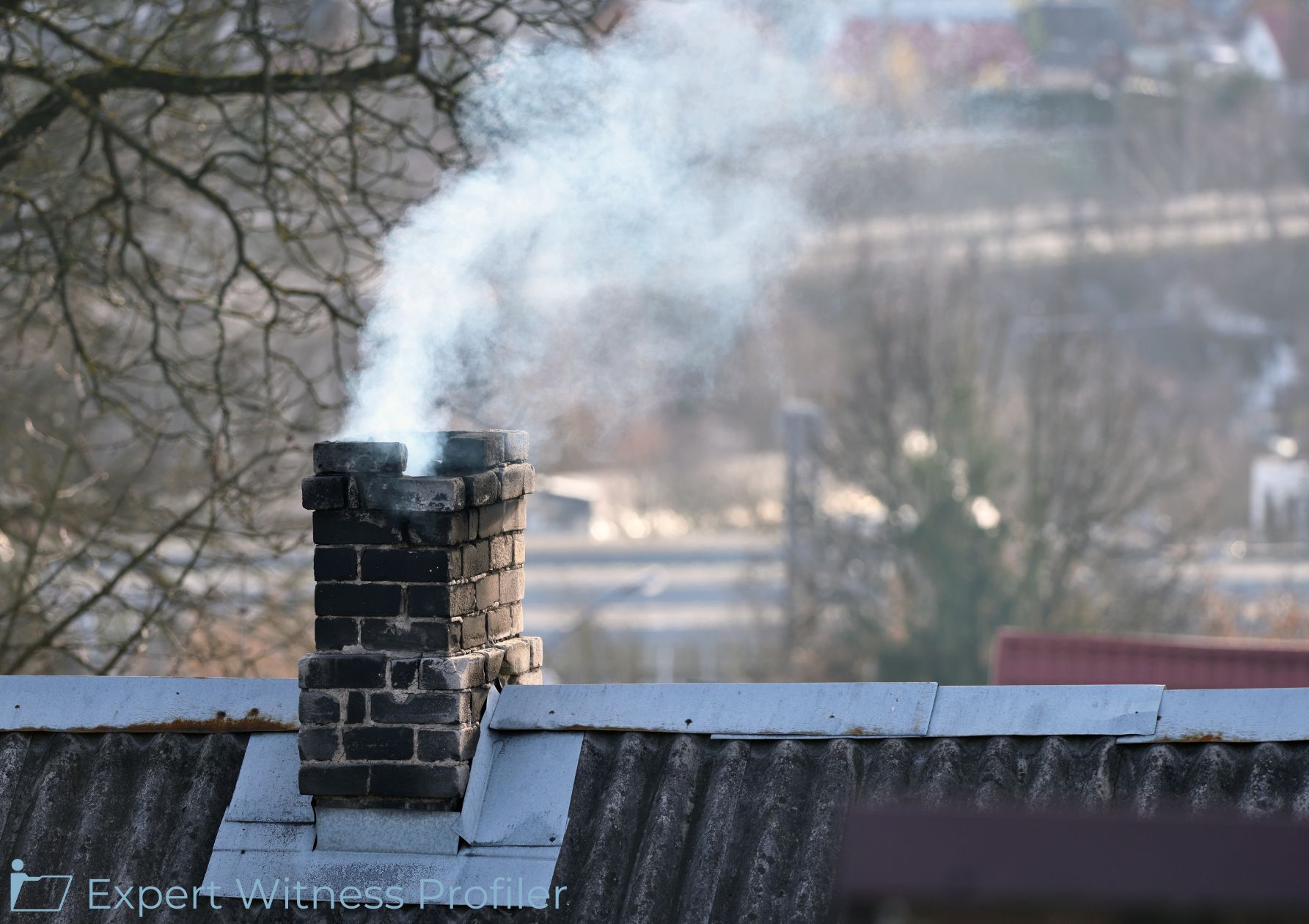
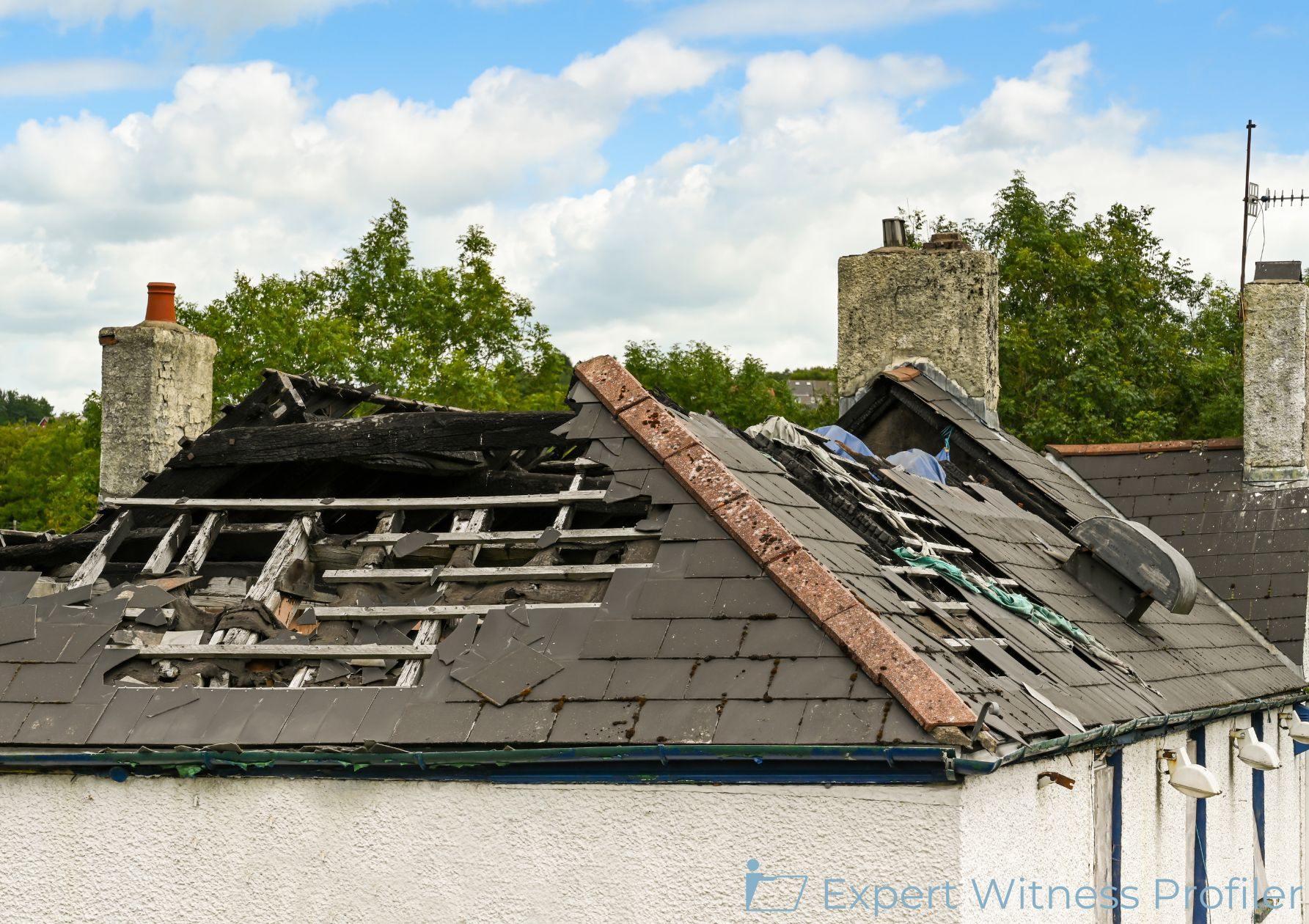
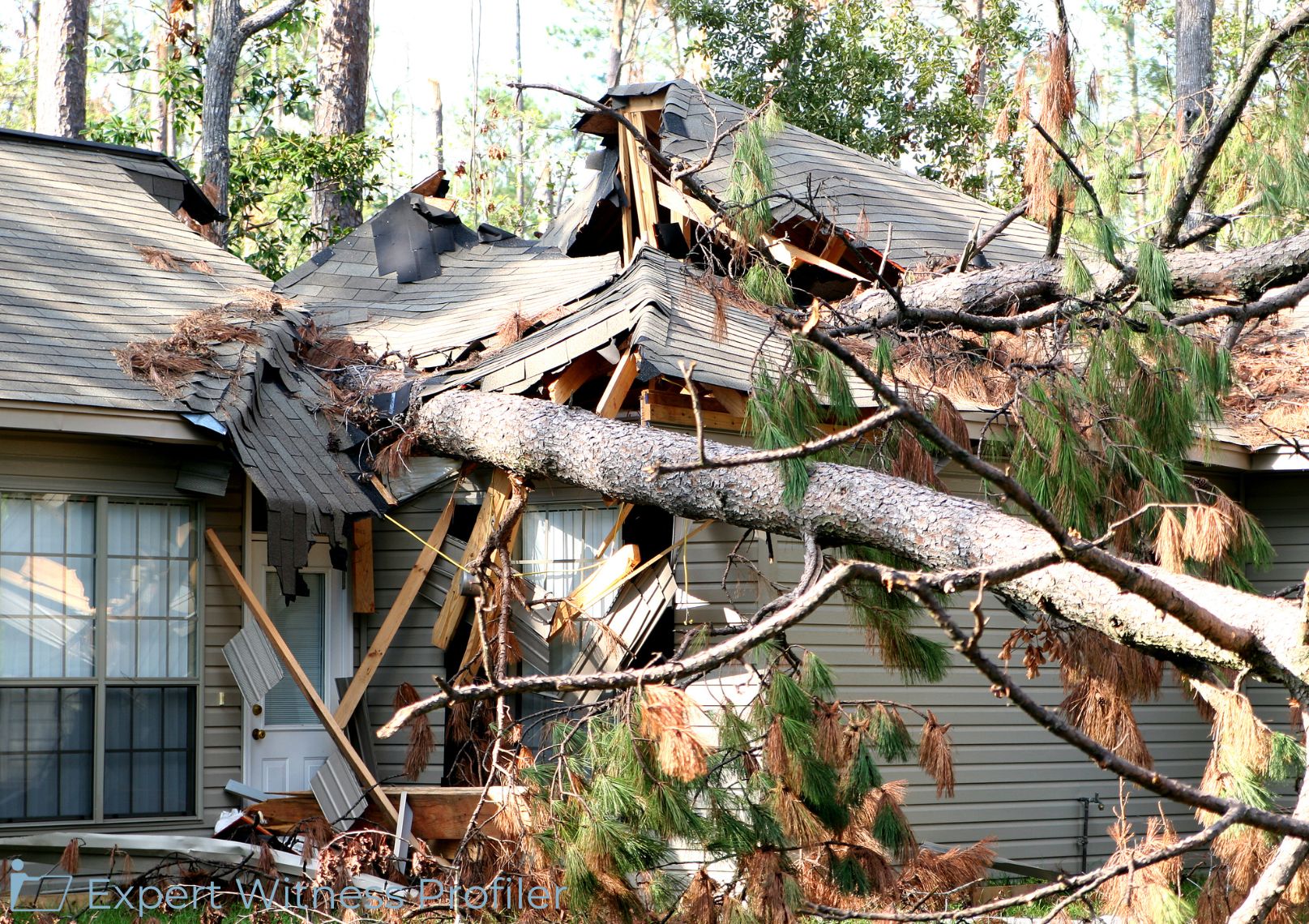
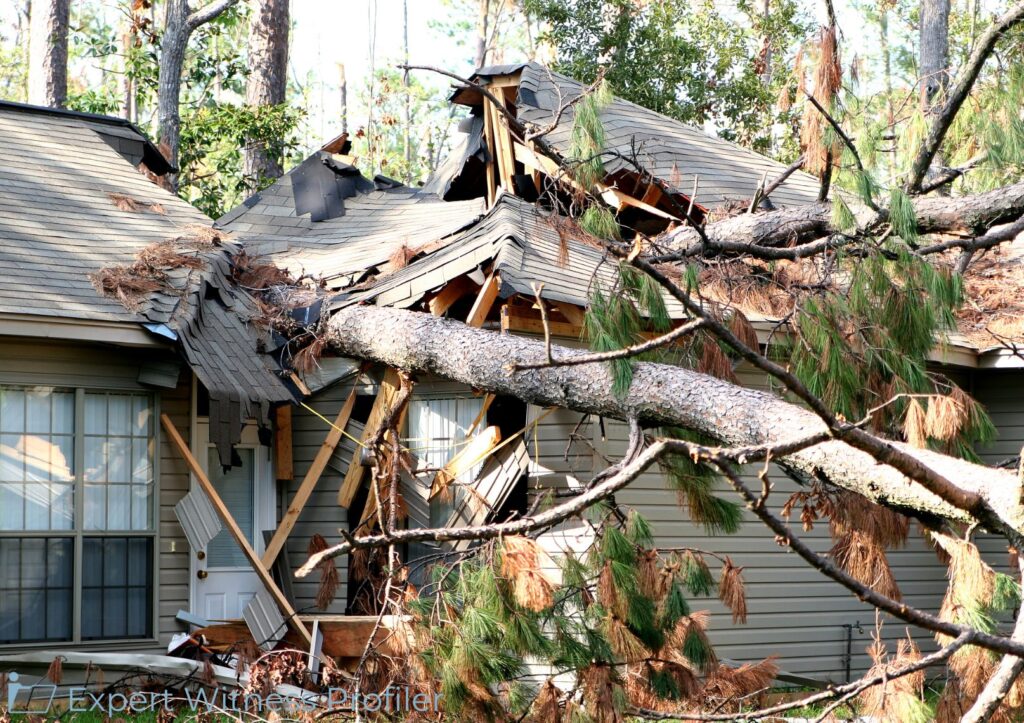
Plaintiff Haverford Square Properties, LLC owned a building in Philadelphia insured by Defendant Trisura Specialty Insurance Company (“the Property”). The Property’s chimney collapsed and Defendant refused to pay Plaintiff’s full claim. Plaintiff then sued Defendant for breach of contract.
During the litigation, Plaintiff consulted an expert, Tim Sass, who concluded that all of Plaintiff’s claimed loss was caused by the bricks that fell during the chimney collapse.
Defendant disagreed and filed a motion to preclude this expert’s testimony, arguing that his conclusions do not satisfy the minimum reliability requirements set forth in Federal Rule of Evidence 702.
Structural Engineering Expert Witness
Timothy Sass, MSCE, PE is a structural engineer with over thirty years of experience in residential and commercial construction.
Sass concluded that the force of the impact from the falling chimney bricks pushed the rear wall out of plumb, cracking multiple joists and creating the risk of collapse. Sass never visited the Property to conduct an in-person inspection, but reviewed photographs, insurance letters, and other documents to form an opinion about the cause of the damage.
1. Sufficient Facts or Data
First, Defendant argued that Sass relied on insufficient facts and data because he was retained three years after the reported loss and after the Property had been fully demolished, so he never actually visited the Property for an inspection. The fact that Sass never visited the Property did not necessarily render his testimony unreliable.
Second, Defendant argued that Sass used a single photograph of cracked joists at the Property to reach his conclusions and was unable to identify other photographs he used in his review. This is a mischaracterization. Sass’ report stated that he reviewed several documents to inform his opinion, including the complaint in this action, the City of Philadelphia Department of Licenses and Inspections (“L&I”) Notice and Order, an abatement work invoice, a collapse letter, the deposition transcript of Defendant’s representative, the insurance denial letter, Defendant’s expert report, and “photographs.”
Third, Defendant argued that Sass’ report is based on the erroneous belief that L&I inspected the Property prior to the date of loss. Defendant is correct that, in his deposition testimony, Sass often referenced his mistaken belief that L&I inspected the Property prior to the date of loss and did not observe any damage to the rear wall. Sass cited this mistaken belief as one basis for his conclusion that the damage to that wall occurred because of the subsequent chimney collapse. But that is not the only piece of information upon which Sass formed his opinion. Indeed, every time he made this point about L&I, it was preceded by or following an explanation of the other facts and principles he relied upon to reach his conclusion.
The Court concluded that Sass’ reliance on one erroneous piece of information did not render the rest of the facts and data informing his opinion unreliable.
2. Reliable Principles and Methods
Defendant also criticized Sass’ principles and methodology by arguing that he failed to consider crucial pieces of information: (1) the effect of the removal of mural stabilization braces from the Property prior to the loss; (2) the pre-loss photographs of the joists that Sass concluded were cracked due to the chimney collapse; and (3) L&I’s finding in its Order that the rear wall was damaged and in danger of collapse.
Plaintiff conceded that Sass did not consider the effect of the removal of mural stabilization braces from the Property when issuing his report. But Sass testified at his deposition that this piece of information would not change his analysis of the cause of the damage to the rear wall in any way.
Again, Defendant is incorrect that Sass failed to consider pre-loss photographs of the cracked joist. He testified to reviewing and considering several pre-loss photographs. Defendant is also incorrect that Sass failed to consider L&I’s finding in its Order that the rear wall was damaged and in danger of collapse or mention that finding in his report. Sass testified that he reviewed both the L&I Notice and Order before drafting his report and did not explicitly mention the Order because, in his view, the Order and Notice say essentially the same thing.
The Court found that Defendant’s criticisms of Sass’ methodology were not disqualifying under Rule 702. Defendant is not saying that Sass failed to articulate any methodology used to render his opinion.
Rather, Defendant’s criticisms amount to disputes about whether Sass overlooked certain pieces of information that he should have considered. These criticisms are more probative of “the weight the opinion should be afforded, rather than the reliability” of Sass’ testimony.
3. Reliable Application of Principles and Methods
Defendant’s most fundamental criticism of Sass is that his conclusions do not stem from a reliable application of principles and methods to the facts of this case. Defendant argued that Sass’ conclusion that the chimney collapse caused the damage to the rear wall is “directed from an incomplete understanding of a single photograph, subsequently extrapolated into a final ‘opinion’ through speculation and conjecture.”
In both his report and deposition, Sass explained how he reached his conclusion that the chimney collapse caused the damage to the Property. He explained that the cracks in the floor joists were not oxidized, meaning they were likely fresh, which was consistent with a more recent cause of damage, like the falling masonry. Sass also explained that the location of the cracks supports his conclusion because they were located near the center of the span. The center is “the most highly stressed part of the joists,” so that is where he would expect to see damage from a chimney collapse. Sass also explained that the Property’s older building date supported his conclusions.
The Court found that these explanations helped Sass “bridge the gap” between his conclusions and his methods. Sass can describe to a jury what information he reviewed and explain how that information led him to his opinion about the cause of the damage to the Property.
Held
The Court denied Defendant’s motion to preclude the testimony of Tim Sass because his conclusions meet the minimum reliability requirements of Rule 702.
Key Takeaway
An expert need not physically inspect or examine the subject of his or her testimony and may use second-hand materials and experience to draw reasonable inferences.
Case Details:
Case Caption:
Haverford Square Properties, LLC V. Trisura Specialty Insurance Company
Docket Number:
2:23cv1847
Court Name:
United States District Court, Pennsylvania Eastern
Plaintiffs Laura Kotelman and Paul Kotelman (the Kotelmans) filed a Complaint against Defendant Farm Bureau Financial Services (Farm Bureau) following a dispute over insurance coverage for residential property roof damage.
Farm Bureau moved to exclude the expert testimony of the Kotelmans’ structural engineering expert, Keith Stroh and to strike the rebuttal report of Stroh.
Structural Engineering Expert Witness
Keith M. Stroh holds three degrees from South Dakota State University: two bachelor’s degrees in agricultural and civil engineering, and a master’s degree in structural engineering. He has worked as an engineer since 1986, a structural engineer since 1996, and an engineering consultant, including doing forensic engineer work, since 2003. Stroh has completed at least twenty-one forensic engineering analyses to date.
Farm Bureau argued that the Kotelmans have failed to demonstrate that Stroh has the qualifications to render the proposed testimony or that the proposed testimony of Stroh met the requirements of Rule 702.
The Kotelmans argued that (1) it is premature for this Court to decide whether to exclude this expert, (2) Stroh has the appropriate qualifications to render his opinion whether the roof met applicable construction standard and what caused damage to the roof, and (3) Stroh’s analysis followed engineering industry standards.
Discovery, as mentioned earlier, is still ongoing in this case. As of now, it appears “more likely than not” that Stroh’s testimony could aid a fact finder in understanding issues within the expertise of a structural engineer with forensic engineering experience relating to design, construction and causes of the failure of the Kotelmans’ roof. Once discovery is done, this Court anticipates Farm Bureau will renew its motion for summary judgment and perhaps challenge Stroh’s expertise then or later in a motion in limine. At this time, the Court denied Farm Bureau’s motion to exclude the expert testimony of Stroh.
B. Motion to Strike Rebuttal Report
Farm Bureau also requested that this Court strike Stroh’s rebuttal report. Stroh’s expert report and opinions were disclosed on March 31, 2025. Farm Bureau’s experts and expert reports were disclosed on June 30. On August 26, Farm Bureau moved for summary judgment. On August 28, the Kotelmans disclosed Stroh’s rebuttal report, which was fifty-nine days after Farm Bureau disclosed its expert reports.
Farm Bureau argued that the rebuttal report should be struck because (1) the scheduling order does not expressly permit rebuttal reports; (2) Federal Rule of Civil Procedure 26(a)(2)(D)(ii) requires that rebuttal reports be disclosed thirty days after the opposing parties’ expert reports; and (3) Farm Bureau is prejudiced by the Kotelmans’ ambushing of Farm Bureau “with this untimely disclosure.”
Considering the particular circumstances of this case, the Court found that this is not one of the rare cases where the “harsh penalty” of excluding the report is appropriate.
First, Stroh’s rebuttal testimony is important for the Kotelmans to respond to Farm Bureau’s experts. Second, the Kotelmans have explained their reasoning for not disclosing the rebuttal report earlier. In addition, at the time the rebuttal expert report was filed, the most recent scheduling order had extended the discovery deadline, “including expert discovery,” to October 15, 2025, without specifying a rebuttal expert report deadline. Third, allowing the Kotelmans to use Stroh’s rebuttal report would not unfairly prejudice Farm Bureau. Farm Bureau has its own engineering expert who can address and refute Stroh’s rebuttal report. Fourth, the discovery deadline in the case effectively has been extended until at least January 2, 2026.
Held
The Court denied Farm Bureau’s motion to exclude the testimony of Keith Stroh.
The Court denied Farm Bureau’s motion to strike the rebuttal report of Keith Stroh.
Key Takeaway:
The exclusion of evidence is a harsh penalty and should be used sparingly. When a party does not fully comply with the expert-disclosure rules, the district court has wide discretion to fashion a remedy or sanction as appropriate for the particular circumstances of the case.
This is a removed action by Plaintiff Wings Platinum LLC , an insured, against its insurer, Defendant Westchester Surplus Lines Insurance Company, arising from the denial of Wings’ claim for coverage following a wind and hail storm. Wings asserted claims for breach of contract; unfair settlement practices, and breach of the duty of good faith and fair dealing.
Wings alleged that, on April 9, 2021, a severe wind and hail storm caused significant damage to the Property’s roof and exterior. Plaintiff submitted a claim under the Policy for wind and hail damage to the Property that it maintained was caused by the storm, seeking the cost to repair the roof. Westchester retained Robert J. Herrera, an engineer at Stephens Engineering, to investigate Wings’ claim. Herrera first inspected the property on September 9, 2021, and he authored three reports. However, Wings filed a motion to strike Herrera’s testimony and opinions.
After Westchester denied Wings’ claim on or about April 21, 2022, Wings sued Westchester in State Court, and Westchester removed the lawsuit to this Court.
Structural Engineering Expert Witness
Robert Herrera was hired by Stephens Engineering Consultants, Inc. in 2020 where he uses his years of design engineering experience in the field of forensic investigations. Herrera has performed forensic investigations for a wide variety of residential and commercial structures to determine cause and/or extent of stormrelated damage to roofing and exterior claddings of buildings, water intrusion, structural damage and collapse, differential foundation movement, vehicle impacts, and construction defects.
Herrera is currently a senior forensic engineer, the team leader for Texas, and an integral part of the training of new forensic engineers for Stephens.
Herrera’s first report, dated September 30, 2021 (the “First Report”), concluded that identified fractures in the thermoplastic membrane of the roof were not caused by wind or hail. The second report, a supplement produced after a follow-up investigation of the building on February 28, 2022 and dated March 22, 2022 (the “Second Report”), identified fractures in the membrane consistent with impact, but it maintained that those fractures were not caused by a weather event in 2021 and were instead caused by a storm in April 2017. The third report, a second supplement dated June 23, 2022 (the “Third Report”), responded to additional materials that Wings had provided and maintained the conclusions reached in the Second Report.
Plaintiff’s Argument in Support of the Motion
Wings sought to exclude Herrera’s testimony on the basis that he is not qualified to opine as an expert on the age of the damage to the roof and that his opinions regarding the age of the hail damage on the roof are not reliable because they lack any reasonable basis and are not the result of sound scientific principles and methods.
Wings posited that Herrera had insufficient training to be qualified as an expert for purposes of determining the time when the roof was damaged by hail.
It contended that Herrera’s prior engineering experience is not relevant to the issue on which he opines—the age of the hail strike damage—and that Herrera’s mere one year and one month of experience at the time of his First Report is insufficient to qualify him as an expert.
Wings also contended that Herrera’s opinions regarding the age of the hail strikes are not reliable because they are entirely subjective and lack “any sort of basis, rubric, metric, or standard” by which to judge them, and because Herrera could not explain how his determination of the age of the damage could be duplicated or tested.
Analysis
Qualification
Neither Westchester nor Herrera articulates how Herrera’s specific experience designing commercial and residential structures as a project engineer qualifies him to opine on the age of the hail damage. The Court held that Herrera’s training and experience at Stephens, however, qualify him to offer these opinions as an expert.
In his affidavit, Herrera avers that he received on-the-job training when he began working at Stephens in 2020 that was “specific to identifying and assessing wind- and hail-related damage to roofs, including the type of roof at issue in this lawsuit.”
He shadowed senior engineers for 3 to 4 months before beginning to inspect buildings independently, and, at the time he inspected the roof at 3950 Platinum Way, he had inspected approximately 200 buildings for storm damage.
At the time of his affidavit, he had inspected approximately 750 properties for storm damage. The Court finds this experience and training sufficient to qualify Herrera to offer his expert opinion on the age and cause of the damage to the roof at 3950 Platinum Way under Rule 702.
Reliability
Herrera testified in his deposition that he was able to examine fractures in the roof and determine, “to a reasonable degree of engineering certainty,” that the fractures were more than one year old and thus were not due to a recent hail event. This observation and judgment, in connection with his review of weather research and Roof Technical Services, Inc.’s (“RTS’s”) report from its analysis of the roof samples, formed the basis for Herrera’s opinion.
The Second Report explained that the fractures on the roof attributed to hail damage were consistent with hailfall on or about April 25, 2017 because the damage was consistent with hail larger than that reported at the property in the April 2021 storm. The Court was satisfied with Westchester’s showing of reliability in this instance.
In other words, Wings’ deepreservations about Herrera’s opinions concerned the weight of his testimony, not its admissibility, and will be better addressed through vigorous cross-examination and the presentation of contrary evidence.
Held
The Court denied Plaintiff’s motion to strike the testimony and opinions of Defendant’s expert Robert J. Herrera.
Key Takeaway:
Herrera received on-the-job training when he began working at Stephens in 2020 that was “specific to identifying and assessing wind- and hail-related damage to roofs, including the type of roof at issue in this lawsuit.”
He reviewed weather research and Roof Technical Services, Inc.’s (“RTS’s”) report from its analysis of the roof samples to conclude that the damage to the roof was not caused by a recent hail event.
Case Details:
Case Caption:
Wings Platinum Llc V. Westchester Surplus Lines Insurance Company
This case involves claims raised by Plaintiffs Kyle and Annaleah Justice against Defendants Bestway USA and Rural King Holdings, Inc. under the Missouri Wrongful Death Statute. Plaintiffs’ claims arose from the drowning death of their minor daughter, E.M.J., in an above-ground pool on August 3, 2019.
Plaintiffs raised five claims against Bestway USA: Count I – Strict Liability Design Defect; Count II – Strict Liability Failure to Warn; Count III – Negligence (under theories of both negligent design and negligent failure to warn); Count IV – Breach of Express Warranty; and Count V – Breach of Implied Warranty.
Kyle and Annaleah Justice filed a motion to exclude Fred Semke, Defendant Bestway (USA), Inc.’s retained engineering expert.
Structural Engineering Expert Witness
Fred Semke is President of Semke Forensic and was hired by Bestway USA to “render professional opinions regarding the pool.” Semke has a bachelor’s degree in mechanical engineering and a master’s degree in engineering mechanics. He is a Registered Professional Engineer in Missouri, Illinois, Arkansas, Kentucky, Kansas, Oklahoma, Iowa, Alabama, and Idaho. He also has fourteen (14) years of experience as a structural engineer.
Semke’s report stated that he plans to testify to the following:
During the Warren County Sheriff’s evaluation of the subject pool, the top of the support band was measured at 14.5 inches from the ground . . . with the overall height of the pool being 51.5 inches . . . . As such, the distance between the top of the pool and the top of the support band was 37 inches.
Kyle Justice testified [E.M.J.] “…couldn’t climb up into that tree house… because the ladder rungs were too tall.” The ladder rungs were measured by Semke and found to be 25 inches from the base of the ladder . . . . Furthermore, Mary Flake, E.M.J’s grandmother, relayed to Semke during the inspection of the premises that [E.M.J.] was unable to climb onto the family’s 34-inch high trampoline . . . without assistance.
Considering the aforementioned statements made by Justice and Flake, in conjunction with the measured heights, it was inconsistent with [E.M.J.] using the pool support band as a stepping location to pull herself into the pool.
The design of the subject pool was not unique; rather, it was consistent with other polyvinyl chloride pools. The subject pool, and similar pools, require the support band near the bottom of the pool to resist the hydrostatic pressure at the base of the wall. In addition, the band also serves as a support for the vertical posts of the pool frame.
Based on the indicated analysis, the pool did not contain design or manufacturing deficiencies.
Plaintiffs’ Position
Plaintiffs argued that Semke’s testimony should be excluded because (1) he is not qualified to provide opinions regarding pool engineering; (2) Opinions 1, 2, and 3 are mere statements of fact or simple inference that do not require expert testimony; (3) Opinion 4 is not based on sufficient facts or data; and (4) Opinion 5 is a legal opinion. They separately argued that several opinions Semke testified to during his deposition were not disclosed in his expert report and should therefore be excluded. Plaintiffs challenged Semke’s qualifications to testify regarding pool design. Specifically, Plaintiffs argued that Semke lacked experience or training specifically related to biomechanical engineering, human factors analysis, and above-ground pool design.
Analysis
Semke is Qualified to Express Opinions Regarding the Pool’s Design
Semke, an experienced engineer with degrees in mechanical engineering and engineering mechanics, is qualified to testify in the field of engineering. This includes testimony regarding the engineering implications of the pool’s design and the function of the pool’s nylon support strap. The Court held that Semke is not required to have further specialization in aquatic engineering to offer these opinions; it is sufficient that he has expertise in engineering and structural design.
Despite not having specific experience in evaluating pool designs or in designing pools, Semke can offer his engineering knowledge and experience to help the jury understand the engineering concepts underlying the pool’s design.
Opinions 1, 2, and 3
Plaintiffs argued that Semke’s Opinions 1, 2, and 3 should be excluded because they are statements of fact and not expert opinions. Plaintiffs contended that Semke’s statements about the height of the pool wall, the nylon strap, and the distance between them are facts that the jury does not need expert testimony to understand.
The Court held that the simple math and the previous testimony of Kyle Justice and Mary Flake are mere statements of fact that can be established without reliance on opinion evidence. To be clear, Semke will be permitted to testify regarding the measurements his firm took at the Flake residence and to explain the process he used to arrive at some of his conclusions, but the jury does not need his assistance to determine the difference between 51.5” and 14.5”.
Similarly, no expertise is necessary for the jury to understand the lay testimony of Kyle Justice and Mary Flake. The jury itself can make its own inferences regarding whether E.M.J. was able to scale the pool wall based on testimony regarding its height and her known climbing abilities. Semke’s opinion testimony that the theory that E.M.J. accessed the pool by standing on the nylon support strap is inconsistent with her family’s testimony about her climbing abilities is simply an inference that the jury can arrive it through its own knowledge and experience.
Opinion 4
Plaintiffs averred that Opinion 4—specifically that the pool’s design was not unique—is not based on sufficient facts or data because Semke testified that he has not evaluated any other pool designs. Plaintiffs argued that Semke’s lack of experience with pool engineering prevents him from forming a conclusion about the pool’s design or how it compares to the design of other pools.
The Court held that Semke will be permitted to testify regarding the purpose of the pool’s nylon support strap in its design. Semke testified at deposition that the pool’s nylon support strap is a “structural item” used to ensure the structural integrity of the pool’s walls, which are pushed outward by the weight of the water in the pool when the pool is filled. He will also be permitted to testify regarding the effect the pressure on the structure would have on the potential gap between the nylon support strap and the pool’s exterior wall, and therefore its utility as a foothold. The Court noted that Semke arrived at these conclusions using his engineering expertise.
However, Semke will be precluded from testifying that the design of the pool was “not unique” and “was consistent with other polyvinyl chloride pools.” By his own admission, Semke was not asked to evaluate any other pool designs and he did not do so.
Opinion 5
Plaintiffs represented that Opinion 5 is merely a legal conclusion and therefore should be excluded. Though Plaintiffs recognized that the opinion does not specifically state that the pool design was not “defective,” they argued that the opinion that the pool “did not contain design or manufacturing deficiencies” is a thinly veiled attempt to provide a legal conclusion regarding the pool’s alleged design defect.
The Court held that Semke is qualified to testify regarding the pool’s design, and his testimony here regarding the lack of deficiencies in the pool’s design does not present a legal conclusion. Semke does not propose to apply the law to the facts of this case in arriving at his conclusion. Plaintiffs themselves admit as much.
Rather, his opinion that the pool contains no design deficiencies is an engineering opinion stemming from his analysis of the pool’s design. Despite what Plaintiffs claim, this opinion does not require Semke to have evaluated the designs of other pools because this opinion pertains only to the pool at issue in this case, and Plaintiffs can certainly cross-examine him in this regard. He is not attempting to tell the jury what legal conclusion to reach but is instead stating that there are no specific engineering issues inherent in the pool’s design. This is permissible expert testimony that will help the jury to determine whether the pool had a design defect, and the Court will deny Plaintiffs’ attempt to exclude this opinion.
Opinions Not Disclosed in Semke’s Expert Report
Plaintiffs also opposed the admission of several opinions Semke only expressed during his deposition testimony and were not included in his expert report. These include Semke’s opinions that: (1) E.M.J. was not adequately supervised at the time of her drowning; (2) E.M.J. could have used a bucket to enter the pool; (3) E.M.J. could have used the pool ladder to enter the pool; (4) E.M.J. could have climbed the pool’s support poles to enter the pool. Plaintiffs argued that because these opinions were only raised at deposition and were not shared in Semke’s expert report, as required by Federal Rule of Civil Procedure 26, they are inadmissible.
The Court noted that Bestway USA has made no attempt to supplement Semke’s report to include these opinions as required by Fed. R. Civ. P. 26(a)(2)(E) and 26(e)(2), and therefore the opinions have not been disclosed as required by Rule 26(a)(2)(B)(i).
Inasmuch as Semke’s report contains no information regarding these opinions, Plaintiffs and the Court have been unable to fully assess how Semke arrived at those opinions and on what data he bases such opinions. Semke’s report includes no analysis of other ways that E.M.J. could have entered the pool, and he provides no reasonable engineering basis for any opinions regarding alternative methods. Because these opinions were not properly disclosed and because Bestway USA has not shown by a preponderance of the evidence that Semke arrived at them through the reliable application of an engineering methodology to the facts and data in this case, the Court excluded these opinions to the extent that Bestway USA attempts to elicit them on direct examination of Semke.
Held
The Court granted in part and denied in part the Plaintiff’s motion to exclude Fred Semke.
Key Takeaways:
Despite not having specific experience in evaluating pool designs or in designing pools, Semke was allowed to offer his engineering knowledge and experience to help the jury understand the engineering concepts underlying the pool’s design.
Semke does not propose to apply the law to the facts of this case in arriving at his conclusion. Plaintiffs themselves admit as much. Rather, his opinion that the pool contains no design deficiencies is an engineering opinion stemming from his analysis of the pool’s design. He is not attempting to tell the jury what legal conclusion to reach but is instead stating that there are no specific engineering issues inherent in the pool’s design.
Please refer to the blog previously published about this case:
Philip and Nancy Fairman’s home sustained severe flooding during Hurricane Ian. After the storm, they filed a damage claim with their insurer, Defendant American Strategic Insurance Corp (“ASI”), to seek compensation for the losses. ASI acknowledged coverage but disputed the extent of the damage. When the Fairmans and ASI could not reach a settlement, the Fairmans initiated a lawsuit to pursue their claim further.
To facilitate discovery, the Court conducted a status conference and issued a scheduling order, requiring both parties to submit their Rule 26 expert disclosures by August 30, 2024. However, ASI failed to disclose its structural engineering expert witness, Brian Lindsey and did not provide the Fairmans with his report until nearly a month later, on September 26, 2024. ASI attributed this delay to an “oversight.”
In response, the Fairmans filed a motion to strike ASI’s delayed expert disclosure. They also asked the Court to bar ASI from using Lindsey’s report or testimony in dispositive motions. Additionally, they asked that Lindsey be barred from testifying at trial, asserting that ASI’s failure to meet the deadline could adversely affect their case.
Structural Engineering Expert Witness
Brian Lindsey, P.E., has over 20 years of forensic experience in cases involving damage assessments of design/construction defects, collapse of structures, vehicle impacts, structural fire damage, water intrusion, foundation movement, snow load failures, site drainage, wind damage, hail damage, exterior wall cladding damage and roofing systems damage.
Federal Rule of Civil Procedure 26 governs expert witness disclosures, aiming to prevent surprises in litigation and ensure parties can adequately prepare their cases. The rule mandates that parties disclose the basis of their expert opinions on time. Compliance with Rule 26 is not aspirational; it is mandatory. When a party fails to meet these obligations, Rule 37(c) grants the court discretion to exclude the expert unless the violation was substantially justified or harmless.
ASI, having violated Rule 26, bore the burden of proving that its noncompliance was either justified or harmless. Substantial justification exists when reasonable minds could differ on the need to comply. Harmlessness, however, involves considering factors such as the element of surprise, the opposing party’s ability to address it, potential disruption to the trial, the evidence’s significance, and the reason for the failure to disclose.
ASI did not argue that its conduct was substantially justified, nor did it address the factors necessary to establish harmlessness. Instead, ASI attributed the delay in disclosing its expert to an “oversight” and sought leniency, claiming no intentional violation or prejudice to the Fairmans. However, these explanations do not meet the required standard. Courts have consistently held that excuses such as oversight or clerical errors are insufficient to justify noncompliance with Rule 26.
Consequently, ASI failed to satisfy its burden. The Court held that ASI cannot call Brian Lindsey as a witness or use his report as evidence in motions, hearings, or trial proceedings.
Held
The Court granted the Plaintiffs’ motion to strike Defendant American Strategic Insurance Corp.’s Rule 26 expert disclosure as untimely. Further, structural engineering expert witness Brian Lindsey’s report and expert testimony were stricken and excluded from further consideration in the lawsuit.
Key Takeaways:
The Court excluded ASI’s structural engineering expert witness, Brian Lindsey, and his report due to ASI’s failure to comply with Federal Rule of Civil Procedure 26, which mandates timely disclosure of expert witnesses to prevent trial surprises and ensure adequate case preparation.
ASI did not provide substantial justification for its month-long delay nor argued that the delay was harmless. Instead, ASI claimed the missed deadline resulted from an “oversight.” The Court found this explanation insufficient, emphasizing that clerical errors and oversight do not excuse Rule 26 violations. In conclusion, the Court granted the Fairmans’ motion to strike Lindsey’s testimony, barring ASI from using his evidence at any stage of the litigation.
Case Details:
Case caption:
Fairman v. Am. Strategic Ins. Corp.
Docket Number:
2:23cv788
Court:
United States District Court for the Middle District of Florida, Fort Myers Division
Plaintiff, Ansur America Insurance Company, sued Defendants, James A. Borland and Quinn, Johnston, Henderson & Pretorious, Chtd., an experienced defense lawyer and his law firm, for alleged legal malpractice in handling a complex product liability case in St. Clair County, Illinois. Plaintiff alleged that Defendants failed to meet the standard of care in representing Plaintiff in a tripartite relationship, where Plaintiff insured a company that sold the underlying plaintiff a shower stool that broke, causing her to fall and dislodge hardware recently placed by a surgeon in her spine.
Defendant filed motions to excude the opinions of Plaintiff’s experts Falak Shah and Sari Montgomery.
Structural Engineering Expert Witness
Falak Shah, Ph.D., P.E., C.W.I., is a managing engineer in Exponent’s Mechanical Engineering Practice with experience assessing the performance, mechanical integrity, and fitness-for-service of structural and mechanical systems. His experience involves leading investigations of different structures, products, and mechanical systems in a broad variety of applications and a wide range of materials. He is a licensed professional engineer in the state of Illinois and is a certified welding inspector (C.W.I.), a certification from the American Welding Society (AWS). Shah has a Ph.D. and M.S. in civil engineering (with a specialization major in structural engineering) from the Georgia Institute of Technology and a B.S. in civil engineering from the University of Florida. He has completed advanced coursework in and has experience with the analysis and design of a variety of materials, including wood, metals, and composite materials. In addition to his degrees, licensure, and other certifications, he has a multidisciplinary certificate in the mechanical properties of materials.
Sari Montgomery received her B.A. at the University of Chicago and her J.D. at Loyola University Chicago. Since her graduation in 1994, she has worked as Litigation Counsel for the Illinois Attorney Registration and Disciplinary Commission (“ARDC”) and was ultimately promoted to Senior Litigation Counsel. In those roles, she performed hundreds of investigations and prosecuted over 50 disciplinary cases before the ARDC’s Hearing Board. She also trained ARDC counsel and staff.
Since 2010, Montgomery has been employed at Robinson, Steward, Montgomery & Doppke LLC, where she has represented attorneys in disciplinary investigations, hearings, and appeals before the ARDC and the Illinois Supreme Court, represented judges before the Illinois Judicial Inquiry Board and bar applicants in character and fitness matters. She has provided ethics advice and opinion letters to law firms, attorneys, government agencies and law-related businesses, and has served as an expert witness in legal malpractice and fee litigation. She has served as an adjunct professor teaching legal ethics and professional responsibility, has served on numerous committees and boards, and has authored numerous publications.
Shah was requested to “analyze the mechanical cause or causes of the failure” of the shower stool.
Defendants argued that Shah’s opinions are irrelevant and unreliable in that he provides only an outline of untested hypotheses in his June 14, 2023 report, such that his analysis is incomplete and cannot be analyzed through any relevant means. They further argued that Shah provides failed to eliminate possible causes related to the failure of the shower stool.
Shah’s report and opinions are based on his visual inspection of the shower stool in April 2023, and a review of documents provided. The parties had agreed in advance of Shah’s inspection that the stool could be photographed, videoed, examined, and measured. Whether any additional testing would take place was left to be determined.
Shah opined that a visual examination alone did not provide him with sufficient information to determine the mechanical cause or causes for the stool’s failure to a reasonable degree of engineering certainty. He further opined that there are three categories under which the mechanical cause or causes could fall, but additional analyses beyond merely visual inspection would be required to assess each of those.
While Shah didoes not identify the mechanical cause for the stool’s failure, the Court finds that his opinions and conclusion that a visual inspection alone could not determine the mechanical cause or causes of the stool’s failure are directly relevant to the issue of whether the applicable standard of care required Defendants to retain an engineering expert to conduct the analyses necessary to make the determination.
Sari Montgomery
Defendants sought to exclude Montgomery’s opinions that Defendants violated the standard of care by:
(1) Failing to issue a litigation hold letter at the beginning of the litigation;
(2) Failing to conduct jury verdict research;
(3) Failing to timely advise Ansur and Signature of conflicts of interest over the law barring insurance for punitive damages; and,
(4) Failing to inform Ansur and Signature that there could be a $10 million punitive damage award in addition to a $1.35 million award in compensatory damages, one month before the trial, when prior liability estimates had exposure not exceeding $325,000.
Montgomery is not qualified to render opinions in this case regarding the standard of care because she lacks the experience to qualify her as an expert product liability litigation attorney
Defendants also pointed out that Montgomery has never represented a product manufacturer nor handled a case involving a personal injury or consumer products, has never represented a client who has been alleged to be liable for punitive damages apart from sanctions, and has not handled a case in St. Clair County, Illinois.
As a licensed attorney who had represented attorneys in disciplinary investigations, hearings and appeals, both for the Illinois Attorney Registration and Disciplinary Commission and in private practice, the Court held that Montgomery has the requisite background and experience to render opinions regarding the standard of care Defendants owed to Plaintiff based on the applicable ethical requirements and rules of professional responsibility.
Montgomery’s opinions regarding Defendants’ requirement to give coverage advice to Ansur and the insured company in the underlying case violate the Rules of Professional Conduct
Defendants contended that if they had disclosed a conflict of interest between Ansur and the insured, Signature, Ansur would have been handed a significant coverage defense, thereby greatly harming Signature and violating Rules of Professional Conduct 1.6(b)(7). They also argued that an attorney retained by an insurance company to defend its insured owes a duty to the insured not to disclose facts to the insurer that might prejudice the insured’s rights in a potential coverage dispute with the insurer, as set forth in the Illinois State Bar Association (“ISBA”) Advisory Opinion, dated July 17, 1992.
In the instant case, Ansur alleged that at no time after the filing of the motion seeking punitive damages in the underlying case, did Defendants advise Ansur or Signature that there was a potential conflict of interest between them because punitive damages would not be covered under Signature’s policy.
Montgomery’s report sets forth her opinions regarding Defendants’ ethical duties and that a breach occurred when Defendants did not disclose the existence of a resulting conflict of interest between Ansur (the insurer) and Signature (the insured) on the issue of punitive damages. The Court held these opinions to be reliable, and directly relevant to Ansur’s claims and the issues raised in this case.
Defendants also argued that Montgomery’s opinions regarding a conflict of interest on coverage and punitive damages conflict with an Illinois State Bar Association Advisory Opinion and are therefore impermissible.
However, the ISBA opinion itself stated “While the Opinions express the ISBA interpretation of the Illinois Rules of Professional Conduct and other relevant materials in response to a specific hypothesized fact situation, they do not have the weight of law.”
Montgomery’s opinions regarding Defendants’ communications to Ansur about the liability and damages exposure in the underlying case should be barred because she doesn’t have education, training, or experience in evaluating a product liability case
Defendants asserted that her opinions, claiming Defendants violated Rule 8.4(c) and were dishonest and deceitful, are “off base” because she has never handled a product liability case and would not know whether rapid changes in the case as it approaches trial require different or additional reporting.
The Court held that Montgomery has the requisite background and experience to render opinions regarding the standard of care Defendants were required to meet based on the applicable ethical requirements and rules of professional responsibility. Specific experience with respect to product liability litigation is not required in this case.
Finally, Defendants argued that Montgomery’s opinion regarding Defendants’ failure to conduct appropriate jury verdict research should be barred because she lacks experience in product liability defense, cannot opine how a product liability defense lawyer determines exposure, has never done product liability defense jury verdict research, and did not conduct her own jury verdict research before rendering her opinion. On this point, the Court agreed. Montgomery failed to provide a basis for this particular opinion, and her background and experience alone do not suffice.
Held
The Court denied Defendants’ motion to exclude the expert testimony of Falak Shah.
The Court granted in part and denied in part Defendants’ motion to exclude the expert testimony of Sari S. Montgomery.
Key Takeaway:
Defendants’ argument that Shah’s opinions are unreliable because they do not address each of the Daubert factors fails as well. Here, Shah’s methodology and analysis were appropriate given the issues and under the circumstances presented. He performed a visual inspection as agreed before opining that he could not determine the cause the stool’s failure solely based on that type of inspection, which is an issue presented in this case.
Montgomery’s opinion regarding Defendants’ failure to conduct appropriate jury verdict research was barred because she lacks experience in product liability defense, cannot opine how a product liability defense lawyer determines exposure, has never done product liability defense jury verdict research, and did not conduct her own jury verdict research before rendering her opinion. However, specific experience with respect to product liability litigation is not required in this case. Montgomery has the requisite background and experience to render opinions regarding the standard of care Defendants were required to meet based on the applicable ethical requirements and rules of professional responsibility.
Case Details:
Case Caption:
Ansur America Insurance Company V. Borland Et Al
Docket Number:
3:21cv59
Court:
United States District Court for the Southern District of Illinois
In this insurance coverage dispute, Melland Company, the successor by merger to Melland Real Estate Inc., held an insurance policy with Secura Insurance Companies. The replacement coverage policy covered the insured premises, a set of commercial real estate buildings in Jamestown, North Dakota, owned by the Melland family since around 1957. A blizzard named “Winter Storm Ulmer” in March 2019 caused a covered cause of loss on the property, resulting in a collapse due to the weight of snow and wind.
Secura acknowledged the covered cause of loss and initially tendered $42,377.77 to Melland Real Estate, Inc. before its merger into Melland Company. Following the 2019 storm, Ryan Heyer, an engineer from Heyer Engineering, who held the designation of “Engineer of Record” with the “Authority Having Jurisdiction” as per the 2015 International Building Code adopted by the City of Jamestown, issued a field report. In essence, the report concluded that repairing the damage caused by the storm was deemed “uneconomic and unfeasible.”Subsequently, another collapse occurred in the same area in January 2020. Thomas Schanandore, of Structural Engineers was engaged and subsequently issued an engineering report, consistent with the Heyer Report. The Jamestown municipal government held a Condemnation Hearing, leading to an order condemning and mandating the demolition of the entire east end of the insured premises. Melland Company notified Secura of this decision and its plan to demolish the structure.
In June 2020, Melland Company directed the demolition of the entire insured property, incurring costs of $87,190. Secura acknowledged the covered cause of loss as of March 15, 2019, and issued a payment of $42,377.77 to Melland Company, stating it was without prejudice to the company’s claims. However, a dispute arose between Secura and Melland regarding the application of the insurance policy, statutes, and common law concerning the amount of loss sustained by Melland.
The parties specifically disagreed on the application of N.D.C.C. § 26.1-39-05 to the insurance contract governing their relationship. This statute pertained to aspects of insurance law in North Dakota, potentially concerning the determination or calculation of losses within the context of an insurance policy.
Throughout the legal proceedings, the disagreement persisted, with each party holding differing interpretations of the policy, statutes, and common law in relation to the extent of the loss suffered by Melland Company.
Structural Engineering Expert Witness
Ryan Heyer has been in the industry since 2005 and has extensive design-build and construction site experience and specializes in the structural design of steel and concrete buildings. Heyer earned his Bachelor of Science degree in Civil Engineering from North Dakota State University in 2005 and upon joining Heyer engineering after graduation, immediately was intrigued by the industrial side of structural engineering.
Discussion by the Court
Defendant Secura Insurance Companies (“Secura”) moved in limine for several evidentiary rulings before trial while Plaintiff Melland Company (“Melland”) generally opposed the motions
Secura filed a motion in limine, aiming to restrict expert witnesses Ryan Heyer and Thomas Schanandore, representing Melland, from presenting opinions that were not included in their disclosed reports. Under Federal Rule of Civil Procedure 26(a)(2)(B), experts must disclose all opinions they intend to express, along with the basis and reasons for these opinions. Any expert opinions presented during trial must adhere to this disclosure requirement.
The Court granted Secura’s motion partially in favor of both parties, emphasizing adherence to Rule 26(a)(2)(B) for all expert witnesses involved. However, the court denied Secura’s motion to limit Heyer and Schanandore’s testimony prospectively, considering it premature at that stage of the proceedings.
Secura submitted a second motion in limine, requesting the Court to restrict Ryan Heyer’s testimony to specific relevant issues within his expertise. Secura’s argument was centered on limiting Heyer’s testimony to his observations of a damaged awning and a buckled girder. However, Heyer, a structural engineer who provided an expert report, had advocated for extensive reinforcement to bring the building up to code in this case. He was deemed qualified to offer professional opinions regarding the damage to the building, consistent with his expert report.
The Court declined to prospectively limit Heyer’s testimony at that stage. It found that many of Secura’s concerns regarding Heyer’s potential testimony related more to the weight of his testimony rather than its admissibility. Consequently, the Court denied Secura’s second motion in limine.
Secura filed a third motion in limine seeking to exclude evidence regarding the second snow event, arguing its irrelevance to Melland’s claim. Secura contended that Melland’s assertion pointed to the first snow event as the cause of the constructive total loss, rendering evidence of the second snow event unnecessary and potentially confusing for the jury.
However, the Court noted that while Melland primarily alleged the first snow event led to the constructive total loss, it also presented an alternative claim implicating the second snow event as a cause. As a result, evidence of the second snow event was deemed relevant to Melland’s alternative theory of the case. The Court further concluded that presenting evidence about the second snow event was unlikely to confuse or mislead the jury.
Secura presented a fourth motion in limine aiming to prevent any mentions of the 2018 International Building Code (IBC) and the 2018 International Existing Building Code (IEBC) in the proceedings. Their argument rested on the premise that North Dakota adopted the 2018 IEBC on January 1, 2020, making the application of these codes inappropriate to assess repairs for the damage incurred in March 2019 from the first snow event.
Acknowledging that Secura’s stance was accurate concerning the inapplicability of the 2018 IEBC to the March 2019 damage (as the 2015 IEBC was relevant at that time), the Court highlighted Melland’s alternative assertion. Melland proposed that the second snow event, occurring in early January 2020, caused the constructive total loss. Consequently, the Court deemed it premature to entirely exclude references to the 2018 IBC and IEBC.
Given Melland’s alternative claim regarding the second snow event, the Court denied Secura’s fourth motion in limine. The denial was based on the understanding that precluding all references to the 2018 IBC and IEBC at that juncture would be premature, considering the potential relevance of these codes to the second snow event alleged by Melland.
Secura submitted a fifth motion in limine to restrict Melland’s lay witnesses from providing expert testimony. Federal Rule of Evidence 701 delineates that lay witness opinions should not derive from specialized knowledge within the purview of Rule 702, which covers expert testimony.
The Court granted Secura’s motion to prevent Melland’s lay witnesses from presenting expert opinion testimony, aligning with Rule 701’s limitations. However, the Court clarified that this ruling didn’t preclude Melland’s witnesses from offering opinions that conformed to the standards outlined in Rule 701. Essentially, Melland’s lay witnesses could still provide testimony in an opinion format as long as it complied with the criteria set forth in Rule 701, which governs lay witness opinion testimony.
Secura filed a sixth motion in limine aiming to exclude any documents or references regarding the City of Jamestown’s order condemning and demolishing the building. Secura argued that this evidence violated Federal Rules of Evidence 402 and 403. Melland contended that the condemnation order was pertinent to determining if the building lost its specific identity and character.
The Court evaluated the relevance of the evidence in the context of an insurance coverage dispute, focusing on whether a snow event caused the building’s constructive total loss. The Court determined that the City of Jamestown’s decision to condemn the building lacked relevance to the central issue that the jury needed to decide. The condemnation order did not impact whether the snow event(s) resulted in a constructive total loss.
Moreover, the Court highlighted a high risk of confusion and potential for misleading the jury if the evidence concerning the City’s condemnation and demolition directive were to be presented. The decision by the City was viewed as independent of the question regarding the snow event(s) causing a constructive total loss.
As a result, the Court granted Secura’s motion, excluding any mention or documentation related to the City of Jamestown’s condemnation and demolition directives from the proceedings. The Court’s decision was based on the determination that the evidence held no direct bearing on the core issue of whether the snow event(s) led to a constructive total loss, and its inclusion risked confusion and misleading the jury.
Secura filed a seventh motion in limine seeking to prevent arguments suggesting that the building constituted a constructive total loss based on the claim that repair costs exceeded the “value” of the building. Secura contended that the comparison between repair costs and the building’s value was not relevant to determining whether the building lost its specific character and identity. Melland argued that the cost of repair should be considered by the jury, asserting that the North Dakota Supreme Court hadn’t explicitly ruled out a cost of repair analysis.
The Court acknowledged the validity of both parties’ positions. It recognized that the cost of repair could bear relevance to the central issue of the case, and the North Dakota Supreme Court hadn’t explicitly dismissed such an analysis. However, the Court also acknowledged Secura’s concern about the criteria against which the cost of repair should be measured.
It noted that in jurisdictions utilizing the cost of repair test, the comparison is made between the cost of repair and the building’s value as stated in the applicable policy. Consequently, the Court ruled that Melland could present evidence regarding the cost of repair, partially denying Secura’s motion. However, it clarified that the cost of repairs must be juxtaposed against the value of the building as specifically stated in the policy. In this regard, the Court granted Secura’s motion partially, ensuring that the comparison between repair costs and the building’s value adhered to the policy’s stated value.
Secura filed an eighth motion in limine, aiming to prevent Melland from arguing that the entire building needed to be brought up to building code, despite the undisputed fact that the west portion remained undamaged. Secura’s argument was grounded in the distinction between the undamaged west portion and the damaged east portion of the building.
However, the Court noted that the insurance policy covered both the west and east portions of the building as a single unit. Consequently, the Court ruled against limiting Melland’s expert witnesses from providing their opinions regarding this matter. It deemed that Secura’s concerns primarily pertained to the weight of the evidence rather than its admissibility.
The Court denied Secura’s motion, emphasizing that while Melland’s experts could testify, they needed to establish a sufficient foundation for all evidentiary matters related to the argument about the building’s code compliance.
Secura submitted a ninth motion in limine, seeking to prevent Melland from presenting any evidence regarding the cost of repair due to the absence of disclosed opinions on this matter. The argument centered on the fact that neither of Melland’s experts had explicitly provided a specific dollar amount for the cost of repair in their reports.
However, the Court determined that although neither expert had offered a precise dollar amount for the cost of repair, both were permitted to testify in accordance with the content outlined in their expert reports. Consequently, the Court denied Secura’s ninth motion in limine, allowing Melland’s experts to present testimony consistent with the details articulated within their respective expert reports.
Secura filed a tenth motion in limine, aiming to exclude any evidence or testimony regarding the premiums paid by Melland or the duration of Melland’s insurance coverage with Secura. The argument rested on the premise that such details were irrelevant to determining whether the building experienced a constructive total loss.
The Court agreed with Secura’s position, noting that the length of time Melland was insured by Secura and the amount of insurance premiums paid did not influence the likelihood of a constructive total loss concerning the building. As a result, the Court granted Secura’s tenth motion in limine, precluding any presentation of evidence or testimony related to the premiums paid or the duration of insurance coverage with Secura during the proceedings.
Secura filed an eleventh motion in limine, aiming to prevent any mention of Secura’s size, financial status, solvency, or capability to pay a verdict or fulfill a judgment. The argument highlighted the irrelevance of such references to the case. Additionally, even if considered relevant, the minimal probative value was deemed significantly outweighed by the potential for unfair prejudice.
The Court granted Secura’s eleventh motion in limine, thereby precluding any allusions or discussions related to Secura’s size, financial condition, solvency, or ability to satisfy a judgment during the trial proceedings.
Secura filed a twelfth motion in limine, attempting to exclude factual details surrounding the snow events in question. Melland countered, asserting that the specifics regarding the type and quantity of snow were directly tied to the building’s transformation into a constructive total loss.
The Court, considering the arguments presented, opted not to preclude all evidence pertaining to the snow events. It reasoned that the nature and volume of snow might provide essential context and could potentially hold relevance to the case. Consequently, the Court denied Secura’s twelfth motion in limine, allowing for the inclusion of evidence regarding the details of the snow events during the trial proceedings.
Secura filed a last motion in limine, aiming to prevent Melland from calling any undisclosed fact witnesses. The Court opted not to issue a comprehensive order regarding undisclosed witnesses at that juncture. Instead, it stated that objections to undisclosed witnesses would be evaluated on a case-by-case basis in accordance with the Federal Rules of Evidence and pertinent case law.
Consequently, the Court denied Secura’s thirteenth motion in limine, indicating that objections to undisclosed witnesses would be addressed individually as per the applicable legal framework during the trial proceedings.
Held
The Court granted in part and denied in part Secura’s first motion in limine to limit the opinions of Ryan Heyer and Thomas Schanandore to the opinions disclosed in their reports.
The Court denied Secura’s second motion in limine to limit Ryan Heyer’s testimony and report to relevant issues on which he is qualified to opine.
The Court denied Secura’s third motion in limine to preclude evidence about the second snow event because Plaintiff’s claim is that the first snow event caused a total loss.
The Court denied Secura’s fourth motion in limine to preclude reference to the 2018 IBC and 2018 IEBC. In turn, precluding the report and testimony of Mr. Schanandore to the extent they opine on application of the 2018 IBC and IEBC.
The Court granted Secura’s fifth motion in limine to limit the testimony of any witness called by Plaintiff at trial to their firsthand knowledge of the facts.
The Court granted Secura’s sixth motion in limine to preclude any documents or reference to the City of Jamestown ordering the East Building to be demolished and any evidence or testimony that the Building was demolished.
The Court granted in part and denied in part Secura’s seventh motion in limine to preclude arguments that the Building is a constructive total loss based on claims the cost of repair exceeds the value of the Building.
The Court denied Secura’s eighth motion in limine to limit any argument to the cost to repair the damaged section of the East Building.
The Court denied Secura’s ninth motion in limine to preclude any repair estimates or argument that the cost to repair the damaged section of the East Building exceeds the stated value of the Building.
The Court granted Secura’s tenth motion in limine to preclude references or argument about the insurance premiums that Plaintiff paid or the number of years that Plaintiff has been insured with SECURA.
The Court granted Secura’s eleventh motion in limine to preclude reference to SECURA’s size, financial condition, solvency or ability to pay a verdict or satisfy a judgment.
The Court denied Secura’s twelfth motion in limine to preclude factual details about the snow events.
The Court denied Secura’s last motion in limine to preclude any fact witnesses on Plaintiff’s Witness List that has never been disclosed.
Key Takeaways:
This order makes several key rulings regarding expert witness testimony. First, it grants Secura’s motion requiring that all expert opinions offered at trial must comply with the disclosure requirements of Rule 26(a)(2)(B). Any opinions not properly disclosed in advance cannot be offered. Second, it denies Secura’s motion to prospectively limit the testimony of Melland’s experts, Ryan Heyer and Thomas Schanandore. The Court rules that Secura’s concerns regarding the experts’ potential testimony generally relate to the weight of their testimony rather than admissibility. Third, the order permits Melland’s experts to testify regarding the cost of repairs to the building, but specifies that any such testimony must compare the cost of repairs to the value of the building as stated in the insurance policy that is at issue. Fourth, it denies Secura’s motion to bar testimony about repairs required to bring the entire building up to code. However, sufficient foundation must still be established regarding the evidence presented on this issue. Finally, the order permits Melland’s experts to testify consistent with their previously disclosed expert reports, despite the fact that they did not provide specific dollar amounts regarding cost of repair.
This insurance coverage dispute arose when the Plaintiff, Fiberco’s building was damaged by a hailstorm in April 2020 while insured under a policy issued by Defendant, Acadia Insurance Company effective from April 10, 2020 to April 10, 2021. FiberCo subsequently filed a claim with Acadia for the hail damage to the building. After an assessment, Acadia’s engineer identified at least seven places on the roof of the building with openings at the seams of overlapping metal panels, which reduced the water shedding capability of the roof in those areas, and additional hail dents. Acadia denied FiberCo’s claim, explaining that while the seven open seams were considered a covered loss, the dents to the roof fell under the Policy’s cosmetic damage exclusion. Consequently, the overall amount of the covered loss was deemed to be below the Policy’s deductible amount. In response, FiberCo initiated legal proceedings by filing a lawsuit against Acadia Insurance Company and also Union Standard Lloyds, underwriter of the insurance policy to which Fiberco and Acadia Insurance Company (Acadia) were parties.
During discovery, Fiberco’s expert David Day provided a report concluding that all of the building’s metal roofing needed replacement due to the functional damage arising from the hail and the wetted insulation also needed replacement. He also opined that the hail dents which have not opened seams would cause accelerated corrosion and reduce the roof’s useful life by 25%. Fiberco provided initial expert designations and first amended designations to Acadia and Union, which had listed Day as a retained expert. Acadia and Union then deposed Day and learned his assistant, not Day himself, had inspected Fiberco’s building. Later, Day personally inspected the building for the first time. Fiberco subsequently filed a second amended expert designation for Day, after the deadline and without leave of court. The second designation did not include a supplemental report or declaration from Day at that time, but stated Day’s testimony would rely on his previous deposition and later inspection of the property.
Acadia and Union Standard moved to strike Day’s expert testimony, objecting to Day’s characterization of the dents as “functional” and questioning the scope and reasonableness of the necessary repairs to FiberCo’s building. They argued that Day’s opinions lacked a basis in reliable facts or data, were not the product of reliable scientific principles and methods, had not applied any reliable principles and methods to the facts of the case, and did not aid the trier of fact. Additionally, they claimed that Day’s second expert designation was untimely and prejudicial.
Structural Engineering Expert Witness
David Vaughan Day holds a Bachelor of Science in Construction and is a registered professional engineer and an expert in foundation and structural defects in residential and commercial construction. He has been a structural forensic engineer since 1998 and has performed over 1,000 structural forensic inspections, and at least half are wind/hail assessment inspections. Day is the President and Chief Engineer for CASA Engineering, L.L.C., and has been designated a Diplomate in Forensic Engineering Board by the National Academy of Forensic Engineers.
Discussions by the Court
Federal Rule of Evidence 702 governed the admissibility of expert testimony, allowing opinion testimony from qualified experts if it assisted the trier of fact and met specific criteria. The Court, acting as a gatekeeper, required the party presenting expert testimony to prove its reliability and relevance by a preponderance of evidence. Expert testimony was considered relevant if it aided in understanding the evidence or determining a fact in question, aligning with Federal Rule of Evidence 401. Reliability necessitated scientifically valid reasoning or methodology, avoiding subjective belief or unsupported speculation. The Court, applying the Daubert factors, assessed the reasonableness of the expert’s approach rather than focusing solely on the conclusions drawn.
The crux of the dispute concerned the reliability of Day’s testimony and the timeliness of the second amended expert designations. As an initial matter, however, Day was clearly qualified, and his reports were relevant to the issues in the case. His reports were also relevant to the issues in the case; in fact, they were highly relevant. Day’s report provided information concerning whether the building had suffered hail damage and the extent of the damage—both issues at the heart of the dispute. Thus, Day’s testimony was considered relevant because it assisted the trier of fact in determining facts in issue.
Testimony was deemed reliable when “the reasoning or methodology underlying the testimony is scientifically valid.” Acadia and Union had urged the Court to strike Day’s expert testimony, asserting that his opinions on accelerated corrosion and microfractures lacked support from reliable sources or data and were contradictory to the publications Day referred to. FiberCo countered that these opinions were based on Day’s personal observations and experience, arguing that the Defendants’ objections were suitable for cross-examination but not grounds for striking Day’s testimony. The Court sided with FiberCo, emphasizing deference to the jury’s role in resolving conflicting expert opinions. It held that questions regarding the bases and sources of an expert’s opinion affected the weight assigned to the opinion rather than its admissibility, leaving such considerations for the jury’s deliberation.
Ultimately, the Defendants sought to strike Day because they disagreed with his application of scientific methodology to the facts of the case, asserting that he misinterpreted the publications he relied upon. The Court, considering this disagreement, emphasized that the traditional and appropriate methods for addressing shaky but admissible evidence were vigorous cross-examination, presentation of contrary evidence, and careful instruction on the burden of proof. Consequently, the Court denied Acadia and Union’s motion to strike Day.
The Court, however, had taken issue with the untimeliness of FiberCo’s second amended expert designations, its failure to seek leave from the Court, and its misrepresentation that Day had examined and inspected the property, which he had not personally done. The Court found that Acadia would be unfairly prejudiced without the chance to depose Day after he had inspected the property, especially given that FiberCo had led Acadia to believe Day had already done so before his deposition. As a result, the Court had ordered that Acadia be given the opportunity to redepose Day, if it chose to, at FiberCo’s expense.
Held
The Court denied the motion to strike Day’s expert testimony. The Court found him qualified, his opinions relevant, and arguments about his factual bases went to weight rather than admissibility. However, the Court agreed the late expert designation was prejudicial, so it ordered Day to be re-deposed by Acadia about his late personal inspection at Fiberco’s cost. The Court has not arrived on an outcome for this case since the remaining issues involved in this case still await resolution.
Key Takeaways
This case demonstrates that objections with regard to an expert’s factual bases and application of methodology generally call into question the weight assigned to the testimony, not admissibility. The Court rejected Acadia’s motion to strike Day’s testimony despite Acadia’s arguments that Day misapplied the science. The Court stated that vigorous cross-examination is the appropriate means to address shaky expert opinions. However, this case also shows that unfair prejudice from a late expert designation can warrant a supplemental deposition. Here, Acadia relied on Day having inspected the property when deposing him initially. Allowing a late inspection and designation without a new deposition would be prejudicial. Finally, Courts consider if the opinions will assist the trier of fact, meaning they must be relevant to disputed issues. Courts act as gatekeepers to admit only useful expert testimony.