Plaintiff Rickey Martin is a Florida resident who purchased corrective contact lenses from Defendant Lens.com’s website on five separate occasions between January and October, 2021.
When making these online purchases, Plaintiff alleged that Lens.com charged him an undisclosed, unreasonable, and unlawful processing fee in violation of Florida’s Unfair and Deceptive Trade Practices Act (the “FUDTPA”).
Plaintiff further alleged that Lens.com advertised one price for its contact lenses but charged 50% more than the advertised price at checkout. According to Plaintiff, purchasers can only recoup the additional 50% charge by completing a mail-in rebate which is disclosed at checkout for the first time.
Plaintiff also alleged that Lens.com charged Florida customers “Taxes and Fees,” even though the State of Florida exempts contact lens purchases from sales tax.
Plaintiff thus sought to represent a class of “all Florida residents and consumers who, within the applicable statute of limitations preceding the filing of this action to the date of class certification, purchased products from Defendant and paid a charge labeled “Taxes & Fees” (known to Defendant as a “Processing” fee).” Lens.com denied that its “Taxes and Fees” are deceptive charges in violation of the FDUTPA.
Lens.com proffered the testimony of four retained expert witnesses: (1) Joshua Gifford; (2) Mark T. Keegan; (3) Peter Kent; and (4) Michele Jowdy. Plaintiff filed a consolidated motion to strike Defendant Lens.com, Inc.’s expert witnesses under Daubert.
Accounting Expert Witness
Joshua J. Gifford is a Certified Public Accountant, Accredited in Business Valuation by the AICPA and is a Certified Fraud Examiner. He has spent the majority of his career performing business valuations for litigation purposes in construction, engineering, retail, wholesale, professional services and agriculture related industries.
Gifford also has experience in forensic investigations, lost profits and economic damages analyses, and bankruptcy related tax work.
Mark Thomas Keegan has over 24 years of experience conducting consumer survey research. Over the course of his career, he has personally conducted over 1,000 consumer surveys reaching more than 250,000 consumers.
Keegan maintains a number of professional certifications and memberships that are directly related to his work as an expert in marketing and consumer research. He is a graduate of the University of Georgia’s Principles of Market Research Program, a professional certification program for marketing industry professionals covering all aspects of the survey research process. He is also a Professional Certified Marketer (PCM), an American Marketing Association certification conferred upon individuals who have demonstrated a mastery of comprehensive and core marketing knowledge and principles.
Peter Kent is an e-commerce and SEO (“Search Engine Optimization”) consultant who provides online e-commerce strategies to companies seeking to improve their business online. He has written many books about the Internet and technology in general.
Kent has been working with computer technology since early 1979 and has extensive experience in the e-commerce arena.
Gifford proffers his opinion, from an accounting perspective, that Lens.com’s “‘Taxes and Fees’ description is generic indicating there are a broad range of activities being covered by the charge.” In sum, Gifford opined on the “meaning and connotation of the ‘Taxes and Fees’ description from a financial or business perspective.”
B. Mark Keegan
Keegan’s study of 459 relevant consumers shows that most consumers understand the pricing presented during Lens.com’s online purchase checkout process and are not deceived or confused by Lens.com’s representations.
C. Peter Kent
According to Kent, customers are generally driven by price. Some customers seeking the best price for their contact lenses are benefitting from a low overall price from online sellers like Lens.com, even after the additional fee is added at the end of the transaction.
D. Michele Jowdy
Jowdy compared Lens.com’s final prices (inclusive of all applicable fees and rebates) to the final prices of Lens.com’s competitors. Jowdy also compared Lens.com’s price to the average price for 16 different brand-name contact lenses. Although Jowdy does not proffer an opinion, her report seems designed to show a jury that Lens.com charges a competitive final price for its prescription contact lenses.
Analysis
Plaintiff contended that offering their expert opinion is an improper attempt to “reframe this lawsuit as a dispute about overcharging, price comparison, consumer confusion, or industry norms,” when the case is instead about whether Lens.com’s “Taxes and Fees” are deceptive or misleading to the reasonable consumer in violation of the FDUTPA.
Plaintiff observed that Lens.com’s “four experts share the same flaw: each is directed at a substitute issue that would distract the jury from the only one that matters,” i.e., whether the net impression of Lens.com’s “Taxes and Fees” is misleading to the reasonable consumer under the circumstances, which deception caused Plaintiff actual damage. The Court agreed with Plaintiff on this point and goes one step further. All four experts improperly intrude into the province of the jury.
The testimony of Gifford, Kent, and Keegan constitute opinion on whether reasonable consumers would find Lens.com’s “Taxes and Fees” deceptive. Clearly, that is an issue (perhaps the critical issue) for the fact finder, not an expert.
The jury did not need an expert to assist its factual determination of whether the net impression of Lens.com’s “Taxes and Fees” is objectively misleading to the reasonable consumer. Nor did a jury need an expert to opine as to whether Plaintiff suffered actual damages by paying those charges.
Held
The Court granted the Plaintiff’s consolidated motion to strike Defendant Lens.com, Inc.’s expert witnesses, Joshua Gifford, Mark Keegan, Peter Kent, and Michele Jowdy.
Key Takeaway
In this case, Lens.com’s proffered expert opinions would not only not assist the trier of fact, they would affirmatively confuse the jury. The Court is disinclined to allow experts, even qualified, reliable, and helpful ones, to supplant and interfere with the jury’s role in this kind of case.
State of Connecticut and Federal Trade Commission, sued Chase Nissan LLC, d/b/a Manchester City Nissan (“MCN) and multiple individuals, alleging that MCN, along with others, acted together to defraud thousands of consumers. The Plaintiffs alleged that the Defendants charged consumers for additional products or services (“addons”) that consumers never agreed to purchase. The Plaintiffs claimed that the Defendants effected unauthorized charges in multiple ways, including add-ons inserted into unaware consumers’ closing documents or charging consumers for add-ons that MCN told consumers were free.
Plaintiffs’ expert, Dr. Jessica Broome, conducted a customer experience survey about add-on products or services offered at MCN (the “Broome Survey”).
The Defendants argued that the methodology Broome applied to her survey was significantly flawed, and therefore, the results and conclusions were insufficiently probative.
Survey Research Expert Witness
Dr. Jessica Broome received a PhD in Survey Methodology from the University of Michigan, an MS in Applied Social Research from Hunter College of the City University of New York, and a BA in Sociology from Connecticut College. She has worked as a primary researcher for the past 24 years, designing and conducting quantitative (survey) and qualitative (focus groups, ethnographies, interviews) research for clients in a range of sectors.
Specifically, the Defendants argued that (1) the Broome Survey included misleading questions; (2) the Survey disclosed the FTC as the sponsor and the purpose of the survey; (3) that respondents were able to change their previous answers; and (4) that the population selected was underinclusive.
A. Question A1 is Clear and Unambiguous
Question A1 stated: “Did you agree to pay extra for any of the following add-on products or services when purchasing this vehicle?” Respondents were then presented with a list of eleven possible add-on products and services and, for each, asked to answer “Yes,” “No,” or “Not Sure.”
Based upon the responses received to Question A1, Broome concluded that “Manchester City Nissan charged the vast majority of customers surveyed (88%) for at least one add-on that they did not agree to pay extra for or led customers to believe that the add-on was required rather than optional.”
Broome further concluded, based upon respondents’ answers to Question A1, that “Manchester City charged a substantial percentage of customers surveyed (42%) for multiple add-ons that they did not agree to pay extra for or led customers to believe that the add-ons were required rather than optional.”
The Defendants asserted that this is an ambiguous question and unclear about the very thing that the survey was trying to measure: whether consumers paid for an add-on product or service without agreeing to do so.
When an unclear question is included in a survey, it may threaten the validity of the survey by distorting the responses or by error if the respondents do not understand. However, there is no indication that the questions were misleading or that the respondents did not understand the question.
As explained by Broome, her team conducted two rounds of cognitive interviews to check the understanding of the questions. After a pretest respondent completed each survey question online or over the phone, the interviewer posed a series of follow-up questions, called “probes”, aimed at determining whether the survey questions were understood by respondents as intended.
Additionally, small ambiguities in surveys go to the weight of the survey as evidence, not to its admissibility.
B. Disclosure of the FTC as Sponsor is Consistent with Reliable Survey Methodology
Second, the Defendants argued that the survey disclosed the FTC as the sponsor and thus is unreliable. The Defendants asserted that all the individuals who made up Broome’s survey population knew that the FTC sought the information regarding car purchases. The Defendants claimed that identifying the FTC as a sponsor injects potential bias into the survey by suggesting certain preferred responses.
Courts from across the country have repeatedly accepted as reliable consumer surveys that disclose the FTC as a sponsor where the surveyor has taken steps to hide the purpose of the survey. Broome asserted that she took steps to hide the purpose of the survey. The invitation included no references to litigation against MCN and stated that the purpose was to learn about general car purchases over the past five years.
The survey did not focus on MCN but showed a randomized list of four local dealerships. Additionally, the FTC may bring litigation before a consumer survey is published.
C. Backwards Navigation is Consistent with Reliable Survey Methodology
Third, the Defendants argued that the backward navigation allowed consumers to change their answers and thus is unreliable. The Defendants claimed that later questions could suggest certain conclusions regarding whether the consumer agreed to pay extra for the add-ons. Because the consumers had the ability to navigate backwards on the survey, the responses potentially could be skewed.
The defense, however, presented no evidence that the backward navigation is a design flaw. The defense retained a survey expert to prepare a rebuttal of Broome’s work, yet they did not use their expert’s opinion in their motion. Plaintiffs argued that Broome utilized standardized and approved methodology.
The Court held that Broome’s work is consistent with reliable methodology. Further, issues raised by the Defendant would go to weight rather than admissibility.
D. The Survey Population Selected is Consistent with Reliable Survey Methodology
Fourth, the Defendants argued that the consumer population was underinclusive; thus, the survey is unreliable.
The Defendants asserted that the target population was adults who purchased a vehicle from MCN between January 2019 and December 2023 and were charged for at least one add-on. The defense claimed that Broome pulled potential participants from lists provided to her by the FTC for all add-on transactions at MCN, and this population excludes all customers who purchased a vehicle and did not purchase an add-on. They asserted that this population, by design, intentionally excluded customers who, if included, would have greatly decreased Broome’s numbers.
Broome’s survey was not intended to represent consumers who were not charged for add-ons so there is no reason to include such consumers in the target population. Even if Plaintiffs were to expand the target population as suggested the methodology would find similar results. The Defendants’ argument that Broome should have surveyed all consumers is, therefore, without basis.
The Court held that Broome’s survey is designed with methodology consistent with the Reference Guide on Survey Research and legal precedent regarding FTC surveys. In other words, Broome’s technique used reliable survey methodology.
Held
The Court denied the Defendants’ motion to preclude the testimony of Jessica Broome.
Key Takeaway
Broome’s survey followed correct methodology and legal best practices. Sponsorship by a governmental third party may not automatically suggest a certain kind of preferred response. Moreover, courts have repeatedly accepted consumer surveys that disclose the FTC as the sponsor.
Linda Sunderland and Benjamin Binder, amongst others, filed this putative class action against Defendant PharmaCare U.S., Inc., asserting consumer protection and breach of warranty claims based on its Sambucol product, a dietary supplement that is alleged to contain a proprietary extract of black elderberry.
Defendant filed a motion to exclude Plaintiffs’ experts, Dr. J. Michael Dennis (“Dr. Dennis”) and Mr. Colin Weir (“Mr. Weir”). Dennis performed a consumer perception survey, a materiality survey, and opined on damages. Weir helped to design and support Dennis’ methodology on damages.
Survey Research Expert Witness
J. Michael Dennis is the Senior Vice President of the National Opinion Research Center, which is a survey research organization affiliated with the University of Chicago. Also, Dennis has worked in survey research for more than 20 years, has authored more than 60 articles, and has been found qualified by numerous courts to provide expert opinions on consumer surveys.
Colin B. Weir is President at Economics and Technology, Inc., a research and consulting firm specializing in economics, statistics, regulation and public policy. He conducts economic, statistical, and regulatory research and analysis and often testifies as an expert witness before state and federal courts.
Moreover, his experience includes work on a variety of issues, including: “calculating economic harm and damage, and analyzing liquidated damages provisions; lost profits; false claims; diminution in value; merger/antitrust analysis; Early Termination Fees (ETFs); Late Fees; determination of Federal Excise Tax burden; and development of macroeconomic analyses quantifying the economic impact of corporate actions upon the US economy and job markets.”
To begin with, Defendant raised several grounds for why these experts’ opinions should be excluded. First, Defendant argued that Dennis’ consumer perception survey was unreliable, biased, and misleading because the statements used in the survey did not match the Products’ labels (i.e., “this is the unique black elderberry extract” as opposed to “Sambucol is the unique black elderberry extract”). Thus, Defendant argued that the questions posed to survey participants do not match Plaintiffs’ theory of liability.
Second, Defendant argued that Dennis’ materiality survey is similarly unreliable because the design shown to the survey participants was manufactured for the survey and not an image of the actual product or packaging.
Third, Defendant argued that Dennis’ damages model is irrelevant and unreliable because it is based on the tested claim, not the class claims.
Finally, Defendant argued that Dennis’ price premium model is irrelevant because it fails to distinguish between injured and uninjured class members, it is not sufficiently defined, and it is based on a “willingness-to-pay” benchmark rather than measuring an actual price premium.
After reviewing the parties’ arguments and briefing on these issues, the Court agreed with the many district courts in this circuit that the more appropriate place to consider these arguments is on how much weight to give to the competing expert testimony, rather than their admissibility.
Held
The Court denied the Defendant’s motion to exclude the testimony of J. Michael Dennis and Colin Weir.
Key Takeaway:
Many of the arguments for exclusion of the testimony is not on whether the types of surveys are acceptable, but whether certain criteria used in the respective surveys pass muster. However, the Ninth Circuit has stated that as a general matter, “challenges to survey methodology go to the weight given the survey, not its admissibility.”
X Social Media LLC (“X Social Media”) and X Corp. both use the letter “X” in association with closely related advertising services. Put simply, X Corp. is an online and app-based social-media platform that allows users to create and share a wide range of digital content, including advertisements. X Social Media is an advertising agency that designs and runs social-media advertising campaigns for mass-tort and class-action law firms.
This is a case for trademark infringement and related claims concerning the parties’ respective use of the letter “X” in connection with distinct product and service offerings.
Both parties retained experts to advance their respective theories of the case. Defendant offered (1) marketing scholar Peter Golder and (2) survey practitioner Hal Poret. Professor Golder analyzed the product markets in which the parties operate and opines that reverse confusion is improbable. Poret conducted an Eveready consumer-perception survey to test for the likelihood of reverse confusion and found minimal confusion.
Plaintiff offered Professor David J. Franklyn, a trademark-law scholar, to rebut both Golder and Poret. Professor David J. Franklyn disputed Golder’s market-structure analysis and critiques Poret for limiting his survey universe to representatives of law firms and advertising agencies, contending that Poret should also have surveyed the consumers who view Plaintiff’s ads on social media.
Professor Peter N. Golder is a Professor of Marketing at the Tuck School of Business at Dartmouth College in Hanover, New Hampshire.
His background includes a Ph.D. in. marketing from the University of Southern California, decades of academic appointments in marketing, and prior experience providing expert marketing testimony in litigation.
Hal Poret is a public opinion researcher with a master’s degree in mathematics and a law degree from Harvard Law School. Poret has personally designed, supervised, and implemented well over 1,000 surveys regarding the perceptions and opinions of consumers.
He has been accepted as an expert in survey research on numerous occasions by U.S. District Courts, the Trademark Trial and Appeal Board, the ITC, the FCC, the FTC, and the National Advertising Division of the Council of Better Business Bureaus (NAD).
David Joel Franklyn is currently a law professor at Arizona State University, with an appointment in the Sandra Day O’Connor College of Law. He is also the Executive Director of the McCarthy Institute at ASU Law, which is focused on scholarship and research in intellectual property law, with particular emphasis in the areas of trademark law, branding and consumer perceptions related to brands.
Franklyn has published extensively on issues relating to intellectual property law and is editor-in-chief and co-author of McCarthy’s Desk Encyclopedia of Intellectual Property Law. Between 2018 and 2021, Franklyn also held a joint appointment at Golden Gate University’s law school and business school.
The Court discussed the challenged opinions of Professor Golder, Poret, and Professor Franklyn in turn.
A. Professor Peter Golder
Defendant retained Golder to analyze the structure of the parties’ product markets, the sophistication of Plaintiffs’ consumers, and the nature of Plaintiffs’ sales process and to “[d]iscuss whether [these] assessments” are “consistent or inconsistent with Plaintiff’s theory of reverse confusion.”
Plaintiff filed a motion to exclude Golder under Rules 702 and 403, contending that he is unqualified, offers improper legal conclusions, ignores the Eleventh Circuit pattern jury instructions for trademark-infringement cases, disregards evidence of actual confusion, relies on irrelevant third-party marks, and “cherry-picks” facts.
1. Summary of Golder’s Opinions
Golder opined that similar brand names can coexist without consumer confusion when they operate in distinct ‘product categories,’ which he illustrated with third-party examples such as “Delta”—the brand-name of an airline, a faucet company, and a dental insurer.
He further noted that Defendant’s public SEC filings identify technology companies such as Meta, Alphabet, Microsoft, and TikTok—not advertising agencies like Plaintiff—as competitors.
He opines that the Plaintiffs’ theory of reverse confusion is “inconsistent with both the documentary record and marketing literature” given the parties’ distinct product categories, the sophistication of Plaintiffs’ customers, and the nature of Plaintiffs’ sales process.
2. Plaintiff’s Daubert Challenges to Professor Golder
Plaintiff first argued that Golder is “not qualified as a trademark law expert” because he is neither a “trademark attorney nor former-USPTO commissioner.” However, Defendant has proffered Golder as a marketing expert, not a legal expert. Evaluated in his proffered field, the Court finds him qualified under Rule 702.
Plaintiff next contended that Golder impermissibly offered legal conclusions, citing his statement that “Plaintiff’s theory of reverse confusion is not consistent with the documentary evidence in this matter or with the marketing literature.” Considered in context, the challenged statements are tied to marketing concepts and record evidence, and Golder expressly disclaimed offering a “legal opinion on confusion.” As a result, the Court rejected Plaintiffs’ argument.
Plaintiff also sought exclusion because Golder did not consider evidence of actual confusion. Since this matter is set for a bench trial, where concerns about the “jury’s expectations” carry no weight, the Court will evaluate evidence of actual confusion independently and consider Golder’s testimony only for its permissible purpose.
Plaintiff next challenged as “irrelevant and misleading” Golder’s reliance on third-party brand examples such as Delta, Dove, Morningstar, Pandora, and Tiffany. To the extent Golder’s examples do not correspond perfectly to this case, the Court held that “objections to the inadequacies of a study are more appropriately considered an objection going to the weight of the evidence rather than its admissibility.”
Finally, Plaintiff argued that Golder “cherry-picked” evidence by declining to evaluate evidence of actual confusion and by emphasizing factors favorable to Defendant. In this case, Golder disclosed the materials he considered and applied recognized marketing principles to the facts of this case.
The Court overruled the Plaintiffs’ cherry-picking objection under Rule 702 because it does not establish unreliability.
B. Hal Poret
Defendant retained Hal Poret, a consumer-survey expert, “to design and conduct a scientific survey” assessing whether “Defendant’s use of its X mark creates a likelihood of reverse confusion with Plaintiff.”
Poret did so and concluded that “Defendant’s use of its X mark does not create a likelihood of confusion with Plaintiff.” Plaintiff filed a motion to exclude his testimony, contending that his survey is unreliable because: (1) it lacked a control group; (2) it used the Eveready format rather than Squirt (3) it relied on flawed coding assumptions; and (4) it tested an underinclusive universe.
1. Summary of Poret’s Opinions
Poret conducted an Eveready survey, in which respondents are shown only the senior user’s mark (here, Plaintiffs “X SocialMedia”) and asked questions to assess whether the respondents associate that mark with the junior user’s mark (here, Defendant’s “X”).
Poret administered the survey online to 200 respondents who had been screened to ensure they worked for law firms or marketing firms that had used or planned to use social media advertising services—the population he identified as Plaintiffs’ customer base.
According to Poret, only 4.0% of respondents provided answers that “suggest reverse confusion” between Plaintiff and Defendant.
2. Plaintiff’s Daubert Challenges to Poret
Plaintiff first argued that Poret’s survey is unreliable because it lacked a control group. Plaintiff argued that without a control, the survey cannot distinguish between genuine confusion and background “noise.” Poret acknowledged the omission but explained that controls are most useful where the initial confusion rate is high enough that noise could materially affect the result. Here, however, “the test group rate of confusion was already so low that it shows a lack of confusion even without taking any potential noise into consideration.”
The Court held that the absence of a control group does not render a survey inadmissible under Rule 702.
Plaintiff next challenged Poret’s use of the Eveready format, arguing it is inappropriate here because it presumes that Defendant’s mark is top-of-mind. The dispute over whether Eveready or Squirt is more probative here is for the trier of fact to decide; it does not implicate methodological reliability under Rule 702.
The Court held that Poret’s survey will not be excluded merely because Plaintiff believes a Squirt survey would be more probative since both Eveready and Squirt formats are accepted in the industry.
Plaintiff also argued Poret’s coding decisions artificially lowered the measured confusion rate. But Plaintiffs’ objections boil down to the assertion that Poret misused a survey method that “in the abstract, is reliable.” It is well-established that “the identification of such flaws in generally reliable scientific evidence is precisely the role of cross-examination.”
Finally, Plaintiff argued that the survey universe was underinclusive because it did not include consumers who merely view Plaintiffs’ ads on Facebook and instead exclusively sampled representatives of legal and marketing firms. However, when assessing reverse confusion, limiting the universe to the senior user’s customers is a generally accepted approach.
C. David J. Franklyn
Defendant filed a motion to exclude two categories of Franklyn’s opinions: (1) all of his critiques of Golder, on the grounds that Franklyn is not qualified to offer marketing opinions and, in any event, his critiques lack reliable methods and sufficient factual support; and (2) his opinion that Poret’s survey used an underinclusive universe.
1. Summary of Franklyn’s Opinions
a. Critiques of Golder
Franklyn disputed Golder’s claim that the parties operate in distinct product categories, opining that the parties “operate in highly overlapping product categories and often provide nearly identical services.”
He criticized Golder’s reliance on third-party brand analogies such as “Delta,” contending that those examples are inapposite because here “the product category of [Defendant] is the brand name of [Plaintiff].”
b. Critiques of Poret
Franklyn criticized Poret’s reverse-confusion survey for, among other things, using an “underinclusive universe” that “fails to account for consumers” who encounter the advertisements Plaintiff creates for its law-firm clients. Poret surveyed only “representatives of legal practices and advertising/marketing firm[s],” and Franklyn opined that the perceptions of consumers exposed to Plaintiffs ads may negatively influence the “viability of the advertising services being provided by [Plaintiff].”
2. Defendant’s Daubert Challenge to Professor Franklyn’s Critiques of Professor Golder
Defendant first argued that Franklyn is unqualified to rebut Golder. Franklyn considers himself an expert in “marketing as it relates to trademark law.” But his academic training is in history, philosophy, religion, and law, and his curriculum vitae identified no degrees, work experience, or professional memberships in marketing or advertising disciplines. He has never practiced marketing, has never attended a marketing conference, and did not review the literature on which Golder relied.
Accordingly, the Court concluded that Plaintiff has not met its burden under Rule 702 to establish that Franklyn is qualified to rebut Golder’s marketing opinions.
Setting aside his qualifications, the Court held that Franklyn’s critiques of Golder failed under Rule 702 because they are not based on reliable principles and methods.
Franklyn admitted that he “didn’t use marketing principles” at all, did not review the marketing literature Golder cited—calling it “mumbo jumbo”—and did not conduct empirical consumer research.
3.Defendant‘sDaubertChallenge to Franklyn’s Critiques of Poret
Franklyn contended that Poret’s survey universe was “underinclusive” because it “failed to account for consumers who will encounter [Plaintiff’s] marks in the form of the advertisements that [Plaintiff] produces on behalf of [its] direct clients.”
The Court found Franklyn’s view that a reverse-confusion survey must include individuals beyond the senior user’s actual customer base is methodologically unsound. The Eleventh Circuit has made clear that the relevant universe in a reverse-confusion case consists of the senior user’s customers.
Moreover, Franklyn’s critique that consumers might view advertisements containing Plaintiff’s name and logo is also predicated on a factual assumption that is unsupported by the record—that members of the general public exposed to Plaintiff’s clients’ Facebook ads actually see Plaintiff’s mark. He identifies no example of a consumer-facing advertisement containing Plaintiff’s name or logo.
Held
The Court denied the Plaintiff’s motion to exclude the opinions of Peter Golder and Hal Poret but granted the Defendant’s motion to exclude the testimony of David J. Franklyn.
Key Takeaway:
Rule 702, however, requires only that an expert be qualified “by knowledge, skill, experience, training, or education” to testify competently “regarding the matters he intends to address.” Nothing in Rule 702 demands experts to have legal credentials.
Please refer to the blog previously published about this case:
In this trademark dispute, Defendants SuccessfulMatch.com and Successful Match Canada (both, Successful Match) sought to cancel on genericness grounds the registration of trademarks asserted by Plaintiffs Clover8 Investments and Reflex Media, Inc.
As Successful Match puts it, the trademarks in question “are used in connection with seeking a companion in the ‘Sugar Daddy’ and ‘Sugar Baby’ relationship space, online or through an App, which are designed for individuals seeking a specific type of arrangement typically between a young woman and a wealthy man who is often a millionaire.”
Each side retained an expert witness — Hal Poret for Successful Match and Brian Sowers for RMI — to conduct a consumer survey meant to determine whether the disputed marks are generic or not. Each side then attacked the other expert’s survey work as junk science that ought to be excluded from use in this case under Federal Rule of Evidence 702 and Daubert.
The Court convened a concurrent expert evidentiary proceeding to hear directly from Poret and Sowers about why they disagreed and why the other’s survey work might be so deficient as to warrant exclusion.
Poret and Sowers agreed that the top objections were whether (1) the scope of the “universe” of the relevant purchasing public each expert surveyed was appropriate; (2) it was appropriate to use examples tailored to the sugar-dating market in the survey’s “mini-test”; (3) the definitions for “brand” and “generic” used in the surveys were appropriate; and (4) the control terminology for “generic” names used in the surveys were appropriate.
Survey Research Expert Witnesses
Hal Poret is a public opinion researcher with a master’s degree in mathematics and a law degree from Harvard Law School. Since 2004, Poret has personally designed, supervised, and implemented over 350 consumer surveys concerning consumer perception, opinion, and behavior, including surveys relating to false advertising, claim substantiation, and trademark/trade dress matters. He has personally designed numerous studies that have been admitted as evidence in legal proceedings and has testified as an expert in over 50 proceedings before U.S. District Courts, the Trademark Trial and Appeal Board, and NAD.
Brian Sowers is a principal and testifying survey expert at Applied Marketing Science (AMS). He is responsible for the delivery of survey research and expert testimony in civil cases. Sowers also supports affiliated academic experts and economic expert witnesses in matters in which consumer opinions and behaviors are an important determinant of liability and damages.
The parties do not disagree that the genericness inquiry looks to whether the consuming public “uses or understands the term sought to be protected” as a generic name for the “services set forth in the certificate of registration.”
Rather, the dispute is about how to define the consuming public and populate the relevant survey universe, namely whether the proper universe is comprised of consumers of online dating or matchmaking services generally, which would match the description of the services designated in RMI’s registrations, or just consumers of “luxury” dating or “sugar dating” services.
The parties do not agree about the nature of the services offered in connection with the marks. Successful Match says RMI “expanded the scope of [their] services to include a more general universe of consumers” by “mov[ing] away from the sugar daddy dating space . . . and shift[ing] the focus to connecting people in more typical relationships.” RMI says that they offer a “luxury dating service” and nothing suggests they offer “a mainstream or traditional dating site.”
The Surveys’ Mini-Tests
Poret and Sowers each conducted a “Teflon survey,” which is a type of consumer survey that is “essentially a mini-course in the generic versus trademark distinction, followed by a test” wherein the survey-taker is asked to categorize various names or phrases as a “brand” name or term or “generic” name or term. Teflon surveys typically include a “mini-test” before the main test to ensure that the respondent properly understands and can apply the “brand”/”generic” distinction.
Sowers’ Mini-Test Questions
Poret criticized Sowers’ questions in the mini-test, which asked respondents to categorize as “brand” or “generic” the terms “Networking Website” and “Sugardaddie.” Poret believes these questions biased the survey results because they would lead to the exclusion of respondents who categorized “Sugardaddie” as generic, and so artificially tilt the results toward those most likely to say that RMI’s asserted marks are a brand.
At the concurrent evidentiary proceeding, Sowers stated that he tailored to the case by requiring respondents to apply the “brand”/”generic” distinction to “Networking Services” and “Sugardaddie,” the latter of which being a mark he thought was “a pretty prominent player in the marketplace” after conducting research on the sugar-dating space.
The thrust of Poret’s critique is that the term Sowers chose to “tailor” his mini-test is “as debatable as what the survey is about in the first place.” The Court held that the shortfall of this criticism is that an objection to the specific words Sowers used in the mini-test goes to “follow-on issues of . . . survey design” and not the threshold question about whether the survey was “conducted according to accepted principles.”
Indeed, at the evidentiary proceeding Poret stated that “it’s not the mere fact of including something in the mini-test that relates to the category that is the fatal flaw. . . . It’s the specifics of [Sugardaddie].” The Ninth Circuit has characterized “leading” or “slanted” questions as “technical inadequacies” that “bear on the weight of the evidence, not its admissibility,” and so the Court concluded that this specific objection to the word Sowers used in the mini-test most closely resembles those sorts of challenges.
Poret’s Common Term And Test Examples
Sowers said the “fatal flaw” in Poret’s survey was that its wording caused respondents to misunderstand the “brand”/”generic” distinction
For his part, Sowers said the “fatal flaw” in Poret’s survey was that its wording caused respondents to misunderstand the “brand”/”generic” distinction, which is said to render the survey irrelevant. Sowers specifically took issue with the prompt at the start of the main test, which told respondents they would need to “answer whether you think that term is . . . a common term that identifies a type of dating, matchmaking, and social introduction mobile app or website.” In Sowers’ view, the definition of a “common term” as a “type” of a dating or matchmaking service would cause respondents to be confused about what a “common” term is as a concept.
Prior to the language to which Sowers objects, respondents were told that “common terms” are “terms that identify a type of product or service. Common terms primarily let the consumer know what the product or service is, not who makes it. These terms primarily identify a type of product or service.
Sowers acknowledged he had no problems with that initial definition, so his objection appears to be directed at the shift from “identify a type of product or service” to “identify a type of [word or phrase for the specific product or service at issue].”
The Court held that this is a minor variation of no apparent import, particularly because respondents were required to read a prior, fuller definition and had to correctly apply the earlier definition before going on to the main test.
Sowers also did not present any evidence of actual confusion among respondents
Poret maintained that several of the main test’s questions were designed to control for potential confusion and that the overall results demonstrated that respondents properly identified brands versus generics. Sowers suggested that the discrepancy between respondents who identified “relationship” as a common term (96%) and “luxury dating service” as a common term (76%) was evidence of confusion. But well more than 50% percent of respondents agreed that “luxury dating service” was common, and a 20% variation in responses is not significant when there is more than majority concurrence.
Sowers also said that the terms Poret used as “common” controls confused respondents about the proper meaning of “generic” or “common.” The Court did not find it persuasive.
Survey respondents were instructed that a common term “let’s the consumer know what the product or service is” and that it “identifies a type of dating, matchmaking, and social introduction mobile app or website.” For each question in the main test, the term in question was capitalized at the top, and right below it the question read: “In the context of dating, matchmaking, and social introduction mobile apps or websites, do you think this is a . . . [(a)] Brand term [(b)] Common term [(c)] Don’t know.”
Since Sowers did not show that the omission of the word “app” or “site” caused respondents to ignore or become confused about the prior definitions, the Court held that it is entirely speculative to say that a respondent considering the word “relationship” would not have understood that they were being asked whether “relationship” referred to a brand or type of dating app (e.g., an app for persons looking for relationships as colloquially understood versus other arrangements) or “singles” was a brand or type of social introduction app for single individuals.
Other Challenges
Each side offered a grab bag of other comments that also do not support exclusion. RMI objected to the survey’s use of the phrases “brand term” and “common term” instead of “brand name” and “common name.” This exalts form over substance. Although “term” and “name” may have somewhat different dictionary meanings, RMI adduced no evidence that respondents using everyday English would have appreciated that subtle difference. In addition, a plethora of federal-court decisions use “term” in the context of genericness, which demonstrates that the two words are functionally interchangeable for present purposes.
Poret’s reasons for selecting his common controls do not demonstrate the survey’s irrelevancy, as RMI suggests. As discussed, the Court held that there is no shortfall that bears on admissibility in Poret’s survey’s definitions, the failure to include trailing words like “site” or “app” do not provide a basis for excluding the survey, and so RMI’s reliance on one or two isolated statements in Poret’s report proves too much in the contexts of the report and the concurrent proceeding.
Lastly, Successful Match’s suggestion that Sowers’ survey is irrelevant because it tests secondary meaning rather than genericness does not carry the day. The Court held that Sowers’ focus on consumers of “sugar dating” services does not warrant exclusion on this record, and the qualification rate alone does not establish irrelevancy. Because Successful Match does not contend that Sowers’s mini-test was actually testing secondary meaning rather than genericness and so should not have been included for that reason, the Court need not address the argument.
Held
The Court denied RMI’s motion to exclude the opinions of Hal Poret and Successful Match’s motion to exclude the opinions of Brian Sowers.
Key Takeaway:
The parties do not agree about the nature of the services offered in connection with the marks. Successful Match says RMI “expanded the scope of [their] services to include a more general universe of consumers” by “mov[ing] away from the sugar daddy dating space . . . and shift[ing] the focus to connecting people in more typical relationships.” RMI says that they offer a “luxury dating service” and nothing suggests they offer “a mainstream or traditional dating site.” In light of this dispute, the Court cannot conclude that either survey’s universe is comprised of respondents whose views would be irrelevant to the bottom-line question of whether the disputed mark, “taken as a whole, signifies to consumers the class of online [matchmaking or dating] services.
As a result, the Court cannot conclude that either expert, in choosing his respective survey universe, failed to reliably apply well-accepted principles in the field.
Case Details:
Case Caption:
Reflex Media, Inc. Et Al V. Successfulmatch.Com Et Al
Plaintiffs Iola Favell, Sue Zarnowski, Mariah Cummings, and Ahmad Murtada (“Plaintiffs”) alleged that Defendant University of Southern California (“USC”) engaged in a scheme to artificially inflate the U.S. News & World Report (“US News”) ranking of USC’s Rossier School of Education (“USC Rossier”) by submitting incomplete data to US News — and then marketed that fraudulent ranking to the public.
An internal investigation conducted by USC’s outside counsel, Jones Day, determined that USC had submitted student selectivity data only for USC Rossier’s highly selective, in-person PhD program — but not from its less-competitive EdD program. The less-competitive EdD program was offered online after 2015 in collaboration with 2U, a company that offers technology platforms for online programs and provides advertising and recruiting for those online programs.
Plaintiffs alleged that USC, knowing the importance of the rankings on prospective students’ school choice, heavily marketed USC Rossier’s rapidly rising ranking to the public to boost enrollment in the online programs. USC orchestrated this scheme, Plaintiffs alleged, through its submission of false/incomplete data and then promoted the resulting ranking knowing that it was misleading.
Dr. John Chandler is a professor of marketing at the University of Montana who holds a master’s degree in mathematics and a doctorate in statistics and has worked in analytics and data science for 25 years with a focus on digital marketing.
Sara Neher is a partner at Kennedy & Company Higher Education Strategies, a higher education consulting firm. She has an MBA and has worked in higher education for more than twenty years, including academic leadership positions at two business schools. Neher has experience consulting higher education clients about their US News rankings, including constructing models like the one she submits in this case, and has also been part of the submission of data to US News for multiple schools.
J. Michael Dennis is the Senior Vice President of the National Opinion Research Center, which is a survey research organization affiliated with the University of Chicago. Dennis has worked in survey research for more than 20 years, has authored more than 60 articles, and has been found qualified by numerous courts to provide expert opinions on consumer surveys.
John Chandler submits a 95-page report explaining digital marketing practices in the context of student recruitment for graduate programs, the stages of a prospective student’s journey through the “marketing funnel,” what marketing strategies are typically deployed for student recruitment, and how USC Rossier applied these principles in its marketing strategy.
The first portion of Chandler’s report expresses extensive opinions on marketing practices, the enrollment journey, and the comprehensive marketing strategy that USC and 2U deployed to market USC Rossier. The second part of Chandler’s report discusses the exposure — i.e., the reach — of USC Rossier’s marketing materials containing the allegedly fraudulent ranking information. In the end, Chandler’s bottom line conclusion is: “Given the extensive and varied exposure methods outlined above, I can state with a reasonable degree of scientific certainty that all or nearly all students at USC Rossier in the MAT and OCL programs during the period of ranking manipulations were exposed to the fraudulent rankings. The pervasiveness of these rankings across multiple touchpoints ensured their near-universal reach.”
Reliability
USC did not challenge Chandler’s opinions on general marketing principles or the specifics of the extensive marketing strategy 2U and USC implemented with regard to USC Rossier. Instead, USC challenged the exposure/reach aspects of Chandler’s opinions. The crux of USC’s argument is that Chandler has no quantitative basis to opine that all or nearly all prospective students were exposed to fraudulent rankings through emails and/or other means.
USC further contended that Chandler did not have reliable site traffic data to substantiate an opinion that the vast majority of students visited the USC Rossier website and were exposed to a ranking representation.
The Court first observed that Chandler’s report extensively details the marketing strategy that USC and 2U deployed on behalf of USC Rossier, including specific opinions on how the marketing strategy was designed to move interested students through the marketing funnel from “awareness” to “enrollment.”
To arrive at his exposure conclusions, Chandler relied heavily on testimony from 2U’s 30(b)(6) representative, Dr. Joana Gerber. The Court has reviewed Gerber’s deposition transcript, as well the arguments both USC and Plaintiffs make about her testimony.
The Court agreed with Plaintiffs that the thrust of Gerber’s testimony and Chandler’s report is that 2U orchestrated an extensive marketing strategy designed to move all prospective students through the marketing funnel. It also agreed with Plaintiffs that Chandler’s opinions are the result of extensive review of record evidence, including Gerber’s testimony, and that USC’s placement of rankings on the USC Rossier website and in social media further supports his exposure conclusions.
Sara Neher
Sara Neher submitted a 13-page expert report explaining a model she constructed to project the US News ranking USC Rossier would have received if USC had submitted accurate data. US News publishes its methodology each year, including the relative weights of the various factors that underlay its rankings, with each school receiving an assigned rank based on its overall score on a 100-point scale.
Neher’s model standardizes the data in each category
Neher begins her reconstructed model with the data published by US News. First, Neher’s model standardizes the data in each category using z-scores, which are multiplied by the relative weights published by US News and added together to create a total for each school. Then, the total is indexed such that the top score always equals 100. The critical component — and the factor USC most vigorously challenges — is what Neher does to account for the information US News does not release. Neher acknowledged that she does not have access to information US News does not make publicly available, including the number of faculty with awards, the number of doctoral students who submitted a GRE score, the overall score for the lowest ranked 25% of schools, and the process for applying a logarithmic transformation to the student-faculty ratio.
Neher replaced the data USC Rossier actually submitted to US News with accurate data USC should have submitted
To account for this unavailable information, Neher calculated what she labels a “hidden-data constant” by comparing how much her model’s raw score (using the publicly available data) deviates from the school’s actual US News ranking. This, Neher reports, “captures the difference between what our model is able to calculate as the indexed score and what US News reports as the final score.” Then Neher replaced the data USC Rossier actually submitted to US News with accurate data USC should have submitted, based on an internal report from USC’s Director of Institutional Research who was instructed to investigate the matter. After generating a new overall score for USC Rossier using this information, Neher applies the hidden-data constant to account for the information she cannot recreate.
The result led to a dramatic decrease in USC Rossier’s ranking. Under Neher’s model, USC Rossier’s rank would have dropped from 15 to 48 in 2018; from 10 to 34 in 2019; from 12 to 61 in 2020; from 11 to 63 in 2021; and from 11 to 64 in 2022.
USC argued that Neher’s opinions regarding USC Rossier’s adjusted US News rankings must be excluded because they are the result of an unreliable methodology. Specifically, USC argued that the “hidden data constant” Neher calculates varies both school-to-school and year-to-year, resulting in a score that is sometimes close to US News’ ranking, but other times is dramatically far off. In other words, USC argued that there is no consistency to the hidden-data constant, so the methodology cannot be reliably used to predict adjusted scores based on different data input.
Qualifications
USC challenged Neher’s qualifications on the grounds that she does not have the training, experience, or specialized knowledge to qualify as an expert in statistical modeling. In addition, USC argued that she has never worked for or been trained by US News and has never before tried to replicate US News’s model; instead, she knows only what US News publicly discloses.
As USC sees it, absent insider knowledge about US News’s rankings, it is not possible to reliably replicate US News’ ranking at all — and any attempt to do so is “a pure guessing game.”
The Court declined USC’s invitation to announce a rule — especially in a discretionary evidentiary ruling — that the only way to reliably prove rankings fraud is to use (or, more likely, to misappropriate) insider knowledge of US News’s proprietary methodology. The Court is not convinced that any attempt to do so is necessarily a “pure guessing game” that categorially forecloses Neher’s proffered reconstructed rankings. This is especially true considering that Plaintiffs have identified other consulting firms and academic research that attempt to reconstruct US News rankings.
The Court held that Neher’s extensive experience working in higher education consulting constitutes a sufficient foundation to qualify her to offer her proffered opinions.
Reliability
The Court would begin by observing that neither Plaintiffs nor Neher purport to represent the proffered adjusted rankings model as a perfectly exact replication of the US News rankings. In addition, though USC did not challenge in its moving papers the result of Neher’s model — i.e., that USC Rossier’s ranking would experience a large decline — it indicated at the hearing that it does challenge Neher’s ultimate conclusion that rankings would have dropped.
For present purposes, the crux of USC’s challenge is how close Neher got in making a rankings prediction.
The Court also disagrees with USC that Neher’s methodology cannot be tested. Neher has described the methodology she deploys in her model in transparent and understandable terms, meaning USC and its experts can verify it, test it against different data, and/or critique the application of the hidden data constant.
USC does, however, point to numerous examples where the hidden data constant does not come close to replicating the school’s actual US News ranking, and that it also varied year-to-year. The question becomes, then, whether the inconsistencies with the outcome of Neher’s model compared to US News’s actual rankings are the result of unreliable methodology or instead go to the weight of the evidence. The Court notes that USC does not challenge Neher’s replication of the published aspects of US News’s methodology, only the methodological step of capturing the “hidden data constant.”
J. Michael Dennis
J. Michael Dennis submitted a 55-page report proposing two yet-to-be-conducted choice-based conjoint surveys that would estimate what USC Rossier’s tuition prices would have been but for USC’s alleged conduct. Dennis defines a choice-based conjoint survey as a “standard marketing research technique for quantifying consumer preferences for products and for the component features that make up a product. Conjoint analysis can be used to break down the value of a conceptual feature ( i.e., claims about the USC Rossier’s credentials) into its component parts (i.e., the claim that USC Rossier is a ‘top ranked’ program, or more specifically, that it was ranked between 10-15 by U.S. News & World Report in the 2017-2022 time period). Conjoint surveys take advantage of the fact that consumers are profoundly familiar with the task of shopping — comparing products, evaluating them, and making choices. Consumers are accustomed to making choices in their real-world shopping experiences.”
To calculate damages, Dennis explains:
“I define the but-for world as a world where the actual U.S. News rankings were in fact between 34 and 64 (corresponding to my fourth level of “30 to 59” for the “Rankings” attribute). In contrast, class members paid program costs when the advertised rankings were between 10 and 15 (i.e., corresponding to my second level of “10 to 19” for the “Rankings” attribute). If Plaintiffs’ allegations have merit, the market-clearing prices in the but-for worlds will be lower than the prices paid by class members.”
Reliability
USC first argued that Dennis’ opinions must be excluded because they rely on Neher’s inadmissible opinions. However, the Court would not exclude Neher’s opinions, thereby rendering this argument moot.
USC next argued that Dennis’ opinions must be excluded under Fed. R. Evid. 702(b) because they are based on insufficient facts or data.
USC argued that higher education does not operate in normal supply-and-demand conditions because of the impact of other economic incentives, including scholarships, fellowships, and grants. In addition, USC argued that universities address scarcity through selective admissions, not tuition price. USC’s argument, then, is that Dennis has no evidence justifying his assumption that the market value of an education from USC Rossier is anything other than what USC Rossier decides to charge.
Relatedly, USC also argued that Dennis has no evidence supporting his assumption that USC Rossier’s tuition responded to US News rankings. USC relies on a report from its expert witness to argue that there is no empirical analysis showing that tuition for EdD programs is affected by changes in school rankings.
This Court agrees that the real-world and market realities evidence upon which USC relies speak to the weight of Dennis’ analysis — which certainly could persuade a jury — but are not supportable reasons for excluding Dennis’ expert report and testimony.
Finally, the fact that Dennis’ survey has not been fully developed or implemented does not warrant exclusion at this juncture. There is no basis to exclude Dennis’ proposed conjoint survey. However, the Court will not preclude USC from bringing a later Daubert challenge to Dennis’ final report and testimony after his conjoint survey has been fully executed.
Held
The Court denied USC’s Daubert motions to exclude the expert report and testimony of Dr. John Chandler, Sara Neher, and Dr J. Michael Dennis.
Key Takeaways:
While Chandler is not able to offer at this juncture a quantifiable number of students exposed to fraudulent rankings — an issue that might make the specific contours of his testimony subject to a later motion in limine — the Court does not find too great of an analytical gap between the record evidence and his exposure opinions. The core of USC’s argument goes to the weight of Chandler’s opinion and the identified shakiness of Gerber’s testimony, but “[v]igorous cross-examination, presentation of contrary evidence, and careful instruction on the burden of proof are the traditional and appropriate means of attacking shaky but admissible evidence.”
The fact remains that Plaintiffs intend to use Neher’s model to show how consumers would react to USC Rossier’s adjusted rankings range, as compared to being a top-ranked school. With this in mind, the argument USC makes about the exact precision of Neher’s estimation cannot carry the weight that USC places upon it. But to be sure, USC has identified several weaknesses of Neher’s model which can be subject to “[v]igorous cross-examination, presentation of contrary evidence, and careful instruction on the burden of proof.” The Court cannot and will not consider whether Neher’s model is right or wrong; it is satisfied at this juncture that Neher transparently and thoroughly explained her methodology in a way that can be tested and cross-examined. The Court is therefore not convinced that Neher’s model is the product of such unreliable methodology as to fail Daubert‘s gatekeeping standard.
The Court noted that Dennis extensively details the structure of his survey and has considerable experience executing similar surveys. And as just examined, the Court is satisfied at this juncture that Dennis is qualified and has proposed a reliable methodology. Accordingly, there is no basis to exclude Dennis’ proposed conjoint survey.
Case Details:
Case Caption:
Iola Favell Et Al V. University Of Southern California Et Al
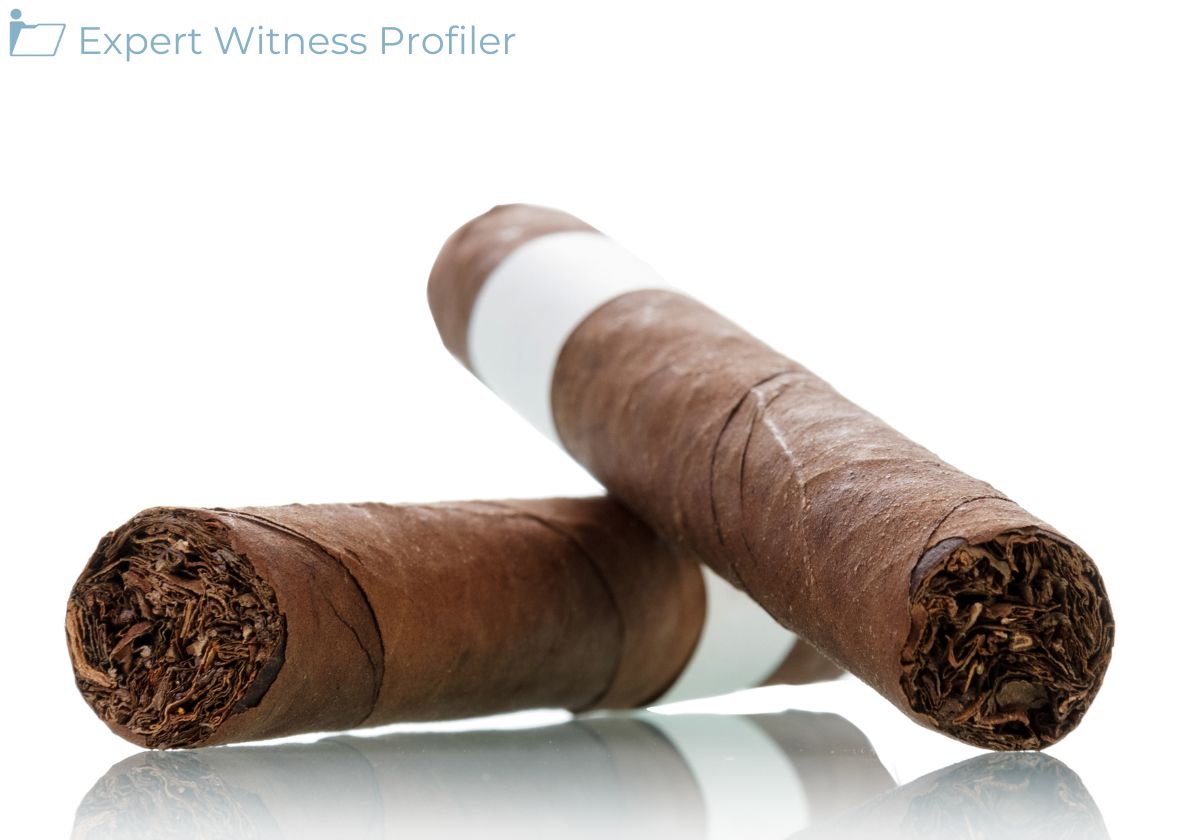
Maker’s Mark entered into a Licensing Agreement with Spalding Group gransting an exclusive license to use its trademarks to create and sell cigars seasoned with its bourbon (the “Licensed Cigars”). After renewing the agreement a few times, in 2013, Maker’s Mark notified Spalding that it was terminating the license effective December 31, 2015. Spalding Group had until June 28, 2016, to dispose of its remaining inventory of Licensed Cigars.
Following the termination of the license, Spalding Group began selling a cigar also seasoned with Maker’s Mark bourbon (the “Bourbon Cigar”). Maker’s Mark alleged the packaging of the Bourbon Cigar was intentionally designed to “evoke an association by customers between [t]he Bourbon Cigar on the one hand and Maker’s Mark and the prior Licensed Cigars on the other.”
Maker’s Mark further claimed Spalding Group advertised the Bourbon Cigar in a variety of ways to associate it with Maker’s Mark and the Licensed Cigars, despite Maker’s Mark’s demand that Spalding Group cease and desist.
Maker’s Mark brought this action against Defendants, asserting claims of trademark infringement; false designations, descriptions, and representations; and trademark dilution in violation of the Lanham Act.
It also brought breach of contract, trademark infringement, and false designation and unfair competition claims under Kentucky common law.
Defendants filed a counterclaim alleging various state law claims related to the licensing agreement and seeking to cancel some of Maker’s Mark’s trademark registrations.
To support its trademark infringement claims, Maker’s Mark retained Ran Kivetz (“Dr. Kivetz”), a professor at Columbia University Business School with experience in consumer psychology and surveys. Dr. Kivetz conducted a survey to estimate the likelihood that consumers would mistake the Bourbon Cigars for a Maker’s Mark product.
To rebut Maker’s Mark’s trademark dilution claims, Defendants retained Hal Poret (“Poret”), a public opinion researcher with a master’s degree in mathematics and a law degree from Harvard Law School. Poret conducted surveys to evaluate whether the words “Marker’s Mark” and the red wax design are famous. Defendants later asked Poret to review Kivetz’s likelihood-of-confusion survey and conduct his own.
Neither party challenged the qualifications of the other’s expert; they each argued that the opposing party’s expert’s likelihood-of-confusion surveys were unreliable. Because the challenges were similar, the Court addressed both Daubert challenges together.
Maker’s Mark also retained Michael A. Einhorn (“Dr. Einhorn”) to calculate Defendants’ profits that may be recoverable under 15 U.S.C. § 1117(a). Defendants moved to exclude Einhorn’s testimony regarding the deductions and resulting net profits calculation; they did not challenge his gross profits or royalties calculations, contending that Einhorn was unqualified to calculate Defendants’ deductions and that his testimony was unreliable.
Survey Research Expert Witness
Hal Poret (“Poret”) is a public opinion researcher with a master’s degree in mathematics and a law degree from Harvard Law School. Since 2004, Poret has personally designed, supervised, and implemented over 350 consumer surveys concerning consumer perception, opinion, and behavior, including surveys relating to false advertising, claim substantiation, and trademark/trade dress matters. He has personally designed numerous studies that have been admitted as evidence in legal proceedings and has testified as an expert in over 50 proceedings before U.S. District Courts, the Trademark Trial and Appeal Board, and NAD.
Marketing Expert Witness
Ran Kivetz is the Philip H. Geier Professor of Marketing at Columbia University Business School. He earned a Ph.D. in Business from Stanford University, Graduate School of Business; a Master’s degree in Psychology from the Stanford University Psychology Department; and a Bachelor’s degree from Tel Aviv University with majors in Economics and Psychology. His field of expertise encompasses consumer psychology and behavior; survey methods; marketing management; behavioral economics; human judgment, perception, and decision making; consumer and sales incentives; and branding. Professor Kivetz’s research has won many prestigious awards, including multiple “Best Paper” awards, being a recipient of the New York Times annual “Best Idea” award, and being ranked as the third most prolific scholar in his field during 1982–2006.
Economic Damages Expert Witness
Michael A. Einhorn has a Bachelor of Arts in Economics from Dartmouth College (summa cum laude) and a Ph.D. in Economics from Yale University. Since receiving his Ph.D. in 1981, he has worked as a Member of Technical Staff at Bell Telephone Laboratories, an economist at the United States Department of Justice (Antitrust Division), and a staff economist at Broadcast Music Inc., a collection agency that licenses performance rights in music to major broadcasters, including television networks, local stations, cable companies, and radio stations. He has worked as a testifying expert since 2001. He is also a former professor of economics at Rutgers University (Newark), where he taught courses on macroeconomics, microeconomics, industrial organization, and corporate finance. He is the author of Media, Technology and Copyright: Integrating Law and Economics (2004), which applies economic reasoning to a number of issues in American copyright law with regard to media, entertainment, and technology.
Discussion by the Court
With regard to Defendants’ motion to exclude certain testimony and opinions of Ran Kivetz, the Court analysed Kivetz’s likelihood-of-confusion survey in depth.
Kivetz’s survey was divided into a test group and a control group. The test group participants saw three-dimensional, 360-degree viewable graphics of Defendants’ Bourbon Cigars, first the box, then an individual cigar. The control group participants saw three-dimensional, 360-degree viewable graphics of the box, then an individual cigar, all with the words “Seasoned with Maker’s Mark” on the cigar band replaced with “Seasoned with Bourbon” and the red wax-dipped caps replaced with red plastic caps. Participants could manipulate the images until they were ready, then they proceeded to answer question sets about the product’s source, affiliation, and sponsorship. The first question set was on the product’s source and was open-ended, with participants instructed to write what company they think made the product in a text box below the question (the “source question”), followed by other open-ended questions asking participants to explain their answers. At the beginning of the survey, participants read instructions not to guess and that “don’t know” was an acceptable answer that they could select or type. The other questions asked participants to name companies, products, or brands that the participants thought were affiliated with or sponsored the cigars. Each of those questions had an explicit “don’t know” option, except the open-ended questions asking participants to explain their answers if they provided one. Throughout the survey, an image of the single cigar, either the test or control version depending on the group, remained on the page for participants to view. This image was of the front of the cigar, was not rotatable, and displayed only half of the cigar band, with the test group cigar displaying the words “Seasoned” and “Maker’s,” while “with” and “Mark” on the band and the “ted’s” on the red seal were cut off. Poret conducted likelihood-of-confusion surveys intended to rebut Kivetz’s survey, and it replicated it in all but three ways. First, the participants could view the images, which Poret took from Kivetz’s report, from several angles of the side, top, and bottom, but not a 360-degree view. Second, Poret removed the image of the single cigar from the question pages. Third, Poret provided an express “don’t know” option to the otherwise open-ended source question.
Both the parties filed motions to exclude based on how the opposing party’s expert used images in his likelihood-of-confusion survey and whether it accurately simulated marketplace conditions.
Defendants argued that repeatedly showing participants the single cigar turned Kivetz’s survey into a “reading test,” where they would answer based on the words “Seasoned” and “Maker’s” visible in the repeated image instead of the Ted’s Cigars branding they saw on the cigar box or the branding that was not visible on the single cigar because of the angle. Kivetz’s survey was accused of creating demand effects, or suggesting a “correct” answer to the participants, by leaving an image of the single cigar for participants to view as they answered questions.
Maker’s Mark responded that Poret’s first likelihood-of-confusion survey was an unreliable “memory test” where participants were not continually exposed to the product while they evaluated it like they would have been in the marketplace. Maker’s Mark demanded exclusion of Poret’s survey since the memory test was based on blurry images from limited angles that did not show “Maker’s Mark.”
The Court held that such challenges amounted to little more than professional disagreement about methodology, which concerned the weight and not the admissibility of the surveys considering neither Maker’s Mark nor Defendants cited any authority suggesting either method was uniformly unreliable and instead each cited articles supporting its expert’s method, which indicated that the disagreement existed within the field and the choice was within the expert’s discretion.
Further, the parties’ more specific concerns about the images appeared unfounded. Defendants argued that 33% of Kivetz’s respondents wrote that “Seasoned Maker’s” produced the cigar because it was all that was visible on the individual cigar image, which showed that Kivetz’s survey inflated the level of confusion. Kivetz, however, did not include the “Seasoned Maker’s” responses as evidence of confusion in his calculations. Maker’s Mark argued that because Poret’s survey did not use 360-degree viewable images, participants could not see the words “Maker’s Mark,” but participants could rotate the individual cigar and see “Maker’s” in one image then “er’s Mark” in the next. Defendants similarly asserted that Kivetz’s survey was flawed because no Ted’s Cigars branding was visible in the single cigar image which remained on the page during the survey, but Maker’s Mark’s name was not visible on the cigar either, only “Seasoned” and “Maker’s”. Moreover, before entering the question portion, participants examined the cigar box and single cigar from 360 degrees for at least 30 seconds each until indicating that they could clearly see the images. Respondents who could not clearly see the image were removed from the survey. Accordingly, the Court found that none of these concerns warranted exclusion and the parties were allowed to explain to the factfinder how each expert used images and whether, in their views, those images accurately replicated marketplace conditions and produced accurate results.
One of the other reasons the parties moved to exclude the other’s likelihood-of-confusion surveys was whether or not the initial source question included a “don’t know” answer option. Defendants insisted on the unreliability of Kivetz’s survey because it did not include a “don’t know” answer option for the source question like it did for the other questions. Maker’s Mark conversely argued that an explicit “don’t know” option was inappropriate for an open-ended question, so Poret’s survey, which had an explicit “don’t know” option, artificially increased the number of participants who selected it, thus erroneously reducing the net confusion rate.
The Court noted that Diamond’s article appeared to be discussing a “don’t know” option in the context of closed-ended questions, so Poret’s survey may have been less accurate, but his choice did not mean the entire survey was so informally designed and conducted that it failed key tests of professionalism and reliability. Henceforth, the Court refused to exclude not only Kivetz’s likelihood-of-confusion survey but also Poret’s rebuttal survey.
Poret conducted a second likelihood-of-confusion survey that tested whether the red wax seal itself and not the “Seasoned with Maker’s Mark” label on the Bourbon Cigars was likely to cause confusion. The second survey again replicated the Kivetz Survey with some exceptions: the images were viewable from several angles but not 360 degrees, and the control cigars and the test cigars kept the “Seasoned with Maker’s Mark” band instead of a “Seasoned with Bourbon” band. Maker’s Mark contended that the survey should be excluded because controls must not be infringing and because the survey results could not explain whether participants were confused by the band or the wax seal. The purpose of avoiding infringing or allegedly infringing controls was to be able to tell whether any reported confusion was the result of actual confusion or the flawed control and the fact that the parties highly disputed whether the use of “Maker’s Mark” on the cigar band was likely to cause confusion made it all the more crucial. Defendants did not adequately respond to this concern with Poret’s survey, noting that “Maker’s Mark” on the cigar band may have been non-infringing or a fair use, actively ignoring the fact that even an allegedly infringing element was problematic in the process besides waiving the fair use defense. They cited only Poret’s explanation that his purpose was to isolate the red wax element. The Court noted that Defendants did not carry their burden to prove that Poret’s wax confusion survey was reliable.
Coming to Defendants’ motion to exclude certain opinions and testimony of Michael A. Einhorn, it was noted that Einhorn submitted a report and two supplemental reports in which he calculated Defendants’ gross revenue and deducted Defendants’ costs to arrive at their net profits from the sale of the Bourbon Cigar, besides calculating what royalties would have been due under the licensing agreement. Defendants targeted Einhorn’s testimony regarding the deductions and resulting net profits calculation instead of his gross profits or royalties calculations. Defendants stated that Einhorn was no expert in cost accounting and highlighted his lack of relevant experience in accounting.
The Court, citing Mannino v. Int’l Mfg. Co., 650 F.2d 846, 851 (6th Cir. 1981), held that Einhorn met the minimal qualifications requirement based on his Ph.D. in economics from Yale University as well as decades of experience calculating damages in intellectual property cases. Even though much of his experience has been related to copyright, trademark damages estimations were well-represented on his resume.
When Defendant argued that Einhorn was not qualified to perform the specific calculations in this case, which involved determining which of Defendants’ costs should be deducted from the gross profits to reach the net profits, the Court noted that Einhorn has been admitted to testify regarding essentially the same calculation in copyright cases. The Court deemed Einhorn qualified to express opinions regarding Defendants’ net profits.
Defendants objected to Einhorn’s use of the “incremental approach” in his calculations as opposed to their expert’s use of the “full absorption” approach. The incremental approach subtracts only direct production costs from a Defendant’s gross profits, while the full absorption approach also subtracts the proportion of overhead costs attributable to the product.
While some courts have adopted one method or the other, the Sixth Circuit appears to have not. In a patent case, the Sixth Circuit declined to adopt a uniform rule about whether overhead costs should be deducted from profits because it depends on the facts of each case. The Court observed that trademark remedies authority suggested that the incremental approach is an acceptable method. The Court declined Defendant’s request to exclude Einhorn’s testimony on that basis.
Defendants moved to seal their motion to exclude Einhorn and the attached Exhibits 1-5, 8, and Maker’s Mark moved to seal its response to the motion and Exhibit 1, which included Einhorn’s report and supplemental reports. The documents contained Defendants’ profit margins, sales data, and other financial information. The Court denied the motions filed by both parties.
Held
The Court issued the following rulings:
1. Defendants’ motion to exclude certain testimony and opinions of Ran Kivetz was denied.
2. Plaintiff’s motion to exclude certain expert testimony of Hal Poret was granted in part and denied in part.
3. Defendants’ motion to exclude certain opinions and testimony of Michael A. Einhorn was denied.
4. Defendants’ motion for leave to file under seal was denied.
5. Plaintiff’s motion for leave to file under seal was denied.
The Court has not arrived on an outcome for this case since the remaining issues involved in this case still await resolution.
Key Takeaways:
The Court emphasized that challenges to expert testimony often revolve around methodological differences rather than the admissibility of the evidence itself. Disagreements within the field are common and do not necessarily render expert testimony unreliable.
Regarding the use of images in likelihood-of-confusion surveys, concerns about methodology and the simulation of marketplace conditions were raised by both parties. However, the Court determined that these concerns did not warrant exclusion of the surveys, allowing the parties to present their arguments about the validity of the methodology to the factfinder.
The absence of a “don’t know” option in certain survey questions was debated, with one party arguing that its inclusion artificially affected the results. The Court noted that the survey in question did not fail key tests of professionalism and reliability and refused to exclude the surveys based solely on this issue.
Expert qualifications were also scrutinized, particularly regarding calculations of net profits. Despite challenges to the expert’s qualifications and methodology, the Court deemed the expert sufficiently qualified based on relevant experience and education.
Differences in calculation methods, such as the incremental approach versus the full absorption approach, were considered by the Court. While some courts may have preferences for certain methods, the Court in this case declined to adopt a uniform rule, emphasizing that the appropriateness of a method depends on the specific circumstances of each case.
Case Details:
Case Caption:
Maker’s Mark Distillery, Pbc V. Spalding Group, Inc. Et Al
Plaintiffs, Lincare Holdings Inc.’s and Lincare Licensing Inc.’s (collectively “Lincare”) are national health care companies that provide patients “with top quality treatments and durable medical equipment.” Plaintiffs’ “portfolio includes healthcare goods and services offered in connection with the trademarks LINCARE, mdINR, CONVACARE, AMERICAN HOMEPATIENT, PREFERRED HOMECARE, and the trade name SPECIALIZED MEDICAL SERVICES.” Defendant Doxo, Inc. (“Doxo”) runs an all-inone bill pay service that allows users to pay bills to over 120,000 billers using Doxo’s website. Doxo, although unaffiliated with Plaintiffs, included Plaintiffs as billers that can be paid through Doxo’s website. Doxo’s biller pages for Plaintiffs included the use of Plaintiffs’ trademarks and trade name. Plaintiffs initiated this action against Doxo on October 13, 2022, asserting claims for trademark and service mark infringement in violation of Section 32 of the Lanham Act (Count 1); false representation and false designation of origin in violation of Section 43(a) of the Lanham Act (Count 2); unfair competition in violation of the Florida Deceptive and Unfair Trade Practices Act (“FDUTPA”) (Count 3); trademark infringement, trade name infringement, and unfair competition under Florida common law (Count 4); and tortious interference with business relationships (Count 5).
Doxo accused Lincare of attempting to use several forms of inadmissible evidence as a result of which Doxo sought to exclude (1) Lincare’s various call logs prepared by its customer support agents, which constituted unreliable, inadmissible, and often multilayered hearsay, (2) all evidence of, or testimony relating to, cease and desist letters sent to Doxo by third-party billers, as well as any third-party complaints or disputes that involve marks not at issue here and were not fully adjudicated as well as (3) Sarah Butler’s testimony regarding Lincare’s trademarks other than LINCARE.
Survey Research Expert Witness
Sarah Butler is a highly esteemed expert in survey research and sampling, boasting over 20 years of experience in designing and executing intricate consulting projects for clients involved in litigation, arbitration, regulatory proceedings, and business strategy. Her expertise extends to advising prominent brands such as Apple, Walmart, Toyota, and Gatorade. Notably, her research and testimony have been widely recognized and accepted in both state and federal courts, including bench and jury trials, as well as by regulatory bodies like the ITC and the Copyright Board, along with arbitration venues.
Discussion by the Court
First, Doxo argued that the Court should exclude Lincare’s various call logs prepared by its customer support agents since the call logs were neither recordings nor verbatim transcriptions of actual words spoken by Lincare’s customers. Instead, they reflected the employees’ characterizations of the conversation, biased by the employees’ express instructions from their superiors to uncover evidence of confusion in support of this case.
The Court observed that the call logs/notes consisted of two layers of statements: (1) the notes written by Plaintiffs’ customer representatives, for which the customer representatives are the declarants; and (2) the statements of Plaintiffs’ customers made to and recorded by the customer representatives, for which the customers are the declarants. Under Federal Rule of Evidence 805, “hearsay within hearsay is not excluded by the rule against hearsay if each part of the combined statements conforms with an exception to the rule.” Thus, both layers of double hearsay must satisfy a hearsay exception to be admissible. Alternatively, there would be no hearsay within hearsay problem if the customers’ statements recorded within the notes did not constitute hearsay.
The Court agreed with Plaintiffs that the customers’ statements to Plaintiffs’ customer representatives were not hearsay or were subject to the state of mind exception to hearsay.
Next, Doxo argued that the evidence of cease and desist letters sent to Doxo by third-party billers, as well as any third-party complaints or disputes that involved marks not at issue here and were not fully adjudicated were irrelevant because “documents specific to one trademark are largely irrelevant to a claim for infringement of an entirely separate mark.” Additionally, Doxo maintained that mere complaints by third parties about alleged infringement were not relevant to the willfulness of Doxo’s infringement.
The Court held that the letters were relevant to Doxo’s intent, bad faith, and willfulness in using Plaintiffs’ trademarks since the cease-and-desist letters and other third-party disputes put Doxo on notice that other businesses believed that Doxo’s use of their trademarks on its website infringed their trademarks. But — as Plaintiffs tell it — Doxo continued to prominently use various businesses’ trademarks, including Plaintiffs’ trademarks, on its website in the same way despite this notice.
Finally, Doxo contended that Plaintiffs’ survey expert, Sarah Butler, should not have been able to offer opinions regarding Plaintiffs’ trademarks besides the LINCARE mark. It emphasized that Butler’s survey only involved the LINCARE mark and, thus, her opinion stated in her report that there was “no reason to believe [that her] conclusions as to confusion would differ for” Plaintiffs’ other marks should not have been admissible. The Court held that Doxo neglected addressing the Federal Rules of Evidence in support of this section of its Motion. Instead, Doxo cited law regarding expert reports and at least one case deciding a Daubert motion rather than a motion in limine.
It was worth noting that Doxo had previously filed a Daubert motion targeting Butler’s testimony. When Butler had described the consumer confusion survey she conducted for the LINCARE mark, Doxo had argued that her opinions lacked reliable methodology. Doxo alleged that Butler’s survey consisted of numerous flaws concerning the survey population, the marketplace conditions, the control group, and the allegedly vague questions asked. The Court denied Doxo’s Daubert motion after acknowledging that Butler’s methodology in conducting her survey was reliable enough for it to be presented to the jury.
The Court determined that to the extent Doxo could be interpreted as raising a challenge to the admissibility of Butler’s opinion under the Federal Rules of Evidence, that challenge likewise failed. Butler’s opinion regarding these trademarks was held to be relevant to the trademark infringement claims and exclusion under Rule 403 was unwarranted. Doxo was free to cross-examine Butler and raise arguments at trial about the weight to be accorded to her opinions.
Held
The Court denied the Defendant’s motions in limine to exclude Lincare’s unreliable call log, evidence regarding third-party disputes, and Sarah Butler’s testimony regarding Lincare’s trademarks other than LINCARE.
The Court has not arrived on an outcome for this case since the remaining issues involved in this case still await resolution.
Key Takeaways:
Regardless of the challenges to Sarah Butler’s methodology in a Daubert motion, the Court ultimately deemed her survey reliable enough for presentation to the jury, emphasizing the importance of demonstrating methodological soundness in expert opinions. Additionally, arguments regarding the scope of expert opinions were addressed, with the Court dismissing Doxo’s contention that Butler should only offer opinions on the LINCARE mark as unsupported by relevant legal standards. The Court emphasized the importance of applying the Federal Rules of Evidence and relevant legal standards in evaluating the admissibility and scope of expert testimony to ensure consistency and fairness across cases. Vigorous cross-examination — rather than exclusion — was advocated as the proper means of challenging Butler’s opinions
Plaintiff, Anthony Bush on behalf of a class of California consumers, brought a class action against the Defendant, Rust-Oleum Corporation for mislabeling of its “Krud Kutter” cleaning products as “non-toxic” and “Earth friendly,” contending that it violated California consumer-protection laws since the products were, in fact, harmful to humans, animals, and the environment.
The operative complaint consisted of five claims: (1) unlawful, unfair, and fraudulent business practices under the Unfair Competition Law (UCL), Cal. Bus. & Prof. Code §§ 17200-08; (2) deceptive advertising under the False Advertising Law (FAL), Cal. Bus. & Prof. Code § 17500; (3) deceptive practices under the Consumer Legal Remedies Act (CLRA), Cal. Civ. Code §§ 1750-84; (4) breach of express warranties; and (5) unjust enrichment.
The Plaintiff filed a motion to exclude the opinions and survey of the Defendant’s market-research expert Dr. Ran Kivetz while the Defendants moved to exclude the declaration of the Plaintiff’s survey expert, Dr. J. Michael Dennis.
Marketing Expert Witness
Ran Kivetz is a renowned marketing scholar and survey expert holding a Ph.D. in Business from Stanford University Graduate School of Business. He is a tenured, chaired Professor of Marketing at Columbia University Business School, and he has received numerous research awards and nominations from leading marketing and consumer research publications and organizations, including, but not limited to, the Journal of Marketing Research, Journal of Consumer Research and the Association of Consumer Research.
Survey Research Expert Witness
J. Michael Dennis is a nationally recognized expert on survey research methods, with a focus on online surveys and household panels. He has directed hundreds of statistical studies using probability-based and non-probability panels, as well as using telephone and in-person modes of data collection. Dennis is executive director of AmeriSpeak, NORC’s probability-panel owned and operated by NORC.
Discussion by the Court
With regard to the Plaintiff’s motion to exclude the opinions of Ran Kivetz, the Court observed that Kivetz conducted a experimental design survey which involved a test group and a control group. Kivetz showed the test group the actual label of one of the Krud Kutter products while the control group was shown the same label but without the challenged label claims (“non-toxic” and “Earth friendly”). Kivetz asked two key questions to the respondents. The first question was whether or not they would buy the products shown but for the challenged claims while the second question involved the reasons for the respondent’s purchasing decision which the respondents had to list in open-ended format.
Based on the answers, Kivetz concluded that that the challenged claims were not a but-for cause of purchasing decisions considering the difference between the test and control groups in whether they would purchase the product. Kivetz added that the open-ended responses determined that there were a variety of reasons for consumers’ purchasing decisions.
Plaintiff argued that some of Kivetz’s opinions were irrelevant because under the reasonable-consumer test, the challenged claims could be “material” to purchasing decisions even if the claims were not a but-for cause of the decisions and a variety of factors went into the decisions.
Plaintiff contended that instead of using a proper control stimulus that omitted any references to the “Non-Toxic” and “Earth Friendly” attributes, Kivetz’s control stimulus included several representations that communicated to the control group that the product shown was not only safe or “non-toxic,” but also “earth friendly.” Specifically, he failed to remove the “biodegradability” claim and the Environmental Protection Agency’s “Safer Choice” seal on the front packaging; as well as the word “safely” from the back-packaging claim that the formula “safely and easily” removes various substances. Since the test and control stimuli both showed non-toxic and earth friendly products, Plaintiff concluded that Kivetz’s purported control stimulus was no control at all.
Plaintiff criticized Kivetz’s survey for distorting collected data due to inadequate control over pre-existing consumer attitudes, beliefs, and preferences. The inclusion of branding elements like the Krud Kutter name and packaging were based on the incorrect assumption that respondents could update their preferences despite the removal of Challenged Claims. The survey lacked manipulation checks to determine whether the experimental treatment — removal of the ‘non-toxic’ and ‘Earth friendly’ claims in the control stimulus — was effective.
Plaintiff argued that Kivetz’s open-ended questions were unreliable because such questions tend to measure only what comes first to a respondent’s mind while close-ended questions were better suited for qualitative research. Moreover, Kivetz allegedly failed to properly represent the class or replicate the marketplace.
Kivetz designed a coding frame and employed two blind coders to read and categorize the responses, reconcile any discrepancies between them, to quantify the open-ended responses and determine, in his view, whether a significant number of respondents identified the “non-toxic” and “earth friendly” features as a reason for their purchase decision. Kivetz failed to present the Plaintiff with the data upon which Kivetz relied, including Kivetz’s coding frame, the blind-coders coding, and the reconciliation of discrepancies. Consequently, Plaintiff was deliberately prevented from evaluating how verbatim responses were categorized.
The Court held that the Plaintiff’s attacks concerned the weight that should be accorded to Kivetz’s survey and opinions and determined that the survey methodology employed by Kivetz was within the bounds of accepted principles.
As for the data that Kivetz did not provide, it was seen that while responses were being categorized to the open-ended questions, the coding company excluded certain responses because the respondent spent too little time on it. Some of the data at issue, such as “all starts and metadata reflecting the excluded interviews and basis for their exclusion” were never actually provided to Kivetz.
As for the “pricing data that Kivetz collected to select the $9.47 price point in his survey,” the Defendant contended that it was public. This indicated that any failure to produce was harmless. The Court thus denied the Plaintiff’s motion to exclude the opinions of Kivetz, but this portion of the motion (regarding the alleged failure to produce data) was denied without prejudice to its being refiled as a separately noticed motion if warranted.
The Defendant filed a motion to exclude the declaration of the Plaintiff’s survey expert, J. Michael Dennis, alleging that Dennis repeated methodological errors found in previously excluded surveys from other cases. Dennis aimed to assess the extent to which reasonable consumers perceived the challenged claims regarding product harmlessness. His survey presented a hypothetical label without the Krud Kutter brand name, asking respondents if they believed the claims conveyed the stated meaning.
The Court, once again, noted that the Defendant’s arguments concerned the weight of Dennis’ testimony instead of its admissibility.
Held
The Court denied both the Plaintiff’s as well as the Defendant’s respective motions to exclude the opinions of Ran Kivetz and J. Michael Dennis.
The Court has not arrived on an outcome for this case since the remaining issues involved in this case still await resolution.
Key Takeaways:
The case involved expert testimony from both parties, with the Plaintiff seeking to exclude the opinions of Ran Kivetz and the Defendant attempting to exclude the declaration of the Plaintiff’s survey expert, J. Michael Dennis. Kivetz’s experimental design survey with test and control groups, aimed to assess the impact of certain label claims on consumer purchasing decisions. However, the Plaintiff criticized Kivetz’s methodology, arguing that the control stimulus used was flawed as it still contained elements suggesting product safety and environmental friendliness. Additionally, the Plaintiff raised concerns about the incompleteness of expert disclosures. Despite these objections, the Court found that the methodology employed by Kivetz was generally acceptable within the bounds of established principles. As for Dennis’ testimony, the Defendant challenged its admissibility based on methodological errors found in previous surveys. However, the Court reiterated the distinction between challenges to weight versus admissibility of expert testimony, ultimately allowing both Kivetz’s and Dennis’ opinions to be admitted.