Category: Trucking Expert Witness

  • Trucking Expert Not Allowed to Opine on the Trailer Door

    Trucking Expert Not Allowed to Opine on the Trailer Door

    This dispute arises from an incident that occurred on February 6, 2021, in which Plaintiff Lee James Barley was injured when he fell while loading his belongings into a trailer.

    Defendants ArcBest II, Inc. and Old Dominion Freight Line, Inc. filed motions to exclude the opinions of Mark Respass, Jeffrey Marksthaler, and Michael Freeman.
    Trucking Expert Witness

    Mark Respass has 40 years of training and experience in the commercial trucking industry, including fleet safety management, risk management, driver recruiting and training, accident investigation.

    Discover more cases with Mark Respass as an expert witness by ordering his comprehensive Expert Witness Profile report.

    Engineering Expert Witness

    Jeffrey R. Marksthaler is a licensed Professional Engineer with 35 years of experience in heavy manufacturing facilities and production management, manufacturing process and quality control, mechanical and chemical testing, accreditation, failure analysis and risk assessment for processes, materials, components, consumer products, food product, and consumer goods.

    Get the full story on challenges to Jeffrey Marksthaler’s expert opinions and testimony with an in-depth Challenge Study.

    Forensic Medicine Expert Witness

    Michael David Freeman is credentialed as a Fellow of the Royal College of Pathologists (UK), Fellow of the Faculty of Forensic and Legal Medicine (FFLM) of the Royal College of Physicians (UK) and member of the British Association in Forensic Medicine.

    He has also taught courses in forensic medicine, forensic epidemiology, and injury epidemiology at the Oregon Health and Science University School of Medicine and Maastricht University.

    Want to know more about the challenges Michael Freeman has faced? Get the full details with our Challenge Study report.

    Discussion by the Court

    I. Motion to Exclude Expert Opinions of Mark Respass

    To begin with, Defendants sought to exclude the opinions of Respass on the grounds that he lacked the requisite qualifications, expertise, or experience to render expert opinions regarding Old Dominion’s scheduled inspections and maintenance of the trailer door and strap or the applicable Federal Motor Carrier Safety Regulations (“FMCRs”) regarding annual inspections and maintenance.

    Respass made several findings including that the strap at issue was “badly worn and weakened” when the trailer was delivered to Plaintiff, the Old Dominion driver who delivered the trailer failed to notice that the strap was badly worn and weakened, and Old Dominion fell below a reasonable standard of care for a motor carrier by not maintaining the roll-up door’s mechanical components and the pull strap.

    However, Respass conceded that he did not have “expertise in pull straps” or in “determining what causes them to fail” or any expertise “in what fibers or materials were involved in this particular strap.” He also stated that he based his finding that the strap was “badly worn and weakened” when the trailer was delivered to Plaintiff on “common sense, that this is an old strap.” When asked to “put aside common sense” and to provide what “expertise he has in determining why this particular strap failed,” Respass stated that he “would not have any scientific expertise as to why it failed.”

    Accordingly, the Court concluded that Plaintiff has not established by a preponderance of the evidence that Respass’ opinions are based on adequate facts or data or on a reliable methodology. Plaintiff also has not established that Respass is qualified as an expert by his “knowledge, skills, experience, training, or education” or that his technical or other specialized knowledge will help the trier of fact.

    II. Motion to Exclude Expert Opinions of Jeffrey Marksthaler

    A. Marksthaler’s Initial Expert Report

    Defendants sought to exclude the opinions of Marksthaler contained in his initial expert report on the grounds that he lacked the requisite education, training, experience, and expertise to qualify as an expert in the testing and analysis of the door strap or operation, maintenance, repair, or inspection of commercial trailer doors, and he failed to apply reliable scientific principles and methodology to his analysis and instead relied on speculation and intuition.

    Marksthaler testified that he is a metallurgical engineer and his only education on woven materials involved a “very small amount” of a one-semester general materials undergraduate course. Marksthaler admitted that he “had no experience in what might cause fraying polyester or similar fibers or materials, such as a strap.”

    When asked for the source of Marksthaler’s information and opinion that fibers fray more easily when they are dirty, he responded that it was a video on YouTube regarding climbing rope rather than a scientific article or similar.

    B. Marksthaler’s Rebuttal Report

    In his rebuttal report Marksthaler opined that “immediately before failure, only a small section of the strap width remained.” At deposition, however, Marksthaler conceded that “he would have to think of a way” to scientifically determine when various sections of the strap failed.

    Marksthaler agreed at deposition that the idea of shock loading “occurred to [him]” before his first expert report, but he did not make any mention of shock loading in his initial report. He also agreed that none of the defense experts mentioned or discussed shock loading.

    Marksthaler conceded that he had the information to opine about shock loading before he produced his first report and the record reflects that defendants’ experts did not mention or discuss shock loading. Accordingly, the Court concludes that Marksthaler’s opinion regarding shock loading in his rebuttal report is precluded by Rule 26.

    The Court concluded that Plaintiff has not established by a preponderance of the evidence that Marksthaler’s opinions are based on adequate facts or data or on a reliable methodology.

    C. Motion to Strike Marksthaler’s Declaration

    Defendants filed a motion to strike Marksthaler’s declaration, which was submitted in support of Plaintiff’s response to Defendants’ motion to exclude, on the grounds that most of the declaration contradicted his deposition testimony, contained hearsay, and was not supported by the evidence.

    The Court granted Defendants’ motion to strike to the extent that it would disregard the portions of the declaration that contradicted Marksthaler’s deposition testimony, were not supported by the evidence, and/or did not contain admissible evidence.

    III. Motion to Exclude Expert Opinions of Michael Freeman, Ph.D.

    A. Freeman’s Qualifications

    Freeman acknowledged at deposition that he is an epidemiologist “with a focus on traffic crash related injuries,” not an engineer or a biomechanical engineer and he does not have a degree in engineering, biomechanical engineering, biomechanics, kinematics, or kinetics.

    Plaintiff also cited several cases in which courts have admitted Freeman as an expert, but these cases involved traffic accident reconstructions, a topic in which Freeman is well-versed.

    B. Reliable Principles and Methods

    On September 9, 2024, Adanty completed a report in which he opined that Plaintiff’s injuries are not consistent with him falling directly on to his elbows and that if the strap broke as Plaintiff reported, “he would not have fallen in a movement pattern that would result in his body landing on the left side of the ramp.”

    In his rebuttal report Freeman, however, stated that “absent video footage of the fall, there is no way to determine the dynamics of the fall, beyond the basic description” provided by Plaintiff at deposition where he stated that he fell backwards.

    When asked what biomechanical principles supported Freeman’s view that Plaintiff fell backwards off the ramp, Freeman responded that “it’s Plaintiff’s recollection. I don’t have a video to say what he says isn’t true.”

    The Court concluded that Plaintiff has not established by a preponderance of the evidence that Freeman is qualified to offer a rebuttal opinion on the biomechanical aspects of the incident at issue or that Freeman applied reliable principles and methods under Rule 702 or Daubert.

    C. Freeman’s Declaration

    Defendants also filed a motion to strike Freeman’s Declaration on the basis that it is contradicted by this deposition testimony, reports, and curriculum vitae. The Court granted Defendants’ motion to strike to the extent that it will disregard the portions of Freeman’s declaration that are contradicted by his deposition testimony, are not supported by the evidence, and/or do not contain admissible evidence.

    Held

    The Court granted Defendants’ motions to exclude the opinions of Mark Respass, Jeffrey Marksthaler, and Michael Freeman.

    Key Takeaway

    An expert may submit a rebuttal report if the evidence is intended solely to contradict or rebut evidence on the same subject matter identified by another party. Using a rebuttal report as a backdoor to introduce analysis that could have been included in the opening report is squarely foreclosed by Rule 26.

    Case Details:

    Case Caption: Barley, II V. Arcbest II, Inc.
    Docket Number: 3:22cv1921
    Court Name: United States District Court, Oregon
    Order Date: March 11, 2026
  • Accident Reconstruction Expert’s Testimony on Design Defects Excluded

    Accident Reconstruction Expert’s Testimony on Design Defects Excluded

    This case arises from a single, momentary sideswipe on Interstate 95 in which the rightfront tire of the U-Haul truck driven by Corey Hayes-Goode contacted the left-rear corner of Rigoberto Lagunas-Antunez’s GMC van.

     U-Haul filed certain motions challenging the testimony of Plaintiffs’ experts, Ruston Hunt, Daniel Wolfe, Steven Kean and Brooks Rugemer.

    The Court dismissed Plaintiffs’ claims against U-Haul that were brought under a design defect theory (the “design defect claims”), but denied the motion as to Plaintiffs’ claims against U-Haul under a failure-to-warn theory, as well as to the Estate of Rigoberto’s wrongful death claim against U-Haul. All of Plaintiffs’ claims against Defendant Hayes-Goode remained.

    Human Factors Expert Witness

    Ruston M. Hunt holds a B.S. and M.S. in Industrial Engineering and a Ph.D. in Mechanical Engineering from the University of Illinois, where he also taught and conducted applied research on human error and electro-mechanical systems. With over 40 years of experience in human factors engineering, he has led extensive research and development projects for major government
    agencies and Fortune 500 companies, focusing on operator support systems and human-system interfaces. Hunt has served as a faculty member and administrator at leading institutions, where he taught and developed programs in human factors and systems engineering.

    Fortify your strategy by reviewing a Challenge Study detailing grounds for excluding Ruston Hunt’s expert testimony.

    Accident Reconstruction Expert Witnesses

    Daniel M. Wolfe has a Bachelor of Science Degree in Engineering and a Doctor of Philosophy degree in Electrical and Electrical and Computer Engineering.

    He is a member of the Society of Automotive Engineers, the National Association of Accident Reconstruction Experts, and the Optical Society of America. He is certified by the Society of Automotive Engineers to access and interpret Heavy Vehicle Event Data Recorders in commercial vehicles and is certified as a BOSCH Crash Data Retrieval technician.

    Discover more cases with Daniel Wolfe as an expert witness by ordering his comprehensive Expert Witness Profile report.

    Steven T. Kean has over 25 years of experience in traffic crash investigation and reconstruction, including more than 1,000 crash investigations. He has served as an Accident Reconstruction Team member since 2001 and as Team Leader since 2008, and he holds full accreditation as a Traffic Accident Reconstructionist from ACTAR.

    Kean’s extensive specialized training—spanning advanced crash reconstruction, event data recorder analysis, heavy vehicle investigations, and human factors—demonstrates his comprehensive expertise in evaluating vehicle dynamics and driver behavior. He has been qualified and testified as an expert in multiple state courts, taught advanced crash reconstruction courses to law enforcement and legal professionals, and is an active member of leading professional organizations, including the National Association of Professional Accident Reconstruction Specialists and the Society of Automotive Engineers.

    Get the full story on challenges to Steven Kean’s expert opinions and testimony with an in-depth Challenge Study.

    Trucking Expert Witness

    Brooks Rugemer has over 30 years of experience in trucking safety, driver training, risk management, and accident investigation, including 12 years as a tractor-trailer operator with 1.4 million accident-free miles. He has hired and trained over 5,000 CDL drivers and is intimately familiar with FMCSRs, OSHA regulations, and accepted transportation safety practices.

    Want to know more about the challenges Brooks Rugemer has faced? Get the full details with our Challenge Study report.

    Discussion by the Court

    A. Motion to Exclude Expert Ruston Hunt

    U-Haul provided that Hunt opined as to the location of the van relative to the Subject Truck at the time of the accident, that the Subject Truck was defective and unreasonably dangerous due to lacking certain technologies, and that U-Haul allegedly failed to provide adequate warnings and training to inexperienced renters.

    On review of Hunt’s voluminous report, these opinions primarily involve (1) the Subject Truck being unreasonably dangerous and defective because “insufficient warnings and instructions were provided to renters” and because “it lacked a blind spot detection and warning system,” (2) the dangers of failing to “explicitly train” renters on the proper adjustment of the Subject Truck’s side view mirrors; and (3) the accident-prevention effect that blind-spot detection technologies “likely” would have had in this case, had they been installed on the Subject Truck.

    Because Plaintiffs’ design defect claims are no longer viable, Hunt’s opinions that the Subject Truck was defective and unreasonably dangerous due to an alleged design defect are not relevant.

    B. Motion to Exclude Expert Daniel Wolfe

    Wolfe testified as to the Subject Truck’s alleged design defects and alternative technologies that allegedly could have prevented the instant accident.

    As the proposed design-engineering expert, Wolfe’s testimony is relevant only with regard to the now-dismissed design defect claims. Therefore, pursuant to Federal Rule of Evidence 401, the Court granted U-Haul’s motion to exclude the testimony of expert Wolfe.

    C. Motion to Exclude Expert Steven Kean

    U-Haul took issue with two specific opinions proffered by Kean in his deposition: Plaintiffs’ van was in the Subject Truck’s blind spot prior to the accident, and the van was traveling faster than the Subject Truck at impact.

    According to Plaintiffs, Kean’s testimony will “offer critical insight that will help the jury understand the sequence of events and the physical evidence underlying this collision.”

    Because the Court can foresee the potential relevance of an accident reconstructionist’s testimony to Plaintiffs’ remaining claims, the Court denied without prejudice U-Haul’s motion to exclude the testimony of expert Steven Kean at this juncture, subject to a Daubert hearing at the appropriate time in the proceedings to ascertain the reliability of his proffered testimony.

    D. Motion to Exclude Expert Brooks Rugemer

    U-Haul provided that Rugemer’s testimony concerned the countermeasures that U-Haul should have taken in order to prevent the instant accident, such as giving additional training and safety information to inexperienced drivers of rental trucks.

    According to Plaintiffs, Rugemer will “explain to the jury how commercial transportation companies manage blind spot and mirror adjustment risks, what reasonable industry practices exist to mitigate foreseeable lane-change collisions, and how U-Haul’s rental procedures fell short of those well-established standards.”

    Because the Court can foresee the potential relevance of a commercial safety expert’s testimony to Plaintiffs’ remaining claims, the Court denied without prejudice U-Haul’s motion to exclude the testimony of expert Brooks Rugemer at this juncture, subject to a Daubert hearing at the appropriate time in the proceedings to ascertain the reliability of his proffered testimony.

    Held

    • The Court granted U-Haul’s motions to exclude the testimony of Ruston Hunt and Daniel Wolfe.
    • The Court denied without prejudice U-Haul’s motions to exclude the testimony of Steven Kean and Brooks Rugemer.

    Key Takeaway

    Evidence is relevant if it has any tendency to make a fact more or less probable than it would be without the evidence, and the fact is of consequence in determining the action.

    Case Details:

    Case Caption: Lagunas-Antunez V. Hayes-Goode
    Docket Number: 2:24cv416
    Court Name: United States District Court, Virginia Eastern
    Order Date: February 26, 2026
  • Trucking Expert’s Testimony on the Preventability of the Accident Excluded

    Trucking Expert’s Testimony on the Preventability of the Accident Excluded

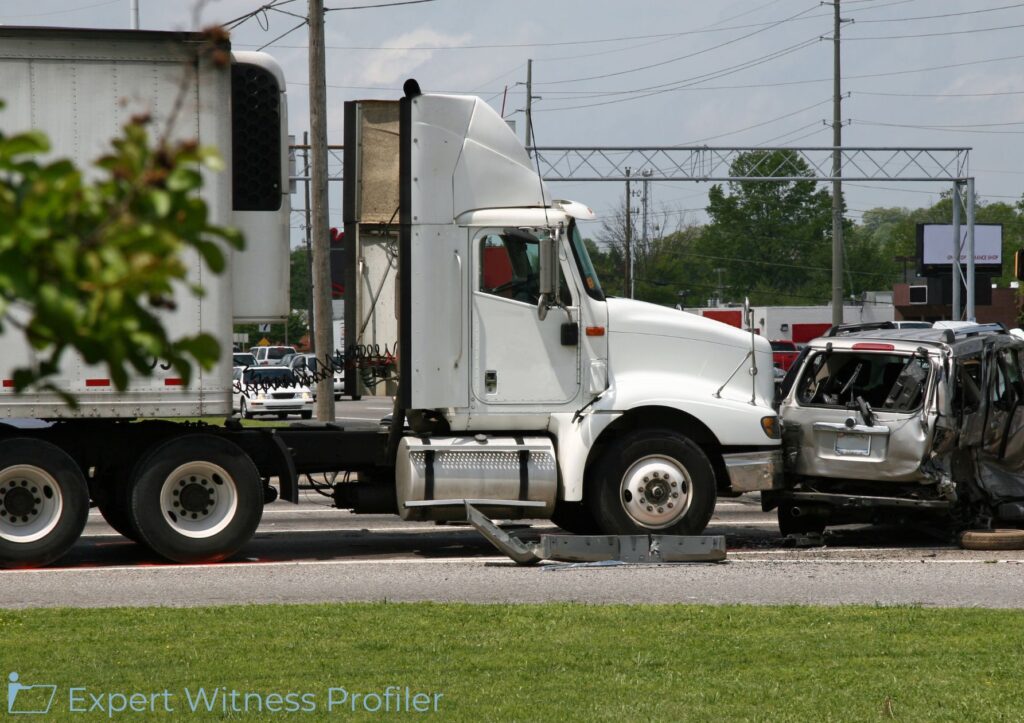
    This case arises from a fatal automobile accident that occurred on September 22, 2017. Blake Haddox was traveling southbound on a motorcycle as Defendant Nicholas Roshon Moore drove a semi-truck in a northbound lane and turned left across traffic. The two collided, and Haddox died as a result.

    Defendants Central Freightlines, Inc. and Nicholas Roshon Moore (collectively, “Defendants”) filed a motion to strike Plaintiffs’ expert Lewis J. Grill, a motion in limine with respect to anticipated testimony by Grill and a motion to strike his supplemental expert report.

    Defendants argued that Grill is not qualified to provide expert testimony in this case, and that his opinions are neither relevant nor reliable.

     His proffered testimony relates to “four overarching areas” that include: (1) “general trucking industry customs, practices, and standards”; (2) the “operating performance” of Moore; (3) CFL’s “management practices”; and (4) “accident preventability from a commercial trucking industry standpoint.”

    Trucking Expert Witness

    Lewis Joseph Grill has extensive experience as a commercial truck driver, training instructor, training program director, safety director, and trucking consultant. 

    He is licensed as a commercial driver and has logged approximately 2 million miles driving tractor-trailers in the United States, Canada, Mexico, and Central America. Grill has published books and articles and spoken on the subject of commercial trucking, in general, and driver standards, in particular.

    Want to know more about the challenges Lew Grill has faced? Get the full details with our Challenge Study report.

    Discussion by the Court

    A. Motion to Strike Supplemental Report

    Plaintiffs provided Defendants with Grill’s original expert report by the applicable deadline. In accordance with an Amended Scheduling Order, Defendants timely filed a Daubert motion, requesting the Court strike Grill’s expert testimony. Over two months later, on December 4, 2020—well after the deadline to exchange expert reports had passed—Plaintiffs provided Defendants with a supplemental report prepared by Grill. Defendants filed a motion to strike Grill’s supplemental report as untimely.

    The Court understood Defendants’ position. However, a review of the supplemental report indicated that the main change is the addition of two new opinions. These new opinions are apparently offered as a result of information gleaned from the deposition of Defendant Central Freightlines, Inc.’s Corporate Representative Thomas Weeks, taken September 16, 2020. Plaintiffs provided notice in their October 2020 response to Defendants’ motion to strike that Grill had “not had a reasonable opportunity to review the transcript and update his opinions accordingly.”

    Grill also does not appear to have substantively changed his opinions in any meaningful way. At the time Defendants received the supplemental report, trial was scheduled for April 19, 2021. Defendants still had over four months to review the supplemental report and prepare for trial. Further, on March 9, 2021, the Court struck the scheduling order due to the Covid pandemic and the Court’s excess criminal case load. The Court acknowledged the importance of scheduling order deadlines and complying with the Court’s orders and procedures. However, the Court cannot ascertain any prejudice Defendants suffered as a result of the delayed supplemental report. Defendants have not requested leave to take Grill’s deposition out of time; nor have they filed a rebuttal report.

    B. Motion to Strike Grill’s Testimony

    I. Grill is qualified to testify about general trucking industry customs, practices and standards

    Defendants argued that Grill is unqualified because “none of Grill’s background and experience concerns issues to be determined in this matter.” Defendants asserted that Grill is not an expert in matters of “accident reconstruction, traffic signals or human factors.” However, Defendants never contended that Grill is unqualified as an expert in the areas of general trucking industry customs, practices, and standards.

    Plaintiffs responded that Grill is qualified as an expert in the field of commercial trucking based on his experience as a commercial truck driver, training instructor, training program director, safety director, and trucking consultant. Plaintiffs also contended that Grill has been qualified in numerous cases as an expert. The Court found that Grill has decades of experience and involvement in the trucking industry. Therefore, he possessed the necessary training, experience, knowledge and skill to testify in the areas of general trucking industry customs, practices and standards.

    II. Some of Grill’s proffered testimony is relevant and reliable

    Defendants contended that Grill’s testimony will not aid the jury because the jury can make a liability determination in this case without the aid of an expert witness.

    As an initial matter, although not specifically raised by Defendants, the Court had concerns about representations in Grill’s report. It appeared Grill held opinions that elevated the standard of care applicable to commercial truck drivers. For example, Grill states, “in my opinion, the performance standards to accomplish this standard of care are much different for truck drivers than operators of smaller vehicles.” The Court will instruct the jury as to the proper standard of care. Therefore, Grill is prohibited from testifying about any opinion he holds concerning the standard of care applicable to commercial truck drivers.

    Further, Plaintiffs proposed Grill will provide opinions “regarding the hiring, retention and safety management of Central.” However, the Court already granted Defendant CFL summary judgment as to Plaintiffs’ negligent hiring, retention, supervision and training claims.

    Moreover, the Court found Grill’s proffered testimony about the accident and Moore’s actions leading up to the accident conclusory without underlying factual support. 

    Defendants specifically challenged Grill’s opinion that the accident was avoidable or preventable. The Court similarly found this opinion an impermissible conclusion. Any testimony that Moore violated law, regulations, procedures, or policies are likewise impermissible legal conclusions.

    Grill’s report provided that “Moore, because of failing to perceive a hazard in time, and failing to make proper safety decisions when he ultimately chose risk over safety by intruding into the approaching traffic stream, caused this collision.” However, causation is an issue of fact for the jury.

    Held

    • The Court denied the Defendants’ motion to strike Plaintiffs’ expert Lew Grill.
    • The Court granted in part and denied in part the Defendants’ motion in limine with respect to anticipated testimony by Plaintiffs’ expert Lew Grill. Grill is prohibited from testifying about the topics identified by the Court in this order. Any other concerns possessed by Defendants may be addressed by a contemporaneous objection at trial or through cross-examination.
    •  The Court denied the Defendants’ motion to strike Lew Grill’s supplemental report.

    Key Takeaway:

    Grill’s knowledge, skill and experience in the trucking industry will help the jury understand the evidence and determine the factual issues of this case.

    However, much of Grill’s proffered testimony was excluded because it reached unsupported conclusions and invaded the province of the jury. The jury is more than capable of reaching their own conclusions as to the ultimate issues in this case.

    Case Details:

    Case Caption: Haddox Et Al V. Central Freightlines, Inc. Et Al
    Docket Number: 4:18cv266
    Court Name: United States District Court, Oklahoma Northern
    Order Date: September 25, 2025
  • Expert Testimony on Driver Hiring and Retention Practices Admitted

    Expert Testimony on Driver Hiring and Retention Practices Admitted

    In July 2019, Plaintiff Amy Kessler was driving her car on Interstate 90 when she was rear-ended by a semitruck owned by Defendant McFarland Truck Lines, Inc. that, at the time, was being operated by Defendant Archie Gross within the scope of his employment with McFarland. As a result of the injuries she sustained in the collision, Kessler sued Gross and McFarland.

    Kessler offered several opinions from her trucking expert, Walter Guntharp. With its motion to exclude, McFarland challenged those of Guntharp’s opinions that fell within the following three categories: accident causation, trucking industry hiring standards, and Gross’s driving history.

    Trucking Expert Witness

    Walter A. Guntharp has worked as a truck driver and a truck-driving instructor, and he has held multiple positions relating to safety in the trucking industry over the course of nearly fifty years.

    Want to know more about the challenges Walter Guntharp has faced? Get the full details with our Challenge Study report

    Discussion by the Court

    A. Accident Causation

    Guntharp opined from his review of dashboard camera video capturing the incident that the accident was caused by Gross’s aggressive driving and failure to respond properly to the traffic conflicts produced by the construction zone. McFarland contended that Guntharp’s causation opinions must be excluded because he is not qualified as an accident reconstructionist and, even if he were, his causation opinions are not helpful to the trier of fact.

    Although Guntharp is qualified to provide expert opinions on whether, in the lead up to the accident, Gross was driving in accordance with accepted industry safety standards, it did not follow that Guntharp also has sufficient expertise to opine on what caused Gross to collide with Kessler.

    Even aside from Guntharp’s lack of expertise in accident reconstruction, the Court did not believe that his opinions on the cause of the accident would be helpful to the jury. In arriving at his conclusion that Gross’s unsafe driving was the cause of the crash, Guntharp relied mainly on the dashboard camera video of the accident. That same video will presumably be viewed by the jury. And Kessler will be free to offer Guntharp’s testimony about how Gross’s actions fell short of driving standards. But whether Gross’s substandard driving caused him to rear-end Kessler’s vehicle is a question better left solely to the jury. The jury is fully capable of considering the video footage in light of Guntharp’s testimony as to the applicable safe truck driving standards and determining causation for itself.

    B. Trucking Industry Hiring and Retention Standards

    To demonstrate that McFarland was negligent in hiring and retaining Gross as a truck driver, Kessler has offered several opinions from Guntharp about hiring standards in the trucking industry. McFarland challenged Guntharp’s qualifications to offer these opinions. Further, McFarland contended that Guntharp’s opinions on hiring and retention practices in the trucking industry are unreliable.

    The Court concluded that Guntharp’s long experience in the trucking industry qualifies him to testify as to the industry’s practices for hiring and retaining truck drivers.

    In attacking Guntharp’s methodology, McFarland focuses on his claim “that the standard in the trucking industry for hiring and retaining truck drivers is the ‘rule of three’: reasonably prudent motor carriers do not permit someone to drive a commercial motor vehicle if he has a combination of three or more moving violations and accidents in a three-year period.” McFarland contended that Guntharp’s assertion that the trucking industry adheres to a “rule of three” in hiring drivers is ipse dixit that lacks support from any reliable studies or data. The Court disagreed that Guntharp’s “rule of three” opinion is unsupported ipse dixit. Rather, Guntharp explained that his opinion is based on his years of experience in the trucking industry, as well as his review of the hiring and retention policies of thousands of trucking companies.

    Finally, McFarland asserted that Guntharp’s “rule of three” is undermined by the data on which he relies. It highlighted how some of the trucking company policies that Guntharp reviewed do not automatically disqualify a driver whose preceding three-year record includes any combination of three moving violations and accidents but instead consider the seriousness of the accident or violation. However, that Guntharp’s “rule” might not be ironclad speaks to the correctness of his conclusions rather than the reliability of his methodology.

    C. Gross’ Driving History

    The final category of opinions that McFarland sought to exclude are Guntharp’s commentary on Gross’s prior accident history. Based on his review of Gross’s record of accidents and traffic violations, Guntharp opined that “Gross could not safely operate a commercial motor vehicle because of a lack of caution and attention while driving” and “routinely operated his truck in an aggressive manner that jeopardized the safety of others.” Kessler made no effort to defend these opinions. And the Court agreed that Guntharp’s characterization of Gross as an unsafe driver is pure ipse dixit. Rather than explain how the circumstances of each individual incident demonstrate Gross’s carelessness or aggressiveness, Guntharp seems simply to conclude that because Gross was involved in multiple preventable accidents and received multiple citations, he must have been an inattentive and overly aggressive driver. 

    Held

    The Court granted in part and denied in part McFarland’s motion to exclude certain opinions of Kessler’s expert Walter Guntharp.

    Key Takeaway:

    The Court found that Guntharp is qualified to opine on driver hiring and retention practices in the trucking industry and employed a reliable terminology in concluding that trucking companies generally abide by a “rule of three” in considering a prospective driver’s history.

    Case Details:

    Case Caption: Kessler V. Gross Et Al
    Docket Number: 1:21cv3852
    Court Name: United States District Court, Illinois Northern
    Order Date: September 26, 2025
  • Trucking Expert’s Opinions on Driver Negligence Excluded

    Trucking Expert’s Opinions on Driver Negligence Excluded

    This lawsuit stemmed from a three-vehicle rear-end collision that occurred on Loop 1604 in Bexar County, Texas, on September 28, 2022. At the time, Plaintiff Bobby Mutz was driving a GMC truck behind Plaintiff Casey Eggleston, who was operating a Jeep Bronco. Both Plaintiffs had stopped due to traffic ahead. Defendant Tatevos Isakhanyan, who was driving an 18-wheeler owned and operated by Defendant TSH Trucking Inc. (“TSH”), failed to stop in time and struck the rear of Mutz’s vehicle, which in turn caused Mutz to collide with Eggleston’s vehicle.

    Plaintiffs designated Kerry V. Nelson as a “truck and safety expert” expected to testify on fleet vehicle safety, commercial driver training, compliance with Department of Transportation (“DOT”) regulations, and causation.

    Defendants filed a motion to strike Nelson’s testimony, challenging both his expert qualifications and the reliability of his opinions on causation.

    Trucking Expert Witness

    Kerry V. Nelson is an expert in the field of fleet vehicle and commercial vehicle safety, compliance as well as fleet vehicle management. He is also a former highway patrol officer with the Arizona Department of Public Safety.

    Want to know more about the challenges Kerry Nelson has faced? Get the full details with our Challenge Study report. 

    Discussion by the Court

    Defendants contended that Nelson’s testimony should be excluded for two main reasons: (1) he was not an accident reconstructionist and therefore was not qualified to testify on matters related to causation; and (2) his opinions were unreliable because they had not been tested or peer-reviewed and were based solely on his review of the police report, deposition testimony, and relevant regulations.

    In prior cases, Nelson was allowed to testify about the general obligations of commercial motor vehicle operators; however, he was not allowed to testify specifically about whether the Defendants had failed to meet those obligations. The Court found no reason to depart from its rulings limiting Nelson’s testimony in those cases.

    Held

    The Court granted in part and denied in part the Defendants’ motion to strike Kerry Nelson’s testimony.

    Key Takeaway:

    Defendants did not appear to object to Nelson’s testimony regarding DOT regulations in general; rather, their objections focused on his opinions about whether they had complied with those regulations.

    Consistent with prior rulings, the Court permitted Nelson to speak only on general commercial vehicle operator obligations—not on whether Defendants violated those obligations.

    Case Details:

    Case Caption: Eggleston Et Al V. TSH Trucking, Inc. Et Al
    Docket Number: 5:23cv1486
    Court Name: United States District Court, Texas Western
    Order Date: June 11, 2025
  • Trucking Expert Witness’ Testimony About Negligent Training Excluded

    Trucking Expert Witness’ Testimony About Negligent Training Excluded

    This action arises out of a motor vehicle accident between an automobile driven by Philnelius Snow and a tractor-trailer owned and operated by Charles Bailey Trucking (“CBT”)and driven by its employee, Travis Hickey. Plaintiff alleged two causes of action against CBT: 1) respondeat superior for the negligence of its employee, and 2) direct claims of negligence against CBT for negligent hiring, negligent training, negligent entrustment, negligent retention, negligent qualifying, and negligent supervision of Hickey (Plaintiff’s “Direct Negligence Claims”). Defendants argued that they are entitled to summary judgment on the Direct Negligence Claims and Plaintiff’s punitive damages claim.

    Defendants filed a motion to exclude Plaintiff’s expert Adam Grill‘s testimony about CBT’s responsibilities as a motor carrier and the negligent training claim. 

    While parties occasionally file Daubert motions alongside summary judgment motions, such motions typically implicate a summary judgment issue such as causation. Here, the only issue on summary judgment relates to negligent training. The Court will consider Defendants’ motion to exclude Plaintiff’s expert Adam Grill’s testimony as it relates to CBT’s responsibilities as a motor carrier and the negligent training claim only, and finds it premature to address other potential issues at this time.

    Trucking Expert Witness 

    Adam Grill has worked around large commercial vehicles and studied the intricacies of commercial vehicle transportation among the best in the industry. He received his certification as a commercial vehicle operator in 2005. He holds a Commercial Driver’s License (CDL) with endorsements for hazardous materials, tankers, double trailers, triple trailers, passenger buses, and school buses. Grill is a certified director of safety (CDS).

    He is certified for forklift operation, operation of longer combination vehicles (LCVs), crane hoist and rigging, aerial manlift, telehandler, and heavy equipment including payloaders and motor graders. Grill is a certified pilot car operator and flagger through Gulf Coast Community College in Panama City, Florida. He is currently an active truck driver, and an associate of Atlantic Pacific Resource Group.

    Want to know more about the challenges Adam Grill has faced? Get the full details with our Challenge Study report. 

    Discussion by the Court

    Grill’s expert report contended that “Charles Bailey is responsible to train and supervise their professional drivers” and “[a]ccording to industry standards, this collision was preventable on the part of Charles Bailey and Defendant Hickey.”

    Defendants argued that the expert report and proposed testimony should be excluded because Grill’s opinions are not reliable and his testimony would not assist the trier of fact because his opinions merely offer legal conclusions.

    Defendants argued that “Grill’s report merely regurgitates the Federal Motor Carrier Safety Rules (“FMCSRs”) and states that [CBT] failed to comply with the law.” According to Grill, CBT did not provide specific training to drivers on “visual search techniques” and if it had, then the collision between Snow and Hickey could have been prevented. 

    Grill asserted that CBT failed to satisfy the FMCSRs related to training. Grill’s testimony further asserted that:

    A. Because the specific concepts involved in leading up to this accident, through proper education, training and including the proper mindset of a driver, it would be completely avoidable. In other words, the reasonable expectation of a driver to keep a proper visual search, have a plan, an advance plan for how to respond to hazards, would in a practical sense and through the testimony of the driver in this case, would have — would have allowed him to prevent this type of collision from occurring.

    The Court held that Grill’s testimony that additional training would have prevented the collision is unreliable speculation and does not help the Court determine whether Plaintiff has met his burden as a matter of law. 

    Held

    The Court excluded Adam Grill’s expert report and proposed testimony for the summary judgment motion. It granted in part Defendants’ motion for partial summary judgment as to Plaintiff’s claims of negligent hiring, negligent retention, negligent qualifying, negligent supervision, negligent entrustment, and punitive damages.

    Key Takeaway:

    A negligent training claim requires a showing that (1) the employer’s training was deficient, and (2) breach of that duty proximately caused Plaintiff’s injury. The Court is capable of referring to the FMCSRs and relevant case law to determine whether CBT’s training was legally deficient. Moreover, Grill’s testimony that additional training would have prevented the collision is unreliable speculation.

    Case Details:

    Case Caption: Snow V. Charles Bailey Trucking, Inc. Et Al
    Docket Number: 1:22cv706
    Court: United States District Court for the Northern District of Georgia, Atlanta Division
    Order Date: August 07, 2024
  • Trucking Expert Witness deemed unqualified to testify about likely cause of tire blowout

    Trucking Expert Witness deemed unqualified to testify about likely cause of tire blowout

    Plaintiff, Robin D. Post sued Defendant, Dennis J. Zimmerman following a highway accident on December 23, 2019 when Defendant John H. Kaser, Plaintiff, and Zimmerman—in that order—were traveling eastbound on Highway 24 in Osborne County, Kansas. Plaintiff rode in a Chevrolet Equinox while Defendants Kaser and Zimmerman each drove semi-trucks. The Plaintiff was rear-ended by Zimmerman after a tire on Kaser’s trailer failed.

    Plaintiff sought punitive damages against both Kaser and Zimmerman as well as their employers, Kendall L. Nichols and Dale R. Hanchett. Plaintiff also asserted vicarious negligence theories, including negligence per se, based on Kaser and Zimmerman’s actions while suing Nichols and Hanchett.

    Plaintiff retained Adam Grill to offer expert testimony about commercial truck driving and tire blowout causation. Defendants Kendall Nichols and John Kaser filed a motion to exclude Grill, arguing that his opinions failed to meet the standards set forth in Federal Rule of Evidence 702, Daubert v. Merrell Dow Pharm., Inc., and Kumho Tire Co. v. Carmichael. They specifically targeted Grill’s opinion regarding the contribution of overloading and poor maintenance to the tire blowout on Defendant Kaser’s trailer. Defendants claim that Grill lacked the necessary skill, training, experience, or education to offer such opinions. However, they did not seek to exclude all of Grill’s testimony and instead limited it to Grill’s opinions on tire blowout causation. Plaintiff opposed the motion. 

    Trucking Expert Witness 

    Adam Grill has worked around large commercial vehicles and studied the intricacies of commercial vehicle transportation among the best in the industry. He received his certification as a commercial vehicle operator in 2005. He holds a Commercial Driver’s License (CDL) with endorsements for hazardous materials, tankers, double trailers, triple trailers, passenger buses, and school buses. He is a certified director of safety (CDS). He is certified for forklift operation, operation of longer combination vehicles (LCVs), crane hoist and rigging, aerial manlift, telehandler, and heavy equipment including payloaders and motor graders. He is a certified pilot car operator and flagger through Gulf Coast Community College in Panama City, Florida. For eight years he served in the US Army and US Army National Guard where he was called upon to teach truck and heavy vehicle operation and driver safety, among other duties. He is currently an active truck driver, and an associate of Atlantic Pacific Resource Group.

    Discussion by the Court

    The expert report proffered by Grill was divided into two sections. The report’s first section provided opinions about commercial truck driving safety, addressing the responsibilities of Co-Defendants Zimmerman and Hanchett Farms. The second section attributed the tire blowout suffered by the trailer Kaser was hauling to the constant weight putting strain on the tires considering the trailers routinely ranged in the area of 80,000 pounds plus to above 90,000 pounds per load, besides poor maintenance and continual overloading. Grill’s report implied that Defendants Nichols and Kaser should assume responsibility for the same.

    Grill, in order to provide a complete statement of all opinions he would express and the basis and reasons for them under Federal Rules of Civil Procedure 26(a)(2)(B)(i), included scale tickets produced by Nichols Farm showing that, over a seven month period, the Nichols Farms’ vehicles which operated on roadways weighed between 54,120 and 99,520 pounds as well as extensive quotations from three sources about those sources’ views on the causes of tire blowouts to support his opinion that a tire failure sometimes results from the stresses that heavily loaded and overloaded trucks add to. However, the Court noted that Grill’s report failed to identify any other material about the basis and reasons to establish poor maintenance and continual overloading as the likely causes of tire failure.

    Defendants argued that Grill lacked relevant experience or training in investigating causes of tire blowouts and did not demonstrate specialized knowledge about the subject. In her response, Plaintiff mentioned Grill’s 15 years of combined experience as a truck driver, truck-driving instructor, truck-driving consultant, accident investigator, and forklift and heavy equipment operator, in addition to  a commercial driver’s license with hazardous materials and various endorsements. Plaintiff contended that Grill had the expertise to identify when a truck including its tires is in such a defective state.

    The Court, after reviewing Grill’s CV and his report’s contents, observed that he lacked the pertinent knowledge, skill, experience, training, or education. The Court also noted that Grill’s CV barely referred to tires except for a project started in 2016 about the assessment of truck safety technologies which included “tire pressure monitoring” systems and tire pressure balancing systems. But the project did not sufficiently establish that Grill was qualified under Federal Rules of Evidence 702 to testify about the causes of fire blowouts or about poor maintenance and continual overloading being a likely contributor to the tire’s failure.

    As for the reasoning or methodology underlying Grill’s tire failure opinion, Defendant argued that Grill based his opinions on his review, first, of photographs of the blown out trailer tire (taken after the accident) and, second, of weight tickets which identify the weights of different loads hauled on the trailer defendant Kaser’s truck was pulling when the accident occurred. The Court held that Grill’s report demonstrated that his opinion that heavily loaded and overloaded trucks were known to add to the stress that could ultimately cause a tire failure lacked a reliable basis in knowledge and experience considering the only reasoning Grill provided to support this opinion followed immediately after, three long quotations of generalized opinions from Hale Trailer Brake & Wheel, Roane Transportation, and Middleton & Meads Co. The Court citing United States v. Pablo, 696 F.3d 1280, 1288 (10th Cir. 2012), held that an expert may not appropriate someone else’s opinion, reprint it in a report, and then testify about what someone else—someone not subject to cross examination—has opined. The Court noted that Grill’s borrowed testimony was only connected to the facts of this case by “ipse dixit” assertions. For instance, Grill opined poor maintenance and continual overloading was also a likely contributor to the tire failure without explaining how Defendants poorly maintained or overloaded the tire which failed.

    Plaintiff responded to Defendants’ motion to exclude Grill’s testimony about tire failure causation by explaining the case’s discovery timeline. She noted that Grill had issued his report in October 2022. Plaintiff took Nichols and Kaser’s deposition about five months later, on April 10 and 11, 2023. She contended that this timeline had deprived Grill of the evidence acquired in the Kaser and Nichols depositions to use in his expert report. Plaintiff reported that Grill had since reviewed the deposition evidence, and it hadn’t changed his opinions. She also reported that Grill “was willing to submit an additional report addressing these” methodology and reasoning issues.

    Unfortunately, Federal Rules of Evidence 26 provides that expert witnesses are required to provide a written report which must consist of a complete statement of all opinions the witness will express and the basis and reasons for them and if by any chance, it comes to the parties’ attention that the disclosure is incomplete in any material respect, it has to be supplemented or corrected immediately. The disclosing party also may make the supplemental material known to the opposing parties in some other fashion but the Plaintiff did not indicate that she had supplemented Grill’s report or conveyed to the Defendants that he had developed additional reasoning for his opinions. Henceforth, the Plaintiff’s timeline argument failed to persuade the Court.

    To conclude, Grill’s expert opinions failed Daubert step one. Plaintiff failed to establish that Grill was qualified to offer expert opinions about tire blowout causation, and that Grill based his tire causation opinion on sufficient facts and data. The Court held that because Grill failed Daubert step one—reliability—it need not progress to Daubert step two and inquire about the testimony’s relevance.

    Held

    The Court excluded the tire failure causation opinions expressed in expert Adam Grill’s expert report but deferred judgment on Grill’s testimony on commercial truck driving.

    The Court has not arrived on an outcome for this case since the remaining issues involved in this case still await resolution.

    Key Takeaways:

    Expert witnesses must demonstrate relevant experience, training, or education to support their opinions effectively. Moreover, expert opinions must be based on sufficient facts, data, and reliable methodology, with clear reasoning provided to justify their conclusions. Failure to disclose complete information or supplement the report as necessary can jeopardize the admissibility of the testimony under Federal Rules of Evidence. Experts should be prepared to withstand cross-examination regarding the basis of their opinions, ensuring credibility and reliability. Additionally, experts should review new evidence and be willing to update their opinions as necessary to maintain relevance and accuracy. Courts play a crucial role in evaluating the admissibility of expert testimony through standards like the Daubert test, which assesses both reliability and relevance. If expert opinions fail to meet the reliability threshold, they may be excluded from consideration by the court, highlighting the importance of thorough and transparent expert testimony in legal proceedings.

    Case Details:

    Case Caption: Post V. Hanchett Et Al
    Docket Number: 2:21cv2587
    Court: United States District Court, Kansas
    Citation: 2024 U.S. Dist. LEXIS 21398
    Order Date: February 7, 2024
  • Trucking Expert Witness Testimony on Negligent Operation of Vehicles Admitted

    Trucking Expert Witness Testimony on Negligent Operation of Vehicles Admitted

    Plaintiff Shawn Martin suffered serious injuries from the rear-end motor vehicle collision with Defendant Valenzuela’s trailer, which occurred on I-84 on Cabbage Hill outside Pendleton, Oregon, amid adverse weather conditions. Defendants Luis Valenzuela and Baljinder Singh were operating commercial motor vehicles, while Defendant Joel Hannu was driving a large pick-up truck. The Plaintiff, Shawn Martin, operated a pick-up truck and had a passenger, Dylan Smith, at the time of the incident.

    Defendants Valenzuela and Singh encountered a scene with multiple vehicles blocking the highway upon their arrival. As Defendant Valenzuela was slowing down for traffic, Defendant Singh, along with a Black Ford Escape, collided behind him, forcing Valenzuela out of his lane. Consequently, Valenzuela’s semi-truck was struck by Defendant Singh and/or the Ford Escape. Despite managing to bring his truck to a complete stop on the highway exit ramp without colliding with other vehicles, Valenzuela couldn’t proceed forward due to previous collisions blocking the road. Additionally, Defendant Singh’s tractor-trailer obstructed the exit. In a matter of seconds, the Plaintiff, Shawn Martin, collided with the rear of Valenzuela’s trailer.

    The Plaintiff entered the highway from the onramp immediately preceding the exit where the accident occurred. At that location, an Oregon Department of Transportation (ODOT) worker flagged down the Plaintiff, warning of an accident or a stalled vehicle in the fast lane about two miles down the road. Although the Plaintiff noticed some fog upon entering the highway, the weather conditions worsened just before the accident, reaching “zero visibility.” Despite being aware of the stalled vehicle ahead and facing poor visibility, multiple witnesses, including the Plaintiff’s passenger, had confirmed the Plaintiff’s speed at 45 miles per hour just before colliding with the back of Valenzuela’s stopped trailer. Plaintiff sustained serious injuries in the accident. Plaintiffs Shawn Martin and Karen Martin brought a negligence action against multiple Defendants, stemming from a multi-vehicle accident.

    The Plaintiff hired a trucking expert, Lew Grill, with the intention of obtaining testimony on Federal Motor Carrier Safety Administration (FMCSA) regulations. Grill’s evaluation focused on determining whether the Defendants’ drivers had violated FMCSA regulations. 

    The final deadline for expert disclosures had been known to the parties for months. By Order dated April 10, 2023, the Court reset the deadline for expert disclosures to July 18, 2023, and rebuttal expert disclosures to August 8, 2023. On July 18, 2023, the Plaintiffs disclosed and produced reports from their two purported primary experts, Lew Grill ( Trucking Expert)  and Sharla Paso (Medical Billing Expert). On August 8, 2023, the date for rebuttal reports, Plaintiffs submitted a four-page “rebuttal” report from Paso and newly disclosed expert Michele Cook (“Paso/Cook Report”) that contained the primary opinions alluded to but not included in the original Paso Report.

    Defendant Valenzuela moved to exclude the expert report of Plaintiffs’ trucking expert, Lew Grill (“Grill”), under Federal Rule of Evidence 702. The basis for Valenzuela’s motion was the assertion that Grill’s opinion, as presented in his expert report, lacked sufficient reliability, and his methodology was flawed due to a failure to consider adequate facts and data. Additionally, Defendant Singh joined in the motion. Defendant Singh also moved to strike the expert reports of Passo/Cook due to Plaintiffs’ failure to adhere to their expert discovery obligations under Fed. R. Civ. P. 26(a)(2)(B).

    Trucking Expert Witness

    Lew Grill, an expert witness in motor fleet safety, accident investigation, and traffic accident reconstruction, has a comprehensive background in the trucking industry. He has over 50 years’ experience as a truck driver, independent trucker, truck driver training instructor, and consultant for motor carriers and truck driving schools. Grill holds licenses, certifications, and qualifications as a Commercial Motor Vehicle (CMV) driver with endorsements for hazardous materials, tank truck, double & triple trailers, passenger carriage, and school bus. Currently, Grill is the Founder and Chief Visionary Officer (CVO) at The Legacy Corporation International, and since March 1990, he has been the Founder/CVO, Author, Publisher, A/V Producer, and trucking consultant at Atlantic Pacific Resource Group, Inc.

    Medical Billing Expert Witness

    Sharla Paso, DNP, RNC-OB, Women’s Health CNS, has a Doctorate in Nursing Practice (DNP) from the University of Washington, and has 25 years of experience in various nursing areas including ICU, medical surgical, dialysis, and all areas of obstetric/newborn nursing. Sharla holds certifications in obstetric nursing and as a Life Care Planner. Paso is currently the Owner of Medical Vocational Planning, LLC, and is the Founder of Listen Line Community Services. She obtained her Associate Degree from the College of St Catherine-MPLS and then earned her B.S.N. from Walden University. 

    Life Care Planning Expert Witness

    Michele Cook, RN, MA, ABVE has been a Registered Nurse, Medical Case Manager and Vocational Rehabilitation Counselor for over 30 years. She is also a Life Care Planner for over 15 years. She obtained her R.N. from Los Angeles County College of Nursing and Allied Health and then earned her M.A. from Marylhurst University. Cook is currently the Owner/Operator of Medical Vocational Planning, LLC, which serves the attorney clients in areas of medical negligence, personal injury, motor vehicle accidents, product liability, wrongful death, domestic relations, and workers’ compensation.

    Discussion by the Court

    Federal Rule of Evidence 702 outlines the criteria for admissibility of expert testimony, requiring qualification, reliability, and relevance. The proponent bears the burden of establishing these requirements by a preponderance of the evidence. The Court acts as a gatekeeper, ensuring the testimony is both relevant and reliable. The relevancy bar is low, demanding logical advancement of a material aspect of the case. Testimony is reliable if rooted in the knowledge and experience of the relevant discipline, with a flexible inquiry allowing broad discretion to trial Courts. The reliability test focuses on the methodology’s soundness, not the correctness of conclusions, and shaky but admissible evidence should be addressed through cross-examination and contrary evidence rather than exclusion.

    Lew Grill, a trucking expert retained by the Plaintiffs, provided an expert opinion where he formulated the opinion that both Defendants Singh and Valenzuela were negligent in their operation of their vehicles and failed to adhere to the Federal Motor Carrier Safety Administration (“FMCSA”) regulations. His opinion was based on the review of several documents, including the Oregon State Police Traffic Crash Report, Oregon State Police Incident Report, Driver Statements, Photos of the accident scene, and Deposition Transcripts for Plaintiff Shawn Martin, witness Dylan Smith, and Defendant Singh.

    In their motion to exclude Grill’s testimony, the Defendants pointed out that Grill had not reviewed testimony from witnesses Joel Hannu and Sam Glerup or Defendant Valenzuela, which would have provided information on the conditions immediately preceding the accident. Additionally, the Defendants noted that Grill did not consider testimony from multiple witnesses regarding the weather at the time of the accident or the conditions of the road. The Defendants argued that reviewing this evidence was crucial for any expert to form a reliable opinion. Due to Grill’s failure to examine this evidence, the Defendants asserted that his opinion was unreliable and should be excluded. In response, the Plaintiffs contended that “material facts (time and place of the accident, parties, etc.) are common and generally accepted among all expert reports” and that this case was “relatively simple,” requiring the review of only basic evidence.

    Arguments regarding whether Grill should have reviewed additional documents in formulating his opinion were considered by the Court to pertain to the weight, rather than the admissibility, of Grill’s testimony. The Court emphasized that the requirement for expert testimony to be based on “sufficient facts or data” involves a quantitative analysis rather than a qualitative one. The Court clarified that this requirement doesn’t authorize the exclusion of expert testimony based on the Court’s belief in one version of the facts over another. The Court cited Bluetooth SIG, Inc. v. FCA US LLC, 468 F. Supp. 3d 1342 (W.D. Wash. 2020), stating that the factual basis of an expert opinion goes to the credibility of the testimony, not its admissibility. Therefore, any issues concerning the materials deemed more appropriate for the expert to consult were deemed matters of weight, not admissibility, of the expert’s testimony.

    The Court concluded that Grill’s failure to review all available evidence, including what the Defendants deemed essential, did not render his decision unreliable, at least under Rule 702. While the Defendants presented persuasive arguments highlighting deficiencies in Grill’s analysis due to his limited review of the evidence, on the other hand the Defendants conceded that the basic facts of the accident were not in dispute. As such, the Court determined that Plaintiffs were entitled to have their expert formulate an opinion based on “relatively simple” facts without rendering the opinion inadmissible under Rule 702. Therefore, the Court denied the Defendants’ motions to exclude Grill’s testimony.

    Under Rule 37(c)(1), failure to disclose information required by Rule 26(a) may result in exclusion of evidence unless the failure is justified or harmless. To overcome Rule 37’s preclusive effect, a party must show substantial justification or harmlessness. The burden lies on the party facing sanctions to prove harmlessness. Factors guiding the Court in this determination include prejudice, the ability to cure the prejudice, trial disruption likelihood, and any bad faith or willfulness in nondisclosure. Exclusion of expert testimony is not appropriate if other less severe sanctions are available, especially when harm can be easily remedied.

    On the deadline for expert disclosures, which was July 18, 2023, the Plaintiffs submitted a purported expert report from medical billing expert Sharla Paso. The two-page report asserted that the cost of Plaintiff Martin’s medical treatment was reasonable and necessary. However, the report lacked a basis for this opinion and mentioned that Paso was recently hired and in the process of reviewing the records. Subsequently, on the deadline for rebuttal expert disclosures, which was August 8, 2023, the Plaintiffs submitted a combined rebuttal expert report from Paso and her associate, Michele Cook. This report contained the complete opinions regarding the reasonableness of Plaintiff Martin’s medical treatment.

    In their motion to strike, the Defendants argued that the reports should be excluded because the initial Paso report did not contain the required information under Fed. R. Civ. P. 26(a)(2)(B), and the Paso/Cook report was not an appropriate subject for rebuttal testimony. The Defendants sought to strike the Paso/Cook reports and prohibit the testimony of these experts at trial. During oral argument, the Plaintiffs conceded that Paso’s initial expert report did not contain the required information as per Rule 26(a)(2)(B), and the opinions in the Paso/Cook report were not a proper subject for rebuttal testimony. Citing Grove City Veterinary Serv. v. Charter Practice Int’l., 3:13-cv-2276-AC (D. Or. Apr. 19, 2016), in this case it was acknowledged that if the purpose of expert testimony is to contradict an expected portion of the other party’s case-in-chief, then the witness is not a rebuttal witness. Plaintiffs attributed this error to counsel’s unfamiliarity with Rule 26’s expert disclosure requirements. Thus, it is undisputed that Plaintiffs failed to comply with Rule 26.

    Exclusion of the experts was deemed unwarranted in this case. Any potential prejudice to the Defendants was considered easily curable by requiring Paso and/or Cook to undergo expert depositions, at the Plaintiffs’ expense. Additionally, Defendants were allowed to supplement their rebuttal reports if deemed necessary. Given that no trial date was set, both parties had ample opportunity to address and remedy any prejudice in advance of trial. Moreover, the Court noted that there is no evidence indicating bad faith or willfulness in the delayed disclosure of evidence. Consequently, the Defendants’ motion to strike the expert reports was denied, and instead, Plaintiffs were ordered to facilitate depositions for Paso and Cook, at their expense. Defendants were permitted to supplement their expert reports after these depositions.

    Held

    The Court denied the Defendants’ motions to exclude the testimony of Lew Grill and also denied the Defendant’s motion to strike the expert reports of Passo/Cook. The following orders were issued:

    1. Within fourteen (14) days from the date of the order, Plaintiffs were directed to submit separate and complete expert reports for either or both Paso and Cook.

    2. Defendants were granted permission to depose Paso and/or Cook, with Plaintiffs being responsible for any expert fees associated with the deposition if conducted.

    3. Defendants were allowed to supplement their rebuttal expert reports if deemed necessary.

    The Court has not arrived on an outcome for this case since the remaining issues involved in this case still await resolution.

    Key Takeaways

    In the presented case, Plaintiffs brought a negligence action against Defendants following a multi-vehicle accident on I-84. The Plaintiff hired a trucking expert, Lew Grill, to provide an opinion on the Defendants’ alleged negligence in operating their vehicles and violating Federal Motor Carrier Safety Administration (FMCSA) regulations. Defendants moved to exclude Grill’s testimony, arguing it lacked reliability due to a limited review of evidence. The Court, however, deemed Grill’s failure to consider additional documents as a matter concerning the weight, not admissibility of his testimony, and denied the motion. Another dispute arose the Plaintiffs’ failure to comply with their expert discovery obligations. The Court refrained from excluding the testimony in question, instead directing the concerned experts to submit to expert depositions, at Plaintiffs’ expense. These decisions underscore the importance of complying with disclosure rules and suggest that Courts prioritize addressing evidentiary issues through less severe sanctions when possible.

    Case Details

    Case Caption Martin v. Hannu
    Docket Number 2:21cv364
    Court United States District Court, Oregon
    Citation 2024 U.S. Dist. LEXIS 6658
    Order Date January 12, 2024