Category: Valuation Expert Witness

  • Economics Expert Partly Allowed to Opine on Corrective Advertising Damages

    Economics Expert Partly Allowed to Opine on Corrective Advertising Damages

    This is a trademark infringement and unfair competition action arising from the parties’ respective uses of the word “IMPOSSIBLE.” Impossible Foods is the widely known creator of the Impossible Burger and other plant-based meat products. Defendants/Counter-Plaintiffs Joel Runyon and Impossible X LLC (collectively, “Impossible LLC”) are an individual and his corporate entity who, over the past decade, have been involved in a variety of ventures—including search engine optimization, social media influencing, and fitness and dieting advice—all loosely affiliated with the word Impossible.

    Impossible Foods filed two motions in limine to exclude the testimony of Dr. Jennifer Vanderhart and Dr. Robert Palmatier, while Impossible LLC sought to exclude portions of John Plumpe’s rebuttal testimony.

    Economics Expert Witness

    Dr. Jennifer Vanderhart is an economist and the managing director of a consulting firm providing services in connection with litigation, regulatory proceedings, and valuation analyses. She holds a Ph.D. in economics from Texas A&M University, where she previously taught in the Department of Economics and the Department of Management in industrial organization, public economics, and econometrics.

    Get the full story on challenges to Jennifer Vanderhart’s expert opinions and testimony with an in-depth Challenge Study.

    Marketing Expert Witness

    Dr. Robert W. Palmatier is a Professor of Marketing at the University of Washington’s Foster School of Business, where he has taught since 2007. He holds a Ph.D. in marketing from the University of Missouri and has held a variety of academic and industrial positions, with a focus on marketing strategy, consumer loyalty and decisionmaking., and methodological approaches for analyzing marketing data.

    Want to know more about the challenges Robert Palmatier has faced? Get the full details with our Challenge Study report.

    Valuation Expert Witness

    John G. Plumpe is the managing director of an economic consulting firm and holds a Master of Science in Mechanical Engineering from the University of Illinois and an M.B.A. from the University of Chicago Booth School of Business. Plumpe’s practice focuses on the analysis of damages, monetary relief, and valuation issues in intellectual property litigation.

    Discover more cases with John Plumpe as an expert witness by ordering his comprehensive Expert Witness Profile report.

    Discussion by the Court

    Jennifer Vanderhart

    Vanderhart is Impossible LLC’s damages expert and has prepared a report in which she opined that Impossible LLC is entitled to corrective advertising damages for Impossible Foods’ use of its IMPOSSIBLE-formative marks in connection with its swag and cookbook.

    In her report, Vanderhart opined that corrective advertising damages may be calculated by multiplying Impossible Foods’ swag and cookbook-related expenses by three to five, based on Palmatier’s opinion that “Impossible LLC would likely have to spend 3 to 5 times as much to correct false or unwanted brand associations as was originally spent by Impossible Foods to create these associations.”

    During the relevant time period, she calculated that “Impossible Foods has spent an estimated $623,280 in ‘swag’-related expenses” and “has spent an estimated $194,722 in cookbook-related expenses,” opining that “total corrective advertising damages are in the range of $2,454,006 to $4,090,010.”

    Impossible Foods filed a motion to exclude Vanderhart’s opinions on three grounds. To begin with, Impossible Foods argued that she failed to assess any actual harm to the value of Impossible LLC’s asserted marks and has “made no attempt to calculate lost sales caused by the alleged infringement.” Second, Impossible Foods argued that she did not properly measure advertising costs because her calculations are based on production costs rather than advertising expenditures and include the cost of producing items that are not accused of infringing Impossible LLC’s marks. Finally, Impossible Foods argued that Vanderhart improperly relied on Palmatier’s three-to-five multiplier, which itself is “derived from a single, irrelevant study.”

    Analysis

    The Court agreed with Impossible Foods that Vanderhart neglects to quantify the harm to Impossible LLC’s asserted trademarks by Impossible Foods’ alleged infringement or to even estimate their value in the first instance. However, this does not require that her testimony be excluded at theDaubert stage, where the focus is on her qualifications and the reliability of her methodology.

    Impossible Foods also argued that Vanderhart’s testimony is unreliable because her calculations include expenses by Impossible Foods that are unrelated to advertising expenditures for allegedly infringing products. 

    The Court explained that the touchstone of corrective advertising damages is to restore the harm to the value of the asserted trademark which includes, among other things, marketing and advertising costs.

    As to Impossible Foods’ swag-related costs, Vanderhart was not required to separate marketing and advertising expenses from production costs because she explained that the swag items were themselves the advertising. Because the swag items were not offered for sale and were produced solely for promotional purposes, it would be reasonable to infer that the items themselves were the advertisements. That said, because Impossible LLC has not accused all swag items (e.g., water bottles, stickers, etc.) of infringement—and does not and cannot contend that the asserted trademarks even include those items—the Court agreed with Impossible Foods that her calculations are overinclusive. 

    While the Court will not exclude Vanderhart’s testimony in this respect, Impossible Foods will be permitted to impeach the correctness of her valuations through cross-examination and other evidence.

    As to Impossible Foods’ cookbook-related costs, Vanderhart’s testimony is excluded, since she relies exclusively on the cost of producing the cookbooks and does not include any expenses at all for marketing and advertising.

    Robert Palmatier

    Impossible Foods sought to only preclude Palmatier from testifying that corrective advertising damages may be calculated by applying a three-to-five multiplier to Impossible Foods’ marketing expenditures on the ground that this opinion is based “on a single academic paper,” namely, “a decades old study involving college students and radio advertising for mouthwash finding that three corrective impressions were required to correct one misimpression.”

    According to Impossible Foods, there is just “too great an analytical gap” between Palmatier’s multiplier opinion and the data upon which he relies.

    The Court did not read Palmatier’s multiplier opinion as narrowly as Impossible Foods did. Far from relying on a single outdated study, Palmatier explained why any harms to Impossible LLC’s brand equity caused by Impossible Foods’ alleged infringement would be “magnified” due to the “similarity of wordmarks due to other points of similarity,” “high level of marketing spend,” and “increased use of broadly-focused marketing.”

    Palmatier explained that linkages to unwanted and negative associations are more impactful and difficult to eliminate than positive associations and that these negative associations are particularly strong “due to the synergistic interaction” of multiple “magnifying factors” identifying industry practices of responding to such associations with targeted rehabilitative advertising.

    In articulating his reasoning, Palmatier relied on a variety of case studies and analyses and particularly pointed out how his multiplier opinion is based on the application of fundamental, well-accepted marketing principles.
    The Court accordingly agreed with Impossible LLC that Palmatier’s multiplier opinion is sufficiently supported to survive Impossible Foods’ Daubert challenge.

    John Plumpe

    Plumpe is Impossible Foods’ damages expert and has prepared a rebuttal report in which he argued that Vanderhart’s calculations are not a reliable estimate of corrective advertising damages.

    Plumpe asserted that Vanderhart’s damages calculation is speculative, unsupported, and would result in a windfall to Impossible LLC due to her failure to analyze the value of Impossible LLC’s marks, failure to account for Impossible LLC’s low revenues and marketing expenses, and “the lack of evidence of actual financial harm to [Impossible LLC] in the range contemplated by the prospective correcting advertising damages award.”

    Impossible LLC challenged Plumpe’s testimony on two primary grounds. First, Impossible LLC argued that several of his opinions (specifically, as to consumer confusion, corrective advertising, and search rankings) fell outside of the scope of his expertise as an economist and professional damages expert and are either irrelevant or unhelpful to the jury. Second, Impossible LLC argued that portions of Plumpe’s expert report included improper legal opinions that are not proper subjects of expert testimony.

    Despite Impossible LLC’s attempts to cast Plumpe’s testimony as venturing outside of his area of expertise (e.g., by improperly opining on “causation” and other “noneconomic” issues), the Court found that his opinions are properly limited to evaluating whether the damages claimed by Impossible LLC can be economically attributed to Impossible Foods’ alleged infringement. Specifically, Plumpe’s rebuttal report sets forth his economic reasoning and analysis for his conclusion that Vanderhart’s opinions failed to capture injuries plausibly attributable to Impossible Foods’ swag and cookbook by failing to account for external market forces.

    Regarding Impossible LLC’s argument that Plumpe improperly offered legal conclusions, the Court disagreed. It is permissible for Plumpe to explain the framework and underlying principles to orient the jury.

    Held

    • The Court granted in part and denied in part Impossible Foods’ motion in limine to exclude the testimony of Dr. Jennifer Vanderhart.
    • The Court denied Impossible Foods’ motion in limine to exclude the testimony of Dr. Robert Palmatier.
    • The Court denied Impossible LLC’s motion in limine to exclude the testimony of John Plumpe.

    Key Takeaway

    While it is true that Impossible LLC will not be able to recover corrective advertising damages without showing harm to its allegedly infringed marks, the Court is not aware of any authority suggesting that a damages expert must provide all the evidence required to support a damages award for their testimony to be admissible.

    Nor is the Court persuaded by Impossible Foods’ suggestion that Vanderhart’s testimony is “unreliable and unhelpful” absent a valuation of Impossible LLC’s asserted marks, since the jury is permitted to consider her testimony together with any other evidence presented at trial in considering the ultimate issue whether Impossible LLC’s marks have been harmed by Impossible Foods’ alleged infringement.

    Case Details:

    Case Caption: Impossible Foods Inc. V. Impossible X LLC
    Docket Number: 5:21cv2419
    Court Name: United States District Court, California Northern
    Order Date: February 26, 2026
  • Valuation Expert Allowed to Opine on Stock Drop

    Valuation Expert Allowed to Opine on Stock Drop

    In this defamation action, Plaintiffs Techtronic Industries Company Limited and Techtronic Industries Factory Outlets, Inc. (“Plaintiffs” or “TTI”) sued Defendant Victor Bonilla (“Defendant” or “Bonilla”) for statements made about TTI and its business practices by Bonilla in two reports he authored and published on his website Jehoshaphat Research in February and June 2023.

    Bonilla filed a motion to exclude TTI’s expert Jeffrey W. Kopa, CFA under Fed. R. Evid. 702, arguing that Kopa’s qualifications and opinions failed to meet the standards required by Daubert and the Federal Rules of Evidence.

    Valuation Expert Witness

    Jeffrey William Kopa, CFA is a partner and managing director at AlixPartners in the Investigations, Disputes and Risk practice. He holds a Bachelor of Business Administration degree with an emphasis on finance and accounting from the University of Michigan and a Master of Business Administration degree and Master of Science degree in Finance from Indiana University School of Business. Kopa has developed an extensive litigation-consulting, financial, valuation, and investing practice over his past 20 years of professional experience.

    He has analyzed damages through his litigation-consultant services in a variety of areas including antitrust, audit malpractice, breach of contract, false advertising, intellectual property litigation, purchase price and transaction disputes, shareholder disputes, fraudulent conveyance, and preference actions. Kopa has experience examining damages and lost profits caused by alleged wrongful acts and has been qualified as an expert to present damages opinions and statistical analyses in state, federal, and bankruptcy courts. In addition to performing damages analyses, he has performed accounting investigations, assessed credit worthiness, advised creditors and board members, participated in capital raising efforts and worked to restructure and refinance companies.

    Get the full story on challenges to Jeffrey Kopa’s expert opinions and testimony with an in-depth Challenge Study.

    Discussion by the Court

    In his initial report, Kopa offered the following opinions:

    • The market for the common stock of TTI was open, developed, and efficient before and around the time of the Jehoshaphat Reports (“JR”) were publicly issued based on the results of standard market efficiency tests.
    • The share price of TTI’s common stock declined in February 23, 2023 and June 6, 2023, following the First Report and Second Report, respectively, and the negative abnormal return following the First Report’s publication was highly statistically significant.
    • Defendant profited from trading activity associated with the JR Reports.
    • TTI incurred approximately US$152 thousand in incremental professional fees to address the JR Reports.
    • TTI’s incremental compensation plans have a total attributable value to the JR Reports of approximately US$23.6 million.

    Defendant challenged Kopa’s second, fourth, and fifth opinions referenced above. Defendant noted that, with respect to the third opinion, Bonilla’s profits are not an item of damages that Plaintiffs may claim, but he did not otherwise challenge Kopa’s analysis or conclusion that Bonilla profited from trading activity associated with the reports.

    Qualifications

    Bonilla contended that Kopa offered no testimony on the salient issues that would be helpful to the jury, such as identifying which damages resulted from the alleged false and defamatory statements and whether the LTIP executive compensation program was necessary. This argument appeared to go to the last prong of the Daubert analysis and not to Kopa’s qualifications to offer a damages opinion in this case. As courts in this Circuit have noted, “the qualification standard for expert testimony is ‘not stringent’ and ‘so long as the expert is minimally qualified, objections to the level of the expert’s expertise go to credibility and weight, not admissibility.’”

    Given Kopa’s education, experience, and credentials, the Court found that Kopa is at least minimally qualified to offer damages opinions in this case.

    Methodology

    In formulating his opinions, Kopa utilized the methodology of an “event study” to analyze the impact of Bonilla’s reports on TTI’s stock. An event study is a statistical regression analysis that examines the effect of an event—such as the release of information—on a dependent variable, such as a corporation’s stock price. Kopa testified that he combined a quantitative analysis of the change in TTI’s stock with a qualitative loss causation analysis of TTI-focused news. 

    Bonilla argued that although Kopa purports to conduct an event study to show the connection between the First and Second Reports and the stock drop, he did not use any methodology to determine if the stock drops were due to the alleged false and defamatory statements, as opposed to being due to true statements or opinions in the reports.

    As event studies are a “common method” of establishing loss causation, the Court found Kopa’s methodology to be generally accepted in the scientific community and therefore reliable.

    Kopa also used the net present value technique, a commonly accepted methodology, to calculate TTI’s damages. Bonilla argued that Kopa’s analysis of the legal and accounting bills did not use an accepted methodology at all; rather, he just added them up. Bonilla complained that Kopa did not analyze whether the legal and accounting work performed was necessary.

    For the same reason, he challenged Kopa’s testimony about the executive compensation issue contending Kopa merely asserts a but-for test that is unscientific and unreliable. Whether or not the services were needed does not appear to be an opinion that Kopa is offering.

    Net present value analyses are an acceptable and common methodology used by financial experts. Basically, the Court found that Kopa’s causation assumption did not render his damages opinion inadmissible.

    Helpfulness to the Jury

    TTI contended that Kopa did not simply look at a stock market drop as Bonilla suggests. TTI represented that Kopa’s opinions are formed based upon a statistical causal analysis utilizing an event study. Bonilla’s arguments to the contrary in an effort to exclude the opinions go more to the weight the jury should give the opinions and not to their admissibility. Finally, Bonilla complained that some of the calculations are simple math calculations for which an expert is not needed. However, this is not a basis to exclude the expert.

    Held

    The Court denied Defendant Bonilla’s Daubert motion with respect to Jeffrey W. Kopa’s damages opinions.

    Key Takeaway

    Relevant expert testimony logically advances a material aspect of the proposing party’s case and fits the disputed facts.

    While performing simple mathematical calculations or conversion of money from Hong Kong to U.S. dollars may not necessarily require expert testimony, to the extent that Kopa is permitted to testify, his performance of these calculations and conversions will be helpful to the jury.

    Case Details:

    Case Caption: Techtronic Industries Company Limited V. Bonilla
    Docket Number: 8:23cv1734
    Court Name: United States District Court, Florida Middle
    Order Date: March 06, 2026
  • Valuation Expert Allowed to Opine on Economic Damages

    Valuation Expert Allowed to Opine on Economic Damages

    In this insurance bad faith case, Plaintiff James Won alleged that State Farm unreasonably denied his claim for business property damage and lost profits resulting from a fire that occurred at Won’s Tapioca Express store in Edmonds, Washington on September 11, 2021.

    Won disclosed Michael Jack of Soundpoint as a financial expert but the Defendant sought to exclude Jack’s testimony, alleging that the opinions of Jack that the Plaintiff disclosed before the discovery cutoff on October 5, 2025 “are irrelevant and unhelpful to the jury in this case.” 

    Valuation Expert Witness

    Michael Jack is a Certified Valuation Analyst (CVA). He has an Honors BS in Finance from Indiana University, an MBA from the University of North Carolina and is a graduate of General Electric’s Financial Management Program. 

    He has held leadership roles in finance, operations, technology, program management and product management in start-ups, mid-size fintechs and large financial services firms.

    Want to know more about the challenges Michael Jack has faced? Get the full details with our Challenge Study report.

    Discussion by the Court

    Initially, Defendant contested only the helpfulness of the opinions of Jack that were disclosed before the discovery cutoff on October 5, 2025.

    On August 06, 2025, Plaintiff disclosed Jack as a financial expert and shared a report from Jack dated July 29, 2025. That report expressed Jack’s opinion concerning the fair market value of Plaintiff’s business as of the date of the fire that precipitated the insurance claim that is at issue in this action. Jack’s report presented the fair market valuation—$501,000—as being offered “for the purposes of a calculation of economic damages.” However, the report did not directly calculate economic damages.

    However, on October 08, three days after the discovery cutoff, Plaintiff produced a second report from Jack. Conceding that the first report “is not a direct calculation of economic damages,” the second report offered a net economic damages calculation of $434,700. A third report from Jack, dated October 20, 2025, offered a calculation of “the total annual lost income to Won incurred from the closure of Northwest Tea Station . . . due to a fire in September 2021.”

    Defendant added that these post-discovery-cutoff opinions should be stricken and are essentially an effort by the Plaintiff to “change the heart of his case without giving State Farm an opportunity to fairly respond.”

    Analysis

    Given the totality of the circumstances, the Court allowed the reports from Jack that were disclosed after the discovery cutoff. Having allowed those reports from Jack, the Court has no doubt that Jack’s analyses, taken together, are helpful. Thus, the Court will deny Defendant’s Daubert motion and Defendant’s motion to strike. However, the Court did not accept Plaintiff’s argument that his post-discovery-cutoff disclosures were timely supplements under Fed. R. Civ. P. 26(e) given that Plaintiff has been aware since at least March 2025 that Defendant had requested a specific, itemized list of Plaintiff’s damages.

    Nor did the Court accept Plaintiff’s argument that his post-discovery-cutoff disclosures were “substantially justified” and “harmless” under Fed. R. Civ. P. 37(c)(1). Therefore, the Court is willing to consider a motion by Defendant for reasonable expenses, including attorney fees, caused by Plaintiff’s failure to timely disclose a damages calculation.

    Held

    The Court denied Defendants’ Daubert motion to exclude the testimony of Michael Jack and strike his untimely expert report.

    Key Takeaway

    While Jack’s analyses are helpful, Plaintiff’s initial disclosures did not provide a “computation of each category of damages” as required by Fed. R. Civ. P. 26(a)(1)(A)(iii), nor did Plaintiff provide the “itemized list of damages” requested by Defendant in Defendant’s discovery requests.

    Case Details:

    Case Caption: Won V. State Farm Fire And Casualty Company
    Docket Number: 2:24cv507
    Court Name: United States District Court for the Western District of Washington
    Order Date: January 07, 2026
  • Expert Testimony on Future Economic Losses Did Not Rely on Improper Assumptions

    Expert Testimony on Future Economic Losses Did Not Rely on Improper Assumptions

    This case concerns a maritime personal injury sustained by a Mexican citizen, who was legally working in the United States on a seasonal H-2B visa. To assess damages, Espinoza hired AsherMeyers, LLC, a dispute advisory and forensic accounting firm, to calculate his economic losses, which include his future loss of earning capacity, fringe benefits, and found.

    Subsequently, partners Harold A. Asher and Jeffrey E. Meyers issued a joint report in which they opined that, based on Espinoza’s work-life expectancy of 7.5 years and his pre-incident earning capacity of $29,105 per year, his “loss of economic capacity” — which includes lost wages, fringe benefits, and found — totals $274,082.

    In response, Westbank Fishing, LLC filed an instant motion in limine seeking to exclude or limit Asher and Meyers’s testimony, arguing that it is speculative because it does not account for the fact that Espinoza was a seasonal worker who had an H-2B visa for the 2023 fishing season.

    Accounting Expert Witness

    Harold Alan Asher is a Certified Public Accountant. He is a member of the American Institute of Certified Public Accountants, its Forensic and Valuation Services Section and the Louisiana Society of Certified Public Accountants.

    Notably, Asher was designated a Certified Fraud Examiner by the Association of Certified Fraud Examiners in February 1995 and a Certified Valuation Analyst by the National Association of Certified Valuators and Analysts in December 1995.

    Throughout his career, he has served as a consultant and testified in a wide range of complex matters including commercial damages, lost profits, valuations fraud, personal injury damages, matrimonial disputes, business interruption claims, accounting malpractice, securities and FINRA disputes, breach of fiduciary duties and intellectual property infringement.

    Want to know more about the challenges Harold A. Asher has faced? Get the full details with our Challenge Study report.

    Valuation Expert Witness

    Jeffrey E. Meyers was designated a Certified Valuation Analyst by the National Association of Certified Valuators and Analysts in May 2009 and a Master Analyst in Financial Forensics cosponsored by the National Association of Certified Valuators and Analysts as of July 2010.

    In addition, the Association of Certified Fraud Examiners designated Meyers a Certified Fraud Examiner in February 2011. Meyers is a member of the National Association of Certified Valuators and Analysts, Association of Certified Fraud Examiners and the American Statistical Association.

    He is routinely involved in a variety of complex issues relating to commercial damages, lost profits, personal injury damages, matrimonial disputes, business interruption claims, intellectual property impairment and fraud.

    Get the full story on challenges to Jeffrey E. Meyers’ expert opinions and testimony with an in-depth Challenge Study

    Discussion by the Court

    In this case, Westbank did not challenge Asher’s or Meyers’s qualifications or the methodology they used to formulate their opinions. Instead, it argued that the experts improperly assumed Espinoza would have continued working in the United States, pointing to Westbank’s own inability to secure H-2B visas every year.

    However, this argument overlooked the fact that Espinoza had previously worked legally in the U.S. under H-2B visas for other employers. The mere possibility that Westbank might not have been able to hire him in a future year did not preclude the likelihood that another fishing company could have done so.

    Moreover, Westbank failed to cite — and the Court was unaware of — any authority holding that an economic expert’s testimony must be excluded or limited as speculative simply because it assumed a foreign worker, with a documented history of lawful U.S. employment, could continue working legally in the United States in future years.

    After considering Asher and Meyers’s report and credentials alongside Westbank’s objections, the Court concluded that their education and experience qualified them to offer opinions on Espinoza’s future economic losses.

    Held

    The Court denied Westbank’s motion in limine to exclude or limit the testimony of Harold A. Asher and Jeffrey E. Meyers.

    Key Takeaway:

    The Court saw no reason to disqualify the experts’ projections. In fact, it found no precedent requiring exclusion of economic loss testimony simply because it assumes that a legally employed foreign worker could stay in the workforce.

    Case Details:

    Case Caption: Espinoza V. Westbank Fishing, LLC
    Docket Number: 2:23cv6204
    Court Name: United States District Court, Louisiana Eastern
    Order Date: July 08, 2025
  • Valuation Expert Witness’ Testimony is Excluded Because his Experience as a Marine Appraiser is not Demonstrated

    Valuation Expert Witness’ Testimony is Excluded Because his Experience as a Marine Appraiser is not Demonstrated

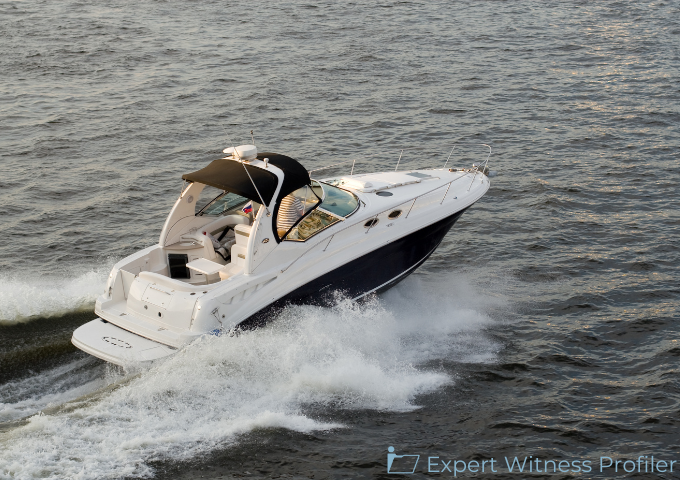
    Plaintiff Max Zach Corporation entered into a contract with Defendant Marker 17 Marine (“Marker 17”) to modify Plaintiff’s vessel, a 2006 48′ Fountain Express Cruiser (the “Boat”)by retrofitting and repowering it with four Mercury Outboard 400 Racing Motors, at a cost of about $315,000. The agreement also provided for the delivery of the Boat by Marker 17 to Plaintiff in Greenwich, Connecticut.

    The Boat was modified to specification by Marker 17, packaged, and loaded for transport from Wilmington, North Carolina to Greenwich, Connecticut. Marker 17 selected Defendant Premium Carriers Inc. (“Premium Carriers”) to assist with loading the Boat onto a trailer and to transport the Boat via land transport. The Boat was damaged when, in New Jersey, Premium Carriers accidentally flipped the trailer carrying the Boat en route to Plaintiff. Thereafter, Superior Towing and Transport, LLC towed the Boat from the accident site to its storage facility in New Jersey, where the Boat is still stored at a rate of $150 per day.

    In the Second Amended Complaint, the Plaintiff raised four causes of action:

    (1) negligence against Marker 17,

    (2) breach of contract against Marker 17,

    (3) conversion against Marker 17, and

    (4) violation of 49 U.S.C. Section 14706 against Premium Carriers.

    Plaintiff disclosed Scott Mitchell as his valuation expert witness whose testimony Defendants moved to preclude, arguing that Mitchell is unqualified to opine on the valuation of the Boat and that his testimony is unreliable and inadmissible. 

    Valuation Expert Witness

    Valuation Expert Witness

    Scott Mitchell is the owner and sales manager of Boardwalk Marina in Stratford, Connecticut. He has decades of experience as a certified boat dealer, which includes dealing in Fountain powerboats from 2004-2010.

    Want to know more about the challenges Scott Mitchell has faced? Get the full details with our Challenge Study report.

    Discussion by the Court

    A. Scott Mitchell’s Qualifications

    Mitchell, the owner and sales manager of Boardwalk Marina in Stratford, Connecticut, offered an opinion on the Boat’s valuation and the market value if sold as new today. The Defendants claimed that he did not employ the level of intellectual rigor necessary to opine as to the valuation of the boat.

    In response, the Plaintiff cited Mitchell’s decades of experience as a certified boat dealer.

    However, Mitchell’s expert report makes no reference to any experience as a marine surveyor or appraiser; instead, Mitchell states in the addendum to his expert report that his “qualifications derive from buying, repairing, building, and selling new and used boats since his entire adult life.” Further, at both his deposition and the hearing, Mitchell testified that he is not certified to do valuations, he does not belong to the American Society of Appraisers or any other association of appraisers, and he is not a licensed appraiser in any state.

    While Mitchell, as a dealer and reseller of boats, may be qualified to be an expert in boat sales and resale values, his qualifications and experience as a marine appraiser are not demonstrated. The Court cannot conclude that his knowledge of boat valuations is sufficient such that his opinion would likely assist the trier in fact in arriving at the truth and, accordingly, finds that Mitchell is not qualified to be an expert as to the valuation of the Boat. 

    B. Reliability of Mitchell’s Testimony

    Defendants argued that Mitchell’s testimony was unreliable for two reasons:

    (1) it did not follow any recognized methodology, including Uniform Standards of Professional Appraisal Practice (“USPAP”), and

     (2) it was speculative, contradictory, and assumptive.

    Mitchell’s opinion is unreliable because the Court cannot discern the exact methodology Mitchell used to valuate the Boat. Mitchell concludes in his report that the value of the Boat is $640,000, which is the sum of the $315,000 cost to “re-power” the Boat and the Boat’s $325,000 value based on 2021 prices. Nowhere in the report does Mitchell explain how he arrived at the $325,000 value of the Boat or what were the “2021 prices” on which he relied; rather, he simply states, without more, that the included exhibits of other boats “can be used to triangulate on value but moreover, support his conclusion of using the cost basis rather than market comps.”

    i. Mitchell’s testimony is also contradictory and misleading

    The Court’s confusion regarding Mitchell’s methodology is exacerbated by Mitchell’s contradictory and misleading testimony. As noted, Mitchell’s report suggests that he relied on the “cost basis” method only, and not on comparable sales, to valuate the Boat. However, at his deposition in June 2024, Mitchell testified that he used a “blend of comparables and cost basis” based on “[p]revious boat sales, current boat sales, current boat valuations, and then on the cost basis, what the guy paid to have the boat redone[.]”

    Mitchell again changed his explanation of the comparable sales and how he valued the Boat at the September 2014 hearing on the instant motion, further supporting the Court’s conclusion that his expert opinion is unreliable. Mitchell affirmed that to ascertain the $325,000 number in his valuation, he used a comparable “sale” of a 2006 48-foot Fountain listed for $388,944, and that the two other boats mentioned in the report were not comparables. 

    He thereafter conceded that none of these references or calculations were in his expert report or produced to Defendants. Moreover, because Mitchell testified at his deposition that the only records he used to calculate the $325,000 value were from the Boat Trader website, the Court held that Mitchell’s opinion is unreliable for being assumptive, contradictory, and, most importantly, rooted in inadequate methodology. Daubert and Federal Rule of Evidence 702 thus mandate the preclusion of Mitchell’s report and testimony.

    C. Relevance of Mitchell’s Testimony

    Since the Court held that Mitchell is not qualified to serve as an expert and his testimony is unreliable, the Court declined to address whether his testimony met the relevance standard under Federal Rule of Evidence 401.

    Held

    Therefore, the Court granted the Defendant’s motion to exclude Plaintiff’s valuation expert witness Scott Mitchell’s testimony

    Key Takeaways:

    The Court excluded Scott Mitchell’s expert testimony regarding the valuation of the Plaintiff’s boat due to two primary reasons:

    • Lack of Qualifications: While Mitchell, as a dealer and reseller of boats, may be qualified to be an expert in boat sales and resale values, his qualifications and experience as a marine appraiser are not demonstrated. The Court cannot conclude that his knowledge of boat valuations is sufficient such that his opinion would likely assist the trier in fact in arriving at the truth and, accordingly, finds that Mitchell is not qualified to be an expert as to the valuation of the Boat. 
    • Unreliable Methodology: In addition to the fact that Mitchell did not see or examine the Boat, or any comparable boats, prior to rendering his opinion as to the Boat’s valuation and that his report contains no comments or criticisms of Defendants’ vastly different appraisal that was prepared a month earlier, there is no indication from Mitchell’s expert report or deposition testimony that his “testimony is the product of reliable principles and methods” or that he “reliably applied the principles and methods to the facts of the case.”

      Case Details

    Case caption: Max Zach Corporation V. Marker 17 Marine Et Al
    Docket Number: 3:23cv1088
    Court: United States District Court for the District of Connecticut
    Dated: October 30, 2024
  • Valuation Expert Witness’ Testimony About Neutral Third Party Appraisers Excluded

    Valuation Expert Witness’ Testimony About Neutral Third Party Appraisers Excluded

    McDonald’s Corporation (“Plaintiff”) filed this breach of contract action against Vanderbilt Atlantic Holdings LLC (“Defendant”). 

    The primary issue to be tried in this case is whether Vanderbilt failed to cooperate in the process set forth in an addendum to a lease between McDonald’s and Vanderbilt (the “Lease”) to evaluate the fair market rental value (“FMV”)—the basis to calculate McDonald’s rent—for the subject property (the “Property”).

    Vanderbilt’s appraiser, Tom Tener, estimated the FMV for the Property twice.

    Defendant retained Michael P. Hedden as an expert witness to testify about “(1) his professional background, experience and qualifications; (2) his review of Thomas Tener’s appraisal prepared on July 30, 2019 including Tener’s appraisal methods and techniques; and (3) the purpose and role of a neutral third-party appraiser.” 

    Plaintiff filed a motion to exclude his testimony on the basis that his expert opinion “is not based on sufficient facts or methodology” and lacked “independent analysis” to support testimony on the “Property’s highest and best use.” 

    Valuation Expert Witness

    Michael Hedden specializes in providing valuation, litigation support, and expert testimony services as a knowledgeable real estate professional in all aspects of market analysis and valuation of real property. He has experience in the appraisal of industrial, commercial, residential, and special purpose property including hospitality, hospital, and healthcare facilities. 

    Get the full story on challenges to Michael Hedden’s expert opinions and testimony with an in-depth Challenge Study. 

    Discussion by the Court

    Hedden’s Report

    Hedden was retained to conduct an appraisal review, as opposed to an independent appraisal. As the report noted, the scope of the work was to determine whether: (1) Tener’s report contained adequate and relevant data; (2) the appraisal methods and techniques used were appropriate given the language of the Lease; and (3) the analyses, opinions, and conclusions in the report were appropriate, credible, and reasonable for the intended use of the intended user within the context of the Lease.

    Therefore, Hedden concluded that Tener’s “analysis, opinions and conclusions” were “appropriate, credible and reasonable.”

    Uniform Standards of Professional Appraisal Practice (USPAP) Standard 3 requires an appraisal reviewer to “identify the problem to be solved, determine the scope of work necessary to solve the problem, and correctly complete research and analyses necessary to produce a credible appraisal review.” The Court held that just because Hedden “did no independent research” does not mean he did not comply with USPAP standards or conduct an acceptable appraisal review. 

    The Court held that Plaintiff’s other bases for exclusion similarly are unavailing. Plaintiff’s comparison of Hedden’s appraisal review with that of Plaintiff’s expert is insufficient to exclude Hedden’s testimony. After all, the scope of their respective work appears to have been different as Hedden conducted a quality appraisal review, whereas Aaron conducted a more quantitative review. Moreover, Hedden’s consideration of Tener’s competency and experience is not improper, and does not reflect a rubber stamp of Tener’s report. Indeed, such a consideration would seem to be relevant in an appraisal review. 

    Hedden’s Opinion on the “Highest and Best Use” of the Property

    Plaintiff sought to preclude Hedden’s testimony that Tener “correctly concluded” that “the highest and best use required valuing the Property based on the construction of a new building consistent with the Property’s zoning which allowed for 39,000 square feet.” Plaintiff contended that this opinion is outside the scope of an appraisal review, and Hedden did not perform the analysis necessary to reach that opinion independently.

    The Court held the scope of Hedden’s appraisal review included determining whether “the appraisal methods and techniques used in the Report are appropriate given the language in the lease” and “the analyses, opinions and conclusions in the Report are appropriate, credible, and reasonable.” In other words, his opinion that Tener “correctly concluded” how to consider the highest and best use was an opinion of the quality, not value, of Tener’s appraisal.

    Hedden’s Expert Testimony About Neutral Third Party Appraisers

    Plaintiff sought to preclude Hedden’s testimony about the purpose and role of a neutral third party appraiser because such information was not included in the expert report and the topic is a matter of contract interpretation. 

    As an initial matter, the Court doubts that this testimony would aid the Court in any finding of fact. Moreover, as the Court previously stated, “the role of the third appraiser . . . is a matter of contract interpretation.” Further, this topic was not within the scope of Hedden’s appraisal review and was not discussed in the report.

    Held

    The Plaintiff’s motion to exclude the testimony of Hedden is denied in part and granted in part.

    Key Takeaway:

    Hedden, for the most part, complied with the USPAP standards but his testimony about the purpose and role of a neutral third party appraiser was excluded because the Court previously stated that the role of the third appraiser is a matter of contract interpretation.

    Case Details:

    Case Caption: McDonald’s Corporation V. Vanderbilt Atlantic Holdings Llc
    Docket Number: 1:19cv6471
    Court: United States District Court, New York Eastern
    Order Date: September 30, 2024
  • Court rejects lost revenue calculations proffered by  Valuation Expert Witness citing lack of consistency with Missouri contract damages law

    Court rejects lost revenue calculations proffered by Valuation Expert Witness citing lack of consistency with Missouri contract damages law

    This legal scenario revolves around a dispute between newspaper carriers, Bextermueller News Distributors, Inc., and Tom Richards, and the Defendants, Lee Enterprises, Inc., Lee Enterprises Missouri, Inc., Pulitzer, Inc., St. Louis Post-Dispatch, LLC. The carriers had agreements granting them exclusive rights to deliver St. Louis Post-Dispatch newspapers in specified geographic areas. Allegedly, the Defendants breached these agreements by implementing an electronic delivery system of the Post-Dispatch, impacting the carriers’ revenue and customer relationships.

    The Plaintiffs claimed damages for breach of contract and breach of implied covenant of good faith and fair dealing. They engaged Melissa Gragg, a Certified Valuation Analyst, to quantify their lost revenue due to the Defendants’ actions. Gragg’s methodology involved assessing the number of digital-only subscribers within the carriers’ assigned routes from 2017 to 2023 and calculating the lost revenue by multiplying this number with the fee that Defendants are required to pay to Plaintiffs for each newspaper they delivered.

    Defendants moved to exclude Gragg’s testimony, arguing that her calculations were flawed. They contested the notion that Plaintiffs were entitled to fees for every digital subscriber within their territories, stating that not all digital subscribers would have been print subscribers for which Plaintiffs would have received fees. Defendants claimed Gragg’s calculations were based on an incorrect premise, rendering her testimony irrelevant and unreliable.

    In response, the Plaintiffs argued that according to their agreements, they were entitled to fees for deliveries within their designated areas, regardless of the delivery method or subscriber type. The Plaintiff-Carriers argued that Melissa Gragg’s calculations were in accordance with Missouri contract damages law. They contended that her calculations showcased the breach committed by the Defendants, specifically emphasizing the breach of the contractual obligation to abstain from establishing an alternative delivery system.

    The crux of the dispute lay in whether Gragg’s damage calculations adhered to legal principles. Defendants contested the premise that Plaintiffs could claim fees for all digital subscribers within their territories. The Court held oral arguments to resolve this issue, considering the relevance and reliability of Gragg’s testimony in light of Missouri’s contract damages law.

    Valuation Expert Witness

    Melissa Gragg specializes in business valuations and provides expert witness testimony for litigation purposes. Her expertise spans diverse areas such as marital dissolution, shareholder disputes, commercial litigation, business interruption claims, personal damage calculations, and lost profits assessments. In cases involving divorcing spouses, she calculates maintenance, aids in understanding tax implications and cash flow, and traces separate assets. Gragg also contributes to fraud investigations for privately-held companies, government entities, and municipalities, lending her expertise to uncover fraudulent activities in these contexts.

    Discussion by the Court

    The admissibility of Gragg’s damages testimony hinged on whether her opinions were founded on a mistaken legal premise. Consequently, the Court’s analysis commenced with a review of the permissible damages under Missouri law for the claims presented, namely, breach of contract and breach of the implied covenant of good faith and fair dealing.

    According to Missouri law, damages for breach of contract are restricted to compensating for the loss of the contract’s benefits. The primary objective is to restore the wronged party to the position they would have occupied had the contract been fulfilled. This principle was articulated in the case of Randy Kinder Excavating, Inc. v. J.A. Manning Constr. Co., Inc., 899 F.3d 511, 520 (8th Cir. 2018).

    Missouri courts categorized breach of contract damages into three types: actual damages, consequential damages, and benefit-of-the-bargain damages, as outlined in Curators of Univ. of Missouri v. Suppes, 583 S.W.3d 49, 61 (Mo. Ct. App. 2019).

    • Actual damages aimed to compensate for the direct loss or injury resulting from the wrongful act.
    • Consequential damages encompassed those reasonably foreseeable damages caused directly by the breach, including those that could have been contemplated by the Defendant at the time of the agreement.
    • Benefit-of-the-bargain damages, also known as lost profits damages, refer to the net profits the Plaintiff would have gained had the contract not been breached. These damages aimed to put the Plaintiff in the financial position they would have occupied had the contract been fulfilled as agreed upon.

    The Plaintiffs contended that Melissa Gragg’s calculations represented their benefit-of-the-bargain or lost profit damages. They argued that according to the Agreements granting them exclusive distribution rights within their designated territories, every digital-only subscriber in those areas constituted lost revenue for the Plaintiffs. Their stance was irrespective of whether these digital subscribers would have ever opted for a print newspaper subscription.

    Emphasizing that the Agreements made no exception for digital deliveries, the Plaintiffs asserted their entitlement to a fee for all deliveries within their exclusive territories. They highlighted Gragg’s assumption in her report that deliveries to subscribers within these territories warranted fees for the Plaintiffs, as stipulated in their agreements.

    The Plaintiffs’ argument emphasized that the interest of digital customers in the printed version was immaterial to their claim for fees. They maintained that the Agreements explicitly entitled them to compensation for deliveries occurring within their exclusive territories, regardless of the customers’ preferences for print or digital versions.

    The Court considered the Plaintiffs’ argument that, according to their interpretation, the Agreements mandated the Defendants to pay a fee for every delivery within their designated territories, regardless of the method or deliverer. In this scenario, if the Defendants commenced digital deliveries within these territories, the Plaintiffs could claim that the Agreements required compensation for all deliveries, including digital ones made by the Defendants.

    Under this interpretation, if the Defendants refused payment for these digital deliveries, the number of digital subscriptions multiplied by the applicable delivery fee could represent the lost profits the Plaintiffs would have gained if the contract hadn’t been breached. Awarding damages equivalent to these fees would align with the objective of placing the Plaintiffs in the position they would have been in if the contract had been fulfilled.

    However, the Court noted that the Plaintiffs hadn’t directed attention to any specific provision in the Agreements explicitly entitling them to fees for every delivery in their territories, irrespective of the deliverer or method. The Agreements stated the Defendants were required to pay the Plaintiff-carriers a fee “for each… copy of the St. Louis Post-Dispatch… delivered to home delivery subscribers by the Carrier.” This language didn’t encompass digital deliveries, and the breach alleged by the Plaintiffs wasn’t centered on the Defendants’ failure to pay for deliveries within the territories as stipulated in the Agreements.

    The Court highlighted that Gragg’s opinion, seemingly based on the presumption that the Agreements entitled Plaintiffs to fees for every digital delivery, lacked support from the Agreements’ language. As a result, the opinion was fundamentally unsupported and couldn’t provide assistance to the jury.

    The Defendants contended that Melissa Gragg’s approach to damages contradicted the legal principle governing breach of contract damages, which aims to restore the wronged party to the position they would have held if the contract had been fulfilled. Specifically, in cases seeking lost profits as damages, the goal is to quantify the net profits the wronged party would have gained had the contract not been breached.

    The Court agreed with this legal principle and found Gragg’s damages calculations inconsistent with it. The Court highlighted a significant flaw in Gragg’s approach: she didn’t attempt to ascertain how many digital subscribers represented revenue that the Plaintiffs would have acquired in the absence of a digital-only delivery system. Gragg acknowledged during her deposition, a fact seemingly undisputed by the Plaintiffs, that some digital-only subscribers might have had no inclination toward a print newspaper and would never have become print subscribers even without a digital-only option. Consequently, the revenue that the Plaintiffs would have gained from these subscribers in the absence of the breach was effectively $0.

    The Court noted that Gragg’s calculations failed to address or account for these subscribers who would not have contributed any revenue if the breach hadn’t occurred. Despite the potential inclusion of such subscribers in her calculations, Gragg didn’t make an effort to differentiate or adjust for these cases where revenue wouldn’t have materialized. Instead, she incorporated them into her calculations without distinction.

    The Defendants argued that Melissa Gragg’s approach to calculating damages contradicted the legal principle dictating that a Plaintiff could only seek damages resulting directly from the alleged breach of contract. The Court agreed with this argument, emphasizing that under Missouri law, the purpose of breach of contract damages is to restore the wronged party to the position they would have held if the contract had been fulfilled. In cases seeking lost profits damages, the focus is on the net profits the wronged party would have gained had the breach not occurred.

    The Court identified a critical flaw in Gragg’s methodology: it didn’t address the determination of how many digital subscribers would have contributed revenue to the Plaintiffs in the absence of a digital-only delivery system. Acknowledging this flaw, Gragg, as indicated in her deposition, acknowledged that some digital-only subscribers might have had no inclination toward a print newspaper and wouldn’t have subscribed in any circumstances.

    The Court highlighted that Gragg’s calculations failed to account for or differentiate these subscribers who would not have generated any revenue if the breach hadn’t occurred. Despite this, Gragg included them in her calculations without accounting for the zero revenue they would have contributed, contrary to Missouri law on breach of contract damages.

    During oral arguments, the Court posed a hypothetical scenario to Plaintiffs’ counsel, illustrating that under Gragg’s approach, damages would include fees from households that would never have subscribed to print deliveries, placing the carriers in a better financial position than if no breach had occurred. This approach contradicted Missouri’s contract law, which prohibits placing the wronged party in a more advantageous position than if the breach had not occurred.

    Consequently, the Court concluded that Gragg’s method of calculating lost revenue lacked relevance and reliability under Missouri law. Her calculations didn’t analyze the actual revenue lost due to the alleged breach, incorporating fees that would never have been realized even without the breach. Thus, her opinion was deemed irrelevant and unreliable for assisting the jury and was consequently excluded.

    The Court found that the cases cited by the Plaintiffs did not alter its conclusion. Despite Plaintiffs heavily relying on Machine Maintenance Equipment Co. v. Cooper Industries, Inc., 634 F. Supp. 367 (E.D. Mo. 1986), the Court clarified that this case reinforced the general principles it had previously relied upon. It reiterated that damages resulting from a breach of contract or breach of the duty of good faith must be those directly resulting from the breach and should aim to place the non-breaching party in the position they would have been in if the breach had not occurred. However, the cited case did not lend support to Gragg’s method of calculating lost revenue.

    Furthermore, the other cases referenced by the Plaintiffs during oral arguments discussed the general principles relevant to the implied covenant of good faith and fair dealing. These cases highlighted that the implied covenant prevents a contracting party from denying the other party the expected benefits of the contract. However, in the context of the present motion, the Court established that there was no dispute regarding the deprivation of the expected benefit of the Agreements for the Plaintiffs – namely, the exclusive right to distribute the newspaper within their designated territories. Nevertheless, these cases did not offer support for the specific method used by Gragg in calculating lost revenue.

    Held

    The Court, after detailed consideration, concluded that the Plaintiffs failed to meet the burden of demonstrating the admissibility of Melissa Gragg’s testimony under Rule 702. Consequently, the Court granted Defendants’ motion to exclude her testimony from the case.

    It’s important to note that while the Court made this decision regarding Gragg’s testimony, it hasn’t reached a final decision on the overall outcome of the case. Several other issues in this legal matter remain pending and await resolution by the Court.

    Key Takeaways

    The admissibility of expert testimony in breach of contract cases relies on its alignment with legal principles governing damages. Damages sought should directly result from the breach and aim to place the wronged party in the financial position they would have occupied if the contract had been fulfilled. Missouri law categorizes breach of contract damages into various types, including actual, consequential, and benefit-of-the-bargain damages. Lost profits, a subset of benefit-of-the-bargain damages, aim to represent the net profits the Plaintiff would have gained if the contract hadn’t been breached. Expert calculations should align with the actual loss caused by the breach. Flawed methodologies that include damages from sources unrelated to the breach’s impact lack reliability under the law. Expert opinions should align with explicit provisions within the contract, and claims for damages must align with contractual entitlements. If expert opinions include calculations or assumptions unrelated to breach-caused damages, they might be deemed irrelevant and unreliable, leading to exclusion. Cited cases should directly support or substantiate the methodology used by the expert in calculating damages. In cases involving the breach of the implied covenant of good faith and fair dealing, the focus should center on whether the breach deprived the party of expected contractual benefits. The burden of proof lies with the party presenting expert testimony to demonstrate its admissibility and alignment with legal principles. If expert testimony fails to meet these standards, it may be excluded from consideration in the case.