Tag: Airbag

  • Automotive Engineering Expert Witness’ Testimony Regarding the Latent Defect in Airbag Inflators Admitted

    Automotive Engineering Expert Witness’ Testimony Regarding the Latent Defect in Airbag Inflators Admitted

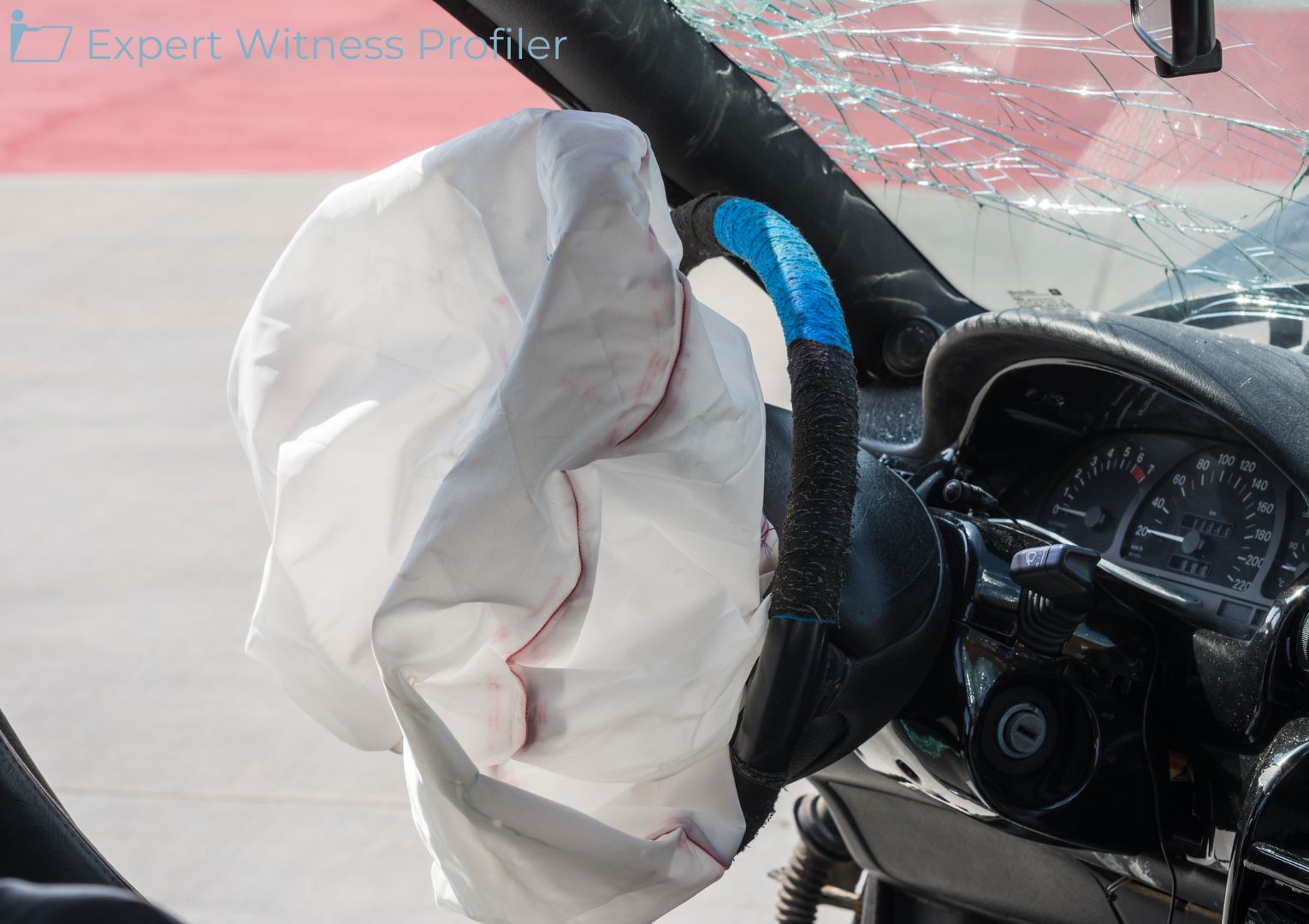
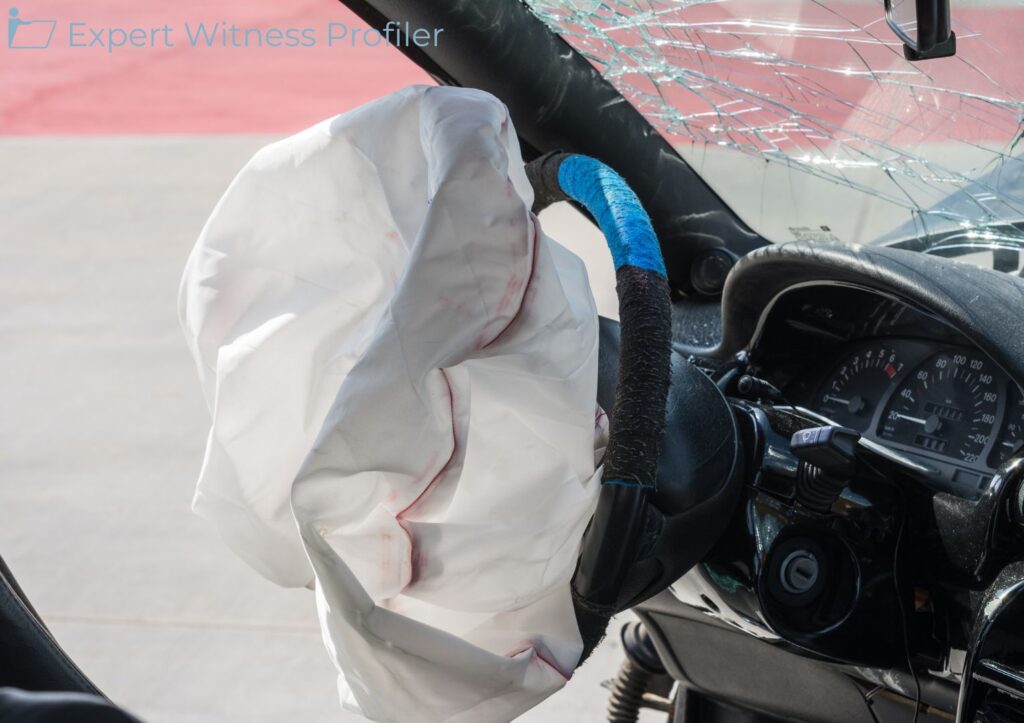
    Plaintiff, William Harrison Sims’ claims arise out of an October 24, 2019, two-vehicle collision involving Plaintiff, who was operating the 2004 BMW (“Subject BMW”). Tameca Harris-Jackson (“Harris-Jackson”) was operating the Hyundai that collided with the Subject BMW. Plaintiff alleges he sustained “severe, permanent, and life-altering injuries” due to the driver-side Takata airbag unexpectedly rupturing and shooting “metal shrapnel into his face and body.”

     Defendants procured and installed the airbag inflator during the process of “designing, manufacturing, assembling, and producing” the vehicle. Plaintiff brought this action for damages against both Defendants BMW of North America (“BMW NA”) and Bayerische Motoren Werke AG (“BMW AG”), alleging strict liability and negligence from procuring and installing the airbag.

    Plaintiff submitted that Mr. Robert C. Lange, BMW’s mechanical engineer, is prepared to opine that he is unaware of any evidence showing the Defendants “could have been aware air bag systems supplied by Takata to BMW AG were defectively designed prior to Takata’s announcement of defect findings beginning in 2014.” 

    Lange will also opine that when the subject 2004 BMW was distributed by BMW NA, “no motor vehicle manufacturer or distributor could have known of the technical research findings regarding the latent defect in Takata air bag inflators because the science was not settled until 2015-2016.”

    He also contended that Takata falsified data provided to vehicle manufacturers through 2015 and failed to correct the false data once the defect was discovered. Plaintiff argued that Lange’s opinions were unsupported and unreliable. 
    Automotive Engineering Expert Witness

    Robert Lange has over 50 years of experience in automotive engineering. He specializes in motor vehicle systems architectures, structures, safety, and public health.  

    Lange has experience in statistical analysis of motor vehicle service performance databases, statistical forecasting and reliability analysis, FMEA and failure mode avoidance methods, collision-related data acquisition and analysis, safety rulemaking, strategy, and the like. 

    Get the full story on challenges to Robert Lange’s expert opinions and testimony with an in-depth Challenge Study. 

    Discussion by the Court

    The issue is whether Lange’s opinions are based on sufficiently reliable methods and principles. If they are, then Lange’s opinions are undoubtedly helpful to the jury. If his opinions are unsupported ipse dixit, they must be excluded. 

    Lange’s Methodology and Opinions

    Plaintiff contended that BMW knew that the subject vehicle was defective because the airbag inflator used phase-stabilized ammonium nitrate (“PSAN”) as the airbag’s propellant, causing the inflator to rupture when the airbag deployed during the accident. 

    Lange discussed his investigation into the Takata air bag failures. He noted that Honda conducted the first recall of Takata air bag systems for inflator failure in a letter dated November 11, 2008. 

    National Highway Traffic Safety Administration (“NHTSA”) hired Dr. Harold Blomquist to assist in its Takata defect investigation and issued his report in 2015. 

    Documents from the Recall Query revealed that Takata represented to Honda that the ruptures were caused by a “Stokes press” that forms propellant into a wafer, causing the propellant to burn too quickly and rupture the inflator. Accordingly, in 2010, Honda expanded the recall to include the new basis. Between 2010 and 2013, Honda and Takata continued to receive reports of inflator ruptures, and Takata retained consultants to conduct a root cause analysis. 

    Takata’s root cause analysis continued, and in 2014, research pointed to moisture and temperature in high absolute humidity regions as causing an increased propellant burn rate. Lange, however, concluded that “during the inflator development phases, Takata falsified data provided to vehicle manufacturers. When the false data was discovered, Takata failed to correct the false data by informing the manufacturer and correcting the record.”

    Plaintiff’s Objections

    Plaintiff challenged the admissibility of the following opinions offered by Lange:

    75. I am unaware of any evidence showing BMW AG and BMW NA could have been aware air bag systems supplied by Takata to BMW AG were defectively designed prior to Takata’s announcement of defect findings beginning in 2014.

    76. As of the date of distribution of the Subject 2004 BMW 330Ci, by BMW NA, no motor vehicle manufacturer or distributor could have known of the technical research findings regarding the latent defect in Takata air bag inflators. The science was not settled until 2015-2016.

    Plaintiff also challenges the following statement made by Lange:

    “During the inflator development phases, Takata falsified data provided to vehicle manufacturers. When the false data was discovered, Takata failed to correct the false data by informing the manufacturer and correcting the record. Takata’s false dealings with vehicle manufacturers evidently extended into 2015.”

    Plaintiff contended that Lange will confuse the jury if permitted to offer evidence that Takata lied to other vehicle manufacturers without having proof Takata lied to BMW. Moreover, Lange “knows little about the relationship between BMW and the supplier of the defective airbag inflator at issue in this case, Takata.”

    Plaintiff also argued that Lange’s opinion that he is “unaware of any evidence” showing BMW’s knowledge of the defect is not helpful to the jury. Plaintiff asserted that Lange failed to inform himself on the subject matter sufficiently, and his lack of evidence that BMW was aware of the risks attendant to using PSAN does not equate with BMW’s lack of knowledge.

    Ruling

    Lange has extensive experience working at Ford Motor Company, Failure Analysis Associates, and the General Motors Corporation. During his work with Ford, Lange was responsible for vehicle design and remedying safety defects serviced as recall actions. As the Safety Executive with General Motors, Lange oversaw research projects involving air bags, occupant restraint systems, driver assist technology, and other vehicle systems. He also supervised the “Product Investigations” Department and was responsible for identifying potential safety defects and initiating investigations. In other words, the Court held that  Lange possesses the requisite experience to review the data, investigative reports, and shifting root-cause analysis discussed in his report.

    On balance, the Court did not find that Lange’s opinions rest on mere ipse dixit and instead are based on his review of relevant documents showing Takata’s shifting root cause analysis. Takata initially focused on a manufacturing defect before conceding that the defect had broader implications, which was consistent with Takata hiding the ball from BMW. Basing one’s opinions on the Honda recall and subsequent NHTSA investigations to conclude that the science was not settled until the mid-2000s is a sufficiently reliable methodology. Lange’s opinion that BMW NA was not responsible for the defective design of the subject inflator and that BMW was not on notice until around 2015 was supported by these evolving investigations. 

    Held

    The Court denied Plaintiff’s motion to exclude certain opinions of Robert C. Lange.

    Key Takeaway:

    Lange reviewed the data, investigative reports, and shifting root-cause analysis to conclude that Takata falsified data provided to vehicle manufacturers through 2015 and failed to correct the false data once the defect was discovered.

    Case Details:

    Case Caption: Sims V. Bmw Of North America LLC
    Docket Number: 6:22cv1685
    Court: United States District Court, Florida Middle
    Order Date: February 20, 2025

    Please refer to the blogs previously published about this case:

    Accident Reconstruction Expert Witness’ Testimony Admitted Despite His Failure to Calculate G-Force 

    Neurology Expert Witness’ Injury Causation Testimony Admitted
    Accident Reconstruction Expert Witness’ Opinion Regarding Plaintiff’s Lane of Travel Ignored Physical Evidence

  • Accident Reconstruction Expert Witness’ Testimony Admitted Despite His Failure to Calculate G-Force 

    Accident Reconstruction Expert Witness’ Testimony Admitted Despite His Failure to Calculate G-Force 

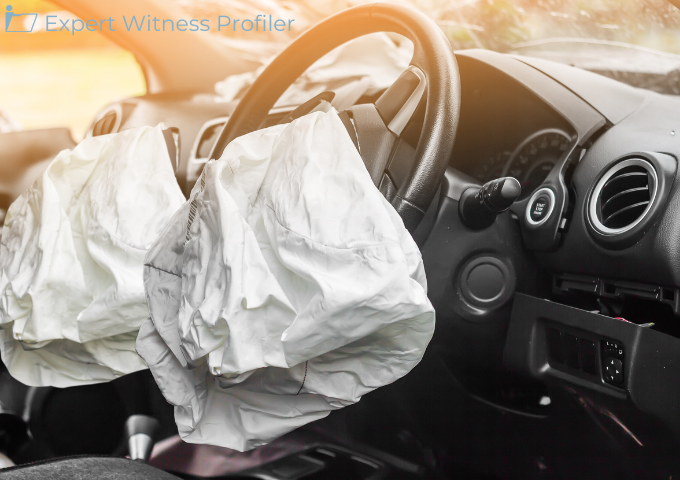
    On October 24, 2019, William Harrison Sims (Plaintiff) was driving his 2004 BMW 330Ci (the “Vehicle”) in Florida when another vehicle unexpectedly turned left in front of him, causing a minor accident. As a result of the collision, the Vehicle’s front driver-side airbag was signaled to deploy. However, the airbag inflator unexpectedly ruptured and shot metal shrapnel into Plaintiff’s face and body, leading to severe, permanent, and life-altering injuries.

    Defendants, BMW of North America (“BMW NA”) and Bayerische Motoren Werke AG (“BMW AG”), procured and installed the airbag inflator during the process of designing, manufacturing, assembly, and producing the vehicle. Plaintiff filed a lawsuit against both Defendants, alleging strict liability and negligence for procuring and installing the defective airbag.

    Defendants moved to exclude testimony from Plaintiff’s expert, Perry Ponder (“Ponder”), and two demonstrative exhibits. Defendants argued that Ponder changed his opinion regarding the lane of travel occupied by the alleged at-fault driver, non-party Tameca Harris-Jackson (“Harris-Jackson”). Ponder testified at deposition that Harris-Jackson turned from one of the through lanes instead of the left lane before colliding with Plaintiff’s vehicle. Defendants also identified two demonstrative exhibits produced before Ponder’s deposition, which depicted the placement the alleged at-fault vehicle and Plaintiff’s vehicles leading up to the collision.

    Accident Reconstruction Expert Witness

    Perry L. Ponder, P.E., holds a Bachelor of Science in mechanical engineering from Florida State University and is a licensed professional engineer in the states of Florida and Illinois. Ponder specializes in accident reconstruction, failure analysis, and designing semi-trailers, truck components, underride crash protection, and patented adjustable structures. He has significant experience reconstructing accidents of various types: trucks, cars, pedestrian and cycles. 

    Want to know more about the challenges Perry L. Ponder has faced? Get the full details with our Challenge Study report.   

    Discussion by the Court

    A. Plaintiff Failed to Meet His Fed. R. Civ. P. 26(a) Expert Disclosure Obligations

    Defendants argued that Ponder, Plaintiff’s accident reconstruction expert violated Rule 26(a)(2) because he “renounced his former opinion that the Hyundai initiated its turn from the left lane of Good Homes Road while the deposition was underway.” Instead, he testified that the Hyundai turned from one of the through lanes of Good Homes Road and not from the left lane. Defendants contended that this new opinion was disclosed for the first time at the deposition.

    Plaintiff countered that Defendants misunderstood or misrepresented the opinions expressed in Ponder’s report as compared to his deposition testimony. The Plaintiff emphasized that Ponder’s report did not specify which lane Harris-Jackson was traveling in when she initiated her left turn, only stating that she started her left turn from the northbound lanes of Good Homes Road. The Court agreed with Plaintiff, stating that Ponder did not offer an opinion in his report that Harris-Jackson was traveling in the left-hand lane when she initiated the turn and collided with Plaintiff

    Moreover, Defendants failed to cite Ponder’s report to support their claim that he originally opined Harris-Jackson was traveling in the left-hand lane. Instead, Defendants cited the Crash Report created by the Orlando Police Department, a diagram of the collision prepared by a Trooper, and Harris-Jackson’s deposition. While Ponder reviewed these materials, the Court held that he did not adopt Harris-Jackson’s testimony or the police officer’s reconstruction as his opinion.

    i. Reliability of Harris-Jackson’s Testimony

    While Ponder cited Harris-Jackson’s testimony, in which she claims she stopped in the left lane and proceeded slowly after the traffic signal changed, he found Harris-Jackson’s testimony unreliable. Accordingly, Ponder did not offer a new opinion at the deposition. Even if he had, the Court held that Defendants had ample opportunity to cross-examine Ponder on the analysis employed to reach this opinion.

    Furthermore, Ponder’s relative speed calculation for each vehicle was partially offered as a rebuttal to Defendants’ expert. At his deposition, Ponder conceded that Harris-Jackson could have turned from the left lane into Plaintiff’s path. However, he opined that “her orientation is more consistent with a turn that’s a bit more mature, so to speak, getting herself westward to take the 408 west.” He concluded that if Harris-Jackson had made the turn from the left-hand lane, “you’d expect more of a nose-to-nose kind of orientation as opposed to a square orientation (indicating) that we had in this impact.”

    Regardless, the Court held that Ponder did not change his opinion at deposition, which is why the Defendants suffered no surprise or prejudice.

    B. Demonstrative Exhibits

    Defendants also challenged two demonstrative exhibits that displayed Good Homes Road intersecting with SR 408. Ponder’s report included diagrams prepared by law enforcement, as well as drone-generated top-down images of the crash scene. The Court held that the two demonstrative aids offered at the deposition are neither a surprise nor are they prejudicial because they are cumulative. Expert witnesses routinely create demonstrative exhibits on whiteboards or butcher paper at trial to drive home a point. To the extent that the demonstrative aids were untimely—which the Court does not find—their disclosure is harmless.

    C. Ponder’s Testimony is Unreliable and Unhelpful

    Defendants challenged Ponder’s accident reconstruction analysis, claiming it was unreliable and unhelpful. They argued that he failed to conduct independent testing, inspect or obtain an exemplar vehicle, drive an exemplar vehicle for work in the case, drive the intersection of the road in a Hyundai Sonata under the conditions to which he testified to or measure g-forces Harris-Jackson would have sustained had she turned from the through lane without stopping.

    However, the Court held that the Defendants’ attack on Ponder’s analysis is boilerplate and unconvincing. They listed actions Ponder could have undertaken without explaining why he would need to take these steps. Ponder’s accident reconstruction analysis followed standard procedures, including a detailed crash scene examination, review of relevant documents as well as photographs of the 2010 Hyundai. It also considered the Crash Stiffness Coefficients for BMW vehicles and the deposition testimony. He also identified the final rest location of Plaintiff’s BMW and debris field and conducted a 3D scan of the subject BMW to quantify the damage.

    Ponder then applied the General Momentum Equations to discern that Plaintiff’s BMW was traveling about 29 mph at the moment of impact, while Harris-Jackson’s Hyundai was traveling about 24 mph, with a resulting delta V, or change in velocity of 23 mph and a principle direction of force of 30 degrees counterclockwise of its longitudinal axis for the BMW. He factored in the speed and weight of the BMW to opine that the momentum was inadequate to propel the vehicle beyond the south edge of the intersection. Ponder supports this opinion with photographic evidence.

    Just because Ponder reached a conclusion that differs from a crash report prepared by a Trooper whose qualifications are unknown, the Court held that it not indicate the failure to employ “the same level of intellectual rigor that characterizes the practice of an expert accident reconstructionist.” The Court noted that Defendants did not articulate how examining or driving an exemplar vehicle would add to the analysis. It would not support the determination of the delta-V, PDOF, or relative speed of the subject vehicles. And while knowing the g-force experienced by Harris-Jackson would be interesting, the Court held that Defendants offered no support for their contention that the failure to calculate g-force undermines Ponder’s analysis.

    The Court ruled that  Ponder is a highly qualified expert whose analysis was reliable, well-supported, and helpful to the jury. His core opinions remained unchanged, and the two demonstrative exhibits did not prejudice Defendants.

    Held

    The Court denied Defendants’ motion to exclude the testimony of Perry Ponder, P.E.

    Key Takeaway:

    While the Court admitted Ponder’s testimony regarding his accident reconstruction analysis, including his calculations of the vehicles’ speeds, momentum, and impact angles, the Court did not accept Defendants’ argument that Ponder had violated Rule 26(a)(2) by changing his opinion during his deposition. The Court found no evidence that Ponder’s core opinion had changed and ruled that Defendants were not prejudiced by the introduction of the two demonstrative exhibits, as they were merely cumulative of the evidence that was already presented. Further, while Defendants challenged  Ponder’s failure to conduct independent testing and measure g-forces, the Court found these objections unpersuasive, stating that  Ponder’s methodology was consistent with standard practices in accident reconstruction. In conclusion, the Court affirmed that Ponder’s testimony was both reliable and helpful to the jury in understanding the technical aspects of the case.

    Please refer to the blog previously published about this case:

    Neurology Expert Witness’ Injury Causation Testimony Admitted

    Case Details:

    Case Caption: Sims vs. Bmw Of North America Llc
    Docket Number: 6:22cv1685
    Court: United States District Court for the Middle District of Florida, Orlando Division
    Order Date: January 13, 2025