Tag: Alcohol

  • Human Factors Expert’s Opinion on Driver Inattentiveness Excluded

    Human Factors Expert’s Opinion on Driver Inattentiveness Excluded

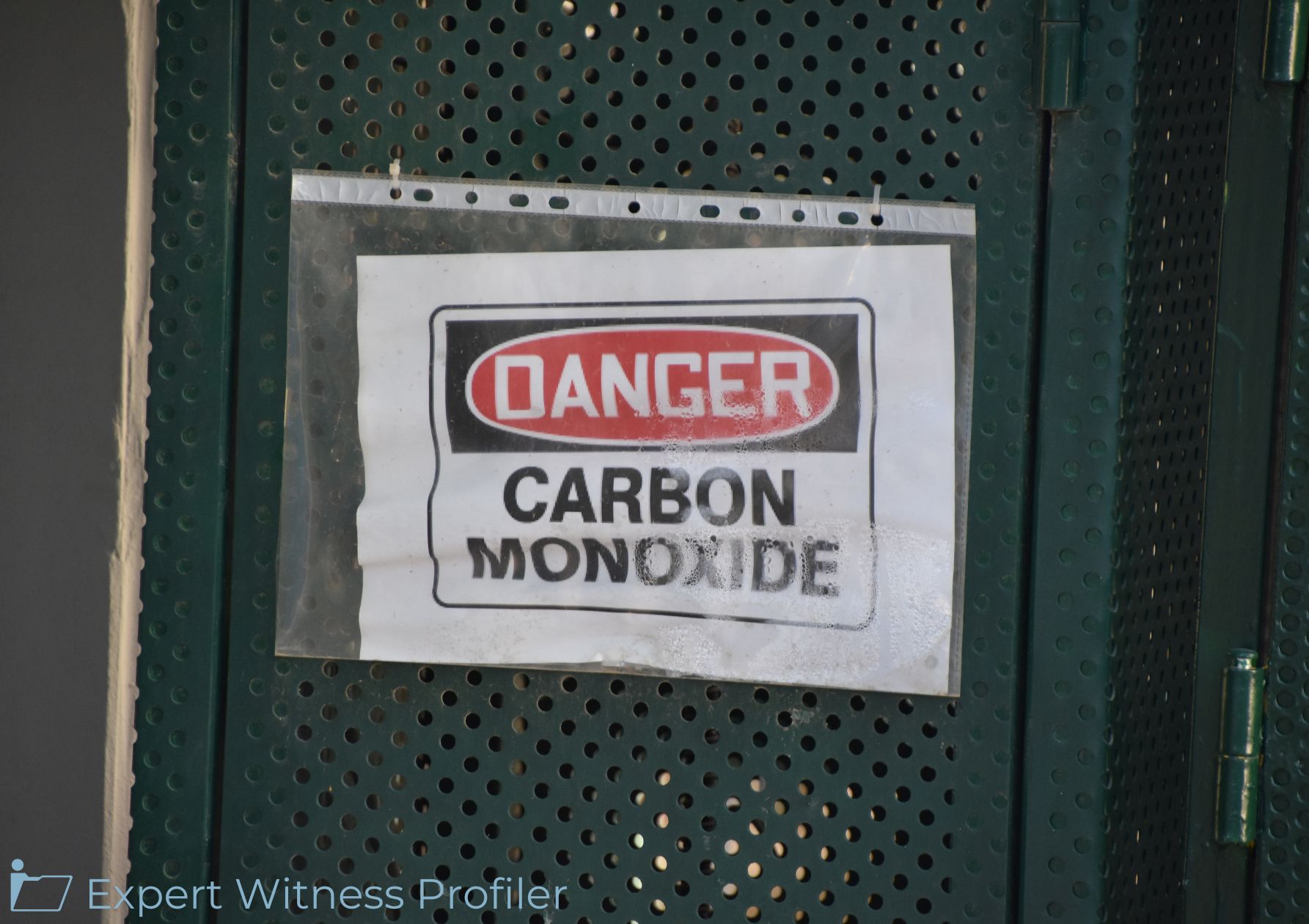
    This case arises out of an alleged design defect and failure to warn regarding a 2017 Toyota Tacoma. Lee Griffin was the primary driver of a 2017 Toyota Tacoma. After Griffin died due to accidental carbon monoxide poisoning from an automobile inadvertently continuing to run in the garage, Caroline Griffin filed suit individually and as executor of Lee Griffin’s estate.

    The Plaintiff filed a motion to exclude the entire testimony of Randall Tackett and Angela McGrath as well as part of the testimony of Nathan Dorris and Harry Pearce II.
    Toxicology Expert Witness

    Dr. Randall Tackett received his BS from Jacksonville University in 1975. He then received an MS degree in pharmacology and toxicology from Auburn University in 1977 and his Ph.D. in pharmacology and toxicology from the University of Georgia in 1979. Following a two-year postdoctoral fellowship at the Medical University of South Carolina, he returned to the University of Georgia as an assistant professor in the Department of Pharmacology and Toxicology.

    He later served as a Professor and Associate Department Head in the Department of Clinical and Administrative Pharmacy at the University of Georgia College of Pharmacy.

    Get the full story on challenges to Randall Tackett’s expert opinions and testimony with an in-depth Challenge Study. 

    Statistics Expert Witness

    Angela A. McGrath has a Bachelor of Science in Statistics, a Master of Arts in Applied Statistics, 27 years of experience in consulting, and experience teaching statistics.

    She is the Principal Consultant and Director of Automotive Research at Cirque Analytics, an economic, statistical, and financial consulting company headquartered in Jackson Hole, WY. She has developed extensive experience in formulating, conducting, and directing statistical and other quantitative analyses.

    Want to know more about the challenges Angela McGrath has faced? Get the full details with our Challenge Study report. 

    Automotive Engineering Expert Witness

    Harry Pearce has over 24 years of expertise in the field of structural crashworthiness. He gained industry experience with nine years at General Motors, serving as the Lead Structural Design Engineer for multiple vehicles. 

    With his knowledge and experience with vehicle sealing, Pearce has addressed claims of Carbon Monoxide (CO) intrusion. He has performed Electro Magnetic Interference (EMI) testing in anechoic chambers and Brake Override System (BOS) testing at Exponent’s Test and Engineering Center. 

    Discover more cases with Harry Pearce as an expert witness by ordering his comprehensive Expert Witness Profile report.

    Human Factors Expert Witness

    Nathan Todd Dorris is a human factors specialist with extensive experience in product safety and the evaluation of instructions, warnings and other safety communications for a broad range of products and industries.

    Gain a comprehensive understanding of Nathan Dorris’ qualifications and casework history with his Expert Witness Profile report.

    Discussion by the Court

    A. Randall Tackett

    Randall Tackett stated two opinions in his expert report:

    1. Griffin consuming 1.2 standard drinks within the hour before death is inconsistent with the evidence described above. Rather, the timeline of events is consistent with Lee Griffin ingesting higher amounts of alcohol earlier on July 4, 2022, which his body would have metabolized from the time he ingested the alcohol until his death.

    2. It is more likely than not that on the evening of July 4, 2022 Griffin’s blood alcohol concentration was at a level that could have affected his reaction time, hearing, judgment, memory, reasoning and ability to detect danger including his ability to turn off his Toyota Tacoma and/or recognize that it was still running in the garage.

    Motion to Exclude

    In this case, Tackett attempted to estimate the decedent’s blood alcohol content (BAC) at various times before death using a method known as retrograde extrapolation. The Plaintiff did not dispute the scientific validity of this technique in general. Instead, she argued that Tackett lacked the necessary factual basis to apply it reliably in this case.

    Specifically, the Plaintiff pointed out several critical unknowns: the exact time of death, the time the vehicle was parked, and any concrete details about when, what, or how much alcohol the decedent consumed. The Defendants contended that these gaps in information should affect how much weight the jury gives Tackett’s testimony, not whether it should be allowed at all. The Court disagreed.

    The main issue, according to the Court, was the absence of reliable timing data. Without knowing when key events occurred, it was unclear how far back Tackett should extrapolate. His estimates ranged from one to two hours before death to as far as 14–15 hours earlier. As a result, his BAC estimates varied widely—from 0.046 to 0.297—depending on assumptions about timing and the decedent’s metabolism rate. Notably, there was also no evidence that the decedent had consumed any alcohol before parking the car, further undermining the reliability of Tackett’s conclusions.

    Angela McGrath

    The Defendants have proffered Angela McGrath as an expert witness to testify about the following opinions:

    a. [The United States Consumer Product Safety Commission (“CPSC”)] death certificate data shows that vehicles with and without keyless ignition have inadvertently been left running in enclosed spaces.

    b. Available CPSC death certificate data does not show a consistently increasing trend of accidental carbon monoxide poisoning from passenger vehicle exhaust in enclosed spaces.

    c. The proportion of combustion engine vehicles on the road with keyless ignition is increasing over time, however, even by 2021, the majority of vehicles still have conventional keys.

    d. While number of registered vehicles with keyless ignition and without [automatic engine time-out (“ETO”)] has increased steeply since 2011, the rates of accidental carbon monoxide poisoning from passenger vehicle exhaust in enclosed spaces has exhibited no corresponding, consistently increasing trend.

    Motion to Exclude

    The Plaintiff argued that McGrath’s opinions were unreliable because the CPSC database she relied on did not distinguish between carbon monoxide poisoning deaths caused by vehicles with keyless ignition systems and those with traditional mechanical ignitions. As a result, the Plaintiff contended that no meaningful statistical analysis could be done to compare the risks associated with each type of ignition system.

    In response, the Defendants claimed the Plaintiff had misrepresented McGrath’s testimony. They asserted that McGrath was not attempting to directly compare the risks of carbon monoxide deaths between mechanical and keyless ignition systems. However, this argument fell short.

    The Court noted that McGrath’s analysis implicitly relied on such a comparison. Her underlying logic was that if keyless ignition systems were more dangerous, the overall number of accidental carbon monoxide deaths would have increased after their introduction. Because the death rate did not rise, she inferred there was no added risk. Therefore, despite the Defendants’ assertions, McGrath’s analysis did, in fact, depend on comparing the two types of ignition systems—making the Defendants’ denial unconvincing.

    Moreover, the Defendants’ argument rested on the assumption that, absent a defect, accidental carbon monoxide deaths would have remained constant from 2011-2021. The Court found this assumption questionable. Public awareness campaigns, increased usage of carbon monoxide detectors, or other safety measures could have contributed to a decline in deaths over time—independent of any defect. McGrath’s analysis failed to account for such alternative explanations.

    Ultimately, the Court held that McGrath’s testimony offered nothing more than a basic correlation and lacked consideration of other plausible factors. As such, her statistical analysis could not be reliably used to show the absence of a defect.

    Nathan Dorris

    The Plaintiff sought to exclude four categories of opinions that Dorris asserted: (1) that the Tacoma’s warnings were sufficient, (2) that drivers lose focus while using their vehicles, (3) that the Plaintiff and decedent should have had carbon monoxide detectors in their home, and (4) that the Tacoma was not defective because it complied with regulatory and voluntary standards.

    Inattentive Drivers

    The Plaintiff sought to exclude Dorris’ opinions regarding how driver inattentiveness could lead individuals to leave their engines running and fail to respond to alerts or other feedback.

    In response, the Defendants argued that Dorris’ discussion of driver distraction is just one component of the opinions he expresses in this case and is background to his primary opinions specific to the 2017 Toyota Tacoma’s Smart Key System and the subject incident.”

    The statements in question included: [d]rivers that are distracted or inattentive (for whatever reason) can inadvertently leave their vehicle’s engine running, regardless of the type of ignition system employed,” and “[n]ot only can inattention result in execution errors and omitted actions, but it may cause individuals not to respond to alerts or other feedback.”

    Dorris was not particularly clear about whether these statements—or others like them—were independent expert opinions or merely facts supporting other opinions. Even the Defendants appeared uncertain. On one hand, they described these statements as background to his primary opinions,” but on the other, they defended his ability to offer them as standalone opinions.

    While Dorris may not opine directly that a driver’s inattentiveness causes errors, the Court held that if that fact properly supported a valid expert opinion offered by Dorris, he was permitted to rely on it.

    Sufficiency of the Warning

    Dorris opined that the warning provided by Toyota are “reasonable and appropriate.” The Plaintiff asserted that that opinion is unhelpful because it does not offer any analysis outside of what the jury can do itself. 

    Whether a warning is legally sufficient depends upon the language used and the impression that such language is calculated to make upon the mind of the average user of the product. The Court held that the adequacy inquiry here takes the perspective of the user of the product. Therefore, the jury is fully capable of determining whether the adequacy of the warning(s) at issue here without the help of an expert.

    Carbon Monoxide Detectors

    The Plaintiff argued that Dorris attempted to opine that the Griffins should have equipped their home with carbon monoxide detectors.”

    However, the only relevant statement on the page of Dorris’s report cited by the Plaintiff read:

    In a publication dated 08/2020, the Georgia Department of Public Health explicitly discussed CO exposure can cause ‘sudden illness or death’; potential sources of CO exposure include automobile exhaust; to install CO detectors ‘in every room used for sleeping’; ‘DO NOT leave a motor vehicle running in an enclosed garage.

    This statement appeared under the section titled Exhaust Fumes and CO Are Well Known Hazards.” Aside from the quoted portion referencing carbon monoxide detectors, there was no other mention of detectors—either in that section or anywhere else in the report.

    The Court did not view this as Dorris offering an opinion that the Plaintiff or the decedent should have installed carbon monoxide detectors in their home. Instead, the Court found that he was merely citing a source he relied upon to support his broader conclusion that Exhaust Fumes and CO Are Well Known Hazards.”

    Importantly, the Plaintiff did not challenge Dorris’s qualifications to reach that conclusion, nor did they argue that the conclusion itself was unhelpful.

    Compliance with Relevant Standards

    The Plaintiff moved to bar Dorris from testifying that the Toyota Tacoma was not defective simply because it complied with minimum regulatory standards.

    In response, the Defendants argued that the jury had a right to consider federal compliance when evaluating whether the vehicle’s design was reasonable. They further claimed that Dorris relied on compliance as just one of several factors in concluding the Tacoma was not defective. However, the Court sided with the Plaintiff.

    Dorris had stated that the lack of an automatic engine shutoff did not make the Tacoma defective, in part because at the time the subject vehicle was manufactured and sold (and even today), such a feature is not required by any regulation or voluntary standard.” In other words, he based his opinion on the fact that the Tacoma complied with federal regulations.

    The Court found this reasoning insufficient and ruled that it warranted exclusion. Accordingly, the Court held that Dorris would be precluded from opining that the Tacoma was in compliance with federal regulation.

    Harry Pearce II

    The Plaintiff sought to exclude four of his opinions from testimony: (1) opinions going to intent, motive, or state of mind, (2) opinions about the source of the carbon monoxide, (3) opinions about the efficacy of carbon monoxide detectors would have had in this case, (4) opinions “parroting” Jeya Padmanaban.

    Intent, Motive, and State of Mind

    The Plaintiff argued that Pearce should not be allowed to testify about Toyota’s subjective state of mind.

    On that point, the Plaintiff was correct—Pearce could not offer opinions about what the Defendants were thinking, such as Toyota did not want to [install auto shutoff] because of the concern of introducing a new risk of hot car deaths.” Such statements improperly speculate on Toyota’s intent or motivations.

    However, the Defendants were also partially correct. Pearce was permitted to rely on Toyota’s internal documents and employee testimony to form his expert opinions. He may testify as to whether information contained in Defendants’ internal documents indicated certain risks.” The Court clarified that while Pearce could interpret the content of internal materials to identify risk indicators, he could not speculate on Toyota’s actual intent or decision-making process.

    Source of Carbon Monoxide

    The Plaintiff moved to exclude any opinion from Pearce regarding the source of the carbon monoxide that caused her and the decedent’s injuries.

    When asked directly whether he had an opinion on the source of the carbon monoxide in this case, Pearce responded, I was not asked to do that so I do not have an opinion on that.

    Despite this, the Defendants added a qualification. They stated that Pearce would not offer an opinion on the matter unless Plaintiff opens the door to this subject through her attorneys’ examination of Pearce or the testimony of other witnesses she presents at trial.

    But as the Defendants were well aware, the Plaintiff had already retained an expert specifically to testify about the source of the carbon monoxide. And since causation is a central element of the Plaintiff’s claims, it was almost certain the Plaintiff would open the door to this issue during trial.

    That, however, did not give the Defendants license to question Pearce on a subject about which he had explicitly disclaimed any opinion. If the Defendants wished to challenge the Plaintiff’s expert on the source of the carbon monoxide, they should have retained their own rebuttal expert.

    Carbon Monoxide Detectors

    Pearce intended to opine that, “[w]ith multiple sources of CO in a home, the best protection from CO exposure is the installation of CO detectors in the home. Auto engine shut-off only protects from the one vehicle on which it is installed.”

    The Plaintiff objected to this because it depended on two assumptions: (1) that any carbon monoxide detectors in the house would have worked and (2) that the Plaintiff and the decedent would have responded to the carbon monoxide detector if it did work. 

    However, the Court held that Pearce has extensive experience from which he could derive his opinion.

    Parroting

    The Plaintiff argued that any testimony by Pearce regarding a 2015 paper published by Jeya Padmanaban would be irrelevant and amount to inadmissible “parroting.”

    In response, the Defendants clarified that they did not intend to have Pearce testify about Padmanaban’s research. Instead, Pearce had included the study merely as general background material.

    The Defendants confirmed that they would not raise the Padmanaban study at trial unless the Plaintiff opened the door to that line of testimony. Based on this clarification, the Court denied this portion of the Plaintiff’s motion to exclude.

    Held

    • The Court granted the Plaintiff’s motion to exclude Randall Tackett’s testimony.
    • The Court granted the Plaintiff’s motion to exclude Angela McGrath’s testimony.
    • The Court granted in part and denied in part the Plaintiff’s motion to exclude Nathan Dorris’ testimony.
    • The Court granted in part and denied in part the Plaintiff’s motion to exclude Harry Pearce’s testimony.

    Key Takeaways:

    1. An expert’s testimony is not relevant and may be excluded if it is directed to an issue that is well within the common sense understanding of jurors and requires no expert testimony.
    1. Experts may not testify that a party was in compliance with a federal regulation. Whether someone has violated or is in compliance with the law is a legal conclusion.
    1. Expert testimony about a party’s intent, motive, or state of mind is inadmissible.

    Case Details:

    Case Caption: Griffin V. Toyota Motor Corporation Et Al
    Docket Number: 1:23cv3107
    Court Name: United States District Court, Georgia Northern
    Order Date: June 18, 2025
  • Accident Reconstruction Expert Witness’ Opinion Regarding Alcohol as a Possible Cause of the Collision Excluded

    Accident Reconstruction Expert Witness’ Opinion Regarding Alcohol as a Possible Cause of the Collision Excluded

    The dispute in this matter arose from a collision that occurred in Greene County, Tennessee on May 25, 2021, at or around 2:45 p.m., involving two tractor trailers and a service vehicle. At the same time that Darryl Jerome Packer was attempting to re-enter the right lane of travel, Ronald Forsyth was driving his truck northbound on Interstate 81.

    Forsyth’s vehicle violently struck Packer’s vehicle in the rear, pushing it into Wayne Honeycutt’s wrecker. Forsyth’s vehicle then became engulfed in flames. Forsyth was airlifted from the scene to Johnson City Medical Center where he received treatment for his injuries.

    Forsyth alleged deviations from the standard of care and negligence per se for Packer and a deviation from the standard of care for Honeycutt.

    K. Scott Reiling specifically opined that Plaintiff “could easily have slowed down to avoid collision” and that “Forsyth made little to no attempt to slow his vehicle.” Reiling ultimately concluded that “the crash was caused by the failure of Forsyth to react to the presence of vehicle 1 [driven by Packer] and vehicle 3 [driven by Honeycutt] by braking and slowing vehicle 2.” Then, as his very last conclusion, Reiling opined that “alcohol may have been a contributing factor in the accident.” Reiling said that he has based this conclusion on a statement made by Forsyth to medical personnel, which a state trooper captured on his body camera video.

    Plaintiff sought only to preclude Reiling from opining that alcohol may have been a contributing factor in causing the accident at issue.

    Accident Reconstruction Expert Witness

    K. Scott Reiling currently serves as a professional engineer and project manager on numerous matters for Engineering Forensics Group, Inc. and has training and experience to assist clients in a variety of forensic matters involving vehicle accident investigation and reconstruction. His experience includes projects involving various types of vehicles, pedestrian accidents, motorcycle accidents, roadway issues, retrieval and analysis of vehicle event data recorders and other engineering analysis.

    Reiling earned a bachelors degree in mechanical engineering and he is a registered professional engineer. He is accredited by the Accreditation Commission for Traffic Accident Reconstruction (ACTAR) and has provided expert witness testimony related to accident investigation and reconstruction in circuit, criminal and U.S. district courts.

    Discover more cases with K. Scott Reiling as an expert witness by ordering his comprehensive Expert Witness Profile report.

    Discussion by the Court

    Plaintiff asserted that Reiling’s opinion regarding alcohol is speculative, and that any probative value in permitting him to offer the opinion is outweighed by the danger of unfair prejudice to Plaintiff.

    Defendants appeared to suggest that Reiling’s conclusion that alcohol might have been a factor in causing the collision is properly supported because alcohol is known to slow reaction time and Reiling had opined earlier in his report that Plaintiff had failed to timely react. Defendants argued that Reiling’s opinion that alcohol was a possible factor in causing the collision has a proper foundation and is reliable because Reiling was entitled to rely on Plaintiff’s statement to medical personnel about having alcohol in his system, which was recorded by a trooper at the scene.

    Analysis

    The Court held that Reiling’s report did not indicate that he did in fact rely on alcohol as a factor in forming his conclusions regarding the cause of the collision at issue. Although Defendants’ counsel understandably seeks to connect Reiling’s conclusions regarding “the failure of Forsyth to react” to Forsyth’s comment that “he had alcohol in his system,” the report itself does not connect those dots. Moreover, in opining that alcohol may have been a factor, Reiling does not explain how he used his expertise to form that conclusion, i.e., the Court cannot determine what, if any, principle or method he used in reaching this conclusion.

    However, even if the Court found that Reiling was entitled to rely on Plaintiff’s statement about having alcohol in his system, and that he had used his expertise to reach this conclusion, applicable law would still prohibit Reiling from offering his opinion at the trial of this cause. In stating that “[a]lcohol may have been a contributing factor,” Reiling has provided the type of speculative opinion that applicable law prohibits because it fails to provide anything more than a commonsense conclusion about what is or is not possible.

    Finally, in determining that Reiling’s opinion regarding alcohol as a possible cause of the collision should be excluded, the Court noted that the statement appears to be a gratuitous add-on at the end of his report which is out-of-step with the other well-formulated conclusions he renders therein. In rendering his other opinions, Reiling walks through the steps he took to formulate each opinion, provides supporting data for those opinions, and offers them with a degree of certainty that is lacking with his opinion addressing alcohol.

    Held

    The Court granted Plaintiff’s motion to exclude the testimony of Defendant’s expert K. Scott Reiling.

    Key Takeaway:

    Reiling’s opinion regarding alcohol as a possible cause of the collision is precisely the type of speculative opinion that applicable law prohibits. Reiling does not explain how he used his expertise to form that conclusion; i.e., the Court cannot determine what, if any, principles or methods he relied on in reaching this conclusion.

    Case Details:

    Case Caption: Forsyth V. Big L Express Trucking, Llc Et Al
    Docket Number: 2:22cv37
    Court: United States District Court, Tennessee Eastern
    Order Date: December 30, 2024
  • Court Partly Admits Nursing Expert Witness’ Assertion that the Nursing Care was Substandard

    Court Partly Admits Nursing Expert Witness’ Assertion that the Nursing Care was Substandard

    A district judge in Washington ruled that the testimony advanced by an expert on nursing practice was relevant to the Plaintiff’s argument that Chelan County Regional Justice Center’s medical care of inmates is substandard.

    Facts of the Case:

    Defendant Chelan County Regional Justice Center (“CCRJC”) accepted Blair Nelson into its jail on November 21, 2020. At jail, Blair was suffering from severe alcohol withdrawal. Defendant Licensed Practical Nurse Kami Aldrich attended to her and had to hold her hand so she could get pills into her mouth because she was shaking so much. She was “found” dead in her cell several hours later. 

    Plaintiff brought this lawsuit on behalf of Nelson’s estate, contending that Blair’s death was preventable and would not have occurred had she received the constitutional minimum of medical care. She left behind four siblings.

    Defendants brought a Motion for Summary Judgment and requested the Court to strike the testimony given by three of the Plaintiffs’ expert witnesses: Dr. Richard Cummins, Dr. Lori Roscoe (PhD), and Catherine Fontenot, prior to considering the Motion for Summary Judgment. 

    Emergency Medicine Expert Witness

    Richard Cummins is a Washington State licensed medical doctor who is board certified in both internal medicine and emergency medicine. Cummins has been a member of the University of Washington Department of Internal Medicine and Emergency Medicine since 1981, when he became an attending physician. He was promoted to full professorship in 1985 where he remained for 28 years until retiring from clinical work in July 2020 to Professor Emeritus. During his tenure at the University of Washington Medical Center, he practiced and taught other physicians in the field of emergency medicine, as well as supervised nurses, medical students, and residents in training. Over the course of his career, Cummins has authored more than 150 articles and book chapters on emergency care, including cardiac care.

    Discover more cases with Richard Cummins as an expert witness by ordering his comprehensive Expert Witness Profile report.

    Nursing Expert Witness

    Lori Roscoe is a Certified Correctional Health Professional and a Certified Correctional Health Professional — Registered Nurse. Roscoe holds a bachelor’s degree in education, a bachelor’s degree in nursing, a master’s degree in public administration with a healthcare concentration, a master’s degree in nursing, a Doctorate Degree in Healthcare Administration, and a Doctor of Nursing Practice degree. She began work in correctional healthcare in 1995 and today is the principal of Correctional HealthCare Consultants LLC and The Correctional Nurse LLC. Roscoe holds an active registered nurse license in the states of Florida, California, Washington, and Georgia, and is licensed as a nurse practitioner in Florida, California, Virginia, Georgia, and Kentucky. Over the course of her nearly 30-year career, Roscoe has worked in a variety of correctional center settings relating to healthcare. 

    Get in-depth insights into Lori Roscoe’s expert witness experience by requesting her Expert Witness Profile today.

    Criminology Expert Witness

    Catherine Fontenot is the Director of the Reception and Diagnostic Unit for VitalCore Health Strategies and was retained for her expertise in correctional practice. Fontenot has had a lengthy career in the field of corrections. She obtained her Bachelor of Science in criminal justice in 1992 and has worked in a variety of correctional settings since that time. Fontenot obtained her master’s degree in criminology from Grambling State University in 2006, and became an adjunct professor at various institutions, teaching courses covering Criminal Law, Criminalistics, Emergency Management, Criminology, Juvenile Justice, Corrections Process, Drugs and Substance Abuse, and the Death Penalty. In her current role, Fontenot was hired to streamline the inmate intake process and to implement an evidence-based health and safety classification.

    Gain a comprehensive understanding of Catherine Fontenot’s qualifications and casework history with her Expert Witness Profile report.

    Discussion by the Court

    Defendants took umbrage with all three witnesses’ reference to the September 7, 2021, death of Joseph A. Verville. Verville was booked into CCRJC on September 5, 2021, with noted signs of opioid withdrawal. LPN Aldrich first assessed him for withdrawal and gave detox medications at dinner the following evening, September 6. Surveillance footage showed Verville vomiting at least six times after taking the withdrawal medication, but he was not assessed again by medical staff until he was found dead at 8:50 a.m. on September 7.

    After his death, LPN Aldrich was notified of potential discipline on September 27, 2021, and was given a verbal warning on November 23, 2021, after the death of Nelson. Defendants objected to the expert testimony inclusion of Verville’s death as impermissible character evidence.  Plaintiff asserted that each of the expert witnesses can discuss the death of Verville because it established a notice of a pattern of conduct by CCRJC, Director Christopher Sharp, and LPN Aldrich.

    Dr. Richard Cummins

    Cummins is qualified to give an expert opinion on medical care

    Cummins reviewed the entire case file, including medical reports, video footage, discovery related documents, and deposition transcripts. In doing so, he determined that CCRJC has a substandard training program and procedures in place which led to; failure to medically assess Nelson when she was booked into jail, failure to follow the internal alcohol withdrawal policy, and failure to provide a proper level of assessment, monitoring, and care. Cummins determined that had CCRJC rectified any of the failures in care, Nelson would not have died.

    Defendants asserted that Cummins was not qualified to give expert testimony on the operations of medical procedures inside a corrections facility because his experience was with emergency departments in hospitals. Defendants also objected to Cummins statements on the basis that he is offering impermissible character evidence in his discussion of LPN Aldrich’s conformity with past negligence, which is inadmissible character evidence. Finally, Defendants argued that Cummins should not be able to opine on causation relating to the practice of jail staff and the death of Nelson.

    Despite the fact that Nelson’s death took place in a corrections facility rather than a hospital, the Court found that Cummins had extensive knowledge of treating patients in various stages of medical stability, including alcohol withdrawal, given his career in the emergency department. 

    While Cummins is not necessarily familiar with medical practices in a correctional facility, he is familiar with the standard practice regarding medical care for individuals receiving treatment for alcohol withdrawal. As an expert witness, Cummins is permitted to testify on causation. Based on his own medical background and review of the record, the Court held that Cummins’s opinion on the ultimate issue, that Nelson’s death was caused by failure in treatment for alcohol withdrawal syndrome, is permissible.

    Cummins’ testimony does not amount to impermissible character evidence

    Defendants asserted that Cummins’ testimony amounts to impermissible character evidence, based on his comparison of the facts at hand with the death of Verville.

    Defendants asserted that Cummins’ report drew a comparison between Nurse Aldrich’s treatment of Nelson and the treatment of Verville, improperly concluding that Nurse Aldrich had a propensity to behave in a medically negligent manner. 

    Plaintiff asserted that a comparison is not offered in violation of Federal Rule of Evidence 404(b), but instead is offered to show a pattern of administering lower than the established standard of care to inmates, or lack of knowledge or mistake that a particular mode of operation would result in the death of an inmate under the care of CCRJC.

    While this evidence could be construed as character evidence suggesting that jail medical staff may have engaged in substandard care, the Court agrees that evidence of Verville’s death, and the circumstances surrounding it, are indicative of lack of mistake or absence of notice. Regardless, under Federal Rule of Evidence 703, a Court is vested with the discretion to allow otherwise inadmissible facts or data if the “probative value in helping the jury evaluate the opinion substantially outweighs their prejudicial effect.”

    Though not completely analogous, the inclusion of the similar circumstances surrounding Verville’s death may be indicative of absence of mistake or lack of accident via noncompliance with the internal protocol, which would result in the death of an unmonitored detoxing inmate.

    Because Cummins is an expert being offered to opine on the standard of medical care provided by CCRJC and the potential cause of Nelson’s death, the Court declined to strike his expert testimony as it did not amount to impermissible character evidence.

    Dr. Lori Roscoe, PhD

    Roscoe determined that Nelson received substandard nursing care. As part of her finding, she determined that LPN Aldrich’s administration of 100 milligrams of Librium without consulting a provider was illegal but opines no further on this statement except to state that it deviates from the scope of practice of a licensed practical nurse. She also included Verville’s death in determining that CCRJC has a substandard practice of care based on its failure to take corrective action after Verville’s death.

    Defendants asserted that Roscoe’s testimony that LPN Aldrich “illegally” administered Librium without contacting a medical provider should be disregarded pursuant to Rule 401 and 403. Further, Defendants alleged that her discussion of Verville amounted to character evidence and was therefore inadmissible.

    As an expert on nursing practice, Roscoe was permitted to opine on whether the standard of care was administered from a nursing perspective. Much like Cummins, the Court found that her discussion on the treatment received by Verville was relevant to Plaintiff’s argument that CCRJC’s medical care of inmates is substandard.

    As to her statement that LPN Aldrich’s administration of Librium was illegal, Plaintiff offered additional support that any nurse would understand that they are not permitted to administer the narcotic without first contacting a provider. 

    While potentially dangerous, against the stated internal policy, and seemingly in a general lexicon of knowledge that it should not be done, Plaintiff offered no additional information that administering Librium without first contacting a doctor was “illegal.” As such, the Court disregarded the notion that LPN Aldrich’s conduct was “illegal” based on Roscoe’s testimony, because Plaintiff has provided no additional information to support this statement. However, the rest of her report was deemed admissible.

    Catherine Fontenot

    Fontenot ultimately determined that CCRJC was not proactive in rectifying standards of care that led to the death of Verville, and these gaps in care led to the death of Nelson. 

    Defendants’ objected to the inclusion of Fontenot’s testimony because it alleged her testimony was based on medical information, impermissible under Federal Rule of Evidence 702 based on her background. They also alleged that the language used, and the conclusions drawn ran afoul of the character evidence requirement under Federal Rule of Evidence 401 and 402.

    Plaintiff contended that Fontenot’s testimony is not being offered for a medical purpose, but instead is offered to demonstrate best corrections practices against the opinion of Defendants’ expert witness.

    The Court determined that no part of Fontenot’s opinion ran afoul of Rule 702. She did not make a medical diagnosis of withdrawal beyond the scope of what would have been asked of officials without a medical background working in the jail and recognized the difference between medical and non-medical staff.

    Further, while the language used by Fontenot is passionate at times, it is not excludable under Federal Rule of Evidence 403

    Held

    With the exception of Roscoe’s reference to the administration of Librium being “illegal,” the Court denied the Defendants’ motion to strike Dr. Richard Cummins, Dr. Lori Roscoe (PhD), and Catherine Fontenot. The Court also denied the Defendants’ motion for summary judgment.

    Key Takeaways:

    • Despite the fact that Nelson’s death took place in a corrections facility rather than a hospital, Richard Cummins had extensive knowledge of treating patients in various stages of medical stability, including alcohol withdrawal, given his career in the emergency department. He is qualified to discuss how and when medication should be administered, and allowed to give his opinion about the initial medical intake and ongoing monitoring of inmates who are under the care of jail medical staff. 
    • Plaintiff offered no additional information that administering Librium without first contacting a doctor is “illegal,” despite it being potentially dangerous and against the stated internal policy. As a result, the Court disregarded the notion that LPN Aldrich’s conduct was “illegal” based on Lori Roscoe’s testimony.
    • As demonstrated both by Defendants’ own expert witness and additional filings, many times jail officials without a formal medical background must nevertheless be able to render rudimentary care, including identifying withdrawal symptoms, and continued monitoring of inmates. The facts of this case demonstrate that in a jail system, staff must work together to keep everyone safe, inmates and each other alike, and as such non-medical staff is asked to do initial medical intake of inmates after hours and provide ongoing monitoring to recognize withdrawal and alert medical staff. In this spirit, no part of Catherine Fontenot’s opinion ran afoul of Rule 702.

    Case Details:

    Case Caption: Nelson V. Chelan County Et Al
    Docket Number: 2:22cv308
    Court Name: United States District Court, Washington Eastern
    Order Date:  April 19, 2024