Tag: Arborist

  • Mechanical Engineering Expert’s Testimony on Unicender Design Shortcomings Excluded

    Mechanical Engineering Expert’s Testimony on Unicender Design Shortcomings Excluded

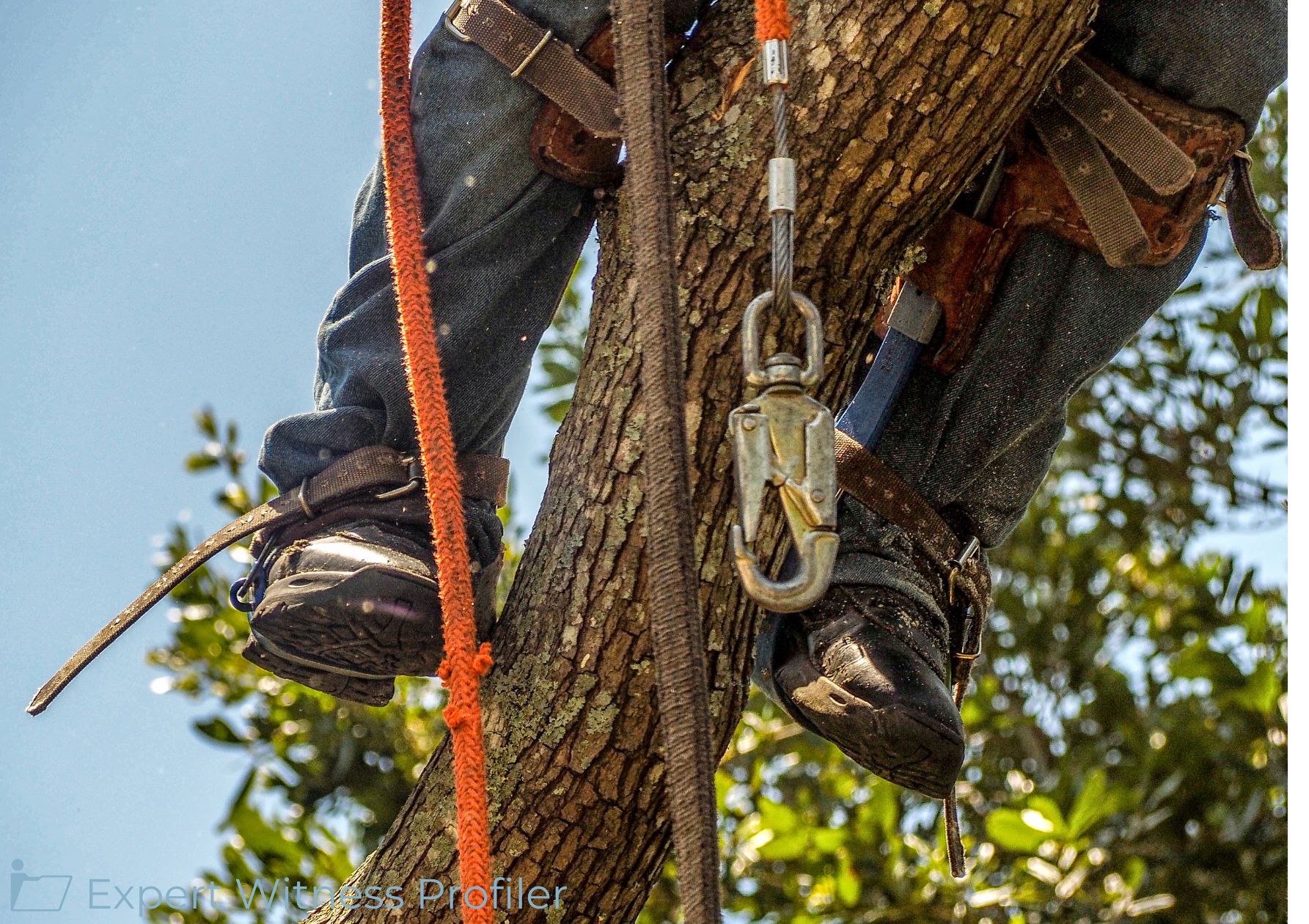
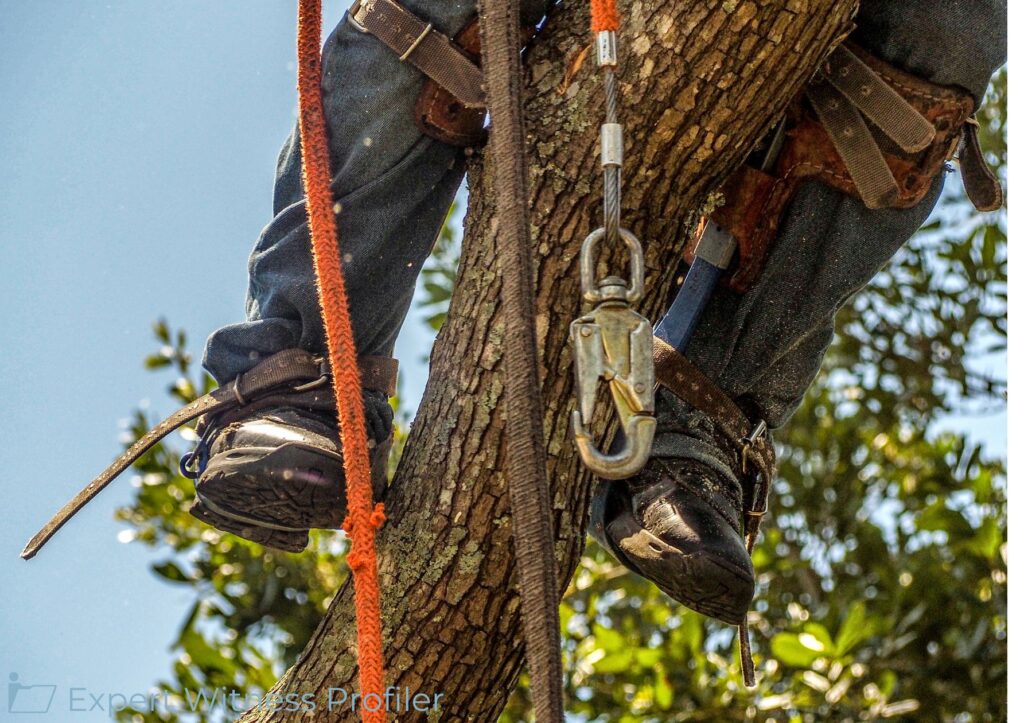
    Plaintiff George Land (“Land”) initiated a lawsuit against Rock Exotica, LLC, following a catastrophic fall while using the Unicender, a climbing device manufactured by the company. Land, an experienced arborist with two decades of experience, contended that the Unicender was defectively designed, which led to his accident. He alleged that during his ascent using the device in a double rope technique, it failed to operate as expected after he was struck by a falling tree section.

    To support his claims, Land designated Dr. James Glancey, a licensed professional engineer, as his expert witness. Glancey was expected to testify about the design and safety features of the Unicender, arguing that a guard could have prevented the injuries Land sustained during his fall. However, Glancey’s testing methods raised significant concerns, particularly as he did not replicate the conditions under which Land used the device. Instead, he conducted load tests using a single rope technique and failed to provide supportive evidence regarding the proposed guard’s efficacy, leading to questions about the reliability of his testimony.

    In response, Rock Exotica filed a motion to exclude Glancey’s testimony under the Daubert standard, asserting it was not based on sufficient data or reliable methods.
    Mechanical Engineering Expert Witness

    Dr. James Glancey holds a Ph.D. in mechanical engineering from the University of California, Davis and is a licensed professional engineer with over 20 years of experience in the field. Furthermore, he has published more than 50 engineering articles and has served as an expert in over 200 product-related matters.

    Get the full story on challenges to James Glancey’s expert opinions and testimony with an in-depth Challenge Study. 

    Discussion by the Court

    Dr. James Glancey was expected to opine on the design and safety features of the Unicender, arguing that the lack of a guard could be considered a design defect contributing to Land’s injuries during his climbing accident.

    A. Glancey is Unqualified

    Rock Exotica challenged Glancey’s qualifications, noting that although he has extensive experience in mechanical design, he has never worked in the arborist industry. The defense emphasized that Glancey has never designed or studied arborist climbing devices, stating:

    • He compared the guard to helmets or chisels with shields but could not identify any climbing tools with similar safety features.
    • His familiarity with safety mechanisms in other contexts does not translate directly to the climber’s needs or the functionality of the Unicender.
    • Furthermore, while he has a robust background in engineering, his lack of direct experience with the particular use case and context of the Unicender significantly undermines his credibility.

    B. Glancey’s Opinions are Unreliable

    1. Untested and Unengineered Concepts

    Glancey proposed that a guard could prevent the injuries sustained by Land. However, his testimony lacked the reliability required by the Court.

    a) No Prototypes or Drawings

    Glancey did not produce any design drawings or prototypes related to the guard or alternative safety mechanisms. He failed to demonstrate a clear understanding of how such a guard would be integrated or function in the context of the Unicender.

    b) Lack of Testing

    He conducted tests using a single rope technique and failed to test the device under the double rope technique, which was used by Land at the time of the accident. This omission leaves his conclusions unsubstantiated and speculative.

    2. Failure to Establish Causation and Feasibility

    Rock Exotica argued that Glancey’s opinions did not establish a reliable causal link between the alleged design defect and Land’s injuries.

    a) No Evidence of Impact on Safety

    Glancey did not provide data or analysis demonstrating how the proposed guard could have altered the outcome of the incident. He acknowledged that his design concepts were theoretical at best and did not address how they would consistently prevent accidents in real-world scenarios.

    b) Inability to Quantify Risks

    The expert failed to conduct a comprehensive risk analysis or evaluate how the guard might interact with the conditions that led to Land’s fall. Without empirical assessments or data-driven insights, his conclusions cannot be considered valid under Daubert.

    Analysis

    The Court held that Glancey is qualified to opine about design defects in the Unicender. His mechanical-engineering background and familiarity with product testing show that he possesses specialized knowledge to analyze how a climbing device functions under various loads.

    The Court concluded that Glancey’s opinions were inadequate to support Land’s claims in this case. His failure to generate testable and reliable alternative designs, lack of empirical evidence for his assertions, and inability to connect his proposed modifications to safety improvements rendered his testimony speculative.

    The Court found that without supporting documentation or design specifications, Glancey could not meet the burden of proof established under Daubert, leading to the exclusion of his testimony and summary judgment in favor of Rock Exotica.

    Glancey’s expertise allowed him to assert that Rock Exotica’s engineering and testing procedures were less structured compared to other manufacturers and his testimony established a duty to manufacture products safely. However, the Court ruled that there’s nothing to tie that failure to the harm that Land suffered.

    Held

    The Court granted Rock Exotica’s motion to exclude Plaintiff’s mechanical engineering expert witness, Dr. James Glancey’s opinions concerning
    the ability of a Unicender device to support certain amounts of weight and an alternative design for the Unicender. The motion was otherwise denied as moot.

    Key Takeaway:

    In this case, Land hangs his hat on Glancey’s testimony to create factual disputes. However, Glancey did not produce a design prototype or any
    drawings of a guard, nor did he run tests with the Unicender and a guard. Basically, engineering experts routinely rely on conceptual alternatives to highlight potential design shortcomings. Expert testimony about alternative designs requires more than an inventive mind. It requires real science.

    Case Details:

    Case Caption: Land V. Case Rock Exotica, LLC
    Docket Number: 2:23cv4627
    Court Name: United States District Court for the Eastern District of Pennsylvania
    Order Date: April 16, 2025
  • Arborist Expert Witnesses’ Opinions on Tree Removal Safety Admitted

    Arborist Expert Witnesses’ Opinions on Tree Removal Safety Admitted

    On December 9, 2021, Plaintiff Darryl Everson was driving in Montz, Louisiana, when he claimed that Defendant David Rugg (“Rugg”) negligently felled a tree along the roadway. The Plaintiff contended that the tree landed on his car, causing injuries to his back and neck. Additionally, Plaintiff alleged that Rugg was employed by Defendant Romesberg Trucking Inc. (“RTI”), which was covered by Nautilus Insurance Company. He asserted that RTI and Rugg failed to exercise reasonable care in their tree-cutting activities near an active roadway. Specifically, Plaintiff claimed that they did not provide warnings, did not monitor approaching vehicles, inadequately trained Rugg, and created a dangerous situation.  

    Defendants filed a Daubert motion to exclude the testimony of Plaintiff’s expert arborist, Frederick Fellner.  

    Meanwhile, the Plaintiff, too, filed a motion seeking to exclude the testimony of Defendants’ expert arborist, James Culpepper.  

    Arborist Expert Witnesses 

    Frederick Fellner 

    Frederick Joseph Fellner, Ph.D.,  worked for Louisiana State University for 25 years as an Arboricultural and Green Infrastructure Manager.  In this role, he was responsible for “all landscape construction” including “protection . . . pre, during and post construction” and oversaw “risk reduction for the protection of people and property from failure of trees.” 

    Get the full story on challenges to Frederick Fellner’s expert opinions and testimony with an in-depth Challenge Study. 

    James Culpepper 

    James Culpepper has been a licensed arborist since 1979. Among other experience, he spent 33 years with the Louisiana Forestry Commission, in positions such as the “Chief of Information, Education, and Urban Forestry.” Additionally, he founded an arboricultural consulting company specializing in “hazard tree assessments” and “tree protection planning.” 

    Want to know more about the challenges James Culpepper has faced? Get the full details with our Challenge Study report.    

    Discussion by the Court 

    A. Defendants’ Motion to Exclude Fellner’s Testimony 

    i. Defendant’s Arguments 

    Defendants questioned Fellner’s qualifications, asserting he was “not a safety specialist but an arborist.” During his deposition, Fellner described his expertise as focusing on the evaluation and health of trees. Since his specialty did not encompass tree-cutting safety, Defendants contended he lacked the qualifications to assess Rugg’s safety measures. 

    Defendants also criticized Fellner’s methodology, deeming it unreliable for several reasons. First, they pointed out that he did not identify which tree species struck Plaintiff’s vehicle. This omission was significant, especially since he acknowledged in his deposition that species was crucial when cutting trees. Second, they noted that Fellner failed to adequately assess the weather conditions on the day of the incident. While he examined weather data, he did not attach this data to his report. Defendants argued that he relied on reports from Plaintiff’s attorney without verifying their accuracy. 

    Additionally, Defendants highlighted that Fellner never visited the accident site, despite expressing hope to do so during his deposition. They also noted that he struggled to recall essential case details, such as the road name and accident date, which raised doubts about his analysis. Moreover, they claimed he neglected to research any relevant executive orders or ordinances regarding debris cleanup following Hurricane Ida. Finally, they stated that his testimony lacked reliability, as he identified safety errors without referencing any specific legal provisions that Defendants failed to follow. 

    ii. Plaintiff’s Argument 

    Plaintiff opposed the motion to exclude Fellner’s testimony. He explained: 

    1. Fellner did, in fact, consider weather conditions. 
    1. Fellner could not identify the tree species because Defendants had improperly disposed of it. 
    1. Fellner’s choice not to investigate executive orders regarding tree removal was a valid decision to avoid giving legal opinions.  
    1. Fellner’s assertion that Defendants failed to meet industry safety standards would provide valuable assistance to the jury. 

    iii. Analysis  

    The Court determined that Fellner was qualified to provide expert testimony in this case. Although Defendants argued that his testimony should be excluded because he was “not a safety specialist but an arborist,” the Court found this claim to be inaccurate. According to his resume, Fellner had worked for Louisiana State University for 25 years as an Arboricultural and Green Infrastructure Manager. His extensive experience in landscape construction and risk reduction for the protection of people and property from failure of trees made him suitable to discuss tree removal safety.  

    The Court acknowledged Defendants’ concerns regarding Fellner’s methodology but asserted that these concerns “affect the weight of the evidence rather than its admissibility.” Plaintiff provided reasonable explanations for Fellner’s alleged shortcomings, such as his inability to identify the tree species because the Defendants disposed of it. 

    At trial, Defendants could thoroughly cross-examine Fellner regarding his methodology and the assumptions he made. They had also retained a rebuttal expert to critique his testimony.

    B. Plaintiff’s Motion to Exclude Culpepper’s Testimony 

    i. Plaintiff’s Argument 

    Plaintiff argued that Defendants did not provide sufficient information regarding Culpepper’s qualifications. He noted that Culpepper only identified himself as a “Consulting Arborist” in his report. He claimed that Defendants had failed to demonstrate Culpepper’s qualifications to offer expert testimony. Additionally, Plaintiff stated that Defendants did not comply with Federal Rule of Civil Procedure 26(a)(2)(B). This rule requires parties to disclose expert qualifications, publications from the past ten years, previous cases, and compensation details. 

    Second, Plaintiff contended that Culpepper’s report lacked a clear methodology. He pointed out that the report contained only four paragraphs.  

    In the first paragraph, Culpepper mentioned that the time of the accident was unknown and that Plaintiff left the scene and later returned. Plaintiff argued that this information would not aid the jury, as witnesses would present the facts of the accident, and Culpepper’s comments had no relevance to his expertise.  

    In the second paragraph, Culpepper claimed there was no weather research in Fellner’s report and attached a weather report for December 9, 2021. Plaintiff countered that this claim was inaccurate, as Fellner’s report included the weather history for Kenner, LA. He noted that Fellner had also addressed and refuted Rugg’s assertion about wind causing the tree’s fall.  

    In the third paragraph, Culpepper merely quoted snippets from Fellner’s deposition without providing any analysis or opinions. 

    Lastly, in the fourth paragraph, he criticized Fellner for not visiting the accident site or identifying the tree species. Plaintiff noted that Fellner was retained years after the accident, making it impossible to identify the tree. He also pointed out that Culpepper did not mention visiting the scene himself.  

    Plaintiff argued that the Defense counsel could effectively cross-examine Fellner regarding these points, deeming Culpepper’s testimony unhelpful to the jury.  

    ii. Defendant’s Argument 

    Defendants opposed the motion, arguing that Plaintiff could have gathered more information about Culpepper and his testimony by deposing him, which Plaintiff did not do. They described Culpepper as a “veteran arborist” who had testified in fourteen cases, many involving falling trees. Defendants believed Culpepper’s testimony would help the factfinder by identifying flaws in Fellner’s methodology. 

    Additionally, Defendants provided Culpepper’s resume, a list of his publications, details of his trial experience, and a statement of his compensation. They emphasized that this information supported Culpepper’s qualifications and the relevance of his testimony. 

    iii. Analysis 

    Failure to Disclose 

    In this case, the Court decided not to exclude Culpepper’s testimony based on Defendants’ alleged failure to provide his resume. First, the Court lacked sufficient information to determine if Defendants met the timeliness requirements of Rule 26(a)(2)(D). This rule states that if evidence is intended to contradict another expert’s testimony, disclosures must occur within 30 days after the other party’s disclosure. The Court was unsure when Plaintiff disclosed information regarding Fellner, making it difficult to assess Defendants’ timeliness. 

    Furthermore, the Court noted that Plaintiff opted not to depose Culpepper. Plaintiff received the required information about Culpepper on September 9, 2024, nearly a month before the October 7, 2024 trial date. Thus, Plaintiff had adequate time to review the information and potentially depose Culpepper before trial. The Court concluded that any prejudice to Plaintiff was minimal. Since the Court permitted Plaintiff’s expert to testify, it also favored allowing Defendants’ expert to do so. 

    Daubert Analysis 

    The Court concluded that Culpepper was qualified to testify. He has qualified in several courts to offer expert testimony in cases where falling trees caused injuries or death.  

    Although Culpepper’s report was brief, the Court determined that his testimony was reliable. He possessed extensive experience in the industry, which would help the factfinder assess Fellner’s testimony. Moreover, Culpepper’s report demonstrated that he considered significant documentation when forming his opinions, indicating that his findings were not merely personal opinions. He reviewed incident reports, weather reports, statutes, and deposition testimony to prepare his report. The Court also noted that Plaintiff would have the opportunity to cross-examine Culpepper during the trial. 

    Plaintiff also argued that Culpepper unnecessarily recited facts about the case, such as Plaintiff allegedly leaving the scene of the accident. However, the Court held that if Culpepper began to discuss irrelevant details about the case during trial, the Court would consider objections at that time. 

    Held 

    The Court denied the Defendant’s motion to exclude Plaintiff’s arborist expert witness, Frederick Fellner as well as the Plaintiff’s motion to exclude Defendant’s arborist expert witness, James Culpepper. 

    Key Takeaway: 

    The Court allowed the testimony of both arborist expert witnesses, Frederick Fellner and James Culpepper, recognizing their qualifications and the relevance of their expertise. 

    The Court determined that Fellner’s extensive experience in landscape construction and risk reduction rendered him qualified to discuss tree removal safety, despite criticisms of his methodology.  

    Similarly, Culpepper’s long-standing background in forestry and prior experience as an expert witness provided him with the credibility necessary to assist the jury in evaluating Fellner’s analysis.  

    The Court observed that any concerns regarding the methodology employed by both experts concerned the weight of their evidence instead of their admissibility. 

    Case Details:

    Case Caption: Everson v. Nautilus Ins. Co. 
    Docket Number: 2:23cv1360 
    Court: United States District Court, Louisiana Eastern 
    Order Date: September 16, 2024