Tag: Arrest

  • Law Enforcement Expert’s Testimony on Dog Handling Practices Admitted

    Law Enforcement Expert’s Testimony on Dog Handling Practices Admitted

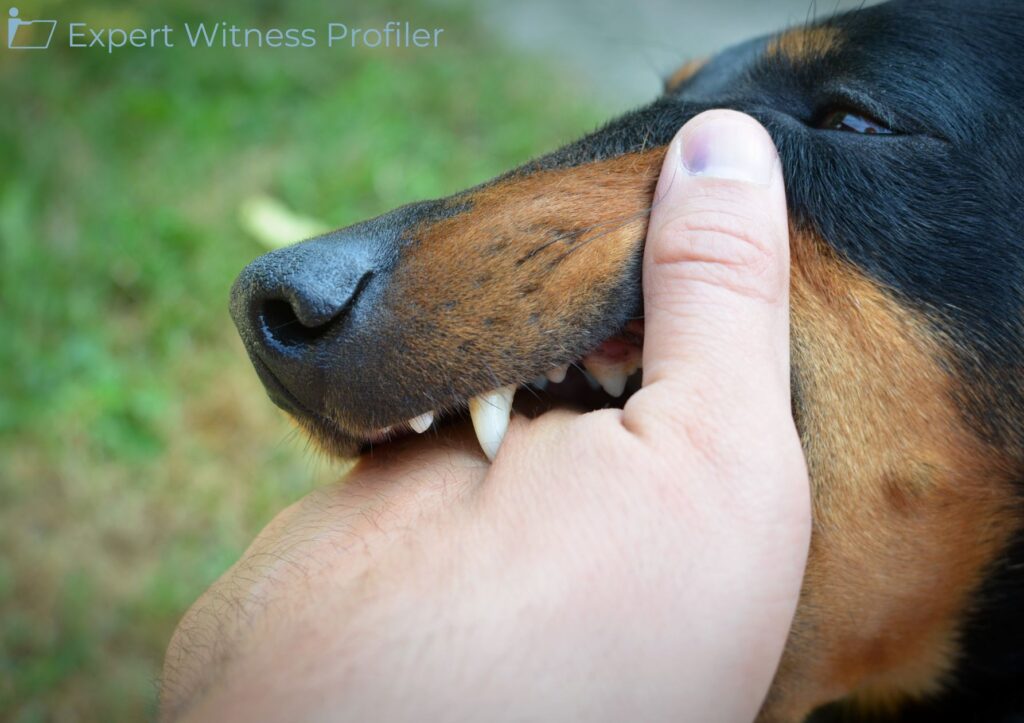
    The claims in this case can be traced back to an unfortunate chain of events, as a routine three-officer search degenerated in the blink of an eye to chaos in a cramped apartment, the arrests of four family members, and a police dog attack that caused severe injuries to Plaintiff. 

    On March 11, 2019, Plaintiff Kim Saddlers was arrested for battery on a law enforcement officer, a felony charge that the Polk County Sheriff’s Office later nolle prossed. During her arrest, which occurred in her home, Saddlers was bitten by a police dog, causing a wound that required 30 sutures to repair. She alleges that 1) there was neither actual nor arguable probable cause to arrest her for any offense, and 2) that the force inflicted during her false arrest was excessive, and thus both unreasonable under the Fourth Amendment and constituting a battery under Florida common law.

    As a result, Saddlers brought this civil rights action against the Defendants, Benjamin Blommel and Chad Landry, police officers employed by the City of Lakeland. 

    Plaintiff filed a motion to exclude the testimony of defense expert Kenneth Wallentine.
    Law Enforcement Expert Witness

    Kenneth R. Wallentine worked as a law enforcement officer in Utah, formerly serving as the Chief of Law Enforcement for the Utah Attorney General, and serving as Bureau Chief of the Utah Department of Public Safety, Peace Officer Standards and Training Division, among a number of other positions across the fields of law enforcement, police use-of-force and accountability research, teaching, legal practice, and expert legal services.

    Want to know more about the challenges Kenneth Wallentine has faced? Get the full details with our Challenge Study report

    Discussion by the Court

    Defense Expert Ken Wallentine’s Testimony

    Plaintiff asked the Court to exclude three opinions under Daubert and Rule 702. The first is Wallentine’s statement that “Officer Landry’s decision to deploy [police dog] Nox to search for and track the unidentified suspect from the stolen car and his actions in tracking with Nox were reasonable and were consistent with accepted policies, practices, and training for police service dog teams.”  The second opinion is that “[t]he unintentional bite to Plaintiff occurred as the officers were acting consistently with the actions of reasonable and well-trained officers attempting to defend themselves and to make lawful arrests of their assailants.”  Finally, Plaintiff moved for exclusion of Wallentine’s opinion that “[c]iting Plaintiff for the offenses for which she was arrested was consistent with the actions of a reasonable and well-trained officer.”

    Plaintiff’s Motion to Exclude Expert Testimony

    The Court declined to exclude the first opinion and its underlying analysis because it provided background as to why it was that Plaintiff and Defendants crossed paths in the first place and why a police dog was used. Moreover, the Court agreed with Defendants that the leadup to the events could not only inform the jury, generally, but also have a direct bearing on Defendants’ culpability as to the claim for negligence, and specifically on whether either officer breached his duty to use reasonable care in conducting their investigation and during the subsequent altercations. 

    Plaintiff argued that this second opinion improperly purports to “divine Landry’s state of mind in employing his police dog to arrest Saddlers, and thus addresses the excessive force issue in the case.”

    Defendants responded that the opinion did not speculate about Landry’s state of mind and instead draws upon Wallentine’s experience and the facts of this case to conclude that the canine was not instructed to apprehend Plaintiff and instead acted in accordance with his instinctual drive and trained behavior to protect his handler, Landry. The Court agreed with Defendants as to this second opinion and will not exclude it.

    Plaintiff challenged a third opinion in Wallentine’s report. Considering the facts in light of his knowledge and experience in the areas of police training and the prosecutorial process, Wallentine opined that the Lakeland Police Department followed processes consistent with common practice throughout the United States and consistent with the actions of a reasonable well-trained officer.

    Instead of explaining why Wallentine’s opinions are similarly defective, Plaintiff presented the broad argument that his “proffered testimony in this case suffers from the same deficiencies identified in an out-of-circuit district court opinion which is not binding on this Court.”

    Held

    The Court denied the Plaintiff’s motion to exclude the testimony of defense expert Kenneth Wallentine.

    Key Takeaway:

    Plaintiff failed to establish that the expert testimony would not be helpful to the trier of fact. Instead, the Court found that Ken Wallentine’s opinions would likely be helpful to the jury based on his qualifications, experience, analysis of the records, evidence, deposition testimony, and based on his expertise as a law enforcement officer, professor, police dog trainer, and investigations supervisor.

    Case Details:

    Case Caption: Saddlers V. City Of Lakeland, A Florida Municipality Et Al
    Docket Number: 8:22cv2127
    Court Name: United States District Court, Florida Middle
    Order Date: September 29, 2025


  • Law Enforcement Expert’s Testimony on Sound Professional Standards Admitted

    Law Enforcement Expert’s Testimony on Sound Professional Standards Admitted

    The Plaintiff, Hannibal Buress, is a well-known stand-up comedian who brought this case against two Miami Police Department (“MPD”) Officers, Luis Verne and Elio Villegas, and the City of Miami, for violations of his civil rights under both federal and Florida law based on an incident in the Wynwood area of Miami on December 9, 2017.

    Buress retained Dr. Christopher Chapman as a testifying expert in this case. Chapman opined that “the arrest and handcuffing of Buress on December 9, 2017 . . . was objectively unreasonable and not consistent with police training/standards,” and “consistent with what is commonly referred to as Contempt of Cop.”

    Verne believed that Chapman “improperly usurps the jury’s role of evaluating the testimony of the witnesses, making determinations as to the credibility of the witnesses, and applying those facts to the law instructed to them by this Court.”

    Law Enforcement Expert Witness

    Dr. Christopher Chapman is a retired Sergeant of Police with the Township of Cranford Police Department, Cranford, New Jersey. He has held numerous law enforcement positions and is also an Associate Professor and Founding Director of the Criminal Justice Degree Program at Kinsborough Community College—City University of New York (CUNY), Brooklyn, New York. He earned a PhD. in criminal justice from Northcentral University.

    Want to know more about the challenges Christopher Chapman has faced? Get the full details with our Challenge Study report

    Discussion by the Court

    Federal Rule of Evidence 702

    Verne argued that Chapman will opine on “whether the officers violated constitutional standards,” which “is the function of the jury.”

    However, Buress clarified that “before a jury, Chapman will not provide testimony about the existence of probable cause; instead, he will testify about Officer Verne’s procedures and tactics.”

    Considering “Chapman’s role is limited to describing sound professional standards and identifying departures from them,” the Court denied Verne’s Daubert motion.

    Yet, in Buress’ response to Verne’s Daubert motion, Buress stated that Chapman’s first opinion includes opining that “a reasonable officer in Officer Verne’s position would not have reasonably believed they had the authority to censor Buress’ speech regardless of Officer’s Verne disagreement with the speech.” This toes the line between opining on “sound professional standards and identifying departures from them” on the one hand, and whether Officer Verne did indeed violate state law, on the other. However, the Court ended up giving credit to Buress’ purported limitations on Chapman’s potential testimony.

    Federal Rule of Evidence 403

    Verne believed Chapman’s testimony was inadmissible under Fed. R. Evid. 403 because “Chapman’s testimony about whether Officer Verne had the legal authority to arrest Plaintiff and whether the constitution was violated would mislead the jury in its function as a factfinder, waste time, and is outweighed by the facts that Buress hopes to prove.” Therefore, to Verne, Chapman’s “legal conclusions . . . would also present cumulative evidence to the extent it is based on any facts.”

    However, it is premature to conclude that Chapman’s testimony is inadmissible under Rule 403. To begin with, and as Buress pointed out, Verne failed to “provide citations to specific opinions included in Chapman’s report that would confuse the jury, nor does he explain precisely why his testimony would confuse the jury.”

    Additionally, and as the Court noted when denying Verne’s Daubert motion, Buress purports to place limits on Chapman’s testimony that would prevent Chapman from opining on issues that are solely within the province of the jury. Thus, at this time, the Court cannot conclude that Chapman’s testimony would mislead or confuse the jury in a way that substantially outweighs the relevance of his testimony.

    Finally, Verne misstated the standard on cumulative evidence when he stated that Chapman “would also present cumulative evidence to the extent it is based on any facts.”

    Verne seemed to believe that Rule 403 excludes any cumulative evidence but the Court clarified that Rule 403 only excludes the “needless presentation of cumulative evidence” when the repetitive nature of such evidence “substantially outweigh[s]” its relevance.

    Held

    The Court denied Luis Verne’s Daubert motion to exclude the testimony of Plaintiff Hannibal Buress’ expert Dr. Christopher Chapman.

    Key Takeaway:

    A police practices expert may present factors that might inform an officer’s decision regarding standards such as probable cause or the use of force when making arrests.

    Case Details:

    Case Caption: Buress V. City Of Miami Et Al
    Docket Number: 1:20cv23078
    Court Name: United States District Court, Florida Southern
    Order Date: July 10, 2025
  • Family Medicine Expert’s Opinions on Opposing Experts’ Qualifications Excluded

    Family Medicine Expert’s Opinions on Opposing Experts’ Qualifications Excluded

    The claims against La-Norma Ramirez and Washington County stem from Plaintiff Danyale Blackmore’s booking and release at the Washington County Jail.

    Blackmore alleged that her constitutional rights were violated when she was allegedly strip-searched at the Jail.

    Plaintiff sought to exclude or limit at trial the testimony of Defendant’s expert, Dr. Kennon Tubbs.

    Family Medicine Expert Witness

    Dr. Kennon Christopher Tubbs is a licensed medical doctor and board-certified family practice physician with nearly 30 years of experience as a practicing physician, including numerous years as a physician at the Utah State Prison and various jails.

    Want to know more about the challenges Kennon Tubbs has faced? Get the full details with our Challenge Study report. 

    Discussion by the Court

    Tubbs’ testimony and opinions regarding correctional standards are beyond the scope of his expert designation and are not relevant

    The Defendant appointed Tubbs to evaluate and challenge the opinions of the Plaintiff and her experts concerning the medical and mental health treatment provided during her arrest and booking. However, the Court found that Tubbs’ expert report went beyond that role—it included opinions stating that the Washington County Jail’s booking and release policies, as well as the Defendant’s actions, complied with correctional standards. The Court noted that these opinions were not backed by any analysis in his report and fell outside the scope of what he was designated to testify about.

    Tubbs is qualified to offer expert testimony

    The Plaintiff claimed that Tubbs was not qualified to give expert testimony because his background is in general medical care, not in diagnosing trauma in women. However, the Plaintiff did not cite any legal authority to support this argument, and there is nothing in the record showing that Tubbs lacks the necessary knowledge, skills, experience, training, or education to testify about the medical and mental health treatment the Plaintiff received during her arrest and booking.

    The Court also found that the Defendant had adequately shown that Tubbs is qualified to provide the expert testimony for which he was designated.

    Tubbs’ anticipated testimony and opinions are reliable and admissible under Rule 702

    Plaintiff argued that Tubbs’ methods and opinions are unreliable because he did not examine Plaintiff; he speculates on facts; he misinterprets the criteria for diagnosing PTSD; and he is biased against and dismissive of Plaintiff’s version of the events and of women in general.

    However, the Court found that Tubbs’ report and deposition showed he had reviewed enough information to support his critiques of the Plaintiff and her experts concerning her medical and mental health treatment related to her arrest and booking. The Court also noted that Tubbs used specific criteria and relied on sufficient facts to form his opinions challenging their conclusions.

    Tubbs may not offer ad hominem opinions, or testimony and opinions that invade the exclusive roles of the judge and jury

    In his report and deposition, Tubbs offered opinions about the qualifications, training, and personal habits of the Plaintiff’s experts. While he is allowed to critique their opinions on the Plaintiff’s medical and mental health treatment related to her arrest and booking, the Court ruled that his comments on their qualifications crossed the line—such matters fall solely within the judge’s authority to decide.

    Moreover, Tubbs’ report and deposition testimony also included commentary and opinions regarding the weight of certain evidence, as well as the motivations of Plaintiff and her experts. The Court made it clear that Tubbs is not allowed to give testimony or opinions that interfere with the jury’s job of evaluating the evidence and deciding which witnesses are believable.

    However, this determination did not preclude Tubbs from offering testimony and opinions that involve certain disputed facts. Moreover, the Court decided that Tubbs may testify and opine regarding the medical effects of alcohol use and intoxication on an individual; how an individual’s alcohol use and intoxication affect or have implications in the proper diagnosis of medical and mental health conditions; and that if Plaintiff was intoxicated at the time of her arrest and booking, how her intoxication affects Plaintiff and her experts’ opinions regarding Plaintiff’s medical and mental health treatment as it relates to her arrest and booking.

    Held

    The Court granted in part and denied in part the Plaintiff’s motion to exclude the testimony of Defendant’s expert, Dr. Kennon Tubbs.

    Key Takeaway:

    The Court held that Tubbs is allowed to provide relevant testimony and opinions that critique the views of the Plaintiff and her experts on the medical and mental health treatment the Plaintiff received during her arrest and booking. If he lays an adequate foundation and meets the requirements of the Federal Rules of Evidence, he may also testify about the applicable medical standards of care during that time at the Washington County Jail.

    However, he is not permitted to testify that the jail’s policies, procedures, or the Defendant’s actions met correctional standards. He is also barred from offering opinions about the qualifications of the Plaintiff’s experts or the reliability of their methods, as those issues fall solely within the judge’s authority.

    Please refer to the blogs previously published about this case:
    Mental Health Expert’s PTSD Diagnosis Was Deemed Reliable

    Corrections Expert’s Opinions on the Strip Search Excluded

    Social Work Expert’s Testimony on PTSD Symptoms in Adult Women Admitted

    Case Details:

    Case Caption: Blackmore V. Ramirez
    Docket Number: 4:21cv26
    Court Name: United States District Court, Utah
    Order Date: May 27, 2025
  • Law Enforcement Expert’s Opinion on Actual Events and Police Tactics Admitted

    Law Enforcement Expert’s Opinion on Actual Events and Police Tactics Admitted

    Plaintiff Gene Raymond Bell, Jr. claimed that Defendant Officers Anthonie Korkis, Arthur Bridgeforth, and Thomas Langewicz, II used excessive force while arresting him during a traffic stop on June 23, 2019 in Southfield, Michigan.

    Plaintiff’s second motion in limine requested the Court to exclude or limit the testimony of Dr. Steven Amey, whom Defendants intended to call as an expert witness at trial. 

    Law Enforcement Expert Witness

    Dr. Steven J. Amey is an associate professor of criminal justice at Ferris State University.

    His research interests include computer forensics and new technology, use of force issues, police emergency driving and pursuit issues, firearms, ethics in criminal justice, criminal investigation techniques, patrol problems, interview and interrogation problem-based learning methods as well as body cameras.

    Amey also holds a Ph.D. in Instructional Design and Technology from Wayne State University.

    Get the full story on challenges to Steven Amey’s expert opinions and testimony with an in-depth Challenge Study.

    Discussion by the Court

    Plaintiff claimed that Amey’s opinion offered a legal conclusion that Defendants did not use excessive force. Plaintiff also claimed that Amey’s testimony will not be reliable because he assumed that Plaintiff initiated contact with Defendant Korkis through his car window, whereas the Sixth Circuit has already determined that the video footage is unclear about “who started it.” Finally, Plaintiff asserted that Amey’s testimony, which “frame[s]” Defendants’ side of the story as “factually established,” is more prejudicial than probative.

    Analysis

    Legal Conclusion

    Plaintiff’s first contention is that Amey’s opinion offers a legal conclusion that the use of force was not excessive.

    Unfortunately, Plaintiff did not explain the basis for believing Amey’s opinion offers a legal conclusion. Amey’s report discusses the laws Plaintiff was breaking when refusing to identify himself or provide documentation as requested; the specific training that officers receive to handle situations like the one involving Plaintiff; and the risks that Defendants would have faced had they permitted Plaintiff to come out of the car on his own. Therefore, the Court refused to exclude or limit Amey’s opinion.

    Reliability

    Plaintiff also contended that Amey’s opinion is not reliable because he assumed that Plaintiff is the one who initiated the first contact with Defendant Korkis—something that the Sixth Circuit stated is not clearly visible on the video footage. However, Amey did not make an assumption about first contact based on the video footage; rather, his expert report clearly states that he received this information from the police report. The Court will ensure that the jury is instructed that the factual dispute—whether Plaintiff or Defendant Korkis initiated the physical altercation—is in its hands.

    Probative Value

    Finally, Plaintiff contends that the introduction of Amey’s opinion will be more prejudicial than probative because his testimony will be “framed as if Korkis’ side of the story has been factually established[.]” If Amey frames his testimony as if Defendants’ position is factually established, Plaintiff has tools at his disposal to counteract the prejudice—namely, objecting to the misrepresentations contemporaneously and cross examining the witness to expose those flaws. On the other hand, the Court noted that Amey’s opinion has substantial probative value because it informs the jury about the training that officers receive for handling like situations, as well as the risks officers encounter when dealing with like situations, which goes to the reasonableness of force used under the circumstances.

    Held

    The Plaintiff’s motion in limine to exclude or limit the testimony of Dr. Steven Amey was denied without prejudice by the Court.

    Key Takeaways:

    • Amey’s opinion does not offer a legal conclusion about the use of force. Rather, his report discusses the laws Plaintiff was breaking when refusing to identify himself or provide documentation as requested.
    •  A use-of-force expert may express an opinion which is based on crediting, in a hypothetical sense, the testimony of one side of the dispute.

    Case Details:

    Case Caption: Bell V. Southfield Et Al
    Docket Number: 2:19cv13565
    Court Name: United States District Court, Michigan Eastern
    Order Date: April 1, 2025
  • Law Enforcement Expert Witness’ Opinion About Officer’s Demeanor Has Marginal Relevance

    Law Enforcement Expert Witness’ Opinion About Officer’s Demeanor Has Marginal Relevance

    Joshua Briggs was arrested for Disorderly Conduct and Harassment because he called Anchorage Police Officer Orean Yi a pig. Briggs filed this lawsuit alleging that he was arrested without probable cause in retaliation for exercising his First Amendment rights.

    Officer Yi asserted that he had probable cause to arrest Briggs because Briggs was making sufficient noise to violate Anchorage’s Disorderly Conduct Ordinance, AMC 08.30.120(A)(2).

    Briggs filed a motion to exclude the report and testimony by Defendants’ expert, James Borden, maintaining that Borden is “not qualified to testify on any matter in this case and his opinions are neither relevant nor reliable under Federal Rule of Evidence 702 and the standards set forth in Daubert.”

    Law Enforcement Expert Witness

    James Borden has over 24 years of combined experience in law enforcement, force analysis, and video review and examination. James is court certified as an expert in the Following Topics: Controversial Use of Force, Police Performance Dynamics, Forensic Video Examination, Officer/subject movement dynamics, Controversial Officer-Involved Shootings, and Attentional Issues related to Officer-Involved Critical Incidents, Police Training and Police Policy, Procedure and Practice.

    Get the full story on challenges to James Borden’s expert opinions and testimony with an in-depth Challenge Study. 

    Discussion by the Court

    a. Qualifications and Reliability

    Briggs maintained that “none of Borden’s listed qualifications demonstrate expertise in determining what constitutes ‘legitimate law enforcement action,’ whether an arrest is ‘based on proper elements,’ whether a person has ‘committed the misdemeanor crime of Disorderly Conduct,’ whether the elements of harassment have been met, or whether Yi made ‘a mistake of the mind and not of the heart.’”

    The parties have filed Borden’s curriculum vitae and expert report, as well as a list of cases in which Borden has participated as an expert. The Court held that a review of Borden’s curriculum vitae demonstrates that he is qualified to testify as an expert on the use of force and police practices based on his experience as a police officer and his training on use-of-force issues.

    As to whether Borden’s opinions are derived from reliable principles and methods, Borden’s expert report explained that he reviewed relevant case documents, including any video evidence, to develop an understanding of the facts, and then analyzes the officer’s actions “to determine what the officers did, as well as their stated justification for what they did and why they did it.”

    He then “compares what the officers did and their reasons for doing so with the objective standards derived from police training and accepted police practice.” In Borden’s case, “relevant reliability concerns . . . focus upon personal knowledge or experience.” The Court found that reviewing case material and relevant documents, and then providing an assessment of the events in light of Borden’s personal experience in law enforcement, is a sufficiently reliable methodology.

    b. Relevance

    To be admissible, expert testimony must be relevant to the case: it must “help the trier of fact to understand the evidence or determine a fact in issue.”

    Borden’s Testimony

    Borden’s report contains four opinions:

    1. Opinion 1: Engagement. I believe Officer Yi had a legitimate law enforcement goal and objective in his arrest of Briggs for Disorderly Conduct, a violation of AMC 8.30.120(A)(2). Although detention was a component of the arrest, the detention was brief, and Briggs was released from the scene. The video evidence shows that Briggs appeared to be antagonistic during the detention.

    2. Opinion 2: Legitimate Law Enforcement action. Taking all evidence as factual and accurate, Briggs committed the misdemeanor crime of Disorderly Conduct in the presence of Officer Yi. Briggs’ behavior affected other individuals and caused other patrons in the store at the time of the occurrence to leave the premises without completing their transactions. With the elements of the violations being cited in multiple case documents, and prosecutorial merit being established by the Municipal Attorney’s Office, the charges were approved.

    3. Opinion 3: Use of Force. Officer Yi made the practical and appropriate decision to use handcuffs and detain Briggs as he was arrested. Force used was minimal to include controlling the movement of Briggs, the use of handcuffs and placing him in the back of the patrol car.

    4. Opinion 4: Harassment Charge. The Harassment violation, Code 8.10.110(A)(l), was not a valid charge. However, the elements of this Harassment charge were in place, a sworn officer generally cannot be a victim of Harassment. I believe Officer Yi and others made this oversight. However, the Harassment charge was ancillary to the charge of disorderly conduct and not the only charge that Briggs was issued a summons for. Additionally, Briggs was not taken into custody and booked into jail for the charges.

    Analysis

    The primary issue in this case is whether Officer Yi had probable cause to arrest Briggs during the exchange in the gas station. A dispute of material fact remains as to the volume of Briggs’ speech and any effect on the other patrons of the gas station, facts which are relevant to whether Officer Yi had probable cause.

    Opinion 1 essentially concludes that Officer Yi had probable cause to arrest Briggs for disorderly conduct, which is an impermissible legal conclusion. The Court held that Opinion 1 also does not aid the jury in determining the disputes of fact that remain, and Borden’s opinion as to Briggs’ detention is irrelevant, as the detention is not at issue in this case.

    The Court held that Opinion 2 is inadmissible for the same reason as Opinion 1: it is an impermissible legal conclusion.

    Opinion 3 has marginal relevance, as Briggs does not allege a use-of-force claim and Officer Yi’s use of handcuffs and his placement of Briggs in his patrol car is not disputed and its legality is not at issue. And yet as Briggs acknowledges, Officer Yi’s demeanor during the incident “may be relevant to his credibility.” Whether Officer Yi’s decision to use handcuffs and detain Briggs in the patrol car was “practical and appropriate” could similarly have relevance to Officer Yi’s credibility. The Court held that Borden may testify as to Opinion 3.

    The Court held that Opinion 4 is inadmissible because it is irrelevant and would not help the trier of fact understand the evidence or determine a fact in issue. It is undisputed that the harassment charge was dismissed in state court for lack of probable cause. Further, Opinion 4 is an improper legal conclusion.

    c. Rule 26

    In their opposition, Defendants contended that Borden could testify about numerous other topics that are not mentioned in his report. These topics include “how officers are trained to understand the difference between a suspect simply engaging in first amendment speech and what constitutes pre-assaultive indicators like body movement and tone during such encounter”; and “whether Officer Yi’s actions and decision to search the contents of the wallet for identification and contraband is appropriate under these circumstances.” On the current record, the Court held that Borden cannot testify as to any of those topics because they were not disclosed in his expert report. In other words, Borden’s expert report fails to contain a statement of the opinions Defendants raise above.

    Held

    The Court granted in part Briggs’ motion to exclude the testimony of James Borden; Borden can only testify as to Opinion 3 in his report.

    Key Takeaways:

    • The Court found that reviewing case material and relevant documents, and then providing an assessment of the events in light of Borden’s personal experience in law enforcement, is a sufficiently reliable methodology.
    • The Court held that Borden is qualified to testify as to police practices based on his personal knowledge and experience.
    • The Court decided that Borden’s opinion about Officer Yi’s decision to use handcuffs and detain Briggs in the patrol car has marginal relevance.

    Case Details:

    Case Caption: Briggs V. Yi Et Al
    Docket Number: 3:22cv265
    Court: United States District Court, Alaska
    Order Date: December 23, 2024
  • Law Enforcement Expert Witness’ Testimony About Presence of Probable Cause Excluded

    Law Enforcement Expert Witness’ Testimony About Presence of Probable Cause Excluded

    This case arose when Defendant Jacob Salamon, a police officer for the City of Loveland, Ohio, arrested Plaintiff Amanda Caton, an off-duty police officer for the City of Cincinnati, Ohio, for operating a vehicle when intoxicated (“OVI”). Plaintiff Patrick Caton, Amanda Caton’s husband and also an off-duty police officer for the City of Cincinnati, was a passenger in the vehicle when Amanda Caton was pulled over and arrested, and he was present when Officer Salamon later dropped off Amanda Caton at their home. The Catons have sued Officer Salamon, former Loveland Police Chief Dennis Rahe, Officer Shawn Parks, and the City of Loveland for violating their civil rights.

    Plaintiffs proffered Tony Corroto and Defendants proffered Joseph Suhre as their experts on police practices involving OVI investigations. Plaintiffs broadly moved to exclude or limit the expert report and testimony of Suhre under Federal Rule of Evidence 702 and Daubert v. Merrell Dow Pharmaceuticals, Inc., 509 U.S. 579, 113 S. Ct. 2786, 125 L. Ed. 2d 469 (1993). Although Defendants move to strike Corroto’s expert opinion in full, they only specifically object to his opinion that Defendants lacked probable cause to stop and arrest Amanda Caton. 

    Law Enforcement Expert Witnesses

    Joseph Suhre is the owner and principal of Suhre & Associates DUI and Criminal Defense Lawyers. Suhre has dedicated his practice to the defense of OVI cases and other criminal offenses. Suhre has over 20 years of criminal defense experience and an additional 5 years of experience as a police officer. He has handled hundreds of DUI cases before dozens of judges in numerous counties. Because of this, Joe is uniquely qualified to defend his clients against DUI and criminal charges.

    As an attorney, he completed training in OVI detection through courses with the Nation Highway Traffic Safety Administration (“NHTSA”) and Advanced Roadside Impaired Driving Enforcement, both likely more than fifteen years ago.

    Discover more cases with Joseph Suhre as an expert witness by ordering his comprehensive Expert Witness Profile report.

    Tony Corroto served the City of Atlanta Police Department as a police officer for 17 years, spending 14 of them as a senior police officer assigned to the driving under the influence (DUI) task force. He specialized as a standardized field sobriety test (SFST) and drug recognition expert (DRE) instructor. He taught 46 police recruit classes DUI enforcement at the Atlanta Police
    Academy (APA).

    Want to know more about the challenges Tony Corroto has faced? Get the full details with our Challenge Study report. 

    Discussion by the Court

    Joseph Suhre

    Plaintiffs first argued that Suhre is not qualified to testify as a police practices expert. The Court agreed with Defendants that Plaintiffs framed the issue too broadly. The issue is whether Suhre is qualified to offer expert testimony on police practices involving investigations into potential instance of OVI by applying the NHTSA’s OVI-detection standards.

    Though Suhre has not offered expert testimony in a court of law before, he has been retained to instruct about NHTSA standards by the publishing industry, attorneys, and law enforcement organizations. The Court finds that he is qualified with specialized knowledge in the application of NHTSA standards that “will help the trier of fact to understand the evidence or to determine a fact in issue.

    First, Plaintiffs criticized Suhre’s statement in his expert report that Officer Salamon observed what the NHTSA refers to as a “vigilance problem” when there was “a 4-second delay between the [traffic] light turning green and Caton’s vehicle proceeding forward.” The NHTSA Visual Detection publication does not define what amount of time is “normal” versus “unusually long.” With no further guidance, the Court cannot say that Suhre’s opinion applying his own judgment to the NHTSA standard is unreliable.

    Elsewhere, Suhre opines that Officer Salamon had probable cause to pull Amanda Caton over for traffic violations. However, the Court held that Suhre’s opinion that she did violate a certain traffic provision will not help a factfinder “determine a fact in issue” for purposes of Rule 702(a).

    Second, Plaintiffs objected that Suhre cannot testify about whether Officer Salamon had reasonable suspicion or probable cause to pull over Amanda Caton for a violation. The Court agreed because Suhre’s opinions constituted inadmissible legal conclusions.

    The Court also excluded Suhre from testifying on the application and meaning of statutes and case law generally.

    Tony Corroto

    Defendants do not challenge his Corroto’s qualifications to offer expert testimony. Rather, they moved to strike his testimony to the extent that he states in his report that Officer Salamon did not have probable cause to stop or arrest Amanda Caton. The Court already held in regard to Suhre’s testimony that an expert witness cannot testify about whether probable cause exists.

    Therefore, the Court will strike and not consider Corroto’s report to the extent that he opines that Officer Salamon did not have probable cause to stop or arrest Amanda Caton. However, the Court refused to exclude Corroto’s report or testimony in full because of the improper opinion about probable cause.

    Held

    The Court limited the opinions of both Joseph Suhre and Tony Corroto. Suhre will not be excluded from testifying because he is unqualified to give opinion testimony under Federal Rule of Evidence 702. Corroto will not be permitted to testify about whether probable cause existed to stop or arrest Amanda Caton, but his report will not be otherwise excluded.

    Key Takeaways:

    • Expert witnesses may not testify to legal conclusions or to the applicability or interpretation of a particular statute or regulation. Courts are “capable” of interpreting statutes “without the assistance of an expert.
    • Although an expert’s opinion may ’embrace an ultimate issue to be decided by the trier of fact, the issue embraced must be a factual one.
    • Courts permit experts to testify about discrete police-practice issues when those experts are properly credentialed and their testimony assists the trier of fact.

    Case Details:

    Case Caption: Caton V. Salamon
    Docket Number: 1:22cv345
    Court: United States District Court for the Southern District of Ohio, Western Division
    Order Date: September 18, 2024