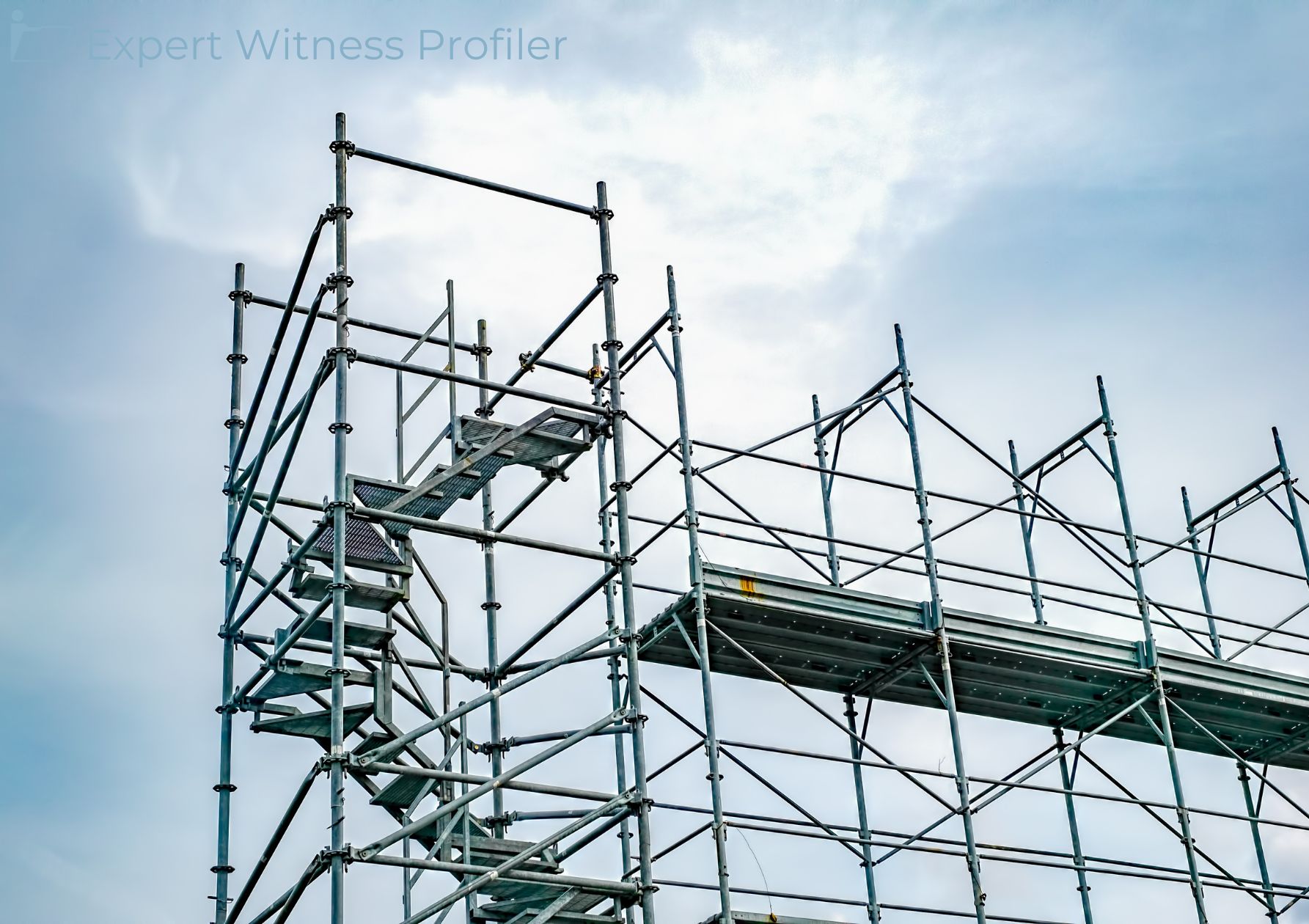
This personal injury suit began at a construction site at Ochsner’s Lafayette General Medical Center. Charles’ employer, FL Crane & Sons, Inc. (“FL Crane”), was hired to install “z-girts, insulation, and stucco” on the Project building. To work on the building’s side, FL Crane procured swing scaffolding from Max Access. The scaffolding system they used was called the “Rolling Roof Rig.”
On May 16, 2022, while Charles was working atop the Rolling Roof Rig at the Project, other workers lifted three porta potties for cleaning. Inadvertently, the porta potties, while being hoisted up, caught the tieback line that secured the scaffolding system. This entanglement caused the scaffolding system to collapse, severing Charles’ right arm in the process.
Max Access argued that (1) Plaintiffs’ proffered witness, Brant Lacombe is not a qualified witness and (2) even if he is, his opinions did not satisfy Rule 702.
Sales Expert Witness
Brant Lacombe has fifteen years of experience as a swing scaffolding salesperson in addition to his designation as an OSHA-competent trainer who teaches employees how to use swing scaffoldings.
Discussion by the Court
1. Expert’s Qualification
Here, it is undisputed that Lacombe is not an expert by way of education—his college degree is in criminal justice, not engineering.
Ordinarily, Lacombe’s experience as a salesperson would be deemed too far removed from the scope of his testimony—why a scaffolding system, like the one he sold, failed.
Lacombe’s duties as a salesperson included not only sales, but also assisting crews with rigging to ensure the “job get[s] done.” Lacombe first said that he performed such tasks “plenty of times in [his] career,” but later states, “it wasn’t [his] primary function” and only did so “a handful of times over [his] career.”
Max Access also asserted that Lacombe’s OSHA-related training was inadequate. Specifically, they argued that his initial OSHA 10 training was from “years ago” and he only had one other employer-administered two-to-three-day class.
Given his experience with assisting crews in rigging swing scaffolds and his OSHA competency, the Court is unconvinced by Max Access’ arguments that Lacombe is not qualified as an expert.
2. Expert’s Opinions
a. Lacombe’s First Opinion
Lacombe’s first opinion is that:
Max Access, LLC had an obligation to properly assemble the swing stage scaffolding and rigging. Proper assembly requires insertion of the codder pins through the beam splice as well as the hole in the beam tube. The purpose of inserting the codder pins through the beam and the beam tube is to prevent the connection from being separated.
As Max Access pointed out, however, this statement is not an opinion. Max Access agreed it had the above-stated obligation. Nevertheless, Plaintiffs argued that this testimony is necessary to show “why Max Access was obligated to set up the swing stages.” But Plaintiffs made no showing, let alone a showing by a preponderance of the evidence, on how this will assist the factfinder in “understand[ing] the evidence or determin[ing] a fact in issue.”
Thus, the Court concluded Lacombe cannot proffer his first opinion as it failed to meet Rule 702(a)’s requirement that the opinion “help the trier of fact to understand the evidence or determine a fact in issue.”
b. Lacombe’s Second Opinion
Lacombe’s second opinion is that:
The swing scaffolding failed because the roof rigging separated at the beam and the beam tube. Photos taken of the beam splice on the 5th floor show that the pin was inserted through the beam splice. Photos of the back beam on the 11th floor show that the holes in the beam had not been torn or damaged. This shows that the back beam was not secured with the pins. The pins went through the beam but not the beam tube.
Again, the parties did not dispute the facts stated in Lacombe’s opinion. And Plaintiffs conceded that “the jury is capable of understanding the concept.” Nevertheless, they argued that the opinion will “aid the jury’s understanding of important parts” of the case. The Court agreed. Lacombe relied on his experience in the swing scaffolding industry to determine and the photographs taken post-accident—showing the beam holes were not “torn or damaged”—to suggest the pins did not penetrate the beam, only the splice tube.
As such, the Court found Lacombe’s second opinion complied with Rule 702‘s strict requirements.
c. Lacombe’s Third Opinion
Lacombe’s third opinion is that:
OSHA certified training for swing scaffolding does not address specific types of swing scaffolding. There are differences in design in the type of scaffolding that require different assembly. For instance, Spider does not use the exact same design as Sky Climber. One can thus be certified as a competent person but still have to follow manufacturing guidelines and may be unfamiliar with the scaffolding design. Due to differences in design, competent persons assembling and inspecting scaffolding must follow the manufacturer’s warning to ensure proper assembly and safety of the swing stage.
The crux of why Plaintiffs proffered this testimony is to show that Charles’ employer, FL Crane, had a competent person on site per OSHA regulations and that inadequate warnings led to the accident. This Court’s ruling on Defendant Sky Climber, LLC’s motion for summary judgment, however, found, as a matter of law, that FL Crane did not have a competent person on site. Accordingly, the Court found this argument is moot.
Held
The Court granted in part and denied in part Max Access’ Rule 702 motion concerning Brant Lacombe.
Key Takeaway:
Lacombe relied on his experience in the swing scaffolding industry to determine and the photographs taken post-accident—showing the beam holes were not “torn or damaged”—to suggest the pins did not penetrate the beam, only the splice tube.
This represented “a reliable application” of a “reliable principle” to “sufficient facts” of the case and will “help the trier of fact to understand the evidence or determine a fact in issue”—namely, why the swing scaffolding system failed the way it did.
Case Details:
| Case Caption: | Craft Et Al V. Max Access LLC Et Al |
| Docket Number: | 6:22cv5899 |
| Court Name: | United States District Court, Louisiana Western |
| Order Date: | September 30, 2025 |