Tag: brake

  • Mechanical Engineering Expert Allowed to Opine on the Behavior of Wheelchairs

    Mechanical Engineering Expert Allowed to Opine on the Behavior of Wheelchairs

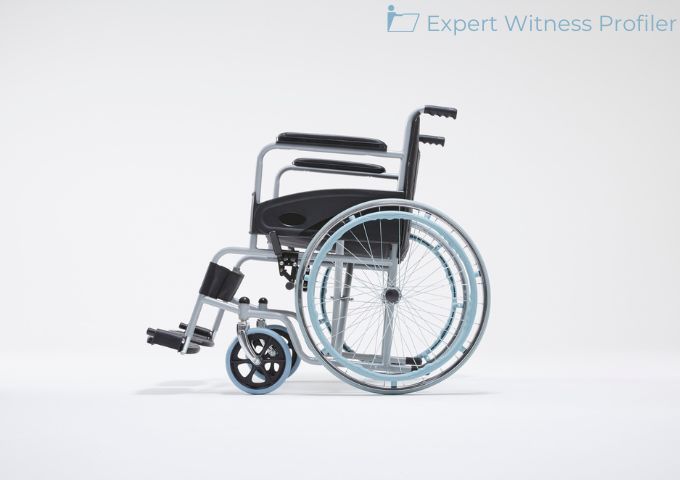
    This case arises from an incident in which Plaintiff William Dowdy was injured after falling from a temporary wheelchair while using his wheelchair ramp. The temporary wheelchair had been supplied by NuMotion while Dowdy’s regular wheelchair was being serviced and repaired.

    NuMotion sought to exclude the testimony of Plaintiff’s expert Mark Ezra, arguing that he lacks the proper qualifications, that his opinions rest on speculation rather than reliable methodology, and that his testimony will not assist the jury.
    Mechanical Engineering Expert Witness

    Mark A. M. Ezra is a board-certified professional engineer with a degree in mechanical engineering and a diploma in automatic control systems. His professional background includes decades of engineering practice, mechanical failure analysis, and forensic investigation.

    Want to know more about the challenges Mark Ezra has faced? Get the full details with our Challenge Study report.

    Discussion by the Court

    Qualifications

    NuMotion emphasized that Ezra is not a biomechanical engineer, has never worked for a wheelchair supplier, and has no experience as an Assistive Technology Professional (“ATP”).

    Mechanical engineering is directly relevant to the design, stability, braking systems, and mechanical behavior of powered wheelchairs—the very issues at the heart of this case. The Court therefore found that Plaintiff has shown by a preponderance of the evidence that Ezra is qualified to offer expert testimony.

    Reliability

    NuMotion argued that Ezra’s opinions lack a factual foundation, that he improperly relied on the testimony of ATP Vincent Fels, and that he cannot identify the precise electrical defect that caused the wheelchair to stop.

    Ezra’s expert report reflected a systematic engineering analysis grounded in physical inspection, measurements, documentary review, and application of mechanical principles. He personally inspected the TSS 300 wheelchair, took custody of it, and measured the slope of Plaintiff’s ramp. He reviewed the owner’s manuals for both the TSS 300 and the Jazzy 600, analyzed their braking systems, and compared their wheel configurations and stability characteristics. Ezra considered Plaintiff’s prior successful use of both wheelchairs on the same ramp and applied simple Newtonian mechanics to explain how a sudden stop would eject a seated user.

    Based on this analysis, Ezra concluded that the “most probable and direct cause” of the incident was a power failure in the TSS 300’s electrical system, which triggered the automatic deployment of the parking brakes.

    NuMotion also contended that Ezra improperly relied on ATP Fels’ testimony to opine on warnings and training. But Ezra’s core opinions concern mechanical behavior like stability, braking forces, and the consequences of a sudden stop, not ATP standards of care. The Court concluded that his references to Fels’ testimony serve only to contextualize the absence of instruction and the differences between the two wheelchairs, not to substitute himself for an ATP.

    Relevance

    NuMotion argued that Ezra’s testimony will not assist the jury because he cannot say whether NuMotion caused the defect or could have prevented it.

    But Rule 702 does not require an expert to resolve every element of liability. Ezra’s testimony will help the jury understand the mechanical forces at play, the behavior of the TSS 300 during braking, the significance of the design differences between the TSS 300 and the Jazzy 600, and the mechanical plausibility of Plaintiff’s account. These matters are well outside the knowledge of a lay juror. Whether NuMotion caused the defect is a separate question for the jury, informed by, but not dependent on, Ezra’s mechanical analysis.

    Held

    The Court denied NuMotion’s motion to strike the testimony of Mark Ezra.

    Key Takeaway

    This methodology of identifying possible mechanical causes, ruling out alternatives, and applying engineering principles to the physical evidence is consistent with accepted practices in mechanical failure analysis. The fact that Ezra cannot identify the specific electrical component that failed does not render his opinion unreliable. Experts are not required to pinpoint the exact microscopic failure mechanism where the available evidence supports a broader, scientifically grounded conclusion. Ezra’s reasoning is transparent, testable, and rooted in the materials he reviewed.

    Case Details:

    Case Caption: Dowdy V. United Seating And Mobility, LLC
    Docket Number: 3:23cv2875
    Court Name: United States District Court, Illinois Southern
    Order Date: April 01, 2026
  • Forensic Engineering Expert’s Testimony on Brake Levers Admitted

    Forensic Engineering Expert’s Testimony on Brake Levers Admitted

    Plaintiff Matthew Hartley sued Defendants Sunbelt Rental Inc. and Custom Equipment LLC to recover for personal injuries he sustained during a jobsite incident on June 14, 2021.

    Plaintiff alleged that on June 14, 2021, he “attempted to move a Sunbelt Rentals Hy-Brid Lift HB-1030 down a ramp when suddenly and without warning it began to rapidly roll down the slope of the ramp despite no effort on his part to power the lift forward.” He further alleged that the lift, which was manufactured by Custom Equipment, LLC, “rolled uncontrollably into a concrete wall at a rapid rate of speed” causing “debilitating physical injuries” and a variety of economic and noneconomic harms.

    Plaintiff retained Craig Sylvester, a forensic engineering expert, to determine the “root cause” of the accident. According to Sylvester, “the root cause of the incident on June 14, 2021 was a mis-wired emergency stop button, as well as the placement of one or both of the parking brake levers at the rear of the machine in an intermediate position.”

    Defendant Custom Equipment filed a motion to strike certain expert opinions and limit testimony of disclosed expert Craig Sylvester.

    Forensic Engineering Expert Witness

    Craig A. Sylvester is a former U.S. Navy mustang officer and licensed mechanical engineer with more than 25 years of experience as an operator, maintainer, designer, and inspector of industrial equipment around the world. Sylvester’s expertise in industrial systems is built on his early work performing component-level repairs as an electronics technician, along with formal education in manufacturing and mechanical engineering, and naval architecture.

    Want to know more about the challenges Craig Sylvester has faced? Get the full details with our Challenge Study report.

    Discussion by the Court

    Parties’ Arguments

    Defendant requested the Court “exclude the portions of Sylvester’s opinions that are untimely, speculative and unhelpful to the jury.”

    Defendant argued that exclusion is warranted because Sylvester’s: (1) supplemental opinions on electromagnetic braking assistance, back emf braking assistance, and arc suppression circuits are untimely and unhelpful to the jury; (2) opinions on the intermediate position of the brake levers are speculative; (3) opinions on the parking brake’s holding torque are unhelpful to the jury; and (4) opinions that the pre-start inspection checklist failed to adhere to the ANSI A92.22 standards are unhelpful to the jury.

    Plaintiff contended, and Defendant accepted, that “Sylvester has no intention of testifying that the HB 1030 should have included ‘electromagnetic,’ ‘back emf’ or an ‘arc suppression circuit’ at the time of trial.” The Court thus found these admissibility questions to be moot. Plaintiff also stated that Sylvester “will not be testifying regarding [the holding torque] document” and that the “[ANSI A92.22] standards, which were adopted after the manufacture and sale of the HB 1030, would not apply to [the unit at issue.]” As Defendant did not challenge the admissibility of testimony by Sylvester that “industry standards would include a pre-start inspection of the braking system as a matter of common sense and industry standards” nor do they otherwise challenge Plaintiff’s concessions on these issues, the Court likewise found these admissibility questions moot.

    Court’s Decision

    The Court concluded that Sylvester’s opinions on the intermediate position of the brake levers “both rests on a reliable foundation and is relevant to the task at hand.”

    As for relevancy, the Court found that Sylvester’s opinions on the intermediate position of the brake levers will “assist the trier of fact” to determine the root cause of the June 14, 2021 incident. As the root cause of the incident is “a fact in issue,” Sylvester’s testimony satisfied the standard for relevancy. The Court also concluded that Sylvester reviewed numerous sources of information, utilized reliable principles and methods of forensic engineering, and reliably applied said principles and methods to the facts of the case.

    The Court noted that Sylvester “considered seven categories of evidence in reaching his conclusion, only one of which was a document generated during the course of BN Builders investigation, which occurred shortly after the incident in question.” As a result, the Court declined to exclude Sylvester’s testimony on the brake levers as “speculative.”

    Held

    The Court denied the Defendant Custom Equipment LLC’s motion to exclude the testimony of Plaintiff’s expert Craig Sylvester.

    Key Takeaway:

    The Court noted that while Defendant raised various other arguments for exclusion, none of these arguments provided a proper basis for exclusion, as they all speak to issues of fact-finding, not gatekeeping.

    For example, Defendant’s disagreement with Sylvester’s exclusion of other possible explanations for the accident and his reasons for doing so do not render his opinions inadmissible—they merely make it more likely that the trier of fact will view Sylvester’s conclusions about the root cause of the accident less credible. 

    Because the Court must act as “a gatekeeper, not a fact finder,” it cannot exclude portions of Sylvester’s testimony for any of these fact-finding based reasons.

    Case Details:

    Case Caption: Hartley V. Sunbelt Rentals, Inc
    Docket Number: 2:24cv1078
    Court Name: United States District Court, Washington Western
    Order Date: November 24, 2025
  • Elevator and Escalator Expert Witness’ Testimony on Elevator Malfunction Admitted

    Elevator and Escalator Expert Witness’ Testimony on Elevator Malfunction Admitted

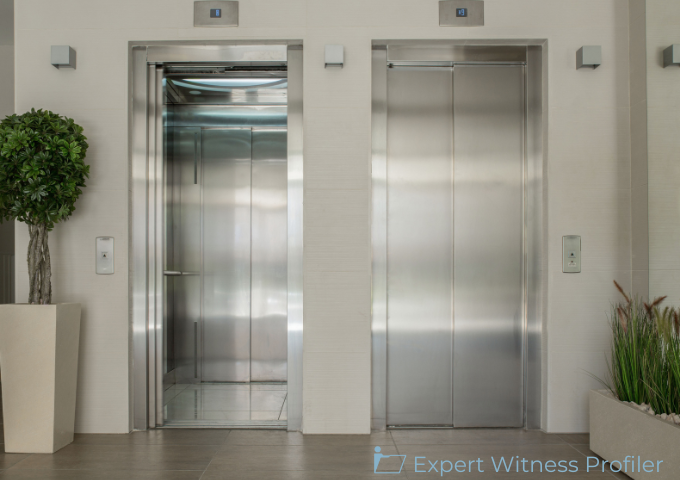
    In September 2019, Plaintiff Nathan White, a security guard at the Cosmopolitan Hotel in Las Vegas, inhaled fumes from a malfunctioning elevator while responding to a smoke alarm in the elevator’s brake room. Days later, Defendant TKE’s (formerly known as Thyssenkrupp Elevator) employees recklessly destroyed the relevant elevator parts. Plaintiff sued Defendant TKE under strict products liability and negligence theories.

    It has been 10 years since TKE designed, manufactured, assembled, sold, and installed the TAC 50-04 elevator. The company also exclusively maintained the elevator. In 2019, TKE complied with Nevada’s annual inspection by hiring a third-party company to inspect the elevator, including the brakes. Limited records indicated that the exterior parts of the elevator brake apparatus had been inspected during a June 2019 service call. However, it should be noted that TKE did not perform its annual “brake teardown” maintenance that year, which its own internal procedures required.

    Both parties hired elevator experts to explain why the elevator brake malfunctioned. TKE’s expert, John Halpern, concluded that TKE had taken reasonable care to maintain the elevator. However, an unpredictable malfunction in the bushing of the brake arm allowed the brake pad to rub on the brake drum, leading to smoke in the brake room.

    Plaintiff’s elevator and escalator expert witness, John Koshak, disagreed, concluding that the elevator brake failed as TKE had failed to undertake adequate preventative maintenance. TKE moved to exclude Koshak’s testimony.

    Elevator and Escalator Expert Witness

    Elevator and Escalator Expert Witness

    John Winfield Koshak has worked in the elevator industry for the last several decades. He belongs to the American Society of Mechanical Engineers (ASME) and the American National Standards Institute (ANSI), he is a certified elevator inspector, and he has earned various other accolades and accomplishments in the world of elevators.

    Want to know more about the challenges John Koshak has faced? Get the full details with our Challenge Study report.  

    Discussion by the Court

    1. Qualified by Knowledge, Skill, Experience, or Training

    According to the Fed. R. Evid. 702, the Court was required to consider whether Koshak was qualified by knowledge, skill, experience, and training to opine on this case.

    Plaintiff hired Koshak to testify about faults in the Defendant’s maintenance of the elevator.

    At the hearing, Defendant argued that while Koshak may be qualified as an expert on elevators generally, he is not an expert on the model of the elevator that malfunctioned. To survive Defendant’s motion to exclude Koshak, it would be enough to show that Koshak was qualified to speak about elevator maintenance generally. It should be noted that Koshak worked in elevator design at TKE’s predecessor company while the relevant elevator was being developed. Moreover, he has also been found qualified to speak as an expert by other courts.

    The Court held that Koshak’s qualifications from professional societies, his experience working in elevator design at Defendant’s predecessor company while the relevant elevator was being developed, and his qualification as an expert by other courts qualified Koshak to opine about elevator maintenance and mechanics in this case.

    2. Helpfulness to the Jury

    Under Fed. R. Evid. 702(a), the Court must consider whether Plaintiff has shown that Koshak’s technical knowledge about elevator maintenance and analysis of the incident at the Cosmopolitan will help the jury understand the evidence.

    The Court found that Koshak is more than familiar with industry standards for elevator maintenance, understands how to interpret elevator fault codes and maintenance logs, and has demonstrated that he could answer questions about how elevators work.

    It was noted that the element of breach in the Plaintiff’s negligence case would require the jury to assess the standard of care for maintaining elevators and interpret circumstantial evidence. It may also require a high-level understanding of how elevators work.

    In conclusion, the Court found that Koshak’s specialized knowledge would be useful to the jury, and held that Plaintiff has met his burden to show as much.

    3. Sufficient Facts or Data

    According to Fed. R. Evid. 702(b), the Court was required to consider whether Koshak’s testimony was based on sufficient facts or data.

    The Court found that Koshak has used sufficient data to reach at least some of the conclusions in his report. He used relevant ASME standards in assessing elevator maintenance; and he reviewed and interpreted the fault logs, error codes, and available maintenance records from the subject elevator.

    Defendant argued that specific paragraphs in Koshak’s report and statements from his deposition revealed that Koshak did not sufficiently consult the record for his testimony and that he lacked knowledge of important facts of the case, like which elevator arm malfunctioned.

    However, Plaintiff contested the salience of these errors. The Court found that Plaintiff had shown that Koshak used sufficient data and facts to survive a motion to exclude his testimony entirely. While Defendant may later seek to exclude specific sections of Koshak’s report or limit the scope of Koshak’s testimony, it has failed to show that any alleged errors justify excluding Koshak’s entire report.

    4. Reliable Principles and Methods

    Under the Fed. R. Evid. 702(c)., the Court had to consider whether Plaintiff had shown that Koshak’s testimony was the product of reliable principles and methods.
    The Court observed that Koshak’s testimony relied on translating and interpreting elevator fault codes, maintenance standards, maintenance logs, and the function of elevator components like the bushing (the component that seemed to have failed). It was held that Koshak’s interpretation of these codes, standards, and maintenance logs, as well as his explanation of how components function, could be replicated and challenged in an objective sense by reference to authoritative sources.

    Additionally, Defendant challenged Koshak’s “deductive” method as unreliable. Koshak’s deductive method involves considering several possibilities of what caused the elevator malfunction, eliminating the ones that seem unlikely, and positing that the remaining causes are likely. The Court found that Koshak’s testimony used reliable methods and principles.

    5. Reliable Methods Applied to Relevant Facts

    Under Fed. R. Evid. 702(d)., the Court held that Plaintiff had shown that Koshak’s opinion reflects an application of reliable principles and methods to the facts of the case.
    To sum up, Koshak applied his knowledge of maintenance standards and methods of translation and interpretation of technical codes to the maintenance records, fault logs, opposing expert report, and deposition testimony relevant to the case.

    Conclusion

    The Court held that Koshak was qualified as an expert under FRE 702. At the November 15 hearing, the parties requested an evidentiary hearing regarding both experts. To the extent the parties wish to challenge the scope of expert testimony, the Court will entertain motions in limine identified in the proposed joint pretrial order and consider at that point the need for an evidentiary hearing.

    Held

    The Court denied Defendant’s motion to exclude Plaintiff’s elevator and escalator expert witness John Koshak.

    Key Takeaway:

    Koshak’s expert testimony satisfied all four requirements under Federal Rule of Evidence 702.

    1. Despite lacking a college degree, the Court found that Koshak’s extensive industry experience, professional certifications, and previous work with TKE’s predecessor company qualified him to testify about elevator maintenance. The Court rejected TKE’s argument that Koshak needed specific expertise with regard to the exact elevator model in question.
    2. The Court recognized that Koshak’s technical knowledge would be invaluable in helping the jury understand complex elevator maintenance standards and fault codes, which were crucial for determining if TK Elevator breached its duty of care.
    3. The Court found that Koshak based his conclusions on sufficient data, including ASME standards, fault logs, and maintenance records, even though there were some minor factual discrepancies.
    4. The Court deemed his methodology reliable, particularly his systematic approach to analyzing fault codes and his “deductive method” of eliminating unlikely causes of malfunction.

    Case Details:

    Case caption: White V. Tk Elevator Corporation
    Docket Number: 2:21cv1696
    Court: United States District Court for the District of Nevada
    Dated: January 29, 2025