On November 4, 2019, the Plaintiff, Cook Logistics, LLC filed a complaint alleging breach of contract for damage its cargo allegedly suffered while the Defendant, Equipment Express, Inc. transported it from Canada to Washington.
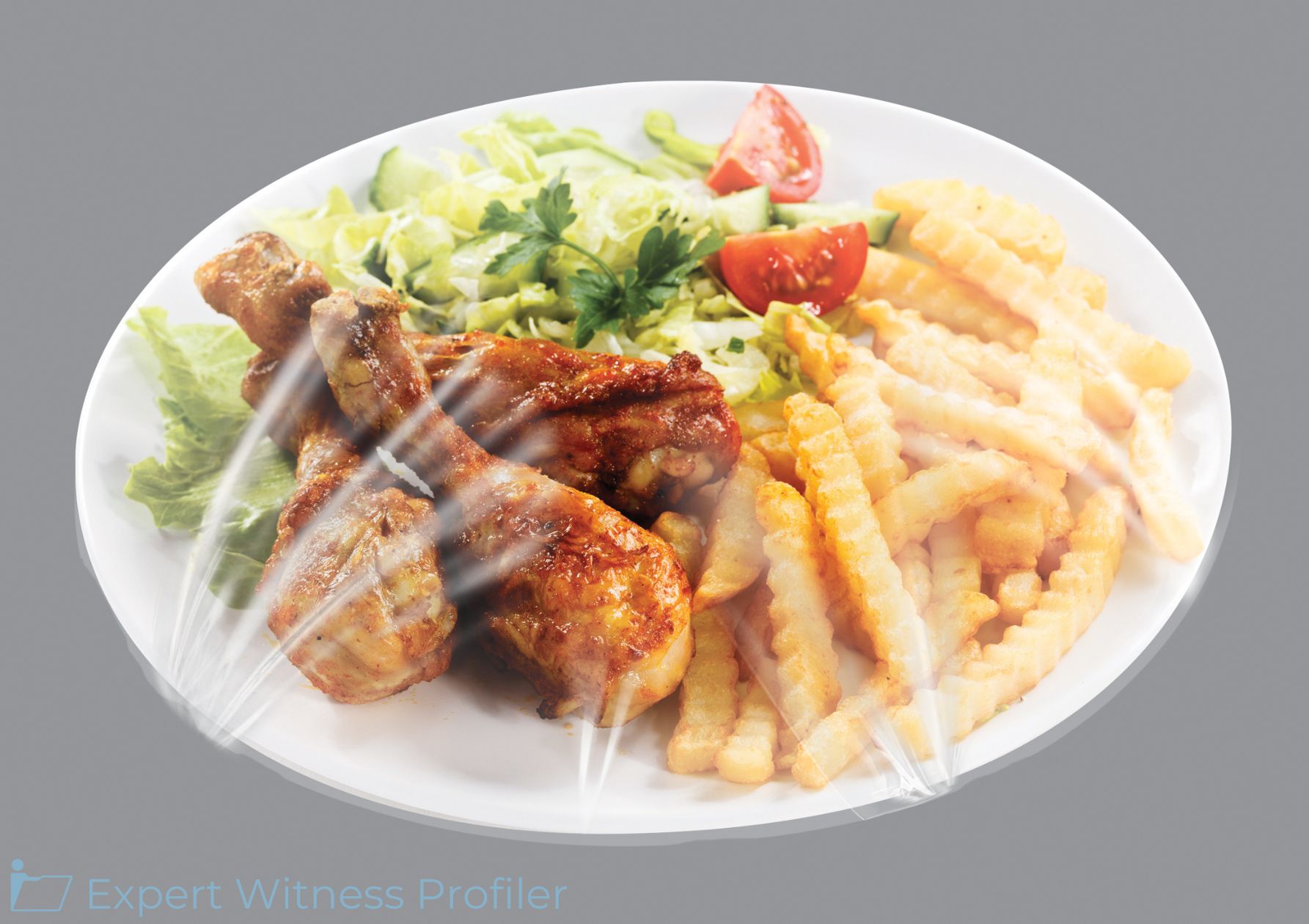
The Defendant’s expert witness, Lawrence Dull, concluded that the “damaged equipment in this case was caused by the failure of the shrink wrap used to encapsulate the equipment” and that “the failure of the shrink wrap was predictable.”
On July 15, 2022, the Defendant moved for summary judgment on all claims. The Defendant attached a one-page document it identified as a supplement to the opinion of its previously disclosed expert witness, Lawrence Dull. The Plaintiff subsequently filed a motion to strike the supplement to Dull’s report.
Packaging Expert Witness
Lawrence Dull is an IoPP Certified Packaging Professional with a B.S. and an M.S. in Packaging Technology from Michigan State University. With over twenty-five years of experience in managing technical packaging development groups, he has held positions with Eastman Kodak Company, Calgon Corporation and Syngenta Crop Protection Inc. He holds nine U.S. patents in the field of packaging and has won several awards in national packaging design competitions.
The Court set a deadline of June 1, 2022 for the Defendant to disclose its expert witnesses. The Defendant did not disclose the addendum to Dull’s report until September 30, 2022.
While Dull’s original report repeatedly noted that low temperatures affect the strength of shrink wrap, it said nothing about whether the duration of time the shrink wrap spends at low temperatures exacerbates that effect. But the addendum stated that the time that the shrink wrap spends at lower temperatures is “not important.” Since the addendum introduced a new opinion, the Court rejected the Defendant’s argument that the addendum only elaborates on Dull’s existing opinion.
The Defendant argued that it obtained the addendum to respond to a new argument the Plaintiff raised in its opposition to the summary judgment motion, but that position is belied by the fact that the addendum is dated July 14, 2022—almost two months before the Plaintiff filed its opposition brief.
Withholding the addendum until reply smells of bad faith or (at minimum) willfulness on the Defendant’s part. The Court found that this prejudiced the Plaintiff, who had no opportunity to address the addendum, effectively giving the Defendant the final say on the matter. The Defendant has not demonstrated that its failure to disclose the addendum was either justified or harmless.
Held
The Court granted the Plaintiff’s motion to strike the supplement to Lawrence Dull’s report.
Key Takeaway:
The Defendant’s argument that the addendum only elaborates on Dull’s existing opinion is not persuasive. Dull’s original report stated throughout that low temperatures affect the strength of shrink wrap. It said nothing about whether the duration of time the shrink wrap spends at low temperatures exacerbates that effect. But the addendum stated that the time that the shrink wrap spends at lower temperatures is “not important.” That is a new opinion, not an elaboration.
In early 2015, Plaintiffs, US Thrillrides, LLC (“USTR”) and Polercoaster, LLC began discussions with Defendant, Intamin Amusement Rides Int. Corp. Est. about partnering to build Polercoasters for Plaintiffs’ customers. The Polercoaster is a unique attraction that provides a complete roller coaster experience on a very small footprint, unlike traditional roller coasters which require several acres of land.
On January 15, 2015, the Parties entered into a Confidentiality and Non-Disclosure Agreement (the “CNDA”) to allow them to begin conversations. In the CNDA, Defendant agreed that information about the Polercoaster was protected and agreed not to create products similar to those offered by Plaintiffs, or to enable or cause others to do so. Once the CNDA was executed, Plaintiffs began discussions with Defendant about serving as the manufacturing partner for Polercoasters they were selling to their customers in different parts of the United States. Ultimately, Defendant was chosen to be the manufacturer for the US Projects.
Later, Plaintiffs executed a letter of acceptance (the “LOA”) with Emaar Entertainment, LLC (“Emaar”) to build a Polercoaster at the Dubai Hills Mall. Unbeknownst to Plaintiffs, Defendant was actively undercutting them, negotiating directly with Emaar and submitting its own bid, in secret, to build the ride without Plaintiffs’ involvement or permission. The result was that Plaintiffs were terminated and Defendant was hired.
Emaar and Defendant entered into a Letter of Intent, memorializing their agreement to move forward on developing a smaller roller coaster for the Dubai Hills Mall. Ultimately, this roller coaster was built and named the Storm Coaster.
Plaintiffs alleged that Defendant unlawfully breached the CNDA and is also liable under various Florida and federal laws for wrongfully using Plaintiffs’ intellectual property in connection with the Dubai Project.
Defendant filed a motion to exclude the expert testimony of Plaintiffs’ expert Nathan Macdonald.
Mechanical Engineering Expert Witness
Nathan Macdonald is a registered professional engineer, a certified safety professional, and a certified commercial building inspector. He has a Bachelor of Science degree in mechanical engineering and eleven years of experience working as a mechanical engineering consultant, including experience working on the design, manufacture, and testing of amusement rides.
Defendant sought to exclude the following opinions of Plaintiffs’ expert, Nathan Macdonald: (1) designs and drawings created for the Storm Coaster are substantially similar to and incorporate major design features of USTR’s copyrighted materials; and (2) the Storm Coaster design is both similar to the Polercoaster designs developed by USTR and embodies and is derived from Confidential Information and Intellectual Property Rights (as defined by the CNDA) conveyed by USTR to Defendant pursuant to the CNDA.
Qualifications
First, Defendant argued that Macdonald is not qualified to opine on any of the issues here because he did not have specific experience with roller coaster design. While Macdonald has not designed a roller coaster, he has has a significant amount of experience related to coasters and the engineering and design work that is involved. Therefore, Macdonald’s experience and training makes him qualified to opine on the mechanics, engineering, and technical design aspects of the roller coasters and drawings at issue here.
Second, Defendant also challenged Macdonald’s qualifications to opine as to analyzing copyright, trade secret, and misuse of confidential information issues. The Court held that Macdonald is qualified to conduct a technical and engineering comparison between Plaintiffs’ designs and drawings with Defendant’s designs, drawings, and the Storm Coaster. Macdonald is also qualified to testify regarding how confidential information and trade secrets are treated and used within the industry.
On the other hand, Macdonald is not qualified to opine as to whether information constitutes a trade secret or is confidential information as this is a legal analysis, not a technical one. Nor is he qualified to opine as to whether the copyright “substantial similarity” analysis is satisfied. To be clear, Macdonald could testify that certain aspects of Defendant’s design drawings are similar to certain aspects of Polercoaster’s copyrighted drawings from a technical or engineering standpoint. And Plaintiffs’ attorneys could then use that testimony to argue that the “substantial similarity” analysis for copyright infringement is satisfied. But Macdonald is not qualified to opine as to the copyright infringement analysis itself.
Methodology
As to Macdonald’s methodology, Defendant first argued that Macdonald’s copyright opinions must be excluded because Macdonald did not conduct a copyright protectability analysis and because his opinions regarding substantial similarity invade the province of the jury. These issues were addressed in the qualifications analysis—Macdonald is only permitted to testify as to similarities between Defendant’s purportedly infringing drawings and Polercoaster’s copyrighted drawings from a technical and engineering standpoint. He is not permitted to testify as to whether these similarities are protectable under copyright law.
Defendant also objected to Macdonald’s opinions because they assume that the designs and drawings attributed to Polercoaster actually belong to Polercoaster, and Defendant argues that they do not. This is not an issue with Macdonald’s methodology in comparing the designs. The Court held that the Defendant is free to offer evidence at trial that the drawings do not belong to Polercoaster, but an expert is allowed to offer opinions based on assumptions given to them.
Next, Defendant argued that Macdonald’s opinions comparing Polercoaster’s copyrighted works to the as-built Storm Coaster must be excluded because an as-built structure cannot infringe Polercoaster’s copyrights. Polercoaster conceded that Defendant is correct. Additionally, Defendant’s remaining objections to Macdonald’s opinions were rendered moot by the Court because Plaintiffs’ trade secrets and non-copyright-based breach of the CNDA claims failed on the merits.
Held
The Court granted in part and denied in part Defendant’s motion to exclude the testimony of Nathan Macdonald.
Key Takeaway:
Macdonald is only permitted to testify as to similarities between Defendant’s purportedly infringing drawings and Polercoaster’s copyrighted drawings from a technical and engineering standpoint. He is not permitted to testify as to whether these similarities are protectable under copyright law.
Case Details:
Case Caption:
US Thrillrides, LLC & Polercoaster, LLC V. Intamin Amusement Rides Int. Corp. Est.
This matter arises from a July 30, 2022, lightning strike in Water Valley, Mississippi, which caused a fire and ultimately the destruction of a warehouse and its contents, including automotive components owned by the Plaintiff Kodaco and stored in the warehouse.
Kodaco claims “approximately $3,500,000.00 worth of business property” was stored at the subject warehouse, which was owned and operated by the Defendant Warehouse 72, at the time the warehouse burned. The Plaintiff alleged claims against the Defendants for breach of contract, negligence, breach of bailment, and negligent misrepresentation.
The parties have filed competing motions seeking to exclude or limit the testimony of experts in the areas of fire origin and cause investigation and fire protection engineering— the Plaintiff seeks to exclude or limit certain opinions of Neil Wu‘s testimony and the Defendants seek to exclude testimony expected to be offered by Phillip Keena. Both motions sought primarily to ensure that the opposing expert witness does not offer impermissible legal conclusions.
The Plaintiff objected to certain testimony and conclusions in Wu’s deposition and expert report that the Plaintiff characterized as impermissible legal conclusions. The Defendants have agreed that “Wu does not intend to offer any ‘legal opinions’ and Defendants do not intend to elicit such testimony” at trial.
The Defendants argued that Keena’s proffered testimony and conclusions veer into the realm of legal conclusions; they further argued that his testimony did not go far enough into the standards a reasonably prudent warehouser would have implemented under similar circumstances as those existing in this case. As is the case with the Defendants’ expert, the Plaintiff conceded that Keena will not offer legal conclusions at trial.
Fire Investigation Expert Witnesses
Neil Wu is a Principal at SRE and the founder of the firm. He holds a Bachelor of Science and a Master of Science degree in Fire Protection Engineering, both from the University of Maryland. He is a registered professional engineer in 14 states, including the District of Columbia. Wu is a member of the International Association of Arson Investigators (IAAI), National Association of Fire Investigators (NAFI), National Fire Protection Association (NFPA), Society of Fire Protection Engineers (SFPE), and has served on multiple technical committees.
Philip Keena holds two degrees relevant to the issue at hand, an associate degree in Fire Administration and a bachelor’s degree in Fire Protection and Safety Engineering Technology. The International Association of Arson Investigators (IAAI) has also certified him as a fire investigator, and he has been a firefighter for thirty-one years. He currently works for Rimkus, a forensic engineering company.
First, the Court holds that the concessions each party has made regarding their expert’s testimony largely renders the competing motions to exclude as moot. Both experts are highly qualified and the Court finds their knowledge will help the trier of fact to understand the evidence or to determine a fact in issue in this case, and that their testimony satisfies both Rule 702 and Daubert v. Merrell Dow Pharmaceuticals, Inc., 509 U.S. 579, 113 S. Ct. 2786, 125 L. Ed. 2d 469 (1993). Moreover, any arguments for exclusion of testimony, particularly in light of the parties’ concessions, go to the “weight to be assigned that opinion rather than its admissibility and should be left for the jury’s consideration.”
Further, the Court is confident that it can protect against the possibility of objectionable expert testimony at trial without resorting to a blanket ban on all testimony by either side’s expert witness.
Finally, and most crucially given the parties’ primary objections, the Court notes it is axiomatic that “experts cannot ‘render conclusions of law’ or provide opinions on legal issues.” Accordingly, neither Wu nor Keena will be permitted to offer legal conclusions at trial and counsel will not seek to elicit any such testimony. The Court does note, however, that while experts cannot offer conclusions of law, “an opinion is not objectionable just because it embraces an ultimate issue.”
The parties may offer timely objections to any such testimony at trial. The Court therefore granted each party’s motion to exclude to the extent each motion seeks to prohibit testimony that constitutes a legal conclusion; to the extent that either motion seeks further limitations on testimony, that request is denied at the present juncture. The parties may offer timely objections at trial to any testimony they deem objectionable.
Held
The parties’ competing motions to exclude expert testimony of Defendant’s expert Neil Wu and Plaintiff’s expert Philip Keena is granted in part.
Key Takeaway:
Ideally, testimony and conclusions should not veer into the realm of legal conclusions. The Court does note, however, that while experts cannot offer conclusions of law, “an opinion is not objectionable just because it embraces an ultimate issue.”
Case Details:
Case Caption:
Kodaco Co., Ltd. V. Valley Tool, Inc. Et Al
Docket Number:
3:23cv211
Court:
United States District Court, Mississippi Northern
A district judge in Georgia barred certain opinions of an life insurance industry expert because no authority, underwriting or otherwise, was cited in support of such opinions.
This case is about whether Pacific Life was entitled to rescind two life insurance policies and deny claims for benefits under them when it learned during the contestable claim period that Jimmie Long (“Mr. Long”) made material misrepresentations about his history of, and treatment for, abusing alcohol. Plaintiff Ronald Blalock (“Plaintiff”) owned, and was the beneficiary under, both policies. The policies were issued in January 2022, approximately four months before Long died in a car accident. Seven days after Long’s death, his insurance producer submitted claims for the benefits provided for in the policies. In accordance with the policies’ terms, Pacific Life conducted a contestable claim investigation—a routine action taken when an insured dies within two years of a policy’s issuance—to determine if the benefits were payable.
Long’s medical records and Pacific Life’s investigation revealed that Long made material misrepresentations in his applications for insurance coverage. Pacific Life accordingly decided to rescind the policies and deny Plaintiff’s claims. Apparently dissatisfied with Pacific Life’s decisions, Plaintiff commenced this lawsuit. Plaintiff asserted claims for breach of contract and bad faith failure to pay benefits against Pacific Life.
Plaintiff identified Vera Dolan as an expert witness to support his claims. Plaintiff asked Dolan to investigate two issues. He asked her to investigate Pacific Life’s contestable claim review of the two policies to determine if the review was fair, reasonable, and consistent with the standard of care. He also asked Dolan “to investigate the denial of claim payment to Long’s policies beneficiary, Ronald Blalock.”
Insurance Expert Witness
Vera Dolan has been involved in the life insurance industry as an underwriter for over 41 years, since 1982. She is one of the leading mortality experts in the life insurance industry. She writes underwriting manuals and policy and procedure manuals for life and health insurance companies.
Dolan, addressed the question of whether the medical records warranted Pacific Life’s finding of material “alcohol abuse” and concluded that “Long’s underwriting profile was not consistent with the profile of an alcohol abuser as defined by Pacific Life’s underwriting guidance.”
Dolan opined that “Pacific Life is falsely stating that reviewing ten years of medical records at time of claim is fair and justified, when only five years of the most contemporaneous medical records were reviewed at time of issue without any finding of alcohol abuse.” Pacific Life argued that Dolan’s opinion was based on “speculation” and “unreliable principles and methods.”
The Court held that Dolan cited no authority, underwriting or otherwise, supporting this opinion. Dolan did not dispute that it was appropriate to ask Long about his medical history for the ten years preceding his application for insurance. Nor did she dispute that Pacific Life could appropriately rely on the truthfulness of the information Long provided when it issued the Policies.
When Long died within the contestable period, the only means available to confirm the accuracy of that information was to request records from the providers who saw Long during that ten-year period.
Held
The Court excluded Dolan’s opinion regarding the consideration of ten years’ worth of medical records. Her other opinions were limited pursuant to the parties’ consent.
Key Takeaway:
Vera Dolan argued that Pacific Life’s practice of reviewing ten years of medical records at the time of claim, despite only reviewing five years at the time of policy issuance, was not fair or justified. She added that Long’s underwriting profile was not consistent with the profile of an alcohol abuser as defined by Pacific Life’s underwriting guidance. The Court, however, rejected her opinion regarding the consideration of ten years’ worth of medical records.
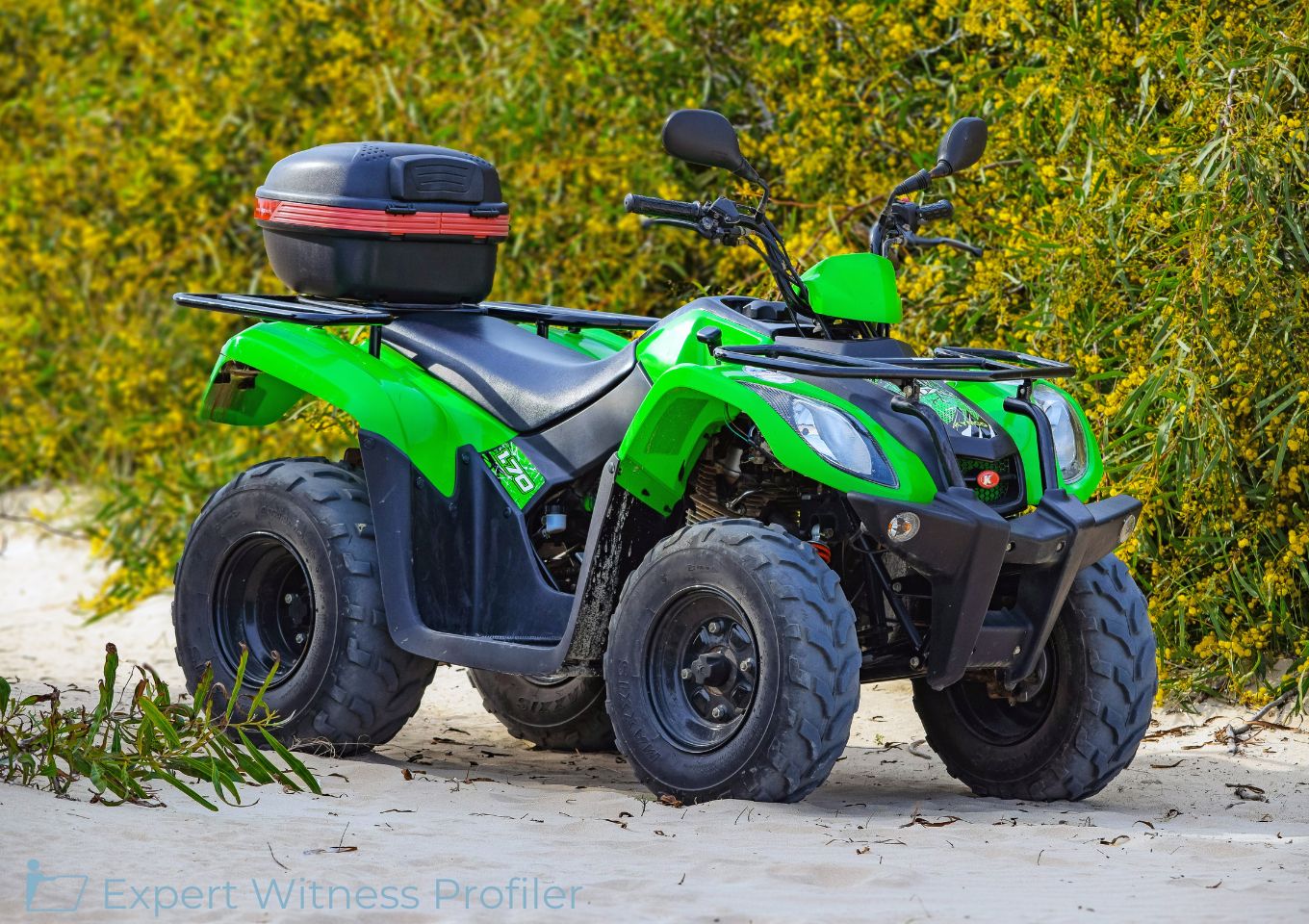
Massimo Motor Sports, LLC (“Massimo”) and the Defendants were engaged in the manufacturing and sale of sports vehicles, such as utility terrain vehicles (UTVs) and all-terrain vehicles (ATVs). The moving Defendants included Shandong Odes Industry Co., Ltd. (“Shandong”), Odes Usa Inc. (Cal) (“Odes Cal.”), Odes Usa Inc. (Tex) (“Odes Tex.”), Lil Pick Up, Inc. (“Lil Pick Up”), SMG Distribution & Associates, Inc. (“SMG”), 14078 Meridian, Parkway Inc. (“Meridian”), and Nathan D. Threet (“Threet”).
Plaintiff Massimo acted as a distributor of specific ATVs and UTVs in the United States for Shandong, a manufacturer while Lil Pick Up, Meridian, SMG, and Odes Cal. worked in various capacities to facilitate the sales and distribution of these products. Threet served as the Chief Operating Officer for Massimo before accepting a consulting position for Odes Cal. Following the dissolution of the relationship between Massimo and Shandong, Massimo initiated legal proceedings alleging trademark infringement, breach of contract, trade secret misappropriation, unfair competition, cybersquatting, tortious interference, false designation of origin, breach of the implied covenant of good faith and fair dealing, breach of the duty of loyalty, and unjust enrichment.
Massimo’s expert, Bryan M. Van Uden, served reports calculating Massimo’s damages. The Defendants moved to strike and exclude some of Uden’s opinions, including: (1) all damage opinions relating to Massimo’s trademark infringement, false designation of origin, and unfair competition claims, (2) all damage opinions relating to Massimo’s breach-of-contract claim against Threet, (3) any damage opinion relating to Massimo’s claims for trade secret misappropriation and cybersquatting, (4) any damage opinion assessing damages against SMG or Meridian, and (5) any damage opinion relating to trademark infringement, false designation of origin, or unfair competition calculated against Threet.
Defendants’ expert, Christopher Earle also served reports assessing the damages. On November 15, 2022, the parties had exchanged their experts’ opening reports regarding damages. By January 17, 2023, they had also exchanged their rebuttal expert reports. Then, on April 4, 2023, the Defendants had served Earle’s first amended supplemental report, followed by Massimo’s service of its supplemental report and supplemental rebuttal report on April 17, 2023. Earle’s opening report on November 15, 2022, rebuttal report on January 17, 2023, and first amended supplemental report on April 4, 2023, would be collectively referred to as “Earle’s Initial Reports. The Court’s scheduling orders had mandated completion of discovery by May 26, 2023, and filing of any Daubert motions by July 21, 2023. However, on May 24 and May 26, 2023, the Defendants provided Massimo with nearly 500 new documents containing financial data. Subsequently, Massimo deposed Earle on May 31, 2023. Then, on July 14, 2023, Defendants served Massimo with Earle’s second amended report and a new rebuttal report, referred to as “Earle’s July 2023 Reports”. Massimo had not been given the opportunity to depose Earle regarding these new reports, which Massimo argued were untimely. Nonetheless, the Defendants contended that the Court’s scheduling order had allowed exchanging reports until September 6, 2023.
On July 21, 2023, Massimo had filed a motion to exclude certain aspects from Earle’s Initial Reports, specifically targeting (1) Earle’s affirmative testimony about Shandong’s breach of contract counterclaim, and (2) Earle’s rebuttal testimony regarding the Defendants’ costs associated with selling vehicles that Massimo claimed infringed its trademarks. Following this, Massimo had also filed a motion to strike Earle’s July 2023 Reports, arguing that they were untimely and consisted of entirely new opinions and documents.
Financial Expert Witness
Bryan M. Van Uden serves as the Managing Director at Ocean Tomo, a division of J.S. Held, where he leverages over 20 years of expertise in financial consulting. His specialization lies in valuations, dispute analysis, and strategies aimed at enhancing business operations and profitability. Van Uden has a wide array of experience in patent infringement, trademark infringement, copyright infringement, misappropriation of trade secrets, securities violations, veil piercing, breach of contract, personal injury, wrongful termination, unfair business practices, and business and intellectual property valuation. He pursued his Master of Business Administration from the University of Mississippi and also holds a Bachelor of Applied Science in Strategic Management from Louisiana State University.
Business Valuation Expert Witness
Christopher Earle, the Managing Director of Business Valuation at Reynolds & Earle, LLC, has over 20 years of experience in overseeing and conducting analyses related to various aspects of commercial litigation, intellectual property infringement litigation, insurance claims, business disputes, and valuation disputes. His extensive litigation case background encompasses areas such as lost profits, incremental profits, fixed and variable costs, valuation, diminution in value, and apportionment. Earle earned his Master of Business Administration from the University of Dallas, Graduate School of Management, after graduating with a Bachelor of Arts in Economics from the University of Dallas, Constantine College.
Discussion by the Court
The motion to exclude Van Uden’s opinions had raised three key issues: (1) whether or not Van Uden needed to calculate damages for trademark infringement using separate calculations for each individual trademark, (2) whether the lost profits resulting from Threet’s alleged breach must account for other variables potentially influencing lost sales, and (3) whether Van Uden should be prevented from offering damages opinions for certain causes of action that the Defendants believed he had not already addressed.
The Defendants argued that Van Uden’s opinions regarding Massimo’s trademark infringement claims were flawed citing his failure to break down his calculations separately by each of Massimo’s alleged trademarks. However, the Court noted that the Defendants did not cite any case law where a Court had excluded a damages expert’s report for this reason. Massimo’s trademark infringement claim involved alleged infringement upon eight of its trademarks, and Van Uden’s damages calculation aggregated the Defendants’ infringing sales for all eight of Massimo’s alleged trademarks. The Defendants argued that this method was unreliable because Massimo needed to establish likelihood of confusion for each trademark independently for liability purposes. However, the Court disagreed, finding no inherent unreliability in an aggregate damages calculation. Therefore, the Court denied the Defendants’ motion to exclude Van Uden’s damages calculation based on aggregating all of the Defendants’ alleged infringing sales.
The Defendants argued that Van Uden’s opinions on lost profits resulting from Threet’s breach of contract and the Defendants’ tortious interference were unreliable considering they ceased to eliminate alternative causes of the lost profits. However, the Court disagreed, stating that ruling out potential alternative variables was not an admissibility issue, noting that many cases in the district had rejected this argument. Therefore, the Court denied the Defendants’ motion regarding Van Uden’s Threet-related lost profits calculations.
The Defendants sought the Court’s instruction that Massimo could not apply Van Uden’s damages opinions to certain Defendants against whom Massimo had not put forth specific claims. They specifically requested the exclusion of any Van Uden opinions supporting Massimo’s trade secret misappropriation claims against Lil Pick Up or Meridian, as Massimo’s second amended complaint had excluded them as Defendants as to those claims. However, as there was no such existing Van Uden opinion to exclude, the Court declined to make that kind of instruction at the time. Additionally, the Court refused to prohibit Van Uden from offering any damage testimony or evidence against SMG or Meridian, as the Defendants had not adequately demonstrated that he failed to opinions against these Defendants. Therefore, the Court denied the Defendants’ motion to exclude opinions that Van Uden had not made and potential damage opinions against SMG and Meridian.
The Court initially addressed the timeliness concern regarding Earle’s July 2023 Reports. Due to a prior amended scheduling order, which set expert disclosures after the deadline for motions to strike (July 21, 2023) and the close of discovery (May 26, 2023), the parties faced a dilemma. In fairness, the Court decided to grant Massimo the opportunity to redepose Earle on Earle’s July 2023 Reports. Massimo could then file any motion to strike or exclude after the deposition, and Massimo’s own expert could serve a rebuttal report to Earle’s second amended report. Consequently, the Court denied the motion to clarify/amend the Court’s scheduling order and strike Christopher Earle’s July 14, 2023 expert reports.
The Court, while addressing the the timeliness issue regarding Earle’s July 2023 Reports in Massimo’s motion to exclude, noted that both parties acknowledged that Earle’s July 2023 Reports significantly altered his Initial Reports. The Defendants contended that the new reports mooted a lot of the issues raised in Massimo’s motion to exclude because Earle’s July 2023 Reports addressed errors raised in Massimo’s motion and were based on new information and documents. Massimo’s motion focused on several aspects: Firstly, it sought to exclude Earle’s affirmative testimony on Shandong’s breach of contract counterclaim, including his relief from royalty opinion deeming it irrelevant and unreliable, as well as his unjust enrichment calculation. Additionally, Massimo aimed to exclude Earle’s rebuttal testimony regarding the Defendants’ costs associated with selling products that allegedly infringed its trademarks.
Regarding Earle’s relief from royalty calculation, both parties acknowledged that Earle’s July 2023 Reports significantly altered his relief from royalty opinion in the Initial Reports. Consequently, the Court determined that Earle’s relief from royalty opinion in his Initial Reports was superseded, rather than supplemented, by his opinions in the July 2023 Reports. Thus, the Court deemed Massimo’s motion to exclude Earle’s relief from royalty opinion as moot. Massimo was granted the opportunity to redepose Earle on his July 2023 Reports. Massimo could subsequently file a motion to strike or exclude, if desired.
Earle’s report analyzed the Defendants’ damages for their breach-of-contract counterclaim using an unjust enrichment calculation, which involved estimating Massimo’s profits from sales allegedly resulting from Massimo’s improper use of the Defendants’ confidential information. The central issue revolved around whether Texas law allowed this disgorgement remedy for breach-of-contract claims as restitution damages, especially when an express contract covered the parties’ dispute, as it prohibited unjust enrichment claims in such instances. The Court cited Hoffman v. L & M Arts, 838 F.3d 568, 585 (5th Cir. 2016), where the Fifth Circuit, ruled that the Supreme Court of Texas would reject a disgorgement remedy for breach-of-contract claims. It reasoned that breach-of-contract damages should primarily aim to compensate for the claimant’s actual losses, whereas disgorgement sought to deprive the wrongdoer of any ill-gotten gains instead of compensating the victim. Consequently, disgorgement was not deemed a suitable remedy for the Defendants’ breach-of-contract counterclaim. Thus, the Court partially granted Massimo’s motion to exclude Earle’s expert testimony pertaining to his unjust enrichment methodology for the Defendants’ breach-of-contract counterclaim.
Regarding Earle’s rebuttal testimony concerning the Defendants’ costs associated with selling products allegedly infringing Massimo’s trademarks, the Defendants argued that Earle’s July 2023 Reports supplemented and corrected the issues raised by Massimo, as they were based on cost data for all 20 accused products, not just the partial data sought to be excluded by Massimo. Massimo also acknowledged that Earle’s July 2023 Reports addressed this issue with new information. The Court deemed Massimo’s motion to exclude Earle’s testimony on this matter moot based on his opinions in the July 2023 Reports, similar to the reasonable royalty opinion. Massimo was allowed the opportunity to redepose Earle on these reports and subsequently file a motion to strike or exclude, if desired.
Held
The Court denied the Defendants’ motion to strike and exclude certain expert opinions of Bryan M. Van Uden, as well as Massimo’s motion to clarify or amend the Court’s scheduling order and strike Christopher Earle’s July 14, 2023 expert reports. Additionally, the Court granted in part Massimo’s motion to exclude Earle’s unjust enrichment methodology for the Defendants’ breach-of-contract counterclaim, while otherwise denying the motion. Massimo was allowed to redepose Earle on Earle’s July 2023 Reports and subsequently file a motion to strike or exclude, if required.
The Court has not arrived on an outcome for this case since the remaining issues involved in this case still await resolution.
Key Takeaways
Firstly, the Court upheld the reliability of aggregating damages across multiple trademarks in a trademark infringement case, rejecting the argument that damages must be separately calculated for each individual trademark. This decision emphasized that establishing likelihood of confusion for each trademark independently isn’t necessary for liability purposes. Secondly, the Court clarified that ruling out potential alternative variables influencing lost profits or damages is not a prerequisite for the admissibility of expert testimony, noting that many cases have rejected this argument. Additionally, the Court underscored the importance of expert opinions aligning with the specific claims made against each defendant, refusing to exclude opinions where no existing opinions targeted specific Defendants or where inadequacies hadn’t been demonstrated. Regarding the timeliness of expert reports, the Court emphasized adherence to court orders and granted opportunities for redeposition or further motions if significant changes were made to expert opinions. Furthermore, the Court highlighted the necessity for expert opinions to align with applicable legal principles and remedies, particularly concerning disagreements over the appropriateness of certain remedies, such as disgorgement for breach-of-contract claims. Lastly, the Court noted that motions to exclude may be deemed moot if subsequent expert reports address and correct issues raised in those motions, granting parties opportunities for further actions based on updated expert opinions.
Case Details
Case Caption
Massimo Motor Sports, LLC v. Shandong Odes Indus. Co., Ltd.
Docket Number
3:21cv2180
Court
United States District Court, Texas Northern
Citation
2024 U.S. Dist. LEXIS 20343, 2024 U.S. Dist. LEXIS 20345