Tag: Brokerage

  • Forensic Science Expert Witness’ Conclusions About Citigroup’s Security Standards Rejected

    Forensic Science Expert Witness’ Conclusions About Citigroup’s Security Standards Rejected

    Hamrit, a citizen of Algeria who lives in Washington, D.C., has been a Citibank customer with a personal checking and savings account since July 2019. In early May 2020, Hamrit’s relationship manager at Citibank, Jim Riutta, encouraged Hamrit to join the Citi Personal Wealth Management (“CPWM”) program.

    He alleged that, while monitoring the trading activity for AERC stock, “a malfunction occurred on the brokerage account function of the Citibank App resulting in a ‘buy’ order of 7650 shares of AERC being wrongly executed at the purchase price of USD51.39 per share for a total purchase price of USD393133.50 excluding estimated commissions of USD2.95.” Hamrit maintains that he never confirmed this transaction, yet “[t]he Citibank App automatically swept the funds for this transaction from [his] personal accounts” without his authorization or approval.

    The narrow issue to be determined by the Court is whether Plaintiff opened the online brokerage account which is the subject of the hearing (the “C29 Account”), and in doing so agreed to the unambiguous arbitration provision (the “Arbitration Agreement”) in the Account Application and Client Agreement (the “Client Agreement”).

    Defendants Citigroup Global Markets, Inc., Citi Personal Wealth Management, and Citigroup, Inc. (collectively, “Citigroup”) filed a motion in limine to exclude the proffered expert testimony of Larry F. Stewart.

    Forensic Science Expert Witness

    Larry F. Stewart is a forensic scientist that specializes in chemistry and document security. He has earned an Associate of Arts degree from Florida Technological University in Orlando, a Bachelor of Science in Forensic Science degree from the University of Central Florida, also in Orlando and a Master of Forensic Sciences degree from Antioch University in Yellow Springs, Ohio. Also, Stewart has worked for the U.S. Government as a scientist and manager for over 25 years and in private practice for over 17 years.

    Get the full story on challenges to Larry Stewart’s expert opinions and testimony with an in-depth Challenge Study. 

    Discussion by the Court

    Hamrit sought to offer expert conclusions from Larry F. Stewart that fall into two buckets. First, Stewart testified that the security standards Citigroup employed did not align with those of the National Institute of Standards and Technology (“NIST”) for high value transactions. Second, Stewart concluded that Citigroup’s system did not truly verify Hamrit’s identity given discrepancies in the account opening documentation.

    Citigroup argued that Stewart is not qualified to offer an opinion regarding the financial technology matters relevant to whether Hamrit electronically executed the arbitration agreement, and also contended that Stewart’s testimony would not be helpful to the trier of fact as his opinions did not stem from any specialized expertise but instead merely convey lay observations.

    Qualifications

    The parties disagree on whether Stewart’s experiences qualify him to offer an expert opinion on the narrow issue of the trial: whether Hamrit electronically executed an arbitration agreement with Citigroup when his online brokerage account was opened.

    Citigroup contended that Stewart is not qualified to offer an expert opinion concerning whether Hamrit electronically executed an arbitration agreement because he “has no demonstrated expertise in cybersecurity, financial technology, opening of online accounts, or computer science generally.”

    A key piece of evidence in this case is a document called a ThreatMetrix report. One of Citigroup’s witnesses at trial, a Citigroup fraud risk officer named Eustacio Valfre, explained that this report captures “[e]ach digital session” that a client has on Citigroup’s online platform and that the report “has a bunch of different data points that [Citigroup’s fraud officers] review” when assessing fraud risk. 

    The Court held that Stewart plainly is not qualified to offer an expert opinion regarding the ThreatMetrix report. During voir dire, Stewart testified that he has never received any training concerning ThreatMetrix, has never offered an opinion concerning ThreatMetrix, and has never drafted a report concerning ThreatMetrix. 

    Relevance and Reliability

    There are multiple instances of Stewart basing his testimony on insufficient or incomplete information to draw conclusions regarding the authenticity of the records at issue.

    To begin with, the Court requires no expertise, for example, to observe that Hamrit’s “residential address at the date of the Account Application and Client Agreement was different from the residential address stated therein,” that Hamrit’s “immigration status is different from that stated in the Account Application and Client Agreement,” or that a document has “different fonts,” contains a “blurred image,” or lacks a signature. These are simply lay observations concerning the contents of two documents, which in no way rely on Stewart’s purported expertise in document security. 

    Stewart’s purported opinion that Citigroup did not verify Hamrit’s identity because there were discrepancies in the account opening documentation, therefore, does not rely on any expertise but is drawn from lay matters that the Court is “capable of understanding and deciding without the expert’s help.’”

    Stewart’s proffered conclusion that Citigroup’s security standards were insufficient relied on a fundamentally flawed premise as he assumed the absence of biometric authentication. Stewart testified that Hamrit’s purported account-opening transaction did not comply with the standards of the NIST for large dollar transactions. Yet, the undisputed evidence at trial established that Hamrit’s account had in place biometric identification for access and that such access was indeed used when his online brokerage account was opened.

    Held

    The Court granted the Defendants’ motion in limine to exclude the proffered expert testimony of Larry F. Stewart.

    Key Takeaways:

    • Stewart’s failure to base his conclusions on complete and accurate information severely diminishes any probative value of his testimony. And in particular, Stewart’s flawed assumption that biometric access was not in place when Hamrit’s online brokerage account was opened, in the face of overwhelming and undisputed evidence to the contrary, renders his conclusion about whether Citigroup met the NIST’s standards devoid of any probative value and require exclusion of that conclusion.
    • Stewart’s purported expertise in “document security” was devoid of any knowledge or training that would allow him to opine on the probative value of the information in a technical product like the ThreatMetrix report that captures a variety of pieces of digital evidence and requires specialized training to properly understand and interpret.

    Case Details:

    Case Caption: Hamrit V. Citigroup Global Markets, Inc. Et Al
    Docket Number: 1:22cv10443
    Court: United States District Court, New York Southern
    Order Date: November 26, 2024
  • Modifications to an expert report are allowed as long as there are no additions or substantive changes whatsoever; Court limits the testimony of both parties’ experts regarding the customs brokerage industry 

    Modifications to an expert report are allowed as long as there are no additions or substantive changes whatsoever; Court limits the testimony of both parties’ experts regarding the customs brokerage industry 

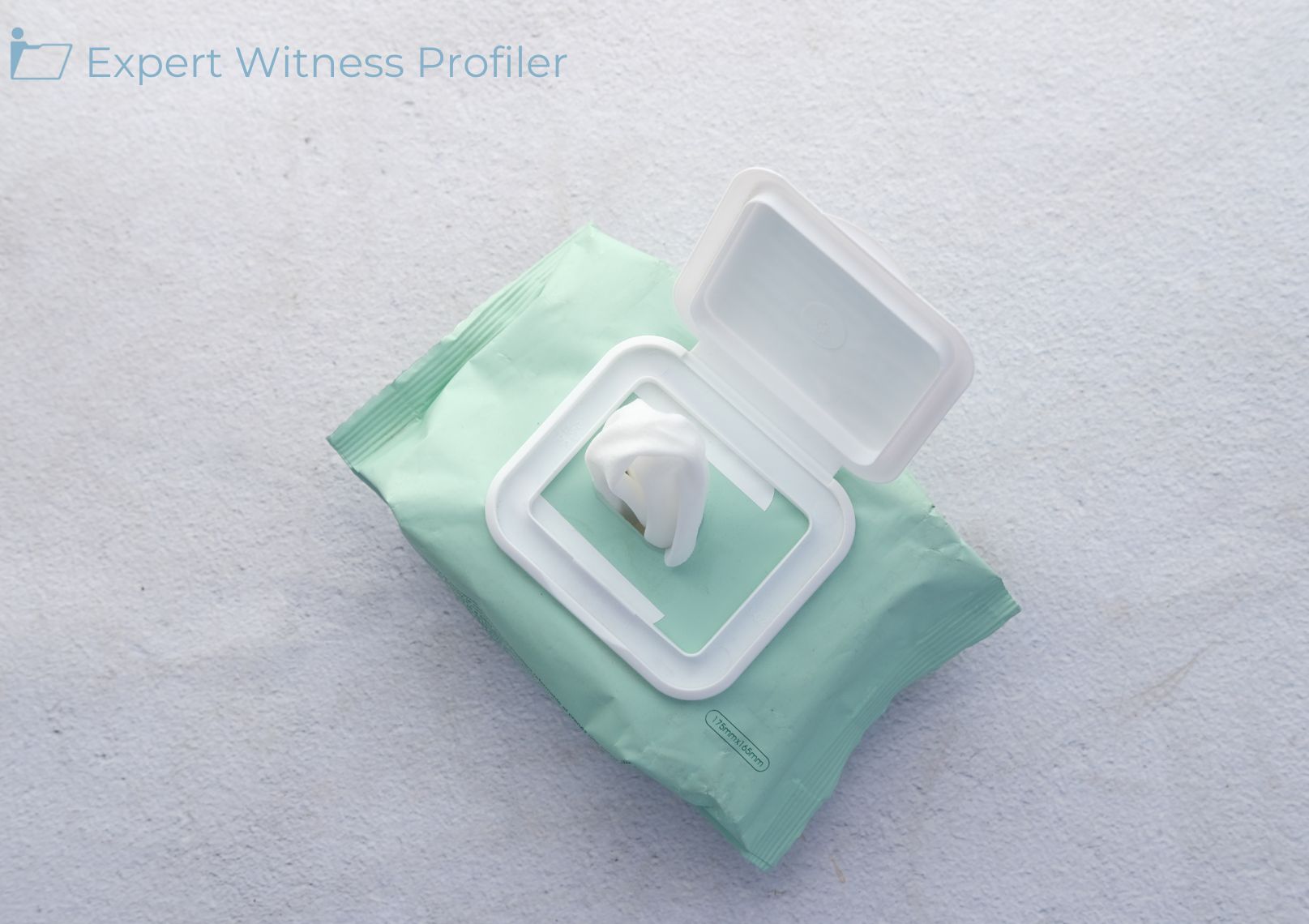
    This case involves a dispute between JAS Supply, Inc. (“Plaintiff”) and Radiant Customs Services, Inc. and Radiant Global Logistics, Inc. (“Defendants”) regarding the importation of alcohol wipes from foreign manufacturers. In 2020, Plaintiff contracted with Defendants to assist with importing alcohol wipes into the United States for the first time. Defendant Radiant Global Logistics provided freight forwarding services, while its related company Radiant Customs Services provided customs broker services to ensure compliance with customs regulations.  

    Plaintiff successfully imported 15 of 19 containers, but the final 4 were detained and eventually refused by U.S. Customs and Border Protection (“CBP”) due to missing information required by the FDA about the originating manufacturer. Plaintiff alleged that Defendants’ misconduct led to the damages from the refused products. Both sides retained experts on importation and customs brokerage industries – Plaintiff retained Kelli R. Thompson and Defendants retained Cameron W. Roberts. The parties filed motions to exclude each other’s expert testimony.  

    Customs Expert Witnesses 

    Kelli Thompson is a highly experienced Customs and International Trade Advisor with a diverse background. She is a licensed customs broker and certified customs specialist with extensive private sector and public sector experience in various areas of customs and trade, including classification, valuation, rules of origin, free trade agreements, drawback, and intellectual property rights. She also served for nearly seven years with U.S. Customs and Border Protection, rising from Import Specialist to Supervisory Import Specialist. 

    She founded her own trade consulting firm, which has catered to a wide range of clients, from small start-ups to large Fortune 500 companies. Kelli Thompson has a Master’s degree in Business Management from North Park University (2001-2003) and a Bachelor’s degree in Health Promotion & Education from the University of Cincinnati (1994-1999). 

    Cameron Roberts, a partner at Roberts & Kehagiaras LLP in Long Beach, California, brings over three decades of expertise in international trade to his practice. His focus areas encompass customs law, export compliance, domestic and international transportation law, maritime law, and trade and insurance matters. Cameron is an active member of various customs, international trade, and legal associations. He has served as President of the Foreign Trade Association and the Harbor Transportation Club. 

    In addition to his legal career, Mr. Roberts serves as an adjunct professor at California State University, Long Beach. He is a frequent presenter and author on topics within his practice areas. His qualifications include being a licensed customs broker since 1989 and having prior experience as a transportation executive. 

    Cameron holds a B.A. degree in political science and international relations from California State University, Long Beach, and has earned his J.D. degree from the Seattle University School of Law. He is recognized as an expert witness in both State and Federal courts, and he is admitted to practice in California and Washington. Cameron is also qualified to appear before the Court of International Trade and the Federal Maritime Commission. 

    Discussions by the Court 

    The Court first set forth the legal standard for expert testimony under Federal Rule of Evidence 702, which requires expert opinion to be both relevant and reliable. The Court acted as a gatekeeper to evaluate admissibility of expert opinions. General qualifications of both experts were not disputed and the focus was on assessing the reliability and relevance of the expert testimony.  

    The Plaintiff sought to limit Cameron Roberts’ anticipated testimony related to the COVID pandemic, arguing that he lacked the qualifications and that his testimony would lack relevance and reliability. The Defendants intended for Roberts to provide insights into “the pandemic’s effects on the import industry” and how it specifically impacted individuals involved in the case and their ability to work. The Plaintiff’s main contention was that Roberts did not possess relevant education or specialized knowledge about the COVID pandemic, particularly in areas like medicine or public health. However, it’s important to note that Roberts did not claim to be a pandemic expert in those fields. Instead, his opinions were rooted in his expertise in the customs brokerage industry, shaped by his observations and personal experiences during the pandemic. 

    The Plaintiff did not appear to dispute Roberts’ general industry expertise, which formed the basis of his opinions. As such, Roberts was considered qualified to offer expert insights into the relevant industries during the pandemic based on his personal knowledge, experience, and observations during that time. 

    The Plaintiff attempted to challenge the reliability and relevance of Roberts’ opinions as they applied to the specific facts of the case. They pointed out that Roberts’ opinions were often based on facts that were either in dispute or about which he had limited personal knowledge. However, it was clarified that this argument primarily called in question the weight and credibility of Roberts’ opinion testimony, rather than its reliability or relevance. 

    The Defendants’ primary argument for excluding Thompson as an expert was based on the assertion that her disclosed affirmative report contained numerous improper legal conclusions. Thompson had made numerous legal conclusions within her testimony, specifically regarding whether the Defendants’ conduct constituted negligence, whether they breached a fiduciary duty, or otherwise violated federal regulations. She even made express credibility determinations.  Similarly, the Plaintiff contended that Roberts’ anticipated testimony was improper because it extensively included inadmissible legal opinions on contested issues. For instance, he had defined gross negligence, mistake of fact, and inadvertence based on case law that was irrelevant to the facts of the specific case. Ultimately, he had arrived at a legal conclusion, stating that the Radiant Defendants were not grossly negligent but had committed a mistake of fact. He found that the Radiant Defendants’ belief that they had submitted the appropriate paperwork was reasonable. The Court concurred that such testimony would not be admissible. 

    Consequently, the Court partially granted the Plaintiff’s motion to limit Roberts’ testimony and partially granted the Defendants’ motion to exclude Thompson’s testimony. The Court’s order stipulated that neither expert would be allowed to offer testimony during the trial that purported to provide impermissible legal conclusions or interpretations. 

     
    Court assessed the dispute regarding whether Thompson should be disqualified as an expert due to the form of her report. Defendants argued that her conclusions were based on a skewed version of the factual record consisting of “regurgitated facts” provided by the Plaintiff’s counsel. They contended that within her report, Thompson made improper determinations on the credibility and culpability of lay witnesses, and these issues, coupled with the alleged formulation of her opinions as legal conclusions, led them to seek her disqualification as an expert witness. 

    Concerning the formulation of her opinions in her report, it was noted that Thompson’s written report, as disclosed to the Defendants, wouldn’t be admitted into evidence since it would be redundant with the testimony she would provide at trial. The Court emphasized that objections to the form of her testimony could be raised during the trial, but disqualifying her as an expert wasn’t warranted. Instead, traditional means such as cross-examination, presenting opposing evidence, and instructing the jury on the burden of proof were deemed appropriate for challenging her testimony. 

    Plaintiff recognized that Thompson’s opinions regarding the credibility of lay witnesses were improper and had shown a willingness to address and correct this issue. However, there was one statement challenged by the Defendants that Thompson had not rectified, and the Court determined it to be improper. Specifically, the Court ruled that Thompson could not provide opinions on the state of mind or understanding of other potential witnesses. The Court prohibited Thompson from opining on the credibility or culpability of lay witnesses. 

    Regarding the potentially inadmissible formulations of Thompson’s opinions, it was argued that these issues were curable. Plaintiff provided revised language to address the alleged improper conclusions, demonstrating how they could be presented as admissible opinions without altering their substance. Defendants contested this amended report, claiming it was an untimely supplement. However, the Court noted that it could excuse the untimeliness if it found the disclosure error to be harmless. Furthermore, it highlighted that even without the modified report, Thompson could still provide admissible opinions within the scope of her original disclosure. 

    The Court’s role was to determine whether Thompson was qualified to offer relevant and reliable testimony. Since there were no challenges to the experts’ general qualifications, and given that both parties had dueling expert testimonies on the same subject matter, the Court believed the intended dueling testimony would be relevant and reliable as long as it was presented appropriately and in an admissible form at trial. 

    Held 

    The Court granted the motions only to the extent of excluding improper legal conclusions and credibility opinions. It denied excluding the experts themselves. The Court found Roberts qualified to opine on the pandemic’s industry impact from his experience. The Court held Thompson’s opinions could be presented in an admissible manner, finding her report did not warrant blanket exclusion. With improper opinions excluded, the Court found both experts could offer helpful industry testimony. 

    The Court has not arrived on an outcome for this case since the remaining issues involved in this case still await resolution. 

    Key Takeaways:

    – Experts can testify to industry practices and standards based on their qualifications and experience in the field. However, experts cannot offer legal conclusions or interpretations.  

    – Minor deficiencies in an expert report do not always warrant blanket exclusion of the expert. Their opinions can still be presented in admissible form through testimony.  

    – While experts cannot opine on lay witness credibility, they can otherwise testify to the reasonableness of parties’ actions based on industry standards and their expertise. 

    – Untimely supplementation of an expert report may be excused when it does not substantively alter the opinions and causes no prejudice. 

    In summary, the Court set a high bar for exclusion of otherwise qualified experts. Their opinions must be screened for legal conclusions, but as long as their testimony assists the factfinder and clearance requirements are met, exclusion is disfavored.