Tag: Care

  • Dental Expert Not Allowed to Opine on the Quality of  Care

    Dental Expert Not Allowed to Opine on the Quality of Care

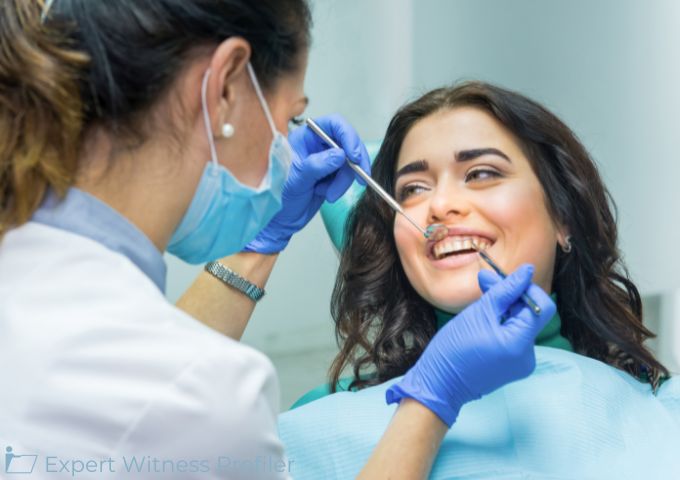
    While detained in Division 6 of the Cook County Jail, Plaintiff Willie Clay began experiencing a toothache. Clay claimed that he waited nearly a month before being evaluated by a dentist and that, as a result of the delay, he experienced unnecessary pain. For that reason, he brought the present civil rights action on behalf of himself and similarly situated Division 6 inmates against Defendants Thomas Dart, in his official capacity as the Sheriff of Cook County (“Sheriff”), and Cook County.

    Clay also contended that Division 6’s dental clinic maintained grossly deficient scheduling and staffing policies that denied constitutionally adequate medical care to inmates.

    The Court has certified a Plaintiff class consisting of similarly situated individuals assigned to Division 6 between February 19, 2018, and March 31, 2020, who submitted a written complaint of a toothache causing significant pain but failed to receive a timely evaluation by a dentist.

    Defendants sought to exclude the opinions proffered by Clay’s expert, Dr. Anita Lockhart, and Clay, in turn, sought to strike Defendants’ expert, Dr. John Dovgan.
    Dental Expert Witnesses

    Anita Lockhart is a dentist who has worked as a clinical specialty consultant and dental officer with the Federal Bureau of Prisons since June 2013. She has authored a chapter regarding correctional dentistry in Correctional Health Care: Practice, Administration, and Law, an authoritative textbook,
    with leading public health dentists

    Want to know more about the challenges Anita Lockhart has faced? Get the full details with our Challenge Study report.

    John W. Dovgan is a practicing dentist. He has been a board approved consultant for over 29 years, adjudicating more than 1,300 dental board cases in Arizona.

    Get the full story on challenges to John Dovgan’s expert opinions and testimony with an in-depth Challenge Study.

    Discussion by the Court

    Anita Lockhart

    According to Defendants, Lockhart relied on cherry-picked data to conclude that the Division 6 dental clinic lacked adequate staffing and appropriate scheduling procedures to ensure that detainees with urgent toothaches were timely evaluated by a dentist.

    Specifically, Defendants fault Lockhart’s opinions for being based in substantial part on the records of a sample of 45 detainees who submitted urgent health service request forms (HSRFs) during the class period that were selected and provided to her by class counsel.

    The Court concluded that Lockhart’s use of a nonrandom sample is not a basis for excluding her opinions but instead is an issue to be explored on cross-examination.

    Next, Defendants argued that Lockhart failed to conduct any meaningful analysis connecting her review of the exemplars’ medical records to her conclusion that there were systemic deficiencies in the Division 6 dental clinic’s staffing and scheduling practices that caused unreasonable delays in dental care for urgent HSRFs.

    The Court, however, disagreed that Lockhart did not connect the dots between her review of the exemplars and her overall conclusion. Lockhart’s discussion of the exemplars is preceded by her extensive analysis of the Division 6 dental clinic’s response to the urgent HSRFs submitted by three of the related-case Plaintiffs.

    Finally, Defendants argued that Lockhart’s opinions should be excluded because she is admittedly unable to identify the exact reason why any specific Plaintiff or exemplar was scheduled for a dentist’s appointment on a particular date. However, her opinions are not rendered inadmissible because she cannot assign a specific cause of delay for each detainee that she examined. It is enough that Lockhart offered well-founded opinions about the existence of systemic delays in scheduling urgent HSRFs at the Division 6 dental clinic.

    John Dovgan

    In this case, the central issues relate to whether the Division 6 dental clinic was adequately staffed, whether it maintained adequate scheduling procedures, and whether detainees with urgent complaints of pain from a toothache were timely scheduled for an appointment with a dentist.

    Instead of directly confronting Clay’s core contentions about staffing, scheduling, and the timeliness of dental evaluations, Dovgan’s approach focuses on the ultimate issue of whether Division 6 detainees overall received objectively reasonable care.

    To evaluate the quality of dental care that detainees received, Dovgan reviewed the treatment records from the class period for Clay and the related-case Plaintiffs along with a random sample of 84 detainees. To put together the sample, Dovgan selected the first complete name on every 25th page of the Division 6 dental clinic’s schedule for the class period. However, that process resulted in a detainee being selected for the sample regardless of whether he had submitted an HSRF indicating a pain level of 6 or greater. Thus, Dovgan’s sample sweeps in not just detainees with urgent HSRFs but also detainees whose HSRFs indicated conditions causing them no pain or requested routine procedures like a cleaning.

    Another significant problem with Dovgan’s testimony is that, in instances where a detainee has complained of urgent pain, Dovgan offered his own opinion on whether that detainee was, in fact, suffering pain at the level indicated, and then he incorporated that credibility determination into his evaluation of the reasonableness of care the detainee received.

    In short, the Court found that Dovgan’s opinions must be excluded in their entirety because they do not fit the relevant facts of this case, make improper assertions regarding the credibility of detainees’ subjective complaints of pain, and are not founded on scientifically reliable premises.

    Held

    The Court granted Clay’s motion to exclude the testimony of Dr. John Dovgan but denied Defendants’ motion to bar the expert testimony of Dr. Anita Lockhart.

    Key Takeaway

    This case concerns whether detainees with urgent complaints of pain from a toothache received a reasonably timely response from a dentist. Detainees who never submitted an urgent HSRF have no relevance to the reasonableness of care provided in response to urgent HSRFs. Dovgan’s analysis of a sample that includes those detainees provides an answer to a different question than the one asked and, as such, does not assist the trier of fact.

    Case Details:

    Case Caption: Clay V. Dart Et Al
    Docket Number: 1:19cv2412, 1:19cv02995, 1:19cv04348, 1:19cv06066, 1:19cv06702
    Court Name: United States District Court for the Northern District of Illinois, Eastern Division
    Order Date: March 26, 2026
  • Corrections Expert Was Allowed to Opine on High-Risk Inmates

    Corrections Expert Was Allowed to Opine on High-Risk Inmates

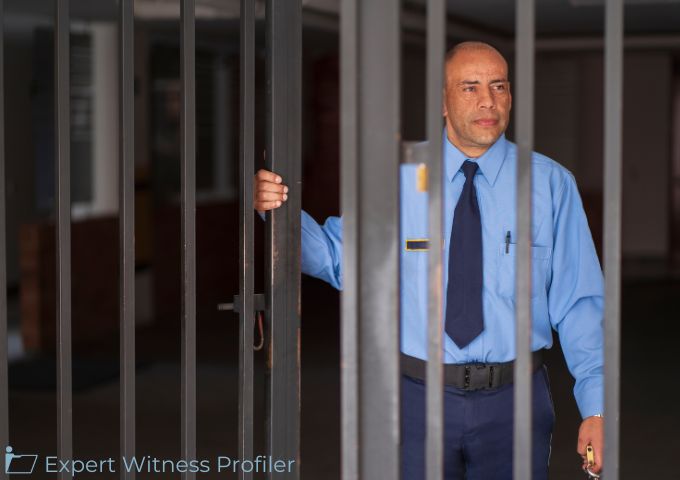
    This case arises from the preventable death of Dalton Milby, who died by suicide on February 12, 2022, while in the custody of the Larue County Detention Center (“LCDC”).

    He was taken to LCDC, where he was put on suicide watch and issued an anti-suicide smock. Despite this, Milby managed to gain access to a standard jail jumpsuit, which he used to take his own life shortly before 4:00 p.m.

    Plaintiffs offered the opinion of Timothy J. Murray to help the jury understand standards of care applicable to high-risk inmates like Milby and whether LCDC officers complied with those standards.

    Corrections Expert Witness

    Timothy J. Murray worked at various levels of the New York State Department of Correctional Services (“NYSDOCS”) for thirty-one years and has since served as a correctional consultant for nearly two decades.

    Want to know more about the challenges Timothy Murray has faced? Get the full details with our Challenge Study report.

    Discussion by the Court

    1. Qualification

    Defendants contended that Murray lacked an understanding of the “qualifications required to serve as a jailer in Kentucky,”’ and that this makes him unqualified to offer testimony on whether Defendants complied with relevant standards.

    Murray’s CV reveals that he worked in corrections in New York for over thirty years, serving at three separate correctional facilities.

    Murray’s academic background supplements his lengthy career in corrections. He possesses a Bachelor of Science in Education, a Master of Science in Education, and a Certificate of Advanced Study in Educational Administration, as well as specialized training from the United States Department of Justice and the American Correctional Association.

    2. Relevance

    Defendants maintained that Murray did not review the LCDC policies and procedures or the Kentucky Jail Standards developed by the Kentucky Department of Corrections.

    Notably, Murray’s report references both the Kentucky Administrative Regulations and the ACA standards of correctional operations.

    The report explained that LCDC staff are bound by not only Kentucky legal standards, but also professional standards in the industry. Murray also opined as to what constitutes appropriate staff training for dealing with high-risk inmates and whether staff at LCDC were sufficiently trained and supervised.

    Even if Murray did apply national standards, this does not automatically render his opinion unhelpful to the jury. Defendants did not point to any differences between the Kentucky standard of care and the national standard of care that would render testimony about the national standard of care entirely unhelpful to the jury. Furthermore, expert opinions that rely in part on national professional standards such as this are regularly found to be relevant.

    3. Reliability

    Defendants once again argued that Murray’s failure to apply Kentucky standards references his opinion unreliable. As the Court has already explained, however, Murray did reference the Kentucky standards in his report, and he testified that he reviewed the regulations in creating his report. Nor did Defendants explain why Murray’s reference to the ACA standards constitute an unreliable principle or method. They simply argued that Murray’s testimony amounts to “his belief as to what should have been done in an ACA accredited facility, not a Kentucky facility governed by the Kentucky Jail Standards and the Policies and Procedures of LCDC.”

    Once again, Defendants pointed to no substantive differences between the ACA standard and the Kentucky standard such that the ACA standard would constitute an “unreliable” standard as applied to a Kentucky jail. Murray relied on the ACA, Kentucky regulations, and his own personal experience in corrections to provide an opinion on the appropriate standard of care. He compared the actions of Defendants against that standard using facts he ascertained from depositions and camera footage. He therefore explained the “how” and “why” he reached his conclusions.

      Held

      The Court denied Defendants’ motion to exclude the testimony of Timothy Murray.

      Key Takeaway

      The jury will be tasked with determining several key issues related to the applicable standard of care and whether Defendants complied with that standard of care. Understanding generally accepted correctional practices will help the trier of fact determine what constitutes reasonable conduct by jail workers dealing with a suicidal inmate.

      Case Details:

      Case Caption: Milby V. Underwood
      Docket Number: 3:23cv49
      Court Name: United States District Court, Kentucky Western
      Order Date: April 13, 2026
    1. Public Health Expert Was Allowed to Opine on the Quality of Care

      Public Health Expert Was Allowed to Opine on the Quality of Care

      This is a securities class action, led by Chicago Laborers’ Pension Fund and New York Hotel Trades Council & Hotel Association of New York City, Inc. Pension Fund (collectively, “Plaintiffs”).

      Plaintiffs alleged that Acadia Healthcare Company, Inc. (“Acadia”) and several of its current and former executives, including David M. Duckworth, Brent Turner, and Joey A. Jacobs (collectively, “Defendants”) made false and misleading statements to investors regarding Acadia’s business.

      Defendants filed a motion to exclude the testimony and opinions of Plaintiff’s expert witness Dr. Ashish K. Jha.

      Public Health Expert Witness

      Ashish Kumar Jha is an American general internist physician and academic who served as the White House COVID-19 response coordinator from 2022–2023. He has been Dean of the Brown University School of Public Health since 2020.

      Prior to Brown, he was the K.T. Li Professor of Global Health at Harvard T.H. Chan School of Public Health, faculty director of the Harvard Global Health Institute, and a Senior Advisor at Albright Stonebridge Group.

      Get the full story on challenges to Ashish Jha’s expert opinions and testimony with an in-depth Challenge Study.

      Discussion by the Court

      Defendants did not dispute that Jha is qualified as an expert to opine on the quality of care offered at Acadia’s mental healthcare facilities during the Class Period. Instead, they contended that his opinions on that issue should be excluded as irrelevant because he did not opine about the quality of care offered at Acadia’s facilities “on the whole,” and that his opinions about assessing the quality of care offered at Acadia’s mental health facilities should be excluded as unreliable for failing to provide factual context that Defendants think is important.

      Plaintiffs responded by first noting that Jha’s overarching opinions concerned the quality of care offered in all of Acadia’s facilities and that such evidence is highly probative of falsity as to the challenged quality care misstatements. Next, Plaintiffs argued that Jha’s opinions are reliable. Plaintiffs submitted that Defendants’ motion ignored Jha’s detailed explanation, supported by considerable scholarship, of why it was appropriate to compare Acadia’s standalone, for-profit inpatient facilities to other standalone, for-profit inpatient facilities to prevent confounding variables from prejudicing the analysis.

      The Court found that Plaintiffs have shown by a preponderance of the evidence that Jha is qualified, his opinions have a reliable basis in the knowledge and experience of his discipline, and that he will testify to knowledge that will assist the trier of fact in understanding the evidence about the quality of care offered at Acadia’s mental healthcare facilities during the Class Period and deciding whether Defendants’ challenged statements regarding the same were knowingly false when made.

      Held

      The Court denied the Defendants’ motion to exclude the testimony and opinions of Plaintiff’s expert witness Dr. Ashish K. Jha.

      Key Takeaway:

      Although the Defendants also attacked Jha’s methodology, those arguments did not show that Jha’s opinions are “so fundamentally unsupported that it can offer no assistance to the [trier of fact]” under the facts of this case.

      Please refer to the blog previously published about this case:

      Economics Expert Allowed to Opine on Stock Inflation

      Case Details:

      Case Caption: St. Clair County Employees’ Retirement System V. Acadia Healthcare Company, Inc. Et Al
      Docket Number: 3:18cv988
      Court Name: United States District Court for the Middle District of Tennessee, Nashville Division
      Order Date: November 07, 2025