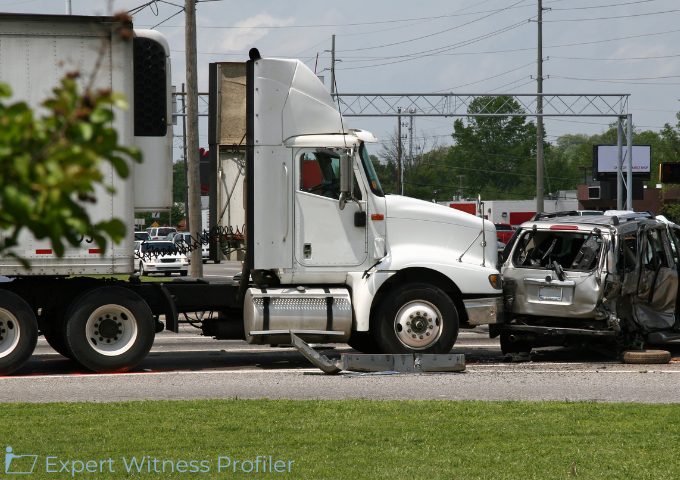
On September 30, 2021 at approximately 4:14 p.m., Defendant Marcus D. Jethrow, was operating a 2021 Volvo 760 tractor-trailer owned by Defendant Keep Trucking, LLC (Defendant Keep Trucking) traveling northbound on US 61 Hwy in Marion County, Missouri. At the same time, Keith Triplett (decedent) was operating a 1988 International Harvester grain hauler traveling east on County Road 338 in the process of crossing US 61 Hwy. The vehicles collided, and Triplett died as a result.
Triplett’s wife asserted claims of negligence in hiring, training, supervising, retaining, and entrusting Jethrow against Defendant Keep Trucking.
Plaintiffs asked the Court to exclude the testimony of the Defendants’ retained accident reconstruction expert witness, Kevin T. Johnson, for both Rule 26(a)(2)(B) and Daubert reasons.
Accident Reconstruction Expert Witness
Kevin Turner Johnson is accredited by A.C.T.A.R., the Accreditation Commission for Traffic Accident Reconstruction, testifies as an expert witness, and trains others in the accident reconstruction community. His 10 years of law enforcement experience, which included over 500 collisions investigated on-scene, lends additional perspective to collision analysis and police investigations.
First, Plaintiffs alleged that Johnson performed an avoidability calculation of what would have occurred if Jethrow had been traveling at exactly the posted speed limit of 65 m.p.h. and then suppressed it, not complying with required disclosures in Rule 26(a)(2)(B).
Johnson analyzed multiple data points to reach his conclusions in this case which would include but are not limited to: physical evidence on the roadway, damage patterns, distances traveled, electronic data from the vehicle showing speeds and braking, and the video of the collision and the event prior thereto.
Johnson’s report contained his analysis of available data and after performing accident reconstruction calculations, determined that Defendant Jethrow’s speed did not cause the accident. Plaintiffs presented no evidence that Johnson or Defendants suppressed anything here or that they did not comply with required disclosures in Rule 26(a)(2)(B). Therefore, the Court refused to exclude his opinion on Plaintiffs’ first point of argument.
Plaintiffs also took issue with the perception-response time analysis done and the traffic standards applied. Johnson focused his reconstruction analysis on a moment in time that the decedent was a hazard — i.e. when he was in the median failing to yield. Plaintiffs’ expert, meanwhile, focused his reconstruction analysis on a ten second window prior to the collision. Just because these analyses are different, the Court held that challenges to the factual basis of Johnson’s testimony go to credibility and the weight of the testimony which are subjects that may be raised during cross-examination.
Held
The Court denied Plaintiff’s motion to exclude the testimony of Defendants’ expert Kevin Johnson.
Key Takeaway
Challenges to the factual basis of Johnson’s testimony go to the credibility of the testimony, not the admissibility, and it is up to the opposing party to examine the factual basis for the opinion in cross-examination. Only if the expert’s opinion is so fundamentally unsupported that it can offer no assistance to the jury must such testimony be excluded.
Case Details:
Case Caption:
Triplett V. Keep Trucking, LLC
Docket Number:
2:25cv1
Court Name:
United States District Court for the Eastern District of Missouri, Northern Division
On October 5, 2022, Plaintiff John Caton, then 77 years old, was crossing the street, when he was struck by a USPS postal truck. Plaintiff claimed injury to and future medical care needs for not just his right hip and cervical spine, but also for his right shoulder, right foot and ankle, right thumb, and spine. While the parties agreed that Plaintiff injured his hip in the collision and required treatment, the parties disputed which of his other body parts were injured due to the collision, as well as the appropriate course of treatment.
Plaintiff submitted expert reports from two retained experts in this case: Dr. Piers Barry, an orthopedic surgeon who examined Plaintiff and his medical records; and Dr. Kelly S. Harvey, a life care planner who estimated medical costs. Barry submitted five expert reports in this case, dated: November 29, 2024; December 20, 2024; April 8, 2025; July 31, 2025; and September 16, 2025. The April 8, 2025 and July 31, 2025 reports contain his causation opinions. Harvey’s life care plan report estimated the cost of carrying out Dr. Barry’s treatment plan.
Defendant United States filed a motion to exclude certain testimony of Plaintiff’s experts.
Orthopedic Surgery Expert Witness
Dr. Piers A. Barry is a board certified orthopedic surgeon with extensive clinical and hands on experience. He has published scientific journal articles and has given presentations on subjects such as arthroscopic treatment of knee, shoulder, and ankle, and hip injuries. Barry is a member of the Arthroscopy Association of North America (AANA).
Kelly Sandy Harvey is a credentialed and certified Life Care Planner. She specializes in the treatment of complex orthopedic trauma, traumatic brain injury, spinal cord injury, amputations, and burns.
Defendant sought to exclude certain expert testimony from Barry and Harvey for four reasons: 1) Barry’s causation opinions for Plaintiff’s foot, ankle, shoulder, and thumb injuries were unreliable; 2) Barry’s opinions regarding Plaintiff’s hip care were unreliable; 3) Barry’s report, served on September 16, 2025, was untimely; and 4) Harvey’s opinions on the cost of Plaintiff’s injuries lacked foundation.
i. Testimony that Plaintiff’s foot, ankle, shoulder or thumb were injured in the collision
Defendant sought to exclude Barry’s testimony that Plaintiff’s foot, ankle, shoulder, and thumb were injured in the collision. Defendant argued that Barry did not provide a clear explanation as to why he believes the collision injured Plaintiff’s shoulder, foot, ankle, or thumb.
a. Right foot and ankle
Barry noted that Plaintiff felt significant pain in his right foot and ankle after regaining consciousness immediately following the collision. Furthermore, Barry’s report stated that Plaintiff later underwent a cardiovascular evaluation to rule out a cardiac cause for the persistent swelling, but he did not address what caused the swelling.
While Plaintiff’s ankle and foot pain could be considered a symptom of the injuries sustained during the collision—Barry’s reports are silent on how the swelling was caused by the collision. Given the passage of time between the collision and the symptoms, the Court found that Barry’s reports did not explain how the injuries can be attributed to the collision and allowing him to testify regarding these injuries would only confuse the finder of fact.
b. Shoulder and thumb
Barry explained that Plaintiff saw Eric Stuffman, an orthopedic surgeon from July 25 to August 10, 2023 for ongoing right shoulder pain. Barry’s summary of Plaintiff’s medical records noted limited range of motion in his shoulders as early as October 7, 2022, which was only two days after the accident. The earliest mention of a thumb injury was December 11, 2024, when Plaintiff had an MRI.
The Court noted that Barry did not explain how these injuries are related to the accident other than Plaintiff denying any prior injuries. That is not enough.
ii. Testimony regarding future medical care needs for Plaintiff’s hip
Second, Defendant contended that Barry’s opinion regarding Plaintiff’s hip recovery needs are unreliable and will not assist the trier of fact, because Plaintiff underwent hip replacement surgery in January 2026, and Barry admitted at deposition that he had no basis of knowing whether Plaintiff required extended inpatient care or rehabilitation, as originally opined, or whether he was discharged home immediately.
Plaintiff’s opposition did not meaningfully address this argument. Nonetheless, Defendant essentially sought to penalize Plaintiff for having surgery after expert reports were due. That is no reason to exclude testimony regarding the anticipated course of treatment and recovery. If anything, any divergence between Barry’s report and Plaintiff’s post-operative care needs would serve as grounds for impeachment, rather than exclusion.
Accordingly, the Court declined to exclude Barry’s testimony on future medical care needs pertaining to Plaintiff’s hip.
iii. Whether Barry’s report received on September 16, 2025 should be stricken as untimely
Finally, Defendant filed a motion to strike Barry’s rebuttal report, served on September 16, 2025, as untimely. The deadline to serve rebuttal reports was August 27, 2025.
In opposition, Plaintiff argued that the two-week delay was inconsequential, not prejudicial and was unintentional. Specifically, Plaintiff contended that the report was provided well in advance of any expert depositions and that defense counsel had the report for approximately four months prior to Barry’s deposition.
Even with the two-week delay, Defendant had the rebuttal report several months before Barry’s deposition and before any other experts were deposed, which effectively rendered the delay harmless. Thus, exclusion would be a harsh sanction under the circumstances.
B. Harvey’s Opinion
Finally, Defendant argued that, to the extent that the Court excluded Barry’s opinions, it should also exclude any of Harvey’s cost analysis that relied on those excluded opinions.
The Court agreed. Since Barry’s opinions regarding Plaintiff’s right foot and ankle, shoulder, and thumb injuries were excluded, Harvey’s opinions regarding the cost of care for those injuries were also similarly excluded. Her other opinions, however, were not excluded.
Held
The Court granted in part and denied in part Defendant’s motion to exclude certain testimony of Plaintiff’s experts.
Key Takeaway
The purpose of a ‘detailed and complete’ expert report is, in part, to minimize the expense of deposing experts, and to shorten direct examination and prevent an ambush at trial.
Case Details:
Case Caption:
Caton V. United States
Docket Number:
4:23cv5451
Court Name:
United States District Court for the Northern District of California
On March 12, 2021, Linda Maraldo was waiting at a red light in her 2017 Chevrolet Sonic. Behind her, Cynthia O’Hara was operating a United States Postal Service (“USPS”) box truck. When the light turned green, O’Hara took her foot off the brake, causing the truck to move forward and collide with Maraldo’s vehicle. Maraldo claims to have suffered neck and back pain as a result.
Expert Opinion
Government expert Dr. Jennifer Yaek conducted accident reconstruction and biomechanical analyses of the rear-end collision between Maraldo’s vehicle and the USPS box truck.
In preparing her expert report, Yaek reviewed several sources of information, including: (1) information about the accident, (2) eight photographs of the vehicles involved in the crash and the site of the crash, (3) repair and maintenance records for both vehicles, and (4) Maraldo’s medical records.
Yaek’s assessment of vehicle damage was solely based on the documents and photographs supplied by the government, as she did not conduct a physical inspection of either vehicle.
1. Accident Reconstruction Analysis
Yaek’s accident reconstruction analysis led her to conclude that the maximum change in velocity, or delta-V, of Maraldo’s vehicle was approximately 5 miles per hour, that the closing/impact speed of the USPS truck was approximately 6-6.5 miles per hour, and that the principal direction of force applied to Maraldo’s vehicle was 6 o’clock “with 12 o’clock being straight ahead on the vehicle.”
Yaek’s crush analysis began with calculating how much force acted on the rear of Maraldo’s vehicle and, similarly, on the front of the USPS truck. To calculate the force that acted on the rear of Maraldo’s vehicle, Yaek used photos of the vehicle’s “undeformed rear bumper and publicly available, peer-reviewed engineering and scientific literature.”
Yaek next used the Crash Investigation Sampling System from the National Highway Traffic Safety Administration to evaluate her delta-V calculation relative to the delta-V values in two other accidents where a vehicle rear-ended a Chevy Sonic.
2. Biomechanical Analysis
Yaek’s biomechanical analysis led her to conclude that the accident “did not provide sufficient forces to cause motion of Maraldo’s cervical or lumbar spine beyond the physiological range of motion, and would most likely not provide the type or magnitude of loading consistent with mechanisms for acute spinal injury beyond transient spinal strain.”
Yaek used the laws of physics to determine that Maraldo would have moved initially rearward and then rebound forward during the collision. She compared the loads that Maraldo’s spine would have experienced during the accident to “injury tolerances” and “loading experienced in physical tasks and activities of daily living.”
Yaek further drew on biomechanical and peer-reviewed studies in finding that Maraldo’s accident could not have resulted in disc herniation, protrusion, or bulging absent damage to adjacent bony structures.
Daubert Motion
Maraldo contended that Yaek’s accident reconstruction opinions are unreliable and based on speculation. Specifically, Maraldo asserted that Yaek did not perform a crush analysis and instead based her conclusions on a limited review of only one photograph of each vehicle. Furthermore, Maraldo argues that Yaek lacked crucial information regarding the distance traveled by the USPS truck until impact, the speed of the USPS truck, the starting positions of the vehicles pre-impact, or the resting positions of the vehicles post-impact.
Accident Reconstruction ExpertWitness
Jennifer L. Yaek has more than 25 years of extensive experience in accident reconstruction, vehicle dynamics, and data analysis.
She received her Master’s degree and PhD in biomechanical engineering with a concentration in impact biomechanics and has provided expertise in human injury tolerance, occupant kinematics, and rigid body dynamics associated with transportation related impacts, inter alia, since 2012.
In addition, Yaek has co-authored numerous publications, including a 2020 article on rear impact.
First, Yaek’s crush analysis consisted of three parts: (1) calculating how much force acted on the rear of Maraldo’s vehicle, (2) calculating how much force acted on the front of the USPS truck, and (3) calculating the total crush that both vehicles dissipated. In performing the crush analysis, Yaek reviewed multiple photos of both vehicles and relied on “publicly available, peer-reviewed engineering and scientific literature” as well as the laws of physics.
The Court concluded that Maraldo did not adequately support her contention that a physical inspection of the vehicles was required for Yaek’s analysis. Specifically, Maraldo did not clarify the necessity of a physical inspection, the additional insights Yaek would have gained, or the specific information Yaek overlooked by not conducting one. This failure to provide a clear explanation weakened Maraldo’s position.
In conducting her accident reconstruction analysis, Yaek reviewed a traffic crash report from Michigan, a USPS accident investigation worksheet, and the deposition testimonies of both Linda Maraldo and Cynthia O’Hara. Notably, Maraldo does not contest the foundation of Yaek’s delta-V calculation and principal direction of force determination. Consequently, the Court finds no apparent issues with Yaek’s accident reconstruction analysis that would render her opinions inadmissible. Furthermore, Maraldo argues that Yaek’s report lacked the expected level of intellectual rigor for an accident reconstruction expert.
Yaek compared the current accident to two other rear-end collisions involving Chevy Sonics to evaluate her delta-V calculation against other delta-V calculations, utilizing details and calculations sourced from the National Highway Traffic Safety Administration’s Crash Investigation Sampling System. However, Maraldo has not provided any explanation as to why this sampling system is unreliable such that Yaek should have confirmed the details of the accidents in the system herself.
B.Challenges to the Biomechanics Opinions
Maraldo argues that Yaek’s biomechanical analysis is grounded on an unreliable accident reconstruction analysis and is unsupported by the literature that Yaek cited in her report.
Maraldo claims that the peer-reviewed literature that Yaek cites does not address injury tolerance and the effect of forces on an aged spine like Maraldo’s.
First, as discussed above, Yaek performed a reliable accident reconstruction analysis. To perform her biomechanical analysis, Yaek applied her delta-V calculation, principal direction of force determination, and the circumstances of the collision to describe how Maraldo’s body would have moved during the collision.
Yaek also compared the forces that Maraldo’s neck and back would have experienced during the accident to the forces that one’s neck and back might experience in accidents of similar or greater severity and in activities of daily living.
The Court finds that this analysis and the resulting opinions are reliable.
Second, Maraldo’s criticisms of the literature that Yaek cites are immaterial to any of the Daubert factors. At best, Maraldo’s critiques of the literature go to the weight of Yaek’s opinion, not its admissibility.
Held
Because Dr. Jennifer Yaek’s opinions meet the admissibility standards of Federal Rule of Evidence 702, the Court will not exclude them. The the Court, therefore, denied Maraldo’s motion to exclude the government’s expert opinions and testimony.
Key Takeaway:
The Court affirmed Yaek’s methodologies, including her crush analysis, delta-V calculations, and comparisons to similar accidents and reliance on biomechanical studies, despite the Plaintiff’s challenges regarding the lack of physical inspection and the cited literature. The Court determined that the Plaintiff’s criticisms primarily went to the weight, not the admissibility, of the expert’s opinions.
On March 19, 2023, a ski collision at Aspen Highlands Ski Resort between Tasha Barber (Plaintiff) and Christine Mack (Defendant) led to a lawsuit. Barber claims Mack, skiing uphill, had the responsibility to avoid the collision and is seeking damages for her resulting injuries. Mack denies these claims and has engaged Jonathan Delk as an expert witness. Delk’s expert report includes a section titled “Conclusion and Opinions” where he presents factual conclusions and his professional opinions. At the end of that section, Delk offered three opinions:
1. Barber was responsible for avoiding the collision based on her being the uphill skier.
2. Barber was neither prepared nor aware enough to begin skiing, nor does she acknowledge that her being in motion (“coasting”) as skiing, which it is. These real facts and perspectives shared by Tasha Barber prove that Tasha was not sufficiently in control or aware of her surroundings to have avoided a collision.
3. Barber’s choice of actions to avoid the collision (shouting, leaning back, twisting) were ultimately the cause of her skis coming into contact with Christine Mack’s. Tasha Barber’s movements were the ultimate mechanism of her injury.
Jonathan Delk is an experienced trainer and risk manager with 15 years of ski, snowboard, and cycling coaching and training experience. From 2004 – 2019 he was employed in various roles in the ski industry including instructor, guide, coach, trainer, manager, and director of snowsports.
During his tenure in the ski industry, he created and administered safety trainings for instructors and resort staff related to the Skier’s Responsibility Code and the Colorado Skier’s Safety Act. While his primary work has shifted fields, he remains active in the ski industry both as an instructor and member of PSIA-AASI, the governing body of instructor certifications in the United States for which he was also employed during his career as an examiner.
The Federal Rules of Civil Procedure do not expressly provide for a motion for reconsideration on non-dispositive issues. But district courts have plenary power to revisit and amend interlocutory orders as justice requires. When asked to amend such an order, “courts consider whether new evidence or legal authority has emerged or whether the prior ruling was clearly in error.”
The Court determined that the Defendant misunderstood the applicable standard, instead arguing for the application of state reconsideration rules. Consequently, because the Defendantrelied on the incorrect standard, she failed to address the proper one. Furthermore, she criticized Magistrate Judge Chung’s analysis of Delk’s opinions, thereby attempting to reargue her previous points. Ultimately, however, the Tenth Circuit had clearly stated that a motion for reconsideration was not meant for relitigating previously decided issues by the losing party.
To illustrate, the Defendant made two additional attempts to justify Delk’s first opinion.
First Opinion
Firstly, she tried to strengthen the opinion by claiming personal experience with the crash site supported it. However, as the Court previously noted, this justification originated solely from the arguments of her counsel and was absent from Delk’s report.
If the Defendant wished to leverage Delk’s specific expertise regarding fall lines, she could have obtained a narrower opinion concerning how the various slopes and paths would generally impact a skier’s acceleration. She did not do so. Instead, she presented an opinion that relied on assumptions and presumptions to reach a broader conclusion on liability. This opinion exceeded the bounds of expertise by selecting facts for the jury and was therefore inadmissible.
The previous ruling specifically noted that the problem with the opinion is that it did not “explain how [his] experience leads to the conclusion reached, why that experience is a sufficient basis for the opinion, and how that experience is reliably applied to the facts.”
Second Opinion
The Court also found a similar flaw in the second opinion. The Defendant argued that Delk’s knowledge of ski equipment and its effect on reaction time would be helpful to a jury. While this might be accurate, it wasn’t the content of Delk’s report. Instead, the opinion merely criticized the Plaintiff’s preparedness by noting she was “possibly buckling her boots while in motion.” Thus, the core of the opinion didn’t rely on Delk’s expertise in ski equipment. Rather, it stemmed from Delk’s interpretation of the Plaintiff’s deposition testimony as to whether her conduct constitutes “paying attention to her direction of travel.” Jurors don’t need expert assistance to understand the meaning of paying attention.
Third Opinion
Lastly, the Defendant tried to justify Delk’s third opinion, arguing that his expertise in ski control supported his conclusions that the Plaintiff was (1) not buckling her boots, (2) looking down, (3) following the cues of another, and (4) not paying attention to her surroundings. However, the report lacked any explanation of a reliable methodology, based on training and experience, used to reach these conclusions. Furthermore, it’s unlikely a jury needs expert help to determine if the Plaintiff was buckling her boots in motion, looking down, or not just paying attention to her surroundings– or if such inattentive actions could cause an ensuing collision. The Court found that Delk’s opinion here didn’t help the jury understand the facts but rather directed them to choose a specific narrative, offering only an obvious consequence of that narrative as expertise.
Furthermore, the Defendant did not address Delk’s lack of qualifications to state that “Tasha Barber’s movements were the ultimate mechanism of her injury,” a “medical conclusion” for which “Delk has” no “medical training, education, or experience that would allow him to render an expert opinion on injury causation.” In essence, the Court did not disregard Delk’s experience or demand a scientific basis, but rather emphasized that “[e]xpert testimony based on experience alone must reveal how the experience led to the expert’s conclusion, why the experience is a ‘sufficient basis for the opinion,’ and how the experience was reliably applied.” Applying this standard, Delk’s report was deficient. The Defendant’s motion provides no evidence that striking Delk’s report was a clear error.
To the extent the Defendant desires to offer information about the Skier’s Responsibility Code, the Colorado Skier’s Safety Act, or other general skiing information to the jury, the previous order did not foreclose those possibilities.
Held
The Court denied the Defendant Christine Mack’s motion to reconsider pursuant to C.R.C.P. 121 § 1-15(11) regarding Plaintiff’s 702 motion to strike Jonathan Delk’s opinions.
Key Takeaway:
While the Defendant correctly points out that excluding expert testimony should be the unusual case, a district court bears the responsibility of ensuring that such testimony is reliable, relevant, and helpful to the jury. Although Delk possesses knowledge regarding skiers’ responsibilities, the opinions the Defendant intends to present through him are not aimed at informing the jury about these duties. Rather, they seek to convince the jury, faced with different accounts of events, to adopt the version where the Plaintiff failed to meet those responsibilities.
Please refer to the blog previously published about this case:
This case involves a ski collision that occurred on March 19, 2023, involving Plaintiff, Tasha Barber and Defendant, Christine Mack that occurred at Aspen Highlands Ski Resort. The Plaintiff alleged that the Defendant was skiing uphill of her and had the primary duty to avoid colliding with the Plaintiff.
As a result, the Plaintiff sought damages for her injuries from the crash. The Defendant denied the allegations and, as part of her defense, retained Jonathan Delk as an expert. In his expert report, Delk included a section titled “Conclusion and Opinions” in which he reached a variety of factual conclusions and offers his opinions. At the end of that section, Delk offered three opinions:
1. Barber was responsible for avoiding the collision based on her being the uphill skier.
2. Barber was neither prepared nor aware enough to begin skiing, nor does she acknowledge that her being in motion (“coasting”) as skiing, which it is. These real facts and perspectives shared by Tasha Barber prove that Tasha was not sufficiently in control or aware of her surroundings to have avoided a collision.
3. Barber’s choice of actions to avoid the collision (shouting, leaning back, twisting) were ultimately the cause of her skis coming into contact with Christine Mack’s. Tasha Barber’s movements were the ultimate mechanism of her injury.
The Plaintiff challenged the admissibility of these opinions, characterizing them as paid advocacy masquerading as expert testimony.
Ski Safety Expert Witness
Jonathan Delk is an experienced trainer and risk manager with 15 years of ski, snowboard, and cycling coaching and training experience. From 2004 – 2019 he was employed in various roles in the ski industry including instructor, guide, coach, trainer, manager, and director of snowsports.
During his tenure in the ski industry, he created and administered safety trainings for instructors and resort staff related to the Skier’s Responsibility Code and the Colorado Skier’s Safety Act. While his primary work has shifted fields, he remains active in the ski industry both as an instructor and member of PSIA-AASI, the governing body of instructor certifications in the United States for which he was also employed during his career as an examiner.
According to Delk’s report, he considered deposition transcripts, documents from this case, the Colorado Ski Safety Act of 1979, the NSAA Skier’s Responsibility Code, and a video of the incident.
First Opinion
The Court held that the justification for Delk’s first opinion, for example, began by noting that the Colorado Ski Safety Act put the primary duty to avoid collision “on the person skiing downhill” as to “any person or objects below him.”
That is fine as far is it goes. But the main conclusion he employed in the opinion — that the Plaintiff was the uphill skier — is largely rooted in his estimation of the paths of travel of the various individuals involved. And it is unclear what methodology Delk employed in crafting that estimation. He provided terrain photographs and stated conclusions, but their provenance is a mystery: there is no analysis, measurements, information about the grade of the land, or any concrete methodology supporting the conclusions.
The Defendant protested, arguing that Delk applied specialized terrain knowledge to plot probable paths and project the parties’ trajectories. That is not what his report showed. Instead, Delk presented two maps with path lines drawn on them without explanation as to why those paths would be any more reliable than a casual skier’s guess. That will not do. It did nothing to “explain how [his] experience leads to the conclusion reached, why that experience is a sufficient basis for the opinion, and how that experience is reliably applied to the facts.”
Accordingly, the Court found Delk’s opinion—that Tasha Barber was responsible for avoiding the collision because she was the uphill skier—to be unreliable.
Second Opinion
The Court held that Delk’s opinion on the mental state of the Plaintiff appeared detached from any cognizable methodology. Indeed, he provided no clear path as to how he arrived at his conclusion. His statement that coasting is skiing — while potentially true — appeared to be pure ipse dixit on the face of the report. Accordingly, the Court concluded that the Defendant has not satisfied her burden of showing that the opinion is reliable.
ThirdOpinion
The Plaintiff characterized Delk’s opinions as irrelevant, devoid of legal support, prejudicial, and invading the province of the jury. The Court ultimately found that they were not supported by Delk’s qualifications or methodology.
It should be noted that Delk is experienced in ski instructor training and, through the Professional Ski Instructors of America and American Association of Snowboard Instructors, he is a certified instructor. While that background clearly made him knowledgeable about the general responsibilities of skiers, such as those enumerated in the Skier’s Responsibility Code and the Colorado Skier’s Safety Act, general qualifications alone did not end the analysis.
The Court held that the second sentence of Delk’s third enumerated opinion did not relate to Delk’s experience or training. To opine about the ultimate mechanism of injury is a medical conclusion, and neither Delk nor the Defendant contended that Delk had any medical training, education, or experience that would allow him to render an expert opinion on injury causation. And given that it is the Defendant who “bears the burden of establishing that the expert is qualified” to render his opinions, that alone defeated the propriety of this section of the opinion.
The Defendant demurred. That sentence, she insisted, simply weighed in on liability, not injury. That is not what it says. The first sentence is the one that opines on the cause of the collision; the second plainly adds a gloss regarding the cause of the Plaintiff’s injury. Delk has no qualifications permitting such a gloss. Accordingly, the Court excluded Delk’s opinion regarding the cause of the Plaintiff’s injuries.
The first sentence of the opinion fared no better for a different reason: it lacked reliability. Delk did not explain his methodology for reaching this opinion.
Held
The Court granted the Plaintiff’s motion to strike the opinions of Jonathan Delk.
Key Takeaway:
The Court held that Delk’s opinions incorporate little by way of reliable expertise. His first opinion is rendered not to illustrate the impropriety of skiing uphill — which could be a valid subject for expert testimony — but instead to opine that the Plaintiff was skiing uphill, grounded, apparently, in an “assum[ption].” Delk’s second opinion, rather than educating the jury as to how one would be prepared to ski, simply casts aspersions on the plaintiff’s preparedness level. His third appears to have “no application of knowledge, experience, or expertise to the conclusion” he “reaches about proximate cause.”
While a jury can consider opposing testimonies, when one of them comes from a purported expert, it must still be grounded in reliable experience or methodology to “help the trier of fact to understand the evidence or to determine a fact in issue.”
The Court held that Delk’s opinion was based almost entirely on his selection of facts, without apparent application of reliable principle or experience that grounds his selectivity or that would aid a jury. It therefore failed to “reveal how the experience led to the expert’s conclusion,” let alone “how the experience was reliably applied.”
Case Details:
Case Caption:
Barber V. Mack
Docket Number:
1:24cv260
Court:
United States District Court for the District of Colorado
This lawsuit stems from a motor vehicle accident. The two-vehicle collision occurred around 12:12 P.M. on January 4, 2023 in the left northbound lane of U.S. Highway 45, a divided four lane highway.
On the date and time in question, Plaintiff Kimberly Allcorn was driving a 2019 Kia Forte in the right lane of northbound traffic. She had been in Tupelo, Mississippi to pick up her car from a repair shop, and she intended to return to her residence in Corinth, Mississippi. Defendant Pamela Kay Beach was operating a 2023 Kenworth tractor-trailer truck that was owned by Western Express. Allcorn was traveling ahead of Beach on the roadway, both heading in the same direction.
After her vehicle began to exhibit additional problems, Allcorn decided to return to Tupelo. She switched from the right to the left lane of northbound traffic in an effort to proceed into a turn lane so that she could turn around and drive south back to Tupelo. Prior to the collision, Beach was traveling in the left lane at a higher rate of speed than Allcorn. When Allcorn switched into the left lane, Beach applied her brakes but a collision between the vehicles nonetheless occurred with the front of Beach’s tractor impacting the back of Allcorn’s car.
The posted speed limit in the area was 65 mph. The dash cam footage indicated that Beach was traveling 71 mph before she applied her brakes.
Allcorn filed suit against Beach and Western Express. She brought claims for negligence and negligence per se. On June 10, 2024, Allcorn designated Soan Chau as her expert in accident reconstruction. Chau prepared two reports summarizing his conclusions about the case. Defendants contended that the Court should prevent Chau from testifying because his opinions fell below the requisite threshold for expert testimony.
Accident Reconstruction Expert Witness
Soan Chau is a transportation consultant specializing in vehicular accidents with over twenty years of experience in analyzing cases involving passenger cars, tractor-trailers, motorcyclists, bicyclists, and pedestrians. He has analyzed over a thousand cases and has been intimately involved in scene preservation and documentation, surveying, reconstruction, simulation, animation, human factors and other transportation related matters.
Chau is also a certified Event Data Recorder (commonly known as “black box”) analyst and retriever, for both commercial vehicles and passenger cars.
In his initial report dated June 7, 2024, Chau opined that based on his calculations involving time, speed, and distance, Beachcould have avoided the collision if she had been traveling 65 mph when Allcorn initiated her lane change from the right lane to the left lane.
On July 8, 2024, the Defendants’ accident reconstruction expert witness, Benjamin Smith, prepared his written report. Smith identified errors in Chau’s calculations—namely, Smith opined that the calculations contained in Chau’s report equated to Beach’s speed being 76 mph, which is demonstrably false based on the dash cam footage indicating that she was traveling 71 mph. Smith ultimately concluded that based on his own calculations, even if Beach had been traveling at the posted speed limit of 65 mph, she could not have avoided the collision.
After Smith pointed out the errors in Chau’s calculations, Chau prepared a supplemental report. In that report, Chau corrected the mathematical errors that Smith identified. After doing so, Chau again concluded that if Beach had been traveling at 65 mph instead of 71 mph, she could have avoided the collision.
In the supplemental report, Chau reached the following conclusions:
1. Based on the materials that are available at the time of this report, it is safe to conclude that, had the tractor trailer been traveling at the speed limit of 65 mph:
a. There would have been approximately 84 feet between the tractor trailer and the Kia, when the lead vehicle (Kia) arrive [sic] at the same collision point
b. At an 84 feet distance between the vehicles, the tractor-trailer driver would have more time to slow down, make lane change, release accelerator, or brake
c. Kimberly Allcorn would also have entered the left turn lane by the time the tractor trailer arrive [sic] at point of collision
2. Because the tractor trailer was over the speed limit the entire 10 seconds (1.1 second braking) leading up to the collision, the Kia was not able to clear the left travel lane
Defendant’s Arguments
The Defendants emphasized three distinct arguments that they contended constituted bases for the exclusion of Chau’s testimony:
(1) that his opinions were not relevant and did not assist the trier of fact;
(2) that his opinions had “no methodology or principles”; and
(3) that his prior opinions in another case contradicted his opinions here.
Analysis
Relevance
Defendants argued that “Chau’s opinion is that Beach would not have been at the accident scene at the same time as Plaintiff if Beach had not been traveling 70 to 71 miles per hour. Because such an opinion is not valid under Mississippi law, the opinion is irrelevant and must be excluded.” The Defendants contended that multiple Mississippi federal and state court cases supported their contention that Beach’s speed is irrelevant.
The Court found that the Defendants mischaracterized Chau’s conclusions. The Court noted that Chau did not offer any opinion about Beach’s speed earlier in the trip. Instead, he reached conclusions as to whether Beach traveling the speed limit at the time of the collision and the seconds leading up to the collision would have enabled her to avoid the collision.
The Court found it difficult to see how the driver’s speed at the time of the collision, along with a concomitant conclusion that a slower speed would have enabled the Defendant to avoid the accident, lacked significant relevance in a case of this nature. The argument that speed was entirely irrelevant missed the mark. The Court rejected the Defendants’ argument.
Methodology
Initial Report
In his initial report, Chau provided the following information in a section described as “Video Analysis”:
a. currently only 10 seconds of footage before the collision was available
b. 8 seconds after collision
c. Impact occurred at +1.00
d. The 18 second Video Footage does not have evenly spaced time
e. At T= -1.80 seconds, Kia encroached into the left travel lane; the tractor-trailer was traveling at 71 mph
f. At IMPACT T= +1.00, Kia was approximately from auxiliary lane for median break; tractor trailer V=57 mph
g. The total distance traveled by the tractor trailer during 11 seconds (of video footage) prior to collision is approximately 1237 feet
h. Travel distance at 65 mph for 11 seconds is 1049 feet
Based on that information, Chau concluded that, if the tractor trailer had been traveling at the speed of 65 mph, “there would have been approximately 188 feet between the tractor trailer and the Kia, when the lead vehicle (Kia) arrive [sic] at the same collision point.” He additionally concluded that Allcorn “would also have entered the left turn lane by the time the tractor trailer arrived at point of collision.”
Supplemental Report
As noted above, the Defendants’ expert witness, Benjamin Smith, prepared a report that identified errors in Chau’s calculations.
Chau then prepared a supplemental report. In that report, the “Video Analysis” section contains much of the same information listed above but sub-sections (d), (f), and (g) were slightly different and provided as follows:
d. The 18-second video footage appeared to be at approximately 10 Hertz
f. At IMPACT T= +1.00, Kia was approximately 50 feet from beginning of auxiliary lane for median break; tractor trailer V=57 mph
g. The total distance traveled by the tractor trailer during 11 seconds (of video footage) prior to collision is approximately 1133 feet
The supplemental report then goes on to provide the following additional information:
11. Had the tractor trailer was traveling [sic] 65 mph for 11 seconds, there would be approximately 84 feet between the tractor trailer and the Kia Forte when Allcorn arrives that [sic] the same collision point (POC)
12. As seen in the video, this tractor trailer can decelerate from 70-57=13 mph in 1.1 second [sic], traveling a distance of approximately 102 feet
13. At 65mph [sic], the same decelerate [sic] from 65-52=13 mph in 1.1 second [sic], tractor trailer would travel a shorter distance of 94 feet
16. At collision, the Kia Forte’s front bumper appears to be within 20 to 30 feet of the beginning of the auxiliary lane
17. There was approximately 40 to 50 percent overlap between the tractor trailer and the Forte at impact
19. For every incremental seconds [sic] Beach was traveling at 65 mph beyond the 10 seconds (before braking), the incremental increase in distance would be (71-65)1.47=8.8 feet.
He ultimately reaches the same conclusion—that Allcorn would have been able to reach the left turn lane before the collision if Beach had been traveling at 65 mph prior to the collision..
Defendant’s Argument
The Defendants poked numerous holes in Chau’s conclusions. For instance, they noted that he provided no explanation for the change in his calculations from the initial report to the supplemental report. They also emphasized that in the initial report, Chau did not include a specific distance that Allcorn’s vehicle was from the turn lane at the time of the collision but that in page 3 of his supplemental report, he indicated a distance of 50 feet and then later referenced a distance of 20-30 feet. The Defendants ultimately contended that Chau was “simply putting numbers in his report to make it seem scientific.”
While the Court was cognizant of the Defendants’ concerns, it was noted that they concerned the weight of Chau’s testimony, not its admissibility. In his report, Chau included the formula that he used to reach his ultimate conclusion that Allcorn would have been able to reach the left turn lane ahead of Beach (and avoid the collision) if Beach had been traveling at a speed of 65 mph. The Defendants may disagree with those calculations, believe that they contain errors, and/or that they do not take into account all relevant information—the Court held that they will certainly be given an opportunity to cross-examine Chau on those topics at trial.
But to altogether exclude Chau at this stage of the proceedings would go too far, in this Court’s view. The Defendants have not shown that Chau failed to engage in reliable methodology in reaching his conclusions—just that they disagree with those conclusions.
Prior Testimony
Lastly, the Defendants pointed to testimony that Chau provided in a previous case and contended that his testimony here is contradictory to his conclusion in that case. This Court is concerned, however, with the methodology that Chau has employed in this case and whether his methodology is sufficiently relevant and reliable to be admitted into evidence. In other words, the Defendants will be given latitude to cross-examine Chau about his prior testimony; however, this is again an insufficient basis to completely exclude his testimony.
Held
The Court denied the Defendants’ motion to exclude the testimony of Plaintiff’s accident reconstruction expert witness, Soan Chau.
Key Takeaway:
The Court concluded that Chau’s testimony was admissible, primarily because his methodology met the basic threshold for admissibility, even though there were some inconsistencies in his calculations. The Court emphasized three key points in its reasoning:
Relevance: The Court rejected the Defendants’ argument that speed was irrelevant, noting that Chau’s analysis of how the speed limit would have affected the collision outcome was highly relevant to the case.
Methodology: While acknowledging the Defendants’ concerns about calculation changes and inconsistencies in Chau’s reports, the Court determined these were issues of weight rather than admissibility. The Court noted that Chau had included his formula and analytical process in his reports, providing a sufficient methodological foundation.
Prior Testimony: The Court found that potential contradictions between Chau’s current testimony and his testimony in a previous case were matters for cross-examination rather than grounds for exclusion.
Please refer to the blog previously published about this case:
The dispute in this matter arose from a collision that occurred in Greene County, Tennessee on May 25, 2021, at or around 2:45 p.m., involving two tractor trailers and a service vehicle. At the same time that Darryl Jerome Packer was attempting to re-enter the right lane of travel, Ronald Forsyth was driving his truck northbound on Interstate 81.
Forsyth’s vehicle violently struck Packer’s vehicle in the rear, pushing it into Wayne Honeycutt’s wrecker. Forsyth’s vehicle then became engulfed in flames. Forsyth was airlifted from the scene to Johnson City Medical Center where he received treatment for his injuries.
Forsyth alleged deviations from the standard of care and negligence per se for Packer and a deviation from the standard of care for Honeycutt.
K. Scott Reiling specifically opined that Plaintiff “could easily have slowed down to avoid collision” and that “Forsyth made little to no attempt to slow his vehicle.” Reiling ultimately concluded that “the crash was caused by the failure of Forsyth to react to the presence of vehicle 1 [driven by Packer] and vehicle 3 [driven by Honeycutt] by braking and slowing vehicle 2.” Then, as his very last conclusion, Reiling opined that “alcohol may have been a contributing factor in the accident.” Reiling said that he has based this conclusion on a statement made by Forsyth to medical personnel, which a state trooper captured on his body camera video.
Plaintiff sought only to preclude Reiling from opining that alcohol may have been a contributing factor in causing the accident at issue.
Accident Reconstruction Expert Witness
K. Scott Reiling currently serves as a professional engineer and project manager on numerous matters for Engineering Forensics Group, Inc. and has training and experience to assist clients in a variety of forensic matters involving vehicle accident investigation and reconstruction. His experience includes projects involving various types of vehicles, pedestrian accidents, motorcycle accidents, roadway issues, retrieval and analysis of vehicle event data recorders and other engineering analysis.
Reiling earned a bachelors degree in mechanical engineering and he is a registered professional engineer. He is accredited by the Accreditation Commission for Traffic Accident Reconstruction (ACTAR) and has provided expert witness testimony related to accident investigation and reconstruction in circuit, criminal and U.S. district courts.
Plaintiff asserted that Reiling’s opinion regarding alcohol is speculative, and that any probative value in permitting him to offer the opinion is outweighed by the danger of unfair prejudice to Plaintiff.
Defendants appeared to suggest that Reiling’s conclusion that alcohol might have been a factor in causing the collision is properly supported because alcohol is known to slow reaction time and Reiling had opined earlier in his report that Plaintiff had failed to timely react. Defendants argued that Reiling’s opinion that alcohol was a possible factor in causing the collision has a proper foundation and is reliable because Reiling was entitled to rely on Plaintiff’s statement to medical personnel about having alcohol in his system, which was recorded by a trooper at the scene.
Analysis
The Court held that Reiling’s report did not indicate that he did in fact rely on alcohol as a factor in forming his conclusions regarding the cause of the collision at issue. Although Defendants’ counsel understandably seeks to connect Reiling’s conclusions regarding “the failure of Forsyth to react” to Forsyth’s comment that “he had alcohol in his system,” the report itself does not connect those dots. Moreover, in opining that alcohol may have been a factor, Reiling does not explain how he used his expertise to form that conclusion, i.e., the Court cannot determine what, if any, principle or method he used in reaching this conclusion.
However, even if the Court found that Reiling was entitled to rely on Plaintiff’s statement about having alcohol in his system, and that he had used his expertise to reach this conclusion, applicable law would still prohibit Reiling from offering his opinion at the trial of this cause. In stating that “[a]lcohol may have been a contributing factor,” Reiling has provided the type of speculative opinion that applicable law prohibits because it fails to provide anything more than a commonsense conclusion about what is or is not possible.
Finally, in determining that Reiling’s opinion regarding alcohol as a possible cause of the collision should be excluded, the Court noted that the statement appears to be a gratuitous add-on at the end of his report which is out-of-step with the other well-formulated conclusions he renders therein. In rendering his other opinions, Reiling walks through the steps he took to formulate each opinion, provides supporting data for those opinions, and offers them with a degree of certainty that is lacking with his opinion addressing alcohol.
Held
The Court granted Plaintiff’s motion to exclude the testimony of Defendant’s expert K. Scott Reiling.
Key Takeaway:
Reiling’s opinion regarding alcohol as a possible cause of the collision is precisely the type of speculative opinion that applicable law prohibits. Reiling does not explain how he used his expertise to form that conclusion; i.e., the Court cannot determine what, if any, principles or methods he relied on in reaching this conclusion.
Plaintiff Kimberly Allcorn filed a lawsuit to recover damages for injuries from a collision with a tractor-trailer. Defendant Kay Beach, driving the tractor-trailer, worked for Western Flyer Express, LLC at the time.
Both vehicles traveled northbound on a four-lane highway with a 65-mph speed limit. Allcorn was in the right lane ahead of Beach, who was in the left lane at 71 mph. As Allcorn changed lanes, moving slower than Beach, the tractor-trailer struck the rear of Allcorn’s vehicle despite applying the brakes.
There was a fact dispute as to whether Beach, had she been driving the speed limit, could have avoided the collision. On June 10, 2024, Allcorn designated Soan Chau as an accident reconstruction expert witness. Chau’s report concluded that if Beach had driven 65 mph, she could have avoided the crash.
On July 9, 2024, the Defendants provided the testimony of their own accident reconstruction expert witness, who found errors in Chau’s calculations. It was alleged that Chau’s report misrepresented Beach’s speed as 76 mph instead of 71 mph and claimed that even at 65 mph, the crash would have been unavoidable.
On August 7, 2024, the Plaintiff submitted a corrected report from Chau. Chau maintained that Beach could have avoided the crash at 65 mph.
The Defendants requested the Court strike the report, arguing it was untimely and exceeded the scope for revisions. The Plaintiff claimed the report was both proper and timely.
Accident Reconstruction Expert Witness
Soan Chau is a transportation consultant specializing in vehicular accident analysis, with over 30 years of experience in cases involving passenger vehicles, tractor-trailers, motorcycles, bicycles, and pedestrians. Throughout his career, Chau has analyzed over a thousand cases, contributing expertise in scene preservation, documentation, surveying, reconstruction, simulation, animation, and other transportation-related matters.
Soan Chau earned a Bachelor of Science in Civil Engineering from the University of Florida in 1993. He further pursued advanced studies at the University of Florida, completing all required coursework for a Master of Science in Traffic Engineering between 1997 and 1999.
He is also a certified Event Data Recorder (EDR or “black box”) analyst and retriever for both commercial vehicles and passenger cars.
Federal Rule of Civil Procedure 26(e) requires timely supplementation if a prior disclosure is materially incomplete or incorrect, and the information has not otherwise been provided during discovery. Additionally, under the present Court’s Local Uniform Civil Rule 26(a)(5), such supplementations must be made at appropriate intervals “and in no event later than the discovery deadline established by the case management order.”
The Court found no merit in the Defendants’ argument that supplementation is only required when based on new information unavailable at the time of the initial disclosure. Instead, Rule 26(e) clearly requires supplementation when a party learns of an error or omission, as occurred here.
The Defendants also argued that Chau’s supplemental report was unnecessary because their expert had already identified the errors. The Court held that this argument undermined the Defendants’ request for relief. If the corrections were already known, Chau had no obligation to provide them, and his supplemental report would have been gratuitous. However, the Plaintiff did not advance this position.
The Court concluded that once Chau learned of the errors in his calculations, he had a duty to correct them promptly. Chau complied with this duty by submitting a supplemental report within 30 days, well before the discovery deadline. The Court emphasized that Chau did not offer a new opinion disguised as a supplement. Instead, he corrected mathematical errors in his calculations without altering his opinion.
The Court found nothing improper in Chau’s actions, as his supplemental report adhered to both the letter and spirit of Rule 26(e).
Held
The Court denied the Defendants’ motion to strike the supplemental report of Plaintiff’s accident reconstruction expert witness Soan Chau.
Key Takeaway:
The Court admitted Soan Chau’s supplemental report, emphasizing the importance of timely corrections when an expert discovers errors in their calculations. Under Federal Rule of Civil Procedure 26(e), experts are required to correct any material inaccuracies in their disclosures, even if no new information is introduced.
The Court found that Chau’s corrected report, submitted within the required timeframe, was a necessary and appropriate response to the identified errors. Importantly, the Court noted that Chau’s supplemental report did not offer any new opinions but merely corrected mathematical errors without altering his original conclusions. In conclusion, the Court held that Chau’s actions complied with the letter and spirit of the Rule, denying the Defendants’ motion to strike the report.
Please refer to the blog previously published about this case:
The present case involves an insurance dispute between Plaintiff Charles Mounce and Defendant USAA General Indemnity Company about subrogated funds and claims handling.
On October 3, 2017, Mounce was injured in a motor vehicle collision while he was riding as a passenger in Pyles vehicle. The vehicle was covered under USAA Policy 024029075G71011 (Hereinafter “USAA Policy”). As such, Mounce was covered under the USAA Insurance Policy. The USAA Policy provides coverage to Mounce in the amount of $10,000 (hereinafter “USAA PIP”).
On October 9, 2017, USAA informed Mounce that he was covered under Pyles’s PIP policy and explained its subrogation interest in damages received from Fox or his insurer, State Farm. Between November 2017 and October 2018, USAA paid Mounce’s medical providers a total of $9,910.45 for his various treatments. State Farm issued USAA payment for the subrogated amount of $9,910.45 in early September 2020.
On February 16, 2021, Mounce sent USAA an Insurance Fair Conduct Act (IFCA) notice stating that “USAA accepted settlement funds from the third party carrier when USAA was not entitled to those funds as Mounce was not fully compensated for his loss,” and “USAA must immediately disgorge those funds and send them to Mounce to help compensate him for his loss.”
Plaintiff Mounce disclosed Michael W. Chan as his chiropractic expert witness to review his medical treatment. Chan was supposed to opine whether the treatment was appropriate and if the associated charges were reasonable. Meanwhile, Defendant USAA General Indemnity Co. filed a motion to exclude specific opinions provided by Michael Chan.
Chiropractic Expert Witness
Michael Chan has been practicing chiropractics since 1999. Besides his expertise as an accident reconstructionist, an injury biomechanist, and a practicing chiropractor, he owns the Integrative Injury Clinic. He pursued his Doctor of Chiropractic from the Palmer Chiropractic College-West in San Jose, California.
Chan drew on his experience as an accident reconstructionist, injury biomechanist, and practicing chiropractor to reach conclusions about Mounce’s alleged injuries and treatment. His experience as the owner of the Integrative Injury Clinic was also relevant since he employed a physical therapist for whom he sets the billing rates.
Chan opined that the October 3, 2017, collision caused injuries to Mounce’s neck and back. He noted that amount of the force seen in this collision was clearly sufficient to result in the injuries that were diagnosed, especially when you take into account the factors that put Mounce more at risk for acute and chronic injuries. Although Mounce had pre-existing musculoskeletal conditions, Chan believed that the treatment Mounce received was causally related to the 10/03/2017 collision on a more probable than not basis. Chan added that the cost was reasonable and within the norms billed by similar providers throughout the country, as well as the Pacific Northwest.
Defendant USAA General Indemnity Co.’s Argument
USAA did not aim to exclude Chan’s testimony entirely. It agreed that he was qualified to provide opinions on chiropractic treatment and its associated costs. However, the company argued that Chan lacked “the requisite knowledge, skill, experience, training, or education” to form the following opinions:
First, Plaintiff’s March 6 through May 23, 2018 physical therapy treatment was reasonable and necessary due to the October 3, 2017 accident
Second, the $2,805 that Aurora Village Physical Therapy charged Plaintiff for dates of service from March 6 through May 23, 2018 was reasonable and within the norms billed by similar providers.
Third, Plaintiff’s December 11, 2018 treatment with Steven Taylor, M.D. was reasonable and necessary
Finally, the $143 that the Plaintiff was charged for the December 11, 2018 date of service was reasonable and within the norms billed by similar providers.
Analysis
Since Chan was neither a trained nor licensed medical doctor, the Court held that it would be inappropriate for him to offer opinions to a jury about the need for or costs of treatments provided by Steven Taylor, a physiatrist. The fact that Chan’s specialty might share certain medical billing codes with services provided by Taylor did not render Chan qualified to opine about whether medical treatment was reasonable or necessary.
As a chiropractor, Chan employed therapy modalities also used by other physical therapists, and as the owner of Integrative Injury Clinics, he employed and set the billing rates for a physical therapist. Therefore, the Court held that Chan has the required knowledge to reliably opine on the reasonableness, need for, and cost of Mounce’s physical therapy treatments.
Just to be on the safe side, USAA mounts a colorable challenge to Chan’s bona fides as a physical therapy expert, but it does not go to admissibility.
Held
The Court granted USAA’s motion in part. Basically, Chan may not testify that “Plaintiff’s December 11, 2018 treatment with Steven Taylor, M.D. was reasonable and necessary; and (4) the $143 Taylor charged Plaintiff for the December 11, 2018 date of service was reasonable and within the norms billed by similar providers.” USAA’s motion is denied in all other respects.
Key Takeaway:
Because Chan is neither a trained nor licensed medical doctor, the Court emphasized that Chan’s qualifications did not extend to evaluating medical treatment he was not trained to assess. Chan, however, has the requisite knowledge to testify as an expert on the reasonableness, need for, and cost of Mounce’s physical therapy treatments.
Case Details:
Case caption:
Mounce V. USAA General Indemnity Company
Docket Number:
2:22cv1720
Court:
United States District Court for the Western District of Washington
This is an action for Jones Act negligence, unseaworthiness and unpaid maintenance and cure brought by Eric Ward. On or about December 13, 2021, Ward joined the Yacht as the Electro Technical Officer as part of the Yacht’s engineering department in Miami Beach, Florida at a private residence.
On night of December 23, 2021, the Yacht collided with the Tropical Breeze, a gasoline tanker (“Tropical Breeze”), off the coast of the Bahamas due to the Captain’s negligence. Plaintiff Ward was working on the Sky Lounge aft of the Bridge with the charter guests, assisting them in connecting to the Yacht’s onboard entertainment systems. During the collision, Plaintiff Ward was thrown off his feet and collided with a wall, causing his injuries. The Defendant Yacht and its owner, Utopia refused to pay and delayed payment for the medical expenses as part of Plaintiff Ward’s cure benefit as a seaman.
The Defendants filed a motion to exclude the testimony of Ira Morris and Oscar Padron for failure to meet the minimum standards of expert testimony.
Vocational Rehabilitation Expert Witness
Ira Morris performs vocational evaluations to identify occupational options and determine earning capacity, as well as assessments to evaluate the loss of earning capacity resulting from an injury or illness. As a Life Care Planner, he develops plans to identify future needs, including medical, therapeutic, adaptive equipment, and ancillary or residential services, resulting from an injury or illness. He provides expert witness testimony on these issues, and his opinions have been accepted in state and federal courts, in civil, family law, and state workers’ compensation matters.
Oscar Padron holds multiple professional designations and qualifications in the fields of accounting, financial planning, and valuation. His credentials include Certified Public Accountant, Certified Financial Planner and Certified Valuation Analyst. He has earned a B.B.A. in Accounting (1980) and an M.S. in Finance (1989), both from Florida International University. Padron is currently a partner at Turner & Associates, LLP, with extensive experience in litigation support, economic valuations, and forensic accounting.
Ira Morris is the Plaintiffs’ vocational rehabilitation and life care plan expert, and Oscar Padron is the Plaintiffs’ expert on economics. The Defendants argued that Ira Morris used an unreliable methodology because he “relied heavily on Ward’s accounts of the facts pertaining to them without independently verifying the same when formulating his life care plan.” Moreover, he relied on his own summaries of private telephone conversations he had with treating medical professionals in formulating his opinions, though he admitted he lacks the medical knowledge to evaluate the medical findings.
With respect to Morris, the Plaintiffs argued that his methodology was reliable because it adhered to the Standards of Practice for Life Care Planners, a peer-reviewed manual prepared by the International Academy of Life Care Planners, and the RAPEL Method, also a peer-reviewed and widely accepted method. The Plaintiffs also noted that Morris: (1) relied only on materials that were in his possession and obtained through interviews; (2) used data from industry-specific sources in assessing Ward’s loss of earning capacity; and (3) relied on health recommendations from the parties’ independent providers that were provided with “signed verifications attesting to the summaries of information and analyses they provided in support of Morris’ opinions and conclusions.”
Plaintiffs also disputed various contentions made by the Defendants. The Plaintiffs noted that Morris relied on market data in addition to Morris’ contract; Morris did not provide causation opinions; Morris’ reports do not include paid cure expenses or expenses incurred after Ward reached their Maximum Medical Improvement; collateral sources such as Medicare are not considered when making life care plans; Ward’s tax returns were not necessary because Morris relied on labor market data.
Oscar Padron
As for Oscar Padron, the Defendants alleged that his methodology is likewise unreliable because it is based almost entirely on Morris’ conclusions and it was prepared in less than a day. According to the Defendants, Padron admitted in his deposition that he did not independently verify any information regarding Ward complaints because it was “beyond the scope of what he was asked to do,” and “he simply accepted and quantified the opinions of Ira Morris.”
With respect to Padron, the Plaintiffs argued that when quantifying Morris’ conclusions, Padron used widely accepted standard practices such as using the applicable interest rates, growth rates, discount rates, inflation rates, and life expectancy data. He also relied on reputable publications, including those that were peer-reviewed. Moreover, his methodology was consistent with the standards of the Association of Forensic Economics and the American Institute of CPAs.
Held
The Court denied the Defendant’s Daubert motion to exclude the testimony of Ira Morris and Oscar Padron. The Court found that the experts were qualified and their methodologies were reliable. Therefore, their testimony will be helpful to the jury. The Defendants may cross-examine the experts on any perceived deficiencies.
Key Takeaway:
The Defendants did not dispute that the experts are qualified. They contended that Morris should be precluded from providing any medical or liability testimony. They maintained that Morris used an unreliable methodology because in addition to the reasons cited in the original motion, he relied on an incomplete record.
As to Padron, the Defendants maintained that his methodology was unreliable (and therefore not helpful) because he exclusively relied on Morris’ unreliable findings.
However, the Court found that the experts were qualified and their methodologies were reliable.