Tag: Coverage

  • Insurance Coverage Expert Witness Not Allowed to Opine on the Specific Costs He Identified in his Estimate

    Insurance Coverage Expert Witness Not Allowed to Opine on the Specific Costs He Identified in his Estimate

    In March 2019, Zeqa, the Plaintiff bought a two-story home on 3 acres in Lincoln Park, New Jersey, for $310,000. Before the purchase, an inspection revealed pre-existing water damage, which remained unaddressed after Zeqa took ownership. Hanover, the Defendant insured the property under a homeowner’s policy, covering the dwelling, personal property, and living expenses, with specific coverage limits. The policy took effect on March 29, 2019. 

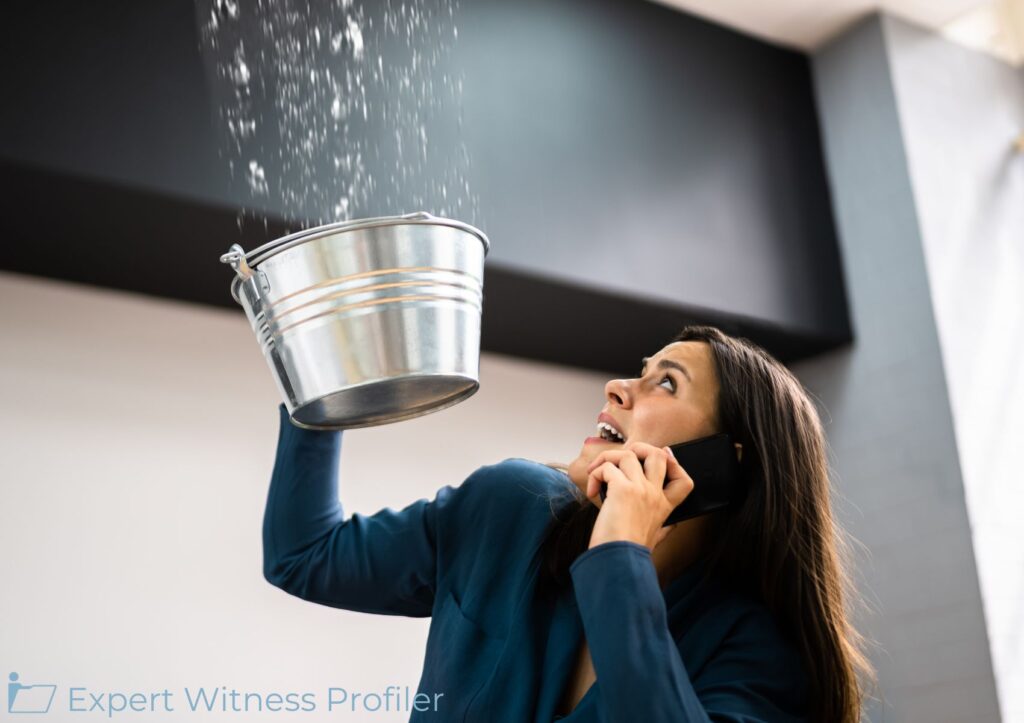
    On October 2, 2019, the property experienced water damage from ruptured supply lines connected to bidet attachments. The increased water pressure was caused by the Water Authority’s seasonal fire hydrant flushing. Zeqa promptly notified Hanover, who hired ServPro for remediation. However, ServPro was released due to electrical issues before completing any work. Zeqa then hired Quality Air Care (QAC) for remediation without Hanover’s explicit authorization. 

    The parties disagreed on the damage extent and necessary repairs. Hanover argued that QAC’s work was excessive and unauthorized, while Zeqa claimed it was essential to mitigate damage under the policy. Hanover paid Zeqa a total of $100,280.55 for various damages and offered additional amounts for emergency water mitigation and replacement costs. The dispute centered on the scope of covered losses and the necessity of QAC’s extensive remediation work. Zeqa contended that Hanover’s payments were insufficient and that additional funds should have been released. Furthermore, Hanover argued that Kevin Kaufmann, Zeqa’s public adjuster expert, should be excluded under Federal Rule of Evidence 702, challenging his qualifications to opine on causation and coverage. 
    Insurance Coverage Expert Witness 

    Kevin Kaufmann is a seasoned expert in property adjustment with extensive experience in the field. He completed his Bachelor of Business Administration (B.B.A.) from Temple University in 1987, following his Associate’s degree in Liberal Arts from Bucks County Community College. 

    Kaufmann has been serving as the President of Property Adjustment Corporation since November 1989, where he has been instrumental in leading the company’s operations and providing expert property adjustment services.

    Fortify your strategy by reviewing a Challenge Study detailing grounds for excluding Kevin Kaufmann’s expert testimony. 

    Discussion By the Court 

    1. Qualifications of the Expert 

    The Court addressed Hanover’s argument that Zeqa’s public adjuster expert, Kevin Kaufmann, was not qualified to opine on causation or coverage. It disagreed, noting that the “specialized knowledge” required for an expert could encompass a broad range of knowledge, skills, and training in the subject matter. The Court found Kaufmann to possess such qualifications. Specifically, it highlighted that Kaufmann had worked as a licensed public adjuster since 1990 and as a claims adjuster for two insurance companies from 1987 to 1989. The Court recognized that Kaufmann had investigated hundreds of water damage claims to determine the cause of damage and coverage under insurance policies. It also noted his significant education and training, including courses in building damage restoration and property claims. 

    The Court dismissed Hanover’s argument that Kaufmann should be excluded because he was not an engineer. It cited the standard that an expert need only have “skill or knowledge greater than the average layman” to opine on the issues in his report. The Court found that Kaufmann easily met this standard. It also addressed Hanover’s reference to the Balu v. Cincinnati Ins. Co. case, finding it unpersuasive. The Court distinguished Balu, noting that unlike the expert in that case, Kaufmann did have expertise in identifying the cause of damage. 

    Furthermore, the Court rejected Hanover’s unsupported claim that Kaufmann’s expertise was limited to evaluating repair costs rather than determining how property was damaged. It noted that Kaufmann’s own statements contradicted this assertion. Lastly, the Court dismissed Hanover’s argument about Kaufmann’s use of the phrase “sudden and accidental,” stating that this went to credibility rather than qualifications and could be addressed through cross-examination. 

    2. Reliability of Causation Analysis 

    Despite finding Kaufmann qualified, the Court agreed with Hanover that his causation analysis was unreliable and would not assist the trier of fact. The Court identified a significant flaw in Kaufmann’s methodology. It noted that Kaufmann had inspected the property after remediation work had started and the house had been “gutted.” In his deposition, Kaufmann admitted he could not confirm if all the gutted areas had been damaged and needed repair due to water intrusion. Despite this uncertainty, Kaufmann included all these repairs in his estimate and opined that they all related to the Incident. 

    Based on this admission, the Court found that Kaufmann had no reliable basis to opine that all the repair work included in his estimate related to the Incident. The Court concluded that Kaufmann’s opinion on causation was unreliable and would not be helpful to the jury. Consequently, it ruled that Kaufmann could not testify about whether all the repair work in his estimate was caused by the water intrusion. 

    3. Opinion on Policy Coverage 

    The Court’s analysis of Kaufmann’s opinions on policy coverage was nuanced. It disagreed with Hanover’s argument that Kaufmann should be precluded from testifying that the loss he identified was covered by the Policy because it constituted an inadmissible legal conclusion. The Court noted that while Rule 704 prohibits experts from opining about ultimate legal conclusions or legal standards, Kaufmann’s opinions did not cross this line. His statements about policy coverage did not invade the Court’s role in instructing the jury on the law. 

    However, the Court did find that Kaufmann’s opinion on whether the specific costs he identified were covered under the Policy was inadmissible under Rule 702. The Court made several distinctions in its ruling. It determined that Kaufmann could testify about his observations and findings from his review and inspection of the Property. He could discuss the types of losses covered under the Policy and opine on whether damage caused by the Incident qualifies as a covered loss in general terms. However, Kaufmann could not testify about what specific damage was caused by the Incident, nor could he opine on whether the specific costs he identified in his estimate were covered under the Policy. 

    Held 

    The Court found Kaufmann qualified to testify as an expert based on his experience as a public adjuster but excluded parts of his testimony. It ruled his causation analysis unreliable since he inspected the property after remediation work started, making it difficult to confirm damage from the Incident. Kaufmann was allowed to testify on general policy coverage but barred from discussing specific damage or costs due to his inadmissible causation opinion. The Court limited his testimony to ensure reliability and usefulness to the jury. 

    Key Takeaways: 

    1. Pre-existing property damage can heavily impact insurance claims and disputes. 
    1. Expert testimony may be limited if deemed unreliable, even with qualified experts. 
    1. Inspections after remediation work can compromise the ability to assess original damage. 
    1. Clear communication between insurers and policyholders about repairs is crucial. 
    1. Differentiating incident-related damage from pre-existing issues is vital in insurance claims. 

    Case Details:

    Case Caption: Zeqa V. The Hanover Insurance Company
    Docket Number: 2:21cv10066
    Court: United States District Court for the District of New Jersey
    Order Date: September 9, 2024
  • Real Estate Appraisal Expert Witness’ Fair Market Value Testimony Admitted

    Real Estate Appraisal Expert Witness’ Fair Market Value Testimony Admitted

    Around 6:00 AM on April 16, 2022, a fire largely destroyed a two-story, wood frame house at 408 Oak St. in Saginaw, Michigan (the “Oak Street House”). Plaintiff Raphael Arnett owned the house, and Defendant Allstate Vehicle and Property Insurance Co. insured it.

    Two days after the fire, Plaintiff filed a claim with Defendant, seeking to recover his loss from the fire. On October 14, 2022, Defendant denied Plaintiff’s insurance claim after it concluded that the fire was not an accident but was intentionally set by Plaintiff. Defendant anticipated calling Paul Mabarak—a certified residential appraiser—to offer his expert opinion that the fair market value of the Oak Street House at the time of the fire had been $52,000.

    Plaintiff argued Defendant should be precluded from using this evidence at trial because (1) the fair market value is irrelevant under Rules 401 and 402, (2) the fair market value would mislead the jury under Rule 403, and (3) Mabarak’s opinion is inadmissible expert testimony under Rule 702.

    Real Estate Appraisal Expert Witness

    John Paul Mabara is a certified residential appraiser who works for Mayfield Appraisal Services.

    Get the full story on challenges to John Paul Mabara’s expert opinions and testimony with an in-depth Challenge Study. 

    Discussion by the Court

    The Court held that the evidence of the Oak Street House’s fair market value is relevant under Rule 401 because it increases the probability Defendant caused the fire, which would exclude his alleged loss from coverage under the express terms of his Policy.

    Plaintiff argued that evidence of the Oak Street House’s fair market value would “mislead” the jury “into believing the fair market value of the property is a component of [Plaintiff’s] damages.” But, the upcoming trial is limited solely to the underlying coverage issue, as both Parties have agreed to post-trial appraisal, as mandated by Michigan law. Therefore, Mabarak’s fair market value testimony raises no Rule 403 concerns, either. At bottom, Plaintiff has not shown that the fair market value of his House is “clearly inadmissible” on Rule 403 grounds.

    Plaintiff argued that Mabarak’s opinion would “not aid the trier of fact in understanding or determining any issue in the case.” Contrary to Plaintiff’s argument, even the most educated lay juror could not estimate the fair market value of Plaintiff’s house. But Mabarak—based on his specialized knowledge as a certified real estate appraiser—can, and has. As explained, the fair market value is relevant because it is nearly $200,000 less than Plaintiff’s Policy limit, which tends to show that Plaintiff may have had a financial motive to set the fire.

    Held

    The Court admitted the testimony of Paul Mabarak despite Plaintiff’s objections.

    Key Takeaway:

    In conclusion, Mabarak’s anticipated expert opinion is precisely the type that Rule 702 allows considering motive is one of several pieces of circumstantial evidence Defendant may permissibly point to in attempt to prove Plaintiff’s alleged loss is excluded from coverage under his Policy.

    Case Details:

    Case Caption: Arnett V. Allstate Vehicle And Property Insurance Company
    Docket Number: 1:23cv11138
    Court: United States District Court, Michigan Eastern
    Order Date: July 25, 2024
  • Insurance Expert Witness’ Ultimate Conclusions about the Defendant’s Conduct  Rejected

    Insurance Expert Witness’ Ultimate Conclusions about the Defendant’s Conduct Rejected

    This matter arises out of a motor vehicle accident (“MVA”) on May 15, 2017, in Denver, Colorado. Plaintiff, Richard Marion Jr was driving a vehicle registered in the State of Nebraska and insured by American Family under a Nebraska family car policy and Umbrella policy (“Policy”) issued to Plaintiff’s parents, Richard and Angela Marion. Marion filed a claim against the tortfeasor and received American Family’s consent to settle with the tortfeasor’s insurance carrier for policy limits of $100,000.00. Plaintiff also sought underinsured motorist benefits (“UIM”) under his Policy.

    American Family evaluated the information received from Plaintiff and initially offered Plaintiff $60,000.00, followed by two additional offers of $70,000.00 and $80,000.00. Plaintiff did not respond to American Family’s offer of $80,000.00 and instead filed this action. He sought UIM benefits under two policies, a Nebraska family car policy with UIM coverage limits of $250,000.00, and an umbrella policy with UIM coverage limits of $1,000,000.00. Plaintiff asserted claims for: (1) breach of contract and/or determination of benefits owed; (2) common law bad faith under Colorado law; and (3) statutory bad faith.

    In support of his claims against American Family, Plaintiff disclosed Lorraine Berns as his retained liability expert, along with her affirmative expert report. Defendant American Family Mutual Insurance Company filed a motion to limit the testimony Plaintiff’s expert, Lorraine Berns, pursuant to Rule 702 and Rule 403.

    Insurance Expert Witness

    Lorraine Berns provides insurance consulting and expert witness testimony in the area of insurance bad faith/good faith claims-handling practices based upon insurance claims industry standards. She has worked in the insurance industry since 1991 and has been a consultant and expert witness in this field since 2006. She also provides consulting services to attorneys in the areas of settlement strategies, pre-litigation strategies, investigations, negotiations, and claims handling industry standards.

    Discover more cases with Lorraine Berns as an expert witness by ordering her comprehensive Expert Witness Profile report.

    Discussion by the Court

    Opinions that Defendant Unreasonably Delayed Benefits

    Defendant argued that Berns’ opinions that it unreasonably delayed benefits to Plaintiff are legal conclusions and therefore improper expert opinion that should be excluded from trial. Plaintiff responded that he had no intention of asking Berns to usurp the role of the jurors. Instead, Plaintiff explained that he intended to question Berns about her background in automobile insurance claim handling; the facts and data she reviewed; her knowledge of insurance industry standards applicable to the handling of UIM claims; her observations / conclusions as to whether the insurer’s claim handling evidenced compliance with industry standards.

    Under Federal Rule of Evidence 704(a), an expert’s opinion is not inadmissible simply because it embraces an ultimate issue to be determined by the trier of fact. The Court concluded that Berns may offer testimony articulating what she believes to be the relevant industry standards, and explaining—factually—how Defendant’s conduct did or did not comport with those standards. However, the Court excluded Berns’ opinions that Defendant’s conduct was unreasonable or insufficient as a matter of law, or was in violation of any statute.

    Opinions Concerning Defendant’s Motives or State of Mind

    Defendant argued that Berns’ “speculative opinions regarding American Family’s motives or state of mind during the handling of Plaintiff’s claim are impermissible and should be precluded from trial.” Defendant added that such opinions concerning Defendant’s motivation or state of mind regarding policy limits are not based on any personal knowledge or personally observed facts or data.

    The Court granted in part and denied in part this portion of the motion. The Court granted the Motion to the extent that Plaintiff may not elicit testimony regarding Defendant’s motives or state of mind because such testimony would constitute speculation. However, the Court denied the Motion to the extent Berns is permitted to testify about facts from which the jury could infer intent, as such testimony is proper expert testimony.

    Opinions Regarding Nebraska Law

    Defendant argued that Berns is not qualified to render opinions regarding Nebraska’s Unfair Claims Settlement Practices Act. Defendant emphasized that Berns has not worked in the insurance industry in Nebraska, has not evaluated a Nebraska claim, and is not familiar with Nebraska law. Additionally, Defendant argued that opinions regarding American Family improperly or incorrectly applying Nebraska law (in other words, saying that Defendant should have applied Colorado law) to Plaintiff’s claims are also impermissible expert opinion that usurp the function of this Court.

    The Court granted the motion to the extent that Berns was precluded from offering opinions on Nebraska’s Unfair Claims Settlement Practices Act. However, the motion was denied to the extent that Berns may offer opinions concerning whether Defendant’s offers of compromise complied with the applicable insurance industry standards.

    Held

    The Court granted in part and denied in part the Defendant American Family Mutual Insurance Company’s motion to limit the testimony Plaintiff’s Expert, Lorraine Berns.

    Key Takeaways:

    • The Court excluded Berns’ opinions that Defendant’s conduct was unreasonable or insufficient as a matter of law, or was in violation of any statute. She was unqualified to offer such opinions as a matter of legal expertise and such ultimate conclusions would not be helpful to the jury and would improperly intrude on its fact-finding function.
    • Only the Court will determine what law applies to the remaining claims in this case, and Berns may not offer opinions concerning which state’s law Defendant should have applied.

    Case Details:

    Case Caption: Marion V. American Family Mutual Insurance Company, S.I.
    Docket Number: 1:22cv1330
    Court: United States District Court, Colorado
    Order Date: July 12, 2024