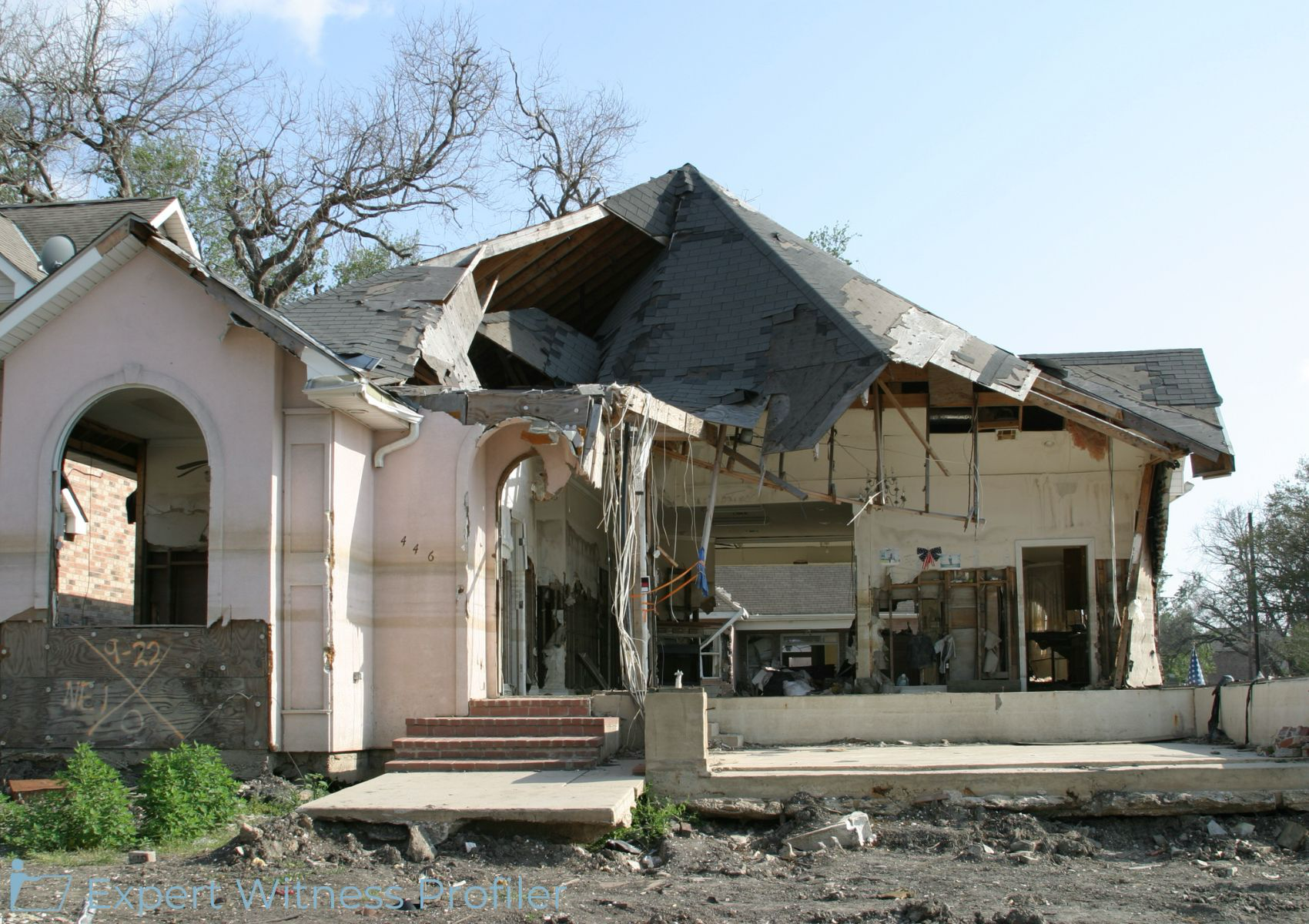
Plaintiffs, Monterrey’s Grill Inc. filed suit against the Defendant, Axis Surplus Insurance Company, alleging that the Defendant breached its obligations under the insurance policy by not paying a claim for hurricane damage to Plaintiff’s commercial building. During discovery, Plaintiff disclosed Emory “Les” Covan as its damages expert and produced a 44-page replacement cost value estimate signed by Covan.
Axis Surplus Ins. Co. sought to exclude the testimony of Plaintiff’s retained damages expert witness, Covan.
Construction Expert Witness
Emory “Les” Covan is an estimator. He was retained to testify about the subject insurance claim, damages sustained as a result of the subject loss, costs of construction/necessary repairs and/or damages sustained by Plaintiff.
Defendant filed a motion to strike Plaintiff’s damages expert, Emory “Les” Covan, under Daubert, arguing his estimate merely “parroted” the opinions of the expert who prepared the initial draft of the estimate.
In this case, Covan conducted his own inspections and reviewed pertinent documents before signing the estimate. He explained that he reviewed photographs of the damage to the insured property; he conducted a virtual inspection of the property using a three-dimensional video of the property; he reviewed engineering reports detailing the damages, moisture levels, and the recommended repairs to the property; and he relied on the Xactimate program for the costs included in the estimate.
Moreover, for every line-item in the estimate that he was asked about during his deposition, Covan was able to explain the source of information (e.g., photograph, report, etc.) and reason for including that item in the estimate.
Even though Covan did not prepare the initial draft of the estimate, the record shows that he did not simply adopt the initial draft of the estimate as his own without doing any additional work.
As a result, the Court concluded that the fact Covan did not know how the initial estimate was prepared or how, if at all, it differed from his estimate goes to the weight of the estimate, not its admissibility. Likewise, the fact that there were only minor differences between Covan’s estimate and the initial draft concerned the weight of the estimate, not its admissibility.
Held
The Court denied Axis Surplus’ motion to excliude the testimony of Emory “Les” Covan.
Key Takeaway:
An expert cannot “simply repeat or adopt the findings of another expert opinion without attempting to assess the validity of the opinions relied upon.” Thus, one expert cannot simply adopt the opinion of another expert as his own without conducting his own analysis.
Case Details:
Case Caption:
Monterrey’s Grill Inc. v. Axis Surplus Ins. Co.
Docket Number:
3:23cv24580
Court Name:
United States District Court for the Northern District of Florida, Pensacola Division
This action is about holding Chargebacks911 (“CB911”), its CEO (Monica Eaton) and its former CEO (Gary Cardone) accountable for their roles in keeping a massive online Keto diet pill scam (the “Keto Racket”) profitable, viable, and undetected while it victimized Plaintiffs and tens of thousands of other consumers across the country.
Musante opined that Global e-Trading, which does business as Chargebacks911, “provided critical and necessary support which allowed the fraudulent merchants to continue processing consumer payments. But for [Global e-Trading’s] assistance, the fraud would have either been muted or ended much sooner than it otherwise did.”
Merrifield was “retained to review the documents and the ‘shipping,’ ‘refunds,’ and ‘charge backs’ Excel spreadsheets produced in the [case] in order to determine the differences between amounts that were charged United States customers that purchased either the, ‘buy 2, get 1 free’ (referred to as 3 bottles) or ‘buy 3, get 2 free’ (referred to as 5 bottles) promotion of either Instant Keto, Ultra Fast Keto Boost, or Keto Boost products, and the amounts these customers expected to be charged and is offset by any refunds and charge backs.” She opined that the total damages for the Keto Entities’ diet pill scheme is $18,779,274.
According to Plaintiffs, they offered “Merrifield as an expert for only one thing: to filter and calculate numbers from hundreds of thousands of rows in a spreadsheet. Her assignment was to find select rows in a spreadsheet with values that fit into criteria that Plaintiffs’ counsel provided and to perform math on those values.”
Banking Expert Witness
Kenneth Musante has a Bachelor of Science in Managerial Economics, an MBA, and “graduated from the Pacific Coast Bankers School in Seattle, WA.” He has has more than thirty years’ experience with the banking industry and with the major credit card companies, such as Visa, Mastercard, Discover, American Express.
Kerrie Merrifield is a Certified Public Accountant (CPA) and has over 35 years of experience accounting with an emphasis on forensic accounting and damages calculations. She has been the Director of Litigation Support for Axiom Forensics since 2008.
Global e-Trading maintained that Musante’s report included numerous impermissible legal conclusions, lacked a reliable methodology, and would not be helpful to the jury and is irrelevant.
However, Musante pointed to the documents he reviewed in reaching his opinions based on his experience in the banking and card processing industries. And, in his deposition, Musante explained that he reviewed the complaint and other materials in the case, created an outline based on that review and his experience.
While Defendants may have legitimate questions about Musante’s conclusions based on his document review or take issue with the documents he relied upon, the Court held that these issues can be explored on cross-examination.
While the Court understands Plaintiffs’ position that Musante used the words “fraud” and “fraudulent” in the vernacular sense, the Court is concerned with the potential to confuse the jury by use of these words with legal significance. It is likely a jury would believe Musante was offering a legal conclusion that certain transactions legally constituted fraud. Thus, the Court prohibited Musante from using the words “fraud” and “fraudulent” in offering his expert opinions. However, the Court declined to exclude Musante’s use of the phrase “sham transactions” in relation to the microtransactions scheme or the term “bad actors.” Neither “sham” nor “bad actor” is a legal term of art, and the Court is not concerned about jury confusion over the use of these words.
Moreover, it is permissible for Musante to testify — among other things — that, in his opinion, Global e-Trading “was instrumental” in helping the Keto Entities continue accessing card processing and selling its keto diet pills to consumers. While Musante’s opinions touch on an ultimate issue, Musante does not merely instruct the jury on what result to reach.
Kerrie Merrifield
Defendants also sought to limit the testimony of Kerrie Merrifield. Global e-Trading insisted that Merrifield is unqualified to offer certain opinions, her methodology is unreliable, and her opinions unhelpful to the jury such that her opinions should be excluded under Rules 702 and 403.
Qualification
Global e-Trading insisted that Merrifield was not qualified “to testify competently regarding the matters she intends to address,” specifically regarding “the price U.S. consumers expected to pay for their purchase.” But, indeed, Plaintiffs insisted that they were not offering Merrifield as an expert on consumer expectations.
Although Merrifield’s calculations required an assumption about what consumers expected to pay, the Court did not interpret Merrifield as offering an expert opinion regarding consumer expectations.
Reliability
Merrifield “reviewed various documents that were produced” in discovery and performed “various technical steps” “along with applying forensic accounting procedures in order to properly extract the data needed and to perform an accurate analysis.”
She filtered through data and used data within large spreadsheets of payment and shipping information to calculate the class-wide damages in this case.
The fact that the documents and spreadsheets Merrifield consulted were provided by Plaintiffs and that Merrifield consulted Plaintiffs’ counsel regarding certain assumptions did not render Merrifield an unreliable “mouthpiece” for Plaintiffs’ counsel.
While Defendants may have legitimate questions about Merrifield’s reliance on the data within the spreadsheet or any assumptions underlying her analysis, the Court held that these supposed problems can be explored on cross-examination.
Helpfulness to the Jury
The Court also determines that Merrifield’s opinions and calculations will be helpful to the jury. Defendants are incorrect that Merrifield’s analysis involved “a simple math calculation that most kids in junior high could perform.” Rather, as Plaintiffs point out, the data Merrifield sifted through to make her calculations “is on a spreadsheet containing over 414,000 rows” such that she “had to use advanced Excel techniques to arrive at her numbers.” It is certainly helpful to the jury to have an analysis of the voluminous data from the spreadsheets provided to them rather than reviewing all the data in the spreadsheets themselves to reach a damages calculation.
The Court held that Merrifield’s damages calculation, made after sorting through the voluminous data, will help the jury decide what damages to award, if it finds Defendants liable.
Held
The Court granted in part and denied in part Defendant Global E-Trading, LLC’s Daubert motion to exclude the testimony of Kenneth J. Musante.
The Court denied Defendant Global E-Trading, LLC’s Daubert motion to exclude the testimony of Kerrie Merrifield.
Key Takeaway:
The Court considered all of Musante’s opinions, with the exception of his use of the legal terms “fraud” and “fraudulent,” helpful to the jury. The card processing industry and its procedures are unfamiliar to the average juror. For that reason, the Court held that Musante’s opinions regarding that industry and whether Defendants’ practices violated the rules of that industry or assisted the Keto Entities will be helpful to the jury.
Moreover, the Court held that Merrifield’s consideration of Plaintiffs’ counsel’s hearsay statements, which a reasonable damages expert would consider in conducting her analysis, was permissible under Rule 703.
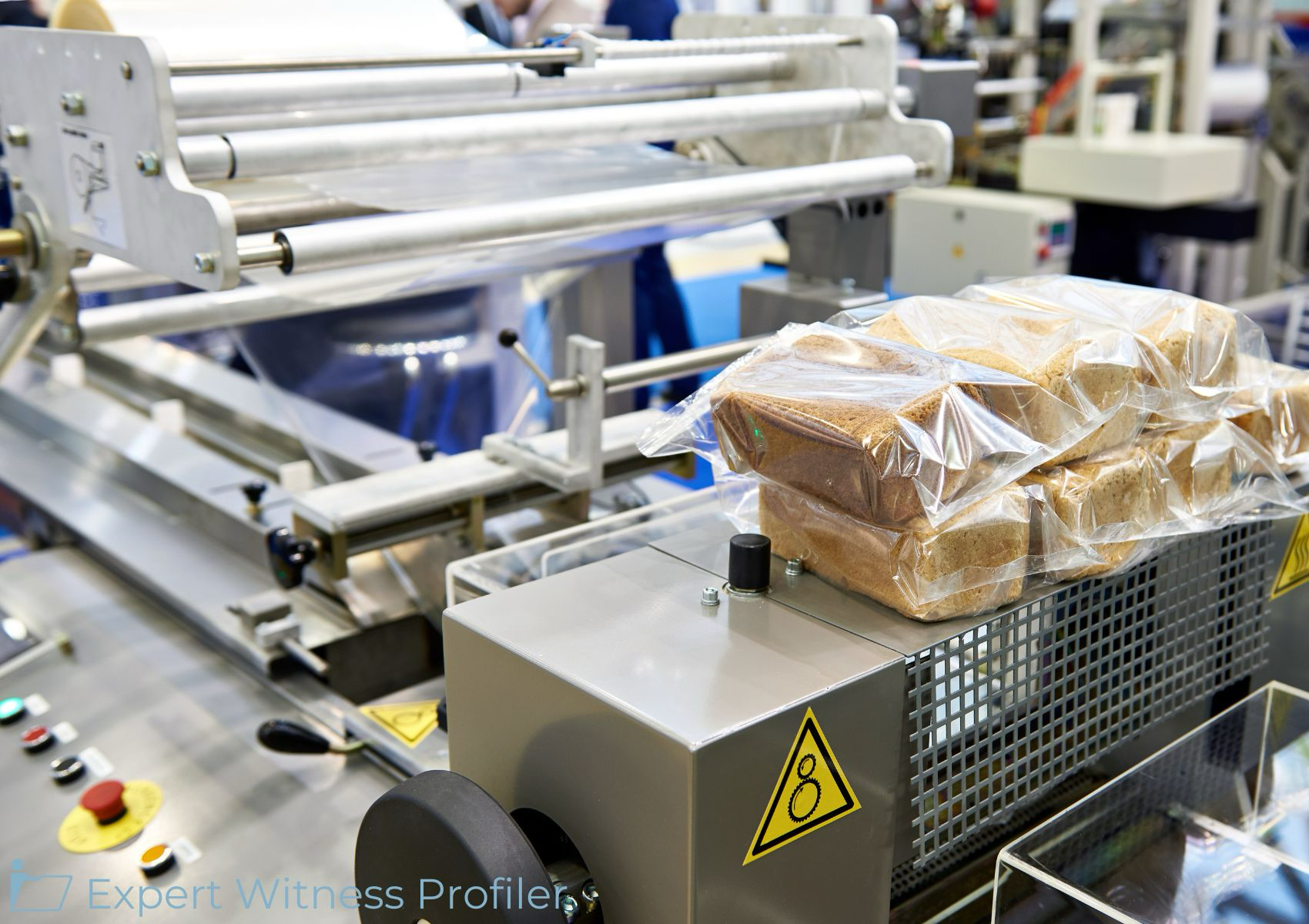
This case arises out of Delta’s delayed donut wrapping system. In late 2021, Bon Appetit Danish, Inc. and Bon Appetit Specialty Snacks, LLC (collectively, “Bon Appetit”) and Delta Systems and Automation, LLC’s (“Delta”) entered into a set of three contracts for Delta to manufacture packaging systems for Bon Appetit’s baked goods.
But the donut packaging system failed to launch. After further testing failed to resolve the performance issue, Bon Appetit terminated all three contacts on April 14, 2023.
Bon Appetit sued Delta over a contract dispute involving Overwrapping Systems, claiming $6,214,505 in labor costs as direct damages resulting from Delta’s alleged breach. Bon Appetit’s expert, Joseph Wheat, testified that these labor costs were directly caused by Delta’s failure to deliver properly functioning systems.
Delta countered, arguing that the labor costs were consequential damages, barred by the Limitation of Liability provision, because they stemmed from Bon Appetit’s internal plan to use the Overwrapping Systems.
Delta moved to exclude Wheat’s testimony, asserting that the labor costs were derivative losses arising from circumstances that are particular to the contract or to the parties.
Additionally, Bon Appetit sought to introduce Lyle Rogalla as an expert to testify about the norms, customs, and practices, of the baked goods overwrapping industry.
Delta opposed, arguing that Rogalla was unqualified to testify specifically about donut overwrapping systems and that his opinions were unreliable under Rule 702.
Accounting Expert Witness
Joseph Wheat, CPA/ABV, CFF, is a Senior Vice President at J.S. Held, a global consulting firm specializing in a wide variety of forensic analysis.
A Certified Public Accountant licensed to practice in California since 1993, Wheat has over 20 years of experience testifying as an expert witness on economic damages issues in both federal and state court matters.
Wheat has performed numerous business valuation related to marital dissolutions, tax and estate matters and partnership disputes.
Lyle Rogalla has led the development of advanced packaging and food processing equipment, delivering innovative, high-value solutions that optimize production processes and reduce costs for clients ranging from small businesses to Fortune 100 companies.
His portfolio is enriched by 29 patents, encompassing both utility and design, for industrial and commercial applications. He has collaborated with over 100 machine manufacturers to deliver extensive automation and equipment solutions tailored to the clients’ specific needs.
A. Motion to Exclude Damages Opinions of Joseph Wheat
The Court considered Delta’s motion to exclude the opinion of Bon Appetit’s expert, Wheat, who attributed $6,214,505 in labor costs to Delta’s alleged breach of contract.
The core issue was whether these costs were direct damages, which may be recoverable, or consequential damages, barred by the the Limitation of Liability provision. Direct damages (also called general damages) flow “directly and necessarily from a breach of contract, or that are a natural result of a breach.”
Consequential damages (also called special damages) are “secondary or derivative losses arising from circumstances that are particular to the contract or to the parties.”
In this case, Bon Appetit’s labor costs are considered consequential damages since they stem from Bon Appetit’s unique plan to use the Overwrapping Systems to streamline production and eliminate certain employee positions, a point Bon Appetit will argue through Wheat’s evidence of the system’s added efficiency.
The Court excluded Wheat’s opinion concerning Bon Appetit’s labor costs pertaining to consequential damages.
B. Motion to Exclude Expert Opinions of Lyle Rogalla
Delta moved to exclude the opinion of Bon Appetit’s expert, Rogalla, arguing that he lacked the necessary qualifications to opine on donut overwrapping systems and that his methodology was unreliable under Daubert and Rule 702 due to an alleged lack of supporting facts or data.
The Court disagreed. It found that Rogalla was qualified to testify based on his decades of experience with “solutions for complex automation and packaging needs . . . with emphasis in the food industry,” including “packaging and process automation, the preparation of specifications for the machines and the goods handled by the machines, testing, and modifying the machines and specifications to address both process quality and efficiency.”
Insofar as the Donut System diverged from Rogalla’s experience with other food packaging systems, the Court held that it concerned the weight of his testimony, not its admissibility.
The Court also found that Rogalla had relied on a sufficient factual basis, including the Complaint, contract documents, Delta’s website, and federal regulations. Challenges to the depth or nature of that evidence, the Court concluded, were issues of credibility and weight, appropriate for cross-examination, not grounds for exclusion.
Held
The Court granted Delta’s Daubert motion to exclude Joseph Wheat’s opinions.
The Court denied Delta’s Daubert motion to exclude the testimony of Lyle Rogalla.
Key Takeaways:
Not all foreseeable damages are direct damages, as consequential damages may be “foreseeable and proximately caused by the breach of a contract.”
An expert might draw a conclusion from a set of observations based on extensive and specialized experience.
Case Details:
Case Caption:
Bon Appetit Danish, Inc. v. Delta Sys. & Automation LLC
Docket Number:
2:23cv04305
Court Name:
United States District Court for the Central District of California
This case stems from a vehicle collision that happened in July 2022 in Gallup, New Mexico.
The Plaintiff, Jimmy Woodall claimed the crash caused severe and disabling injuries, including physical and emotional pain, permanent impairment, and reduced enjoyment of life. He sought compensation for medical costs, lost wages, and long-term care.
Woodall retained an expert, Mr. Justin Blok, MBA, CFE, CLP, to provide an opinion regarding Woodall’s lost earning potential, the present value of his life care plan, and other pecuniary matters. Blok relied on Todd Capielano‘s life care plan in determining Woodall’s alternative earnings and damages. Capielano, in turn, relied on the opinions of Woodall’s treating physicians, to form his own assessment of the costs Woodall was likely to face. Defendants challenged Blok’s qualifications, reasoning, and methodology, as well as his reliance on the opinions of Woodall’s treating physicians vis a vis Capielano’s life care plan.
Economic Damages Expert Witness
Justin Blok is a Certified Licensing Professional and Certified Fraud Examiner. He serves as a Partner at Whitley Penn LLP. He is also a Managing Director in its Forensic, Litigation & Valuation Services practice.
Blok specializes in economic, accounting, valuation, and strategy issues related to intellectual property, complex commercial disputes, and general business transactions. He has testified in private arbitration, Federal and State Courts.
Blok is consistently named to the IAM Patent 1000 list of top patent experts. He has lectured on damages topics at several universities. These include the University of Houston Law Center, Baylor University School of Law, and South Texas College of Law.
Blok has an undergraduate degree in risk management and finance, a master’s degree in business administration, and a master’s degree in accounting—all financial and business-related credentials—and he has been called as an expert to discuss financial matters.
While Defendants argued that Blok is not a physician and is not qualified to diagnose Woodall’s conditions, the Court held that Blok will not opine on whether Woodall can work, nor will he opine on the causation of Woodall’s injuries. He therefore does not need to have a medical background. To the extent his valuations may rely on medical opinions regarding the work Woodall is capable of doing, such reliance is appropriate and typical for economists.
Methodology
The Defendants claimed that Blok’s projections were flawed because they included the full financial ramifications of Woodall’s medical conditions without accounting for the fact that Defendants can be held liable only for the portion attributable to the vehicle collision.
The Court disagreed. It explained that these kinds of critiques go to the weight of the testimony, not its admissibility. Questions about the assumptions underlying an expert’s economic projections are best addressed through cross-examination, not exclusion.
As for the concern about jury confusion, the Court noted that jurors would already be tasked with deciding how much of the Plaintiff’s current condition was caused by the collision. That same reasoning would naturally extend to financial damages.
Finally, the Court emphasized that if Blok performed his calculations assuming a certain fraction of the expenses were attributable to Defendants, he might have overstepped his role and strayed into medical territory. By presenting neutral calculations and leaving the apportionment to the jury, Blok stayed within proper bounds. The Court concluded that the Defendants could challenge his assumptions during cross-examination and denied the motion to exclude his testimony.
Held
The Court denied the Defendants’ motion to exclude the opinions of Justin Blok.
Key Takeaway:
The alleged shortcomings in the underlying medical opinions used to create the life care plan and, in turn, the economic projections by Blok are properly addressed on cross-examination, not by excluding Block as an expert entirely.
Please refer to the blog previously published about this case:
A July 2022 vehicle collision in Gallup, New Mexico, triggered a lawsuit claiming severe injuries. Plaintiff Jimmy Woodall claimed that Defendant Curt Moeller made an “unsafe lane change,” forcing his tractor-trailer into a guardrail.
Woodall alleged that the crash caused him “severe and disabling injuries.” Woodall sued the Defendants, demanding medical expenses along with damages for physical and mental pain and suffering, physical impairment, loss of enjoyment of life, and lost wages.
To support his claim for these future medical care needs as related to the injury that he sustained, Woodall hired life care planner Todd Capielano. Capielano relied on the opinions of Woodall’s treating physicians to form his own assessment of the costs Woodall was likely to face. However, Defendants filed a motion under Daubert, challenging Capielano’s qualifications, reasoning, and methodology, as well as his reliance on the opinions of Woodall’s treating physicians.
Life Care Planning Expert Witness
Todd Capielano has a bachelor’s degree in rehabilitation counseling, which he obtained from Louisiana State University Medical Center, School of Allied Health Professions. He also has a master’s degree in human services counseling from the University of New Orleans. In 2015, Capielano obtained a certification for life care planning from the University of Florida.
Defendants contended that Capielano relied on the opinions of Woodall’s treating physicians to fill in the gaps in his expertise. Because Capielano is not a physician and is not qualified to diagnose Woodall’s conditions, the Defendants argued that he cannot form a life care plan.
However, the Court held that a life care planner’s reliance on the medical reports of other experts, even when the life planner does not have the same medical qualifications, does not make the life care planner unqualified.
Given that Defendants raised no other challenges to Capielano’s qualifications as a life care planner, the Court finds him qualified to testify as an expert regarding Woodall’s future medical expenses.
B. Reasoning andMethodology
Because Woodall’s treating physicians couldn’t quantify the extent of the aggravation to Woodall’s preexisting injuries, Defendants argued that Capielano’s life plan must be questionable. Additionally, they argued that this flaw in the life care plan “would mislead the jury and prejudice Defendants.”
According to the Defendants, the life care plan incorrectly includes all of Woodall’s future medical expenses, while they should only be liable for the portion caused by the vehicle collision.
However, Woodall responded that the alleged shortcomings in the underlying medical opinions used to create the life care plan are properly addressed on cross-examination, not by excluding the life care plan entirely. The Court agreed.
Given that the jury already will be tasked with determining the extent to which Defendants’ conduct exacerbated Plaintiff’s condition, the Court added that it will not unfairly prejudice the Defendants or mislead the jury to have the jury conduct the same inquiry with regard to what portion of future expenses is attributable to Defendants’ conduct.
Held
The Court denied Defendants’ motion to exclude the opinions of Plaintiff’s expert Todd Capielano.
Key Takeaways:
Defendants made no argument that Capielano’s qualifications are insufficient within the field of life care planning; rather, they appeared to argue that life care planning performed by a non-physician cannot support expert designation as a categorical matter.
The trial will almost certainly involve discussions and inquiries about the preexisting injuries Woodall had and the extent to which they may have been aggravated by the collision in question. That is, the jury will determine the extent to which Woodall’s injuries and present condition are attributable to Defendants’ conduct, if any.
Case Details:
Case Caption:
Woodall v. W. Express, Inc.
Doket Number:
1:23cv862
Court:
United States District Court for the District of New Mexico
This case concerns a motor vehicle accident involving the Plaintiffs, Vanessa Rivera and her minor child K.C., and Joseph Giordano, a driver for Defendants Safway Services, LLC and Brand Safway Services, LLC. The Plaintiffs asserted four counts of negligence against the Defendants and sought damages for the physical, emotional, and financial injuries they allegedly suffered from the accident.
Defendants filed a motion to exclude the opinions of Dr. Nikhil Thakur and Maryanne Cline. Basically, the Defendants contended that Thakur’s opinions are not founded on a satisfactory level of analytical rigor and are not the product of reliable principles and methods.
Moreover, Defendants added that Thakur’s conclusions regarding future medical treatment were speculative under Massachusetts law governing future damages. Based on these challenges, Defendants argued that excluding the expert testimony would mean Plaintiffs could not establish the necessary amount in controversy, requiring dismissal for lack of subject matter jurisdiction.
As for Cline, the Defendants’ only justification for moving to exclude her medical cost projections hinges on the preclusion of Thakur’s opinions.
Orthopedic Surgery Expert Witness
Dr. Nikhil Thakur is a Board Certified Orthopaedic Spine Surgeon, who specializes in Adult Reconstructive Spine Surgery. Previously, he was an Assistant Professor at SUNY – Upstate in Syracuse NY, where he performed over 300 elective and traumatic spine surgeries at a Level 1 Trauma Center each year. He also developed and ran the spine program at Upstate University at Community General. He continues to hold an adjunct professorship there and is actively involved in his stem cell lab, which he co-directs.
Thakur completed his spine fellowship at the prestigious Emory Spine Center in Atlanta, where he was involved in the care of the Atlanta Falcons. He also completed an orthopaedic trauma fellowship at Brown University – Rhode Island Hospital.
Maryanne Cline began her career in nursing in 1985 and specifically, rehabilitation nursing in 1991. She worked with traumatically injured clients at St. Anthony’s Medical Center in Crown Point, Indiana and in the Physical Medicine and Rehabilitation Inpatient Unit at The Cleveland Clinic.
Her varied clinical experience includes cardiology, medical/surgical, oncology and hospice. Cline has nearly ten years’ experience in the field of Life Care Planning, first as a research assistant then becoming a Certified Life Care Planner in 2012.
Defendants moved to exclude the testimony and opinions of plaintiffs’ experts, Thakur, an orthopedic spine surgeon, and Maryanne Cline, a certified nurse life care planner. They argued Thakur’s opinions were inadmissible under Federal Rule of Evidence 702. Defendants asserted his opinions lacked satisfactory analytical rigor and did not result from reliable methods.
Methodology
The Court evaluated Thakur’s methodology for forming his expert opinions. Thakur based his opinions on a physical examination of Rivera. Furthermore, he also took her medical history and interpreted medical records from her other healthcare providers. Ultimately, the Court found this approach constituted a reliable methodology under Federal Rule of Evidence 702.
The Court addressed the Defendants’ specific challenges to alleged “errors and omissions” in Thakur’s report. Specifically, Defendants argued certain points, like the fact that Thakur described the accident as a slip and fall instead of a motor vehicle accident or that Thakur did not reference any medical records contradicting his description of Rivera’s ongoing complications and his diagnosis of a C4-C5 disc herniation, warranted exclusion. Nevertheless, the Court held that these disputes over the factual underpinnings of the report did not evince a “significant ‘analytical ga[p]’” between Thakur’s opinions and the record evidence.
The Defendants’ only methodological quibble—that Thakur did not wait until two years after the accident to measure Rivera’s maximum medical improvement—is not a significant enough analytical issue to merit wholesale exclusion of his opinions.
The Defendants next argued that Thakur’s conclusions regarding Rivera’s future medical treatment are “speculative and precatory” and must be excluded under Massachusetts law governing recovery for future damages.
A Plaintiff, however, “is not restricted to compensation for suffering and expense” that “will inevitably follow,” because “suffering and expense following an injury cannot be foretold with exactness.” Instead, a Plaintiff may be compensated for expenses “which by a fair preponderance of the evidence [she] has satisfied the jury reasonably are to be expected to follow.”
Relevance
Under Federal Rule of Evidence 403, the Court determined Thakur’s opinions had significant probative value which was not substantially outweighed by the danger of unfair prejudice or jury confusion. Moreover, the Court rejected the argument that the jury would improperly rely on Thakur’s credentials alone or become confused by the “stark contrast” between Thakur’s report and Rivera’s deposition testimony.
Since Thakur’s opinions were admissible under Rules 702, 403, and Massachusetts law, the Court likewise found that Maryanne Cline’s medical cost projections should not be excluded. After all, Cline based her opinions on Thakur’s admissible findings and recommendations.
Held
The Court denied the Defendants’ motion to exclude the experts, Dr. Nikhil Thakur and Maryanne Cline.
Key Takeaways:
Ultimately, the “errors and omissions” highlighted by the Defendant did not evince a significant analytical gap between Thakur’s opinions and the record evidence.
Because the evidentiary value of Thakur’s opinions is not substantially outweighed by the risk of jury confusion or unfair prejudice, exclusion of his report and testimony is unwarranted.
Case Details:
Case Caption:
Rivera V. Safway Servs., LLC
Docket Number:
1:23cv12184
Court Name:
United States District Court for the District of Massachusetts
Allstate Insurance Company sells property, casualty, and life insurance in California through independent and exclusive agents. The Plaintiffs, who were exclusive agents for the Defendant from 1990 to 2023 and had signed Exclusive Agency Agreements, have filed a class-action lawsuit. Their claim centers on unreimbursed business expenses they incurred, including costs for rent, internet, licensed staff, payroll taxes and fees, mandatory insurance coverage, marketing, licensing, a cloud-based telephone system (Allstate Agency Voice), and computer equipment.
Pursuant to Federal Rule of Evidence 702, the Plaintiffs filed a motion seeking to exclude the expert report of the Defendant’s witness, Professor Paul Oyer. A key point of contention in their motion is Professor Oyer’s assertion that the Defendant provided “indirect” reimbursement for exclusive agents’ business expenses via outcome-based compensation.
The Court first addressed Plaintiffs’ Daubert Motion, and then considered whether Plaintiffs have met the requirements for class certification.
Economics Expert Witness
Paul Oyer is the Mary and Rankine Van Anda Entrepreneurial Professor and Professor of Economics at Stanford Graduate School of Business. He is also a research associate with the National Bureau of Economic Research and the editor-in-chief of the Journal of Labor Economics.
He has done several studies of how firms pay and provide incentives for their workers. Oyer looked at how salespeople and executives react to incentive systems and why some firms use broad-based stock option programs.
Motion to Exclude the Opinions of Professor Paul Oyer
Plaintiffs specifically contested Professor Oyer’s opinions that: (1) Defendant reimbursed exclusive agents’ business expenses “indirectly” by providing outcome-based compensation; and (2) that “Plaintiffs’ approach for damages based on expenses alone is conceptually flawed” because “[e]valuating the harm to members of the proposed class must be analyzed in the context of the total compensation to the [e]xclusive [a]gency, specifically the compensation used to cover the [e]xclusive [a]gency’s expenses that Plaintiffs seek as damages,” and “individualized inquiry is necessary to estimate the harm” to the agencies, if any.
The Plaintiffs contended that both of Professor Oyer’s opinions are irrelevant to the Court’s class certification analysis because they offer legal conclusions and conflict with California law regarding the reimbursement of business expenses.
Defendant argued that these opinions are relevant and admissible because Professor Oyer’s opinions “concerning the wide variations in the types and amounts of Plaintiffs’ expenses show that a determination of reasonable and necessary business expenses will change depending on the specific facts and circumstances of a particular [e]xclusive [a]gency’s business” and thus that individualized issues predominate.
Analysis
The Court concurred with the Plaintiffs, finding that the challenged opinions constituted impermissible legal conclusions. Here, Professor Oyer repeatedly opined that individualized inquiry is necessary to assess the proposed class’s damages stemming from unreimbursed business expenses. Professor Oyer also opined that Defendant’s “outcome-based compensation . . . is an efficient compensation method that indirectly compensates the [e]xclusive [a]gency for its efforts (including expenses)” and “any member of the proposed class who received compensation to cover the [e]xclusive [a]gency’s allegedly reimbursable expenses is not harmed.” The Court found that these opinions addressed “central legal questions” raised by Plaintiffs’ Motion for Class Certification, namely commonality and predominance.
In other words, Oyer’s opinions regarding commonality and predominance improperly invaded the province of the Court.
Moreover, the Plaintiffs demonstrated that the proposed class meet the requirements of Class Certification.
Held
The Court granted the Plaintiff’s motion to exclude the testimony of Paul Oyer.
Key Takeaway:
Experts may not opine on “matters of law for the Court.” Plaintiffs challenged Oyer’s assessment of the proposed class’ damages. His opinions on the necessity of the individualized inquiry and the outcome-based compensation structure improperly invaded the province of the Court.
Case Details:
Case Caption:
Canchola v. Allstate Ins. Co.
Doket Number:
8:23cv734
Court:
United States District Court for the Central District of California
Plaintiff Kuantay Reeder filed a civil rights lawsuit against Jason Williams, the Orleans Parish District Attorney, in his official capacity. Reeder had spent more than 26 years in prison following a wrongful conviction for murder. He claimed the Orleans Parish District Attorney’s Office (OPDA) violated his right to due process by failing to disclose exculpatory evidence.
To support his damages claim, Reeder identified two expert witnesses: Elizabeth Martina, a vocational rehabilitation counselor, and Harold Asher, a certified public accountant. Martina was expected to testify about Reeder’s lost earning potential. She argued that, if not wrongfully imprisoned, Reeder could have become a highly paid electrician. Harold Asher, has used this premise to opine that Reeder should be entitled to $2,286,663 consisting of past and future lost wages and benefits. Williams argued for the exclusion of both experts’ lost wage and benefit evidence. His reasoning is that this evidence entirely overlooks two crucial aspects of Reeder’s past: his unremarkable employment history before his incarceration and his significant criminal record prior to that time.
Reeder hired Professor Dane Ciolino as an expert witness to testify on two key issues: first, whether the prosecution of Reeder violated the standard of care concerning a prosecutor’s obligation to disclose exculpatory evidence; and second, whether the policies of the Orleans Parish District Attorney’s Office (OPDA) in place during Reeder’s prosecution failed to meet the standard of care for supervising prosecutors.
Williams sought to exclude Ciolino’s testimony. Williams contended that while Ciolino presents opinions on “standards of care,” no such relevant standard exists in this particular case. Furthermore, Williams asserted that other opinions in Ciolino’s report represent inadmissible legal conclusions.
Law And Legal Expert Witness
Dane S. Ciolino currently serves as the Alvin R. Christovich Distinguished Professor of Law at Loyola University New Orleans School of Law. His teaching interests include Professional Responsibility, Evidence, Advocacy, and Criminal Law.
Professor Ciolino graduated cum laude from Rhodes College in 1985, and magna cum laude from Tulane Law School in 1988, where he was inducted into Order of the Coif and selected as Editor in Chief of the Tulane Law Review.
Elizabeth Martina is a licensed Rehabilitation Counselor in the State of Louisiana and has national certifications as a Certified Rehabilitation Counselor and as a Certified Life Care Planner. She has practiced in the field of vocational rehabilitation for over 17 years and is a board-approved supervisor for provisionally licensed Rehabilitation Counselors.
Harold Asher is a managing director for Asher Meyers, a Metairie firm that provides forensic accounting services. He holds a B.S. and an M.B.A. from Tulane University, having earned the latter degree with a concentration in accounting and finance. He is also a Certified Public Accountant and has over 40 years of experience in providing expert forensic accounting services in conjunction with litigation.
Alternatively, as Reeder proposes, the jury should be permitted to assess Martina’s expert opinion—specifically, that Reeder’s life would not have been spent dealing drugs or in prison but would have instead evolved to resemble his current state, albeit sooner. In support of this, Reeder emphasizes that Williams retains the opportunity to thoroughly cross-examine Martina regarding her expert conclusions. Ultimately, the Court concurred with this view.
However, Williams further objected to the fact that Reeder’s calculations for lost wages/benefits are predicated on a 1991 injury date, despite the allegedly wrongful conviction not taking place until 1995. Consequently, the Court held that Reeder must revise Asher’s report to accurately reflect a 1995 injury onset date and also to appropriately reduce the lost wage/benefit figures to account for avoided expenses.
Motion to Exclude Dane Ciolino’s Testimony
Subsequently, Ciolino produced a report. In this report, he opined that the Orleans Parish District Attorney’s Office (OPDA) failed to comply with the standards of care and conduct governing prosecutors, as well as their constitutional obligations to provide Brady material, during the 1994 and 1995 prosecutions of Kuantay Reeder.
Furthermore, he concluded that the OPDA Policy Manual in effect at the time of these prosecutions was inadequate to properly convey those obligations to its staff.
The Plaintiff seeking to recover for a Brady violation in a civil rightslawsuit must establish three elements: 1) that the State suppressed evidence by failing to disclose it to the Defendant; 2) that the undisclosed evidence was favorable to the Defendant by helping to show the Defendant’s innocence or by impeaching an unfavorable witness; and 3) that the nondisclosure prejudiced the Defendant because it was “material,” i.e., there is a “reasonable probability” that the trial outcome would have changed if the prosecution had turned over the evidence.
Analysis
In his opposition, Reeder clarified, however, that he would not seek to offer Ciolino’s opinions regarding whether a Brady violation had actually occurred in his case. Consequently, Williams’s concerns about Ciolino potentially attempting to testify about an “ultimate legal conclusion” were then moot.
The Court agreed with Williams that aside from whether a Brady violation occurred in Reeder’s criminal prosecution, there is simply nothing left for Ciolino to opine about.
Aside from the aspects of the report that discuss the law pertaining to Brady obligations and why Ciolino believes that a Brady violation did in fact occur (which Reeder now concedes he will not attempt to elicit at trial), Ciolino’s opinions are based on state law ethical standards. Reeder’s claim is governed by federal law not state law.
In his report, Ciolino, moreover, dedicates a specific section to opining on why the 1987 OPDA Policy Manual inadequately outlines a prosecutor’s Brady obligations, asserting that the Policy is vague and fundamentally insufficient. However, Williams contends that this particular opinion is irrelevant because Ciolino lacks knowledge regarding how the Policy Manual was actually implemented or what other measures were undertaken to train or supervise prosecutors. Indeed, the Court concurs with Williams’s assessment.
Held
The Court granted the motion to exclude the testimony of Dane Ciolino. As the Court has outlined, Reeder is required to revise his expert reports from both Martina and Asher in the manner previously detailed.
Key Takeaway:
The central issue of liability in this case hinges on whether a Brady violation took place. Consequently, the Court concurs with Williams’ argument that permitting Ciolino to testify about state law ethical standards, which are not determinative of liability here, would likely confuse the jury.
Furthermore, the Court finds it unclear how Ciolino could offer informed opinions on the Policy Manual’s adherence to a prosecutor’s Brady obligations under federal law if he is not allowed to testify about the relevant legal standards governing this case.
Case Details:
Case Caption:
Reeder V. Williams
Docket Number:
2:22cv4614
Court Name:
United States District Court Eastern District of Louisiana
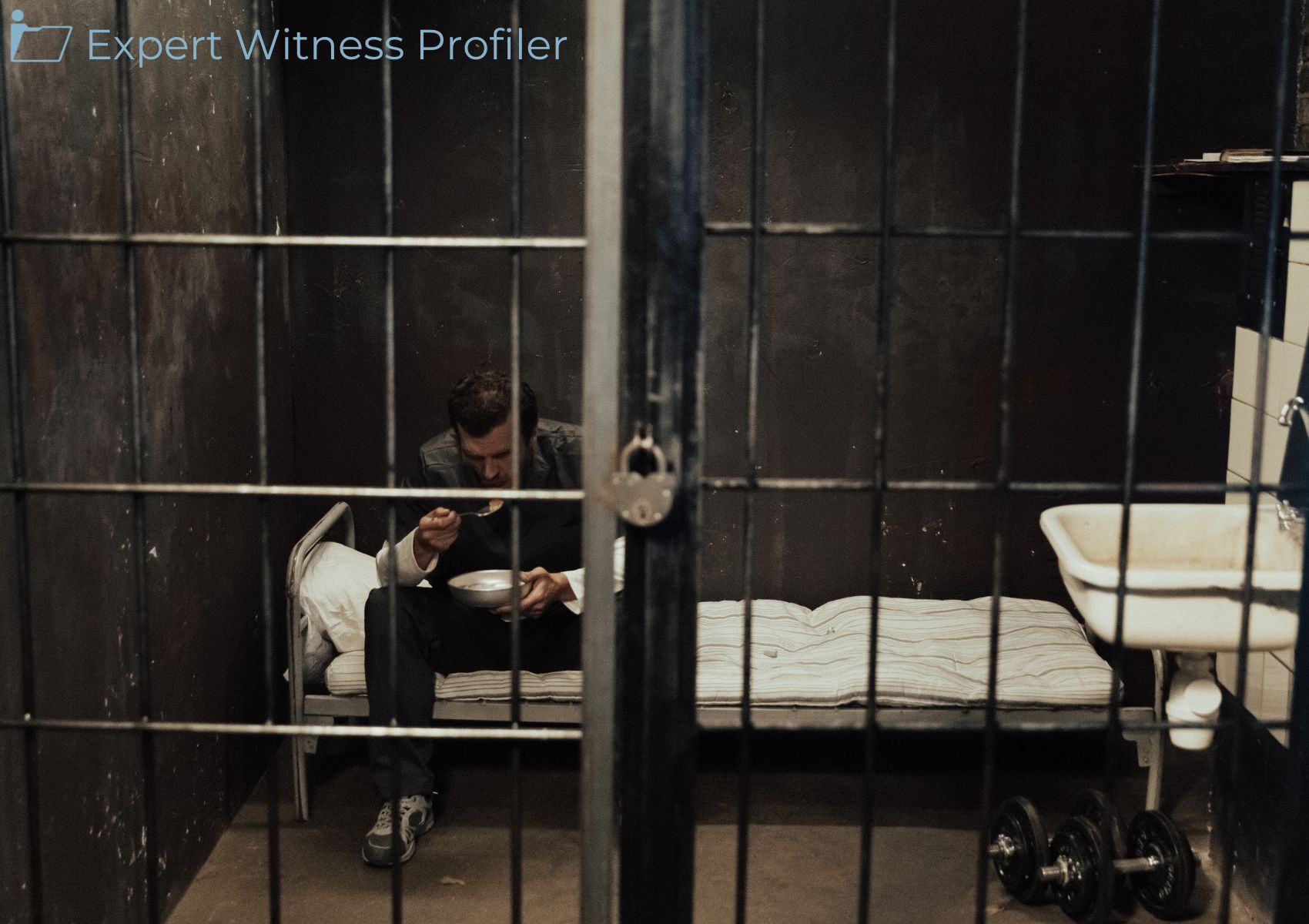
On September 3, 2020, Plaintiffs Dalila Yeend and Bounnam Phimasone (together with Elvin Minaya Rodriguez, Lisa LaPointe, and Shantadewie Rhamee, “Plaintiffs”) commenced this action against Akima Global Services, LLC a/k/a AGS (“AGS” or “Defendant”) in New York State Supreme Court, asserting state law claims pertaining to their civil immigration detention at the Buffalo Federal Detention Facility (“BFDF”).
On October 16, 2020, Defendant removed this action to federal court. Almost two years later, Plaintiffs Yeend and Phimasone filed an amended complaint with class action allegations and claims for unjust enrichment and violations of the Trafficking Victims Protection Reauthorization Act (“TVPRA”) and the New York Labor Law (“NYLL”).
Dr. Stuart Grassian is a board-certified psychiatrist and former faculty member of Harvard Medical School with experience in “evaluating individuals who were in conditions of confinement in prisons, ICE detention facilities, and secure psychiatric hospitals[.]”
He has authored articles on topics such as the psychiatric effects of solitary confinement and the effects of restricted and isolated conditions of confinement, and has previously provided expert testimony in cases regarding conditions of confinement.
Dr. Michael Childers is a Professor in the Department of Labor Education at the University of Wisconsin-Madison, holds an M.S. and Ph.D. in workforce education and development and a B.S. in industrial engineering, and has worked on numerous “time studies” to assess “the time that should be allowed to perform work activities.”
Grassian opines “to a reasonable degree of medical certainty, that for a reasonable person in the position that the Batavia detainees find themselves, and with the attitude, threats, and punishments inflicted on those who refused to work, the work program at ICE-Batavia is coercive in nature.” In addition, Grassian concluded that (i) “[t]he conditions of the detention center collectively amount to a deprivation scheme;” (ii) “AGS exploits detainees’ access to resources and safety in order to coerce workers into working for wages that few people would voluntarily accept;” and (iii) “to a reasonable degree of medical certainty the Voluntary Work Program (“VWP”) at Batavia was psychologically damaging and scarring for the detainees exposed to it.”
Relevance
Grassian’s report includes a lengthy recitation of selected record evidence, as well as references to the amended complaint. Indeed, of his less than fourteen-page report, approximately seven pages appear to be direct quotes from interview notes taken by Grassian’s assistant, witness declarations, depositions, and the amended complaint. Additionally, in multiple areas of his report, Grassian appears to inject his subjective characterizations of detainee testimony to bolster his conclusions regarding the VWP.
The Court found that Grassian’s report largely recites testimony and characterizes it in a manner that is favorable to Plaintiffs and, thus, impermissibly “construct[s] a factual narrative based upon record evidence.”
In addition, and most notably, the Court found that Grassian’s expected testimony would impermissibly “tell the jury what results to reach.”
By opining that (i) “AGS exploits detainees’ access to resources and safety in order to coerce workers into working;” and that (ii) “the [VWP] at Batavia was psychologically damaging and scarring for the detainees exposed to it,” Grassian is essentially telling the jury that Defendant knowingly coerced participation in the VWP and that the detainees exposed to the VWP at the BFDF did, in fact, feel psychologically coerced.
Dr. Michael Childers
Childers was retained to (i) determine the work time necessary for the performance of certain VWP tasks; and (ii) calculate the amount BFDF detainees would have been compensated for performing those tasks had they been paid the minimum wage.
Childers also used those work times to calculate what AGS would have had to pay its own non-detainee employees, making market wages, to do the same work performed by detainees in the VWP.
i. Qualifications
Defendant argued that Childers’ background in industrial engineering, education, and labor relations is not relevant to assessing required staffing levels and associated costs at a secure federal detention facility, and that Childers lacked the requisite specialized knowledge related to federal contracts, regulations, or detention facilities necessary to render opinions on those topics.
Here, Defendant did not dispute that Childers held advanced degrees in workforce education and development. Childers’ curriculum vitae indicated that he is currently teaching courses on topics such as “contract costing, budget and financial analysis, . . . and stopwatch time study.” Defendant also did not dispute Childers’ attestation that he has “conducted hundreds of time studies in manufacturing, warehousing, service, and government organizations.”
Additionally, Childers has previously provided expert deposition testimony in a number of cases, many involving labor law claims.
Childers utilized resources that are common in the field in which he holds degrees and instructs, as well as schematics and internal documents from the BFDF, to calculate the average number of hours an individual would need to complete certain labor while in the VWP. He then used those work hour determinations to calculate the wages detainees would have earned if paid the minimum wage, and the wages AGS would have had to pay its own non-detainee employees for such labor if they were paid the market wage.
Accordingly, the Court found that Childers is qualified to render the opinions set forth in his report.
ii. Sufficient Facts or Data and Reliable Methodology
In his report, Childers describes the materials on which he relies and the assumptions he makes in reaching his conclusions. Specifically, Childers relied on the Association of Physical Plant Administrators’ (“APPA”) methodologies, applicable Federal Service Contract Act (“SCA”) wage data, discovery documents, and deposition testimony in this matter to determine the rate at which AGS would substitute market labor for detainee labor “but for the work program.”
Childers calculated: (1) the amount detainees would have made if they were making the minimum wage, and the savings AGS arguably retained from paying detainees only one dollar per day; and (2) the cost that would have been required to replace detainee labor with full-time, non-detainee AGS employees, and the savings AGS purportedly retained from not doing so and instead paying detainees one dollar per day.
The Court found that this methodology is sufficiently reliable.
Defendant nonetheless asserted that the data that Childers extrapolated from the APPA Guidelines is too generic, overly inclusive, and failed to consider certain data adjustments that Defendant contended should have been made. However, similar to disagreements as to an expert’s qualifications, disputes as to faults in an expert’s use of a particular methodology “are grist for cross-examination, and go towards weight, not admissibility.”
Moreover, Childers was instructed to assume that “AGS operates the Batavia immigrant detention facility and must do so by standards issued by the Department of Homeland Security (DHS) and U.S. Immigration and Customs Enforcement (ICE).” As such, Childers’ assumption that AGS would be responsible for the damages calculated does not render his conclusions or methodologies unreliable.
iii. Relevance
Moreover, Childers’ damages analyses utilize various specialized resources to calculate work times and wage rates that the Court finds are not easily interpreted by a lay person. In addition, Childers performs technical calculations not readily undertaken by a lay person, including calculation of the cost that Defendant would have incurred to pay outside contractors to perform the work covered by the VWP during the relevant time periods. The Court determined that this precisely the type of assistance that Rule 702 and Daubert allow.
Held
The Court granted in part and denied in part the Defendant’s motion in limine to exclude the testimony of Stuart Grassian and Michael Childers.
Key Takeaways:
Defendant failed to explain why Childers’ undisputed experience in other work settings, including with “government organizations,” would be inapplicable in the detention setting, nor is it apparent to the Court. Indeed, the Court found that Childers’ experience, particularly with respect to conducting time studies, is sufficiently applicable here. Moreover, disputes as to the strength of an expert’s credentials generally go to the weight, not the admissibility, of the expert’s testimony.
Expert testimony must be carefully circumscribed to assure that the expert does not usurp either the role of the trial judge in instructing the jury as to the applicable law or the role of the jury in applying that law to the facts before it. The Court fiound that Grassian’s report largely recites testimony and characterizes it in a manner that is favorable to Plaintiffs and, thus, impermissibly “constructs a factual narrative based upon record evidence.”
Named Plaintiffs Judy Kirkbride and Beeta Lewis are consumers in Ohio and Texas that purchased prescription drugs from The Kroger Company (“Kroger”) in the last several years. They alleged that Kroger, through a deceptive pricing scheme, overcharged them for prescription drugs by misreporting the “usual and customary” (U&C) prices for Plaintiffs’ medications, which resulted in higher copayments.
Plaintiffs offered Colin Weir as a damages expert primarily to “explain how classwide damages in this case can be calculated using Kroger’s own records.” After Kroger’s experts opined that, to calculate damages in this action, class members’ claims need to be re-adjudicated over the entirety of a plan year, and that process requires additional data from pharmacy benefit managers (“PBMs”) that may not exist, Plaintiffs proffered the rebuttal expert report of Dr. Susan A. Hayes.
Defendant filed Daubert motions to exclude Colin Weir’s expert report, Susan Hayes’ expert report, and Weir’s rebuttal report.
Economics Expert Witness
Colin B. Weir is President at Economics and Technology, Inc., a research and consulting firm specializing in economics, statistics, regulation and public policy. He conducts economic, statistical, and regulatory research and analysis and often testifies as an expert witness before state and federal courts.
His experience includes work on a variety of issues, including: “calculating economic harm and damage, and analyzing liquidated damages provisions; lost profits; false claims; diminution in value; merger/antitrust analysis; Early Termination Fees (ETFs); Late Fees; determination of Federal Excise Tax burden; and development of macroeconomic analyses quantifying the economic impact of corporate actions upon the US economy and job markets.”
Dr. Susan Hayes has over 40 years’ experience in the health care consulting, pharmacy benefit management industry. Hayes is the principal, owner, and founder of Pharmacy Investigators and Consultants.
In addition to her work at Pharmacy Investigators and Consultants, she is an Assistant Professional Practices Professor and the Director of the Health Informatics Masters Degree Program at Roosevelt University, where she teaches two of the graduate level classes. She is also a Certified Registered Pharmacy Technician in Illinois and has authored research that discusses ethical decision-making in the pharmaceutical industry.
Initially, the “price paid by Class Member,” according to Weir, is found in Kroger’s transactional records—a dataset of over 158 million pharmacy transactions of generic prescriptions that occurred between December 1, 2018 and November 30, 2022, in Ohio and Texas, with 38 variables describing each transaction. However, Kroger argued that Weir’s analysis “did not meet the requirements of Rule 702” for several reasons.
First, Weir allegedly lacked the “specialized knowledge” to answer the specific questions at issue: whether class members can be identified by certain Bank Identification Numbers (“BINs”) and classwide damages determined via a formula using only pricing lists and pharmacy claims data. Second, the formula Weir opines can calculate damages on a classwide basis purportedly comes directly from counsel. Finally, the “simplified methodology” proposed by Weir allegedly “ignores the complex set of payment steps that occur with each pharmacy transaction between third-party payors (“TPPs”), PBMs, pharmacies, and individual customers.”
Analysis
Ultimately, Kroger has failed to demonstrate that Weir’s testimony is inadmissible under Rule 702 and Daubert. Specifically, its first argument—that Weir lacks experience in the pharmaceutical industry to offer an admissible expert opinion on damages in this case—is foreclosed by Sixth Circuit precedent because a generally experienced expert’s “unfamiliarity with some specific aspects of the subject at hand merely affect[s] the weight and credibility of [the] testimony, not its admissibility.”
The Court held that Kroger’s second argument, that Weir’s methodology is unreliable because it relied on assumptions from Plaintiffs’ counsel, likewise missed the mark. Weir explained that his damages framework was based on Plaintiffs’ theory of liability in this case, and “it is entirely appropriate for a damages expert to assume liability for the purposes of his or her opinion.”
Finally, Defendant attacked Weir’s methodology by questioning his failure to consider certain information regarding class members’ individual drug prescription transactions in making his calculations. The Court held that Kroger’s arguments “go to the factual sufficiency of Weir’s analysis and not to the reliability of his underlying methodology.”
Motion to Exclude Susan Hayes’ Testimony
Kroger sought to exclude Hayes’ testimony, arguing that her “experience does not include calculating damages in litigation,” and that “she has no education, training, or experience in economics or accounting, let alone in calculating damages.”
Analysis
Kroger does not dispute that Hayes is qualified to opine about PBMs or the PBM industry standards and practices generally.
This Court likewise found Hayes qualified to offer expert opinions regarding PBM practices. Drawing on her decades-long experience in auditing PBMs, she has provided helpful testimony to this Court that rests on a “reliable foundation” and is “relevant to the task at hand.”
Held
The Court found that Plaintiffs have satisfied the requirements of Federal Rule of Evidence 702 to admit the expert testimony of Colin B. Weir and Dr. Susan A. Hayes.
Key Takeaway:
Furthermore, Kroger’s argument that Weir’s methodology “is based solely on assumptions provided by Plaintiffs’ counsel” is unpersuasive, because “experts may permissibly rely on assumptions about underlying facts that are stated to them by the client.”
Moreover, Rule 702 only requires that an expert have specialized knowledge that “will help the trier of fact to understand the evidence or to determine a fact in issue,” not all facts at issue.