Tag: Declaration

  • Watershed Expert Not Allowed to Opine on CRLF and TWG

    Watershed Expert Not Allowed to Opine on CRLF and TWG

    In this action, a group of environmental organizations seek to compel Defendant County of San Luis Obispo (“Defendant”) to make changes to how it operates a dam and related infrastructure in the Arroyo Grande Creek (“AG Creek”) watershed.

    Plaintiffs claimed that the County’s operations have caused significant harm to the South-Central California Coast Steelhead trout (the “Steelhead”).

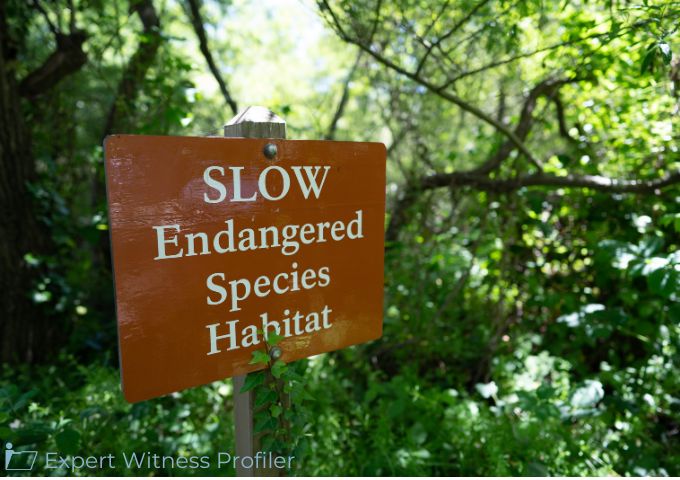
    The Steelhead is a protected species under the Endangered Species Act (“ESA”). At least two other ESA-listed species inhabit the AG Creek: (1) the tidewater goby (“TWG”); and (2) the California red-legged frog (“CRLF”).

    Defendant has presented evidence that juvenile Steelhead are predators of the California red-legged frog (“CRLF”) larvae and the tidewater goby (“TWG”).

    Mark R. Jennings, a former USFWS biologist that Defendant has retained as an expert, therefore suggested that measures to increase the AG Creek’s Steelhead population may come at the expense of its CRLF and TWG populations.

    Tevin Schmitt, a Watershed Scientist that Plaintiffs offered as an expert acknowledged that the Steelhead is a meso-predator but contended there is no evidence that Steelhead predation is, or could become, a major factor affecting the AG Creek’s CRLF and TWG populations.

    Defendant filed a Daubert motion challenging the declaration of Tevin Schmitt. Plaintiffs have also filed objections to the declaration of Dr. Mark R. Jennings.
    Watershed Expert Witness

    Tevin Schmitt holds a Bachelor of Science in Environmental Science and Resource Management with a minor in Biology from California State University (“CSU”) Channel Islands. He conducted ecological research on Southern California coastal ecosystems, petroleum toxicology research, and water quality analysis projects in the Santa Clara River watershed during his time as a research assistant for CSU Channel Islands.

    Want to know more about the challenges Tevin Schmitt has faced? Get the full details with our Challenge Study report.

    Fisheries Expert Witness

    Mark Russell Jennings, Ph.D earned a Bachelors degree in Fisheries and a Masters in Natural Resources (with emphasis in Fisheries) from Cal Poly Humboldt, and a Ph.D. in Wildlife and Fisheries Science from the University of Arizona. He is a versatile ecologist, with specialties in both herpetology and fisheries biology. For the past 49 years, he has worked extensively with a wide variety of fishes.

    Discover more cases with Mark Jennings as an expert witness by ordering his comprehensive Expert Witness Profile report.

    Discussion by the Court

    Tevin Schmitt

    In relevant part, Defendant argued that Schmitt lacked professional experience to qualify as an expert on the CRLF and TWG because he “only has an undergraduate minor in biology and no track record of research or publication on either species.”

    The Court agreed that Plaintiffs have not presented sufficient evidence to show Schmitt is qualified to opine on how Plaintiffs’ requested relief would impact the CRLF and TWG.

    Plaintiffs claimed that Schmitt is qualified to opine on the CRLF and TWG as an experiential expert. In support, Plaintiffs refer the Court to evidence that Schmitt has conducted nocturnal surveys, conducted habitat assessments, and collected acoustic monitoring data for the CRLF in the Santa Clara River Watershed. Plaintiffs also refer the Court to evidence that Schmitt has conducted water quality and habitat monitoring in the Santa Clara River Estuary and Ormond Lagoon to “assess habitat conditions for endangered species, like the TWG, that rely on these coastal lagoon habitats.”

    However, Plaintiffs have not directed the Court to evidence, or presented sufficient argument, to explain how this experience would qualify Schmitt to opine on, among other topics, (1) whether an increase to the Steelhead population would adversely affect the AG Creek’s CRLF and TWG populations; (2) the likelihood that increasing water flows could displace CRLF and TWG eggs; (3) how that displacement would impact the CRLF and TWG’s overall population stability; and/or (4) whether the cumulative benefits of an increase in water flows to the CRLF and TWG would outweigh the potential loss of CRLF and TWG eggs.

    Therefore, Plaintiffs have not met their burden to show, by a preponderance of the evidence, that Schmitt is qualified to address CRLF and TWG behavior, ecology, and population dynamics, and the Court will not consider Schmitt’s opinions on these topics.

    Mark Jennings

    Plaintiffs argued that Jennings has not sufficiently explained why the 2007 IDRS flow regime would be less detrimental to the CRLF and TWG than Plaintiffs’ proposed flow regime.

    Plaintiffs also argued that Jennings’ opinions are unreliable because he failed to consider certain statements in the County’s 2025 Draft Habitat Conservation Plan (“HCP”) that contradict his opinions.

    Based on the Court’s review of the Jennings Declaration, the Court is satisfied that Jennings has sufficiently explained why he believes Plaintiffs’ requested flow regime would harm the CRLF and the TWG. To the extent Jennings’ opinions are inconsistent with statements in the 2025 Draft HCP, Plaintiffs have not presented evidence sufficient for the Court to determine that the statements in the 2025 Draft HCP are accurate and the challenged testimony in the Jennings Declaration is inaccurate.

    Held

    • The Court granted the Defendant’s motion to exclude Tevin Schmitt’s proposed testimony.
    • The Court overruled Plaintiffs’ objections to the declaration of Dr. Mark Jennings.

    Key Takeaway

    Schmitt “claims to have field experience with CRLF and species like the TWG” but this experience is insufficient for Schmitt to qualify as an expert on either species because “he does not hold the certifications that are required for him to handle, collect, or otherwise engage with these species in the wild.”

    Case Details:

    Case Caption: San Luis Obispo Coastkeeper V. County Of San Luis Obispo
    Docket Number: 2:24cv6854
    Court Name: United States District Court, California Central
    Order Date: June 29, 2026
  • Expert Testimony on Attorney Fees Issues Excluded

    Expert Testimony on Attorney Fees Issues Excluded

    Plaintiff C.B. alleged that Defendants Moreno Valley Unified School District and Superintendent Martinrex Kedziora (collectively “MVUSD” or “District”) cornered him on school grounds and tackled and handcuffed him on at least four separate occasions for exhibiting disability-related behavior.

    Plaintiffs move for attorneys’ fees as the prevailing party under 42 U.S.C. § 1988. Under 42 U.S.C. § 1988 (“Section 1988”), a Court may, in its discretion, award reasonable attorneys’ fees in a suit seeking to vindicate rights under 42 U.S.C. § 1983. The Defendants filed an opposition to the Plaintiffs’ motion for attorneys’ fees. In support of the opposition, the Defendants filed the declaration of legal fee expert, Grant Stiefel.

    Plaintiff filed a motion to strike the Stiefel Declaration, arguing that it contained impermissible legal argument and was inadmissible under Federal Rule of Evidence 702

    Attorney Fees Expert Witness

    Grant Stiefel is an attorney fee consultant, testifying expert, and the principal of Litigation Limited, a boutique legal auditing firm. He has testified as a legal fee expert in over 160 lawsuits, including federal and state courts, private
    arbitrations, State Bar courts, and attorney-client fee arbitrations.

    He received his juris doctor from the University of Southern California School of Law in 2000.

    Want to know more about the challenges Grant Stiefel has faced? Get the full details with our Challenge Study report.

    Discussion by the Court

    Considering the fact that the Stiefel Declaration is forty-two pages long while the Defendants’ opposition brief is barely four pages long, it appeared to the Court that the Defendants attempted to outsource the job of arguing the opposition to Stiefel, in violation of the Court’s local rules, legal precedent, and the rules of the State Bar. Moreover, Stiefel has not been an active licensee of the bar since 2017.

    In other words, the Defendants presented no legal argument in their perfunctory four-page opposition. On the other hand, the Stiefel declaration was replete with impermissible legal arguments. For instance, Stiefel opined that “the Plaintiff’s counsel block-billed 694 hours. At counsel’s requested hourly rates, these block-billed fees total $446,450. Assuming a blockbilling discount rate of twenty percent, the total recommended lodestar reduction
    would be a conservative deduction of just 139 hours.”

    The Court found that these violations are serious enough to warrant striking the offending declaration. As a result, the Plaintiff’s motion for attorneys’ fees was granted and the Plaintiff’s counsel was awarded $5,303,493.30 in attorneys’ fees.

    Held

    The Court granted the Plaintiff’s objections and request to strike the declaration of Grant Stiefel.

    Key Takeaway:

    Legal argument is reserved for the moving papers and should not be inserted into declarations. The Defendants in this case defer to their expert for legal analysis, but legal analysis is not the appropriate role of an expert.

    Case Details:

    Case Caption: C.B. V. Moreno Valley Unified School District
    Docket Number: 5:21cv194
    Court Name: United States District Court, California Central
    Order Date: October 03, 2025
  • Law Enforcement Expert Witness Cannot Opine on the Duties of Railway Police Officers in Idaho

    Law Enforcement Expert Witness Cannot Opine on the Duties of Railway Police Officers in Idaho

    On February 28, 2022, Adam Bennett stole a ride on a BNSF railcar in Kootenai County. BNSF Special Agent Daniel Mattson intercepted him and was informed by police dispatch—erroneously—that he had a warrant for his arrest in Washington but not Idaho. Based on this information, and COVID procedures governing misdemeanor arrests, Agent Mattson released Bennett with a citation for trespass and stealing a ride.

    Roughly two hours later, Bennett murdered Dennis Rogers after setting fire to his barn. Plaintiff John Hazell, who was driving by, saw the fire and rushed to provide aid. Bennett shot Hazell and seriously injured him. Bennett is now serving a life sentence.

    Hazell and his minor daughter, C.H., brought this lawsuit against BNSF Railway Company based on the failure to initially arrest Bennett. They asserted claims for negligence, negligence per se, loss of consortium, and intentional infliction of emotional distress.

    BNSF provided a  a declaration and report from Jonathan Brandel, a former Kootenai County Sheriff Sergeant, about Agent Mattson’s legal duties and authority as a railway police officer. Plaintiffs filed a motion to strike that testimony, arguing that it constituted improper legal opinion and unfounded speculation.

    Law Enforcement Expert Witness

    Jonathan Brandel has 28 years of law enforcement experience, including marine law enforcement, patrol, narcotics, undercover investigations, as well as field training and supervision, and certified instructor in numerous law enforcement disciplines.

    Want to know more about the challenges Jonathan Brandel has faced? Get the full details with our Challenge Study report. 

    Discussion by the Court

    Sergeant Brandel’s Opinions on the Authority and Duties of Railway Police Officers in Idaho

    Sergeant Brandel opined on the authority and duties of railway police officers in Idaho. This, as BNSF itself points out, is a question of law concerning the intersection between state and federal statutes. Interpreting those statutes is the province of the Court and clearly not a proper subject for an expert declaration. 

    BNSF suggested that it is “axiomatic that the most appropriate person to speak on the topics of law enforcement is a law enforcement officer.” This is a gross oversimplification of the rules on expert testimony. The Court could not allow a police officer to testify on the legal contours of the Fourth Amendment, even though the officer must know and implement those principles. Likewise, although the Court appreciates Sergeant Brandel’s experience, it is not appropriate for him to testify about the meaning of the statutes governing railway police officers.

    Accordingly, the Court struck the portions of Sergeant Brandel’s declaration and report that involved legal conclusions about Agent Mattson’s duties and authority.

    Sergeant Brandel’s Analysis of the Interaction between Agent Mattson and Bennett

    The remaining sections primarily concern Sergeant Brandel’s analysis of the interaction between Agent Mattson and Bennett. Here, the expert testimony performs its designed function: elucidating and explaining facts. For example, paragraph E of the report explains the practical significance of a law enforcement note that Bennett had violent tendencies, and paragraph F discusses COVID-era arrest practices. These opinions are properly based on Sergeant Brandel’s professional experience and his study of the record of this case. Accordingly, the remaining portions of the report are admissible.

    Finally, Plaintiffs argue that Sergeant Brandel’s declaration should be excluded as untimely. Though BNSF timely disclosed Sergeant Brandel’s identity and expert report, Plaintiffs say that the declaration contains testimony beyond the matters addressed in the report. To the extent that this argument might have had merit, the Court held that those concerns are addressed by striking the portions of the declaration and report described above.

    Held

    The Court granted in part and denied in part the Plaintiffs’ motion to strike and exclude the Defendants’ expert, Jonathan Brandel 

    Key Takeaway:

    Sergeant Brandel was not allowed to testify about the meaning of the statutes governing railway police officers. The Court could not allow a police officer to testify on the legal contours of the Fourth Amendment, even though the officer must know and implement those principles.

    Case Details:

    Case Caption: Hazell V. BNSF Railway Company
    Docket Number: 2:23cv474
    Court: United States District Court, Idaho
    Order Date: February 14, 2025
  • Environmental Engineering Expert Witness Validates Methodology Employed by Whistleblower

    Environmental Engineering Expert Witness Validates Methodology Employed by Whistleblower

    On Feb. 3, 2023, a train carrying chemicals jumped the tracks in East Palestine, Ohio, rupturing railcars filled with hazardous materials and fueling chemical fires at the foothills of the Appalachian Mountains. The Defendant Norfolk Southern Railway Company (“NSR”) was held responsible for the train derailment and chemical spill (vinyl chloride), which adversely affected not less than 500,000 people. It necessitated immediate evacuation of all homes and businesses in an approximate one-to-two-mile radius of the Site.

    EPA’s handling of chemical testing was called into question in the wake of the derailment, which has led to serious personal and professional repercussions. As a result, multiple whistleblowers came forward to testify to the Environmental Protection Agency’s (EPA) investigation and potential manipulation of data collection regarding chemical contamination in East Palestine.

    Scott Smith, for instance, conducted multiple rounds of testing in and around East Palestine to come up with evidence of significant environmental contamination. Testimony from forensic engineer and environmental contamination expert, Stephen Petty, has validated independent data collected by Government Accountability Project client Scott Smith.

    Environmental Engineering Expert Witness

    Stephen Petty is currently President of Engineering & Environmental Services, Inc. (EES).  He also served as an Adjunct Professor at Franklin University, where he taught courses in environmental and earth sciences.  Prior to starting EES Group, Inc. in 1996, Petty was the Manager of Residential and Commercial Technology at Columbia Energy and a Senior Research Engineer at Battelle.  He has 32 years of forensic engineering, health and safety, environmental engineering, and energy experience.  

    Get the full story on challenges to Stephen Petty’s expert opinions and testimony with an in-depth Challenge Study. 

    Discussion by the Court

    Since the derailment, Smith has traveled to East Palestine 27 times and has conducted 31 rounds of testing on homes, soil, and water.  His work revealed dangerous levels of dioxins and furans in the town’s air, water, soil, and homes, which counters the EPA narrative that it is safe to live in East Palestine. 

     Some EPA staffers had dismissed Smith as a “fake scientist,” while class  counsel told the Court that misinformation has been spread about the settlement including “inaccurate commentary attributable to Scott Smith, a non-class member with no formal scientific or medical training or education.”

    Petty, an expert who previously worked for attorneys pursuing the class action settlement, submitted a declaration validating his environmental testing and sampling work. He praised Smith’s quality control and methodology as meeting professional standards.

    This new filing by Petty substantiated Smith’s credibility, pointing to the lack of human health assessment studies in East Palestine. 

    Held

    Plaintiffs’ attorneys own testing expert validated Scott Smith’s data and methodologies.

    Key Takeaway:

    Despite facing personal and professional challenges, Smith stood up for the health of the East Palestine community. He provided concrete evidence that the EPA is altering data to downplay the dangers.

    Case Details:

    Case Caption: In Re: East Palestine Train Derailment
    Docket Number: 4:23cv242
    Court: United States District Court, Ohio Northern
    Declaration Date: September 24, 2024