Tag: Designated

  • Insurance Law Expert Witness’ Testimony Does Not Survive the Rule 37 Challenge

    Insurance Law Expert Witness’ Testimony Does Not Survive the Rule 37 Challenge

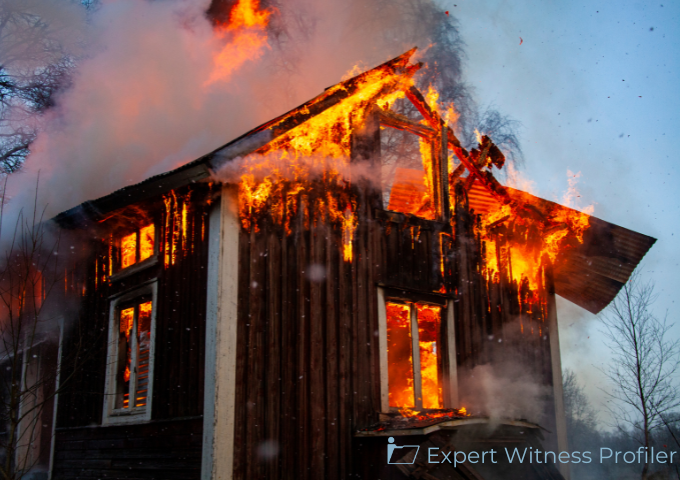
    A fire took place overnight at Tiffany Keen and Trevor Wogrin’s newly-purchased residence at 45100 County Road 1 in Parker (the “Home”), on June 5-6, 2022 (the “Fire”), causing damage. The Home was insured by a homeowner’s insurance policy issued by Allstate (the “Policy”). The Insureds submitted a claim to Allstate on June 6, 2022 for the payment of covered benefits under the Policy (the “Claim”).

    Allstate refused to pay Dwelling benefits under the Policy. Almost ten (10) months after the Claim was submitted, Allstate filed this action against the Insureds seeking a declaration that the intentional acts exclusion applies to the Claim to bar coverage.

    Defendants designated an insurance industry expert in support of their counterclaims for breach of insurance contract and bad faith. However, Allstate did not designate an affirmative insurance industry standards expert; instead, it designated its industry standards expert, Keith Olivera as a rebuttal expert.

    To begin with, Defendants sought to strike Olivera on the ground that he was not a proper rebuttal expert. Alternatively, they claimed that he was unqualified to offer certain opinions asserted in his expert report and sought to limit other aspects of his testimony as unnecessary, irrelevant, confusing, or usurping the Court’s prerogative to instruct the jury on the law. 
    Insurance Law Expert Witness

    Insurance Law Expert Witness

    Keith R. Olivera has been an attorney practicing in the field of insurance law for 30 years. Much of his practice involves advising insurers on claim handling practices and claims decisions.

    He advises insurers on claim handling decisions involving both first- and third-party claims. Moreover, he has represented or assisted insurers in hundreds of cases or claims where the insurer has been alleged to have engaged in unreasonable claim handling.

    Get the full story on challenges to Keith R. Olivera’s expert opinions and testimony with an in-depth Challenge Study.  

    Discussion by the Court

    As per Fed. R. Civ. P. 26(a)(2)(D)(ii), a rebuttal expert opinion is one “intended solely to contradict or rebut evidence on the same subject matter identified by another party.”

    The Court found that, superficially, this is what Olivera’s opinion appeared to do. In other words, Olivera contradicted the opinions of the Defendants’ industry standards expert witness, Douglas Meier, who asserted that Allstate’s handling of the Defendants’ insurance claim was unreasonable.

    However, where the subject matter of the expert’s testimony concerns a matter the designating party knew or should have known would be part of its opponent’s case-in-chief, that expert is an affirmative expert.

    To prove their substantive claim, Defendants perforce will be required to show Allstate “acted unreasonably and with knowledge of or reckless disregard for the fact that no reasonable basis existed for denying [Defendants’] claim.” Accordingly, Allstate absolutely should have predicted Defendants would offer an industry standards expert. They could not lay behind the log and only designate their own industry standards expert in rebuttal. Accordingly, the Court held that Olivera is not a proper rebuttal witness.

    Under Rule 37, a party is required to show that the violation of the discovery obligations was substantially justified or harmless.

    Allstate has failed to even acknowledge Rule 37 standards, must less attempt to show how they might be satisfied in this case.

    Held

    The Court granted the Defendants/Counterclaim Plaintiff’s motion to strike or limit the opinions and testimony of Plaintiff’s retained insurance law expert witness, Keith Olivera.

    Key Takeaway

    A rebuttal expert addresses “new unforeseen facts” that emerge in the opposing side’s case. Basically, Allstate tried to present Olivera as a rebuttal expert to counter the Defendants’ expert testimony about insurance industry standards. However, where the subject matter of the expert’s testimony concerns a matter the designating party knew or should have known would be part of its opponent’s case-in-chief, that expert is an affirmative expert.

    When given the chance to justify the violation of its discovery obligations under Rule 37(c)(1), Allstate failed to address any of the required factors for showing their violation was either substantially justified or harmless. Allowing Olivera to testify would have prejudiced Defendants and disrupted the trial. This failure further cemented the Court’s decision to strike his opinions and bar him from testifying.

    Case Details:

    Case caption: Allstate Vehicle And Property Insurance Company V. Wogrin Et Al
    Docket Number: 1:23cv803
    Court: United States District Court for the District of Colorado
    Date: December 23, 2024
  • Real Estate Development Expert Witness Violates Rule 26 by Offering an Opinion on the Causation Issue

    Real Estate Development Expert Witness Violates Rule 26 by Offering an Opinion on the Causation Issue

    H5R owns a single-family home (the “Property”) in Dallas, Texas, for which Scottsdale Insurance issued an insurance policy covering certain causes of loss. In February 2021, water allegedly entered the Property through or near the roof. H5R “immediately notified” Scottsdale Insurance and filed a claim for this incident. More than one year after the claim was filed, Scottsdale Insurance sent H5R a letter denying the claim dated June 17, 2022.

    H5R contended the Property was damaged by hail during the insurance policy period – a covered loss event. But Scottsdale Insurance denied that a hail event during the policy period caused the alleged damage.

    H5R and Scottsdale Insurance designated experts to opine regarding the alleged damage under Federal Rule of Civil Procedure 26(a)(2). H5R designated Terry Moore, a purported construction expert, and included Moore’s report regarding the extent of damage to the Property and cost of repair.

    Scottsdale Insurance filed a motion to strike Moore’s opinions and testimony because his designation and report failed to comply with Federal Rule of Civil Procedure 26.

    Real Estate Development Expert Witness

    Terry Moore is the founder and president of the Garrett Moore Company, a commercial real estate development firm that, since 1977, has developed over 22,000,000 square feet of property. This portfolio includes, but is not limited to, retail and office spaces, 45,000 apartment units, Caribbean resorts, assisted living facilities, and senior resort-style living communities.

    With over 45 years of experience in the real estate market, Terry Moore has a proven track record of success in the industry. He is a 1977 graduate of the University of Oklahoma, holding advanced degrees in Architecture.

    Get the full story on challenges to Terry Moore’s expert opinions and testimony with an in-depth Challenge Study. 

    Discussion by the Court

    Scottsdale Insurance asserted that Moore’s expert disclosure “omits key information required under Rule 26(a)(2)(B) – specifically ‘a complete statement of all opinions the witness will express and the basis and reasons for them’ and ‘the facts or data considered by the witness in forming them.’” And it contended that, in Moore’s deposition, he opined on issues that he was not designated for or provided a report on – particularly those involving causation (i.e., that hail caused the alleged damage to H5R’s Property).

    Moore testified that the report contained a complete statement of all his opinions and underlying facts or data. And he confirmed that his report did not contain a causation opinion.

    In response, H5R asserted that Moore was properly designated to provide
    his opinion regarding the Property’s repair costs. And it argued that “[t]here is no requirement that Moore’s report provide opinions regarding cause or date of damage, as these topics were not part of his designation,” and that, when asked about these issues during the deposition by Defendant’s counsel, he
    “simply answered the questions.”

    But, in its summary judgment response, the Court found that H5R relied on Moore’s deposition testimony regarding the causation issue – more than once despite conceding that the topic “was not part of his designation.”

    H5R has not provided a justification for its noncompliance with Rule 26(a)(2),
    and, so, the Court turns to whether its failure to disclose was harmless by evaluating certain factors.

    How Important the Evidence is

    The first factor of the harmlessness analysis – how important the evidence is
    – weighs in favor of exclusion.

    According to the Court, H5R’s argument that Scottsdale Insurance “ignores its own evidence” demonstrating that “the damage was caused by hail” indicates that Moore’s testimony is duplicative or of minimal importance.

    Prejudice to the Party Opposing the Admission of the Evidence

    The second factor – prejudice to the party opposing the admission of the
    evidence – also favors exclusion.

    H5R initially alleged that the Property damage was caused by a snow and ice
    event or a broken pipe. But H5R relied on Moore’s deposition testimony in its summary judgment response for the proposition that hail caused the damage, despite conceding that the topic “was not part of his designation” or in his expert report.

    And, so, the Court found that Scottsdale Insurance has been prejudiced because H5R failed to provide Scottsdale Insurance’s counsel with notice regarding the scope of his expert testimony and “now faces a newly alleged cause of loss and new opinions about the alleged damage deep into the case, with discovery now closed.”

    Possibility that a Continuance Could Cure any Prejudice

    The third factor – the possibility that a continuance could cure any prejudice – weighs against exclusion because the Court vacated the trial setting and all pretrial deadlines in May 2024.

    The Explanation for the Party’s Failure to Disclose

    The fourth factor – the explanation for the party’s failure to disclose –
    favors exclusion.

    H5R asserted that Moore was not required to provide opinions regarding causation in his report since he was not designated as an expert on that
    topic and, when asked about it during the deposition by Scottsdale Insurance’s counsel, he “simply answered the questions.”

    But, in its summary judgment response, H5R attempted to present Moore as an expert on causation, which is an issue central to the resolution of this case. And, so, the Court is not persuaded by H5R’s explanation.

    Held

    Considering these four factors holistically, the Court concluded that H5R’s noncompliance with Rule 26(a)(2) is not harmless and that Moore’s testimony should be excluded under Rule 37(c)(1).

    Key Takeaway:

    H5R has not provided a justification for its noncompliance with Rule 26(a)(2). Because Moore “provided several undisclosed opinions in his deposition” about issues that he was not designated to opine on, including the source of alleged damage, the Court concluded that H5R’s noncompliance with Rule 26(a)(2) is not harmless.

    Case Details:

    Case Caption:  H5r Llc V. Scottsdale Insurance Company
    Docket Number: 3:23cv1197
    Court: United States District Court, Texas Northern
    Order Date: January 10, 2025