Tag: Estimate

  • Civil Engineering Expert Witness’ Opinion that the Roof Requires Full Replacement is Not Mere Speculation

    Civil Engineering Expert Witness’ Opinion that the Roof Requires Full Replacement is Not Mere Speculation

    Plaintiff Franklin Square Condominium Owner Association alleged that a hailstorm on April 28, 2021, damaged its property at 817-831 Old Ranch Road 12, San Marcos, Texas 78666.

    Franklin Square filed a claim with its insurance company, Defendant AmGuard Insurance Company. Plaintiff alleged that AmGuard breached the insurance contract by failing to pay the full amount of the claim.

    Franklin Square designated two expert witnesses: Marc Camacho, a structural and civil engineer who would testify that a severe hailstorm on April 28, 2021, caused functional damage to the roof of the Property that would require full replacement; and Jeremy Duke, a general contractor who would testify on the cost to repair the Property and replace the roof. 

    Civil Engineering Expert Witness

    Marc Camacho has over fifteen years of experience in engineering forensics investigations and/or design related to residential, commercial, and various other buildings and installations. His expertise includes forensic analysis, inspection, evaluation, engineering design, report/repair recommendations, and review/rebuttal of third-party reports. Camacho has extensive
    experience in various construction material types, installation and evaluation protocols, and component failure mechanisms, with understanding of construction plan implementation, building code interpretation, industry standards, and identification of storm-related damage.

    Get the full story on challenges to Marc Camacho’s expert opinions and testimony with an in-depth Challenge Study. 

    Construction Expert Witness

    Jeremy Duke holds a degree in Kinesiology and Business from the University of North Texas and an Associate Degree in Science from Navarro Junior College. Jeremy has obtained multiple certifications, including Xactimate 28 Level 1, and holds a Texas Real Estate License, enhancing his expertise in the roofing and general construction industry.

    Since November 2014, Duke has been the owner of J. W. Duke Roofing and General Construction, where he has successfully managed various projects.

    Want to know more about the challenges Jeremy Duke has faced? Get the full details with our Challenge Study report. 

    Discussion by the Court

    AmGuard asked the Court to exclude Camacho’s testimony as unreliable. AmGuard also contended that Duke’s testimony should be excluded because his report did not comply with Rule 26, he is not qualified to give expert testimony on the cost to replace a roof, and his estimate on interior repairs is unreliable.

    Camacho’s Opinion Is Reliable

    For expert testimony to be reliable, it must “be grounded in the methods and procedures of science and . . . be more than unsupported speculation or subjective belief.”

    AmGuard argued that Camacho’s testimony that the Property’s roof must be replaced is unreliable because it is not supported by sufficient data or reliable methodology. AmGuard challenged Camacho’s opinion that hail damage to the concrete roof tiles “cannot be feasibly or effectively repaired” and remediation “will require full removal and replacement of concrete tile roof coverings” at the Property. 

    Camacho visited the Property on March 19, 2024, and inspected the roof and took photographs of the damage. His expert report stated that damage “consistent with historical impacts from hail” was present on roof tiles and metal components on the roof. AmGuard argued that the report is unreliable because Camacho only closely inspected a small percentage of the roof tiles and did not estimate the percentage of damaged tiles. However, Camacho testified that he viewed “all of the roof in general,” but that when performing a hail inspection, he “quite frequently will get down on his hands and knees to like really get up close and attempt to evaluate” only a fraction of a roof’s tiles. 

    Camacho also stated in his report that he observed several different types of hail damage on the roof and that the damage could not be feasibly or effectively repaired. Moreover, he explained how roofs can be damaged by hail and how functional damage reduces a roof’s water-shedding capability or lifespan. The Court found that Camacho’s opinion that the roof requires full replacement is grounded in a proper methodology and is not mere speculation.

    Duke’s Report Does Not Comply with Rule 26

    AmGuard argued that Duke’s testimony should be excluded because his report does not comply with Rule 26(a)(2)(B), which requires an expert report to include “a complete statement of all opinions the witness will express and the basis and reasons for them” and “the facts or data considered by the witness,” among other things.

    Duke’s report consisted of his resume; photographs of the damage; and a damage estimate report created using “a computer software program known as ‘Xactimate’ which is commonly used by construction contractors and adjusters to create estimate reports.” Duke neither stated the basis and reasons for the damage nor explains how his experience is reliably applied to the facts of this case. Therefore, the Court found that his report does not comply with Rule 26(a)(2)(B). 

    Franklin Square has not shown that its failure to comply with Rule 26(a)(2)(B) was substantially justified or harmless

    Rule 37(c)(1) requires courts to exclude expert testimony for failure to comply with Rule 26(a) unless the failure was substantially justified or harmless. Franklin Square contended that Duke’s report does comply with the rule and does not argue that its failure was substantially justified. Courts weigh four factors to determine whether a party’s violation is harmless: “(1) the importance of the evidence; (2) the prejudice to the opposing party of including the evidence; (3) the possibility of curing such prejudice by granting a continuance; and (4) the explanation for the party’s failure to disclose.”

    The Court held that the first factor weighs in favor of Franklin Square because Duke’s testimony on damages would be important to a determination of the amount of Franklin Square’s claim. The second and third factors weigh in favor of AmGuard. Without an adequate statement of the basis for Duke’s opinion, AmGuard is prejudiced in its ability to prepare for his deposition and cross-examination at trial. Moreover, Discovery has closed, AmGuard has filed a motion for summary judgment, and “a continuance would result in additional delay and increase the expense of defending the lawsuit.”

    Considering the four factors, the Court found that Franklin Square has not shown that its failure to comply with Rule 26(a)(2)(B) was substantially justified or harmless.

    Held

    The Court held that Defendant AmGuard Insurance Company’s motion to exclude or limit the testimony of Plaintiff’s designated expert witnesses is denied as to Marc Camacho and granted as to Jeremy Duke.

    Key Takeaways:

    • Camacho’s opinion that the roof requires full replacement is grounded in a proper methodology because he observed several different types of hail damage on the roof to arrive at his conclusions. He explained how roofs can be damaged by hail and how functional damage reduces a roof’s water-shedding capability or lifespan.
    • If a witness is “relying solely or primarily on experience, then the witness must explain how that experience leads to the conclusion reached, why that experience is a sufficient basis for the opinion, and how that experience is reliably applied to the facts.” Duke neither states the basis and reasons for the damage nor explains how his experience is reliably applied to the facts of this case. Therefore, the Court finds that his report does not comply with Rule 26(a)(2)(B).

    Case Details:

    Case Caption: Franklin Square Condominium Owner Association V. Amguard Insurance Company
    Docket Number: 1:23cv1012
    Court: United States District Court, Texas Western
    Order Date: September 1, 2024
  • Building and Construction Expert Witness’ Hurricane Damage Assessment Does Not Warrant Exclusion

    Building and Construction Expert Witness’ Hurricane Damage Assessment Does Not Warrant Exclusion

    It all started when Hurricanes Laura and Delta inflicted significant damage on Plaintiffs’ rental property on August 27, 2020, and October 9, 2020, respectively. Southern Fidelity Insurance Company (SFIC) insured the property at the time of the damage. However, SFIC subsequently declared bankruptcy, and the Louisiana Insurance Guaranty Association (“LIGA”) has since been substituted as the proper party.

    Plaintiffs claimed that the damage to their property had been undervalued. After LIGA was substituted for SFIC, LIGA retained Keystone to inspect the property. Plaintiffs then moved to exclude LIGA’s expert, Daniel Treas, claiming that his report was unreliable.

    Building and Construction Expert Witness

    Daniel Treas has over 15 years experience as a Construction Superintendent and in commercial construction, including 8 years in renovation and 5 years in project management. He has over 10 years experience in OSHA regulations. He has also served as an independent insurance adjuster with over 14 years of experience.

    Get the full story on challenges to Daniel Treas’s expert opinions and testimony with an in-depth Challenge Study.   

    Discussion by the Court

    Plaintiffs argued that Treas’ report was unreliable due to his failure to physically inspect the property and conduct a thorough review of the previous expert’s report. Furthermore, they pointed out discrepancies in the report and claimed that it was nearly identical to an earlier report prepared by the previous expert. According to the Plaintiffs, Keystone initially sent a building consultant, along with its engineer, to inspect the property on August 25, 2023. The building consultant authored a report dated September 15, 2023, but left Keystone shortly thereafter.

    Subsequently, Keystone hired Treas to prepare a report to support its estimate of damages caused by Hurricanes Laura and Delta.  

    The Plaintiffs complained that: (1) the Treas report is identical to the previous expert report, (2) Treas is not a licensed adjuster, (3) Treas did not personally inspect the property, and (4) Treas was not involved in this matter until July 2024. Moreover, they identified discrepancies between the two reports, such as a missing fan on the rear elevation porch, the type of exterior cladding on the house, and the wrong address noted in the report. Additionally, they contended that Treas improperly opined on causation.

    Treas is not a licensed adjuster

    In response, LIGA defended Treas’ qualifications, citing his extensive experience in various construction roles, including the estimator and catastrophe claims adjuster. LIGA explained that Treas relied on Keystone’s engineer regarding causation in order to prepare an estimate to rebuild the property.

    Treas report is identical to the previous expert report

    Regarding the similarity between the reports, LIGA noted that Treas testified the first 12 pages should be the same because they list the background information about the property. However, several differences exist between the reports, including additional damages not mentioned in the previous expert’s report, as well as overall discrepancies in the estimated damages.

    Ultimately, the Court did not find that exclusion was warranted simply because the two reports were very similar. As to the discrepancies, the Court found that this will go to the credibility of the witness and his report. The Court further noted that the instant matter is a bench trial, and Plaintiffs will be able to cross-examine and rebut LIGA’s report and Treas’ testimony. 

    Held

    The Court denied the Plaintiffs’ motion to exclude the expert testimony of Daniel Treas.

    Key Takeaway:

    According to Federal Rule of Evidence 402, evidence is generally admissible so long as it is relevant and not barred by the Constitution, a federal statute, the Federal Rules of Evidence, or other rules prescribed by the Supreme Court. Evidence should only be excluded in limine where it is “clearly inadmissible on all potential grounds.”

    The Court determined that the similarity between expert reports alone does not justify exclusion. It emphasized that any discrepancies identified concerned the credibility of the witness rather than the admissibility of the evidence. In a bench trial setting, Plaintiffs retain the opportunity to effectively cross-examine the expert. They can also challenge the opposing party’s findings. This underscores the importance of witness credibility in evaluating expert testimony.

    Case Details:

    Case Caption: Houston et al vs. Southern Fidelity Insurance Co.
    Docket Number:  2:22-CV-01198
    Court: United States District Court for the Western District of Louisiana, Lake Charles Division
    Order Date: October 1, 2024
  • Insurance Coverage Expert Witness Not Allowed to Opine on the Specific Costs He Identified in his Estimate

    Insurance Coverage Expert Witness Not Allowed to Opine on the Specific Costs He Identified in his Estimate

    In March 2019, Zeqa, the Plaintiff bought a two-story home on 3 acres in Lincoln Park, New Jersey, for $310,000. Before the purchase, an inspection revealed pre-existing water damage, which remained unaddressed after Zeqa took ownership. Hanover, the Defendant insured the property under a homeowner’s policy, covering the dwelling, personal property, and living expenses, with specific coverage limits. The policy took effect on March 29, 2019. 

    On October 2, 2019, the property experienced water damage from ruptured supply lines connected to bidet attachments. The increased water pressure was caused by the Water Authority’s seasonal fire hydrant flushing. Zeqa promptly notified Hanover, who hired ServPro for remediation. However, ServPro was released due to electrical issues before completing any work. Zeqa then hired Quality Air Care (QAC) for remediation without Hanover’s explicit authorization. 

    The parties disagreed on the damage extent and necessary repairs. Hanover argued that QAC’s work was excessive and unauthorized, while Zeqa claimed it was essential to mitigate damage under the policy. Hanover paid Zeqa a total of $100,280.55 for various damages and offered additional amounts for emergency water mitigation and replacement costs. The dispute centered on the scope of covered losses and the necessity of QAC’s extensive remediation work. Zeqa contended that Hanover’s payments were insufficient and that additional funds should have been released. Furthermore, Hanover argued that Kevin Kaufmann, Zeqa’s public adjuster expert, should be excluded under Federal Rule of Evidence 702, challenging his qualifications to opine on causation and coverage. 

    Insurance Coverage Expert Witness 

    Kevin Kaufmann is a seasoned expert in property adjustment with extensive experience in the field. He completed his Bachelor of Business Administration (B.B.A.) from Temple University in 1987, following his Associate’s degree in Liberal Arts from Bucks County Community College. 

    Kaufmann has been serving as the President of Property Adjustment Corporation since November 1989, where he has been instrumental in leading the company’s operations and providing expert property adjustment services.

    Fortify your strategy by reviewing a Challenge Study detailing grounds for excluding Kevin Kaufmann’s expert testimony. 

    Discussion By the Court 

    1. Qualifications of the Expert 

    The Court addressed Hanover’s argument that Zeqa’s public adjuster expert, Kevin Kaufmann, was not qualified to opine on causation or coverage. It disagreed, noting that the “specialized knowledge” required for an expert could encompass a broad range of knowledge, skills, and training in the subject matter. The Court found Kaufmann to possess such qualifications. Specifically, it highlighted that Kaufmann had worked as a licensed public adjuster since 1990 and as a claims adjuster for two insurance companies from 1987 to 1989. The Court recognized that Kaufmann had investigated hundreds of water damage claims to determine the cause of damage and coverage under insurance policies. It also noted his significant education and training, including courses in building damage restoration and property claims. 

    The Court dismissed Hanover’s argument that Kaufmann should be excluded because he was not an engineer. It cited the standard that an expert need only have “skill or knowledge greater than the average layman” to opine on the issues in his report. The Court found that Kaufmann easily met this standard. It also addressed Hanover’s reference to the Balu v. Cincinnati Ins. Co. case, finding it unpersuasive. The Court distinguished Balu, noting that unlike the expert in that case, Kaufmann did have expertise in identifying the cause of damage. 

    Furthermore, the Court rejected Hanover’s unsupported claim that Kaufmann’s expertise was limited to evaluating repair costs rather than determining how property was damaged. It noted that Kaufmann’s own statements contradicted this assertion. Lastly, the Court dismissed Hanover’s argument about Kaufmann’s use of the phrase “sudden and accidental,” stating that this went to credibility rather than qualifications and could be addressed through cross-examination. 

    2. Reliability of Causation Analysis 

    Despite finding Kaufmann qualified, the Court agreed with Hanover that his causation analysis was unreliable and would not assist the trier of fact. The Court identified a significant flaw in Kaufmann’s methodology. It noted that Kaufmann had inspected the property after remediation work had started and the house had been “gutted.” In his deposition, Kaufmann admitted he could not confirm if all the gutted areas had been damaged and needed repair due to water intrusion. Despite this uncertainty, Kaufmann included all these repairs in his estimate and opined that they all related to the Incident. 

    Based on this admission, the Court found that Kaufmann had no reliable basis to opine that all the repair work included in his estimate related to the Incident. The Court concluded that Kaufmann’s opinion on causation was unreliable and would not be helpful to the jury. Consequently, it ruled that Kaufmann could not testify about whether all the repair work in his estimate was caused by the water intrusion. 

    3. Opinion on Policy Coverage 

    The Court’s analysis of Kaufmann’s opinions on policy coverage was nuanced. It disagreed with Hanover’s argument that Kaufmann should be precluded from testifying that the loss he identified was covered by the Policy because it constituted an inadmissible legal conclusion. The Court noted that while Rule 704 prohibits experts from opining about ultimate legal conclusions or legal standards, Kaufmann’s opinions did not cross this line. His statements about policy coverage did not invade the Court’s role in instructing the jury on the law. 

    However, the Court did find that Kaufmann’s opinion on whether the specific costs he identified were covered under the Policy was inadmissible under Rule 702. The Court made several distinctions in its ruling. It determined that Kaufmann could testify about his observations and findings from his review and inspection of the Property. He could discuss the types of losses covered under the Policy and opine on whether damage caused by the Incident qualifies as a covered loss in general terms. However, Kaufmann could not testify about what specific damage was caused by the Incident, nor could he opine on whether the specific costs he identified in his estimate were covered under the Policy. 

    Held 

    The Court found Kaufmann qualified to testify as an expert based on his experience as a public adjuster but excluded parts of his testimony. It ruled his causation analysis unreliable since he inspected the property after remediation work started, making it difficult to confirm damage from the Incident. Kaufmann was allowed to testify on general policy coverage but barred from discussing specific damage or costs due to his inadmissible causation opinion. The Court limited his testimony to ensure reliability and usefulness to the jury. 

    Key Takeaways: 

    1. Pre-existing property damage can heavily impact insurance claims and disputes. 
    1. Expert testimony may be limited if deemed unreliable, even with qualified experts. 
    1. Inspections after remediation work can compromise the ability to assess original damage. 
    1. Clear communication between insurers and policyholders about repairs is crucial. 
    1. Differentiating incident-related damage from pre-existing issues is vital in insurance claims. 

    Case Details:

    Case Caption: Zeqa V. The Hanover Insurance Company
    Docket Number: 2:21cv10066
    Court: United States District Court for the District of New Jersey
    Order Date: September 9, 2024
  • Business Valuation Expert Witness’ Financial Projections Admitted

    Business Valuation Expert Witness’ Financial Projections Admitted

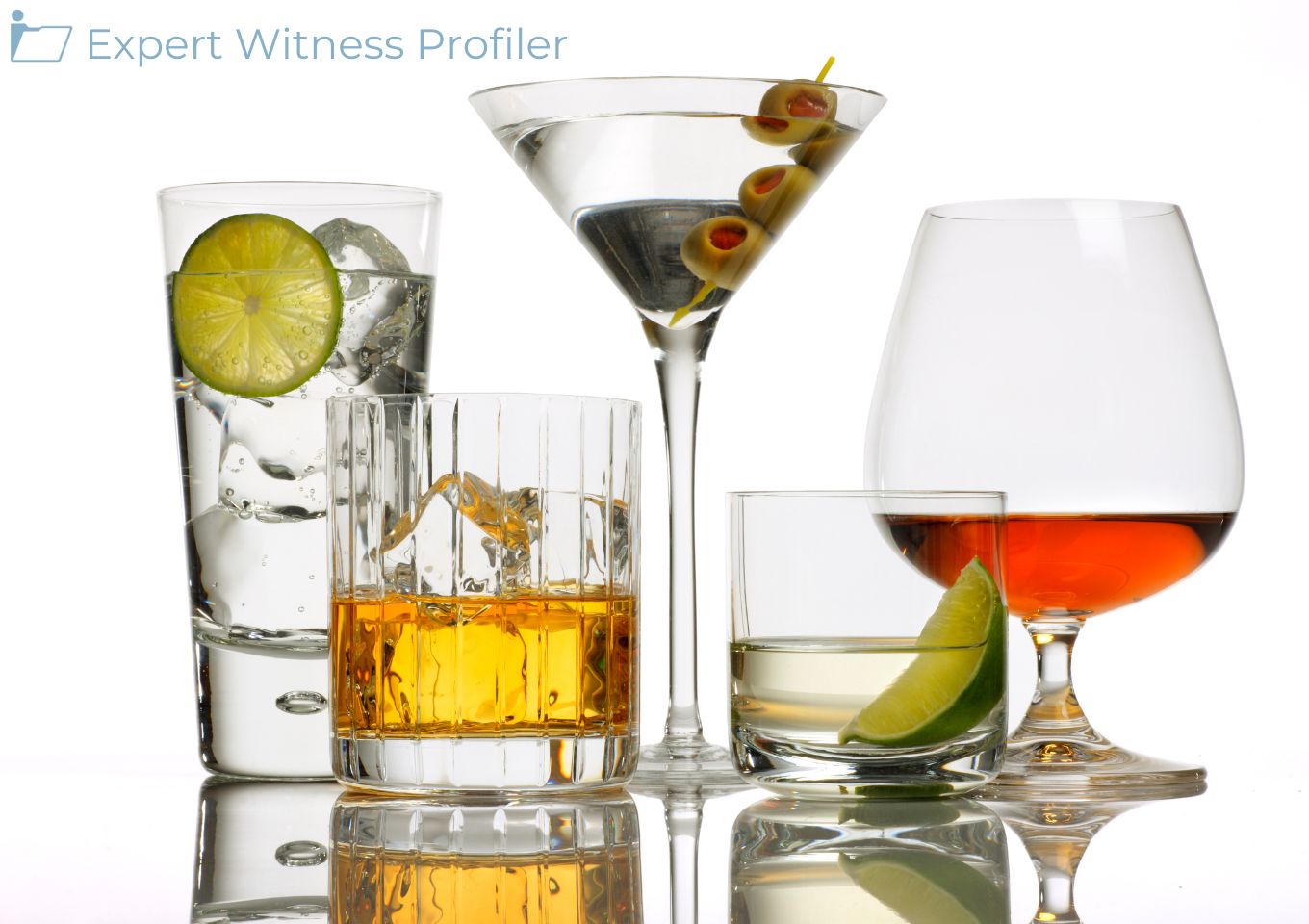
    Plaintiff American Northwest Distributors Inc. (“ANW”) was the Washington distributor of Four Roses bourbon, produced by Defendant Four Roses Distillery LLC (“Four Roses”), for about five years from 2015-2020. In 2020, after a pattern of late payments from ANW, Four Roses terminated the distribution agreement and switched to a competitor, Young’s Market Company, LLC (“Young’s Market”). ANW went to arbitration with Young’s Market, as provided for in Washington’s statutes regulating liquor distribution, and the arbitrator awarded ANW what she found to be the fair market value of ANW’s lost distribution rights.

    After the arbitration, ANW sued Four Roses, claiming Four Roses had breached the parties’ contract and interfered with ANW’s other business relationships, causing ANW damages beyond what it received from Young’s Market in arbitration. Four Roses counterclaimed for invoices ANW had never paid.

    ANW has retained Neil Beaton to analyze and determine the damages it has incurred as the result of Four Roses’ wrongful termination of ANW’s distribution agreement.

    Four Roses filed a motion to exclude ANW’s expert witness, Neil J. Beaton. Four Roses first argued that Beaton’s testimony regarding ANW’s lost profits is inadmissible because ANW cannot recover those profits as a matter of law, so that any testimony on this issue is “not helpful to the trier of fact.” The Court held that ANW may seek such recovery under common law contract claims and Four Roses’ argument on this point is unpersuasive. Four Roses also contended that Beaton’s testimony is a “rehash” of the damages he attested to in arbitration. While there may be overlap in Beaton’s financial figures, there are genuine disputes between the parties as to how that impacts the damages analysis in this case.

    Business Valuation Expert Witness

    Neil Beaton is a Managing Director with Alvarez & Marsal Valuation Services in Seattle. He specializes in the valuation of public and privately held businesses and intangible assets for purposes of litigation support (lost profits claims, marriage dissolutions and others), acquisitions, sales, buy-sell agreements, ESOPs, incentive stock options and estate planning and taxation. He also performs economic analysis for personal injury claims, wrongful termination and wrongful death actions.

    Want to know more about the challenges Neil Beaton has faced? Get the full details with our Challenge Study report. 

    Discussion by the Court

    Four Roses also questioned the reliability of Beaton’s financial projections, asserting that they are overly optimistic and lack “reasonable certainty.” The Court held that while Beaton’s projections may be “optimistic,” that does not make his testimony unreliable if he lays an acceptable foundation for those calculations.

    Beaton has disclosed his assumptions and methodology for projecting lost profits, and Four Roses has not shown that those methods lack a reliable basis in the knowledge and experience of Beaton’s discipline. Four Roses can challenge Beaton’s approach at trial, but his choice of assumptions does not render his testimony inadmissible—only more or less persuasive when evaluated as a whole.

    The judge at arbitration took a similar approach, recognizing that Beaton held undeniable expertise in business valuation—but the assumptions upon which he applied that expertise did not lead to a persuasive conclusion. 

    As the judge at arbitration recognized, business valuation “is as much an art as a science.” Four Roses did not challenge Beaton’s methods—it questioned the growth assumptions and discretionary factors that were necessary to financial projections and challenged the figures he arrived at.

    Beaton’s convoyed sales estimate relied on the assumption that Four Roses’ conduct interfered with ANW’s sales relationships. Beaton’s testimony regarding “convoyed sales,” however, is no longer relevant, even if it could be considered reliable (an issue the Court need not decide). Beaton opines that ANW’s sales of Four Roses products motivated its customers to buy more products overall—such that Four Roses’ termination negatively impacted these purchases. In light of the Court’s determination, however, that Four Roses did not tortiously interfere with ANW’s other business relationships, Beaton’s “convoyed sales” testimony is no longer relevant and will be excluded. 

    Held

    In conclusion, the Court denied Four Roses’ motion to strike the testimony of Neil J. Beaton as to testimony regarding lost profits and other damages and granted it as to testimony regarding ANW’s loss of “convoyed sales.”

    Key Takeaway:

    The Court has “broad latitude” in determining an expert’s reliability and finds no reason to question the reliability or relevance of Beaton’s testimony on lost profits under Rule 702. Moreover, Beaton has disclosed his assumptions and methodology for projecting lost profits, and Four Roses has not shown that those methods lack a reliable basis in the knowledge and experience of Beaton’s discipline.

    Case Details:

    Case Caption: American Northwest Distributors Inc V. Four Roses Distillery Llc
    Docket Number: 2:22cv1265
    Court: United States District Court for the Western District of Washington
    Order Date: August 20, 2024
  • Insurance Expert Witness’ Testimony Admitted Despite Not Being Tied to  Covered Loss

    Insurance Expert Witness’ Testimony Admitted Despite Not Being Tied to Covered Loss

    A district judge in Texas admitted the insurance expert’s testimony about the cost to repair or replace the damaged areas.

    This is a commercial property insurance coverage dispute arising from hail and wind damage to Plaintiff’s property located at Midland, Texas. Landmark insured the Property under a commercial policy. Landmark received notice that the Property had sustained storm damage with the date of loss claimed as June 19, 2020.

    On March 28, 2022, Landmark sent Plaintiff a letter explaining that investigation revealed that the roof was exposed to multiple hail events on April 16, 2017; on May 16, 2017; and/or on April 23, 2019, but did not support that a hail event occurred at the Property on or about June 19, 2020. Plaintiff subsequently filed suit against Landmark for alleged property damages with a date of loss of June 19, 2020.

    Plaintiff designated Kevin Funsch, “a licensed public adjuster and owner of US Insurance Adjusters, LLC.” On March 22, 2024, Landmark filed a motion requesting that the Court exclude Plaintiff’s expert witness, Funsch’s testimony and strike his expert report.

    Insurance Expert Witness

    Kevin Funsch is a public adjuster and the owner of an insurance adjusting firm with a solid background in claims handling and estimating. He is experienced in adjusting property losses and performing appraisals.

    Get the full story on challenges to Kevin Funsch’s expert opinions and testimony with an in-depth Challenge Study. 

    Discussion by the Court

    Landmark sought for Funsch’s report to be struck and his testimony excluded because: (1) Plaintiff’s expert designation and Funsch’s report did not comport with Federal Rule of Civil Procedure 26(a)(2); (2) Funsch’s report and opinions were unreliable; and (3) Funsch’s report and opinions were irrelevant.

    Funch’s Compliance with Rule 26 and Rule 702

    Defendant asserted that Funsch’s expert report is deficient for multiple reasons: (1) it “did not contain a complete statement of the basis and reasons for Funsch’s opinions as to the damages sustained to the property and the cost of repairs”; (2) Funsch did not “explain in his report how his experience as an insurance adjuster led him to reach his conclusions”; (3) the report “did not include any explanation as to the basis or reliability of the estimate”; (4) it “failed to demonstrate that Funsch’s opinions on the damages and necessary repairs are based on sufficient facts or data”; and (5) “that Funsch reliably applied those principles and methods in forming his estimate as required by Rule 702”.

    After thoroughly scrutinizing Funsch’s report, the Court found it satisfied both Rule 26 and Rule 702. It added that Landmark’s reliance on its cited Rule 702’s advisory committee note was inapplicable to Funsch’s expert report in this case, as he stated that he relied on multiple other documents and conversations with Neil Hall in forming his opinions, rather than relying solely on experience as the advisory committee note contemplated.

    The Court addressed Landmark’s arguments that Funsch failed to demonstrate his opinions on the damages and necessary repairs are based on sufficient facts or data, the product of reliable principles and methods; and that he reliably applied those principles and methods in forming his estimate as required. The Court noted that Plaintiff designated Funsch as his damages expert. Funsch is offered as an expert to provide opinion testimony only on the cost to repair or replace the damaged areas identified in the Hall Report.

    Reliability of Kevin Funsch’s Opinions

    Next, Landmark asserted Funsch’s “opinions regarding the costs of repairs are unreliable because he relied on unexplained assumptions about the Property that have no factual basis.” Landmark’s argument is premised on Funsch’s deposition testimony. In his deposition, Funsch stated most of the quantities and measurements in his estimate were copied over from the Berkley estimate. Then, because Hall’s report “only called for replacing some sections of the roof and the Berkeley estimate called for replacing all of them, Hall told Funsch to just use ‘about half’ of some of the Berkeley quantities.” Funsch admitted he “wasn’t able to verify every single one of the quantities.” Funsch concluded ‘these quantities, the number of items seems reasonable’ which Landmark asserted were “assumptions” by Funsch instead of “actual quantities” actually rendered the entirety of Funsch’s opinions unreliable.

    The Court, citing Rule 703, found Funsch’s testimony and report reliable.

    Relevancy of Kevin Funsch’s Opinions

    Landmark argued Funsch’s opinions were irrelevant because: (1) his repair estimate was based on prices as of April 2023, when the Policy required valuation based on the date of loss; (2) his repair estimate was a replacement cost estimate, not an actual cash value estimate; and (3) his opinions were not tied to “covered causes of loss.”

    His repair estimate was based on prices as of April 2023, when the Policy required valuation based on the date of loss

    Defendant first asserted Funsch’s opinions were irrelevant and/or not helpful to the jury because his report contained prices from April 2023 instead of 2019, and the Policy’s valuation provision mandated the cost of repairs be in 2019 (the alleged date of loss).

    The Court found that the date of Funsch’s damage estimate did not render it
    completely irrelevant and unhelpful; rather the exact weight to be given to Funsch’s testimony and expert report was for the fact finder to determine.

    His repair estimate was a replacement cost estimate, not an actual cash value estimate

    Landmark argued Funsch’s opinions were irrelevant and/or not helpful to the jury because his report contained only a replacement cost estimate, and “[i]n order to receive Replacement Cost coverage, the Policy stated that Plaintiff must first ‘actually’ repair or replace the property.” However, “it was undisputed that Plaintiff did not make the necessary repairs and the very minor repairs Plaintiff did make were not made until over two and a half years later.”

    The Court noted that whether Plaintiff could recover replacement cost value or actual cash value damages was a point of contention currently being litigated. Thus, without an order barring Plaintiff from recovering replacement cost damages, the Court found Funsch’s opinion as to replacement cost damages was relevant.

    Funsch’s opinions are irrelevant and/or not helpful because his opinions are not tied to a covered loss

    Landmark argued Funsch’s opinions are irrelevant and/or not helpful because his opinions are not tied to a covered loss. The Court emphasized that Plaintiff designated Funsch as his damages expert. Funsch is offered as an expert to provide opinion testimony only on the cost to repair or replace the damaged areas identified in the Hall Report.

    Held

    The Court denied Landmark’s motion to strike and exclude the testimony of Kevin Funsch.

    Key Takeaways:

    • It is not unusual in insurance coverage cases to have separate causation and damages experts, and to have the damages expert rely on causation opinions from the separate expert.
    • Simply because Funsch relied on Hall’s opinion and his own analysis of photographs, does not render Funsch’s reliability below Rule 702’s threshold, as this is exactly the kind of facts and data experts in Funsch’s field reasonably rely on in forming their opinions.

    Case Details:

    Case Caption: William Douglas C/O The Havens Group, Inc. V. Landmark American Insurance Company
    Docket Number: 7:22cv167
    Court: United States District Court, Texas Western
    Order Date: May 28, 2024
  • Experts cannot base their methods on personal experience unless it is proved to be a sufficient basis; Court excludes expert testimony on the cost of developing alleged trade secrets 

    Experts cannot base their methods on personal experience unless it is proved to be a sufficient basis; Court excludes expert testimony on the cost of developing alleged trade secrets 

    This case was between Larada Sciences (the Plaintiff) and Pediatric Hair Solutions (PHS – the Defendant) in the United States District Court for the District of Utah. Larada manufactures devices that use heated air to treat head lice and licenses the devices to head lice treatment clinics. In 2015, Larada and PHS entered into license agreements allowing PHS to use Larada devices at PHS clinics. In 2017, the parties disagreed about payments and Larada terminated the agreements, then sued PHS for trademark infringement and other claims.  

    During the litigation, Larada designated two experts – Jon Beck to testify about the design, technical and engineering challenges faced by Larada in developing the devices, and Matt Germane to testify about the value of Larada’s alleged trade secrets. PHS named James Rice, an engineer, as a rebuttal expert to estimate the cost to develop Larada’s alleged trade secrets. Rice prepared a report with extensive time and cost estimates for the alleged trade secrets.  

    Larada moved to exclude Rice’s testimony, arguing his methods were unreliable. At his deposition, Rice testified his estimates were based on personal experience but he did not explain how his experience led to the conclusions he derived. Rice’s deposition testimony brought to light various inconsistencies in his report especially with regard to the time estimates. He acknowledged a wild variation in estimates was likely but was not able to come up with a reliable explanation as to why. 

    Mechanical Engineering Expert Witness 

    Dr. James G. Rice has over 35 years of experience in mechanical engineering and computational methods. He holds a Ph.D. in Mechanical Engineering from Virginia Polytechnic Institute and State University (1978), an M.S. in Mechanical Engineering from Virginia Polytechnic Institute and State University (1973), and a B.S. in Mechanical Engineering from Old Dominion University (1972). His areas of expertise include computational methods, heat transfer, thermodynamics, fluid dynamics, combustion, solid mechanics, mechanical design, and CAE/CAD software. Rice has extensive experience as an expert witness in patent litigation involving issues in mechanical engineering. Rice currently serves as the President of MechExpert. 

    Discussions by the Court 

    The Court began by explaining the legal standard for evaluating expert testimony under Rule 702 of the Federal Rules of Evidence. The Court stated it must act as a “gatekeeper” to ensure expert testimony is relevant and reliable. Evaluating expert testimony typically involves two steps – assessing if the expert is qualified based on knowledge, skill, experience, training or education, and assessing if the expert’s opinion is reliable by examining the reasoning and methodology. The party offering the expert bears the burden to show the testimony is based on reliable principles reliably applied to the facts.  

    The Court is not required to admit opinion evidence connected to existing data only by the ipse dixit of the expert especially if there is simply too great an analytical gap between the data and the opinion proffered. 

    First, Rice examined Larada’s “proprietary program for the microprocessor algorithm.” He estimated that it would take one to two engineers with minimal experience a combined forty hours to develop a microprocessor algorithm, and he concluded that this trade secret had a value of $5,000. However, during his deposition, Rice provided an estimate that totaled 160-180 hours, a difference of at least 120 hours. 

    Second, Rice assessed the “method, process, and design that Larada had developed and applied for effectively fast thermal control response in a high-discharge heated air device.” He estimated it would take two or three engineers with minimal experience 240 hours combined to develop this program, resulting in a value of $30,000. In his report, Rice estimated it would take 240 hours to develop this method, but during his deposition, he testified that it would take at most ninety hours to complete two out of the three necessary tasks, and he was noncommittal about the third task, stating it depended on its difficulty. 

    Third, Rice analyzed “Larada’s specified selection and method of utilization for blower-related components as applied for the purpose of precise volumetric delivery and flow control.” He estimated that two engineers with minimal experience would need 320 hours combined to create this program, resulting in a $40,000 value. He further explained the tasks involved in assembling and testing necessary components and developing the required software program. 

    Fourth, Rice concluded that it would take two engineers with minimal experience eighty hours combined “to identify a suitable blower/heater with the required output, noise, and electrical characteristics.” He assigned a value of $10,000 to this alleged trade secret, and he confirmed this estimate during his deposition. 

    Fifth, Rice estimated that it would take an engineer with minimal experience twenty hours “to identify a hose with the required flexibility, diameter, and length for its intended purpose,” resulting in a $2,500 value. Rice confirmed this time estimate during his deposition. 

    Finally, Rice explained that it would take a more experienced engineer 80 hours to design the multi-nozzle tip and 70 hours to test it in a trial and error process, totaling 150 hours and resulting in a value of $37,500.  

    Rice replied that his personal experience informed the method he applied to estimate how long each project would take when asked about the same. 

    Turning to this case, the Court addressed Larada’s argument that Rice’s method for valuing alleged trade secrets was unreliable. The Court skipped assessing Rice’s qualifications and focused only on the reliability of his methodology. The Court explained Rice testified his method was based on personal experience. An expert can rely solely on experience, but must explain how the experience leads to the conclusions and is reliably applied to the facts.  

    The Court provided two primary reasons why PHS did not show Rice’s experience-based opinion was reliable. First, Rice did not explain how his experience informed his specific opinions. He did not identify comparable projects or explain why his experience provided a reliable estimate. The Court could not simply take his word for it. Second, Rice’s deposition testimony was inconsistent with his report, suggesting he did not reliably apply his experience. For one alleged trade secret, his deposition estimate was 120 hours higher than his report. For another, he gave a concrete estimate in his report but was noncommittal when deposed.  

    The Court rejected PHS’ argument that inconsistencies only went to credibility and could be addressed on cross-examination. The Court must make an initial reliability determination before the jury weighs credibility. Here, the Court could not conclude Rice’s opinions were sufficiently reliable. The Court acknowledged Rice’s qualifications, but this was not enough absent an explanation of how his experience led to his conclusions. There was too great an analytical gap between the data and opinions. 

    Held  

    The Court found PHS did not meet its burden to show Rice’s opinions about the value of the alleged trade secrets were reliable. Thus, the opinions were excluded and Larada’s motion to exclude was granted. The Court has not arrived on an outcome for this case since the remaining issues involved in this case still await resolution. 

    Key Takeaways 

    This case illustrates several important points about expert witness testimony under Rule 702 of the Federal Rules of Evidence. First, the Court serves a gatekeeping function to ensure expert opinions are relevant and reliable before going to the jury. Second, when an expert relies solely on experience, they must thoroughly explain how their experience leads to their conclusions in the case. It is not enough to merely cite qualifications without connecting the dots. Third, consistency matters. Deposition testimony that conflicts with the expert report may indicate unreliable application of experience. Fourth, not all defects disqualify an expert. But here the inconsistencies were significant enough to find a lack of reliability. Fifth, the proponent of the expert bears the burden to prove admissibility. The Court does not have to take the expert’s word for it. And finally, there may be too great an analytical gap between the data and opinions offered, warranting exclusion. The takeaway is that qualification alone does not suffice – methodology matters when applying experience to reach opinions.