Tag: excessive force

  • Law Enforcement Expert Not Allowed to Opine on Training And Supervision

    Law Enforcement Expert Not Allowed to Opine on Training And Supervision

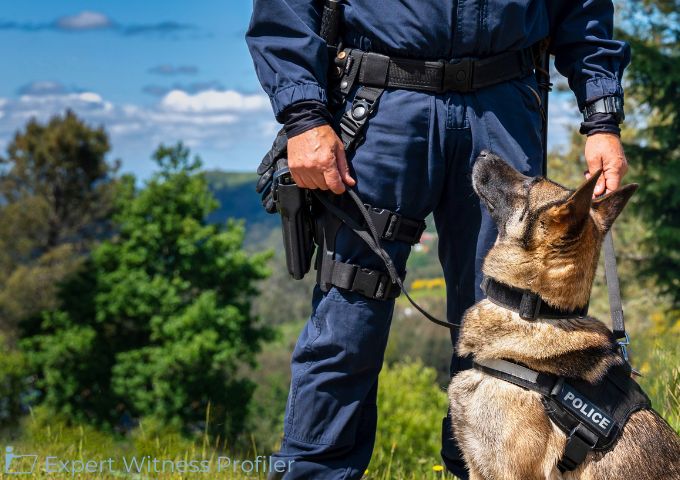
    Plaintiff Fernando Villanueva-Galvez claimed that Officer Eliseo Anaya’s use of a police canine to locate and arrest him constituted excessive force in violation of the Fourth Amendment.

    Villanueva-Galvez proposed to present Ernest Burwell‘s testimony regarding police canine practices. Defendants did not challenge Burwell’s qualifications. Nor did the Defendants seek to preclude Burwell from testifying entirely. Rather, Defendants argued that Burwell should not be permitted to testify about legal conclusions regarding the severity and reasonableness about the use of force in this case, how disputed factual issues should be resolved by the jury, police canine practices for which he cites no reliable data or other support, and purported deficiencies in the City’s canine training and supervision practices for which he cites no relevant professional standards or reliable principles.
    Law Enforcement Expert Witness

    Ernest Burwell has decades of experience as a police officer, including twenty years of K9 handling and tactical training to K9 units. Burwell holds a POST Advanced Certification and even worked as a canine unit statistical data manager, keeping track of bite ratios, injuries, length of time the dog bit the suspect, and other information required by supervision, about the search, handler, dog, and suspect.

    Discover more cases with Ernest Burwell as an expert witness by ordering his comprehensive Expert Witness Profile report.

    Discussion by the Court

    A. Legal Conclusions Regarding Use of Force

    Defendants sought to exclude Burwell’s opinions regarding the lawfulness and reasonableness of the force used, specifically that Anaya’s deployment of a police dog here constituted “deadly force,” that the “type, degree, and duration of the force were unreasonable and excessive,” and that Anaya’s release of the dog was “unwarranted” and “excessive.”

    Whether Anaya’s actions were “objectively reasonable” in light of the facts and circumstances confronting him is a question for the jury.

    The Court has carefully reviewed Burwell’s expert report, and while the report did recite standards and best practices, the challenged opinions are not tied to those standards and practices. Instead, Burwell proposed to testify, categorically, that Anaya used “deadly,” “excessive,” “unreasonable,” and “unwarranted” force, without explaining what a particular standard requires and how such standard applies to a specific assumed or hypothetical factual scenario.

    B. Interpretation of Disputed Facts

    Defendants sought to exclude Burwell’s opinions regarding his interpretation of Anaya’s body-worn camera (“BWC”) video and other evidence in the record, arguing that such testimony usurps the fact-finding role of the jury.

    As explained above, while it is generally permissible for an expert to testify about whether a specific set of assumed or hypothetical facts does or does not meet relevant standards, the challenged opinions are not tied to any such standards or set of facts. While Burwell included excerpts of different standards in his expert report, he did not link his opinions with any such standards or explain why particular assumed or hypothetical facts did not meet those standards.

    C. Police Canine Practices

    Defendants sought to exclude Burwell’s opinions that “many agencies are not using the police dog as it was intended” and that the “average length of time” of a police canine bite is “10 seconds or less” as “unsupported by any reliable methodology and untethered to the facts of this case.” Villanueva-Galvez initially opposed Defendants’ motion and argued that Burwell’s opinions are based on “decades of law enforcement experience, advanced knowledge of POST standards, and specific work with K9 tactics.”

    However, at the hearing, Villanueva-Galvez conceded that Burwell should not be permitted to testify that “many agencies are not using the police dog as it was intended” and that the “average length of time” of a police canine bite is “10 seconds or less.”

    D. Severity of Force

    Defendants sought to exclude Burwell’s opinion that the use of a police canine “is the most severe use of force of all the less lethal tools/options,” arguing that such testimony is not grounded in identifiable professional standards or reliable analysis.

    The Court agreed. Burwell’s expertise on police-canine practices does not entitle him to tell the jury, as an expert, which non-lethal force is the greatest.

    E. Training and Supervision

    Defendants sought to exclude Burwell’s opinion criticizing the practice of using police canines generally and, in particular, his opinion that the City failed to properly train and supervise its canine handlers and ensure that handlers maintain control of their dogs.

    The Court has carefully reviewed Burwell’s expert report. While the report excerpts certain standards from the SJPD Manual, the challenged opinion is not tied to those standards or explained. Instead, Burwell proposes to testify, categorically, that Ronin was not properly trained.

    Held

    The Court granted the Defendants’ motion to exclude the challenged testimony offered by Ernest Burwell.

    Key Takeaway

    It is generally permissible for an expert to testify regarding best practices and standards and whether an officer’s conduct complies with those best practices and standards. Such testimony could include whether deployment and handling of the police canine here did or did not comply with such practices or standards. The problem here is that it is not clear to the Court whether such an opinion is actually disclosed or on what basis Burwell intended to provide such testimony.

    Case Details:

    Case Caption: Villanueva-Galvez V. City Of San Jose
    Docket Number: 5:24cv9055
    Court Name: United States District Court, California Northern
    Order Date: June 04, 2026
  • Law Enforcement Expert Not Allowed to Opine on Excessive Force

    Law Enforcement Expert Not Allowed to Opine on Excessive Force

    Following a traffic stop, Plaintiff Emily Sizemore was arrested and tased several times by a City of Montgomery police officer. Sizemore asserted claims for excessive force, assault and battery, and negligence against the arresting police officer Richard Dorman.

    Defendant Dorman filed a motion seeking to exclude Sizemore’s proposed expert witness, Nathaniel Allen.

    Law Enforcement Expert Witness

    Nathaniel Allen is a retired police chief with 36 years of law enforcement experience.

    Want to know more about the challenges Nathaniel Allen has faced? Get the full details with our Challenge Study report.

    Discussion by the Court

    Allen sought to testify about whether Dorman used excessive force during his arrest of Sizemore. Whether the force that an officer used was excessive is a pure question of law. Accordingly, Allen’s opinion about whether Dorman used excessive force is not a matter subject to expert testimony.

    The Court provisionally denied Dorman’s motion in all other respects until it hears Allen’s proposed testimony outside the presence of the jury.

    Held

    The Court granted in part and denied in part Defendant Richard Dorman’s motion to exclude the testimony of Plaintiff Sizemore’s expert Nathaniel Allen.

    Key Takeaway

    In an excessive force case a qualified expert can testify about matters like the prevailing standards in the field of law enforcement, but not about whether an officer used excessive force.

    Case Details:

    Case Caption: Sizemore V. City of Montgomery
    Docket Number: 2:23cv198
    Court Name: United States District Court, Alabama Middle
    Order Date: March 27, 2026
  • The Law Enforcement Expert Was Allowed to Opine on Pennsylvania State Police Policy

    The Law Enforcement Expert Was Allowed to Opine on Pennsylvania State Police Policy

    The Defendants are Pennsylvania State Police Troopers accused of using excessive force when they served a 302 warrant on Plaintiff Carl Giuli based on his wife’s reports that Giuli was experiencing a mental health crisis. While serving the warrant, an altercation occurred in Giuli’s house involving Giuli and Pennsylvania State Police Troopers Joseph Montagna and Christopher Teetsel. Giuli sustained injuries in the course of the altercation which he alleges are due to the use of excessive force by Troopers Montagna and Teetsel.

    The Defendants sought to preclude Thomas Shea, the Plaintiff’s proffered use of force expert, on several grounds. In their motion, Defendants stated that Shea’s expert report is not appropriately considered by the jury on several grounds: 1) he was a municipal officer rather than a state police trooper as are Defendants in this case; 2) he uses “amorphous methodologies with no reliability”; 3) he “invades the province of the jury by declaring that excessive force was used and the testimony of the troopers is not credible”; and 4) his opinions about trooper training are not supported.

    Law Enforcement Expert Witness

    Thomas A. Shea III, D.Sc., CPP is a nationally recognized Law Enforcement and Security expert in policing best practices, security standards, and emergency preparedness, specializing in police operations, use of force, premises liability, negligent security, and related civil litigation issues.

    He started his career with the Long Branch Police Department in 1998 after serving honorably in the United States Marine Corps during Operation Desert Storm. During his career, Shea served as an agency police commander and on the Monmouth County Emergency Response Team (SWAT).

    After completing his police career in February 2017, Shea entered academia. Shea recently served as the director and founder of the Law Enforcement Executive Leadership program at Seton Hall University.

    He has published numerous academic and professional articles and a police practice book, created a law enforcement and security leadership higher education curriculum, and presented nationwide at professional conferences on security and policing topics.

    Get the full story on challenges to Thomas Shea’s expert opinions and testimony with an in-depth Challenge Study.

    Discussion by the Court

    A. Reliability

    The Defendants first asserted that Shea’s report consisted of inaccuracies and factual errors that cast serious doubt on the reliability of his opinion.

    The Defendants maintained that Shea’s reliability is doubtful because Shea did not use the New Jersey Law Enforcement Handbook in making his determinations despite his report saying that he did. Critically, Shea’s report stated that it was Defendant Montagna who pushed Plaintiff Giuli up against the refrigerator in the course of this incident; there is no allegation of this in the record, and Shea offered inconsistent explanations for why this factual averment appears in his report.

    The Court found that the inconsistencies found in his report and other matters that relate to the reliability of his opinions are properly the subject of cross-examination to the extent he is allowed to testify on those matters at trial.

    B. Credibility Determinations

    The Defendants next argued that Shea’s opinions regarding credibility are inappropriate. The jury has the exclusive function of appraising credibility, determining the weight to be given to the testimony, drawing inferences from the facts established, resolving conflicts in evidence, and reaching ultimate conclusions of fact.

    The Court agreed with the Defendants that “the case presented to the Court is one of credibility—ultimately the jury will have to determine if Defendants maliciously assaulted Plaintiff or if they used appropriate force after he attacked them.” Regarding the different versions of events offered by the Plaintiff and Defendants, Shea confirmed at the Daubert Hearing that the parties’ “stories differ in some aspects” and that he “intended to offer an opinion to the jury as to who they should believe or find credible.”

    Shea also acknowledged that he made other credibility determinations in the course of his report, including those related to the cause of Plaintiff’s injuries, and he believed that was “a typical purview of a use of force expert.” As a result, Shea was precluded from offering any opinions on credibility at trial. 

    C. Specific Opinions

    1. Compliance with Non-Relevant Standards

    Defendants asserted that the Plaintiff sought to admit Shea’s opinion regarding Defendants’ compliance with non-relevant standards. The Court found that Plaintiff has not shown that “prevailing national standards in the use of force” are relevant in this case or that the specifically identified President’s Task Force on 21st Century Policing Final Report and Law Enforcement Best Practices: Lessons from the Field are relevant.

    Therefore, Shea was precluded from relying on these publications and testifying about standards promulgated therein, i.e., the goal of “avoiding the use of force if at all possible, even when it is allowed by law and policy” identified in The President’s Task Force on 21st Century Policing and the “principles of de-escalation” identified in Law Enforcement Best Practices.

    Similarly, the Court precluded Shea from testifying about Plaintiff’s generically identified intent to elicit an opinion on “prevailing national standards in the field of use of force.”

    2. Pennsylvania Mental Health Procedures Act

    Plaintiff has not shown the relevance of the Pennsylvania Mental Health Procedures Act to the charge against the Pennsylvania State Troopers executing the warrant and has not shown how testimony about provisions in the Act would assist the trier of fact as required under Daubert.

    The Court held that Shea’s testimony about the Act at the Daubert Hearing made no direct connection between the Act and the facts of this case, opining generally that “what he took” from the Act is that “you have to take extra, extra precautions to communicate more thoroughly. You have to be more patient than you normally would during a call because lots of people going through these crisis events aren’t aware . . . of their actions and decisions.”

    This is not a State Police policy, it is not presented as a policy statement found in the Act or one that is applicable to officers issuing a 302 warrant. Therefore, the Court found that reference to the Act is properly precluded based on relevance and fit grounds.

    3. Compliance with Pennsylvania State Police Policy

    Defendants next took issue with Plaintiff’s proposed opinion as to whether Defendants were compliant with Pennsylvania State Police policy.

    Defendants specifically asserted that Shea “should be prevented from testifying as to whether or not Defendants complied with the PSP policy, as he has not established his opinion is any more reliable than a lay witness simply reading the Pennsylvania State Police policies and opining on whether or not they were followed in this case.”

    The Court found that Shea has a breadth of knowledge and experience in police practices and use of force which render him qualified to testify as an expert as limited herein. Further, Pennsylvania State Police policies are relevant for purposes of this case and an expert’s review of pertinent policies will assist the trier of fact.

    4. Compliance with De-escalation Policy

    Defendants relatedly contended that it did not appear that Shea based his opinion regarding de-escalation on Pennsylvania State Police policy; “rather he based his opinion on ‘Law Enforcement Best Practices: Lessons from the Field . . . [and] only on Plaintiff’s version of events as he made a credibility determination regarding the Defendants’ narrative.”

    It should be noted that an opinion based on Law Enforcement Best Practices is precluded and an opinion based on a credibility determination is also precluded. 

    5. Use of Excessive Force Language

    Finally, Defendants objected to the Plaintiff’s intention to elicit Shea’s opinion on whether the force used was “reasonable and necessary, with no mention of the word, excessive, no mention of the case law, no mention of factors.”

    The Court concluded that Shea is appropriately precluded from use of the words “reasonable” or “unreasonable” in rendering his opinion regarding excessive force. Testimony by Shea regarding reasonableness “would usurp the District Courts’ pivotal role in explaining the law to the jury.”

    Held

    The Court granted in part and denied in part the Defendants’ motion to exclude the testimony of the Plaintiff’s use of force expert, Thomas Shea.

    Key Takeaway

    The Court acknowledged that Shea’s report is problematic for multiple reasons, including those cited. However, focusing on Shea’s knowledge and experience summarized at the Daubert Hearing and set out in his Curriculum Vitae, the Court found that Shea has a breadth of knowledge and experience in police practices and use of force which render him qualified to testify as an expert.

    Case Details:

    Case Caption: Giuli V. Montagna
    Docket Number: 3:23cv1785
    Court Name: United States District Court for the Middle District of Pennsylvania
    Order Date: January 08, 2026
  • Law Enforcement Expert Was Allowed to Opine on the Standard Practices Involving Police Canines

    Law Enforcement Expert Was Allowed to Opine on the Standard Practices Involving Police Canines

    In this excessive force case involving a police canine, Plaintiff Herman Evans (“Evans”) filed a motion to exclude the opinion of The City of Lynchburg’s (“City”) expert witness—Jeffrey T. Barrett (“Barrett”).

    Barrett offered four opinions (although the confines of those opinions are not as clearly defined as they should be). First, he reviewed the training records for Officer Reed and the canine Knox—the police officer and canine accused of using excessive force against Evans—and will opine that they received sufficient training. Second, he generally opined on acceptable use of force procedures involving police canines, including the Lynchburg Police Department’s use of force directives. Third, he opined on Evans’ behavior, concluding that he “agrees with the assessments made by Officer Reed about Evans being under the influence of drugs and alcohol.” And fourth, he opined that based on the facts of this case Reed’s decision to employ the canine Knox against Evans was a reasonable use of force.

    Law Enforcement Expert Witness

    Jeffrey Todd Barrett is a retired police officer, having served 31 years as a canine handler. For the last 22 years of his law enforcement career, Barrett trained other law enforcement officers on handling police canines. Barrett has 1,920 hours of canine training, having attended at least sixteen advanced courses on handling police canines. Barrett also served as an instructor for canine handlers, providing trainings for the Federal Bureau of Investigation; the Secret Service; Customs and Border Patrol; and the U.S. Army and Marine Corps. He has served as an expert witness in at least three other cases and co-authored the book, Canines in the Courtroom.

    Discover more cases with Jeffrey Barrett as an expert witness by ordering his comprehensive Expert Witness Profile report.

    Discussion by the Court

    Evans sought to exclude Barrett’s opinions, arguing they: (1) are outside the scope of Barrett’s expertise, (2) are legal conclusions; and (3) are not derived from reliable principles or methods.

    Generally, these arguments collide with Barrett’s experience and education—including decades as a law enforcement officer and canine handler and numerous, specialized trainings in handling police canines. Barrett has also trained other law enforcement officers—including FBI agents–on handling police canines and has written a book on police canines.

    Analysis

    The Court held that Barrett’s testimony about the standards and procedures for training and using police canines appeared to be both reliable and relevant—the two hallmarks of any Daubert inquiry.

    Barrett is also free to apply his expertise—i.e., knowledge about how canines should be trained, handled, and employed in the field—to the facts of this case and is free to opine on whether Officer Reed deviated from standard police practices.

    However, Barrett will not be allowed to opine on whether Officer Reed used excessive force in violation of the Constitution as that crosses the line from offering an opinion on the ultimate issue to offering an impermissible legal conclusion.

    Barrett will also be precluded from offering expert testimony on Evans’ behavior. Barrett purported to “agree with the assessments made by Officer Reed about Evans being under the influence of drugs and alcohol.” However, Barrett provided no basis for reaching that opinion. He does not purport to be an expert in toxicology or in any behavioral science. He also was not present on the date of the incident to personally observe Evans’ behavior. Rather, Barrett appeared to be parroting Officer Reed’s view of the facts. The jury can compare Officer Reed’s and Evans’ testimony, review any additional evidence (including if there is shoulder camera footage), and make a factual determination about Evans’ behavior without any assistance from Barrett.

    Barrett’s attempt to pile on when he was not a firsthand witness to Evans’ behavior crossed the Daubert line and will not assist the jury in any meaningful way. Accordingly, the Court excluded that proffered testimony.

    Held

    The Court granted in part and denied in part Evans’ motion to exclude the opinion of The City of Lynchburg’s expert witness—Jeffrey T. Barrett.

    Key Takeaway

    An expert can testify to the ultimate issue so long as there is an adequate foundation. The line between a permissible opinion on an ultimate issue and an impermissible legal conclusion is not always easy to discern. In this case, however, Barrett will not be allowed to opine on whether Officer Reed used excessive force in violation of the Constitution as that crosses the line from offering an opinion on the ultimate issue to offering an impermissible legal conclusion. 

    Case Details:

    Case Caption: Evans V. The City Of Lynchburg
    Docket Number: 6:24cv19
    Court Name: United States District Court, Virginia Western
    Order Date: December 19, 2025
  • Police Practices Expert’s Testimony About Baton Technique Admitted

    Police Practices Expert’s Testimony About Baton Technique Admitted

    Plaintiffs Lazendra Collins, Lawrence Teague, and Willie Teague alleged that various officers of the Chicago Police Department (“CPD”) violated the U.S. Constitution and Illinois state law during a confrontation in May 2020.

    The City identified Paul Amelio as a proposed expert witness on police practices. Amelio, an active-duty CPD officer, serves as “Team Leader” and “lead trainer” for the CPD SWAT Team. Plaintiffs filed a motion to exclude Amelio’s testimony. They contended that admitting Amelio’s opinions would improperly intrude on the fact-finding role of the jury.

    Plaintiffs have filed a motion to exclude Amelio’s testimony. They contended that admitting Amelio’s opinions would improperly intrude on the fact-finding role of the jury.

    Police Practices Expert Witness

    Paul Amelio as an active-duty CPD officer, serves as “Team Leader” and “lead trainer” for the CPD SWAT Team.  In this position, Officer Amelio “develops curricula and provides training for SWAT Team members” for multiple law enforcement agencies across several jurisdictions.

    Want to know more about the challenges Paul Amelio has faced? Get the full details with our Challenge Study report.

    Discussion by the Court

    Officer Amelio is an expert on police practices who planned to testify about the proper use of force, particularly the use of a baton, by police officers.

    Plaintiffs argued that Amelio’s testimony is inadmissible because it (1) invades the province of the jury and (2) renders an improper legal conclusion.

    In their words, “Amelio’s testimony is not proffered to aid the jury in determining the facts, but to add the ‘gloss of an expert opinion’ to the Defendants’ disputed version of events.”  The Court largely agreed that Amelio’s testimony is not necessary and will not be of assistance to the jury in determining the reasonableness in general of actions by the CPD officers, relevant legal standards, or CPD policy governing the use of force.

    Analysis

    In this case, the core conclusion that Amelio offered is that the CPD officers’ use of force was “reasonable” and “in line with nationally recognized and generally accepted police practices.” In the Court’s view, this is a case involving straightforward facts: because blunt contact is the “most primitive form of force,” the reasonableness of using the baton, given the context, is likely within the everyday experience and understanding of lay jurors.

    To the extent Amelio proposed to offer an opinion on the policies or training practices of the Chicago Police Department, the Court has a further concern:  As courts in this circuit have repeatedly explained, excessive force is a question of constitutional law, not department policy.

    If the City contends that a police expert is required to explain how a “reasonable officer” would conduct himself, the Court disagrees. Expert testimony on complex police practice or other forms of “specialized knowledge” may be helpful to the jury in some contexts, but the legal standard in this case is governed not by a police officer‘s understanding of what a reasonable police officer would do, but instead by a juror‘s understanding of the actions of a reasonable police officer.

    The Court is thus inclined to grant Plaintiff’s motion to exclude this testimony, with one potential limited exception: Amelio’s testimony about baton technique might be helpful to the jury. In his report, he claimed that the video shows officers waving their batons in an “Xpattern,” noting that “officers are trained that swinging the baton in an ‘X’ motion in circumstances such as these helps them create a ‘zone of safety’ for everyone involved.” To the untrained eye, the officers’ use of the baton might come across as random, disorganized swings designed to strike a suspect.

    Held

    The Court granted in part the motion to exclude Paul Amelio’s testimony and strike his expert report.

    Key Takeaway:

     A lay witness (or, indeed, the officers themselves) would be in a position to competently testify to CPD policy and training practices, and there is no indication that these policies and practices are complex enough to necessitate an explanation or independent application by an expert witness.

    Case Details:

    Case Caption: Collins V. City Of Chicago
    Docket Number: 1:21cv2913
    Court Name: United States District Court for the Northern District of Illinois, Eastern Division
    Order Date: November 07, 2025
  • Law Enforcement Expert’s Testimony on Dog Handling Practices Admitted

    Law Enforcement Expert’s Testimony on Dog Handling Practices Admitted

    The claims in this case can be traced back to an unfortunate chain of events, as a routine three-officer search degenerated in the blink of an eye to chaos in a cramped apartment, the arrests of four family members, and a police dog attack that caused severe injuries to Plaintiff. 

    On March 11, 2019, Plaintiff Kim Saddlers was arrested for battery on a law enforcement officer, a felony charge that the Polk County Sheriff’s Office later nolle prossed. During her arrest, which occurred in her home, Saddlers was bitten by a police dog, causing a wound that required 30 sutures to repair. She alleges that 1) there was neither actual nor arguable probable cause to arrest her for any offense, and 2) that the force inflicted during her false arrest was excessive, and thus both unreasonable under the Fourth Amendment and constituting a battery under Florida common law.

    As a result, Saddlers brought this civil rights action against the Defendants, Benjamin Blommel and Chad Landry, police officers employed by the City of Lakeland. 

    Plaintiff filed a motion to exclude the testimony of defense expert Kenneth Wallentine.

    Law Enforcement Expert Witness

    Kenneth R. Wallentine worked as a law enforcement officer in Utah, formerly serving as the Chief of Law Enforcement for the Utah Attorney General, and serving as Bureau Chief of the Utah Department of Public Safety, Peace Officer Standards and Training Division, among a number of other positions across the fields of law enforcement, police use-of-force and accountability research, teaching, legal practice, and expert legal services.

    Want to know more about the challenges Kenneth Wallentine has faced? Get the full details with our Challenge Study report

    Discussion by the Court

    Defense Expert Ken Wallentine’s Testimony

    Plaintiff asked the Court to exclude three opinions under Daubert and Rule 702. The first is Wallentine’s statement that “Officer Landry’s decision to deploy [police dog] Nox to search for and track the unidentified suspect from the stolen car and his actions in tracking with Nox were reasonable and were consistent with accepted policies, practices, and training for police service dog teams.”  The second opinion is that “[t]he unintentional bite to Plaintiff occurred as the officers were acting consistently with the actions of reasonable and well-trained officers attempting to defend themselves and to make lawful arrests of their assailants.”  Finally, Plaintiff moved for exclusion of Wallentine’s opinion that “[c]iting Plaintiff for the offenses for which she was arrested was consistent with the actions of a reasonable and well-trained officer.”

    Plaintiff’s Motion to Exclude Expert Testimony

    The Court declined to exclude the first opinion and its underlying analysis because it provided background as to why it was that Plaintiff and Defendants crossed paths in the first place and why a police dog was used. Moreover, the Court agreed with Defendants that the leadup to the events could not only inform the jury, generally, but also have a direct bearing on Defendants’ culpability as to the claim for negligence, and specifically on whether either officer breached his duty to use reasonable care in conducting their investigation and during the subsequent altercations. 

    Plaintiff argued that this second opinion improperly purports to “divine Landry’s state of mind in employing his police dog to arrest Saddlers, and thus addresses the excessive force issue in the case.”

    Defendants responded that the opinion did not speculate about Landry’s state of mind and instead draws upon Wallentine’s experience and the facts of this case to conclude that the canine was not instructed to apprehend Plaintiff and instead acted in accordance with his instinctual drive and trained behavior to protect his handler, Landry. The Court agreed with Defendants as to this second opinion and will not exclude it.

    Plaintiff challenged a third opinion in Wallentine’s report. Considering the facts in light of his knowledge and experience in the areas of police training and the prosecutorial process, Wallentine opined that the Lakeland Police Department followed processes consistent with common practice throughout the United States and consistent with the actions of a reasonable well-trained officer.

    Instead of explaining why Wallentine’s opinions are similarly defective, Plaintiff presented the broad argument that his “proffered testimony in this case suffers from the same deficiencies identified in an out-of-circuit district court opinion which is not binding on this Court.”

    Held

    The Court denied the Plaintiff’s motion to exclude the testimony of defense expert Kenneth Wallentine.

    Key Takeaway:

    Plaintiff failed to establish that the expert testimony would not be helpful to the trier of fact. Instead, the Court found that Ken Wallentine’s opinions would likely be helpful to the jury based on his qualifications, experience, analysis of the records, evidence, deposition testimony, and based on his expertise as a law enforcement officer, professor, police dog trainer, and investigations supervisor.

    Case Details:

    Case Caption: Saddlers V. City Of Lakeland, A Florida Municipality Et Al
    Docket Number: 8:22cv2127
    Court Name: United States District Court, Florida Middle
    Order Date: September 29, 2025


  • Biomechanics Expert’s Testimony on Law Enforcement Tactics Excluded

    Biomechanics Expert’s Testimony on Law Enforcement Tactics Excluded

    Plaintiffs alleged that Defendants former Washington County Sheriff’s Office (“WCSO”) Deputy Defendant Jeffrey Aaron Edwards (“Edwards” or “Deputy Edwards”) and former WCSO Deputy Brian Mizelle (“Mizelle” or “Deputy Mizelle”) used excessive force against them during a March 2, 2022, attempt to transport Plaintiff Gary Thomas (“Thomas”) to the Washington County Courthouse. The factual circumstances in this case primarily surround the transportation of Plaintiff Thomas from a patrol vehicle to the Washington County Courthouse and Plaintiff Mary Moore’s aggressively lunging at Edwards during that attempt, which caused her to be properly struck by Edwards.

    Thomas was placed under arrest by Deputy Edwards and was being transported inside the courthouse with the assistance of Deputy Mizelle when Moore interfered with Thomas’ arrest. Thomas became injured while he resisted arrest requiring Edwards and Mizelle to use force to maintain safety and control of this incident.

    Defendants Edwards, Barnes, and Mizelle offered the testimony of Albert Vangura to opine on the biomechanics of the interactions between Edwards and Plaintiffs, the cause of Plaintiffs’ injuries, and the position of Edwards’s hand when he struck Moore.

    Plaintiffs filed a motion in limine to exclude the testimony of Vangura.

    Biomechanics Expert Witness

    Albert Vangura is an engineering professional with nearly forty years of experience in biomechanical and human factors evaluations, product design and development, manufacturing, and testing.

    He holds a Master of Science Degree in Bioengineering from the University of Pittsburgh, a Bachelor of Science Degree in Exercise and Sports Science, and an Associate of Science Degree in Mechanical Engineering Technology, both from The Pennsylvania State University.

    Fortify your strategy by reviewing a Challenge Study detailing grounds for excluding Albert Vangura’s expert testimony.

    Discussion by the Court

    Reliability

    In their motion in limine to exclude Vangura’s opinions and testimony, the Plaintiffs argued that Vangura’s report and opinion lacked any reliable or
    recognized methodology; therefore, the Court should exclude them.

    The Court found that Vangura’s testimony lacked reliability. Vangura did not identify methods or principles underlying his ”bioengineering and biomechanical engineering investigation and analyses.” In fact, when asked about his methodology, Vangura responded that he used the ASTM E620-18. The ASTM E620-18 is not a methodology. It is three pages of standards about forensic or technical reports an expert can use in any field. In other words, it tells the expert how to write their report, not the methodology the expert should follow.

    Moreover, Vangura used one of the cited sources in his report, and he misapplied it. Specifically, Vangura cited Accidental Injury, a book that “looks at the applied biomechanics of accidental injuries.” Vangura used findings from Accidental Injury to analyze Moore’s facial injuries. It is undisputed that Defendant Edwards struck Moore in the face intentionally; thus, “observations from accidental injuries” are irrelevant and inapplicable. This fact undermined the reliability of Vangura’s report.

    Biomechanics experts frequently address causation issues, but experts addressing causation must demonstrate how and why they eliminated other causes when reaching their conclusions. Vangura never mentions if or how he eliminated other causes when he opines on proximate cause.

    Relevance

    Plaintiffs argued that Vangura’s testimony consisted of common sense observations. Vangura spent most of his report narrating and characterizing the video evidence, which requires no specialized knowledge and is within the function of the jury. Beyond the video narration, Vangura’s discussion and findings included opinions and testimony about the biomechanics of walking. Vangura admitted that he made findings by simply ”watching this video,” a factfinding exercise that is well within the jury’s function.

    The Court found that these findings “risk ‘supplanting a jury’s independent exercise of common sense’ and its role of determining the facts.”

    Qualification

    Plaintiffs argue that Vangura is not qualified to opine about law
    enforcement tactics and practices or the parties’ injuries and medical conditions. Vangura has an associate’s degree in mechanical engineering technology, a bachelor’s in exercise and sports science, and a master’s in bioengineering but no medical degree. Moreover, Vangura is not qualified to speak on proximate cause because his testimony rests on opinions about law enforcement tactics and practices.

    The Court found that Vangura’s testimony about the proximate cause of injuries in products liability cases does not qualify him to testify to proximate cause in an excessive force case, especially when his testimony goes beyond the purview of biomechanics and leads to hypotheticals about the necessity of arrests and an officer’s use of force.

    The Court also found that Vangura’s report consisted of improper opinions on the parties’ injuries. The parties agreed that biomechanical experts cannot make independent medical diagnoses or offer opinions about the specific causes of an injury.

    Lastly, the Court found that Vangura is not qualified to opine about whether Thomas was conscious after falling down the courthouse stairs despite consulting Thomas’s medical records. Vangura has not demonstrated that he has any knowledge, education, or training to (1) determine whether a person is conscious based on video evidence or (2) assess the relationship between loss of consciousness and a traumatic brain injury. Thus, Vangura is not qualified to opine on this topic.

    Held

    The Court granted the Plaintiffs’ motion in limine to exclude the testimony of Albert Vangura.

    Key Takeaway:

    Expert testimony may be admissible even though it does not rely on anything like a scientific method. But the expert must explain how his experience leads to the conclusion reached. why his experience is a sufficient basis for the opinion. and how his experience is reliably applied to the facts. Vangura failed to demonstrate how his experience as a biomechanics expert specializing in products liability and vehicle crashes led him to his conclusions, why that experience suffices to support his findings in an excessive force case, or how he applied that experience to the video evidence here.

    Case Details:

    Case Caption: Moore Et Al V. Barnes Et Al
    Docket Number: 2:23cv56
    Court Name: United States District Court, North Carolina Eastern
    Order Date: September 30, 2025
  • Law Enforcement Expert Permitted to Testify on the General Reasonableness of Police Conduct 

    Law Enforcement Expert Permitted to Testify on the General Reasonableness of Police Conduct 

    This lawsuit can be traced back to an incident that took place on November 11, 2019, in which Phoenix Police Department Officer Brittany Smith-Petersen shot and injured Plaintiff Krish Singh during a law-enforcement encounter. 

    Defendants brought a partial Daubert motion seeking to preclude certain portions of the intended testimony of Plaintiff’s use-of-force expert, Roger Clark.

    Law Enforcement Expert Witness

    Roger Clark is a retired law enforcement professional with 27 years of experience in the Los Angeles County Sheriff’s Department (LASD). He was hired on December 1, 1965, and served until his retirement on March 31, 1993. Throughout his distinguished career, he held several key positions, including six years as a Deputy Sheriff, six years as a Sergeant, and 15 years as a Lieutenant. Roger retired with a California Peace Officer Standards and Training (POST) Advanced Certificate and is a graduate of the POST Command College, class #5, 1988.

    Get the full story on challenges to Roger Clark’s expert opinions and testimony with an in-depth Challenge Study.

    Discussion by the Court

    Ultimate-Issue Testimony

    To begin with, Clark’s assertion that the Officers’ conduct was “in violation of . . . law as taught to all officers” does more than simply provide an aid to the jury’s deliberation. It was, on its face, a legal opinion. Although the statement is technically qualified by the phrase “as taught to all officers,” the Court found such qualification insufficient and more likely to confuse than to illuminate.

    The rest of Clark’s report was more complex to evaluate. Many of the statements challenged by the Defendants use terms like “excessive” or “unreasonable.” These terms were tricky because they carried both everyday meanings and specific legal implications. It was appropriate for an expert like Clark to give opinions on what a reasonable police officer might do in a certain situation, based on standard training and professional norms. Using terms like “unreasonable” or “excessive” in that context does not automatically violate the Federal Rules of Evidence.

    However, Clark was not allowed to directly state that Officers Smith-Petersen or Batway acted unreasonably. Such a statement crossed the line from expert opinion into a legal conclusion, which is not permitted. Clark’s report walked a fine line—sometimes staying within proper boundaries, and other times crossing them.

    Most of the statements flagged by Defendants as improper could be corrected by rewording. Rather than examine every sentence now, the Court established a general rule and will address specific issues during the trial. Clark may testify about what constitutes reasonable or excessive force in general terms, but he may not say whether the specific officers in this case acted unreasonably or used excessive force.

    Mental Health Diagnoses

    Defendants argued that Clark’s report improperly offered an opinion about whether the Plaintiff was suffering from a mental disorder at the time of the incident. The Court disagreed, finding that this misrepresents the report. In the report, Clark explicitly stated that it is not the role or ability of police officers to diagnose a person’s disability. However, he also explained that officers are trained to recognize signs and cues that help them make appropriate decisions about how to respond. This training often involves mental health frameworks that guide officers in identifying possible mental health issues during their interactions with the public.

    Based on this training, Clark opined that the Officers should have recognized that the Plaintiff might be mentally ill or emotionally distressed—especially when the Plaintiff repeatedly asked them to kill him, a clear indication of mental distress. Clark’s testimony is not a clinical diagnosis. Instead, it is an expert opinion about how a trained officer should interpret observable behavior in the field. The Court found this type of opinion to fall well within Clark’s area of expertise.

    Defendants also took issue with a line in the report stating that the Plaintiff “suffered from PTSD, drug addiction, and ADHD.” But they failed to include the full context: that statement appears in the background section of the report and is explicitly attributed to the Plaintiff’s mother, Sunita Singh. Whether that statement qualifies as hearsay is not being decided here. What matters is that Clark himself did not diagnose the Plaintiff with any mental condition.

    Contravention of the Video Evidence

    Defendants’ final argument under Daubert is that Clark’s report relied on insufficient data because it allegedly contradicts the video footage of the incident. They claimed Clark misrepresented the facts by stating that the Plaintiff did not advance toward the officers, asserting instead that “the video clearly shows Singh advancing toward the officers multiple times.”

    Defendants also argued that Clark’s report was flawed because he claimed the officers failed to use de-escalation techniques. In contrast, Defendants insisted that they did employ such techniques, including issuing over twenty commands for the Plaintiff to drop his weapon or stop moving, speaking with him, and reassuring him that they did not believe he was mentally unstable.

    However, the Court found that most of Defendants’ arguments simply quoted portions of Clark’s report without explaining how those statements actually contradict the video evidence. Even in the few instances where Defendants attempted to point out specific inconsistencies, the Court found their arguments unconvincing.

    Held

    The Court granted in part and denied in part the Defendants’ partial Daubert motion to preclude certain portions of the intended testimony of Roger Clark.

    Key Takeaway:

    The Court ruled that while Clark may testify about general police practices and how a reasonable officer should interpret signs of mental distress, he may not offer legal conclusions—such as stating that the officers acted unlawfully or unreasonably. His mental health observations were deemed within his expertise and not clinical diagnoses. The Court also rejected Defendants’ argument that Clark’s report contradicted video evidence, finding their objections vague and unpersuasive.

    Case Details:

    Case Caption: Krish Singh V. City of Phoenix
    Docket Number: 2:21cv99
    Court Name: United States District Court, Arizona
    Order Date: June 12, 2025
  • Law Enforcement Expert’s Opinion on Actual Events and Police Tactics Admitted

    Law Enforcement Expert’s Opinion on Actual Events and Police Tactics Admitted

    Plaintiff Gene Raymond Bell, Jr. claimed that Defendant Officers Anthonie Korkis, Arthur Bridgeforth, and Thomas Langewicz, II used excessive force while arresting him during a traffic stop on June 23, 2019 in Southfield, Michigan.

    Plaintiff’s second motion in limine requested the Court to exclude or limit the testimony of Dr. Steven Amey, whom Defendants intended to call as an expert witness at trial. 

    Law Enforcement Expert Witness

    Dr. Steven J. Amey is an associate professor of criminal justice at Ferris State University.

    His research interests include computer forensics and new technology, use of force issues, police emergency driving and pursuit issues, firearms, ethics in criminal justice, criminal investigation techniques, patrol problems, interview and interrogation problem-based learning methods as well as body cameras.

    Amey also holds a Ph.D. in Instructional Design and Technology from Wayne State University.

    Get the full story on challenges to Steven Amey’s expert opinions and testimony with an in-depth Challenge Study.

    Discussion by the Court

    Plaintiff claimed that Amey’s opinion offered a legal conclusion that Defendants did not use excessive force. Plaintiff also claimed that Amey’s testimony will not be reliable because he assumed that Plaintiff initiated contact with Defendant Korkis through his car window, whereas the Sixth Circuit has already determined that the video footage is unclear about “who started it.” Finally, Plaintiff asserted that Amey’s testimony, which “frame[s]” Defendants’ side of the story as “factually established,” is more prejudicial than probative.

    Analysis

    Legal Conclusion

    Plaintiff’s first contention is that Amey’s opinion offers a legal conclusion that the use of force was not excessive.

    Unfortunately, Plaintiff did not explain the basis for believing Amey’s opinion offers a legal conclusion. Amey’s report discusses the laws Plaintiff was breaking when refusing to identify himself or provide documentation as requested; the specific training that officers receive to handle situations like the one involving Plaintiff; and the risks that Defendants would have faced had they permitted Plaintiff to come out of the car on his own. Therefore, the Court refused to exclude or limit Amey’s opinion.

    Reliability

    Plaintiff also contended that Amey’s opinion is not reliable because he assumed that Plaintiff is the one who initiated the first contact with Defendant Korkis—something that the Sixth Circuit stated is not clearly visible on the video footage. However, Amey did not make an assumption about first contact based on the video footage; rather, his expert report clearly states that he received this information from the police report. The Court will ensure that the jury is instructed that the factual dispute—whether Plaintiff or Defendant Korkis initiated the physical altercation—is in its hands.

    Probative Value

    Finally, Plaintiff contends that the introduction of Amey’s opinion will be more prejudicial than probative because his testimony will be “framed as if Korkis’ side of the story has been factually established[.]” If Amey frames his testimony as if Defendants’ position is factually established, Plaintiff has tools at his disposal to counteract the prejudice—namely, objecting to the misrepresentations contemporaneously and cross examining the witness to expose those flaws. On the other hand, the Court noted that Amey’s opinion has substantial probative value because it informs the jury about the training that officers receive for handling like situations, as well as the risks officers encounter when dealing with like situations, which goes to the reasonableness of force used under the circumstances.

    Held

    The Plaintiff’s motion in limine to exclude or limit the testimony of Dr. Steven Amey was denied without prejudice by the Court.

    Key Takeaways:

    • Amey’s opinion does not offer a legal conclusion about the use of force. Rather, his report discusses the laws Plaintiff was breaking when refusing to identify himself or provide documentation as requested.
    •  A use-of-force expert may express an opinion which is based on crediting, in a hypothetical sense, the testimony of one side of the dispute.

    Case Details:

    Case Caption: Bell V. Southfield Et Al
    Docket Number: 2:19cv13565
    Court Name: United States District Court, Michigan Eastern
    Order Date: April 1, 2025
  • Psychology Expert Witness’ Behavioral Analysis Based on General Cognitive Model Rejected

    Psychology Expert Witness’ Behavioral Analysis Based on General Cognitive Model Rejected

    Plaintiff Matthew Alan Hearn brought certain claims against the Defendants City of Bakersfield, police detective Christian Walter Hernandez V, police sergeant Nathan A. Anderberg, and probation officer S. Jauch, collectively “City Defendants,” and County of Kern, collectively “County Defendants”. He based these claims on their actions during a law enforcement encounter on September 27, 2020, in Bakersfield. He alleged six causes of action: (1) Battery; (2) Intentional Infliction of Emotional Distress; (3) Negligence; (4) Violations of California Civil Code Section 52.1 (Bane Act)-Civil Rights Violations; (5) Excessive Force; and (6) Unreasonable Search and Seizure.

    Plaintiff retained psychology expert witness, Daniel S. Rubiaco to conduct a psychological assessment and behavior analysis of him during the incident. Defendants filed a motion to preclude Daniel S. Rubiaco from testifying under Rule 702.

    Psychology Expert Witness

    Psychology Expert Witness

    Daniel S. Rubiaco, Psy.D., LCSW, is a licensed psychologist practicing in a private setting in Bakersfield, CA. He graduated from The Chicago School of Professional Psychology – Los Angeles Campus in September 2017, earning a Doctor of Psychology in Applied Clinical Psychology. Additionally, he obtained a master’s degree in Social Work from California State University, Bakersfield, in 2007. Earlier, he completed two undergraduate degrees in Sociology and Communications at the University of California, Davis, in 2003.

    His practice focuses on supporting adolescents, young adults, and professionals dealing with stress, anxiety, depression, posttraumatic stress disorder (PTSD), and major conflict. He has significant experience working with victims of violent crimes, guiding them through the complexities of the criminal court process.

    Get the full story on challenges to Daniel S. Rubiaco’s expert opinions and testimony with an in-depth Challenge Study.  

    Discussion by the Court

    A. Defendant’s Arguments

    Defendants argued that Rubiaco’s proposed testimony would not assist the jury in understanding the evidence or determining any key facts. They noted that he did not examine or interview Plaintiff, nor did he review his deposition. Instead, his testimony focused on Plaintiff’s behaviors, suggesting they “made logical and reasonable sense.”

    Defendants referenced Federal Rule of Evidence 702 and relevant case law regarding the burden of proving admissibility. They emphasized the district court’s role as the “gatekeeper” for expert testimony, highlighting the necessity of “good grounds” for expert opinions.

    Furthermore, Defendants contended that the jury needed to decide whether they conducted an unlawful search and seizure of Plaintiff’s vehicle and whether they used unreasonable force during the arrest. They maintained that these matters did not require the opinion of a psychologist like Rubiaco.

    B. Plaintiff’s Argument

    Plaintiff agreed with some of the case authorities cited by the Defendants but disagreed with their conclusions. He contended that Rubiaco would help the jury understand Plaintiff’s behavior during the arrest and detention, which he argued was abnormal. Plaintiff stated that Defendants could cross-examine Rubiaco on this matter.

    C. Defendant’s Reply

    In their reply, Defendants claimed that Plaintiff’s opposition failed to show how Rubiaco’s review of his alleged personality was relevant to the jury’s consideration. They cited case law and Federal Rules of Evidence 401, 402, 403, and 404, which address relevance, weighing of equities, and the inadmissibility of character trait evidence and its exceptions.

    Ultimately, Defendants argued that Rubiaco’s opinions were neither relevant nor admissible, asserting that no exceptions applied to his testimony.

    D. Analysis

    Defendants sought to exclude Rubiaco’s testimony, focusing on the relevancy aspect. They did not argue that his testimony failed the reliability standard. The Court needed to independently assess whether Plaintiff met his burden regarding both prongs.

    Rubiaco acknowledged in his report that he could not perform a clinical diagnosis of Plaintiff. He did not interview or assess Plaintiff directly. Additionally, he had not reviewed Plaintiff’s deposition before finalizing his report due to the absence of a transcript. He planned to amend the report after reviewing the transcript, indicating its importance.

    His opinions were based on a limited review of discovery materials, including law enforcement reports, body-worn camera footage, medical records, and two recorded calls. He applied “the Generic Cognitive Model” to assess the Plaintiff’s cognitive structures and beliefs.

    The Generic Cognitive Model (GCM) is a psychological framework used to understand how individuals process information and react to experiences. It posits that people have cognitive structures—mental frameworks and schemas—that shape their perceptions, thoughts, and behaviors in response to various situations.

    For example, he opined that Plaintiff was “pro-law enforcement” based on two comments made during the incident. He argued that when Plaintiff experienced an activating event, automatic responses categorized information in a way that activated a maladaptive schema. Consequently, he claimed that Plaintiff’s emotional state led to defensive behavior.

    Ultimately, the Court found that Rubiaco’s proposed testimony failed both the reliability and relevancy standards under Daubert. Plaintiff did not demonstrate that the Generic Cognitive Model applied reliably, given the lack of direct assessment or comprehensive review of Plaintiff’s history.

    Moreover, Rubiaco’s main opinion lacked relevance. Although Plaintiff argued that this testimony would aid jurors, he did not clarify how it would assist in deciding the case. Thus, if admitted, Rubiaco’s testimony would distract jurors and risk confusion, further supporting its exclusion.

    Held

    The Court granted the Defendant’s motion to exclude the Plaintiff’s psychology expert witness, Daniel Rubiaco.

    Key Takeaway:

    The Court highlighted that Rubiaco did not directly assess the Plaintiff, failed to submit a comprehensive review of his background, and relied on a limited selection of materials. Additionally, the Court found that Rubiaco’s analysis did not clearly assist the jury in understanding key issues related to the case. Ultimately, the lack of direct engagement with the Plaintiff and insufficient clarity on how his insights would aid the jury led to the exclusion of his testimony.

    Case Details:

    Case caption: Hearn v. City of Bakersfield
    Docket Number: 1:22cv668
    Court: United States District Court for the Eastern District of California
    Dated: October 24, 2024