Plaintiffs Alanna Dunn, Reginald Haymon, Adam Day, Eric Zeider, Cameron Leonard, and Jason Wilson filed this class action alleging that the deliberate indifference of Cuyahoga County and the Cuyahoga County Sheriff’s Department caused them to be over-detained in the Cuyahoga County Jail after the legal basis for their detention ceased to exist.
Plaintiffs retained Lacey Keller, a data scientist, as an expert witness to review and standardize files produced by the County relating to releases occurring between February 23, 2021 and December 31, 2023 while the County retained Dr. Sean Malone, a consultant who primarily works in statistics, finance, and economics, to rebut Keller’s analyses.
The County sought to preclude Keller’s report while Plaintiffs sought to preclude Malone’s report.
Data Science Expert Witness
Lacey R. Keller is a seasoned data scientist with over 15 years of experience applying data to litigation, law enforcement, and investigations.
She has been deposed nearly 30 times and has testified in over a half-dozen trials. She also joined the Washburn University faculty in 2025.
Plaintiffs’ counsel asked Keller to conduct a variety of analyses, including calculating the time it took the County to release individuals after a triggering action, among other analyses on the timing of certain events relating to releases.
For detainees with release-triggering event and no holds on their release, Keller found most were released in under 6 hours, and 95% were released in under 10 hours.
In most cases, Keller found a booking hold added an additional 90 minutes to the release time. Once a booking hold was removed, the release usually occurred within the hour.
Analysis
The County argued that Keller’s report is unreliable and cannot be used to either (a) show the average time it took to release a detainee; or (b) ascertain whether a person is a member of the proposed class because the detainee’s time to release was greater than 12 hours.
For the relevant time period, Keller identified 58,091 unique custody sessions. From there, Keller applied a series of exclusions to the data.
The County argued that Keller’s methodology and opinions are unreliable because they solely rely on limited data not suited for determining release times.
The County also faulted Keller’s report for not determining whether the data provided by Plaintiffs’ counsel could be used to determine actual time to release.
First, information counsel provided to an expert does not render the opinions on which the expert relies insufficient. Second, there is a reasonable factual basis for Keller’s opinions. The report explained the sources from which the data came. It explained the exclusions applied to the custody sessions to obtain a sub-dataset that contains only custody sessions where there is an available release triggering event and subsequent release (among other information).
Keller then explained how she conducted each calculation to arrive at her stated averages and conclusions. While the County vigorously challenges whether the underlying data can be used to calculate release times, those criticisms challenge the ultimate conclusions and not the reliability of Keller’s methodology or analysis.
Whether the calculations are correct, accurate, or credible, is a separate question. As a result, the Court found that Keller’s methodology was reliable.
Sean Malone
Malone’s main conclusions are: Keller’s methodology for calculating time to release is unreliable because it is based on insufficient data and incomplete methods; Keller’s opinion is based on insufficient facts because it does not consider the individualized facts affecting time to release; Keller wrongfully groups together detainees leading to inaccurate time calculations; and Keller inappropriately excluded detainees which creates inaccurate time calculations.
Analysis
Plaintiffs argued that Malone is not qualified to opine on how to calculate over-detention of detainees because he is not an expert in release policies.
Plaintiffs added that Malone’s expert opinions amount to “nothing more than legal conclusions about what facts are relevant and necessary” to an over-detention analysis.
Lastly, Plaintiffs contended that Malone’s report is not the product of any reliable principles or methods.
Malone’s experience in statistics plainly relates to his criticisms of Keller’s methodology for collecting data. It is appropriate for an expert in statistical analysis to criticize statistics prepared by another expert witness. And while Plaintiffs argued that Keller’s analysis is merely an “objective” calculation of the “time to release,” Malone’s report properly offered criticism of Keller’s underlying data, including her selection and purported manipulation of data. Malone’s criticism of the “limited” dataset Keller used to develop averages for “time to release” is appropriate rebuttal testimony.
Because Malone is qualified to criticize the statistical analysis performed by Keller, and because his report properly challenges the data and methods used by Keller, the Court refused to exclude his report.
Held
The Court denied the County’s motion in limine to preclude Lacey Keller’s expert report.
The Court denied the Plaintiffs’ motion to strike the expert report of Dr. Sean Malone.
Key Takeaway
Malone’s criticism of the dataset Keller used and the methods she used to calculate her “time to release” analysis is proper expert rebuttal.
In this fair-housing action, Intervenor Beverly Boucher sought to rent an apartment from Defendants Madison Property, L.L.C. (Madison Property) and Andrew Brenner (together, Defendants). Defendants declined to rent to Boucher after she informed them that she wished to live in the apartment with an emotional support animal (ESA), a cat.
In Count I, Plaintiff United States of America (Plaintiff) claims that Defendants refused to lease a unit to Boucher because of her disability, and in Count II, Plaintiff claims that Defendants refused to grant Boucher’s request for an accommodation to the apartment building’s no-pets policy.
Stuart W. Steichen specializes in family medicine. He has been practicing for over 20 years and is affiliated with Allina Health United Hospital. Steichen received his medical degree from the Chicago College of Osteopathic Medicine.
During the litigation, Defendants submitted a letter on Steichen’s clinic letterhead stating that Andrew Brenner had been under his care for recurrent upper respiratory infections. The letter explained that Brenner’s immune system was significantly weakened, making him highly susceptible to infections. It also pointed out that Brenner required a clean environment, free from irritants, to avoid illness. Exposure to cat dander, in particular, was identified as an allergen that could trigger respiratory issues.
Steichen testified that Brenner’s severe kidney disease contributed to his weakened immune system. However, he admitted that he had never discussed Brenner’s kidney condition with him or reviewed his medical records. Instead, Steichen learned about Brenner’s kidney health from Brenner’s sister, who is not a medical professional.
Analysis
The Court observed that Steichen’s testimony aimed to support the Defendants’ argument that denying Boucher’s accommodation request was justified because having a cat would harm Brenner’s health. However, Steichen first treated Brenner in late 2021, months after Brenner had already denied Boucher’s request in March 2021. Furthermore, Steichen’s knowledge of Brenner’s immune condition did not come from treating him. Instead, Steichen learned about Brenner’s condition through conversations with Brenner’s sister, who is not a physician. Steichen never reviewed Brenner’s medical records or discussed his kidney condition with him.
Given these facts, the Court concluded that Steichen’s opinion would not help the jury and should be excluded from the trial.
Held
The Court granted the Plaintiff’s motion to exclude Defendants’ family medicine expert witness, Stuart W. Steichen.
Key Takeaway:
The Court excluded the testimony of the Defendants’ expert Stuart Steichen because his opinions lacked a proper foundation and would not be helpful to the jury. Steichen’s testimony was meant to support the Defendants’ argument that allowing Boucher to live with her emotional support animal (ESA) would harm Brenner’s health due to his weakened immune system.
Steichen claimed Brenner’s condition made him vulnerable to issues from cat dander. However, Steichen never treated Brenner for his kidney condition, the primary cause of his weakened immune system. He learned about Brenner’s health from Brenner’s sister, who is not a medical professional and did not review Brenner’s medical records. Steichen also started treating Brenner after the ESA request was denied. The Court found his testimony would not assist the jury and excluded it.
Case Details:
Case caption:
United States v. Madison Prop., L.L.C.
Docket Number:
0:22cv2831
Court:
United States District Court for the District of Minnesota
James E. Lewis, a seasoned transportation safety expert, faced an unfortunate twist in his professional journey. Despite his extensive experience and deep insight into the trucking industry, he found himself disqualified from providing testimony in a significant personal injury case—not due to his lack of expertise, but because of an unnoticed procedural misstep. In the case of Rodney Bibbs v. Molson Coors, Lewis had been retained to testify on the safety of load securement, a critical factor in the accident. However, after the Plaintiff’s attorney withdrew, a motion was filed to strike Lewis’ testimony, a motion he was unaware of.
The case that led to James E. Lewis’ disqualification stemmed from a tragic tractor-trailer accident involving Rodney Bibbs, an independent contractor truck driver. Bibbs had been hired to transport a pre-loaded trailer of beer from Molson Coors’ Shenandoah Brewery in Virginia to a distributor in Ohio. During his journey, while driving through West Virginia, the load allegedly shifted, causing Bibbs to lose control of the truck, leading to a serious accident. Bibbs claimed that the load had been improperly packed and secured by Molson Coors, resulting in his injuries and significant damage to the truck.
In the aftermath, Bibbs filed a lawsuit against Molson Coors, alleging negligence in the packing and loading of the beer pallets. Central to his case was the assertion that the company had failed to properly secure the load, which led to the accident. With load securement being a key factor, the Plaintiff needed expert testimony to substantiate these claims. That’s where James E. Lewis, a transportation safety expert with experience in Department of Transportation (DOT) compliance, was brought in to serve as the Plaintiff’s sole liability expert.
Initially, Lewis was disclosed as an expert under Federal Rules of Civil Procedure 26(a)(2), allowing Bibbs to put forth expert testimony about the alleged improper load securement. However, procedural delays in the case, coupled with the withdrawal of Bibbs’ legal counsel, resulted in Lewis being unaware of Molson Coors’ motion to exclude his testimony. Despite his extensive experience and background in transportation safety, Lewis’ testimony was challenged on the grounds that his qualifications and methodology did not align with the specific issue of load packing at a brewery. Unopposed due to the procedural lapse, Molson Coors successfully argued for the exclusion of Lewis’ testimony.
The Disqualification: A Procedural Setback
James E. Lewis’ disqualification from the Bibbs v. Molson Coors case was not due to a lack of expertise, but rather the result of unfortunate procedural circumstances. After the Plaintiff’s attorney withdrew from the case, a motion was filed by Molson Coors to exclude Lewis’ testimony. Due to the absence of opposition—because the attorney had left the case and the pro se Plaintiff did not respond to the motion, the Court had little choice but to strike his testimony.
Lewis concluded that—based on his industry experience—Defendant’s workers poorly wrapped the pallets of beer at issue, negligently loaded Plaintiff’s trailer, and therefore “increaseed the probability and magnitude of the potential harm to the victim of the crash.”
Although Lewis had significant experience in transportation safety and held a master’s degree in education, Molson Coors argued that his subjective industry experience could not be the sole basis for his conclusion.
The Court subsequently granted summary judgment in favor of Molson Coors, dismissing the case with prejudice.
Lewis discovered his exclusion not through the Court or the attorney directly, but from another opposing counsel who asked him about it after reading our blog. Our blog post detailed the Court’s decision to strike his testimony and highlighted the reasons behind it. Realizing what had happened, Lewis was able to spring into action.
The Motion for Reconsideration: A Step Toward Vindication
James E. Lewis filed a motion for reconsideration, seeking to correct the Court’s prior ruling. This was his chance to clarify the situation and ensure that the Court recognized his expertise, despite the unfortunate circumstances surrounding the motion to strike.
In his motion, Lewis argued that his testimony should not have been excluded, particularly because the disqualification had nothing to do with the merits of his qualifications. Instead, it was the result of a procedural misstep.
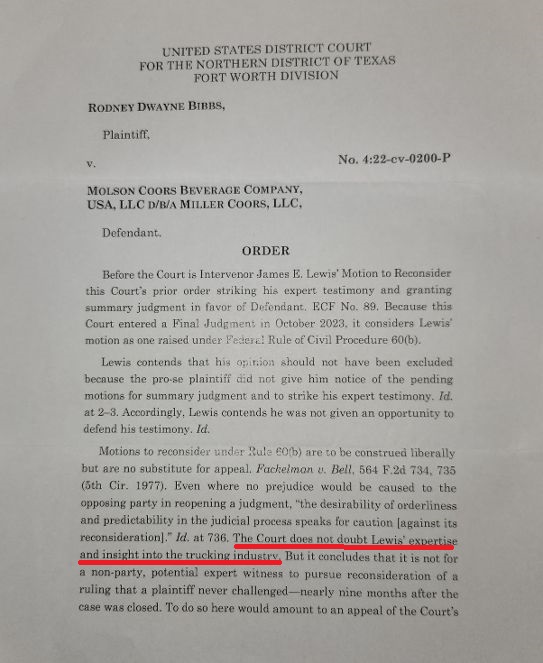
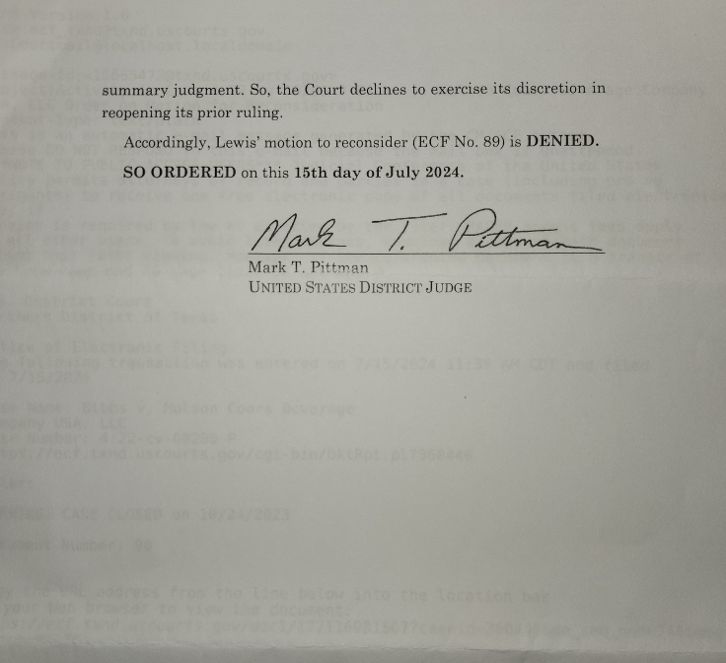
The Court, in its response, acknowledged Lewis’ expertise and insight into the trucking industry. Judge Pittman specifically stated that the Court did not doubt Lewis’ qualifications. This was an important moment of vindication for Lewis, as it confirmed that his exclusion was not due to any shortcomings in his professional abilities.
However, the judge ultimately denied the motion to reconsider, noting that nearly nine months had passed since the case was closed. Despite the Court’s recognition of Lewis’ expertise, the procedural rules did not allow for the case to be reopened. Nevertheless, the written acknowledgment from the Court provided a crucial document that cleared Lewis’ name, proving that the exclusion was not a reflection of his professional capabilities.
While Lewis was unable to reverse the ruling, his effort ensured that his reputation remained intact, and the Court’s clarification helped to restore his professional standing.
Lessons for Expert Witnesses: Why Tracking Your Cases Matters
James E. Lewis’ experience serves as a cautionary tale for expert witnesses everywhere. His disqualification didn’t come from a lack of knowledge or expertise, but from a procedural error that could have been avoided if he had been aware of the motion in time. This incident highlights the critical importance of tracking the cases you’re involved in, even after you’ve submitted your expert report or given your testimony.
Many experts think their role ends after they provide testimony or submit their report, but cases are living processes. Motions are filed, decisions are made, and developments happen, sometimes months after the expert has been retained. Keeping a close eye on these developments is vital to protecting your reputation and ensuring your involvement doesn’t get lost in the shuffle.
So, what can experts do to stay on top of their cases? Regular communication with the legal team is a start, but it’s also important to set up alerts or follow case-monitoring tools. And of course, keeping an eye on industry blogs like ours can provide key updates that you might not get elsewhere. Staying informed ensures that you remain an active participant in your cases, even when things seem quiet.
A district judge in Pennsylvania limited the Transportation Safety Expert’s testimony about the Defendant’s failure to review safety and compliance data.
Defendant Gateway Freight Systems, Inc., on behalf of Defendant Tempel Steel, retained Defendant Foxway Transportation, Inc. to transport a shipment of Tempel’s product from Tempel’s Canadian location to two locations in Pennsylvania.
On October 20, 2019, Darlene L. Allen was driving her Mitsubishi Mirage on SR-17 in Tioga County, New York, when she hit a deer. At the time of the accident, Allen had her minor children T.G.A. and Z.D.A. as passengers in the rear seats. Volodymyr Frolyak, an employee of Foxway driving a Foxway-owned Freightliner, was traveling behind Allen and collided with her Mitsubishi. As a result of these accidents, Allen’s children, T.G.A. and Z.D.A. tragically lost their lives.
Plaintiff Robert C. Allen, co-administrator of the estates of T.G.A and Z.D.A, disclosed Kenneth Lacey for the first time attempting to support his partial motion for summary judgment concerning claims of direct negligence, including negligent entrustment, against Gateway.
According to the Report, Plaintiff engaged Lacey to specifically determine the following:
Did Foxway’s programs comply with both Federal and State regulations and were otherwise consistent with the transportation industry safety, operational, and compliance program and practice standards
If the motor carriers’ programs safety, compliance programs were deficient did these failures contribute, or otherwise directly result in this crash
Did Gateway fail to properly screen, entrust and supervise any party moving product on its behalf
Where there were failures by Gateway to properly screen and supervise motor carriers’ and did these failures contribute, or otherwise directly result in this crash
Defendant Gateway filed a motion to exclude Kenneth Lacey’s opinion as per the grounds of Rule 702 and the Daubert standard.
Transportation Safety Expert Witness
Kenneth Lacey is a safety and operational consultant at KJL Safety and Claims Services LLC, Collegeville, PA.
As a safety consultant, his job entails working with transportation companies of varying degrees of sizes having commercial motor vehicles operating on highways within the United States and Canada, to establish and improve their safety programs and overall safety performance.
He had been retained in this case as a transportation safety expert witness to use his education, experience, and expertise with Motor Carriers, Transportation Brokerage, and Transportation Logistics operations and services, his previous experience as the person responsible for negotiating and education, experience, and expertise with the application of the Federal Motor Carrier Safety Regulations (“FMCSRs”), Uniform Commercial Drivers Manual (“UCDM”) and Safe Commercial Motor Vehicle Operations.
Kenneth Lacey criticized Gateway for neglecting to ensure Foxway’s compliance with safety regulations. He pointed out that Gateway didn’t conduct adequate checks on Foxway’s safety record, including crashes and violations. Despite entrusting Foxway with numerous shipments, Gateway didn’t follow customary vetting procedures. Lacey highlighted that Frolyak, the driver, had previous speeding violations unknown to Gateway. He faulted Gateway for not utilizing monitoring services like Carrier 411, which could have alerted them to to crashes, moving violations, and disqualified driver violations involving Foxway. Lacey recommended Gateway should have implemented a corrective plan or terminated Foxway’s services due to their history of crashes and violations. He concluded that Gateway’s failure to review safety and compliance data directly caused the crash.
A. Qualification
Defendant Gateway argued that Lacey lacked the qualifications to testify on liability, causation, or negligence, especially regarding brokers.
The Court held that Lacey’s background as a safety and operational consultant in both motor carriers and brokerages qualified him. The Court asserted that Lacey’s broader experience in the transportation industry met the Third Circuit’s criteria for expertise. Gateway’s argument was that extensive experience in the transportation industry regarding driver safety, training, and compliance initiatives was insufficient unless Lacey had worked with brokers specifically. Put into the context of the facts of this case, an individual in such a role at Foxway, a motor carrier, would necessarily have experience regarding the practices and customs of Gateway, a broker, in the selection of motor carriers.
B. Reliability
Gateway argued that Lacey, despite possessing requisite qualifications, offered opinions which were unclear, conclusory, speculative, and unreliable, thereby warranting exclusion.
In his report, Lacey refrained from determining whether specific safety rules were violated in causing the crash, a point Gateway emphasized as a flaw in his methodology. Allen countered that Lacey’s expertise in brokerage industry standards justified his testimony, even without identifying statutory violations. The Court acknowledged the relevance of industry practices in determining negligence standards but upheld the requirement to avoid interpreting statutes.
However, the Court shared Gateway’s concern about Lacey’s methodology, considering the disconnect between Lacey’s methodology—which included identifying violations—and his conclusion—which did not mention any such violations—rendered those conclusions unreliable. For instance, Lacey suggested that Foxway “likely had to reduce its insurance due to being denied loads from shippers actually checking Foxway’s safety rating and refusing to use them.” The Court held that there was nothing in Lacey’s report to support this logical leap. Moreover, Lacey did not explain why, even if Gateway had been more closely monitoring Foxway, it would have been inappropriate for Gateway to continue to retain Foxway to deliver shipments. Lacey did not offer any context for any of the prior Foxway violations or accidents.
Ultimately, the Court found that Lacey’s report lacked specificity and failed to demonstrate how Gateway’s actions directly caused the crash.
C. Fit
Gateway argued that Lacey’s opinion should be excluded because it is unduly prejudicial and not tied to the facts of the case.
The Court focused on the only possibly admissible opinion from Lacey, which stated that it is consistent with industry standards for brokers to continually monitor the safety records of motor carriers. The Court found that Lacey’s opinion that it is common practice in the transportation industry to continually monitor safety records using third-party vendors, safety scores, and other sources is plainly relevant, and helpful to a jury tasked with determining what Gateway should have known about Foxway’s safety record.
Held:
The Court granted Gateway’s motion to exclude Kenneth Lacey, except as to his opinion that industry standards imposed upon Gateway a continuing obligation to conduct ongoing “safety and compliance data reviews.”
Key Takeaway:
Defendant’s motion to exclude Lacey was partially granted, allowing his testimony only with regard to the industry standard of ongoing safety and compliance reviews, which was deemed crucial for assessing Gateway’s obligations regarding Foxway’s safety record. Thus, while recognizing Lacey’s qualifications, the Court concluded that his broader assertions lacked the necessary specificity and evidentiary support to be admissible in their entirety
Case Details:
Case Caption:
Allen V. Foxway Transportation, Inc. Et Al
Docket Number:
4:21cv156
Court:
United States District Court, Pennsylvania Middle (Williamsport)
A district judge in New Jersey admitted the testimony of the security expert despite the opposing party contending that it was based on his own personal, subjective beliefs.
The present case arises out of Plaintiff, Ebony Thames’ fall from the roof of Bally’s Wild West Casino in Atlantic City, New Jersey. On April 6, 2019, Plaintiff, a patron at Defendants’ property, was served alcohol by Bally’s employees. Later that evening, Plaintiff was in a hotel room at the property when a security officer responded to a noise complaint. Upon arrival, the security officer encountered Plaintiff, who ran off down the hallway towards the fire tower. Plaintiff exited an unalarmed door onto the roof of the building then diverted her path from the walkway along the fire escape route where she fell from the third-floor roof of the adjoining building while attempting to climb down the facade. In order to reach the Bally’s ledge where Plaintiff started to climb down the building, Plaintiff needed to traverse barriers that included HVAC piping, two five foot walls, and one nine-foot wall.
After Plaintiff fell several stories to the boardwalk below, she filed this lawsuit on account of severe and permanent injuries sustained as a result.
Russell Kolins leads the Kolins Security Group, a division of Russell Kolins Associates. He holds a Bachelor of Science Degree in Security Management and specialized in the defense industry during the first two decades of his practice, undergoing extensive training and education in the fields of Risk Management, Risk Assessments, Premises Liability, Security Inspections, and Civil Liability.
Russell Kolins’ expertise is well-earned. He is a certified trainer in the two nationally accepted responsible alcohol management programs. Russell has been a consultant to some of the largest Nightclub entertainment venues as well as country clubs, resorts and hotel and motel businesses. His skills extend to Facility Physical Security Design and he is a CPTED Practitioner.
Defendants argued that Russell Kolins’ conclusions constituted net opinion based on his subjective opinions regarding the facts of the case. Also, they added that Kolins’ opinions improperly extrapolated from the facts of a prior matter involving the same Defendant, Bally’s, and that his opinions consisted of legal conclusions. In his report, Kolins asserted that Bally’s was obligated to protect people on their property and failed to place a reasonable barrier to detect, delay and ultimately respond to people who were in this unsafe area.
Moreover, Defendants argued that Kolins applied an unreasonably high standard created using his own personal, subjective beliefs to reach his conclusions and created a unreasonable duty of care.
According to the Court, Kolins’ response to a question posing a hypothetical scenario was distinct from his opinion that Defendants had an obligation to protect Plaintiff under the specific circumstances of this case. As Kolins set forth in his Report, the materials he relied on in forming this opinion included information that “Defendant had a history of people being up on and falling off the roof” and “people being on the roof was so prevalent that security was responsible for patrolling this area for customers.” Together, the Court held that this information reasonably explained the factual basis underlying Kolins’ opinion.
The Defendant had previously filed a motion to preclude Plaintiff’s expert report of Russell Kolins arguing that it was nearly two (2) months late in violation of this Court’s Orders and all applicable rules in New Jersey. The Court denied the Defendants’ motion to preclude the untimely expert report submitted by Kolins.
Held
The Court denied the Defendants’ motion to exclude to the opinion of security expert witness, Russell Kolins.
Defendants also filed a motion for summary judgment combined with this motion to bar Kolins’ testimony. Defendants argued that Plaintiff failed to retain an expert in order establish the alleged negligence responsible for the Plaintiffs’ injuries. Court ruled that the expert testimony of Kolins may be admitted to establish general principles for negligence and Defendants’ motion for summary judgment on that issue.
Key Takeaway:
According to Defendants, Kolins drew his conclusions applying an unreasonably high standard created using his own personal, subjective beliefs but the Court found out that Kolins’ conclusions were actually supported by reliable information regarding the Defendants’ security practices and previous incidents.
A district judge barred Harvard pathologist from testifying because his report was merely a wholesale adoption of International Agency for Research on Cancer’s (“IARC”) findings under the guise of his own expertise.
In this toxic tort case that is part of a suite of companion cases, more than sixty Plaintiffs allege that Defendant Lockheed Martin Corporation’s weapons manufacturing facility in Orlando gave off toxic chemicals that contaminated the surrounding air, soil, and groundwater, which caused Plaintiffs to suffer various injuries.
The Court decided (1) that this is a McClain category two case requiring a full Daubert analysis; and (2) to take general and specific causation up on the full scientific record.
In support of their resulting strict liability, negligence, nuisance, and other claims, Plaintiffs have marshalled various doctors to opine on general causation— that is, whether each chemical at issue is able to cause the types of injuries at issue.
Lockheed moved to exclude to exclude one such doctor, Dr. Dipak Panigrahy on the grounds that he lacked a reliable methodology, largely because he had plagiarized significant portions of his report from the International Agency for Research on Cancer’s (“IARC”) Monographs publications (and the sources IARC cited).
Pathology Expert Witness
Dr. Dipak Panigrahy, M.D. is an Assistant Professor of Pathology at Harvard Medical School. Panigrahy was accepted into medical school at Boston University at age 17. He graduated from the combined BA/MD program at Boston University Medical School and earned his M.D. degree in 1994.
In 2015, he was awarded the American Society of Investigative Pathology (ASIP) Cotran Early Investigator Award and a Young Investigator Award at the 14th International Conference on Bioactive Lipids in Cancer, Inflammation, and Related Diseases in Budapest, Hungary. Since 2015, he has held a Visiting Professorship at Khon Kaen University in Thailand. He has chaired over ten symposiums and given over 70 invited lectures at various local, national, and international meetings over the past decade.
Discussion by the Court
Panigrahy’s report indicated a lack of intellectual rigor that one would expect from any expert
The Court observed that Panigrahy extensively plagiarized his report. And his deposition made the plagiarism appear deliberate, as he repeatedly “outright refused to acknowledge the long swaths of his report that quoted other work verbatim without any quotation marks at all—instead stubbornly insisting that he cited over 1,100 references, as if that resolved the attribution issue.” The plagiarism was so ubiquitous throughout the report that it was frankly overwhelming to try to make heads or tails of just what is Panigrahy’s own work—a task that neither he nor Plaintiffs’ counsel even attempted to tackle.
If neither Panigrahy nor Plaintiffs’ counsel nor the Court can parse out exactly what is his own analysis based on his own expertise, the Court cannot expect the jury to do so. The district judge noted that the expert’s “report is – put plainly – a mess” and it simply could not put it in front of a jury.
Plagiarism by itself does not necessarily warrant exclusion of an expert per se, as it typically bears on credibility rather than reliability. But when the plagiarism is so blatant that it represents deliberate lack of candor, it may cause the report to be unreliable enough to justify exclusion.
Because the report indicated a lack of intellectual rigor that one would expect from any expert, the plagiarism itself was sufficient reason for exclusion in this case.
Panigrahy’s report lifted a great deal of its analysis from IARC in particular
But the plagiarism here reflected even deeper methodological problems because the report lifted a great deal of its analysis from IARC in particular.
Research agencies like IARC are, understandably, focused on protecting public health and recommending protective standards, rather than evaluating causation from an expert standpoint in the litigation context.
IARC determines qualitatively whether substances are carcinogenic to humans; its descriptors have “no quantitative significance” such as more likely than not. Troublingly, Panigrahy did not grasp this crucial distinction between IARC’s classifications and the general causation preponderance standard.
Panigrahy copied lengthy paragraphs from IARC verbatim but conveniently left out sentences in which IARC urged caution about the limitations of its findings
The Court held that Panigrahy did not just lift from IARC without alteration. Rather, several times, he copied lengthy paragraphs from IARC verbatim but conveniently left out sentences in which IARC urged caution about the limitations of its findings, misleadingly presenting the science as more definitive than it actually is. Selectively copying to overstate the science made Panigrahy’s methodology even less reliable.
Moreover, since Panigrahy did not use quotation marks around the passages he lifted from the IARC, it would be nearly impossible to find every instance in his 500-page report where he went beyond IARC’s standards by omitting its cautionary language. As a result, the Court cannot identify reliable sections.
In sum, the rampant plagiarism in Panigrahy’s report led the Court to conclude that his general causation methodology as a whole was too unreliable to present to a jury.
Held
The Court granted Lockheed’s motion to exclude the testimony of general causation expert Dr. Dipak Panigrahy.
Key Takeaway:
Plagiarism by an expert does not automatically lead to exclusion; it primarily affects credibility. However, when plagiarism is blatant and suggests a deliberate lack of candor, it can also impact the reliability of the expert’s report and testimony. The Court held that Panigrahy did not just lift from IARC without alteration. Rather, several times, he copied lengthy paragraphs from IARC verbatim but omitted cautionary statements regarding the limitations of its findings. This selective copying misrepresented the science as more definitive than it actually is, further undermining the reliability of his methodology.
Case Details:
Case Caption:
Henderson Et Al V. Lockheed Martin Corporation Et Al
Hurricane Sally, which made landfall in Gulf Shores, Alabama on September 16, 2020, damaged the Compass Point Condominium (the “Condo”). This action arises out of a disagreement between the insured, Compass Point Condominium Owners’ Association, Inc. (the “Plaintiff”), and its insurer, Landmark, regarding the extent of damage to Plaintiff’s property caused by Hurricane Sally, the necessary repairs, and the cost of those repairs. Landmark retained Sam Keke and Rob Senecal to investigate the cause and extent of the damages at the Condo and Compass Point sought the exclusion of their respective expert testimony.
Civil Engineering Expert Witness
Samuel D. Keske is an engineer who works for Wiss, Janney, Elstner Associates, Inc. with a bachelor’s, master’s, and Ph.D. in civil engineering from Auburn University. He is licensed in eight states and has worked for WJE for the past nine years. He is engaged in the investigation, assessment, and rehabilitation of a variety of new and existing structures, with a focus on the early-age and long-term performance of concrete structures. His experience includes comprehensive investigation and rehabilitation of bridges and civil infrastructure facilities; physical testing, analysis, and mitigation of building construction/design defects; and repair and strengthening design with on-site support.
Construction Expert Witness
Rob Senecal II, a Partner of Surety Division at YOUNG & Associates, started in the construction industry in 1982 as an engineering assistant with Perini Corporation. During his 30-year tenure at Perini, Senecal held various positions including Chief Field Engineer, Office Engineer, Estimator, Assistant Superintendent, Superintendent, General Superintendent, and Operations Manager. Senecal worked on a variety of projects including prisons, hospitals, waste treatment plants, pharmaceutical laboratories, casino hotel resorts, high-rise office towers, parking garages, and schools. As a Partner for YOUNG & Associates, Senecal has been involved with damage claims ranging in cost from 25K to over 100 million, including builder’s risk claims. He has consulted on the flood, hurricane, hail, fire, vandalism, and construction accident losses involving structures such as residential homes, manufacturing facilities, college and municipal buildings, exercise facilities, hotels, parking structures, restaurants, schools, and hospitals, prisons, docks and piers, highways, and high-rise construction.and schools.
Discussion by the Court
Landmark hired Sam Keske (“Keske”), an engineer from Wiss, Janney, Elstner Associates, Inc. (WJE), to conduct a damage assessment of the exterior windows, doors, and skylights of the Condo. Keske was designated to testify, among other things, regarding the wind speed and pressure generated by Hurricane Sally. Specifically, he expressed the opinion that the windows and doors of the Condo “were unlikely to have experienced wind-pressure damage from Hurricane Sally.”
Compass Point sought the exclusion of Keske pursuant to Federal Rule of Evidence 702, arguing that (1) he was unqualified, (2) his methodology was unreliable, and (3) his opinion would be of little assistance to the trier of fact, with Landmark disputing each one of the grounds.
The Court found that Keske was qualified as an expert. The record showed that Keske held a bachelor’s, master’s, and Ph.D. in civil engineering and was licensed in eight states. He had worked for WJE for nine years. Despite Compass Point’s assertion that Keske lacked sufficient experience specifically dealing with fenestration systems, Landmark pointed out Keske’s experience with condominium properties following hurricane events and his prior experience as the lead engineer investigating fenestration systems. The qualification standard for expert testimony was noted to be “not stringent,” with objections to the level of the expert’s expertise concerning the credibility and weight rather than admissibility so long as the expert was found to be minimally qualified, as cited by the Court in Hendrix v. Evenflo Co., 255 F.R.D. 568 (N.D. Fla. 2009). The Court found Keske qualified to testify in the action, after a review of the relevant supporting evidence.
The Court held that Keske’s opinions were not subject to exclusion for unreliability. Keske used winds speeds recorded at six different weather locations within a 12-mile radius of Compass Point in order to calculate the wind load on Compass Point. Compass Point argued that the methodology Keske employed to calculate wind speeds and pressure deviated from standard practices and was based on “incorrect code data.” Compass Point additionally claimed that Keske used the wrong building code to determine fenestration wind loads. The Court held that Compass Point’s objections to the data used by Keske in his calculations called into question the weight and credibility of Keske’s opinions, not their admissibility which meant that the alleged shortcomings could be adequately addressed on cross examination.
Additionally, Compass Point sought the exclusion of Keske’s testimony on the grounds that it would not assist the trier of fact. However, this argument relied largely on Compass Point’s contention that Keske’s opinions were unreliable, as discussed previously. Since the Court was not persuaded by Compass Point’s reliability argument, it also did not find that this rendered Keske’s testimony unhelpful. Moreover, the Court noted that Keske’s testimony was beyond the understanding of the average lay person and would assist the trier of fact in the action.
Finally, Compass Point argued that Keske’s opinion should be excluded because it constituted hearsay and merely echoed the findings and conclusions of his co-workers. However, upon reviewing the relevant opinions, deposition testimony, and exhibits, the Court determined that Keske’s opinion was not simply a repetition of another expert’s findings. Instead, the record showed that Keske had conducted his own investigation and had consulted with his colleagues as part of the normal course of business. Therefore, the Court was not convinced that Keske was merely conveying hearsay, and exclusion was deemed unnecessary.
In response to Compass Point’s motion to exclude Landmark’s expert Sam Keske (“Keske”), Landmark submitted a new affidavit from Keske containing new opinions and calculations and Compass Point responded by requesting the Court to strike paragraphs 7 and 9 of the Keske Affidavit. Since the Court had decided that Keske’s opinions need not be excluded without consideration of the affidavit submitted by Keske, Compass Point’s Motion to Strike was deemed moot by the Court.
Rob Senecal, a building consultant for Young and Associates (Y&A), was designated to provide expert testimony regarding the reasonable and necessary costs for repairing the damage to the Condo. Y&A was hired by Landmark after Hurricane Sally to inspect and prepare a global repair estimate of damages caused to the Condo. Y&A conducted its first inspection of Compass Point in September 2020. According to Compass Point, this initial inspection formed the basis of the ultimate estimate provided by Y&A which was presented as part of Senecal’s expert disclosure.
Compass Point sought the exclusion of Senecal under Rule 702, arguing that (1) the reason he could not recall details of the estimate was because he did not prepare it, (2) he disregarded his own cost assessment methodology outlined in the Xactimate user manual, and (3) his opinions were unreliable and would not assist the trier of fact. Additionally, Compass Point sought exclusion of Senecal’s testimony as per Rule 703 arguing it constituted hearsay. Each of these grounds were disputed by Landmark.
The Court was not convinced that Senecal’s testimony should be excluded under Rule 703 as hearsay. The expert report disclosed by Senecal was not the same report which Compass Point repeatedly pointed out was not prepared by Senecal. Rather, an initial report was prepared by other Y&A consultants followed by nine more reports, and then ultimately the report which was disclosed, was in fact prepared by Senecal. While the Court appreciated Compass Point’s position that the ultimate report was based, in large part, on a previous report, it was not persuaded that Senecal should be prevented from testifying because his report also included estimates from previous reports. Rather, in this instance, it was evident that Senecal personally oversaw the project beginning in October 2020 which required his actual involvement in the mitigation and rebuild efforts, and he personally drafted the report submitted with his expert disclosures.
The Court was additionally not persuaded that Senecal’s testimony should be excluded under Rule 702. Senecal’s estimate was prepared using the software application Xactimate, which had been accepted by Courts as a reliable method of construction cost valuation. Although Compass Point raised concerns about Senecal’s failure to seek out independent cost estimates and/or verify the amounts by the insured according to the Xactimate user agreement/manual, the Court deemed these objections to be more related to the weight of Senecal’s testimony rather than its admissibility.
The Court was not persuaded that exclusion of Senecal’s testimony was warranted on the grounds that it would not assist the trier of fact. This argument, like the previous ones, relied largely on Compass Point’s assertion that Senecal’s opinions were unreliable. Since the Court did not find Compass Point’s reliability argument convincing, it also did not find that this made Senecal’s testimony unhelpful. Additionally, the Court noted that Senecal’s testimony was beyond the understanding of the average lay person and would assist the trier of fact in the action. Therefore, exclusion was deemed unnecessary.
Held
The Court denied Compass Point’s Motions to exclude the expert testimony of Sam Keske and Rob Senecal. Additionally, Compass Point’s Motion to Strike paragraphs 7 and 9 of the Keske Affidavit was deemed moot.
The Court has not arrived on an outcome for this case since the remaining issues involved in this case still await resolution.
Key Takeaways
In the case regarding the damage caused to Compass Point Condominium as a result of Hurricane Sally, expert testimony played a crucial role. Sam Keske, retained by Landmark American Insurance Company, was found qualified despite challenges from Compass Point regarding his expertise and methodology. The Court deemed Keske’s qualifications sufficient, emphasizing his background in civil engineering and his experience investigating fenestration systems. Despite objections to the reliability of his opinions, particularly regarding the methodology employed by him and data accuracy, the Court ruled that these concerns affected the weight of Keske’s testimony rather than its admissibility, allowing for cross-examination to address any discrepancies. Additionally, the Court determined that Keske’s testimony would assist the trier of fact. Similarly, Rob Senecal, a building consultant for Young and Associates, faced challenges regarding the admissibility of his testimony from Compass Point, including concerns about his involvement in preparing the estimate and the use of Xactimate for construction cost valuation. However, the Court found Senecal qualified as an expert based on his direct supervision of the project and extensive experience in the construction industry. Objections to the reliability of Senecal’s testimony were once again deemed issues of weight rather than admissibility. Ultimately, the Court ruled that both Keske’s and Senecal’s testimonies would assist the trier of fact, emphasizing the importance of expert knowledge in understanding complex issues related to damage assessment and repair costs.
Case Details
Case Caption:
Compass Point Condo. Owners’ Ass’n, Inc. v. Landmark Am. Ins. Co.
Plaintiffs Briana Leakas and her minor son, D.L., along with Theodore Leakas, Leakas’ spouse and D.L.’s guardian ad litem, initiated a legal action in the Monterey County Superior Court alleging personal injuries resulting from toxic mold contamination in a home they leased from Defendants, Monterey Bay Military Housing, LLC. The Plaintiffs claimed they sustained these injuries while residing in the U.S. Army Garrison Presidio of Monterey from approximately June 2019 to May 2020. The Defendants, citing the occurrence of the events in a federal enclave, removed the case to the United States District Court for the Northern District of California.
After the Court granted the Defendants’ motion to dismiss the complaint with leave to amend, the Plaintiffs filed an amended complaint, which served as the operative pleading. This amended complaint asserted ten state and common law claims for relief, including negligence, nuisance, negligent misrepresentation, negligent infliction of emotional distress, breach of implied warranty of habitability, breach of implied covenant of quiet use and enjoyment, gross negligence, premises liability, constructive (wrongful) eviction, and fraud—concealment.
Rebecca Czarnik, a registered nurse retained by the Plaintiffs solely for providing a projection of future medical costs, based her testimony entirely on the proposed testimony of another expert, David Ross, concerning Leakas’ long-term care and life-care planning needs. Defendants sought to exclude Czarnik’s testimony, arguing that it did not meet the admissibility requirements of Rule 702 of the Federal Rules of Evidence. They claimed her cost projections were unreliable due to mathematical and geographical errors and because she did not adjust amounts to present value. Plaintiffs opposed the motion, arguing that Defendants’ objections to Czarnik’s calculations were matters concerning the weight, rather than the admissibility, of her proposed testimony.
Life Care Planning Expert Witness
Rebecca Czarnik, RN, MS, CNLCP, also known as Becky Czarnik, is a Registered Nurse with an exemplary 44-year career encompassing various healthcare settings, including hospitals, hospital administration, teaching in university nursing programs, home care, private medical office practice, and the insurance industry. She holds active and unrestricted nursing licenses in both Nevada and California. Additionally, Czarnik is a Certified Nurse Life Care Planner, equipped to serve as both a care expert and a cost of care expert. In her role, she determines the future care needs of individuals by establishing patterns of past, present, and future care, while also identifying the associated costs of those services. She currently holds the position of CEO/Owner of Sierra Nurse Consultants. Czarnik earned her Bachelor of Science in Nursing from St. Olaf College, following her, Master of Science in Nursing from The Ohio State University.
Neuropsychiatry Expert Witness
Dr. David Edward Ross, M.D., holds a distinguished position as the Director of the Virginia Institute of Neuropsychiatry, serves as the CEO of NeuroGage LLC, and holds the role of Clinical Assistant Professor at Virginia Commonwealth University. He boasts board certification in General Psychiatry, Neuropsychiatry, and Brain Injury Medicine. Ross completed both medical school and residency in psychiatry at Virginia Commonwealth University, followed by a fellowship in neuropsychiatry at the Maryland Psychiatric Research Center, University of Maryland. His expertise lies in the treatment and research of patients with traumatic and other types of brain injury. He identifies his major career interests as encompassing traumatic brain injury, MRI brain volume measurement, acquired brain injury, mold-related illness, and other neuropsychiatric disorders.
Discussions by the Court
Defendant pressed for the exclusion of Czarnik’s report for a number of reasons. For instance, Defendants alleged that Czarnik’s calculations were based not on her independent review of Plaintiff’s medical records, but simply on a laundry list of future care items that another of Plaintiffs’ experts, Ross, provided in his report. Czarnik failed to consider, offer opinions on, or factor into her calculations what items of future care on the list provided by Ross were due to Plaintiff’s myriad and undisputed pre-existing conditions (which pre-dated her tenancy at the subject property) and her various non-mold related genetic conditions (Ehlers Danlos Syndrome and its associated illnesses) versus what was actually due to her claimed symptoms or ailments allegedly stemming from living at the Property. Czarnik’s opinion was flawed in that her report used the wrong geographical location for the Plaintiff in reaching her calculations because Czarnik priced her future care costs based on Monterey, California, despite Plaintiff residing in rural North Carolina. Czarnik did not review a single medical record of Plaintiff prior to reaching her opinions as to the reasonable value of Plaintiff’s “future medical care.” The sole basis for her opinions was her review of the report prepared by another expert in this matter, David Ross. Defendants alleged that she did not even consult with Ross or any of Plaintiff’s treating doctors as to Ross’ diagnosis and treatment plan. Even though Czarnik characterized her opinions in this matter as a “Medical Cost Projection” as opposed to a “Life Care Plan”, her methodology did not attempt to establish a medical foundation through which the future treatment and care will be necessary, which is the requisite standard. Czarnik failed to even properly value the purported costs of such care considering her report contained a number of mathematical errors which grossly overstated the cost of the purported future care needs of Plaintiff.
David Ross, a board-certified neuropsychiatrist, examined Leakas on June 28, 2023, and reviewed her medical records and other documents. Ross concluded that Leakas developed an acquired brain injury due to biotoxin (mold) exposure at the home the Plaintiffs leased in Monterey, caused by CIRS (Chronic Inflammatory Response Syndrome), a mold-related illness.
Czarnik was retained solely to provide a calculation of future medical costs based on Ross’ proposed testimony regarding Leakas’ long-term care and life-care planning requirements, yet in a separate order the Court held that Ross was not qualified to testify regarding Leakas’ long-term care or life-care planning needs. The Court noted that Plaintiffs presented no evidence or argument in response, and failed to demonstrate that Ross’ proposed testimony regarding Leakas’ long-term care or lifecare planning needs met the admissibility requirements of Rule 702. Accordingly, Czarnik’s proposed testimony was also excluded by the Court.
Held
The Court granted the Defendants’ Daubert motion to exclude testimony of Rebecca Czarnik.
The Court has not arrived on an outcome for this case since the remaining issues involved in this case still await resolution.
Key Takeaways
Czarnik’s expert testimony came under scrutiny for various shortcomings. Her report was heavily criticized for containing numerous mathematical errors and using an incorrect geographical location for the Plaintiff’s calculations, which significantly skewed the projected future care costs. Moreover, Czarnik failed to conduct an independent review of the Plaintiff’s medical records, basing her calculations solely on a list of future care items provided by another expert, Dr. Ross. This lack of comprehensive analysis led to concerns about the accuracy and reliability of her conclusions. Additionally, Czarnik did not adequately consider the Plaintiff’s pre-existing conditions or consult with Ross or the plaintiff’s treating doctors, further undermining the credibility of her opinions. On the other hand, Ross, a board-certified neuropsychiatrist, diagnosed the Plaintiff with an acquired brain injury attributed to mold exposure, forming the basis for the Plaintiff’s claim for future medical costs. However, the Court found Ross unqualified to testify regarding the Plaintiff’s long-term care and life-care planning needs, casting doubt on the foundation of Czarnik’s calculations. The Court’s assessment also raised questions about the admissibility of expert testimony under Rule 702, as Plaintiffs failed to demonstrate that Ross’ proposed testimony met the requisite standards. Overall, the expert testimony presented significant challenges and uncertainties in the legal proceedings.
In the summer of 2020, Alexandria L. Erwin, the Plaintiff, was hired by OBI Seafoods, LLC, the Defendant, to work as a fish processor at its Egegik, Alaska fish processing plant. Erwin, who is Black, reported instances of racial harassment and discrimination in the workplace. She claimed that coworkers made explicit comments objectifying her and complained of seeing graffiti of swastikas and other derogatory terms on the bunkhouses where she lived for the summer, along with slogans like “white power” being directed toward her in the workplace. After Erwin engaged in OBI’s investigation concerning some of the allegations, Erwin received an unfavorable performance evaluation from OBI managers. Erwin was initially told she was eligible for rehire but her review was subsequently modified by the managers to indicate that she was “ineligible for rehire.”
On August 21, 2023, Plaintiff listed Judith Clark on her Expert witness Disclosure and provided OBI with a copy of Clark’s report pursuant to Federal Rules of Civil Procedure 26(a)(2)(B). The Plaintiff indicated that Clark, informed by her years of experience and extensive training on human resources practices, would testify regarding typical employer practices and human resources standards related to addressing, investigating, and remedying reports of discrimination and harassment, as well as preventing retaliation in the workplace. According to Erwin, “standard human resources and employment practices” constituted matters central to the case and made Clark’s testimony all the more relevant considering the average person was not typically familiar with such terms.
Defendant OBI Seafoods, LLC (“OBI”) requested the Court to grant the Motion to Exclude Plaintiff’s Expert Witness, Judith Clark. OBI argued that Clark’s report on the Plaintiff’s employment frequently ventured beyond the scope of permissible expert testimony by making conclusions of law or defining the law. As a result, the report did not meet the standards of reliability and relevance set forth in the Daubert test.
Human Resources Expert Witness
Judith Clark, SPHR, CPC, is a highly experienced human resources professional with over 40 years of industry expertise, including more than 30 years in consulting. She has an extensive background in teaching, having served as adjunct faculty at the University of Washington for 27 years and at the Atkinson School of Management at Willamette University. Clark holds multiple certifications, including Senior Professional in Human Resources (SPHR) from the Human Resource Certification Institute, Certified Professional Consultant (CPC) from the International Guild of Professional Consultants, and Certified Professional in Public Sector HR Management (IPMA-CP) from the International Public Management Association – HR Division. She has also made significant contributions to the field through her leadership roles, including serving on the national Board of the Society for Human Resource Management (SHRM) for six years and completing a six-year term on the Board of the SHRM Foundation.
Discussion by the Court
Erwin enlisted Clark as a “Human Resources (HR) expert” to provide testimony on typical employer practices and human resources standards regarding responding to, investigating, and remedying reports of discrimination and harassment, as well as preventing retaliation at work. Additionally, Clark was tasked with rebutting the testimony of OBI’s four witnesses. OBI moved to exclude Clark’s testimony, arguing that it was neither reliable nor relevant. Erwin countered that Clark’s testimony was reliable, drawing from her extensive experience and training in human resources practices, and relevant because standard human resources and employment practices are often unfamiliar to the average person and are crucial to the case.
OBI argued that Clark’s testimony lacked reliability, stating it was based on personal opinions rather than professional expertise. They asserted that Clark’s testimony lacked sufficient methodology and failed to meet the expected analytical rigor of a testifying expert, as it did not sufficiently explain the fundamental basis for her opinions or how exactly her “relevant” experience was applied to the facts. OBI contended that Clark’s report lacked reference to any objective, independent validation to support her conclusions, citing Easton v. Asplundh Tree Experts, Co., Case No. C16-1694RSM (W.D. Wash. Sept. 12, 2017)and Arjangrad v. JP JPMorgan Chase Bank, N.A. Case No. 3:10-cv-01157-PK (D. Or. May 23, 2012)where similar expert testimony was excluded from consideration.
Erwin countered by asserting that Clark’s testimony was reliable, arguing that Human Resources (HR) does not fit into the traditional category of science that Daubert considerations are developed to address. Erwin highlighted Clark’s over 40 years of experience in HR and maintained that her extensive professional experience validated her opinions, as they were grounded in well-established industry practices.
The Court observed that reliability in expert testimony necessitated a solid basis in the knowledge and experience of the relevant discipline. When addressing testimony concerning “non-scientific” issues, the typical Daubert factors like peer review and potential error rates are not applicable. In such cases, the reliability of the testimony heavily relies on the expertise and experience of the expert rather than the methodology or theory behind it. However, when an expert primarily relies on experience, they must elucidate how that experience led to their conclusion, why it constitutes a sufficient basis for their opinion, and how it is reliably applied to the facts. The trial court’s gatekeeping function requires more than merely accepting the expert’s assertions at face value.
Henceforth, human resources experts, despite operating in a “non-scientific” field, are still subject to scrutiny under Rule 702. In Easton, the district court excluded an HR expert witness because his report failed to identify the source of his cited “HR best practices” before jumping into impermissible conclusions about the defendant employer’s policies and actions being “reasonable, especially despite the lack of explanation or analysis as to how those policies and actions were consistent with any HR ‘best practices.’” Similarly, in the Arjangrad case, the district court deemed an HR specialist’s expert testimony unreliable because the expert failed to clarify how his experience in discrimination investigations or advising employers and HR professionals informed his understanding and definition of generally accepted standards of HR investigation practices.
Even with a liberal interpretation of Rule 702 in favor of admissibility, Clark’s expert testimony failed to illustrate how her experience informed her conclusions on best or “typical” practices in the HR field. The Court noted a lack of methodological connection between her experience and her conclusions.
As for OBI’s contention that Clark opined beyond the acceptable bounds of an expert on HR practices and standards, the Court disagreed in part, observing that certain portions—but not all—of Clark’s report threatened to invade the role of the jury and judge by asserting legal conclusions. Nevertheless, because Clark’s expert testimony was unreliable, the Court decided exclude her testimony and declined to address that portion of the Daubert test.
Held
The Court granted OBI Seafoods, LLC’s motion to exclude Plaintiff’s Expert Witness Judith Clark.
The Court has not arrived on an outcome for this case since the remaining issues involved in this case still await resolution.
Key Takeaways
The Court’s decision to exclude Judith Clark’s expert testimony in the case Alexandria L. Erwin filed against OBI Seafoods, LLC underscores the critical importance of reliability and relevance in expert testimony. While Clark was designated as a Human Resources (HR) expert to provide insight into typical employer practices and HR standards, the Court ultimately deemed her testimony unreliable. This ruling highlights the necessity for expert witnesses to clearly demonstrate how their experience informs their conclusions, particularly in non-scientific fields like HR. The Court’s discussion emphasized the need for a methodological nexus between an expert’s experience and their conclusions, which Clark’s testimony lacked. The decision draws attention to the rigorous standards that expert witnesses must meet, including the clarification of the basis for their opinions and the reliable application of their experience to the case at hand. In summary, this case underscores the importance of thoroughness, clarity, and methodological rigor in expert testimony, serving as a reminder of the Courts’ gatekeeping function in ensuring the integrity and reliability of evidence presented.
The Plaintiff, William Austin, III, sustained injuries while disembarking from the dredging vessel W308 RS WEEKS (the “vessel”). The Plaintiff alleged that, during his course of employment with Sontheimer Offshore/Catering Co. and Weeks (collectively, the Defendants), he suffered severe and permanently disabling injuries. The Plaintiff contends that the Defendants were negligent in various aspects, including failure to properly supervise, direct, and control operations, provide or utilize safe equipment, offer adequate assistance, ensure safe egress from the vessel, give adequate warning of known dangers, and provide a safe working environment. Under the Jones Act, the Plaintiff claims that Weeks had a duty to furnish a safe workplace, a competent and adequate crew, safe gear, equipment, and a seaworthy vessel. The Plaintiff argues that Weeks’ alleged failures, coupled with the unseaworthiness of the vessel, were the proximate causes of his injuries.
On December 19, 2023, Weeks filed a Daubert motion seeking to exclude testimony from the Plaintiff’s maritime safety expert, Robert E. Borison. Weeks asserted that Borison’s testimony was unhelpful, conclusory, and usurped the role of the factfinder. On December 26, 2023, the Plaintiff provided Weeks with a supplemental report from Borison. In response, Weeks filed another motion aiming to exclude Borison’s supplementary report. Weeks contended that the Plaintiff submitted the supplemental report because they acknowledged that Borison’s initial report contained opinions that did not meet the requirements of Federal Rule of Evidence 702. Weeks argued that the information in the supplemental report was available to Borison when the original report was prepared, and it would be impermissible to use this information to undermine Weeks’s Daubert motion. Additionally, Weeks contended that the report should be excluded as it allegedly violated the Court’s scheduling order.
In response, the Plaintiff argued that Borison was qualified to testify and would offer testimony that is both helpful and non-conclusory regarding safety policies. The Plaintiff also contended that Borison’s supplemental report should not be excluded despite its untimeliness. The Plaintiff explained that the delay was a result of the Defendants’ procrastination in producing the vessel’s captain for a deposition and the Plaintiff’s difficulties in locating specific photographs. Furthermore, the Plaintiff asserted that none of the “new” information in the supplemental report was unknown to Weeks, thereby causing no prejudice to them.
On December 27, 2023, Weeks requested an extension of its expert report deadline until January 8, 2024, to allow time for supplementing its expert report if deemed necessary after reviewing Borison’s supplemental report. The Plaintiff did not oppose this extension request, and the Court granted Weeks’ motion for an extension.
Safety Expert Witness
Robert E. Borison possesses over 50 years of safety experience in industries related to the exploration, production, and transport of oil and gas, as well as the marine, general, and commercial sectors. His expertise encompasses safety issues across various settings, including production platforms, barges, structural and fabrication yards, as well as vessels/boats, commercial and industrial buildings, and building projects. Borison obtained his degree in Business Administration from Louisiana State University. He currently serves as the President of Total Safety Services, Inc.
Discussion by the Court
Weeks contested the relevance of Borison’s proposed testimony under Rule 702, asserting that his opinions pertained to common-sense matters unrelated to his expertise. Weeks argued that Borison’s opinions encroached upon the factfinder’s role and included impermissible conclusions of law.
Weeks contended that Borison’s testimony was unnecessary and unhelpful, asserting that it delved into common-sense matters that did not necessitate expert testimony and usurped the factfinder’s role. In response, the Plaintiff argued that Borison’s extensive experience, with testimony in over eighty-five cases related to maritime safety, qualified him to educate the jury on relevant rules, regulations, and acceptable practices pertinent to the case.
The U.S. Fifth Circuit Court of Appeals has outlined that expert testimony ought to be excluded when the jury can effectively assess a situation through common experience and knowledge, as stated in Peters v. Five Star Marine Serv., 898 F.2d 448, 450 (5th Cir.1990). The primary consideration for the Court is whether the expert testimony consists of conclusions derived from common sense or serves to explain technical issues that aid the jury in understanding the relevant facts of the case.
Weeks relied on a precedent where another section of the Court concluded that Borison could not testify because his opinion didn’t require or utilize any expertise, and it wouldn’t assist the jury in resolving any case issues. However, in the current case, Borison’s opinion, as outlined in his report, asserted that Weeks breached health and safety requirements by failing to provide a “safe means of access.” His opinion clarified that a ladder should have been supplied as a secure method of disembarking the vessel. Defining what constitutes a “safe means of access” in accordance with maritime safety standards and the maritime industry is not a matter of common sense the Court was readily familiar with. Borison’s specialized knowledge and experience in marine safety were asserted to be crucial in illuminating this specific issue.
Subsequently, Weeks contended that Borison’s report lacked thorough analysis as it did not consider whether the water taxi captain should have assigned a deckhand to assist the Plaintiff during the transfer and did not assess the feasibility and safety of repositioning the tug closest to the vessel’s bow ladders. The Court observed that this challenge pertained to the foundation and source of Borison’s opinion, suggesting that it should be addressed through cross-examination rather than exclusion.
Weeks additionally asserted that Borison’s opinions went beyond factual analysis and ventured into offering legal conclusions, thereby impinging on the factfinder’s ability to draw its own conclusions. Weeks referenced Rule 704(a), which stipulates that testimony in the form of an opinion or inference, otherwise admissible, is not objectionable because it addresses an ultimate issue for the trier of fact. However, Weeks argued that Fifth Circuit case law makes it clear that Rule 704(a) does not permit a witness to provide legal conclusions, citing Shawler v. Big Valley, L.L.C., 728 F. App’x 391 (5th Cir. 2018).
Weeks argued that Borison’s statements, asserting that supervisors “failed to install, or request to install, a gangway” and that captains should have provided specific instructions, were improper conclusions. However, these statements did not constitute legal conclusions regarding Weeks’ negligence. The Court found that that Borison’s testimony was permissible as he did not offer opinions on unseaworthiness, negligence, or causation.
The Court was not persuaded that Borison had crossed the line by providing legal conclusions. The Court held that Borison offered expert opinion testimony that could potentially assist the jury in determining the ultimate legal question, specifically, legal fault. The Court acknowledged that the admissibility of such testimony depended on how the actual questions and answers were framed during the trial, as it could be either objectionable or not in specific circumstances. The Court indicated that it would be better positioned during the trial to assess whether Borison genuinely reached legal conclusions that fall within the jury’s purview or if he instead presented admissible opinions intended to suggest a particular legal conclusion.
As previously mentioned, Weeks sought to strike Borison’s supplemental report. Weeks argued that the supplemental report should be stricken due to procedural violations, untimeliness, and the perceived unnecessary nature of the additional opinions.
Weeks contended that it was procedurally impermissible for the Plaintiff to attempt to address the issues raised in Weeks’ Daubert motion through a supplemental report. Since the Court had previously addressed Weeks’ motion to exclude and deemed Borison’s original conclusions admissible, the Court did not have to consider this argument as the supplemental report does not remedy the alleged defects in the original report.
Weeks argued that the supplemental report introduced new opinions based on evidence previously available to Borison, characterizing it as an impermissible attempt for a “second bite at the apple” to offer opinions complying with Federal Rule of Evidence 702. Weeks contended that the supplemental report violated the case management order and should be excluded. In response, the Plaintiff argued that the delay in the supplemental report was due to defense counsel’s tardiness in producing Captain Isaac Martinez (“Captain Martinez”) for a deposition and the Plaintiff’s difficulty in locating photographs that he took of the scene. The Plaintiff further asserted that there was no prejudice or unfair surprise to Weeks regarding the information presented in the supplemental report.
Contrary to Weeks’ claim that exclusion is mandatory, the decision to admit or exclude evidence produced in violation of the Court’s scheduling order is within the Court’s broad discretion. In exercising this discretion, the Court takes into account several factors, including the importance of the evidence, the prejudice to the opposing party of including the evidence, the potential for curing such prejudice through a continuance, and the explanation provided for the party’s failure to disclose.
Concerning the first factor, the Plaintiff clarified that the supplemental report incorporated photographs taken by the Plaintiff at the scene and details obtained during Captain Martinez’s depositions regarding responsibility for methods of transferring personnel on and off the dredge. The Plaintiff asserted that Borison’s testimony would significantly assist in explaining safety statutes, industry guidelines, and Weeks’s safety rules to the jury. However, the Plaintiff did not explicitly elaborate on how the information in the supplemental report was crucial to the case. As a result, this factor did not weigh in either direction.
Regarding the second and third factors, Weeks argued that the supplementation of the report would cause prejudice, but failed to specify any particular harm beyond the timing issue of its expert report being due one day after receiving the supplemental report. However, Weeks later requested a ten-day extension to produce a supplemental expert report if deemed necessary after reviewing Borison’s supplemental report. The Court granted this extension, thereby remedying any identified prejudice, and no further continuance was sought or deemed necessary.
Regarding the fourth factor, the Plaintiff clarified that the delayed disclosure was attributed to the postponed deposition of Captain Martinez and the Plaintiff’s challenges in locating photographs of the accident scene. While Plaintiff did not take Captain Martinez’s deposition until after the original report, the Plaintiff had possession of the accident photographs throughout the entire period as they were found on an old mobile phone that proved challenging to locate. The Plaintiff explained that some of the information was available at the time of the initial report, while some was not. Consequently, this factor did not strongly favor either direction.
Upon evaluating the four factors discussed earlier, the Court concluded that excluding the supplemental report was inappropriate. This decision was based on the limited prejudice to Weeks and the possibility of remedying any identified prejudice by allowing Weeks to submit its own supplemental report.
Held
The Court denied Weeks’ Daubert motion to exclude Borison’s testimony. Additionally, the Court also denied Weeks’ motion to strike Borison’s supplemental report. The Court has not arrived on an outcome for this case since the remaining issues involved in this case still await resolution.
Key Takeaways
In the legal proceedings involving the injuries sustained by the Plaintiff while disembarking from the dredging vessel, the Court addressed Weeks’ motions to exclude testimony from the Plaintiff’s maritime safety expert, Robert E. Borison, and to strike Borison’s supplemental report. Weeks argued that Borison’s testimony was unhelpful and conclusory, and the supplemental report was procedurally flawed, untimely, and contained unnecessary opinions. However, the Court denied both motions, ruling that exclusion was inappropriate. The Court emphasized the importance of its discretion in such matters and considered factors such as the importance of the evidence, prejudice to the opposing party, the possibility of curing such prejudice, and the explanation for the delayed disclosure. While Weeks claimed potential prejudice, the Court found it to be limited, and any identified issues were remedied by granting Weeks an extension to submit its own supplemental report. Overall, the Court determined that excluding Borison’s testimony and the supplemental report was not warranted, allowing for a comprehensive presentation of expert evidence during the trial.