On April 29, 2024, Helen Olenik and John Olenik were passengers aboard Carnival Corporation’s ship, M/V Carnival Pride. Helen Olenik fell on an exterior tile floor after walking through sliding glass doors leading from the interior of the ship to the Serenity pool deck.
Defendants filed a motion to strike and exclude the opinions of Plaintiff’s experts, Francisco De Caso Basalo and Nicholas D. A. Suite, and a separate motion to strike Plaintiff’s supplemental Rule 26 expert disclosure for Nicholas Suite, as well as the untimely supplemental disclosure concerning Victoria Maria-Sekunda.
Civil Engineering Expert Witness
Francisco Jose De Caso Y Basalo has over fifteen years of experience conducting slip resistance evaluations in maritime and other environments, has testified as an expert in numerous slip-and-fall cases, and participates in the Advancing Standards Transforming Markets (“ASTM”) F13 Committee on Pedestrian/Walkway Safety and Footwear Standards Development.
De Caso is also the founder of The Integrated Built Infrastructure Group LLC, which specializes in pedestrian walkway safety and slip resistance evaluation. He is a Certified XL Tribometrist, has completed the Walkway Safety Certification program at the University of North Texas College of Engineering, and has earned the Walkway Auditor Certificate from the National Floor Safety Institute.
Nicholas David Alexander Suite received his M.D. from The Johns Hopkins University School of Medicine and completed postgraduate training in neurology (including chief residency) at The New York Hospital–Cornell University Medical Center, with an additional year of neurology residency at the University of Miami School of Medicine. He is the Owner and Director of Neurology Diagnosis & Applied Solutions (NDAS) and has served in academic teaching roles including Clinical Assistant Professor of Neurology at Nova Southeastern University’s Dr. Kiran C. Patel College of Allopathic Medicine.
Victoria-Maria S. Sekunda, PsyD is a board certified clinical neuropsychologist who conducts neuropsychological evaluations and diagnostic assessments, primarily with older adults on an outpatient basis.
Carnival contended that De Caso is not qualified to opine on human factors or housekeeping standards. Also, Carnival avers that the majority of De Caso’s opinions are speculative and unsupported by a reliable methodology.
The Court noted that Carnival did not contest De Caso’s qualifications as a slip resistance expert but challenged his qualifications to opine about human factors and housekeeping standards.
Carnival did not contest the reliability of De Caso’s slip index measurements of the subject floor but challenged his opinions as lacking any identifiable methodology. These included his opinions that the floor was more likely than not to become wet at the time of the incident, as well as his later observations—made approximately one and a half years afterward—of a grease film, which he inferred was present on the day in question. With respect to De Caso’s opinions beyond his slip index testing, Plaintiff failed to establish any reliable methodology.
It should be noted that Plaintiff has agreed to redact all legal conclusions from the expert report and limit the testimony of De Caso to opinions related to his slip index testing.
ii. Dr. Nicholas Suite and Dr. Victoria-Maria Sekunda
After the filing of the motion, on February 4, 2026, Plaintiff served Carnival a supplemental Rule 26 expert witness disclosure which included a report from Suite. Thereafter, on February 6, 2026, Plaintiff served Carnival a second supplemental disclosure which disclosed a new witness, Dr. Victoria-Maria Sekunda, and a copy of her report concerning neuropsychological evaluations conducted of Helen Olenik.
Carnival argued that discovery closed on January 6, 2026, and the deadline for the Parties to file dispositive pre-trial motions was January 28, 2026. As such, Carnival contended that the late disclosure of those reports is neither substantially justified nor harmless, and the reports should be excluded. Carnival also sought to exclude the testimony of Suite and Sekunda.
Carnival pointed out that even though Suite evaluated Helen Olenik and prepared a report dated September 22, 2025, the report was not served until four months later, after discovery closed and the deadline for filing dispositive motions passed. Basically, Carnival contended that this report is the first time it has been asserted that Helen Olenik’s post-incident mental decline was caused by a head injury. Likewise, Carnival pointed out that Sekunda first evaluated Helen Olenik on November 25, 2025, yet the February 6, 2026, supplemental notice was the first time Sekunda’s role as a treating doctor was disclosed.
The Court found that Plaintiff has not satisfied his burden of showing that the failure to comply with Rule 26 was substantially justified or harmless.
As Plaintiff acknowledged, Suite’s report was not provided until February 4, 2026, well after the close of discovery and after the deadline to exchange expert witness reports. Similarly, Sekunda was not disclosed as an expert until February 6, 2026.
As for Suite, Plaintiff has offered no explanation for why he did not seek an extension of the Court’s deadlines.
Held
The Court granted the Defendant’s motion to strike and exclude the opinions from the Plaintiff’s experts, Francisco De Caso Basalo.
The Court also granted the Defendant’s motion to strike the Plaintiff’s supplemental Rule 26 expert witness disclosure for Nicholas Suite and untimely supplemental disclosure of Victoria Maria-Sekunda.
Key Takeaway
In determining whether a failure to disclose was substantially justified or harmless, the Court considers the non-disclosing party’s explanation for the failure, the importance of the information, and any prejudice to the opposing party if the information were admitted.
Plaintiff Oxnard Manor LP dba Oxnard Manor Health Center (“Plaintiff”) is a skilled nursing facility. As relevant herein, Defendant Hallmark Specialty Insurance Company (“Defendant”) issued a liability insurance policy to Plaintiff effective from June 1, 2017, to June 1, 2018. Defendant then issued a second liability insurance policy effective June 1, 2018, to June 1, 2019. The policies included coverage for professional liability.
This insurance coverage action arises from the apparent decision to wrongfully increase business profits at the expense of vulnerable patients’ care and rights through systematic understaffing and underfunding of residential medical care facilities, including the Plaintiff herein, Oxnard Manor LP, doing business as Oxnard Manor Health Center (“Plaintiff” or “Oxnard Manor”).
The parties each filed motions to exclude expert testimony pertaining to insurance claims handling practices, an issue critical to the Plaintiff’s claim for breach of the implied covenant of good faith and fair dealing.
Plaintiff moved to exclude the expert testimony of Burl Daniel, whom Defendant designated to rebut opinions offered by Plaintiff’s designated expert, Barry Zalma. Defendant, in turn, moved to exclude the expert testimony of Barry Zalma, whom Plaintiff designated to opine on insurance industry claims-handling custom and practice.
Insurance Expert Witnesses
Burl Daniel, CPCU, CIC, CRM entered the Insurance Industry in 1973 and was an Insurance Agency Principal for twenty four years. Attorneys representing policyholders, carriers and/or third parties engage him as a Property and Casualty Insurance Expert Witness.
He holds a BBA-Insurance from the University of Texas and professional designations of CPCU (Chartered Property Casualty Underwriter), CIC (Certified Insurance Counselor), and CRM (Certified Risk Manager), and licenses as a Property-Casualty Agent and Risk Manager. He has served as a corporate Insurance & Risk Manager, Adjunct Professor of Insurance with two Texas universities.
Barry Zalma has extensive experience in the insurance industry, first as a claims adjuster, then—for several decades thereafter—as an insurance coverage lawyer licensed to practice in California.
For more than 53 years as a claims person and insurance coverage attorney, Barry Zalma has represented insurers, advised insurers on claims handling, interpreted coverages and testified as an insurance coverage, insurance bad faith, insurance claims handling and insurance fraud expert on behalf of insurers and policy holders’ suing insurers.
Plaintiff’s Motion to Exclude the Expert Testimony of Burl Daniel
Plaintiff made three arguments as to why Daniel’s testimony should be excluded: first, that his testimony was not based on sufficient facts or data; second, that his testimony was unreliable because it lacked a supporting methodology; and third, that he offered impermissible, non-rebuttal opinions outside the scope of Zalma’s testimony.
Burl Daniel’s Factual Bases
Plaintiff first contended that Daniel’s report should be excluded because Daniel purportedly largely relied on the deposition testimony of Defendant’s 30(b)(6) witness in formulating his opinions. Although far from clear from his rebuttal report, Daniel has attested under oath to considering over 21,000 pages of documents, and it is not the Court’s role to engage in credibility determinations.
In any event, as Plaintiff explained with respect to its own witness, Zalma, an expert’s purported failure to “address (or review)” material “that purportedly undermine[s] some of his opinions or assumptions does not make his testimony excludable” but instead provides “grounds for cross-examination.” The Court declined to exclude Daniel’s opinions on this basis.
Burl Daniel’s Methodology
Plaintiff also argued that Daniel lacked any “discernable methodology” for his opinions. In particular, Plaintiff noted that Daniel did not refer to “California insurance claims handling or investigation standards” and that he otherwise “lacked sufficient knowledge or experience” to support his conclusions.
As an initial matter, Daniel’s report does not make clear what bases he has to opine on California claims handling practices. Standing alone, Daniel’s curriculum vitae indicates that his experience as an insurance agent occurred within the state of Texas; although he has also worked as an insurance expert witness for approximately twenty years, the curriculum vitae does not make clear how this experience equips him to opine on California insurance custom and practice.
Notwithstanding, Daniel provided scant explanation or analysis to explain the basis of his opinions and did not indicate any methodology he used to arrive at his conclusions. Daniel concluded that Defendant’s investigation and analysis was reasonable under the circumstances of the claim as per insurance industry and California practice standards. Yet, Daniel did not provide any analysis to substantiate this conclusion.
In short, Daniel did not provide any explanation or analysis that could enable the Court to ensure that his expert opinion “both rests on a reliable foundation and is relevant to the task at hand.”
Legal Conclusions
Daniel’s opinions about Defendant’s claim handling process must be excluded for the additional reason that they encroach the role of the jury by reaching the ultimate issue in this case: whether Defendant acted in bad faith. Daniel’s opinions pertained to Plaintiff’s claim for breach of the implied covenant of good faith and fair dealing.
It would be proper for Daniel to offer testimony that could support his conclusion that “Hallmark met its duty of good faith and fair dealing.” It was, however, plainly improper for him to offer only that legal conclusion.
The Scope of Daniel’s Testimony
Plaintiff also argued that Daniel should be precluded from opining on certain warranties Plaintiff purportedly made in its insurance application on the grounds that this opinion fell outside the scope of Zalma’s report and was irrelevant.
The Court concluded that Daniel’s opinion “that the answers and information Robin provided on the application were warranties” and that “any inaccuracies or misrepresentations could serve as grounds to void coverage from inception,” is too generalized and speculative to be helpful to a jury.
Daniel did not set forth any facts that could support a conclusion that Defendant considered this issue in handling Plaintiff’s claim. Defendant contends in opposition that “[a] routine step in claims-handling, which necessarily includes analyzing the insurance policy, is reviewing the application.” While this may be so, Daniel simply concluded that Defendant’s investigation of Plaintiff’s claim was reasonable without analyzing the claims-handling process.
Defendant’s Motion to Exclude the Expert Testimony of Barry Zalma
Defendant advanced three arguments as to why Zalma’s testimony was not reliable: first, that his opinions lacked sufficient factual bases; second, that they lacked a reliable methodology; and third, that they were inadmissible legal opinions.
Zalma’s Factual Bases
Defendant challenged Zalma’s testimony on the grounds that he reviewed only twenty-two documents rather than “all documents produced in this action.” Defendant contended that “Zalma did not have all relevant documents and, therefore, all relevant facts.” The Court held that Zalma’s report indicates that he reviewed various documents, including certain of Defendant’s claim notes, internal best practices documents, the policies at issue in this action, and certain correspondence between the parties. Henceforth, it constituted grounds for cross-examining Zalma at trial, not excluding his testimony.
Defendant also contended that Zalma’s opinions are unreliable because, in preparing them, he viewed documents that Plaintiff purportedly did not provide to Defendant. In any event, as with the documents Zalma did not consider, to the extent this material undermines the credibility of Zalma’s opinions, Defendant may cross-examine him at trial on this matter.
Finally, Defendant raised various substantive criticisms of Zalma’s opinions. The Court held that Defendant’s arguments about Defendant’s choice of defense counsel, Plaintiff’s request for admission responses, Defendant’s investigation, and whether Zalma considered whether any exclusions might bar coverage “go to the weight of the testimony and its credibility, not its admissibility.”
Zalma’s Methodology
Defendant next contended that Zalma’s opinions lacked a reliable methodology because they incorporated standards set forth in California Fair Claims Settlement Practices Regulations and California Insurance Code. Defendant asserted that “Zalma’s opinions are almost entirely based on non-existent legal standards and legal standards that are expressly inapplicable to the case at bar.”
Zalma appeared to have Identified the Relevant Standards for Claims Handling
The Court noted that Zalma has extensive experience in the insurance industry, first as a claims adjuster, then—for several decades thereafter—as an insurance coverage lawyer licensed to practice in California. This experience forms “a sufficient foundation of reliability for his testimony.”
As for Zalma’s invocation of various California statutory provisions, the Court cannot conclude, as Defendant urges, that these provisions are entirely “inapplicable.”
First, Zalma opined—and Defendant did not dispute—that Defendant incorporated certain of the California Fair Claims Settlement Practices Regulations into its own Best Practices for Healthcare Claims. Second, relying on his industry experience, Zalma opined that it is the custom and practice of insurers doing business in California to treat these regulations as minimum standards for interactions with insureds. Zalma appeared to have identified the relevant standards for claims handling and applied those standards to the facts before him.
Defendant Mischaracterized One of Zalma’s Opinions
As for the two opinions Defendant contended were based on “non-existent/inaccurate legal principles,” Defendant mischaracterized one of Zalma’s opinions, which in fact stated that it is industry custom and practice to “[m]eet, and preferably exceed, the minimum standards,”not, as Defendant represents, “that an adjuster has the obligation to exceed standards.” To the extent Defendant disagrees with this aspirational statement, it may cross-examine Zalma about it at trial.
As for Zalma’s opinion regarding providing coverage “to the satisfaction of the insured,” in light of Plaintiff’s concession that Zalma “confirmed it was a misstatement,” the Court questions why the parties have engaged in motion practice regarding this issue. Because the parties and Zalma all agree that this specific opinion is erroneous, the Court concluded that it is unhelpful and irrelevant.
Defendant’s contention that Zalma’s “analysis and resulting opinions are based on an egregiously incomplete and incorrect factual foundation,” essentially repackages its prior argument that Zalma’s opinion must be excluded because he did not review certain purportedly relevant documents and did review certain other, purportedly irrelevant, documents. For the reasons already stated above, however, Rule 702 does not impose such a rigid requirement under these circumstances.
Held
The Court granted the Plaintiff’s motion to exclude the testimony of Burl Daniel in full. However, Defendant’s motion against Barry Zalma was granted only to the extent that it sought to exclude testimony that it is the custom and practice in the insurance industry to adjust claims “to the satisfaction of the insured.”
Key Takeaways:
Daniel did not provide any analysis to substantiate this conclusion. His report failed to identify any purportedly reasonable actions Defendant took to investigate and analyze. As per Rule 702, his statement was merely conclusory absent an explanation of what steps Defendant took and when.
Daniel simply concluded that Defendant’s investigation of Plaintiff’s claim was reasonable without analyzing the claims-handling process. Testimony that Defendant could theoretically have concluded the policy was void from inception and denied coverage to Plaintiff on that basis risks confusing the jury where there is no indication that Defendant ever considered doing so.
Zalma relied on his extensive industry experience and invoked various California statutory provisions. According to the Court, Zalma appeared to have identified the relevant standards for claims handling and applied those standards to the facts before him.
Case Details:
Case Caption:
Oxnard Manor Et Al V. Hallmark Specialty Insurance Company Et Al
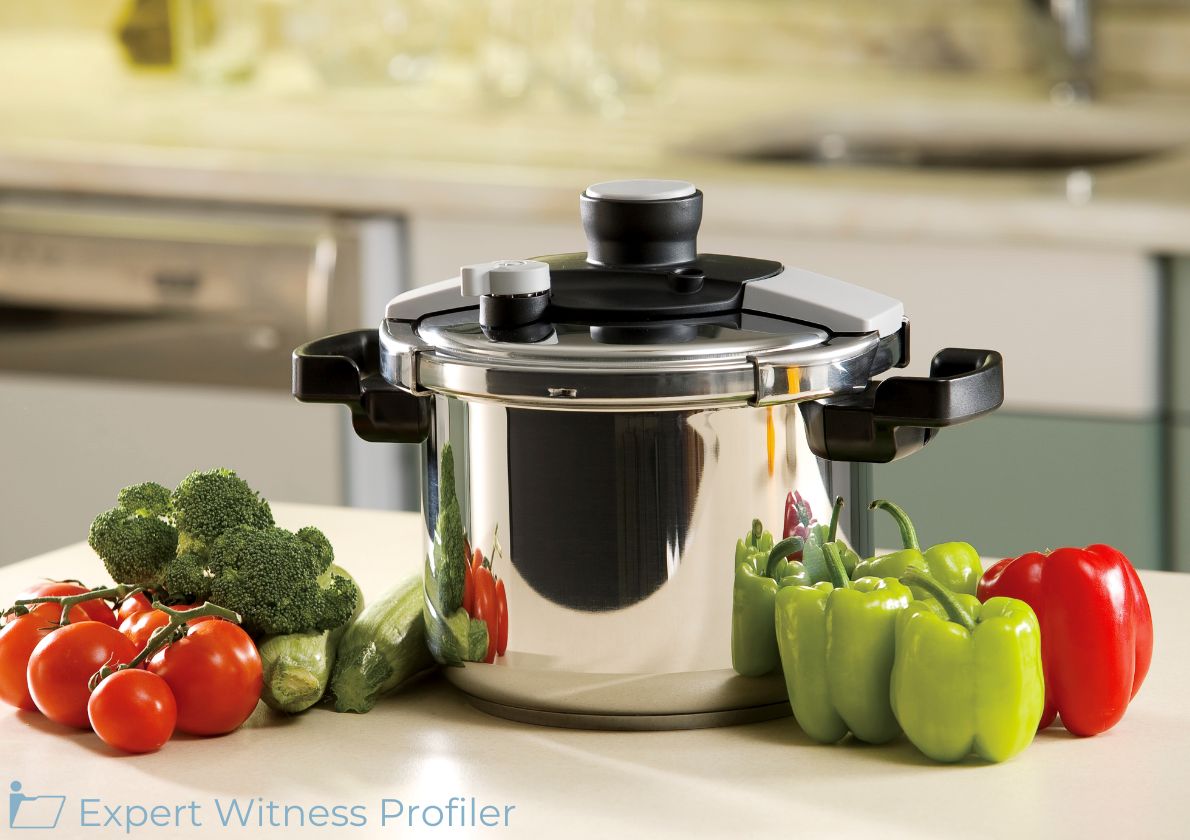
Plaintiff India Smith (“Plaintiff”) filed this product liability lawsuit against Tabletops Unlimited, Inc. d/b/a TTU’s (“TTU”) on August 1, 2022. Plaintiff sought to recover damages from an August 24, 2020 incident in which she sustained burns on her chest, upper abdomen, and legs after her Pressure Cooker ejected hot contents on her when she tried to open the device after cooking. The subject cooker was a Phillippe Richard 6-Quart Stovetop Pressure Cooker, Model Number YPC-1301, marketed, imported, distributed and sold by Defendant Tabletops.
Smith alleged that her Pressure Cooker contained a manufacturing and/or design defect that allowed the lid to be removed before the Pressure Cooker de-pressurized.
Motion to strike and exclude
Plaintiff retained Dr. David Rondinone, Ph.D., P.E. and Derek King, M.S., P.E., of Berkeley Engineering and Research (“BEAR”) in Berkeley, California. They testified that the subject pressure cooker was defectively manufactured and designed. The defective manufacture allowed for misalignment of the lid handle in a way that reduced the effectiveness of the lid interlock, part of which was incorporated into the lid handle. Moreover, the pressure cooker was also defectively designed in that it was not equipped with a baffle or screen to prevent food material in the cooker from potentially clogging the float valve for the lid interlock.
They also insisted that Tabletops’ lack of risk assessment contributed to the failure experienced during Smith’s incident.
Tabletops filed a motion to strike and exclude the testimony of both experts under Rule 702 due to the unreliability of the principles and methods of their testing that formed the basis of their opinions.
TTU also asserted that Rondinone and King’s reports should be stricken and excluded because their reports failed to meet the requirements of Federal Rule of Civil Procedure 26(a)(2)(B). In addition, TTU maintained that Rondinone and King should not be permitted to supplement their expert report or to correct their report after receiving TTU’s expert disclosures prior to the deadline for rebuttal disclosures.
Mechanical Engineering Expert Witnesses
David Rondinone holds an M.S. degree and a Ph.D. degree in Mechanical Engineering from the University of California, Berkeley, majoring in material behavior and design and minoring in structures and dynamics and electronic controls. He also holds a B.S. degree in Engineering Physics and a B.A. degree in Astrophysics from the University of California, Berkeley. From 1993 to the present, he has worked as a Mechanical Engineering Consultant, and is a principal of Berkeley Engineering And Research, Inc. (referred to herein as “BEAR”). He has worked for more than 30 years in the areas of failure analysis, design, and risk assessment of consumer and industrial equipment, including pressure cookers.
Derek King holds an M.S. degree in Electrical Engineering from Ohio University, and a B.S. degree in Mechanical Engineering from the University of California, Berkeley. He is also a registered professional engineer in the State of California. From 2009 to the present, he has worked as an engineer for Berkeley Engineering and Research in the areas of failure analysis, design, and risk assessment of consumer and industrial equipment, including pressure cookers.
Discussion by the Court
Rondinone and King’s Opinions are Admissible under 702
The Court held that both Rondinone and King are qualified engineers with experience in the analysis of pressure cookers.
The record demonstrated that Smith’s experts reviewed the subject pressure cooker and an exemplar cooker and performed testing based on their review. Having examined the record in this case, the parties’ arguments, and the controlling authorities, this Court concluded that Rondinone and King’s opinions and anticipated testimony regarding the interlock feature were admissible.
To the extent TTU claimed that Smith failed to disclose sufficient detail regarding the testing to make these opinions and the anticipated testimony admissible, the Court rejected that argument.
Further, the Court concluded that Smith’s expert opinions and testimony on clogging were reliable and relevant based on the experts’ prior experience with pressure cookers and clogging events and the facts of this case, including but not limited to Smith’s deposition testimony and TTU’s statements and warnings. TTU argued that this issue “had no relationship to causation in this matter and was merely fault finding.” The Court rejected TTU’s arguments that these opinions and this proposed testimony were irrelevant or inadmissible, given the facts of this case and TTU’s anticipated arguments regarding what it contended was Smith’s alleged “misuse of the product.” The Court also acknowledged that the parties disputed any purported misuse by Smith.
The parties disputed the facts and circumstances surrounding the issue of TTU not conducting a proper risk assessment, which is why the Court took this portion of TTU’s Daubert motion against both experts under advisement.
Plaintiff Has Met Her Disclosure And Supplementation Burdens Under The Federal Rules Of Civil Procedure
TTU contended that, if Smith’s experts relied on any information contained in Exhibits G, H, I, and M in her response to the Daubert motion, those exhibits were not identified in the expert reports. Further, TTU claimed that Smith failed to disclose her experts’ prior testing of other pressure cookers as a basis for their opinions in their reports. For these reasons, TTU sought to strike Rondinone and King’s reports and to exclude them as experts.
Smith maintained that Exhibit G was a user manual for one of TTU’s own pressure cookers and that Exhibit M was the deposition transcript of TTU’s own corporate designee from a prior case. Smith also maintained that Exhibits H and I were user manuals for other types of pressure cookers and that these documents were publicly available documents that Smith located online for use in defending against TTU’s Daubert motion.
TTU filed a separate motion to strike Exhibits G, H, I, and M from Smith’s response in opposition to TTU’s initial motion to strike which was denied by the Court.
The Court observed that Rondinone’s report stated in pertinent part under “Qualifications” that “he has worked for more than 30 years in the areas of failure analysis, design, and risk assessment of consumer and industrial equipment, including pressure cookers.” As to King, the report under “Qualifications” states that “from 2009 to the present, he has worked as an engineer. . . in the areas of failure analysis, design, and risk assessment of consumer and industrial equipment, including pressure cookers.” The Court held that Smith’s experts sufficiently disclosed their prior experience with pressure cookers as a basis for their opinions.
The Court declared that there was no requirement for a supplemental report.
Held
The Court denied, in part, and took under advisement, in part, Tabletops’ motion to strike and exclude David Rondinone and Derek King’s proposed expert opinions and testimony. The Court also denied Tabletops’ motion to strike Smith’s Exhibits G, H, I, and M to her response to Tabletops’ motion to strike and exclude David Rondinone and Derek King.
Key Takeaways:
Admissibility of Opinions under Rule 702: The Court deemed Rondinone and King’s opinions regarding the interlock feature admissible, considering their qualifications as engineers and their thorough review and testing of the subject pressure cooker.
Fulfillment of Disclosure and Supplementation Burdens: The Court ruled that Smith met her disclosure and supplementation burdens under the Federal Rules of Civil Procedure, despite TTU’s contentions regarding Rondinone and King’s reliance on certain exhibits and failure to disclose their prior testing of pressure cookers.
Reliability and Relevance of Expert Opinions on Clogging: The Court concluded that Smith’s expert opinions and testimony on clogging were reliable and relevant, based on the experts’ extensive experience with pressure cookers and clogging events.