Tag: Floor

  • Human Factors Expert Not Allowed to Opine on the Tile

    Human Factors Expert Not Allowed to Opine on the Tile

    Plaintiff Rebecca Bell alleged that she fell while an invitee at the Hobby Lobby store in Daphne, Alabama.

    She filed suit against Hobby Lobby Stores, Inc. and Alex Mendoza (manager of the Daphne Hobby Lobby store) asserting causes of action for negligence, wantonness, and negligent/wanton hiring, training, supervision or retention.

    Plaintiff stepped on an uneven tile while shopping inside the Hobby Lobby store in Daphne, Alabama. She argued that the uneven floor tile caused her to fall. Plaintiff did not trip or slip. Rather, Plaintiff alleges she stepped “half on good tile, half on bad tile,” causing her foot to roll. The depression in the subject tile was not greater than 1/4″.

    Plaintiff proffered the testimony of Dr. Ian Noy and an affidavit of John Shepherd. Both Noy and Shepherd opined that the subject tile constituted a hazardous condition. Defendants filed a motion to exclude Noy’s testimony and argued that Shepherd’s affidavit should be disregarded as conclusory.
    Human Factors Expert Witness

    Ian Yechiam Noy is immensely qualified as an expert in Human Factors and Ergonomics. He is a distinguished Human Factors and Ergonomics consultant and forensic expert with extensive background in innovative and applied safety research, industrial engineering, behavioral sciences, and science management.

    Want to know more about the challenges Ian Noy has faced? Get the full details with our Challenge Study report.

    Retail Store Expert Witness

    John R. Shepherd has worked 40 years in the retail store industry, with 20 years at Walmart and 21 years at Delchamps grocery stores. 

    Throughout his experience in the retail store industry, he was directly involved in developing and implementing policies and procedures relating to floor safety, customer safety and injury prevention.

    Discover more cases with John Shepherd as an expert witness by ordering his comprehensive Expert Witness Profile report.

    Discussion by the Court

    Ian Noy

    Plaintiff retained Noy “to opine on the human factors contributions” to her injuries. Noy opined that the tile was a hazard “because it violated the industry best practice standard set forth in ASTM F-1637.” Noy’s opinion is tied to that standard. The standard mandates walkways be maintained as “flush and even to the extent possible.”

    Noy acknowledged that if a walkway is “as flush and even as possible,” the standard allows for up to a one quarter inch (1/4″) change in elevation. It is undisputed the subject walkway had no variation in elevation greater than a 1/4″. However, Noy contended the subject tile nevertheless violated the standard because the 1/4″ allowance applies only if the walkway is as “flush and even to the extent possible.” Noy opines the subject tile was not as “flush and even to the extent possible,” and therefore should have been “repaired.”

    Noy acknowledged that “flush and even to the extent possible” is a structural determination. He testified, “if it’s physically possible to make the floor flush and even, it should be done. If there was any structural or functional reason why there needs to be a change in elevation, then it has to be as small as possible.” However, Noy is not proffered as a structural expert. Furthermore, he never visited the Hobby Lobby store where Plaintiff fell. He has no knowledge of the construction of the floor or its substrate. He does not know what caused the depression in the subject tile, or when or how it developed. His opinion, though, that the floor should have been “repaired” and that the 1/4″ depression allowance is inapplicable is based on his belief that the floor was not “flush and even to the extent possible.” This belief is mere unsupported “ipse dixit.”

    The Court held that Noy is unqualified to opine that the floor was not “flush and even to the extent possible.” Therefore, he cannot opine the standard 1/4″ depression allowance is inapplicable. Noy’s opinion that “the depressed surface was a foreseeable hazard because it violated the industry best practice standard set forth in ASTM F-1637” is not permissible.

    John Shepherd

    Plaintiff also offered an affidavit of John Shepherd as evidence that the tile constituted a hazardous condition. Defendants argued that Shepherd’s affidavit is “conclusory” and cannot defeat summary judgment. The Court agreed, and found that Shepherd’s opinion suffered the same fatal defects as Noy’s. Shepherd would opine that the “uneven surface in the floor constitutes a fall hazard,” and that “not only should the tile be replaced but underneath the tile should have been replaced.”

    Like Noy, Shepherd is not proffered as a structural expert. He has experience relating to “floor safety, customer safety, and injury prevention.” However, he has no construction or structural expertise or experience. Neither did the record indicate he ever visited the Hobby Lobby store where Plaintiff fell. He had no knowledge of the construction of the floor or its “underneath” substrate, or whether or how it might be “replaced.” He has no knowledge of what caused the depression, or when or how it developed.

    The Court concluded that Shepherd is unqualified to opine the subject tile or its “underneath” should have been replaced. That, and his opinion the “uneven surface in the floor . . . constitutes a fall hazard” are mere conclusory statements that cannot satisfy Plaintiff’s burden to produce sufficient evidence of an “unreasonably” dangerous condition or hazard under Alabama law. His conclusory opinion is not based on any methodology.

    Held

    The Court granted Defendants’ motions to exclude the testimony of Dr. Ian Noy and John Shepherd.

    Key Takeaway

    Nothing in either Daubert or the Federal Rules of Evidence requires a district court to admit opinion evidence that is connected to existing data only by the ipse dixit of the expert.

    Case Details:

    Case Caption: Bell V. Hobby Lobby Stores, Inc.
    Docket Number: 1:24cv422
    Court Name: United States District Court, Alabama Southern
    Order Date: April 17, 2026
  • Forensic Engineering Expert’s Testimony on Industry Safety Standards Admitted

    Forensic Engineering Expert’s Testimony on Industry Safety Standards Admitted

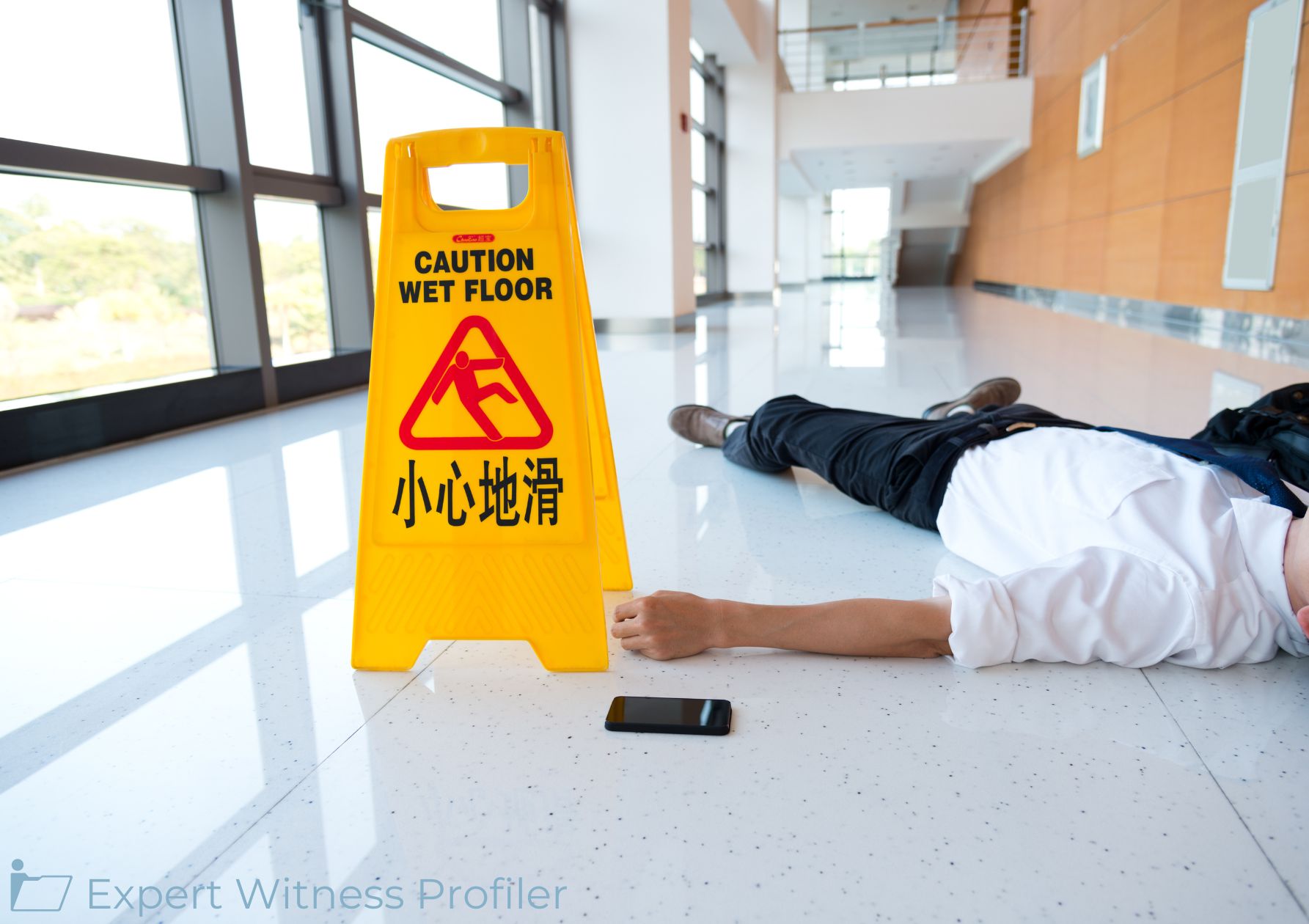
    Plaintiff Hui Wang brought suit against Omni Hotels Management seeking damages from a fall she suffered on September 25, 2018, in the lobby of the Omni New Haven Hotel at Yale. Wang alleged that she fell due to “water that had accumulated on the floor” and that Omni was negligent in allowing that water to accumulate and in failing to warn her about the slipping hazard.

    Omni sought to preclude the admission of Douglas A. Fisher, a forensic engineering expert retained by the Plaintiff with more than 35 years of experience. Omni also sought to preclude Plaintiff’s expert, Dr. Brad J. Yoo, from offering opinions about the permanency of Wang’s injuries.

    Forensic Engineering Expert Witness

    Douglas A. Fisher is a forensic engineering expert with more than 35 years of diversified engineering experience in the fields of forensic evaluations, building design, and construction administration.

    Get the full story on challenges to Douglas A. Fisher’s expert opinions and testimony with an in-depth Challenge Study

    Orthopedic Surgery Expert Witness

    Brad Joonschik Yoo, MD is a board-certified orthopaedic trauma surgeon and Associate Professor of Orthopaedic Surgery and Rehabilitation. He specializes in treating severe fractures, post-fracture complications, as well as deformities and arthritis of the lower extremity.

    Yoo graduated cum laude from Cornell University. He obtained his medical degree from New York Medical College where he first found his passion for orthopaedics. Next came a residency in Baltimore, MD at the University of Maryland Medical Center, the R. Adams Cowley Shock Trauma Center, and the Johns Hopkins Hospital. He then spent a fellowship year specializing in orthopaedic trauma at the University of Washington Harborview Medical Center in Seattle.

    Want to know more about the challenges Brad Joonschik Yoo has faced? Get the full details with our Challenge Study report

    Discussion by the Court

    Omni’s motion to preclude Fisher

    Fisher relied on his knowledge of the relative slipperiness of flooring materials under different conditions and industry standards for mitigating slipping risks. Fisher then applied this background to the video he saw and drew conclusions on that basis. In so doing, he relied on the coefficient of friction, “a numeric value that represents the amount of friction between two objects” as determined by a tribometer, as well as the American National Standards Institute guidelines for commercial entrance matting.

    Omni sought to preclude three of Fisher’s opinions: (1) his “opinions regarding the cause of Plaintiff’s fall,” (2) his opinions regarding the proper placement of the floor mats in the Hotel lobby, and (3) his opinions regarding the characteristics of the Hotel flooring.

    As to each, Omni raised essentially three challenges: (1) as it would be offered as an exhibit, Fisher’s export report contains inadmissible hearsay, (2) Fisher’s opinions are not based on sufficiently reliable methodologies, and (3) Fisher’s opinions are not likely to be helpful to the jury.

    First, Omni objected to Fisher’s opinion that “‘Wang was caused to slip, fall, and become injured due to moisture on an exposed area of the marble tile flooring.’”

    Omni also objected to Fisher’s further opinions that “‘[t]he Omni hotel failed to maintain the subject area in a safe condition,’” and “‘Omni failed to inspect the floor in order to prevent a hazardous and dangerous condition.’”

    Analysis

    The Court concluded that two of Fisher’s three opinions are admissible.  In essence, Omni argued that determining what happened when Wang fell is so straightforward a task that a jury can review the video of her fall and other evidence and reach a conclusion as to the issues in dispute without the assistance of an expert. However, even if a jury could review the video and reach its own conclusions as to both (1) the cause of Wang’s fall and (2) whether the floor was maintained in a safe condition, the Court concluded that Fisher’s expertise as an engineer will assist the jury in that task and that these two opinions are based on sufficiently reliable methods and data to be admissible.

    To the contrary, Fisher applied no particular expert methodologies to conclude that “Omni failed to inspect the floor in order to prevent a hazardous and dangerous condition.” Instead, the Court held that Fisher merely summarized testimony in the record from Omni employees and found that Omni’s employees perhaps could not have seen the front lobby well enough to look for liquid on the floor and may have failed to examine the lobby frequently on the day in question.

    As for the issue of hearsay contained within his report, Plaintiff’s counsel indicated that he would have no issue redacting portions of Fisher’s report that contained hearsay. Because the Parties may be in agreement on a path forward regarding alleged hearsay in Fisher’s report, the Court need not resolve whether each potentially inadmissible statement in Fisher’s report meets Rule 703‘s standard. 

    Omni’s motion to preclude the permanency opinion of Yoo

    Omni sought to preclude Yoo from offering opinions about the permanency of Wang’s injuries. Yoo last treated Wang in 2019 but only formulated his opinion as to the permanency of her disability in 2022 through his review of years-old medical records.

    But Wang sought to offer Yoo to testify regarding a probable current disability. Yoo’s permanency opinion—formed separately from his treatment of Wang and on the basis of years-old information—cannot constitute the opinion of a doctor treating Wang, and, instead, would require a separate expert designation. Yoo conceded that because his opinion as to permanency was based on information at least five years old, he “did not know if Wang has any disability currently.”

    As a result, the Court concluded that Yoo’s opinions as to permanency must be excluded and granted Omni’s motion to exclude this opinion from Yoo’s testimony. 

    Held

    • The Court granted in part and denied in part Omni’s motion to preclude the testimony of Douglas A. Fisher.
    • The Court granted Omni’s motion to preclude the permanency opinion of Dr. Brad J. Yoo.

    Key Takeaway:

    While expert testimony regarding the mechanics of a fall and industry safety standards and their supporting reasoning is more likely than not to help the jury resolve material issues in dispute, Fisher applied no particular expert methodologies to conclude that “Omni failed to inspect the floor in order to prevent a hazardous and dangerous condition.” The Court held that these conclusions are based on straightforward review of the evidence without application of particular “scientific, technical, or other specialized knowledge,” and therefore allowing Fisher to testify on this issue would impermissibly usurp the role of the jury. 

    Case Details:

    Case Caption: Wang V. Omni Hotels Management Corporation
    Docket Number: 3:18cv2000
    Court Name: United States District Court, Connecticut
    Order Date: June 27, 2025
  • Safety Engineering Expert  Allowed to Opine on Codes and Industry Standards

    Safety Engineering Expert Allowed to Opine on Codes and Industry Standards

    On January 22, 2022, Sharon Marshall was dining at an Outback Steakhouse in Fort Smith, Arkansas, when she slipped, fell, and received serious injuries. She alleged that she slipped on soup that had spilled in the floor which Outback had negligently failed to clean up.

    Outback has filed motions to exclude or limit the testimony of two of Marshall’s expert witnesses: Dr. Brian Goodman, who is one of her treating physicians, and Jason English, who is an industrial and safety engineer.

    Pain Medicine Expert Witness

    Brian Goodman, M.D. is a board-certified physician in pain medicine and
    anesthesiology. He completed a fellowship in pain medicine. He frequently treats patients suffering from pain caused by slip-and-falls.

    Get the full story on challenges to Brian Goodman’s expert opinions and testimony with an in-depth Challenge Study.

    Safety Engineering Expert Witness

    Jason English is a safety engineer who has two and a half decades of experience as a consultant who performs accident cause analysis, including fall protection and prevention from elevation as well as from the same level.

    Want to know more about the challenges Jason English has faced? Get the full details with our Challenge Study report.

    Discussion by the Court

    A. Motion to Limit Testimony of Plaintiff’s Treating Physician Brian Goodman, M.D.

    Goodman is a physician who has been providing Marshall with pain management treatment for spinal injuries which she alleges were caused by her fall at Outback. Furthermore, Goodman has also been retained to offer opinion testimony as an expert witness in this case. Specifically, those opinions include the opinion that the spinal injuries and associated pain that he has been treating were caused or worsened by Marshall’s fall at Outback.

    However, Outback argued that Goodman should not be allowed to offer these opinions, for two reasons. Firstly, Outback contended that Goodman is not qualified to opine on what caused the injuries that are the subject of this case because he is not a spinal specialist, did not perform surgery in this case, and is not an orthopedic surgeon, neurologist, diagnostic radiologist, or biomechanical engineer. Secondly, Outback maintained that Goodman’s causation opinions are speculative and unreliable because they are based only on Marshall’s statements to him and not on “any sort of scientific analysis” nor on the review of “any additional medical records, depositions, photographs, or otherwise.”

    Analysis

    The Court found that Goodman was qualified to offer his opinions in this case. Specifically, he has been treating Marshall for pain that he believes was caused by the injuries that are the subject of this lawsuit.

    As for Outback’s second argument regarding the reliability of Goodman’s methodology: the Court believed his methods were sufficiently reliable to satisfy the requirements of Rule 702. Outback fixates on the relatively small number of materials Goodman reviewed during the first period when he was treating Marshall, during which time it seems he was relying primarily on her reports to him of her pain to inform his decisions and was unaware of significant parts of her medical history including possibly even the fact of her fall at Outback. However, the critical question for the admissibility of Goodman’s opinions in this case is not what he knew or didn’t know at the time he began treating Marshall, but rather what informed his opinions at the time that he offered them for purposes of this litigation.

    And Goodman has testified that before offering his most recent expert report in this case he reviewed many binders of materials containing Marshall’s medical history, both pre-fall and post-fall, and that his opinions in this case were informed by his review of those materials as well as his personal experience treating Marshall and her reports to him of her pain, and his experience treating patients with injuries from slip-and-falls more generally.

    Motion to Exclude Plaintiff’s Expert Jason English

    Marshall retained English to offer expert opinions about whether the spill caused her fall (he opines it did), and about whether Outback’s response to the alleged spill hazard and training of its employees to deal with such hazards was consistent with industry standards (he opines it wasn’t). Outback offered two arguments for excluding English’s opinions. First, they contended his opinions were not reliable. Second, they said his opinions were not specialized.

    Analysis

    Regarding reliability, Outback argued that English “is not a hospitality or restaurant expert,” and that his opinions are not based on any examination or testing of the specific floor and restaurant at issue in this case. On the first point, however, English holds a certification in the measurement and evaluation of pedestrian traction on walking surfaces, and is a member of the “ASTM International F13 Committee on Pedestrian/Walkway Safety and Footwear.” The Court determined that clearly has expertise in the topics on which he is opining.

    As for testing on the specific floor where Marshall fell, English testified that
    he saw no point in testing that floor. Instead, English based his analysis on the deposition testimony, photographs, and document discovery that were produced in this case.

    According to English, “the floor in this particular case is just a common commercial flooring found not only in restaurants but other types
    of commercial facilities as well.”

    Regarding whether English’s opinions are specialized: Outback insisted that “[t]here is nothing specialized, scientific, or particularly technical about his opinion. He has simply looked at all the evidence of record and come to a conclusion. The jury can do the same.”

    The Court disagreed. English’s report extensively discussed codes and industry standards around, for example, slip resistance, spills,
    warning signs, and cleaning methods, and opined that Outback failed to meet them. He also discussed the “authoritative literature” on “ordinary human
    factors” that can influence patrons’ awareness of hazards.

    Held

    The Court denied the Defendant Outback Steakhouse of Florida, LLC’s motion to limit testimony of Plaintiff’s treating physician Brian Goodman, M.D and motion to exclude Plaintiff’s expert Jason English.

    Key Takeaway:

    • Goodman took care to emphasize the difference between what information he relied on in forming his opinion of how to treat Marshall and what information he relied on in forming his opinions that were offered for purposes of this litigation.
    • English’s report extensively discusses codes and industry standards around, for example, slip resistance, spills, warning signs, and cleaning methods.

    Case Details:

    Case Caption: Marshall V. Outback Steakhouse Of Florida, LLC
    Docket Number: 2:23cv2119
    Court Name: United States District Court, Arkansas Western
    Order Date: April 11, 2025