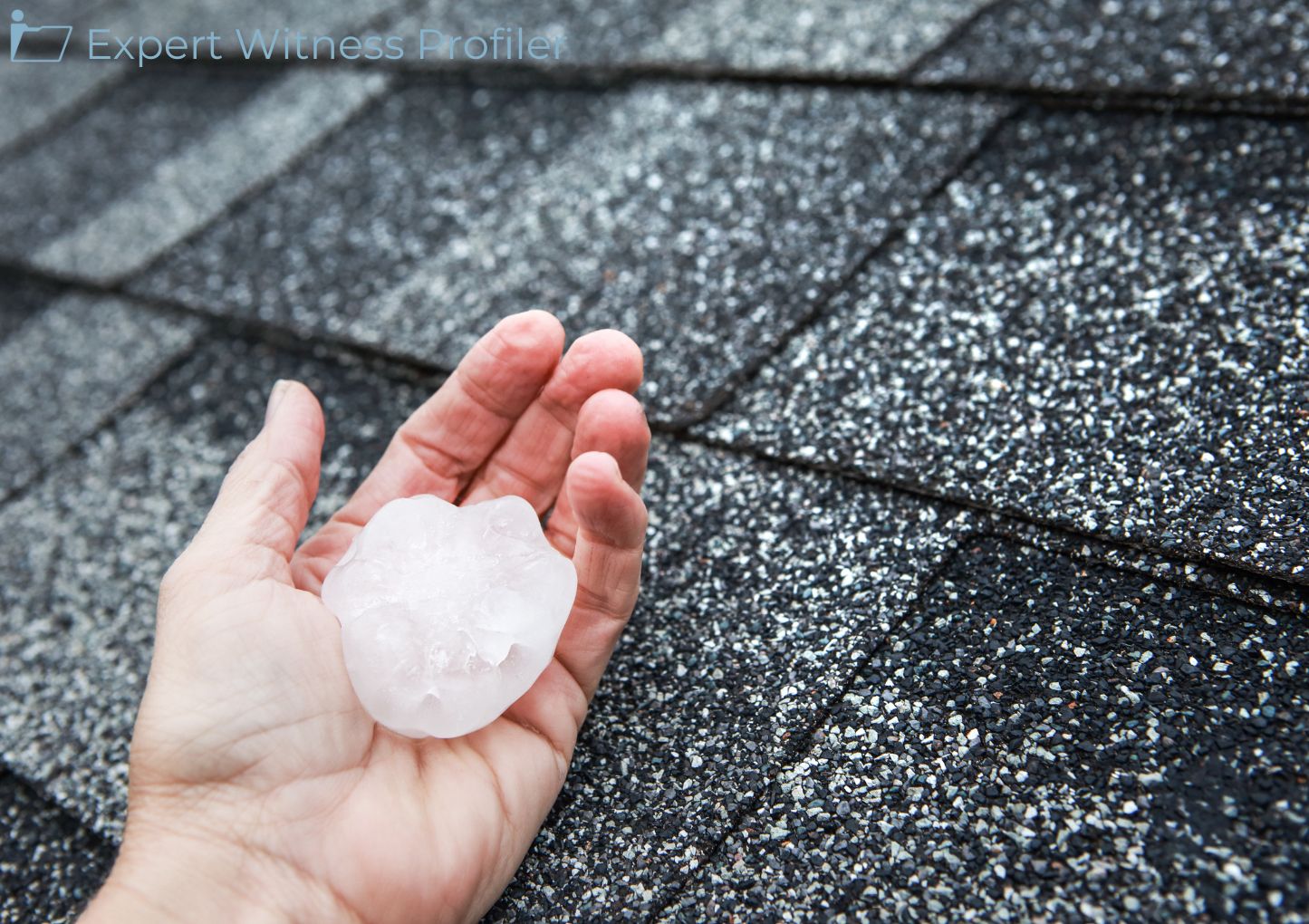
Plaintiffs 4612 S. 88th Street, LLC (“4612”), and OO7, LLC (“OO7”) filed their claims alleged in this matter against Tri-State to obtain the replacement cost insurance benefits provided under Tri-State Policy No. ADV 3188538-21 for direct physical damage sustained to the insured premises at 4612 South 88th Street, Omaha, Nebraska (the “4612 Building”) and 8811 J Street, Omaha, Nebraska (the “8811 Building”) as a result of a hail and wind storm that occurred on or about May 28, 2019 (the “2019 Storm”).
Defendants Tri-State Insurance Company of Minnesota and Auto-Owners Insurance Company filed motions to exclude the testimony of Paul Douglas and Ryan Scribner.
Engineering Expert Witness
Paul M. Douglas, P.E received a Bachelor of Science degree in civil engineering from the University of Nebraska in 1993. He is also registered or licensed as a Professional Engineer in 28 states, including Nebraska.
Douglas is a Structural Engineer and Forensic Consultant with Engineering Specialists, Inc. Douglas has spent 15 years with ESI dedicating a majority of his work to forensic engineering projects which he describes as “investigations to determine why building structures or machines fail to function in the way they were intended to.”
Douglas personally inspected the buildings that are the subject of this lawsuit, as well as others, on April 26, 2023, with two other engineers from ESI.
To begin with, Auto-Owners focused on the age and deteriorated condition of the properties. Undoubtedly, Defendants will submit evidence regarding the age of the roofs. On the other hand, Plaintiffs, through Douglas’ opinion and possibly other evidence, will submit contrary views indicating that the damage resulted from wind and hail. Again, these types of factual disputes are for the jury to determine and are not a basis for excluding a witness.
Moreover, Defendants will be able to impeach Douglas’ testimony if they believe the age of the roofs and/or some other weather event contributed to the damage. The fact that the experts disagreed on the cause of the roof damage did not render Douglas’ opinion inadmissible.
In this case, the Court found that Douglas was qualified to offer his opinions and that, based on his knowledge, skill, and experience, he had sufficiently explained the bases for his opinions, including his reasons for concluding that the roof damage was consistent with hail damage and required replacement.
Ryan Scribner
Scribner was retained to testify about the necessary and reasonable costs for labor and material costs relating to the repair and replacement of the roofs. The only issue Auto-Owners had with Scribner’s testimony is that he utilized Douglas’ engineering report when he prepared his estimate for repair.
However, it is clear from Scribner’s disclosure and deposition that he is not going to provide expert testimony as to the condition of the roof himself. He is basically going rely on Douglas’ engineering report to opine on the types of repairs that would need to be done and estimate the material and labor costs associate therewith.
Because the Court has found that Douglas’ expert opinions are admissible, Scribner’s reliance on them for purposes of estimating the repair costs is appropriate.
Held
The Court denied the motions to exclude the testimony of Paul Douglas and Ryan Scribner.
Key Takeaway
The Court found that Paul Douglas and Ryan Scribner are qualified to offer their opinions in their respected fields; that based on their knowledge, skill, and experience, they have sufficiently explained the bases of their opinions; and that these opinions are sufficiently reliable to aid the jury.
Case Details:
Case Caption:
4612 S. 88th LLC V. Tri-State Insurance Company Of Minnesota
Docket Number:
8:24cv245
Court Name:
United States District Court for the District of Nebraska
This is an insurance coverage dispute. Defendant Church Mutual Insurance Company (“Church Mutual”) insured Plaintiffs’ property. Hail damaged the property’s roof. The parties dispute whether the damage falls within Plaintiffs’ insurance policy, which precludes coverage for cosmetic damage.
Plaintiffs sought to exclude the expert testimony of Christine Conner, Mark Kubena, and Ronald Dutton on the grounds that they applied an extracontractual definition of “functional damage,” which, according to Plaintiffs, made their opinions unreliable and irrelevant. Plaintiffs also filed a motion to exclude Dutton’s supplemental expert report.
Forensic Engineering Expert Witness
Christine E. Conner has 10 years of engineering experience, including design, evaluation, inspection, and repair of residential and commercial buildings and other structures, with over 5 years of engineering training and forensic engineering experience in cause and origin failure analysis for structural damage; structural failures, construction deficiencies, roof damage, wind/hail damage, water intrusion, settlement, flooring failures, construction deficiencies, cladding and window failures, foundation damage, flood, surge and wind damage analysis, and preparation of technical reports with findings.
Mark Kubena is an engineer with expertise in the area of property damage causation and the determination of the appropriate scope of repairs for property damage.
Ronald J. Dutton has over 40 years of metallic-coated steel experience with which he provides technical services for product development, failure analysis, and product training for the metal construction industry. He has served in various trade organizations, including the National Coil Coating Association (NCCA) and the Zinc Aluminum Coaters Association (ZAC), and holds BS and MS degrees from Drexel University and Lehigh University.
The Court found that Conner, Dutton, and Kubena’s expert reports do not rely on extracontractual definitions of functional and cosmetic damage. They instead explained how the roof lacked certain types of functional damage. Thus, the expert reports opined that the roof had not been functionally damaged because its service life had not been reduced.
Basically, Church Mutual’s expert reports would help the jury determine whether the policy limitation applies. And they do not confuse the trier of fact by applying a different definition of functional/cosmetic damages. The Court declared these reports admissible.
B. Dutton’s Supplemental Report Is Inadmissible
Dutton’s supplemental disclosure is a three-page summary of a laboratory report that evaluated the hail damage to the Plaintiffs’ roof. Dutton stated that the lab report supports the conclusions from his original report and demonstrates that there is no evidence that the hail diminished the performance of the roof.
The Court found that Dutton’s report is not supplemental because it goes beyond filling the “interstices of an incomplete report” and instead introduces new laboratory testing results and new opinions.
Church Mutual offered a compelling explanation for the tardiness. Dutton did not receive the lab results until after submitting his initial expert report. Moreover, the testimony was important because it provided lab results that helped explain why the roof damage is cosmetic instead of functional.
Even though there is a compelling reason for the delay and the testimony is important, the Court will not admit it because Plaintiffs did not have time to produce rebuttal reports after Dutton disclosed the samples used in his supplemental report one week before the discovery deadline.
Held
The Court granted in part and denied in part the Plaintiffs’ motion.
Key Takeaways:
None of the experts relied on an extracontractual definition of cosmetic or functional damage to reach their conclusions.
Even though Dutton states that his supplemental findings support his original conclusions, they still offer new opinions, because they analyze new laboratory test results.
Case Details:
Case Caption:
Cleburne Training & Fitness Inc Et Al V. Church Mutual Insurance Company
The present case involves an insurance coverage dispute between an East Texas church, Plaintiff Christian Heritage School c/o Youth With a Mission, and its insurance company, Central Mutual Insurance Company. Between May 1, 2020, to May 1, 2022, Defendant insured Plaintiff’s property, which consisted of a twenty-one building campus in Tyler, Texas. The dispute arises from alleged storm-related damage with a date of loss on April 5, 2022.
Pursuant to Federal Rule of Civil Procedure 26(a)(2), Plaintiff retained insurance adjuster expert witness, Duane Smith. Smith was supposed to testify about his inspection, investigation, and observations of the property damaged by a hail and wind event on April 5, 2022. His designation also indicated that he would testify to the reasonable costs to repair and/or replace the property that was damaged by the hail and wind event reported to have occurred on April 5, 2022.
Smith’s report included a discussion of his qualifications and experience, the materials he reviewed, his findings, and relevant weather information. Based on this information, he included line items for the property with the estimated costs to repair and/or replace the property.
Defendant moved to exclude Smith from offering opinion testimony on the timing and cause of the claimed damages to the campus, the necessity of replacing roofs rather than repair, and the cost of Occupational Safety and Health Administration (‘OSHA’) compliance and upcharges in his estimate.
Insurance Adjuster Expert Witness
Darrell Duane Smith has been a licensed public insurance adjuster since 2016. With approximately 19 years of experience as an independent insurance adjuster, he has managed numerous commercial and residential insurance claims.
Through these experiences, Smith has adjusted hundreds of wind and hail events, water damage, and fire damage claims during his career, including both commercial and residential claims.
I. Methodology Regarding Causation and Replacement
Defendant’s Arguments
Defendant argued that Smith’s own weather data showed no hailfall at the campus and that he conducted no testing. Defendant claimed that Smith provided no weather data indicating that wind or hailfall occurred on the campus on April 5, 2022 and that he failed to consider all information to exclude other potential causes of damage to the campus, such as pre-existing damage or post date of loss damages.
Plaintiff’s Counter-Argument
Plaintiff pointed out that Smith examined storm data from May 3, 2017, to April 5, 2022, to assess other potential storms but concluded that “the distinctive size, shape, and pattern of the hail damage conclusively established the April 5, 2022 hailstorm as the cause of damage.” Plaintiff also cited to Smith’s report where he concluded this same fact and explained, based upon coloration of old hail damage (discolored, grey, or whited out), versus the characteristics of hail damage that appeared to be “fresh” and consistent in size and shape with the April 5, 2022 storm. Smith also assessed the storm created openings for the roof and water damage, which was consistent with the April 5, 2022 storm due to lack of “long-term” aging.”
Plaintiff argues that Defendant’s arguments went to the weight of Smith’s opinions, not the admissibility of them.
Causation
Smith reviewed weather information from the National Oceanic Atmospheric Administration (“NOAA”) in order to determine which storms, if any, other than April 5, 2022 storm, affected the property. His search covered the period from May 3, 2017, to April 5, 2022, which he provided rules out any other possible date of loss.
Moreover, Smith testified that when he inspected the property in 2023, he was able to distinguish between old and new damage based upon the repairs that already took place and the fact that the marks seemed to be “fresh” because they were not discolored, old, grey, or turning white like might be expected with aging.
Similarly, Smith opined that water damage observed at the property did not exhibit signs of long-term aging, or indicate a long-term ongoing issue nor are there signs of historical repairs at the affected locations. He stated that he considered alternative causes of loss, including foot traffic, wear and tear, and deterioration and concluded that no evidence consistent with these causes of damage was found.
Replacement Versus Repair
As to the necessity of replacement versus repair, Smith explained how he based his conclusions on his own inspection and experience. Smith line itemed the inspection damage in his expert report. He explained how upon inspection, he observed a significant number of unsealed tabs consistent with high wind, as well as hail damage to shingles and metal roofing. He stated that, based upon the damage he observed, it wouldn’t have been feasible to try to conduct repairs because the damage to the roofs was too widespread. This is the basis of his opinion recommending replacement.
The Court found that Smith’s report and testimony explained how he determined, based upon his experience, inspection, and review of the weather data, that the April 5, 2022 storm caused the damage. This included observations regarding prior storms from the weather data, the condition of the damage upon inspection as it relates to characteristics of time and wear, and the possibility of damage from post-date storms which he found occurred not in the relevant area and were several miles away. It was held that this evidence demonstrated that Smith examined other potential causes, thereby rendering his methodology and opinions reliable for purposes of determining admissibility under Daubert and Rule 702.
The Court held that the Defendant may have identified weaknesses in Smith’s opinions, but it does not render them ipse dixit merely because Defendant disagrees with his conclusion. The credibility of Smith’s opinions remained a matter for the jury to consider.
II. OSHA Compliance
Defendant argued that Smith included Kevin Dandridge’s incomplete estimate for OSHA safety protocols and procedures in his estimate, making it unreliable. Dandridge was retained to testify about to the proper OSHA safety protocol and procedures.
The Court held that Smith’s reliance on Dandridge’s OSHA compliance costs was not atypical. The Court, in a separate order, held that Dandridge’s testimony in this regard is permissible. As Dandridge himself explained, these opinions can be reconciled. To the extent the reliance is flawed, or Dandridge’s opinions are based upon a weak foundation, then, again, that remains a matter for cross examination.
III. 20% Inflation Adjustment
Lastly, Defendant argued that Smith included a 20% blanket inflation adjustment without providing a sufficient methodology.
According to the Court, had Smith simply added a blanket 20% inflation adjustment without explanation, then such a methodology would be unreliable. However, Smith has explained his reasoning for this adjustment. As he testified to this point, “because all the major suppliers are sending out demand surge notices and informing all the contractors that due to the supply and demand, that all the materials have went up at least 20 percent, if not more.”
Smith further explained his experience with typical surge pricing due to storm demand having been involved with hurricanes.
Held
The Court denied the Defendant’s motion to strike the expert testimony of Plaintiff’s insurance adjuster expert witness, Duane Smith.
Key Takeaways:
According to Rule 703, an expert may also rely upon the opinion of another expert, as long as the other expert opinion upon which the expert bases an opinion or inference are of a type reasonably relied upon by experts in the particular field in forming opinions or inferences upon the subject. In conclusion, Smith’s reliance on Dandridge’s OSHA compliance costs was not atypical.
Defendant may have pointed out weaknesses in Smith’s opinions, but it does not render them ipse dixit merely because Defendant disagrees with his conclusion. This is simply a matter of credibility of the expert, which the jury can properly consider.
Smith’s testimony explained how he determined, based upon his experience, inspection, and review of the weather data, that the April 5, 2022 storm caused damage to the property. This included observations regarding prior storms from the weather data, the condition of the damage upon inspection as it relates to characteristics of time and wear, and the possibility of damage from post-date storms which he found occurred not in the relevant area and were several miles away. This evidence demonstrates that Smith examined other potential causes, thereby rendering his methodology and opinions reliable.
Case Details:
Case caption:
Christian Heritage School c/o Youth With A Mission v. Central Mutual Insurance Company
Docket Number:
6:24cv45
Court:
United States District Court for the Eastern District of Texas, Tyler Division
This is a removed action by Plaintiff Wings Platinum LLC , an insured, against its insurer, Defendant Westchester Surplus Lines Insurance Company, arising from the denial of Wings’ claim for coverage following a wind and hail storm. Wings asserted claims for breach of contract; unfair settlement practices, and breach of the duty of good faith and fair dealing.
Wings alleged that, on April 9, 2021, a severe wind and hail storm caused significant damage to the Property’s roof and exterior. Plaintiff submitted a claim under the Policy for wind and hail damage to the Property that it maintained was caused by the storm, seeking the cost to repair the roof. Westchester retained Robert J. Herrera, an engineer at Stephens Engineering, to investigate Wings’ claim. Herrera first inspected the property on September 9, 2021, and he authored three reports. However, Wings filed a motion to strike Herrera’s testimony and opinions.
After Westchester denied Wings’ claim on or about April 21, 2022, Wings sued Westchester in State Court, and Westchester removed the lawsuit to this Court.
Structural Engineering Expert Witness
Robert Herrera was hired by Stephens Engineering Consultants, Inc. in 2020 where he uses his years of design engineering experience in the field of forensic investigations. Herrera has performed forensic investigations for a wide variety of residential and commercial structures to determine cause and/or extent of stormrelated damage to roofing and exterior claddings of buildings, water intrusion, structural damage and collapse, differential foundation movement, vehicle impacts, and construction defects.
Herrera is currently a senior forensic engineer, the team leader for Texas, and an integral part of the training of new forensic engineers for Stephens.
Herrera’s first report, dated September 30, 2021 (the “First Report”), concluded that identified fractures in the thermoplastic membrane of the roof were not caused by wind or hail. The second report, a supplement produced after a follow-up investigation of the building on February 28, 2022 and dated March 22, 2022 (the “Second Report”), identified fractures in the membrane consistent with impact, but it maintained that those fractures were not caused by a weather event in 2021 and were instead caused by a storm in April 2017. The third report, a second supplement dated June 23, 2022 (the “Third Report”), responded to additional materials that Wings had provided and maintained the conclusions reached in the Second Report.
Plaintiff’s Argument in Support of the Motion
Wings sought to exclude Herrera’s testimony on the basis that he is not qualified to opine as an expert on the age of the damage to the roof and that his opinions regarding the age of the hail damage on the roof are not reliable because they lack any reasonable basis and are not the result of sound scientific principles and methods.
Wings posited that Herrera had insufficient training to be qualified as an expert for purposes of determining the time when the roof was damaged by hail.
It contended that Herrera’s prior engineering experience is not relevant to the issue on which he opines—the age of the hail strike damage—and that Herrera’s mere one year and one month of experience at the time of his First Report is insufficient to qualify him as an expert.
Wings also contended that Herrera’s opinions regarding the age of the hail strikes are not reliable because they are entirely subjective and lack “any sort of basis, rubric, metric, or standard” by which to judge them, and because Herrera could not explain how his determination of the age of the damage could be duplicated or tested.
Analysis
Qualification
Neither Westchester nor Herrera articulates how Herrera’s specific experience designing commercial and residential structures as a project engineer qualifies him to opine on the age of the hail damage. The Court held that Herrera’s training and experience at Stephens, however, qualify him to offer these opinions as an expert.
In his affidavit, Herrera avers that he received on-the-job training when he began working at Stephens in 2020 that was “specific to identifying and assessing wind- and hail-related damage to roofs, including the type of roof at issue in this lawsuit.”
He shadowed senior engineers for 3 to 4 months before beginning to inspect buildings independently, and, at the time he inspected the roof at 3950 Platinum Way, he had inspected approximately 200 buildings for storm damage.
At the time of his affidavit, he had inspected approximately 750 properties for storm damage. The Court finds this experience and training sufficient to qualify Herrera to offer his expert opinion on the age and cause of the damage to the roof at 3950 Platinum Way under Rule 702.
Reliability
Herrera testified in his deposition that he was able to examine fractures in the roof and determine, “to a reasonable degree of engineering certainty,” that the fractures were more than one year old and thus were not due to a recent hail event. This observation and judgment, in connection with his review of weather research and Roof Technical Services, Inc.’s (“RTS’s”) report from its analysis of the roof samples, formed the basis for Herrera’s opinion.
The Second Report explained that the fractures on the roof attributed to hail damage were consistent with hailfall on or about April 25, 2017 because the damage was consistent with hail larger than that reported at the property in the April 2021 storm. The Court was satisfied with Westchester’s showing of reliability in this instance.
In other words, Wings’ deepreservations about Herrera’s opinions concerned the weight of his testimony, not its admissibility, and will be better addressed through vigorous cross-examination and the presentation of contrary evidence.
Held
The Court denied Plaintiff’s motion to strike the testimony and opinions of Defendant’s expert Robert J. Herrera.
Key Takeaway:
Herrera received on-the-job training when he began working at Stephens in 2020 that was “specific to identifying and assessing wind- and hail-related damage to roofs, including the type of roof at issue in this lawsuit.”
He reviewed weather research and Roof Technical Services, Inc.’s (“RTS’s”) report from its analysis of the roof samples to conclude that the damage to the roof was not caused by a recent hail event.
Case Details:
Case Caption:
Wings Platinum Llc V. Westchester Surplus Lines Insurance Company
H5R owns a single-family home (the “Property”) in Dallas, Texas, for which Scottsdale Insurance issued an insurance policy covering certain causes of loss. In February 2021, water allegedly entered the Property through or near the roof. H5R “immediately notified” Scottsdale Insurance and filed a claim for this incident. More than one year after the claim was filed, Scottsdale Insurance sent H5R a letter denying the claim dated June 17, 2022.
H5R contended the Property was damaged by hail during the insurance policy period – a covered loss event. But Scottsdale Insurance denied that a hail event during the policy period caused the alleged damage.
H5R and Scottsdale Insurance designated experts to opine regarding the alleged damage under Federal Rule of Civil Procedure 26(a)(2). H5R designated Terry Moore, a purported construction expert, and included Moore’s report regarding the extent of damage to the Property and cost of repair.
Scottsdale Insurance filed a motion to strike Moore’s opinions and testimony because his designation and report failed to comply with Federal Rule of Civil Procedure 26.
Real Estate Development Expert Witness
Terry Moore is the founder and president of the Garrett Moore Company, a commercial real estate development firm that, since 1977, has developed over 22,000,000 square feet of property. This portfolio includes, but is not limited to, retail and office spaces, 45,000 apartment units, Caribbean resorts, assisted living facilities, and senior resort-style living communities.
With over 45 years of experience in the real estate market, Terry Moore has a proven track record of success in the industry. He is a 1977 graduate of the University of Oklahoma, holding advanced degrees in Architecture.
Scottsdale Insurance asserted that Moore’s expert disclosure “omits key information required under Rule 26(a)(2)(B) – specifically ‘a complete statement of all opinions the witness will express and the basis and reasons for them’ and ‘the facts or data considered by the witness in forming them.’” And it contended that, in Moore’s deposition, he opined on issues that he was not designated for or provided a report on – particularly those involving causation (i.e., that hail caused the alleged damage to H5R’s Property).
Moore testified that the report contained a complete statement of all his opinions and underlying facts or data. And he confirmed that his report did not contain a causation opinion.
In response, H5R asserted that Moore was properly designated to provide his opinion regarding the Property’s repair costs. And it argued that “[t]here is no requirement that Moore’s report provide opinions regarding cause or date of damage, as these topics were not part of his designation,” and that, when asked about these issues during the deposition by Defendant’s counsel, he “simply answered the questions.”
But, in its summary judgment response, the Court found that H5R relied on Moore’s deposition testimony regarding the causation issue – more than once despite conceding that the topic “was not part of his designation.”
H5R has not provided a justification for its noncompliance with Rule 26(a)(2), and, so, the Court turns to whether its failure to disclose was harmless by evaluating certain factors.
How Important the Evidence is
The first factor of the harmlessness analysis – how important the evidence is – weighs in favor of exclusion.
According to the Court, H5R’s argument that Scottsdale Insurance “ignores its own evidence” demonstrating that “the damage was caused by hail” indicates that Moore’s testimony is duplicative or of minimal importance.
Prejudice to the Party Opposing the Admission of the Evidence
The second factor – prejudice to the party opposing the admission of the evidence – also favors exclusion.
H5R initially alleged that the Property damage was caused by a snow and ice event or a broken pipe. But H5R relied on Moore’s deposition testimony in its summary judgment response for the proposition that hail caused the damage, despite conceding that the topic “was not part of his designation” or in his expert report.
And, so, the Court found that Scottsdale Insurance has been prejudiced because H5R failed to provide Scottsdale Insurance’s counsel with notice regarding the scope of his expert testimony and “now faces a newly alleged cause of loss and new opinions about the alleged damage deep into the case, with discovery now closed.”
Possibility that a Continuance Could Cure any Prejudice
The third factor – the possibility that a continuance could cure any prejudice – weighs against exclusion because the Court vacated the trial setting and all pretrial deadlines in May 2024.
The Explanation for the Party’s Failure to Disclose
The fourth factor – the explanation for the party’s failure to disclose – favors exclusion.
H5R asserted that Moore was not required to provide opinions regarding causation in his report since he was not designated as an expert on that topic and, when asked about it during the deposition by Scottsdale Insurance’s counsel, he “simply answered the questions.”
But, in its summary judgment response, H5R attempted to present Moore as an expert on causation, which is an issue central to the resolution of this case. And, so, the Court is not persuaded by H5R’s explanation.
Held
Considering these four factors holistically, the Court concluded that H5R’s noncompliance with Rule 26(a)(2) is not harmless and that Moore’s testimony should be excluded under Rule 37(c)(1).
Key Takeaway:
H5R has not provided a justification for its noncompliance with Rule 26(a)(2). Because Moore “provided several undisclosed opinions in his deposition” about issues that he was not designated to opine on, including the source of alleged damage, the Court concluded that H5R’s noncompliance with Rule 26(a)(2) is not harmless.