Tag: Heat

  • Burns Expert’s Testimony on Conscious Pain Admitted

    Burns Expert’s Testimony on Conscious Pain Admitted

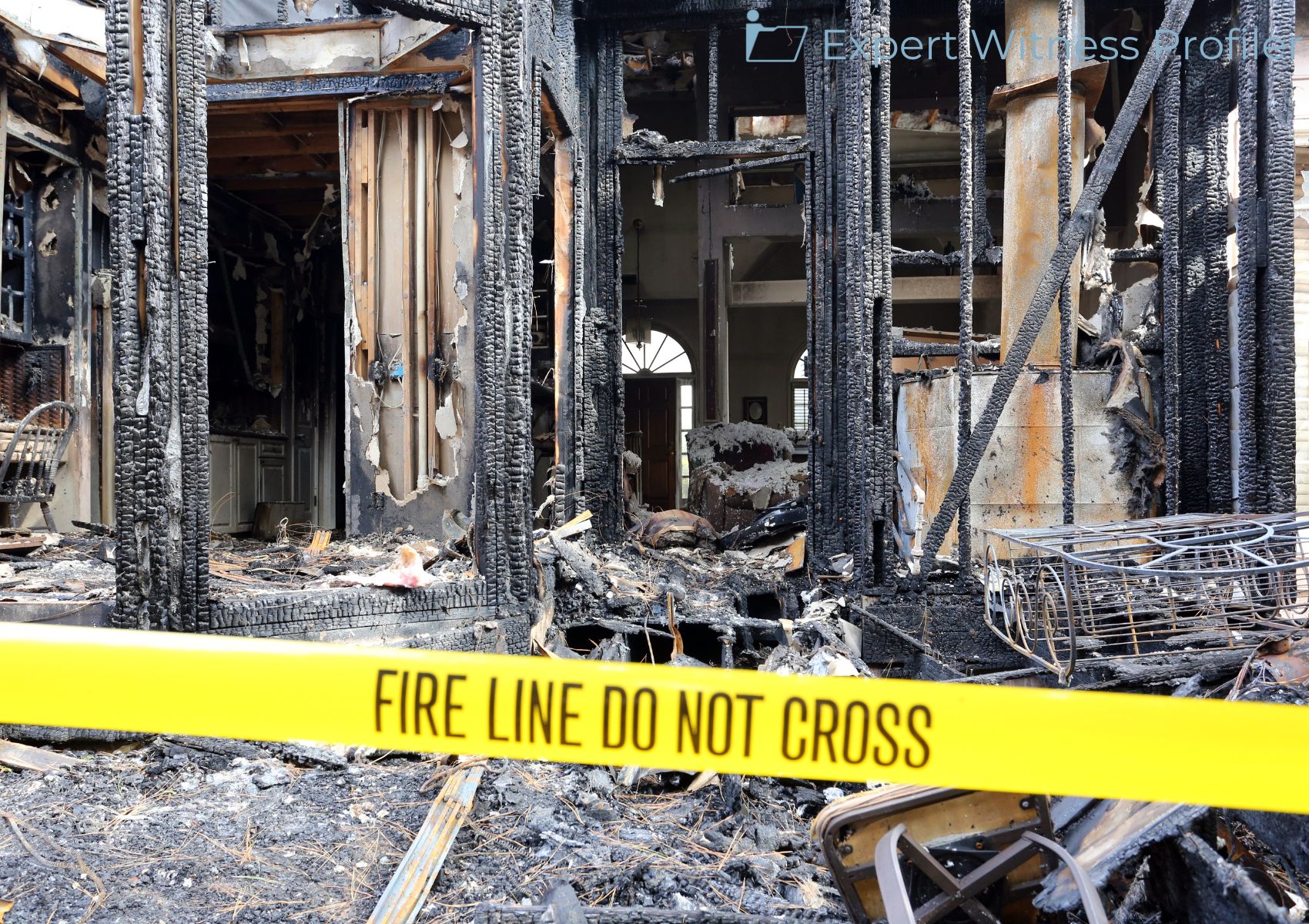
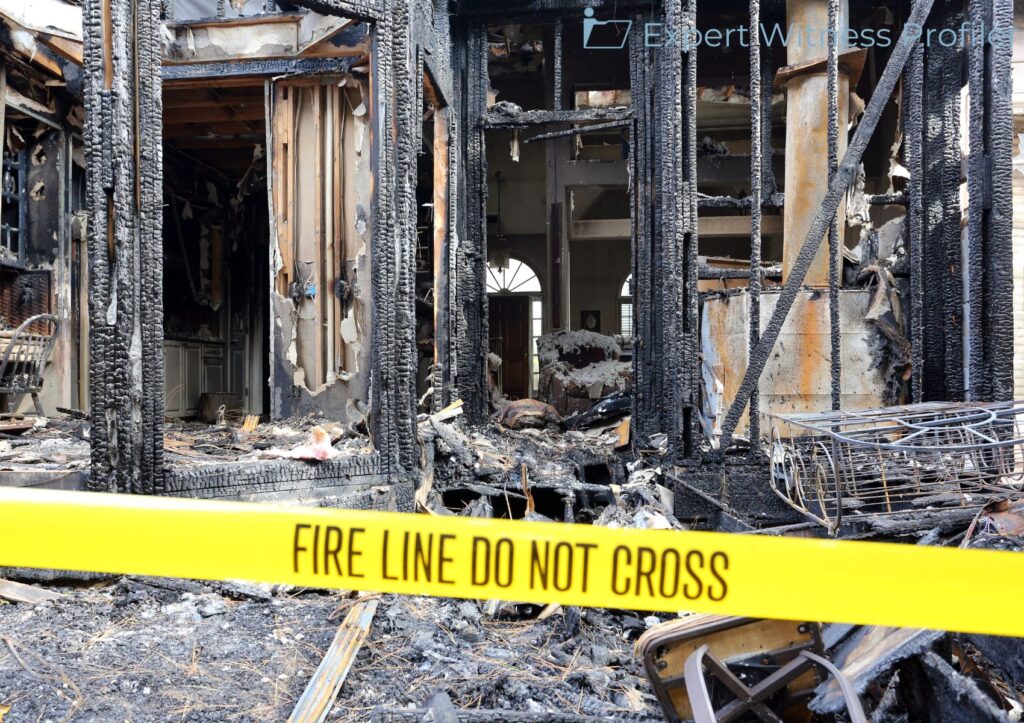
    Defendants owned and managed an apartment complex called The Trails at Flat Rock in Columbus, Georgia. In October of 2022, a fire occurred in Building A of the apartment complex. Kevin Ford, who was staying in unit A-24 with tenant Anthony Thorpe, died in the fire. Plaintiff, the administrator of Ford’s estate, asserted negligence claims against Defendants based on Ford’s death, alleging that Defendants’ negligence caused Ford’s death and pre-death pain and suffering. 

    Plaintiff intended to support these claims with the expert testimony of Kevin Foster and Lisa Detter-Hoskin. Defendants argued that the testimony of these two experts should be excluded. 
    Burns Expert Witness

    Dr. Kevin Foster is the Director of Burn Services at the Diane & Bruce Halle Arizona Burn Center Valleywise Health. Foster is a medical doctor who has specialized in burn care since 1999.

    Want to know more about the challenges Kevin Foster has faced? Get the full details with our Challenge Study report

    Chemistry Expert Witness

    Lisa Detter-Hoskin has a Ph.D. in inorganic chemistry with minor focus in analytical chemistry from Purdue University. She has successfully completed the National Association of Corrosion Engineers Basic Corrosion Science class.
    Detter-Hoskin was a lead expert who worked 10 years on the United States’ largest chlorine spill which occurred when Norfolk Southern Railway derailed a train and released chlorine onto Avondale Mills and residences in Graniteville, SC on January 6, 2005.

    Get the full story on challenges to Lisa Detter-Hoskin’s expert opinions and testimony with an in-depth Challenge Study.

    Discussion by the Court

    Foster opined that Ford’s death was caused by a combination of smoke inhalation and burn injury, as opposed to solely smoke inhalation injury. Foster also concluded that Ford suffered conscious pain and suffering from his burns before his death.

    Defendants contended that Foster’s testimony should be excluded as unreliable because Foster’s opinions are speculative and not based on reliable principles that would assist the trier of fact.

    I. Defendants’ Motion to Exclude Kevin Foster

    To prepare his report, Foster relied on the Georgia Bureau of Investigation’s (“GBI”) autopsy report and photographs, the Muscogee County Coroner’s Report, Columbus Fire Department and Columbus Police Department reports and photographs, Thorpe’s deposition, and other photographs from the fire scene. Defendants did not appear to challenge Foster’s basic methodology, which was to consider all the medical records, photographs, and reports available to him and determine Ford’s cause of death based on that information and his training, experience, and skill as a burn care physician.

    Rather, Defendants challenged Foster’s conclusions—including his conclusion that Ford was conscious at the time of the fire and experienced pain and suffering due to burns before he died. According to Defendants, Foster misinterpreted the evidence and reached the wrong conclusions about whether Ford was asleep at the time of the fire. Foster, though, explained why he interpreted the evidence as he did and how he reached his conclusions that Ford was conscious and trying to escape the fire when he suffered burns. The Court found that Defendants’ criticisms of Foster’s testimony went to its weight, not its admissibility. Thus, based on the present record, the Court did not find that Foster’s methodology was unreliable.

    Defendants also criticized Foster’s analysis as a “cut and paste job” because Foster mistakenly referred to a “Mr. Noble” in two places in his report. The Court declined to exclude Foster’s testimony because of the mistakes in his report.

    II. Defendants’ Motion to Exclude Lisa Detter-Hoskin

    Defendants also sought to exclude the testimony of Plaintiff’s rebuttal expert, Lisa Detter-Hoskin. Plaintiff hired Detter-Hoskin to rebut certain opinions offered by the Defendants’ fire investigation expert.

    Defendants argued that Detter-Hoskin’s opinions are outside the scope of permitted rebuttal testimony under the Federal Rules of Civil Procedure.

    Defendants argued that Detter-Hoskin’s testimony did not rebut expert opinions as to the cause of the damage to the backplate of the cooking range because the expert in question did not “opine as to what caused the damage to the back plate of the range.”

    After examining and analyzing materials from the kitchen of unit A-23, Detter-Hoskin opined that “the damage to the cooking range back plate and aluminum backsplash was not the result of the direct flame impingement, radiant heat, or conductive heat from the fall down debris located to the left of the stove.” Thus, Detter-Hoskin’s conclusions directly contradicted expert opinions as to the cause of the damage to the stove backsplash and back part of the range. Accordingly, the Court found that Detter-Hoskin is a proper rebuttal expert under Rule (26)(a)(2)(D)(ii).

    Held

    The Court denied the Defendants’ motions to exclude the testimony of Kevin Foster and Lisa Detter-Hoskin.

    Key Takeaway:

    A rebuttal report may not advance a completely new legal theory, but courts must examine the primary expert reports to determine whether the rebuttal report is truly “new” or merely uses different terminology to address issues that were raised in the primary expert reports.

    Please refer to the blog previously published about this case:

    Fire Investigation Expert’s Analysis of Burn Patterns Admitted

    Case Details:

    Case Caption: Washington V. GWR Management LLC Et Al
    Docket Number: 4:24cv81
    Court Name: United States District Court, Georgia Middle
    Order Date: October 21, 2025
  • Engineering Expert’s Use of Manual J Fails Daubert Reliability Test

    Engineering Expert’s Use of Manual J Fails Daubert Reliability Test

    Plaintiff Sheheryar Ahmad sued Defendant Spinnaker Insurance Co., his insurer, for breach of contract based on Defendant’s refusal to cover damages caused by frozen and burst pipes in Ahmad’s home.

    The Plaintiff argued that although the insurance policy excluded coverage for damage caused by frozen pipes, his claim qualified for an exception to that exclusion because he had taken “reasonable care to maintain heat” as required by the policy.

    Plaintiff’s home consumed seven thermal units of natural gas between December 14, 2022 and January 14, 2023, the period during which the pipes froze and burst.  To establish that seven therms sufficed to maintain reasonable heat, Plaintiff relied on the expert testimony of Dr. Brian K. Bramel.

    The Defendant, however, filed a request to exclude Bramel’s testimony regarding the home’s internal temperature at the time of the frozen pipes.

    Engineering Expert Witness

    Dr. Brian K. Bramel is a principal at his own engineering firm and holds undergraduate and graduate degrees in Mechanical and Civil Engineering.

    He also serves as an adjunct professor in the Department of Architecture at the University of the District of Columbia.

    Get the full story on challenges to Brian Bramel’s expert opinions and testimony with an in-depth Challenge Study.

    Discussion by the Court

    Bramel’s report applied the Manual J calculation, a standard thermodynamics methodology generally used to size heating equipment and developed by the Air Conditioning Contractors of America (ACCA) and the American Society of Heating, Refrigerating and Air-Conditioning Engineers (ASHRAE).

    In its ordinary function for equipment sizing, Manual J is used to “determine the therms necessary in order to reach a chosen temperature inside a structure.”

    However, per Bramel, the methodology can be used “in reverse,” using basic algebra, to determine the interior temperature based on measurements of the “features of the subject premises” and total energy used in this context. 

    Bramel’s Application of the Manual J Calculation

    The Manual J calculation determines “the energy required for a house based on the interior and exterior temperature differences.” A key element of the calculation is the “resistance factor” of the structural elements in Plaintiff’s home, which refers to the energy lost through the walls, floor, roof, and windows.

    Under the equation, the total “energy input to the building from the gas and electric” is equal to the “thermal resistance of the assembly” multiplied by the “area” of the resistance and the difference between the outdoor and indoor temperatures. 

    Bramel summarized the equation as follows: Qin = U A (tinside – toutside), where Qin refers to the “energy input to the building from the gas and electric,” U refers to “thermal resistance of the [structural] assembly,” A refers to “area” of the resistance, and (tinside – toutside) refers to the temperatures inside and outside, respectively.

    Reliability of Bramel’s Methodology

    The Defendant contended that Bramel’s testimony should be excluded because he had inappropriately repurposed a well-established methodology—typically used for sizing heating equipment—and applied it to a completely different context. While there was no dispute that Manual J is a reliable method for determining appropriate equipment size, the Court found that the Plaintiff failed to show it was suitable for use outside of that context, particularly for calculating internal temperatures in reverse.

    Bramel himself acknowledged during both his deposition and live testimony that he was unaware of any scientific or engineering publications endorsing this reverse application of the method. He claimed the approach remained reliable because it involved basic algebra applied to standard thermodynamic principles. However, the Court concluded that Bramel’s modification of the Manual J methodology significantly weakened his argument, as altering a known calculation for a novel use called into question its scientific reliability.

    Bramel’s hypothesis was not only untested but, by his own admission, untestable. The Plaintiff failed to present any evidence showing that Bramel’s method had ever undergone testing. During the evidentiary hearing, when questioned about whether his methodology had been tested, Bramel merely asserted that it was valid—offering no data or studies to support that claim. Furthermore, he acknowledged that a key component of his analysis—the calculation of total “internal gains”—could not be tested, as it was based on what he described as “a reasonable guess” grounded in an “engineering assumption.”

    Application of Methodology to the Facts

    The Court found that Bramel’s use of the Manual J methodology failed to meet the reliability standards required under Daubert and Rule 702. It pointed to multiple instances where Bramel relied on inconsistent and unsupported assumptions, all of which significantly weakened the credibility of his testimony.

    First, Bramel did not provide a clear or consistent justification for overriding Manual J’s default outdoor temperature value of 14 degrees Fahrenheit. From the beginning, he struggled to explain the meaning of the “outdoor 99% db” variable used in Manual J. During his deposition, he spent more than ten transcript pages attempting to respond to defense counsel’s questions on the topic but failed to articulate a coherent understanding. Despite this, Bramel replaced the preset value with his own figure of 33 degrees Fahrenheit, yet he was unable to offer a satisfactory explanation for making that manual override.

    Second, Bramel’s report offered neither a rationale for considering the additional variable of “internal gains” in his calculation nor an explanation of how he reached his ultimate assumed value.

    Third, Bramel’s assumptions about the structure of the Plaintiff’s home conflicted with the actual facts. He classified the home as “tight,” a designation in Manual J reserved for structures that are “sealed by meticulous workmanship” and exhibit the “lowest level of air leakage.” However, Bramel admitted during both his deposition and the hearing that industry standards require the use of “blower door tests” to assess a home’s tightness. He conducted no such test in this case, undermining the credibility of his classification.

    Furthermore, Bramel’s analysis assumes Plaintiffs home comprises one window, despite both photographs and inspections “revealing the house had 10 times that many windows.”

    Held

    The Court granted Defendant’s request to exclude the testimony of Dr. Brian K. Bramel.

    Key Takeaways:

    • If the Court, or any other experts, cannot test a critical assumption in Bramel’s methodology, then there is no “objective basis” to test the reliability of the methodology overall.
    • The cumulation of errors, inconsistencies, and absence of support render Bramel’s analysis entirely unreliable under Rule 702.

    Case Details:

    Case Caption: Sheheryar Ahmad V. Spinnaker Insurance Company
    Docket Number: 1:24cv176
    Court Name: United States District Court, Virginia Eastern
    Order Date: June 20, 2025