Tag: Hotel

  • Hospitality Expert Was Allowed to Opine on Guest Safety

    Hospitality Expert Was Allowed to Opine on Guest Safety

    Plaintiff was a guest at Defendant’s beachfront hotel in Miramar Beach over the Fourth of July holiday weekend in 2024. Defendant owned the dry sand portion of the beach in front of the hotel, and it rented chairs and other concessions to hotel guests using the beach.

    On the morning of July 6, Plaintiff entered the water of what is now known as the Gulf of America from the hotel’s private beach despite seeing a yellow flag warning beachgoers to exercise caution in the water due to the presence of “moderate surf and/or currents.” Plaintiff went out to hip-deep water, and after 10 to 15 minutes, she exited the water without any issue.

    After lunch, Plaintiff re-entered the water despite noticing that there were more waves than there were in the morning. Plaintiff went further out into the water than she did in the morning, but when the weather started to worsen and the water became more turbulent and “murky,” Plaintiff decided to head back to the beach.

    While heading back, Plaintiff allegedly got stuck in an “underwater trench” that was at least waist-deep. While Plaintiff was stuck in the trench, she was allegedly hit by a wave that knocked her forward and caused her to strike her head on an adjacent nearshore sandbar with such force that she suffered a severe cervical spine injury that rendered her quadriplegic.

    Defendant filed Daubert motions to limit or exclude the testimony of two of Plaintiff’s experts, John Fletemeyer, Ed.D., and Gary Deel, Ph.D.
    Aquatic Safety Expert Witness

    John Robert Fletemeyer, Ed.D. has been continuously and professionally involved in aquatic safety for more than 50 years and have acquired several professional certifications including instructor certifications from the American Red Cross (First Responder, BLS, CPR and AED Instructor), YMCA of the USA Lifeguard Instructor, World Lifesaving Training Officer, licensed EMT, NAUI Instructor, PADI instructor, USLA Certification Accreditation officer, and Swift Water Rescue Specialist.

    He has been awarded several postgraduate degrees including graduate degrees from the University of Wisconsin (M.A.), University of Cape Town (M.S. Honors) and Florida International University (Ed.D). He has held teaching and research positions at Broward College, Nova University and Florida International University.

    Fletemeyer has been retained in over 500 criminal and civil cases involving drowning and serious aquatic incidents.

    Want to know more about the challenges John Fletemeyer has faced? Get the full details with our Challenge Study report.

    Hospitality Expert Witness

    Gary Lee Deel spent ten years in professional work within the hospitality industry, including hotels, motels, resorts, restaurants, amusement parks, attractions, casinos, golf courses, dayclubs, nightclubs, meetings and events, and other aspects of the industry which are commonly integral to hotel and resort operations.

    He has also spent more than 16 years teaching hospitality management for various hospitality schools including the UCF Rosen College of Hospitality Management, the UF Tourism and Hospitality School, and the UNLV Harrah Hotel College.

    Want to know more about the challenges Gary Deel has faced? Get the full details with our Challenge Study report.

    Discussion by the Court

    John Fletemeyer

    Fletemeyer’s expert report broadly opined that Defendant was “grossly negligent for not providing guests with any comprehensive and effective beach safety program that prevents foreseeable injuries and drowning/near drownings from occurring.”

    1. Qualification

    Defendant argued that Fletemeyer is unqualified to opine on “offshore hydrodynamics, sandbar-formation science, and the design, staffing, and operation of professional open-water rescue systems.” The Court agreed in part.

    Fletemeyer did not appear to be qualified in the areas of “hydrodynamics” or “sandbar-formation science,” and Plaintiff represents he will not offer opinions on those issues. Thus, consistent with that representation, Fletemeyer may not opine on how certain underwater terrain and features—such as underwater trenches and sandbars—are formed. Nor may he opine on the science of how water and wave forces interact with the human body.

    That, however, did not preclude Fletemeyer from testifying about the risks posed by aquatic conditions like trenches and nearshore sandbars. Indeed, Fletemeyer’s extensive experience—which includes work as a beach patrol supervisor and beach patrol chief for about 28 years with over 50,000 hours supervising beaches and observing hazardous water conditions, along with work as a consultant for over 30 government and private entities (including other Hilton hotels) investigating aquatic injuries and evaluating aquatic safety programs—more than adequately qualifies him to offer opinions about aquatic safety issues and trench/sandbar risks on Florida beaches.

    Fletemeyer is also qualified to opine on “professional open-water rescue systems” because, as Defendant acknowledged, Fletemeyer’s “background is strongest in lifeguard operations, beach-safety education, and drowning-prevention advocacy.” Moreover, Fletemeyer has worked with “several hotels” to conduct aquatic safety audits and train staff. Thus, contrary to Defendant’s argument, Fletemeyer is adequately qualified to opine on matters pertaining to the design and implementation of open-water rescue systems.

    2. Reliability

    Defendant argued that Fletemeyer’s opinions are unreliable because they are primarily based only on his own experience and research. For the most part, the Court disagreed.

    Fletemeyer is entitled to rely on his experience, and that experience includes designing aquatic safety programs “consistent with the standards at other resorts,” which include “multiple, coordinated layers of hazard identification, guest education, staff training, and emergency planning specifically directed at the nearshore trench/sandbar hazard and its associated injury risks.”

    The Court did not overlook Defendant’s argument that Fletemeyer “relied almost entirely on his own experience … and own 1999 book” rather than invoking a “recognized risk-assessment framework, coastal-engineering protocol, or specific industry standard for beachfront hotels in Florida.”

    However, putting aside the fact that an expert can rely on his own experience and that his book is published in a peer-reviewed press, Fletemeyer did refer to industry standards when he discussed how he evaluated Defendant’s aquatic safety programs against the “commonly adopted practices” at comparable resorts. 

    The Court also did not overlook Defendant’s argument that Fletemeyer failed to conduct “tests, measurements, or quantitative analysis” as to the Gulf’s forces that day or the sandbar,  but such analysis is not required for Fletemeyer’s experience-based testimony.

    However, the Court agreed with Defendant that Fletemeyer provided no reliable basis for his opinion that the proposed safety measures would have prevented Plaintiff from being injured by the sandbar or made her injury less likely. Nor did he explain how his experience led to his conclusion.

    3. Helpfulness

    Defendant argued that some of Fletemeyer’s opinions are unhelpful because they are impermissible legal conclusions and invade the province of the jury. The Court agreed in part.

    Here, Defendant argued that some of Fletemeyer’s opinions—such as his opinions that Defendant was “negligent” or “grossly negligent” and that Plaintiff’s injury occurred in an area that Defendant had a “duty” for guest safety—are impermissible legal conclusions.

    The Court agreed. Thus, Fletemeyer will not be permitted to couch his opinions in that manner.

    Defendant also argued that some of Fletemeyer’s opinions improperly commented on witness credibility and usurped the role of the jury. Plaintiff conceded that Fletemeyer’s “characterization” of certain testimony as “questionable” and “his inference that [Defendant] ‘failed to take notice’” of the hazards are “immaterial remarks.”

    Gary Deel

    Deel is a hospitality operations, safety, and risk management professional and academic. His expert report includes three main opinions, which were more succinctly summarized in his affidavit as follows:

    • [Defendant] had a responsibility to ensure a reasonably safe environment for guests entering the Gulf and failed to meet this responsibility.
    • [Defendant] knew or should have known of the recurring danger of concealed trenches and sandbars, but it failed to warn guests adequately.
    • [Defendant] failed to implement reasonable safety measures and failed to investigate or remediate known hazards, demonstrating systemic safety-management failures.

    1. Qualification

    Defendant challenged portions of Deel’s opinions by arguing that he is unqualified to opine on the “foreseeability of underwater trenches and sandbars,” the design of professional beach rescue programs that would have prevented the incident, and the “hydrodynamic effects of the underwater topography” because he lacks formal education or training in coastal science and open-water lifeguard operations. The Court agreed.

    Deel spent ten years in the hospitality industry working in areas such as hotel operations, safety, security, and risk management, and he has spent sixteen years teaching those same subjects at various universities. That experience provided Deel sufficient qualifications to render opinions on hotel risk management practices, but Plaintiff has not shown that his experience qualifies him to render reliable opinions on the foreseeability or danger of underwater trenches/sandbars within the Gulf’s waters, rip-current formation, or open-water lifeguard operations.

    On the latter point, although Deel supposedly relied on “aquatic-safety literature and beach-management practice” to opine that Defendant knew or should have known about the “specific and recurring danger of concealed underwater trenches and sandbars in the Gulf waters,” the “industry standards” he cited for that proposition did not mention that type of hazard.

    That said, Deel is more than adequately qualified to opine about industry practices relating to risk identification and management. Thus, while he cannot testify as to the dangerousness of underwater trench and sandbar configurations, he may opine, for example, about whether Defendant complied with (or deviated from) industry standards when it did not “inspect the Gulf waters,” conduct a “risk assessment or safety inspection of its beach operations,” or have “established procedures governing guest safety in the water.”

    2. Reliability

    Defendant argued that Deel’s opinions are unreliable because they lacked a sound methodology and failed to identify industry standards.

    Deel cited several standards for his methodology and explained that those standards, combined with his experience in the hospitality industry, require a systematic review of available data and a determination as to whether certain safety practices sufficiently mitigate known hazards.

    Defendant did not critique those “process-oriented guidelines” about structuring investigations and conclusions; it merely argued that Deel’s opinions did not establish substantive hotel safety standards.

    Deel is entitled to rely on his own experience so long as his methodology is sound, and it is here because he identified a methodology, cites specific “standards of care” from “authoritative sources” (that he knows from his experience in the industry), and evaluates whether Defendant’s risk management program was consistent with those standards.

    The Court did not overlook Defendant’s argument that Deel did not identify a specific industry standard requiring a Florida beachfront hotel to survey underwater sandbars, monitor rip currents, and give hazard-specific warnings. However, the industry standards he cited required hotel operators to establish systematic processes of risk identification and management, including identifying water hazard risks, preparing emergency procedures, and warning guests of hazards. And, according to Deel, those standards apply to both pools and beaches. Thus, Deel reliably applied his methodology to reach his conclusions.

    That said, the Court agreed with Defendant that Deel’s opinion that Plaintiff’s injury resulted from Defendant’s “systemic breakdown in safety management” and that had Defendant conformed with industry standards, the incident “more than likely could have been prevented” is ipse dixit because, like Fletemeyer’s causation opinion, there is a substantial analytical gap between the facts and conclusion offered.

    3. Helpfulness

    Defendant argued that some of Deel’s opinions are impermissible legal conclusions and unhelpful. The Court agreed in part.

    Like Fletemeyer, Deel may not couch his opinions as impermissible legal conclusions or invade the province of the jury. Thus, Deel may not opine that Defendant, by commercially controlling the beach, had a “duty” to ensure a reasonably safe environment or how far that duty extended; that Defendant held “a legal right to use and control” the beach; or that Defendant “knew or should have known” about the underwater trench/sandbar hazard being foreseeable. However, as discussed above, he may opine—without phrasing his opinions as legal conclusions—on whether Defendant deviated or complied with industry risk management standards.

    Defendant also argued that Deel’s opinions will be unhelpful to the jury because Florida hotels owe no duty to warn of naturally occurring conditions like rip currents and sandbars. But as was the case with Fletemeyer, to the extent Defendant is wrong about the law, Deel’s opinions will be helpful to the jury in determining whether Defendant breached the duty it owed to hotel guests like Plaintiff.

    Held

    The Court granted in part and denied in part Defendant’s Daubert motions to limit or exclude the testimony of Dr. John Fletemeyer and Dr. Gary Deel.

    Key Takeaway

    Fletemeyer merely asserted a conclusion and asked the Court to take his word for it based on his experience. That, however, is not enough because it is well established that “nothing in either Daubert or the Federal Rules of Evidence requires a district court to admit opinion evidence that is connected to existing data only by the ipse dixit of the expert.” If admissibility could be established merely by the ipse dixit of an admittedly qualified expert, the reliability prong would be, for all practical purposes, subsumed by the qualification prong.

    Case Details:

    Case Caption: Davidson V. Sandestin Beach Hotel
    Docket Number: 5:24cv247
    Court Name: United States District Court, Florida Northern
    Order Date: March 04, 2026
  • Law Enforcement Expert Was Not Allowed to Opine on Trafficking at Hotels

    Law Enforcement Expert Was Not Allowed to Opine on Trafficking at Hotels

    This case arises under the Trafficking Victims Protection Reauthorization Act (TVPRA), which provides victims of sex trafficking a civil remedy against the perpetrators and beneficiaries of their trafficking. Plaintiff C.L.F. filed this action to recover for alleged harm she experienced from being trafficked at a Motel 6 in Wichita, Kansas, that she claims was owned and operated by the Defendants.

    On August 21, 2025, C.L.F. filed the motion sub judice, seeking to exclude as irrelevant the testimony of Defendants’ designated law-enforcement expert witness Bill Woolf.

    Law Enforcement Expert Witness

    William “Bill” Woolf has spent over 15 years of experience in law enforcement, specializing in the investigation of human trafficking, organized criminal enterprises, narcotics, and gang-related crime.

    He has conducted extensive fieldwork in identifying, investigating, and dismantling human trafficking networks, with a focus on both sex trafficking and labor trafficking operations occurring in a variety of settings, including hospitality environments.

    Woolf is the Principal and Founder of The Woolf Group, a national consulting firm providing expert guidance on human trafficking prevention, investigation, training, and public policy.

    Fortify your strategy by reviewing a Challenge Study detailing grounds for excluding Bill Woolf’s expert testimony.

    Discussion by the Court

    C.L.F. asked the Court to exclude all four opinions offered by Woolf. Namely, Woolf’s opinions that:

    (1) “There is no evidence that trafficking involving CLF was identified or interdicted by law enforcement during the relevant period;”

    (2) “Hotel staff are not trained, equipped, or authorized to investigate or intervene in suspected trafficking operations;”

    (3) “In transient lodging environments, the investigative and intervention burden for human trafficking rests with law enforcement, not hotel personnel;” and

    (4) “It is unreasonable to retroactively impose a higher duty of detection on hotel staff than the standard applied by law enforcement at the time.”

    C.L.F. claimed that “all of Woolf’s opinions are red herrings that draw the jury’s attention to topics that have no bearing on the actual issues that must be decided in this case.”

    Opinion 1

    Woolf may not tell the jury there was “no evidence that trafficking involving C.L.F. was identified or interdicted by law enforcement during the relevant period.” This is irrelevant to understanding whether hotel staff knew or should have known of sex trafficking at the Wichita Motel 6. It is also misleading. Hearing that police officers had “frequent engagement with the subject properties” and that they made no reports or arrests for sex-trafficking related crimes would lead a juror to conclude that such conduct was absent. That distracts the jury from the pertinent inquiry. Numerous arrests for sex trafficking might put hotel employees on notice, but that logic does not follow from a total absence of arrests. Law enforcement may not have arrested anyone for trafficking at the Wichita Motel 6, but that in no way precludes hotel management and staff from being aware of ongoing sex-trafficking-related activity.

    As such, the Court struck Woolf’s opinion as irrelevant and misleading.

    Opinion 2

    The Court struck Woolf’s second opinion as misleading. Investigating and/or intervening in human trafficking is not an element of the TVPRA and to suggest that Defendants’ employees were not trained or able to investigate, identify, or interdict trafficking injects elements into C.L.F.’s burden of proof that simply are not there. All that is required for C.L.F. to show is that Defendants’ employees were negligently aware of sex-trafficking-related activity on the property.

    Opinion 3

    The jury cannot hear Woolf’s third opinion. It would tell the jury that, since hotel staff lack the “access to confidential intelligence, interagency data, investigative tools, and legal mechanisms such as warrants and subpoenas” that police officers have, hotel staff are unable to “reliably assess” potential trafficking red flags.

    This would seriously undercut the jury’s factfinding role. As said, hotel staff cannot escape imputing knowledge from their own observations of sex-trafficking-related activity just because they lack military-grade investigative tools. A janitor’s inability to petition a judge for an arrest warrant has no bearing on his awareness of sex trafficking if there were observable signs of trafficking in the hotel hallways. The jury, who “is solely responsible for determining the weight and credibility of the evidence,” should assess how Defendants’ staff interpreted those signs without assessing how a police officer would react.

    Further, pointing out hotel staff’s lack of crime-prevention tools might mislead the jury to think that the TVPRA excuses liability where a defendant is unable to prevent sex trafficking. As the parties know, making that suggestion to the jury would be wholly inappropriate because “the TVPRA does not impose an affirmative duty to police and prevent sex trafficking” (nor excuse sex-trafficking liability because no duty to prevent exists). The relevant inquiry is whether hotel staff knew of trafficking, not if they prevented, or attempted to prevent, it. 

    Opinion 4

    Woolf’s fourth opinion is simply a summary of his already discussed testimony. His claim that it is “unreasonable to retroactively impose a higher duty of detection” on hotel staff than law enforcement highlights the irrelevance of his other opinions. Discussion of law enforcement’s knowledge or lack thereof regarding trafficking at the Wichita Motel 6 has no effect on that of hotel management and staff. Referring to it would only mislead the jury. Woolf’s testimony appears designed to imply that Defendants were unaware of sex trafficking because law enforcement, with all its law-enforcement techniques, was also unaware. While sensible to think that a layperson would not detect an ongoing crime if a police officer in the same situation could not, that analogy is “non-helpful” here.

    The standard is whether hotel staff knew of sex trafficking at their hotel. As explained, hotel staff are in a much different position than police officers to observe the day-to-day happenings at a hotel. The ways in which law enforcement and hotel staff acquire knowledge of sex trafficking at a hotel are completely different and to conclusively suggest to the jury that what was not observable to law enforcement was not observable to hotel staff is both untrue and unhelpful.

    Rebuttal Opinions

    Defendants pointed out that Woolf also offered rebuttal testimony to C.L.F.’s experts, and that C.L.F.’s motion did not request those rebuttal points to be excluded. C.L.F. responded that, if the Court excludes Woolf’s opinions, then it should also exclude his rebuttal opinions.

    All four opinions asserted that it would be unreasonable to find that hotel staff were aware of sex trafficking at the Wichita Motel 6 because law enforcement, with its greater resources, tools, and training, was not. As explained, such testimony would only confuse the jury.

    Rebuttal Opinion 2 responded to C.L.F.’s expert witnesses’ claims that hotel training was inadequate by pointing out that no industry standards about sex-trafficking awareness, such as the DHS Blue Campaign Hospitality Toolkit, existed until after this case’s relevant trafficking period.

    The opinion also pointed out how “assertions by [C.L.F.’s law-enforcement expert] Christi Decouflé that G6 policies actively discouraged reporting to law enforcement are not substantiated by the record.” But this is straightforward impeachment. It did not help the jury to have Woolf provide such testimony. Impeaching a witness by highlighting inconsistencies between their testimony about documents and facts contained in and relating to those documents does not require specialized knowledge, nor even a live witness; instead, that is the role of counsel.

    This Ruling Remains Good for Both the Goose and the Gander

    Woolf’s testimony could only muddle things, as he would not testify about red flags observable or known to hotel employees. Instead, he wants to advise the jury on what law enforcement would or would not have known. This would not help the jury.

    While Woolf’s testimony goes to Defendants’ actual or constructive knowledge about the trafficking, it is inappropriate as compared to other experts.

    Decouflé’s testimony here is based on Defendants’ own policies, guests’ online reviews, and what potential sex-trafficking-related facts the hotel workers, not police, saw during the relevant time. She would testify to hotel-staff knowledge based on hotel-staff observations while Woolf would compare hotel-staff knowledge and training to police-officer knowledge and training. For a jury deciding what the hotel staff knew or should have known, the former is helpful; the latter is not. Woolf’s testimony is irrelevant.

    Held

    The Court granted Plaintiff’s motion to strike or exclude the testimony of Bill Woolf.

    Key Takeaway:

    The perspective of a trained law enforcement officer experienced in identifying, investigating, and intervening in cases of human trafficking—even within hospitality settings—would not help the jury understand or determine whether G6’s management or staff knew, or should have known, that sex trafficking was occurring at the Wichita Motel 6.

    While Woolf indicated that he considered “the observable signs and behaviors that might have been available to hotel staff,” his opinions address only what law enforcement would understand and/or do in response to those observations.

    Please refer to the blog previously published about this case:

    Psychology Expert’s Opinion on Social-Media-Facilitated Sex Trafficking Admitted

    Case Details:

    Case Caption: Doe C.L.F. V. G6 Hospitality, LLC
    Docket Number: 1:23cv303
    Court Name: United States District Court, Texas Eastern
    Order Date: November 17, 2025
  • Hotel Security Expert Was Not Allowed to Opine on the Adequacy of Training

    Hotel Security Expert Was Not Allowed to Opine on the Adequacy of Training

    Jane Doe K.R. sued Defendants, Choice Hotels, Choice Hotels International, Inc., and Choice Hotels International Services Corp. under the Trafficking Victims Protection Reauthorization Act (TVPRA).

    Plaintiff alleged that between March and May 2013, she was the victim of sex trafficking at an Orlando, Florida hotel owned and operated by WHG, a franchisee of the Choice Hotels Defendants.

    According to Plaintiff’s hotel security expert, Salvatore Caccavale, “the incident involving Plaintiff was foreseeable and predictable. Inconsistent documented staff training and the failure to adhere to corporate policies contributed to the ease of [the] trafficking of [Plaintiff] at the subject hotel location.  Hotel ownership [i.e., Defendants] and their employees should have recognized the correlation between drug use and trafficking at their hotel and collaborated with local law enforcement. It is reasonable to conclude that the hotel management and staff knew that [Plaintiff] was being trafficked.”

    Defendants challenged Caccavale’s qualifications and the overall reliability of his methodology before making reliability and helpfulness arguments against each of his opinions.

    Hotel Security Expert Witness

    Salvatore Caccavale has over 40 years of experience as a hospitality business and security executive, both at the property level, and subsequently with oversight for the Americas for Hilton branded hotels.

    Presented by HospitalityLawyer.Com, Caccavale is the recipient of the Thomas G. Davis Loss Prevention Lifetime Award, and the beneficiary of Hilton Hotel’s 2001 Global Spirit of Pride Award. Caccavale has been recognized and honored by many levels of local, state, and federal law enforcement agencies over the years for his assistance in executing their duties.

    Want to know more about the challenges Salvatore Caccavale has faced? Get the full details with our Challenge Study report.

    Discussion by the Court

    Qualification

    Defendants did not dispute that Caccavale is generally qualified to opine on matters related to hotel safety and security; however, they maintained that he cannot offer opinions as to human trafficking because he is not qualified in that area of expertise. The Court notes that each of Caccavale’s opinions in this case concerns hotel safety and security. 

    Methodology

    Defendants described three ways in which Caccavale did not follow the methodology endorsed by the International Association of Professional Security Consultants. First, the Defendants asserted that Caccavale did not conduct threat and vulnerability assessments at the physical property, as required. Second, according to Defendants, Caccavale looked to calls for service without sufficiently contextualizing them with other crime records such as incident reports. Third, Defendants argued, Caccavale improperly relied on CrimeCast information postdating the alleged 2013 trafficking incident and could not provide details about how the CrimeCast report was compiled. However, regarding these points, Caccavale testified that he conducted a vulnerability assessment based on calls for service, the CrimeCast report, and online reviews of the hotel, and the CrimeCast report shows past crime risk scores for the area around the Orlando hotel in 2010.

    While Caccavale’s opinion about the predictability of the alleged sex trafficking incident may be helpful in determining whether Defendants knew or should have known about Plaintiff’s alleged sex trafficking, he was not allowed to opine on the adequacy of the training at the Orlando hotel because Caccavale admitted to not knowing what training policies were in place at the time of the alleged sex trafficking incident.

    Defendants challenged Caccavale’s statement that they “should have recognized the correlation between drug use and trafficking at their hotel.” Plaintiff responded that opining as to a correlation between drug use and trafficking does not equate to opining that drug use always indicates trafficking. The Court agreed. Moreover, the jury will be called upon to decide whether Defendants, through their management and staff, had actual or constructive knowledge of Plaintiff’s trafficking at trial. Therefore, Caccavale’s statement that “it is reasonable to conclude that the hotel management and staff knew that [Plaintiff] was being trafficked” amounts to an impermissible legal conclusion.

    Held

    The Court granted in part and denied in part Defendants’ Daubert motions concerning Salvatore Caccavale.

    Key Takeaway:

    The Court addressed Defendants’ general arguments on qualifications and methodology in addition to the opinion-specific arguments. Defendants’ opinion-specific arguments fare better than their general challenges to Caccavale’s qualifications and methodology but are not wholly persuasive. Caccavale’s testimony is helpful in determining whether Defendants knew or should have known about Plaintiff’s alleged sex trafficking. 

    Case Details:

    Case Caption: Doe K.R. V. Choice Hotels Et Al
    Docket Number: 6:23cv1012
    Court Name: United States District Court, Florida Middle
    Order Date: October 09, 2025
  • Expert’s General Opinions on Human Trafficking Excluded

    Expert’s General Opinions on Human Trafficking Excluded

    Jane Doe K.R. sued Defendants, Choice Hotels, Choice Hotels International, Inc., and Choice Hotels International Services Corp. under the Trafficking Victims Protection Reauthorization Act (TVPRA).

    Plaintiff alleged that between March and May 2013, she was the victim of sex trafficking at an Orlando, Florida hotel owned and operated by WHG, a franchisee of the Choice Hotels Defendants.

    In support of Plaintiff’s claims, Rochelle Keyhan has provided an approximately
    thirty-page report titled Expert Report on Human Trafficking: Victim Behaviors and Trafficker Actions. Defendants filed Daubert motions to exclude the opinions offered by Keyhan.

    Human Trafficking Expert Witness

    Rochelle Keyhan is the Chief Executive Officer of Collective Liberty and the 2018 Thomson Reuters Foundation Stop Slavery Hero award winner. She has 14 years of experience conducting anti-human trafficking investigations and prosecutions and 9 years as an expert advisor to over 2,000 investigations across the United States.

    Keyhan received her Bachelor of Arts degree from UCLA and her law degree from Temple University.

    Fortify your strategy by reviewing a Challenge Study detailing grounds for excluding Rochelle Keyhan’s expert testimony.

    Discussion by the Court

    In the report, Keyhan opined as to the Defendants’ knowledge of the trafficking of individuals at their properties in general and of Plaintiff’s trafficking at the Orlando hotel in particular. In addition, she opined as to the financial benefit that the Defendants derived by permitting trafficking as well as the Defendants’ failure to implement available anti-trafficking policies.

    Moreover, in her report, Keyhan described her general methodology as involving data collection and analysis (including pattern recognition), collaboration with experts and organizations around the country, along with case studies of high-profile trafficking cases.

    Analysis

    Defendants contended that Keyhan is not qualified to offer these opinions, which are not based on a reliable methodology or helpful to the factfinder.

    Furthermore, Keyhan testified that she had not reviewed anything specific to this case beyond the unverified complaint, and consequently, she could offer only general opinions on human trafficking. Nonetheless, the challenged opinions are specific to this case. They require sufficient facts about Defendants and the Orlando hotel to support conclusions about Defendants’ (actual or constructive) knowledge of trafficking there.

    In addition, the opinions also require facts about Defendants’ financial situation and any anti-trafficking policies that Defendants had implemented. However, Keyhan’s deposition testimony showed that she lacked such facts: she could not recall reviewing Defendants’ franchise agreement and did not know what measures, if any, WHG SU Delegates had taken to address safety concerns at the Orlando hotel.

    Meanwhile, Plaintiff faults Defendants for failing to timely provide case-specific documents, but Plaintiff bears the burden of establishing that Keyhan based her opinions on sufficient facts. Ultimately, the Court held that the methodology described in Keyhan’s report is too general to explain how she arrived at the opinions specific to this case.

    Held

    The Court denied the Defendants’ Daubert motions to exclude the testimony of Rochelle Keyhan.

    Key Takeaway:

    Because Keyhan did not review the Defendant’s policies and procedures, she lacked any foundation to assert that the Defendant failed to adopt, implement, or enforce adequate training, processes, or protocols to address prostitution or human trafficking on their properties.

    Case Details:

    Case Caption: Doe K.R. V. Choice Hotels Et Al
    Docket Number: 6:23cv1012
    Court Name: United States District Court, Florida Middle
    Order Date: September 24, 2025
  • Forensic Engineering Expert’s Testimony on Industry Safety Standards Admitted

    Forensic Engineering Expert’s Testimony on Industry Safety Standards Admitted

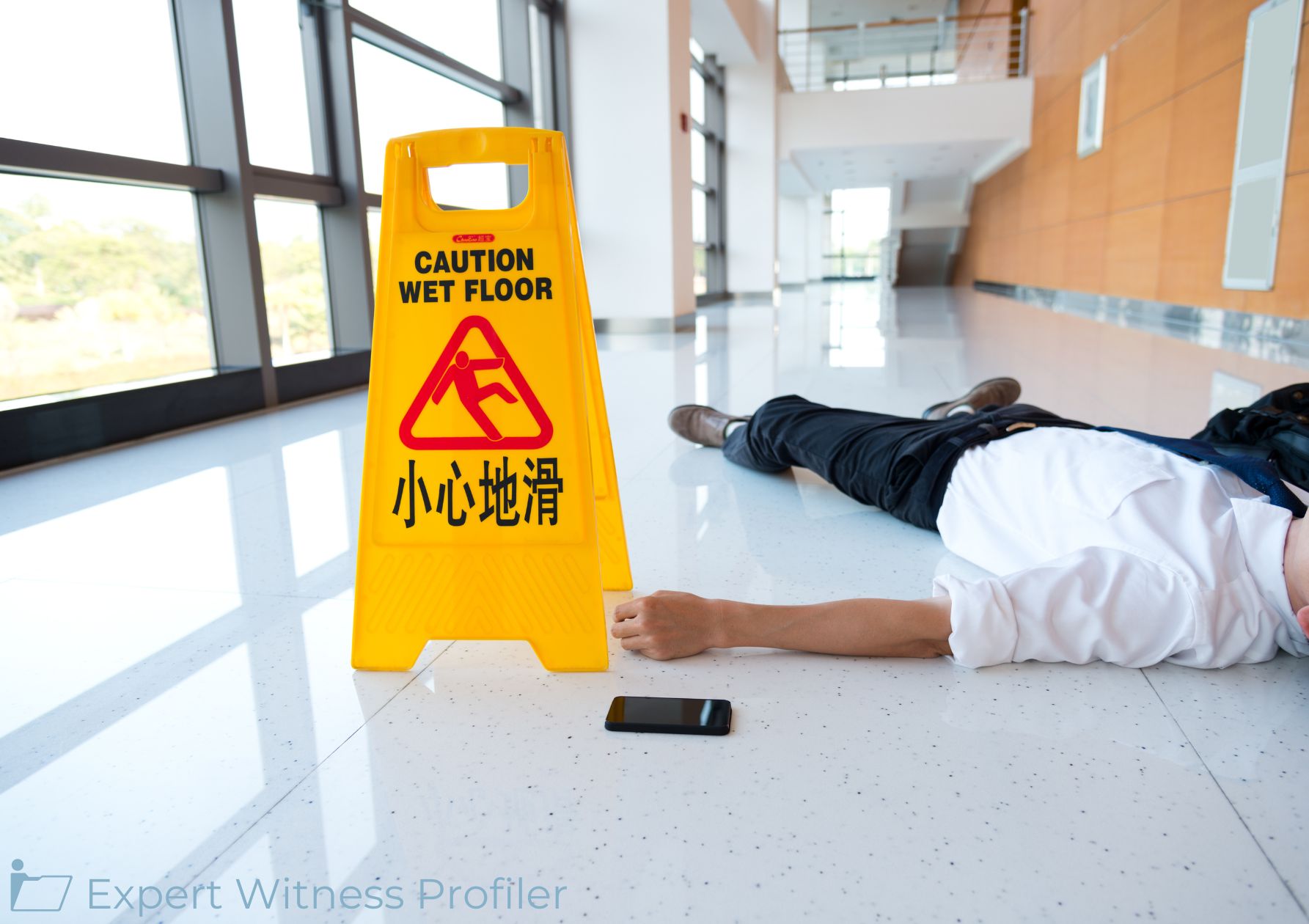
    Plaintiff Hui Wang brought suit against Omni Hotels Management seeking damages from a fall she suffered on September 25, 2018, in the lobby of the Omni New Haven Hotel at Yale. Wang alleged that she fell due to “water that had accumulated on the floor” and that Omni was negligent in allowing that water to accumulate and in failing to warn her about the slipping hazard.

    Omni sought to preclude the admission of Douglas A. Fisher, a forensic engineering expert retained by the Plaintiff with more than 35 years of experience. Omni also sought to preclude Plaintiff’s expert, Dr. Brad J. Yoo, from offering opinions about the permanency of Wang’s injuries.

    Forensic Engineering Expert Witness

    Douglas A. Fisher is a forensic engineering expert with more than 35 years of diversified engineering experience in the fields of forensic evaluations, building design, and construction administration.

    Get the full story on challenges to Douglas A. Fisher’s expert opinions and testimony with an in-depth Challenge Study

    Orthopedic Surgery Expert Witness

    Brad Joonschik Yoo, MD is a board-certified orthopaedic trauma surgeon and Associate Professor of Orthopaedic Surgery and Rehabilitation. He specializes in treating severe fractures, post-fracture complications, as well as deformities and arthritis of the lower extremity.

    Yoo graduated cum laude from Cornell University. He obtained his medical degree from New York Medical College where he first found his passion for orthopaedics. Next came a residency in Baltimore, MD at the University of Maryland Medical Center, the R. Adams Cowley Shock Trauma Center, and the Johns Hopkins Hospital. He then spent a fellowship year specializing in orthopaedic trauma at the University of Washington Harborview Medical Center in Seattle.

    Want to know more about the challenges Brad Joonschik Yoo has faced? Get the full details with our Challenge Study report

    Discussion by the Court

    Omni’s motion to preclude Fisher

    Fisher relied on his knowledge of the relative slipperiness of flooring materials under different conditions and industry standards for mitigating slipping risks. Fisher then applied this background to the video he saw and drew conclusions on that basis. In so doing, he relied on the coefficient of friction, “a numeric value that represents the amount of friction between two objects” as determined by a tribometer, as well as the American National Standards Institute guidelines for commercial entrance matting.

    Omni sought to preclude three of Fisher’s opinions: (1) his “opinions regarding the cause of Plaintiff’s fall,” (2) his opinions regarding the proper placement of the floor mats in the Hotel lobby, and (3) his opinions regarding the characteristics of the Hotel flooring.

    As to each, Omni raised essentially three challenges: (1) as it would be offered as an exhibit, Fisher’s export report contains inadmissible hearsay, (2) Fisher’s opinions are not based on sufficiently reliable methodologies, and (3) Fisher’s opinions are not likely to be helpful to the jury.

    First, Omni objected to Fisher’s opinion that “‘Wang was caused to slip, fall, and become injured due to moisture on an exposed area of the marble tile flooring.’”

    Omni also objected to Fisher’s further opinions that “‘[t]he Omni hotel failed to maintain the subject area in a safe condition,’” and “‘Omni failed to inspect the floor in order to prevent a hazardous and dangerous condition.’”

    Analysis

    The Court concluded that two of Fisher’s three opinions are admissible.  In essence, Omni argued that determining what happened when Wang fell is so straightforward a task that a jury can review the video of her fall and other evidence and reach a conclusion as to the issues in dispute without the assistance of an expert. However, even if a jury could review the video and reach its own conclusions as to both (1) the cause of Wang’s fall and (2) whether the floor was maintained in a safe condition, the Court concluded that Fisher’s expertise as an engineer will assist the jury in that task and that these two opinions are based on sufficiently reliable methods and data to be admissible.

    To the contrary, Fisher applied no particular expert methodologies to conclude that “Omni failed to inspect the floor in order to prevent a hazardous and dangerous condition.” Instead, the Court held that Fisher merely summarized testimony in the record from Omni employees and found that Omni’s employees perhaps could not have seen the front lobby well enough to look for liquid on the floor and may have failed to examine the lobby frequently on the day in question.

    As for the issue of hearsay contained within his report, Plaintiff’s counsel indicated that he would have no issue redacting portions of Fisher’s report that contained hearsay. Because the Parties may be in agreement on a path forward regarding alleged hearsay in Fisher’s report, the Court need not resolve whether each potentially inadmissible statement in Fisher’s report meets Rule 703‘s standard. 

    Omni’s motion to preclude the permanency opinion of Yoo

    Omni sought to preclude Yoo from offering opinions about the permanency of Wang’s injuries. Yoo last treated Wang in 2019 but only formulated his opinion as to the permanency of her disability in 2022 through his review of years-old medical records.

    But Wang sought to offer Yoo to testify regarding a probable current disability. Yoo’s permanency opinion—formed separately from his treatment of Wang and on the basis of years-old information—cannot constitute the opinion of a doctor treating Wang, and, instead, would require a separate expert designation. Yoo conceded that because his opinion as to permanency was based on information at least five years old, he “did not know if Wang has any disability currently.”

    As a result, the Court concluded that Yoo’s opinions as to permanency must be excluded and granted Omni’s motion to exclude this opinion from Yoo’s testimony. 

    Held

    • The Court granted in part and denied in part Omni’s motion to preclude the testimony of Douglas A. Fisher.
    • The Court granted Omni’s motion to preclude the permanency opinion of Dr. Brad J. Yoo.

    Key Takeaway:

    While expert testimony regarding the mechanics of a fall and industry safety standards and their supporting reasoning is more likely than not to help the jury resolve material issues in dispute, Fisher applied no particular expert methodologies to conclude that “Omni failed to inspect the floor in order to prevent a hazardous and dangerous condition.” The Court held that these conclusions are based on straightforward review of the evidence without application of particular “scientific, technical, or other specialized knowledge,” and therefore allowing Fisher to testify on this issue would impermissibly usurp the role of the jury. 

    Case Details:

    Case Caption: Wang V. Omni Hotels Management Corporation
    Docket Number: 3:18cv2000
    Court Name: United States District Court, Connecticut
    Order Date: June 27, 2025