Plaintiff ZP No. 332, LLC hired Defendant Huffman Contractors, Inc. as the general contractor on a real estate development project. Huffman allegedly failed to complete the work adequately, and ZP eventually declared a default on the construction contract. That gave the parties’ surety, Travelers Casualty and Surety Company of America, several options under a performance bond. From those options, Travelers chose to take over Huffman’s contract, hire subcontractors, and finish the project. ZP claimed that Travelers did not fulfill the construction contract adequately after it took over and sued both Huffman and Travelers for breach of contract.
ZP promised to prove the cause of the property’s lost value (i.e., Huffman and Travelers’s alleged delays) through a forensic scheduling expert, Kevin Coyne. Huffman filed a Daubert motion to exclude Coyne’s testimony.
Construction Expert Witness
Kevin Coyne, P.E., PSP has more than 20 years of construction management, project controls and construction claims experience. He has been invited to speak throughout North America on a variety of engineering and construction topics and has served as a guest lecturer in the Department of Civil, Environmental, and Infrastructure Engineering at George Mason University.
Coyne is a ‘forensic scheduler’ who purports to have performed a “detailed causation analysis” regarding alleged construction delays. Huffman lodged three categories of complaints about Coyne’s expected testimony: (1) He does not use what Huffman claims is the best available method; (2) his analysis disregards facts in Huffman’s favor, such as evidence that ZP itself may have been responsible for some delays; and (3) his opinions are too favorable to ZP.
First, Huffman argued that Coyne “did not cite” “the most recognized industry standard” for the form of analysis he used. After reviewing his report and the opinions of Huffman’s rebuttal expert, the Court found that the principles and methods Coyne used are more likely than not reliable. Huffman is welcome to argue to the jury that Coyne should have taken a different approach.
Coyne discussed at length how he validated the data sources he relied on, and the Court finds that the facts that underlie his opinions are more likely than not sufficient. Therefore, cross-examination—not exclusion—is the solution to Huffman’s concerns about how Coyne handled facts allegedly unfavorable to ZP’s position.
Huffman also asserted that Coyne’s “one-sided opinions” made his testimony “inadmissible.” To the extent that argument is about Coyne allegedly ignoring evidence that ZP itself may have contributed to project delays, it is simply the same contention addressed above, wearing a different mask, and the Court has already concluded that Huffman’s concern goes to weight, not admissibility. Insofar as Huffman raises a new issue here, it fails because credibility is a question for the jury, not a matter for a Daubert motion or summary judgment.
Held
The Court denied Huffman’s motion to exclude the testimony of Kevin Coyne.
Key Takeaway:
While an expert’s testimony must be based on “good grounds” and constitute “more than subjective belief or unsupported speculation,” neither Fed. R. Evid. 702 nor Daubert requires an expert to use the method opposing counsel would select or even the best or most recommended method.
In December 2022, Carole Daniel (“Ms. Daniel”) tripped on a floor mat and fell inside a Phenix City, Alabama Dollar General retail store (“Dollar General”). Ms. Daniel suffered injuries and later sued Dolgencorp, LLC (“Dolgencorp”), the corporate entity operating the Dollar General. On June 15, 2024, Ms. Daniel passed away. Ms. Daniel’s husband, Ralph Daniel (“Mr. Daniel”), as Personal Representative of the Estate of Carole Daniel, was substituted as the proper Plaintiff in this action.
Dolgencorp filed a motion to exclude the expert testimony of Mark E. Williams, which is opposed by Mr. Daniel.
Architecture Expert Witness
Mark Elan Williams is an Alabama licensed architect, with more than thirty years of experience. He is licensed in multiple states throughout the Southeast and is certified by the National Council of Architectural Registration Boards.
To begin with, Williams reviewed several pieces of evidence, in forming his expert opinion, including: (1) December 2, 2022 surveillance footage of Ms. Daniel’s fall; (2) the pertinent Customer Incident Report; (3) Dolgencorp’s “Safety Orientation Training Module” ; (4) industry standards; (5) Dolgencorp’s Standard Operating Procedure (“SOP”) Manual; and (6) five January 31, 2023 photographs taken by Ms. Daniel’s sister, Becky Coreno (“Ms. Coreno”). He did not personally examine the specific mat involved in Daniel’s fall, but noted he was familiar with the mat’s manufacturer and its “‘waffle’ pattern of raised squares.”
Williams concluded, among other things, that the floor mat was a dangerous tripping hazard because: (1) it was “loose-laid” and had raised edges, which caused Ms. Daniel to trip and (2) it was improperly “secured down.” Moreover. Williams added that the “hazards associated with loose-laid floor mats are well documented and have been widely known for many years.”
In other words, his affidavit concluded that Dolgencorp “violated the standard of care for property maintenance, and created the dangerous condition that caused Ms. Daniel’s fall and injury.”
Basically, Williams offered expert testimony that Dolgencorp’s floor mat was a dangerous tripping hazard that ultimately caused Daniel to trip and fall.
Assist the Trier of Fact
In its role as gatekeeper, the Court is not convinced that Williams’ expert testimony regarding the mat’s condition will assist the jury, considering that his testimony relied on the video footage of Ms. Daniel’s fall.
The Court found “after reviewing the record evidence, especially the surveillance video . . . that a genuine dispute of material fact exists regarding the condition of the mat, such that a reasonable jury could find in Mr. Daniel’s favor.” However, the Court reached this conclusion without considering Williams’ expert report.
Moreover, Williams’ opinions could confuse the jury. His expert report found “the failure of Dollar General to provide a floor mat heavy enough not to move or properly secure the mat in place, violates the standard of care for property maintenance, and created the dangerous condition that caused Ms. Daniel’s fall and injury.” The Court held that Williams’ discussion of “standard of care” would at the very least confuse the jury, as “a witness may not testify to the legal implications of conduct; the Court must be the jury’s only source of law.”
Held
The Court granted Dolgencorp’s motion to exclude Mark Williams’ testimony.
Key Takeaway:
Daniel failed to show that Williams’ testimony would satisfy Daubert‘s helpfulness prong. The parties’ dispute in this case while important—is simple—whether Ms. Daniel fell because the floor mat “was in a worn condition.” Jurors are capable of using common sense when it evaluates the floor mat’s condition and placement in the surveillance video.
Case Details:
Case Caption:
Daniel V. Dolgencorp, LLC
Docket Number:
3:23cv135
Court Name:
United States District Court for the Middle District of Alabama, Eastern Division
Connie Thacker is one of tens of thousands of individuals who have filed suit against Ethicon for injuries after treatment with Ethicon’s pelvic mesh devices.
Defendants filed a motion to exclude or limit certain opinions and testimony of Plaintiff Thacker’s expert, Anne H. Wilson, MBA.
Biomedical Engineering Expert Witness
Anne Holland Wilson is a biomedical engineer and quality assurance consultant, holding certifications as a Quality Auditor and Quality Engineer.
She received a Bachelor of Science in Biomedical Engineering from Vanderbilt University in 1985, and a Master of Business Administration from the University of Colorado in 1991.
Wilson has been designated as an expert in the field of compliance with quality and risk management standards. She is expected to testify that Ethicon failed to meet the “industry standards” for design control processes and risk management.
Reliability of Wilson’s Testimony
The Defendants argued that Wilson’s methodology is insufficient because she (1) should have conducted an audit of Ethicon’s systems; (2) failed to consider applicable U.S. standards while inappropriately basing her “industry standards” testimony on inapplicable European standards; and (3) failed to review all relevant case materials in reaching her conclusions.
Failure to Audit
The Defendants did not explain, or offer any authority to explain, how conducting an audit is the only reliable methodology available for reviewing the processes Wilson has been asked to review. To the contrary, the Court held that the methodology Wilson used to arrive at her opinions, which involved reviewing Ethicon’s design and risk control documents and evaluating them within the framework of industry standards, was plainly based on “sufficient facts,” and “reliable principles and methods.”
As Wilson explained in her report, her role in this case involves “addressing the design control and risk management processes of Ethicon.”
Failure to Review Appropriate Industry Standards
The Defendants argued that (1) Wilson should not have consulted standards set by the International Organization for Standardization; and (2) she should have consulted applicable FDA regulations in offering testimony on Ethicon’s compliance with “industry standards.”
To begin with, no party disputes that particular FDA regulations make up a portion of the universe of “industry standards” for design control and risk management processes in the medical device manufacturing industry.
The Defendants argued that the standards set by the International Organization for Standardization (which are referred to as “ISOs”), however, are not a part of that same universe. However, Wilson’s report stated the opposite— explaining that ISOs were “[t]he primary standards applicable” to Ethicon’s quality and risk management systems at the time Ethicon developed the at-issue devices. She also explained during her deposition that applicable ISOs and FDA regulations are very similar.
It should be noted that the Defendants failed to offer any evidence or authority stating that ISOs are irrelevant to medical device manufacturers in the United States. Moreover, Wilson’s failure to consider applicable FDA regulations during her review of this case did not render her testimony unreliable. Basically, Wilson plainly opined that ISOs were “[t]he primary standards applicable” to Ethicon’s quality and risk management systems. Because ISOs provided “appropriate validation” for her testimony on Ethicon’s compliance with industry standards, the Court found Wilson’s “industry standards” testimony reliable.
While Wilson’s testimony may be offered to help define the contours of the duty of care for her common law negligence claim (and for other relevant purposes), such testimony shall not equate compliance or non-compliance with satisfaction or dereliction of the duty of care.
Failure to Review all Case Materials
The Defendants first contended that Wilson inappropriately offered “medical opinions” throughout her report. The Defendants did not specify which of Wilson’s opinions are “medical opinions” but rather just cited a page range of Wilson’s report which they argued is “replete” with such opinions.
Without more specific objections, the Court declined to conduct a line-by-line analysis of the page range cited to determine which of Wilson’s opinions are medical opinions. However, the Court did agree that medical opinions are beyond the scope of Wilson’s qualifications and should be excluded.
The Defendants finally argued that Wilson’s testimony regarding Ethicon’s Instructions for Use (“IFU”) on the TVT-S device should be excluded. Specifically, the Defendants argued that Wilson is unqualified to offer testimony on IFUs. Wilson is expected to testify that Ethicon’s failure to adequately address certain risks in the TVT-S’s IFU was “a violation of industry practices and international standards.”
The parties seemed to agree that issues with IFUs relate to risk assessment in the general sense. And the Defendants did not challenge Wilson’s qualifications to testify as an expert on risk assessment. Accordingly, it was apparent to the Court that testimony concerning IFUs directly relates to Wilson’s area of expertise.
As such, the Court found that Wilson’s familiarity with risk assessment processes in the medical device manufacturing context provides her with sufficient knowledge on IFUs to assist the trier of fact to at least some degree. Wilson is therefore qualified to offer opinions regarding product warnings as a fundamental part of the risk management process in the medical device industry.
Held
The Court granted in part and denied in part the Defendants’ motion to exclude or limit the testimony of Plaintiff Connie Thacker’s expert, Anne Wilson, MBA.
Key Takeaway:
The Court recognizes that just because Wilson is an expert in one area “does not ipso facto qualify her to testify as an expert in all related areas.” But ultimately, Rule 702 takes a liberal approach to expert witness qualification in that the degree of ‘knowledge, skill, experience, training, or education’ sufficient to qualify an expert witness is only that necessary to ensure that the witness’s testimony ‘assist’ the trier of fact to any degree.
Please refer to the blogs previously published about this case:
Plaintiff Barbara Cooper alleged that Defendant Milliman, Inc. (“Milliman”) violated the Fair Credit Reporting Act in two ways: first, when it issued a report about her medical and prescription history that mixed her with another individual; and second, when it issued a second report wherein Milliman reinserted information it had previously deleted after purportedly reinvestigating Plaintiff’s dispute.
Milliman principally attributes its repeated errors to a “glitch” with the software that matches information about consumer identity with medical record information.
Milliman’s expert Rebecca Kuehn’s report states she will offer the following opinions:
A. Milliman’s process for matching consumer records is consistent with industry practice and otherwise reasonable.
B. Milliman’s procedure for blocking information that was previously removed from a consumer report is consistent with industry practice and reasonable.
Plaintiff argued that Kuehn is unqualified and her proffered testimony is unreliable. “As such,” Plaintiff contended, “her opinions are nothing more than bare legal conclusions that are pasted on to Milliman’s factual theories.”
Credit Reporting Expert Witness
Rebecca Kuehn is an attorney focusing on consumer financial services and consumer protection matters in the Washington, D.C. office of Hudson Cook, LLP.
She is an expert in the policies, procedures, and practices that consumer reporting agencies (“CRAs”) use to ensure compliance with the Fair Credit Reporting Act (FCRA). She developed this expertise through substantial experience in the industry, advising CRAs, lenders, and other users of credit reports on the development of procedures designed to comply with the FCRA.
Kuehn’s resume shows that Kuehn graduated near the top of her class at George Washington Law School. She served five years at the Federal Trade Commission (FTC), as an Assistant Director, where she was “[p]rimarily responsible for the [FCRA] program, leading the Commission’s enforcement, policy, outreach, and rulemaking activities in that area.”
In addition, Kuehn has served as co-chair of the FCRA Litigation Subcommittee in the American Bar Association, given numerous presentations on the FCRA, authored various publications on the FCRA, and “testified before the U.S. House Committee on Financial Services . . . on behalf of the Consumer Data Industry Association, at a hearing on ‘Consumer Credit Reporting: Assessing Accuracy and Compliance.’”
When Plaintiff argued that Kuehn is unqualified to opine on industry standards because of any lack of experience as to reporting of medical information, she essentially argued that the FCRA requires specificity as to each area it applies. But the FCRA deals with CRAs in general and whether their procedures are reasonable.
It requires all CRAs, regardless of industry, to follow or maintain reasonable procedures and nothing in the Act provides separate rules based on the type of information collected and reported. Same goes for Plaintiff’s argument that Kuehn must have direct knowledge about Milliman’s identity matching or software.
As Plaintiff herself admits, Kuehn has “impressive credentials” at first sight. Even Plaintiff’s own expert has recognized Kuehn’s FCRA qualifications.
The Court held that Plaintiff’s arguments against Kuehn’s qualifications failed because they concerned the weight of Kuehn’s proffered testimony, not its admissibility.
Reliability of Methodology
Kuehn has published numerous works on the FCRA. One publication was at the FTC, which can set guidance as to what procedures are or are not reasonable.
Her knowledge has been tested at various presentations, in Court, and before Congress. As a result, the Court finds Kuehn possesses the required knowledge and experience to provide reliable testimony that is not merely ipse dixit. Other arguments, like that Kuehn’s opinion is unreliable because of her lack of knowledge about identity matching or Milliman’s software and her excessive reliance on information supplied by Milliman’s corporate representative, as discussed earlier, are unpersuasive because they go to the weight of Kuehn’s testimony, not its admissibility.
However, Kuehn will be able to testify to compliance or non-compliance with industry customs and standards, but not whether Milliman’s procedures were reasonable or unreasonable. The consensus in the Middle District of Florida is that an FCRA expert cannot testify whether procedures were “reasonable” or “unreasonable.”
Helpfulness
An average lay person does not know the industry-standard procedures used by CRAs.
Therefore, the Court ruled that Kuehn’s testimony could help the jury determine whether Defendant’s procedures were reasonable and if any violation was willful.
Rule 403
Kuehn satisfies all three prongs of Daubert and except for the exclusion of witness testimony as to “reasonableness” or “unreasonableness”, the Court finds no undue prejudice from the anticipated testimony.
Held
The Court granted in part and denied in part the Plaintiff’s motion to exclude opinion evidence from Rebecca Kuehn.
Key Takeaways:
The reliability of non-scientific expert opinions depends heavily on the knowledge and experience of the expert, not the exactness of the methodology. Evidence of compliance or non-compliance with a custom within a particular industry, though not conclusive, is a factor the trier of fact may consider.
While a witness may testify concerning an ultimate issue of fact, the witness may not “tell the jury what result to reach.”
A fire took place overnight at Tiffany Keen and Trevor Wogrin’s newly-purchased residence at 45100 County Road 1 in Parker (the “Home”), on June 5-6, 2022 (the “Fire”), causing damage. The Home was insured by a homeowner’s insurance policy issued by Allstate (the “Policy”). The Insureds submitted a claim to Allstate on June 6, 2022 for the payment of covered benefits under the Policy (the “Claim”).
Allstate refused to pay Dwelling benefits under the Policy. Almost ten (10) months after the Claim was submitted, Allstate filed this action against the Insureds seeking a declaration that the intentional acts exclusion applies to the Claim to bar coverage.
Defendants designated an insurance industry expert in support of their counterclaims for breach of insurance contract and bad faith. However, Allstate did not designate an affirmative insurance industry standards expert; instead, it designated its industry standards expert, Keith Olivera as a rebuttal expert.
To begin with, Defendants sought to strike Olivera on the ground that he was not a proper rebuttal expert. Alternatively, they claimed that he was unqualified to offer certain opinions asserted in his expert report and sought to limit other aspects of his testimony as unnecessary, irrelevant, confusing, or usurping the Court’s prerogative to instruct the jury on the law.
Insurance Law Expert Witness
Keith R. Olivera has been an attorney practicing in the field of insurance law for 30 years. Much of his practice involves advising insurers on claim handling practices and claims decisions.
He advises insurers on claim handling decisions involving both first- and third-party claims. Moreover, he has represented or assisted insurers in hundreds of cases or claims where the insurer has been alleged to have engaged in unreasonable claim handling.
As per Fed. R. Civ. P. 26(a)(2)(D)(ii), a rebuttal expert opinion is one “intended solely to contradict or rebut evidence on the same subject matter identified by another party.”
The Court found that, superficially, this is what Olivera’s opinion appeared to do. In other words, Olivera contradicted the opinions of the Defendants’ industry standards expert witness, Douglas Meier, who asserted that Allstate’s handling of the Defendants’ insurance claim was unreasonable.
However, where the subject matter of the expert’s testimony concerns a matter the designating party knew or should have known would be part of its opponent’s case-in-chief, that expert is an affirmative expert.
To prove their substantive claim, Defendants perforce will be required to show Allstate “acted unreasonably and with knowledge of or reckless disregard for the fact that no reasonable basis existed for denying [Defendants’] claim.” Accordingly, Allstate absolutely should have predicted Defendants would offer an industry standards expert. They could not lay behind the log and only designate their own industry standards expert in rebuttal. Accordingly, the Court held that Olivera is not a proper rebuttal witness.
Under Rule 37, a party is required to show that the violation of the discovery obligations was substantially justified or harmless.
Allstate has failed to even acknowledge Rule 37 standards, must less attempt to show how they might be satisfied in this case.
Held
The Court granted the Defendants/Counterclaim Plaintiff’smotion to strike or limit the opinions and testimony of Plaintiff’s retained insurance law expert witness, Keith Olivera.
Key Takeaway
A rebuttal expert addresses “new unforeseen facts” that emerge in the opposing side’s case. Basically, Allstate tried to present Olivera as a rebuttal expert to counter the Defendants’ expert testimony about insurance industry standards. However, where the subject matter of the expert’s testimony concerns a matter the designating party knew or should have known would be part of its opponent’s case-in-chief, that expert is an affirmative expert.
When given the chance to justify the violation of its discovery obligations under Rule 37(c)(1), Allstate failed to address any of the required factors for showing their violation was either substantially justified or harmless. Allowing Olivera to testify would have prejudiced Defendants and disrupted the trial. This failure further cemented the Court’s decision to strike his opinions and bar him from testifying.
Case Details:
Case caption:
Allstate Vehicle And Property Insurance Company V. Wogrin Et Al
Docket Number:
1:23cv803
Court:
United States District Court for the District of Colorado
Plaintiff Debra O’Neal filed a lawsuit against Defendant State Farm Fire and Casualty Company (“State Farm”) under the Washington Insurance Fair Conduct Act (“IFCA”) for its handling and denial of her claim for coverage of personal property allegedly stolen from a storage facility.
In response, State Farm moved to exclude O’Neal’s insurance expert witness, Robert J. Worth. They argued that he lacked the necessary qualifications and that some of his opinions were inadmissible legal conclusions.
Law & Legal Expert Witness
Robert Jeffrey Worth specializes in first party auto, homeowner and commercial litigation cases. He deals with claims involving disputed coverage matters; mold loss, failure to reasonably investigate and evaluate, efficient proximate cause and statute of limitations issues and commercial litigation of commercial general liability policy interpretation of regular employee verses day laborer regarding wrongful denial. Moreover, he obtained a Juris Doctor Degree from the University of West Los Angeles School of Law, Los Angeles.
Above all, he has an extensive (nearly 15 years) claims background at Farmers Insurance includes the position of (national) Claims Training Administrator responsible for overseeing the company wide training of all liability claims representatives, claims supervisors and managers nationwide.
Worth’s Testimony on Insurance Claims Handling Practices
State Farm contended that Robert J. Worth was only qualified to testify in California insurance cases, not Washington cases. However, State Farm overlooked Worth’s extensive experience in the insurance industry across the country. The Court noted that Worth’s familiarity, or lack thereof, with Washington law could serve as a basis for cross-examination but did not justify exclusion. According to Daubert, vigorous cross-examination and the presentation of contrary evidence are the traditional and appropriate means of attacking shaky but admissible evidence.
Similarly, the substance of Worth’s opinion and whether he considered all the evidence is an appropriate topic for State Farm’s cross-examination and defense, but is not a reason to exclude Worth.
Worth’s Limitations on Legal Conclusions
The Court finds that at various points in Worth’s expert report, Worth crosses the line between opining on State Farm’s compliance with industry standards and offering legal conclusions. For example, Worth’s opinions that State Farm “breached the implied covenant of good faith and fair dealing” and that State Farm violated various laws are impermissible legal conclusions.
Similarly, the Court agrees with State Farm that certain aspects of Worth’s report on whether a “theft” occurred are improper legal conclusions such as opining on how “theft” should be interpreted in the policy and stating that certain evidence “supports the probability that the theft exists and was true.” These opinions intrude on the realm of the Court and are prohibited. However, as part of Worth’s opinion on insurance industry standards and claims handling practices, the Court allowed Worth to explore what State Farm should have considered “theft” when adjusting the claim, or what investigation State Farm should have conducted consistent with applicable industry norms.
In summary, while the Court will not exclude Worth on this basis, he (and any other expert offered by either party) will not be permitted to offer legal conclusions at trial.
Held
The Court denied the Defendant’s motion to exclude the Plaintiff’s insurance expert witness, Robert J. Worth.
Key Takeaways:
Although the Court acknowledged that Worth’s familiarity with Washington law could be challenged during cross-examination, this did not warrant exclusion. Additionally, while the Court restricted Worth from presenting legal conclusions, it affirmed his ability to discuss industry standards and claims-handling practices relevant to the case as a result of which Worth was allowed to explore what State Farm should have considered “theft” when adjusting the claim, or what investigation State Farm should have conducted consistent with applicable industry norms.
Case Details:
Case caption:
O’Neal V. State Farm Fire And Casualty Company
Docket Number:
2:23cv232
Court:
United States District Court for the Western District of Washington
Plaintiff Ashley Fawcett was in a car accident in 2017, while she was covered by an insurance policy issued by Defendant Standard Fire Insurance Company (doing business as Travelers Insurance Company (“Travelers”)). Fawcett opened claims with Travelers, and alleged in this lawsuit that Travelers unreasonably investigated and evaluated her claim for underinsured motorist (“UIM”) benefits.
Travelers filed a motion to exclude the testimony of Fawcett’s expert Mary Owen because her opinions consisted of legal conclusions on the ultimate issue, namely whether Travelers’ conduct was unreasonable or violates insurance regulations. Travelers also contended that Owen lacked the experience or qualifications necessary to allow her to testify as an expert as to proper claim-handling procedures.
Insurance Expert Witness
Mary E. Owen is widely regarded as an authoritative expert in the field of insurance defense litigation. She is experienced in all aspects of civil litigation, from commencement to resolution, by way of dismissal, negotiated settlement, alternative dispute resolution, and jury trials.
Fawcett emphasized the portions of Owen’s testimony that pertained to issues of fact and accused Travelers’ expert of including legal conclusions in his testimony. Fawcett also contended that to the extent that any legal conclusions need to be excluded from Owen’s testimony, this issue is the proper subject of a motion in limine, rather than a broad motion to exclude.
The Court agreed with this approach, finding that wholesale exclusion of Owen’s testimony and report would be inappropriate. Owen’s declaration submitted in support of Fawcett’s opposition to Travelers’ summary judgment motion does contain opinions regarding Travelers’ compliance (or non-compliance) with industry standards, but some portions could also be characterized as legal conclusions outside her purview as an expert.
The report attached to Owen’s declaration references legal conclusions to a lesser degree: she opined that Travelers’ conduct violated certain standards and was unreasonable, but does not, for example, conclude that this conduct constitutes bad faith. The Court did not rely on Owen’s legal conclusions in resolving Travelers’ summary judgment motion, and it can excise the legal conclusions from Owen’s trial testimony via a motion in limine.
Travelers’ second argument, as to Owen’s expertise, also failed to persuade the Court that Owen’s testimony should be excluded entirely. Travelers has not shown that Owen is categorically unqualified to serve as an expert in this case, given Owen’s years of experience in the relevant field. To the extent that Travelers disputed whether Owen’s experience was sufficiently particularized as to be useful in this case, this argument goes to the weight that should be given to Owen’s testimony, rather than its admissibility.
Held
The Court denied Travelers’ motion to exclude Mary E. Owen’s testimony.
Key Takeaway:
While the Court acknowledged that expert witnesses cannot offer legal conclusions, it determined that fully excluding Owen’s testimony was unnecessary. The Court found that a motion in limine could resolve any concerns regarding legal conclusions in her testimony, allowing her opinions on industry standards to remain. Additionally, the Court ruled that any questions about Owen’s experience concerned the weight accorded to her testimony, not its admissibility.
Case Details:
Case Caption:
Fawcett V. The Standard Fire Insurance Company
Docket Number:
2:23cv248
Court:
United States District Court for the Western District of Washington
This claim arises from 2B’s negligent handing of an auto insurance claim brought by Harold and Milagros Lacey against GoAuto insureds, Alisha and Kayranasia Hill resulting from a motor vehicle accident in Panama City Beach, FL on July 31, 2020 (the “Lacey Claim”). GoAuto is a Louisiana-based insurance company that writes policies in Louisiana, Texas, Ohio, and Nevada and whose senior claim adjusters are not licensed in the state of Florida. GoAuto therefore engaged 2B to handle the adjustment of this Florida-based claim.
The parties, Plaintiff GoAuto and Defendant 2B Claims, each moved to exclude opposing expert witnesses. GoAuto filed a motion to exclude the expert testimony of Kelly Gray while 2B Claims filed a motion to strike expert witness Susan Kaufman based on GoAuto’s untimely disclosure.
Insurance Expert Witnesses
Kelly Kathleen Gray is an attorney licensed to practice law in the State of Florida since 1993. During the past thirty years, she has focused her practice on insurance coverage and extra-contractual matters, both as a litigation attorney and as a corporate claims attorney. This includes first-party property litigation. In addition, she has several years of experience litigating various types of personal injury matters, including catastrophic automobile accidents, construction defect litigation, and professional liability.
Susan Kaufman has been retained as a claim handling expert or consultant in jurisdictions across the United States, including cases in Colorado, Florida, Kentucky, South Carolina, Utah, South Dakota, Indiana, Wyoming, Illinois, Nevada, Washington, and Arizona. She has given testimony as an expert in insurance claim practices on 80 or more occasions in state or federal court. She is presently a Florida Licensed All Lines Adjuster (620), and she has held such license since 1986.
GoAuto did not challenge Gray’s qualifications. Instead, it argued her testimony would not assist the jury for three reasons: it focused on irrelevant facts, did not articulate an objective industry standard, and constituted legal argument rather than expert opinion.
As to relevance, GoAuto argued Gray’s differentiating between a third-party administrator (TPA) and independent adjuster (IA) is a “red herring” since “the crux of this case is not whether 2B’s relationship with GoAuto was that of an IA or that of a TPA, but whether 2B made negligent misrepresentations to GoAuto on proper Florida claims handling.” But regardless of “the crux” of the case, the Court held that the nature of the parties’ relationship (which is disputed) is relevant in determining what duties were owed. And to the extent GoAuto argued Gray was wrong about the relationship, that is a question for the jury.
Next, GoAuto argued Gray did not articulate an objective, industry standard—that she provided only general statements of a professional standard without clearly defining it. But, the Court found that Gray described industry norms and customs of the insurance adjustment process that are “beyond the understanding of the average layperson.”
GoAuto claimed Gray did little more than summarize the record and make legal conclusions that usurped the jury’s role. Gray opines about the different relationships within the insurance industry, what the standards are for those relationships, and whether 2B Claims’ conduct was consistent with those standards, which, according to the Court, are admissible opinions.
Susan Kaufman
2B Claims moved to strike expert witness Susan Kaufman based on GoAuto’s untimely disclosure. The expert disclosure deadline had been April 30, 2024. 2B Claims had served its expert disclosure by that deadline, but GoAuto had not. GoAuto disclosed Kaufman as a rebuttal expert witness on May 30. The parties disputed whether Kaufman was a true rebuttal witness and whether the disclosure had been timely.
The Court held that the rule-breaking party has the burden to show its failure to disclose was harmless. Here, GoAuto has shown that the delay is harmless. As GoAuto argues, the disclosure came a month before the close of discovery and several months before trial, leaving ample time for discovery and trial preparation with the new information. Indeed, 2B Claims does not appear to contend that the disclosure’s timing prejudices it, but rather that the testimony itself is harmful.
Held
The Court denied both motions to exclude the testimony of Kelly Gray and Susan Kaufman.
Key Takeaways:
According to Rule 704, the fact that expert testimony may “embrace[] an ultimate issue” does not, in itself, make the testimony inadmissible. Gray opines about the different relationships within the insurance industry, what the standards are for those relationships, and whether 2B Claims’ conduct was consistent with those standards.
Gray described industry norms and customs of the insurance adjustment process that are “beyond the understanding of the average layperson.”
The expert disclosure deadline had been April 30, 2024. 2B Claims had served its expert disclosure by that deadline, but GoAuto had not. GoAuto disclosed Kaufman as a rebuttal expert witness on May 30. As GoAuto argues, the disclosure came a month before the close of discovery and several months before trial, leaving ample time for discovery and trial preparation with the new information.
Case Details:
Case Caption:
Goauto Insurance Company V. 2b Claims Services, Inc.
In May 2021, Plaintiff Drew Krantz visited Adrien Crastes’ apartment at Lewisburg in Pennsylvania. The Defendant, Market Street Investment Corporation, Inc owned the premises. Krantz and others decided to install a window air conditioning unit in Crastes’ window. But when Krantz tried to open the window, the windowpane broke and fell on his wrist, causing the injury which prompted this lawsuit.
Market Street’s motion in limine sought to preclude the testimony of Brian Krason, one of Krantz’s expert witnesses, on four matters. First, Market Street moved to preclude Krason’s testimony on medical causation, as Krason’s lack of any medical expertise made him unqualified to offer medical testimony about Krantz’s injuries. Krantz agreed and stated that he had never intended to offer any such expert testimony from Krason in the first place. Therefore, Market Street’s motion in limine was granted as to Krason’s testimony on medical causation. Market Street’s motion in limine also moved “to preclude Krason from offering opinions and/or testimony regarding tempered safety glass; adequacy of inspections; [and] the condition of the subject window.”
The Court decided not to hold a Daubert hearing because there was a full record before the Court on these issues including Brian Krason’s expert report and deposition. Krason provided sufficient responses in his deposition testimony for this Court to rule upon each of the contested issues presented by these motions in limine.
Premises Liability Expert Witness
Brian Krason specializes in safety and management across various sectors, including residential, hospitality, and retail. His areas of expertise encompass accident and safety management, premises liability with a focus on slip and fall incidents, fall prevention, property management, workplace safety, hotel security, and hotel administration.
Krason has experience in the construction management of small projects including window replacements, he was a member of the Institute of Real Estate Management for more than ten years, and he has worked closely with many building inspectors in his capacity as a property manager. Krason has put his inspection expertise to non-judicial uses during his long career.
Discussion by the Court
Adequacy of Keystone COG’s Inspection
Krason stated that Defendants failed to properly inspect the window where Krantz was injured and recklessly disregarded safety of the tenants and guests. Krason accused Scott Stieler and Market Street Investments Corporation of violating common and acceptable industry standards and good practices by believing that the COG inspection was a thorough property inspection.
The Court found that Krason’s opinion was simply based on a quotation from Keystone COG’s website, and on the contents of the International Property Maintenance Code (IPMC) inspection checklist which may or may not have been used by Keystone COG.
The Court concluded that simply reading Keystone COG’s website and inspection checklist requires no specialized knowledge.
Therefore, the Court deemed Krason’s testimony that Keystone COG’s inspection did not ensure that the windows were free of safety hazards inadmissible. Of course, this did not prevent Krason from testifying about the frequency or intensity of inspections required for safe property management based on his own experience in the industry; it merely prevented him from rendering an expert opinion as to the thoroughness and contents of Keystone COG’s inspection specifically because this opinion was based almost solely upon the clearly observable contents of its website and the IPMC inspection checklist.
Tempered Safety Glass
Krason opined that tempered glass is the industry standard for property managers. But because an industry standard describes generally accepted requirements, personal experience alone cannot reliably demonstrate it.
Krason being a qualified and experienced expert did not justify his expert testimony that installing tempered safety glass is a “best practice” in the property management industry.
Krason admitted that he was not aware of “any building codes anywhere that required tempered safety glass in apartment buildings;” that he had no “sense for how many apartment units used tempered safety glass versus how many didn’t.”
Conceding that he was aware of no source opining on the merits of float glass or tempered safety glass at all, Krason contended that he had nevertheless supported his opinion with industry standards, but stated: “[t]he only standard would be that they [the windows] have to be safe.” The Court held that the conclusory “standard” neither required technical knowledge nor assisted the fact-finder. The issue in need of support was not whether windows must be safe; it was what conditions rendered them safe. Krason skipped the important step: explaining the basis on which he concluded that tempered safety glass was the industry standard for property managers.
Condition of Windows
Market Street contested the following conclusion in Krason’s report: “The window at 220 South 7th Street, Lewisburg exhibited signs of inadequate maintenance, including dry rotting framing and allowed the dangerous condition to exist causing Krantz’s injury.”
Krason delivered no explanation of his experience inspecting windows or of how he applied that experience to determine that this window was unsafe because it was improperly. However, Krason’s deposition testimony filled these gaps, demonstrating his relevant experience, the non-judicial contexts in which he had evaluated the safety of residential windows, and his explanation as to how improper maintenance contributed to the accident.
Although Market Street contended that Krason had not applied any methodology in its brief, Market Street did not otherwise explicitly object to Krason’s methodology for evaluating the condition of the window.
Unsafe Condition
First, Market Street objected that because Krason had equivocated on his views during his deposition, he had unreliably applied his methodology for inspecting the condition of windows to the facts of this case. Specifically, Krason testified several times that he had seen “what appeared to be rot” on the window frame. Krason also “guesstimated” that the gap caused by rot in the window corners was about an eighth of an inch, which “meant that the glass could then move and shimmy,” creating a dangerous condition.
Whether or not the gap was caused by rot, and whether or not Krason’s “guesstimation” as to the gap’s size was slightly too large or small, the Court noted that his testimony was the same; allowing the gap to persist created an unsafe condition.
Photographs of the Window
When Market Street alleged that Krason did not know when or by whom the photographs of the window were taken. The Court noted that the photographs were obviously taken after the accident and before the window was repaired; they showed that the glass was still broken. The Court held that Market Street’s objections were without merit.
Prior Expert Witness Testimony
Federal Rule of Civil Procedure 26(a)(2)(B)(v) provides that an expert witness’s report “must contain . . . a list of all other cases in which, during the previous 4 years, the witness testified as an expert at trial or by deposition.”
In his deposition, Krason directly stated that he did not have a list of cases in which he has testified, despite testifying “10 to 20 times” at trial and “25, 30” times in depositions. Krason also claimed that he had not testified in the last five years due to COVID. However, Krason made no statement in his expert report indicating that he had not testified in any cases within the last four years.
The Court held that Krantz must either provide a list of the matters in which Krason has testified within the last four years, or else certify to Market Street that he has not testified in any matters within the last four years. If Krantz fails to do so, the Cour may exclude Krason’s testimony in full.
Held
The Court granted in part and denied in part Market Street Investment Corporation, Inc.’s motion in limine to exclude Brian Krason’s testimony.
Key Takeaways:
Personal Experience: No matter how qualified and experienced expert an expert may be, his personal experience still does not justify expert testimony if it only speaks to the expert’s own practice.
Equivocations: The Court held that Krason’s minor equivocations over the rot and size of the gap did not render that testimony unreliable in any event. The evidentiary requirement of reliability is lower than the merits standard of correctness.
Specialized Knowledge: Simply reading Keystone COG’s website and inspection checklist requires no specialized knowledge. Laymen or property management experts are equally competent to make these observations, and therefore admitting them as expert testimony has the potential of misleading the jury.
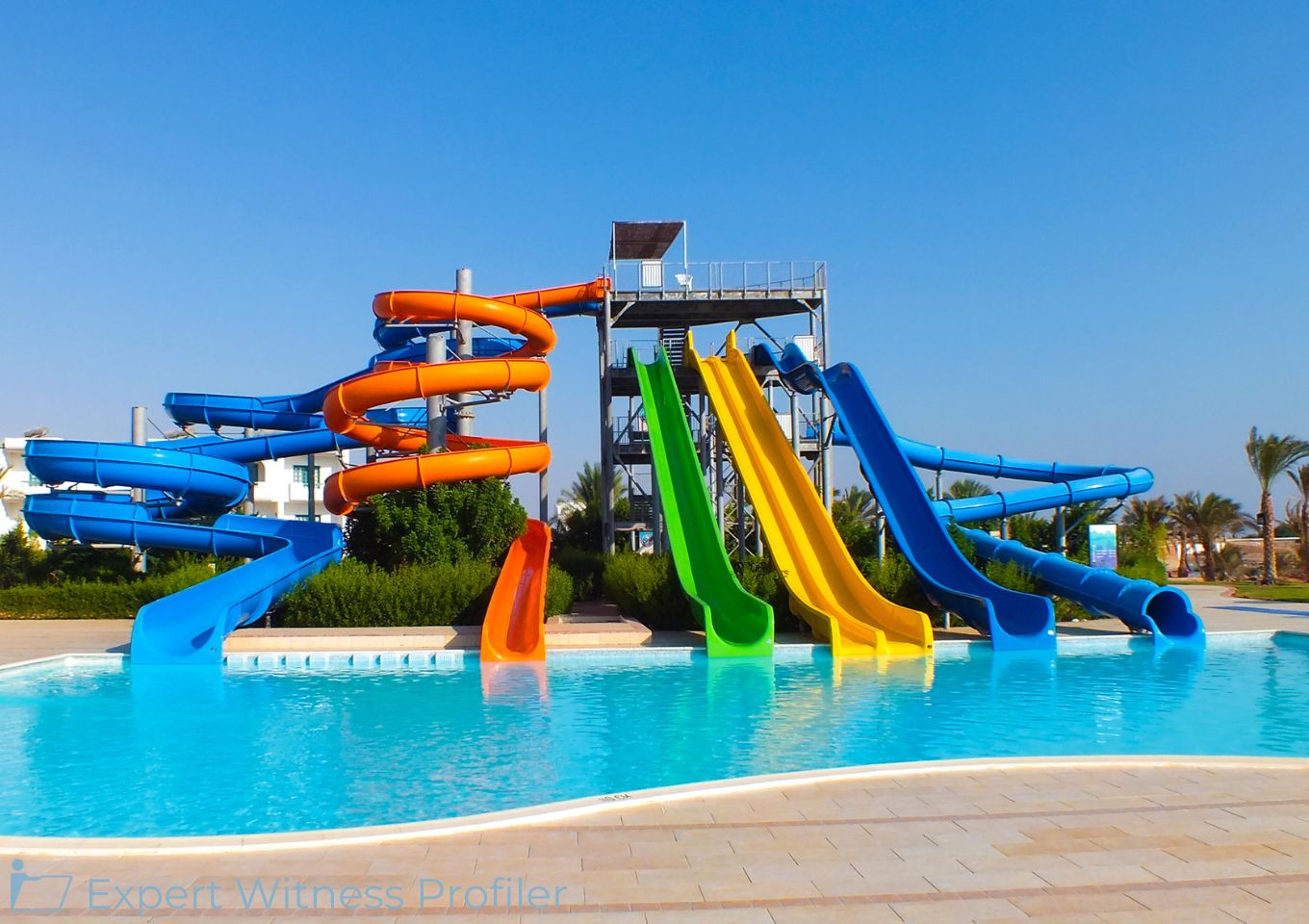
Plaintiff sustained injuries while waiting in the loading area to board an inflatable raft as part of the Aquazoid water slide (“Aquazoid”). It occurred on August 22, 2015, at Busch Gardens Water Country USA (“Water Country”), in Williamsburg, Virginia.
Two attendants stationed at the loading area at the top of the water slide remove the rafts from the conveyor belt and assist patrons in loading into the rafts. Once an attendant removes a raft from the conveyor belt to load it with patrons, the system engages, and another raft moves down the roller belt.
The Plaintiff alleged that during the loading process at the top of the water slide, the conveyor belt moved a raft down the roller belt, striking Plaintiff in the leg, causing her to fall forward into the raft she was attempting to board, and resulting in injuries to her left knee. Specifically, Plaintiff argued that SeaWorld owed Plaintiff a duty of care “to have the premises in a reasonably safe condition” and to warn Plaintiff of any unsafe conditions.
Defendant SeaWorld Parks & Entertainment, LLC, d/b/a Water Country USA retained Richard Carroll (“Carroll”) as a liability expert witness to testify at trial about the incident and the Aquazoid attraction. Plaintiff filed a motion to exclude Carroll’s opinions on the grounds that his opinions were irrelevant, likely to confuse a jury, or not the proper subject of expert testimony.
Accident Investigation Expert Witness
Richard Carroll has 38 years of combined aquatic facility management, operational and consulting experience. He is is the Senior Vice President and Chief Operating Officer of Jeff Hills & Associates, Inc. He has conducted multiple Aquatic Incident Investigations and over 1000 audits while employed at Jeff Ellis & Associates, Inc. Carroll has been qualified as an expert multiple times.
Prior to assuming a position with Jeff Ellis & Associates, Richard was directly responsible for incident investigation, claims administration, collection of documentation/discoverable evidence and deposition testimony on behalf of Splish Splash Waterpark for 10 years.
Discussion by the Court
Plaintiffs’ first category of objections—that Accident Investigation Expert Witness, Carroll’s opinions were irrelevant and likely to confuse or mislead a jury—were not based on Carroll’s status as a qualified expert witness. Rather, Plaintiffs appeared to argue that the exclusion of these opinions was based on Rule 403.
Plaintiff sought to exclude a second category of Carroll’s opinions on grounds that they were not proper expert testimony pursuant to Federal Rule of Evidence 702 and the requirements of expert testimony as outlined in Daubert.
Carroll’s Opinion that Aquazoid’s Standard Operating Procedure and Attendant Training Meets Internal Industry Best Practices is Irrelevant
Plaintiff first took issue with Carroll’s opinion that Aquazoid’s standard operating procedure and attendant training met internal industry best practices. Plaintiff contended that this statement was irrelevant because Plaintiff had not made any allegations regarding Aquazoid’s training, but rather argued that the ride attendants did not follow the training or exercise ordinary care.
The Court held that there was little probative value in the opinion that Aquazoid’s standard operating procedure and attendant training met industry best practices because whether the attendants acted or failed to act in a way that breached their duty as established by industry standards was actually in dispute.
Carroll’s Opinions that the Raft Conveying Process is Safe and Meets Industry Standards, the Process for Moving Rafts from the Conveying System to the Start Tub Meets Industry Standards, and the Conveying System Meets Industry Standards are Irrelevant
The parties have stipulated that the conveying system did not have design flaws and was operating as designed at the time of the incident.
The Court held that Carroll’s opinions that the raft conveying process was safe and met industry standards, the process of moving rafts from the conveying system to the start tub met industry standards, and the conveying systems met industry standards, had little probative value, and instead had the potential to mislead the jury into deliberating the wrong issue.
Carroll’s Opinions that the Ride is Reasonably Safe as Designed and Compliant with Applicable Standards is Relevant
The Plaintiff argued that Carroll’s opinions that the ride was reasonably safe as designed and compliant with applicable standards were irrelevant because Plaintiff was not alleging that the ride was unsafe or non-compliant with industry standards.
However, the Court held that since the cited industry standards addressed where patrons were to stand while boarding the ride, such testimony would have been relevant to Plaintiff’s claim that Defendant breached its duty of ordinary care by allowing her to board from an area where she would have been struck by a raft descending onto the roller assembly.
Carroll’s Opinion that Having Two Ride Attendants Met the Manufacturer’s Operation and Maintenance Manual Requirements is Relevant
The Plaintiff objected to Carroll’s opinion that having two ride attendants present in the loading area met the manufacturer’s operation and maintenance manual. She argued that Defendant’s compliance with its own operating manual was irrelevant and could confuse the jury into believing that compliance with its own policies, as opposed to industry standards, was sufficient to absolve Water Country from the negligence of its employees.
Plaintiffs’ argument misrepresented Carroll’s opinion. Carroll stated in his report, twice, that the staffing of two attendants was consistent with industry standards as well as the manufacturer’s guidance.
The Court held that because Carroll was not basing his opinion simply on compliance with Water Country’s own policies, but instead, was basing it on Water Country’s compliance with industry standards, which were reflected in Water Country’s policies, the risk of jury confusion was minimal.
Carroll’s Opinion that Plaintiff was Under the Influence of Alcohol is Irrelevant
The Court held that Carroll’s opinion that Plaintiff had a duty not to participate on the ride if she was under the influence of drugs or alcohol had no probative value due to lack of allegation or evidence of Plaintiff’s impairment at the time of her alleged injury.
Carroll’s Opinion that ProSlide Recommended Sign and Patron Communications Were in Place and in Use at the Time of the Incident may be Relevant and is not Unfairly Prejudicial
Plaintiff moved to exclude Carroll’s opinion regarding the recommended signage in place at the time of the incident because it did not absolve SeaWorld of negligence and the signage did not warn about the dangers posed by rafts descending the roller assembly.
Since the ProSlide recommended signs warned Plaintiff of the danger near the conveyor, and are the signs referenced by ProSlide, the Court held that it had probative value.
Carroll’s Opinion that Plaintiff Either Walked into an Area Inside the Safety Fence When a Descending Raft Struck her or that She Tripped is Conclusory
Carroll’s report stated that the first scenario is that Plaintiff walked into the area inside the safety fence, standing near the conveying system and a raft descended and touched Plaintiffs leg causing her to fall into the raft. Alternatively, Carroll opined that the second scenario is that Plaintiff simply tripped and fell when stepping into the raft.
Defendant stated that Carroll “could take Plaintiff’s testimony and apply the ride mechanics and layout to illustrate to the jury what would and what would not be possible.”
The Court held that Carroll’s opinion as to possible alternative causes of the incident—either Plaintiff stood too near the safety fence or tripped and fell—was speculative, and therefore unhelpful to the jury. Since Carroll cannot say which of the two possible scenarios occurred, his opinion that one of the two occurred would not help the trier of fact understand the evidence or to determine the facts in issue. However, Carroll’s testimony regarding how the conveyor system works under different scenarios would be helpful to the jury to understand the evidence in the case and determine the facts in issue.
Carroll’s Opinion that the Ride Attendants Did Not Have Sufficient Time to Activate the Emergency Stop Button on the Conveyor Belt is not based on Sufficient Facts, or Data
The Court held that because the parties stipulated that the conveying system did not have design flaws and Defendant did not know where the ride attendants were located at the time of the incident, Carroll’s opinion that the attendants’ position would not have allowed sufficient time to reach the emergency stop button was not based on sufficient facts or data.
Carroll’s Opinion about the “Please Stand Clear of Conveyor” Sign Does Not Lack Scientific Methodology
Plaintiff sought to exclude Carroll’s opinion that the “Please Stand Clear of Conveyor” sign was a warning to patrons of the danger of the descending roller assembly on the grounds that it “lacked scientific methodology and was internally inconsistent with his own definitions and other opinions expressed in his report.”
The Court held that Carroll based on his opinions about the sign on relevant industry standards because he referenced the normative guidance American National Standards Institute provides when more than one hazard exists in close proximity to each other or might be preventable from a common location.
Held
The Court granted in part and denied in part the Plaintiff’s motion to exclude Accident Investigation Expert Witness, Richard Carroll.
The Court subsequently dismissed the action on March 15, 2024. It ordered the Plaintiff to cover the Defendant’s costs of action.
Key Takeaways:
Relevance and Potential Confusion: Expert testimony must be relevant and not likely to confuse or mislead the jury. Arguments about relevance should be based on established rules and standards, not merely the expert’s qualifications.
Admissibility under Rule 702 and Daubert: Expert opinions should meet the admissibility requirements outlined in Federal Rule of Evidence 702 and the Daubert standard.
Relevance of Industry Standards: Opinions based on industry standards are relevant when assessing claims of negligence or breach of duty, particularly regarding safety protocols and procedures.
Case Details:
Case Caption:
Almeida-Graves V. Seaworld Parks & Entertainment Llc